MODELING
FANCY BEAR
CYBER ATTACKS
Designing a Unified Kill Chain for analyzing,
comparing and defending against cyber attacks
Author: Mr. drs. Paul Pols Student ID: S1806084
Date: December 7, 2017 Supervisor: Dr. ir. Pieter Burghouwt Second Reader: Prof. dr. ir. Jan van den Berg
Institution: Cyber Security Academy (CSA)
Abstract
Organizations increasingly rely on Information and Communication Technology (ICT), exposing them to increasing risks from cyber attacks from a range of threat actors. The term Advanced Persistent Threats (APTs) is used to refer to particularly capable threat actors, that are typically backed by nation-states. To raise their resilience, organizations can model APT cyber attacks using Lockheed Martin’s Cyber Kill Chain® (CKC) or ethical hacking assessments by Red Teams. The modus operandi (MO) of APTs does not necessarily coincide with these models, which can limit their predictive value and lead to misaligned defensive capabilities and investments.
In this thesis, a Unified Kill Chain (UKC) model is developed that focuses on the tactics that form the consecutive phases of cyber attacks (Table 1). A hybrid research approach is used to develop the UKC, combining design science with qualitative research methods. The UKC is first developed through literature study, extending the CKC by uniting improvements that were previously proposed by other authors with the tactics of MITRE’s ATT&CK™ model. The UKC is subsequently iteratively evaluated and improved through case studies of attacks by Fox-IT’s Red Team and APT28 (alias Fancy Bear). The resulting UKC is a meta model that supports the development of end-to-end attack specific kill chains and actor specific kill chains, that can subsequently be analyzed, compared and defended against.
Table 1 - Overview of the development of the Unified Kill Chain (UKC)
Cyb er Ki ll C h a in ® ( CKC ) La lib er te N a ch re in er B rya n t M a lo n e M IT R E A TT & CK™ UK C a fter li ter a tu re st u d y UK C a fter R ed T ea m C 1 UK C a fter R ed T ea m C 2 UK C a fter R ed T ea m C 3 UK C a fter R ed T ea m KC UK C a fter A P T2 8 C4 & K C
# Unified Kill Chain
1 Reconnaissance 1 1 1 1 1 1 1 1 1 1 1 2 Weaponization 2 3 3 3 2 2 2 2 2 2 2 3 Delivery 3 5 5 6 3 7 7 3 3 3 3 4 Social Engineering 5 6 6 11 5 3 3 4 4 4 4 5 Exploitation 6 8 8 14 6 5 4 5 5 5 5 6 Persistence 8 14 9 18 8 6 6 5 6 6 6 6 7 Defense Evasion 18 18 14 16 10 11 8 6 7 7 7 7 8 Command & Control 18 5 7 9 8 8 8 8 8
9 Pivoting 11 13 11 9 9 9 9 9
10 Discovery 14 10 10 11 11 11 10 10 11 Privilege Escalation 17 14 14 10 10 10 11 11 12 Execution 18 12 12 14 14 14 12 12 13 Credential Access 15 13 12 12 12 13 13 14 Lateral Movement 16 17 13 13 13 14 14 15 Collection 8 15 17 17 17 17 15
16 Exfiltration 16 15 15 15 15 16
17 Target Manipulation 16 16 16 16 17
The literature and case studies show that the traditional CKC is perimeter- and malware-focused and as such fails to cover other attack vectors and internal attacks paths. The case studies falsify a crucial assumption underlying the CKC model, namely that attackers must progress successfully through each phase of the deterministic sequence of the CKC. The observation that attack phases can be bypassed affects defensive strategies fundamentally, as an attacker may also bypass the security controls that apply to that phase in doing so. Instead of focusing on thwarting attacks at the earliest point in time, layered defense strategies that focus on phases that are vital for the attack path or that occur with a higher frequency are thus expected to be more successful.
The UKC provides insights into the ordered arrangement of phases in end-to-end cyber attacks and covers diverse attack vectors, by uniting and extending existing models. The UKC offers a significant improvement over the scope limitations of the CKC and the time-agnostic nature of the ATT&CK™ model. Other improvements over the existing CKC and ATT&CK™ models include: explicating the role of users by modeling social engineering, recognizing the crucial role of choke points in attacks by modeling pivoting, covering the compromise of integrity and availability in addition to confidentiality and elucidating the socio-technical objectives of threat actors. These insights support the
development (or realignment) of layered defense strategies that adopt the assume breach and
defense in depth principles.
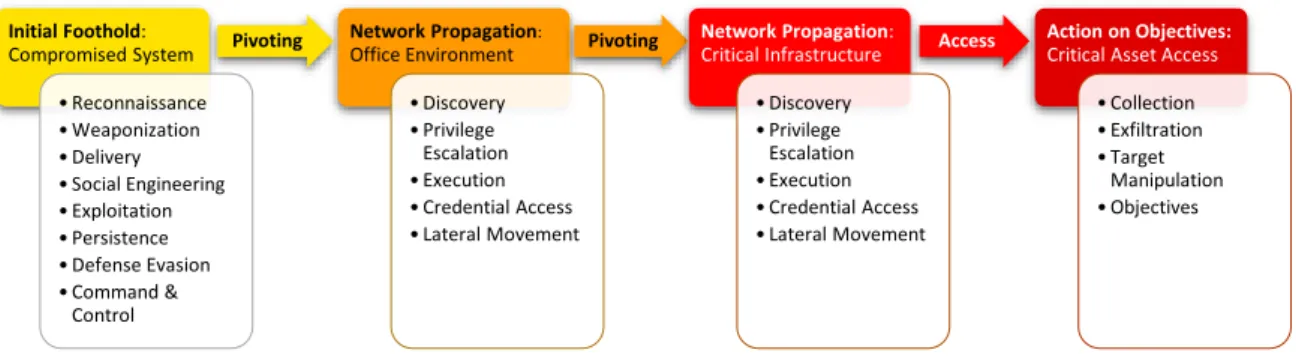
Figure 1 – A further attack path abstraction supported by the Unified Kill Chain
The UKC is utilized to analyze and compare attacks by Fox-IT’s Red Team and APT28 to improve threat emulation and to raise organizational resilience against APT28 attacks. The comparison shows that the tactical MO of these actors converge in their attack paths within internal networks of targeted organizations. Red Team assessments are thus thought to be particularly well suited to test the resilience of organizations against this part of APT28’s potential attack path. Notable divergences were also identified, which signify the potential to improve the predictive value of Red Team
assessments, for example by performing action on objectives (Figure 1).
As the reliance of organizations on ICT continues to grow, and APT cyber attacks continue to rise in number and in force, the risks for organizations and societies as a whole increase at an accelerating pace. The UKC attack model can be used by Red Teams to improve their threat emulations and by defenders to develop and realign their defense strategies in their attempts to decelerate this dangerous trend.
Keywords—Attack Modeling, Attack Simulation, Threat Emulation, Cyber Kill Chain®, MITRE ATT&CK™, CORAS, APT28, Fancy Bear, Pawn Storm, Sednit, Sofacy, Strontium, Red Team, Tactics, Techniques, Procedures, Design Science, Assume Breach, Defense in Depth, Unified Kill Chain.
Initial Foothold: Compromised System
•Reconnaissance
•Weaponization
•Delivery
•Social Engineering
•Exploitation
•Persistence
•Defense Evasion
•Command &
Control
Pivoting Network Propagation:
Office Environment
•Discovery
•Privilege
Escalation
•Execution
•Credential Access
•Lateral Movement
Pivoting Network Propagation:
Critical Infrastructure
•Discovery
•Privilege
Escalation
•Execution
•Credential Access
•Lateral Movement
Access Action on Objectives: Critical Asset Access
•Collection
•Exfiltration
•Target
Manipulation
Table of Contents
1 Introduction ... 7
1.1 Conceptualization and Contextualization ... 7
1.1.1 Societal Dependence on Cyberspace ... 7
1.1.2 Constructs of Technical and Cyber Risk ... 8
1.1.3 Mitigation of Technical and Cyber Risk ... 8
1.1.4 Advanced Persistent Threats (APTs) ... 8
1.1.5 APT Threat Modeling ... 9
1.1.6 Ethical Hacking and Red Teams ... 9
1.2 Problem Description ... 9
1.2.1 High Profile and Impactful APT Attacks ... 9
1.2.2 Attribution and Relevance ... 10
1.2.3 Red Team Threat Emulation and Attack Simulation ... 10
1.2.4 Limitations of APT Threat Modeling ... 10
1.3 Research Question(s)... 11
1.3.1 Research Goal ... 11
1.3.2 Levels of Abstraction ... 11
1.3.3 Primary and Sub Questions ... 12
1.4 Research Methodology ... 12
1.4.1 Availability of Research Data ... 12
1.4.2 Research Design and Approach ... 13
1.4.3 Incorporating the Guidelines for Design Science ... 15
1.5 Thesis Structure ... 16
2 Modeling Framework ... 17
2.1 The Cyber Kill Chain (CKC) ... 18
2.1.1 The Origin of the Cyber Kill Chain ... 18
2.1.2 The Cyber Kill Chain Phases ... 19
2.1.3 The Attacker-Defender Balance ... 19
2.1.4 Defensive Courses of Action ... 20
2.2 Cyber Kill Chain variants ... 20
2.2.1 Critiques of the Cyber Kill Chain ... 20
2.2.2 Proposed Improvements and Amendments ... 21
2.2.3 Convergences and Divergences Between Models ... 23
2.3 MITRE ATT&CK™ ... 24
2.3.2 Comparison with Kill Chain Models ... 25
2.4 CORAS ... 26
2.5 Uniting the Kill Chain Models ... 27
2.5.1 Description of Formation Process ... 27
2.5.2 Description of initial Unified Kill Chain ... 28
3 Case Study: Fox-IT’s Red Team ... 29
3.1 Actor Description ... 29
3.2 Case Study 1 (C1) ... 30
3.2.1 Attack Visualization ... 30
3.2.2 Attack Analysis ... 31
3.2.3 Attack Specific Kill Chain Formation ... 33
3.2.4 Attack Specific Kill Chains ... 35
3.3 Case Study 2 (C2) ... 36
3.3.1 Attack Visualization ... 36
3.3.2 Attack Analysis ... 37
3.3.3 Attack Specific Kill Chain Formation ... 39
3.3.4 Attack Specific Kill Chains ... 40
3.4 Case Study 3 (C3) ... 41
3.4.1 Attack Visualization ... 41
3.4.2 Attack Analysis ... 42
3.4.3 Attack Specific Kill Chain Formation ... 44
3.4.4 Attack Specific Kill Chains ... 46
3.5 Red Team Actor Specific Kill Chain ... 47
3.5.1 Red Team Kill Chain Formation ... 47
3.5.2 The Red Team Kill Chain ... 50
3.6 Validation of Red Team Case Studies ... 51
4 Case Study: APT28 - Fancy Bear (C4) ... 53
4.1 Actor Description ... 53
4.2 APT28 Tactics Analysis ... 54
4.3 APT28 Attack Patterns and Sequences... 57
4.3.1 Attack vector: spear phishing e-mails ... 57
4.3.2 Attack vector: watering hole websites ... 57
4.3.3 Attack path: social engineering for credentials ... 58
4.3.4 Attack path: social engineering for infection ... 58
4.3.5 Attack path: exploitation for infection ... 58
4.3.7 Attack path: using exploits to move towards targets on the network ... 59
4.3.8 Attack path: using spoofing to move towards targets on the network ... 60
4.3.9 Attack path: infecting USB drives to move towards air-gapped targets ... 60
4.3.10 Action on Objectives: acquiring data and/or target manipulation ... 60
4.4 APT28 Attack Paths and Attack Specific Kill Chains ... 61
4.5 APT28 Actor Specific Kill Chain Formation ... 62
4.6 APT28 Actor Specific Kill Chain ... 64
4.7 Validation of APT28 Case Study ... 65
5 Results ... 67
5.1 Applicability of the Cyber Kill Chain (CKC) ... 67
5.2 The Development of the Unified Kill Chain (UKC) ... 69
5.3 Applicability of the Unified Kill Chain (UKC) ... 71
5.4 Comparison of Red Team and APT28 Attack Specific Kill Chains ... 72
6 Reflection... 76
6.1 Methodology used to develop the UKC ... 76
6.2 Added value of the UKC ... 76
6.3 Potential difficulties for the UKC ... 77
6.4 Level of abstraction of the UKC ... 77
6.5 Broader applicability of the UKC ... 78
6.6 Realigning defense strategies with the UKC ... 79
7 Conclusion ... 81
8 References ... 82
Appendix A The Unified Kill Chain... 87
Appendix B Red Team Attack Specific Kill Chains ... 88
Appendix C APT28 Tactics References ... 97
Appendix D Semi-Structured Interviews ... 103
1
Introduction
In the last decades, the dependence throughout modern societies on information and
communication technology (ICT) has continued to rise. Vulnerabilities in the supporting ICT assets threaten the cyber activities that are performed within modern societies. Organizations need to protect their assets against a variety of threat actors that range from cyber criminals to nation states. At the more advanced and persistent end of this threat actor spectrum, actors are often described as Advanced Persistent Threats (APTs).
To assess their security posture and improve their resilience against APT attacks, many organizations hire Red Teams that are comprised of ethical hackers. Red Teams take an attacker-like approach to compromising critical supporting ICT assets. The predictive value of the threat emulations offered by Red Teams relies on the alignment of the modus operandi (MO) of the Red Team with the relevant threat actors. However, the tactics and operational techniques and procedures (TTPs) that are used by these actors do not necessarily coincide.
To perform a structured analysis of the MO of Red Teams and APTs, threat modeling is required. The Cyber Kill Chain® by Lockheed Martin (hereafter CKC) is frequently regarded as the industry standard model for defending against APTs. The CKC models the consecutive phases that APTs go through in compromising assets. Despite (or because of) its prominent status, the CKC has been widely criticized. The most damaging criticisms argue that the CKC is perimeter- and malware-focused [2]. To accurately model and compare Red Team and APT attacks beyond the organizational perimeter and beyond malware attacks, the CKC may thus require modifications.
The aim of this thesis is to (re)design a kill chain artefact that can serve to model and compare end-to-end attacks by both Red Teams and relevant APTs. The term “kill chain” describes an end-to-end
process [3, p. 4], or the entire chain of events, that is required to perform a successful attack. The (re)designed kill chain model is iteratively developed, evaluated and refined through literature research and case studies. The scope of the case studies is limited to two threat actors, namely Fox-IT’s Red Team, and APT28 (alias Fancy Bear). The resulting Unified Kill Chain (UKC) is expected to offer a substantiated basis for realigning defensive capabilities and investments within organizations and to allow for the improvement of the predictive value of Red Team threat emulations.
1.1
Conceptualization and Contextualization
In this section, the foundational concepts underlying this thesis are conceptualized and
contextualized first, to allow for a deeper and broader level of understanding of the research topic.
1.1.1
Societal Dependence on Cyberspace
The realm of cyberspace can be regarded as consisting of three interdependent layers (Figure 2). The primary object of study for this thesis is the technological layer, which comprises the hardware and software of ICT systems and data contained therein. The technical layer supports a so-termed socio-technical layer, where ICT enables a variety of cyber activities. The socio-technical layer comprises the interactions that take place between people and systems that are often referred to with the term “cyber”. The final layer is the governance layer, which as the name suggests, governs the technical and socio-technical layers [4, p. 2].
Governance
Socio-Technical
Technical
The dependence of cyber activities on the technical layer is inescapable in modern societies. These cyber activities include critical organizational processes that may range from information exchange within and between organizations to the remote control of Information Control Systems (ICS) in critical infrastructures [4, p. 2]. The socio-technical dependence of society on supporting ICT assets, combined with the inevitable vulnerability of complex systems, entails that vulnerabilities in ICT systems can pose risks to critical cyber activities and societies as a whole. The fact that many of these systems are (in)directly connected to the internet creates the possibility that cyber activities can be threatened from anywhere in the world at any point in time. The diffuse global governance structure of cyberspace has not been able to mitigate these risks to an acceptable level and is not expected to do so in the foreseeable future.
1.1.2
Constructs of Technical and Cyber Risk
Risks can exist on multiple layers of the layered cyberspace model. Risks on the technical layer can be deconstructed into a predefined set of risk components, namely the threat actor, threat,
vulnerabilities, controls, impact and the supporting ICT asset that can be compromised. Threat actors (or agents) act with intent towards an asset. A threat is the potential cause of an unwanted event that can affect an asset, as a result from (un)intentional acts or contingencies. Vulnerabilities are weaknesses in assets, that can be exploited by threats with a certain likelihood. Controls are
measures that are intended to modify risks. Impact refers to the consequence of an event in which a threat materializes through the exploitation of a vulnerability in an asset [5].
Technical risks thus describe the potential that threat actors cause threats to materialize by exploiting vulnerabilities, in lieu of appropriate controls, that result in an undesirable impact for a supporting ICT asset. Socio-technical or “cyber” risks can arise when supporting assets are
compromised on the technical layer, with the potential to pose a threat on the socio-technical layer for vulnerable cyber activities that can have an undesirable organizational impact (in lieu of
appropriate controls) [6].
1.1.3
Mitigation of Technical and Cyber Risk
Traditionally, efforts to mitigate risks focused on mitigating technical vulnerabilities in supporting ICT assets. This approach is thought to be particularly useful in reducing the technical risks associated with relatively static threats such as self-propagating code (virii and worms) [3, p. 1]. More recently, efforts have shifted towards the threat component of risk, to reduce risks by increasing the
organizational resilience against foreseeable actions by dynamic threat actors. The shift is
necessitated by the rise of Advanced Persistent Threats (APTs) and the frequency and the size of the socio-technical impact of their attacks [3, p. 2].
1.1.4
Advanced Persistent Threats (APTs)
The acronym APT is used to describe a variety of threat actors in cyberspace. The acronym was purportedly first used within the United States intelligence community to describe Asia-Pacific Threats (cyber threats originating from China). Since then, the term has been used to describe various (relatively) advanced attackers who are (particularly) persistent in their attacks on their targets. Currently, the term Advanced Persistent Threat is defined by NIST as:
advanced persistent threat:
(i) pursues its objectives repeatedly over an extended period of time;
(ii) adapts to defenders’ efforts to resist it; and
(iii) is determined to maintain the level of interaction needed to execute its objectives” [7]
1.1.5
APT Threat Modeling
Attacks by APTs typically extend beyond exploiting one vulnerability in an internet-connected system. Depending on the security posture of the target, APT attacks may require an attack path during which multiple correlated vulnerabilities are exploited before assets can be targeted and objectives can be achieved. Within the attack path, discrete phases can be discerned that are
captured by Lockheed Martin’s CKC in a linear and sequential model. The CKC, as well as other attack lifecycle models, can help defenders understand the increasingly complex attacks that they are facing. Without understanding how modern attacks take place, it is very difficult to properly defend against them.
1.1.6
Ethical Hacking and Red Teams
Many organizations assess their security posture and resilience against attacks using ethical hackers. Penetration testing typically occurs within a limited scope according to pre-approved testing
guidelines and aims to identify as many vulnerabilities as possible with the allotted timeframe [8, p. 11]. In contrast to classical penetration testing, Red Teams take an attacker-like approach and typically focus on obtaining access to critical supporting assets rather than identifying the most vulnerabilities [8, p. 1]. Within the cyber security context, it is said that “Red Team [efforts] should simulate an attack from a potential attacker” [8, p. 11]. The more advanced the attacker whose threat should be emulated, the more advanced Tactics, Techniques and Procedures (TTP) should be used by a Red Team [8, pp. 16–17]. Red Teams may thus serve to model threats by simulating or emulating their attacks in a transparent manner, which provides insights into complex attack paths.
1.2
Problem Description
1.2.1
High Profile and Impactful APT Attacks
Cyber security firms are keen to publicize forensic reports following (un)successful APT attacks, which allows organizations to reassess their security posture and raise their resilience against similar attacks. An APT that has performed particularly high profile and impactful attacks over the last few years is APT28. Attacks that have been linked to this group include (attempted) hacks of Dutch ministries and the Dutch Safety Board (‘Onderzoeksraad Voor Veiligheid’), as well as the Ukrainian Central Election Commission (CEC), TV5Monde, the U.S. Democratic National Committee (DNC), the World Anti-Doping Agency (WADA), the Polish government and power exchanges, the German Bundestag and political parties, the North Atlantic Treaty Organization (NATO) and the Organization for Security and Co-operating in Europe (OSCE) [9].
and many other related questions regarding the active measures campaign, are currently being investigated post-mortem by multiple committees and investigators in the United States.
1.2.2
Attribution and Relevance
The cyber attacks performed by APT28 have been attributed to the Russian military intelligence service (‘Main Intelligence Directorate of the General Staff of the Russian Armed Forces‘ or GRU for short) with a “high” level of confidence by a collection of intelligence agencies of the United States of America [10]. Others have described APT28 as a group that reportedly “works for the Russian state or the Russian state intelligence services, but [that] the state keeps the actual attacks at a certain distance” [15, p. 13].
The variety of the previous victims of APT28 suggests that a wide variety of organizations may be targeted by this group in the future. The attribution of APT28 attacks to the Russian state makes raising resilience against their attacks a top priority for many of Fox-IT’s customers, given the current geopolitical climate. According to the Dutch secret service, Russia actively targets Dutch actors in sectors such as economics, science, politics and defense to gather intelligence, influence decision making processes as well as the public opinion [16, pp. 3–7]. Attacks by APT28 thus factor into the threat model of many private and public organizations, ranging from large corporations to critical infrastructure and government entities. The advanced and persistent nature of this threat actor, in combination with the pervasive, widely publicized and impactful nature of its successful attacks, underlines the importance of increasing resilience against APT28 attacks.
The MO of threat actors such as APT28 may be studied to improve the resilience of organizations against similar attacks, even if attribution is impossible or highly uncertain. When Fox-IT’s clients express the desire to defend themselves against “the Russians”, they generally aim to protect themselves against the types of attacks that have been attributed to the Russians, particularly those by APT28 (and APT29). Consequently, even if the attribution of APT28 to the Russian military intelligence service is inaccurate, at the core many of Fox-IT’s clients aim to defend themselves against the attacks of threat actors such as APT28.
1.2.3
Red Team Threat Emulation and Attack Simulation
One of the methods to assess and improve the resilience of organizations against APT attacks is threat emulation and attack simulation through Red Team assessments. In theory, Red Teams assessments provide insight into the organizational security posture and resilience against actual attacks by the relevant threat actors. The added value of Red Team attack simulations for organizations relies in a large part on the assumption that the default MO of a Red Team and relevant threat actors coincide. In practice, the MO of Red Teams does not necessarily coincide with the MO of the threats they implicitly or explicitly aim to emulate. If differences do exist between the MO of APTs and Red Teams, the predictive value of these threat emulations may be limited.
1.2.4
Limitations of APT Threat Modeling
The Cyber Kill Chain® by Lockheed Martin (CKC) is frequently regarded as the industry standard model for defending against APTs. This highly influential model describes the MO of APTs, but largely relies on untested assumptions. The CKC posits the consecutive phases that APTs go through in compromising cyber assets. Furthermore, the researchers posit that attacks by APTs may be thwarted by disrupting any one of the phases in this chain of events. As such, the CKC provides defenders with a model to stop APTs from compromising cyber assets beyond remediating
If the idealized MO underlying the CKC is inaccurate however, defensive capabilities and investments are likely to be ineffectively distributed over the attack surface of organizations. Moreover, if
reference models such as the CKC idealize an inaccurate MO, Red Teams are prone to develop an inaccurate MO in APT emulations, thereby adding to this problem.
1.3
Research Question(s)
1.3.1
Research Goal
The desire to raise the organizational and societal resilience against cyber attacks through the improvement of Red Team threat emulations of APTs is the primary driver of this thesis. To assess and improve the predictive value of Red Team assessments, a thorough comparison between the MO of Red Teams and relevant APTs is required. The comparison of the MO in Red Team and APT attacks is expected to be hindered by the absence of an accurate and comprehensive modeling framework. To overcome this challenge, the CKC is expected to require improvements and amendments to enable the sought for comparison. This research thesis proposes improvements and amendments to the CKC that result in a comprehensive kill chain based model, that covers end-to-end attacks, which is named the Unified Kill Chain (UKC).
1.3.2
Levels of Abstraction
The identified problem (section 1.2) can be examined at different levels of abstraction, in accordance with the three levels of abstraction of offensive and defensive actions [17, p. 97]:
• The operational level deals with the specific techniques that comprise attacks (or: how
actions are performed in an attack). An analysis on the operational level of abstraction could in theory be very useful, to reproduce the MO of an attacker exactly. However, an
operational analysis can become redundant quickly given the high pace of development of vulnerabilities, exploits and techniques. Furthermore, APTs may have access to resources and techniques that are beyond the reach of Red Teams, such as the use of zero-day exploits.
• At the tactical level, activities are directed to achieve the objectives of an attack [18, p. 1] (or: which actions are performed in an attack). The representation of actions as phases (or tactics), that can be discerned within an attack, occurs on the tactical level. These phases can remain similar across multiple attacks, even if specific techniques and procedures are
changed on the operational level.
• At the strategic level, the objectives are set which attacks are intended to accomplish to achieve a goal [18, p. 3] (or: why actions are performed in an attack). The limitations regarding attribution of attacks in cyberspace, combined with the inability to reliably gain insight into the overall plans and intentions of threat actors, make scientific analysis on this level particularly difficult.
The term Tactics, Techniques and Procedures (TTPs) can be mapped to the three levels of abstraction. Tactics occur on the tactical level and describe “the employment and ordered
arrangement of forces in relation to each other”. Techniques and procedures occur on the operation level and entail “non-prescriptive ways or methods used to perform missions, functions or tasks” and “standard, detailed steps that prescribe how to perform specific tasks” respectively [19].
Given the previously described goal of this thesis, the analysis of the identified problem and the construction of solutions primarily takes place on the tactical level of abstraction and thus focuses on
When the sequence within which tactics occur is considered (their “ordered arrangement” [19]), tactics can be regarded as the phases of an attack. The end-to-end sequence of all phases of an attack forms the kill chain of that attack (or an attack specific kill chain). When multiple attacks from the same actor are analyzed and compared, they can be used to develop a threat actor kill chain, which describes the tactics in an actors’ repertoire as phases that may occur in their attacks. These threat actor specific kill chains are developed for Fox-IT’s Red Team and APT28, to facilitate a comparison of their MO and to test and refine the UKC.
1.3.3
Primary and Sub Questions
To achieve the research goal, the following primary research question is answered in this thesis:
Which kill chain model supports the comprehensive analysis, comparison and defense against
the tactical modus operandi in Fox-IT’s Red Team and APT28 attacks?
The research question can be further divided into the following sub research questions:
1. To what extent does the CKC allow for a comprehensive tactical comparison of attacker MOs? (sections 2.1 and 2.2)
2. What modifications to the CKC are expected to be required to allow for a comprehensive tactical comparison? (sections 2.2 to 2.5.2)
3. To what extent can the tactical MO of Fox-IT’s Red Team be modeled using the UKC? (chapter 3)
4. To what extent can the tactical MO of APT28 be modeled using the UKC? (chapter 4)
5. What are notable convergences or divergences between the CKC, UKC and the tactical MO of Fox-IT’s Red Team and APT28? (chapter 5)
6. How can the CKC and Red Team modeling of APT28 attacks be improved? (chapters 5 and 6)
1.4
Research Methodology
This thesis aims to raise the resilience against cyber attacks through the development of a
(re)designed kill chain that allows for the comprehensive tactical comparison of Red Team and APT28 attacks. For this purpose, research questions have been defined in section 1.3. In this section, the design of and approach to this research study is detailed in the light of the research questions and the available data sources.
1.4.1
Availability of Research Data
In contrast, the modus operandi of Fox-IT’s Red Team is transparent as unfiltered access is available to reports, all supporting data and team members during this research. If Red Teams are successful in emulating APTs, their attacker-like approach to compromising networks and assets can generate more robust data and can be useful to gain further insights into expected attacker behavior. There are reasons to presume a priori that the MO of Red Teams may be similar to APTs. Both types of actors typically start from the perspective of an unauthorized outsider. Both may have comparable objectives that need to be achieved, for which a finite number of attack paths of correlated
vulnerabilities are possible. Both types of actors presumably attempt to effectively and efficiently pave their way towards their targets, while remaining undetected. Both APTs and Red Teams may leverage TTPs that are available in the public domain, in addition to potential private TTPs.
1.4.2
Research Design and Approach
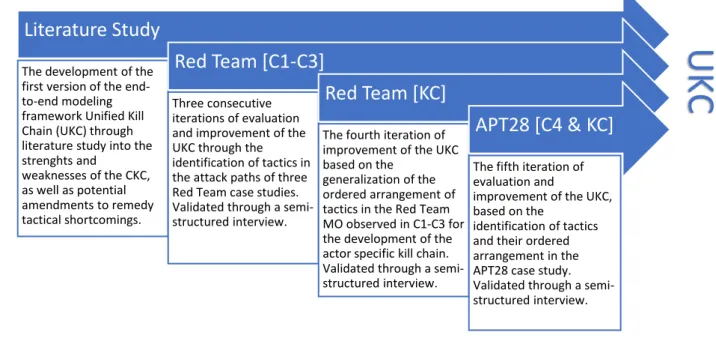
To answer the research questions, a hybrid approach was developed that combines design science with qualitative research methods. Figure 3 provides a schematic overview of the research approach. A schematic overview of the results of the research approach is provided in Table 25 (on page 69).
Figure 3 - Schematic overview of the research approach
In this research thesis, the appropriate modeling framework is first developed through literature study. Lockheed Martin’s CKC model serves as the starting point to analyze APT and Red Team attacks. The need to improve and amend the CKC model is assessed based on the critiques on the model from experts. Phases from the various previously proposed modifications are combined with the tactics described in MITRE’s ATT&CK™ model in the area where the CKC falls short. In this manner, a first version of an all-inclusive “Unified Kill Chain” (UKC) is developed through literature research, which unites all relevant phases of the various models to retain their collective explanatory power.
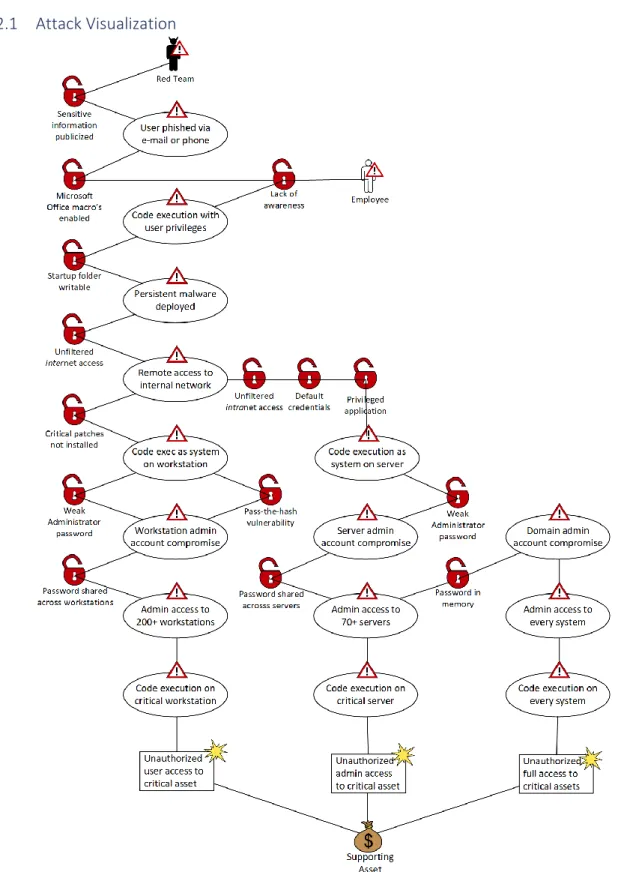
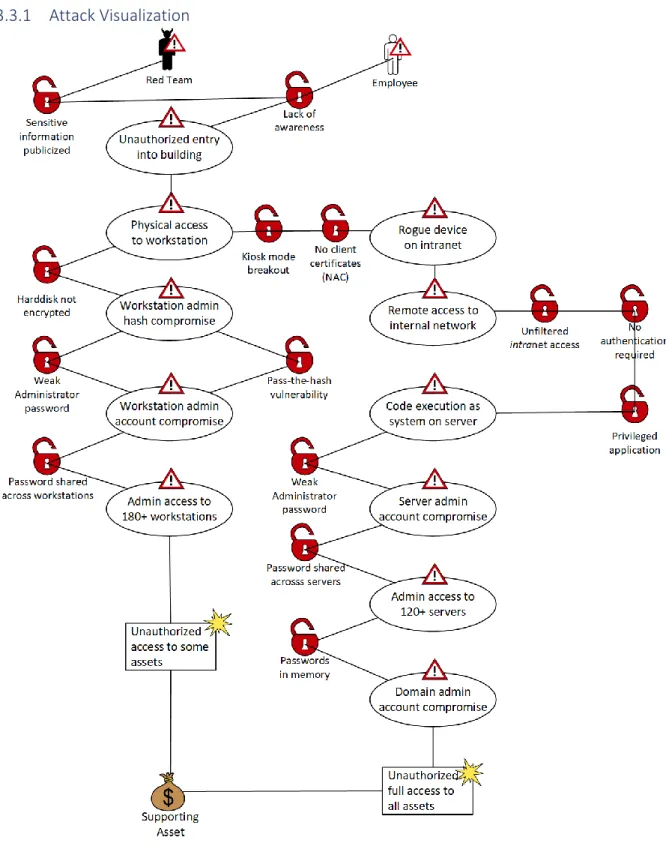
Secondly, the validity and explanatory value of the Unified Kill Chain is evaluated using observational methods through case studies of transparent attacks by Fox-IT’s Red Team. In these case studies, the chain of events of each attack is first derived from reports and is visualized on the operational level (using CORAS diagrams [20, p. 1]). Subsequently, phases are discerned based on the correlation of actions within the chain of events using the building blocks offered by the previously identified phases (or tactics). The sequences of phases observed in actual attacks form the attack specific kill
Literature Study
The development of the first version of the end-to-end modeling framework Unified Kill Chain (UKC) through literature study into the strenghts and
weaknesses of the CKC, as well as potential amendments to remedy tactical shortcomings.
Red Team [C1-C3]
Three consecutive iterations of evaluation and improvement of the UKC through the identification of tactics in the attack paths of three Red Team case studies. Validated through a semi-structured interview.
Red Team [KC]
The fourth iteration of improvement of the UKC based on the
generalization of the ordered arrangement of tactics in the Red Team MO observed in C1-C3 for the development of the actor specific kill chain. Validated through a semi-structured interview.
APT28 [C4 & KC]
The fifth iteration of evaluation and
improvement of the UKC, based on the
identification of tactics and their ordered arrangement in the APT28 case study. Validated through a semi-structured interview.
chains for each attack path in the Red Team case studies. This method to develop attack specific kill chains not only allows the UKC to be evaluated thoroughly, but also to be improved iteratively through each application of the model to each of the three Red Team case studies. Collectively, the attack specific kill chains are used to formulate a “Red Team Kill Chain”, which displays the tactics in the Red Team repertoire in their ordered arrangement, and to realign and improve the UKC.
Thirdly, public forensic reports are studied to model the phases in the attacks of APT28, using the building blocks offered by the previously identified phases (or tactics). Given the limited availability of technical details regarding compromised systems and attacks paths in individual attacks, the available data is used to develop and select likely attack specific kill chains and to develop a threat actor specific kill chain. These kill chains are used to evaluate and refine the UKC, that was first developed through literature research and improved through the Red Team case studies.
The developed Red Team and APT28 kill chains are validated using semi-structured interviews. In the case of attacks by Fox-IT’s Red Team, validation takes place through semi-structured interviews with Fox-IT’s Red Team lead, who performs attacks and drives the Red Team forward by incorporating new TTPs into its MO. In the case of APT28, the validation takes place through a semi-structured interview with an intelligence analyst of Fox-IT who has persistently tracked, analyzed and documented the MO of this specific threat actor.
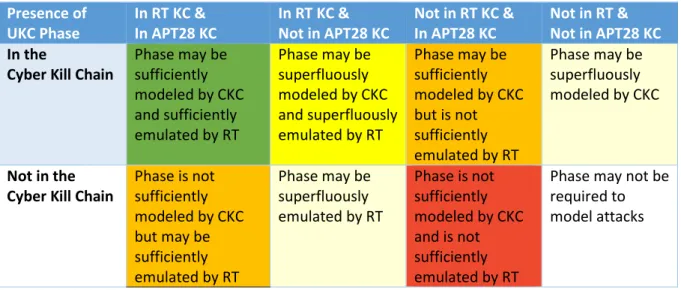
After the case studies have been performed and the Red Team and APT28 attacks have been analyzed and modeled using kill chains, the existing and developed kill chains are compared to identify notable convergences and divergences. The presence or absence of an identified Unified Kill Chain (UKC) phase in the Cyber Kill Chain (CKC), Red Team Kill Chain (RT KC) and the APT28 Kill Chain (APT28 KC) respectively may lead to different conclusions for this research study:
Table 2 - Conclusions or “Truth” Matrix
Presence of UKC Phase
In RT KC & In APT28 KC
In RT KC & Not in APT28 KC
Not in RT KC & In APT28 KC
Not in RT & Not in APT28 KC
In the
Cyber Kill Chain
Phase may be sufficiently modeled by CKC and sufficiently emulated by RT
Phase may be superfluously modeled by CKC and superfluously emulated by RT
Phase may be sufficiently modeled by CKC but is not sufficiently emulated by RT
Phase may be superfluously modeled by CKC
Not in the Cyber Kill Chain
Phase is not sufficiently modeled by CKC but may be sufficiently emulated by RT
Phase may be superfluously emulated by RT
Phase is not sufficiently modeled by CKC and is not sufficiently emulated by RT
Phase may not be required to model attacks
Insights into points of convergence and divergence between the UKC, CKC, RT KC and APT28 KC are relevant to improve threat modeling (using the CKC) and threat emulation (by Red Teams). This allows organizations to prioritize and (re)align their defensive efforts to improve their security
may also be indicative for the MO of other Red Teams, APTs and even other categories of threat actors, which is reflected upon (section 6.5) and could be the subject of follow-up research.
1.4.3
Incorporating the Guidelines for Design Science
The kill chain models that are developed as part of this research thesis are abstractions and representations of the MO of various real-world attackers [21, p. 77]. The construction of models aids in “problem and solution understanding and [...] represents the connection between problem and solution components” [21, pp. 78–79]. Within the context of this thesis, the kill chain models represent the connection between advanced attacks by APTs (the problem) and the defensive actions and controls (the solution components) that may be available to strengthen the security posture and resilience of organizations.
The development of these kill chains occurs within the design-science paradigm and is therefore guided by Hevner’s guidelines for design science in information systems research [21, p. 83]:
1. Design as an Artifact: this research study aims to (re)design purposeful artifacts, namely kill chain models that can represent the end-to-end modus operandi of various real-world attackers to support analysis, comparisons and defense, as described in section 1.3;
2. Problem Relevance: the goal for the (re)design of the kill chain artifacts is utility, in the form of a strengthened security posture and resilience against the high-profile and impactful attacks of APTs, as described in section 1.2;
3. Design Evaluation: the UKC that is first (re)designed through a literature study is evaluated and improved iteratively through observational case studies [21, p. 86], in which attack and threat actor specific kill chains are developed. The validity of the resulting kill chain models is validated through semi-structured interviews, as described in section 1.4.2;
4. Research Contributions: the (re)designed kill chain models enable the solution of a heretofore unsolved problem [21, p. 87], that is preventing, detecting and responding to end-to-end attacks by APTs. The (re)designed models also enable the comparison between attacks from different actors, which allows for the comparison between APT and Red Team attacks and consequently the improvement for threat emulations;
5. Research Vigor: to approach the (re)design rigorously, the (re)design process is approached from multiple perspectives. The UKC is first developed through literature research.
Subsequently, the UKC is evaluated and improved by developing attack and actor specific kill chains, which are developed through the chain of events of attacks, as described in section 1.4.2.
6. Design as a Search Process: the research design allows for the iterative improvement of the kill chain models. The first proposal for a kill chain is developed through literature study, which is iteratively improved through case studies that start with transparent attacks by Fox-IT’s Red Team and work towards the attacks of APT28, as described in section 1.4.2;
1.5
Thesis Structure
In this first chapter the topic of the thesis was introduced. Firstly, the foundational concepts underlying this thesis were conceptualized and contextualized. Secondly, the problem space was described, in which existing models and ethical hackers may fall short of modeling and emulating APTs attacks that threaten the cyber activities on which organizations and societies depend. Thirdly, the research goal and research questions were defined, which seek to address the described
problem. Fourthly, the research methodology was detailed, which guides the search process to answer the research questions through a hybrid research approach.
The remainder of the thesis is structured as follows:
• In chapter 2, the attack modeling framework is developed through literature study;
• In chapter 3, case studies are performed based on attacks by Fox-IT’s Red Team;
• In chapter 4, a case study is performed of APT28 attacks;
• In chapter 5, the UKC, CKC, RT KC and APT28 KC are compared;
• In chapter 6, the results of the research and their wider applicability are reflected upon;
• In chapter 7, the conclusions of the research thesis are described;
• In Appendix A, the final (re)designed Unified Kill Chain (UKC) is included;
• In Appendix B, the attack specific kill chains from the Red Team case studies are included;
• In Appendix C, the tactics of APT28 that were identified in forensic reports are referenced;
• In Appendix D, the questions of the semi-structured interviews are detailed;
2
Modeling Framework
In the previous chapter, it was argued how traditional defensive approaches that focus on the
vulnerability element of risk do not suffice in the protection against attacks by APTs (section 1.1.3). By better understanding the way that intrusions are performed by APTs, thereby focusing on the
threat (actor) element of risk, the resilience of organizations against APT attacks may be
strengthened. Attack models could prove beneficial to better understand how attacks are performed by APTs on a tactical level.
A variety of models may be employed to analyze attacks by APTs. For this thesis, the primary modeling tool that is used is Lockheed Martin’s Cyber Kill Chain® (CKC) [3]. The CKC is often cited as the original cyber kill-chain model and has arguably attained the status of industry standard in defending against APTs [22, p. 4]. For example, the CKC is currently used by the National Institute of Standards and Technology (NIST) as a component of its Cyber Security Framework.
Despite the CKC‘s explicit aim to focus on APT attacks, the model has been criticized as reinforcing traditional perimeter-focused and malware-prevention thinking [2]. If the criticism is well founded, making modifications to the model may prove necessary to properly analyze end-to-end APT attacks. Since the publication of the model in 2011, various modifications have been proposed by scientific authors and cyber security professionals. In the section Cyber Kill Chain Variants (section 2.2), a concise overview of proposed modifications to the CKC is provided.
The reinforcement of perimeter-focused thinking by the CKC model may be overcome by combining the CKC with proposed variants and/or MITRE’s Adversarial Tactics, Techniques & Common
Knowledge for Enterprise (hereafter: ATT&CK) model. The ATT&CK model focuses specifically on the attack path that can be identified after the network perimeter of an organization has been breached. The ten tactics that are identified in the ATT&CK model, which may partially overlap with proposed modifications, could provide well defined and organized building blocks in analyzing APT attacks within internal networks.
2.1
The Cyber Kill Chain (CKC)
2.1.1
The Origin of the Cyber Kill Chain
In 2011, researchers from the Lockheed Martin Corporation developed an intelligence-driven computer network defense strategy, which has been popularized under the name The Kill Chain®. According to the Lockheed Martin researchers, conventional incident response methods are inadequate when dealing with APTs, because these methods generally rely on two flawed assumptions:
• Firstly, incident response traditionally assumes that response should happen after the point of compromise [3, p. 1]. The idealized incident response methodology [23] consists of the phases preparation, identification, containment, eradication, recovery and follow-up [24, p. 355]. The follow-up phase primarily consisted of gathering forensic artifacts for evidentiary purposes and incorporating lessons learned into policies, procedures and guidelines [24, p. 362]. While these phases may suffice to remedy common attacks, the damage inflicted by a successful APT attack may be irreversible before traditional incident response methodology commences.
• Secondly, incident response methodology traditionally assumes that incidents are the result of fixable flaws [3, p. 1]. Based on this assumption, traditional incident response
methodology aims to prevent future incidents by mitigating the vulnerabilities that cause incidents [24, p. 358]. The attacks that are performed by APTs, however, frequently leverage “zero-day”1 exploits for previously unknown vulnerabilities. Even if these vulnerabilities are subsequently mitigated by organizations, for example through patching, future attacks that abuse other zero days will typically be unaffected. Similarly, APTs frequently use advanced custom tools, that anti-virus products cannot detect or mitigate [3, p. 2].
To heed attacks by APTs, the Lockheed Martin researchers argue that an evolution in analysis, process and technology is required to anticipate and mitigate future intrusions based on knowledge of the threat [3, p. 2]. For this purpose, an intelligence-driven and threat-focused risk management strategy was developed, which analyzes attacks from the perspective of the attacker, to drive the selection of defensive courses of action [3, p. 3]. The model posits the discrete consecutive phases that APTs go through in compromising cyber assets, which can be mapped against defensive measures.
The CKC builds on existing kill chain models that are used for military purposes. Within the military context, the term “kill chain” describes an end-to-end process [3, p. 4], or a chain of events, that is required to perform a successful attack. Breaking a chain in this course of events would result in the failure of the attack and is thus the objective of defenders [3, p. 2]. The United States Department of Defense (DoD) Joint Staff publication 3-60, which is regarded by Lockheed Martin as its reference kill chain model, defines an attack kill chain that consists of the phases find, fix, track, target, engage and assess (F2T2EA) [25, Sec. II-21]. The DoD model describes what each step entails, defines relevant terminology, explains what the inputs and outputs of the step are and illuminates how a step relates to the other steps where necessary.
2.1.2
The Cyber Kill Chain Phases
The essence of an attack, according to the Lockheed Martin researchers, is that an “aggressor must develop a payload to breach a trusted boundary, establish a presence inside a trusted environment, and from that presence, take actions towards their objectives” [3, p. 4]. The chain of events, or kill chain, which an external attacker must go through is defined in the CKC on a tactical level as shown in Table 3:
Table 3 - The discrete phases of the Cyber Kill Chain (CKC) [3]
2.1.3
The Attacker-Defender Balance
A conventional belief in cyber security is that attackers fundamentally have the upper hand [26, p. 1]. Attackers only need to find one flaw to succeed, while defenders need to do everything right to prevail, according to this often-heard defeatist adage. The CKC challenges this assumption and provides defenders with a model to stop APTs from compromising cyber assets beyond remediating all possible vulnerabilities. In contrast to the widely held belief, APT attacks are not singular events but phased progressions [3, p. 3]. These attacks thus consist of discrete phases, during which a multitude of correlated vulnerabilities must be exploited to pave a path towards a target. Defenders may prevail by disrupting just one of the consecutive phases in this chain of events [3, p. 2]:
“the adversary must progress successfully through each stage of the chain before it can achieve its desired objective; just one mitigation disrupts the chain and the adversary”
Consequently, the CKC model suggests a fundamentally different balance between attackers and defenders, where one successful mitigation by defenders can thwart a complex and multi-phased attack. The model can even be leveraged to use the persistent nature of APTs against them, overturning persistence from a strength into a potential weakness. More specifically, if APTs show any observable repetition during any of the phases of their attacks, this may lead to their detection in future attacks. The application of the CKC has shown that repetition in the MO of attackers can lead to detection, even when a zero-day exploit is used in an attack [3, p. 11]. Response can then take place before critical cyber assets are compromised and the APT reaches its objective(s).
•Researching, identifying and selecting targets. This may consist of passivereconnaisance of open source
intelligence or activereconnaisance where internet facing systems are probed for potential weaknesses.
Reconnaissance
•Coupling a remote access trojan with an exploit into a deliverable payload. Typically PDF or Microsoft Office
documents can serve as the weaponized deliverable for the malicious payload.
Weaponization
•Transmitting the payload to the targeted environment. Prevalent delivery vectors include e-mail
attachments, malicious websites and removable media such as USB.
Delivery
•Exploitation triggers the intruders' payload. Exploitation may target vulnerability or feature in an application
or the operating system. Exploitation can also involve social engineering to target a user directly.
Exploitation
•Installing a remote access trojan or backdoor on the system allows an attacker to maintain their presence in
the target environment even if the compromised system is rebooted.
Installation
•Beaconing outbound to an Internet controller server to establish a Command & Control (C2) channel. The
channel provides attackers with direct remote access to the compromised system in the target environment.
Command & Control
•Taking actions on the original objectives, such as exilftration of confidential data, the violation of data
integrity or availability, or compromising additional systems and moving laterally inside the network.
2.1.4
Defensive Courses of Action
Using the CKC, defensive courses of action can be mapped to each of the attack phases (Figure 4). By helping to find (the most)
effective ways to stop APTs during one of the phases of an attack, the CKC can be beneficial in allocating defensive efforts. For this purpose, the CKC refers to the Department of Defense
information operations doctrine, which defines the defensive options as a detect, deny, disrupt, degrade, deceive or destroy [27].
Alternatively, a defensive approach may be formulated along the lines of NIST’s Cyber Security Framework, which is more tailored to the cyber context. The options that are available to defenders could then be defined as know, prevent, detect, respond and recover [28], which may be more familiar to cyber security professionals.
2.2
Cyber Kill Chain variants
2.2.1
Critiques of the Cyber Kill Chain
Since the publication of the CKC, it has been widely adopted. Organizations base their security and resilience efforts against APT attacks on the model, while the cyber security industry aligns its products and services with the phases of the model. Even though the CKC has arguably attained the status of industry standard in defending against APTs, the model has also been criticized and various modifications have been proposed.
The most damaging critiques of the CKC are that it reinforces traditional perimeter-focused and malware-prevention thinking, because that is precisely what the model aims to overcome. The first 6 phases of the 7-phased model describe the steps that lead to the compromise of one endpoint within a network, which may take hours or days. The 7th phase (Action on Objectives), encompasses all the further steps that may be required by an APT to achieve their objectives within the target network, which could take months [2]. Furthermore, the first 6 phases accurately describe the steps that are required in a malware-based attack, but may not be suited for attacks that leverage remote access, social engineering or those performed by insiders.
“The Intrusion Kill Chain is excellent for attacks, but doesn’t exactly work for insider threats” [29]
The criticisms that the CKC is too focused on the perimeter and on the malware attack vector are complementary. The malware-focus critique points out that other attack vectors may also provide attackers with initial access to the target network. The perimeter-focus critique points out that the CKC does not explicitly model the distinctive phases that subsequently occur within the target networks, namely after the initial compromise of one endpoint and before the achievement of the APT’s objectives. The application of the CKC on case studies may thus show that the CKC phases does not cover all available attack vectors and insufficiently models what occurs within internal networks of targeted organizations.
2.2.2
Proposed Improvements and Amendments
Both scholars and cyber security professionals have proposed improvements and amendments to the CKC to remedy the identified shortcomings. The proposed modifications may support the expansion of the model to cover the perspective of an insider. This extension is thought to be crucial, given the plethora of attack vectors that can result in an insider-equivalent level of access to the internal network. This includes (spear) phishing attacks, but also a range of other attacks vectors that for example target physical security, BYOD (Bring Your Own Device) or the integrity of supply chains:
“Given the inevitability of a successful attack that breaches the internal network [perimeter], corporations need to develop a strategy for dealing with attackers inside the firewall. They need to think of every attacker as [a] potential insider” [30]
Hereafter, four prominent revisions of the CKC are discussed, to discern what improvements and amendments their authors propose2.
2.2.2.1 Laliberte’s Kill Chain
A variant of the CKC was proposed by Laliberte (Figure 5), that aims to model the attack vector “drive-by downloads”. These types of attacks leverage infected websites (or malicious
advertisements) to target outdated software on systems of its visitors, typically to deploy malware. Watering hole attacks similarly use this technique against a more targeted group of users [31, p. 17]. Laliberte argues that the Weaponization phase of the CKC is superfluous, because it cannot be defended against. Instead, the addition of a Lateral Movement phase is proposed, which occurs between the phases Command & Control and Action on Objectives. According to Laliberte, Lateral Movement entails moving on to bigger targets on the target network after initially compromising one system in the network [32].
Figure 5 – Laliberte’s Kill Chain
2.2.2.2 Nachreiner’s Kill Chain
Nachreiner also opts to remove the Weaponization phase from the CKC in his kill chain (Figure 6), because he argues that phases should be actionable by defenders. The phase Installation is replaced by Infection without an explicit argument, but may underline the variety of persistence methods that are available to attackers.
To cover how APTs can leverage their initial access to a target network to spread within that
network, Nachreiner proposes to explicitly add Lateral Movement as well as Pivoting to the Action on Objectives phase [33]. Pivoting describes the act of tunneling traffic through one system to connect to other internal systems that may otherwise be inaccessible. One could argue that some of the benefit of the addition of Lateral Movement and Pivoting is lost when these phases collapse into Command & Control, similarly to how Action on Objectives in the CKC already encompasses all
2 To demarcate the proposed modifications in this section more clearly, proposed improvements or the removal of existing Cyber Kill Chain phases are identified with italics, while phases that are added to the Cyber Kill Chain are underlined in text sections and use a black font in figures.
actions that occur within internal networks.
Figure 6 – Nachreiner’s Kill Chain
2.2.2.3 Bryant’s Kill Chain
In line with Laliberte and Nachreiner, Bryant proposes a kill chain model (Figure 7) that omits the
Weaponizationphase, because it “occurs outside the victim’s network and is not likely to be observed with sensor data” [34]. According to Bryant, Exploitation occurs throughout the phases Delivery, Installation and Privilege Escalation and does not warrant a dedicated phase. Similarly, the
Command & Control phase is removed, as the phases Delivery, Installation, Lateral Movement or Exfiltration may already exhibit evidence of remote command and control.
Bryant proposes to amend the CKC with the phases Privilege Escalation and Lateral Movement. During the Privilege Escalation phase, the segregation between the routine user environment and privileged account data is breached. In Bryant’s terminology, the Lateral Movement phase is
introduced to differentiate between “activity originating from an external network [reconnaissance] and reconnaissance activity from an internal network” [34], which notably differs from Laliberte’s use of the same term (section 2.2.2.1). Lastly, the phase Exfiltration is added to emphasize the possibility to detect anomalous data transfers originating from the internal network to an external network.
Figure 7 - Bryant's Kill Chain
2.2.2.4 Malone’s Kill Chain
The most extensive expansion of the CKC is proposed by Malone, who leaves the initial model intact but expands it with two additional chains. Malone describes the CKC as appropriate to describe the breach of the enterprise network perimeter (Figure 8), after which an internal kill chain is executed to gain access to target systems that is common to most objectives (Figure 9). Malone posits that the internal kill chain consists of the phases Internal Reconnaissance, Internal Exploitation, Enterprise Privilege Escalation, Lateral Movement and Target Manipulation [35].
Subsequently, a target manipulation kill chain is described by Malone (Figure 10), which is objective-specific and allows an attacker to manipulate the target systems to achieve their objectives. Since these phases are objective-specific and occur within a single system, they may be less useful for defenders than the commonly shared phases that are described in Malone’s internal kill chain (Figure 9).
Figure 8 –Lockheed Martin’s Cyber Kill Chain (CKC)
Reconnaissance Delivery Exploitation Infection
Command & Control
Lateral Movement & Pivoting
Action on Objectives
Reconnaissance Delivery Installation EscalationPrivilege MovementLateral ObjectivesAction on Exfiltration
Figure 9 –Malone’s Internal Kill Chain
Figure 10 - Malone's Target Manipulation Kill Chain
2.2.3
Convergences and Divergences Between Models
The revised kill chain models that are proposed by Laliberte, Nachreiner, Bryant and Malone show notable convergences and divergences. For example, three of the four authors propose to remove the Weaponization phase from the CKC, because they argue it occurs outside the locus of control of defenders. Based on the previously discussed literature, requirements can be posited for activities to be regarded as a phase of an attack in a kill chain model:
• The attack phase should describe a tactic in its ordered arrangement (section 1.3.2);
• The attack phase should be logically distinct from other attack phases;
• An attack phase should be relevant, observable and actionable for defenders (section 2.2). An attack phase is thus regarded as the execution of tactic that is logically distinct within the chain of events of an attack, which is relevant for defenders because it is observable and actionable.
All four authors attempt to expand the CKC to include the phases that occur within internal networks after the initial compromise of a system, addressing the perimeter-focus critique. Their models all include a form of internal Lateral Movement by attackers. However, the descriptions and place in the model of the Lateral Movement phase diverge. None of the models appear to address the malware-focus critique, which would presumably require modifying rather than extending the original phases of the CKC.
In addition to Lateral Movement, the models of Nachreiner, Bryant and Malone also discern other phases of attacks that occur within internal networks. These phases are Internal Reconnaissance, Internal Exploitation, Privilege Escalation, Pivoting, Target Manipulation and Exfiltration. The phases are visualized in Figure 11. As these phases originate from the different models that were discussed previously, they may overlap or occur in a different order. However, each of these phases may (or may not) occur within the internal networks of targeted organizations and could thus prove useful to analyze activities and demarcate phases in the case studies.
Figure 11 – Overview of All Proposed Phases
Internal Reconnaissance Internal Exploitation Enterprise Privilege Escalation Lateral Movement Target Manipulation
Target Reconnaissance Target Exploitation Weaponization Installation Execution
Internal Reconnaissance
Internal Exploitation
Privilege
Escalation Pivoting
Lateral Movement
Target
2.3
MITRE ATT&CK
™
The CKC provides defenders with insight into APT attacks and allows them to align their defenses accordingly (section 2.1). However, the CKC appears to be lacking in its description of the actions that APTs perform after breaching the network perimeter within targeted organizations (section 2.2.1). The variants of the CKC that were analyzed all aim to address this deficiency, by expanding the model to cover attacker activity within internal networks of targeted organizations (section 2.2.2). The proposed models diverge in terms of the phases that are demarcated, the definition of these phases and their place in each of the models (section 2.2.3).
To facilitate the analysis of cyber attacks, such as those by Red Teams and APTs, developing a more structured approach towards and a shared terminology for these phases is needed. The Adversarial Tactics, Techniques & Common Knowledge for Enterprise (ATT&CK) framework from the non-profit research center MITRE appears particularly well suited for this purpose. The ATT&CK model
“consolidates and provides concise, more complete descriptions of what cyber attackers do once inside and embedded in a computer network” [36]. The common behaviors that are included in the model are based on observed APT intrusions from public reporting and are characterized at the level of abstraction that allows for effectively prioritizing defense capabilities and investments [37, p. 4].
2.3.1
The ATT&CK
™
Tactics
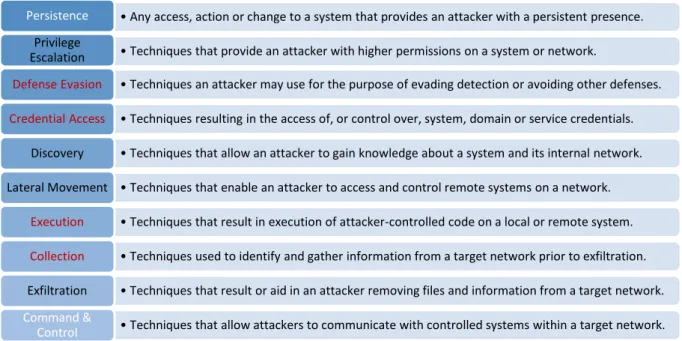
Within the ATT&CK model, tactics represent the highest level of abstraction and correspond with the tactical goals that an attacker has during an operation [37, p. 10]. These tactics perform a
comparable function in the ATT&CK model as phases do in the CKC. The ATT&CK model defines the tactics as summarized in Table 4:
Table 4 - The MITRE ATT&CK™ Tactics [37]
In contrast with the CKC, the outlined description of the tactics in the ATT&CK model is not sequential. For example, Command & Control is described lastly, but will typically be required to access other internal systems and thus to execute the other tactics. The order is not reversed either, as the objective-specific tactics Collection and Exfiltration are described just after (or before)
Command & Control. To move from tactics (ATT&CK) to phases of an attack (kill chain), the dimension time thus needs to be added. The ATT&CK tactics could be regarded as building blocks that can be used to describe the phases that occur in an attack. Once the building blocks (tactics) are
•Any access, action or change to a system that provides an attacker with a persistent presence.
Persistence
•Techniques that provide an attacker with higher permissions on a system or network.
Privilege Escalation
•Techniques an attacker may use for the purpose of evading detection or avoiding other defenses.
Defense Evasion
•Techniques resulting in the access of, or control over, system, domain or service credentials.
Credential Access
•Techniques that allow an attacker to gain knowledge about a system and its internal network.
Discovery
•Techniques that enable an attacker to access and control remote systems on a network.
Lateral Movement
•Techniques that result in execution of attacker-controlled code on a local or remote system.
Execution
•Techniques used to identify and gather information from a target network prior to exfiltration.
Collection
•Techniques that result or aid in an attacker removing files and information from a target network.
Exfiltration
•Techniques that allow attackers to communicate with controlled systems within a target network.
assembled in their ordered arrangement to accurately model the phases of an attack, they form the kill chain of that attack (or: an attack specific kill chain).
2.3.2
Comparison with Kill Chain Models
The tactics in the ATT&CK model can be regarded as a deconstruction of the tactical attack activities that occur within internal networks during the Action on Objectives phase of the CKC. Interestingly, the tactics in the ATT&CK model notably overlap with two of the phases that are already present in the CKC, namely Persistence (Installation in the CKC) and Command & Control.
When the ATT&CK model is compared3 with the Kill Chain variants (section 2.2), it shows that four of the additional phases that were suggested (section 2.2.3) are also covered and defined by the ATT&CK model. More specifically, this applies to Internal Reconnaissance (Discovery in the ATT&CK model), Privilege Escalation, Lateral Movement and Exfiltration. The identified overlap strengthens the presumption that the ATT&CK tactics can serve to provide a well-structured framework to describe additional kill chain phases.
Table 5 - MITRE ATT&CK™ compared with the CKC and proposed variants
The Pivoting phase however, as suggested by Nachreiner, is not explicitly demarcated in the ATT&CK model. Pivoting may be regarded as an implicit technique that is enabled by (and part of) Command & Control and is required to perform further actions such as Discovery and Lateral Movement. Target Manipulation, as proposed by Malone, is also not included as such in the ATT&CK model. Instead, the ATT&CK model includes two other tactics to describe objective-specific phases in an attack, namely Collection and Exfiltration. However, Target Manipulation may be broader than Collection and Exfiltration however, and include tactics towards other objectives such as Denial of Service. The application of the ATT&CK model to case studies can show if the Collection and Exfiltration tactics are sufficient to cover the objective-specific activities within APT attacks.
3 In the comparison visualized in Table 5, a white font is used to mark tactics that occur as phases in the original CKC. A black font is used to mark tactics that overlap with additional phases that have previously been
proposed as amendments to the CKC. A red font is used for the remaining tactics of the ATT&CK framework.
•Any access, action or change to a system that provides an attacker with a persistent presence.
Persistence
•Techniques that provide an attacker with higher permissions on a system or network.
Privilege Escalation
•Techniques an attacker may use for the purpose of evading detection or avoiding other defenses.
Defense Evasion
•Techniques resulting in the access of, or control over, system, domain or service credentials.
Credential Access
•Techniques that allow an attacker to gain knowledge about a system and its internal network.
Discovery
•Techniques that enable an attacker to access and control remote systems on a network.
Lateral Movement
•Techniques that result in execution of attacker-controlled code on a local or remote system.
Execution
•Techniques used to identify and gather information from a target network prior to exfiltration.
Collection
•Techniques that result or aid in an attacker removing files and information from a target network.
Exfiltration
•Techniques that allow attackers to communicate with controlled systems within a target network.
![Figure 4 – Courses of defensive action matrix for the CKC phases [3]](https://thumb-us.123doks.com/thumbv2/123dok_us/8268353.2190218/20.892.349.802.126.403/figure-courses-defensive-action-matrix-ckc-phases.webp)

![Table 4 - The MITRE ATT&CK™ Tactics [37]](https://thumb-us.123doks.com/thumbv2/123dok_us/8268353.2190218/24.892.108.791.633.969/table-mitre-att-amp-ck-tactics.webp)
![Figure 12 - Basic Building Blocks of CORAS Diagrams [39]](https://thumb-us.123doks.com/thumbv2/123dok_us/8268353.2190218/26.892.106.786.429.651/figure-basic-building-blocks-coras-diagrams.webp)