MEASURING THE RIGHT TO FOOD: A U.S. POLICY PERSPECTIVE
By Samantha Night
Honors Thesis Department of Public Policy
University of North Carolina at Chapel Hill
December 7, 2016
Approved:
___________________________ Pamela Jagger Ph.D.
2
ABSTRACT
The right to food is recognized by international law as a fundamental human right
of all people. Three conditions must be met for the right to food to be realized; food must
be available, accessible, and adequate. While food policy research in the United States
has focused on specific elements of these conditions, the right to food has not been
measured in a substantive and comprehensive way. This paper discusses the normative
implications of the right to food in the United States and proposes a framework for
operationalizing and measuring it domestically. I argue that right to food standards
should apply in the United States, and that a substantive and comprehensive right to food
assessment should be undertaken. Incorporating right to food principles into the
development of U.S. food policy, particularly at the state and local levels, may address
both structural and direct determinants of food insecurity and the prevalence of
overweight and obesity. The goal of right to food policies in the U.S. should be to
facilitate conditions such that people are able to provide a healthy diet for themselves.
This paper takes the first step in a substantive right to food assessment of U.S. food
policy by introducing an evaluation framework for use in future policy research and
3
ACKNOWLEDGEMENT
4
TABLE OF CONTENTS
Chapter 1: Introduction ...6
Chapter 2: Review of the Evolution and Normative Content of the Right to Food...8
The Right to Food Under International Law...9
International Covenant on Economic, Social and Cultural Rights ...9
World Food Assemblies ...11
Voluntary Guidelines ...12
General Comment No. 12 ...13
Defining the Three Conditions...14
Obligations of States to Promote the Right to Food ...17
The Right to Food vs. Food Security ...18
The Right to Food vs. Food Sovereignty ...19
The Right to Food vs. The Right to be Fed...19
Over-nutrition ...20
Chapter 3: The Right to Food at the National Level ...23
Options for State Implementation of Right to Food Policies ...24
The Right to Food in the United States ...25
Food Security and a Needs Based Approach ...27
Quantitative Approaches to Measuring Right to Food Principles in the U.S. ...29
Need for a Right to Food Assessment...34
Chapter 4: Methods and Evaluation Framework ...35
Availability ...38
Data Sources ...41
Access ...43
Adequacy ...48
A Right to Food Evaluation Framework ...52
Chapter 5: Results and Discussion ...55
Chapter 6: Conclusions ...66
List of References ...69
Appendix A ...77
5
TABLE OF FIGURES
Figure 2.1 The Right to Food in International Law and Agreements ...9
Table 4.1 Illustrative Indicators of the Right to Adequate Food ...37
Table 4.2 Indicators of Food Availability ...38
Table 4.3 United States Department of Agriculture (USDA) Data Sources...41
Table 4.4 Centers for Disease Control and Prevention (CDC) Data Sources ...42
Table 4.5 Indicators of Physical Access to Food ...44
Table 4.6 Indicators of Economic Access to Food ...45
Table 4.7 Control Variables ...47
Table 4.8 Indicators of Food Adequacy ...49
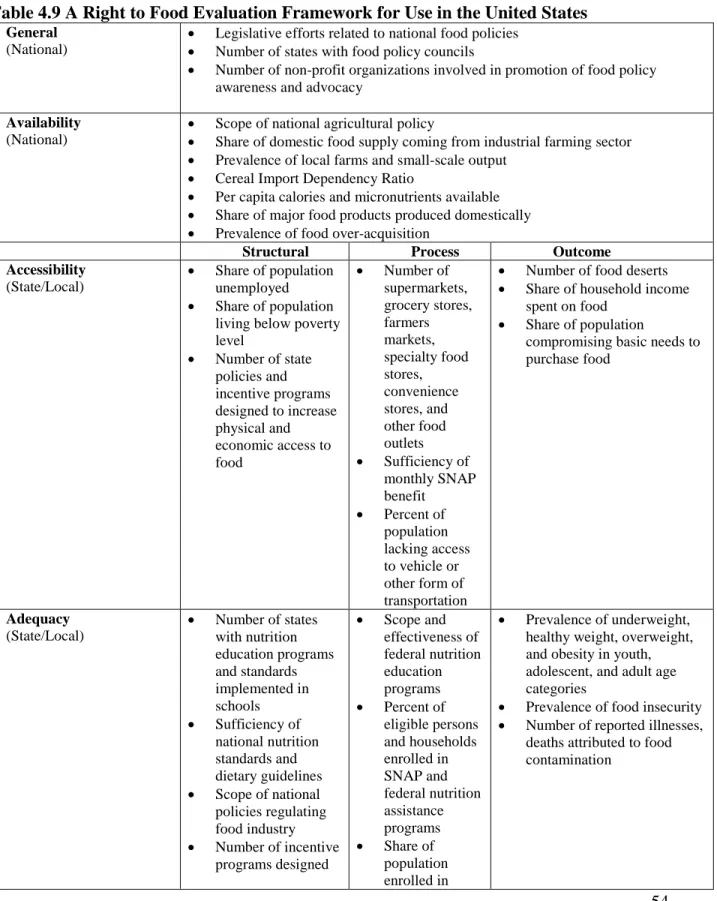
Table 4.9 A Right to Food Evaluation Framework for Use in the United States ...53
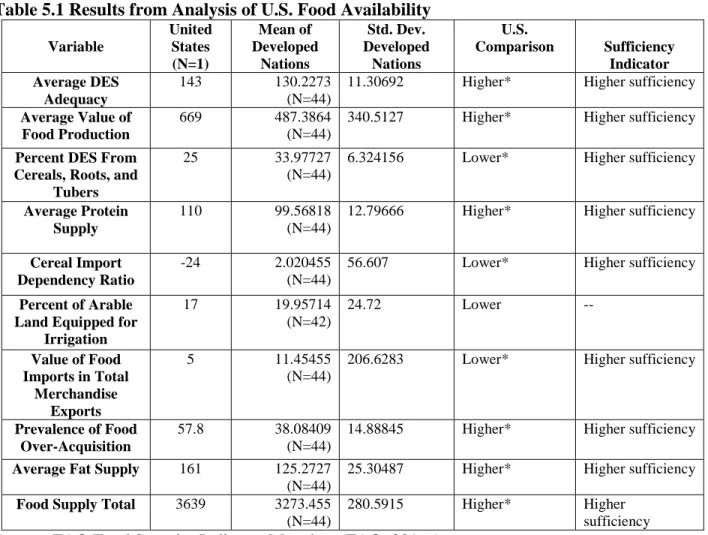
Table 5.1 Results from Analysis of U.S. Food Availability ...55
Table 5.2 Results from Analysis of Physical Access to Food ...57
Table 5.3 Results from Analysis of Economic Access to Food ...58
Table 5.4 Results from Analysis of Food Adequacy ...60
6
CHAPTER ONE: INTRODUCTION
The right to food is recognized by international law as a fundamental human right of all
people. Multinational agreements recognizing the right to food can provide the foundation for
national policies that seek to address determinants of this right. The right to food, as part of a
collective human rights framework, may also be used to evaluate a nation’s policies and resulting
population-level outcomes. This thesis examines the right to food in a national context, focusing
on how this right can be interpreted and applied in the United States. The study is motivated by
three research questions:
1. Should the human right to food be applied as a standard in the United States?
2. How should this standard be applied and measured in the United States?
3. Which elements of the right to food have the greatest potential for impact in the
United States?
In order to answer these questions, I first argue that right to food standards should apply in the
United States. I provide a substantive review of normative right to food principles and
obligations of states in meeting certain standards. To answer the second and third questions, I
operationalize the conditions required by the right to food and provide a framework for
measurement of this right in the U.S.
First, the paper provides a normative analysis of the right to food, including various
international agreements that either guarantee or protect this right. This section discusses the
conditions that must be met in order for the right to food to be realized, as identified and codified
by U.N. agreements, in addition to specific obligations of states. This portion also discusses the
right to food and its integration in national policy, focusing on how specific elements of the right
to food have been addressed and quantified in domestic policy research. This represents the first
7 policy evaluation and analysis. I answer the second research question by developing a framework
of indicators that can be used to measure the right to food in the United States, in accordance
with guidelines from the United Nations Food and Agriculture Organization (FAO). I then use
secondary data analysis to address the third research question. Regression analysis is used to
determine how selected indicators impact outcome measures chosen to represent each condition.
Results from both the normative and quantitative analysis are discussed and evaluated. Finally, I
make recommendations for future research and policy consideration based on my findings.
Although the United States has not ratified existing international agreements associated
with the right to food, I argue that it should still work towards realization of right to food
principles and standards for its own citizens. While hunger and malnutrition may appear in
different ways in the U.S. (when compared to less developed nations), the level of resources
available make realization of the right to food an achievable and reasonable goal. This thesis is
founded in the notion that those worst off in the United States should not face limitations
associated with hunger while living in a nation of such prosperity. A comprehensive assessment
of the right to food in the United States is the first step in recognizing areas of strength and
identifying any potential areas for improvement. Drawing on both normative implications and
specific requirements of the right to food, this paper explores what the right to food should look
like and attempts to establish a framework for determining quantitatively what it does look like.
The ability to conduct such an assessment in the United States is an important element of
effective evaluation and government accountability.
This thesis makes a unique contribution in two ways. First, it applies international human
rights standards to the United States. Second, it operationalizes these standards for quantitative
8 U.S. and synthesize them within a right to food framework. The thesis builds on discussion of
normative right to food principles and how they can be applied in the U.S. (Messer and Cohen,
2007; Chilton and Rose, 2009; Carney, 2012; Raponi, 2016) and on efforts to operationalize the
right to food into tangible indicators for measurement at the national level (OHCHR, 2012). The
major contribution of this thesis is the development of an evaluation framework for measurement
of the right to food in the United States. Furthermore, bringing together existing measures of the
U.S. food system has the potential to identify relationships and inform future research with the
goal of developing more effective policy. The goal of this thesis is to quantify the normative
concepts implied by the right to food and to provide a mechanism for future policy evaluation
and development.
CHAPTER 2: REVIEW OF THE EVOLUTION AND NORMATIVE CONTENT OF THE RIGHT TO FOOD
The right to food is an appropriate evaluation standard at the national and international
levels due to its expansive nature and its protection under international law. Protection under
international legal frameworks has specific advantages. First, international human rights law
comes with a normative significance that lends importance to the issue of food security at the
international and national levels; accepting the human right to food thus has a normative weight
that can be empowering by providing agency to those who are protected by it (Raponi, 2016).
Second, the fact that human rights are protected by international law implies that they are
universal, and thus applicable to all state parties (Niada, 2006). The right to food as a legal
concept provides a standard that can be applied across nations. This international standard is an
9 1 9 4 8 U. N. U n iv er sa l D ecl ar at io n o f H u m an R ig h ts (A rt ic le 2 5 ) 1 9 6 6 In te rn atio n al C ov en an t on E co n o m ic, S o ci al an d C u lt u ra l R ig h ts 1 9 7 4 W o rl d F oo d C o n fer en ce 1 9 9 6 R o m e D ecl ar at io n o n W o rl d F oo d S ec u ri ty 1 9 9 9 CE S CR G en er al C om m en t N o . 1 2 2 0 0 0 U. N. Mil le n n iu m D ev el o p m en t Go al s 2 0 0 4 F AO V o lu n ta ry G u id el in es 2 0 0 8 CE S CR S ta te m en t o n th e W o rl d F oo d C ri si s 2 0 1 5 S u st ai n ab le D ev el o p m en t Go al s
developed countries that may otherwise be exempt from scrutiny. The following section provides
a thorough review of right to food standards and principles.
The Right to Food Under International Law
The right to food was first introduced in international human rights discourse in the 1948
Universal Declaration of Human Rights. Tracing the evolution of this right over time and its
presence in international agreements allows for an understanding of the context and significance
of the right to food today. Figure 2.1 provides a timeline of relevant right to food agreements,
each of which is discussed in greater depth. Although the 1948 Declaration established an
understanding of the right to food, the legal definition and specific requirements needed to be
clarified. The following section provides a summary of key international accords that include
provisions related to the right to food, and focuses specifically on two major documents: the
1966 International Covenant on Economic, Social, and Cultural Rights (ICESCR) and General
Comment No. 12 in 1999. These two documents in tandem provide the strongest language
guaranteeing the right to food as a human right.
International Covenant on Economic, Social and Cultural Rights
The right to food was first proclaimed by the United Nations (U.N.) in Article 25 of the
Universal Declaration of Human Rights (UDHR): “Everyone has the right to a standard of living
adequate for the health and well-being of himself and of his family, including food” (U.N.
10 General Assembly, 1948). The UDHR represented a global commitment to human rights in the
wake of World War II (PWESCR, 2015). The next major document to address the right to food
is the International Covenant on Economic, Social and Cultural Rights (ICESCR). Adopted in
1966 and effective in 1976, the ICESCR built upon post World War commitments and was
adopted in response to Cold War tensions between countries that supported economic, social,
and cultural rights and those that focused solely on civil and political rights (PWESCR, 2015).
The ICESCR represents “the most important binding guarantee of the right to food” in
international human rights discourse (Sollner, 2007: 393). Article 11 codifies the right to food in
two respects (U.N. General Assembly, 1966).
1. “The States Parties to the present Covenant recognize the right of everyone to an
adequate standard of living for himself and his family, including adequate food”
2. “The States Parties to the present Covenant, recognizing the fundamental right of
everyone to be free from hunger…”
The ICESCR therefore guarantees the right to food in two different respects; Article 11 reaffirms
the right to adequate food as distinct from the right to be free from hunger. This implies that
adequacy cannot be interpreted as the basic fulfillment of caloric need, a notion later expanded
upon in 1999 by the Committee on Economic, Social and Cultural Rights (CESCR) in General
Comment No. 12.
In adopting the ICESCR, states commit themselves under Article 2 to “take steps…to
achieving progressively the full realization of the rights recognized in the present Covenant”
(U.N. General Assembly, 1966). The notion of progressive realization requires states to take
11 rights is resource-dependent (Sollner, 2007). The two provisions guaranteed by the ICESCR thus
provide the normative foundation for the right to food.
World Food Assemblies
The ICESCR resolutions were followed by two major assemblies of the international
community. In response to a burgeoning global food crisis, world leaders convened in 1974 for
the World Food Conference. The early 1970s were marked by a period of global famine and
skyrocketing grain prices, resulting in widespread hunger and malnutrition (Gerlach, 2015). In
passing the Universal Declaration on the Eradication of Hunger and Malnutrition, member states
furthered their commitments to combating hunger by invoking human rights. The 1974
Declaration reaffirmed the “inalienable right to be free from hunger,” echoing the fundamental
nature of the right to food first acknowledged in the ICESCR (U.N. General Assembly, 1974).
Furthermore, this Declaration deemed addressing food security and problems of food distribution
a “fundamental responsibility of Governments,” placing further obligations on states to take
actionable steps to implement the right to food through national policy (U.N. General Assembly,
1974).
World leaders met again in 1996 for the World Food Summit, prompted by a global
increase in cereal prices and diminishing reserves (Fresco, 1997). The World Food Summit
furthered commitments of national governments to solving the problem of global food insecurity,
as evidenced by the Rome Declaration, adopted at the outset of the Summit (Fresco, 1997).
Although the conference focused largely on agricultural production and policy, the commitments
made in the Rome Declaration and corresponding World Food Summit Plan of Action uphold
both the right to adequate food and the right to be free from hunger (FAO, 1996). In Articles 12
12 contribute to the full realization of human rights, emphasizing the importance of progressive
realization of the right to food in order to achieve food security (FAO, 1996). The Plan also lays
the groundwork for future clarification of the right to food and how it should be implemented.
Article 61 affirms the commitment to expand on Article 11 of the ICESCR by promoting the
provisions outlined and providing guidance for states to achieve full realization of the right to
food and eradicate food insecurity (FAO, 1996). Finally, the Rome Declaration established the
goal of reducing the number of undernourished people in the world by half by the year 2015.
This goal was echoed four years later in Article 19 of the 2000 Millennium Declaration; while
the Millennium Declaration did not specifically mention the right to food, it upheld the
obligation of states to respect and promote the realization of all human rights (U.N. General
Assembly, 2000). Similarly, the Sustainable Development Goals (SDGs), adopted in 2015 and
coming into effect in 2016, prioritize global food security and nutrition. The second goal of “zero
hunger” makes the commitment to “end hunger, achieve food security and improved nutrition
and promote sustainable agriculture” by setting various targets to be achieved by 2030 (U.N.,
2016). Though the SDGs do not specifically promote the right to food, the goal to end global
hunger represents an international effort to implement certain right to food principles.
Voluntary Guidelines
One instrument used to clarify the right to food per the commitment made at the World
Food Summit was the 2004 release of Voluntary Guidelines for states to follow in implementing
the right to food in national policy. This comprehensive set of nineteen points span structural and
process level policies that promote the right to food at the national and international levels. The
Voluntary Guidelines are intended to assist states in pursuing a right to food agenda within the
13 considered a form of “soft law”—although they discuss legally binding and non-binding
information, they do not carry any formal legal authority and therefore cannot compel additional
obligations onto states. This non-binding characteristic may play into critiques regarding the
potential ineffectiveness of agreements that simply recognize human rights goals but do not
provide formal obligations. However, the Voluntary Guidelines are an important component of
right to food discourse for two reasons: one practical and one symbolic. First, the Guidelines
provide a “blueprint” for policy implementation at the national level, including concrete steps
that can be taken by states to advance the realization of the right to food (Sollner, 2007).
Acceptance of the Voluntary Guidelines implies the political will of nations to combat hunger by
adhering to a prescribed list of practices and policies, while states that deviate from the
Guidelines must justify actions that oppose or do little to facilitate the realization of the right to
food (Sollner, 2007).
General Comment No. 12
In accordance with the pledge made at the World Food Summit in 1996 to clarify the
right to food, the U.N. Committee on Economic, Social and Cultural Rights (CESCR) in 1999
issued General Comment No. 12. This document provides the most substantive and strongest
language regarding the specifics of the right to food, including an in-depth definition of
necessary conditions, an explanation of state obligations, and notes on benchmark and
monitoring procedures. Most importantly, General Comment No. 12 establishes a standard by
which states can be evaluated and compared in their progress towards meeting the full realization
of the right to food. General Comment No. 12 focuses not only on the right to be free from
hunger, but more specifically on the notion of adequacy. Paragraph 6 provides the most
14 “The right to adequate food is realized when every man, woman, and child, alone or in
community with others, have physical and economic access at all times to adequate food
or means for its procurement” (CESCR, 1999).
This definition captures multiple related dimensions of the right to food, specifically on what
constitutes adequate food. Paragraph 8 expands on the definition of adequacy to include two
components: availability and accessibility (CESCR, 1999). These three components (adequacy,
availability, and accessibility) make up the fundamental conditions necessary of the right to food.
Uniting these principles is an underlying concern for individual empowerment; the Comment
states, “the right to adequate food is indivisibly linked to the inherent dignity of the human
person” (CESCR, 1999). These themes support the concrete material discussed in the Comment
and can be translated into substantive policies that support the right to food.
Most recently, in 2008 the CESCR issued a Statement on the World Food Crisis in
response to rising global food prices. The Statement points to the crisis as a failure of nation
states to meet the obligations required by the right to food (CESCR, 2008). More importantly,
the Statement can be understood as a call to action for states to address not only the immediate
effects of the food crisis, but also the structural issues contributing to an inequitable distribution
of food and the widespread deprivation of the right to food (CESCR, 2008). The Statement thus
has particular significance because it invokes the right to food to justify policy action at the
national level, furthering the notion that national human rights policies can be used as a means to
address the global problem of food security.
Defining the Three Conditions
As mentioned previously, the right to food encompasses three distinct conditions that
15
adequate. General Comment No. 12 clarifies these conditions and provides guidance for how each should be understood.
Availability is discussed primarily in paragraph 12 of the Comment. Food is available
when individuals can feed themselves from “productive land” or via “well functioning
distribution, processing and market systems that can move food from the site of production to
where it is needed in accordance with demand” (CESCR, 1999). Availability refers to structural
conditions that allow people to procure food, either by growing it themselves or by purchasing it.
This condition can also refer to the sufficiency of the food supply to ensure that food is available
“in a quantity…sufficient to satisfy the dietary needs of individuals” as per paragraph 8 of the
Comment (CESCR, 1999). Availability is understood as a well functioning food system in which
the production and distribution of food is such that there is sufficient food for everyone.
Accessibility includes both physical and economic access to food. Paragraph 13 of the
Comment discusses both aspects. Economic access is related primarily to the cost of food, which
must be “such that the attainment and satisfaction of other basic needs are not threatened or
compromised” (CESCR, 1999). Economic access applies to any avenue by which people procure
food, representing “a measure of the extent to which it is satisfactory” (CESCR, 1999). In what
the CESCR would come to call “affordability,” this standard applies not only to actual food
prices but also to structural level factors and economic conditions related to the means necessary
for acquiring food (Sollner, 2007). In short, people must have the means to purchase food in
order for this condition to be met (OHCHR, 2010). On the other hand, physical access refers to
people’s actual ability to acquire food. Paragraph 13 states that “food must be accessible to
everyone,” including certain classes of vulnerable groups who may face physical barriers to
16 those who face physical disabilities and may not be able to procure food on their own. Sollner
(2007) notes that physical access is not a conditional standard; people are either able to procure
food, or they are not. The two elements of accessibility thus span systems level and individual
factors that may represent barriers to adequate food; these barriers must be addressed in order for
the right to food to be fulfilled.
Adequacy is not limited to a sufficient amount of food, as Paragraph 6 notes, “the right to
adequate food shall therefore not be interpreted in a narrow or restrictive sense which equates it
with a minimum package of calories” (CESCR, 1999). In what the CESCR would come to call
“quality,” adequacy thus embodies the expansive nature of the right to food that goes beyond
simply eliminating hunger. Conditional factors must be taken into a consideration of adequacy;
these conditions are impacted by “prevailing social, economic, cultural” norms (CESCR, 1999).
This variability implies that what may be considered adequate in one state or under one set of
circumstances may not meet the same standard in another. Three such conditions are highlighted
specifically in General Comment No. 12. First, dietary needs must be met, according to
Paragraph 9 of the Comment. Needs refer to the nutritional makeup of the available diet that go
beyond calories necessary for life; rather, there must be a diversity of nutrients in the diet such
that “physical and mental growth, development and maintenance, and physical activity” are
possible (CESCR, 1999). The nutritional makeup of the diet is thus an important factor in
determining adequacy; food must therefore be sufficient in quality in addition to quantity.
Second, according to Paragraph 10, food must also be “free from adverse substances” (CESCR,
1999). This condition sets standards for food safety and requires some level of prevention
directed towards the contamination of food. Third, the available diet must be consistent with
17 nutrient-based values attached to food” must be considered when evaluating adequacy (CESCR,
1999). This bolsters justification for addressing structural factors in addition to the immediate
problems related to food insecurity, focusing not just on eliminating hunger by meeting
minimum caloric needs, but also on the factors that create conditions necessary for people to
provide for themselves an adequate diet that meets their needs.
These three conditions must be met in order for the right to food to be considered
fulfilled. States are faced with specific kinds of obligations that promote the right to food.
Though interpretation and discussion of the extent of state responsibility is outside the scope of
this thesis, the specific obligations as detailed in General Comment No. 12 are discussed in the
following section.
Obligations of States to Promote the Right to Food
According with Paragraph 15 of General Comment No. 12, states have three obligations
related to meeting the conditions specified by the right to food: to respect, protect, and fulfill.
These obligations inform how we should understand the role of governments in realizing the
right to food (CESCR, 1999).
States are required first to respect the right to food, meaning the government should not take actions that would prevent the right to adequate food from being realized (CESCR, 1999).
To protect means that the state is obligated to prevent individuals, organizations, or third parties from denying the right to adequate food for any other class of individuals or group. This can
include state actions taken to ensure that food is regulated in such a way that guarantees its safety
and/or quality (OHCHR, 2010). The obligation to fulfill has two components: to facilitate and to provide (CESCR, 1999). Facilitate means that the state must “pro-actively engage in activities
18 must therefore take actionable steps toward realization of the right to food. States are required to
directly provide food only when people do not have the resources to do so for reasons outside of
their control (CESCR, 1999). This obligation—to provide—is emblematic of the objection
relating to a right to be fed. It is important to note that the Comment requires this action of states
only when people are unable to provide for themselves“for reasons beyond their control”
(CESCR, 1999). This obligation does not therefore imply that states should provide or hand out
food to anyone who does not have it. When taken together, the three levels of obligation provide
a framework that can be applied to states and interpreted relative to the conditions within those
states.
Having defined the right to food in international discourse and clarified its key
components, an understanding of what the right to food is not may be helpful. It is important to
understand how the right to food is distinct from other concepts in both its legal status and scope.
Potential misconceptions are clarified in next section.
The Right to Food vs. Food Security
One potential misconception is that the right to food is as simple as meeting a minimum
caloric count to ensure food security. While the two concepts capture similar measures, food
security is understood as a condition that must be met in order for the right to food to be fulfilled
(OHCHR, 2010). There are two important distinctions between food security and the right to
food. First, food security as a concept does not carry legal weight (OHCHR, 2010). As a result, it
cannot be used to hold states and parties accountable because it is not legally binding. Second,
food security is more limited than the right to food. Food security is a condition that must be met,
while the right to food refers to a human-rights approach that imposes obligations on states and
19 comprehensive framework for use in international discourse about governmental obligations,
accountability, and policy.
The Right to Food vs. Food Sovereignty
Food sovereignty builds on the concept of food security and is often viewed as an
alternative, particularly in its rejection of neo-liberal attitudes towards the global food system
(Wittman, 2011). Food sovereignty refers to “the right of communities, peoples and states to
independently determine their own food and agricultural policies” (Beuchelt and Virchow, 2012:
259). In short, this concept implies that individual states and peoples should have democratic
control over their own food systems. Food sovereignty goes further than food security in its
emphasis on individual determination of access to the food system. Some proponents argue that
food sovereignty can only be achieved by recognizing food as a human right (Carney, 2012).
Still, rights-based approaches are preferable to both food security and food sovereignty because
they are legally binding in international law, and thus provide a global context in which we are to
understand the right to food and the ways in which this right can be fulfilled at the national level
(Carney, 2012). Though food sovereignty has not been applied as consistently in the United
States as food security, as Carney (2012) notes, an understanding of this concept as distinct from
the right to food is essential when considering how the right to food should be translated within
the U.S.
The Right to Food vs. The Right to be Fed
Another potential misconception about the right to food is that it implies that food should
be provided for anyone who does not have it. This is not the case. In cases such as natural
disasters that preclude people from providing for themselves, the state should provide food
20 understood as the right of the individual to provide for oneself. Diredct food assistance under
certain conditions is only one element of the right to food, which is “primarily a right to feed
oneself and to have access to food” (Raponi, 2016: 4). The right to food is therefore more
comprehensive and focused on addressing structural aspects of food insecurity, rather than
simply providing justification for immediate and temporary solutions. The right to food as a
fundamental human right emphasizes dignity and agency, with individuals expected to meet their
own needs under conditions that allow them to do so (OHCHR, 2010). Accepting the right to
food does not “impos[e] an obligation on someone else to produce the food, or to hand over food
to anyone who might be inclined to assert the claim” (Byron, 1988: 322). Rather than ensuring
that food will be provided to all people, the right to food protects the right to engage in the
responsibilities associated with feeding and providing for oneself with dignity (Byron, 1988).
Some find in the United States an aversion to accepting a fundamental “right” to food, viewing
efforts to address domestic food insecurity as charitable (Raponi, 2016). This misconception
must be addressed for any substantive efforts to be made in advancing the right to food in the
United States, particularly by distinguishing the right to feed oneself—the guarantee of
conditions that allow individuals to do so—from the right to be fed via charitable causes or
governmental assistance.
Over-Nutrition
Though applications of right-to-food principles are largely relevant to achieving food
security and mitigating under-nutrition, the growing epidemic of over-nutrition in the 21st
century cannot be ignored. Global institutions, including the U.N. and the World Health
Organization, have increased scrutiny and policy attention paid to non-communicable diseases
21 U.N. High Level Meeting on NCDs to the WHO’s Global Action Plan in 2013, awareness that an
integrated strategy is needed to combat global obesity rates has increased. A major theme is the
need for accountability systems at the national and international level to advance a public-health
oriented strategy, as opposed to focusing solely on the responsibility of individual behaviors
(Chopra, et.al., 2002; Swinburn, et.al., 2015). Swinburn, et.al. (2015) note that widespread
agreement exists on the role that national governments can play to facilitate policies that improve
the healthfulness of food environments, allowing for specific focus on disadvantaged populations
where applicable. This approach is consistent with right-to-food principles of access and
adequacy, particularly in a U.S. context. Access to food can refer to healthy foods; for example,
by ensuring that grocery stores, farmers markets, and other outlets selling fruits and vegetables
and other healthy foods are physically accessible in the population. Furthermore, the price of a
healthy diet should be affordable and therefore economically accessible to the population. The
concepts of access to healthy food and a healthy food environment contribute to a more nuanced
understanding of adequacy; the readily available diet should not only be calorically sufficient,
but should provide individuals with the nutrients they need. This is another example of how
adequacy encompasses both quality and quantity of the diet.
The relationship between obesity and dietary adequacy brings to light a double burden of
under and over nutrition. It is possible to face food insecurity and over-nourishment
simultaneously. Hough and Sosa (2015) discuss this “paradoxical” relationship that is largely
driven by poverty, through income individuals meeting their caloric needs with a
low-quality diet that fails to meet nutritional standards and can have negative health consequences. In
the United States, this is a pressing concern given persistent rates of both food insecurity and
22 An emphasis on improving access and adequacy to healthy food specifically may be even more
important in the U.S. as individuals may be afflicted by this double burden, driven largely by the
food environment in which people live.
Attempts to measure food environments and national food policies are an important
element of the global strategy to combat NCDs. Two current efforts on this front are worth
mentioning. The International Network for Food and Obesity/NCDs Research, Monitoring and
Action Support (INFORMAS) is a global network of public interest and civil society groups
working to collect and provide data in an effort to measure public and private policies related to
healthy food environments (Swinburn, et al., 2013). INFORMAS serves as a complement to the
WHO’s NCD monitoring process by providing a system of monitoring and evaluation that
allows for standardized comparisons between nations. (Swinburn, et al., 2013). In addition to
measuring determinants of the food environment, INFORMAS also seeks to measure the actions
of public and private actors and their effects on obesity and NCDs. A second accountability
mechanism exists through independent monitoring systems. Issued since 2013, the Access to
Nutrition Index evaluates global leaders in the food industry based on the strength of their
commitments to alleviating both under and over nutrition (Swinburn, et al., 2015).
Complementary to the ANI is the Hunger and Nutrition Commitment Index, focused on
evaluating national governments on the basis of their policies aimed at addressing poor nutrition
(Swinburn, et al., 2015). Though this index applies to low and middle-income countries and does
not measure U.S. policy impact, both of these measurement frameworks provide examples of
systematic evaluation mechanisms that could be applied in the United States. When taken
together, these systems address actions of the public and private actors that become the
23 The right to food has been the subject of international discourse and protection for some
time. Though the concept has developed, the conditions of availability, access, and adequacy
continue to set the standard for realization of this right. In short, food must be sufficient in both
quantity and quality. However, acknowledgement of the right to food in global accords is not
enough. The next step is to translate and implement right to food principles into national policy.
Building on the normative content of the right to food, an understanding of how these principles
can be applied in the United States is essential. In the following section, I first discuss ways in
which states can implement right to food principles, and then focus on how the right to food can
be translated in the context of the United States and discuss existing efforts to address
availability, access, and adequacy in the U.S.
CHAPTER 3: THE RIGHT TO FOOD AT THE NATIONAL LEVEL
Beyond recognition of the human right to food in international law and discourse, the
right must be operationalized domestically. It is the responsibility of states to enact policies that
will ultimately determine the conditions directly linked to the right to food and the outcomes
observable at the individual and population levels. Simply acknowledging the right to food in
international agreements is ineffective if commitments are not followed by actions seeking to
implement the principles of the right to food through national policy. McDermott (2012) notes
that this is in fact one weakness of the internationally recognized right to food; it cannot
effectively stand alone without enforceability at the national level. General Comment No. 12
highlights the responsibility of states to develop a national strategy for implementing the
principles associated with the right to food, “based on a systematic identification of policy
measures and activities relevant to the situation and context” (CESCR, 1999). In other words,
24 for realization of the right to food. States must also establish the necessary mechanisms to track
progress towards realizing the right to food in the most expeditious manner possible. This section
marks a transition from an analysis of the normative implications and specific conditions of the
right to food, towards a practical discussion of how these principles are to be applied at the
national level, focusing on a U.S. context. Potential strategies for policy implementation are first
summarized. I then focus specifically on the United States, examining the position historically
taken by the U.S. on the right to food and ways in which the U.S. can make advancements in
incorporating rights-based principles in its domestic food policies.
Options for State Implementation of Right to Food Policies
Formal guidance is available for states to adopt a rights-based approach to national food
policy. In taking a rights-based approach to food security, the Food and Agriculture Organization
notes that human rights principles must be fundamental elements of policy (FAO, 2006). FAO
suggests a national right to food approach with policies spanning five categories: advocacy and
training, information and assessment, legislation and accountability, strategy and coordination,
and benchmarks and monitoring (FAO, 2006). Policy efforts across these areas collectively can
lead to an effective implementation of rights based food policies that target vulnerable groups
and make advancements in realizing the right to food for all of a state’s citizens.
States also have the option to formally recognize the right to food in the state
constitution. Protecting the right to food in this way provides a legal basis for enforcement of
violations and a general extension of the right to all those protected under a constitutional
document. The approach recommended by the CESCR is development of a framework law
(CESCR, 1999). Framework legislation would include an explanation of the law’s context while
25 the goals defined by the law (CESCR, 1999). This approach has advantages because it requires
the state to ground a national policy within a right to food context and based on right to food
principles, while still emphasizing state accountability by establishing concrete goals and
defining the mechanisms necessary to achieve them.
In addition to the two potential options outlined above, states can still advance right to
food policies in more targeted ways. Addressing specific elements of the right to food may
contribute to valuable progress towards outcome goals, but a comprehensive strategy developed
within a right to food framework may prove most effective in addressing structural determinants
of the right to food and its realization. Any strategy adopted should be based on a definitive
effort to identify areas of weakness and potentially vulnerable populations, in accordance with
Paragraph 22 of General Comment No. 12 and FAO guidance. The next section discusses the
positions taken by the United States concerning the right to food and its components in
international discourse and in domestic policy, before assessing ways in which the U.S. could
begin to move towards or implement a more rights-based approach to national food policy.
The Right to Food in the United States
The United States has typically taken a reserved approach in its positions concerning the
right to food. Although the U.S. does have some degree of national food policy, it is not within
the context of a right to food framework (Messer and Cohen, 2007). This section first
summarizes the position taken by the U.S. on right to food legislation before discussing steps the
U.S. has taken and potential advancements for policy going forward.
Messer and Cohen (2007) note that though the United States accepts the human rights
principles set forth in the U.N. Declaration of Human Rights, it has categorically rejected any
26 notion that states have specific obligations as part of the right to food (Raponi, 2016). The U.S.
is therefore not a party to the International Covenant on Economic, Social and Cultural Rights,
having signed the agreement but not ratified it. Failing to ratify the ICESCR signifies that the
U.S. is unwilling to assume the responsibilities they would be legally obliged to, although
signing the agreement indicates an acceptance of the values implicit (Chilton and Rose, 2009).
Tension between the U.S. stance on right to food agreements and acceptance of right to food
principles is not a recent phenomenon. Messer and Cohen (2007) highlight fluctuating levels of
support for the right to food during the 1970s and 1980s. Though advocacy groups, such as Food
First and the Food Research and Action Center, worked to emphasize the importance of the right
to food, U.S. policy did not reflect these grassroots attempts; such groups did not present a
cohesive policy agenda to advocate for, and thus failed to have an influence on foreign policy
stances, which remained resistant to commitments that would require action from the U.S.
government (Messer and Cohen, 2007). Messer and Cohen (2007) also point out that federal
food assistance programs fluctuated in their scope during this period; though “welfare” remained
on the policy agenda, support was inconsistent, and the impacts of these national programs were
not evaluated within any rights based frameworks. Meanwhile, the Right to Food Resolution
garnered support from some U.S. legislators in 1976. This resolution was an attempt by Congress
urging the United States to consider humanitarian values in its foreign and domestic food
policies; however, this resolution was non-binding and did not ultimately lead to any decisive
actions towards embracing the right to food, despite the signing (though not ratifying) of the
ICESCR in 1977 (Messer and Cohen, 2007).
In 1993, the United States formally withdrew from international commitments to further
27 policies taking effect in the U.S. would not hold up against international legal standards (Messer
and Cohen, 2007). The U.S. has continued to support a neoliberal approach in the global sphere,
favoring economic growth as the mechanism by which to push for achievement of the
Millennium Development Goals and continuing to vote against the U.N. Right to Food
Resolution (Messer and Cohen, 2007). Despite efforts to combat food insecurity and garner
support for rights-based food policies, the U.S. has clearly rejected international recognition of
the right to food and its obligations on principle, instead pursuing its own food policy agenda at
the national level in the absence of a rights-oriented framework.
One rationale for opposing right to food legislation or right to food policies is an
objection to the obligation of the government to provide food (Raponi, 2016). This view is
driven by misconceptions about what the right to food entails and how it is to be implemented.
The distinction between the right to food and the right to be fed has been clarified previously, but
it is worth reinforcing that the right to food does not imply that the role of government should be
to provide food for anyone who needs it. Rather, the right to food is simply “the right to expect
reasonable opportunities to provide food and good nutrition for oneself” and that “the
government’s role is to facilitate these opportunities” (Chilton and Rose, 2009: 1207). In short,
the government can support food policies to ensure that the economic and social conditions are
such that people can provide for themselves. Adopting a rights-based approach could allow for
structural changes as opposed to focusing solely on a needs-based approach, which has been
favored by the U.S. in addressing domestic food concerns.
Food Security and a Needs Based Approach
As discussed in previous sections, the right to food is a multidimensional right that
28 people eat. The United States has focused largely on outcome measures, specifically on food
security. Beginning with the Reagan administration, a conceptual basis for measuring food
security and hunger in the United States was developed and implemented in the form of a
national survey called the Food Security Supplement (Carney, 2016). Today, the United States
Department of Agriculture (USDA) monitors food security at the national and state levels. The
USDA defines food security as “access by all people at all times to enough food for an active,
healthy lifestyle” (USDA, 2016c). This measurement is the primary indicator of need in the
United States. Measuring food insecurity addresses the immediate problem: that people often do
not have enough to eat. In fact, 71% of the USDA’s 2017 budget is allocated toward providing
direct nutrition assistance, with $82 billion allocated to the Supplemental Nutrition Assistance
Program (SNAP), formerly known as Food Stamps (USDA, 2016a). While measuring food
insecurity provides valuable information about which populations need assistance and can
inform policies aimed at providing it, this approach is limited in that it does not address
structural factors that contribute to the problem. Former U.N. Special Rapporteur on the Right to
Food, Olivier de Schutter, cites a lack of “political will” in addressing such underlying causes of
hunger, largely due to inefficient national policy strategies (de Schutter, 2009: 2). Conceptually,
such needs-based strategies “assume that people who lack access to food are passive recipients”
(Chilton and Rose, 2009: 1207). Though needs-based strategies in the U.S. may be essential
solutions to targeting the most immediate problems of hunger and food insecurity, there is
potential for improvement with policies that address underlying factors and conditions. A
rights-based approach and national food policy strategy would provide a platform for addressing both
while emphasizing the significance of providing for oneself as opposed to receiving direct
29
Quantitative Approaches to Measuring Right to Food Principles in the U.S.
Extensive research has been conducted in the United States relating to certain elements of
the right to food. While not specifically understood within a right to food framework, aspects of
food availability, access, and adequacy are covered in existing food policy research. A summary
of current findings is found below.
Efforts to document the U.S. food supply explore trends in availability and subsequent
consumption. The USDA has extensively documented the availability of food and specific
nutrients at the national level, focusing on availability of specific food items, food groups, and
macronutrients (USDA, 2016d). This documentation also accounts for food loss. In addition to
objective measures of U.S. availability, the food supply can be evaluated in a global context. A
white paper report from the group Sustainable America evaluates the U.S. food supply in relation
of the global food supply; the report finds that although crop yields have continuously increased
in the U.S., the global food supply currently operates above capacity, increasing the potential for
future price increases and shortages (Sustainable America, 2012). The report finds that food
waste must be decreased at all levels of the U.S. food system from a current estimated range of
27 to 50 percent in order to avoid negative environmental effects and potential shortages in the
future (Sustainable America, 2012). In addition to documenting the depth of the food supply,
efforts to evaluate its actual composition are also found in existing research. Krebs-Smith,
Reedy, and Bosire (2010) measure the dietary quality of the U.S. food supply from 1970 to 2007,
developing the Healthy Eating Index (HEI) to evaluate the food supply and its consistency with
dietary recommendations from the USDA’s Dietary Guidelines. A major finding from this
research is that “deliberate efforts on the part of policy makers, the agriculture sector, and the
30 diet that is available to everyone (Krebs-Smith, Reedy, and Bosire, 2010:1). This finding, that
coordinated policy efforts are needed to ensure an adequate diet for all people, is consistent with
right-to-food principles and should be taken into consideration. Finally, national-level analysis of
the U.S. food supply has also examined the prevalence of overconsumption. Blair and Sobal
focus on the concept of “luxus consumption,” defined as the prevalence of “food waste and
overconsumption leading to…health problems, and excess resource utilization” (Blair and Sobal,
2006: 63). The authors focus on the prevalence of luxus consumption between 1983 and 2000,
finding that obesity rates increased consistently with increases in per capita food availability
during the selected time period (Blair and Sobal, 2006). The simultaneous presence of
overconsumption and food waste can have detrimental effects on both the environment and
population health. Sources indicate little concern with food shortages in the United States;
distribution and composition of the U.S. food supply appear to be greater threats.
Access to food is a major theme in domestic food policy research. Quantitative
approaches have largely been applied in examining physical access to food, particularly in
low-income areas and across demographic dimensions. As a general trend, studies find more limited
access to chain supermarkets and healthy options in low-income and minority neighborhoods
(Powell, et al., 2007; Zenk, et al., 2014; Bower, et al., 2013). Food store availability and type is
important, as research suggests that the local food environment, including the type of food stores
available, can impact the diets of residents (Walker, et al., 2010). Neighborhood access to
supermarkets has been linked to healthier dietary consumption patterns and reduced prevalence
of obesity; low-income neighborhoods tend to have fewer supermarkets and more unhealthy food
outlets, particularly fast food restaurants (Larson, et al., 2009). In a systematic review of
31 to the number and type of food outlets in different neighborhood as well as the price of food,
bolstering findings that low-income and minority residents not only experience relatively lower
access to chain supermarkets, but also face higher food prices (Walker, et al., 2010). A
particularly important finding from this review is the identification of a need for research on the
impact policy may have on food access. Research suggests that there is some level of consensus
that access to food—both physical and economic—is a problem for particularly disadvantaged
populations in the United States, and that there may be opportunities for policy to mitigate these
disadvantages.
An important subset of research on food access concerns the availability and impact of
farmers markets as a healthier outlet in the food environment. More research is needed on the
potential for farmers markets as a strategy to improve dietary quality and access to healthy food,
as shopping at farmers markets has been associated in preliminary research with increased
consumption of produce (Jilcott-Pitts, et al., 2014). A preliminary study on farmers market
availability and disparities conducted at the county level found results consistent with existing
food access literature, particularly in that minority and below-poverty populations were less
likely to have a farmers market present in the food environment (Singleton, et al., 2015). In
response to potential associations between shopping at farmers markets and increased intake of
fruits and vegetables in low-income communities, Savoie-Roskos et al. (2016) examine the
potential impact of financial incentives provided via the Supplemental Nutrition Assistance
Program (SNAP); results from the pilot program indicate that participation in the incentive
program, in which participants received $10 per week to spend at a farmers market, was
associated with decreases in food-insecure behaviors and a statistically significant increase in
32 SNAP and farmers markets via incentive structures and matching programs, in which farmers
markets match each dollar spent via SNAP benefits, warrants further research, particularly in
determining any potential causal link between farmers market prevalence and improved dietary
outcomes (Savoie-Roskos, et al., 2016). Similar to farmers markets, food hubs are an emerging
phenomenon on which more research is needed. A regional food hub is “a business or
organization that actively manages the aggregation, distribution, and marketing of
source-identified food products primarily from local and regional producers to strengthen their ability to
satisfy wholesale, retail, and institutional demand” (Barham, et al., 2012: 4). Though research
notes that this definition is in many ways intentional vague to allow for development of such a
recent phenomenon, common characteristics of food hubs include working with local food
producers, employing pricing strategies that are fair to producers and consumers, and a mission
for social, economic, and environmental impact in addition to financial profit (Fischer, et al.,
2015; Barham, et al., 2012). The emphasis on economic and social impact is of particular
relevance given the potential for food hubs to increase food access for vulnerable populations,
though the non-financial characteristics of food hubs are seemingly consistent with right-to-food
principles (Fischer, et al., 2015). Food hubs represent an innovative option for local food outlets,
but there is a need for measurement and quantification about food hubs and their impact on the
respective communities in which they exist (Matson and Thayer, 2013). More research is needed
on the potential impact of food hubs in order to develop a model of effectiveness and potentially
incorporate food hubs as a non-traditional food outlet into a comprehensive strategy to improve
access.
Finally, research regarding food insecurity in the U.S. has explored the relationship
33 associations in the literature regarding food insecurity and dietary quality, Hanson and Connor
find differences in the relationship for adults and children. The review found consistently adverse
associations between dietary quality and food insecurity in adults, finding that food-insecure
adults were less likely to consume adequate amounts of fruits, vegetables, and dairy, as well as
certain micronutrients (Hanson and Connor, 2014). However, the same relationship was not
always found for children, bolstering the notion that parents may be likely to shield children
from the effects of food insecurity. Finally, a salient finding from this comprehensive review is
the suggestion that public policy may be used as a strategy to “support access to adequate,
healthful food” for food insecure households (Hanson and Connor, 2014: 691). In addition to the
relationship between dietary quality and food insecurity, access to food is also thought to be a
factor contributing to food security, or lack thereof. Bonnano and Li analyze the relationship
between food outlet density (an indicator of access) and food insecurity, finding that access to
large and small grocery stores (including supermarkets and convenience stores) can “mitigate the
likelihood of adults experiencing food insecurity” in U.S. metropolitan areas; the study also
includes measures of SNAP participation, finding that nutrition assistance in conjunction with
increased access can mitigate food insecurity in adults (Bonnano and Li, 2014: 199). The study
identifies areas for future research, including a further assessment of local access to food and its
impact on food insecurity, as well as the effects of non-traditional food outlets, such as farmers
markets. These notes for future research are consistent with the ideas in this paper.
Several aspects of the right to food have been evaluated within the United States. In many
cases, research has focused on the relationships between factors such as access and adequacy.
However, these conditions have not been evaluated within a right to food framework or
34 argument for building on existing research and incorporating a right to food assessment into U.S.
food policy.
The Need for a Right to Food Assessment
Up to this point, I have provided a summary of the human right to food, including its
history in international law, core principles, and distinct nature. I have emphasized the
importance of states in developing national strategies to implement the right to food in public
policy, in accordance with recommendations made by international governing bodies. The most
salient point concerning the right to food is the notion that this right serves to empower the
individual by facilitating conditions under which people can provide food for themselves. The
United States has accepted tenets of the right to food but has yet to recognize this right as a
worthwhile goal, much less as a framework by which national food policy can be structured. I
argue that a logical next step is for the United States to take right to food principles into account
and conduct a comprehensive assessment of the three necessary conditions: availability,
accessibility, and adequacy. General Comment No. 12 emphasizes the need for states to conduct
a “systematic identification of policy measures and activity relevant to the situation and context”
(CESCR, 1999). The U.S. has already made steps in this area through its documentation of food
insecurity. A rights-based approach would go further, analyzing the underlying factors that may
have the most significant impact on the population. Persistent food insecurity in the United
States, given the size of the economy and the prosperity that has come to represent the American
identity, is a profound issue that must be examined further in order to address its root causes. A
rights-based approach would allow the U.S. to do so while promoting values of individual
potential and the goal of self-sufficiency consistent with American ideals. Conducting an
35 imperative step in identifying areas that can be addressed through national policy and
coordination. In the following section, I make first steps to synthesize existing measures within a
right to food framework and to operationalize the normative conditions associated with the right
to food within a U.S. context. I first explain the methods used before providing a discussion of
my results.
CHAPTER 4: METHODS AND EVALUATION FRAMEWORK
The multidimensional right to food and its core principles must be translated into
concrete measures. This step is essential for conducting an initial right to food assessment as well
as for setting benchmarks and monitoring progress in the future. In response to the second
research question, this paper seeks to operationalize some of the core elements of the right to
food and identify areas that have the most potential for impact in the U.S.
Many factors related to the realization of the right to food are at the sub-state level
(Messer and Cohen, 2007). In the U.S., state and local policies may be particularly impactful. To
assess the current status of availability, access, and adequacy, I begin by looking at national level
factors before narrowing the focus to the state level unit of analysis. I use secondary data to
evaluate the specific factors that may be of greatest significance or have potential to inform
policy solutions. The variables chosen for this analysis are indicators of the constructs outlined
by right to food standards; they represent a translation of right to food principles into a U.S.
context, consistent with the recommendation in General Comment No. 12 for a “systematic
identification of…activities relevant to the situation and context” (CESCR, 1999).
FAO provides guidance for states to operationalize the right to food by selecting specific
indicators along structural, process, and outcome dimensions. Table 4.1 summarizes the FAO
36 applied within the context of the United States and existing food policies and programs. In this
section, I take a first step in identifying potential interpretations or applications of the FAO right
to food indicators in terms of U.S. policy. For each of the three right-to-food conditions—
available, accessible, and adequate—I will discuss how I chose to operationalize the implicit
concepts, the specific variables chosen and related information, and an explanation of why the
selected variables are good indicators of the construct. I will then highlight the most pertinent
indicators and discuss the statistical method used to analyze each condition, as well as any
drawbacks or potential advantages to the data and methods chosen. Finally, I present this paper’s
major contribution: an evaluation framework based on FAO recommendations as applied in the
United States. This framework includes the set of indicators collected for this paper as well as
additional suggested measures. The goal of presenting a right to food evaluation framework for
use in the United States is to structure future research in this area and provide the foundation for
37
T
ab
le
4.1:
I
ll
u
st
rat
ive
I
n
d
ic
at
or
s on
t
h
e R
igh
t t
o A
d
eq
u
at
e F
ood
S
ou
rc
e:
O
H
C
H
R
38
Availability
To analyze availability, I began looking at the food supply of the United States.
Availability refers to conditions under which the food supply is sufficient to feed the population.
I used data from the United Nations Food and Agriculture Organization (FAO) Statistics
Division. FAO provides data from various sectors related to agricultural production and trade,
climate, food prices, and other relevant topics. I used the Suite of Food Security Indicators
Database for this analysis (FAO, 2016a). FAO categorizes food security indicators along similar
dimensions as the right to food, with one category specifically dedicated to variables related to
food availability. I used cross-sectional, national-level data from 45 countries categorized as
“developed” by FAO, using the average of the most recently available years, 2009-2011 (see
Appendix A). The variables used are summarized below in 4.2. All definitions come from the
dataset, cited above.
Table 4.2 Indicators of Food Availability
Variable Name Definition N Mean Std. Dev. Indicator
Average Dietary Energy Supply
Adequacy (%)
The Dietary Energy Supply (DES) represents the per capita calories available in the food supply; the Average Dietary Energy Requirement (ADER) represents the amount of energy (in per capita calories available) that would be necessary to eliminate hunger. This variable expresses the DES as a percentage of the ADER.
45 130.5111 11.30692 Values greater than 100
represent a surplus of dietary energy in the food supply; this variable represents the adequacy of the food supply in meeting caloric needs of the population.
Average Value of Food Production
($/capita)
Food net production value (in international 2004-2006 dollars)
45 491.422 340.5127 Indicates the economic
value and size of a country’s food production sector
Percent of DES Coming From Cereals, Roots,
and Tubers (%)
Percentage of the total DES accounted for by cereals, roots, and tubers.
45 33.77778 6.324156 Provides information on