ARTIGO ORIGINAL
ABSTRACT
Introduction: The satisfaction level with health care reflects the quality of care from the patient’s perspective. The aim of this study is to assess patient satisfaction with anesthesia care in a Portuguese general hospital by using the “The Heidelberg Peri-anaesthetic Questionnaire”.
Material and Methods: The questionnaire was translated and tested based on psychometric quality criteria in a sample of 107 patients who underwent elective surgery as inpatients at Hospital de São João. The global satisfaction and for each dimension of care were calculated. We analyzed the differences between patients with different levels of satisfaction, identifying potential confounding factors. Results: The Portuguese version of the questionnaire has 32 items distributed in three dimensions: ‘staff’, ‘discomfort’ and ‘fear’. The mean values of satisfaction for each dimension were 83.4%, 66.8% and 65.9%, respectively. The internal consistence was de-monstrated by a Cronbach’s alpha coefficient ranging from 0.776 to 0.875 in the three dimensions. Satisfied and dissatisfied patients differed in the three dimensions, but to a lesser degree in ‘staff’. In the multivariate analysis we found significant influence of gender in the ‘discomfort’ dimension.
Discussion: The questionnaire has good psychometric characteristics. The domain ‘staff’ includes three domains of the source ques-tionnaire.
Conclusions: Its application revealed high satisfaction levels regarding the staff. Dissatisfaction was mainly seen in the “fear” and “discomfort” dimensions, the latter being significantly lower in males.
Keywords: Anesthesia; Patient Satisfaction; Quality of Health Care; Questionnaires; Psychometrics; Portugal.
Patient Satisfaction with Anesthesia Care in a
General Hospital
Satisfação com os Cuidados Anestésicos num Hospital Central
1. Faculdade de Medicina. Universidade do Porto. Porto. Portugal.
2. Serviço de Anestesiologia e Terapêutica da Dor. Centro Hospitalar São João. Porto. Portugal. Recebido: 20 de Agosto de 2013 - Aceite: 22 de Setembro de 2013 | Copyright © Ordem dos Médicos 2014
Ana Catarina MOURA1, Maria Amélia FERREIRA1, Joselina BARBOSA1, Joana MOURÃO2
Acta Med Port 2014 Jan-Feb;27(1):33-41
RESUMO
Introdução: O nível de satisfação com os cuidados de saúde reflete a qualidade dos cuidados prestados segundo a perspetiva do doente. O objetivo do estudo é avaliar a satisfação dos doentes com os cuidados anestésicos num hospital central português através da aplicação do questionário “Heidelberg Peri-anaesthetic Questionnaire”.
Material e Métodos: O questionário foi traduzido e testado segundo critérios de qualidade psicométrica numa amostra de 107 doentes submetidos a cirurgia eletiva com internamento no Hospital de São João. A satisfação total e para cada dimensão foram calculadas. Analisámos as diferenças entre doentes com diferentes níveis de satisfação, identificando potenciais fatores de confundimento. Resultados: A versão portuguesa do questionário é constituída por 32 itens distribuídos por três dimensões: ‘equipa’, ‘desconforto’ e ‘medo’. Os valores médios de satisfação para cada dimensão foram 83,4%; 66,8% e 65,9%, respetivamente. A consistência interna foi demonstrada através de valores alfa de Cronbach de 0,776 a 0,875 nas três dimensões. Os doentes de satisfeitos e insatisfeitos diferiram nas três dimensões, com uma diferença menor em ‘equipa’. Na análise multivariada encontrámos influência significativa do género na dimensão ‘desconforto’.
Discussão: O questionário apresentou boas características psicométricas. A dimensão ‘equipa’ inclui três domínios do questionário original.
Conclusões: A sua aplicação revelou elevados níveis de satisfação com a equipa profissional. A insatisfação é sobretudo um reflexo das dimensões ‘medo’ e ‘desconforto’, sendo este significativamente menor nos homens.
Palavras-chave: Anestesia; Satisfação do Doente; Qualidade dos Cuidados de Saúde; Questionários; Psicometria; Portugal.
INTRODUCTION
Value in health care is defined by Michael Porter1 as
the outcome achieved related with the total cost of health care. Porter values the patient’s perspective and in health care evaluation he indicates the inclusion of what patients consider as more relevant.1 On the basis of these
assump-tions, Neuman2 presents the evaluation of patient’s
satisfac-tion and value in anaesthesia care. Satisfacsatisfac-tion results from provided health care according to the patient’s perspective. This measurement provides a solid basis for improvement in anesthesia care.2
Satisfaction is presented in the literature as a new healthcare quality indicator. It correlates with the patient’s
behaviour, namely with compliance to treatment and with referral possibility.3 In anaesthesia, satisfaction arises from
a need to establish new evaluation measures, as “it became a victim of its own success”.4
According to the classical definition, satisfaction is determined by the degree of congruence between patient’s expectation and what is accomplished. The authors are aware that this is a subjective measure and difficult to assess.5 Nevertheless, its importance in anaesthesia is
recognized and several satisfaction questionnaires have been published.6-14 In its design, patient involvement is
crucial, in order to understand what is expected by the patient
35
35 ano
s a p
rom ov
er
as
ciê
CA
P
ORT
UGUE
SA
ARTIGO ORIGINAL and what depends on satisfaction. It is a multidimensional evaluation of health care, considering that specific issues
which are believed to contribute to global satisfaction are approached.15 Psychometric quality tests must be applied,
in order to design valid and reliable questionnaires.4,16,17
Schiff et al.13 consider that it is more important to
identify unhappy patients than to determine the degree of satisfaction of health care provided. These authors designed a multidimensional questionnaire covering different stages of anaesthesia care intending to cover possible reasons for patient’s dissatisfaction. The questionnaire is presented as a reliable and valid instrument, easy to apply at the final postoperative stage and designed to be used in cross-sectional studies.13
Our study aimed to assess satisfaction with anaesthesia care in a Portuguese central hospital. We have applied the above mentioned questionnaire as in Portugal no such multidimensional questionnaires have so far been developed.
MATERIAL AND METHODS Instrument
Our assessment instrument consists of an adaptation of the questionnaire designed by Schiff et al.13 Several
healthcare professionals and a wide range of patients attending three German hospitals have been involved in the design and validation of the “Heidelberg Peri-anaesthetic Questionnaire”. Consent was obtained regarding its
translation and application.
The questionnaire consists of 38 items with which the patient establishes a level of agreement according to a four-point Likert scale, preventing the choice of a central response. Satisfaction level is differentially measured according to a scale calculated from each item presentation. Items are chronologically ranked according to the stages of hospital stay and broken down into five dimensions: trust and atmosphere; team approach; information and waiting; fear; and discomfort. Internal consistency of the questionnaire was demonstrated through a Cronbach alpha value of 0.79. The five domains present a Cronbach alpha value ranging from 0.42 to 0.79.13
Translation and Transcultural Adaptation
The methodology used in translating from English into Portuguese was based in Wild et al.18 Two translators,
including an anaesthetist, independently produced two versions in Portuguese, keeping a reading and interpretation level according to the sixth year of schooling proposed in the original version. In addition, the results were discussed in order to obtain a consensual version. Starting from this version, a back-translation was carried out, performed by a bilingual translator unaware both of the original questionnaire and of the objectives of the study.
At the final stage the questionnaire was submitted to a pre-test. A group of patients from a target population, not included in initial steps of the study, was addressed upon questionnaire completion in order to assess item
comprehension and the degree of difficulty in choosing the answer.
Participants
The Portuguese version of the questionnaire was applied from the 10th of December 2012 to the 4th January 2013 to a group of patients selected for convenience from the Surgery Department of Hospital de São João in Porto.
Inclusion criteria permitted patients aged over 18, admitted for elective surgery at least 12 hours prior to inclusion and excluded those patients with a neuropsychiatric disorder. Patients with an inability to read or write were not excluded from the study.
Upon informed consent, the questionnaires were collected and encoded, in order to ensure confidentiality. The following variables were recorded: age, gender, marital status, literacy, surgical risk,19 ASA (American Society of
Anesthesiologists) physical status,20 previous surgery and
the type and duration of anesthesia.
The study protocol was approved by Ethics Committee of Hospital São João.
Statistical Analysis
Construct Validity and Internal Consistency
Item link structure was determined through an exploratory factor analysis, using main component analysis with varimax rotation. We opted for attributing an average to non-answered items, in this way reinforcing analysis data. An absolute value of factorial loads equal or exceeding 0.35 was considered satisfactory. Scree plot criteria were used to determine the number of factors retained.
Communalities were calculated in order to quantify each item’s variance explained by each retained factor. High communality values indicated that the main component method extracted a great amount of variance of a particular item. Items with communalities below 0.2 were excluded. Considering that the satisfaction level in the Likert scale depends on item presentation, the score of some items was reversed.
The internal consistency of the questionnaire was evaluated through a Cronbach alpha value estimation per dimension and for all items.
The satisfaction level for each dimension was obtained using the sum of the item responses converted into a percentage (satisfaction ranging from 0 to 100).
Confounding Variables
ARTIGO ORIGINAL regression model. Association between patient’s
characteristics and dimensions were determined by regression coefficients.
Satisfaction and Dissatisfaction
Total satisfaction level was established by the sum of satisfaction values for each dimension. We considered as satisfied those patients whose response was located at least one standard deviation above the mean of total satisfaction. Dissatisfaction was considered below that mean. The remaining patients were not included in any of the groups.13
Statistical analysis was carried out with SPSS®
(Statistical Package for the Social Sciences) version 18 software. The level of significance was defined as p < 0.05.
The values presented correspond to the mean (± standard deviation).
RESULTS
Portuguese Version of the Questionnaire
Considering that satisfaction involves subjective issues, the conceptual translation was thought to have a more important role than a literal one.21 Translators produced two
versions keeping this equivalence and a final version was easily established. The words stress and staff, without a
literal correspondence, were translated by ‘fear’ and ‘team members’, respectively.
Items 1 to 6 and 12 were adapted in order to fit the questionnaire to the situation in question. In the first six items, regarding contact with anaesthetist in pre-anaesthesia stage, there might exist some difficulty in differentiating the anaesthetist met in pre-anaesthesia visit from the one met just before surgery. As not all patients had a pre-anesthesia visit, we opted to consider the second contact and re-design the items accordingly. Item 12 – ‘The waiting time the morning before the surgery was long’ – was presented as ‘O tempo de espera no dia da cirurgia foi longo’, as waiting time between
admission and surgery is not necessarily in the morning. The original questionnaire was compared with back-translation and, except for the described adaptations we did not found any conceptual discrepancies.
As suggested by the authors of the original questionnaire, one item regarding sleep quality on the eve of surgery was added.13 This issue was presented in a similar way as
the item assessing sleep before surgery and, following a chronological order, it was numbered as item 37. Therefore, the Portuguese version consists of 39 items assessed under a four-point Likert scale (1 = I completely disagree; 2 = I disagree; 3 = I agree; 4 = I completely agree).
The Portuguese questionnaire was completed upon a test performed with 15 patients. These patients referred that response choice required some initial attention as sentences were not presented in the same sense of satisfaction. Yet they remarked that it was a questionnaire easily completed, taking on average 10 minutes. They were able to answer all items except two patients that did not answer to the first six items as they did not identify the anaesthetist.
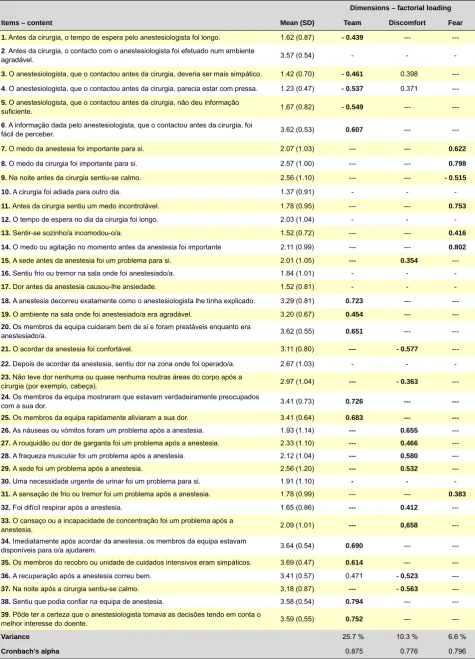
The Portuguese version of the questionnaire is presented in Table 1.
Participants
Our study included 119 patients, from which 107 (90%) delivered the completed questionnaire together with informed consent. The reasons why twelve patients refused to complete the questionnaire referred to fatigue, pain and lack of interest.
Patients´ ages ranged between 18 and 82 (median 50, mean 51.71 (± 14)), 32% aged above 60 and mostly female (59%). Regarding schooling, 43% had not reached ninth grade, 34% fourth grade and one patient was illiterate. Only 9% of the patients were submitted to regional anaesthesia, as most (81%) was submitted to balanced general anaesthesia. Intravenous and inhaled general anaesthesia was performed each in five patients and combined anaesthesia in one patient.
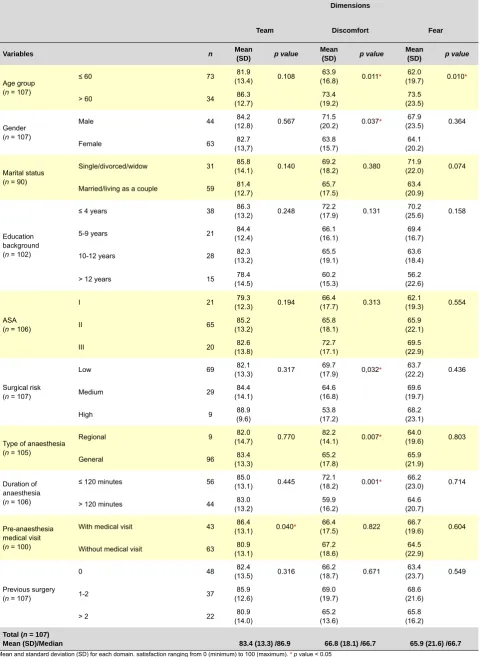
The remaining socio-demographic and clinical characteristics are presented in Table 2.
Patients completed the questionnaire 46 (± 55) hours upon the end of the surgical procedure, remaining in the recovery room for 198 (± 360) minutes.
Item Analysis
Satisfaction sense on a Likert scale depends on the item. On items 2, 6, 9, 18 to 21, 23 to 25 and 34 to 39, number four (I completely agree) correspond to the maximum satisfaction reached and number one (I completely disagree) to the minimum satisfaction. The remaining items are classified reversely. The mean and standard deviation of responses is presented in Table 1.
Nineteen items were always completed by the 107 patients. The remaining items were not answered in less than 3%, except items 1 to 6, 18, 21, 24 and 25. Regarding the first six items, 8% of non-responders, as well as 6% of item 18 non-responders tended to coincide. These were items concerning the contact with the anaesthetist before surgery. Regarding item 21, dealing with regaining consciousness upon anaesthesia, non-responders (5%) had not been submitted to general anaesthesia. Finally, non-responders to items 14 (4%) and 25 (14%), regarding pain-relief, revealed that post-operative pain was mild or absent.
Construct Validity and Internal Consistency
Three issues arose from the analysis, explaining 42.6% of the total variance. Bartlett’s Test of Sphericity demonstrated statistically significant results (p < 0.001),
indicating that items shared a common variance. Kaiser-Meyer-Olkin test, a sample adequacy measure, obtained a 0.755 value, suggesting that variables measure more than one component. Items 2, 10, 12, 16, 17, 22 and 30 were excluded from the analysis as they presented low communalities, leaving 32 items (Table 1).
ARTIGO ORIGINAL Table 1 –Portuguese version of the questionnaire; descriptive analysis, dimensionality and internal consistencyDimensions – factorial loading
Items – content Mean (SD) Team Discomfort Fear
1. Antes da cirurgia, o tempo de espera pelo anestesiologista foi longo. 1.62 (0.87) - 0.439 --- ---2. Antes da cirurgia, o contacto com o anestesiologista foi efetuado num ambiente
agradável. 3.57 (0.54) - -
-3. O anestesiologista, que o contactou antes da cirurgia, deveria ser mais simpático. 1.42 (0.70) - 0.461 0.398 ---4. O anestesiologista, que o contactou antes da cirurgia, parecia estar com pressa. 1.23 (0.47) - 0.537 0.371 ---5. O anestesiologista, que o contactou antes da cirurgia, não deu informação
suficiente. 1.67 (0.82) - 0.549 ---
---6. A informação dada pelo anestesiologista, que o contactou antes da cirurgia, foi
fácil de perceber. 3.62 (0.53) 0.607 ---
---7. O medo da anestesia foi importante para si. 2.07 (1.03) --- --- 0.622
8. O medo da cirurgia foi importante para si. 2.57 (1.00) --- --- 0.798
9. Na noite antes da cirurgia sentiu-se calmo. 2.56 (1.10) --- --- - 0.515
10. A cirurgia foi adiada para outro dia. 1.37 (0.91) - -
-11. Antes da cirurgia sentiu um medo incontrolável. 1.78 (0.95) --- --- 0.753
12. O tempo de espera no dia da cirurgia foi longo. 2.03 (1.04) - -
-13. Sentir-se sozinho/a incomodou-o/a. 1.52 (0.72) --- --- 0.416
14. O medo ou agitação no momento antes da anestesia foi importante 2.11 (0.99) --- --- 0.802
15. A sede antes da anestesia foi um problema para si. 2.01 (1.05) --- 0.354
---16. Sentiu frio ou tremor na sala onde foi anestesiado/a. 1.84 (1.01) - -
-17. Dor antes da anestesia causou-lhe ansiedade. 1.52 (0.81) - -
-18. A anestesia decorreu exatamente como o anestesiologista lhe tinha explicado. 3.29 (0.81) 0.723 ---
---19. O ambiente na sala onde foi anestesiado/a era agradável. 3.20 (0.67) 0.454 ---
---20. Os membros da equipa cuidaram bem de si e foram prestáveis enquanto era
anestesiado/a. 3.62 (0.55) 0.651 ---
---21. O acordar da anestesia foi confortável. 3.11 (0.80) --- - 0.577
---22. Depois de acordar da anestesia, sentiu dor na zona onde foi operado/a. 2.67 (1.03) - - -23. Não teve dor nenhuma ou quase nenhuma noutras áreas do corpo após a
cirurgia (por exemplo, cabeça). 2.97 (1.04) --- - 0.363
---24. Os membros da equipa mostraram que estavam verdadeiramente preocupados
com a sua dor. 3.41 (0.73) 0.726 ---
---25. Os membros da equipa rapidamente aliviaram a sua dor. 3.41 (0.64) 0.683 ---
---26. As náuseas ou vómitos foram um problema após a anestesia. 1.93 (1.14) --- 0.655
---27. A rouquidão ou dor de garganta foi um problema após a anestesia. 2.33 (1.10) --- 0.466
---28. A fraqueza muscular foi um problema após a anestesia. 2.12 (1.04) --- 0.580
---29. A sede foi um problema após a anestesia. 2.56 (1.20) --- 0.532
---30. Uma necessidade urgente de urinar foi um problema para si. 1.91 (1.10) - -
-31. A sensação de frio ou tremor foi um problema após a anestesia. 1.78 (0.99) --- --- 0.383
32. Foi difícil respirar após a anestesia. 1.65 (0.86) --- 0.412
---33. O cansaço ou a incapacidade de concentração foi um problema após a
anestesia. 2.09 (1.01) --- 0,658
---34. Imediatamente após acordar da anestesia, os membros da equipa estavam
disponíveis para o/a ajudarem. 3.64 (0.54) 0.690 ---
---35. Os membros do recobro ou unidade de cuidados intensivos eram simpáticos. 3.69 (0.47) 0.614 ---
---36. A recuperação após a anestesia correu bem. 3.41 (0.57) 0.471 - 0.523
---37. Na noite após a cirurgia sentiu-se calmo. 3,18 (0.87) --- - 0.563
---38. Sentiu que podia confiar na equipa de anestesia. 3.58 (0.54) 0.794 ---
---39. Pôde ter a certeza que o anestesiologista tomava as decisões tendo em conta o
melhor interesse do doente. 3.59 (0,55) 0.752 ---
---Variance 25.7 % 10.3 % 6.6 %
Cronbach’s alpha 0.875 0.776 0.796
ARTIGO ORIGINAL
Table 2 – Satisfaction according to socio-demographic and clinical variables
Dimensions
Team Discomfort Fear
Variables n Mean (SD) p value Mean (SD) p value Mean (SD) p value
Age group (n = 107)
≤ 60 73 (13.4)81.9 0.108 (16.8)63.9 0.011* (19.7)62.0 0.010*
> 60 34 (12.7)86.3 (19.2)73.4 (23.5)73.5
Gender (n = 107)
Male 44 (12.8)84.2 0.567 (20.2)71.5 0.037* (23.5)67.9 0.364
Female 63 (13,7)82.7 (15.7)63.8 (20.2)64.1
Marital status (n = 90)
Single/divorced/widow 31 (14.1)85.8 0.140 (18.2)69.2 0.380 (22.0)71.9 0.074
Married/living as a couple 59 (12.7)81.4 (17.5)65.7 (20.9)63.4
Education background (n = 102)
≤ 4 years 38 (13.2)86.3 0.248 (17.9)72.2 0.131 (25.6)70.2 0.158
5-9 years 21 (12.4)84.4 (16.1)66.1 (16.7)69.4
10-12 years 28 (13.2)82.3 (19.1)65.5 (18.4)63.6
> 12 years 15 (14.5)78.4 (15.3)60.2 (22.6)56.2
ASA (n = 106)
I 21 (12.3)79.3 0.194 (17.7)66.4 0.313 (19.3)62.1 0.554
II 65 (13.2)85.2 (18.1)65.8 (22.1)65.9
III 20 (13.8)82.6 (17.1)72.7 (22.9)69.5
Surgical risk (n = 107)
Low 69 (13.3)82.1 0.317 (17.9)69.7 0,032* (22.2)63.7 0.436
Medium 29 (14.1)84.4 (16.8)64.6 (19.7)69.6
High 9 88.9 (9.6) (17.2)53.8 (23.1)68.2
Type of anaesthesia (n = 105)
Regional 9 (14.7)82.0 0.770 (14.1)82.2 0.007* (19.6)64.0 0.803
General 96 (13.3)83.4 (17.8)65.2 (21.9)65.9
Duration of anaesthesia (n = 106)
≤ 120 minutes 56 (13.1)85.0 0.445 (18.2)72.1 0.001* (23.0)66.2 0.714
> 120 minutes 44 (13.2)83.0 (16.2)59.9 (20.7)64.6
Pre-anaesthesia medical visit (n = 100)
With medical visit 43 (13.1)86.4 0.040* (17.5)66.4 0.822 (19.6)66.7 0.604
Without medical visit 63 (13.1)80.9 (18.6)67.2 (22.9)64.5
Previous surgery (n = 107)
0 48 (13.5)82.4 0.316 (18.7)66.2 0.671 (23.7)63.4 0.549
1-2 37 (12.6)85.9 (19.7)69.0 (21.6)68.6
> 2 22 (14.0)80.9 (13.6)65.2 (16.2)65.8
Total (n = 107)
Mean (SD)/Median 83.4 (13.3) /86.9 66.8 (18.1) /66.7 65.9 (21.6) /66.7
ARTIGO ORIGINAL
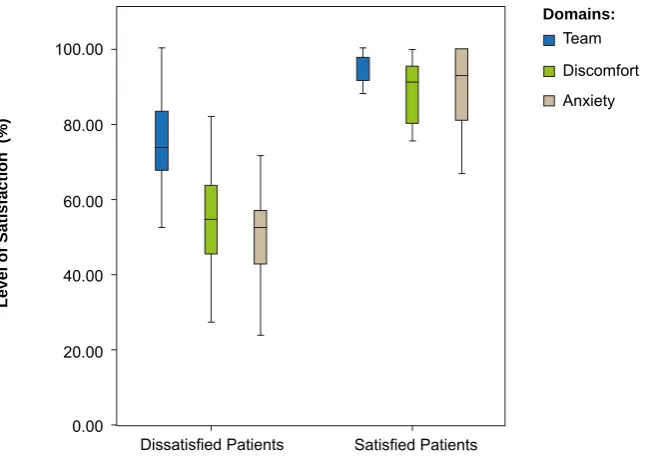
Figure 1 - Domains in Satisfied and Dissatisfied patients. Each box represents the interquartile range. the horizontal line represents mini-mum and maximini-mum limit. Level of satisfaction for each domain and 100% meaning maximini-mum satisfaction.
component consists of 14 items (1, 3-6, 18-20, 24, 25, 34, 35, 38 and 39) and explains 25.7% of the variance. The second component, including 11 items (15, 21, 23, 26-29, 32, 33, 36, 37) explains 10.3% of the variance. The remaining seven items (7-9, 11, 13, 14, 31) belong to the third component which explains 6.6% of the variance. Components have self-values of 8.2; 3.3 and 2.1 respectively. The items present a low factorial loading (below 0.35) for dimensions to which they do not belong, except for items 3, 4 and 36. According to the distribution, the first domain was named as ‘team’, the second as ‘discomfort’ and the third as ‘fear’.
In internal consistency assessment, the questionnaire presented a Cronbach alpha value of 0.7 for all items. The ‘team” domain obtained 0.875; ‘fear’ domain 0.776 and ‘discomfort’ 0.796.
Confounding Variables
Mean values of satisfaction were 83.4% for ‘team’, 66.8% for ‘discomfort’ and 65.9% for ‘fear’ (Table 2). Maximum value (100%) represents maximum satisfaction with the team, no discomfort and no fear.
Univariate analysis showed that ‘team’ domain is influenced by the pre-anaesthesia visit (p = 0.040). Patients
that attended medical visits present higher team-related satisfaction values. ‘Discomfort’ is influenced by gender (p
= 0.037), age (p = 0.011), surgical risk (p = 0.032), type
(p = 0.007) and duration (p = 0.001) of anaesthesia. Men
aged over 60, with a low surgical risk, regional anaesthesia and surgery duration under 120 minutes expressed less discomfort. The ‘Fear’ dimension is also influenced by the patient’s age (p = 0.010). Patients aged above 60 years
present higher satisfaction values, with less fear. Mean
satisfaction values according to the patients´ characteristics are presented in Table 2.
Upon a multivariate analysis, only gender kept a significant effect (p = 0.047) in the ‘discomfort’ level. Men
referred less discomfort than women (regression coefficient = 8.7; 95% confidence interval [0.1; 17.3]). In the ‘team’ and ‘fear’ domains, when adjusted for other variables, no significant effects related with pre-anaesthesia visit or patient’s age, respectively, were found.
Satisfaction and Dissatisfaction
Regarding total satisfaction, patients classified as dissatisfied with anaesthesia care present a median (interquartile range [limits]) of 61% (55-67% [40.70]) and satisfied patients a 91% median (88-95 [85.99]). Both groups differ on the three domains, although with a lower difference on ‘team’ domain (Fig. 1).
DISCUSSION
The peri-anaesthesia care satisfaction questionnaire described by Schiff et al.13 was adapted for use in a
Portuguese hospital. Although the inclusion of the target population in a questionnaire’s design would be ideal, for satisfaction assessment, this is a slow process preventing comparisons between populations.21 As such we opted
to select an European questionnaire with demonstrated validity in order to ensure that the applied issues were the most relevant. The translation started from the published English version, even considering that it had been initially designed in German. A simple trans-cultural adaptation would not ensure that psychometric characteristics would be kept. In this context, it was considered fundamental that it should be tested in a population sample submitted to
Domains: Team Discomfort Anxiety
Satisfied Patients Dissatisfied Patients
0.00 20.00 40.00 60.00 80.00 100.00
ARTIGO ORIGINAL elective surgery, totalling 107 patients.
We obtained a good response rate (90%) and a great part of the questionnaire (59%) was fully completed. The analysis of the items with the higher number of non-responders found that non-non-responders to item 21 (5%), regarding comfort at recovery of consciousness, had been submitted to regional anaesthesia. In fact, the authors of the original questionnaire refer that these patients may find some constraints when completing the questionnaire.13 We
consider that this item should not be included in this group of patients in future studies. Regarding those who did not assess the contact with the anaesthetist before surgery, although it was a low percentage, it could introduce a bias in the answers of the other patients, as regards the assessment of the medical team. In the pre-test stage, we found that part of the group of patients was not able to identify his doctor in the team. Le May et al.22 described
that 22% of the patients involved in the design of their questionnaire did not remember any previous contact with the doctor. We are aware that the recognition of the role of the anaesthetist is still an unresolved issue, present from the start of anaesthetics as a specialty23 seemingly
underestimated till current times.24 These results may
reflect a failure in doctor-patient communication. Therefore, we propose an initial question to be included, aimed to identify these patients in order to allow for satisfaction to be assessed separately.
In the statistical analysis, items in the Portuguese version of the questionnaire were arranged over three domains, unlike the five domains that were determined in the original questionnaire.13 The change is shown in the ‘team’ domain
that included items belonging to three domains in the German questionnaire (Schiff, personal communication): ‘information and waiting’, ‘trust and atmosphere’ and ‘treatment given by the team’. The results obtained in our group of patients did not allow for the distinction between the different domains of medical care by the team. The responses to these items are strongly correlated and progress in the same way as satisfaction, making distinction more difficult.
The items included in ‘fear’ and ‘discomfort’ were also grouped by the authors of the original questionnaire, except for three items. One item regards the sensation of cold or tremor (item 31), which responders related with ‘fear’ and not with ‘discomfort’, an answer we believe to reflect their real intention. On the contrary, the items regarding recovery from anesthesia (items 21 and 36) were included in ‘discomfort’ and not in ‘treatment provided by the team’, according to the authors. According to the English version, the sentence seems to support the item as belonging to the first dimension. Finally, the item designed for sleep quality assessment on the eve of surgery (item 37), although with a similar presentation as item 9 included in ‘fear’, correlated with the items included in ‘discomfort’. We found that the night after surgery was dominated by physical discomfort related to the surgery while the night prior to surgery was dominated by fear.
We have excluded seven items due to low communalities (Table 2), two of which assessing waiting times, although we do not consider has relevant in terms of satisfaction with anaesthesia care. According to the hospital reality where our study took place, when surgery is postponed (item 10) or when the waiting time is long (item 12), the patient is informed before admission. In addition, the waiting does not depend exclusively on anesthesia. Future studies with bigger samples and with re-design of some items may build a more stable model, eventually including the excluded items and adding dimension to the instrument.
The questionnaire presented good psychometric characteristics that allow for the consideration of validity of the application to our group of patients. As regards item homogeneity, we have obtained on each dimension Cronbach values above 0.7, considered as adequate by several authors.25 It is controversial in these studies to
show the reliability of the instrument through repeating the questionnaire.9 As two weeks was the minimum time
period between the tests, the second test may be affected by events related to surgery,8,13 as found by Lemos et al.26 in
a Portuguese hospital.
When comparing the results with those presented by Schiff et al.13 total satisfaction values were slightly lower.
We are aware that high satisfaction values are consistently found in literature9 as well as in studies carried out in
Portugal.26-28 These values generally result from one
single assessment item, subsequently correlated with potential predictive factors or compared between pre-defined groups. Nevertheless, the patients rarely refer feeling dissatisfied, adversely affecting the capacity to reach possible conclusions.. For this reason, satisfaction should be assessed using multidimensional instruments and its interpretation based on the domain’s individual analysis, as these are considered those truly responsible for satisfaction.4,9,16 Yet, the social desirability bias remains,
i.e. the tendency to respond in a socially acceptable or positive manner.4,29 This bias was reduced by delivering the
questionnaire not by the doctor, but by the main researcher, preserving confidentiality and who that was not present during completion.9,14
The groups of ‘satisfied’ and dissatisfied’ patients were different in the three dimensions regarding medical care, although the ‘team’ dimension also presented high values in dissatisfied patients. As shown by Schiff et al.13 dissatisfaction
is mainly reflected by ‘fear’ and ‘discomfort’ dimensions. However, “information and waiting” domain established by the authors also contributed for dissatisfaction.
ARTIGO ORIGINAL of the anaesthetist as a doctor, which would allow them to perform such an assessment.24 Patients aware of the
responsibility of this profession would be more capable to assess the healthcare they receive. It is our opinion that the anaesthetist should individually try to educate patients during the pre-anesthesia medical visit, regarding his role in peri-operative period and in this way establishing a trusting relationship with the patient.24 Nevertheless, we cannot
exclude the hypothesis that indeed patients would identify the doctor and assess positively the professional team. There are only some multidimensional satisfaction questionnaires based on psychometric quality criteria.6-14,31
As far as it was possible for us to determine, one of these questionnaires had already been applied in Portugal6
comparing several types of ophthalmic anaesthesia, although not yet validated.32 We are also aware that a
post-anaesthesia maternal satisfaction questionnaire has been designed and tested at a Portuguese university hospital, with an unclear design methodology.33 As they are different
instruments, designed in other healthcare contexts, it is difficult to compare the results obtained. Nevertheless, in all of these, the information, communication and trusting relationship between doctor and patient were always assessed.9,10 As in the present study, Capuzzo et al.10
established a single domain for this assessment and also demonstrated that this is the most valued element by patients. Other authors8,9,12,14 distinguished the information
regarding doctor-patient relationship, designing two different domains. In these studies, the ‘information’ domain always obtained the lowest satisfaction levels, unlike ‘doctor-patient relationship’/’attention’/’trust’ that always presented higher satisfaction values. The ‘fear’ domain is also commonly assessed and generally contributes for patient’s dissatisfaction.12-14 As regards pain and discomfort,
according with Caljouw et al.12 the assessment of how
professionals deal with the problem is more important than it´s identification. These authors found that satisfaction was not correlated with pain, nausea or vomiting rather being determined by patient’s perspective regarding professional expertise. 12
Regarding the effect of patients´ characteristics on satisfaction, there seems to be a tendency in previous studies for women and younger patients to present lower satisfaction values.8-14,26 Nevertheless, only a part of these
studies present a multivariate data analysis.9,11,13 In fact,
we found higher satisfaction in older patients regarding ‘discomfort’ and ‘fear’ dimensions. Upon a multivariate
analysis, we only found a significant influence of gender on ‘discomfort’, men revealing more satisfaction.
Future applications of the questionnaire should include new items regarding the assessment of doctor-patient communication, as well as the doctor’s ability in dealing with discomfort and fear.12 Regarding statistical analysis,
a confirmatory factorial analysis may be applied, as it was more recently presented in designing multidimensional questionnaires.14 The instrument validity should also be
reinforced by simultaneous application of visual analogue scales and their correlation with potential dimensions of the questionnaire.8,13 The “State-Trait Anxiety Inventory” is
validated for the Portuguese population and may also be applied with this purpose.13,34
We recommend this new approach for the assessment of quality in anaesthesia care. The result of applying satisfaction questionnaires, namely in the comparison between types of anesthesia, pain relief, pre-anesthesia medical visits and ambulatory surgery versus hospital overnight stay, will be very important for professional decision-making. In addition, according to Vuori,35 “more
important than assessing medical or healthcare expertise, the real objective of Medicine will not have been reached if the patient is not satisfied. The great objective of healthcare is meeting patient’s expectations.35
CONCLUSION
The Portuguese version of this questionnaire is a multidimensional 32-item instrument with the ability to assess three domains of anaesthesia care; namely ‘team, fear and discomfort’. The highest levels of satisfaction refer to the professional team assessment. Dissatisfaction was determined by fear and discomfort and the latter being significantly lower in males.
CONFLICTS OF INTEREST
The authors declare that there were no conflicts of interest in writing this manuscript.
FINANCIAL SOURCES
There were no financial sources in writing this manuscript.
ACKNOWLEDGMENTS
The authors wish to acknowledge Ricardo Soares-dos-Reis for his relevant contribution.
REFERENCES
1. Porter ME. What is value in health care? N Engl J Med. 2010;363:2477-81.
2. Neuman MD. Patient satisfaction and value in anesthesia care. Anes-thesiology. 2011;114:1019-20.
3. Klock PA, Roizen MF. More or better--educating the patient about the anesthesiologist’s role as perioperative physician. Anesth Analg. 1996;83:671-2.
4. Fung D, Cohen MM. Measuring patient satisfaction with anesthesia care: a review of current methodology. Anesth Analg. 1998;87:1089-98.
5. Capuzzo M, Alvisi R. Is it possible to measure and improve patient satis-faction with anesthesia? Anesthesiol Clin. 2008;26:613-26.
6. Dexter F, Aker J, Wright WA. Development of a measure of patient sat-isfaction with monitored anesthesia care: the Iowa Satsat-isfaction with An-esthesia Scale. Anesthesiology. 1997;87:865-73.
7. Auquier P, Blache JL, Colavolpe C, Eon B, Auffray JP, Pernoud N, et al. Échelle de vécu périopératoire de l’anesthésie. I — Construction et validation. Ann Fr Anesth Reanim. 1999;18:848-57.
ARTIGO ORIGINAL
et al. Development and validation of a perioperative satisfaction ques-tionnaire. Anesthesiology. 2005;102:1116-23.
9. Heidegger T, Husemann Y, Nuebling M, Morf D, Sieber T, Huth A, et al. Patient satisfaction with anaesthesia care: development of a psycho-metric questionnaire and benchmarking among six hospitals in Switzer-land and Austria. Br J Anaesth. 2002;89:863-72.
10. Capuzzo M, Landi F, Bassani A, Grassi L, Volta CA, Alvisi R. Emotional and interpersonal factors are most important for patient satisfaction with anaesthesia. Acta Anaesthesiol Scand. 2005;49:735-42.
11. Capuzzo M, Gilli G, Paparella L, Gritti G, Gambi D, Bianconi M, et al. Factors predictive of patient satisfaction with anesthesia. Anesth Analg. 2007;105:435-42.
12. Caljouw MA, van Beuzekom M, Boer F. Patient’s satisfaction with peri-operative care: development, validation, and application of a question-naire. Br J Anaesth. 2008;100:637-44.
13. Schiff JH, Fornaschon AS, Frankenhauser S, Schiff M, Snyder-Ramos SA, Martin E, et al. The Heidelberg Peri-anaesthetic Questionnaire - -development of a new refined psychometric questionnaire. Anaesthe-sia. 2008;63:1096-104.
14. Mui WC, Chang CM, Cheng KF, Lee TY, Ng KO, Tsao KR, et al. Devel-opment and validation of the questionnaire of satisfaction with perioper-ative anesthetic care for general and regional anesthesia in Taiwanese patients. Anesthesiology. 2011;114:1064-75.
15. Jenkinson C, Coulter A, Bruster S, Richards N, Chandola T. Patients’ experiences and satisfaction with health care: results of a questionnaire study of specific aspects of care. Qual Saf Health Care. 2002;11:335-9. 16. Sitzia J. How valid and reliable are patient satisfaction data? An analysis
of 195 studies. Int J Qual Health Care. 1999;11:319-28.
17. Le May S, Hardy JF, Taillefer MC, Dupuis G. Patient satisfaction with anesthesia services. Can J Anaesth. 2001;48:153-61.
18. Wild D, Grove A, Martin M, Eremenco S, McElroy S, Verjee-Lorenz A, et al. Principles of Good Practice for the Translation and Cultural Adapta-tion Process for Patient-Reported Outcomes (PRO) Measures: report of the ISPOR Task Force for Translation and Cultural Adaptation. Value Health. 2005;8:94-104.
19. Poldermans D, Bax JJ, Boersma E, De Hert S, Eeckhout E, Fowkes G, et al. Guidelines for pre-operative cardiac risk assessment and peri-operative cardiac management in non-cardiac surgery: the Task Force for Preoperative Cardiac Risk Assessment and Perioperative Cardiac Management in Non-cardiac Surgery of the European Society of Cardi-ology (ESC) and endorsed by the European Society of AnaesthesiCardi-ology (ESA). Eur J Anaesthesiol. 2010;27:92-137.
20. Aronson WL, McAuliffe MS, Miller K. Variability in the American Soci-ety of Anesthesiologists Physical Status Classification Scale. AANA J.
2003;71:265-74.
21. Beaton DE, Bombardier C, Guillemin F, Ferraz MB. Guidelines for the process of cross-cultural adaptation of self-report measures. Spine. 2000;25:3186-191.
22. Le May S, Hardy JF, Harel F, Taillefer MC, Dupuis G. Patients’ per-ceptions of cardiac anesthesia services: a pilot study. Can J Anaesth. 2001;48:1127-42.
23. Klafta JM, Roizen MF. Current understanding of patients’ attitudes toward and preparation for anesthesia: a review. Anesth Analg. 1996;83:1314-21.
24. Gottschalk A, Seelen S, Tivey S, Gottschalk A, Rich G. What do pa-tients know about anesthesiologists? Results of a comparative survey in an U.S., Australian, and German university hospital. J Clin Anesth. 2013;25:85-91.
25. Terwee CB, Bot SD, de Boer MR, van der Windt DA, Knol DL, Dekker J, et al. Quality criteria were proposed for measurement properties of health status questionnaires. J Clin Epidemiol. 2007;60:34-42. 26. Lemos P, Pinto A, Morais G, Pereira J, Loureiro R, Teixeira S, et al.
Patient satisfaction following day surgery. J Clin Anesth. 2009;21:200-5. 27. Barros F, Lages N, Lopez M, Pereira S. Ansiedade e grau de satisfação
em anestesia pediátrica. Rev Soc Port Anest. 2005;14:14-23. 28. Cheung L, Matos F, Pinto F, Alves C, Pereira M, Carvalhas J. Top-up
epidural com ropivacaína a 0,75% para cesariana urgente após anal-gesia epidural contínua com ropivacaína a 0,2%. Rev Anest Reg Ter Dor. 2010:46-52.
29. May LA, Smiley B, Schmidt MG. Comparative denaturing gradient gel electrophoresis analysis of fungal communities associated with whole plant corn silage. Can J Microbiol. 2001;47:829-41.
30. Sitzia J, Wood N. Patient satisfaction: a review of issues and concepts. Soc Sci Med. 1997;45:1829-43.
31. Williams B, Coyle J, Healy D. The meaning of patient satisfaction: an explanation of high reported levels. Soc Sci Med. 1998;47:1351-9. 32. Rodrigues PA, Vale PJ, Cruz LM, Carvalho RP, Ribeiro IM, Martins JL.
Topical anesthesia versus sub-Tenon block for cataract surgery: surgical conditions and patient satisfaction. Eur J Ophthalmol. 2008;18:356-60. 33. Matos FM, Gomes A, Eufrásio A, Alves C, Carvalhas J. Satisfação
ma-terna após anestesia para cesariana: comparação entre bloqueio epidu-ral e bloqueio subaracnóideu. Rev Anest Reg Ter Dor. 2010:55-9. 34. Telles-Correia D, Barbosa A. Ansiedade e depressão em medicina.
Mo-delos teóricos e avaliação. Acta Med Port. 2009;22:89-98.