INVESTIGATION OF EFFECTS OF TWO ENVIRONMENTAL
HEAVY METALS IN A COMBINED EXPOSURE MODEL ON
THE NERVOUS SYSTEM IN RATS
A. Papp
[a]*, E. Horváth
[a], Zs. Máté
[a], A. Szabó
[a]This paper was presented at the 4th International Symposium on Trace Elements in the Food Chain, Friends or Foes, 15-17 November, 2012, Visegrád, Hungary
Keywords: Manganese, lead, neurotoxicity, cortical activity, open field, nanoparticles, rat.
In the present study, the interaction of inhalational and oral exposure to manganese and lead was investigated. Young adult male Wistar rats (2 x 10 per group) were treated orally with MnCl2 (15 and 60 mg/kg b.w.) or Pb acetate (80 and 320 mg/kg) for 3 or 6 weeks. Then, one
half of the groups was further treated by intratracheal instillation of nanoparticulate MnO2(2.63 mg/kg) or PbO (2 mg/kg) for an equal
period of time. Body weight gain and signs of general toxicity were regularly checked. Finally, the rats’ motor behavior was tested in an open field box, and their spontaneous and evoked cortical electrical activity was recorded in urethane anesthesia. MnO2nanoparticles
caused disproportionately strong reduction of body weight gain but with Pb the weight effect was more dependent on dose. In the open field test, Mn caused hypomotility, more strongly after 6 weeks oral plus 6 weeks intratracheal than after 6 weeks oral treatment. Pb-treated rats showed increased ambulation but less rearing and somewhat longer local activity. Spontaneous cortical activity was shifted to higher frequencies after oral Mn application, but this change was not intensified by subsequent nanoparticle application. Oral Pb had an opposite effect. Cortical evoked potentials showed latency lengthening. In several cases, the effect of Mn and Pb was about as strong after 3 weeks oral plus 3 weeks intratracheal as after 6 weeks oral administration, although the summed dose was ca. two times lower in the former case. There can be a more-than-additive interaction between the amounts of heavy metals entering the organism in different routes and chemical forms.
* Corresponding Author Fax: +36-62-545-120
E-Mail: [email protected]
[a] Department of Public Health, University of Szeged Faculty of Medicine. 6720 Szeged, Dóm tér 10.
Introduction
Chemical risk, resulting from application of metal-based and other xenobiotics, is a major problem of our days. Numerous metals are regarded as xenobiotics because they either are completely useless and toxic for the human organism (e.g. mercury, lead or cadmium) or are essential micronutrients but toxic when overdosed (manganese, chromium, copper, etc.).
Exposure to heavy metals is mostly occupational. Metal-containing dusts and fumes are generated along the
complete life cycle of metal products (e.g. during welding1),
and can be found in the workplace atmosphere, causing exposure primarily via inhalation. The resulting internal dose is influenced by chemical form and size of the suspended particles. In the last 20 years nanoparticles (NPs) and their interaction with living organisms, raised health
concerns2. Combustion processes and working on materials
at high temperature generate NPs (particles which are smaller than 100 nm at least in one dimension), their composition being determined by the materials worked on or burnt. Likewise, manufactured nanomaterials contain at least one component with at least one dimension in the
1-Inhaled NPs are either deposited in the nasopharynx or get
down to the alveoli3. NPs are not held back by biological
barriers like alveolar and capillary wall, are distributed throughout the body by blood circulation, and reach distant target organs including the central nervous system. The NPs’ small size and large specific surface area, together with the high numbers of NPs entering the organism in a typical exposure situation, result in great biological and
pathogenetical activity2.
Apart from inhalation, the second most important route of exposure to heavy metals is ingestion. Airborne particles can be ingested directly; dust can contaminate food or drink, etc. Metals from the sedimenting dust can be incorporated into edible parts of cultivated plants, either directly or via soil pollution (as it happened near the metal reprocessing plant
Metallokémia in Budapest4). Ingested heavy metals are
absorbed in the intestine mostly to ca. 10%. Common metal transport mechanisms, responsible for the uptake of essential metals, are involved, which explains that individuals with increased calcium or iron demand absorb more of the toxic metals. Toxic metals are transported as “free-riders” not only from the intestine to the blood but also from the blood to the central nervous system (CNS).
Trivalent metal ions, like Mn3+ use transferrin to pass the
blood-brain barrier.
Based on practical importance and on previous
experiences of our research group5,6,7, lead and manganese
Lead (Pb) has been a ubiquitous environmental pollutant
for centuries, and is toxic even in low concentrations8.
Primary production and reprocessing of Pb causes substantial emission of metal fumes. Neurological effects were observed in workers with chronic Pb exposure: headache, lethargy, dizziness, diminished reaction time, worsened cognitive and visuomotor performance, and
reduced nerve conduction velocity9. The general population
is exposed mainly by contaminated drinking water or food. Pb is accumulated in the central nervous system, first in the
cortex and hippocampus10, and produces encephalopathy.
Exposure to low concentrations of Pb has been associated with behavioral abnormalities, learning and hearing impairment and impaired cognitive functions in humans and
in experimental animals11. Some approximations suggest
that, in exposed children, every 100 μg/L increase in blood
Pb level is associated with a 1-5 point decrease in the IQ
level12, such an effect was observed also in Hungary13. Pb
can also pass the placenta and cause serious damage to the nervous system before birth.
Manganese (Mn) is an essential micronutrient, e.g. as cofactor in metallo-enzymes:. The human body contains about 10 mg Mn, stored mainly in the liver and kidneys. The
daily demand is 2-3 mg14. Mn is used in many important
alloys, so welding fumes and similar industrial emissions are also a source of Mn-containing NPs. Chronic inhalation of Mn-containing dust and fumes is the typical form of occupational exposure. The Mn-related chronic neurological disorder (manganism) starts with apathy, anorexia, headache, hypersomnia, weakness of the legs etc. and progresses to a
Parkinson-like syndrome15. Such disorder was also observed
in patients undergoing maintenance hemodialysis16 or in
inadvertent oral overdosing of Mn. Thus, other physicochemical forms of Mn and other routes of exposure are also relevant to the health of the CNS. In several regions of the USA with Mn-rich drinking water, loss of visual and verbal memory, typical for Mn-induced brain damage, was
described17. The neurotoxic spectrum of Mn is variable and
goes beyond the classical manganism. In shipyard workers, EEG and visual evoked potential alterations were observed
and elevated blood Mn levels were measured18.
The aim of this work was to model the complex (occupational and environmental) human exposure to Mn and Pb in rats as a model, with combined – oral and intratracheal – administration using dissolved and nanoparticulate form of the metals.
Methods
Animals and treatment
Young adult male Wistar rats (initial body weight 280– 350 g) obtained from the Breeding Centre of the University, were used for the experiments.
The animals were housed under standard conditions (22– 24°C, 12 h light/dark cycle with light on at 6:00 a.m., up to four rats in one cage) with free access to conventional
Aqueous solution of Mn and Pb was given to the rats orally by gavage (per os, po.), while the suspension of the metals in NP form was instilled in the trachea
(intratracheally, it.; for details see6.
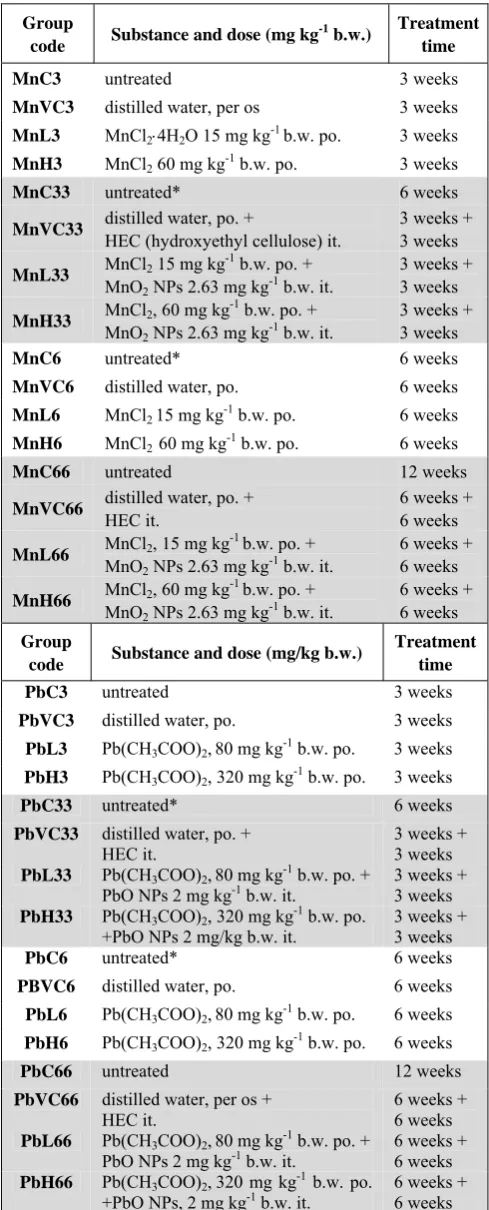
Table 1 The substances used for treatment and the doses applied
Group
code Substance and dose (mg kg
-1
b.w.) Treatment time
MnC3 untreated 3 weeks
MnVC3 distilled water, per os 3 weeks
MnL3 MnCl24H2O 15 mg kg-1 b.w. po. 3 weeks
MnH3 MnCl2 60 mg kg-1 b.w. po. 3 weeks
MnC33 untreated* 6 weeks
MnVC33 distilled water, po. +
HEC (hydroxyethyl cellulose) it.
3 weeks + 3 weeks
MnL33 MnCl2 15 mg kg
-1 b.w. po. +
MnO2 NPs 2.63 mg kg-1 b.w. it.
3 weeks + 3 weeks
MnH33 MnCl2, 60 mg kg
-1 b.w. po. +
MnO2 NPs 2.63 mg kg-1 b.w. it.
3 weeks + 3 weeks
MnC6 untreated* 6 weeks
MnVC6 distilled water, po. 6 weeks
MnL6 MnCl2 15 mg kg-1 b.w. po. 6 weeks
MnH6 MnCl2 60 mg kg-1 b.w. po. 6 weeks
MnC66 untreated 12 weeks
MnVC66 distilled water, po. + HEC it.
6 weeks + 6 weeks
MnL66 MnCl2, 15 mg kg
-1 b.w. po. +
MnO2 NPs 2.63 mg kg-1 b.w. it.
6 weeks + 6 weeks
MnH66 MnCl2, 60 mg kg
-1 b.w. po. +
MnO2 NPs 2.63 mg kg-1 b.w. it.
6 weeks + 6 weeks
Group
code Substance and dose (mg/kg b.w.)
Treatment time
PbC3 untreated 3 weeks
PbVC3 distilled water, po. 3 weeks
PbL3 Pb(CH3COO)2,80 mg kg-1 b.w. po. 3 weeks
PbH3 Pb(CH3COO)2, 320 mg kg-1 b.w. po. 3 weeks
PbC33 untreated* 6 weeks
PbVC33 distilled water, po. +
HEC it. 3 weeks + 3 weeks
PbL33 Pb(CH3COO)2,80 mg kg-1 b.w. po. +
PbO NPs 2 mg kg-1 b.w. it. 3 weeks + 3 weeks
PbH33 Pb(CH3COO)2, 320 mg kg-1 b.w. po.
+PbO NPs 2 mg/kg b.w. it. 3 weeks + 3 weeks
PbC6 untreated* 6 weeks
PBVC6 distilled water, po. 6 weeks
PbL6 Pb(CH3COO)2,80 mg kg-1 b.w. po. 6 weeks
PbH6 Pb(CH3COO)2, 320 mg kg-1 b.w. po. 6 weeks
PbC66 untreated 12 weeks
PbVC66 distilled water, per os + HEC it.
6 weeks + 6 weeks PbL66 Pb(CH3COO)2,80 mg kg-1 b.w. po. +
PbO NPs 2 mg kg-1 b.w. it. 6 weeks + 6 weeks
PbH66 Pb(CH3COO)2,320 mg kg-1 b.w. po.
Chemical identity and dose of the substances applied to the rats, along with treatment times, are given in Table 1. For intratracheal administration, the NPs were suspended in 1% hydroxyethyl cellulose dissolved in PBS (pH 7.4). This vehicle was physiologically neutral and slowed the aggregation of the NPs. There was one administration every workday (that is, 5 times a week); body weight was measured before every administration to determine the exact daily doses and to follow weight gain.
Behavioral investigation by the open field method
At the end of the treatment periods, open field (OF) test was done, in one 10-min session per rat, to assess their spontaneous locomotor activity. The test was performed between 8 and 11 hours in the morning, after 30 min adaptation to the dimly lighted test room. The instrument recorded the animal’s horizontal and vertical motor activity, from which counts, time and run length of the activity forms (ambulation, local activity, immobility, rearing) were automatically calculated (for technical details and suitability,
see7).
Electrophysiological investigation
The electrophysiological recording was done on the same day after the OF test or on the following day. The animals were anaesthetized by intraperitoneal injection of 1000 mg/kg b.w. urethane, and the left hemisphere was exposed by opening the bony skull. For recording, the rat was placed into the stereotaxic frame of the electrophysiological setup. Body temperature was maintained by the thermostated (+36.5°C) support plate. To record spontaneous and evoked cortical activity, a ball-tipped silver recording electrode was positioned on the dura over the primary somatosensory (SS) area. SS stimulation was done by a pair of needles inserted into the whiskery part of the nasal skin, delivering square electric pulses. The recording session started with six minutes recording of spontaneous activity (electrocorticogram, ECoG) first. From the ECoG records, the relative spectral power of the frequency bands. Then evoked potentials (EPs) from the same cortical site were recorded. Electrical stimulation of the whiskers was done by delivering rectangular electric stimuli (3-4 V, 0.05 ms). Trains of 50 stimuli were applied, one each with 1, 2 and 10 Hz frequency. Individual EPs were automatically averaged, and their latency and duration was measured manually.
From the general toxicological, behavioral and electrophysiological data, group mean values (SD) were calculated. All results were checked for normality by means of the Kolmogorov-Smirnov test, then were tested for
significance using one-way ANOVA with post hoc LSD test
by the SPSS 15.0 for Windows software package. Significance was accepted at p<0.05.During the whole study, the principles of the Ethical Committee for the Protection of Animals in Research of the University were strictly followed. The authority competent in animal welfare issues licensed the methods used in the experiments under No. XXI./02039/001/2006.
Results
Body weight gain
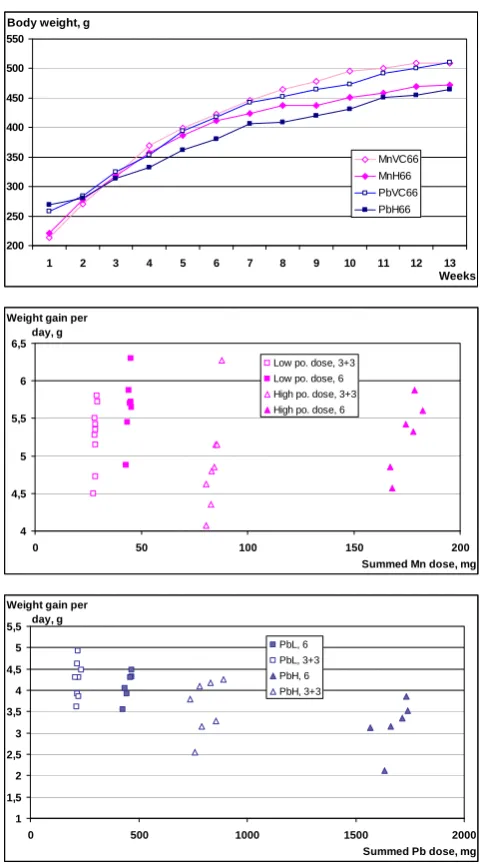
Oral Mn treatment had minimal effect on body weight; but as soon as it, administration of Mn NPs started, the weight gain in the treated groups got substantially slower than
either in the vehicle-treated (MnVC; Fig. 1) or untreated
(MnC, not shown) control. Oral Pb had visible effect on
body weight gain from the 4th week on (Fig. 1) but
switching to it, administration on the 6th week caused also
here a marked drop.
Figure 1. Top: body weight curves of high dose Mn and Pb treated rats and the corresponding controls. Middle and bottom: relationship of metal dose and weight gain. See Table 1 for group coding and doses.
The relationship between weight gain and summed dose was dissimilar: for Mn it was more influenced by the form (NP vs. dissolved) but for Pb, more by the summed dose.
200 250 300 350 400 450 500 550
1 2 3 4 5 6 7 8 9 10 11 12 13
Weeks Body weight, g
MnVC66 MnH66 PbVC66 PbH66
4 4,5 5 5,5 6 6,5
0 50 100 150 200
Summed Mn dose, mg Weight gain per
day, g
Low po. dose, 3+3 Low po. dose, 6 High po. dose, 3+3 High po. dose, 6
1 1,5 2 2,5 3 3,5 4 4,5 5 5,5
0 500 1000 1500 2000
Summed Pb dose, mg Weight gain per
day, g
Open field motility
Noteworthy changes in OF motility were seen only after 6 and 6+6 weeks of metal exposure (Fig. 2). Mn decreased ambulation and rearing (the latter, only after 6+6 weeks) and increased local activity and immobility. Pb caused increased ambulation but decreased rearing.
Figure 2. Time share of the four open field activity forms in the total session time (top, Mn treated; bottom, Pb treated rats). *, **: p<0.05, 0.01 vs. VC.
Cortical electrical activity
The general trend in the electrocorticogram (ECoG) band spectra on Mn effect was decrease in the delta, and increase in the theta and in the fast (beta, gamma) bands. Similarly to the OF effects, these changes were relatively more pronounced only after 6 and 6+6 weeks Mn treatment (Fig. 3). After 6 weeks oral Pb treatment, increased slow and decreased fast ECoG activity was seen, compared to the
control PbVC6. However, in the rats receiving 6+6 weeks
Pb exposure, this frequency shift disappeared.
Latency of the SS EP was increased by Mn (Fig. 4). This increase was seen at all stimulation frequencies but the slope of frequency dependence of the latency (a possible indicator of metal-induced cortical fatigability) was not much altered.
Latency lengthening was of similar magnitude in MnL33
and MnL6 (and was only slightly more different in MnH33
vs. MnH6) in spite of the dissimilar summed dose, in
accordance with the relationship of summed Mn dose and body weight (Fig. 1).
Figure 3. Band spectrum of the spontaneous activity recorded from the somatosensory cortex of rats after 6 and 6+6 weeks of Mn (top) and Pb (bottom) exposure.
*: p<0.051 vs. VC
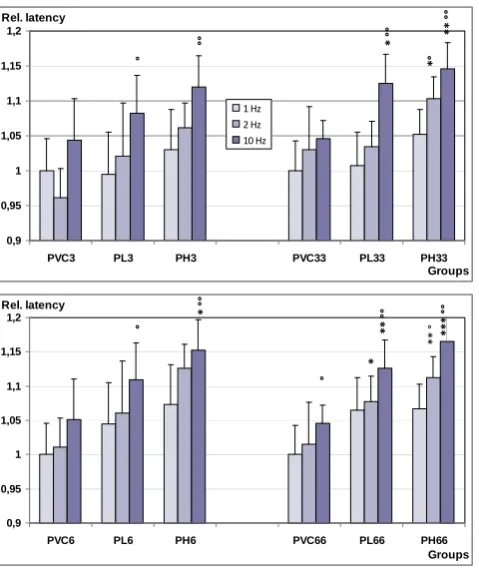
Latency of the SS EP was increased in the Pb-treated rats (Fig. 5). The change was significant vs. vehicle control in rats with 3+3, 6 and 6+6 weeks treatment. The change in
PbH33 and PbH6 was nearly equal, and in PbL33
somewhat bigger than in PbL6; indicating that the NP form
could have disproportionately strong effect on the nervous system (but not on body weight, see Fig. 1) also in case of
Pb. In PbH33 and PbH66, the frequency dependent
lengthening of latency became also more intense.
Discussion
General and neuro-functional parameters indicated repeatedly that there could be a non-additive interaction between the amounts of heavy metals given by po. and it, application.
In Mn exposure, the disproportionately strong effect of NPs was seen on the body weight gain, a general toxic parameter. Metal level data from previous comparable
experiments6,7 suggest that inhaled NPs cause internal
exposure more efficiently than ingested, dissolved metals.
Pb is known to affect BBB19, which may explain that,
among the Pb-treated rats, lengthening of SS EP latency was nearly equal in PbH33 and PbH6, despite the ca. twice higher summed dose in the 6 weeks po. Pb administration. 0%
20% 40% 60% 80% 100%
PbVC6 PbL6 PbH6 PbVC66 PbL66 PbH66
Groups OF time share
AMBULATION TIME LOCAL TIME
IMMOBILITY TIME REARING TIME *
*
** ***
0% 20% 40% 60% 80% 100%
MnVC6 MnL6 MnH6 MnVC66 MnL66 MnH66
Groups OF time share
AMBULATION TIME LOCAL TIME
IMMOBILITY TIME REARING TIME
* *
** *
** **
0% 20% 40% 60% 80% 100%
MnVC6 MnL6 MnH6 MnVC66 MnL66 MnH66
Groups Rel. ECoG band
power
gamma beta2 beta1 alpha theta delta *
* *
*
0% 20% 40% 60% 80% 100%
PbVC6 PbL6 PbH6 PbVC66 PbL66 PbH66
Groups Rel. ECoG band
power
gamma beta2 beta1 alpha theta delta
Figure 4. Latency of the somatosensory evoked potential in Mn treated rats (relative values normalized to VC, 1 Hz).
*, **, ***: p<0.05, 0.01, 0.001 vs. VC
°, °°, °°°: p<0.05, 0.01, 0.001 vs. 1 Hz stimulation within the same group.
Figure 5. Latency of the somatosensory evoked potential in Pb treated rats (relative values normalized to VC, 1 Hz).
*, **, ***: p<0.05, 0.01, 0.001 vs. VC
°, °°: p<0.05, 0.01 vs. 1 Hz stimulation within the same group.
Metal NPs are always likely to cause oxidative stress. Metabolites indicating oxidative damage upon Pb exposure
were detected in humans20. Generation of reactive oxygen
species was detected in the brain in case of both Mn and Pb,
resulting in membrane lipid peroxidation20,21, leading to
changes of membrane functions, such as synaptic transmission, which may be reflected in various forms of cortical activity.
Increased latency in the rats treated with both metals might be, at least partly, due to decreased synaptic
efficiency. Pb2+ and Mn2+ ions block the voltage-gated
Ca-channels in presynaptic endings, impeding this way
intracellular Ca2+ rise and depolarization on arrival of an
axonal discharge, and preventing synchronous emptying of vesicles. Inside, however, both ions can activate a number of Ca-dependent processes including those involved in exocytosis, so the spontaneous release of the transmitter will
be more likely22,23.
Glutamate, the main excitatory transmitter in the CNS, is neutralized by uptake in astrocytes and conversion to
glutamine; and this uptake is decreased by Mn24 and Pb25.
Excess glutamate may desensitize the postsynaptic receptors leading finally to smaller/slower cortical evoked responses. Altered glutamatergic excitation, and energetic shortage from mitochondrial effect of the metals, might have opposite effect on the ECoG spectrum. The resulting net change was in fact different depending on the relative strength of the two opposite influences.
The changes in open field motor behavior may result from the general CNS effects, but even more from the dopaminergic effects, of the metals or NPs. Motivation, determining OF activity, is regulated by mesolimbic/mesocortical dopaminergic structures. Dopaminergic neurons are especially vulnerable to oxidative stress, due to the auto-oxidizing tendency of dopamine and to the presence of monoamine oxidase producing hydrogen
peroxide26 and the metals investigated are known to cause
oxidative stress as mentioned above. Decreased horizontal
movements in-group MnH66 is a feature of general
hypomotility, possibly analogous to the Mn-exposed
welders’ syndrome27. Increased locomotion of the Pb-treated
rats may be analogous to the human “attention deficit hyperactivity disease” found more frequently among
children with elevated blood Pb28.
Conclusion
The attempt to model a complex metal exposure, coming both from environmental (food/waterborne) and occupational (inhalational) sources, was apparently successful. With respect to the general use and ubiquitous presence of metals, their health effects in general, and in particular the nervous system and other sensitive systems, are of primary concern. Occurrence of metals in nanoparticulate form, let it be nanotechnological materials or unwanted pollutants, adds a new feature to the old problem. 0,9 0,95 1 1,05 1,1 1,15 1,2
MnVC3 MnL3 MnH3 MnVC33 MnL33 MnH33
Groups Rel. latency 1 Hz 2 Hz 10 Hz ° °° * * ** * °° ° ** °° * * 0,9 0,95 1 1,05 1,1 1,15 1,2
MnVC6 MnL6 MnH6 MnVC66 MnL66 MnH66
Groups Rel. latency ° ** °° * *** ** ** °° ° *** *** ** ** ** ° *° 0,9 0,95 1 1,05 1,1 1,15 1,2
PVC3 PL3 PH3 PVC33 PL33 PH33
Groups Rel. latency 1 Hz 2 Hz 10 Hz ° °° * °° ** °° *° 0,9 0,95 1 1,05 1,1 1,15 1,2
PVC6 PL6 PH6 PVC66 PL66 PH66
References
1Antonini, J.M., Lewis, A.B., Roberts, J.R. and Whaley, D.A.
Am. J. Ind. Med.,2003, 43, 350.
2Oberdörster, G., Oberdörster, E., Oberdörster, J.,
Environ. Health Persp., 2005, 7, 829.
3ICRP,
Publication 66, Pergamon Press,1994
4Szabó, P.,
Agrokémia és Talajtan, 1991. 40, 297. [in Hungarian]
5Nagymajtényi, L., Schulz, H., Papp, A., Dési, I..
Centr. Eur. J. Occup. Environ. Med.1997, 3,195.
6Oszlánczi, G., Horváth, E., Szabó, A., Horváth, E., Sápi, A.,
Kozma, G., Kónya, Z., Paulik, E., Nagymajtényi, L., Papp, A., Acta Biol. Szeged., 2010, 54, 165.
7Vezér, T., Papp, A., Hoyk, Z., Varga, C., Náray, M.,
Nagymajtényi, L., Environ. Toxicol. Pharmacol., 2005, 19, 797.
8ATSDR, Toxicological profile for lead.
Agency for Toxic Substances and Disease Registry, U.S. Department of Health and Human Services , 1999.
9Araki, S., Sato, H., Yokoyama, K, Murata, K., Am. J. Ind. Med.
2000, 37, 193.
10Gerhardsson, L., Englyst, V., Lundstrom, N.G., Nordberg, G.,
Sandberg, S., Steinvall, F., J. Trace Elem. Med. Biol., 1995, 9, 136.
11Ruff, H.A., Markowitz, M.E., Bijur, P.E., Rosen, J.F.
Environ. Health Persp.1996, 104, 180.
12Goyer, R.A.,
Environ. Health Persp., 1996, 104, 1050.
13Füzesi, Zs., Levy, B.S., Levenstein, C.,
From science to action: the lead hazard in Hungary - a fact report. Fact Foundation, Pécs,1997
14ATSDR, Draft toxicological profile for manganese.
Agency for Toxic Substances and Disease Registry, U.S. Department of Health and Human Services. 2008.
15Saric, M., Markicevic, A., Hrustic, O..
Br. J. Ind. Med., 1977, 34,
114.
16Ohtake, T., Negishi, K., Okamoto, K., Oka, M., Maesato, K.,
Moriya, H., Kobayashi, S., Amer. J. Kidney Dis., 2005, 46, 749.
17Woolf, A., Wright, R., Amarasiriwardena, C., Bellinger, D.
Environ. Health Persp., 2002, 110, 613-616
18Halatek, T., Sinczuk-Walczak, H., Szymcsak, M., Rydzynski, K.,
Int. J. Occup. Med. Environ. Health., 2005, 18, 265.
19Goldstein, G.W., Asbury, A.K., Diamond, I., Arch. Neurol. 1974, 1,
382.
20Ahamed, M., Siddiqui, M.K.J.,
Clin. Chim. Acta, 2007,
383, 57.
21Avila, D.S., Gubert, P., Fachinetto, R, Wagner, C., Aschner, M.,
Rocha, J.B., Soares, F.A., NeuroToxicol., 2008, 29, 1062.
22Kita, H., Narita, K., Van der Kloot, W., Brain Res., 1981, 205,
111.
23Suszkiw, J., Toth, G., Murawsky, M., Cooper, G.P., Brain Res.,
1984, 323, 31.
24Erikson, K.M., Aschner, M., Neurochem. Int.,2003, 43, 475. 25Struzynska, L., Chalimoniuk, M., Sulkowski, G.,
Toxicology,
2005, 212, 185.
26Alexi, T., Borlongan, C.V., Faull, R.L.M., Williams, C.E., Clark,
R.G., Gluckmann, P.D., Hughes, P.E. Prog. Neurobiol., 2000,
60, 409.
27Bowler, R., Koller, W., Schultz, P.E., NeuroToxicol., 2006, 27,
327.
28Needleman, H.L., Gatsonis, C.A., J.A.M.A.1990, 263, 673.