ARTIGO ORIGINAL
RESUMO
Introdução: A síndrome de DiGeorge/deleção 22q11.2 pode apresentar um grau variável de imunodeficiência, condicionando a uti-lização de vacinas vivas. Este estudo teve como objetivo documentar os efeitos adversos de vacinas vivas e possível relação com alterações imunitárias em crianças com síndrome de DiGeorge/deleção 22q11.2 parcial.
Material e Métodos: Foi realizado um estudo retrospetivo por revisão dos processos clínicos das crianças com deleção do cromos-soma 22q11.2 e fenótipo de síndrome de DiGeorge, seguidos num centro de referência de imunodeficiências primárias. Foi realizada colheita de dados, incluindo: características demográficas; história médica; historial de vacinação com vacinas vivas; contagem de linfócitos T-CD4+ e respostas proliferativas linfocitárias a antigénios e mitogénios; reações adversas; falências vacinais.
Resultados: Foram incluídas 23 crianças com síndrome de DiGeorge/deleção 22q11.2, 65,2% do sexo masculino e idade média de diagnóstico de 11,3 meses. Destas, 18 crianças (78%) receberam a vacina bacillus Calmette-Guérin: todas com evidência de atividade tímica; três apresentaram linfopénia T-CD4+ moderada e respostas proliferativas linfocitárias anormais; uma com respostas prolifera-tivas linfocitárias anormais para mitogénios, quatro para derivado de proteína purificada e uma para toxóide tetânico. A vacina tríplice contra o sarampo, parotidite e rubéola foi administrada a 15 crianças, três com imunossupressão moderada e respostas proliferativas linfocitárias anormais. A vacina viva atenuada contra poliomielite foi administrada a quatro crianças sem imunossupressão e a vacina contra o rotavírus a três crianças, uma com imunossupressão moderada. Não foram reportadas reações adversas.
Discussão: Estes dados estão de acordo com as conclusões de outros estudos internacionais.
Conclusão: Na nossa amostra, as vacinas vivas atenuadas foram bem toleradas, incluindo em crianças com linfopénia T-CD4+ mode-rada e com respostas proliferativas linfocitárias a antigénios/mitogénios anormais.
Palavras-chave: Criança; Cromossomas Humanos Par 22; Deleção Cromossómica; Síndrome de DiGeorge; Transtornos Cromossó-micos; Vacinas Atenuadas/efeitos adversos; Vacinas Virais/efeitos adversos
Live Vaccine in Children with DiGeorge/22q11.2
Deletion Syndrome
Vacinas Vivas em Crianças com Síndrome de DiGeorge/
Deleção 22q11.2
Mariana MIRANDA1,2, Andreia Teixeira MARTINS1,3, Sara CARVALHO1,4, Ana SERRA-CAETANO5,6,
Isabel ESTEVES1,5,7, José Gonçalo MARQUES1,5,7
Acta Med Port 2019 Jul–Aug;32(7–8):514–519 ▪ https://doi.org/10.20344/amp.9802
1. Unidade de Infecciologia Pediátrica. Departamento de Pediatria. Hospital de Santa Maria. Centro Hospitalar de Lisboa Norte. Lisboa. Portugal. 2. Serviço de Pediatria. Hospital Espírito Santo de Évora. Évora. Portugal.
3. Departamento de Pediatria. Centro Hospitalar Baixo Vouga. Aveiro. Portugal. 4. Serviço de Imunoalergologia. Centro Hospitalar de Lisboa Norte. Lisboa. Portugal.
5. Centro de Imunodeficiências Primárias. Centro Académico de Medicina de Lisboa. Lisboa. Portugal. 6. Instituto de Medicina Molecular. Faculdade de Medicina. Universidade de Lisboa. Lisboa. Portugal. 7. Clínica Universitária de Pediatria. Faculdade de Medicina. Universidade de Lisboa. Lisboa. Portugal.
Autor correspondente: Mariana Miranda. [email protected]
Recebido: 16 de outubro de 2018 – Aceite: 06 de março de 2019 | Copyright © Ordem dos Médicos 2019
ABSTRACT
Introduction: Children with DiGeorge syndrome/chromosome 22q11.2 deletion syndrome might have a variable degree of immunode-ficiency, which may limit the use of live vaccines. The aim of this study was to review the adverse effects of live vaccines and possible relation with immune status in patients with DiGeorge Syndrome/partial 22q11.2 deletion syndrome.
Material and Methods: Retrospective study with analysis of the clinical records of children with chromosome 22q11.2 deletion syn-drome and DiGeorge synsyn-drome phenotype, followed in a Primary Immunodeficiency center. Data were collected on: demographic characteristics; medical and vaccination history with live vaccines; T-CD4+ lymphocyte counts and lymphocyte proliferative responses to antigens and mitogens; adverse reactions; vaccine failure.
Results: Twenty three children with DiGeorge syndrome/22q11.2 deletion syndrome were included, 65.2% male, with average age at diagnosis of 11.3 months. Eighteen children (78%) received bacillus Calmette-Guérin vaccine: all with evidence of thymic activity; three presented moderate T-CD4+ lymphopenia and abnormal lymphocyte proliferative responses; one had abnormal lymphocyte prolifer-ative responses for mitogens, four for purified protein derivprolifer-ative and one for tetanus toxoid. Measles, mumps and rubella vaccine was administered to 15 children, three of them with moderate immunosuppression and abnormal lymphocyte proliferative responses. Live attenuated polio vaccine was administered to 4 children without immunosuppression and the rotavirus vaccine to three children, one with moderate immunosuppression. No significant adverse reactions were reported.
Discussion: These data are in line with the findings of other international studies.
Conclusion: In our sample, live vaccines were well-tolerated, even in children with moderate T-CD4+ lymphopenia and abnormal lymphocyte proliferative responses to antigens/mitogens.
Keywords: Child; Chromosome Deletion; Chromosome Disorders; Chromosomes, Human, Pair 22; DiGeorge Syndrome; Vaccines, Attenuated/adverse effects; Viral Vaccines/adverse effects
INTRODUCTION
DiGeorge syndrome (DGS) is usually associated with chromosome 22q11.2 microdeletion, mostly due to de novo
mutations or corresponding to autosomal dominant trans
ARTIGO ORIGINAL with a frequency of 1 from each 3,000 to 6,000 deliveries.1–3
Chromosome 22q11.2 deletion (22q11.2DS) can also be found in other syndromes including the velocardiofacial syndrome.2–4
Conotrunchal heart defects, thymic hypoplasia and hy
-pocalcaemia (due to parathyroid hypoplasia) correspond to the classic triad of features of DGS on presentation. Howev
-er, the phenotype is highly variable and could be associated with immune defects and anatomic abnormalities, among others.2,5
Around 75% of the patients with 22q11.2DS present with mild to moderate immunodeficiency due to thymic hy
-poplasia and impaired T-cell production or mildly impaired T-cell function, with variable clinical expression (partial DGS). The age-related rate of decline of T-cell numbers is slower in patients with T-cell lymphopenia than controls, due to the expanded pool of memory T-cells.6–8 Complete
DGS is presented by less than 1% of cases, corresponding to a type of severe combined immunodeficiency.1,5–7
Humoral immune deficiency associated with partial DGS is mainly related to IgA deficiency and poor response to polysaccharide antigens.7,9
The use of live vaccines is contraindicated in patients with severe T-cell immunodeficiency, even though it could be considered in children with mild or moderate T-cell im
-munodeficiency, such as in children with partial DGS. Avoidance of live vaccines has been questioned as the risk of natural infection remains unchanged and there is an in
-creasing evidence of normal T-cell function in most children with DGS.10–12
Some authors have suggested that live vaccines could be safely administered in children older than one year of age diagnosed with DGS, presenting with the following cri
-teria: presence of antibodies for inactivated vaccines; nor
-mal or near nor-mal proliferative responses to antigens and mitogens; CD8+ T-cell count >300 cells/mm3; CD4+ T-cell
count >500 cells/mm3.10,13
Regular measurement of the levels of antibodies (each 6 to 12 months) and re-immunisation could be necessary in children with DGS as sustaining protective antibody levels could be lower than in age-matched control subjects.13
Few studies have characterised the use and adverse events associated with live vaccines in children with DGS. This study was aimed at contributing to the assessment of safety of live vaccines regardless of whether or not these were introduced into the National Program of Vaccination
[Programa Nacional de Vacinação (PNV)] and describing
any relationship between the presence of immune system disorders and the risk of complications in children with par
-tial DGS.
MATERIAL AND METHODS
This was a retrospective study of children with 22q11.2DS [confirmed by fluorescence in situ hybridiza
-tion (FISH)] and the DGS phenotype having attended the outpatient clinic of primary immunodeficiency disorders at
The following data were collected from the clinical records: demographic characteristics (gender and age); age at di
-agnosis; clinical complications (including cardiac, respira
-tory, ENT (ear, nose and throat) or endocrine pathology, absent thymus); history of vaccination with live attenuated vaccines and date of administration, including Bacillus Cal
-mette-Guérin (BCG) vaccine, MMR (measles, mumps and rubella) vaccine, oral live-attenuated polio vaccine (OPV) and rotavirus vaccine (Rotateq® or Rotarix®); local adverse reactions occurring up to 12 months following BCG vaccine or 56 days following the remaining live vaccines; history or medical record of vaccine-preventable disease; blood lym
-phocyte immunophenotyping (by flow cytometry) and prolif
-erative responses to antigens and mitogens. In the absence of any medical record, data were obtained by postal or tele
-phone questionnaire sent to parents / legal caregivers. The presence of clinical signs or symptoms suggesting an adverse reaction to a previously administered vaccine, according to physicians that have examined the patients and have recorded the information either on patient’s
Bo-letim de Saúde Infantil e Juvenil (Child and Youth Health
Book) or in a specific report was defined as adverse events associated with live vaccines. Any information on the pres
-ence of local abscesses, lymphadenitis, bone infection, multifocal skin lesions and disseminated disease (lymph node, pulmonary, liver / splenic, ocular or meningeal in
-volvement) related to BCG was surveyed. Hospital admis
-sions, morbidity and mortality related to any adverse event were surveyed as well.
Vaccine-preventable diseases including measles, mumps, rubella and rotavirus, affecting children having completed the vaccination schedule were considered. Di
-agnosis was based on patient’s clinical history, examination and/or laboratory confirmation (required in the case of rota
-virus infection).
Our group of patients was characterised as presenting with (i) severe immunosuppression when < 15%, (ii) mod
-erate, 15% - 24% and with no evidence of immunosuppres
-sion when ≥ 25%, according to CD4 percentage.
The percentage of recent thymic emigrants was classi
-fied as normal if adequate, or abnormal if reduced or absent. Proliferative responses to specific antigens and mitogens were classified as normal if positive or adequate and abnor
-mal if reduced or absent. Lymphocyte proliferation assays were carried out at the laboratory of clinical immunology of
the Instituto de Medicina Molecular (Faculty of Medicine of
the University of Lisbon).
A descriptive analysis of the demographic characteris
-tics, clinical history, immune function, history of vaccine-pre
-ventable diseases in immunised patients, adverse events and vaccination coverage.
ARTIGO ORIGINAL
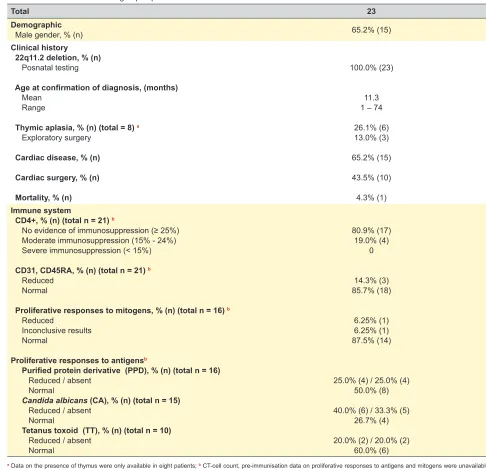
Table 1 – Characteristics of our group of patients
Total 23
Demographic
Male gender, % (n) 65.2% (15)
Clinical history 22q11.2 deletion, % (n) Posnatal testing
Age at confirmation of diagnosis, (months)
Mean Range
Thymic aplasia, % (n) (total = 8)a
Exploratory surgery
Cardiac disease, % (n) Cardiac surgery, % (n) Mortality, % (n)
100.0% (23)
11.3 1 – 74
26.1% (6) 13.0% (3)
65.2% (15)
43.5% (10)
4.3% (1) Immune system
CD4+, % (n) (total n = 21) b
No evidence of immunosuppression (≥ 25%) Moderate immunosuppression (15% - 24%) Severe immunosuppression (< 15%)
CD31, CD45RA, % (n) (total n = 21)b
Reduced Normal
Proliferative responses to mitogens, % (n) (total n = 16)b
Reduced
Inconclusive results Normal
Proliferative responses to antigensb
Purified protein derivative (PPD), % (n) (total n = 16)
Reduced / absent Normal
Candida albicans (CA), % (n) (total n = 15) Reduced / absent
Normal
Tetanus toxoid (TT), % (n) (total n = 10) Reduced / absent
Normal
80.9% (17) 19.0% (4)
0
14.3% (3) 85.7% (18)
6.25% (1) 6.25% (1) 87.5% (14)
25.0% (4) / 25.0% (4) 50.0% (8)
40.0% (6) / 33.3% (5) 26.7% (4)
20.0% (2) / 20.0% (2) 60.0% (6)
a Data on the presence of thymus were only available in eight patients; b CT-cell count, pre-immunisation data on proliferative responses to antigens and mitogens were unavailable for all patients.
RESULTS Study sample
A total of 23 patients born between 1999 and 2015 diagnosed with DGS and with postnatal confirmation of chromosome 22q11.2 deletion by FISH or array CGH tech
-nique were included in the study. Genetic confirmation was mostly obtained within patient’s first year of life (Table 1). Several patients were vaccinated before the diagnosis of 22q11.2DS / DGS was reached.
Six patients with thymic aplasia were found, most pa
-tients presented with haemodynamically significant cardiac disease (n = 15/65.2%) and underwent cardiac surgery (n =
10/43.5%). An early confirmation by FISH was obtained for most patients with cardiac disease and were rarely exposed
to live vaccines within their first year of life.
Four out of 21 patients with a confirmed diagnosis (two unknown results) presented with moderate immunosup
-pression (19%) and two of these presented with immuno
-suppression within their first year of life. Severe immuno
-suppression was not presented by any patient in our group. Three patients with reduced thymus activity were found. Most patients presented with normal responses to mito
-gens. However, half of the patients presented with abnormal proliferative responses to specific antigens (n = 12/52.2%). Abnormal proliferative responses to tetanus toxoid were found in four patients, three of these showing abnormal pro
ARTIGO ORIGINAL
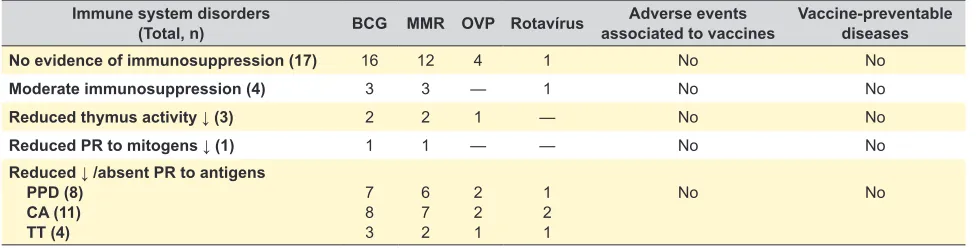
Table 2 – Vaccine coverage, adverse events and vaccine-preventable diseases Immune system disorders
(Total, n) BCG MMR OVP Rotavírus associated to vaccinesAdverse events Vaccine-preventable diseases
No evidence of immunosuppression (17) 16 12 4 1 No No
Moderate immunosuppression (4) 3 3 — 1 No No
Reduced thymus activity ↓ (3) 2 2 1 — No No
Reduced PR to mitogens ↓ (1) 1 1 — — No No
Reduced ↓ /absent PR to antigens
PPD (8) CA (11) TT (4)
7 8 3
6 7 2
2 2 1
1 2 1
No No
(CD4+ rate of 22.9%/1,056 cells/µL); all the patients had received the entire tetanus immunisation schedule for the age (one patient had completed the schedule less than one month before the study).
One patient (presenting with normal immunity) died pre
-maturely due to cardiac comorbidities.
Vaccine-preventable diseases
None of the patients presented with any laboratorial, clinical or diagnostic confirmation of any of the vaccine-pre
-ventable diseases related to the live vaccines included in the study (including patients who underwent the entire im
-munisation schedule against that disease).
Vaccination coverage and adverse events associated with live vaccines
The detailed results of each vaccine are shown in Ta
-bles 2 and 3.
BCG vaccine was administered to 19 (82.6%) patients: 17 with an evidence of thymic activity, based on the pres
-ence of naïve T-cells recently migrated from the thymus (CD31+). Three patients out of these presented with moder
-ate immunosuppression, with CD4+ lymphopenia (15-24%) and abnormal proliferative responses. Five out of the 14 patients with normal CD4+ counts showed abnormal prolif
-erative responses, while inconclusive results were obtained
in one patient.
MMR vaccine was administered to 15 (65.2%) patients: the evidence of thymic activity was shown by all the 14 pa
-tients with known testing results. Three pa-tients presented with moderate immunosuppression with CD4+ lymphopenia and abnormal proliferative responses; four out of the 11 pa
-tients with normal CD4+ counts presented with abnormal proliferative responses.
OPV vaccine was administered to four (17.4%) patients, all showing an evidence of thymic activity. All patients pre
-sented with normal CD4+ counts, one with inconclusive results regarding proliferative responses to mitogens and three patients showing abnormal results. The presence of no patient having received the OVP vaccine with immuno
-suppression probably reflects an intentional avoidance of the vaccine in children with T-cell impairment.
Rotavirus vaccine was only administered to two patients
(one with a complete schedule of Rotateq® and one with Rotarix®): an evidence of thymic activity has been found in both. One patient presented with moderate immunosup
-pression with CD4+ T-cell lymphopenia, showing normal proliferative responses to mitogens.
No adverse event was described for any vaccine with
-in the post-vacc-ination period def-ined for each vacc-ine. No hospital admissions or mortality was associated with any of the live vaccines that were included in the study.
DISCUSSION
In our group of patients, no significant adverse events associated with live-attenuated vaccines were found in pa
-tients with 22q11.2DS / DGS, including pa-tients with moder
-ate CD4+ T-cell lymphopenia and with reduced proliferative response to mitogens and antigens. No patients presented with severe immunosuppression, which is a formal contrain
-dication for the administration of live vaccines.1,5–7
These data are in line with the conclusions of other re
-cent studies: (i) in one retrospective study of 82 patients with DGS, only six patients (7.3%) showed mild adverse events associated to the use of MMR vaccine (similar incidence to the general population), with no moderate or severe ad
-verse events; (ii) in a multi-centric retrospective study with 194 patients with DGS, with a 77% MMR vaccine coverage, including 35 patients with moderate immunosuppression and six with severe, only 14% of the patients showed ad
-verse events following MMR vaccine, mostly mild events, with no associated mortality. Both studies have reached the conclusion that live vaccines were frequently administered to patients with DGS and were generally well-tolerated in patients with mild to moderate immunosuppression.1,13
Some limitations of this study are worth mentioning, par
-ticularly related to the small size of our group of patients and to its retrospective design, with data collected from patient’s caregivers when no clinical records existed, reducing its ob
-jectivity. Even though this was a descriptive study, it has the merit of having been adapted to the national immunisation schedules, including vaccines listed in the PNV and out of the national program, with no specific monitoring.
Controlled, randomised, prospective studies involving representative samples are needed to establish formal rec
ARTIGO ORIGINAL Table 3Live vaccine – Immunological characteristics and morbidity/mortality of vaccine-preventable diseasesBCG MMR OVP Rotavírus
Total, % (n) (total n = 23) 82.6% (19) 65.2% (15) 17.4% (4) 8.7% (2)
Immune system CD4+, % (n)
No evidence of immunosuppression (≥ 25%) Moderate immunosuppression (15% - 24%) Severe immunosuppression (< 15%) Unknown
CD31, CD45RA, % (n)a
Reduced Normal
Proliferative responses to mitogens % (n)a
Reduced Normal
Inconclusive results / not carried out
Proliferative responses to antigensa
Purified protein derivative (PPD), n
Reduced / absent Normal
Inconclusive results / not carried out Candida albicans (CA), n
Reduced / absent Normal
Inconclusive results / not carried out Tetanus toxoid (TT), n
Reduced / absent Normal
Inconclusive results / not carried out
73.7% (14) 15.8% (3) 0 10.5% (2) 10.5% (2) 89.5% (17) 5.3% (1) 52.6% (10) 42.1% (8) 36.8% (7) 26.4% (5) 36.8% (7) 42.1% (8) 15.8% (3) 42.1% (8) 15.8% (3) 26.3% (5) 57.9% (11) 73.3% (11) 20.0% (3) 0 6.7% (1) 13.3% (2) 80.0% (12) 6.7% (1) 60.0% (9) 33.3% (5) 40.0% (6) 26.7% (4) 33.3% (5) 46.7% (7) 20.0% (3) 33.3% (5) 13.3% (2) 33.3% (5) 53.4% (8) 100.0% (4) 0 0 0 25.0% (1) 75.0% (3) 0 25.0% (1) 75.0% (3) 50.0% (2) 50.0% (2) 0 50.0% (2) 50.0% (2) 0 25.0% (1) 50.0% (2) 25.0% (1) 50.0% (1) 50.0% (1) 0 0 0 100.0% (2) 0 100.0% (2) 0 50.0% (1) 50.0% (1) 0 100.0% (2) 0 0 50.0% (1) 50.0% (1) 0
Adverse events associated with vaccines, nb 0
Vaccine-preventable diseases, nc 0
Mortality associated with vaccines, n 0
a T-cell count, pre-immunisation proliferative responses to antigens and mitogens were not available for all patients; b Considering a 12-month window period for BCG and 56 days for other live vaccines; c Vaccine-preventable diseases in patients who have completed the entire immunisation schedule (measles, mumps, rubella, rotavirus).
BCG: Bacillus Calmette-Guérin vaccine; MMR: measles, mumps and rubella vaccine; OVP: oral live-attenuated polio vaccine.
22q11.2DS / DGS (including, for instance, the definition of a minimum level of CD4+ T cell count from which the use of live vaccines would be safe). Until then, the decision wheth
-er to use live vaccines should be individualised.1,5,13
CONCLUSION
In our group of patients, the use of live-attenuated vac
-cines was well-tolerated, including in patients with mild to moderate immunosuppression. This study was aimed at giving a contribution to a meta-analysis of similar studies, leading to recommendations on the use of live vaccines in patients with 22q11.2 microdeletion syndrome / DiGeorge syndrome.
ACKNOWLEDGMENTS
The authors wish to acknowledge Susana Silva, Adria
-na Albuquerque and Alcinda Melo, members of the Centro
de Imunodeficiências Primárias at the Centro Académico de Medicina de Lisboa and Instituto de Medicina Molecular
(Faculty of Medicine, University of Lisbon), for their collab
-oration with the study.
HUMAN AND ANIMAL PROTECTION
The authors declare that the followed procedures were according to regulations established by the Ethics and Clini
-cal Research Committee and according to the Helsinki Dec
-laration of the World Medical Association.
DATA CONFIDENTIALITY
The authors declare that they have followed the proto
-cols of their work centre on the publication of patient data. Informed consents were obtained.
CONFLICTS OF INTEREST
The authors declare that there were no conflicts of inter
-est in writing this manuscript.
FINANCIAL SUPPORT
ARTIGO ORIGINAL REFERENCES
1. Hofstetter AM, Jakob K, Klein NP, Dekker CL, Edwards KM, Halsey NA, et al. Live vaccine use and safety in DiGeorge syndrome. Pediatrics. 2014;133;e946–54.
2. Bassett AS, McDonald-McGinn DM, Devriendt K, Digilio MC, Goldenberg P, Habel A, et al. Practical guidelines for managing patients with 22q11.2 deletion syndrome. J Pediatr. 2011;159:332.
3. Digilio MC, Angioni A, De Santis M, Lombardo A, Giannotti A, Dallapiccola B, et al. Spectrum of clinical variability in familial deletion 22q11.2: from full manifestation to extremely mild clinical anomalies. Clin Genet. 2003;63:308.
4. McDonald-McGinn DM, Sullivan KE. Chromosome 22q11.2 deletion syndrome (DiGeorge syndrome/velocardiofacial syndrome). Medicine. 2011;90:1–18.
5. Perez EE, Bokszczanin A, McDonald-McGinn D, Zackai EH, Sullivan KE. Safety of live viral vaccines in patients with chromosome 22q11.2 deletion syndrome (DiGeorge syndrome/ velocardiofacial syndrome). Pediatrics. 2003;112:e325.
6. Piliero LM, Sanford AN, McDonald-McGinn DM, Zackai EH, Sullivan KE. T-cell homeostasis in humans with thymic hypoplasia due to chromosome 22q11.2 deletion syndrome. Blood. 2004;103:1020.
7. Gennery AR. Immunological aspects of 22q11.2 deletion syndrome. Cell Mol Life Sci. 2012;69:17.
8. Harris JM, Hazenberg MD, Poulin JF, Higuera-Alhino D, Schmidt D, Gotway M, et al. Multiparameter evaluation of human thymic function: interpretations and caveats. Clin Immunol. 2005;115:138.
9. Gennery AR, Barge D, O’Sullivan JJ, Flood TJ, Abinum M, Cant AJ. Antibody deficiency and autoimmunity in 22q11.2 deletion syndrome. Arch Dis Child. 2002;86:422.
10. Bonilla FA. Update: vaccines in primary immunodeficiency, J Allergy Clin Immunol Pract. 2018;4:10.1016.
11. Moylett EH, Wasan AN, Noroski LM, Shearer WT. Live viral vaccines in patients with partial DiGeorge syndrome: clinical experience and cellular immunity. Clin Immunol. 2004;112:106–12.
12. Halsey NA, Edwards KM, Dekker CL, Klein NP, Baxter R, Larussa P, et al. Causality Working Group of the Clinical Immunization Safety Assessment network. Algorithm to assess causality after individual adverse events following immunizations. Vaccine. 2012;30:5791–8. 13. Al-Sukaiti N, Reid B, Lavi S, Al-Zaharani D, Atkinson A, Roifman CM, et al.