Business Administration
Master’s in Supply Management, Double Degree Programme
Iida Pyymäki
PERFORMANCE MEASUREMENT AND IMPLEMENTATION OF E-PROCUREMENT SYSTEM IN INDIRECT PURCHASING
Master’s thesis 2018
1st examiner: Jukka Hallikas
Author: Iida Pyymäki
Title: Performance Measurement and Implementation of E-Procurement System in Indirect Purchasing
Faculty: School of Business and Management
Master’s Programme: Master’s Programme in Supply Management, Double degree with University of Twente
Year: 2018
Master’s Thesis: Lappeenranta University of Technology, University of Twente, 130 pages, 20 figures, 5 tables, 1 appendix
Examiners: Professor Jukka Hallikas (Lappeenranta University of Technology)
Professor Doctor Holger Schiele (University of Twente) Keywords: Procurement, performance measurement, e-procurement,
indirect purchasing, implementation
Tutkielman nimi: Sähköisen hankintajärjestelmän implementointi ja mittaaminen epäsuorissa hankinnoissa
Tiedekunta: Kauppatieteellinen tiedekunta
Maisteriohjelma: Hankintojen johtaminen, kaksoistutkinto Twenten yliopiston kanssa
Vuosi: 2018
Pro gradu -tutkielma: Lappeenrannan teknillinen yliopisto, Twenten yliopisto, 130 sivua, 20 kuviota, 5 taulukkoa, 1 liite
Tarkastajat: Professori Jukka Hallikas (Lappeenrannan teknillinen yliopisto)
Professori Tohtori Holger Schiele (Twenten yliopisto) Avainsanat: Hankinta, suorituskyvyn mittaaminen, sähköinen hankinta,
epäsuora hankinta, implementointi
experiences I did not even dream to achieve in high school. This thesis required plenty of work and time but I am glad that I received the opportunity to conduct this thesis since the indirect department in the case company was open-minded and fun to work with. I want to thank my great supervisors, Jukka Hallikas and Annemaria Putkinen, who gave me precious input to my work. Also, thanks for all the interviewees who gave their time to meet me.
I cannot believe it has been five years since I started my studies in Lappeenranta, however, I am very grateful for all the lovely people I met there and abroad, I could not have make it this far without you. Also, most importantly, I really want to thank my family and boyfriend Antti who supported me through my studies, this thesis and hopefully will support me in the future too. I am ready to graduate but Lappeenranta will always be a very special place for me.
In Vantaa, 3.8.2018
1.1 Background ... 8
1.2 Research questions, gap and objectives ... 11
1.3 Theoretical framework and limitations... 12
1.4 Structure of the research ... 14
1.5 Definitions of key concepts ... 14
2 PURCHASING PROCESS AND MEASUREMENT ... 16
2.1 Stages in purchasing process ... 17
2.2 Purchase-to-pay process ... 19
2.3 E-procurement process... 20
2.4 Indirect procurement ... 23
2.5 Purchasing performance and measurement ... 26
2.6 KPIs in e-purchasing performance ... 28
3 E-PROCUREMENT AND CHANGE MANAGEMENT ... 37
3.1 E-procurement systems ... 38
3.2 Selection of an e-procurement system... 41
3.3 Importance and benefits of e-procurement ... 44
3.4 Successful change management in e-procurement implementation ... 52
3.5 Barriers in e-procurement implementation ... 59
4 RESEARCH DESIGN AND METHODOLOGY ... 63
4.1 Research methodology ... 63
4.2 Data collection and description of the data ... 64
4.3 Reliability and validity... 65
5 THE CASE COMPANY AND CURRENT STATE ... 66
5.1 Case company and the business environment ... 66
5.2 Indirect purchasing department ... 66
5.3 Current state of indirect purchasing process and tools ... 67
6 MEASURING OF INDIRECT PURCHASING PROCESS ... 74
6.1 Measurements for the e-procurement system ... 74
7.3 Success factors of the implementation project ... 88
7.4 The greatest barriers in the implementation process ... 93
8 DISCUSSION AND CONCLUSIONS ... 98
8.1 Discussion of results ... 98
8.2 Conclusions of the research ... 106
8.3 Recommendations for the case company ... 107
8.4 Suggestions for further research ... 108
REFERENCES ... 110
LIST OF FIGURES
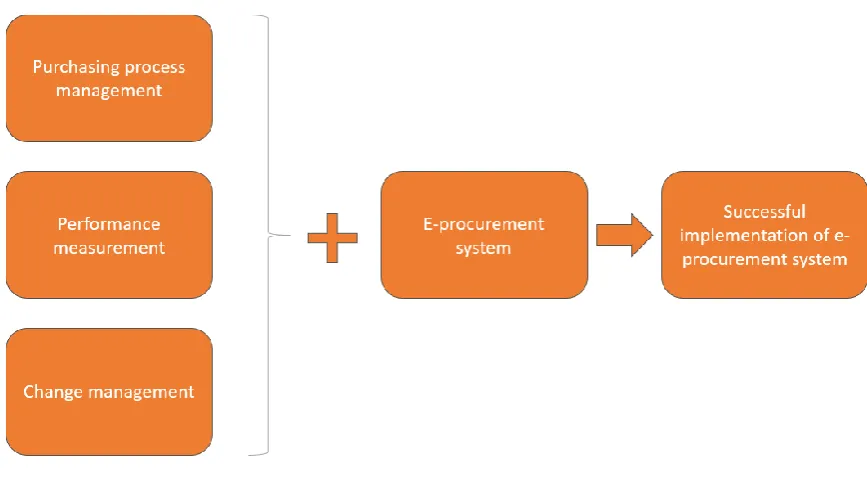
Figure 1. Theoretical framework
Figure 2. Purchasing process Figure 3. Purchase-to-pay process
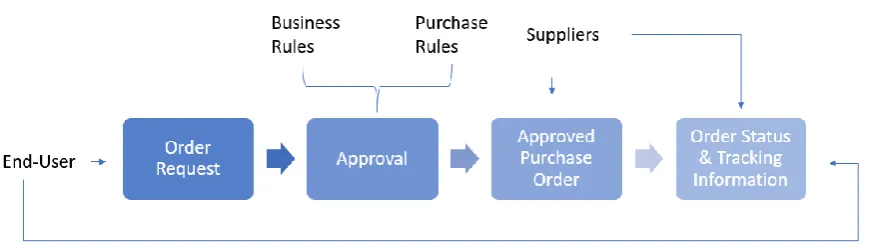
Figure 4. E-procurement process
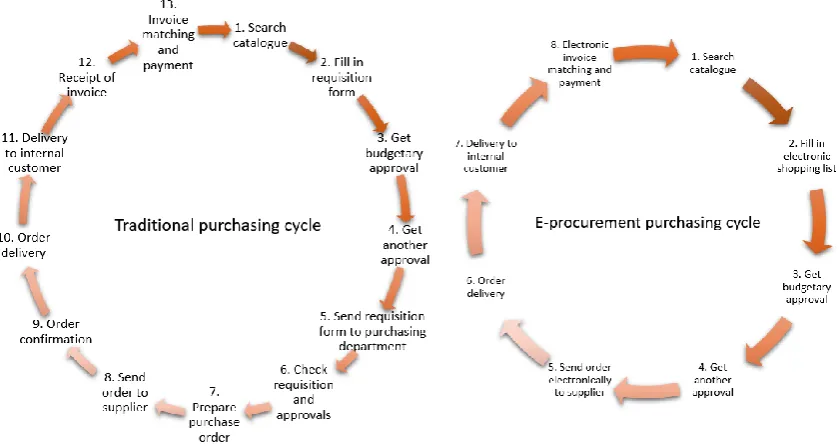
Figure 5. Traditional purchasing cycle compared to e-procurement purchasing cycle Figure 6. Technology adoption and acceptance
Figure 7. The purchasing process for current suppliers
Figure 8. The purchasing process for new suppliers Figure 9. Sourcing process BASE
Figure 10. Current risks in indirect purchasing process
Figure 11. Spend in IT and telecom
Figure 12. Spend in MRO
Figure 13. Spend in professional services
Figure 14. Recognized benefits provided by the system
Figure 15. Awareness of the implementation of the system Figure 16. Feelings towards the system
Figure 17. Needed support in deployment of the system
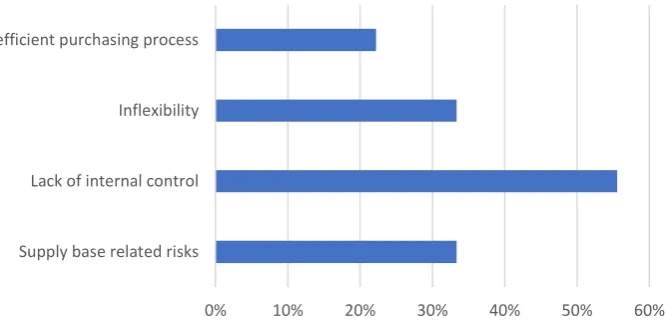
Figure 18. Barriers in implementation process
Table 1. Purchasing performance measurements
Table 2. E-procurement benefits Table 3. Research data description
Table 4. Indicators identified from the interviews
Table 5. KPIs to measure purchasing performance
APPENDICES
1 INTRODUCTION
The first part of this thesis, introduction, firstly discusses the background of the research and points out the motivation to conduct a study. Then, the research problem and research questions are proposed and discussed, and research gap is explained to further. In addition, theoretical framework for the study is presented and the structure of the research is introduced. Lastly, some of the key concepts and terms are defined.
1.1 Background
The importance of purchasing department has been more and more understood in companies and especially, purchasing performance has been seen as an important element when it comes to corporate performance (Easton et al., 2002). Therefore, one of the most important tasks of strategic purchasing has been recognized to improve the financial and commercial performance of a company (González-Benito, 2007). By capturing and sharing information in real-time, companies are able to improve their supply chain performance (Devaraj et al., 2007) and hence, information technologies are in a key role to provide real-time information among the members of a supply chain.
provide useful systems and technologies from customer relationship management to whole supply chain management (Chang et al., 2004).
When it comes to supply chains and managing them, especially electronic procurement (e-procurement) has an important role in ensuring the functionality of supply chain. As a quite resent phenomenon, e-procurement has become a must-have for companies, regardless the industry, to improve supply chain competitiveness (Pop Sitar, 2011). Furthermore, when companies are starting to adopt and develop their e-commerce strategies, e-procurement is often the starting point. The first e-procurement systems, mostly enterprise resource planning (ERP) systems, started to come around in business in the 1980s (Puschmann & Alt, 2005). However, those e-procurement systems were mostly designed for direct procurement and finally, in the late 1990s, first e-procurement systems for indirect purchasing were introduced (Puschmann & Alt, 2005). Compared to traditional ERP systems, the e-procurement systems for indirect procurement systems were less expensive and more flexible because of standardization on a technical level (Puschmann & Alt, 2005). Later on, the development of electronic markets (e-markets) and systems vendors, such as Ariba and SAP, have supported the outsourcing of operational purchasing functions (Puschmann & Alt, 2005). More recently, the introduction of purchasto-pay systems, which are one form of e-procurement systems, has increased the efficiency of the whole purchase-to-pay process since companies have been able to automate tasks, such as invoice matching, that have been done manually earlier (Yu et al., 2008).
implementing e-procurement into indirect purchasing, it may be possible to achieve significant benefits, such as cost (Ramkumar, 2016) and time savings, process efficiency (Kim & Shunk, 2004) and increased overall supply chain management (Yu et al., 2008). Hence, the relationship between e-procurement and indirect procurement should be considered even more (Chang et al., 2004).
A common distress causing event for an organization is an implementation process of new IT system. Adoption of e-procurement system requires more than technological competence; extensive change management effort is needed to create a more productive purchasing culture (Gardenal, 2013). Change management and effective change management plan are significant factors in e-procurement implementation since without proper change management, there is a high risk to fail the whole adoption process due to resistance to change (Panda & Sahu, 2012). Typically, when organizations adopt new information systems, there are more or less significant changes in employees’ work and hence, it has been argued that change efforts should be focused on the people who are affected to break the possible change resistance (Markus, 2004).
1.2 Research questions, gap and objectives
E-procurement systems have especially a significant impact on the P2P process (Trkman & McCormack, 2010). Since indirect purchasing has not received as much attention as direct purchasing in terms of e-procurement (Kim & Shunk, 2004), the impact of e-procurement systems on indirect procurement should be investigated, since based on the literature on e-procurement direct procurement, there has been lots of benefits achieved by implementing e-procurement systems. This study aims to find the factors that make the implementation process successful and therefore, the main research question is:
“What kind of factors should be considered to successfully implement an e-procurement for indirect purchasing?”
Successful implementation of an e-procurement system in a company consists of numbers of factors, one of them being change management (Gardenal, 2013). There is usually resistance to change in organizations (Markus, 2004) and therefore, it is highly important to manage change in the implementation process (Panda & Sahu, 2012). Measuring the benefits arising from the e-procurement system is needed in order to determine the actual advantages that the system provides and hence helping with the implementation process. Lastly, e-procurement systems help to manage purchase-to-pay process and decrease risks related to procurement process (Ronchi et al., 2010), which both make it easier to implement an e-procurement system. To support the main research question, there are three sub-questions proposed:
“How to successfully manage change in e-procurement implementation process?”,
“How to measure the benefits achieved by using the e-procurement system?”
“How to better manage purchasto-pay process and avoid risks by using e-procurement?”
Theoretical contribution of this research is to add academic knowledge of the studied objects. For example, indirect purchasing departments are still lacking behind direct sourcing and therefore, there are not as many studies focused on indirect purchasing, especially in the context of web-based e-procurement system implementation. Therefore, this study aims to deepen academic knowledge related to specifically indirect purchasing department and how there are some special characteristics when implementing e-procurement for this department compared to direct sourcing.
Practical contributions of the study are going to support the indirect purchasing department and the middle management to understand the current problems even clearer. Then the study will aim to identify the greatest barriers or challenges related to e-procurement adoption among the employees and find ways to overcome those problems in order to increase the possibility to success in the implementation process. Hence, one of the practical contributions is to involve the employees into the process and communicate the needs of employees to the implementation project group. In addition, this research gives practical proposes how to measure the benefits that can be achieved by the e-procurement system. Managers are going to have information about indirect purchasing related risks and how the risks can be avoided by using e-procurement system. Lastly, the findings of this research can be used when the case company decides to implement the system for other countries.
1.3 Theoretical framework and limitations
Figure 1. Theoretical framework
The study is mainly about the indirect procurement point of view since the e-procurement system will be implemented in indirect purchasing in the case company. Hence, direct procurement department will not be separately examined in this study. However, in the previous literature, the literature related to indirect procurement is occasionally clearly limited, making it necessary to use literature related to direct purchases when it is fitting to indirect purchasing. The study will be focused on web-based e-procurement systems in the empirical part since the implemented e-procurement system is a web-based system in the case company. The implementation process of the e-procurement system has not been examined from the supplier point of view. Lastly, the object of this study was only to develop potential measurements to measure the benefits achieved by implementing the e-procurement system and hence, the implementation of the measurements will not be discussed in the study.
of issues when implementing e-procurement. However, although there are similar practices among the companies in the same field, it should be kept in mind that as usually in case studies, the results cannot be directly generalized to other companies. For instance, the e-procurement system is customized for the case company, limiting the generalization of the benefits of the implementation. In addition, the measurement introduced in the study are based on the goals and objectives of the company and therefore, they might not be generalizable.
1.4 Structure of the research
This research consists of introduction of the research, theoretical part, methodology, empirical part, and finally, discussion and conclusions. The introduction chapter discuss the motivations and background of this study. Then, the theoretical part describes the theoretical background used as a base for the empirical research. Theory consists of two parts: purchasing process and measurement, and e-procurement and change management. After the presentation of theory, research method and collected data are presented. In the empirical part, the case company and current practices are firstly introduced, and afterwards measurements for indirect purchasing are proposed. Then the implemented IT system is introduced and later the results of interviews are presented and analyzed. Finally, the results are discussed, the whole study is concluded, and some practical development ideas and suggestions for future research are given.
1.5 Definitions of key concepts
Purchase/procure-to-pay (P2P) process consists of need specification, sourcing decision, contract- or purchase-order generation, receipt of material or documents and settlement and payment. (Trkman & McCormack, 2010)
Purchasing process is the activities done in purchasing function. These activities are determining the specification of the goods and services needed, selecting the best fitting supplier, negotiating with the supplier, placing the order and then monitoring and controlling the order and lastly, evaluating the supplier. (van Weele, 2002)
Indirect procurement is obtaining of external resources, which are used in daily operations but not in the production of goods and services (Kim & Shunk, 2004). Indirect goods and services can be categorized, for example, to maintenance, repair and operating (MRO) supplies, capital equipment and services (Segev & Gebauer, 2001).
Key performance indicators (KPIs) are used to measure performance (Stricker et al., 2017). For example, KPIs measure improved quality, processes and organizational competence (Rendon, 2008).
2 PURCHASING PROCESS AND MEASUREMENT
Purchasing can be defined as obtaining of goods, services, capabilities and knowledge from external sources to run, maintain and manage company’s activities. (van Weele, 2002) To efficiently and systematically obtain these previously mentioned resources, purchasing has to be recognized as a strategic function (Kakouris et al., 2006). In the purchasing process, there is a high volume of information exchanged and the information needs to be analyzed before purchasing decision to ensure that the purchase fulfills the purchasing policies and the aims of the business (Chang et al., 2004). The role of purchasing process in a purchasing department is significant since it is important to manage the purchasing process which links the organization with their suppliers (Kakouris et al., 2006). Also, purchasing process is critical when managing supply chain since it directly affects to the supply chain performance of a company (Chang et al., 2004). Finally, it should be considered that successful purchasing process requires cross-functional collaboration: there should be people from different processes, such as product development and planning, involved (Chang et al., 2004).
In this part, purchasing process will be examined and discussed in more detail by presenting the elements of purchasing process. At first different purchasing process models are presented and the stages of purchasing processes are explained furthermore to help understand the structure of purchasing. Related to purchasing process, e-procurement process is introduced. In addition, indirect procurement will be more discussed and explained since the research will be done in the context of indirect procurement. Also, the performance of purchasing process has an important role and therefore, different measurements to measure both purchasing process and e-procurement will be introduced.
2.1 Stages in purchasing process
Most of the purchasing process models are based on the same main elements since in most of the models, elements, such as, need identification, decision criteria, supplier selection and evaluation are included. However, it should be noticed that the most significant differences are the different point of views when it comes to the emphasizes of the models. For instance, as seen in Figure 2, van Weele’s (2014) process model is quite comprehensive one since it describes the phases from determining specification to follow-up and evaluation, focusing more on buying products point of view. Compared to van Weele’s model, Kakouris et al. (2006) have similar model in general, however, they are more focused on buying services. On the other hand, there are also models developed only to a specific stage of the purchasing process. For example, the model of de Boer et al. (2001) has only focused on supplier selection, consisting of problem definition, formulation of criteria, qualification and choice. Hence, compared to Kakouris et al. (2006) and van Weele (2014), de Boer’s et al. (2001) model is obviously not as comprehending when trying to get a big picture of the whole purchasing process.
Figure 2. Purchasing process (modified from van Weele, 2014)
the most fitting supplier is chosen, and afterwards contract can be done if desired (van Weele, 2002). The needed good or service is ordered from the chosen supplier and usually the purchasing process ends to monitoring and evaluation of the supplier (Kakouris et al., 2006).
2.2 Purchase-to-pay process
[image:19.595.101.539.637.680.2]The role of P2P process in a company and its supply chain is highly important: it has been recognized that efficient P2P process is able to reduce costs, minimize inventory, increase quality and stabilize supply, to mention a few advantages (Palmer & Gupta, 2011). Naturally, also P2P processes vary among companies and industries, however, the focus of P2P process is not just purchasing department but the whole purchasing process, including other departments than procurement (Trkman & McCormack, 2010), such as operations, maintenance, administration, warehousing, logistics and accounts payable (Ash & Burn, 2006). As seen in Figure 3, Trkman and McCormack (2010) also state that P2P process consists of forecast planning and coordination, need specification, sourcing decision, contracting and purchase-order generation, receiving of materials and documents and lastly, settlement and payment. Also, Murphy (2012) has described a typical P2P process and according to the author, P2P processes consists of sending a purchase order (PO), authorizing the PO, sourcing and selecting the goods or services, generating the PO to the chosen supplier, receipt of the goods or services, receipt and authorization of the supplier invoice and finally, paying the supplier.
A significant part of the P2P process is purchasing process which describes the tasks of purchasing department in procurement process. Therefore, usually the biggest difference between the terms P2P process and purchasing process is that purchasing process models often exclude the last step of P2P processes: payment and financial transactions. Hence, it could be said that the P2P process is a more cross-functional process since there are more people involved from different departments compared to purchasing process. In P2P process, more focus being on the financial side of supply chain management, the significance of cross-functional collaboration is important. Especially the steps receipt of the goods or services, receipt and authorization of the supplier invoice and paying the supplier, mentioned by Murphy (2012), call for financial management of supply chain.
The most recent trends and development in P2P have clearly focused on the reduction of transaction costs, which can be achieved through, for instance, automation of P2P process and e-procurement (Trkman & McCormack, 2010). However, sometimes these efforts have most impact only on the purchasing department, not on financial management of the supply chain, such as invoice processing or payment reconciliations (Dunlap, 2005). By developing and automating the whole P2P process, companies have potential to improve P2P processes, which can result in improved competitiveness and cost savings (Chang et al., 2004).
2.3 E-procurement process
According to Chang et al. (2004), a procurement process in e-procurement consists of material sourcing and procurement execution. Underneath material sourcing, there are six steps: collection of supply requirements, collection of product and vendor information, preparation of the request for quotation (RFQ), publishing of the RFQ to the open market or a pre-selected supplier group, collection of supplier quotations and quotation evaluation and selection. In collection of supply requirements, information is in different data formats, in different system and can be geographically distributed. Often these requirements are designed to satisfy the needs of production. Also, product and vendor information can be found in different forms and systems. Often RFQs are made to plan supplies of the buying company in order to satisfy production requirements. RFQ means usually a document which forms the purchasing requirements and conditions, and the document can be a simple form or a more complex with detailed specifications and purchasing terms. A prepared RFQ is communicated to the company’s supply base by either posting, faxing or e-mailing it and afterwards, the quotations from suppliers are taken. Lastly, the quotations must be evaluated by using the earlier defined criteria, such as delivery time, cost, vendor reliability and quality. It is possible that there are negotiations between the buying company and suppliers, which requires modifying the RFQ and repeating the steps after preparation of the RFQ until there is an agreement between the parties. (Chang et al., 2004)
Kim and Shunk (2004) present in their study both high-level process and low-level process to describe e-procurement process of indirect procurement. High-level buying processes are the main phases and low-level processes describe the main phases in more detailed level. The high-level processes are information phase, negotiation for off-contracted buying if required, settlement and after-sales. Information phase consists of pre-contracted item search, off-contracted item search, item selection, purchase requisition and requisition approval if needed. Negotiation for off-contracted buying includes sell-side catalogue, auction, group buying, negotiation, exchange, reverse auction, bid and offer-to-buy posting. In settlement, there are PO generation, PO placement, order tracking and receiving, invoicing and payment needed. Lastly, there is after-sales in which transaction analysis is needed. It is important to notice that these low-level processes can all be performed by utilizing e-procurement systems. On the other hand, as seen in Figure 4, Kothari et al. (2005) describe procurement process in e-procurement consisting of order request, approval, approved purchase order, order status and tracking information. E-procurement allows to store contract prices in organization’s internal database or electronic catalogue, which makes possible for the final buyer to compare different alternatives (Kothari et al., 2005).
2.4 Indirect procurement
As earlier discovered, the attention and efforts have been focused mostly on direct purchasing instead of indirect purchasing due to managers’ assumption of indirect purchasing being less critical to manufacturing. However, the total purchasing expenditure for indirect purchasing in large companies is usually fairly over 30 percent of their revenues and therefore, if not given enough attention to indirect purchasing, companies can lose the potential to savings and to add value. (de Boer et al., 2003) Since there are lots of variety in indirect goods and services, from standardized low value goods to complex and costly products and services, organizations can categorize indirect items in many ways according to their business (Segev & Gebauer, 2001). When it comes to supplier relationships in indirect procurement, there are several types of relationships: partnerships, strategic alliances, comparative buying from certain suppliers or ad-hoc buying (Segev & Gebauer, 2001).
Due to complex nature of purchased items and services, there are some significant challenges related to indirect procurement and organizing it. Compared to direct procurement activities, in indirect procurement the demand for goods and services can be nearly impossible to predict. Also, often it is not just the personnel from the purchasing department who purchases indirect goods and services but these employees from all other functions may not be very familiar with purchasing. (Gebauer & Segev, 2000) This makes organization of indirect purchasing quite complex, especially if there are no buying policies for employees or if the buying policies are not followed (Weeme, 2003). Often there is less data available from indirect purchasing and in addition, there might not be enough resources to control spending (de Boer et al., 2003), which makes the monitoring of indirect buying even more difficult.
2.4.1 Category management for indirect procurement
A purchasing category is a group of products or services which are procured from the supply market and are used to produce goods and services or used in non-production related operations (van Weele, 2014). There are various ways to categorize different supply sources and the categories mostly depend on the company itself and its business and core activities. According to van Weele (2014), the categories for non-production related purchasing spend, based on the characters of purchased goods and services, are information technology, marketing and communication, professional services, human resource management, facility management, transport and logistics, and technical maintenance. These categories include various amount of more specific sub categories (van Weele, 2014).
some important critique presented towards the purchasing portfolio approaches since, for instance, these models do not take into account the suppliers’ side in the relationship or the models do not explain how the dimensions should be measured in practice (Gelderman & van Weele, 2003).
In addition to purchasing portfolio models, there are some other basic strategies that could be used when developing purchasing strategies for different categories. In the research of Ateş et al. (2015), the authors have used cost strategies and innovation strategies as purchasing category strategies. The main focus of cost strategies is to reduce the unit prices of purchased products and services, decrease total cost of ownership, increase efficiency, and lastly, improve the utilization of assets (Ateş et al., 2018). On the other hand, innovation strategies are used to enhance the introduction rates and timing of new services and products and, in addition, boost higher quality, specifications and functionality (Ateş et al., 2018). Hadeler and Evans (1994) have developed a framework called the Supply Strategy Square which can be used to find to an appropriated sourcing strategy for each category. There are four types of strategies: simple contacts, global trading, close relationships and strategic partnerships (Hadeler & Evans, 1994). The strategy choice is based on a checklist which categorizes items depending the complexity of the purchase and the value potential (Hadeler & Evans, 1994).
2.5 Purchasing performance and measurement
contribution of a function more transparent to other functions. Also, the same authors state that supply base management and category management efforts should be coordinated in order to achieve improved levels of firm and purchasing performance.
The linkage between strategic purchasing and purchasing performance should not be ignored since purchasing activities should be based on strategies and therefore, purchasing activities should be measured to ensure compliance with the strategies. (Carr & Pearson, 2002) When it comes to linking purchasing and business goals,
Pohl and Förstl (2011) emphasize the importance of internal fit, also known as strategic fit, which means strategic integration and alignment between purchasing function and overall corporate goals. This fit can be described as the connection between purchasing performance and business strategy (González-Benito, 2007). In practice, the strategic direction should be carefully considered, which usually means integrating the head of purchasing into top management strategic planning (Baier et al., 2008). In addition, the most competitive dimensions of purchasing, which are able to provide the best value to purchasing, should be prioritized (Baier et al., 2008).
managers to only increase the performance of their own department while damaging the performance of other departments (Easton et al., 2002). Regardless the critique provided towards traditional measurements, expenses are still one of the dominant performance measurements in procurement (Caniato et al., 2014).
2.6 KPIs in e-purchasing performance
To identify performance gaps between current and desired performance and in addition, to show the progress towards closing the gaps, there must be well-defined performance indicators in place. Performance indicators help managers to focus resources to the areas that impact performance. (Muchiri et al., 2010) Also, performance measurement supports decision-making processes, helps with communication in purchasing organization, motivates people and makes possible to benchmark to other companies (Caniato et al., 2014). In addition, measures promote communication with external stakeholders who may not be familiar with the processes and operations of the company (Melnyk et al., 2004). According to Kaskinen (2007), companies can especially benefit from measuring purchasing process related KPIs since KPIs provide insights into spend and cash flow management. Furthermore, measuring KPIs allows companies continuously improve and decrease operating costs (Kaskinen, 2007). However, although measuring of purchasing performance is highly needed (Meekings, 2005), it should be taken into account that measuring of purchasing performance and then comparing the performance to other purchasing departments can be remarkably challenging due to the lack of valid measurement criteria and absence of a single index of overall performance (Easton et al., 2002).
tried to be achieved by measuring. It is possible to measure plenty of metrics but in practice, it is not beneficial to try to focus on all the metrics at the same time and therefore, prioritization is needed. Involving the people responsible for KPIs is important in order to find out what is current lacking or effectively working in the process. The selected KPIs should provide meaningful information-based on needs. (Kaskinen, 2007)
The next step, selecting of KPIs, is essential to comprehensively measure system since there needs to be multiple KPIs to effective measurement. Usually one of the main challenges of KPIs is to determine the KPIs which are relevant for the specific performance measurement. (Stricker et al., 2017) Then, KPIs should be aligned with a company’s strategy and business goals, which means determining of the relevant KPIs that have the greatest impact on the company (Kaskinen, 2007). However, it should be noted that since there are differences between direct and indirect purchasing strategies, it is highly possible that different sets of KPIs are emphasized according to the type of purchasing (Caniato et al., 2014). Also, companies should be careful with traditional performance measurements, which are based on financial data (Ghalayini & Noble, 1996), because they have been criticized since the measures can be inflexible, there might not be strategic focus on them or they can be even invalid (Easton et al., 2002).
Lastly, since there are different reporting needs inside organizations, it is desirable to communicate specific, tailored KPI sets for different stakeholders. (Kaskinen, 2007) According to Chao et al. (1993), another important issue to notice is that all measurements are not equal: depending on the role of person, the importance of a measure can vary a lot. For example, managers, buyers and internal customers all have different perspectives on the importance of measurements. Also, Caniato et al. (2014) points out that there are differences in the frequency of measuring and reporting of KPIs depending on the nature of a specific KPI. For instance, economic measures, usually related to the accounting cycle, are often analyzed only once or twice a year although information regarding to them is collected more frequently (Caniato et al., 2014). However, public companies often require measuring once a month, as well as the performance of suppliers is typically followed monthly, if possible (Caniato et al., 2014). Information systems are considered to be the most restrictive factor when it comes to the frequency of measuring and therefore, they can significantly constrain data availability, which can lead less optimal frequencies (Caniato et al., 2014).
Abolbashari et al. (2018) have identified in their study a large amount of KPIs related to purchasing performance. The final set of procurement KPIs includes procurement cycle time, cost, value for money, e-procurement, customer satisfaction, quality, supplier performance, forecasting accuracy, effectiveness, efficiency and buyer’s state. Hemsworth et al. (2005) use in their study actual compared to target cost of materials, quality, on-time delivery and level of achieving inventory goals to measure purchasing performance. Nollet et al. (2017) use in their study four purchasing performance measures: total number of PO, number of active products in the database, total cost for the PO, savings generated at the signature of a contract. Koubaa (2016) presents different metrics to measure purchasing performance, including on-time delivery, procurement conformity, purchase requisition activity, various purchase requisition metrics, supplier portfolio optimization, procurement conformity rating, supplier cost reduction and force proposal, customer satisfaction rate and cost savings.
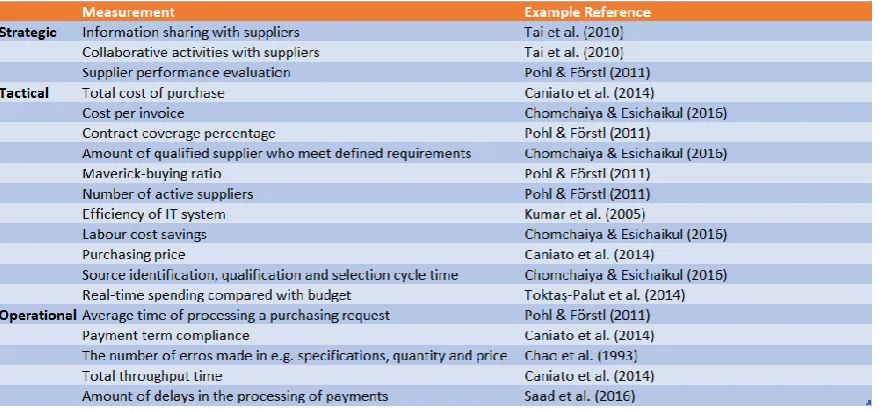
Table 1. Purchasing performance measurements
2.6.1 Strategic measurements
Strategic measurements are the highest-level metrics in companies and they are needed to assess strategic performance (Rotchanakitumnuai, 2013). Strategic performance is closely linked to strategic goals, which can be related to, for example, improving customer satisfaction or increasing competitive advantage by focusing on buying company’s bargaining power (Tai et al., 2010). Strategic level measures can be harder to measure with financial or tangible measures since they are often more non-financial and intangible in their nature (Piotrowicz & Irani, 2010). For example, information sharing with suppliers can be defined as the extent information sharing is enhanced between the company and its suppliers (Tai et al., 2010) and it measures the relationship with the supplier but in reality, this kind of measurement can be hard to determine and follow precisely. Also, collaborative activities with suppliers have been mentioned, referring to the extent the company has collaborative activities with suppliers (Tai et al., 2010).
delivery rate, such as number of late deliveries (Pohl & Förstl, 2011). Quality refers to the quality of supplied goods or services and it is possible to measure quality improvement (Pohl & Förstl, 2011), customer satisfaction, order fill rate or product and services availability (Piotrowicz & Cuthbertson, 2015). Costs are a very common way to measure suppliers. For example, the amount of generated savings could be measured or total cost of ownership for a purchasing project (Pohl & Förstl, 2011). Flexibility means changes in the product and the volume (Wheelwright, 1978). However, flexibility has not been recognized as important factor in the context of indirect purchasing compared to direct purchasing (Pohl & Förstl, 2011).
Suppliers’ performance can be compared to the performance of spot market (Pohl & Förstl, 2011).
2.6.2 Tactical measurements
Tactical level purchasing activities are mid-term period activities (Gunasekaran et al., 2008). Efficiency at tactical level consists of cost of purchases, which includes total annual cost reductions and potential cost reductions (Dumond, 1994). Also, total cost of purchase, purchasing price (Caniato et al., 2014) and cost per invoice (Chomchaiya & Esichaikul, 2016) measure the savings achieved from suppliers and these kinds of measurements are very common in companies. Cost savings can be measured as labor cost savings, which can potentially improve efficiency (Chomchaiya & Esichaikul, 2016). Lastly, one way to measure costs is to compare real-time spending with the budget, which enables continuous control (Toktaş-Palut et al., 2014). On the other hand, there are indicators to measure efficiency of an IT system, for instance, this could be calculated as the number of electronic items requisition forms divided by the number of employees handling the system (Kumar et al., 2005).
bidding. (Chomchaiya & Esichaikul, 2016) Also, transparency decreases time needed for evaluation and making decisions and therefore, results as time saving in the overall purchasing process (Toktaş-Palut et al., 2014), including source identification, qualification and selection time cycles (Chomchaiya & Esichaikul, 2016). Maverick-buying, which is probably one of the most interesting measurements when it comes to indirect purchasing, can be calculated as the percentages of purchases without company contracts (de Boer et al., 2002). On the other hand, contract coverage percentage measures the percentage of used frame agreements (Pohl & Förstl, 2011). In addition, as the current trend is to decrease the number of suppliers, number of active suppliers supports this goal (Pohl & Förstl, 2011).
2.6.3 Operational measurements
Operational indicators measure the operational level of a company and therefore, these indicators measure the operational improvement of technology implementation (Mukhopadhyay & Kekre, 2002). These measures include, for example, operating costs and order processing time related indicators (Dumond, 1994). Efficiency related measurements can be measured at operational level, too, and therefore, efficiency could be defined as the number of resources needed to produce a unit of output since it indicates the usage of resources in a process (Gardenal, 2013). In longer time horizon, the progress in operational indicators can lead to improvements in strategic measurements (Mukhopadhyay & Kekre, 2002).
advantage (Gunasekaran et al., 2001). In addition, processing time of invoices critically impacts on payment term compliance (Caniato et al., 2014) and the amount of delays in the processing of payments since high cycle times can cause financial problems in budget approval and payments (Chomchaiya & Esichaikul, 2016).
Finally, when it comes to measuring tracking and tracing, on-time-delivery could be as the percentage of on-time delivery to the buyer (Abdel-Maksoud et al., 2005). By this way it is possible to find out the number of batches which have been delivered on time. Another option is to calculate the number of delays and, obviously, the bigger the number, the greater the negative impact is on the buyer’s competitiveness (Koubaa, 2016). On the other hand, calculating the number of errors or failures occurred in purchasing, for instance, in need specification, quantity, price or due date can support in measuring of accuracy (Chao et al., 1993).
2.6.4 Category performance measurement
It is quite common to measure the performance of purchasing department as the performance of the whole purchasing function. However, one possible way to improve the performance of a specific purchasing category is to determine measurements according to the category characteristics since due to unique characteristics of each category, it can be helpful to see the numbers for the specific category. Some measurements which may be relevant for some categories, may not be as suitable for some other categories. For example, when comparing purchasing of engineering or consulting services and purchasing of office supplies, it is easy to understand that there are differences.
delivering, warehousing and monitoring of supplier performance and communicating with suppliers. In practice, purchasing performance could be measured as the reduction of purchasing price, such as perceived price reduction and percentage of price reduction, and purchasing efficiency, such as searching time, ordering time, number of employees and amount of work saved. These measurements could be used to especially measure the impact of moving into the e-procurement environment. (Kwon et al., 2009)
3 E-PROCUREMENT AND CHANGE MANAGEMENT
This part focuses on e-procurement, e-procurement systems and how those systems can be implemented successfully into organizations. Firstly, different kinds of e-procurement systems are introduced. Procurement and selection criteria for IT systems and the process of obtaining an e-procurement system are also explained. Lastly, since implementation of an e-procurement system is one of the most crucial elements when it comes to the empirical part of this research, therefore, the benefits, barriers and success factors of e-procurement implementation are discussed in more detail. Also, as earlier mentioned, the focus of the research is in indirect procurement, and therefore, this chapter focuses on the indirect procurement point of view, and how e-procurement systems can provide solutions to solve challenges related to indirect procurement.
3.1 E-procurement systems
The main functionalities of e-procurement systems consist of workflow, system integration, catalogues, repository and content management, RFX, order placement, order tracking and tracing, e-invoicing and reporting (Caniato et al., 2012). In addition to those, Benslimane et al. (2007) add shopping carts and payment systems. However, there are many types of e-procurement systems and they can be divided into different categories based on the needs of a company (Dai & Kauffman, 2006) and therefore, there is no one universal way to classify e-procurement systems in earlier literature (Oh et al., 2014). De Boer et al. (2001) have identified six forms, in which e-procurement applications can be categorized: e-sourcing, e-tendering, e-informing, e-reverse auctions, e-MRO and web-based ERP systems. Similarly, Kauppi et al. (2013) have classified e-purchasing tools into: e-sourcing tools, e-process tools and e-transaction tools. On the other hand, Dai and Kauffman’s (2006) have categorized e-procurement systems into extranets and e-markets. In this study, the focus will be on web-based e-MRO systems.
the case of ERP, the goods and services are production-related. The supporting software system used for MRO is usually used by all employees of a company, but ERP is mostly only used by the people of the purchasing function. (de Boer et al., 2001) In addition, to the model of de Boer et al. (2001), Knudsen (2003) adds one more application, e-collaboration, which refers to correcting and updating the data related to products, blueprints and sales forecasts and allowing continuous access to the data via the company’s web site or extranet.
Furthermore, Dai and Kauffman’s (2006) two channels recognized for e-procurement are extranets and e-markets. Extranets are described as private networks which are only open to some pre-selected business partners (Dai & Kauffman, 2006). Therefore, extranets can used to share both transactional and strategic information (Dai & Kauffman, 2006), which makes them suitable to be used with suppliers to share information about, for example, products, prices and sales (Oh et al., 2014). Hence, extranets are potential to improve collaboration in supply chain networks (Oh et al., 2014). However, there can be higher costs to add participants into extranet and also, closed network only allows a restricted access to suppliers (Dai & Kauffman, 2006). E-markets, on the other hand, are open networks which can be accessed by many potential business partners (Dai & Kauffman, 2006) and hence, these systems are more suitable for finding and contacting potential suppliers (Oh et al., 2014). However, due to openness, strategic information is not shared in e-markets (Dai & Kauffman, 2006) and therefore, it is crucial to increase the collaboration capability to build relationships (Oh et al., 2014).
execute transaction and manage workflow. The data is gathered from enterprise resource planning (ERP) and other systems. The last tier, presentation tier, uses a web server to provide an access to the information of the software through a web browser. (Chang et al., 2004)
3.1.1 Mobile procurement
Nowadays, the importance of mobile phones and therefore, the number of mobile applications is still further increasing. Mobile applications have already had a great impact on business and there are some system providers who are offering mobile access to their e-procurement system, however, there are still lots of unused potential that could profit companies. Although e-commerce and mobile business are closely related to each other, there are some significant fundamental differences between them (Picoto et al., 2014). Basically, mobile business applications are information and communication systems which can be described as functional, portable and usable (Gebauer & Shaw, 2004). Functionality refers to the possibility to combine traditional communication systems with data-processing and information systems, portability means the portability of devices and lastly, usability considers the perspective of the user when it comes to system performance and user support (Gebauer & Shaw, 2004). In procurement, mobile applications often enhance an existing e-procurement software and usually these applications are used to create purchase requisitions, approve requisitions and then review the status of requisitions (Puschmann & Alt, 2005).
user is (Picoto et al., 2014). Instant connectivity allows to be reachable and have access anywhere and anytime (Picoto et al., 2014; Puschmann & Alt, 2005).
Although mobile business applications have become more and more popular, there are still some problems related to them, which should be taken into account. Since the whole existence of mobile applications is based on flexibility and easiness to use, there is a great barrier for potential users to use the application if the new technology is not easy to use, especially for more aged people (Gurtner et al., 2014). Usable interface makes using a lot more convenient, however, designing good user interface for mobile applications is challenging since there are diversity in the sizes of mobile front-ends and mobile devices (Legner et al., 2016). In addition, there can be restrictions in an individual device’s properties, such as memory capacity, battery lifetime and processing power (Legner et al., 2016), which can significantly impact on the usability of the mobile application.
3.2 Selection of an e-procurement system
The design of procurement is an important factor when considering buying an e-procurement system. According to Chang et al. (2004), there are both functional and technical requirements for e-procurement systems. On the other hand, Benslimane et al. (2007), have divided requirements for functional and non-functional requirements. Oh et al. (2013) propose two main capabilities: collaboration and dynamic. Furthermore, according to Kaskinen (2007), the system should also be able to support selected KPIs. For example, external data should be easily integrated into the system and there must be flexibility to compare different units against the defined targets and reports (Kaskinen, 2007).
requirements define how e-procurement systems perform the needed functional requirements. (Benslimane et al., 2007) On the other hand, according to Oh et al. (2013), since there is need to collaborate with suppliers outside the company, called as external collaboration, as well as need to cooperate within the company, known as internal collaboration, collaboration capability is crucial in e-procurement systems. In external collaboration an IT system is needed to build and create close relationships and on the other hand, internal collaboration means the extent to which there is collaboration between internal departments and employees by using IT (Oh et al., 2013). When it comes to dynamic capability, it can be divided into two dimensions: market adoption and operational flexibility (Oh et al., 2013). Market adoption means that there should be an ability to make quick changes in the market by using an IT system and operational flexibility refers to the capability to use diverse IT tools and develop IT (Oh et al., 2013).
Kauffman (2006) notice, information sharing is lower between the parties in this type.
Another feature that should be in the system, is the possibility to have reporting and analyzing features for the data in the system. By using the data, organizations are able to analyze for example spending behavior. (Ronchi et al., 2010) In addition to, it is important to thoroughly examine the provider of the system itself and which kind of role the system provider has (Ronchi et al., 2010) since the risks of a provider are vital to explore before the decision of the provider is made (Ramkumar, 2016). Obviously, the provider that meets the needs best, should be chosen because then there is less need for modifications (Onut & Efendigil, 2010). Some of the issues to consider are, for example, the time the supplier has been in the market, the supplier’s main business focus (Kite & Fletcher-MacDonald, 1999), vendor support including technical assistance, emergency maintenance, updates and user training (Onut & Efendigil, 2010).
3.3 Importance and benefits of e-procurement
[image:44.595.104.524.448.671.2]Compared traditional purchasing cycle to e-procurement purchasing cycle, as illustrated in Figure 5, there are less steps in e-procurement purchasing cycle. The main differences between the two cycles are that in the e-procurement one, there is no need to manually send requisitions or match invoices to receipts since all manual work is minimized. (van Weele, 2002) By eliminating manual work, there is, for instance, less need for human processing and therefore less errors (Ash & Burn, 2006). Therefore, one of the main goals of e-procurement systems is to make procurement more efficient (Wu et al., 2007). Also, e-procurement has a positive impact on an organization’s financial, operational and supply chain performance (Kim et al., 2015). Kim et al. (2015) notice that e-procurement is also capable to increase efficiency of strategic sourcing since it makes possible to purchasing function to focus on strategic sourcing.
There are many ways to classify the benefits of e-procurement. For example, Tai et al. (2010) have developed a framework, which categorizes the impacts of e-procurement according to organizational boundary and performance hierarchy. Hence, in the organizational boundary dimension, the impacts can be either inter-organizational or inter-organizational. In the performance hierarchy dimension, the impacts are either strategic or operational. Operational impact dimension is about operational efficiency and it includes buyer performance, supplier performance, process integration and process automation and hence, there are both organizational and interorganizational benefits. On the other hand, strategic dimension includes partner relationship, which is mainly related to interorganizational benefits. (Tai et al., 2010) Similar to Tai et al. (2010), Hung et al. (2014) have divided the impacts of web-based e-procurement systems into operational impacts and strategic impacts but in addition, they have added a third category called supplier externality. By supplier externality, it is meant the phenomenon in which the number of possible supply alternatives increases and therefore, the buyer’s purchasing power and premium increase (Hung et al., 2014).
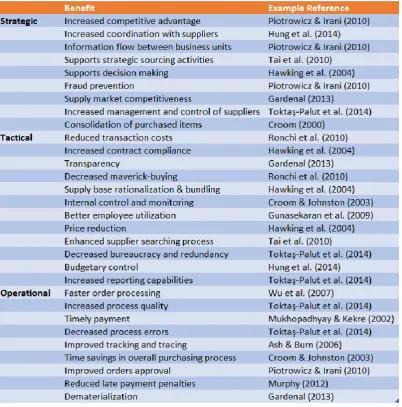
The last option is to use similar classification as classifying the measurements earlier: the benefits achieved from the implementation of e-procurement are divided into strategic, tactical and operational levels, as in Table 2. (Piotrowicz & Irani, 2010)
[image:46.595.101.504.358.766.2]Strategic advantages provided by e-procurement are often generated by strengthening trading relationships with suppliers (Tai et al., 2010). Tactical benefits, on the other hand, are often cost related (Hawking et al., 2004). Operational benefits are usually achieved due to automation of the procurement process, redesigning of the internal processes and sharing information (Tai et al., 2010).
3.3.1 Strategic benefits
To start with strategic advantages, benefits, such as competitiveness, supplier, communication and prevention can be achieved, however, Piotrowicz and Irani (2010) suggest that the greatest benefits are obtained on tactical and operational levels. Still, the usage of e-procurement can help to get strategic level benefits, such as competitive advantage (Piotrowicz & Irani, 2010) and strengthening of the supplier trading relationships (Hung et al., 2014). Increase in the competitive advantage of a company can be achieved by improving response time for customer needs by using e-procurement (Piotrowicz & Irani, 2010). In addition, supply market competitiveness can be created by higher levels of market competition and lowering barriers to enter for suppliers (Gardenal, 2013). Higher supply market competitiveness is useful for achieving the best prices and the highest quality in the market of purchased goods or services (Gardenal, 2013). E-procurement systems are great tools for increasing suppliers’ participation and therefore help to achieve competitiveness (Gardenal, 2013).
Companies can get some internal strategic advantages by implementing e-procurement: information sharing (Piotrowicz & Irani, 2010), improved decision-making (Hawking et al., 2004), fraud prevention (Piotrowicz & Irani, 2010) and consolidation of purchased items (Croom, 2000). The information flow and exchange inside a company can be improved since e-procurement enables to share information with others pro-actively and get data (Toktaş-Palut et al., 2014). Decision-making can be enhanced since problems can be addressed by using real-time information, which supports reactive decisions, and increased information speed allows shorter decision-making process (Toktaş-Palut et al., 2014). Fraud prevention refers to reducing the risk of frauds, which can be related to, for example, payment, employees’ actions or third parties and even tough it is intangible, it has great impact on organization’s growth (Piotrowicz & Irani, 2010). Lastly, e-procurement supports consolidation of purchases by helping with leverage efforts, for instance, one organization had been reported to decrease its variety of office stationery products from 235 products to 38 products within two months after implementing e-procurement (Croom, 2000).
3.3.2 Tactical benefits
have estimated that order costs could be decreased 12 percentage by using e-procurement.
Non-compliance is a great challenge in indirect procurement especially. However, if employees are provided with access to e-procurement system, purchasing department has greater control over the purchasing process. (Croom & Johnston, 2003) By using e-procurement, real-time control of spending is possible since all the data and information is controlled by the company (Ronchi et al., 2010). Related to non-compliance, maverick-buying, which causes internal inefficiency and higher total cost of ownership, can be reduced (Ronchi et al., 2010). Furthermore, reducing maverick-buying can potentially increase end-user compliance and therefore, contract compliance can be increased (Hawking et al, 2004). For instance, Cuganesan and Lee (2006) find that e-procurement can decrease maverick-buying between 40 and 30 percentage and de Boer et al. (2002), reported a company getting savings worth of five million euros per year. Lastly, supply base rationalization is possible to achieve by decreasing and restructuring of the supplier base (Ronchi et al., 2010) since the possibilities to order from new suppliers are limited due to e-procurement system. When focusing purchase orders for specific suppliers, consolidation of spending is improved, too (Ronchi et al., 2010).
E-procurement improves employee utilization for several ways. Firstly, employees who are working only with operational activities can be moved to work with more strategic activities. Secondly, since the purchasing process is more automated and streamlined, there is less manual work to do and there are less unclear and complex issues to figure out. Hence, employees are able to use their working time in a more profitable way. (Piotrowicz & Irani, 2010) End-users can also find potential suppliers faster since usage of e-procurement systems tends to increase search ability (Tai et al., 2010) because the system enables individuals to search for items (Croom & Johnston, 2003). Finally, since e-procurement allows to eliminate inefficient purchasing approval procedures and unnecessary repetition of services, it provides decreased bureaucracy and redundancy (Toktaş-Palut et al., 2014).
3.3.3 Operational benefits
manual, paper-based, administrative and bureaucratic work in purchasing systems are minimized (Bartezzaghi & Ronchi, 2005).
Because of automation and decreased cycle times, e-procurement systems support timely payments (Mukhopadhyay & Kekre, 2002), reducing unwanted late payment penalties (Murphy, 2012). Delayed payments are no good for either party since suppliers obviously aim at as few delays as possible (Mukhopadhyay & Kekre, 2002) and on the other hand, buyers want to pay on-time since by paying on-time it is possible to achieve discounts and there can be significant penalties if payments are not paid on-time (Mukhopadhyay & Kekre, 2002). Timely payments can be obtained by improving information systems and process management (Mukhopadhyay & Kekre, 2002). In addition, electronic invoicing enables automated invoice matching (Mukhopadhyay & Kekre, 2002). Other benefits related to automated invoice approval are, for example, less administration, no lost invoices and improved supplier relationships (Murphy, 2012).
3.4 Successful change management in e-procurement implementation
Implementation of e-procurement solution can be a challenging task since there are lots of factors that should be considered: need for executive sponsorship, deep analysis of current processes, change management and integration with other systems. (Chang et al., 2004) According to Markus (2004), both the implemented solution and the implementation process are important since poor implementation increases the possibility to reject the system and if the system itself is poor, there will not be the wanted business results. To support the implementation process, Panda and Sahu (2012) suggest that e-procurement implementation strategy should be planned ahead and should concern opportunities that the implementation allows once implemented.
When it comes leadership, change leadership is crucial in organizational change. Change leadership refers principles, techniques and activities which are applied to the human aspects of implementing change to impact on acceptance and reducing resistance. (Griffith‐Cooper & King, 2007) The skills and abilities of a leader play a significant role in successful change management (Gilley et al., 2009). The real skills of the leader can be seen in the person’s actions, enhancing or impeding change and empowering the connection between behavior and effectiveness in change implementation (Gilley et al., 2009). Some beneficial traits for leaders are coaching, communicating, involving others, motivating, rewarding and promoting teamwork (Gilley et al., 2009). Especially change effectiveness is predicted by ability to motivate others and communicate effectively (Gilley et al., 2009). Providing training of change implementation techniques to leaders at all levels is related to successful change (Gilley et al., 2009).
3.4.1 End-user acceptance
When implementing an e-procurement system into an organization, employees, also known as internal customers, have a crucial role (Brandon-Jones & Kauppi, 2018). Satisfied internal customers are important from the implementation point of view since they are more likely to reuse the system and by that way increase procurement process compliance (Croom & Johnston, 2003). Especially, often the changes are not limited just to the division, in which there is a system implemented (Sharma et al., 2008) but the other divisions too, which makes implementation more complex.
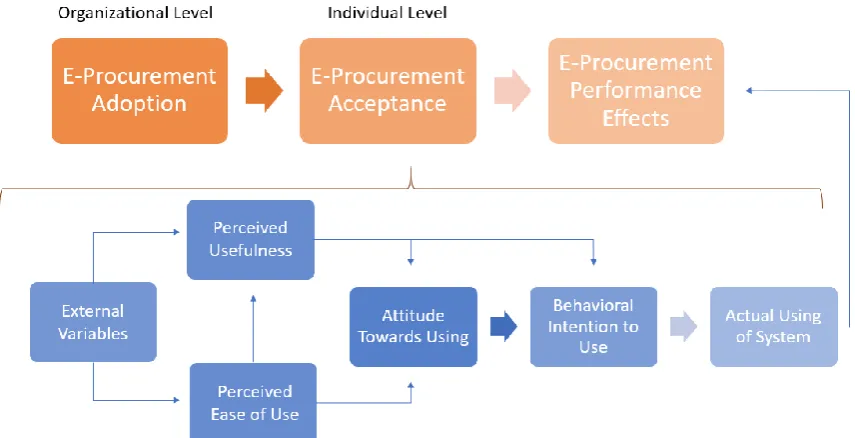
Figure 6. Technology adoption and acceptance (modified from Davis et al., 1989 and Brandon-Jones & Kauppi, 2018)
Brandon-Jones (2017) has identified five dimensions which form the quality of e-procurement for internal customers: processing, content, usability, professionalism and training. These five dimensions can be used as a base to explain the adoption of e-procurement system among employees. Processing refers to the speed of order-processing, the ease of authorization, overall lead time, order accuracy and the time requisitions take arrive to suppliers. Content is related to the catalogues and suppliers found on the system and how easy it is to find the wanted content. Usability means server speed, the ease of navigation and perception of system availability. Professionalism is the support provided for internal customer concerning e-procurement, such as availability, responsiveness, reliability and knowledge. Lastly, training consists of the availability of training, the timing of training and getting additional information. (Brandon-Jones, 2017)
systems when organization-level adoption decisions are made. (Brandon-Jones & Kauppi, 2018) According to Brandon-Jones and Kauppi (2018), the antecedents processing, usability and professionalism, which have been earlier identified in the study of Brandon-Jones (2017), are the most important factors impacting on user-perceived e-procurement quality. Therefore, optimization of order lead times, performance of order processes and developing easily understandable user-interface could be considered even more when attempting to increase individual-level acceptance (Brandon-Jones & Kauppi, 2018). However, as opposed to the original TAM, Brandon-Jones and Kauppi (2018) propose that there is no connection between perceived ease of use and attitude in the context of e-procurement.
3.4.2 Organizational characteristics
Often, there are heavy investments related to technology investments and also there is a need to gain the acceptance in multiple functional areas and therefore, top management’s commitment is required for successful implementation. (Wu et al., 2007) Top management should understand the capabilities and limitations of the new system, approve the system, identify the project as top priority, align the system with the business strategy, allocate enough resources and finally, create appropriate work culture (Panda & Sahu, 2012). In addition, management’s support has been identified to have a positive impact on organizational learning and employee satisfaction, which increases the importance of management’s commitment (Rotchanakitumnuai, 2013).
Lastly, communication between participants has been identified as one of the success factors in e-procurement system implementation. Hence, communication between participants should be encouraged. (Gunasekaran et al., 2009) Furthermore, it has been discovered that awareness of possible task enhancements improves e-procurement motives (Purchase & Dooley, 2010). Therefore, it is important to focus on communicating all the positive impacts of the system for the organization (Purchase & Dooley, 2010). Both formal, such as policies related to e-procurement, and informal, such as word of mouth targeted on users and suppliers, communication channels can be used in the communicating process (Purchase & Dooley, 2010).
3.4.3 External factors
Wu et al. (2007) have also identified environmental factors, also known as external factors, which may cause adoption of innovations, such as e-procurement, since external pressures may cause fear of being left behind in competition if they are not investing on the same innovations. In addition, it has been found out that also the software provider can help in the implementation process. (Wu et al., 2007) For example, Ravichandran (2005), suggests that by sharing technology specific knowledge in close interaction with adopters, software providers are able to reduce knowledge barrier and support implementation.