MASTER THESIS
Pro-environmental behavior:
Identifying determinants that
could predict different types of
pro-environmental behavior
J. M. A. Derckx
S1378066
COMMUNICATION STUDIES FACULTY OF BEHAVIORAL SCIENCES
EXIMINATION COMMITTEE
Primary supervisor, Prof. Dr. M.D.T. de Jong
Secondary supervisor, MSC S.J. Pothof
Abstract
This study aims to integrate internal and external determinants in an understanding framework and to investigate whether there is a difference in predicting behavior between different types of pro-environmental behavior (PEB). Gaining a detailed understanding of which determinants could predict PEB is important for strategy makers and researchers seeking solutions to environmental problems that require behavioral change.
To realize this objective, an in-depth literature review is conducted where determinants and specific types of PEB are identified. Based on this literature review a new model is concluded. This model expands the theory of planned behavior and also takes into account attitudinal beliefs, the influence of the Dutch government and habitual behavior. Such a comprehensive model has not been developed before and can offer a systematic approach for explaining different types of PEB. At the end a questionnaire is conducted to test the validity of this model and to compare the predictive power of the determinants between the specific types of PEB.
The results showed that each type of PEB is explained by multiple determinants which indicate that the most effective behavior change strategies involve combinations of determinants. Furthermore, the results demonstrate that the determinants attitude and biospheric values are the main predictors of the intention to act pro-environmentally and the specific types of PEB. In addition, the determinants responsibility, defeatism and perceived costs & benefits are attitudinal beliefs and can predict an individual’s attitude.
To conclude, this study has identified seven types of PEB and proved that the determinants between these different types of PEB can differ. Furthermore, the present study has proved that the determinant attitude has underlying beliefs and that a general attitude could be seen as an evaluation of these beliefs. Finally, the model of determinants of PEB and the specific types of PEB provide a standard for further research.
Table of Contents
1 Introduction ... 1
1.1 Background ... 1
1.2 Problem statement ... 1
1.3 Research question ... 3
2 Types of pro-environmental behavior ... 4
2.1 Water ... 5
2.2 Transportation ... 5
2.3 Electricity ... 5
2.4 Food ... 6
2.5 Materials ... 6
2.6 Waste ... 6
2.7 Biodiversity... 6
2.8 Conclusion ... 7
3 Predicting and explaining pro-environmental behavior ... 8
3.1 Theory of planned behavior (TPB) ... 8
3.2 “Determiners of specific behavior and possibilities to influence the behavior” . 10 3.3 The value-belief-norm (VBN) theory ... 12
3.4 External influence ... 13
3.5 Habit ... 14
3.6 Conclusion ... 14
4 Method ... 17
4.1 Measurement ... 17
4.2 Pre-test survey ... 19
4.3 Sample... 20
4.4 Procedure ... 20
5 Results ... 21
5.2 Demographics research respondents ... 23
5.3 Descriptive statistics ... 24
5.4 Correlations ... 25
5.5 Multiple regression... 26
5.5.1 Attitude ... 26
5.5.2 Intentional & actual behavior ... 27
5.5.3 Specific types of pro-environmental behavior ... 29
6 Discussion ... 31
6.1 Conclusions ... 31
6.1.1 Theoretical implications ... 31
6.1.2 Practical implications ... 32
6.2 Limitations ... 32
6.3 Further research ... 33
6.4 In sum ... 34
Acknowledgements ... 35
References ... 36
Appendix A - Survey ... 40
Appendix B - Summary of question items per construct ... 60
Appendix C - Principal Component Analysis ... 61
Appendix D - Distribution of answers ... 64
List of Figures
Figure 1- Theory of planned behavior ... 8
Figure 2 - Determiners of specific behavior and possibilities to influence the behavior. . 10
Figure 3 - Value-belief-norm (VBN) theory. ... 12
Figure 4 - Determinants of environmental behavior and the specific types of pro-environmental behavior ... 16
List of tables
Table 1 - Examples of pro-environmental behaviors ... 4Table 2 - Constructs before and after the Principal Component Analysis ... 22
Table 3 - Demographics of the research respondents ... 23
Table 4 - Top five values ... 24
Table 5 - Descriptive statistics determinants ... 24
Table 6 - Descriptive statistics specific types of PEB ... 25
Table 7 - Multiple regression attitude ... 26
Table 8 - Multiple regression intentional & actual behavior ... 28
Table 9 - Multiple regression specific types of pro-environmental behavior ... 30
Table B1 - Summary of question items per construct... 60
Table C1- Results of the first, middle and last Principal Component Analysis ... 61
Table D1 - Distribution of answers Attitude ... 64
Table D2 - Distribution of answers Image ... 64
Table D4 - Distribution of answers Sense of urgency ... 65
Table D5 - Distribution of answers Responsibility ... 65
Table D7 - Contribution of answers Peceived costs & benefits ... 66
Table D8 - Distribution of answers Perceived behavioral control ... 66
Table D9 - Distribution of answers Habit ... 67
Table D10 - Distribution of answers Social influence ... 67
Table D11 - Distribution of answers The Dutch government Enable ... 68
Table D12 - Distribution of answers The Dutch government Encourage ... 68
Table D13 - Distribution of answers The Dutch government Exemplify ... 69
Table D14 - Distribution of answers The Dutch government Engage ... 69
Table D15 - Distribution of answers Intention of behavior ... 70
Table D16 - Distribution of answers Actual behavior ... 70
Table D17 - Distribution of answers Water ... 71
Table D19 - Distribution of answers Electricity ... 72
Table D20 - Distribution of answers Food ... 73
Table D21 - Distribution of answers Materials ... 73
Table D22 - Distribution of answers Waste ... 74
Table D23 - Distribution of answers Biodiversity ... 74
Table E1 - Summary of correlations between the determinants and Intentional & actual behavior ... 75
Table E2 - Summary of correlations between underlying beliefs and attitude ... 76
Table E3 - Summary of correlations independent determinants ... 76
Table E4 - Summary of correlations between determinants ... 77
1
1
Introduction
1.1
Background
Over the past few decades, sustainability has increased in importance. A concern that exploitation of natural resources, economic development, and violation of environmental resources are not sustainable is expressed more and more frequently in policy debates, conferences, and analytical studies (Toman, 1992). Sustainability refers to addressing the needs of the present without undermining the needs of the future (Blackburn, 2007). The foundation of the concept sustainability starts in the Brundtland Report of 1987 (Kuhlman & Farrington, 2010). Within that report the tension between the ambitions of mankind towards a better life on the one hand and the limitations imposed by nature on the other hand is emphasized. The report proclaims to express the urgency of sustainability to the people and that awareness and responsibility regarding sustainability need to be increased.
Nowadays, sustainability is almost always seen in terms of three dimensions: social, economic and environmental (Strange & Bayley, 2008). The environmental dimension includes all of the environmental resources and ecological processes that sustain life on earth (Costanza et al., 2000). Economic growth and human capital are concepts mentioned within the economic dimension (Hopwood, Mellor, & O'Brien, 2005). The social dimension includes topics like poverty, peace, and the role of women and native people (Blackburn, 2007).
The present study primarily focuses on the environmental dimension of sustainability to prevent unreliable results as, for instance, one’s feeling for responsibility could differ between the three dimensions. The interaction between humans and the environment has resulted in the problems of today, such as climate change, rising sea levels, extinction of species and depletion of the ozone layer. These problems could result in a growing culture of distrust and fear of political and business leaders, of media, of large organizations and, ultimately, of life itself (Ehrenfeld, 2008).
1.2
Problem statement
2 today (Kollmuss & Agyeman, 2002, Stegall, 2006). An organization could design and manufacture a product that gave no toxins, could be one-hundred per cent recycled at the end of its useful life, and used only solar energy. Nevertheless, it would still not be sustainable unless every person who used the product did so in a responsible manner and returned it for recycling (Stegall, 2006). According to Downing and Ballantyne (2007), the majority of the public were taking only tokenistic actions at present and were not tending to question other behaviors such as car-driving, flying on holiday, meat consumption and so on. Furthermore, Vermeir and Verbeke (2006) argues that everyday consumption practices are still heavily driven by convenience, habit, value for money, personal health concerns, self-satisfaction, and individual responses to social and institutional norms. The problem of today is more than simply an issue of product and regulation design, it has emerged as a dreadfully complex sociological dilemma, where the lifestyle that we have adopted is eroding our ability to survive (Stegall, 2006).
To influence the current lifestyles, organizations and governments have the implication that changes in attitudes would influence behavior (Ajzen & Fishbein, 2005). However, within numerous studies, attitudes were usually found to be very poor predictors of actual behavior (Ajzen & Fishbein, 2005). In addition, organizations and governments have the assumption that more knowledge will lead to more pro-environmental behavior (PEB) (Kollmuss & Agyeman, 2002). However, research showed that in most cases increases in awareness and knowledge did not lead to PEB (e.g., Kollmuss & Agyeman, 2002; Thompson, 2008). Therefore, these strategies and approaches need to be questioned and an increasing need for new strategies and interventions to encourage PEB has arisen and is one of the important challenges on the path to sustainability (Turaga, Howarth, & Borsuk, 2010).
3
1.3
Research question
To conclude, this study aims to integrate internal and external determinants in an understanding framework and to investigate whether there is a difference in predicting behavior between different types of PEB. In line with this objective, the next research question is formulated;
“What are the internal and external determinants of pro-environmental behavior and do these determinants differ in predicting different types of pro-environmental behavior?
4
2
Types of pro-environmental behavior
In order to investigate whether there is a difference in predicting behavior between different types of PEB, first, identification of specific types of PEB is essential. This is important for research purposes as, for instance, the determinants of purchasing a product are likely to be different from those of transport use (Stern, 2000). However, to identify and target specific types of behaviors that can make a large difference to the environment, it is critical to focus (Stern, 2000). With this in mind, this study primarily focuses on those behaviors performed by individuals within the private-sphere: the purchase, use, and disposal of personal and household products that have an environmental impact (Stern, 2000). This cluster of behavior is inclined to have a direct environmental consequence and tend to have a much greater impact on the environment than others, such as the public-sphere (Stern, 2000). Furthermore, it was decided to omit behaviors common only to individuals with particular philosophies of sustainable living as this study focus on behavior everybody generally can perform.
In line with the focus of this study and with the inspiration of several pieces of research (e.g., Williams & Dair, 2007; McKenzie‐Mohr, 2000; Stern, 2000), a diverse range of multiple PEBs are identified in Table 1.
Table 1 - Examples of pro-environmental behaviors
Waste segregation Planting trees and flowers Using the bicycle when doing groceries instead of the car Use less packaging
Use of car-pooling when possible Avoiding use of paper (too much printing) Avoid flying as much as possible Having car-free days
Reusing leftovers Avoiding use of pesticides
Turning off the light in rooms that are not in use Using public transport instead of the car Buying clothes of a pro-environmental brand Using less light in rooms
Turning off the laptop when not needed Using lamps with low energy use Taking a short shower Avoiding use of ‘throw away’ materials Closing the tap during tooth brushing Avoiding light pollution
Repairing materials Eating less meat
Buying organic meat, fruit and/or vegetables Feeding birds in the winter
Bringing your own plastic bag when doing groceries Avoid buying meat or fish of rare species Lowering the heating when leaving the house Good insulation
Putting on a sweater instead of turning on the heating Refilling water bottles
Flushing the toilet with rain water Watering the garden only when it has not rained in days Washing the car by hand instead of using a water hose Electric cars
Recycling Buying secondhand products
The specific behaviors in Table 1 provide an overview of all sorts of behaviors in line with the focus of this study. After analyzing and linking these behaviors, seven types of PEB that could be enabled by design features are identified. These are Water, Transportation, Electricity, Food, Materials, Waste and Biodiversity. These seven types of PEB cover the diverse range of behaviors presented in Table 1.
5
2.1
Water
This type of behavior include behaviors where water is used in a single-family home such as toilets, showers, faucets, lawn watering, and clothes washers (Opitz, Kiefer, Davis, Dziegielewski, & Nelson, 1999). PEB within this type of behavior has the aim to reduce the use of water.
Reducing the amount of water consumed realizes several environmental goals (Williams & Dair, 2007). First of all, reducing the amount of water used by the public means less waste water that is discharged to water sources and sewers (Williams & Dair, 2007). This helps to prevent flooding. Furthermore, reducing the amount of water used conserves limited water resources (Williams & Dair, 2007).
2.2
Transportation
An element of a pro-environmental lifestyle is travel behavior (Williams & Dair, 2007). In other words, mobilizing by the use of transportation such as cars, public transport, bicycles, etc. Pro-environmental travel behavior mainly include reducing travel demand, particularly by car (Williams & Dair, 2007).
The impact of transport is felt in towns and cities through environmental damage, such as acid rain (Williams & Dair, 2007). Furthermore, the air is polluted by the gases from the cars and airplanes which has an impact on the health of individuals and animals. Reducing these emissions caused by use of transport could contribute to reducing environmental damage and increasing the health of both people and animals.
2.3
Electricity
This type of behavior includes energy use in households, such as heating, cooking and lighting. Households constitute an important target group, because they are major contributors to the emission of greenhouse gases and, consequently, global warming (Abrahamse, Steg, Vlek, & Rothengatter, 2005).
Unnecessary use of energy could result in more need for energy, which leads to more use of resources which are not infinite. Furthermore, environmental problems such as global warming and threats to biodiversity are the main reasons for studying energy conservation (Abrahamse et al., 2005). Therefore, behaviors that reduce the use of energy in households contribute to the environment.
Situation al variables
6
2.4
Food
This type of behavior includes food consumption which covers a wide variety of topics, including animal welfare, fair trade, and possibly throwing food away (Verain et al., 2012).
With every passing year, pro-environmental food consumption is becoming more urgent as global food production and consumption has a negative effect on the ecological, carbon and water footprint (Verain et al., 2012).Furthermore, it is estimated that Dutch households throw away fourteen per cent of their food (Milieu Centraal, 2005). The production, manufacturing and supply of this non-eaten food had a negative impact on the environment as it contributes to 4.6 million tons of CO2 emissions (Bernstad & la Cour Jansen, 2012).
2.5
Materials
Resources such as oil, plastic and aluminum and the consumption of these resources are included within this type of behavior.
Overconsumption of natural resources is represented as a major threat to the environment (Brown & Cameron, 2000). According to Princen (1999), people are consuming more resources than the planet can regenerate. Humans are using materials at unprecedented levels threatening biodiversity, global climate, and the environment in general (Princen, 1999). Reducing the consumption of materials or replacing materials for ‘green’ materials would contribute to our habitat.
2.6
Waste
Waste is rubbish and basically a flawed product of our society (Stelzer, 2006). Before human civilization there was no such thing as waste in the biosphere.
There are many environmental benefits from waste minimization and recycling. For instance, reducing the amount of raw materials can result in a decrease of the depletion of finite resources (Williams & Dair, 2007). Furthermore, it can reduce environmental damage which is caused when waste is dumped in landfill sites or incinerated (Williams & Dair, 2007). In addition, burning waste reduces the amount of waste and allows the recovery of some of the resources in the waste as energy (Thogersen & Grunert-Beckmann, 1997). However, burning waste leads at the same time to air pollution. Therefore it is also important to reduce the amount of waste which can be accomplished by recycling the waste.
2.7
Biodiversity
7 et al., 2007). PEB within this type of behavior contributes to diverse and thriving ecosystems of plants and species.
For the sustainable functioning of the forest, agricultural, and natural ecosystems which humans are dependent on, biodiversity is essential (Pimentel et al., 1997). Unfortunately, the increased human activity and the growing population threaten the environment and many species (Martín-López et al., 2007).
2.8
Conclusion
8
3
Predicting and explaining pro-environmental behavior
Within this chapter, it is researched which determinants could influence the different types of PEB. Many studies (e.g., Ajzen, 1991; Ehrenfeld, 2008; Kollmuss & Agyeman 2002; Leiserowitz, Kates, & Parris 2006; Stern, 2000) have identified internal and external determinants which predict and explain behavior. Some of most influential and commonly used theoretical frameworks and research studies for analyzing PEB are presented within this paper to get some feeling for the complexity of this behavior. These are, the theory of planned behavior, determiners of specific behavior and possibilities to influence the behavior and the value-belief-norm theory. After integrating and analyzing the insights, models and determinants from these frameworks, a new model that could improve the understanding of the different types of PEB is presented.
3.1
Theory of planned behavior (TPB)
One of the most influential theoretical frameworks is the theory of planned behavior. This theory is designed to predict and explain human behavior in specific contexts (Ajzen, 1991). A main determinant within this theory is the individual’s intention to perform a certain behavior. Intentions indicate the motivational variables that influence a behavior (Conner & Abraham, 2001). The TPB suggest that the person’s behavioral intention is the most immediately relevant predictor of an action (Ajzen & Fishbein, 1973). In Figure 1, the model of the TPB is presented.
As represented within the model, intentions are shaped by three determinants: attitudes, subjective norms, and perceived behavioral control (PBC) (Conner & Abraham, 2001). Attitude refers to the degree to which a person has a favorable or unfavorable evaluation of the particular
9 behavior (Ajzen, 1991). According to Bamberg (2003), general attitudes are important indirect determinants of specific behaviors. This is because general attitudes give an indication of how to frame the decisional problem, the relevant behavioral alternatives and the personally relevant consequences associated with these alternatives.
Subjective norms are beliefs regarding whether significant others think an individual should engage in the behavior (Conner & Abraham, 2001). Chawla (1998) found proof that the values of others have an important influence on a person’s values. This social influence could induce negative moral emotions such as embarrassment, shame, and guilt (Nugier, Niedenthal, Brauer, & Chekroun, 2007). These emotions are considered functional in that they could discourage similar behavior in the future (Nugier et al., 2007). As PEB is relatively uncommon, individuals are likely to express intense moral emotions and adopt a more appropriate behavior when faced with social influence.
Mainly a person’s internal variable (motivation) is important within TPB and is situated within the perceived behavioral control. This determinant refers to the perception of the easiness or difficulty of performing the particular behavior (Ajzen, 1991). The PBC has shown that people’s behavior is strongly influenced by their confidence and belief to perform it (Ajzen, 1991). PBC has an influence on the intention to act as effort expended to successfully perform an intention is likely to increase with greater PBC. Furthermore, PBC may reflect the actual control of an individual (Conner & Abraham, 2001).
In a study of Kaiser, Hübner, and Bogner (2005), results have shown that the determinants attitude, subjective norms, and perceived behavioral control account for 76 per cent of an individual’s intentions, which in turn explain 95 per cent of the variance. Furthermore, the three determinants of intention represent clearly distinguishable concepts (Kaiser et al., 2005). Based on these results, the theory of planned behavior receives a central role and provides the basis of the new model.
10
3.2
“Determiners of specific behavior and possibilities to influence the
behavior”
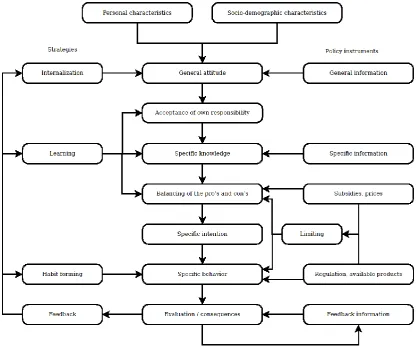
[image:16.595.91.511.218.565.2]The framework of “determiners of specific behavior and possibilities to influence the behavior” uses a general guideline to explain the consideration of individuals whether to purchase a particular behavior or not. This guideline include necessity, intent and possibility (Kirkels, 2012). Based on this guideline a model is presented in Figure 2.
Figure 2. - Determiners of specific behavior and possibilities to influence the behavior. ( in: Kirkels, 2012, pag. 100).
11 The model also claims that individuals who take their responsibility might have the drive to adapt PEB (Kirkels, 2012). Responsibility refers to the responsibility to improve the world; but also the responsibility for the environmental impact caused by one’s behavior (Kirkels, 2012). Individuals with a greater sense of personal responsibility are more likely to have the intention to engage in PEB.
In addition, within the model, the determinant knowledge is mentioned. According to Stern (2000), PEB can be influenced by information that shapes beliefs. Furthermore, Kollmuss & Agyeman (2002) also state that knowledge shapes attitudes and beliefs. It could therefore be stated that the position of knowledge within this model could be a predictor of an individual’s attitude regarding PEB.
Balancing pros and cons, as presented in the model, can directly influence the intention to act. This determinant has the assumption that individuals make reasoned choices and choose alternatives with highest benefits against lowest costs (Steg & Vlek, 2009). Here, cost does not refer to an economic sense, but in a broader psychological sense that, for instance, includes the time and effort needed to undertake the PEB (Kollmuss & Agyeman, 2002). Thus, if the perceived costs are higher than the benefits the particular behavior is unlikely to occur.
Finally, within the model, socio-demographics are presented as an indicator for the general attitude and therefore indirectly the intention to act. Socio-demographics include a wide range of social variables such as age, gender, wealth, employment status, having children and education (Barr, 2003). These determinants have been linked to PEB. For instance, Hines, Hungerford, and Tomera (1987) have found evidence for higher levels of PEB amongst wealthy, female, younger, and well-educated individuals. However, there are research studies which question these findings. For instance, De Oliver (1999) examined water conservation in San Antoni and found opposite results of all the above-mentioned trends. Equivocal By comparing the results between the socio-demographic variables and the several types of PEB an explanation of this contradiction could occur.
The theoretical framework of “determiners of specific behaviors and possibilities to influence the behavior” has showed a causal chain which indicates a relationship between the determinants. However, this is weak at best. Furthermore, there seem to be many more factors that could influence the intention to act (Kollmuss & Agyeman, 2002). Finally, this model does not account for social factors such as social influence (Kollmuss & Agyeman, 2002).
12 Furthermore, this model has showed that socio-demographics has an influence on attitudes and PEB in general.
3.3
The value-belief-norm (VBN) theory
Another frequently used framework to predict behavior is the VBN theory. This theory links Norm-activation theory, Value theory, and the New Environmental Paradigm (NEP) perspective through a causal chain of five determinants leading to behavior: personal values, ecological worldview (NEP), adverse consequences for valued objects (AC), the perceived ability to reduce threats (AR), and personal norms for pro-environmental action (Stern, 2000). Stern, Dietz, Abel, Guagnano, and Kalof (1999) have found that the VBN cluster of determinants was a far stronger predictor of behavior than the other theories that VBN theory has combined. In Figure 3 the VBN theory is presented.
Figure 3. - Value-belief-norm (VBN) theory (Stern, 2000).
The VBN theory suggests that personal norms are activated when an individual believes that violating them would have adverse effects on things they value (Stern et al., 1999). Values are beliefs in, or expressions of, the worth of objects, qualities, or behaviors (Leiserowitz et al., 2006). Values frame attitudes and provide standards against which the behaviors of individuals and societies can be judged (Leiserowith et al., 2006). Within the VBN Theory three kinds of values are identified. These are biospheric, altruistic and egoistic. Especially altruistic and biospheric values are important in relation to this study, because they represent values that focus concern beyond a person´s immediate social circle and on the environment. These values are proved to be the most strongly implicated in activating pro-environmental personal values (Stern, 2000). However, having altruism or biospheric values is not enough to ensure PEB as individuals have different intensity or priority of different values themselves (Leiserowitz et al., 2006).
13 and has many different meanings and therefore provokes many different responses (Hopwood et al., 2005). According to Uzzell (2008), most of the role models associated with recycling were negative. A typical recycler was identified by young people as an “woman in a tie-dyed t-shirt and dungarees or a old man in his fifties with a beard” (Uzzell, 2008). Although these stereotypes slightly changed, the old stereotypes still remain (Uzzell, 2008). When trying to make people adopt PEB, it is important to be aware of the self-presentational associations (Uzzell, 2008). The image of PEB is therefore seen as a significant belief on the outcome of PEB.
Another particular belief within the VBN theory is whether there are individual actions that could illuminate threats to valued persons or things (AR) (Stern, 2000). Unfortunately, today, many are so overwhelmed by the amount of environmental issues which result in the feeling we cannot do anything about the situation (Wackernagel & Galli, 2007). We are now faced with more defeatism, that we can’t do anything about the situation. It could be stated that people who believe that their behavior has no influence in bringing change as the problems are too big, are unlikely to act pro-environmentally (Hines et al., 1987).
Depending on the type of behavior, evidence has shown that the VBN model explains 19 per cent to 35 per cent of its variance (Stern et al., 1999). The VBN model has shown that values frame attitudes and provide standards and could therefore be seen as an overall influence on intentional behavior. Furthermore, the VBN theory has illustrated that the determinant defeatism and the image of PEB are significant beliefs and could shape the evaluative summary (attitude) of a particular behavior.
However, the model seems to be underspecified, especially a person’s ecological worldview (Kaiser et al., 2005). Furthermore, another criticism of this model is that all of the determinants remain at the level of the individual (Oreg & Katz-Gerro, 2006). This perception could be limited and the context within which the individuals behave should be conceptualized at a level higher than the individual (Oreg & Katz-Gerro, 2006). To balance the social-psychological determinants such as values and attitude, external variables should be considered (Oreg & Katz-Gerro, 2006).
3.4
External influence
14 economics in the fields of use of resources, and nature conservation (Kirkels, 2012). Unfortunately, according to the model, the government’s only influence is through providing information, products, subsidies, and feedback. According to Kirkels (2012), the government is a very important determinant in achieving a more pro-environmental society and, next to providing information and feedback, could play more different roles.
Eppel, Sharp, and Davies (2013), focused on the Defra’s approach on changing behavior and provided an overview of four approaches or roles that are likely to be the most effective with different population groups to change behavior. These approaches are: encourage, enable, engage and exemplify. These four approaches are helpful for identifying gaps which might need to be filled if behavioral change is to occur. For instance, by making it easy for people to act through providing facilities and the infrastructure, the government enables society to change their behavior into PEB (Eppel, Sharp, & Davies, 2013).
No research has been found that investigated the predictive value of these different roles of the government on PEB. Therefore, including the four approaches within this study is significant, as it could have additional value within the scientific world.
3.5
Habit
Already many determinants are mentioned that could influence or predict PEB. However, even when people act pro-environmentally, it seems like these behaviors decline over time and people return to their old habits as they require little mental effort to execute (Verplanken & Aarts, 1999).
Strong habits make an individual less attentive to information, not only information regarding alternative behavioral options, but also basic information that defines the context in which the behavior takes place (Verplanken & Aarts, 1999). Thus, when strong habits are present, processes that, implicitly or explicitly, are assumed to take place according to rational choice models, occur less, or less extensively (Verplanken & Aarts, 1999). Furthermore, old habits block information on taking initiative to learn how to act in an environmentally friendly manner. Quellette and Wood (1998) found that both intention and habit were significant predictors of future behavior.
3.6
Conclusion
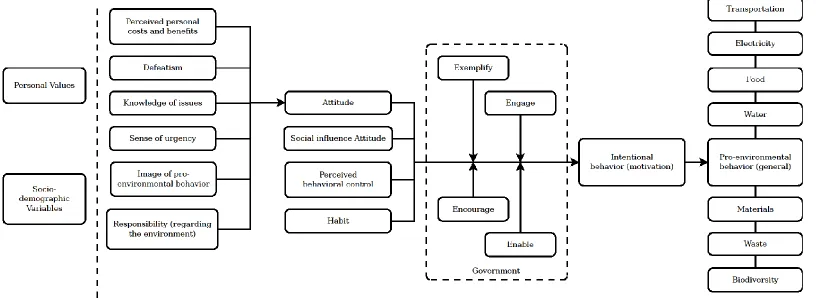
15 behavior. To present these links in an understandable and accessible figure, the mentioned determinants could be divided into four groups.
First of all, the theory of planned behavior, including attitude, subjective norms, perceived behavioral control, and intentions is one group and receives a central role within the new model. Furthermore, according to Kollmuss & Agyeman (2002), old habits form a very strong barrier that is often overlooked in the literature. Therefore this determinant is included as a central role, next to the perceived behavioral control, subjective norms, attitude and intentions.
A second group is the attitudinal determinants, including responsibility, sense of urgency, image of PEB, knowledge of issues, defeatism and perceived costs & benefits. Adding belief based determinants to the new model allows identification of the underlying beliefs that distinguish between individuals who do not perform (or do not intend to perform) and individuals who perform (or intend to perform) PEB and could increase our understanding of PEB (White et al, 2007). In addition, by combining the beliefs, we obtain an estimate of the attitude itself, an estimate that represents the individual’s evaluation of PEB (Petty & Krosnick, 2014). Combining these multiple determinants all within the same model has not been examined before. Furthermore, no studies have investigated whether these determinants can predict an individual’s attitude regarding PEB.
The external determinant, the Dutch government, is the third group. According to Kirkels (2012), the government is a very important determinant in achieving a more pro-environmental society. To balance the social-psychological variables such as values and attitude, the Dutch government, with its four approaches, is included within the new model (Oreg & Katz-Gerro, 2006).
Finally, the fourth group represents the background influences, including socio-demographics and personal values. These determinants can frame attitudes and provide standards against which the behaviors of individuals and societies can be judged (Leiserowith et al., 2006).
16
17
4
Method
To test the new model and to gain a better insight into which pattern of determinants predict each type of PEB, an online survey was conducted. The survey used for this research can be found in appendix A.
4.1
Measurement
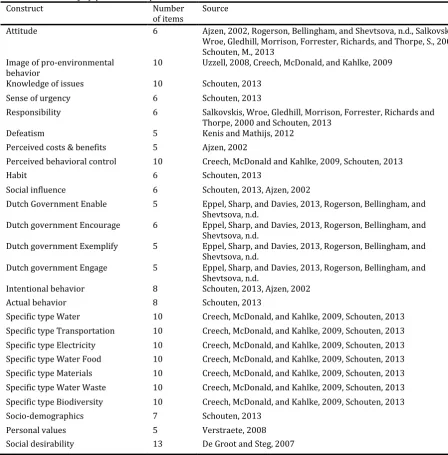
The survey was designed and distributed using Qualtrics. The first section of the survey measured the determinants discussed in Chapter three with several multi-items on a seven-point Likert-scale ranging from ‘strongly disagree’ (one) to ‘strongly agree’ (seven). The items within the survey were taken from or inspired by previous research. Most of the determinants have been studied elsewhere, however not combined within one survey. Appendix B provides a table with an overview of the sources used for each construct. Construct refers to the used items to measure the determinant.
Next, each of the constructs is briefly presented with the content, the amount of items and various examples are presented.
Attitude. Within this construct the attitude (evaluation) regarding PEB in general was measured. This construct was measured with six items. An example of an item is: “I am positive regarding PEB”.
Image of PEB. This construct measured how individuals evaluate people who act PEB. For instance, are people who act pro-environmentally, poor or wealthy, happy or unhappy, etc. This construct was measured with nine items. Each item represented two opposite characters.
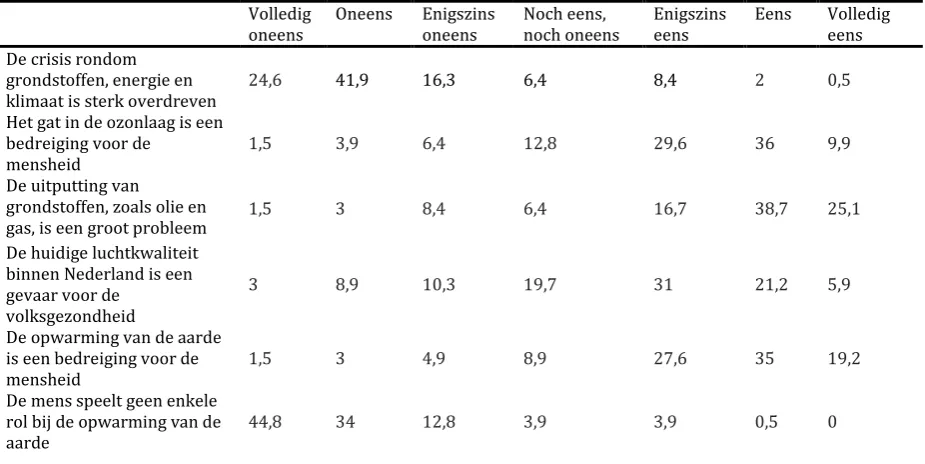
Knowledge of issues. This construct contained ten items that measured whether individuals are aware of environmental problems and whether humanity has an influence on these environmental problems. Respondents were asked to answer questions such as “global warming is a threat to humanity” or “the depletion in the ozone layer is caused by humans”.
Sense of urgency. Sense of urgency measured whether individuals believe it is urgent to reduce the environmental problems. For instance, “environmental problems currently have priority compared to other problems”. This construct was measured with six items.
18 Defeatism. With five items, this construct measured whether individuals have the feeling their behavior or intentions have a positive influence on the environment and the problems are not too big. An example of an item is “the environmental problems are too big to handle”. Perceived costs & benefits. This construct measured whether individuals experience PEB as costs
or benefits and was measured with five items. Individuals could choose between two opposite characters. For instance, individuals could choose between “PEB is pleasant” or “PEB is not pleasant” and range their answer between these two characters.
Perceived behavioral control. This construct measured whether individuals have the feeling they are able to act PEB. For instance, individuals were asked to answer the next item: “I know how to act PEB”. Another example was “I found it difficult to act PEB every day”. This construct was measured with ten items.
Habit. Habit measured whether PEB is an automatic response for respondents. With six items this construct was measured. An example of an item is “I act PEB without thinking about it”.
Social influence. With six items, this construct measured whether individuals are influenced by their social network. An example of an item was: “my friends and family find PEB important”.
Dutch government. Within this construct, individuals reviewed the behavior of the Dutch government. This construct was divided into four smaller constructs: Enable, Encourage, Exemplify and Engage. These represented the four approaches to influence PEB. Each of the four constructs was measured with five items, except for Encourage which was measured with six items. An example of an item within the construct Enable was “the Dutch government offers facilities to act PEB”. Another example within the construct Encourage is “the Dutch government rewards PEB by individuals”.
Intentional behavior. This construct measured whether individuals have the intention to act PEB. This construct was measured with eight items. Each item represented one of the seven specific types of PEB. For instance “I have the intention to act pro-environmentally regarding my water use” and “I have the intention to act pro-environmentally regarding my transport use”. The specific type Food was divided into two items as a distinction could be made between buying pro-environmentally produced food and the use of food within households.
Actual behavior. This construct measured pro-environmental behavior in general and also contains eight items that represent the seven specific types of PEB. An example of an item is: “I act PEB regarding my energy use”.
19 Waste, and Biodiversity). Each type of behavior was measured with ten items on a five-point scale ranging from ‘never’ (one) to ‘always’ (five). Every item represents a behavior specific to that type of PEB. For instance, within Water, behaviors that can be performed by individuals that include water use within households were asked. Sometimes, a particular behavior could not be applied to a respondent. Therefore the value ‘not applicable’ was added on the scale. Examples of items within this second section are “taking short showers”, “using public transport instead of the car” and “shutting down my laptop or computer when not using it”.
Socio-demographic variables. Additionally, the survey contained measures of demographic determinants. Age, gender, marital status, whether the respondent has paid work or not, education level and wealth are listed within the survey and were measured with multiple choice questions.
Personal values. Respondents were asked to range thirteen values from unimportant to important. These values represent the egoistic, biospheric and altruistic values mentioned within the theoretical framework. For instance, ‘ambition’ represent an egoistic value and ‘a peaceful world’ represent an altruistic value.
4.2
Pre-test survey
Before the online survey was conducted, it was useful to understand how respondents could perceive and interpret questions and identify potential problems that may arise in the survey items. Cognitive interviewing was used to identify items that may evoke response error (Drennan, 2003). This methodology was applied on five respondents.
20
4.3
Sample
A sample of 203 individuals within the Netherlands completed an anonymous online survey. The respondents of this study were convenience sampled from the Dutch population with an age of 18 years and older. All individuals who have access to the Internet were included as this study investigate PEB at an individual level. Furthermore, no distinction was made in socio-demographic determinants as these determinants were included in the survey.
4.4
Procedure
To reach as many Dutch citizens as possible, the hyperlink to the online survey was spread via email and social media. Via a distributed hyperlink, individuals were directed to the Qualtrics online survey. The introduction of the survey explained that the study was interested in the opinion of the respondent regarding PEB. Furthermore, within the introduction it was stated what the respondent can expect during the survey and some terms were explained to ensure that respondents understand the context. Finally, the respondents had the chance to ask questions by sending an email and anonymity was ensured.
21
5
Results
This chapter presents the results of the survey derived from 203 respondents within the Netherlands. To process the data from the completed surveys and analyze the results, the statistical software IBM SPSS Statistics was used.
Before presenting the results, a Principal Component analysis was conducted to identify if the constructs, mentioned within the method chapter, were also measured by the survey. The first section of this chapter presents the results of the Principal Component analysis.
Within the second section of this chapter, the socio-demographic variables and the personal values of the respondents were outlined. The aim of this section is to give more background information regarding the respondents.
Third, the descriptive statistics of each construct were presented. The aim of this section is to underline the perspective of the respondents regarding PEB.
Finally, correlations and multiple regression analyses were conducted to test the new model. These analyses investigate to what extent the several determinants predict and correlate with the intention to act pro-environmental and with the specific types of PEB.
5.1
Scale construction
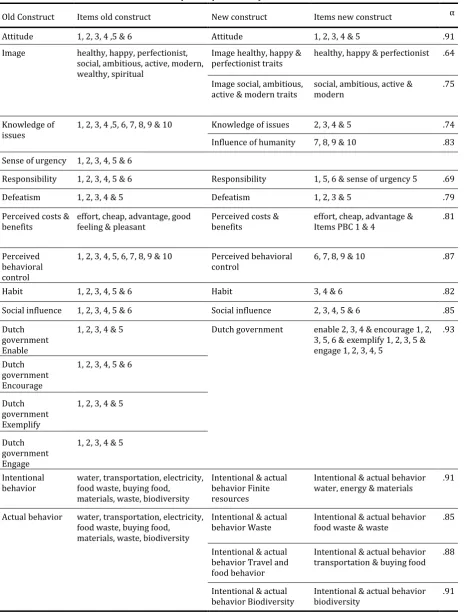
A Principal Component analysis (PCA) with a Varimax with Kaiser Normalization rotation method, on the 106 items within the survey, was conducted. This analysis uses correlations among all the items of the survey to recognize constructs of items that correlate more highly among themselves than with items outside the group (Dooley, 2001). After seven PCA and when loadings less than 0.40 were excluded, the analysis gave an outcome of 16 new constructs. Some items needed to be excluded as they did not load on any construct. The Kaiser-Meyer Olkin measure of sampling adequacy implies that for all the Principal Component analysis the sample was reliable. The KMO even increased after each analysis. The results of Principal Component analysis one, three and seven are presented in appendix C.
22
Table 2 - Constructs before and after the Principal Component Analysis
Old Construct Items old construct New construct Items new construct α Attitude 1, 2, 3, 4 ,5 & 6 Attitude 1, 2, 3, 4 & 5 .91 Image healthy, happy, perfectionist,
social, ambitious, active, modern, wealthy, spiritual
Image healthy, happy &
perfectionist traits healthy, happy & perfectionist .64 Image social, ambitious,
active & modern traits social, ambitious, active & modern .75
Knowledge of
issues 1, 2, 3, 4 ,5, 6, 7, 8, 9 & 10 Knowledge of issues 2, 3, 4 & 5 .74 Influence of humanity 7, 8, 9 & 10 .83 Sense of urgency 1, 2, 3, 4, 5 & 6 Responsibility 1, 2, 3, 4, 5 & 6 Responsibility 1, 5, 6 & sense of urgency 5 .69 Defeatism 1, 2, 3, 4 & 5 Defeatism 1, 2, 3 & 5 .79 Perceived costs &
benefits effort, cheap, advantage, good feeling & pleasant Perceived costs & benefits effort, cheap, advantage & Items PBC 1 & 4 .81
Perceived behavioral control
1, 2, 3, 4, 5, 6, 7, 8, 9 & 10 Perceived behavioral
control 6, 7, 8, 9 & 10 .87 Habit 1, 2, 3, 4, 5 & 6 Habit 3, 4 & 6 .82 Social influence 1, 2, 3, 4, 5 & 6 Social influence 2, 3, 4, 5 & 6 .85 Dutch
government Enable
1, 2, 3, 4 & 5 Dutch government enable 2, 3, 4 & encourage 1, 2, 3, 5, 6 & exemplify 1, 2, 3, 5 & engage 1, 2, 3, 4, 5
.93
Dutch government Encourage
1, 2, 3, 4, 5 & 6
Dutch government Exemplify
1, 2, 3, 4 & 5
Dutch government Engage
1, 2, 3, 4 & 5
Intentional
behavior water, transportation, electricity, food waste, buying food, materials, waste, biodiversity
Intentional & actual behavior Finite resources
Intentional & actual behavior water, energy & materials .91
Actual behavior water, transportation, electricity, food waste, buying food, materials, waste, biodiversity
Intentional & actual
behavior Waste Intentional & actual behavior food waste & waste .85 Intentional & actual
behavior Travel and food behavior
Intentional & actual behavior transportation & buying food .88
Intentional & actual
behavior Biodiversity Intentional & actual behavior biodiversity .91
23
5.2
Demographics research respondents
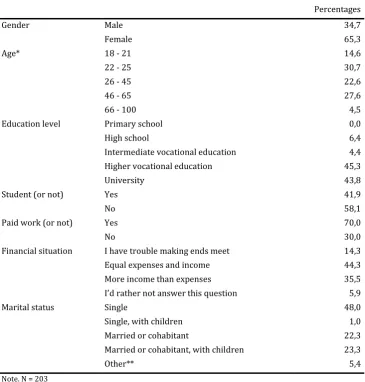
Within this section, the demographics of the respondents are presented. The respondents’ gender, age, educational level, work and student status, financial situation and marital status are outlined in Table 3.
[image:29.595.116.482.243.626.2]The respondents were also asked to rank thirteen values. Five values represent the egoistic values. The biospheric and altruistic values were each represented with four values. In Table 4, the top five is presented with the frequency of egoistic, biospheric and altruistic values.
Table 3 - Demographics of the research respondents
Percentages
Gender Male 34,7
Female 65,3
Age* 18 - 21 14,6
22 - 25 30,7
26 - 45 22,6
46 - 65 27,6
66 - 100 4,5
Education level Primary school 0,0
High school 6,4
Intermediate vocational education 4,4 Higher vocational education 45,3
University 43,8
Student (or not) Yes 41,9
No 58,1
Paid work (or not) Yes 70,0
No 30,0
Financial situation I have trouble making ends meet 14,3 Equal expenses and income 44,3 More income than expenses 35,5 I’d rather not answer this question 5,9
Marital status Single 48,0
Single, with children 1,0 Married or cohabitant 22,3 Married or cohabitant, with children 23,3
Other** 5,4
Note. N = 203
* mean age = 36,03 with SD = 16,28.
24
Table 4 - Top five values
Egoistic Values Biospheric values Altruistic values Percentages Percentages Percentages 0 57,6 20,7 2,5 1 27,1 28,6 8,9 2 7,9 27,1 27,6 3 4,9 20,7 33,0
4 2,0 3,0 28,1
5 0,5
Total 100,0 100,0 100,0
Note. N = 203.
As shown within Table 4, altruistic values are valued important most frequently. Biospheric values are valued as important second most frequently.
5.3
Descriptive statistics
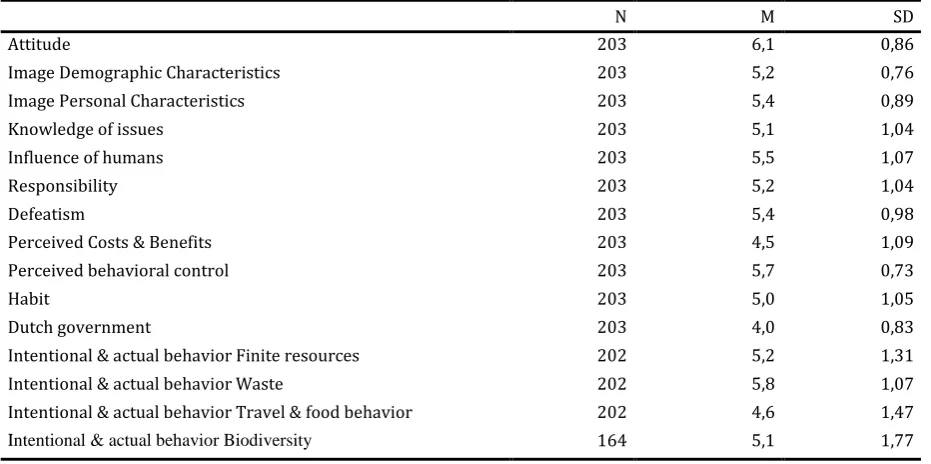
In this section descriptive statistics are presented for each construct. The results of the constructs representing the determinants are presented in Table 5 and the results of the constructs representing the specific types of PEB are presented in Table 6.
Table 5 - Descriptive statistics determinants
N M SD
Attitude 203 6,1 0,86
Image Demographic Characteristics 203 5,2 0,76 Image Personal Characteristics 203 5,4 0,89
Knowledge of issues 203 5,1 1,04
Influence of humans 203 5,5 1,07
Responsibility 203 5,2 1,04
Defeatism 203 5,4 0,98
Perceived Costs & Benefits 203 4,5 1,09 Perceived behavioral control 203 5,7 0,73
Habit 203 5,0 1,05
Dutch government 203 4,0 0,83
Intentional & actual behavior Finite resources 202 5,2 1,31 Intentional & actual behavior Waste 202 5,8 1,07 Intentional & actual behavior Travel & food behavior 202 4,6 1,47
Intentional & actual behavior Biodiversity 164 5,1 1,77
25
Table 6 - Descriptive statistics specific types of PEB
N M SD
Specific type Water 58 3,8 0,55 Specific type Transport 57 3,2 0,76 Specific type Energy 61 3,9 0,64 Specific type Food 59 3,3 0,74 Specific type Materials 57 3,4 0,61 Specific type Waste 54 3,5 0,72 Specific type Biodiversity 57 3,9 0,61
Note. N = Sample. M = Mean. SD = Standard deviation. Each construct is measured on a five-point Likert scale. A mean closer to one is negative for pro-environmental behavior and a mean closer to five is positive for pro-environmental behavior.
In general, the results showed positive results for PEB. This is based on the fact that the mean of each construct measured within the survey, is closer to seven than to one. This means that the respondents evaluated the items within the survey more positively than negatively. In addition, with each mean closer to five than to one, the results for each specific type of PEB are also positive for PEB. These results indicate that the respondents regularly perform the PEBs that are measured within the survey.
Unfortunately, the results are not very confident as most means are closer to the middle of the seven-point scale and the five-point scale than towards the ends. An in-depth and complete overview of all the answers of each item can be found in appendix D.
5.4
Correlations
Within this section, correlations between the constructs are briefly presented. The extensive results for the Spearman correlation can be found in appendix E.
Overall, the results show that almost all constructs have a significant (p < 0,05) positive relationship with the four constructs of intentional & actual behavior. With the exception of the construct defeatism and the Dutch government which show a negative correlation.
Furthermore, differences in correlations are found between the seven constructs that represent the specific types of PEB and the constructs that represent the determinants. For instance, attitude has a significant strong correlation with the specific type Waste (r= .53, n= 54, p < 0,01) and a moderate correlation with the specific type Food (r= .39, n = 59, p < 0,01).
26
5.5
Multiple regression
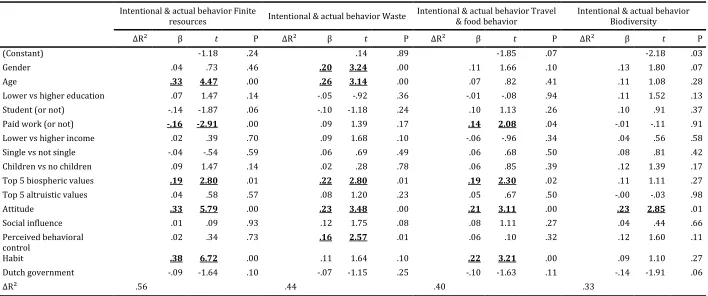
To distinguish whether the determinants could predict the intentional and actual behavior and each specific type of PEB, multiple regressions were conducted.
5.5.1 Attitude
First of all, it is researched to what extent the attitudinal determinants image health, happy & perfectionist traits, image social, ambitious, active & modern traits, knowledge of issues, influence of humanity, responsibility, defeatism and perceived costs & benefits can predict the determinant attitude. In Table 7, an overview of the beta values for the sample, together with its level of significance and the t-test are given. Furthermore, the level of variance explained by the whole model (ΔR²) is presented in Table 7.
Table 7 - Multiple regression attitude
Model ΔR² β t P
(Constant) 6.92 .00 Image health, happy & perfectionist traits .01 .12 .90 Image social, ambitious, active & modern traits .04 .57 .57 Knowledge of issues .07 .96 .34 Influence of humanity .04 .49 .63 Responsibility .21 2.76 .01 Defeatism -.18 -2.35 .02 Perceived Costs & Benefits .20 2.65 .01
ΔR² .26
Note. N = 203. β = Standardised beta. t = Obtained t-value. P = Significance level. ΔR² = Level of variance. The significant results are marked in bold and are underlined.
First of all, the overall model can significantly predict the determinant attitude. This indicates that the null hypothesis, there is no relationship between the predictor determinants and the outcome determinant, can be rejected. In other words, there is at least one determinant in the model that predicts an individual’s attitude regarding PEB.
The analysis shows that the determinants responsibility, defeatism and perceived costs & benefits explain a significant amount of an individual’s attitude regarding PEB. In more detail, if, for instance, responsibility rises by one unit, an individual’s attitude regarding PEB will rise by .21 units. With regard to defeatism, a negative relationship exists which indicates that an individual’s attitude regarding PEB will decline if defeatism rises.
27
5.5.2 Intentional & actual behavior
Next, a multiple regression was conducted to predict the four determinants of intentional & actual behavior. As biosperic values were left out when all three values were entered within SPSS, it was decided to exclude egoistic values from the multiple regression. In Table 8, an overview of the beta values for the sample, together with its level of significance and the t-test for each model are given. Furthermore, the level of variance explained by the whole model (ΔR²) is presented in Table 8.
The first model predicts the intentional & actual behavior Finite resources. As a reminder, this determinant includes intentional and actual behavior regarding water, electricity and materials. The analysis shows that the determinants age, paid work (or not), biospheric values, attitude and habit can explain a significant amount of the dependent variable. In more detail, if, for instance, age rises by one unit, intentional & actual behavior related to Finite resources will rise by .33 units. Interestingly, a negative relationship exists between the determinant paid work (or not) and the dependent variable. The remaining determinants did not significantly predict the dependent outcome.
The second model predicts the intentional & actual behavior Waste. This determinant includes food waste and waste in general. The determinants gender, age, biospheric values, attitude and perceived behavioral control can explain a significant amount of the dependent outcome.
28
Table 8 - Multiple regression intentional & actual behavior
Intentional & actual behavior Finite
resources Intentional & actual behavior Waste Intentional & actual behavior Travel & food behavior Intentional & actual behavior Biodiversity ΔR² β t P ΔR² β t P ΔR² β t P ΔR² β t P
(Constant) -1.18 .24 .14 .89 -1.85 .07 -2.18 .03
Gender .04 .73 .46 .20 3.24 .00 .11 1.66 .10 .13 1.80 .07
Age .33 4.47 .00 .26 3.14 .00 .07 .82 .41 .11 1.08 .28
Lower vs higher education .07 1.47 .14 -.05 -.92 .36 -.01 -.08 .94 .11 1.52 .13 Student (or not) -.14 -1.87 .06 -.10 -1.18 .24 .10 1.13 .26 .10 .91 .37 Paid work (or not) -.16 -2.91 .00 .09 1.39 .17 .14 2.08 .04 -.01 -.11 .91 Lower vs higher income .02 .39 .70 .09 1.68 .10 -.06 -.96 .34 .04 .56 .58 Single vs not single -.04 -.54 .59 .06 .69 .49 .06 .68 .50 .08 .81 .42 Children vs no children .09 1.47 .14 .02 .28 .78 .06 .85 .39 .12 1.39 .17 Top 5 biospheric values .19 2.80 .01 .22 2.80 .01 .19 2.30 .02 .11 1.11 .27 Top 5 altruistic values .04 .58 .57 .08 1.20 .23 .05 .67 .50 -.00 -.03 .98 Attitude .33 5.79 .00 .23 3.48 .00 .21 3.11 .00 .23 2.85 .01 Social influence .01 .09 .93 .12 1.75 .08 .08 1.11 .27 .04 .44 .66 Perceived behavioral
control .02 .34 .73 .16 2.57 .01 .06 .10 .32 .12 1.60 .11 Habit .38 6.72 .00 .11 1.64 .10 .22 3.21 .00 .09 1.10 .27 Dutch government -.09 -1.64 .10 -.07 -1.15 .25 -.10 -1.63 .11 -.14 -1.91 .06
ΔR² .56 .44 .40 .33
29
5.5.3 Specific types of pro-environmental behavior
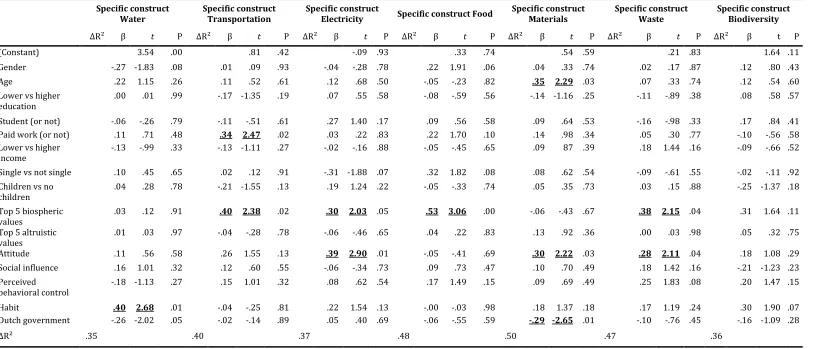
Finally, to investigate which determinants predict the specific constructs of PEB another multiple regression was conducted. In Table 9, an overview of the beta values for the sample, together with its level of significance and the t-test for each model are given. Furthermore, the level of variance explained by the whole model (ΔR²) is presented in Table 9.
The first model has as dependent variable the specific type Water. The determinant habit can explain a significant amount of the sub behaviors related to water. Unfortunately, for the other determinants, the null hypothesis cannot be rejected.
The second model has as dependent variable the specific type Transportation. According to the analysis, the determinants paid work (or not) and biospheric values can explain a significant amount of the sub behaviors related to transportation.
The third model has as dependent variable the specific type Electricity. The determinants biospheric values and attitude can explain a significant amount of the sub behaviors related to electricity.
The fourth model has as dependent variable the specific type Food. Here, only the variable biospheric values can explain a significant amount of the sub behaviors related to food.
The fifth model has as dependent variable the specific type Materials. The determinants age, attitude and the Dutch government can explain a significant amount of the sub behaviors related to materials. Interestingly, if the Dutch government rises by one unit, PEB related to materials will decline by .29 units. This indicates that if pro-environmental behavior regarding materials increases, the review of the behavior of the Dutch government become more negative.
The sixth model has as dependent variable the specific type Waste. Again, the determinants biospheric values and attitude can explain a significant amount of the sub behaviors related to waste.
30
Table 9 - Multiple regression specific types of pro-environmental behavior
Specific construct
Water Specific construct Transportation Specific construct Electricity Specific construct Food Specific construct Materials Specific construct Waste Specific construct Biodiversity
ΔR² β t P ΔR² β t P ΔR² β t P ΔR² β t P ΔR² β t P ΔR² β t P ΔR² β t P (Constant) 3.54 .00 .81 .42 -.09 .93 .33 .74 .54 .59 .21 .83 1.64 .11 Gender -.27 -1.83 .08 .01 .09 .93 -.04 -.28 .78 .22 1.91 .06 .04 .33 .74 .02 .17 .87 .12 .80 .43 Age .22 1.15 .26 .11 .52 .61 .12 .68 .50 -.05 -.23 .82 .35 2.29 .03 .07 .33 .74 .12 .54 .60 Lower vs higher
education .00 .01 .99 -.17 -1.35 .19 .07 .55 .58 -.08 -.59 .56 -.14 -1.16 .25 -.11 -.89 .38 .08 .58 .57 Student (or not) -.06 -.26 .79 -.11 -.51 .61 .27 1.40 .17 .09 .56 .58 .09 .64 .53 -.16 -.98 .33 .17 .84 .41 Paid work (or not) .11 .71 .48 .34 2.47 .02 .03 .22 .83 .22 1.70 .10 .14 .98 .34 .05 .30 .77 -.10 -.56 .58 Lower vs higher
income -.13 -.99 .33 -.13 -1.11 .27 -.02 -.16 .88 -.05 -.45 .65 .09 87 .39 .18 1.44 .16 -.09 -.66 .52 Single vs not single .10 .45 .65 .02 .12 .91 -.31 -1.88 .07 .32 1.82 .08 .08 .62 .54 -.09 -.61 .55 -.02 -.11 .92 Children vs no
children .04 .28 .78 -.21 -1.55 .13 .19 1.24 .22 -.05 -.33 .74 .05 .35 .73 .03 .15 .88 -.25 -1.37 .18 Top 5 biospheric
values .03 .12 .91 .40 2.38 .02 .30 2.03 .05 .53 3.06 .00 -.06 -.43 .67 .38 2.15 .04 .31 1.64 .11 Top 5 altruistic
values .01 .03 .97 -.04 -.28 .78 -.06 -.46 .65 .04 .22 .83 .13 .92 .36 .00 .03 .98 .05 .32 .75 Attitude .11 .56 .58 .26 1.55 .13 .39 2.90 .01 -.05 -.41 .69 .30 2.22 .03 .28 2.11 .04 .18 1.08 .29 Social influence .16 1.01 .32 .12 .60 .55 -.06 -.34 .73 .09 .73 .47 .10 .70 .49 .18 1.42 .16 -.21 -1.23 .23 Perceived
behavioral control -.18 -1.13 .27 .15 1.01 .32 .08 .62 .54 .17 1.49 .15 .09 .69 .49 .25 1.83 .08 .20 1.47 .15 Habit .40 2.68 .01 -.04 -.25 .81 .22 1.54 .13 -.00 -.03 .98 .18 1.37 .18 .17 1.19 .24 .30 1.90 .07 Dutch government -.26 -2.02 .05 -.02 -.14 .89 .05 .40 .69 -.06 -.55 .59 -.29 -2.65 .01 -.10 -.76 .45 -.16 -1.09 .28
ΔR² .35 .40 .37 .48 .50 .47 .36
31
6
Discussion
Within this chapter, the results are interpreted, possible limitations of this study are discussed and further research is presented.
6.1
Conclusions
The main finding of this research is that each of the seven types of PEB was predicted by a different set of predictors. The results showed that the determinants attitude and biospheric values are the main predictors of the intention to act pro-environmentally and the specific types of PEB. These two determinants had the most frequent, and mostly the highest, significant results with the dependent variables. Additionally, the socio-demographic determinants age and paid work (or not) also frequently showed significant results. Finally, the results showed that responsibility, defeatism and perceived costs & benefits explain a significant amount of an individual’s attitude regarding PEB.
Unfortunately, the Dutch government showed disappointing results as the literature assumed that this external determinant is a valued addition to the model. The determinant had no more than one significant relationship with a dependent variable.
In addition, habit showed moderate results. Allthough previous research assumed it to have a big influence on the actual behavior, no more than three significant relationships with a dependent variable are found.
To conclude, the results have shown which determinants could predict each type of PEB which answers the research question of this study. Within the next sections, the theoretical and practical implications of these results are discussed.
6.1.1 Theoretical implications
32 behavior has a positive effect on the environment, and lastly if the behavior has low costs and high personal or environmental benefits.
Unfortunately, the determinants social influence, PBC, habit and the Dutch government showed disappointing results. According to the literature review (e.g., Ajzen, 1991; Chawla, 1998; Kaiser et al., 2005; Kirkels, 2012), these determinants should be very important in achieving a more pro-environmental society. However, the results of this study do not confirm this statement. Before rejecting these determinants as a valuable influence on PEB, it should be mentioned that the measurement of these determinants could be questioned. They are measured with a scale designed to estimate general response regarding PEB. These general responses may not be compatible with the specific types of PEB.
To conclude, the model of this study (see Figure 4) offers a good account to encourage PEB systematically. A general theory of environmentalism is not realistic as PEB depends on a different set of predictors, both general and type-specific. Therefore, each type of PEB should be approached separately.
6.1.2 Practical implications
At the beginning of this paper it is stated that organizations and governments have some implications to change behavior and that the need for new strategies and approaches to encourage PEB has arisen. This study indicate that PEB is not a unitary, undifferentiated concept and that different combinations of determinants determine the different types of PEB. Therefore, it is important to first identify the behavior to change and then find what determinants could explain that particular behavior. Strategy makers should keep this in mind when creating strategies and interventions for encouraging PEBs. For instance, when constructing a strategy to encourage pro-environmental water use behaviors, interventions to break old (non-environmental) habits and learn new pro-environmental habits could be applied.
In addition, the results showed that each type of PEB are explained by multiple determinants which indicate that the most effective behavior change strategies involve combinations of determinants. For instance, when composing a strategy to encourage pro-environmental energy use behaviors, strategies that implement both increasing pro-environmental value and creating a positive attitude toward the behavior could be applied.
6.2
Limitations
Despite the stimulating results and the focus on one dimension, this study still has its limitations.