Extending the Entity Grid with Entity-Specic Features
Micha Elsner School of Informatics University of Edinburgh [email protected]
Eugene Charniak
Department of Computer Science Brown University, Providence, RI 02912
Abstract
We extend the popular entity grid representa-tion for local coherence modeling. The grid abstracts away information about the entities it models; we add discourse prominence, named entity type and coreference features to distin-guish between important and unimportant en-tities. We improve the best result forWSJ
doc-ument discrimination by 6%.
1 Introduction
A well-written document is coherent (Halliday and Hasan, 1976) it structures information so that each new piece of information is interpretable given the preceding context. Models that distinguish coherent from incoherent documents are widely used in gen-eration, summarization and text evaluation.
Among the most popular models of coherence is the entity grid (Barzilay and Lapata, 2008), a sta-tistical model based on Centering Theory (Grosz et al., 1995). The grid models the way texts focus on important entities, assigning them repeatedly to prominent syntactic roles. While the grid has been successful in a variety of applications, it is still a surprisingly unsophisticated model, and there have been few direct improvements to its simple feature set. We present an extension to the entity grid which distinguishes between different types of entity, re-sulting in signicant gains in performance1.
At its core, the grid model works by predicting whether an entity will appear in the next sentence
1A public implementation is available via https://
bitbucket.org/melsner/browncoherence.
(and what syntactic role it will have) given its his-tory of occurrences in the previous sentences. For instance, it estimates the probability that Clinton will be the subject of sentence 2, given that it was the subject of sentence 1. The standard grid model uses no information about the entity itself the prob-ability is the same whether the entity under discus-sion is Hillary Clinton or wheat. Plainly, this assumption is too strong. Distinguishing important from unimportant entity types is important in coref-erence (Haghighi and Klein, 2010) and summariza-tion (Nenkova et al., 2005); our model applies the same insight to the entity grid, by adding informa-tion from syntax, a named-entity tagger and statis-tics from an external coreference corpus.
2 Related work
Since its initial appearance (Lapata and Barzilay, 2005; Barzilay and Lapata, 2005), the entity grid has been used to perform wide variety of tasks. In addition to its rst proposed application, sentence ordering for multidocument summarization, it has proven useful for story generation (McIntyre and Lapata, 2010), readability prediction (Pitler et al., 2010; Barzilay and Lapata, 2008) and essay scor-ing (Burstein et al., 2010). It also remains a criti-cal component in state-of-the-art sentence ordering models (Soricut and Marcu, 2006; Elsner and Char-niak, 2008), which typically combine it with other independently-trained models.
There have been few attempts to improve the en-tity grid directly by altering its feature representa-tion. Filippova and Strube (2007) incorporate se-mantic relatedness, but nd no signicant
1 [Visual meteorological conditions]Sprevailed for [the personal cross country ight for which [a VFR ight plan]Owas led]X.
2 [The ight]Soriginated at [Nuevo Laredo , Mexico]X, at [approximately 1300]X.
s conditions plan flight laredo
1 S O X
[image:2.612.73.292.124.159.2]-2 - - S X
Figure 1: A short text (using NP-only mention detection), and its corresponding entity grid. The numeric token 1300 is removed in preprocessing.
ment over the original model. Cheung and Penn (2010) adapt the grid to German, where focused con-stituents are indicated by sentence position rather than syntactic role. The best entity grid for English text, however, is still the original.
3 Entity grids
The entity grid represents a document as a matrix (Figure 1) with a row for each sentence and a column for each entity. The entry for (sentence i, entity j), which we write ri;j, represents the syntactic role that
entity takes on in that sentence: subject (S), object (O), or some other role (X)2. In addition, there is a
special marker (-) for entities which do not appear at all in a given sentence.
To construct a grid, we must rst decide which textual units are to be considered entities, and how the different mentions of an entity are to be linked. We follow the -COREFERENCE setting from
Barzi-lay and Lapata (2005) and perform heuristic coref-erence resolution by linking mentions which share a head noun. Although some versions of the grid use an automatic coreference resolver, this often fails to improve results; in Barzilay and Lapata (2005), coreference improves results in only one of their tar-get domains, and actually hurts for readability pre-diction. Their results, moreover, rely on running coreference on the document in its original order; in a summarization task, the correct order is not known, which will cause even more resolver errors.
To build a model based on the grid, we treat the columns (entities) as independent, and look at lo-cal transitions between sentences. We model the
2Roles are determined heuristically using trees produced by
the parser of (Charniak and Johnson, 2005).
transitions using the generative approach given in Lapata and Barzilay (2005)3, in which the model
estimates the probability of an entity's role in the next sentence, ri;j, given its history in the
previ-ous two sentences, ri 1;j; ri 2;j. It also uses a
sin-gle entity-specic feature, salience, determined by counting the total number of times the entity is men-tioned in the document. We denote this feature vec-tor Fi;j. For example, the vector for ight after the
last sentence of the example would be F3;flight =
hX; S; sal = 2i. Using two sentences of context and capping salience at 4, there are only 64 possi-ble vectors, so we can learn an independent multino-mial distribution for each F . However, the number of vectors grows exponentially as we add features.
4 Experimental design
We test our model on two experimental tasks, both testing its ability to distinguish between correct and incorrect orderings for WSJ articles. In
doc-ument discrimination (Barzilay and Lapata, 2005), we compare a document to a random permutation of its sentences, scoring the system correct if it prefers the original ordering4.
We also evaluate on the more difcult task of sen-tence insertion (Chen et al., 2007; Elsner and Char-niak, 2008). In this task, we remove each sentence from the article and test whether the model prefers to re-insert it at its original location. We report the av-erage proportion of correct insertions per document. As in Elsner and Charniak (2008), we test on sec-tions 14-24 of the Penn Treebank, for 1004 test doc-uments. We test signicance using the Wilcoxon Sign-rank test, which detects signicant differences in the medians of two distributions5.
5 Mention detection
Our main contribution is to extend the entity grid by adding a large number of entity-specic features. Before doing so, however, we add non-head nouns to the grid. Doing so gives our feature-based model
3Barzilay and Lapata (2005) give a discriminative model,
which relies on the same feature set as discussed here.
4As in previous work, we use 20 random permutations of
each document. Since the original and permutation might tie, we report both accuracy and balanced F-score.
5Our reported scores are means, but to test signicance of
Disc. Acc Disc. F Ins.
Random 50.0 50.0 12.6
Grid: NPs 74.4 76.2 21.3
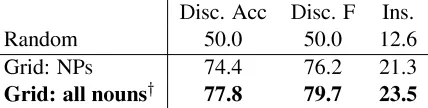
[image:3.612.76.290.55.109.2]Grid: all nounsy 77.8 79.7 23.5
Table 1: Discrimination scores for entity grids with dif-ferent mention detectors onWSJdevelopment documents.
yindicates performance on both tasks is signicantly dif-ferent from the previous row of the table with p=.05.
more information to work with, but is benecial even to the standard entity grid.
We alter our mention detector to add all nouns in the document to the grid6, even those which do
not head NPs. This enables the model to pick up premodiers in phrases like a Bush spokesman, which do not head NPs in the Penn Treebank. Find-ing these is also necessary to maximize coreference recall (Elsner and Charniak, 2010). We give non-head mentions the role X. The results of this change are shown in Table 1; discrimination performance increases about 4%, from 76% to 80%.
6 Entity-specic features
As we mentioned earlier, the standard grid model does not distinguish between different types of en-tity. Given the same history and salience, the same probabilities are assigned to occurrences of Hillary Clinton, the airlines, or May 25th, even though we know a priori that a document is more likely to be about Hillary Clinton than it is to be about May 25th. This problem is exacerbated by our same-head coreference heuristic, which sometimes creates spu-rious entities by lumping together mentions headed by nouns like miles or dollars. In this section, we add features that separate important entities from less important or spurious ones.
Proper Does the entity have a proper mention? Named entity The majority OPENNLP Morton et
al. (2005) named entity label for the coreferen-tial chain.
Modiers The total number of modiers in all men-tions in the chain, bucketed by 5s.
Singular Does the entity have a singular mention?
6Barzilay and Lapata (2008) uses NPs as mentions; we are
unsure whether all other implementations do the same, but we believe we are the rst to make the distinction explicit.
News articles are likely to be about people and organizations, so we expect these named entity tags, and proper NPs in general, to be more important to the discourse. Entities with many modiers through-out the document are also likely to be important, since this implies that the writer wishes to point out more information about them. Finally, singular nouns are less likely to be generic.
We also add some features to pick out entities that are likely to be spurious or unimportant. These features depend on in-domain coreference data, but they do not require us to run a coreference resolver on the target document itself. This avoids the prob-lem that coreference resolvers do not work well for disordered or automatically produced text such as multidocument summary sentences, and also avoids the computational cost associated with coreference resolution.
Linkable Was the head word of the entity ever marked as coreferring in MUC6?
Unlinkable Did the head word of the entity occur 5 times in MUC6 and never corefer?
Has pronouns Were there 5 or more pronouns coreferent with the head word of the entity in the NANC corpus? (Pronouns in NANC are automatically resolved using an unsupervised model (Charniak and Elsner, 2009).)
No pronouns Did the head word of the entity occur over 50 times in NANC, and have fewer than 5 coreferent pronouns?
To learn probabilities based on these features, we model the conditional probability p(ri;jjF )
us-ing multilabel logistic regression. Our model has a parameter for each combination of syntactic role r, entity-specic feature h and feature vector F : rhF . This allows the old and new features to in-teract while keeping the parameter space tractable7.
In Table 2, we examine the changes in our esti-mated probability in one particular context: an entity with salience 3 which appeared in a non-emphatic role in the previous sentence. The standard entity grid estimates that such an entity will be the sub-ject of the next sentence with a probability of about
7We train the regressor using OWLQN (Andrew and Gao,
Context P(next role is subj)
Standard egrid .045
Head coref in MUC6 .013
...and proper noun .025
...and NE type person .037
...and 5 modiers overall .133
Never coref in MUC6 .006
[image:4.612.71.286.53.164.2]...and NE type date .001
Table 2: Probability of an entity appearing as subject of the next sentence, given the history - X, salience 3, and various entity-specic features.
.04. For most classes of entity, we can see that this is an overestimate; for an entity described by a com-mon noun (such as the airline), the probability as-signed by the extended grid model is .01. If we suspect (based on MUC6 evidence) that the noun is not coreferent, the probability drops to .006 (an increase) if it is a date, it falls even further, to .001. However, given that the entity refers to a person, and some of its mentions are modied, suggesting the ar-ticle gives a title or description (Obama's Secretary of State, Hillary Clinton), the chance that it will be the subject of the next sentence more than triples.
7 Experiments
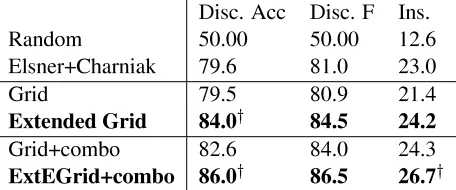
Table 3 gives results for the extended grid model on the test set. This model is signicantly better than the standard grid on discrimination (84% ver-sus 80%) and has a higher mean score on insertion (24% versus 21%)8.
The bestWSJresults in previous work are those of
Elsner and Charniak (2008), who combine the entity grid with models based on pronoun coreference and discourse-new NP detection. We report their scores in the table. This comparison is unfair, however, because the improvements from adding non-head nouns improve our baseline grid sufciently to equal their discrimination result. State-of-the-art results on a different corpus and task were achieved by Sori-cut and Marcu (2006) using a log-linear mixture of an entity grid, IBM translation models, and a word-correspondence model based on Lapata (2003).
8For insertion using the model on its own, the median
changes less than the mean, and the change in median score is not signicant. However, using the combined model, the change is signicant.
Disc. Acc Disc. F Ins.
Random 50.00 50.00 12.6
Elsner+Charniak 79.6 81.0 23.0
Grid 79.5 80.9 21.4
Extended Grid 84.0y 84.5 24.2
Grid+combo 82.6 84.0 24.3
ExtEGrid+combo 86.0y 86.5 26.7y
Table 3: Extended entity grid and combination model performance on 1004WSJtest documents. Combination
models incorporate pronoun coreference, discourse-new NP detection, and IBM model 1. yindicates an extended model score better than its baseline counterpart at p=.05.
To perform a fair comparison of our extended grid with these model-combining approaches, we train our own combined model incorporating an en-tity grid, pronouns, discourse-newness and the IBM model. We combine models using a log-linear mix-ture as in Soricut and Marcu (2006), training the weights to maximize discrimination accuracy.
The second section of Table 3 shows these model combination results. Notably, our extended entity grid on its own is essentially just as good as the com-bined model, which represents our implementation of the previous state of the art. When we incorpo-rate it into a combination, the performance increase remains, and is signicant for both tasks (disc. 86% versus 83%, ins. 27% versus 24%). Though the im-provement is not perfectly additive, a good deal of it is retained, demonstrating that our additions to the entity grid are mostly orthogonal to previously de-scribed models. These results are the best reported for sentence ordering of English news articles.
8 Conclusion
[image:4.612.315.543.55.150.2]Acknowledgements
We are most grateful to Regina Barzilay, Mark John-son and three anonymous reviewers. This work was funded by a Google Fellowship for Natural Lan-guage Processing.
References
Galen Andrew and Jianfeng Gao. 2007. Scalable train-ing of L1-regularized log-linear models. In ICML '07. Regina Barzilay and Mirella Lapata. 2005. Modeling lo-cal coherence: an entity-based approach. In Proceed-ings of the 43rd Annual Meeting of the Association for Computational Linguistics (ACL'05).
Regina Barzilay and Mirella Lapata. 2008. Modeling local coherence: an entity-based approach. Computa-tional Linguistics, 34(1):134.
Jill Burstein, Joel Tetreault, and Slava Andreyev. 2010. Using entity-based features to model coherence in stu-dent essays. In Human Language Technologies: The 2010 Annual Conference of the North American Chap-ter of the Association for Computational Linguistics, pages 681684, Los Angeles, California, June. Asso-ciation for Computational Linguistics.
Eugene Charniak and Micha Elsner. 2009. EM works for pronoun anaphora resolution. In Proceedings of EACL, Athens, Greece.
Eugene Charniak and Mark Johnson. 2005. Coarse-to-ne n-best parsing and MaxEnt discriminative rerank-ing. In Proc. of the 2005 Meeting of the Assoc. for Computational Linguistics (ACL), pages 173180. Erdong Chen, Benjamin Snyder, and Regina Barzilay.
2007. Incremental text structuring with online hier-archical ranking. In Proceedings of EMNLP.
Jackie Chi Kit Cheung and Gerald Penn. 2010. Entity-based local coherence modelling using topological elds. In Proceedings of the 48th Annual Meet-ing of the Association for Computational LMeet-inguistics, pages 186195, Uppsala, Sweden, July. Association for Computational Linguistics.
Micha Elsner and Eugene Charniak. 2008. Coreference-inspired coherence modeling. In Proceedings of ACL-08: HLT, Short Papers, pages 4144, Columbus, Ohio, June. Association for Computational Linguistics. Micha Elsner and Eugene Charniak. 2010. The
same-head heuristic for coreference. In Proceedings of ACL 10, Uppsala, Sweden, July. Association for Computa-tional Linguistics.
Katja Filippova and Michael Strube. 2007. Extend-ing the entity-grid coherence model to semantically related entities. In Proceedings of the Eleventh Eu-ropean Workshop on Natural Language Generation,
pages 139142, Saarbr¨ucken, Germany, June. DFKI GmbH. Document D-07-01.
Barbara J. Grosz, Aravind K. Joshi, and Scott Weinstein. 1995. Centering: A framework for modeling the lo-cal coherence of discourse. Computational Linguis-tics, 21(2):203225.
Aria Haghighi and Dan Klein. 2010. Coreference reso-lution in a modular, entity-centered model. In Human Language Technologies: The 2010 Annual Conference of the North American Chapter of the Association for Computational Linguistics, pages 385393, Los An-geles, California, June. Association for Computational Linguistics.
Michael Halliday and Ruqaiya Hasan. 1976. Cohesion in English. Longman, London.
Mirella Lapata and Regina Barzilay. 2005. Automatic evaluation of text coherence: Models and representa-tions. In IJCAI, pages 10851090.
Mirella Lapata. 2003. Probabilistic text structuring: Ex-periments with sentence ordering. In Proceedings of the annual meeting of ACL, 2003.
Neil McIntyre and Mirella Lapata. 2010. Plot induction and evolutionary search for story generation. In Pro-ceedings of the 48th Annual Meeting of the Associa-tion for ComputaAssocia-tional Linguistics, pages 15621572, Uppsala, Sweden, July. Association for Computational Linguistics.
Thomas Morton, Joern Kottmann, Jason Baldridge, and Gann Bierner. 2005. Opennlp: A java-based nlp toolkit. http://opennlp.sourceforge.net.
Ani Nenkova, Advaith Siddharthan, and Kathleen McK-eown. 2005. Automatically learning cognitive status for multi-document summarization of newswire. In Proceedings of Human Language Technology Confer-ence and ConferConfer-ence on Empirical Methods in Nat-ural Language Processing, pages 241248, Vancou-ver, British Columbia, Canada, October. Association for Computational Linguistics.
Emily Pitler, Annie Louis, and Ani Nenkova. 2010. Automatic evaluation of linguistic quality in multi-document summarization. In Proceedings of the 48th Annual Meeting of the Association for Computational Linguistics, pages 544554, Uppsala, Sweden, July. Association for Computational Linguistics.