R E S E A R C H
Open Access
Detecting acute distress and risk of future
psychological morbidity in critically ill patients:
validation of the intensive care psychological
assessment tool
Dorothy M Wade
1*, Matthew Hankins
2, Deborah A Smyth
3, Elijah E Rhone
4, Michael G Mythen
5, David CJ Howell
6and John A Weinman
7Abstract
Introduction:The psychological impact of critical illness on a patient can be severe, and frequently results in acute distress as well as psychological morbidity after leaving hospital. A UK guideline states that patients should be assessed in critical care units, both for acute distress and risk of future psychological morbidity; but no suitable method for carrying out this assessment exists. The Intensive care psychological assessment tool (IPAT) was developed as a simple, quick screening tool to be used routinely to detect acute distress, and the risk of future psychological morbidity, in critical care units.
Methods:A validation study of IPAT was conducted in the critical care unit of a London hospital. Once un-sedated, orientated and alert, critical care patients were assessed with the IPAT and validated tools for distress, to determine the IPAT’s concurrent validity. Fifty six patients took IPAT again to establish test-retest reliability. Finally, patients completed posttraumatic stress disorder (PTSD), depression and anxiety questionnaires at three months, to determine predictive validity of the IPAT.
Results:One hundred and sixty six patients completed the IPAT, and 106 completed follow-up questionnaires at 3 months. Scale analysis showed IPAT was a reliable 10-item measure of critical care-related psychological distress. Test-retest reliability was good (r =0.8). There was good concurrent validity with measures of anxiety and depression (r =0.7,P<0.01; r =0.6,P<0.01). With a cut-point of≥7, the IPAT had 82% sensitivity and 65% specificity to detect concurrent anxiety; and 80% sensitivity and 66% specificity to detect concurrent low mood (area under the curve (AUC) =0.8 for both). Predictive validity for psychological morbidity was good (r =0.4,P<0.01; r =0.64,P<0.01 for PTSD with days 1 and 2 data). The IPAT had 69% specificity and 57% sensitivity to predict future psychological morbidity (AUC =0.7).
Conclusions:The IPAT was found to have good reliability and validity. Sensitivity and specificity analysis suggest the IPAT could provide a way of allowing staff to assess psychological distress among critical care patients after further replication and validation. Further work is also needed to determine its utility in predicting future psychological morbidity.
* Correspondence:[email protected] 1
Chartered Health Psychologist, Critical Care Department, University College Hospital, 235 Euston Rd, London NW1 2BU, UK
Full list of author information is available at the end of the article
Introduction
There is increasing evidence that the psychological im-pact of a critical care admission can be severe. Extreme levels of acute distress are common in critically ill pa-tients [1,2], and subsequently there is a high prevalence of psychological morbidity including post-traumatic stress disorder (PTSD), depression and anxiety among critical care survivors [3,4]. Acute distress may be caused by life-threatening illness, real events and medical proce-dures in critical care, or by frightening psychological ex-periences such as hallucinations or delusions, that are commonly experienced there [2]. The aetiology of hallu-cinations and delusions during critical care is not fully understood but they are thought to arise from delirium due to disturbed physiology, infection or inflammation; sleep or sensory deprivation; or the use of, or withdrawal from, psychoactive drugs such as benzodiazepines for sedation.
Acute stress in the critical care unit has also been shown to be one of the strongest risk factors for poor psycho-logical outcomes after critical care [1,2] and therefore, it is important to detect it and minimise it where possible. It is known that healthcare staff who have not been trained in mental health may find it difficult to recognise acute psy-chological stress, including delirious symptoms, in patients [5,6]. Therefore, many highly distressed patients do not re-ceive psychological support in critical care units, and con-tinue to suffer serious distress after discharge from critical care. In the UK, the 2009 National Institute for Health and Clinical Excellence (NICE) guideline CG83 [7] states that patients should be assessed during their critical care stay for acute symptoms such as anxiety, depression, panic episodes, nightmares, delusions, hallucinations, intrusive memories, flashback episodes and underlying psychological disorders, to determine their risk of future psychological morbidity. Psychological support should be provided as required.
NICE CG83 noted that there was a lack of tools avail-able for detecting acute distress and risk of future psy-chological morbidity in critically ill patients. A screening tool to detect acute distress in critical care should ideally be administered by bedside nurses to patients. It should be short, to minimise the burden on staff and patients, and simple to understand, so that fatigued, ill patients can respond once they are awake and alert enough to answer questions. It should reflect the many stressful facets of patient experience in critical care including be-ing unable to communicate and sleep, sufferbe-ing frighten-ing hallucinations and paranoid delusions, as well as symptoms of low mood, panic and anxiety.
Our research team reviewed existing questionnaires for distress in critical care [8-10], but found none were suitable as a quick screening tool. Existing questionnaires were too long, contained many items not relevant to this
purpose, or were primarily measures of post-critical care recall rather than current experience of critical care. A re-cent study reported on a predictive tool to identify pa-tients at risk. However it is based mainly on factors (for example, having children under 18 years of age) that can-not be modified to reduce risk; and informal methods of identifying patient distress [11]. General measures of dis-tress from outside the critical care context, including hos-pital scales such as the hoshos-pital anxiety and depression scale, [12] do not include symptoms such as experience of hallucinations or intrusive memories, which are important sources of distress for critical care patients, and may be key predictors of future psychological morbidity.
PTSD screening tools are not suitable for assessing pa-tients in critical care units as many indicators relevant to PTSD in a more general context would be misleading in critical care, for example, ‘difficulty concentratingʼ. Equally a PTSD tool would not capture important as-pects of the critical care experience that may trigger distress, such as hallucinations or delusions. A further drawback is that PTSD measures are often completed with reference to an index event. In the critical care con-text it is unclear if this should be the event that resulted in them entering hospital, or the procedures they have endured within the hospital itself. In this complex situ-ation it would be more appropriate to use a general measure of critical care distress.
Therefore, we developed a questionnaire to be used by critical care staff as a routine clinical tool with a dual purpose: to detect acute distress in critically ill patients, and also to predict patients who are at risk of future psy-chological morbidity. The main aim of this study was to collect data to analyse the reliability, validity and other psychometric properties of the questionnaire, named the intensive care psychological assessment tool (IPAT). Our hypotheses were that the IPAT would form a uni-dimensional scale of critical-care-related distress, with internal reliability ≥8 and test-retest reliability ≥8. We hypothesised that the IPAT total score would be signifi-cantly associated with concurrent anxiety, depression and general distress, and with future PTSD, depression, anxiety or general psychological morbidity at 3 months. The IPAT would have at least 75% sensitivity and 75% specificity to detect both current distress and future psychological morbidity.
Materials and methods Development of the IPAT
physical stress, delirious symptoms, control and support. Previous work showed that the ICUSS has good reliabil-ity, and concurrent and predictive validity [2].
To develop the IPAT, we added four mood-items to the ICUSS (the cohort study demonstrated that mood disturbance in critical care was one of the strongest risk factors for future psychological morbidity) and then shortened the resulting IPAT to fourteen items -communication, difficulty breathing, pain, sleep, anxiety, panic, depression, disorientation, delusions, hallucina-tions, intrusive memories, amnesia and self-reported psychological history. Items from ICUSS were selected for IPAT if they had significant medium to large correl-ation with ICUSS or mood scales and with at least one outcome (self-reported PTSD, depression and anxiety) in the cohort study, and satisfied NICE CG83 requirements [13]. Correlations of items selected for IPAT and concur-rent stress or mood scores in the previous cohort study [2] ranged from r =0.42, P <0.01 to r =0.75, P <0.01. Correlation of items selected for IPAT and psychological
outcomes in the cohort study ranged from r =0.25,
P<0.01 tor=0.47,P <0.01. There are three possible re-sponses for each item (no; yes a bit; yes a lot). Patients are asked to respond about feelings‘since you’ve been in intensive care’. Data from the cohort study were useful to guide development of the IPAT, but further data were needed to validate it.
Validation of the IPAT Participants
Inclusion criteria The inclusion criteria were that pa-tients had been at least 48 hours in the critical care unit; had received level-two care (single organ support, as de-fined by The Intensive Care Society (ICS), UK) [14] or level-three care (mechanical ventilation >24 h, or sup-port for two or more organs, ICS, UK); were English-speaking and able to communicate by an intelligible method; were awake and alert at the time of answering the questionnaire (for example, Glasgow coma score (GCS) of 15); were >18 years of age.
Exclusion criteria Patients were excluded if they had continuing confusion, or GCS <15 (up to time of dis-charge from unit); were delirious at the time of screening (previous delirium was not an exclusion); had serious neurological impairment.
Setting
The setting was the critical care unit, a general surgical/med-ical 35-bedded unit, at University College Hospital, London.
Ethics
The study was approved by the Joint University College London/University College London Hospitals Committee
on the Ethics of Human Research. Reference: 08/H0715/ 75. Eligible patients were asked for their informed consent before taking part in the study.
Procedure
Day 1 was defined as the first day that patients were un-sedated, awake and alert (GCS 15), potentially able to answer a questionnaire, and therefore in a mental state that indicated capacity to provide informed consent. Day 2 was a day later. Patients who were currently delirious were not approached. However, once the delirium stopped, they were approached and invited to join the study. On day 1, patients were administered the 14-item IPAT, usually by a bedside nurse, or occasionally by a member of the research team. Later on day 1, patients were administered a validation questionnaire comprising a short 6-item state anxiety scale from the Spielberger state-trait anxiety inventory (STAI) [15]; the patient health questionnaire-2 (PHQ-2) [16]; and the physical stress subscale of the condensed memorial symptom as-sessment scale (CMSAS) adapted for this study [17].
Some of the sample (56 patients) were administered the IPAT again on day 2 to allow the estimation of test-retest reliability. Three months after discharge from crit-ical care, patients were posted a follow-up questionnaire comprising the post-traumatic stress disorder diagnostic scale (PDS), a validated scale for PTSD symptoms [18], the Center for Epidemiologic Studies depression scale (CES-D) for depression symptoms [19], and a short form of the STAI for anxiety [20]. The PDS items were adapted to refer specifically to the intensive care experi-ence, as PDS authors have advised items be answered in relation to a specific trauma.
The protocol for the validation study included the op-portunity to suspend the study after the first 15 patients if any aspects of the study or tool were problematic. Nurses administering the IPAT to the first 15 partici-pants were asked to fill in a simple 8-item questionnaire, including 4 items for patients, after they had completed the IPAT, to assess the feasibility, interpretability and ac-ceptability of the IPAT (see Additional file 1). If prob-lems were identified by this process, the protocol would be revised, and data from the 15 patients would not be included in the study. However if no problems were identified, the data from the first 15 participants would be included in the study.
Socio-demographic and clinical data collection
history; past psychological history; type and number of or-gans supported; level of sedation; drugs with potential psy-choactive effects given; and CAM-ICU test results [22].
Assessment of psychometric properties
Scale analysis IPAT items forming a consistent scale were selected using non-parametric item-response mod-elling (Mokken analysis).
Reliability Test-retest reliability of the IPAT was esti-mated for a subset of patients who were administered the questionnaire twice. Internal consistency was esti-mated with Cronbach’s alpha.
Validity Face validity of IPAT items was assessed by ask-ing three nurses, three doctors and three patients who were formerly treated in the critical care unit, if they thought each item of the IPAT reflected a given aspect of patient experience. Responses were yes/no, with space for further comment.
For concurrent criterion validity, although there is no gold standard for measuring critical-care-related distress, we identified criterion measures for each aspect of the IPAT. Anxiety items of IPAT should correlate with the STAI, low-mood items of IPAT should correlate with the PHQ-2, and physical stress items should correlate with the CMSAS physical stress scale. IPAT delirium scores (based on recall of delirious symptoms such as halluci-nations earlier in the critical care admission) should correlate with an‘ever/never’delirious factor based on patients’earlier CAM-ICU results (the CAM-ICU is rou-tinely carried out in this critical care unit). During the study it was found that CAM-ICU testing was not done consistently due to staff turnover and a new computer system being installed. Therefore, other indications of delirium from the notes were recorded and combined with CAM-ICU results for a further variable ‘likely delir-ium’. We hypothesised that the total IPAT score should also correlate with the STAI score, the PHQ-2, general distress (either anxiety or depression) and CAM-ICU. All correlations are reported as Pearson or Spearman’s (for non-parametric data) correlation coefficients.
For predictive validity, IPAT scores should correlate with scores on validated PTSD, depression and anxiety questionnaires and general psychological morbidity (above the cut-point for either PTSD, depression or anx-iety) at three months.
Sample size calculation (predictive validity)
There are no definitive criteria for the required sample size in a validation study of this kind, as the properties of the items and their scalability are not known in advance. However, assuming a median inter-item correlation of around 0.3, and that items are reasonably well separated, a
sample size of 100 patients is sufficient for the proposed analysis. As 3-month data were collected to test for pre-dictive validity, a sample size of 150 was proposed to allow for a one-third loss to follow up.
Sample size calculation (test-retest reliability)
The sample size requirement for test-retest reliability was based on the assumption that reliability would be around 0.8. For a sample size of 50 patients, the 95% confidence intervals of 0.70 to 0.87 allowed the rejection of the hypothesis that reliability was 0.8 if the observed reliability fell below 0.7 [23].
Sensitivity and specificity analyses
Sensitivity and specificity were derived for concurrent anxiety, depression and general distress in the critical care unit, as well as future risk of self-reported PTSD, and general psychological morbidity using coordinates on the receiver operating characteristic (ROC) curve, and the best cut point on the IPAT scale identified.
Results
Recruitment and follow up of participants
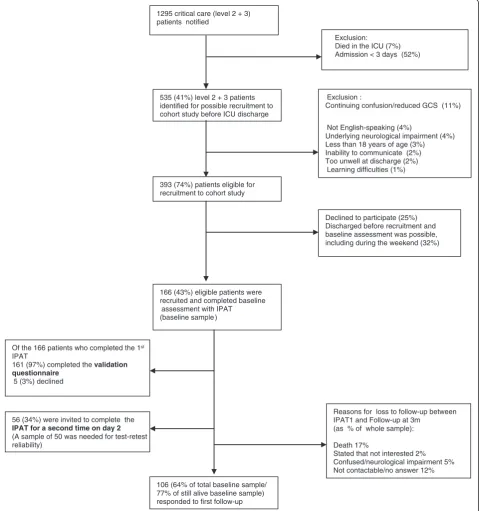
A sample of 166 patients was recruited (see Figure 1). After giving informed consent, the 166 patients com-pleted IPAT once (day 1). The median time from critical care admission to assessment on day 1 was 6 days (IQR 7). Later on day 1, 161 (97%) of the patients completed the validation questionnaire. On day 2, 56 (34%) patients completed the IPAT a second time (a sample size of 50 was deemed sufficient for this purpose). Between the as-sessment in critical care and 3-month follow up, 28 (17%) patients died: 106 (77% of surviving patients) returned the follow-up questionnaire sent at 3 months.
Patient characteristics and psychological scores
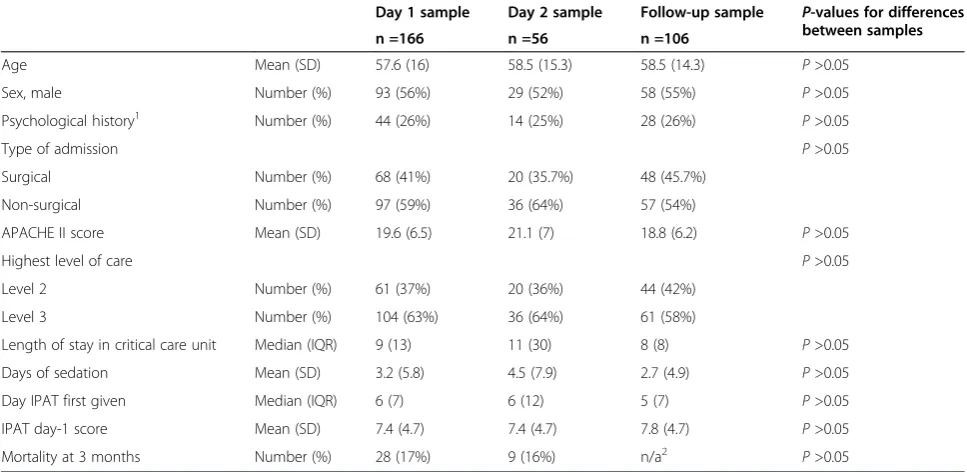
Table 1 shows there were no significant differences in any baseline characteristics or on IPAT scores between pa-tients in day 1, day 2 and follow-up samples. Additional clinical data (not in Table 1) showed that more than half of the total sample was mechanically ventilated, and opi-ates and sedation were commonly administered. Regard-ing psychological outcomes, the mean score on the PDS was 10 (SD 9) and on the CES-D 17 (SD 13).
Feasibility questionnaire (Additional file 1) Results
Time taken to complete IPAT
Nine patients completed in 5 minutes or less; three in 10 minutes; two in 20 minutes; one in 40 minutes (throughout the whole study a minority of patients wanted to discuss their responses in more depth with their nurse).
Item selection
Non-parametric Mokken-scale analysis (see Table 2) selected 10 of the 14 IPAT items as the components of a scale with reliability >0.8 (good). The ten items were hope-lessness, tension, panic, delusions, intrusive memories, 1295 critical care (level 2 + 3)
patients notified
535 (41%) level 2 + 3 patients identified for possible recruitment to cohort study before ICU discharge
393 (74%) patients eligible for recruitment to cohort study
166 (43%) eligible patients were recruited and completed baseline
assessment with IPAT (baseline sample )
Declined to participate (25%) Discharged before recruitment and baseline assessment was possible, including during the weekend (32%)
Exclusion :
Continuing confusion/reduced GCS (11%)
Not English-speaking (4%)
Underlying neurological impairment (4%) Less than 18 years of age (3%) Inability to communicate (2%) Too unwell at discharge (2%)
Learning difficulties (1%) Exclusion:
Died in the ICU (7%) Admission < 3 days (52%)
106 (64% of total baseline sample/ 77% of still alive baseline sample) responded to first follow-up
Reasons for loss to follow-up between IPAT1 and Follow-up at 3m
(as % of whole sample):
Death 17%
Stated that not interested 2% Confused/neurological impairment 5% Not contactable/no answer 12% Of the 166 patients who completed the 1st
IPAT
161 (97%) completed the validation questionnaire
5 (3%) declined
56 (34%) were invited to complete the
IPAT for a second time on day 2
[image:5.595.59.540.91.603.2](A sample of 50 was needed for test-retest reliability)
sadness, sleeplessness, communication difficulties, hal-lucinations and disorientation. The four excluded items were pain, difficulty breathing, amnesia for in-tensive care stay, and self-reported psychological his-tory. This scale structure was also seen with day-2 IPAT data (reliability =0.8). All further analyses were carried out using the 10-item version of IPAT.
Reliability
The correlation of IPAT total day-1 and IPAT total day-2 scores showed that test-retest reliability was 0.8. For the internal reliability for IPAT day-1 scores, Cron-bach alpha = 0.8, and for IPAT day-2 scores, CronCron-bach alpha = 0.8.
Face validity
Three doctors, three nurses and three patients
returned a face-validity questionnaire. The IPAT
scored 89% for face validity (nine people rated 10 items each; 80 out of 90 ratings were positive). The other 10 ratings were mostly ‘not sureʼ or suggestions for slight alterations to wording, rather than answer-ing no. One patient, one nurse and one doctor indi-cated that all items had clear face validity. One patient, one nurse and one doctor indicated that 9 out of 10 items had clear face validity. Two patients, one nurse and one doctor indicated 8 items had clear face validity.
Concurrent validity
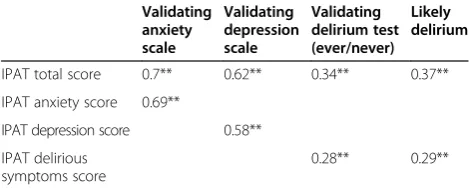
[image:6.595.56.540.101.337.2]Table 3 shows that there were large significant correlations between IPAT anxiety and STAI anxiety scores measured on the same day, between IPAT depression and PHQ-2 depression scores the same day, and between total IPAT, Table 1 Sample characteristics for day 1, day 2 and follow up
Day 1 sample Day 2 sample Follow-up sample P-values for differences
between samples
n =166 n =56 n =106
Age Mean (SD) 57.6 (16) 58.5 (15.3) 58.5 (14.3) P>0.05
Sex, male Number (%) 93 (56%) 29 (52%) 58 (55%) P>0.05
Psychological history1 Number (%) 44 (26%) 14 (25%) 28 (26%)
P>0.05
Type of admission P>0.05
Surgical Number (%) 68 (41%) 20 (35.7%) 48 (45.7%)
Non-surgical Number (%) 97 (59%) 36 (64%) 57 (54%)
APACHE II score Mean (SD) 19.6 (6.5) 21.1 (7) 18.8 (6.2) P>0.05
Highest level of care P>0.05
Level 2 Number (%) 61 (37%) 20 (36%) 44 (42%)
Level 3 Number (%) 104 (63%) 36 (64%) 61 (58%)
Length of stay in critical care unit Median (IQR) 9 (13) 11 (30) 8 (8) P>0.05
Days of sedation Mean (SD) 3.2 (5.8) 4.5 (7.9) 2.7 (4.9) P>0.05
Day IPAT first given Median (IQR) 6 (7) 6 (12) 5 (7) P>0.05
IPAT day-1 score Mean (SD) 7.4 (4.7) 7.4 (4.7) 7.8 (4.7) P>0.05
Mortality at 3 months Number (%) 28 (17%) 9 (16%) n/a2
P>0.05 1
Documented history of psychological problems, including depression, anxiety, alcohol dependence, substance abuse, or combinations of these.2
[image:6.595.305.539.518.715.2]Mortality reflects those who died by the 3-month follow-up point. All those in the follow-up sample had by definition survived to that point. APACHE II, acute physiology and chronic health evaluation II.
Table 2 Mokken scaling (non-parametric factor analysis) of the intensive care psychological assessment tool (IPAT) (day 1) demonstrating that 10 of 14 original items form a scale
IPAT items forming scale
IPAT questions H
IPAT8 Have you been feeling hopeless? 0.59
IPAT5 Have you been feeling tense? 0.59
IPAT7 Have you been feeling panicky? 0.55
IPAT11 Have you felt that people weredeliberately
trying to harm or hurt you?
0.52
IPAT12 Do upsetting memories of intensive care
keep coming into your mind?
0.49
IPAT6 Have you been feeling sad? 0.46
IPAT4 Has it been difficult to sleep? 0.44
IPAT1 Has it been hard to communicate? 0.41
IPAT10 Have you had hallucinations (seen or heard things you suspect were not really there)?
0.38
IPAT9 Have you felt disorientated (not quite sure where you are)?
0.37
STAI and PHQ-2 scores on the same day. There was medium significant correlation between previous CAM-ICU status and both IPAT total and IPAT delirious-symptom scores. Correlation was slightly increased when
‘likely deliriumʼ (combining additional observations of delirium with CAM-ICU results) was used.
Sensitivity and specificity of IPAT as a measure of acute distress in critical care
With a cut point ≥7, the IPAT (day-1 data) had a sensi-tivity of 82% (95% CI 70, 91) and specificity of 65% (95% CI 55, 75) to detect concurrent anxiety in critical care patients. With the same cut point, the IPAT had 80% sensitivity (95% CI 68, 89) and 66% specificity (95% CI 55, 75) to detect concurrent low mood in critical care patients; and 75% sensitivity (95% CI 65, 84) and 74% specificity (95% CI 62, 83) to detect acute distress in critical care patients. The area under the curve (AUC) was 0.8 in all three cases.
Predictive validity
In Table 4 we can see that there were highly significant correlations between IPAT total scores and the psycho-logical outcomes of PTSD, depression and anxiety symp-toms at 3 months. By Fisher’s z-transformation, none of the correlations between IPAT and other measures differed significantly between day 1 and day 2 (P>0.05). No significant relationships were found between CAM-ICU delirium results and psychological outcomes.
Sensitivity and specificity of IPAT as a predictor of PTSD and general psychological morbidity at 3 months
With a cut point≥7, the IPAT (day-1 data) had 71% sen-sitivity (95% CI 49, 87) and 48% specificity (95% CI 37, 59) for future diagnosis of PTSD (AUC =0.6). With a cut
point ≥7, the IPAT had 69% specificity (95% CI 55, 82) and 57% sensitivity (95% CI 43, 70) to predict future psy-chological morbidity (AUC =0.7).
Discussion
The IPAT was developed as a quick, simple screen-ing tool for routine use by critical care staff to de-tect acute distress in critically ill patients, as well as their risk of future psychological morbidity. Both are well-documented problems in critical care [1-4], yet no validated easy-to-use screening tool was available for this purpose [7]. The IPAT was developed in line with the requirements of the UK NICE guideline CG83, that all critical care patients should be psy-chologically assessed, so that psychological support can be offered to patients, with the aim of reducing acute distress and future psychological morbidity [7].
The validation study carried out with 166 patients in our critical care unit confirmed that 10 of 14 original items formed a reliable unitary scale measuring psycho-logical distress in critical care. The study showed that the IPAT was feasible and acceptable, being quick and easy for both patients and nurses to use and understand. Further analysis demonstrated that the IPAT has good test-retest reliability, internal consistency, face validity, construct validity, concurrent validity and predictive validity.
[image:7.595.304.539.123.246.2]Based on our hypotheses on reliability, sensitivity and specificity, the IPAT was accepted as a screening tool to detect acute distress in the critical care unit, subject to replication and further validation. However further work would be needed to refine the psychometric properties of the IPAT, if it were also to be used as a tool to predict future psychological morbidity.
Table 3 Concurrent and criterion validity: correlation between intensive care psychological assessment tool (IPAT) scores, concurrent anxiety and depression measures, and previously assessed delirium
Validating anxiety scale
Validating depression scale
Validating delirium test (ever/never)
Likely delirium
IPAT total score 0.7** 0.62** 0.34** 0.37**
IPAT anxiety score 0.69**
IPAT depression score 0.58**
IPAT delirious symptoms score
0.28** 0.29**
[image:7.595.56.291.578.672.2]Validating anxiety scale, state trait anxiety inventor short form [15], usually administered day 1; validating depression scale, patient health questionnaire-2 [16], day 1. Validating delirium test, confusion assessment method for the intensive care unit (CAM-ICU) [22] (tested earlier in admission); IPAT anxiety, tense + panic items; IPAT depression, sad + hopeless; IPAT delirious symptoms, disorientated + hallucination + delusion. Likely delirium includes other indications of delirium from notes, with CAM-ICU results.**P<0.01.
Table 4 Predictive validity: correlation of intensive care psychological assessment tool (IPAT) and other scores with outcomes measured at 3 months
PTSD Depression Anxiety
at 3 months at 3 months at 3 months
IPAT1 total, (day1, n =166) 0.4** 0.34** 0.25*
IPAT2 total (day 2, n =56) 0.64** 0.55** 0.45*
Validating anxiety scale (STAI) [15]
0.4** 0.29** 0.33**
Validating depression scale (PHQ-2) [16]
0.33** 0.28** 0.29**
Validating delirium test (CAM-ICU) [22]
0 0.17 0.12
The IPAT shows promise as a screening tool to detect acute distress in critical care patients once they are awake, alert and orientated. Staff should be adequately trained to provide extra psychological support to pa-tients identified as suffering distress in the critical care unit, and to document concerns about patients’ psycho-logical state, to be handed over when patients are trans-ferred to other wards. Studies are currently being carried out to evaluate psychological interventions started in critical care units, and continued on general wards.
Limitations to the study include the issue that criterion validation of delirious-symptom items (for example, hal-lucinations) in the IPAT was hampered because the CAM-ICU was not carried out consistently during the study period, due to staffing turnover and the introduc-tion of a new computer system. Outcomes of the study (PTSD, depression and anxiety symptoms) were mea-sured using self-report questionnaires, rather than gold-standard clinical interviews and specifically trained interviewers. The participation rate of eligible patients in the study (43%) was low and a potential source of bias. A further limitation was the variable time of administra-tion of the IPAT: this potentially influenced the patients’ scores, as intervening events could not be eliminated or controlled for.
Conclusions
Our study to validate the IPAT showed that it had good re-liability, concurrent validity, predictive validity, sensitivity and specificity to detect acute distress in critical care. Based on the present findings, the IPAT could provide a way of allowing critical care staff to assess psychological distress among critical care patients after replication and further validation. Further work is also planned to estab-lish the psychometric properties of the IPAT as a tool to predict the risk of future psychological morbidity, includ-ing PTSD, in critical care patients.
Key messages
Patients often experience acute psychological stress in critical care units, and suffer from psychological morbidity in the months following their critical care admission
Conducting routine psychological assessments of critical care patients is considered best practice, but to date no quick, simple, critical care-specific tool for staff to use for this purpose has been developed and validated
The IPAT was developed at University College Hospital, London, as a screening tool to improve critical care staff’s detection of acute psychological stress and risk of future psychological morbidity in critical care patients. Our validation study showed
that the IPAT had good psychometric properties, including reliability, concurrent and predictive validity
We recommend that the IPAT should be considered for routine clinical use to detect acute distress among critical care patients who are alert, awake and orientated, after replication and further validation
Further work is needed to validate the IPAT as a potential tool to predict future psychological morbidity
Additional file
Additional file 1:Feasibility questionnaire completed by nurses administering the intensive care psychological assessment tool (IPAT).
Abbreviations
APACHE:acute physiology and chronic health evaluation; AUC: area under the curve; CAM-ICU: confusion assessment method for the intensive care unit; CES-D: Center for Epidemiologic Studies depression scale; CMSAS: condensed memorial symptom assessment scale; GCS: Glasgow coma score; ICUSS: intensive care stress scale; IPAT: intensive care psychological assessment tool; NICE: National Institute for Health and Care (previously Clinical) Excellence; PDS: post-traumatic stress disorder diagnostic scale; PHQ-2: patient health questionnaire-2; PTSD: post-traumatic stress disorder; ROC: receiver operating characteristic; STAI: state trait anxiety inventory; UCH: University College Hospital; UCL: University College London; UCLH: University College London Hospitals.
Competing interests
The authors declare that they have no competing interests.
Authors’contributions
DW, JW and MH designed the study. MH led the design of the analysis plan. DH and MM helped to conceptualise the study and revised the manuscript critically at every stage. DS collected data and provided nursing leadership for the study. ER devised the clinical data collection strategy and collected data. DW wrote the first draft of the paper and all other authors read and revised it. All authors have read and approved the final version of this manuscript.
Authors’information
DW is a chartered health psychologist working in the critical care unit at UCLH. JW is a professor of psychology as applied to medicine. MH is a statistician and health psychologist with expertise in psychometrics. DH and MM are critical care medical consultants with a research interest in psychological outcomes following critical care. ER is a medical student with a BSc in psychology. DS is a senior research nurse in critical care.
Acknowledgements
Author details
1
Chartered Health Psychologist, Critical Care Department, University College Hospital, 235 Euston Rd, London NW1 2BU, UK.2Centre for Innovation and Leadership in Health Sciences, Faculty of Health Sciences, University of Southampton, Southampton SO17 1BJ, UK.3Critical Care Department, University College Hospital, 235 Euston Rd, London NW1 2BU, UK.4School of Medicine, Henriette Raphael House, King’s College London, Guy’s Campus, London SE1 1UL, UK.5National Institute of Health Research University College London Hospitals Biomedical Research Centre, Maple House, 149 Tottenham Court Road, London W1T 7DN, UK.6Divisional Clinical Director, Critical Care, University College Hospital, 235 Euston Rd, London NW1 2BU, UK.7Institute of Pharmaceutical Science, Franklin-Wilkins Building, King’s College London, 150 Stamford Street, London SE1 9NH, UK.
Received: 13 December 2013 Accepted: 29 August 2014
References
1. Samuelson KA:Stressful memories and psychological distress in adult mechanically ventilated intensive care patients - a 2-month follow-up study.Acta Anaesth Scand2007,51:671–678.
2. Wade DM, Howell DC, Weinman JA, Hardy RJ, Mythen MG, Brewin CR, Borja- Boluda S, Matejowsky CF, Raine RA:Investigating risk factors for psychological morbidity three months after intensive care: a prospective cohort study.Crit Care2012,16:R192.
3. Wade D, Hardy R, Howell D, Mythen M:Identifying clinical and acute psychological risk factors for PTSD after Intensive Care: a systematic review.Minerva Anestesiol2013,79:944–963.
4. Davydow DS, Gifford JM, Desai SV, Bienvenu OJ, Needham DM:Depression in general intensive care unit survivors: a systematic review.Intens Care Med2009,35:796–809.
5. Pouwer F, Beekman ATF, Lubach C, Snoek FJ:Nurses’recognition and registration of depression, anxiety and diabetes-specific emotional problems in patients with diabetes mellitus.Patient Educ Coun2006, 60:235–240.
6. Spronk PE, Riekerk B, Hofhuis J, Rommes JH:Occurrence of delirium is severely underestimated in the ICU during daily care.Intens Care Med 2009,35:1276–1280.
7. Tan T, Brett SJ, Stokes T, Guideline Development Group:Rehabilitation after critical illness: summary of NICE guidance.BMJ2009,338:b822. 8. Rattray J, Johnston M, Wildsmith JAW:The intensive care experience:
development of the ICE questionnaire.J Adv Nurs2004,47:64–73. 9. Novaes MA, Aronovich A, Ferraz MB, Knobel E:Stressors in ICU: patients'
evaluation.Intens Care Med1997,23:1282–1285.
10. Granja C, Lopes A, Moreira S, Dias C, Costa-Pereira A, Carneiro A:Patients' recollections of experiences in the intensive care unit may affect their quality of life.Crit Care2005,9:R96–R109.
11. Schandl A, Bottai M, Hellgren E, Sundin O, Sackey PV:Developing an early screening instrument for predicting psychological morbidity after critical illness.Crit Care2013,17:R210.
12. Zigmond AS, Snaith RP:The hospital anxiety and depression scale. Acta Psychiatr Scand1983,67:361–370.
13. Wade D, Howell D, Hankins M, Mythen M, Welch J, Down J, Weinman J: Development of a new questionnaire to assess psychological stress in intensive care.Am J Respir Crit Care Med2012,185:A2292.
14. The Intensive Care Society (ICS):Levels of Critical Care for Adult Patients, Standards and Guidelines.London: ICS; 2009.
15. Chlan L, Savik K, Weinert C:Development of a shortened State Anxiety Scale from the Spielberger State-Trait Anxiety Inventory (STAI) for patients receiving mechanical ventilatory support.J Nurs Meas2003, 11:283–293.
16. Kroenke K, Spitzer RL, Williams JB:The Patient Health Questionnaire-2: validity of a two-item depression screener.Med Car2003,41:1284–1292. 17. Nelson JE:The symptom burden of chronic critical illness.Crit Care Med
2004,32:1527–1534.
18. Foa EB, Cashman L, Jaycox L, Perry K:The validation of a self-report measure of posttraumatic stress disorder: The Posttraumatic Diagnostic Scale.Psychol Assessment1997,9:445–451.
19. Radloff LS:The CES-D scale: a self-report depression scale for research in the general population.Appl Psychol Meas1977,1:385–401.
20. Spielberger CD, Gorsuch RL, Lushene R, Vagg PR, Jacobs GA:Manual for the State-Trait Anxiety Inventory.Palo Alto, CA: Consulting Psychologists Press; 1983. 21. Knaus WA, Zimmerman JE, Wagner DP, Draper EA, Lawrence DE:APACHE - Acute
Physiology and Chronic Health Evaluation: a physiologically based classification system.Crit Care Med1981,9:591–597.
22. Ely EW, Inouye SK, Bernard GR, Gordon S, Francis J, May L:Delirium in mechanically ventilated patients - Validity and reliability of the Confusion Assessment Method for the intensive care Unit (CAM-ICU).J Am Med Assoc2001, 286:2703–2710.
23. Nunnally JC, Berstein IH:Psychometric Theory.New York: McGraw-Hill; 1994.
doi:10.1186/s13054-014-0519-8
Cite this article as:Wadeet al.:Detecting acute distress and risk of future psychological morbidity in critically ill patients: validation of the intensive care psychological assessment tool.Critical Care201418:519.
Submit your next manuscript to BioMed Central and take full advantage of:
• Convenient online submission
• Thorough peer review
• No space constraints or color figure charges
• Immediate publication on acceptance
• Inclusion in PubMed, CAS, Scopus and Google Scholar
• Research which is freely available for redistribution