A 3-APPROXIMATION ALGORITHM FOR THE SUBTREE DISTANCE BETWEEN PHYLOGENIES
Magnus Bordewich, Catherine McCartin and Charles Semple
Department of Mathematics and Statistics
University of Canterbury
Private Bag 4800
Christchurch, New Zealand
A 3-APPROXIMATION ALGORITHM FOR THE SUBTREE DISTANCE BETWEEN PHYLOGENIES
MAGNUS BORDEWICH1
, CATHERINE MCCARTIN2, AND CHARLES SEMPLE3
ABSTRACT. In this paper, we give a (polynomial-time) 3-approximation algorithm for the rooted subtree prune and regraft distance between two phylogenetic trees. This problem is known to be NP-complete and the best previously known approximation algorithm is a 5-approximation. We also give a faster fixed-parameter algorithm for the rooted subtree prune and regraft distance than was previously known.
1. INTRODUCTION
Phylogenetic (evolutionary) trees are used in evolutionary biology to rep-resent the tree-like evolution of a collection of prep-resent-day species. For many groups of species, including most mammals, this representation is appropri-ate. However, not all groups of species are suited to this type of represen-tation. Collectively known as reticulation events, non-tree-like evolutionary processes such as hybridization, horizontal gene transfer, and recombination result in species being a composite of genes derived from different ancestors. Such groups of species include certain plant and fish species.
Historically, one of the main mathematical tools that has been used to understand and model reticulate evolution is the graph-theoretic operation called 'subtree prune and regraft'. Informally, this operation prunes a sub-tree of a rooted sub-tree and then reattaches it to another part of the sub-tree. The use of this tool in evolutionary biology dates back to at least 1990 [9] and has been regularly used since as a way to model reticulate evolution (see, for example, [11, 12, 15]. The reason for this use is that if two phylogenetic trees on the same set of species are inconsistent, but this inconsistency can
Date: May 8, 2007.
1991 Mathematics Subject Classification. 05005; 92Dl5.
Key words and phrases. Rooted subtree prune and regraft, agreement forest. Corresponding author: Charles Semple
Address: Biomathematics Research Centre, Department of Mathematics and Statistics, University of Canterbury, Christchurch, New Zealand
E-mail: c. semple©math. canterbury. ac. nz Telephone: +64 3 364 2600
Fax: +64 3 364 2587.
2 MAGNUS BORDEWICH1, CATHERINE MCCARTIN2 , AND CHARLES SEMPLE3
be explained by a single reticulation event, then one tree can be obtained from the other by a single subtree prune and regraft operation. Moreover, if the inconsistency of the two trees requires more than one reticulation event, the minimum number of subtree prune and regraft operations that trans-forms one tree into the other provides a lower bound on the number of such events. This lower bound gives an indication of the extent to which retic-ulation has influenced the evolutionary history of the present-day species under consideration. Here one thinks of the two initial trees as correctly representing the tree-like evolution of different parts of the genomes of the present-day species.
This paper is concerned with the problem of computing the above min-imum number of operations. In the rest of this section, we formalize this problem, provide some additional background, and informally state the main results of the paper. The organization of this paper is given at the end of the section.
A rooted binary phylogenetic X-tree is a rooted tree whose root has degree two and all other interior vertices have degree three, and whose leaf set is X. For example, ignoring p and its incident edge, Tis such a tree in Fig. 1, where X = {1, 2, 3, 4}. Let T be a rooted binary phylogenetic X-tree. For the upcoming definition of a rooted subtree prune and regraft operation, we regard the root of T as a vertex p at the end of a pendant edge adjoined to the original root ( see Fig. 1). Now let e = { u, v} be an edge of T not incident'with p, where u is the vertex that is in the path from p to v. Let T' be the rooted binary phylogenetic tree obtained from
T
by deleting e and then adjoining a new edgef
between v and the component Cu that contains.u by:
(i) creating a new vertex u1
which subdivides an edge in Cu, and ad-joining
f
between u' and v, and(ii) contracting the degree-two vertex u.
We say that T' has been obtained from T by a single rooted subtree prune and regraft {rSPR) operation. We define the rSPR distance between two arbitrary rooted binary phylogenetic X-trees
'Ii
andTz
to be the minimum number of rooted subtree prune and regraft operations that is required to transform7i
intoTz,
We denote this distance by drsPR('li,Tz).
It is well known that, for any such pair of trees, one can always obtain one from the other by a sequence of single rSPR operations. Thus this distance is well defined. Moreover, this distance is a metric on the collection of rooted binary phylogenetic X-trees. To illustrate, consider Fig. 1. Each of'Ii
andTz
are obtained from T by a single rSPR operation.A 3-APPROXIMATION ALGORITHM
A __ ,_·~~~- k
1 2 3 4 1 2 3 4
~h:
1 4 2 3
FIGURE 1. Each of
7i
and ~ are obtained from T by a single rSPR operation.Problem RSPR
3
Instance: Two rooted binary phylogenetic X-trees T and T', and an integer
k.
Question: Is drSPR(T, T') $ k?
Using a characterization of this problem in terms of 'agreement forests' (see Section 2) and ideas originating from Hein et al. [10], Bordewich and Semple '[3] showed that RSPR is NP-complete.
Two positive approaches for dealing with a computationally hard problem are to find polynomial-time approximation algorithms and fixed-parameter algorithms for the problem. In this paper, we give both a polynomial-time 3-approximation algorithm for RSPR, and a fixed-parameter algorithm for RSPR. The approach used in the algorithms is new and builds upon ideas used in the fixed-parameter algorithms for related problems by Hallet and McCartin [7] and Hallet et al. [8]. A short summary of approximation and fixed-parameter algorithms as well as a comparison of these new algorithms with previous algorithms is given next.
1.1. Approximation algorithm. For a minimization problem, an algo-rithm is said to be an r-approximation if for all instances it guarantees to output a feasible solution which is at most r times the size of an optimal solution. The existence of polynomial-time approximation algorithms varies greatly amongst NP-hard problems. For example, for any constant r, there is no such algorithm for the general traveling salesman problem unless P=NP, while for the traveling salesman problem in the Euclidean plane there is such an algorithm for every r
>
1 [1]. In this latter case, we say that the problem exhibits a polynomial-time approximation scheme (PTAS). [image:4.598.191.405.144.316.2]4 MAGNUS BORDEWICH1, CATHERINE MCCARTIN2 , AND CHARLES SEMPLE3
Two related approximation algorithms (which use a different definition of agreement forest not corresponding to rSPR) have appeared in the lit-erature [10, 13]. Both algorithms work in a similar way and are stated as 3-approximation algorithms. However, each contains an oversight in the analysis. Nevertheless, Bonet et al. (2] show that with careful analysis these approaches give a (polynomial-time) 5-approximation algorithm for RSPR. Our new algorithm, which takes a different approach, improves the approx-imation ratio to 3. It is known that, unless P=NP, there is no PTAS for RSPR and, in particular, no (polynomial-time) r-approximation algorithm for r
<
~ii~
(4].1.2. Fixed-parameter algorithm. The idea behind fixed-parameter com-plexity is that while the general case of RSPR is NP-hard, many biologically relevant cases require a relatively small number of RSPR operations and so may be tractable. In particular, if we take k as the parameter, we show that RSPR may be solved in time 0(4kk4
+
n3), where n = jXj. The impor-tance of this result is in the separation of the variables n and k; it shows that, for a reasonable range of k, the problem may be tractable even for a very large n. This last algorithm greatly improves the running time of the 0((56k)2k+
n3) fixed-parameter algorithm for RSPR given by Bordewich and Semple (3]. We refer readers unfamiliar with fixed parameterability to[6].
The paper is organized as follows. Section 2 details some notation and concepts that will be used throughout the paper. Also included in Section 2 is the above-mentioned characterization of RSPR in terms of agreement forests. This characterization is crucial to obtaining the results in this paper. In Sections 3 and 4, we describe our polynomial-time 3-approximation and
0(4kk4
+
n3) fixed-parameter algorithms for RSPR, respectively. Thesesections also contain the two main results of the paper: theorems stating the correctness of the algorithms. The proofs of these theorems rely on two key lemmas. The proofs of these lemmas are given in Section 5. Unless otherwise stated, the notation and terminology in this paper follows [14].
2. PRELIMINARIES
For ease of reading, we will denote the union of two sets P and Q by P
+
Q. If Q = {q}, that is, Q is a singleton, we denote P+
Q by P+
q and P-Q by P-q.A 3-APPROXIMATION ALGORITHM 5
of T if :F can be obtained by deleting a (possibly empty) subset of edges of T. For a subset E of the edge set of :F, we denote the forest obtained by deleting each of the edges in Eby :F - E. If C is a component of :F, then the intersection of X with the vertex set of C is referred to as the label set
ofC.
For a forest :F, we impose a partial order on the set that is the union of the vertex and edge sets of :F. In particular, for elements g and h in this union, we write g
<
h if g and h are in the same component of :F, gi-
h,and h is on the path from g to the root in this component. The set
{g : g
<
h, g is a vertex or edge of :F}is referred to as the set below h. Furthermore, if x and y are vertices of the same component of :F, the most recent common ancestor of x and y is the minimal vertex of :F that is an ancestor of both x and y under this partial order. Note that, when restricted to the vertex set of :F, this partial order differs from that used in [14], but is more consistent with the other definitions used in this paper.
Lastly, let C be a component of :F and let X' be a subset of the label set of
C. The minimal rooted subtree of C that connects the vertices of C labelled by the elements of X' is denoted by C(X'). Furthermore, the restriction
of C to X', denoted by CjX', is the rooted binary phylogenetic tree that is obtained from C(X') by contracting any non-root vertices of degree two.
2.2. Agreement forests. Let
T
andT'
be two rooted binary phylogenetic X-trees. For the purposes of the definitions in this subsection, we regard the root of bothT
andT'
as a vertex p at the end of a pendant edge adjoined to the original root. Furthermore, we also regard p as part of the label sets of both T and T', thus we view their label sets as X+ p.
An agreement forest for T and T' is a collection
{'Tp,
'Ii,
'Fi,, ... , 'T,.} of trees, whereTp
is a rooted tree with label set Cp and'Ii,
'Fi,, ... ,T,.
are rooted binary phylogenetic trees with label sets £1, £2, ... , Ck such that the following properties are satisfied:(i) The label sets Cp, £1, ... , Ck partition X
+
p and, in particular, p E Cp.(ii) For all i E {p, 1, 2, ... , k}, 7;, = TICi = T'ICi,
(iii) The trees in {7(£,i) : i E {p, 1, 2, ... , k}} and {T' (Ci) : i E {p, 1, 2, ... , k}} are vertex-disjoint rooted subtrees of
T
andT',
respectively.It is easily seen that if :F is an agreement forest for T and T', then, up to contracting non-root vertices of degree-two, :F can be obtained from each of
6 MAGNUS BORDEWICH1, CATHERINE MCCARTIN2, AND CHARLES SEMPLE3
1 2 3 4 5 6 4 5 6 1 2 3
T T'
Pe
~
~
~
• •
•
1 2 3 4 5 6 1 2 3 4 5 6
Fi F2
FIGURE 2. :F1 and :F2 are agreement forests for T and T'.
T'
is an agreement forest in whichk
(the number of components minus one) is minimized. The minimum possible value fork is denoted by m(T, T'). In Fig. 2, :F1 and :F2 are both agreement forests for T and T' . Indeed, it is easily checked that :F1 is a maximum-agreement forest forT
andT',
and so m(T, T'.) = 2.Bordewich and Semple [3] showed that drsPR(T, T') can be character-ized in terms of agreement forests. In particular, they proved the following theorem.
Theorem 2.1. Let T and T' be two rooted binary phylogenetic X -trees. Then drsPR(T, T') = m(T, T').
The importance of this result for us is that any r-approximation algo-rithm for approximating the size of a maximum-agreement forest for T and T' equates to an r-approximation algorithm for drsPR(T, T'). A similar in-terpretation can be made for fixed-parameter algorithms that find the exact size of a maximum-agreement forest for T and T'.
Let :F be a forest of T. We say that :F yields an agreement forest
{Tp,
Ti,
'Fi, ... ,
'lie} for T and T' if :F has components Cp, C1, C2, ... , Ck such that Cil£i = T;, for all i E {p, 1, 2, ... , k }, where Li is the label set of Ci. [image:7.602.151.441.164.347.2]I \ I I
I I
I I I
I I I
I I I
I a I I
I I I
'
-
IA
'
: .
A 3-APPROXIMATION ALGORITHM
b I I
-B I I' f ...
I I
I \ .,.
"
'
.,.'
'
D~' ... d ...
-
) ~I '
I I
I I
I I
I I
I I
I I
I I
I e I
I I
' - I
c
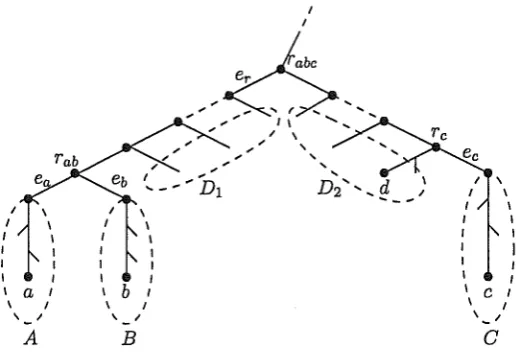
FIGURE 3. The layout of a minimal incompatible triple.
7
yields an agreement forest for T and T1
• This is well defined since tak-ing E to be the set of all pendent edges of F yields the agreement for-est consisting of isolated vertices. If
IEI
= e(F, T'), then we say thatF - E yields a maximum-agreement forest for F and
T'.
Observe that e(T, T') = m(T, T') = drsPR(T, T').2.3. Incompatible triples. A triple is a rooted binary phylogenetic tree with exactly three leaves. In the literature, triples are also called rooted triples. We denote the triple with leaf set { a, b, e} that has the property that the path from a to b and the path from e to the root are vertex disjoint by able or, equivalently, bale,
Let T and T' be two rooted binary phylogenetic X-trees, and let F be a forest of T. Let { a, b, e} be a subset of X. We say that able is a triple of F if there is a component Ci of F whose label set contains a, b, and e and has the property that Cil{a, b, e} is able, Analogously, able is a triple of T' if
T'l{a,b,e} is able, For example, able and cdla are triples of the tree shown in Fig. 3. Furthermore, able is an incompatible triple of F with respect to T'
if able is a triple of F, but able is not a triple of T'. For such an incompatible triple, we define rabc to be the most recent common ancestor of a and e in F ( or equivalently b and e in F), and define r ab to be the most recent common ancestor of a and b in F.
[image:8.595.169.430.161.337.2]8 MAGNUS BORDEWICH1, CATHERINE MCCARTIN2 , AND CHARLES SEMPLE3
e,
I
'
I I
I I
I I
I I
I I
I I
I I
'
Is
' ...-
-
-
... ' I'
I'
I I
I I
-~
I ' '
. I
I I
I
I ' ... ' '
2:; :_~ s
II I I I I I I
'
'
I I I I I I I I T I I I I I I I I'
S T...
-
-
...' '
I '
I \
I I
I
/ ~ lI ' I
'....
... ~I
I
(.c.u.c~F(SuT)
'
II I I I
I
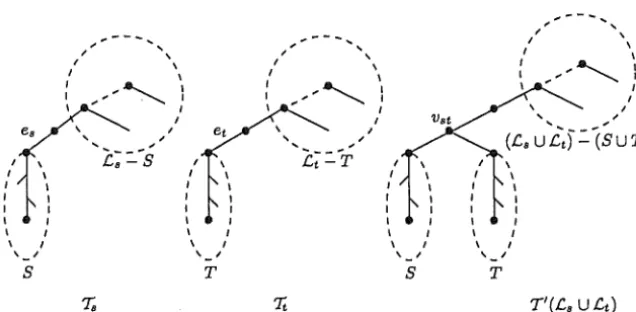
FIGURE 4. The layout of a pair of overlapping components
Ts
and'It,
The set S (resp. T) is the subset of .Cs (resp . .Ct) whose members lie below Vst in T'.with the property that, for all elements c' of X - c below ec, the triples cc'\a and cc'\b are triples of both :F and T'. We denote the parent vertex of the edge ec by re, Note that ec may be the parent edge of c. These definitions are illustrated in Fig. 3, where, for the moment, ignore the dashed ovals and associated labels.
Lastly, we impose a partial order on the triples of :F. In particular, we write ab\c
<
xy\z if (i) rabc is a descendant of rxyz or (ii) rabc = rxyz and rab is a descendant of rxy· An incompatible triple of :F with respect to T' is minimal if it is minimal with respect to this partial order.2.4. Overlapping components. Let
T
andT'
be two rooted binary phy-logenetic X-trees, and let :F be a forest of T that contains no incompatible triple with respect toT'.
LetTs
and Tt be two components of :F with label sets .Cs and .Ct, It is important to note that, because of this assumption on triples, T\.Cs = 'Ts\.Cs = T'\.Cs and T\.Ct = Tt\.Ct = T'\.Ct, We sayTs
and'It
overlap in T' if T'(.Cs) and T'(Ct) share a common vertex. For such a pair of overlapping components, we define a minimal common vertex, Vst say, in T' to be a minimal vertex in T'(.Cs)n
T'(.Ct) with respect to the partial order on vertices inT'.
Furthermore, with respect to the partial order on edges of :F, we let es denote the minimal edge in :F whose set of descen-dants in X is precisely the descendants of Vst in .Cs, Analogously, we let et denote the minimal edge in :F whose set of descendants in X is precisely the descendants of Vst in .Ct, These definitions are illustrated in Fig. 4. [image:9.603.140.458.164.320.2]A 3-APPROXIMATION ALGORITHM 9
In this section we present our polynomial-time 3-approximation algorithm for RSPR, and state the key lemma and resulting theorem proving the cor-rectness of this algorithm. We will prove the theorem in this section, but the proof of the lemma, Lemma 3.1, is deferred until the last section.
Called SPR-APPROX, the pseudocode for the approximation algorithm is given in Algorithm 3.1, while an intuitive description of the algorithm and why it works is given below. The algorithm SPR-APPROX takes as input two rooted binary phylogenetic X-trees T and T'. It proceeds by deleting edges from T to obtain a forest :F of T, until :F yields an agreement forest of T and T'. To obtain such a forest, it iteratively finds a minimal incompatible triple abJc of :F with respect to T', and deletes the associated edges ea, ec,
and er from :F. When there are no more incompatible triples of :F with respect to
T',
the algorithm iteratively finds componentsTs
and'It
of :Fwhich overlap in
T',
and deletes the associated edges es and et, When there are no more overlapping components, :F yields an agreement forest for Tand
T',
and the algorithm outputs both the forest :F and the number of edges that have been deleted. We show in Lemma 3.1 that, whenever we delete a set of edges from :F corresponding to either an incompatible triple of :F with respect to T' or a pair of components in :F that overlap in T', the value e(:F, T') decreases by at least one. Since we delete at most three edges at each iteration, it follows that the entire run of the algorithm deletes at most three times more edges than the minimal possible.Algorithm 3.1: SPR-APPROX(T, T')
:F-T
k - 0
while there exists an incompatible triple of :F with respect to T'
{
abJc f-- minimal incompatible triple of :F with respect to T'
do E f-- { ea, ec, er} with respect to abJc
:F-:F-E
k-k+3
while there exist a pair of components in :F that overlap in T'
{
Ts,
'It
f-- components of :F overlapping in T'do E f-- { es, et} with respect to
Ts,
'It
:F-:F-E
k-k+2
return (:F, k)
10 MAGNUS BORDEWICH1, CATHERINE MCCARTIN2, AND CHARLES SEMPLE3
Lemma 3.1. Let T and T' be two rooted binary phylogenetic X-trees, and let :F be a forest of T.
(i) If there exists a minimal incompatible triple able of :F with respect to T', then
e(:F - { ea, ec, er}, T') ~ e(:F, T') - 1.
(ii) If there is no incompatible triple of :F with respect to T', but there exist two components
Ts
and'It
of :F that overlap in T', then, for somej E {s,t},
e(:F - ej, T') = e(:F, T') - 1.
(iii) If there is no incompatible triple of :F with respect to T', and no two components of :F that overlap in T', then
e(:F, T') = 0.
Theorem 3.2. Let T and T' be two rooted binary phylogenetic X -trees, and let n =
!XI.
Let (:F, k) be the output of SPR-APPROX(T, T'). Then :F is an agreement forest for T and T', and k is a 3-approximation for drsPR(T, T').Moreover, the running time of SPR-APPROX is O(n5 ).
Proof. Referring to Algorithm 3.1, suppose that in the running of SPR-APPROX(T, T') there were k1 iterations of the first while loop, and k2 iterations of the second while loop. We begin by showing that
(1) k1 + k2 ~ drsPR(T, T') ~ 3k1 + 2k2 = k.
To this end, let :Fo = T and, for all i E {1, 2, ... , (k1 + k2)}, let :Fi be the forest generated after the first i iterations of the while loops in SPR-APPROX(T, T'). We first prove by induction that, for all i,
(2) e(:Fi, T') + i ~ e(T, T') ~ e(:Fi, T') + 3i1 + 2i2,
where i1
=
min{i, k1} and i2=
max{i - k1, O}.For i = 0, (2) trivially holds. Now suppose that (2) holds for all i'
<
i, where i1 ~ 0. If i ~ k1, i.e. the i-th iteration is in the first while loop, then,by the inductive hypothesis,
e(:Fi-1, T') + (i -1) ~ e(T, T') ~ e(:Fi-1, T') + 3(i -1).
By Lemma 3.l(i), e(:Fi, T') ~ e(:Fi-1, T')-1, hence e(:Fi, T') +i ~ e(T, T'). Furthermore, since :Fi has three fewer edges than :F:i-1, we have e( :Fi-1, T') ~
e(:Fi, T') + 3, so e(T, T') ~ e(:Fi, T') + 3i and (2) holds.
If i
>
k1, then the i-th iteration is in the second while loop. Therefore, by the inductive hypothesis,A 3-APPROXIMATION ALGORITHM 11
By Lemma 3.l(ii), e(:Fi, T') ::; e(Fi-1, T')-1, and so e(:Fi, T')+i::; e(T, T'). Now :Fi has two fewer edges than :Fi-1, so e(:Fi-1, T') ::; e(:Fi, T')
+
2. Thus e(T, T') ::; e(:Fi, T')+
3k1+
2(i - k1) and (2) holds.It now follows by (2) that
e(:F, T')
+
k1+
k2 ::; e(T, T') ::; e(:F, T')+
3k1+
2k2,Since there are no more while loops to complete, Lemma 3.l(iii) implies
that e(:F, T') = O. Recalling that e(T, T') = drsPR(T, T'), we obtain (1).
Hence k is a 3-approximation for drsPR(T, T').
In order to bound the running time of SPR-APPROX, note that there are at most O(n) iterations. Each iteration in the first while loop involves
finding a minimal incompatible triple. There are O(n3) triples of :F to consider, and a minimal incompatible triple of :F with respect to
T'
can be found in time O(n4), if one exists. Once such a minimal incompatible triple is found, determining and deleting the edges ea, ec, and er can certainly be done in time O(n4). Each iteration in the second while loop involvesfinding a pair of components in :F that overlap in
T'.
There are O(n2) pairs of components of :F to consider, and such a pair of overlapping components can be found in time O(n3), if one exists. Again, once the pair is found, determining and deleting the edges e8 and et is fast. Hence each iterationtakes time at most O(n4) and the overall running time is O(n5) as claimed.
D
4. FIXED-PARAMETER ALGORITHM
In this section we present our fixed-parameter algorithm, SPR-EXACT, for RSPR. Like SPR-APPROX, the proof of its correctness depends upon a key lemma. The proof of this lemma, Lemma 4.1, is deferred until the last section, while the theorem stating this correctness is established here.
The pseudocode for SPR-EXACT is given in Algorithm 4.1, while an in-tuitive description of the algorithm and its correctness is given below. The algorithm SPR-EXACT takes as input two rooted binary phylogenetic
X-trees T and T', and a parameter k. It proceeds in a similar fashion to SPR-APPROX: deleting edges from T to obtain a forest :F of T, until :F yields an agreement forest of
T
andT'.
However, instead of deleting a setE of edges from :F at each iteration, it branches into
IEI
computation paths with each path corresponding to the deletion of one element of E.12 MAGNUS BORDEWICH1 , CATHERINE MCCARTIN2 , AND CHARLES SEMPLE3
computation path. When, with respect to
T',
there are no more incompati-ble triples between :F andT',
the algorithm iteratively finds componentsTs
andTt
of :;:: which overlap inT',
and deletes each of the associated edges e8and et in a separate computation path.
The algorithm runs for at most k iterations before declaring either that along some computation path it has reached a forest :;:: which yields an agreement forest for T and T', or that no such forest can be obtained by deleting k or fewer edges. We show in Lemma 4.1 that in each iteration, one of the computation paths deletes a single edge from :;:: such that e(:F, T')
decreases by one. This means that the algorithm does find a solution if one exists. Since we branch into at most four paths in each iteration and it turns out that each iteration takes time O(n4), it follows that the entire run of
the algorithm takes time 0(4kn4), where n = jXj. The remark at the end of
this section explains how the running time can be improved to 0(4kk4+n3 ),
A 3-APPROXIMATION ALGORITHM
Algorithm 4.1: SPR-EXACT(T, T', k)
:F+-T
if k
<
0do return (no)
else if there exists an incompatible triple of :F with respect to T' able+-minimal incompatible triple of :F with respect to T' E +-{ea, eb, ec, er} with respect to able
Ansa +- SPR-EXACT(:F-ea, T', k -1)
Ansb +- SPR-EXACT(:F-eb, T', k -1) do Ansc +- SPR-EXACT(:F - ec, T', k -1)
Ansr +- SPR-EXACT(:F - er, T', k -1)
if Ansa
=
yes or Ansb=
yes or Ansc=
yes or Ansr=
yesdo return (yes)
else return (no)
else if there exists a pair of components of :F that overlap in T'
Ts, Tt
+-components of :F overlapping in T' E +- {e8 , et} with respect toTs,
'It
Ans8 +- SPR-EXACT(:F - e8 , T', k -1)
do Anst +- SPR-EXACT(:F-et, T', k -1)
if Ans8 = yes or Anst = yes
do return (yes)
else return (no)
else return (yes)
The proof of the following lemma is given in the last section.
13
Lemma 4.1. Let T and T' be two rooted binary phylogenetic X-trees, and let :F be a forest of T.
(i) If there exists a minimal incompatible triple able of :F with respect to T', then, for some i E { a, b, e, r},
e(:F - ei, T') = e(:F, T') - 1.
(ii) If there is no incompatible triple of :F with respect to T', but there exist two components
Ts
andTt
of :F that overlap in T', then, for somej E {s,t},
~-...
-14 MAGNUS BORDEWICH1, CATHERINE MCCARTIN2 , AND CHARLES SEMPLE3
(iii) If there is no incompatible triple of :F with respect to T', and no two components of :F that overlap in T', then
e(:F, T') = 0.
Theorem 4.2. Let T and T' be two rooted binary phylogenetic X-trees, and let n =
IX!.
Let k be an integer. Then the output of SPR-EXACT(T, T', k) is 'yes' if and only if drsPR(T, T') ::::; k. Moreover, the running time of SPR-EXACT is 0(4kn4 ).Proof Using induction on k, we first show that, for any forest :F of T, the output of SPR-EXACT(:F, T', k) is 'yes' if and only if e(:F, T') ::; k. Since drsPR(T, T') = e(T, T'), it will follow that the output of SPR-EXACT(T, T', k) is 'yes' if and only if drsPR(T, T') ::::; k.
If k = O, then all calls to SPR-EXACT from within SPR-EXACT(:F, T', k) will have parameter -1 and therefore return 'no'. Thus SPR-EXACT(:F, T', k) outputs 'yes' precisely if :F is a forest of T', and so e(:F, T') = 0,
Now suppose that the algorithm returns the correct answer whenever the input parameter is at most k', where k' ~ 0 and k'
+
1 = k. First assume that e(:F, T'):>
k'+
1. Then, for all edges ~. we have e(:F - ei, T')>
k'. Therefore, within the algorithm SPR-EXACT(:F, T', k'+
1), Ansi = no for all i E {a,b,c,r,s,t} since each call to SPR-EXACT(:F- ei,T',k') returns 'no'. Furthermore, since :F is not a forest ofT',
there is either some incompatible triple of :F with respect toT',
or some pair of components of :F overlap inT'.
Hence, in this case, SPR-EXACT(:F,T', k)
returns 'no'.Now assume that e(:F, T') ::; k'
+
1. There are three cases to consider:(i) there exists a minimal incompatible triple able of :F with respect to
T',
(ii) there is no incompatible triple of :F with respect toT',
but there existTs
andTt,
two components of :F such thatTs
andTt
overlap inT',
and (iii) there is no incompatible triple of :F with respect toT',
and no twocomponents of :F that overlap in T'.
If (i) holds, then, by Lemma 4.l(i), there is some i E {a, b, c, r} such that e(:F - ei, T') = e(:F, T') -1 ::; k'. Hence, by the induction hypothesis, Ansi in SPR-EXACT(:F, T', k) returns 'yes'. If (ii) holds, but not (i), then, by Lemma 4.l(ii), there is some j E {s, t} such that e(:F - ej, T') = e(:F, T')-1::::; k', and so, by the induction hypothesis, Ansj in SPR-EXACT(:F, T', k) returns 'yes'. Lastly, if (iii) holds, then SPR-EXACT(:F, T', k) returns 'yes'. Hence the output of SPR-EXACT(:F, T', k'
+
1) is 'yes' if and only ifA 3-APPROXIMATION ALGORITHM 15
We bound the running time of SPR-EXACT by induction on k. If k = -1, then the algorithm answers 'no' in constant time. Now suppose that the running time of SPR-EXACT is 0(4k'n4 ) for all k', where -1:::; k'
<
k. As for SPR-APPROX, determining if there exists, and if so finding, a minimal incompatible triple of :F with respect to 'T' can be done in time O(n4), while determining the existence of, and finding a pair of components in :F that overlap in 'T' can be done in time O(n3). Since the algorithm makes at most four calls to SPR-EXACT, each with parameter k - 1, the running time isO(n4
+
4.4k-1n4) = 0(4kn4 ) as claimed. 0Remark. The running time of SPR-EXACT can be easily improved to 0( 4kk4
+n
3 ) by first applying the kernalization of Bordewich and Semple [3]. This kernalization can be computed in time O(n3) [5] and involves two types of reductions each of which reduces the size of the label sets of the two initial trees 'T and 'T' while preserving the rSPR distance between them. At the completion of the kernalization, the resulting two rooted binary phylogenetic trees,T
andT'
say, have leaf sets of size at most 28drSPR('T, 'T'). Thus, ifthe size of the leaf set of Tis greater than 28k we answer 'no'; otherwise we input
(T, T',
k) to SPR-EXACT, which now runs in time 0(4kk4).5. PROOFS OF LEMMAS 3.1 AND 4.1
In this section we prove the two key lemmas of the paper, namely, Lem-mas 3.1 and 4.1. The proofs of these lemLem-mas will in turn require some additional lemmas.
Let :F be an arbitrary forest of a rooted binary phylogenetic X-tree 'T, and let u and v be vertices of :F. We will write u rv v if u and v are in the same
component of :F, or equivalently, if :F contains a (undirected) path from u to v. For the purposes of this section, two forests :F and :F' of 'T are iso-morphic if they consist of components Cp, C1, C2, ... ,
ck
andc~,
CL C2, ...'q,
respectively, such that, up to the ordering of these components, the label sets of Ci andq
agree for all i E {p, 1, 2, ... , k}. Observe that if :F and :F' are isomorphic, then Ci I.Ci =cn.ci
for all i E {p, 1, ... , k }, where .Ci is the common label set of Ci andq.
The first of the additional lemmas, Lemma 5.1, will be used frequently in this section.
16 MAGNUS BORDEWICH1, CATHERINE MCCARTIN2, AND CHARLES SEMPLE3
(i) VJ ,...., Ve in :F - E, and
(ii) for all x EX+ p, we have x ,j, VJ in :F - (E + e),
then :F - (E - f
+
e) is isomorphic to :F - E.Proof. It suffices to show that if x, y E X
+
p, then x ,...., y in :F - E if and only if x ,...., y in F - (E -f
+
e). First suppose that x ,...., y in :F - E, but x ,j, yin :F - (E -f
+
e). Then the path from x toy in :F - E uses e, but notf.
Therefore (i) implies that either x,...., VJ or y "'VJ in :F - (E+
e); a contradiction to (ii). Thus x "'y in :F - (E -f
+
e).Now suppose that x ,j, yin :F - E, but x "'yin :F - (E -
f
+
e). Then the path from x toy in :F - (E -f
+
e) usesf,
but note. But then either x "'VJ or y ,...., VJ in :F - (E+
e); again a contradiction to (ii). Thus x ,j, yin :F - (E -
f
+
e), completing the proof of the lemma. DThroughout the rest of this section,
T
andT'
will always denote two rooted binary phylogenetic X-trees, and :F will always denote a forest ofT.
Also, E will denote a subset of edges of :F such that :F-E yields a maximum-agreement forest for :F and T'. Moreover, extending the notation introduced earlier, let able be a minimal incompatible triple of :F with respect to T'. Relative to :F, we will use A, B, and C to denote the subsets of X that are descendants of ea, eb, and ec, respectively. Furthermore, D1 and D2 will denote those subsets of X - (A+ B
+
C) such that ad1le is a triple of :Ffor all d1 E D1, and ed2la is a triple of :F for all d2 E D2, Observe that if X' is the set of descendant labels of r abc then D1 and D2 partition the set X' - (A+ B
+
C). These definitions are illustrated in Fig. 3. The above set-up will simplify the statements of the upcoming lemmas.Lemma 5.2. Let able be a minimal incompatible triple of :F with respect to
T'. Then
(i) For all a' E A, y E B
+
D1, and e' E C, the triple a'yle' is an incom-patible triple of :F with respect to T'.(ii) If there exist a' EA and y EB+ D1 such that a'"' y in :F - E, then c' ,j, d' in :F - E for all d E C and d' E D1
+
D2.Proof. For the proof of (i), suppose that there are elements a' E A, y E
B
+
D1, and d E C such the a'yle' is a triple of T'. First assume thatIAI, IBI, ICI
~ 2. By the minimality of able, we have that aa'ld is a tripleA 3-APPROXIMATION ALGORITHM 17
y E Di, then, by the minimality of able, we have that ably is a triple of T'. Again it follows that able is a triple of
T';
a contradiction. Furthermore, ifA= {a}, B = {b}, or C = {e}, then the analogous arguments work, thus completing the proof of (i).
To prove (ii), suppose that there are elements a' E A, y E B
+
D1, e' E C, and d' E D1+
D2 such that a' rv y and e' rv d' in F - E. By (i), the components of F - E containing a' and y, and containing e' and d' are distinct. Furthermore, as a'yle' is an incompatible triple ofT',
either ydla' or a'e'IY is a triple of T'. Since a' rv y and e' rv d' in F - E, this implies that both e'd'la' and e'd'IY are triples of T'. Assume that d =/=- e and a'=/=- a. Then, ascc'la
and, by minimality, aa'le are triples ofT',
it is routine to check that ed'la is a triple of T'. If d = e or a'= a, an analogous but easier argument shows that cd'la is a triple ofT'.
This fact about cd'la is used several times in the remainder of the proof.There are three disjoint cases to consider depending upon the location of d': (I) d' is in D1; (II) d' is in D2 but is not descendant of re; and (III) d' is a descendent of re,
In (I), since the components of F - E containing a' and y, and c' and d' are disjoint, a'yld' is a triple of F. Moreover, by the minimality of able, we have that a'yld' is a triple of
T'.
Therefore, as c' rv d' inF - E,
it follows that a'ylc' is a triple ofT';
a contradiction to (i).If re is the same as r abc, then neither (II) nor (III) arises, so we may assume that re is not the same as rabc· Then, by the definition of ee, there is an element d E D2 that is a descendant of re such that either cdla or cdlb is an incompatible triple of F with respect to T'. Without loss of generality, we may assume that edla is an incompatible triple of F with respect to T'.
Consider (II). In this case, edld' is a triple of F. Since cd'la is a triple of
T', but cdla is not, cdld' is not a triple of T'. Thus cdld' is an incompatible triple of F with respect to T', contradicting the minimality of able,
Lastly, consider (III). If d = d', then cd'la is an incompatible triple of
F with respect to T', contradicting the fact that ed'la is a triple of T'. Therefore assume that d =/=- d'. Then dd'le is a rooted triple of F. Since cd'la is a triple of T', but edla is not, dd'lc is not a triple of T'. Hence dd'lc is an incompatible triple of F with respect to T', again contradicting the minimality of able, This completes the proof of the lemma. D
Lernrna 5.3. Let able be an incompatible triple of F with respect to T'.
18 MAGNUS BORDEWICH1, CATHERINE MCCARTIN2 , AND CHARLES SEMPLE3
Proof. First suppose that, for all a' EA, we have a'
f
rab in :F - E. Then take f to be the first edge in E that is on the path from rab to a in :F. It follows by Lemma 5.1 that :F - E is isomorphic to :F - (E - f+
ea), Similarly, if b'f
rab (resp. c'f
re) in :F - E for all b' E B (resp. c' E C), then taking f to be the first edge in E on the path from rab to b (resp. re to c) in :F, we have that :F - E is isomorphic to :F - (E - f+
eb) (resp. :F-(E-f+ee)).Now suppose that there are elements a' E A, b' E B, and c' E C such that a' ,..., rab ,..., b' and c' ,..., re in :F - E. By Lemma 5.2 (i), a'b'lc' is not a triple in
T', so there is an edge in
E that is on the path from r ab to re in :F. Letf
be the edge in E on this path that lies closest to re.There are two cases to consider depending upon the location off. Firstly, assume that f is on the path from rabe to re, Since c' ,..., re in :F - E, it follows by Lemma 5.2 that d'
f
re in :F - E for all d' E D1+
Dz. Therefore, by Lemma 5.1, :F - Eis isomorphic to :F - (E - f+
ee)· Secondly, assume that f is on the path from rab to rabe· Since f was chosen closest to re, we have that c' "'rabe in :F - E. Thus, by Lemma 5.2, d'f
rabe in :F - E for all d1E D1
+
Dz; otherwise c',..., d' in :F - E. Hence, by Lemma 5.1, :F- Eis isomorphic to :F - (E -
f
+
er)· 0Lemma 5.4. Let able be an incompatible triple of :F with respect to
T'.
Then there exists an edge f E E such that :F - (E - f+ {
ea, ee, er}) is isomorphic to a subforest of :F - E.Proof. Similar to the proof of Lemma 5.3, first suppose that, for all a' E A (resp. c' E C), we have a'
f
rab (resp. c'f
re) in :F - E. Take f to be the first edge in Eon the path from rab to a (resp. re to c) in :F. Then, by Lemma 5.1, :F -Eis isomorphic to :F-(E- f +ea) (resp. :F -(E- f +ee)), and so the statement of the lemma holds. Therefore, suppose that there are elements a' EA and c' EC such that a',..., rab and c',..., re in :F - E.Assume there exists some y E B
+
D1 such that y ,..., r ab "' a' in :F - E. By Lemma 5.2, a'yld is an incompatible triple of T' and, for all d' E D1+
Dz, we have c'f
d' in :F- E. Hence df
yin :F - E, so E contains some edge on the path from rab to re, Now let f be the closest such edge to re. If f is on the path from rabe to re, then, by Lemma 5.1, :F - E is isomorphic to :F - (E - f+
ee)· If f is on the path rab to rabe, then c' ,..., rabe and so, by Lemma 5.2, d'f
rabe for all d' E D1. Therefore, by Lemma 5.1, :F - E is isomorphic to :F - (E -f
+
er). Thus under this assumption the lemma holds.A 3-APPROXIMATION ALGORITHM 19
this assumption, take
f
to be the first edge in E on the path from Tab to b in :F. To show that :F - (E -f
+ {
ea, ec, er}) is isomorphic to a subforest of :F - E it is enough to show that for all x, y E X+
p such that x "'y in :F - (E -f
+ {
ea, ec, er}), we have x rv y in :F - E. So, for the purposes of obtaining a contradiction, suppose that there exist x, y E X+
p such that x rv yin :F- (E -f
+
{ea,ec,er}), but x ,f yin :F - E. Then, in:F - (E -
f
+
{ea, ec, er}), the path from x toy containsf
but none of the elements in { ea, ec, er}. It follows that, without loss of generality, x E Band, moreover, that y (/. A. Furthermore, by Lemma 5.1, :F - Eis isomorphic to:F - (E -
f
+
eb), and soy(/. B. Since er is not in the path from x toy in:F - (E -
f
+ {
ea, ec, er}), it follows that y E D1, implying that y rv Tabi acontradiction. This completes the proof of the lemma. D
Lemma 5.5. Suppose that no triple of :F is incompatible with
T'.
LetTs
and'It
be two components of :F such thatTs
and'It
overlap inT'.
Then there exists an edge f E E such that, for some i E { s, t}, the forest :F - ( E - f+
ei)is isomorphic
to
:F - E.Proof. With respect to
Ts
and 'It, let Vst be a minimal common vertex ofT'. Furthermore, let S denote the subset of .Cs that are descendants of Vst in
T'
and letT
denote the subset of .Ct that are descendants of Vst inT',
where .Cs and .Ct are the label sets of
Ts
and'It,
respectively. Recall that es is the minimal edge in :F whose set of label descendants is precisely S and et is the minimal edge in :F whose set of label descendants is preciselyT (see Fig. 4). Since :F - E yields a maximum-agreement forest for :F and
T',
either (I) there is no path in :F -E
connecting an element inS
with an element in .Cs - S or (II) there is no path in :F - E connecting an element in T with an element in .Ct - T.Without loss of generality, we may assume that (I) holds. If es EE, then the statement holds trivially with
f
= es, so suppose es (/. E and let rs be an end-vertex of e8 • Then either (i), for all s' E S, we have s' ,f r8 in :F - Eor (ii), for all s" E .Cs - S, we have s" ,f rs in :F - E. If (i) holds, then fix
an element s1 E S and take
f
to be the first edge on the path from rs to s1 in :F which is in E. If (ii) holds, then fix an element s2 E .Cs - Sand takef
to be the first edge on the path from rs to s2 in :F which is in E. In eithercase, Lemma 5.1 implies that :F -Eis isomorphic to :F - (E-
f
+
es), Thiscompletes the proof of the lemma. D
At last, we prove the two key lemmas of the paper.
Proof of Lemma 3.1. First suppose that able is a minimal incompatible triple of :F with respect to T'. Let E be a minimum subset of edges of :F
20 MAGNUS BORDEWICH1, CATHERINE MCCARTIN2, AND CHARLES SEMPLE3
that IEI = e(:F, T'). By Lemma 5.4, there exists an
f
E E such that :F- (E -f
+
{ea,ec,er}) is a subforest of :F - E. Hence :F - (E -f
+
{ ea, ec, er}) yields an agreement forest of :F - { ea, ec, er} and T'. Thus e(:F - { ea, ec, er}, T') ::; IE - fl = e(:F, T') - 1. This inequality gives (i) in the statement of the lemma.
Now suppose :F contains no incompatible rooted triple with respect to
T',
but it does contain two components
Ts
and'It
that overlap in T'. Let Ebe a minimum subset of edges of :F such that :F - E yields a maximum-agreement forest of :F and T'. By Lemma 5.5, there exists anf
E E and j E {s, t} such that :F - Eis isomorphic to :F - (E -f
+
ej), Thus :F - (E -f
+
ej) yields a maximum-agreement forest for :F and T', and so :F - (E -f
+
ej) yields an agreement forest for :F - ei and T'. Thereforee(:F - ej, T') ::; IE - JI = e(:F, T') - 1.
On the other hand,
e(:F- ej, T') 2::: e(:F, T') - l{ej}I = e(:F, T') - 1.
Combining the last two inequalities gives (ii) in the statement of the lemma.
Lastly, suppose that :F contains no incompatible triple with respect to T', and no two components that overlap in T'. Assume that :F consists of components Cp, C1, C2, ... , Ck, with label sets .Cp, .C1, ... , .Ck, respectively. Then, as :Fis a forest of T, we have Tl.Ci= Ci I.Ci for all i E {p, 1, 2, ... , k},
and the. trees in {T(.Ci) : i E {p, 1, 2, ... , k}} are vertex disjoint subtrees of T. On the other hand, as :F contains no incompatible triples with respect to T', every triple of :Fis a triple of T' and so, by [14, Theorem 6.4.1], T'I.Ci = Ci I.Ci for all i E {p, 1, 2, ... , k }. Furthermore, as no two components of :F overlap in
T',
the trees in {T'(.Ci): i E {p,1,2, ... ,k}} are vertex disjoint subtrees ofT'.
Hence :F yields the agreement forest{Ci I.Ci: i E {p, 1, 2, ... , k}}
for T and T'. Part (iii) now follows from the definition of e(:F, T'). D
Proof of Lemma 4.1. Let able be a minimal incompatible triple of :F with respect to T', and let E be a minimum subset of edges of :F such that :F - E yields a maximum-agreement forest of :F and T'. Note that IEI = e(:F, T'). By Lemma 5.3, there exists an an
f
E E and i E { a, b, c, r} such that :F - E is isomorphic to :F - (E-f
+ ~).
Hence :F - (E-f
+
ei) yields a maximum-agreement forest of :F and T', and therefore :F - (E -f
+ ~)
yields an agreement forest of :F - ei and T'. Thuse(:F - ~. T') ::; IE -
f
I = e(:F, T') - 1.Moreover,
e(:F - ~. T') 2::: e(:F, T') - l{ei}I = e(:F, T') -1.
I
I,
l·.
A 3-APPROXIMATION ALGORITHM 21
Combining the last two inequalities gives (i).
Parts (ii) and (iii) in the statement coincide with Lemma 3.l(ii) and (iii),
and so this completes the proof of the lemma. D
ACKNOWLEDGMENTS
The first author was supported by an EPSRC postdoctoral fellowship (EP /D063574/1), while the second and third authors were supported by the New Zealand Marsden Fund.
REFERENCES
[1) S. Arora, Polynomial time approximation scheme for Euclidean TSP and other geo-metric problems, in: Proc. IEEE FOCS'96, 1996 pp. 2-11.
[2) M.K. Bonet, K. St. John, R. Mahindru, and N. Amenta, Approximating subtree distances between phylogenies, Journal of Computational Biology 13 (2006) 1419-1434.
[3) M. Bordewich and C. Semple, On the computational complexity of the rooted subtree prune and regraft distance, Annals of Combinatorics 8 (2004) 409-423.
[4) M. Bordewich and C. Semple, Computing the minimum number of hybridisation events for a consistent evolutionary history, Discrete Applied Mathematics 155 (2007) 914-928.
[5) M. Bordewich and C. Semple, Computing the hybridization number of two phyloge-netic trees is fixed-parameter tractable, IEEE/ ACM Transactions on Computational Biology and Bioinformatics, in press.
[6) R. Downey and M. Fellows, Parameterized Complexity (Springer, New York, 1998). [7) M. Hallet and C. McCartin, A faster FPT algorithm for the maximum agreement
forest problem, Theory of Computing Systems, in press.
[8) M. Hallet, C. McCartin, and F. Stephens, A faster FPT algorithm to compute the hybrid number between evolutionary trees, submitted.
[9) J. Hein, Reconstructing evolution of sequences subject to recombination using parsi-mony, Mathematical Biosciences 98 (1990) 185-200.
[10) J. Hein, T. Jing, L. Wang, and K. Zhang, On the complexity of comparing evolution-ary trees, Discrete Applied Mathematics 71 (1996) 153-169.
[11) W. Maddison, Gene trees in species trees, Systematic Biology 46 (1997) 523-536. [12) L. Nakhleh, T. Warnow, C.R. Linder, and K. St. John. Reconstructing reticulate
evo-lution in species-theory and practice, Journal of Computational Biology 12 (2005) 796-811.
[13) E.M. Rodrigues, M.-F. Sagot, and Y. Wakabayashi, Some approximation results for the maximum agreement forest problem, in: Approximation, Randomization and Combinatorial Optimization: Algorithms and Techniques (APPROX and RAN-DOM), in: Lecture Notes in Computer Science, Vol. 2129, Springer, Berlin, 2001, pp. 159-169.
[14) C. Semple and M. Steel, Phylogenetics (Oxford University Press, 2003).
22 MAGNUS BORDEWICH1, CATHERINE MCCARTIN2 , AND CHARLES SEMPLE3
1DEPARTMENT OF COMPUTER SCIENCE, DURHAM UNIVERSITY, DURHAM DHl 3LE, UNITED KINGDOM
E-mail address: m. j , r, bordewich©durham. ac. uk
21NSTITUTE OF INFORMATION SCIENCES AND TECHNOLOGY, MASSEY UNIVERSITY, PALMERSTON NORTH, NEW ZEALAND
E-mail address: C. M. McCartin©massey. ac. nz
3BIOMATHEMATICS RESEARCH CENTRE, DEPARTMENT OF MATHEMATICS AND STATIS-TICS, UNIVERSITY OF CANTERBURY, CHRISTCHURCH, NEW ZEALAND