
Proceedings of NAACL-HLT 2019, pages 3207–3215 3207
Segmentation-free Compositional
n
-gram Embedding
Geewook Kim and Kazuki Fukui and Hidetoshi Shimodaira
Department of Systems Science, Graduate School of Informatics, Kyoto University Mathematical Statistics Team, RIKEN Center for Advanced Intelligence Project
{geewook, k.fukui}@sys.i.kyoto-u.ac.jp, [email protected]
Abstract
We propose a new type of representation learn-ing method that models words, phrases and sentences seamlessly. Our method does not depend on word segmentation and any human-annotated resources (e.g., word dictionaries), yet it is very effective for noisy corpora writ-ten in unsegmented languages such as Chinese and Japanese. The main idea of our method is to ignore word boundaries completely (i.e.,
segmentation-free), and construct
representa-tions for all charactern-grams in a raw
cor-pus with embeddings ofcompositional
sub-n-grams. Although the idea is simple, our exper-iments on various benchmarks and real-world datasets show the efficacy of our proposal.
1 Introduction
Most existing word embedding models (Mikolov
et al.,2013;Pennington et al.,2014;Bojanowski
et al.,2017) take a sequence of words as their
in-put. Therefore, the conventional models are
de-pendent on word segmentation (Yang et al.,2017;
Shao et al.,2018), which is a process of
convert-ing a raw corpus (i.e., a sequence of characters)
into a sequence of segmented charactern-grams.
After the segmentation, the segmented
charac-ter n-grams are assumed to be words, and each
word’s representation is constructed from distri-bution of neighbour words that co-occur together across the estimated word boundaries. However, in practice, this kind of approach has several prob-lems. First, word segmentation is difficult espe-cially when texts in a corpus are noisy or
unseg-mented (Saito et al.,2014;Kim et al.,2018). For
example, word segmentation on social network service (SNS) corpora, such as Twitter, is a chal-lenging task since it tends to include many mis-spellings, informal words, neologisms, and even emoticons. This problem becomes more severe in unsegmented languages, such as Chinese and
Japanese, whose word boundaries are not explic-itly indicated. Second, word segmentation has
am-biguities (Luo et al., 2002;Li et al., 2003). For
example, a compound word 線形代数学 (linear
algebra) can be seen as a single word or sequence
of words, such as線形|代数学(linear|algebra).
Word segmentation errors negatively influence
subsequent processes (Xu et al.,2004). For
exam-ple, we may lose some words in training corpora, leading to a larger Out-Of-Vocabulary (OOV)
rate (Sun et al., 2005). Moreover, segmentation
errors, such as segmentingきのう(yesterday) as
き|のう(tree|brain), produce false co-occurrence
information. This problem is crucial for most ex-isting word embedding methods as they are based
on distributional hypothesis (Harris,1954), which
can be summarized as: “a word is characterized
by the company it keeps” (Firth,1957).
To enhance word segmentation, some recent
works (Junyi,2013;Sato,2015;Jeon,2016) made
rich resources publicly available. However, main-taining them up-to-date is difficult and it is infea-sible for them to cover all types of words. To avoid the negative impacts of word segmentation
errors, Oshikiri (2017) proposed a word
embed-ding method called segmentation-free word
em-bedding(sembei). The key idea of sembeiis
to directly embed frequent charactern-grams from
a raw corpus without conducting word
segmenta-tion. However, most of the frequentn-grams are
non-words (Kim et al.,2018), and hencesembei
still suffers from the OOV problems. The fun-damental problem also lies in its extension (Kim
et al.,2018), although it uses external resources to
reduce the number of OOV. To handle OOV
prob-lems, Bojanowski et al. (2017) proposed a novel
compositionalword embedding method with
sub-word modeling, calledsubword-information
skip-gram (sisg). The key idea of sisg is to
線 形 代 数 学 勉 強 中 ❗ linear algebra learn study -ing !
number learn
algebra linear algebra
endeavor
learn
study
mathmatics algebra linear algebra
studying Corpus
(a)
(b)
[image:2.595.307.526.62.120.2](c)
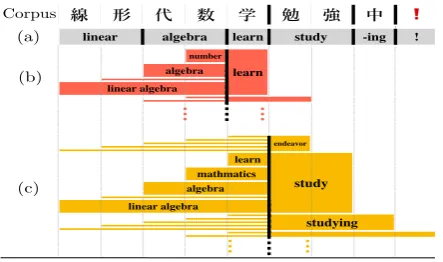
Figure 1: A Japanese tweet with manual segmenta-tion. (a) is the segmentation result of a widely-used word segmenter which conventional word embedding methods are dependent on. (b) and (c) show the em-bedding targets and their co-occurrence information to
be considered in our proposed method scne on the
boundaries of 数|学 and 学|勉. Unlike conventional
word embedding methods,scneconsiders all possible
charactern-grams on all boundaries (e.g.,線|形,形|代,
代|数,· · ·) in the raw corpus without segmentation.
namely, substrings of words, for enriching the rep-resentations of words by the embeddings of its
subwords. Insisg, the embeddings of OOV (or
unseen) words are computed from the embedings
of their subwords. However,sisgrequires word
segmentation as a prepossessing step, and the way of collecting co-occurrence information is depen-dent on the results of explicit word segmentation.
For solving the issues of word segmentation and OOV, we propose a simple but effective unsuper-vised representation learning method for words,
phrases and sentences, called segmentation-free
compositional n-gram embedding (scne). The
key idea ofscneis to train embeddings of
char-acter n-grams to compose representations of all
charactern-grams in a raw corpus, and it enables
treating all words, phrases and sentences
seam-lessly (see Figure1for an illustrative explanation).
Our experimental results on a range of datasets
suggest thatscnecan compute high-quality
rep-resentations for words and sentences although it does not consider any word boundaries and is not dependent on any human annotated resources.
2 Segmentation-free Compositional
n-gram Embedding (scne)
Our method scne successfully combines a
sub-word model (Zhang et al., 2015; Wieting et al.,
2016;Bojanowski et al.,2017;Zhao et al.,2018)
with an idea of charactern-gram embedding
(Os-xi nleft,· · ·, xi 2, xi 1, xi, xi+1,· · ·, xj 1, xj, xj+1, xj+2,· · ·, xj+nright Targetn-gram
Contextn-gram Contextn-gram
xi, xi+1, xi+2, xi+3,· · ·, xj 3, xj 2, xj 1, xj
Sub-n-grams<latexit sha1_base64="ORTRUvlJdRd2JX8jSkVa8+PVKFs=">AAACk3ichVFBS+NAFP6MuqvVXesuguAlWJV6KS9eVtyLuB68CGptFayUJDvtzpomIZkWNfQP7HnBgycFEfEfeNXD/oE9+BPEo4IXD76mAVFRX8i8b75535tvZizfkaEiuuzQOru6P3zs6U319X/6PJAe/FIMvXpgi4LtOV6wbpmhcKQrCkoqR6z7gTBrliPWrK0frfW1hghC6bmrascXmzWz6sqKtE3FVDmdGytJV89nS0psK6sSxVmqaLvZLEdZOfN7sjmpl8K6FQqlF8fK6QzlKA79JTASkEESS176GCX8hAcbddQg4EIxdmAi5G8DBgg+c5uImAsYyXhdoIkUa+tcJbjCZHaLxyrPNhLW5XmrZxirbd7F4T9gpY5x+k8ndEP/6JSu6P7VXlHco+Vlh7PV1gq/PPBnOH/3rqrGWeHXo+pNzwoVTMdeJXv3Y6Z1Crutb+zu3eRnVsajCTqka/Z/QJd0zidwG7f20bJY2UeKH8B4ft0vQXEqZ1DOWJ7KzM4lT9GDEYwiy/f9DbNYwBIKvO9fnOEcF9qQ9l2b0+bbpVpHovmKJ6EtPgAbLps9</latexit><latexit sha1_base64="ORTRUvlJdRd2JX8jSkVa8+PVKFs=">AAACk3ichVFBS+NAFP6MuqvVXesuguAlWJV6KS9eVtyLuB68CGptFayUJDvtzpomIZkWNfQP7HnBgycFEfEfeNXD/oE9+BPEo4IXD76mAVFRX8i8b75535tvZizfkaEiuuzQOru6P3zs6U319X/6PJAe/FIMvXpgi4LtOV6wbpmhcKQrCkoqR6z7gTBrliPWrK0frfW1hghC6bmrascXmzWz6sqKtE3FVDmdGytJV89nS0psK6sSxVmqaLvZLEdZOfN7sjmpl8K6FQqlF8fK6QzlKA79JTASkEESS176GCX8hAcbddQg4EIxdmAi5G8DBgg+c5uImAsYyXhdoIkUa+tcJbjCZHaLxyrPNhLW5XmrZxirbd7F4T9gpY5x+k8ndEP/6JSu6P7VXlHco+Vlh7PV1gq/PPBnOH/3rqrGWeHXo+pNzwoVTMdeJXv3Y6Z1Crutb+zu3eRnVsajCTqka/Z/QJd0zidwG7f20bJY2UeKH8B4ft0vQXEqZ1DOWJ7KzM4lT9GDEYwiy/f9DbNYwBIKvO9fnOEcF9qQ9l2b0+bbpVpHovmKJ6EtPgAbLps9</latexit><latexit sha1_base64="ORTRUvlJdRd2JX8jSkVa8+PVKFs=">AAACk3ichVFBS+NAFP6MuqvVXesuguAlWJV6KS9eVtyLuB68CGptFayUJDvtzpomIZkWNfQP7HnBgycFEfEfeNXD/oE9+BPEo4IXD76mAVFRX8i8b75535tvZizfkaEiuuzQOru6P3zs6U319X/6PJAe/FIMvXpgi4LtOV6wbpmhcKQrCkoqR6z7gTBrliPWrK0frfW1hghC6bmrascXmzWz6sqKtE3FVDmdGytJV89nS0psK6sSxVmqaLvZLEdZOfN7sjmpl8K6FQqlF8fK6QzlKA79JTASkEESS176GCX8hAcbddQg4EIxdmAi5G8DBgg+c5uImAsYyXhdoIkUa+tcJbjCZHaLxyrPNhLW5XmrZxirbd7F4T9gpY5x+k8ndEP/6JSu6P7VXlHco+Vlh7PV1gq/PPBnOH/3rqrGWeHXo+pNzwoVTMdeJXv3Y6Z1Crutb+zu3eRnVsajCTqka/Z/QJd0zidwG7f20bJY2UeKH8B4ft0vQXEqZ1DOWJ7KzM4lT9GDEYwiy/f9DbNYwBIKvO9fnOEcF9qQ9l2b0+bbpVpHovmKJ6EtPgAbLps9</latexit><latexit sha1_base64="ORTRUvlJdRd2JX8jSkVa8+PVKFs=">AAACk3ichVFBS+NAFP6MuqvVXesuguAlWJV6KS9eVtyLuB68CGptFayUJDvtzpomIZkWNfQP7HnBgycFEfEfeNXD/oE9+BPEo4IXD76mAVFRX8i8b75535tvZizfkaEiuuzQOru6P3zs6U319X/6PJAe/FIMvXpgi4LtOV6wbpmhcKQrCkoqR6z7gTBrliPWrK0frfW1hghC6bmrascXmzWz6sqKtE3FVDmdGytJV89nS0psK6sSxVmqaLvZLEdZOfN7sjmpl8K6FQqlF8fK6QzlKA79JTASkEESS176GCX8hAcbddQg4EIxdmAi5G8DBgg+c5uImAsYyXhdoIkUa+tcJbjCZHaLxyrPNhLW5XmrZxirbd7F4T9gpY5x+k8ndEP/6JSu6P7VXlHco+Vlh7PV1gq/PPBnOH/3rqrGWeHXo+pNzwoVTMdeJXv3Y6Z1Crutb+zu3eRnVsajCTqka/Z/QJd0zidwG7f20bJY2UeKH8B4ft0vQXEqZ1DOWJ7KzM4lT9GDEYwiy/f9DbNYwBIKvO9fnOEcF9qQ9l2b0+bbpVpHovmKJ6EtPgAbLps9</latexit>2S(x(i:j))⇢V
2<latexit sha1_base64="mSzrLh9h7iZYOgXVx9csmEA7Wyw=">AAACanichVG7SgNBFD1Z3/EVY6OkCSYRq3DXRrESbSx95QGJyO466uBmd9ndBDT4A3ZWgqkURMTPsPEHLPIJol0EGwtvNguiQb3DzJw5c8+dMzO6Y0rPJ2pGlJ7evv6BwaHo8Mjo2HhsIp737KpriJxhm7Zb1DVPmNISOV/6pig6rtAquikK+tFqe79QE64nbWvbP3bETkU7sOS+NDSfqUK6LK1kPr0bS1GWgkh2AzUEKYSxbsduUcYebBioogIBCz5jExo8biWoIDjM7aDOnMtIBvsCp4iytspZgjM0Zo94POBVKWQtXrdreoHa4FNM7i4rk8jQE91Rix7pnp7p49da9aBG28sxz3pHK5zd8bOprfd/VRWefRx+qf707GMfi4FXyd6dgGnfwujoaycXra2lzUx9lq7phf1fUZMe+AZW7c242RCbDUT5A9Sfz90N8vNZlbLqxnxqeSX8ikEkMIM5fu8FLGMN68gF7s5xiUbkVYkr00qik6pEQs0kvoWS/gTObour</latexit><latexit sha1_base64="mSzrLh9h7iZYOgXVx9csmEA7Wyw=">AAACanichVG7SgNBFD1Z3/EVY6OkCSYRq3DXRrESbSx95QGJyO466uBmd9ndBDT4A3ZWgqkURMTPsPEHLPIJol0EGwtvNguiQb3DzJw5c8+dMzO6Y0rPJ2pGlJ7evv6BwaHo8Mjo2HhsIp737KpriJxhm7Zb1DVPmNISOV/6pig6rtAquikK+tFqe79QE64nbWvbP3bETkU7sOS+NDSfqUK6LK1kPr0bS1GWgkh2AzUEKYSxbsduUcYebBioogIBCz5jExo8biWoIDjM7aDOnMtIBvsCp4iytspZgjM0Zo94POBVKWQtXrdreoHa4FNM7i4rk8jQE91Rix7pnp7p49da9aBG28sxz3pHK5zd8bOprfd/VRWefRx+qf707GMfi4FXyd6dgGnfwujoaycXra2lzUx9lq7phf1fUZMe+AZW7c242RCbDUT5A9Sfz90N8vNZlbLqxnxqeSX8ikEkMIM5fu8FLGMN68gF7s5xiUbkVYkr00qik6pEQs0kvoWS/gTObour</latexit><latexit sha1_base64="mSzrLh9h7iZYOgXVx9csmEA7Wyw=">AAACanichVG7SgNBFD1Z3/EVY6OkCSYRq3DXRrESbSx95QGJyO466uBmd9ndBDT4A3ZWgqkURMTPsPEHLPIJol0EGwtvNguiQb3DzJw5c8+dMzO6Y0rPJ2pGlJ7evv6BwaHo8Mjo2HhsIp737KpriJxhm7Zb1DVPmNISOV/6pig6rtAquikK+tFqe79QE64nbWvbP3bETkU7sOS+NDSfqUK6LK1kPr0bS1GWgkh2AzUEKYSxbsduUcYebBioogIBCz5jExo8biWoIDjM7aDOnMtIBvsCp4iytspZgjM0Zo94POBVKWQtXrdreoHa4FNM7i4rk8jQE91Rix7pnp7p49da9aBG28sxz3pHK5zd8bOprfd/VRWefRx+qf707GMfi4FXyd6dgGnfwujoaycXra2lzUx9lq7phf1fUZMe+AZW7c242RCbDUT5A9Sfz90N8vNZlbLqxnxqeSX8ikEkMIM5fu8FLGMN68gF7s5xiUbkVYkr00qik6pEQs0kvoWS/gTObour</latexit><latexit sha1_base64="mSzrLh9h7iZYOgXVx9csmEA7Wyw=">AAACanichVG7SgNBFD1Z3/EVY6OkCSYRq3DXRrESbSx95QGJyO466uBmd9ndBDT4A3ZWgqkURMTPsPEHLPIJol0EGwtvNguiQb3DzJw5c8+dMzO6Y0rPJ2pGlJ7evv6BwaHo8Mjo2HhsIp737KpriJxhm7Zb1DVPmNISOV/6pig6rtAquikK+tFqe79QE64nbWvbP3bETkU7sOS+NDSfqUK6LK1kPr0bS1GWgkh2AzUEKYSxbsduUcYebBioogIBCz5jExo8biWoIDjM7aDOnMtIBvsCp4iytspZgjM0Zo94POBVKWQtXrdreoHa4FNM7i4rk8jQE91Rix7pnp7p49da9aBG28sxz3pHK5zd8bOprfd/VRWefRx+qf707GMfi4FXyd6dgGnfwujoaycXra2lzUx9lq7phf1fUZMe+AZW7c242RCbDUT5A9Sfz90N8vNZlbLqxnxqeSX8ikEkMIM5fu8FLGMN68gF7s5xiUbkVYkr00qik6pEQs0kvoWS/gTObour</latexit> V
Figure 2: A graphical illustration of the proposed model trying to compute a representation for a
char-actern-gramx(i,j). The co-occurrence ofx(i,j) and
its neighbouring contextn-grams are used to train
em-beddings ofcompositionaln-grams.
hikiri,2017;Kim et al.,2018). Inscne, the
vec-tor representation of a target character n-gram is
defined as follows. Letx1x2· · ·xN be a raw
un-segmented corpus of N characters. For a range
i, i+ 1, . . . , j specified by indext = (i, j), 1 ≤
i≤j ≤N, we denote the substringxixi+1· · ·xj
as x(i,j) or xt. In a training phase, scne first
counts frequency of charactern-grams in the raw
corpus to constructn-gram setV by collectingM
-most frequent n-grams with n ≤ nmax, where
M andnmaxare hyperparameters. For any target
charactern-gramx(i,j)=xixi+1· · ·xjin the
cor-pus, scne constructs its representation vx(i,j) ∈
Rd by summing the embeddings of its
sub-n-grams as follows:
vx(i,j) =
X
s∈S(x(i,j))
zs,
whereS(x(i,j)) = {x(i0,j0) ∈ V | i ≤i0 ≤ j0 ≤
j}consists of all sub-n-grams of targetx(i,j), and
the embeddings of sub-n-gramszs ∈ Rd, s ∈ V
are model parameters to be learned. The objective
ofscneis similar to that ofMikolov et al.(2013),
X
t∈D
X
c∈C(t)
logσv>xtuxc
+
k X
˜ s∼Pneg
logσ−vx>tu˜s
,
whereσ(x) = 1
1+exp(−x),D ={(i, j) |1 ≤i ≤
j ≤ N, j −i+ 1 ≤ ntarget}, and C((i, j)) =
{(i0, j0)|x(i0,j0)∈V, j0 =i−1ori0 =j+ 1}.D
is the set of indexes of all possible targetn-grams
in the raw corpus withn≤ntarget, wherentarget
is a hyperparameter. C(t) is the set of indexes of
contexts of the targetxt, that is, all character
n-grams inV that are adjacent to the target (see
Fig-ures1and2). The negative sampling distribution
Pneg ofs˜∈ V is proportional to its frequency in
the corpus. The model parameters zs, u˜s ∈ Rd,
s,s˜∈V, are learned by maximizing the objective.
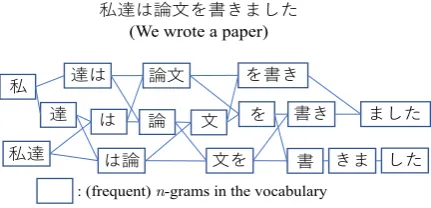
[image:2.595.72.294.64.195.2](We wrote a paper)
[image:3.595.74.290.70.174.2]: (frequent) n-grams in the vocabulary
Figure 3: An example of a frequentn-gram lattice.
Although we examine frequent n-grams for
simplicity, incorporating supervised word
bound-ary information orbyte pair encodinginto the
con-struction ofcompositionaln-gram set would be an
interesting future work (Kim et al.,2018;Sennrich
et al.,2016;Heinzerling and Strube,2018).
2.1 Comparison toOshikiri(2017)
To avoid the problems of word segmentation,
Oshikiri(2017) proposedsegmentation-free word
embedding (sembei) (Oshikiri, 2017) that
con-siders theM-most frequent charactern-grams as
individual words. Then, a frequent n-gram
lat-tice is constructed, which is similar to a word
lattice used in morphological analysis (see
Fig-ure 3). Finally, the pairs of adjacent n-grams in
the lattice are considered as target-context pairs and they are fed to existing word embedding
meth-ods, e.g.,skipgram(Mikolov et al.,2013).
Al-though sembei is simple, the frequent n-gram
vocabulary tends to include a vast amount of
non-words (Kim et al.,2018). Furthermore, its
vocab-ulary size is limited toM, hence,sembeican not
avoid the undesirable issue of OOV. The proposed
scne avoids these problems by taking all
possi-ble charactern-grams as embedding targets. Note
that the target-context pairs ofsembeiare fully
contained in those ofscne(see Figure1).
2.2 Comparison toKim et al.(2018)
To overcome the problem of OOV in sembei,
Kim et al. (2018) proposed an extension of
sembei called word-like n-gram embedding
(wne). In wne, the n-gram vocabulary is
fil-tered to have more vaild words by taking advan-tage of a supervised probabilistic word segmenter.
Although wne reduce the number of non-words,
there is still the problem of OOV since its
vocabu-lary size is limited. In addition,wneis dependent
on word segmenter whilescnedoes not.
2.3 Comparison toBojanowski et al.(2017)
To deal with OOV words as well as rare words,
Bojanowski et al.(2017) proposedsubword
infor-mation skip-gram(sisg) that enriches word em-beddings with the representations of its subwords,
i.e., sub-charactern-grams of words. Insisg, a
vector representation of a target word is encoded as the sum of the embeddings of its subwords.
For instance, subwords of length n = 3 of the
wordwhereare extracted as<wh, whe, her, ere, re>, where “<”,“>” are special symbols added to the original word to represent its left and right word boundaries. Then, a vector
representa-tion ofwhereis encoded as the sum of the
embed-dings of these subwords and that of the special
se-quence<where>, which corresponds to the
orig-inal word itself. Although sisg is powerful, it
requires the information of word boundaries as its input, that is, semantic units need to be specified when encoding targets. Therefore, it cannot be di-rectly applied to unsegmented languages. Unlike
sisg, scne does not require such information.
The proposedscneis much simpler, but due to its
simpleness, the embedding target ofscneshould
contains many non-words, which seems to be a
problem (see Figure1). However, our
experimen-tal results show that scne successfully captures
the semantics of words and even sentences for un-segmented languages without using any
knowl-edge of word boundaries (see Section3).
3 Experiments
In this section, we perform two intrinsic and two extrinsic tasks at both word and sentence level, focusing on unsegmented languages. The
imple-mentation of our method is available on GitHub1.
3.1 Common Settings
Baselines: We use skipgram (Mikolov et al.,
2013), sisg (Bojanowski et al., 2017) and
sembei (Oshikiri, 2017) as word embedding baselines. For sentence embedding, we first test simple baselines obtained by averaging the word vectors over a word-segmented sentence. In ad-dition, we examine several recent successful
sen-tence embedding methods,pv-dbow,pv-dm(Le
and Mikolov,2014) andsent2vec(Pagliardini
et al., 2018) in an extrinsic task. Note that both
scneandsembeihave embeddings of frequent
charactern-grams as their model parameters, but
10 50 100 200 300 Corpus size (MB) 20
30 40 50 60 70
Sp
earman
rank
correlation
skipgramrich
sembei-sum
sisgrich
scne
sembei
10 50 100 200 300 Corpus size (MB) 70
[image:4.595.72.289.63.189.2]75 80
Figure 4: Word (left) and sentence (right) similarity tasks on portions of Chinese Wikipedia corpus.
the differences come from training strategies, such as embedding targets and the way of collecting
co-occurrence information (see Section2.1 for more
details). For contrastingscnewithsembei, we
also propose a variant of sembei (denoted by
sembei-sum) as one of baselines, which com-poses word and sentence embeddings by simply summing up the embeddings of their sub-n-grams
which are learned bysembei.
Hyperparameters Tuning: To see the effect of rich resources for the segmentation-dependent baselines, we employ widely-used word seg-menter with two settings: Using only a basic
dic-tionary (basic) or using a rich dictionary together
(rich). The dimension of embeddings is200, the
number of epochs is10 and the number of
nega-tive samples is10for all the methods. Then-gram
vocabulary sizeM = 2×10⁶ is used forsisg,
sembeiandscne. The other hyperparameters,
such as learning rate andnmax, are carefully
ad-justed via a grid search in the validation set. In
the word similarity task, 2-fold cross validation
is used for evaluation. In the sentence similarity task, we use the provided validation set. In the downstream tasks, vector representations are com-bined with a supervised logistic regression classi-fier. We repeat training and testing of the classifier
10 times, while the prepared dataset is randomly
split into train (60%) and test (40%) sets at each
time, and the hyperparameters are tuned by3-fold
cross validation in the train set. We adopt mean
ac-curacy as the evaluation metric. See AppendixA.1
for more experimental details.
3.2 Word and Sentence Similarity
We measure the ability of models to capture se-mantic similarity for words and sentences in
Chi-nese; see Appendix A.2 for the experiment in
skipgramrich sisgrich sembei sembei-sum scne
Wiki. 51.0 59.2 49.0 48.6 62.2
SNS 41.3 47.0 38.9 41.5 60.0
Diff. -9.7 -12.2 -10.1 -7.1 -2.2
Table 1: Spearman rank correlations of the word
sim-ilarity task on two different Chinese corpora. Best
scores are boldface and 2nd best scores are underlined.
Japanese. Given a set of word pairs, or
sen-tence pairs, and their human annotated similarity scores, we calculated Spearman’s rank correlation between the cosine similarities of the embeddings
and the scores. We use the dataset ofJin and Wu
(2012) and Wang et al.(2017) for Chinese word
and sentence similarity respectively. Note that the
conventional models, such asskipgram, cannot
provide the embeddings for OOV words, while the
compositionalmodels, such as sisg andscne, can compute the embeddings by using their sub-word modeling. In order to show comparable re-sults, we use the null vector for these OOV words
followingBojanowski et al.(2017).
Results: To see the effect of training corpus size,
we train all models on portions of Wikipedia2.
The results are shown in Figure 4. As it can be
seen, the proposed scne is competitive with or
outperforms the baselines for both word and sen-tence similarity tasks. Moreover, it is worth noting
that scne provides high-quality representations
even when the size of training corpus is small, which is crucial for practical real-world settings where rich data is not available. For a next ex-periment to see the effect of noisiness of train-ing corpus, we test both noisy SNS corpus and
the Wikipedia corpus3 of the same size. The
re-sults are reported in Table1. As it can be seen,
the performance of segmentation-dependent
meth-ods (skipgram,sisg) are decreased greatly by
the noisiness of the corpus, whilescnedegrades
only marginally. The other two segmentation-free
methods (sembei, sembei-sum) performed
poorly. This shows the efficacy of our method in the noisy texts. On the other hand, in preliminary
experiments on English (not shown),scnedid not
get better results than our segmentation-dependent baselines and it will be a future work to incorpo-rate easily obtainable word boundary information
intoscnefor segmented languages.
2
We use 10, 50, 100, 300MB of Wikipedia from the head.
3We use 100MB of Sina Weibo posts for Chinese SNS
Wikipedia corpora Noisy SNS corpora
Chinese Japanese Korean Chinese Japanese Korean
All Intersec. All Intersec. All Intersec. All Intersec. All Intersec. All Intersec.
skipgrambasic 8.9 (11) 81.0 7.8 (10) 75.7 11.5 (15) 77.1 2.9 (5) 58.2 2.9 (7) 41.4 2.4 (7) 35.4 skipgramrich 9.5 (12) 81.0 16.7 (20) 75.8 11.9 (15) 76.9 3.0 (5) 58.2 4.1 (9) 40.9 2.5 (7) 34.2
sisgbasic 79.2 (100) 82.3 72.2 (100) 75.7 72.2 (100) 76.2 71.0 (100) 64.8 67.1 (100) 46.9 63.4 (100) 39.8 sisgrich 79.5 (100) 82.2 73.3 (100) 74.7 72.4 (100) 76.6 70.8 (100) 64.9 67.5 (100) 46.0 63.3 (100) 37.7 sembei 21.8 (25) 79.0 18.2 (23) 70.1 14.2 (19) 41.8 4.5 (7) 59.6 4.9 (10) 41.9 5.0 (13) 33.7
sembei-sum 76.8 (100) 74.2 69.9 (100) 61.3 66.3 (100) 56.0 72.3 (100) 56.4 66.3 (100) 40.7 64.3 (100) 34.8
scne(Proposed) 79.8 (100) 81.5 73.9 (100) 74.0 73.2 (100) 73.9 74.9 (100) 65.0 68.1 (100) 47.6 65.3 (100) 38.2
Table 2: Noun category prediction accuracies (higher is better) and coverages [%] (in parentheses, higher is better).
Segmentation-free Chinese Japanese Korean pv-dbowbasic 82.84 85.24 84.16
pv-dbowrich 83.47 85.55 84.80
pv-dmbasic 76.96 80.67 66.35
pv-dmrich 77.94 81.37 67.32
sent2vecbasic 85.09 87.12 82.31
sent2vecrich 85.39 87.20 82.34
skipgrambasic 85.79 86.76 84.06
skipgramrich 85.77 87.16 84.48
sisgbasic 85.67 87.22 84.34
sisgrich 85.04 87.25 84.35
sembei-sum X 83.41 80.80 74.98 scnenmax=8 X 87.07 87.42 84.15
[image:5.595.72.526.64.150.2]scnenmax=16 X 87.76 88.03 86.74
Table 3: Sentiment classification accuracies [%].
3.3 Noun Category Prediction
As a word-level downstream task, we conduct a noun category prediction on Chinese, Japanese
and Korean4. Most settings are the same as those
ofOshikiri(2017). Noun words and their semantic
categories are extracted from Wikidata (Vrandeˇci´c
and Kr¨otzsch,2014) with a predetermined
seman-tic category set5, and the classifier is trained to
predict the semantic category of words from the learned word representations, where unseen words are skipped in training and treated as errors in test-ing. To see the effect of the noisiness of corpora, both noisy SNS corpus and Wikipedia corpus of
the same size are examined as training corpora6.
Results: The results are reported in Table2. Since the set of covered nouns (i.e., non-OOV words) depends on the methods, we calculate accuracies in two ways for a fair comparison: Using all the nouns and using the intersection of the covered
nouns. scne achieved the highest accuracies in
all the settings when using all the nouns, and also
4
Although Korean has spacing, word boundaries are not obviously determined by space.
5{food, song, music band name, manga, fictional
charac-ter name, television series, drama, chemical compound, dis-ease, taxon, city, island, country, year, business enterprise, public company, profession, university, language, book}
6For each language, we use 100MB of Wikipedia and
SNS data as training corpora. For the SNS data, we use Sina Weibo for Chinese and Twitter for the rest.
performed well when using the intersection of the covered nouns, especially for the noisy corpora.
3.4 Sentiment Analysis
As a sentence-level evaluation, we perform senti-ment analysis on movie review data. We use 101k, 56k and 200k movie reviews and their scores re-spectively from Chinese, Japanese and Korean
movie review websites (see Appendix A.1.6 for
more details). Each review is labeled as positive or negative by its rating score. Sentence embed-ding models are trained using the whole movie re-views as training corpus. Among the rere-views, 5k positive and 5k negative reviews are randomly se-lected, and the selected reviews are used to train
and test the classifiers as explained in Section3.1.
Results: The results are reported in Table3. The
accuracies show thatscneis also very effective in
the sentence-level application. In this experiment,
we observe that the largernmaxcontributes to the
performance improvement in sentence-level appli-cation by allowing our model to capture composed representations for longer phrases or sentences.
4 Conclusion
We proposed a simple yet effective unsupervised method to acquire general-purpose vector repre-sentations of words, phrases and sentences seam-lessly, which is especially useful for languages whose word boundaries are not obvious, i.e., un-segmented languages. Although our method does not rely on any manually annotated resources or word segmenter, our extensive experiments show that our method outperforms the conventional ap-proaches that depend on such resources.
Acknowledgments
References
Piotr Bojanowski, Edouard Grave, Armand Joulin, and
Tomas Mikolov. 2017. Enriching Word Vectors with
Subword Information. Transactions of the Associa-tion for ComputaAssocia-tional Linguistics, 5(1):135–146.
Daan van Esch. 2012. Leidon Weibo Corpus.
J.R. Firth. 1957. A synopsis of linguistic theory
1930-1955.Studies in linguistic analysis, pages 1–32.
Zellig S Harris. 1954. Distributional structure. Word,
10(2-3):146–162.
Benjamin Heinzerling and Michael Strube. 2018.
BPEmb: Tokenization-free Pre-trained Subword Embeddings in 275 Languages. In Proceedings of the 11th Language Resources and Evaluation Con-ference, pages 2989–2993. European Language Re-source Association.
Heewon Jeon. 2016. NIA (National Information
Soci-ety Agency) Dictionary.
Peng Jin and Yunfang Wu. 2012. SemEval-2012 Task
4: Evaluating Chinese Word Similarity. In *SEM 2012: The First Joint Conference on Lexical and Computational Semantics – Volume 1: Proceedings of the main conference and the shared task, and Volume 2: Proceedings of the Sixth International Workshop on Semantic Evaluation (SemEval 2012), pages 374–377. Association for Computational Lin-guistics.
Sun Junyi. 2013. Jieba.
Geewook Kim, Kazuki Fukui, and Hidetoshi
Shi-modaira. 2018. Word-like character n-gram
embed-ding. InProceedings of the 2018 EMNLP Workshop W-NUT: The 4th Workshop on Noisy User-generated
Text, pages 148–152. Association for Computational
Linguistics.
Quoc Le and Tomas Mikolov. 2014. Distributed
Representations of Sentences and Documents. In
Proceedings of the 31st International Conference on Machine Learning, volume 32 of Proceedings of Machine Learning Research, pages 1188–1196. PMLR.
Mu Li, Jianfeng Gao, Changning Huang, and Jianfeng
Li. 2003. Unsupervised Training for Overlapping
Ambiguity Resolution in Chinese Word Segmenta-tion. InProceedings of the Second SIGHAN Work-shop on Chinese Language Processing - Volume 17, SIGHAN ’03, pages 1–7. Association for Computa-tional Linguistics.
Xiao Luo, Maosong Sun, and Benjamin K. Tsou. 2002.
Covering Ambiguity Resolution in Chinese Word Segmentation Based on Contextual Information. In
Proceedings of the 19th International Conference on Computational Linguistics - Volume 1, COLING ’02, pages 1–7. Association for Computational Lin-guistics.
Tomas Mikolov, Ilya Sutskever, Kai Chen, Greg S
Cor-rado, and Jeff Dean. 2013. Distributed
Representa-tions of Words and Phrases and their Composition-ality. In C. J. C. Burges, L. Bottou, M. Welling,
Z. Ghahramani, and K. Q. Weinberger, editors,
Ad-vances in Neural Information Processing Systems
26, pages 3111–3119. Curran Associates, Inc.
Takamasa Oshikiri. 2017. Segmentation-Free Word
Embedding for Unsegmented Languages. In Pro-ceedings of the 2017 Conference on Empirical Meth-ods in Natural Language Processing, pages 767– 772. Association for Computational Linguistics.
Matteo Pagliardini, Prakhar Gupta, and Martin Jaggi.
2018. Unsupervised Learning of Sentence
Embed-dings Using Compositional n-Gram Features. In
Proceedings of the 2018 Conference of the North American Chapter of the Association for Computa-tional Linguistics: Human Language Technologies, Volume 1 (Long Papers), pages 528–540. Associa-tion for ComputaAssocia-tional Linguistics.
Jeffrey Pennington, Richard Socher, and Christopher
Manning. 2014. Glove: Global Vectors for Word
Representation. In Proceedings of the 2014 Con-ference on Empirical Methods in Natural Language Processing (EMNLP), pages 1532–1543. Associa-tion for ComputaAssocia-tional Linguistics.
Itsumi Saito, Kugatsu Sadamitsu, Hisako Asano, and
Yoshihiro Matsuo. 2014. Morphological Analysis
for Japanese Noisy Text based on Character-level and Word-level Normalization. In Proceedings of COLING 2014, the 25th International Conference on Computational Linguistics: Technical Papers, pages 1773–1782. Dublin City University and As-sociation for Computational Linguistics.
Yuya Sakaizawa and Mamoru Komachi. 2018.
Con-struction of a Japanese Word Similarity Dataset. In
Proceedings of the 11th Language Resources and Evaluation Conference, pages 948–951. European Language Resource Association.
Toshinori Sato. 2015. Neologism dictionary based on
the language resources on the Web for Mecab.
Rico Sennrich, Barry Haddow, and Alexandra Birch.
2016. Neural Machine Translation of Rare Words
with Subword Units. InProceedings of the 54th An-nual Meeting of the Association for Computational Linguistics (Volume 1: Long Papers), pages 1715– 1725. Association for Computational Linguistics.
Yan Shao, Christian Hardmeier, and Joakim Nivre.
2018. Universal Word Segmentation:
Implementa-tion and InterpretaImplementa-tion. Transactions of the Associa-tion for ComputaAssocia-tional Linguistics, 6:421–435.
Chengjie Sun, Chang-Ning Huang, Xiaolong Wang,
and Mu Li. 2005. Detecting Segmentation Errors
Denny Vrandeˇci´c and Markus Kr¨otzsch. 2014. Wiki-data: A Free Collaborative Knowledge Base. Com-munications of the ACM, 57:78–85.
Shaonan Wang, Jiajun Zhang, and Chengqing Zong.
2017. Exploiting Word Internal Structures for
Generic Chinese Sentence Representation. In Pro-ceedings of the 2017 Conference on Empirical Meth-ods in Natural Language Processing, pages 298– 303. Association for Computational Linguistics.
John Wieting, Mohit Bansal, Kevin Gimpel, and Karen
Livescu. 2016. Charagram: Embedding Words and
Sentences via Character n-grams. InProceedings of the 2016 Conference on Empirical Methods in Nat-ural Language Processing, pages 1504–1515. Asso-ciation for Computational Linguistics.
Jia Xu, Richard Zens, and Hermann Ney. 2004. Do
We Need Chinese Word Segmentation for Statisti-cal Machine Translation? InACL SIGHAN Work-shop 2004, pages 122–128. Association for Compu-tational Linguistics.
Jie Yang, Yue Zhang, and Fei Dong. 2017. Neural
Word Segmentation with Rich Pretraining. In Pro-ceedings of the 55th Annual Meeting of the Associa-tion for ComputaAssocia-tional Linguistics (Volume 1: Long Papers), pages 839–849. Association for Computa-tional Linguistics.
Xiang Zhang, Junbo Zhao, and Yann LeCun. 2015.
Character-level Convolutional Networks for Text Classification. In C. Cortes, N. D. Lawrence, D. D.
Lee, M. Sugiyama, and R. Garnett, editors,
Ad-vances in Neural Information Processing Systems
28, pages 649–657. Curran Associates, Inc.
Jinman Zhao, Sidharth Mudgal, and Yingyu Liang.
2018. Generalizing Word Embeddings using Bag
of Subwords. InProceedings of the 2018 Confer-ence on Empirical Methods in Natural Language Processing, pages 601–606. Association for Com-putational Linguistics.
A Appendices
A.1 Experimental Details
A.1.1 Hyperparameters Tuning
Forskipgram, we performed a grid search over
(h, γ)∈ {1,5,10}×{0.01,0.025}, wherehis the
size of context window andγis the initial learning
rate. Forsisg, we performed a grid search over
(h, γ, nmin, nmax)∈ {1,5,10} × {0.01,0.025} ×
{1,3} × {4,8,12}, where h is the size of
con-text window, γ is the initial learning rate, nmin
is the minimum length of character n-gram and
nmaxis the maximum length of charactern-gram.
For pv-dbow, pv-dmandsent2vec, we
per-formed a grid search over (h, γ) ∈ {5,10} ×
{0.01,0.05,0.1,0.2,0.5}, where h is the size of
context window andγ is the initial learning rate.
Forsembeiandscne, we used the initial
learn-ing rate0.01andnmin= 1. The maximum length
ofn-gram to considernmaxis grid searched over
{4,6,8}in the word and sentence similarity tasks.
In the noun category prediction task, we used nmax = 8 forsembeiand thenmaxofscneis
grid searched over{4,6,8}. For sentiment
analy-sis task, we tested bothnmax= 8andnmax= 16
for sembeiandscne to see the effect of large
nmax. After carefully monitoring the loss curve
and the performance in the word and sentence
similarity tasks, we set the number of epochs 10
for all methods. In preliminary experiments, we
also tested the number of epochs20for the
word-segmentation-dependent baselines but there were no significant differences. In the two supervised downstream tasks, the learned vector representa-tions are combined with the logistic regression
classifier. The parameterC, which is the inverse of
regularization strength of the classifier, is adjusted
via a grid search over C ∈ {0.1,0.5,1,5,10}.
Again, as explained in the main paper, the hyper-paramters are grid searched on the determined val-idation set for all experiments.
A.1.2 Implementations
Here we provide the list of implementations of baselines which are used in our
experi-ments. Forskipgram7,sisg8, sembei9, and
sent2vec10, we use the official implementa-tions provided by the authors. Meanwhile, as for
pv-dbowandpv-dm, we employ a widely-used
implementation of Gensim library11.
A.1.3 Word Segmenters and Word Dictionaries for Unsegmented Languages
Below we list the word segmentation tools and word dictionaries which are used in our experi-ments. We employed a widely-used word segmen-tation tool for each language.
For Chinese language, we used jieba12 with its
7
https://code.google.com/archive/p/ word2vec/
8https://github.com/facebookresearch/ fastText
9https://github.com/oshikiri/ w2v-sembei
10https://github.com/epfml/sent2vec 11
https://radimrehurek.com/gensim/ models/doc2vec.html
default dictionary13 or with an extended
dictio-nary14, which fully supports both traditional and
simplified Chinese characters.
For Japanese, we used MeCab15with its default
dictionary called IPADIC15 along with specially
designed neologisms-extended dictionary called
mecab-ipadic-NEologd16. Note that, because
this extended dictionarymecab-ipadic-NEologdis
specially designed to include many neologisms, there is a significant word coverage improvement by using this word dictionary as it can be seen in the Japanese noun category prediction task in the main paper.
For Korean, we used mecab-ko17 with its
de-fault dictionary called mecab-ko-dic18along with
another extended dictionary called NIADic19.
A.1.4 Training Corpora
We prepared Wikipedia corpora and SNS corpora for Chinese, Japanese and Korean for our exper-iments. For the Wikipedia corpora, we used the first 10, 50, 100, 200 and 300MB of texts from the
publicly available Wikipedia dumps20. The texts
are extracted by using WikiExtractor tool21. For
Chinese SNS corpus, we used 100MB of Leiden
Weibo Corpus (van Esch, 2012) from the head.
For Japanese and Korean SNS corpora, we col-lected Japanese and Korean tweets using Twitter Streaming API. We removed usernames and URLs from the SNS corpora. There were many informal words, emoticons and misspellings in the SNS cor-pora. We preserved them without preprocessing to see the effect of the noisiness of training corpora in our experiments.
A.1.5 Preprocess of Wikidata
For the noun category prediction task, we ex-tracted noun words and their semantic categories
from Wikidata (Vrandeˇci´c and Kr¨otzsch, 2014)
13
https://github.com/fxsjy/jieba/blob/ master/jieba/dict.txt
14https://github.com/fxsjy/jieba/blob/ master/extra_dict/dict.txt.big
15http://taku910.github.io/mecab/ 16
https://github.com/neologd/ mecab-ipadic-neologd
17https://bitbucket.org/eunjeon/ mecab-ko
18https://bitbucket.org/eunjeon/ mecab-ko-dic
19https://github.com/haven-jeon/NIADic 20
https://dumps.wikimedia.org/ 21https://github.com/attardi/ wikiextractor
skipgramrich sisgrich sembei sembei-sum scne
Wiki. 8.3 15.4 4.0 9.3 24.1
SNS 5.3 12.7 2.8 9.3 23.0
Diff. -3.0 -2.7 -1.2 -0.0 -1.1
Table 4: Spearman rank correlations of the word simi-larity task on two different Japanese corpora.
followingOshikiri(2017). We determined the
se-mantic category set used in our experiments as follows: First, we collected Wikidata objects that have Chinese, Japanese, Korean and English la-bels. Next, we sorted the categories by the number
of noun words, and removed categories (e.g.,
Wiki-media categoryorWikimedia template) that do not represent any semantic category. We also removed out several categories that contain too many noun
words (e.g.,human) or too few noun words (e.g.,
academic discipline). Since there were several du-plicated labels for different Wikidata objects, the number of nouns for each language is slightly dif-ferent. Each category has at least 0.1k words and no more than 5k words. The numbers of extracted noun words that are used in our experiments were 22,468, 22,396 and 22,298 for Chinese, Japanese and Korean, respectively.
A.1.6 Movie Review Datasets
In the main paper, three movie review datasets are used to evaluate the quality of sentence
embeddings. We used 101,114, 55,837 and
200,000 movie reviews and their rating scores
from Yahoo奇摩電影22, Yahoo!映画23and Naver
Movies24 for Chinese, Japanese and Korean,
re-spectively.
A.2 Additional Experiment on Japanese
In this section, we show the results of Japanese word similarity experiments. We use the datasets
of Sakaizawa and Komachi (2018). It
con-tains 4427 pairs of words with human similarity
scores. We omit sentence similarity task since
there is no public widely-used benchmark dataset for Japanese yet. Following the main paper, given a set of word pairs and their human annotated sim-ilarity scores, we calculated Spearman’s rank cor-relation between the cosine similarities of the em-beddings and the human scores. We use 2-fold
22
https://github.com/fychao/ ChineseMovieReviews
23
https://github.com/dennybritz/ sentiment-analysis/tree/master/data
cross validation for hyperparameters tuning. The same grid search is performed as explained in
Sec-tion A.1.1. To see the effect of the noisiness of
training corpora, we use two Japanese corpora, 100MB of Wikipedia corpus and 100MB of noisy SNS corpus (Twitter), which are also used in the Japanese noun category prediction task in the main
paper. As seen in Table4, the experiment results

![Table 3: Sentiment classification accuracies [%].](https://thumb-us.123doks.com/thumbv2/123dok_us/1387714.673073/5.595.72.526.64.150/table-sentiment-classication-accuracies.webp)
