COGNITIVE DISSONANCE AND DEPRESSION: AN EXPLORATION
USING MIXED METHODS
A thesis submitted to the University of Dublin, Trinity College for the
Degree of
Doctor of Philosophy
2020
i
Declaration
I declare that this thesis has not been submitted as an exercise for a degree at this or any other university and it is entirely my own work.
I agree to deposit this thesis in the University’s open access institutional repository or allow the library to do so on my behalf, subject to Irish Copyright Legislation and Trinity College Library conditions of use and acknowledgement.
ii
Summary
Background
Depression is a debilitating mental health problem in which inner conflict plays a major role. How a person experiences and resolves inner conflict has been well developed in cognitive dissonance theory. The use of dissonance theory has remained mostly limited to the field of social psychology and the link between depression and dissonance theory is largely unexplored. By researching the application of cognitive dissonance theory to experiences of individuals with depression it may be possible to expand our understanding of depression.
Aims
The overall aim of this study was to explore how the process of depression might be related to the mechanism of cognitive dissonance. The objectives of the study were: to identify and compare episodes of cognitive dissonance in two participant groups (depressed and non-depressed), to analyse how different elements of cognitive dissonance are experienced by participants, and finally to develop a conceptual model that illustrates the potential relationship between depression and dissonance.
Methods
This study used a mixed-methods approach involving two participant groups (a depressed cohort, n=15 and a non-depressed comparison group, n=15). The data was collected using quantitative tools for depression (CESD-10, Andresen et al. 1994) and for dissonance (DiEL questionnaire, De Vries et al. 2015), and semi-structured qualitative interviews, and was analysed using statistical analysis and template analysis, respectively. Full ethical approval was obtained.
Findings
iii
both a greater frequency and variety of inner conflict resolution strategies than the depressed participant group.
Conclusion
This study’s findings suggest that cognitive dissonance theory can help to further understand the experience of depression and may have implications for future depression research, clinical interventions, and psychoeducation.
iv
Acknowledgement
I would firstly like to thank my supervisor Dr Jan De Vries, without whom this PhD would not have been possible. Your constant support and guidance, both academically and personally has brought me through this whole process.
I would also like to thank Professor Agnes Higgins for her insights and feedback. Your advice, both theoretical and practical, has been an invaluable resource.
I would like to thank the School of Nursing and Midwifery for the 1252 school stipend that made this PhD possible. I would like to thank all the school staff members for helping me along the way.
I would like to thank all the participants who took part in this study for their time and for sharing their stories.
I would like to thank the clinical gatekeepers who were instrumental in this study for their time and generous support.
I would like to give very special thanks to my parents, Tom and Phyl. Your encouragement, support, and faith in me has been unwavering. This thesis could not have happened without you.
v
Table of Contents
COGNITIVE DISSONANCE AND DEPRESSION: AN EXPLORATION USING MIXED
METHODS ... 1
Declaration ... i
Acknowledgement ... iv
List of Tables ... 11
1 : An Overview of the Thesis ... 13
1.1 Depression ... 13
1.1.1 The experience of depression ... 14
1.1.2 Treatment of Depression ... 15
1.1.3 Depression and inner conflict ... 15
1.2 Consistency Theories ... 17
1.2.1 Cognitive Dissonance theory ... 17
1.2.2 Depression and Cognitive dissonance ... 18
1.3 The proposed Study ... 18
1.3.1 Research aims and objectives ... 19
1.3.2 Selecting mixed methods ... 19
1.3.3 The Language used in this thesis ... 20
1.4 Overview of the Thesis ... 20
2 : Theoretical Background ... 22
2.1 The development of perspectives on depression ... 22
2.2 Biomedical perspectives on depression ... 24
2.3 Social perspectives on depression ... 27
2.3.1 World Health Organisation and the social determinants of mental health ... 27
2.3.2 The social stigma of mental illness ... 28
2.4 Psychological perspectives on depression ... 29
2.4.1 Rogers’ (in)congruence model of the self and the implication for depression ... 30
2.4.2 Cognitive perspectives on depression ... 31
2.4.3 The Stress perspective on depression ... 34
2.4.4 Summary of the psychological perspectives of depression ... 37
vi
2.5.1 Balance theory ... 39
2.6 Cognitive Dissonance Theory ... 40
2.6.1 Revisions of the theory ... 40
2.6.2 This study’s stance on dissonance ... 42
2.6.3 Dissonance induction ... 42
2.6.4 Dissonance discomfort and sympathetic activation ... 44
2.6.5 Dissonance resolution ... 45
2.6.6 Neuroscience research on cognitive dissonance ... 47
2.7 Dissonance theory as an explanatory mechanism for psychotherapy ... 49
2.8 Failed dissonance resolution: the case for dissonance and depression ... 50
2.9 Dissonance and low self-esteem in individuals with depression. ... 52
3 : A Review of the Current Literature ... 54
3.1 Limits and scope ... 54
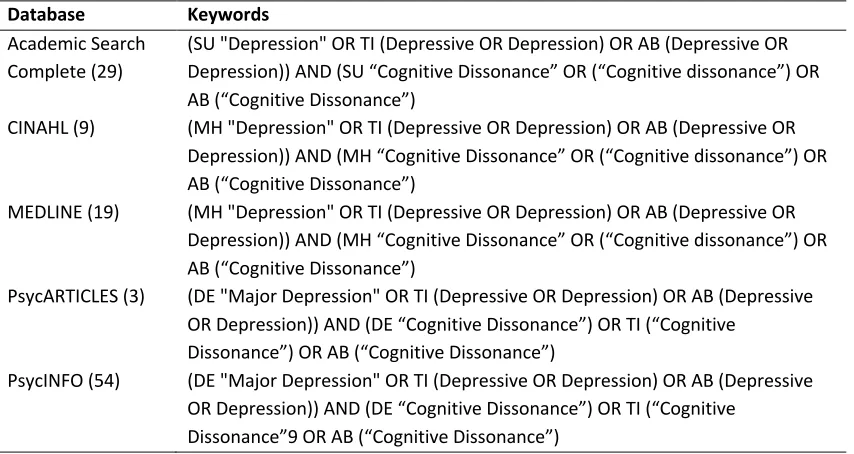
3.2 Methodology ... 54
3.3 Results ... 55
3.3.1 Critical analysis of eligible studies ... 58
3.4 Discussion ... 71
4 : Methodology ... 73
4.1 Aims and objectives ... 74
4.2 Choosing the research paradigm ... 74
4.2.1 Research paradigms and philosophical underpinnings ... 75
4.2.2 Ontology ... 76
4.2.3 Epistemology ... 77
4.2.4 Axiology ... 78
4.2.5 Research paradigm: Pragmatism ... 78
4.2.6 Methodology – Pragmatism as a foundation for mixed methods ... 79
4.3 Study Design – Mixed Methods ... 81
4.3.1 Types of Mixed methods Research Design ... 81
4.3.2 A Hybrid Mixed Methods Design ... 82
4.3.3 Considerations when choosing a Mixed Methods Design ... 83
4.4 Methods - Participants ... 84
vii
4.4.2 Participant recruitment ... 85
4.4.3 Ethical Considerations ... 86
4.4.4 Description of participant recruitment and the locations of data collection ... 86
4.5 Methods – Data Collection and Analysis ... 88
4.5.1 Data collection and participant sessions ... 88
4.5.2 Data Collection methods for Phase1: QUANTITATIVE DATA ... 89
4.5.3 Data Collection for Phase2: QUALITATIVE DATA ... 90
4.5.4 A personal reflection of the experience of interviewing participants ... 91
4.5.5 Data Analysis for Phase2: QUALITATVE DATA ... 92
4.6 Developing the analysis template ... 94
4.6.1 Theme 1: Sources of conflict ... 96
4.6.2 Theme 2: The Experience of Dissonance ... 96
4.6.3 Theme 3: Dissonance Reduction ... 99
5 : Analysis and Findings ... 101
5.1 Quantitative analysis and findings ... 101
5.1.1 Demographics and description of the two participant groups ... 101
5.1.2 Comparison of depression questionnaire (CESD-10) ... 102
5.1.3 Comparison of the DiEL questionnaire ... 103
5.1.4 Correlational analysis between depression and dissonance scores ... 105
5.1.5 Conclusion ... 106
5.2 Qualitative analysis and findings ... 107
5.2.1 Development of the advanced analysis template ... 107
5.2.2 The Prevalence of Dissonance in the Interviews ... 109
5.2.3 Findings from the template analysis ... 110
5.2.4 Integrated accounts of dissonance in the interviews ... 124
5.2.5 Comparison between the Depression diagnosis (DD) and Non-depressed (ND) groups ... 132
5.3 Conclusions ... 140
6 : Discussion ... 142
6.1 Integrating the study’s findings ... 142
6.1.1 Concurrent Nested: Group Verification and the CESD-10 Depression Scale ... 142
6.1.2 Concurrent triangulation: Integrating the DiEL questionnaire with the qualitative data. . 143
6.2 Dissonance related to depression. ... 145
viii
6.2.2 People with depression might use negative self-schemas as dissonance reduction
strategies ... 148
6.2.3 People with depression may show lower cognitive flexibility (or creativity) in dissonance reduction efforts. ... 151
6.2.4 Putting the results in perspective and what needs to be developed ... 152
6.3 Implications for the Understanding of Depression and therapy ... 153
6.3.1 A Dissonance Depression Cycle Model ... 153
6.3.2 Implications for the treatment of depression and further research ... 156
6.4 Strengths and Limitations ... 157
6.5 Summary and conclusions ... 158
7: References………..160
Appendices……….….174
Appendix 1……….………174
Appendix 2……….………178
Appendix 3……….………180
Appendix 4……….………181
Appendix 5……….………183
Appendix 6……….………185
ix
List of Figures
Figure 2.1: The Biopsychosocial Model of Health and Illness ... 24 Figure 2.2: Beck’s cognitive model of depression. ... 32 Figure 2.3: The negative cognitive triad (Beck, 1967). ... 32 Figure 2.4: Dissonance model of depression showing the possible connection between
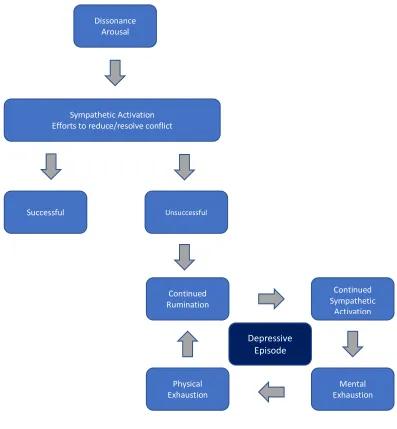
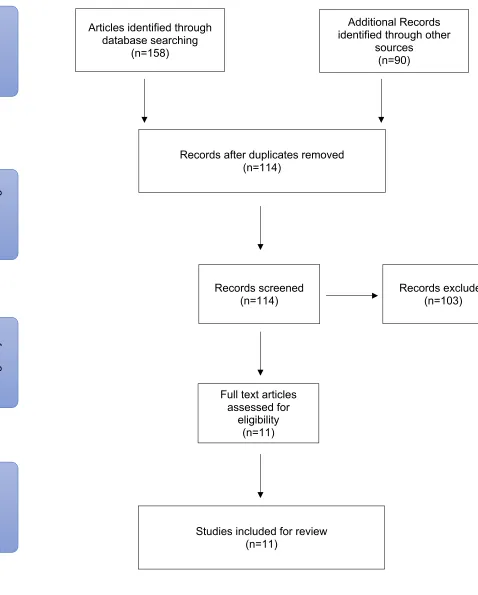
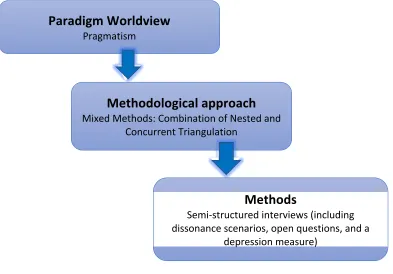
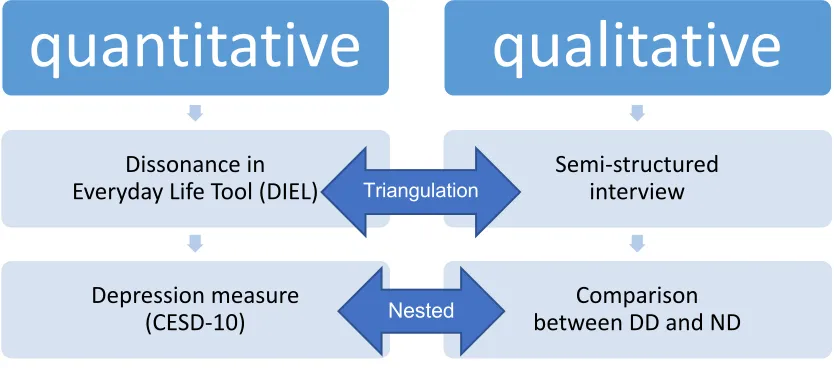
unresolved dissonance and continued rumination. . ... 51 Figure 3.1: Study selection process using PRISMA. ... 57 Figure 4.1: Study Paradigm, methodology, and methods overview (Crotty, 1998). ... 73 Figure 4.2: A hybrid design for the present study. DD: Depression diagnosis participant group. ND: Non-depressed participant group. ... 83 Figure 6.1: The hybrid methodological design including a summary of the study’s main findings. ... 143 Figure 6.2: Beck’s cognitive model of depression with biases implicated in cognitive distortion highlighted. ... 149 Figure 6.3: An illustration of the proposed cyclical nature of a depressive episode in terms of dissonance theory and stress theory (From Dissonance Depression Cycle Model). ... 150 Figure 6.4: Dissonance model of depression showing the possible connection between
List of Tables
Table 2.1: Table of important areas that comprise the multilevel framework of the social determinants of mental disorders, World Health Organization and Calouste Gulbenkian Foundation. Social determinants of mental health. Geneva, World Health Organization, 2014.
... 28
Table 2.2: The main consistency theories. ... 38
Table 2.3: Summary of dissonance experimental paradigms. ... 44
Table 3.1: Keyword Search. ... 55
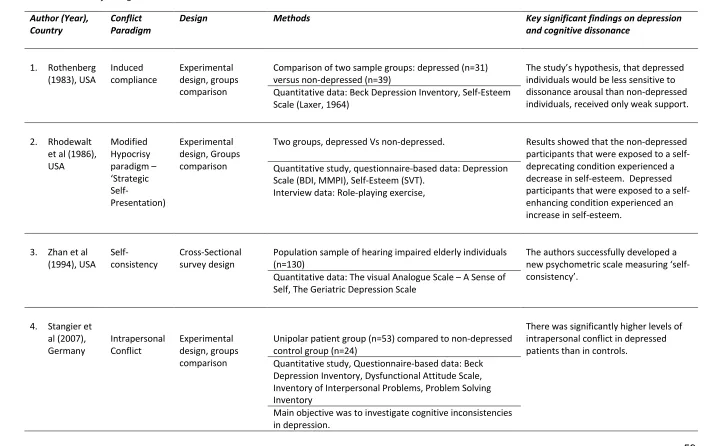
Table 3.2: Summary of dissonance experimental paradigms. ... 58
Table 3.3: Summary of eligible studies. ... 59
Table 4.1:Characteristics of positivist, interpretivist, and pragmatic research paradigms (Creswell, 2009). ... 79
Table 4.2: Sample of items from the CESD-10 depression scale. Participant places tick where appropriate. ... 89
Table 4.3: Example of one of ten items from the Dissonance in Everyday Life (DiEL) questionnaire. Each scenario questionnaire item is comprised of four components. ... 90
Table 4.4: Initial analysis template. ... 95
Table 4.5: Advanced analysis template. ... 95
Table 5.1: Summary of demographic information for both participant groups ... 102
Table 5.2: Descriptive statistics of CESD-10 for Group 1 and Group 2. ... 102
Table 5.3: Mann-Whitney U test results for CESD-10 for Group 1 and Group 2. ... 103
Table 5.4: Descriptive statistics of Dissonance Scenario Questionnaire for Group 1 ... 104
Table 5.5: Mann-Whitney U test results for Dissonance Scenario Questionnaire for Group 1 and Group 2. ... 104
Table 5.6: Correlational analysis of depression and dissonance scores ... 106
Table 5.7: Advanced analysis template ... 108
Table 5.8: Comparison of contrasting quotes from both groups. ... 133
Table 5.9: A side-by-side comparison of the dissonance themes discussed by both groups. .. 137
Table 5.10: The data illustrates key differences between groups in terms of Impact, Intensity, and Duration of dissonance themes. ... 137
Table 5.11: Summary of dissonance reduction attempts for both groups. ... 139
Table 5.12: Summary of dissonance reduction attempts for both groups with sample quotes from each mode of dissonance resolution from both groups. ... 139
13
1: An Overview of the Thesis
This chapter presents a general introduction to the study and an overview of the thesis. The chapter serves to introduce the reader to the topic and how it was selected. This chapter also serves as an introduction to the theoretical motivation for investigating the experience of inner conflict in depression in terms of cognitive dissonance theory.
I have been interested in the area of inner conflict and cognitive dissonance theory since 2011 when I joined my supervisor Dr. Jan De Vries on a neuroimaging research project investigating the neural substrates of cognitive dissonance induction (De Vries, Byrne, & Kehoe, 2015). I was fascinated by the topic and impressed with its explanatory power. I had become familiar with several areas of potential application including health behaviour change, conflict resolution, and various areas of mental health. While exploring these topics I became aware of parallels between cognitive dissonance theory and depression. In particular it appeared that one of the most prominent symptoms of depression, rumination, bears a resemblance to the unresolved conflict described by dissonance theory. Cognitive dissonance theory describes how people experience and attempt to reduce self-related inner conflict. This led me believe that cognitive dissonance might possibly inform depression theory by adding an explanatory dimension to understanding how depression is perpetuated. By establishing this link I hoped to be able to describe depression in terms of cognitive dissonance theory and illustrate this in a dissonance model of depression that may impact on the theory and practice in the
understanding and treatment of depression.
1.1
Depression
The term depression is commonly used to denote periods of low mood that most people experience from time to time, as a natural part of life. A major ‘depressive episode’, however, is a clinical label that is used in the diagnosis of an experience of ongoing symptoms which include a persisting low mood, lack of energy, and feelings of hopelessness, among others. In depression, these symptoms persist to the extent of having a significant and debilitating effect on a person’s ability to work, socialise, and maintain personal relationships (American
14 considered by the World Health Organisation to be a major contributor to the overall global burden of disease. If depression is left untreated, it can lead to suicide (WHO, 2016). Figures published by the American Foundation for Suicide Prevention state that over 50% of all people who die by suicide in America suffer from major depression (American Foundation for Suicide Prevention, 2017)
1.1.1
The experience of depression
Depression symptoms are generally grouped in terms of physical, emotional, cognitive, and motivational. Physical symptoms include changes in appetite and sleeping patterns. Emotional symptoms include feelings of sadness and anhedonia (absence of pleasure). Cognitive symptoms include negative views of oneself and a sense of hopelessness. Other cognitive symptoms include difficulties with concentration and memory. And finally, motivational symptoms include passivity and difficulty initiating activities.
There are several symptoms of depression in particular that have a key relevance for the present study. One such symptom is the fatigue or a loss of energy that is common in depression. This symptom is not however simply a feeling of lethargy. It is a pervasive
experience that can affect the person not only physically but emotionally and cognitively (Fava et al., 2014; Targum & Fava, 2011). Physical symptoms include tiredness and a reduction in physical energy that leads to reduced activity. The cognitive effects of fatigue include decreased attention and focus that manifests as slowed thinking. The emotional effects include a broad range of symptoms from reduced motivation and an aversion to effort, to feelings of being overwhelmed.
15
1.1.2
Treatment of Depression
Depression is typically treated though psychological therapy (particularly cognitive behavioural therapy) or antidepressant medication or a combination of both. A full description of
depression treatments is presented in the following chapter. It is important to note that while a combination of these two therapeutic approaches is in many cases the most potentially successful method of managing depression, they are not effective in all cases. The shortcomings to these approaches are addressed in the following chapter. Part of the
motivation of the present study is to suggest how cognitive dissonance theory might be able to complement further expand current understanding of depression and provide
recommendations for more effective treatments.
1.1.3
Depression and inner conflict
The identification and resolution of inner conflict has long been a mainstay of psychotherapy in the treatment of psychological disorders such as depression. Unconscious conflict, i.e., conflict that is outside a person’s awareness, has been studied by the so-called ‘depth psychologies’ since the late nineteenth century. The depth psychologies are a group of psychoanalytic approaches to psychotherapy and psychological research that focus on the unconscious mind. The unconscious mind consists of mental processes which occur automatically and are not easily available to our conscious awareness but can nevertheless influence the judgements, feelings, and behaviour of people in general (Wilson, 2002). The most famous of the depth psychologies is Psychodynamic Theory (Freud, 1899, 1923). Psychodynamic theory proposes that the human psyche/mind is made up of the tripartite organisation of the ‘Id’, ‘Ego’, and ‘Superego’. Freud (1923) proposed that these three components of the psyche are naturally at odds with each other and that this oppositional dynamic is creates inner conflict. Psychodynamic theory proposes that this conflict leads to a subduing of certain impulses or desires in a process known as repression. Repression, according to psychodynamic theory is what causes psychological maladies such as symptoms of depression and anxiety (Horney, 2013). Psychoanalytic theory grouped these symptoms and attached the somewhat vague label ‘neurosis’. Neurosis was a general and imprecise category of mental illness by today’s diagnostic standards. It is a collective term that includes symptoms of depression, anxiety, stress, and obsessive behaviour. Freud believed that these symptoms had at their most basic cause, conflicting thoughts. The resolution of this
16 According to psychoanalytic theory, the failure to resolve inner conflict leads not only to the dysfunctional state of repression but also generates a need in people to rationalise. If a person is not willing or able to attribute their behaviour to rather unpalatable motivations, they might instead invent an alternative explanation. To illustrate this with an example from Freudian (Oedipal) theory, a person might attribute their love for a person to some romantic or attractive inner quality, rather than because are reminded of some trait of their mother. While serious interest in psychoanalysis as both a credible psychological theory and as a form of psychotherapy has waned over the years, it leaves behind it a strong legacy. Freudian concepts still permeate the collective conscious. Terms such as unconscious mind, repression, and even Oedipus complex are still commonly used in everyday language.
The concept of inner conflict has remained however a central role in the development of psychotherapy. As depth psychology (specifically Freud’s psychoanalysis) waned in popularity, from the 1960’s the humanist movement rose to prominence as both a psychological theory and a psychotherapy. Humanistic psychology is a perspective that emphasises the study of the person as a whole (also known as Holism). The humanistic perspective proposes that an individual’s behaviour is connected to their feelings and their self-image. The key contrast here is that unlike psychoanalysis, humanistic psychotherapy helps clients address thoughts that are consciously attainable to them and does not focus on the unconscious mind. Humanistic therapy deals with thoughts and feelings, rather than childhood experiences and repressed tendencies that supposedly stem from the unconscious mind. Carl Rogers (1959) in particular describes the source of internal conflict in terms of ‘congruence’ and ‘incongruence’ between an individual’s self-concept and their experience, and is explained here.
Central to Rogers’ theory is the notion of self-concept. He describes self-concept as the organised and consistent pattern of perceptions and beliefs that one has about oneself
17 and psychological distress. In the extreme however, acute incongruence, (i.e., great
inconsistency between the ideal self and the real self) may lead to maladaptive coping mechanisms such as denial and distortion. These defence mechanisms act as techniques to protect one’s self-esteem. An individual may distort or deny reality in order to protect their feelings about themselves. Studies have shown that high levels of incongruence contribute to the formation and maintenance of psychopathological symptoms (Berking, Grosse Holtforth, & Jacobi, 2003; Grosse Holtforth & Grawe, 2003).
1.2
Consistency Theories
Congruence, in the Rogerian sense, is an example of what is known in Psychology as ‘Cognitive Consistency’. The desire to maintain consistency between thoughts has long been recognised as a fundamental drive by social and cognitive psychologists. Research in this area has given rise to several theories of cognitive consistency that have their beginnings in a number of seemingly unrelated research areas (Eagly & Chaiken, 1993). Research into topics such as attitudes, person perception, prejudice and self-evaluation have all produced similar versions of cognitive consistency theory (Leon Festinger, 1957; Heider, 1958; Miller, 1944; Osgood & Tannenbaum, 1955; Piaget, 1951; Rosenberg, 1979). A summary of the most influential of these consistency theories is presented in the next chapter (Chapter 2 – Theoretical
Background). What each of these theories share is empirical support for the finding that we as individuals have a drive towards consistency in our thinking. Each of these theories articulate cognitive consistency in different ways. Carl Rogers refers to consistency in terms of
‘congruence’, whereas Heider (1958), for example, refers to consistency in terms of ‘balance’. Both theories are referring to cognitive consistency but refer to it using differing terminology.
1.2.1
Cognitive Dissonance theory
18 that contradict each other. Specifically, a person will experience cognitive dissonance when one of the thoughts implies a contradiction of the other. Cognitive dissonance can be illustrated by any number of simple examples. For example, imagine a person receiving the wrong change after a transaction in a shop. Imagine that they receive change of fifty Euro, when they only paid with twenty Euro, and they fail to correct the error. In this case there is an inconsistency between the person’s actions/behaviour and their beliefs about honesty and decency. The two contradicting thoughts would be ‘I am an honest person’, and ‘I did a dishonest thing’. In this example, the dissonance is created by the contradiction between the two thoughts. The resulting psychological uneasiness would be experienced as a negative emotional reaction such as guilt, regret, or shame over not doing the right thing and returning the extra money.
1.2.2
Depression and Cognitive dissonance
The reduction and resolution of cognitive dissonance is a cognitive experience that generally occurs automatically. Studies such as Lieberman, Ochsner, Gilbert, and Schacter (2001) have demonstrated that cognitive dissonance reduction occurs effortlessly and may not necessarily be consciously experienced. But this however is not always the case. What happens if an experience of dissonance is not resolved or effectively reduced? This might occur perhaps if the mode of dissonance reduction is ineffective or if, due to situational circumstances, the dissonance my not be easily resolved. In theory, this situation would resemble the rumination that is seen as a cognitive symptom of depression. This is one example of an aspect of the potential overlap between the areas of depression and dissonance that this study seeks to elucidate
1.3
The proposed Study
The purpose of this study is to explore how cognitive dissonance is experienced and reduced in a depressed and comparison (non-depressed) group. An investigation into the theoretical background in Chapter Two will identify any conceptual overlap that exists between dissonance theory the psychological theories most relevant to depression. This study will attempt to use dissonance theory to describe and frame experiences of inner conflict in both depressed and non-depressed individuals.
19 continues/perpetuates to the point of rumination. If these stages/processes could be
identified, they could potentially be arranged into an explanatory model. This model would potentially include: an arousal stage (dissonance induction), an unsuccessful attempt at reducing the dissonance, continued dissonance that requires a sympathetic activation, a decrease in energy potentially to the point of physical and mental exhaustion, and a thus a continuing cycle of unresolved cognitive dissonance.
1.3.1
Research aims and objectives
The overall research focus of this study is to explore how cognitive dissonance relates to depression. The study aims to identify whether and in what ways cognitive dissonance is experienced in individuals with and without a diagnosis of depression. The specific objectives for the study are as follows:
i. To develop a conceptual model that relates mechanisms of cognitive dissonance to depression.
ii. To identify in interviews episodes of cognitive dissonance in two participant groups, with and without a diagnosis of depression.
iii. To analyse how different aspects of cognitive dissonance, which are part of the model (induction, experience and reduction efforts) are experienced by the two groups. iv. To make a comparison between the two groups in regard to their experience of
cognitive dissonance:
a. In their response to every day dissonance inducing scenarios b. In their response to the interview
1.3.2
Selecting mixed methods
The study employed a mixed methods approach that combined questionnaire data with data from semi-structured interviews. The decision to use a combination of methodological approaches was based on a desire to widen the scope of the overall research aim.
20 describe their experience in their own words. This provides a rich window of insight into the nature of the participant’s experiences of inner conflict.
1.3.3
The Language used in this thesis
When one talks about mental health issues such as depression, the very words one uses immediately places them in the camp of one of several perspectives. For example, words such as ‘symptoms’ and ‘disorder’ may suggest a biomedical perspective of health and illness. The biomedical perspective is a framework that sees illness in terms of pathologies of the body. To use an analogy, it views a person as a machine and illness (physical or mental) as damage to, or a breaking down of that machine. It is my contention that health and illness should be
considered in terms of a convergence of not only biological but psychological and social factors too. This is especially important in the case of mental health due its less observable and intangible nature. Throughout this thesis, I will use language that might suggest a biological pathological perspective that is indicative of a biomedical perspective. This is however due to the nature of the research findings and the assumptions that such research is based upon. The subject of this thesis is being written from a holistic perspective. The Nursing and Midwifery Board of Ireland recognises that holism in healthcare is grounded in an understanding of the social, emotional, cultural, spiritual, psychological and physical experiences of patients, and is based upon the best available research and experiential evidence (NMBI, 2015).
1.4
Overview of the Thesis
Chapter Two presents an introduction to the theoretical background of the present study. This will include a description of the various perspectives through which depression is
conceptualised and how it is treated. The chapter will describe the development of cognitive dissonance theory and the potential conceptual relevance that it holds for depression theory and treatment.
Chapter Three presents a review of the literature that exists where the link between
21 Chapter Four presents the methodological issues around the present study. This chapter will describe the methodological framework upon which the present study is based upon. This will include a discussion of the philosophical underpinnings and the research paradigm that was found to be most appropriate to the present study. This chapter will also present the methods that were used to collect and analyse the research data.
Chapter Five presents the analysis and the research findings of the present study.
22
2: Theoretical Background
This chapter presents the theoretical underpinnings of the study. Its aim is to build on the succinct introduction in chapter one to explore in more detail the relevance of mechanisms related to inner conflict as put forward in cognitive dissonance theory (Festinger 1957) for the understanding of depression. This is done with reference to three broad psychological perspectives, Rogers’ (1959) perspective on (in)congruence and the self, Beck’s (1967) cognitive theory, and stress theory and burnout by Selye (1956) and Maslach (1986), respectively. It will be argued that each of these approaches incorporates elements of
disequilibrium, imbalance, or inner conflict to explain mental health problems and in particular depression. Eventually, it will be contended that cognitive dissonance theory potentially provides an integral framework, incorporating the core aspects of each of the models and unifying them into an explanatory approach to the occurrence and persistence of depression. The chapter begins with a more general overview of perspectives on depression, after which the three approaches mentioned are addressed. Following this, a discussion is included on how cognitive dissonance theory provides a meaningful and plausible perspective on development, process and ways of coping with depression.
2.1
The development of perspectives on depression
The earliest detailed descriptions of what is now known to be depression appeared in the second millennium BC in Mesopotamia, an ancient region of South-West Asia (Reynolds & Kinnier Wilson, 2014). These early writings refer to depression as ‘Ašašu’ being a disorder of the spirit, rather than the body or the mind (Reynolds & Wilson, 2013). As such, it was treated by shamans rather than physicians (Schimelpfening & Gans, 2018). The belief that evil spirits were the cause of physical and mental disorders including depression persisted throughout many cultures in history including the Ancient Greeks, Romans, Chinese, Babylonians, and Egyptians (Nemade, Staats Reiss, & Dombeck, 2013). Treatments for what would come to be known as depressionranged from plant-based pharmacology (Reynolds & Kinnier Wilson, 2014) to starvation, and even beatings (Schimelpfening & Gans, 2018). One extreme intervention involved the drilling a hole in an individual’s skull, a process known as
23 Early Roman and Greek physicians were among the first to reject ancient belief that mental illness was caused by supernatural possession and instead sought more natural explanations. Hippocrates (460-377 BC) suggested that depression, or what the Greeks called ‘melancholia’, was caused by an imbalance of four fluids called ‘humors’ that comprise the human body (Varga, 2013). The four humors are black bile, yellow bile, phlegm, and blood. According to humoral theory, when these humors were present in the body in balanced proportions, a person is said to be healthy. Illness then was attributed to a state of humoral imbalance (W. A. Jackson, 2001). Melancholia was specifically attributed to an excess of black bile. The word ‘melancholy’ itself comes from the Greek ‘melaine kholé’, meaning black bile (Varga, 2013). According to Hippocrates, balance could be restored to these humors through a combination of treatments that included blood-letting, baths, exercise, and diet (Nemade et al., 2013).
24 Currently, the study of depression is complex and fraught with conceptual disagreements. At a basic level, the cause and treatment of depressive disorders such as major depression and bipolar disorder can be viewed through several different perspectives which, in turn, depend on broader ideologies of the very concepts of health and illness. One such ideology that views depression purely in biological terms is the biomedical model. According to the biomedical model, depression is best understood as a result of physiological pathologies. In contrast, the bio-psycho-social perspective (figure 2.1) views depression in terms of a convergence of biological, psychological, and social factors. This more holistic approach is supported by many critics of the biomedical status quo (Gask, 2018; Hatala, 2012). The distinction between the biomedical perspective and the bio-psycho-social perspective is part of a broader discussion on how health and illness, and therefore also mental health and distress, is best understood. The perspective through which depression is viewed influences which interventions or
preventative measures are deemed most appropriate. Conversely, treatment approaches have affected, if not spawned, specific perspectives on depression. In an attempt to provide a comprehensive overview, a more detail review of the biomedical perspective with be
[image:24.595.169.402.427.557.2]provided followed by the psychological theories.
Figure 2.1: The Biopsychosocial Model of Health and Illness
2.2
Biomedical perspectives on depression
Healthcare practice and policy is generally considered to be dominated by the biomedical model, that is, a theoretical framework that sees illness purely in physiological terms (Department of Health and Children, 2006). The Diagnostic Statistical Manual of Mental Disorders (currently in its fifth edition, DSM-5) which is published by the American Psychiatric
Biological
25 Association describes the criteria necessary for the diagnosis of all mental disorders, including major depression (American Psychiatric Association, 2013). Major depression appears as a member of the Depressive Disorder category, which also includes Bipolar Disorders, Dysthymic Disorder, Cyclothymia, and Depressive Disorder Not Otherwise Specified (Nemade et al., 2013).
Since the 1950’s, depression has been widely considered, from a biomedical perspective, to be due to a deficit in the activity of a type of neurotransmitter called monoamines. This has become known as the monoamine hypothesis of depression. Monoamines are
neurotransmitters that include Serotonin, Dopamine, Adrenaline and Noradrenaline, which are thought to modulate mood and behaviour. These neurotransmitters are at the source of the so-called ‘chemical imbalance’ theory of mental illness, a belief that is reminiscent of the humoral theory of the ancient Greeks. It is widely thought that psychiatric conditions can be improved by addressing the hypothesised neurochemical imbalance. Pharmacological interventions for depression aim to increase the activity of monoamine neurotransmitters, in particular serotonin, which has been identified to play a key role in mood balance (Coppen, 1967). The three main types of pharmacological interventions are: monoamine oxidase inhibitors (MAOIs), tricyclic antidepressants, and selective serotonin reuptake inhibitors (SSRIs). MAOIs are theorised to work by inhibiting the enzyme activity that causes
monoamines to breakdown in the brain. This process extends the duration of time serotonin is active, which is thought to benefit the person’s mood. MAOIs are considered to be
26 The monoamine hypothesis is a much-debated topic in the study of pharmacological
intervention of depression and faces many criticisms that highlight its limitations. Firstly, there are certain antidepressant medications that do not target the monoamine neurotransmitters. Tianeptine and opipramol are effective antidepressants that target glutamate and sigma receptors, respectively (Fishback, Robson, Xu, & Matsumoto, 2010). Secondly, experiments have shown that when monoamine levels are pharmacologically decreased it does not cause depression in healthy people nor does it worsen symptoms in depressed people (Delgado, 2000; Delgado & Moreno, 1999). Thirdly, serotonin levels increase very quickly with monoaminergic antidepressants, yet symptoms of depression are not usually alleviated for approximately two to four weeks. This delayed onset of action suggests neurogenesis (neuron growth) might play a role in this type of pharmacological intervention (Mitchell, 2006).
The goal however for the acute treatment of depression with antidepressant medication is generally to provide symptom relief (DeRubeis, Siegle, & Hollon, 2008). Remission, in this context, is defined as the near absence of symptoms (Frank et al., 1991). Systematic reviews and meta-analyses show that the success rate for antidepressants is higher in cases of severe depression but lower in cases of mild and moderate depression (Bauer et al., 2007; Cameron, Reid, & MacGillivray, 2014). Treatment of depression with medication alone can yield a significant chance of relapse. Although there is much debate over the figures, generally speaking, antidepressants are shown to be effective in controlling depression in around one third of cases with partial success in another third but are ineffective in the remaining third (Nemeroff et al., 2003; Tyrrell & Elliot, 2015). The monoamine hypothesis has amassed an enormous following in the popular psychological explanation of depression (Hirschfeld, 2000). Attributing depression to being due simply to a chemical imbalance in the brain is however misleading in the sense that depression cannot be treated solely on the basis of
neurotransmitters (Marano, 1999). Meta-analyses of treatment outcomes for depression show a clear improvement when antidepressants are used in combination with a
27
2.3
Social perspectives on depression
The biopsychosocial model of health and illness also highlights the social factors affecting general health to be a major contributing influence on mental health. The sociological aspects of depression interact with the biological and psychological aspects of people's lives. The social perspective of depression examines the cultural context in which people live, as well as the social stressors that people encounter as a part of life. Decades of research has identified various social conditions that have been found to predispose certain population subgroups to various mental health problems including depression. The social perspective emphasises the need for a shift toward the prevention of mental health problems by addressing the social causes and triggers that lie in social, economic, and political spheres (World Health Organisation, 2014).
2.3.1
World Health Organisation and the social determinants of mental health
A conceptual framework that summarises the major social determinants of mental disorders has been developed by Patel et al (2010) through a review of global evidence for the World Health Organisation and the Calouste Gulbenkian Foundation’s Global Mental Health Platform (2014). The theoretical foundation of framework is rooted in the considerable and growing evidence showing that mental health and many common mental disorders are shaped to a great extent by social, economic and environmental factors. The categories of social28 Table 2.1: Table of important areas that comprise the multilevel framework of the social determinants of mental disorders, World Health Organization and Calouste Gulbenkian Foundation. Social determinants of mental health. Geneva, World Health Organization, 2014.
Category
Life-course Refers to the various stages of life, from prenatal to old age, that can impact and influence an individual’s mental health. Also includes gender.
Parents, families, and
households Includes factors such as parenting behaviours and attitudes, material conditions (income, access to resources, food/nutrition, water, sanitation, housing, employment), employment conditions and unemployment, parental and physical and mental health, pregnancy and maternal care, and social support.
Community Neighbourhood trust and safety, community-based participation,
violence/crime, attributes of the natural and built environment, and neighbourhood deprivation.
Local services Early years care and education provision, schools,
youth/adolescent services, health care, social services, clean water and sanitation.
Country-level factors Poverty, inequality, discrimination, governance, human rights, armed conflict, national policies to promote access to education, employment, healthcare, housing and services proportionate to need, social protection that are universal and proportional to need.
2.3.2
The social stigma of mental illness
It is appropriate here to include the human element regarding the social stigma of mental illness. The social stigma of mental illness such as depression represents an added stress to the sufferer. Michel Foucault offers an insight into how the social stigma of mental illness is, in historical sense, a relatively new phenomenon.
Michel Foucault (1926-1984) is a philosopher that explored, among other subjects, how mental illness is viewed by European society. In his dissertation ‘Civilisation and Madness’ (1965) Foucault examines how attitudes toward mental illness in the eighteenth century have influenced how mental illness is conceptualised by society in the modern age. Foucault believes that the incarceration of individuals with mental illness and labelling them as mad has had a detrimental effect on society’s relationship with mental illness.
29 with the Madman” (Foucault, 2003 p IX). The eighteenth century saw those with mental illness placed in the same category as vagrants and prostitutes. Foucault contrasts this with how mental illness was perceived in the Renaissance period (14th to 17th Century), saying that the “Mad man” was viewed as having wisdom; being creative and fearsome. Foucault argues that a period of transitional thinking occurred between these two periods where “madness” went from being viewed as an individual difference worthy of study, to being viewed as an illness and something needing to be cured (Khalfa, 2009).
2.4
Psychological perspectives on depression
Typically, psychological perspectives of depression have been developed as part of efforts to reduce depression with the use of some form of talk therapy or psychotherapy. The term ‘psychotherapy’ was first used in 1853 by the English Psychiatrist Walter Cooper Dendy based on the principle that talking may help with emotional problems by providing support and encouragement (Jackson, 1999). Different forms of psychotherapy have been based on a variety of perspectives on mental health and distress, including depression. Several
perspectives and the role of inner conflict or imbalance in the approaches are addressed in this section.
The early twentieth century saw attempts by Sigmund Freud to apply scientific reasoning to the developing field of psychotherapy. More than simply providing support, this approach was attempted through scrutinising and analysing the content of thoughts and subconscious information processing (McDowell, 2015). Although crude by today’s standards, Freud’s formulations were consistent with the science of medicine in his era. By the middle of the century however, the field of medicine in general was making dramatic advances due to the synergy of applied science and emerging technologies. Psychotherapy remained largely stagnant due to the avoidance of more rigorous scientific enquiry. The prevailing perspective of depression as perceived in the psychoanalytical (or psychodynamic) perspective is
multifaceted. It is based largely on an inner conflict that manifests as self-directed anger stemming from an overly restrictive Superego (Freud, 1930).
30
2.4.1
Rogers’ (in)congruence model of the self and the implication for depression
As Freudian psychoanalysis waned in popularity, from the 1960’s the humanist movement rose to prominence as both a psychological theory and a method of psychotherapy. Humanistic psychology is a perspective that emphasises the study of the person as a whole (also known as Holism). The humanistic perspective proposes that an individual’s behaviour is connected to their feelings and their self-image (McLeod, 2014). The key contrast here is that unlike psychoanalysis, humanistic psychotherapy helps clients address thoughts that are consciously attainable to them and does not focus on the unconscious mind. Humanistic therapy deals with thoughts and feelings, rather than childhood experiences and repressed tendencies that supposedly stem from the unconscious mind. The most well-known form of psychotherapy in the humanistic tradition is client-centred therapy, originally introduced by Carl Rogers in 1959. Client-centred therapy describes the source of mental health problems including depression as resulting from internal conflict due to ‘incongruence’ between an individual’s self-concept and their experience (Rogers, 1959).Central to Rogers’ theory is the notion of self-concept. Rogers describes self-concept as the organised and consistent pattern of perceptions and beliefs that one has about oneself
31 Self-concept also plays a key role in cognitive dissonance theory. Section 2.5.1 below
describes some of the major revisions that dissonance theory has undergone since its inception. Elliot Aronson’s revision of the theory so that it focuses on self-related inner conflict is one of the most influential (Cooper, 2007). Roger’s incongruity theory and
Aronson’s revision of dissonance both focus on conflict that is rooted in inconsistency and self-concept.
2.4.2
Cognitive perspectives on depression
Cognitive theories of depression have always attempted to explain its development by identifying the underlying thought processes. Among the most currently influential
psychological theories are those that relate to cognition. Cognition is the umbrella term to describe the mental processes involved in acquiring knowledge and covers just about all of our mental activity or information processing. Cognitive theories of depression began to emerge throughout psychological literature from the 1950’s onwards in response to behavioural psychologists’ failure to address the significance of thoughts and feelings in human experience (Nemade, Reiss, & Dombeck, 2007). Cognitive psychologists are motivated to integrate internal experiences with behavioural experiences for a more complete description of the human psychological experience. Some of the more widely cited cognitive theories of depression include: Ellis (1962), Beck (1967), Seligman (1975), and Bandura’s social cognitive model (1977). More specifically, these could be described as models of cognitive vulnerability to depression. Cognitive vulnerability models claim that depressive symptoms result from the interaction between negative emotions and cognitive reactions. This interaction may take the form of dysfunctional attitudes and negative inferential style (Mehu & Scherer, 2015).
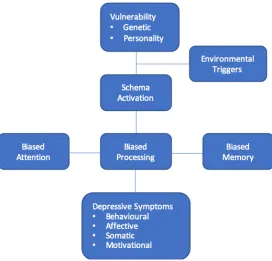
Aaron Beck’s (1967) cognitive model of depression is widely used in the current understanding and treatment of depression. Beck’s model (figure 2.2) explains the cognitive processes that are implicated in depression and forms much of the basis for cognitive therapeutic
32
Figure 2.2: Beck’s cognitive model of depression.
The first mechanism, negative automatic thinking, describes three types of negative thinking that individuals with depression are prone to. They are thoughts regarding the individual’s sense of self, the way they see the world, and how they see their future. For instance, negative thoughts about the self, such as “I am a failure”, or “I am worthless”. Negative thoughts about the world such as “nobody likes me”, or “everyone is horrible”. And negative thoughts about the future, “nothing will ever go right for me”. Together, they form what Beck called the negative cognitive triad (figure 2.3).
Figure 2.3: The negative cognitive triad (Beck, 1967).
Negative view
of the self
Negative view
of the future
Negative view
[image:32.595.173.397.591.717.2]33 The second mechanism describes how the individual can develop a negative internal
representation about themselves. This negative mental representation consists of a set of beliefs and expectations about themselves that is essentially pessimistic in nature. Beck calls this a ‘negative self-schema’ and suggests that it can be caused by negative experiences in childhood (e.g. death of family member, bullying, etc.). Beck suggests that a person is particularly vulnerable to depression if they develop a negative self-schema early in life because it may become activated later in life due to stressful experiences (Davis, Green, Burnette, Reid, & Moloney, 2013). Similarities can be seen here to Carl Rogers’ theory of incongruity. Beck’s negative self-schema is comparable to Rogers’ negative self-concept that lies at the heart of incongruity.
The third mechanism describes how depressed individuals are prone to logical errors or ‘cognitive distortions’ in their thinking because they are biased toward negative
interpretations. The theory suggests that depression creates negative biases in an individual’s attention, memory, and interpretation. A cognitive distortion is an exaggerated or irrational thought pattern thatmay cause an individual to perceive reality inaccurately (Helmond, Overbeek, Brugman, & Gibbs, 2015). An example of a cognitive distortion that is common in depression is ‘catastrophising’, where a person gives greater weight to the likelihood of the worst possible outcome happening in a given situation.
Studies suggest that the cognitive impairments implicated by Beck’s theory are related to a deficit in inhibitory processing (Campbell-Sills & Barlow, 2007; Hertel, 1997; Joormann, 2005). Inhibitory processing refers to the mind’s ability to disengage from negative or irrelevant stimuli. Researchers such as Joormann, Yoon, and Zetsche (2007) suggest that deficits in cognitive inhibition lie at the heart of biases in memory and attention which in turn allows for ruminative responses to negative events and negative mood states (Gotlib & Joormann, 2010). Beck emphasised the automaticity of this process and how negative cognitive biases
34
2.4.3
The Stress perspective on depression
The stress perspective on mental Illness has its roots in an understanding of biological
processes that lead to over-activation of the nervous system in the short term, which is a core element of the manic state in bi-polar depression, and exhaustion due to prolonged stress, which is viewed a key feature of long term depressed states. Research has focussed on how depression may be linked to nervous system dysregulation by identifying the effects of the stress response, particularly in the context of chronic stress. At the core of this approach, in a biological sense, is the examination of hypothalamic pituitary-axis dysregulation. The
sympathetic branch of the body’s autonomic nervous system is activated in what Walter Cannon (1932) famously described as the body’s ‘fight or flight’ reaction to any perceived threat. It is believed that this reaction, which involved activation of the sympathetic nervous system, is necessary to provide an organism the best chance to defend itself or escape a dangerous attack. Whenever a dangerous threat is perceived, there begins a sequence of physiological events that is precipitated by a cascade of stress hormones controlled by a complex set of neural and endocrine feed-forward and feed-back interactions This system is also known as the hypothalamic-pituitary-adrenal axis (HPA-axis). The stress response sequence begins with the brain’s emotional centre, the amygdala, which signals a neural response in the hypothalamus (part of the brain’s limbic system). The hypothalamus then stimulates the pituitary gland, which in turn secretes adrenocorticotropic hormone (ACTH). ACTH stimulates the adrenal gland to produce the hormone corticosteroid
cortisol. Cortisol enables the body to maintain steady supplies of blood sugar necessary to fuel the body’s energy needs that are required for the increased strength and speed needed in anticipation of fighting or running when faced with a threat to survival or
homeostasis. Specifically, the physiological changes facilitated by the stress response include: increased blood flow to muscles, increased blood pressure and heart rate, blood clotting function increase, and increased muscle tension (Aguilera, 2011).
35 immunosuppressive effects associated with the stress response. Habitual and sustained HPA-axis activation (or indeed over-activation) will effectively desensitise the hypothalamus and pituitary glands to the appropriate level of cortisol, which disrupts the overall effectiveness of the stress response.
Hans Selye (1956) described the ‘General Adaptation Syndrome’ (GAS), which is a three-stage model outlining the changing phases of the effect of long-term stress on the body. The distinction between the alarm, resistance, and exhaustion phases helps describe the deleterious effect of unrelenting stress that becomes chronic and persists over time. The alarm phase is similar to Cannon’s ‘fight or flight’ stage where a threat has been detected and the stress response is initiated. The resistance stage describes the body’s attempt to resist or adapt to the stressor. The body adapts to stress and the release of stress hormones by ‘allostasis’, which is the body’s attempt to maintain homeostasis. Although the release of cortisol will initially help provide the body with the necessary energy needed to effectively deal with the stress, prolonged exposure will prove detrimental. In small quantities, the anti-inflammatory function of cortisol speeds up tissue repair, but large quantities can accelerate pathophysiology of cardiovascular and immune systems. The wear and tear caused by prolonged stress to the body is called allostatic load and is measured through a composite index of indicators of cumulative strain on several organs and tissues, especially the
cardiovascular system (Edes & Crews, 2017). When high stress levels continue, the deleterious effects on the body cause a reduction in the immune system’s ability to respond and the person enters in the third stage, exhaustion .
An excess of cortisol can lead to a syndrome known as hypercortisolism (Holsboer, 2001). Hypercortisolism suppresses cellular immunity which increases susceptibility to infection and neoplasm (abnormal tissue growth) (Delaney, 2010). It has long been observed that hyperactivity of the HPA-axis function (as measured by higher daytime cortisol levels, ACTH, and CRH) is commonly found among persons with depression. Although
hypercortisolism has been strongly associated with depressive symptoms, the mechanisms mediating hyper-hypocortisolism in depression remain controversial. It is also believed that HPA-axis dysregulation could explain some of the negative somatic conditions associated with depression (such as cardiovascular disease and diabetes) (Mello, Mello, Carpenter, & Price, 2003).
36 Hypocortisolism, on the other hand, describes any condition that can be attributed to
chronically low levels of cortisol that occur as a result of the inhibition of its release, paradoxically due to the nature of the negative feedback loop of its initial secretion. In the long-term, prolonged release of cortisol has an inhibitory effect the release of cortisol. This acts as a protective mechanism to avoid the problems associated with the short-term
immunosuppressing effect of the stress response. Hypocortisolism results in the amplification of inflammatory pathways and increases the susceptibility to inflammatory diseases, including autoimmune diseases, chronic fatigue syndrome, fibromyalgia, and mood disorders including depression (Silverman, Heim, Nater, Marques, & Sternberg, 2010).
Selye’s GAS model describes the effects of chronic stress terms of its damaging physical effects on the body. The psychological equivalent of the exhaustion stage is known as Burnout (Maslach et al., 1986; Maslach & Leiter, 2016). Burnout is a psychological syndrome that is a consequence of unresolved chronic stress. It is a concept that has traditionally been explored in terms of job occupation stress. It is measured in three dimensions: emotional exhaustion (feelings of being emotionally drained), depersonalisation (dehumanising perception of others), and a decreased sense of accomplishment. Burnout is a concept that has been associated with depression since its first inception and publication in the 1970’s by
Freudenberger. He noted that, when a person is suffering from burnout, “the person looks, acts, and seems depressed” (Freudenberger, 1974, p. 161). In fact there has been much disagreement on whether burnout and depression are the same or different constructs, as they appear to share some key features (e.g., loss of interest and impaired concentration) (Koutsimani, Montgomery, & Georganta, 2019). There have been many studies that demonstrate the positive correlation between burnout and depression: (Bianchi, Schonfeld, Mayor, & Laurent, 2016; Glass & McKnight, 1996; Schaufeli & Enzmann, 1998). (Bianchi, Schonfeld, & Laurent, 2015) in their system review of inventories that assess burnout found that the subscale of emotional exhaustion in particular was positively correlated with depressive symptoms (Koutsimani et al., 2019). The emotional exhaustion component considered to be the core component of burnout (Cox, Tisserand, & Taris, 2005).
As shall be discussed in detail below there are both physiological and psychological processes at work in cognitive dissonance. Section 2.5.3 describes that there is an observable
37 to depression, it would certainly appear that an exploration of relationship between
depression and cognitive dissonance is justified.
2.4.4
Summary of the psychological perspectives of depression
In this section the theoretical background of three main psychological theories of depression have been discussed. The role of the self has been discussed in terms of Carl Rogers’ theory of incongruity. This is significant in terms of dissonance theory as they both share the concept of self-related inner conflict. Beck’s cognitive model of depression describes the mental
processes that occur in depression. In particular, it describes the negative and irrational nature of these processes. Dissonance theory shares the potential irrationality of certain thought processes in the reduction of dissonance conflict (discussed in section 2.5.4). And finally, depression was discussed in terms of its link to physical and psychological exhaustion. This relates to dissonance theory in terms of the physical and psychological aspects of
dissonance processes. As dissonance theory is described in later sections, it will be related to each of these three elements. Each of these perspectives include elements of depression that a model based on dissonance could potentially unify. A potential dissonance model of
depression is discussed in section 2.6.
2.5
Consistency theories
As we’ve seen, progress in depression theories rooted in psychotherapy perspectives has either implicitly or explicitly included the role of inner conflict, its aversive quality, and its threat to the self. Independent from this development, a wealth of empirical research on cognitive consistency and inconsistency has taken place, the fruits of which may have important implications for our understanding of depression. If we make the assumption that inner conflict is worth examining on the basis of the psychotherapeutic evidence, than the next step should be to invoke the more general knowledge acquired about cognitive consistency and inconsistency.
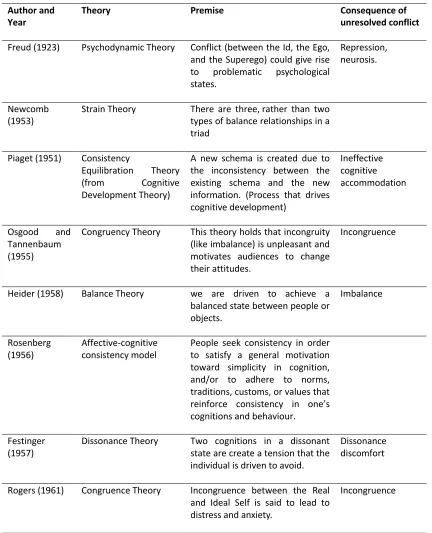
38 versions of cognitive consistency theory (e.g. Heider, 1968; Piaget, 1951; Newcomb, 1953; Miller 1944; Osgood and Tannembaum, 1955; Rosenberg, 1956; Festinger, 1957). A summary table of the most influential of these consistency theories is presented below (Table 2.2). For comparison the models rooted in psychotherapy theory are also included.
Table 2.2: The main consistency theories.
Author and
Year Theory Premise Consequence of unresolved conflict
Freud (1923) Psychodynamic Theory Conflict (between the Id, the Ego, and the Superego) could give rise to problematic psychological states.
Repression, neurosis.
Newcomb
(1953) Strain Theory There are three, rather than two types of balance relationships in a triad
Piaget (1951) Consistency
Equilibration Theory
(from Cognitive
Development Theory)
A new schema is created due to the inconsistency between the existing schema and the new information. (Process that drives cognitive development)
Ineffective cognitive accommodation
Osgood and Tannenbaum (1955)
Congruency Theory This theory holds that incongruity (like imbalance) is unpleasant and motivates audiences to change their attitudes.
Incongruence
Heider (1958) Balance Theory we are driven to achieve a balanced state between people or objects.
Imbalance
Rosenberg
(1956) Affective-cognitive consistency model People seek consistency in order to satisfy a general motivation toward simplicity in cognition, and/or to adhere to norms, traditions, customs, or values that reinforce consistency in one’s cognitions and behaviour.
Festinger (1957)
Dissonance Theory Two cognitions in a dissonant state are create a tension that the individual is driven to avoid.
Dissonance discomfort
Rogers (1961) Congruence Theory Incongruence between the Real and Ideal Self is said to lead to distress and anxiety.
39 What each of these theories have in common is that they posit that all individuals have a drive towards consistency in their thinking. Consistency theories have had made a major impact on social and cognitive psychology in terms of their explanation of the motivation behind thoughts and behaviour. The key insight provided by consistency theories is that individuals are sensitive to inconsistencies and motivated to strive towards consistency. Individual like their values, attitudes and beliefs to be consistent with one another and with their
behaviours. Individuals will even behave in seemingly irrational ways to preserve this consistency. Humans work hard to maintain this consistency because when contradictions arise, it creates a sort of psychological tension that makes them feel uneasy and
uncomfortable. The strength of the discomfort will depend on the extent and importance of the inconsistency and will motivate cognitive or behavioural adjustments to reduce the inconsistency, but there are also other possible responses. Each of these theories articulate cognitive consistency in different ways. Festinger (1957) refers to consistency in terms of ‘cognitive dissonance’, whereas Heider (1958), for example, refers to consistency in terms of ‘balance’. Both theories are referring to cognitive consistency but refer to it using differing terminology. Balance theory (Heider) will be addressed briefly, before cognitive dissonance theory (Festinger) is addressed.
2.5.1
Balance theory
40 distance themselves from a controversial celebrity after a public scandal causes them to be looked upon less favourably in general. In this case, the fear is that the consumer might achieve psychological balance by also viewing the associated product less favourably. Balance theory has been criticised for being relatively crude and lacking precision and nuance (Monroe, 2007). It does not take into account the varying degrees of liking and importance that can be attached to somebody or to something. According to balance theory, there is either balance or there is not.
2.6
Cognitive Dissonance Theory
By far the most influential of the consistency theories is Leon Festinger’s Cognitive Dissonance theory (1957). Like other consistency theories, Festinger’s theory states that people are generally motivated to maintain a cohesion or stability in their beliefs, values, and behaviours in order to avoid a psychologically unpleasant ‘tension state’. This tension state typically manifests itself as a negative emotional reaction (guilt, regret, shame, etc.). According to the theory, dissonance is said to occur when a person has two related thoughts that contradict each other. Specifically, a person will experience cognitive dissonance when one of the thoughts implies a contradiction of the other. Cognitive dissonance can be illustrated by any number of simple examples. Imagine a person (any person) receiving the wrong change after a transaction in a shop. Imagine that they receive change of fifty Euro, when they only paid with twenty Euro, and they fail to correct the shopkeepers error. In this case there is an inconsistency between the person’s actions/behaviour and their beliefs about honesty and decency. The two contradicting thoughts would be ‘I am an honest person’, and ‘I did a dishonest thing’. In this example, the dissonance is created by the contradiction between the two thoughts. The resulting psychological uneasiness would be experienced as a negative emotional reaction such as guilt, regret, or shame over not doing the right thing and returning the extra money.
2.6.1
Revisions of the theory
Cognitive dissonance theory has undergone a number of revisions since its original inception in 1957. Three of the most prevalent revisions are Aronson’s (1969) revision which links
41 Aronson’s (1969) revision focuses on the importance self-related conflict in dissonance theory. In Festinger’s original theory, any two inconsistent cognitions were enough to generate
dissonance. For Aronson, there was a need for a person’s self-concept to be affected by the inconsistency for dissonance to be generated. This contrast is illustrated by Joel Cooper (2007) with the following two examples:
1. You are standing in the rain and you are not getting wet.
2. You read information that smoking is bad for you but you continue to smoke
In the first example, based on your past experience of being in the rain, you expect to get wet. If you were to remain dry, according to Festinger’s original theory, you would experience dissonance. In the second example, the person’s behaviour (smoking) after reading the health warnings about the dangers of smoking creates an inconsistency with the person’s positive self-concept (that they are a competent and rational person) (Cooper, 2007). Aronson argues that for dissonance to take place, a person’s self-concept must be contradicted.
Cooper and Fazio’s (1984) revision states that not only is it necessary for an inconsistency between cognitions to be present, but there must also aversive consequences to the inconsistency as well. According to Cooper and Fazio, an individual experiences dissonance particularly when they feel personally responsible for bringing about an aversive or
unwarranted event. The authors examined the original dissonance experiments (Festinger & Carlsmith, 1959) and found that there were always aversive consequences associated with the inconsistency (the participants were asked to lie). According to this revision, an individual is more likely to be motivated to reduce the dissonance if their actions result in aversive consequences.
The action-based model (Harmon-Jones, 1999; Harmon-Jones, Amodio, & Harmon-Jones, 2009) addresses the motivational nature of dissonance. The model suggests that cognitions serve as action tendencies. An action tendency is an urge to carry out a certain behaviour that is connected to a particular feeling. An example of an action tendency is the fight or flight reaction to the body’s stress response (Pam, 2013). The model suggests that dissonance is created an individual’s action tendencies are conflicted. The individual is motivated to reduce the dissonance not just because of an unpleasant emotional reaction, but more specifically in order to act effectively (Hinojosa, Gardner, Walker, Cogliser, & Gullifor, 2017). These
42
2.6.2
This study’s stance on dissonance
Festinger’s original conception of dissonance focussed on the uneasy tension that arises from inconsistency between cognitions. In terms of the magnitude of dissonance (i.e., how intensely felt), Festinger focussed on degrees of discrepancy between the inconsistent. According to Festinger, the greater the discrepancy between the consistent cognitions, the greater the dissonance and, in turn, the greater the motivation to reduce it (Cooper, 2007). Aronson’s revision of dissonance theory in 1969 however places more emphasis on self-concept (Aronson, 1969). This revision suggests that individuals are more likely to experience dissonance when the inconsistency affects one’s self-image. Discrepancies between one’s attitude and one’s behaviour pose a threat to the self, which triggers attempts at resolution (Gawronski & Brannon, 2016). These attempts to resolve dissonance occur in order to restore a positive self-view. It is the concept of the