The Red Queen’s Race
From Delivery Stories to Effort Estimation
an empirical study
Master Thesis
Computer Science, Track: Information Systems Engineering
University of Twente
Faculty of Electrical Engineering, Mathematics and Computer Science
September 2012
2 Master Thesis
From Delivery Stories to Effort Estimation - an empirical study
September 2012
Author
R. M. Vermolen
Student number: s0167894 Program: Computer Science
Track: Information Systems Engineering
School: Faculty of Electrical Engineering, Mathematics and Computer Science E-mail: [email protected]
Graduation Committee
Dr. N. Sikkel
Department: Information Systems
Faculty of Electrical Engineering, Mathematics and Computer Science E-mail: [email protected]
Dr. M. Daneva
Department: Information Systems
3
During my first few weeks in India I did a lot of reading. Scientific literature during the day and in the evening hours I enjoyed reading fiction. At some point I ended up reading the books of Lewis Carroll, known from her stories about Alice in Wonderland. In a sequel, I encountered something that immediately reminded me of my research.
The Red Queen’s Race is an event that appears in the book “ Through the Looking-Glass”. It involves the Red Queen and Alice, who are running very fast but remaining in the same spot.
With some quick research I found out that “The Red Queen’s Race” is often used to illustrate similar situations1 and this concept also fits the field of Software Development:
You have to move fast to keep up with others.
You will have to move even faster if you want to be the first.
1
As an illustration of the concept of predestination paradox as described by Isaac Asimov, to illustrate the relativistic effect that nothing can ever reach the speed of light and in evolutionary biology to illustrate that sexual reproduction and the genetic recombination that results from it may be just enough to allow individuals of a species to adapt to their environment (called “Red Queen’s Hypothesis”).
'Well, inourcountry,' said Alice, still panting a little, 'you’d generally get to somewhere else—if you ran very fast for a long time, as we’ve been doing.'
'A slow sort of country!' said the Queen. 'Now,here, you see, it takes all the
runningyoucan do, to keep in the same place. If you want to get somewhere
4
Management summary
Accurate software effort estimation is a key factor for software development project success. Both the need for and the complexity of correct estimates have increased due to the growing trend for complex software and distributed projects. The introduction of agile software development has added another challenge to accurate effort estimation, this is partly due to the way requirements are engineered in agile projects. This master thesis is concerned with the state-of-the-practice of effort estimation in a large-scale, outsourced and agile project, in order to understand current effort estimation practices and identify possible causes for inaccuracies in those estimates.
The first part of the thesis presents a literature review on large, distributed and agile software development projects. It reports on the specific challenges related to: (i) agile projects, scaling those projects and dealing with distribution of such projects; and (ii) agile RE in large-scale environments and effort estimation in distributed and agile projects.
The state-of-the-practice in the case study project was analysed using the knowledge that was gathered during semi-structured interviews with software professionals. The vendor has organized this agile project based on a planning phase, which included a pilot scrum. The experiences from this planning phase helped to plan the different releases. A remarkable aspect of the application of agile in this project, is the use of the delivery story (DS) artefact. The DS is a design document which incorporates all information necessary for development of a particular piece of functionality. As a consequence, delivery stories also play a pivotal role in effort estimation. All participants in this study are satisfied with the current usage of the DS.
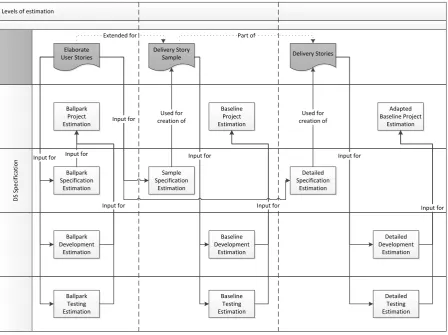
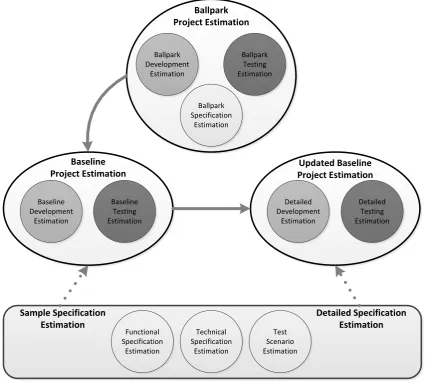
The key findings from this research effort include effort estimation as a recurring task that appears in four different levels of the project. Effort estimation takes place on: project level, DS specification level, DS development level and functional testing level. Estimations usually go through 3 phases, starting with a ballpark estimation. The ballpark estimation evolves into a baseline estimation and the baseline is updated once more detailed estimations are available. Effort estimation seems to work well as it is happening right now. All different occurrences of effort estimation could have added up to a big deviation in total project effort, but our findings indicate this is not the case. Many review- and approval-cycles are combined with a vast amount of software development experience, which leads to fairly good results when it comes to effort estimation. It can be concluded that in this project there is no urge to improve effort estimation, the current practices apparently work well enough.
5
Outline thesis
1 Introduction ... 8
1.1 Capturing requirements: User Stories to Delivery Stories ... 8
1.2 Research goal and research questions ... 9
1.3 Theoretical Significance: Contribution to Knowledge ... 9
1.4 Practical Significance: Contribution to Agile RE Approaches ... 9
1.5 Thesis outline... 10
2 Context ... 11
2.1 Tata Consultancy Services ... 11
2.2 Tata Research Development & Design Centre ... 11
2.3 Project context ... 12
3 Related work ... 13
3.1 Agile Software Development ... 13
3.2 Scaling Agile: Agile-in-the-large ... 14
3.2.1 Large-scale development in general ... 14
3.2.2 Agile/hybrid methods in large organizations ... 15
3.2.3 Challenges related to scaling agile ... 15
3.3 Distributed Agile Software Development... 16
3.3.1 Distributed Agile ... 17
3.3.2 Potential issues ... 18
3.3.3 Overcoming distribution issues ... 18
3.4 Agile Requirements Engineering ... 19
3.4.1 Requirements Engineering ... 19
3.4.2 Move towards agile RE ... 20
3.4.3 Agile approaches from an RE perspective ... 21
3.4.4 Agile RE practices in large-scale environments ... 22
3.5 Agile Effort Estimation ... 22
3.5.1 Estimation in distributed projects ... 23
3.5.2 Estimation in agile projects ... 23
4 Research approach ... 25
4.1 Research methodology ... 25
4.2 Thematizing ... 26
6
4.4 Interviewing ... 27
4.4.1 Conducting the interviews... 28
4.5 Transcribing ... 28
4.6 Analysing ... 29
4.7 Validating ... 29
4.8 Reporting ... 30
5 Results ... 31
5.1 Organizing Agile Projects ... 31
5.1.1 Creating agile artefacts ... 31
5.1.2 Applying agile ... 32
5.1.3 Approach ... 33
5.2 Types of Effort Estimation ... 36
5.2.1 Levels of Estimation ... 36
5.2.2 Estimation overview ... 38
5.2.3 Evolving estimations ... 39
5.3 Project Estimation ... 40
5.3.1 Project approval ... 40
5.3.2 Estimation at project level ... 40
5.4 DS Specification Estimation ... 42
5.4.1 Delivery Story Specification ... 42
5.4.2 Functional specification estimation ... 42
5.4.3 Technical specification estimation ... 45
5.4.4 Test scenario estimation ... 47
5.4.5 Change requests ... 48
5.4.6 Estimation at specification level ... 49
5.5 DS Development Estimation ... 50
5.5.1 Baseline development estimation ... 50
5.5.2 Detailed development estimation ... 51
5.5.3 Review on different levels ... 54
5.5.4 Estimation at development level ... 55
5.6 Functional Testing Estimation ... 56
5.6.1 Baseline testing estimation ... 56
5.6.2 Detailed functional testing estimation ... 57
7
5.7 Risk management ... 59
5.7.1 Estimation approaches ... 59
5.7.2 Change management ... 60
5.7.3 Dealing with dependencies ... 60
5.7.4 Dealing with uncertainties... 62
5.8 Inaccuracies ... 63
5.8.1 Overestimation ... 63
5.8.2 Underestimation... 64
5.8.3 Dealing with inaccuracies ... 65
5.9 Delivery Story Artefact ... 67
6 Discussion ... 69
6.1 Applying Agile ... 69
6.2 Estimation Inaccuracies ... 70
6.3 Estimation Reviews ... 70
7 Validity ... 72
7.1 Construct validity ... 72
7.2 Internal validity ... 72
7.3 External validity ... 73
7.4 Reliability ... 73
7.5 Limitations ... 73
8 Conclusions ... 74
9 Reflections ... 76
9.1 Acknowledgements ... 77
References ... 78
Appendices ... 82
A. Interview Protocol ... 83
1. Introduction ... 84
2. Setting up the Project Context ... 85
3. Effort Estimation (EE) Process (Concrete Cases) ... 86
4. Effort Estimation (EE) Process (General Observations) ... 88
5. Debriefing ... 88
B. Stakeholders ... 89
8
1
Introduction
Software effort estimation is not only a core task in any software development project, accurate effort estimation is a key factor for software project success. The importance of a reliable basis for making decisions has only increased with the rapid growth in the demand for high-quality software. Combined with the increased complexity of software and the global trend towards distributed projects, software planning and management is essential but at the same time increasingly difficult.
The introduction of agile software development has increased the difficulty that is related to accurate effort estimation. In agile projects, the requirements are developed along with the project and only sketched in a rough manner. This is completely different from traditional software
development projects where requirements are developed at the start of the project. This is why it is interesting to know how effort estimation works in a large-scale, outsourced and agile project. This study is concerned with the state-of-the-practice of effort estimation in such a project, in order to understand current effort estimation practices and identify possible causes for inaccuracies in those estimates.
This master thesis project is an extension of an existing research collaboration between the University of Twente (UT) in Enschede, the Netherlands and the Tata Research Development & Design Centre (TRDDC) in Pune, India. The Requirements Engineering team of TRDDC is working together with the Information Systems Group of the University of Twente in an academic
collaboration in the field of Agile Software Development. Both research departments are interested in the practice of capturing requirements and estimating effort in agile projects.
The following paragraphs will elaborate on requirements in agile software development, which gives a scope for the project and motivation for the research goal and research questions. This chapter continues with the theoretical and practical significance of this research and concludes with an outline of this master thesis.
1.1
Capturing requirements: User Stories to Delivery Stories
User stories are used in agile software development to help define the functions that a system must offer. User stories are a concise way of capturing requirements, with a focus on the 'who', 'what' and 'why'. Mike Cohn describes a format of “As a <role>, I want <goal/desire> so that <benefit/business value>” [25], which can be extended by mentioning the priority of the story and some acceptance tests on the back of the card.
9
1.2
Research goal and research questions
Requirements are very important to help cost estimation of software development projects, especially agile projects. Shari Lawrence Pfleeger [65] mentions that for most projects, the biggest component of cost is effort. Next to that, effort is also the cost component with the greatest degree of uncertainty. Therefore, the ability to accurately estimate effort would immediately generate business value for any (agile) software development project.
This interview study will focus on the aspect of effort estimation in agile projects that use DSs as a way to document the detailed requirements in large agile projects. The goal is to determine current effort estimation practices and the possible causes of inaccuracies in effort estimation in a leading large company engaged in outsourcing-contract-based software delivery. This study is part of a larger research initiative in which a future study will follow up on this research topic and will include effort estimation in agile projects that use user stories. The combination of these two research studies is expected to generate valuable insight in effort estimation practices in agile projects. To this end, the central research question in this thesis is:
How does effort estimation currently happen in agile projects that use Delivery Stories?
This central question in decomposed in the following sub-questions:
RQ1: What is known in published literature about the challenges in requirements-based effort
estimation in agile, distributed, and global projects?
RQ2: How does the vendor organize agile projects and who gets involved in the effort estimation
process as part of this?
RQ3: How are delivery stories used, at what point of time, and by whom in support of the EE
process?
RQ4: What problems are caused by inaccuracies in effort estimation in agile projects, if any?
If no problems occur, what does the team do to prevent problems from happening?
1.3
Theoretical Significance: Contribution to Knowledge
This research looks at effort estimation in agile, distributed, large-scale projects. This is recognized as a relatively new field of research [67]. Therefore, the main theoretical significance of this research is to contribute knowledge to research on large-scale, distributed and agile projects. More specifically, the objective of this study is to contribute to knowledge on the value of specific agile artefacts (DSs) and how such artefacts can be used to support the communication between software professionals.
1.4
Practical Significance: Contribution to Agile RE Approaches
10
the use of agile techniques for effort estimation in a large and distributed project, which can be used by practitioners to consider their own implementation of agile techniques.
1.5
Thesis outline
11
2
Context
A qualitative interview study [48] was conducted in which several practitioners within the same project were interviewed. The case study investigated how effort estimation (EE) was done in a large agile project. This chapter presents the context of this research, starting with a description the organization where this research was performed. This section concludes with a description of the project that provided the practitioners to interview for this study.
2.1
Tata Consultancy Services
This case study research was executed in a project of a multinational consultancy organization: Tata Consultancy Services (TCS). TCS offers information technology (IT) services, business solutions and outsourcing services. It was founded in 1968 and is now a leader in the global marketplace and among the top 10 technology firms in the world [1]. One of the main advantages of TCS is the focus on innovation. TCS has a global network of 19 Innovation Labs that collaborate with technology partners and universities to research key emerging trends [2]. The Tata Research Development & Design Centre is one of these Innovation Labs.
2.2
Tata Research Development & Design Centre
The Tata Research Development & Design Centre (TRDDC) was established in Pune, India in 1981 by Tata Consultancy Services (TCS). The TCS Innovation Labs - TRDDC is one of India's premier research centres and houses the largest R&D facility among all TCS Innovation Labs2.
TRDDC creates tools and processes that simplify the development, maintenance, and management of large IT and engineering systems. The research is divided into 3 distinct areas: Software Engineering, Process Engineering and Systems Research.
The Software Engineering lab consists of different research groups that seek to improve various phases of a software development lifecycle. The Requirements Engineering (RE) research group, that I was a part of, belongs to this Software Engineering lab.
This research group in TRDDC collaborates with researchers from the University of Twente (UT) in the Netherlands, more specifically, with the UT’s Information Systems Group. These two research groups share research interests in the area of RE in Agile Software Development projects. These mutual areas of interest have resulted in academic collaborations in the area of client-driven Agile Requirements Prioritization.
As a continuation on the existing research in the area of Agile Software Development, this research aims to gain insights in the process of Effort Estimation (EE) in large agile projects. Collaboration with TRDDC created the opportunity to examine the current EE practices in very large, distributed
software development projects.
12
2.3
Project context
The project that was used for this case study is part of a typical outsourcing project organization [37]. It consisted of 3 releases and the project was aimed at replacing an existing enterprise system for a large client in the insurance business. At the time of the research, the second release was being finalized and the managers were busy preparing for the third release. The first release took 18 months and had around 55.000 person days of effort. The effort involved in release 2 was similar to the first release, but this was executed in less than 12 months. This is explained by the amount of people that were working for the project, between 200 and 300 for release 1 and a peak team size of 400 people for release 2.
The whole development was done in an onshore-offshore model. The vendor company workforce was distributed between 2 sites, where about 90% of the resources was located offshore and only 10% onsite at the client. There were different channels of communication available between the sites, from video conferencing to telephone and mail. These communication channels were complemented by short term visits between sites. Communication with the customer mainly
happened through video conferencing and the other way of communication was during two-monthly workshops with the customers.
13
3
Related work
This chapter contains background information on literature that is related to this research. Sections 3.1, 3.2 and 3.3 introduce agile software development, agile-in-the-large and distributed agile software development. Sections 3.4 and 3.5 discuss agile RE and agile cost & effort estimation.
3.1
Agile Software Development
The term ‘agile’ by itself means that something is flexible and responsive, so ‘agile methods’ can be defined as the “ability to survive in an atmosphere of constant change and emerge with success”
[11]. It is difficult to give one good definition for agile software development, but all agile
methodologies emphasize close collaboration between the programmer team and business experts, face-to-face communication which is considered to be more efficient than written documentation, frequent delivery of new deployable software with significant business value, self-organizing teams and ways to deal with inevitable requirements changes [9]. Put simply, agile development is a different way of managing IT development teams and projects.
The movement of using agile methods in software development already has a huge impact on how software is developed around the world [30]. In 2001, the official definition of Agile Software
Development was written down by a group of noted software professionals. The ‘Manifesto for Agile Software Development’ [7] reads as follows:
We are uncovering better ways of developing software by doing it and helping others do it. Through this work we have come to value:
Individuals and interactions over processes and tools
Working software over comprehensive documentation
Customer collaboration over contract negotiation
Responding to change over following a plan
That is, while there is value in the items on the right, we value the items on the left more.
This manifesto shows the main difference between traditional development (the items on the right) and agile development (the items on the left). The principles behind the agile manifesto [8] highlight the importance of satisfying the customer through: continuous delivery of working software,
handling changing requirements, effective and efficient communication between stakeholders, self-organizing teams and simplicity (maximizing the amount of work not done). These agile principles are applied by means of agile methodology: iterative development in the form of sprints, regular
meetings (daily scrum, estimation, planning and review meetings, etc.) and agile artefacts (among others a product backlog and sprint backlog).
Agile methods seem to have serious challenges, such as the difficulty of close customer collaboration and the unsustainability of an on-site customer’s role for long periods and the difficulty of
introducing agile methods into large and complex projects [31]. However, agile methods also have many advantages and can improve job satisfaction, productivity, and customer satisfaction [31]. Because of these advantages, companies are adopting more and more agile practices while searching for solutions for the limitations.
14
software organizations. Nearly half of the responses mentioned that their companies have been practicing agile for over 2 years. This survey shows that interest in Agile Software Development practices are relatively new but ever-increasing in software organizations.
Regardless of the size of projects, the interest towards agile approaches arises mainly from the same needs, but the actual implementation is different [12]. Agile practices require much more tailoring in large companies than in smaller ones [52], and the application of agile on a larger scale can cause challenges that are specific to large agile projects [44]. The next section discusses these challenges of agile-in-the-large.
3.2
Scaling Agile: Agile-in-the-large
Agile methods hold the promise of rapid and efficient software development [12]. Organizations adopt agile practices to become more competitive, improve processes, and reduce costs [14]. Despite the fact that many agile methods seem to be best suited for small and medium projects [19], larger companies also try to gain advantage from the adoption of agile practices [81]. However, large organizations face an additional challenge in the integration of agile practices with existing standards and business processes [14].
Large, complex organizations and projects naturally have many interdependencies that require a large amount of coordination. Therefore, less costly forms of coordination like standardization and planning are easier to control in such situations. Research indicates that most people in large projects and organizations find it hard to implement mutual adjustment coordination on a large scale. Agile methods depend on such mutual adjustment, which is why these methods are usually not preferred for large, complex projects or mature organizations [14].
Mature organizations face another complication that is related to their IT governance frameworks such as ITIL, CMMI or COBIT [14]. These frameworks ensure alignment of IT with business goals and provide structure to IT development and management processes. In a typical agile environment, structure established by a governance framework might hinder project progress [20].
3.2.1 Large-scale development in general
Large projects were very often developed using intensive analysis, design and documentation. Such rigorous development processes were believed to be the only way to deliver the software in these large projects [47]. This approach is being challenged by today’s business context, since business change is deemed vital to an organization’s survival and evolution in order to adapt to its
environment and Ktata and Lévesque mention some of their main concerns for this reengineering [47]:
Uncertainty and rapid change – being too slow to accommodate this uncertainty and rapid
change leads to obsolete software and customer dissatisfaction.
Obsolescence - When deployed, many software solutions are already obsolete merely
because they do not fit to the new business reality of the host organization. This is caused by the development time and conflicting stakeholders’ expectations.
Difficulty of software valuation –Business value is not always tangible and very subjective.
15
Koehnemann and Coats [44] describe several characteristics and challenges of large projects:
The first challenge is the overall scope and complexity of large projects. Large projects typically involve broad sets of both technical and domain knowledge skills and as such, no particular individual will grasp the entire project or even a majority of it.
Large systems require documentation to communicate these system complexities.
Large projects usually involve subcontracts for building or integrating (substantial) parts of the system. This involves team members from different organizations and has consequences for the concept of “team”.
Reporting, governance and compliance place additional burden on large projects. For
contractual and potential legal reasons, large projects must track the work implemented, when, by whom, the effort it took, etc.
Because of these characteristics, it can be very difficult to apply agile practices to large projects and organizations. For example, agile projects do not use comprehensive documentation, while large projects require documentation to communicate the complexities. This results in a situation where a balance is needed between the limited documentation of agile projects and the extensive
documentation of large projects, which is difficult, but not impossible [53].
3.2.2 Agile/hybrid methods in large organizations
Many companies are experimenting with the application of agile practices to projects that involve hundreds of developers and testers that are spread around the globe [3, 12, 14, 15, 32, 34, 44, 47, 77]. They all make adaptations to agile practices or create hybrid approaches to make agile work in their organization.
A study by Koehnemann and Coats [44] presents agile practices that the authors have seen scale successfully to large systems and they provide tips about how to apply these practices in large organizations. The authors mention a valuable lesson learned: “A best practice is not to use the term
[Agile Methods] and instead describe the practices as a more common sense, efficient approach for achieving the same development goals” [44]. Despite some inherent challenges, the authors believe that it is possible to apply agile practices to large systems.
Opposed to that, Barlow et al. [14] state that a purely agile methodology is not suited for general use at large, mature organizations. The authors recommend the implementation of a traditional/agile hybrid solution that will enable project teams to take advantage of the organization’s maturity in software development while gaining advantages of agile development such as adaptability to changing requirements.
3.2.3 Challenges related to scaling agile
It is becoming clear that much has been written about adopting agile software development within a large organisation. Next to literature on agile methods that would be suitable, many authors mention challenges and limitations to scaling agile.
16
While applying agile to large projects, it is possible to break up projects in sub-teams [32] or adopt a ‘scrum of scrums’ approach [47]. These methods are being used in large projects, but they create another challenge in applying agile practices; the communication between teams.
Elshamy and Elssamadisy [32] try to reduce the need for communication and propose to start by conquering the core project and only divide the project work afterwards. With this method, a significant portion of the architecture and business value is delivered before the work is divided and this creates a higher success-rate of small sub-teams to grow the project into a functional software system. However, an organized way of dividing the work will help to reduce communication, but there will always be a need for good and clear communication between development teams to coordinate the work. Communication is also necessary to identify and prioritize the stakeholders’ most success-critical expectations and potential sources of business value [47].
In research on the limitations of agile software processes [80], Turk et al. mention the following limitations:
Limited support for distributed developments.
Limited support for sub-contracting.
Limited support for development involving large teams.
Limited support for developing safety-critical software.
Limited support for developing large, complex software.
According to Ktata and Lévesque [47], main reasons for these limitations could be summarized in two main categories tightly related to the applicability of agile practices in large-scale development:
1. Co-location and Face-to-face collaboration issues (Requirement engineering problems)
2. Weaknesses in the decision making process (governance problems)
The next section will continue on co-location and face-to-face collaboration issues, by discussing the field of distributed agile software development as a special case of agile-in-the-large.
3.3
Distributed Agile Software Development
The previous section showed that applying agile on a large scale can create issues with regard to distribution: specifically, co-location and face-to-face collaboration issues. In any large project, some form of distribution of work and teams is necessary to manage the work. For years, many
organizations have taken advantage of doing distributed software development projects, which involves cooperation and collaboration between teams located at different locations [23].
It is possible to define three levels of distribution, i.e. local, distributed and global [22]:
Local teams are located at the same site and could meet daily for face-to-face meetings.
Distributed teams do not have the ability to meet personally very often, but they can
compensate through technological means, e.g. telephone and video conferencing, to have synchronous communication.
Global teams are located around the globe and have very few overlapping working hours
17
Distribution has many advantages. Reduced cost is a main reason for moving into distributed projects [78], but another driver is higher flexibility of competences and resources [28] of talented knowledge workers around the world. However, it is considered unavoidable for software projects with
geographically, temporally or socio-culturally dispersed teams to experience unique pressures and challenges [74]. These challenges are related to (asynchronous) communication [74, 78], a reduced media richness [26, 45], coordination and collaboration [74] and a lack of trust [23].
3.3.1 Distributed Agile
“As information technology’s role in the modern economy has grown in importance, software developers have found themselves confronted with the challenges of exceptional complexity” [74]. Many software developers have welcomed agile software development [74], as a way to deal with complexity of changing requirements, stakeholder needs, software features and functionality [7, 8]. Agile development promises an increase in productivity [31, 69, 74], innovation [74], quality and value of the software developed [69]. Other benefits of agile development are increased employee satisfaction [74] and customer satisfaction [31].
Distribution promises organizations the benefits of sizable cost reductions [69, 78], higher flexibility of resources and competences to obtain extra knowledge around the world [28, 74], and many other advantages such as: reducing time-to-market, increasing efficiency, improving quality, expanding through acquisitions and reaching proximity to market [74].
Combining distribution and agile is a very attractive possibility, especially in fast-paced and
constrained commercial software engineering projects [69]. However, it can be very challenging to apply agile methods in distributed software projects, because the nature of agile projects with co-located team members is quite the opposite of that of distributed teams co-located at different
[image:17.595.64.527.501.654.2]locations [23, 78]. Table 1 shows some of the fundamental differences between agile and distributed software development [74].
Table 1: Characteristics of agile versus traditional distributed software development [74]
Characteristics Agile Development Distributed Development
Communication Informal
Face-to-face Synchronous Many-to-many
Formal
Computer-mediated Often asynchronous Tunnelled
Coordination Change-driven
Mutual adjustment, self-management
Plan-driven Standardization
Control Lightweight
Cross-functional team
Command-and-Control Clear separation of roles
18
3.3.2 Potential issues
Because of the fundamental differences between agile and distributed development, conflicts exist between the assumptions underlying the two ideas [69]. Agile distribution is possible, but it is not without challenges.
Teams will have to deal with globally distributing work, because companies attempt to maximize the benefits of such global distribution. This results in a multi-site and multi-cultural working
environment, where differences in culture, communication, working practices and vision can become barriers to implementing agility in distributed environments [75].
The geographical separation of stakeholders and teams also makes it difficult to follow many of the fundamental concepts promoted by agile approaches [74]. Some issues that arise when agile is used in global projects are: Team organization, Inter-team communication, Legacy processes, Process refinement and Integration issues [13].
To make agile work in a distributed environment, it is important to tailor agile practices and compensate the lack of co-location and face-to-face interaction through innovative information technology and communication tools [74]. In successful agile and distributed projects, new
challenges are recognized and solutions and methods are put in place to overcome these challenges [69].
3.3.3 Overcoming distribution issues
Communication is often mentioned as one of the big limitations of distribution [45, 69, 70]. It is sometimes argued that agile practices can solve these communication problems as long as the agile practices are adapted and augmented to counter the challenges of distributed teams [70].
[image:18.595.66.524.520.730.2]Other authors also reason that agile processes are very effective in addressing the needs of large distributed projects as long as incremental improvements are used to create successful applications or systems [13]. Table 2 contains an overview of the impact of agile techniques on global projects.
Table 2: How agile affects global projects [13]
Agile Practice Impact on global projects
Frequent, short iterations with ‘demo-able’ results
Avoid excessive up-front planning and design work Better handling of unstable requirements
Help manage customer expectation
Product owner Provide a representative for all stakeholders
Keep features prioritized according to changing business reality
Continuous Integration Avoid late discovery of integration issues
Improve system level understanding and testing in the project Develop storyboards
and prototypes
Storyboards and prototypes are a powerful way to collaborate with remote domain experts on features.
Help test new technology before introducing them in projects Access to domain experts is
critical
19
While it can be challenging to combine the principles of agile and distribution, the benefits and rewards of distributed agile are potentially immense. Agile processes bring a certain level of productivity, high value and efficiency, while distribution offers scalability, cost benefits and development size [69]. There are also intangible benefits to the combination of agile practices and distribution: software engineers from different places can work together in the intense way that belongs to agile practices, with the corresponding learning, improvement and eventually greater quality [69].
“Effective distributed agile development is at its core about finding alignment between the values and principles of agile manifesto and the values and practices of the organization adopting it.” [75]
3.4
Agile Requirements Engineering
Earlier sections already highlighted that organizations adopt agile practices to be more competitive, improve processes and reduce costs [14]. Agile methods can be used to speed up software
development [12], which helps to cope with the rapidly changing business environments in which most organizations operate. However, it is exactly this environment that is challenging traditional requirements-engineering (RE) approaches [24].
3.4.1 Requirements Engineering
Requirements are the basis for every project. Requirements define what the stakeholders – users, customers, suppliers, developers, businesses – in a new system need from it and what the system must do in order to satisfy that need [36]. RE is the process of establishing those needs, both the services that the customer requires from a system and the constraints under which it is developed and operates [27].
The RE process consists of five main activities [46]: Elicitation, Analysis and Negotiation, Documentation, Validation, and Management. In traditional RE methods, work begins with the elicitation and documentation of a “complete” set of requirements. This will be followed by documentation of the architectural and high-level design, development and inspection [27].
The main goal of a RE process is creating a system requirements document for knowledge sharing [27]. The aim of RE is to help to know what to build before system development starts in order to prevent costly rework [64]. Once these requirements are communicated and agreed upon between stakeholders, the requirements drive the project activity. Requirements therefore form the basis for: Project planning, Risk management, Acceptance testing, Trade off, and Change control [36].
Traditional RE has some reported challenges, namely Overscoping [17], Communication gaps [18], Keeping the Software Requirements Specification (SRS) updated, Development Work Monitored from Requirements and Manual Selection of Requirements for Products [16]. Next to these challenges, the traditional way of RE has been challenged by the rapidly changing business
20
3.4.2 Move towards agile RE
RE and agile approaches are often seen as being incompatible. RE often relies heavily on documentation for knowledge sharing and agile methods focus on face-to-face collaboration between developers and customers to share knowledge [64]. The requirements in traditional RE are documented in specific requirements artefacts by RE specialists. This is usually done in a phase that is separated in time from design and development. In contrast, the detailed requirements in agile RE are defined gradually in interaction between the customer and the developers [16].
[image:20.595.64.532.344.606.2]It has been suggested by proponents of agile methods that because of constant interaction with the customer throughout the agile development process, teams are likely to achieve higher customer satisfaction [68] in addition to speeding up the development process [12]. However, agile RE is often less formal and requirements are not always documented [16]. This informal nature of agile RE practices may be considered unacceptable [63]. Agile methods and RE are pursuing similar goals in key areas like stakeholder involvement. The major difference can be found in the emphasis that is put on the amount of documentation needed for a successful project [64] This is supported by Ramesh et al. [68] in the table below that shows traditional and agile approaches for RE practices.
Table 3: Traditional and agile approach for RE activities [68]
RE activities Traditional RE approach Agile RE approach Agile practices used to
support the RE activities Requirements
elicitation
Discovering all the requirements upfront
Iterative: requirements evolve over time and are discovered throughout the development process
Iterative RE Face-to-face communication Requirements analysis and negotiation
Focus on resolving conflicts
Focus on refining, changing and prioritizing requirements iteratively Iterative RE Face-to-face communication Constant planning Extreme prioritization Requirements documentation Formal documentation contains detailed requirements Little formal
documentation. Focus on the essential instead of volume.
Face-to-face communication
Requirements validation
Focus on the consistency and completeness of requirements document
Focus on value creation by ascertaining whether the requirements reflect current user needs
Review meetings Face-to-face communication
Table 3 shows that even though the activities are still the same, the focus of and the specific way to execute these RE activities are different. An important difference can be found in the amount of documentation that is needed for each type of RE approach. To support the RE activities without generating (too much) formal documentation, several agile practices are used. The most important agile practice is the use of frequent feedback cycles with client involvement using face-to-face communication, which decreases the need for formal documentation and increases the customer involvement [64]. Another practice is the use of iterative RE. Instead of discovering all requirements upfront, the iterative aspect of agile RE lets requirements evolve and new requirements can be
discovered throughout the development process. According to De Lucia and Qusef [27] “the main
21
3.4.3 Agile approaches from an RE perspective
Agile RE focuses on essential documentation instead on the volume of the documentation, with user stories [4] as the most visible representation of requirements in many agile projects (see section 2.4). Defining requirements with user stories is a way to facilitate the communication between business and engineering roles, and increase the probability of capturing and meeting the customers’ expectations [16].
Next to the user story, there are several RE techniques and practices that are used for agile approaches to RE [64]. These techniques include intensive customer involvement, interviews to provide access to the needed knowledge, prioritization of features that deliver the most business value, a limited amount and scope of documentation which increases the chances that the
documentation can be kept up to date when the software is changed and frequent review meetings and acceptance tests for requirements validation.
“The processes used for agile RE vary widely depending on the application domain, the people
[image:21.595.64.532.366.771.2]involved and the organization developing the requirements”[27], but Cao and Ramesh have identified 7 agile RE practices that are used in business environments [24]. These practices are summarized with an overview of the benefits and the challenges in table 4.
Table 4: Agile RE Practices (based on research by Cao and Ramesh [24]
Agile RE practices Benefits Challenges
Face-to-face
communication over written specifications
Customers can steer the
project
Decreased need for
time-consuming documentation and approval processes
If high-quality interaction is not possible, this approach poses risks for inadequate or wrong
requirements
Iterative requirements engineering
Improves relationship with
customer
Requirements are clearer
and more understandable
Cost and schedule estimation
Minimal documentation
Non-functional requirements
Extreme requirements prioritization
Involved customers generate a better understanding of priorities
Continuous reprioritization can lead to instability
Managing requirements change through constant planning
The early and constant validation of requirements largely minimized the need for major changes
This could lead to redesign of the architecture after early cycles, which could add to project cost
Prototyping Improves communication with
customers to validate and refine requirements
Maintaining or evolving
prototypes is difficult.
Could lead to unrealistic expectations of customers Test-driven
development
Tests capture complete requirements and design documentation that are linked to production code
A major challenge to TDD adoption is that developers aren’t accustomed to writing tests before coding
Use review meetings and acceptance tests
The review meeting help to obtain management support by providing frequent updates on project status and progress
22
The findings of Cao and Ramesh support Bjarnason et al [16], who wrote that agile might solve some challenges of traditional RE, but it also creates new challenges. One of those challenges are problems with cost and schedule estimation [68], which will be further discussed in the next section.
3.4.4 Agile RE practices in large-scale environments
Agile methods can play an important role in the management of large projects [27]. Larger parts of the project can be decomposed and the sub-components can be developed by agile teams in other time zones and other countries, provided that frequent communication and self-organization are established.
As mentioned in the earlier section, agile practices remedy several challenges and issues that are related to traditional RE in large-scale software development, but they also create some new challenges. For example, Bjarnason et al. [16] point out that transferring an organization to agile RE practices in itself is a significant challenge that requires major mind-set changes.
3.5
Agile Effort Estimation
Software development effort mainly consists of human effort that is needed for high-level design, detailed design, coding, unit testing, integration testing and customer acceptance testing. Effort can be seen as a surrogate for software development cost, because cost for the effort of personnel is the main cost in software development [10].
Software development effort estimates are the basis for project bidding, budgeting, planning [35],process and productivity improvement, change management [79], investment decisions, risk analysis and expectations management [62]. There are a lot of methods which can be used for effort estimation, a few examples that are used frequently are [40, 62, 66]:
Parkinson's estimation Estimation based on the available resources.
Top Down estimation Start estimating using the general functionality.
Bottom Up estimation Start by considering the estimation of the required system components.
Estimation by analogy Estimation based on a comparison with similar projects.
Expert judgment Estimation based on intuition and experiences from other projects.
Good effort estimation is critical to any project. Pessimistic budgets and plans can lead to lost business opportunities, while over-optimism can result in significant losses [38, 39]. However, it is difficult to provide accurate effort estimates. One review study mentions that 70-80% of software development projects overrun their estimates with an average of 30-40% extra effort [60].
23
3.5.1 Estimation in distributed projects
Project distribution has intensified over the past years, where reducing development costs was one of the driving reasons for this development practice. This explains why software development effort estimation has a very important role in achieving a reduction of costs [51]. Accurate effort estimation is considered crucial to software development project success, especially in globally distributed projects [61]. Despite this importance, a limited amount of research on effort estimation in distributed projects is available.
A study by Peixoto et al. [51] studied the choice of specific estimation techniques in globally
distributed projects. They concluded that people select the estimation methods based on what they know and not based on what is best for the project. Another main conclusion was that even teams in the same country, organization and development methodology choose different estimation
techniques to estimate effort.
More recent research by Ramasubbu and Balan [67] continues on their earlier research on aspects of globally distributed software projects. The researchers state that early stage project cost estimation remains a significant challenge. Such early stage effort estimations are crucial for the profitability of projects, especially in a fixed price contracting model [67]. The researchers identified problem root causes of poor project effort estimation at their case study companies:
1. Missing information
2. Simulation capabilities
3. Lack of experience with current tools
The solution to these root causes was the introduction of “learning-oriented cost estimation”, which is “a case-based reasoning approach to tap into existing organizational memory (past project
experiences available across firms) to help less experienced managers learn from other projects” [67]. This solution is general enough to be applied to other distributed software development projects. As can be seen in chapter 5, this solution was also applied in the project that was used for this research.
3.5.2 Estimation in agile projects
The application of effort estimation methods in agile projects is a very important task, but also a very difficult one. Classical estimation methods need well defined requirements. Agile methodologies don’t offer well defined requirements at the start of a project [71]. In agile software development projects the requirements are developed along with the project and only briefly written down in user stories [5]. The user stories may change during the project and such change requests are an
important challenge. Methods for agile effort estimation must support the brief and ever changing requirements in such projects.
An effort estimation method that is typical for agile projects is planning poker, which belongs to a set of group estimation techniques [59]. Planning poker is used as a method to guide estimation
24
Research by Børte et al. [21] argue that social interaction plays a crucial role in software effort estimation. The researchers call the step from reasoning to decision-making the“ magic step” and believe social interaction might be the answer. Currently, individual knowledge is the dominating orientation for the specification of the work that is needed to solve tasks. This knowledge becomes activated by the participants during social interaction, which is why planning and estimation should be understood as a social practice.
25
4
Research approach
This section covers the selection and the use of research methodology in this research project. It will continue with a description of the design of the interview protocol and the execution of the
interviews. After an explanation of the capturing and analysis of data, this section will be concluded with an elaboration on the structuring and modelling of the results.
4.1
Research methodology
This research project adopted a case study research approach. A case study gives you a chance to analyse one aspect of an individual unit [58], usually a real world problem. There are different types of case studies, depending on the purpose of the research. There are exploratory, explanatory and descriptive case studies [83]. This thesis research is constructed as an exploratory case study, which is a type of research that is suitable for a problem that has not been clearly defined. Results of exploratory research can provide substantial insight into a given situation [76]. This type of case study is most suitable for this research, because this is an initial research to look for ways in which effort estimation is currently being done in a large-scale, agile project. In this type of research you start with collecting the data after which structured analysis will help to make sense of that data. The goal is to come up with a model to view this data.
There are different strategies for the selection of samples and cases [33]. A random selection would allow for generalization for the entire population, while information-oriented selection maximizes the utility of information from small samples and single cases. In the case of information-oriented selection, “cases are selected on the basis of expectations about their information content” [33]. This research used information-oriented selection because the scope was limited to agile projects. With this type of selection in mind, there are different types of case study designs, from single-case to multiple-case designs. Single-case designs are vulnerable, because you will put “all your eggs in one basket”[82]. But even though multiple-case designs may be preferred, Yin [82] states that the single-case study is an appropriate design under several circumstances. One of these circumstances is when the case represents a unique case where a new phenomenon is researched. During this research, the vendor company only had one agile project in which DSs were used. Because of this unique case, the researchers decided to use a single-case design.
In this case study, the team of researchers used a multi-method approach, with interviews to collect the data and a Grounded Theory approach to analyse the data. The data analysis was done manually, without the help of specialized software programmes. There are many more possible sources of evidence in case study research [83]. Due to practical limitations data gathering was done only by means of interviews. However, for the purpose of getting an overall picture of how effort estimation is embedded in the software development process, we don’t think that studying additional
documents would have yielded essentially different insights.”
26
The research team split up the work as follows: the author of this thesis designed the questionnaire in collaboration with a TRDDC researcher. The questionnaire was reviewed by two senior researchers at UT and piloted with one interviewee. Two TRDDC researchers helped to gain access to contacts willing to participate in the study. One TRDDC researcher accompanied the author of this thesis in the interview sessions and ensured the scripts reflect what the interviewees indeed have said. The author of this thesis created all transcripts, which were checked by the researcher from TRDDC. The analysis took place in multiple stages. Three researchers (the author, the TRDDC researcher and one supervisor from UT) worked on the analysis in relative isolation, after which they discussed their analytical results over email. The author of this thesis coded all transcripts, the TCS researcher also coded parts of the transcripts and the UT supervisor coded 5 interviews. The author combined all codes to create a final set of categories and codes, creating a mind-map to structure the results. The results, discussion, validation and conclusion were generated and written down by the author and improved with feedback of two senior researchers from UT.
4.2
Thematizing
The first stage of any interview project is thematizing. “Thematizing refers to the formulation of research questions and a theoretical clarification of the theme investigated” [48]. In this stage it was about the why and what of the research. The purpose of this research was written down in the research goal (see section 1.1):
This interview study will focus on the aspect of effort estimation in agile projects that use delivery stories as a way to document the detailed requirements in large agile projects. The goal is to determine current effort estimation practices and the possible causes of
inaccuracies in effort estimation in a leading large company engaged in outsourcing-contract-based software delivery .
Literature on effort estimation was used to obtain some form of theoretical clarification of the topic that would be investigated. This literature was partially acquired from some researchers with
previous knowledge of the effort estimation field. The set of literature was further increased using an unsystematic search for recent publications.
4.3
Designing
Designing the interview involves the “how” of the study [48]. This included both the design of the questionnaire as well as the planning of the interviews with the practitioners.
Interviews as a source of evidence have both strengths and weaknesses. Interviews are targeted and insightful, but weaknesses include a bias due to poor questions, response bias, incomplete
recollection and reflexivity [83]. These risks have been addressed in the design of this research.
To prevent a bias due to poor questions, the questionnaire has been designed by 2 researchers (the author of the thesis and the TRDDC researcher) with a different background (where one had more practical experience and the other more theoretical experience). After several iterations of
27
Due to cultural differences there was a possibility that a response bias would arise. Even though a response bias mostly occurs in the formulation of a question, it was not clear how much the cultural differences would affect the answers from the respondents if they would answer with what they thought the interviewer wanted to hear. To prevent misunderstandings due to pronunciation-differences as well as the meaning of language (both body language and spoken language), the interviews were conducted by 2 interviewers (with one from the local culture).
To rule out incomplete recollection, the interviews were recoded and both interviewers made notes of striking behaviour or remarkable comments. Reflexivity arises when an interviewee is influenced by the interviewers (or other observers). This was difficult to take into account during the design stage. We became more aware of reflexivity during the interview stage.
It was difficult to plan the interviews with the practitioners and we would not have been able to do this without the involvement of a high-level manager in the organization. This manager organized 2 days of non-stop interviews with participants in the project. We made sure to ask for practitioners with different roles in the project but since these interviews were arranged based on availability of practitioners, we didn’t have a say in the selection of interviewees.
4.4
Interviewing
A research interview is an interpersonal situation, a semi-structured conversation between the interviewer and the interviewee [48]. A semi-structured life world interview seeks to “obtain descriptions of the life world of the interviewee with respect to interpreting the meaning of the described phenomena” [48]. According to Kvale and Brinkmann, the interview should have a sequence of themes to be covered, with some suggested questions but openness to changes of sequence and the form of questions.
In order to comply with these recommendations, the questions in the interview protocol (see Appendix A) were ordered to different themes. Each section of the interview contained suggested questions and hints for follow-up questions if applicable. The questions were complemented by precise script, which was read to each participant during the interview to introduce the new themes and the accompanying questions. The interview guide was not always strictly followed, because some questions could not be answered by every interviewee. The two interviewers (the author of the thesis and the TRDDC researcher) decided during the interview which questions to ask, when to ask one or several follow-up questions and when not to ask a question.
To establish a good contact with the interviewee, each interview was introduced by a briefing. During this briefing, the interviewers introduced themselves, explained the purpose of the interview, asked for permission to use a sound recorder, and so on. The interviewers finished each interview with a short debriefing, where the interview was rounded off and the interviewee had the opportunity to say something more or to ask questions.
28
The manager that arranged the interviews with the practitioners expressed the wish to sit in on the interviews to observe and learn. This might have influenced the interviewees, but it is not possible to determine how.
4.4.1 Conducting the interviews
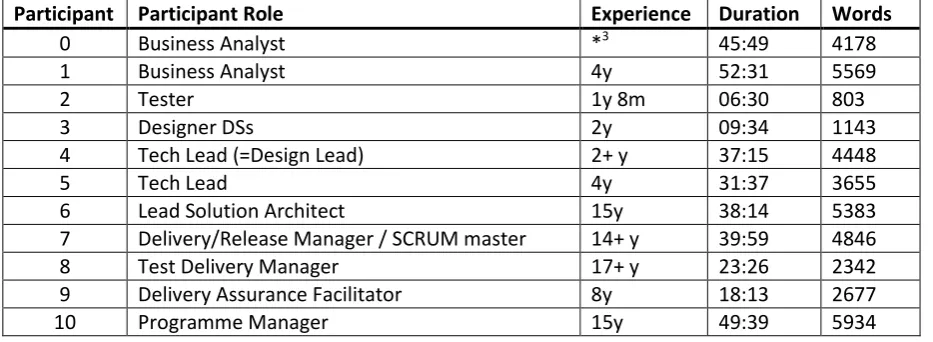
In total, 11 interviews were conducted by the 2 interviewers with participants in different roles in the project (see table 5). All interviews were conducted face-to-face, on-site of the project. The
interviews took around 40 minutes, with a few outliers as can be seen in the table. The reason for these outliers can be found in the roles of the participants in the project. In case of participant 2 and 3, the interviewers concluded during the interview that the interviewees had never been aware of any effort estimation. It was still possible to ask questions about general processes within the project, but the duration was considerably shorter because a large part of the questionnaire was not applicable for these interviewees.
[image:28.595.64.531.338.509.2]More information on the roles of different stakeholders that participated in this project and the stakeholders that were mentioned during the interviews can be found in appendix B.
Table 5: Overview of the interviews
Participant Participant Role Experience Duration Words
0 Business Analyst *3 45:49 4178
1 Business Analyst 4y 52:31 5569
2 Tester 1y 8m 06:30 803
3 Designer DSs 2y 09:34 1143
4 Tech Lead (=Design Lead) 2+ y 37:15 4448
5 Tech Lead 4y 31:37 3655
6 Lead Solution Architect 15y 38:14 5383
7 Delivery/Release Manager / SCRUM master 14+ y 39:59 4846
8 Test Delivery Manager 17+ y 23:26 2342
9 Delivery Assurance Facilitator 8y 18:13 2677
10 Programme Manager 15y 49:39 5934
4.5
Transcribing
There are two important requirements for transcribing [48], recording the interview and making sure that the recorded interview is audible to the person that is making the transcript. All interviews in this research were recoded using the audio-recording option of a smartphone. The interviews were performed in a closed-off conference room and the only disturbances on the recordings were the door opening and closing.
The recordings were transcribed by one of the researchers and checked by another to make sure everything was written down correctly. The interviews were transcribed in a partial verbatim style, because in a complete formal, written style the interpretation of the transcriber could influence the original meaning of what was being said by the interviewees. The interview transcripts are available in a separate document.
3
29
4.6
Analysing
To organize the interview texts and find meaning into what was said, this research used the approach of coding and categorization. Coding involves “attaching one or more keywords to a text segment in order to permit later identification of a statement, opening it for quantification” [48]. The goal of coding is to compare codes and develop categories that capture the data, leading to saturation when no new insights and interpretations emerge from further coding [48]. Coding can take the form of categorization, when the codes are put in categories to create an overview of the main themes. Codes play an important role in Qualitative Data Analysis (QDA) within the Grounded Theory Approach [29].
Grounded Theory is a methodology, a way of thinking about and conceptualising data [49]. The purpose of Grounded Theory is to develop theory inductively [48], which describes processes such as those in organizations [6]. Grounded theory is often used in social science disciplines, but it is also an excellent method for studying software engineering [6]. Grounded Theory was used in this research because this approach is useful in areas that have not been previously studied.
QDA can be described as a process of Noticing, Collecting and Thinking about interesting things with a process that is iterative and progressive, recursive and holographic [73]. Noticing includes
interviewing to collect data as well as coding the data. In the first stage of data analysis, coding resulted in dozens of codes without any consistency between different interviews. Collecting and sorting the pieces of the puzzle is the next step, for which it is possible to use a “grounded theory” approach. During the coding of the first interviews 3 researchers worked together to code
transcripts. Comparing the coded transcripts led to a more complete overview of applicable codes, which increased internal validity. For the first interviews mind-maps were used to create overviews of (the relation between) the codes within each interview. This resulted in some preliminary categories in which the codes were organized. At this stage there was still no real consistency between different interviews, although a big set of codes reappeared in every interview.
Data analysis is more than coding and sorting, thinking is important to examine everything that has been collected, look for patterns and to make discoveries [73]. Thinking can also be supported by a grounded theory approach. After 6 interviews it was clear that no new codes would appear in the remaining interviews. The mind-maps of these interviews were combined by one researcher to create one ‘master’-mind-map, with a final set of categories and codes. The complete mind-map can be found in appendix C. These codes were used for the remaining interviews and the categories were used for the last stage in this research approach: reporting.
4.7
Validating
Validation of any research is important to judge the quality of research designs [82]. There are several principal issues of validation of interview research, concerning objectivity and reliability [48]. Validation is mentioned separately because of its importance, it does not belong to a separate stage in the investigation. Each stage in the interview investigation entails certain validity issues, which have been addressed by the validations in each of the subsections of this research approach.
30
4.8
Reporting
There are some common issues regarding research reports that should be considered while working on a report [48]. To guarantee the ethics of reporting, informed consent was taken into account before the interview situation and confidentiality was reckoned with during transcription of the interviews.
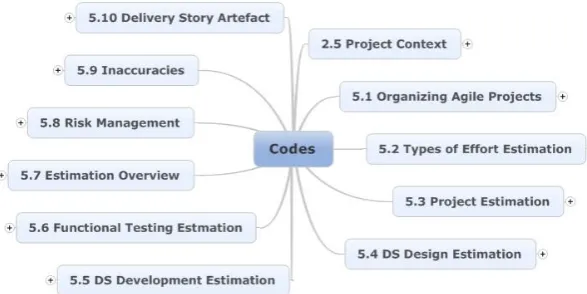
[image:30.595.147.441.290.437.2]It was suggested that interview reports would become more readable if the final report was taken into consideration from the very start of the research [48]. The standard format for reporting interviews (introduction, method, results, and discussion) was used to structure the report. The results were structured using the codes that surfaced during the analysis. The codes were categorized and visualized in a mind-map, in which the categories led to the corresponding subsections of the results as seen in figure 1.
31
5
Results
This section presents the results of the data analysis. It is structured according to the categorization of the codes as it was described in the previous section.
5.1
Organizing Agile Projects
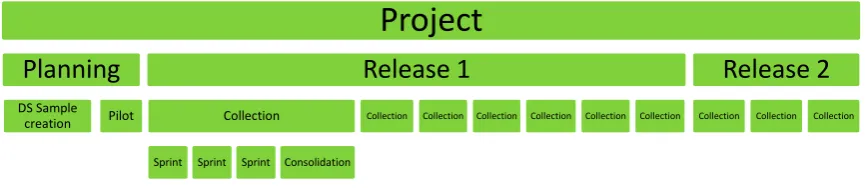
Part of this study was to get an overview of the way the project was organized. The vendor company first started with an integration project at the client. At that time they were not part of development. From the day that the vendor company got involved in the development, they started with an agile project approach. This section describes different steps in the project, which will help to put the results in the next sections into context.
5.1.1 Creating agile artefacts
Agile artefacts are an important part of the agile project approach. The agile artefact that has been used in this project is an elaborated version of the user story artefact as described in section 2.4. At the beginning of this project the client created elaborate user stories and delivered these to the vendor. The lead solution architect gave a good view on the way (elaborate) user stories are produced (see quotation 1).
Quotation 1 – P6
These user stories were taken as a starting point for the design, which was added to the stories. This turned them into DSs, an extension on user stories as a means to organize an agile work style in very large software projects (also see section 2.4).
Quotation 2 – P6
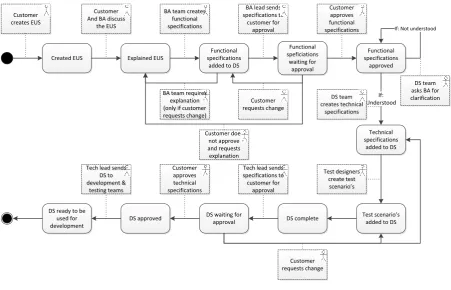
The functional specification is done by the business analyst team. Once the functional specification is firmed up, it gets approved and the design team gets into the technical specification and the test scenarios. If the design team encounters contradictions in the functional specifications they will go back to the BA and ask for clarifications. If the BA team are not aware of the issue it is even possible to go back to the Subject Matter Experts. Once the design is finalized, the DS moves on to the test scenario’s that will complete the DS. The technical specification is more like a high level design, it gives several components: short procedures and screens to be developed, services and entities to be created and the components to be updated. Figure 2 contains an illustration of the process of creating agile artefacts, including all actors that are involved in the process.
The way USs are produced at the client is… it’s a process decomposition with different levels of process. […] So each process is made up of activities. Each of those activities, or a set of activities, is taken up to form a user story. […] How a EUS [elaborate user story] is produced is the … a user goes into the activity and say, defines all the business rules. That is a detailed US.
32
Created EUS Explained EUS
Functional specifications
added to DS Customer
And BA discuss the EUS
BA team creates functional specifications BA team creates
functional specifications Functional speficiations waiting for approval Functional specifications approved Customer creates EUS
BA lead sends specifications to
customer for approval
Technical specifications
added to DS If: Understood DS team creates technical specifications DS complete DS waiting for
approval DS approved
DS ready to be used for development
Customer requests change BA team requires
explanation (only if customer requests change) BA team requires explanation (only if customer requests change)
Customer does not approve and request
![Table 1: Characteristics of agile versus traditional distributed software development [74]](https://thumb-us.123doks.com/thumbv2/123dok_us/1187465.641909/17.595.64.527.501.654/table-characteristics-agile-versus-traditional-distributed-software-development.webp)
![Table 2: How agile affects global projects [13]](https://thumb-us.123doks.com/thumbv2/123dok_us/1187465.641909/18.595.66.524.520.730/table-agile-affects-global-projects.webp)
![Table 3: Traditional and agile approach for RE activities [68]](https://thumb-us.123doks.com/thumbv2/123dok_us/1187465.641909/20.595.64.532.344.606/table-traditional-agile-approach-activities.webp)
![Table 4: Agile RE Practices (based on research by Cao and Ramesh [24]](https://thumb-us.123doks.com/thumbv2/123dok_us/1187465.641909/21.595.64.532.366.771/table-agile-practices-based-research-cao-ramesh.webp)