INTERNATIONAL RESEARCH JOURNAL OF PHARMACY
www.irjponline.com
ISSN 2230 – 8407
Research Article
DEVELOPMENT AND TESTING OF AN EDUCATIONAL MOBILE APPLICATION FOR IMPROVING
KNOWLEDGE AMONG SAUDI PATIENTS RECEIVING WARFARIN
Sireen Abdul Rahim Shilbayeh
*, Sarah Ahmed Abutaily, Lujain Saad Al Ghwairi, Wejdan Ossama Al Madani,
Alhanouf Fahad Almoussa, Shahad Ali Alzahrani
Department of Pharmaceutical Practice, College of Pharmacy, Princess Nourah University, Riyadh 11671, Saudi Arabia
*Corresponding Author Email: [email protected]Article Received on: 13/02/19 Approved for publication: 01/04/19
DOI: 10.7897/2230-8407.1005192
ABSTRACT
Background: Previous studies have demonstrated inadequate patient knowledge about basic aspects of warfarin therapy, leading to nonadherence. Patients may not receive adequate education because of time constraints, lack of availability of resources, or other patient variables beyond the control of healthcare providers, such as poor patient recall. Objective: We explored the impact of a specifically developed mobile application (mApp)— Coagulation and Anticoagulant Therapy and Awareness (CATA)—on improving the knowledge and anticoagulation satisfaction of patients receiving warfarin therapy. Setting: Two medical centers’ anticoagulant clinics (ACCs) in Riyadh, Saudi Arabia. Method: This was a prospective multi-center study with a single-arm pre- and post-test design; 45 patients (32 women; Mage = 45.82 ± 12.8 years) were enrolled. Main outcome measure: Patients’ knowledge and anticoagulation satisfaction were evaluated at baseline and after a post pharmacist-led mHealth App educational intervention. Results: The CATA intervention had a significant impact on knowledge improvement; however, no significant changes were observed in satisfaction. Conclusions: The newly developed CATA mApp has vast potential in improving patients’ knowledge; however, further exploration of factors behind the nonsignificant change in patients’ anticoagulation satisfaction requires investigation in long-term prospective studies with more frequent pharmacists’ interventions in ACCs.
Keywords: Oral anticoagulant, mobile health application, knowledge, satisfaction, warfarin, clinical pharmacist
INTRODUCTION
Warfarin remains among the most commonly indicated forms of oral anticoagulant therapy (OAT) for prevention and treatment of thromboembolic complications associated with various cardiac and non-cardiac etiologies because of its well-established1 or superior efficacy compared to newer anticoagulant agents in some settings2,3. However, warfarin’s efficacy and safety requires optimal quality of anticoagulation control, which is demonstrated by a “time in therapeutic range” (TTR) of more than 70 %, while minimizing risk of serious adverse bleeding events4. However, achieving this target may be impeded by the need for regular monitoring services because of its narrow therapeutic range, and patients’ non-adherence5.
Patients identified a broad range of barriers for warfarin non-adherence, including knowledge gaps about the relative risks and benefits of anticoagulant therapies, and patient-provider communication issues (e.g., language barriers and low health literacy)6. These limitations increase individuals’ risk for negative clinical outcomes and contribute to the underuse of warfarin7,8. However, a systematic literature review found that improved patient knowledge results in better anticoagulation control and less bleeding9. Consequently, patients’ knowledge is an essential component in warfarin therapy to improve patient-reported outcomes (PROs) such as satisfaction and adherence 10-12. However, 50–80 % of older patients in international studies12,13-19 had inadequate knowledge about basic aspects of warfarin therapy20-22. This was partially attributed to suboptimal
specialized anticoagulation clinic (ACC) services9. However, despite a consensus that these additional services provide superior education about warfarin therapy, some patients still do not receive adequate education because of time constraints, lack of resources, or other patient variables that are beyond the control of healthcare providers (e.g., poor patient recall, age-related cognitive impairments, etc.)23-26.
In Saudi Arabia, ACC services were introduced in the healthcare system, mainly in Riyadh, in the early 2000s. Currently, ACCs guided by clinical pharmacists have been established in almost every governmental health center27-31. Surprisingly, lack of knowledge on basic aspects of warfarin is very high (50–70 %) 27-31. Patients’ non-adherence scores are also high, and their satisfaction is poor30-32, yet these are consistent with those of other international populations12,33. These results emphasize the need for intensive educational and awareness programs to enhance knowledge and other PROs among Saudi patients31.
The Food and Drug Administration has acknowledged the tremendous utility of mobile health (mHealth) technologies for various healthcare purposes40, including improving patient self-monitoring and management, increasing general patient education, and facilitating patient access to commonly used reference information. The emergent attractiveness of mobile solutions for health promotion and healthcare education delivery can be ascribed partly to the technology’s accessibility, the level of personalization that technology enables, valuable location-based services (i.e., patients can quickly extract valuable information), and tailored care and education to suit patients’ needs41.
Regarding anticoagulant therapy, very few published investigations have addressed the provision of specific mHealth technology for self-management and education in patients receiving warfarin therapy25,26,42. In Saudi Arabia, no analyses of anticoagulant educational interventions exist.
Consequently, this study aimed to develop and examine the impact of a pharmacist-run intervention using an mhealth App concerned with improving patients’ knowledge and, as a secondary outcome, satisfaction with anticoagulation therapy in a Saudi population.
MATERIALS AND METHODS
Design
A prospective multi-center study with a single-arm pre- and post-test design was conducted in two ACCs at the Security Forces Hospital and Prince Sultan Military Medical City, in Riyadh. Patients’ knowledge and anticoagulation satisfaction, as the primary study outcomes, were evaluated at baseline and 45 days post-mhealth-App educational intervention.
Participants
A sample size of approximately 50 patients was targeted based on timeframe and feasibility43. Participants were recruited from September 30 to December 30, 2017. Inclusion criteria comprised the following: (a) aged > 18 years, (b) Arabic speaking, (c) receiving OAT anticoagulant (mainly warfarin) and visiting the clinic regularly, (d) a naïve patient (i.e., OAT was prescribed, but not yet received), and (e) using smartphones or tablets with Android operating system. We excluded patients (a) aged < 18 or ≥ 70 years; (b) previously diagnosed with mental disorders; (c) with visual, auditory, or oral communication deficiencies; and (d) who did not use smartphones.
Ethics approval
The clinical protocol was reviewed and approved by the Institutional Review Board at Princess Nourah University (PNU), and at each study site.
Measures
Oral Anticoagulation Knowledge (OAK) scale
The OAK scale is a psychometrically validated tool based on educational content areas typically addressed in pharmacist-managed ACCs to assess patients’ knowledge deficits20. The original English OAK is a 20-item, multiple-choice questionnaire. After obtaining the authors’ permission, all
questionnaire items were translated by our research team into Arabic using the forward-backward translation method.
Anti-clot Treatment Scale (ACTS)
The ACTS is a patient-reported instrument robustly validated as a measure of treatment satisfaction specifically for anticoagulants44. It comprises 17 items across two subscales: Burdens (13 questions) and Benefits (4 questions). ACTS is available in diverse languages except Arabic. Therefore, the scale was translated into Arabic according to standard guidelines after obtaining official permission. Four Arabic pharmacy professors in PNU judged the face and content validity of the final Arabic version of this questionnaire.
Treatment Satisfaction Questionnaire for Medication (TSQM 1.4)
Additionally, the generic TSQM was administered for validation purposes, owing to it being widely employed in diverse clinical settings45 as a generic patient-satisfaction measure (the Arabic translated version has been previously validated in Saudi ACCs)32.
Procedures and Intervention
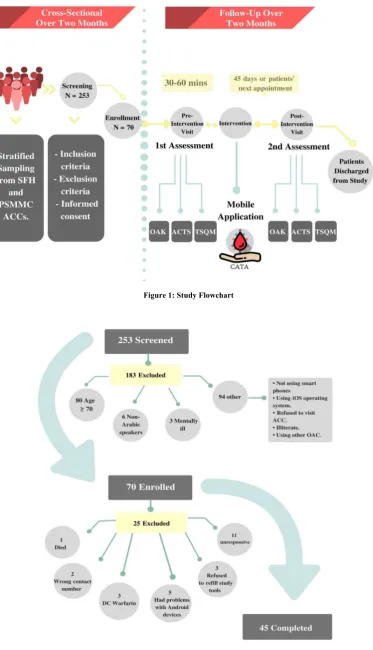
For patients who agreed to participate and who satisfied the inclusion and exclusion criteria, full demographic and clinical background characteristics were obtained from the hospitals’ electronic medical records, using a specifically designed data collection sheet. Before employment of the Coagulation and Anticoagulant Therapy and Awareness (CATA) mHealth App, the three self-reported, standard questionnaire tools (OAK, ACTS, and TSQM) were administered face-to-face to assess patients’ knowledge and anticoagulation satisfaction to obtain baseline point estimations of these outcomes (Figure 1).
The questionnaires took approximately 30–60 minutes to complete. Then, the CATA mApp was uploaded to each patient’s mobile phone via the Internet using the app’s password. An extended follow-up period (≥ 45 days) for each recruited patient was scheduled to reassess post-intervention outcomes. ACC appointments were set per patients’ convenience and the chief clinical pharmacists’ opinion.
Data Management and Analysis Plan
All data were coded, entered, and analyzed using SPSS 20.0 (SPSS Inc., Chicago, IL). Descriptive statistics were computed for patients’ characteristics and all outcome variables. The distribution of study variables and outcomes were tested for normality by the Kolmogorov–Smirnov test. Paired sample t‑tests or Wilcoxon signed rank tests were used to assess differences in patients’ outcomes pre- and post-intervention with CATA mApp. All p-values < .05 were interpreted as significant.
RESULTS
Patients’ Baseline Characteristics
Table 1: Patients’ Sociodemographic and Clinical Characteristics (N = 45)
Variable Descriptive Statisticsa Age (years), mean (SD) 45.82 (12.80)
Age group (years)
19–37 10 (22.2)
38–55 23 (51.1)
56–73 12 (26.7)
Sex
Male 13 (28.9)
Female 32 (71.1)
Marital status
Single 8 (17.8)
Married 33 (73.3)
Divorced 1 (2.2)
Widowed 3 (6.7)
Education level
No formal education 6 (13.3)
Primary/secondary 10 (22.2)
High school 16 (35.6)
Diploma/university 13 (28.9)
Indication(s) for anticoagulation
DVT 10 (22.2)
PE 3 (6.7)
DVT/PE 6 (13.3)
Mechanical/bio prosthetic heart valve 4 (8.9)
Stroke 2 (4.4)
LVT/atrial thrombus 4 (8.9)
AF/flutter 13 (28.9)
Other 3 (6.7)
Smoking history
Non-smoker 42 (93.3)
Smoker 3 (6.7)
Current anticoagulant therapy
New to warfarin therapy 5 (11.1) Continuing warfarin therapy 40 (88.9)
Comorbid conditions Yes
No Conditions
34(75.6) 11(24.4)
Diabetes mellitus 34 (75.6)
Hypertension 21 (46.7)
Hyperlipidemia 10 (22.2)
Coronary artery disease 3 (6.7)
Heart failure 2 (4.4)
Other 22 (48.9)
Concomitant medication
Yes 38 (84.4)
No 7 (15.6)
Duration of warfarin use (years), mean (SD) No. of prior ACC visits in the last 6 months,
mean (SD)
3.59 (3.2) 3.17 (1.28)
TTR, mean (SD) 56.29 (31.44)
INR stability, mean (SD) 61.64 (32.78) Duration of follow-up (days), mean (SD) 48.18 (12.97)
aAll data were no. (%) unless otherwise indicated.
Abbreviations: M: mean, SD: standard deviation, DVT: deep vein thrombosis, PE: pulmonary embolism, LVT: left ventricular thrombus, AF: atrial fibrillation, TTR: time in therapeutic range, INR: international normalized ratio
Table 2: Effect of CATA mApp Intervention on Patients’ Knowledge (N = 45)
Scale Baseline Post-intervention P-Value % of Knowledge Improvement Effect Sizeb
M (SD) Range M (SD) Range
OAK (out of 20) 12.69 (2.7) 7–19 14 (2.7) 9–19 .002 10.32 0.48
OAKa (out of
100) 63.4 (13.5) 35–95 70.22 (13.5) 45–95 .002 10.75 0.5
aTo assess patients’ knowledge, a percentage of correct responses score was calculated (0–100%). Their knowledge was considered inadequate if their score was below 70%. bEffect size statistics were calculated as the mean difference (change score) in scores from Time 1 to Time 2 divided by the
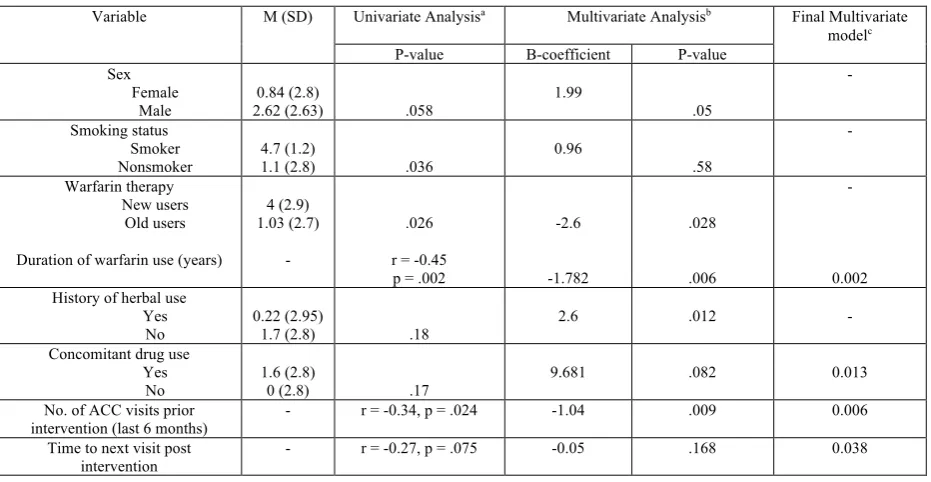
Table 3: The Impact of Patients’ Variables on Knowledge Improvement using CATAmApp
Variable M (SD) Univariate Analysisa Multivariate Analysisb Final Multivariate modelc P-value B-coefficient P-value
Sex Female
Male
0.84 (2.8)
2.62 (2.63) .058
1.99
.05
-
Smoking status Smoker
Nonsmoker 4.7 (1.2) 1.1 (2.8) .036 0.96 .58
-
Warfarin therapy New users
Old users
Duration of warfarin use (years)
4 (2.9) 1.03 (2.7)
-
.026
r = -0.45 p = .002
-2.6
-1.782
.028
.006
-
0.002 History of herbal use
Yes No
0.22 (2.95)
1.7 (2.8) .18
2.6 .012 -
Concomitant drug use Yes
No
1.6 (2.8)
0 (2.8) .17
9.681 .082 0.013
No. of ACC visits prior
intervention (last 6 months) - r = -0.34, p = .024 -1.04 .009 0.006 Time to next visit post
intervention
- r = -0.27, p = .075 -0.05 .168 0.038
aAnalysis of variance test with Tukey’s post-hoc test for categorical variables or Pearson’scorrelation test for continuous variables. bMulti variate linear regression model.
cStepwise multivariate linear regression model. M: mean difference in OAK score pre- and post-intervention
Abbreviations: M: mean, SD: standard deviation, ACC: anticoagulant clinics, mApp: mobile application, CATA: Coagulation and Anticoagulant Therapy and Awareness.
Table 4: Summary of patient-reported treatment satisfaction (ACTS and TSQM) pre- and post-CATA mApp use
Subscale Baselinec Post-intervention P-valued Effect Size
M (SD) Range M (SD) Range
ACTSa,b (N = 45)
Burdens 46.58 (9.6) 27–60 47.68 (6.95) 35–60 .34 0.11
Benefits 13.16 (2.2) 4–15 11.69 (2.7) 3–15 .002 0.67
TSQM 1.4e,f (N = 36)
Total (100%) 76.33 (9.6) 44.3–94.9 76.1 (11.9) 44.3–96.2 .76 0.024
Effectiveness 75.7 (13.1) 50–100 71.5 (15.3) 33.3–100 .09 0.32
Side-effects 89.8 (22.6) 18.8–100 90.63 (21.1) 18.75–100 .81 0.037
Convenience 73 (12.4) 50–100 72.4 (15.4) 33.3–100 .72 0.034
Global satisfaction 71.62 (14.3) 35.7–100 72 (19.3) 28.6–100 .95 0.027
aCalculation of subscale scores was performed in accordance with the developers’ guidelines.
bHigher scores indicate greater treatment satisfaction; the 12 items of ACTS Burdens were reverse coded (scored 5 to 1), whereas the three items of ACTS Benefits were coded normally (scored 1 to 5).
cTwo set intervals for evaluation of the ACTS were used in this study (0 days and 45 days). dWilcoxon signed rank tests for nonparametric or paired samples t-test for normal distributed outcomes.
eDomain scores were calculated as recommended by the instrument’s authors [45]. Scores ranged from 0 (extremely dissatisfied) to 100 (extremely satisfied).
fDuring follow-up, some patients were asked to complete the two treatment satisfaction questionnaires. The generic TSQM 1.4 was evaluated at baseline and post-intervention alongside the ACTS questionnaire to provide a benchmark for validation purposes by assessing the construct validity of
the ACTS score via hypothesized correlations between ACTS and TSQM 1.4 subscales.
Figure 1: Study Flowchart
Figure 2: Flow chart of patient recruitment
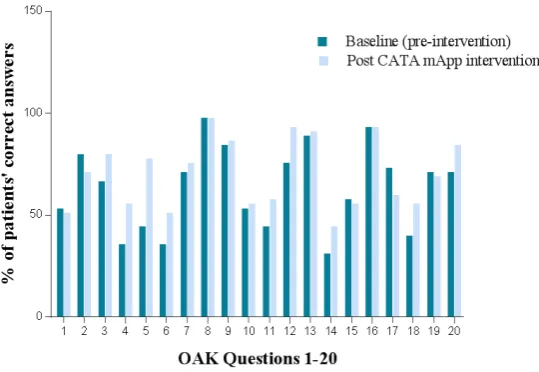
Figure 3: The distribution of patient's correct answers on the OAK questionnaire pre- and post-CATA mApp intervention.
Study Outcomes
Knowledge
Table 2 shows the effects of the CATA mApp intervention on patients’ knowledge. A paired samples t-test performed on the OAK score pre-intervention (at baseline) versus post CATA mApp usage produced a mean difference of 1.36 (SD = 2.85; p = .002). The mean difference was equivalent to an effect size of 0.546. Therefore, a significant and clinically moderate impact of CATA intervention on knowledge improvement was noted (Figure 3).
Table 3 demonstrates the univariate and multivariate analyses of patients’ variables associated with the mean difference in OAK scores pre- and post-intervention. The multivariate regression analyses confirmed an association of some positive (new warfarin users, non-herbal users, concomitant drug use) and negative (duration of warfarin use, number of ACC visits prior to intervention, time to next visit post intervention) predictors of knowledge score. Interestingly, the strongest negative predictor obtained in the final stepwise regression model was duration of warfarin use, implying that patients new to warfarin therapy were more attentive in using the CATA mApp regularly compared to older users.
It is critical to note that other patient variables, such as age, education, marital status, warfarin indication, comorbidities, concomitant medication type, TTR%, and international normalized ratio (INR) stability levels, were non-significant factors for knowledge improvement.
Anticoagulation Satisfaction
At baseline, patients’ responses to the ACTS Burdens and ACTS Benefits subscales (Table 4) were considered relatively high and acceptable compared to the reference range reported by ACTS authors [(12–60) and (3–15), respectively]. Post intervention, patients’ completion frequenciesof the two subscales were analogous (100 %).
ACTS Burdens Scale
A paired samples t-test showed that the mean ACTS Burden scale score had a non-significant increase of 1.1 (SD = 8.4; p = .34) from pre-intervention (at baseline) to post-CATA intervention
(Table 4). This indicated no significant impact of CATA mApp intervention on reducing patients’ burdens associated with anticoagulation therapy. However, further examination of the mean change within females only revealed a significant improvement in burden satisfaction score (45.4 (SD = 9.2) to 48.1 (SD = 7.6); p = .026), indicating that women had a less burdensome experience than did men. All other patient variables (e.g., age, education level, comorbidities, etc.) had no significant effect on patients’ responses to pre-, post-, or mean change in ACTS burdens score (p ≥ .05 in all fitted models).
ACTS Benefits Scale
Surprisingly, a significant mean decrease (1.47) was noted in patients’ responses to the ACTS Benefits score regarding anticoagulation with warfarin post-intervention using CATA mApp when compared to previous baseline values (Table 4). Those who had a higher warfarin starting dose expressed higher scores for benefits score pre-intervention (B = 0.45, p = .014); however, no association was found between ACTS Benefits score pre-, post-, or mean change for any other demographic or clinical characteristics (p ≥ .05).
DISCUSSION
Despite the sensible merit of maximizing patients’ knowledge as much as possible, the best strategy to develop and evaluate mechanisms for educating patients about anticoagulation is yet to be determined34,47. Furthermore, the specific impacts of various suggested educational and behavioral interventions on warfarin clinical outcomes warrant further research47.
Our main concern was to develop a valuable educational mApp specifically targeted to assist warfarin users in managing their health and wellness at their homes. It would be easy to use, navigate, and only requires visualizing a simple process to understand Warfarin use. We demonstrated a significant improvement in patients’ knowledge using a novel educational mApp (CATA), proven by the increase in the number of patients who achieved a pass score from 42.2 % to 60 %. However, patient-reported OAT satisfaction, mainly with warfarin, did not change over the short post-intervention follow-up period.
post-intervention. Additionally, patients expressed comparable burdens and benefits to patients receiving OAT in a previous international trial48. This slow progress in the subscale scores indicated that both ACTS subscales revealed only minor changes in patients’ reported satisfaction over 12 months, particularly those receiving warfarin due to the increasing requirement for frequent coagulation monitoring and dietary restrictions compared to newer OAT. Such factors could have played a role in lowering the degree of ACTS burdens satisfaction observed in the current cohort, despite the positive CATA mApp impact on their knowledge.
Additionally, unlike previous international studies44,48, which found no gender effect on the improvement in ACTS Burdens, women in the current population expressed less inconvenience regarding their OAT compared to men. This could be attributed to the social desirability bias inherent in PRO outcome studies. Another possible explanation is that cultural context and/or country-specific differences within and between the ACTS subscales were previously reported in large-scale, internal studies across diverse regions, where some countries reported non-significant change in both ACTS subscales over 12 months48. However, the observed sex-based differences in the present cohort are worthy of further investigation.
Analysis of other patients’ demographic and clinical factors did not reveal any further explanation for the satisfaction trends in the present investigation. However, it should be noted that the small numbers of patients in certain subgroups (e.g., with no formal education and new users of warfarin), relative to their counterparts, could have limited the evidence provided by statistical tests. Furthermore, the TSQM generic treatment satisfaction scale results were in line with the ACTS scale, showing no pronounced change in patients’ reported responses post-mApp intervention within this pilot study’s relatively short observation period.
In line with the above trend, a previous American study developed an mHealth app for older patientson warfarin therapy to promote independence and self-care26. That study demonstrated, over a short observation period, a significant enhancement in patients’ anticoagulation knowledge, but only using the OAK test. However, other PROs of OATs including satisfaction, convenience, adherence, and anxiety/depression symptoms did not change from baseline to 3-months. This was mainly attributed to the inclusion of only a small number of older people who have been warfarin users for an average of 3 years, were afflicted by many chronic diseases, and who could therefore have restrained rapid verification of change in their preferences and restricted generalizability of the results to real practice encompassing a wider range of patients on OAT. These findings, however, also support the trend seen in our patients who showed improvement in knowledge and burden satisfaction scores, especially new patients starting on warfarin when compared to old users. This trend was in line with some previous studies; however, they employed traditional, pharmacist-led, verbal counseling approaches49,50.
A previous Chinese study with a larger sample size (N = 110)44 developed an mApp specifically for patients with a sole warfarin indication (atrial fibrillation only), which in contrast to the previous mApp study26, demonstrated significant improvements in all outcomes including knowledge, adherence, anticoagulant satisfaction, and quality of life, besides a reduction in anxiety and depression. However, despite the similarity in the age groups (≥ 65 years) included in both previous mApp studies26,42, the larger
studies, in our study, the age variable was normally distributed, and our patients were relatively younger.
However, our exploratory analyses of age subgroups did not identify any significant differences in knowledge or satisfaction scales pre- and post-intervention. It is essential to note that absolute confidence in PROs in elderly patients may have narrow validity for many reasons: memory or cognitive impairment, chronic comorbidities, and several concomitant medications 23-26,39. Additionally, the mApp in our study was designed to improve knowledge and was not directly targeted at enhancing other PROs concerning their medications.
Future studies should involve more direct assessment of patients’ preferences pertaining to aspects of an App’s design and implementation (e.g., feasibility, acceptability, and usability in relation to different end-users), in addition to other health outcomes experienced by clients receiving the interventions. These issues could either accelerate or obstruct the implementation of mHealth technologies51,52.
Strengths
A strength of this study is that it is the first Saudi study to report the development of an educational mhealth App and to examine its impact on patients’ knowledge and treatment satisfaction, in ACC. So far, mHealth technologies have had limited implementation in medical settings in Arabic countries53. Internationally, only two studies have addressed the development and testing of a mApp approach directed to patients on OAT. In addition, our study design is unique because it was an interventional, multicenter, prospective, pre- and post-test design. Other previous national studies in similar clinical settings were all single-center, cross-sectional, or descriptive in nature, and they did not involve any sort of intervention by clinical pharmacists with follow-up of subsequent influences on PROs or clinical outcomes.
Limitations
Although we revealed the potential of mHealth technologies as an educational strategy for improving patients’ self-awareness with less frequent pharmacist-led counseling, this study does have some limitations. First, the open-label, one-group design limits direct comparison to other educational tools employed in routine care. Future studies should consider a randomized, parallel-groups strategy to estimate differences in the impact of a mApp to conventional counseling methods or other electronic multimedia media resources in maximizing patients’ knowledge about anticoagulants. Second, the small sample size and short time frame of this pilot study limit the generalizability of results to real-world practice. A longer observation period of at least one year may provide more feasible insight regarding patients’ reported satisfaction, INR control, and/or stability.
CONCLUSION
and incorporated standardized scales designed to capture specific health outcomes.
REFERENCES
1. Huisman MV, Rothman KJ, Paquette M, Teutsch C, Diener HC, Dubner SJ et al. Antithrombotic treatment patterns in patients with newly diagnosed nonvalvular atrial fibrillation: the GLORIA-AF registry, phase II. Am J Med 2015; 128(12): 1306-13.
2. January CT, Wann LS, Alpert JS, Calkins H, Cigarroa JE, Conti JB et al. AHA/ACC/HRS guideline for the management of patients with atrial fibrillation: a report of the American College of Cardiology/American Heart Association Task Force on Practice Guidelines and the Heart Rhythm Society. J Am Coll Cardiol [0735-1097]. 2014; 64(21): 76 http://dx.doi.org/10.1016/j.jacc.2014.03.022 3. Hanley CM, Kowey PR. Are the novel anticoagulants better
than warfarin for patients with atrial fibrillation? J Thoracic Dis 2015; 7(2): 165-71.
4. Sjögren V, Grzymala-Lubanski B, Renlund H, Friberg L, Lip GY, Svensson PJ et al. Safety and efficacy of well managed warfarin: a report from the Swedish quality register Auricula. Thromb Haemost 2015; 113(6): 1370-7.
5. Hirsh J, Fuster V, Ansell J, Halperin JL. American Heart Association/American College of Cardiology foundation guide to warfarin therapy. J Am Coll Cardiol 2003; 41(9): 1633-52.
6. Cruess D, O'Leary K, Platt A, Kimmel S. Improving patient adherence to warfarin therapy. JCOM 2010; 17(11): 505-9. 7. Hess PL, Mirro MJ, Diener HC, Eikelboom JW, Al-Khatib
SM, Hylek EM et al. Addressing barriers to optimal oral anticoagulation use and persistence among patients with atrial fibrillation: Proceedings, Washington, DC. Am Heart J 2014; 168(3): 239-47.
8. Orensky IA, Holdford DA. Predictors of noncompliance with warfarin therapy in an outpatient anticoagulation clinic. Pharmacotherapy 2005; 25(12): 1801-8.
9. Nasser S, Mullan J, Bajorek B. Challenges of older patients’ knowledge about warfarin therapy. J Prim Care Community Health 2012; 3(1): 65-74.
10.Ansell J, Hirsh J, Poller L, Bussey H, Jacobson A, Hylek E. The pharmacology and management of the vitamin K antagonists: the Seventh ACCP Conference on Antithrombotic and Thrombolytic Therapy. Chest 2004; 126 Suppl 3: 204-33.
11.Engova D, Duggan C, MacCallum P, Bates I. Patients' understanding and perceptions of treatment as determinants of adherence to warfarin treatment. IJPP 2002; 10 Suppl 1: 69.
12.Davis NJ, Billett HH, Cohen HW, Arnsten JH. Impact of adherence, knowledge, and quality of life on anticoagulation control. Ann Pharmacother 2005; 39(4): 632-6.
13.Cheah GM, Martens KH. Coumadin knowledge deficits: do recently hospitalized patients know how to safely manage the medication? Home Healthc Nurse 2003; 21(2): 94-100. 14.Jank S, Bertsche T, Herzog W, Haefeli W. Patient knowledge
on oral anticoagulants: results of a questionnaire survey in Germany and comparison with the literature. Int J Clin Pharmacol Ther. 2008; 46(6): 280-8.
15.Barcellona D, Contu P, Marongiu F. A “two-step” educational approach for patients taking oral anticoagulants does not improve therapy control. J ThrombThrombolysis 2006; 22(3): 185-90.
16.Smith MB, Christensen N, Wang S, Strohecker J, Day JD, Weiss JP et al. Warfarin knowledge in patients with atrial fibrillation: implications for safety, efficacy, and education strategies. Cardiology. 2010; 116(1): 61-9.
17.Dantas GC, Thompson BV, Manson JA, Tracy CS, Upshur RE. Patients' perspectives on taking warfarin: qualitative study in family practice. BMC Fam Pract. 2004; 5: 15.https://doi.org/10.1186/1471-2296-5-15
18.Lane DA, Ponsford J, Shelley A, Sirpal A, Lip GY. Patient knowledge and perceptions of atrial fibrillation and anticoagulant therapy: effects of an educational intervention programme: the West Birmingham Atrial Fibrillation Project. Int J Cardiol 2006; 110(3): 354-8.
19.St-Louis L, Robichaud-Ekstrand S. Knowledge level and coping strategies according to coagulation levels in older persons with atrial fibrillation. Nurs Health Sci 2003; 5(1): 67-75.
20.Zeolla MM, Brodeur MR, Dominelli A, Haines ST, Allie ND. Development and validation of an instrument to determine patient knowledge: the oral anticoagulation knowledge test. Ann Pharmacother 2006; 40(4): 633-8.
21.Briggs AL, Jackson TR, Bruce S, Shapiro NL. The development and performance validation of a tool to assess patient anticoagulation knowledge. Res Social Adm Pharm 2005; 1(1): 40-59.
22.Anne Wyness M. Evaluation of an educational programme for patients taking warfarin. J Adv Nurs 1990; 15(9): 1052-63.
23.Lip GY, Kamath S, Jafri M, Mohammed A, Bareford D. Ethnic differences in patient perceptions of atrial fibrillation and anticoagulation therapy: the West Birmingham Atrial Fibrillation Project. Stroke 2002; 33(1): 238-42.
24.Matthew-Maich N, Harris L, Ploeg J, Markle-Reid M, Valaitis R, Ibrahim S et al. Designing, implementing, and evaluating mobile health technologies for managing chronic conditions in older adults: a scoping review. JMIR Mhealth Uhealth 2016; 4(2). https://doi.org/10.2196/mhealth.5127 25.Lee J-A, Nguyen AL, Berg J, Amin A, Bachman M, Guo Y
et al. Attitudes and preferences on the use of mobile health technology and health games for self-management: interviews with older adults on anticoagulation therapy. JMIR Mhealth Uhealth 2014; 2(3). https://doi.org/10.2196/ mhealth.3196
26.Lee J-A, Evangelista LS, Moore AA, Juth V, Guo Y, Gago-Masague S et al. Feasibility study of a mobile health intervention for older adults on oral anticoagulation therapy. Gerontol Geriatr Med; 2016. p. 2. https://doi.org/ 10.1177/2333721416672970
27.Mayet AY. Association between oral anticoagulation knowledge, anticoagulation control, and demographic characteristics of patients attending an anticoagulation clinic in Saudi Arabia: a cross-sectional prospective evaluation. Trop J Pharm Res 2015; 14(7): 1285-91.
28.Mayet AY. Patient adherence to warfarin therapy and its impact on anticoagulation control. Saudi Pharm J 2016; 24(1): 29-34.
29.Al-Omair SF, Musallam NA, Al-Deghaither NY, Al-Sadoun NA, Bayoumy NM. Compliance with and awareness about long-term oral anticoagulant therapy among Saudi patients in a University Hospital, Riyadh, Saudi Arabia. J App Hematol 2016; 7(1): 10-16.
30.Elbur AI, Albarraq A, Maugrabi M, Alharthi S. Knowledge of, satisfaction with and adherence to oral anticoagulant drugs among patients in King Fasial Hospital: Taif, Kingdom Saudi Arabia. Int J Pharm Sci Rev Res 2015; 31(1): 274-80. 31.Shilbayeh SAR, Almutairi WA, Alyahya SA, Alshammari
NH, Shaheen E, Adam A. Validation of knowledge and adherence assessment tools among patients on warfarin therapy in a Saudi hospital anticoagulant clinic. Int J Clin Pharm 2018; 40(1): 56-66.
Medication: Validation of the Translated Arabic Version among Patients Undergoing Warfarin Therapy in Saudi Arabia. Value Health Reg Issues 2018; 16: 14-21. https://doi.org/10.1016/j.vhri.2018.01.007
33.Wang Y, Kong MC, Ko Y. Comparison of three medication adherence measures in patients taking warfarin. J Thromb Thrombolysis. 2013; 36(4): 416-21.
34.Newall F, Monagle P, Johnston L. Patient understanding of warfarin therapy: a review of education strategies. Hematology. 2005; 10(6): 437-42.
35.Wofford JL, Wells MD, Singh S. Best strategies for patient education about anticoagulation with warfarin: a systematic review. BMC Health ServRes 2008; 8: 40. https://doi.org/10.1186/1472-6963-8-40
36.Wilson FL, Racine E, Tekieli V, Williams B. Literacy, readability and cultural barriers: critical factors to consider when educating older African Americans about anticoagulation therapy. J Clin Nurs 2003; 12(2): 275-82. 37.Estrada CA, Hryniewicz MM, Higgs VB, Collins C, Byrd JC.
Anticoagulant patient information material is written at high readability levels. Stroke 2000; 31(2): 2966-70.
38.Singla DL, Jasser G, Wilson R. Effects of group education on patient satisfaction, knowledge gained, and cost-efficiency in an anticoagulation center. J Am Pharm Assoc 2003; 43(2): 264-6.
39.Ley P. Satisfaction, compliance and communication. Br J Clin Psychol 1982; 21(4): 241-54.
40.Yetisen AK, Martinez-Hurtado J, da Cruz Vasconcellos F, Simsekler ME, Akram MS, Lowe CR. The regulation of mobile medical applications. Lab Chip 2014; 14(5): 833-40. 41.Akter S, Ray P. mHealth-an ultimate platform to serve the
unserved. Yearb Med Inform 2010; 19(01): 94-100. 42.Guo Y, Chen Y, Lane DA, Liu L, Wang Y, Lip GY. Mobile
health technology for atrial fibrillation management integrating decision support, education, and patient involvement: mAF App trial. Am J Med 2017; 130(12): 1388-96.
43.Hertzog MA. Considerations in determining sample size for pilot studies. Res Nurs Health 2008; 31(2): 180-91. 44.Cano SJ, Lamping DL, Bamber L, Smith S. The Anti-Clot
Treatment Scale (ACTS) in clinical trials: cross-cultural validation in venous thromboembolism patients. Health Qual Life Outcomes 2012; 10: 120. https://doi.org/10.1186/1477-7525-10-120
45.Atkinson MJ, Kumar R, Cappelleri JC, Hass SL. Hierarchical construct validity of the treatment satisfaction questionnaire for medication (TSQM version II) among outpatient pharmacy consumers. Value Health 2005; 8 Suppl 1: 9-24. 46.Kazis LE, Anderson JJ, Meenan RF. Effect sizes for
interpreting changes in health status. Med Care 1989; 27 Suppl 3: 178-89.
47.Clarkesmith DE, Pattison HM, Lane DA. Educational and behavioural interventions for anticoagulant therapy in patients with atrial fibrillation. Cochrane Databas Syst Rev 2013; (6). https://doi.org/10.1002/14651858.CD008600.pub2 48.Prins MH, Bamber L, Cano SJ, Wang MY, Erkens P, Bauersachs R et al. Patient-reported treatment satisfaction with oral rivaroxaban versus standard therapy in the treatment of pulmonary embolism; results from the EINSTEIN PE trial. Thromb Res 2015; 135(2): 281-8.
49.Khan TI, Kamali F, Kesteven P, Avery P, Wynne H. The value of education and self-monitoring in the management of warfarin therapy in older patients with unstable control of anticoagulation. Br J Haematol 2004; 126(4): 557-64. 50.Winans ARM, Rudd KM, Triller D. Assessing
anticoagulation knowledge in patients new to warfarin therapy. Ann Pharmacother 2010; 44(7): 1152-7.
51.Aranda-Jan CB, Mohutsiwa-Dibe N, Loukanova S. Systematic review on what works, what does not work and why of implementation of mobile health (mHealth) projects in Africa. BMC Public Health 2014; 14: 188. https://doi.org/10.1186/1471-2458-14-188
52.Malvey DM, Slovensky DJ. Global mHealth policy arena: status check and future directions. Mhealth 2017; 3: 41. https://doi.org/10.21037/mhealth.2017.09.03
53.Kasemsap K. Telemedicine and electronic health: Issues and implications in developing countries. In: IRMA, editors. Health Economics and Healthcare Reform: Breakthroughs in Research and Practice. IGI Global; 2018. p. 1-19.
Cite this article as:
Sireen Abdul Rahim Shilbayeh et al. Development and testing of an educational mobile application for improving knowledge among Saudi patients receiving Warfarin. Int. Res. J. Pharm. 2019; 10(5):213-221 http://dx.doi.org/10.7897/2230-8407.1005192
Source of support: Deanship of Scientific Research at Princess Nourahbint Abdulrahman University (Grant no. 252-S-39), Conflict of interest: None Declared