IMPACT OF PACKET SIZE ON THE PERFORMANCE
OF IEEE 802.15.4 FOR WIRELESS SENSOR
NETWORK
Kamaljit Singh
1, Dr. Sukhvinder Singh Bamber
2,
Aman Kaushik
31
M.Tech,CSE Department, Baddi University of Emerging Science & Technology,
Baddi, Solan,Himachal Pradesh, (India)
2
Assistant Professor, CSE Department, Panjab University, (India)
3
Assistant Professor, CSE Department, Baddi University of Emerging Science & Technology,
Baddi, Solan, Himachal Pradesh, (India)
ABSTRACT
This paper investigate the impact of packet size on the performance of 802.15.4 for Wireless Sensor Network
based on various packet size scenario like packet size 300, 600 and 900.The comparative results have been
reported for the performance metrics like Battery energy consumed, Traffic sink end to end delay and Traffic
received. Packet size optimization is an important issue in energy constrained wireless sensor networks. These
papers conclude that Packet size is mostly dependent on the type of data that is disseminated to the destination.
Keywords- Battery Energy, End To End Delay, FFD, IEEE 802.15.4, Packet Size, RFD, Traffic
Received
I. INTODUCTION
Wireless Sensor Networks consists of individual nodes that are able to interact with their environment by
sensing or controlling physical parameter; these nodes have to collaborate in order to fulfill their tasks as
usually, a single node is incapable of doing so; and they use wireless communication to enable this collaboration
[1].The IEEE 802.15.4 standard targeted to low power, low data rate wireless network application for example
military, health, home, education, space, commercial applications etc.WSN are different from other wireless and
adhoc network in many ways[2]. The main attractiveness of IEEE 802.15.4 WSN is to setup self-organizing
networks capable of adapting to diverse topologies, node connectivity and traffic conditions. Typical
applications of IEEE 802.15.4 WSN usually consists of tens or hundreds of simple battery powered sensors
nodes which periodically transmit their sensed data to one or several data sinks(PAN Coordinator).
In a wireless sensor network packet size has the direct effect on battery energy consumption, end to end delay,
traffic received and performance of communication between wireless nodes, so there is need to have an optimal
packet size for wireless sensor networks. For instance having long packet size in a WSN network can cause data
bits corruption and in turn increases the data packets retransmission. On the other hand, short packet sizes may
increase data transmission reliability since the chances of bit errors over the link are less, but too short a packet
size may not be efficient in the context of data payload carrying capacity because of the standardized data
There are many techniques developed yet to get an optimal packet size for the wireless sensor networks most of
which are suggesting that there must be a fixed packet size as in [4]. Few others are promoting the use of
dynamic packet length [5] i.e. variable size of data packets in a wireless sensor network.
The objective of this paper is to analyze the impact of packet size on the performance of IEEE 802.15.4 for
WSN. The novelty of the work resided in the evaluation of key performance parameters that can be influenced
by the packet size. The impact of Packet size has been analyzed through extensive simulation to capture the
behavior of key performance parameters. These investigations are usable to select a suitable optimal packet size
for IEEE 802.15.4 WSN.
This paper is organized as follows: Section 1 give brief introduction of packets size of WSN and objective of
this paper. Section 2 constitutes the system description. Section 3 presents the result and discussions. Finally,
the Section 4 summarizes the main conclusion of the paper.
II. SYSTEM DESCRIPTION
The Simulation model implements Physical and Media Access Control (MAC) layers defined in IEEE
802.15.4standard.The OPNET Modeler is used for developing its sophisticated graphical user interface.
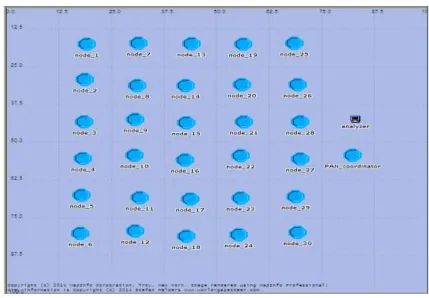
Figure 1: Network Scenario of Packet Size 300,600 And 900.
This simulation model support three different scenario of different packet size .i.e packet size 300,600 and
900.In these three different scenarios, communication is established between the end devices and a PAN
Coordinator.
Fig.1 shows the network scenario of three different packet size 300,600 and 900 which contains one PAN
Coordinator, one Analyzer and thirty end devices.PAN Coordinator is a Fully Functional Device (FFD) which
manages their local networks and communicate with each other. End Device is a Reduced Functional Device
communicate all these thirty nodes have to communicate with the PAN coordinator first and then PAN
coordinator communicates to the destination end device.
2.1 Simulation Parameters
The network designed consists of basic network entities with the simulation parameters presented in table.
Parameter \
Scenario PAN Coordinator End Devices
Modulation Packet
300 Packet 600
Packet 900 Packet 300 Packet 600 Packet 900
Acknowledged Traffic Source
Destination MAC Address Broadcast PAN Coordinator
MSDU Inter arrival
Time(sec) Bernoulli(1.0) Bernoulli(1.0)
MSDU Size (bits) Constant Constant
Start Time(Sec) 0.1 0.1
Stop Time 150 150
Unacknowledged Traffic Source
MSDU Inter arrival Time Bernoulli(1.0) Bernoulli(1.0)
MSDU Size(bits) Constant Constant
Start Time(Sec) 0.1 0.1
Stop Time(Sec) 150 150
CSMA/CA Parameters
Maximum back-off Number 4
Minimum back-off Number 3
IEEE 802.15.4
Device Mode PAN Coordinator End Device
MAC Address Auto Assigned
WPAN Settings
Beacon Order 9 9
Super frame Order 9
PAN ID 0
Logging
Enable logging Enabled
GTS Settings
GTS Permit Enabled
Start Time 0.1
Stop Time 150
Length
(slots) 5
Direction Receive Transmit
Buffer Capacity 1000 1000
GTS Traffic Parameter MSDU Inter arrival
Time(Sec) Bernoulli(1.0) Bernoulli(1.0)
MSDU Size(bits) Constant Constant
III. RESULT AND DISCUSSION
In this section various results have been presented and discussed to show the impact of different packet size on
the performance factors like Battery energy consumed, end to end delay, traffic received etc.
3.1(a) Battery Energy consumed at Fully Functional Devices –PAN Coordinator
Lifetime of wireless sensor node is correlated with the battery current usage profile. Minimizing energy
consumption and size are important research topics in order to make wireless sensor networks (WSN)
deployable. As most WSN nodes are battery powered, their lifetime is highly dependent on their energy
consumption.
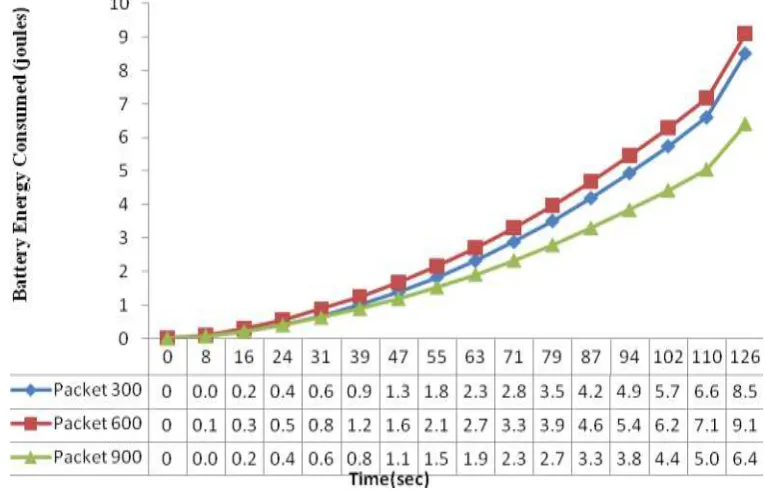
Fig. 2(a) shows that the battery energy consumed at the fully functional device by the three different scenarios:
“Packet 600”, “Packet 300” and “Packet 900” is 9.1, 8.5 and 6.4 Joules respectively. It is observed that minimum energy is consumed in case of “Packet 900” because larger is the packet size within it’s range (1 –
1024 bytes), lesser will be the number of packets generated for a given amount of data to be transmitted and
lesser will be the number of times a channel will have to switch between transmit, receive, idle and sleep modes
as most of the energy is consumed in switching from one mode to another mode and also in large packet
sizes,the supposed overheads are somewhat less and will consume a smaller amount of energy at the
intermediate node in the networks and lesser will be the delay in the delivery of the packets up to the
destination. Hence, lesser will be the energy consumption for the packets of larger sizes as compared to the
packets of smaller or medium sizes in IEEE 802.15.4.
Also, it has been observed that maximum energy is consumed in case of “Packet 600” because it is of medium size with in it’s range of 1byte to 1024 bytes. Since it’s of medium size, it is spending some time on the channel
i.e. it is using the energy of the channel to stay on it, also more is the time spent on the channel, more is it
susceptible to the collisions and it can cause data bits corruption and in turn increases the data packets
retransmission. As most of the energy in a IEEE 802.15.4 Wireless Sensor Network is consumed in data
transmission towards sink node.
3.1(b) Energy consumed at Reduced Functional Device-End Device
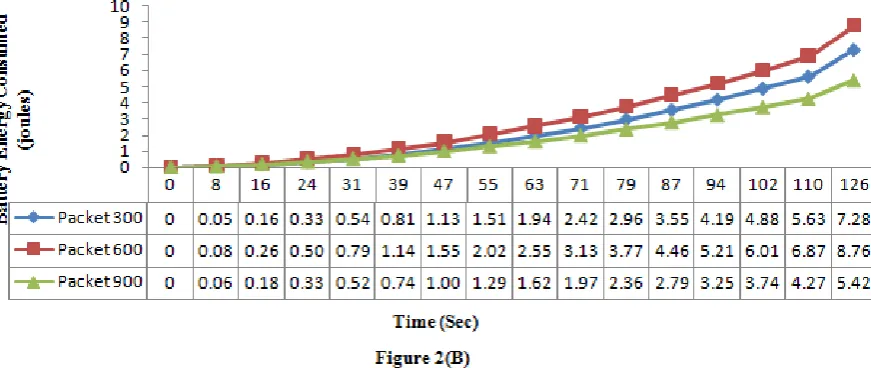
Fig. 2(b) represents the battery energy consumed at the reduced functional device by the three different
scenarios: “Packet 600”, “Packet 300” and “Packet 900” i.e. 8.76, 7.28 and 5.42 Joules respectively. It is
observed that minimum energy is consumed in case of “Packet 900”. Also, It is observed that maximum energy
is consumed in case of “Packet 600”.
From the Fig. 2 (a & b), it is concluded that if the battery energy consumed at any type of device in IEEE
802.15.4 is to be taken into consideration then packet size should be as large as possible within it’s range.
Packet size is mostly dependent on the type of the data that is disseminated to the destination. If the link has a
sufficient bandwidth to carry the large packets, data is easily carried up to the destination.
3.2 (a) Traffic Sink-End to End Delay at Fully Functional Devices – PAN Coordinator
End-to-End delay refers to the time taken by a packet to be transmitted across a network from source node to
destination node that includes all possible delays caused during route discovery latency, retransmission delays at
the MAC, propagation and transfer times.Fig. 3(a) shows that the end to end delay at Fully Functional Device in
three different scenarios:”Packet 300”, ”Packet 600” and “Packet 900” is 642,180 and 164 seconds respectively .It is observed that minimum end to end delay has occurred in case of “Packet 900” because larger is the packet
lesser is the number of packets generated for a given amount of data to be transmitted and lesser is the channel
utilization. If channel is less utilized then most of the time channel is free and there is less chance of collision
and congestion which mostly occurs near the Pan Coordinator; so data will take less time to be delivered to their
destination point and will reduce the end to end delays to minimum.
Also, it has been observed that maximum end to end delay has occurred in case of “Packet 300” within its range
of 1 byte to 1024 bytes. When the packet size is small, the main contribution of transmission delay is made by
the channel access delay. This is due to the sensor nodes having to transmit small size data packet in a very short
time interval, the channel become extremely busy. Subsequently, sensor nodes have to backoff more periods to
compete to access the channel. This will cause larger channel access delay which result in maximum delay of
end to end delay.
3.2(b) Traffic Sink-End to End Delay at Reduced Functional Devices–End Device
From Fig. 3(b), represents the end delay at reduced functional device (RFD) in three different scenarios. “Packet
300” “Packet 600” and “packet 900” i.e. 359, 156 and 816 second respectively. It is observed that minimum end to end delay has occurred in case of “Packet 600” as the packet are of optimal size within the IEEE 802.15.4
specified range i.e. 1-1024 bytes. Since RFD has a reduced functionally, it transmits/receives data occasionally
not continuously like FFD. Therefore lesser will be the channel utilization if the data is sent/received
occasionally. The channel will be in use only during transmission Reception; therefore chances of collision are
reduced as the channel remains free. Also the number of attempts to access the channel will be reduced as
compared to smaller size packets. Obviously, the end to end delay will be reduced to minimum in case of
“Packets 600” as numbers of accesses to medium as well as collision are minimum.
From the Fig.3(b), it has also been observed that maximum end to end delay is in “Packet 900” because longer
is the packet size within its large of 1 to 1024 bytes, more will be the time taken by it over the transmission
channel. It will increase the collision on the channel as the other packet may try to access the claimed during
that time slot since the
number of collision increase the end to end delay will also increase as it may take time to overcome collisions to
From the Fig.3 (a & b), it is concluded that if end to end delay in IEEE 802.15.4 is to be taken in to
consideration for the performance improvement then at the FFD the packet size should be as large as possible
and at the RFD the packet size should be optimize with in its specified range of 1-1024 bytes.
3.3 (a) Traffic Received at Fully Functional Devices-Pan Coordinator
Traffic Received can be defined as number of bits of the data received per unit time. Fig. 4(a) show that the
traffic received at fully function device in three different scenarios “Packet 300”, “Packet 600” and “Packet 900” i.e. 982,540 and 613 packets/seconds respectively. It is observed that maximum traffic is received in case
of packet 300 because lesser will be the time during for which the channel will be occupied. Since it is a fully
Functional Device and communicates with all the RFD’s. If shorter is the duration for which the channel is
occupied by one RFD with the FFD. Then shorter will be the queues, lesser will be the waiting time and
obviously lesser will be the collisions and more will be the traffic received by the receiver. It has also been
observed that the traffic received is minimum in case of “Packet 600” i.e. moderate/medium size as the channel.
Switching as well as the overheads are more in this case which reduces the traffic received by the receiver.
Fig.4(b) represents the traffic received by the RFD in three different scenarios: “Packet 300”,”Packet 600” and
“Packet 900” respectively and they further show 220,153 and 159 packets /sec traffic received by the receiver. It is observed that maximum traffic is received by the “Packet 300” because RFD communicates with the FFD that
too occasionally not continuously and is free most of the time. Therefore, lesser channels of collisions shorter
queue and channel remains free most of the time. Also smaller is the size of the packet more will be the number
of packets generated from the given amount of data. Obviously more will the number of packets successfully
received by the receiver and more will be the throughput. It has also been observed that traffic received at RFD
is minimum in case of “Packet 600” i.e. moderate/medium sized packet because in this case channel switching is
also high as well as packets generated are neither less.
From Fig. 4(a &b) , it is concluded that if the performance of IEEE 802.15.4 for WSN’s is to enforced keeping
in view the traffic received by the RFD at its receiver, then the packet size should be as small as possible within
its specifications. Also, it has been observed that the packets should not be of medium size if the packets
received at receiver are to be taken into consideration at the RFD.
IV. CONCLUSION
In this paper we simulated IEEE 802.15.4 to find the performance of packet size in wireless sensor networks in
terms of three different packet size 300,600 and 900 scenario, where battery energy consumed, end to end delay
and traffic received were analyzed as performance metrics. The analysis of simulation results provides some
insight for optimizing the packet size in IEEE802.15.4.A key finding is that packet size is an important factor
for creating energy efficient wireless sensor networks. Packet size should be as large as possible within it’s
range in battery energy consumed in FFD and RFD. To reduce the end to end delay, the packet size should be as
large as possible at the FFD and at the RFD the packet size should be optimize with in it’s specified rang.
Another finding is that to improve the performance of WSN the packet size should be as small as possible with
in its specification in RFD at its receiver.
REFERENCES
[1] S. Olariu, “Information assurance in wireless sensor networks”, Sensor network research group, Old
Dominion University, 2005.
[2] Mehjabeen Leghari,Shazia Abbasi,Dr. Lachhman Das Dhomeja,” Survey on Packet Optimization
Techniques in Wireless Sensor Networks”,Institute of Information and Communication
Technology,Jamshoro,2012.
[3] Low Tang Jung, Azween Abdullah, “Wireless Sensor Networks: Data Packet Size Optimization”,
Universiti Teknologi PETRONAS, Malaysia, 2012.
[4] Y. Sankarasubramaniam, I. E Akyildiz and S. W. Mchughlin, “Energy Efficiency based Packet Size
Optimization in Wireless Sensor Networks”, School of Electrical & Computer Engineering Georgia,
Institute of Technology, Atlanta, GA 30332, 2003.
[5] Wei Dong, Xue Liu, Chun Chen, Yuan He, Gong Chen, Yunhao Liu, and Jiajun Bu, and Zhejiang Key,
“DPLC: Dynamic Packet Length Control in Wireless Sensor Networks”, Lab. of Service Robot, College of
Comp. Sci., Zhejiang University School of Comp. Sci., McGill University 2010.
[6] Cetintemele et al., “Power-Efficient Data Dissemination in Wireless Sensor Networks” International
Workshop on Data Engineering for Wireless and Mobile Access Proceedings of the 3rd ACM