“ANYONE THERE?”
ONLINE PROBLEM-BASED LEARNING
WITHIN ACADEMIC DEVELOPMENT
CHRISSI NERANTZI
Submitted in partial fulfilment of the requirements of Edinburgh Napier University for the degree of Master of Science in Blended and Online Education
School of Computing
Authorship Declaration
I, Chrissi Nerantzi, confirm that this dissertation and the work presented in it are my own achievement.
Where I have consulted the published work of others this is always clearly attributed;
Where I have quoted from the work of others the source is always given. With the exception of such quotations this dissertation is entirely my own work; I have acknowledged all main sources of help;
If my research follows on from previous work or is part of a larger collaborative research project I have made clear exactly what was done by others and what I have contributed myself;
I have read and understand the penalties associated with Academic Misconduct.
I also confirm that I have obtained informed consent from all people I have involved in the work in this dissertation following the School's ethical guidelines
Signed:
Under the 1998 Data Protection Act, The University cannot disclose your grade to an unauthorised person. However, other students benefit from studying dissertations that have their grades attached.
Please sign your name below one of the options below to state your preference.
The University may make this dissertation, with indicative grade, available to others.
The University may make this dissertation available to others, but the grade may not be disclosed.
Chrissi Nerantzi
The University may not make this dissertation available to others.
Abstract
At the heart of this research project is Problem-Based Learning (PBL) in online settings within Academic Development (AD). A small scale trial was carried out over a period of 6 months with a group of academic developers and individuals who teach or support learning across UK HE institutions and are studying towards the Postgraduate Certificate in Teaching and Learning in HE/Academic Practice. The aim was to explore whether the online 5-step PBL model, adapted and applied during the trial, would maximise engagement and learning around assessment and feedback, taking into account prior knowledge and experience to shape and reshape existing and construct new knowledge collaboratively through PBL. The trial took the form of a ‗naturalistic experiment‘, aimed at modelling online PBL and enthusing academic developers and lecturers to explore similar approaches within their own practice.
Phenomenography was used as the principal methodology for data collection and analysis, in order to capture the different ways in which a specific phenomenon, in this case the online PBL, was experienced by the participants and identify ‗categories of description‘s (Marton, 1994) linked to specific research questions. In keeping with phenomenographic tradition, the main data collection tool was the individual interview. Additional data was collected through a series of questionnaires and reflective accounts.
Findings indicate that online PBL has the potential to enable and extend engagement as well as collaborative learning within AD in multi-disciplinary groups beyond institutional boundaries. Participants reported that they found the trial beneficial for their learning and especially enjoyed working with colleagues from different institutions, but also confirmed that there were a number of areas that should be improved, such as facilitation, communication, community formation and the use of technology as well as training provided to online facilitators, to make future online PBL activities more fruitful. Further investigation and adjustments to the model used are therefore needed before applying online PBL within mainstream AD provision.
Keywords
List of figures ... 7
Thanks and Acknowledgements ... 8
CHAPTER 1 ... 9
INTRODUCTION ... 9
1.1: Study Background ... 9
1.2: Study Area ... 10
1.3: Dissertation Structure... 10
1.4: Aims and objectives ... 10
CHAPTER 2 ... 12
LITERATURE REVIEW ... 12
2.1: Introduction ... 12
2.2: PBL, the journey ... 12
2.3: Online PBL ... 16
2.4: Developing Academics... 18
CHAPTER 3 ... 23
METHODS AND DATA ... 23
3.1: Introduction ... 23
3.2: Methods and techniques ... 23
3.2.1: The trial ... 23
3.2.2: Research method ... 26
3.2.3: Technologies ... 27
3.3: Data Collection ... 31
3.3.1: Individual interview ... 32
3.3.2: Additional data collection methods ... 33
CHAPTER 4 ... 35
FINDINGS AND DISCUSSIONS ... 35
4.1: Introduction ... 35
4.2: Reflections ... 35
4.3: Initial survey results... 37
4.4: Final survey results ... 40
4.5: Categories of description ... 43
4.5.1: Time ... 43
4.5.3: Facilitation ... 44
4.5.4: Communication ... 46
4.5.5: Group ... 47
4.5.6: PBL task ... 49
4.5.7: Assessment and feedback ... 50
4.5.8: PBL ... 51
4.5.9: PgCerts ... 52
4.5.10: Reflection ... 53
4.6: Overall results ... 54
4.7: Discussion of results ... 56
CHAPTER 5 ... 59
CONCLUSIONS AND RECOMMENDATIONS ... 59
APPENDICES ... 64
Appendices ... 64
Appendix 1: The search for 6 academics to participate in the trial ... 64
Appendix 2: Welcome message to all participants ... 66
Appendix 3: Initial online PBL questionnaire ... 67
Appendix 4: working together, instructions for participating lecturers ... 70
Appendix 5: 5-stage PBL model ... 71
Appendix 6: Facilitator role, facilitator tasks ... 72
Appendix 7: pool of interview questions (at the end of the trial) ... 74
Appendix 8: Final questionnaire ... 76
Appendix 9: Profiling ... 79
Appendix 10: Online PBL models ... 80
Appendix 11: Sample PBL Models ... 81
Appendix 12: Scenario used during the online PBL trial... 82
Appendix 13: paper accepted ... 83
Figure 3.1 Starting page www.wordpress.com ... 28
Figure 3.2 Online PBL trial space http://onlinepbl.wordpress.com/ ... 28
Figure 3.3 Starting page www.pbworks.com ... 29
Figure 3.4 wiki of a PBL team (A) ... 30
Figure 3.5 wiki of a PBL team (B) ... 30
Figure 3.6 Skype download page www.skype.com ... 31
Figure 3.7 MP3 Skype Recorder ... 31
Figure 3.8 Starting page www.surveymonkey.com ... 34
Figure 4.1 participant‟s poll “I haven‟t posted reflections to this post because...” ... 37
Figure 4.2 Initial survey responses by participants linked to familiarity with PBL ... 38
Figure 4.3 Initial survey extract completed by participants ... 38
Figure 4.4 Initial survey extract completed by facilitators ... 38
Figure 4.5 Initial survey responses by participants linked to working online, including online PBL ... 39
Figure 4.6 Initial survey extract completed by facilitators linked to working online, including online PBL ... 39
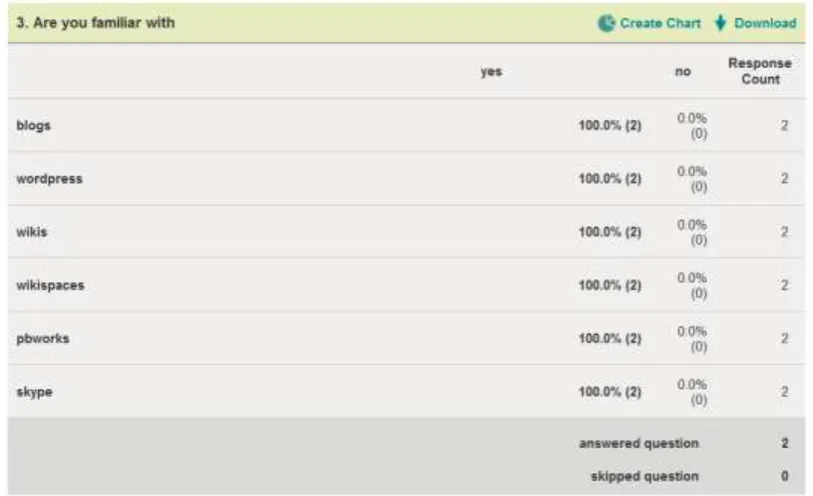
Figure 4.7 extract of initial survey on Web2.0 technologies completed by participants ... 40
Figure 4.8 extract of initial survey on Web2.0 technologies completed by facilitators ... 40
Figure 4.9 extract of final survey (working with colleagues from other institutions) completed by participants and facilitators ... 41
Figure 4.10 extract of final survey (support) by participants and facilitators ... 41
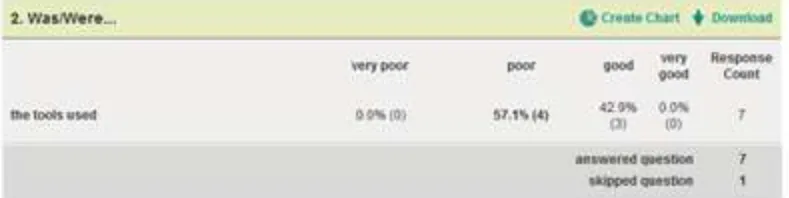
Figure 4.11 extract of final survey (tools) completed by participants and facilitators ... 41
Figure 4.12 extract of final survey (online PBL) by participants and facilitators ... 42
Thanks and Acknowledgements
I would like to thank Dr. Keith Smyth, Programme Leader of the MSc in Blended and Online Education of the Edinburgh Napier University, for his support and guidance throughout my studies towards the MSc in Blended and Online Education at the above mentioned university as well as for his valuable assistance during my research project.
Also, a big thank you to my line manager Dr. Christine Smith, Head of Academic Practice, at the University of Salford for her interest in this project, to Dr. Peter Gossman from the University of Glyndwr who acted as a critical friend during the online PBL trial as well as to colleagues from HE institutions across the UK for participating in the online PBL trial and SEDA for helping me to find participants through their mailing list.
CHAPTER 1
INTRODUCTION
1.1: Study Background
Problem based learning (PBL) has been used extensively and successfully since the 1960s in multiple disciplines (Savery, 2006; Hung, 2009) but only to a limited extent within social sciences according to Mills (2006). Savin-Baden (2000) calls on HE institutions to adopt PBL approaches in their curricula, and cites a wealth of evidence which suggests that PBL is a very effective student-centred learning and teaching approach.
This investigation revealed limited evidence about the use of PBL in general and online PBL in particular within current AD within the UK and internationally. (Barrett 2005, 2010; Donnelly 2002, 2010a).
The researcher who undertook the study reported here is an Academic Developer interested in exploring if PBL successes in other disciplines could be replicated within AD through the application of online PBL. Specifically, this study explores whether a PBL strategy could be used in AD to enhance critical and creative thinking and teaching skills in general; to embed them in practice and utilise the knowledge and skills academics already have to enrich their perspectives and increase productivity (Surowiecki, 2004) by collaborating with colleagues from other HE institutions and disciplines around the United Kingdom (UK).
Within this content, a particular interest lies in the development and application of an online PBL approach within AD for HEA-accredited programmes such as the PgCert in Teaching and Learning in HE (TLHE) or similar provisions offered to new academics which are mostly institutional focused and delivered in a variety of ways.
Web 2.0 technologies have the potential to effectively enhance PBL (Juwah, 2002; Ge et.al, 2010), and can be utilised for flexible online collaborative group work and enabling learners to co-construct knowledge .
The participants in this study were academics and academic developers from different HE institutions in the UK. They participated in an online PBL trial during the Academic Year 2010/11 from September 2010 to November 2010. Freely available Web2.0 technologies including blogs, wikis and synchronous online communication and collaboration tools were used to investigate and problem-solve creatively (Hmelo-Silver, 2004), and construct knowledge collaboratively (Vygotsky, 1978).
A recent paper by the researcher based on this research project has been accepted and will be included in the proceedings of the Celebrating the Past and Embracing the Future: Evolution and Innovation in Problem-Based Learning, Conference 30 & 31 March 2011 (see Appendix 13)
1.2: Study Area
The study area is PBL in online settings within AD and in particular the application within HEA accredited postgraduate programmes such as the PgCert in Teaching and Learning in HE.
1.3: Dissertation Structure
In the first part of this dissertation, an overview is presented together with aims and research questions. A literature review the follows linked to PBL and AD through time. Relevant information and research around blended and online PBL within different disciplines is included.
The online PBL trial is then presented together with the rationale, structure, context and content, as well as the methodology applied, data collection strategies used and first observations.
Finally, the findings of the PBL trial are presented, and the project is evaluated. Conclusions and recommendations are made to engage in further exploration and research in the area of online PBL within AD.
1.4: Aims and objectives
PBL within AD was chosen based on this researcher‘s personal interest in PBL, the lack of PBL in social sciences, the need to understand the potential of online PBL as a new area for research, and a desire to investigate and explore its use in online settings; particularly with academics studying towards the Postgraduate Certificate in Teaching and Learning in HE (PgCert) or similar programme.
The overall aim of this research project was to introduce and evaluate an online PBL approach within AD.
The research questions were as follows:
1. Could a contributor-driven online space of real-life educational problems/scenarios be used within AD (more specifically within the PgCert) to enable more rapid problem-solving skills development? If so, how?
PgCert programme, and be linked to specific assessment activities? The objectives were as follows:
To create an online collaborative space to enable academics to develop problem solving skills, through online PBL, with the application of collaborative learning approaches and web2.0 technologies.
To share experiences online and trial PBL using one scenario with 2 groups of academics studying towards the PgCert. Academic developers play facilitator roles during online group work tasks during the trial.
To evaluate the usefulness and effectiveness of the online PBL model adapted and used for the development of problem-solving and skills development in general.
To make specific recommendations for online PBL using Web2.0 technologies within AD.
CHAPTER 2
LITERATURE REVIEW
2.1: Introduction
In this chapter, a literature review is compiled linked to the double theme of PBL and AD. Their online dimension, context and research are explored as well as current innovative practice and trends.
The review highlights what PBL is and how it has been used within HE over the last few decades with growing popularity since the 1960s (Savin-Baden, 2000) in medical education and other disciplines.
Finally, the journey of AD through recent years and the changes it is undergoing, as well as the potential use of online PBL approaches within this area are explored towards the end of this chapter.
2.2: PBL, the journey
PBL is an active student-centred learning and teaching approach. Authentic, ill-structured problems are used as triggers, such as clinical scenarios in nursing (Niemer, 2010) or real stories with scientific problems in physics (Jian, 2004) and law cases (Bashiran & KADER, 2005) which are used to co-construct knowledge and develop new understanding and a variety of subject specific, as well as higher order thinking and transferable skills within structured small-group learning -supported and facilitated by a tutor.
Developed by Barrows in the 1960s at McMaster University in Canada, and refined in collaboration with Tamblyn (Barrows & Tamblyn, 1980), PBL develops problem-solving and higher order thinking skills, and enables knowledge construction by medical students based on complex and contextualised problem scenarios and a structured and systematic way within groups of students. Whilst it has proven to be an effective approach within Medical Education to enhance learning and maximise engagement as documented by Dochy et.al. (2003), there is strong evidence that suggests PBL can be used effectively within multiple disciplines, and has become increasingly popular (Gürsul et. al, 2009; Donnelly, 2010a) from medicine to chemistry, economics and teacher education. It engages students in ―meaning-making over fact-collecting‖ (Torp & Sage, 2002, p. 1)
is easier to use in ‗applied‘ disciplines.‖ (online) and that ―very little has been carried out in the social sciences.‖ (online). Savin-Baden (2000) believes that that there is still room for more PBL application to be embedded within HE programmes across all disciplines and especially the ones less involved with PBL up to today.
An institution-wide PBL approach has been adapted by the University of Maastricht (online) which claims to be the only one to offer all provision based on PBL. Can or should PBL replace all other learning and teaching approaches in HE? This is a question we could perhaps ask ourselves.
PBL might be a child of the 20th century, however it is based on the open argument or openness of the ―amateur thinker‖ as captured by Wang et. al (2008), a concept also known as the Socratic Method developed by Socrates in the 5th century and recorded by Plato in which the teacher asked critical questions to trigger thinking, reflection and enable learning (Rowland, 2007) in small groups through active participation.
There are differences in the PBL approaches used across countries, institutions, faculties and schools, within undergraduate and postgraduate provisions as mentioned above. However, as Mills (2006) notes ―the model adopted is less important than the intention‖ (online). What all approaches have in common is that they are goal-oriented, based on real-life problem scenarios, for example, (see Hung (2009) for the 3C3R model) facilitated by academics. Baral et. al (2010) note that the teacher in PBL is becoming ―the promoter of learning‖ (p. 144), where students work in groups and are actively engaged in the learning process through which they gain knowledge, develop their higher order thinking skills (Oliver & Omari, 1999) and techniques linked to a specific subject, but also have the opportunity to develop and refine more generic and transferable skills and introduce participants to research (Mills, 2006).
The advantages of learning through real-life ill-structured, open-ended problems and authentic or realistic scenarios from the outset (Linge & Parsons, 2006), where knowledge is constructed (Gürsul et. al, 2009) and where there is not one correct and obvious solution (Baturay & Bay, 2010), have been noted by Hung (2009) and Wang et. al (2008) who view learning through PBL as ―a kind of practice of life.‖ (p. S9) deeply embedded in what humans are and how they learn. Barrett (2010) also states that effectively designed problem scenarios stretch and challenge participants. Oliver & Omari (1999) note that within PBL there is ―scope for a variety of solutions and responses‖ (p. 7) thanks to the openness of the problems.
Learning in PBL happens through a structured explorative process. PBL has the power to create, enhance and sustain curiosity and openness (Wang et. al, 2008). Prior knowledge and experience are taken into account when shaping and reshaping new knowledge on one‘s own and collaboratively within small groups.
Working in groups, enables participants to explore a problem from different perspectives (Mills, 2006), co-creating knowledge collaboratively through learning scaffolding structures and being able to ―see the bigger picture‖ (Eaton & Turner, 2003). PBL includes a number of structured tasks or stages that happen in chronological order and students are required to take different roles during the PBL process, including chairing and scribing. Learners rotate and take these different roles but also act as teacher, researcher, and learner; moving between individual participant to leader of the group task.
This changing of roles, enables participants to develop multiple perspectives on a problem (Wang et. al, 2008) and evidences that PBL is a social-constructivist (Vygotsky, 1978) approach during which learning with and from each other is practised in multiple-dimensions and knowledge is co-created. High-level active engagement in the learning process is required throughout the PBL process (Barrett, 2005).
Research has shown that learning with and from each other can be very fruitful. As McCombs & Vakili (2005) state ―[…] learning is enhanced in contexts where learners have supportive relationships, have a sense of ownership and control over the learning process, and can learn with and from each other in safe and trusting learning environments‖ (p. 1586). Rovai (2002) also highlights the importance of a learning community by noting that ―Once individuals are accepted as part of a nourishing learning community, they develop feelings of safety and trust. With safety and trust comes the willingness of community members to speak openly‖ (p. 322).
Mills (2006) states that within PBL ―[participants] are not expected to reach the ‗right‘ answer. There may not be right answers‖ (online). The problem is used as an apheteria, which according to Woods (2000), Busfield & Peijs (2003) and Baturay & Bay (2010) increases students‘ curiosity and motivation and works as an energiser (Mills, 2006). Hung (2009) and Donnelly (2005) also support the notion that PBL enhances motivation and empowers participants through providing increased ownership of the learning content and context.
Baden, 2000). These are developed and fine tuned throughout and equip students with key skills for the world of work as well as enquiry and research (Gürsul et. al, 2009) by providing the opportunity to link theory with practice. This is particularly relevant for HE institutions today since they have become much more responsive to the market demand than ever before and links to industry are strengthened (Brew, 1995). As Wang et. al (2008) note ―[...] goal (of PBL) is not merely to instill knowledge, but also includes enhancing the birth and creation of knowledge, cooperation among team members and the attitude of learning‖ (p. S9).
In addition, PBL is a valuable tool to develop more sophisticated learning strategies, discover oneself and learn how to learn; to become more self-directed, collaborate and problem-solve effectively when confronted with complexity and be able to critique and defend one‘s viewpoint. PBL provides a platform for a rich and highly student-centred and student-controlled (Hmelo-Silver et.al, 2009) learning experience that prepares graduates for life and work in the 21st century and there is evidence (Holland, 1999; Barrows, 2003; Kolmos et.al, 2007) that PBL does equip students better when entering their profession.
PBL can be used successfully with large groups (Conn et.al 2006). Some of the barriers that might be present can be lifted through the use of technology, because a large part of PBL is carried out asynchronously which enables the development of more efficient support mechanisms (Hmelo-Silver et.al, 2009). Facilitators play an important part in PBL (Savin-Baden 2003) and their role and support needs change depending on the group they are facilitating and their own experience, skill, knowledge and understanding of PBL. Students are guided to become self- and collaborative discovery learners. Participants and PBL facilitators new to their role and PBL might initially be confused (Butler, 2003) and feel challenged and require more support and guidance (Neville 1999; Savin-Baden 2003) to familiarise themselves with PBL until they become more experienced and confident using this approach.
While it is generally accepted that PBL enables collaborative learning and has a number of other benefits, there is also some criticism about possible disadvantages, such as covering less curriculum content through PBL (Albanese and Mitchell, 1993); that PBL is stressful for staff and students as well as time and resource intensive (Des Marchais, 1993) -technology might be able to help resolve some of these problems as highlighted in Finucane et al (1998). Also, ill-structured scenarios used in PBL may mislead students in their investigation and move them too far away from achieving the intended learning outcomes (McLoughlin & Oliver, online). PBL tutors who are unfamiliar with PBL might also hinder its effectiveness.
2.3: Online PBL
Technology and the arrival of new pedagogies are transforming the way we deliver and support learning (Oliver & Omari, 1999). Technology-enhanced learning is learning supported by technology. Through these technologies, today‘s students have more opportunities to participate and engage in dialogue and collaboration with each other and enjoy greater flexibility. They can engage in informal and formal learning opportunities using a wide variety of technologies, including web-based and mobile technologies.
However, it is not generally recommended to replicate face-to-face delivery models within online delivery since, as noted by Parker (1997) and Oliver & Omari (1999), this ―tends to significantly underutilise (this) technology and limits many of the learning opportunities that are afforded.‖ (p. 2). Rethinking strategies and approaches are imperative, and make blended and online provision available which is based on sound pedagogical models suitable and effective for technology enhanced learning and teaching.
As Jeong & Hmelo-Silver (2010) note ―since the advent of information technology, the availability of resources and cognitive tools has exploded‖ (p. 84). Technology enhanced learning provides new opportunities for PBL to be used in blended and online programmes, but also in traditional face-to-face provision, to extend opportunities beyond the classroom and use with larger groups (Hmelo-Silver et.al, 2009), beyond time and place restrictions and limitations. Donnelly (2005) also recognises that PBL ―provides a natural setting for infusing learning technology into the higher education classroom‖ (p. 157). Sendag & Odabasi (2009) also highlight that ―online learning environments are flexible, attractive and interactive‖ (p. 134) and are therefore a valuable tool to use within PBL, especially since they are also much easier to create (Donnelly, 2005).
Not everybody agrees with the above and Taplin (2000) recommends that PBL should not be used in distance education courses because it increases the difficulties due to geographical isolation. However, enhanced critical and creative thinking skills developed as a result of blended and online PBL have been documented by Sendag & Odabasi (2009). Online PBL models have been developed and adapted from face-to-face models, such as the 7-stage model by Orril (2000): or the 4-stage model by Malopinsky et. al. (2000) (See Appendix 10).
Juwah (2002) notes that technology, especially shared online spaces, have the potential to effectively enhance PBL since they enable learning with and from each other as well as knowledge co-construction, a view also supported by Ge et.al (2010). Oliver & Omari (1999) documented and recognised the use of the internet as well as conferencing, and asynchronous communication tools such as discussion boards over a decade ago and the role they can play within PBL, when they carried out a study using online technologies within a face-to-face course.
Tools like blogs, wikis, media-sharing applications and social networking sites are capable of supporting and encouraging informal conversation, dialogue, collaborative content generation and the sharing of knowledge, giving learners access to a wide raft of ideas and representations. (p. 641).
Kallinikos et. al (2010) also highlight that Web2.0 tools ―generate new spaces in which people […] form communities […]‖ (online) -Virtual learning environments (VLE) for example. The use and benefits of using asynchronous features such as discussion forums (for deeper engagement and reflection) and synchronous features such as chat, as well as online classrooms (for making decisions) for PBL are explored and presented in various studies as documented by Donnelly (2009). According to Hammond et.al. (2002) VLEs provide a more student-led problem-based style of learning and enable networked learning, both of which are widely used within distance learning programmes (Jones & Steeples, 2002). More recently, Ortiz et. al (2009) explored co-authoring and convenience in collaborating online PBL settings within Teacher Education.
Online PBL could be seen as a form of ‗networked learning‘, or ―learning in which information and communication technology (C&IT) is used to promote connections: between learners, between learners and tutors; between a learning community and its learning resources‖ (Jones & Steeples, 2002, p. 2). This is what is practised during online PBL. Connections also feature in Siemens‘ (2006) theory of connectivism, an amalgamation of networked and social learning.
The main characteristics of networked learning when applied to online programmes are that communication, socialisation and collaboration are enabled and learning activities, which would otherwise not be possible, can be designed and carried out (Hammond et.al, 2002). It is about linking individuals, ideas and experiences and co-creating knowledge in online environments, while lecturers step back and facilitate learning. Rovai (2002) also supports the importance of creating communities for enabling online collaborative learning. This notion was recently explored by Baturay & Bay (2010) in an online PBL context, confirming that social interaction and the formation of learning communities based on collaborative tasks had a positive effect on the learning experience and limited feelings such as isolation and loneliness among online students.
collaborations and programmes (Yun, 2005) that would otherwise not be possible or more complicated to set-up.
Hmelo-Silver et. al (2006) developed the Socio-Technical Environment for Learning and Learning-Activity Research (STELLAR) which is an online platform for PBL that consists of resources, personal and collaborative learning spaces. A PBL study conducted by Hmelo-Silver et. al. (2009) with a pre-service teacher showed that this approach in a blended context had positive effects on participants‘ deep learning. Also Gürsul et. al. (2009) found during a recent comparative PBL study involving mathematics students that achievement was higher among students who participated in online PBL and that online groups collaborated better than the face-to-face ones.
Overall, according to Gürsul et. al (2009) and Donnelly (2010a) limited research has been carried out linked to the use of PBL in distance and blended learning programmes but the number has been growing steadily in recent years and we learn more about online PBL and its applications within HE. There are, however, fewer studies focusing on the learning experience in online PBL and the impact facilitation has on students (Savin-Baden, 2003), both areas which are explored within this study.
2.4: Developing Academics
HE used to enjoy greater autonomy and was able to follow its own agenda (Brew, 1995). Today, this academic freedom seems to be somehow limited and HE activity is more clearly linked to industry and the economic world in general (Brew, 1995) and many programmes are designed jointly. HE has undergone a lot of changes in the last 20 years (Further and Higher Education Act, 1992; Dearing Report, 1997; Roberts Report, 2003; Leitch Report, 2006; Browne Report, 2010) and is embracing a larger and more diverse student body in recent years (Brew, 1995; Ramsden, 2008; Halstead, 2009). HE increasingly offers a wider range of flexible programmes at undergraduate and postgraduate level, including blended and fully online provision to home and international students. Non-traditional students and older students returning to education and participating on part-time programmes are increasing (Halstead, 2009). Rapid knowledge and technology advancement as well as influences by the economic situation are changing the learning and teaching landscape in HE (Ramsden, 2008).
These changes have triggered the need for a shift in focus towards teaching and pedagogic research to develop and enhance current academic practice and keep up-to-date with the latest developments in pedagogies. The Dearing Report (1997) and, more recently, the Browne Review (2010) recommend professionalization of teaching in HE.
It is almost the only profession in which someone can operate without any qualification or licence to practice. Students go to university to learn, and good teaching is integral to effective learning. But there is as yet no requirement that academics who teach students in higher education should hold a teaching qualification or be qualified to teach. (p. 2)
A statement also echoed in the Brown Report (2010). Such programmes have been offered within HE over the last 10 years. PgCert programmes have become mandatory for new staff (Halstead, 2009; Gosling, 2010) and are recognised by the academics themselves and across the HE sector in the UK. Andresen (1995) supports the view that such programmes trigger real interest and engagement in learning and teaching, increasing self-confidence, and also highlights that
It seems that if a thing is worth working hard at, it is worth getting credit for, and, in the absence of credit, people are unlikely to work hard enough to make significant changes to themselves or the culture of their academic environment, nor will their colleagues respect the work they have done. (p. 44)
In addition, completion of such programmes has started to inform career progression opportunities (Thomas, 2009) and is included in other recognition schemes across institutions, which makes such programmes increasingly more attractive to academics.
The Higher Education Academy (HEA) has been founded to support and share good practice as well as contribute to the enhancement of learning and teaching in HE (HEA, 2010). The HEA is committed to raising the status and standards of teaching in HE and has developed a comprehensive development and recognition scheme in collaboration with the sector.
Today, AD Units play an increasingly vital role in providing continuing professional development to academics, and despite the fact that academic developers are, ―criticized […] for being unable to produce evidence of lasting impact of their work.‖ (Andresen, 1995, p. 46), they ―establish habits and skills for lifelong critically reflective professional practice‖ (p. 36)
ADUs offer bespoke support, open workshops and accredited provision at postgraduate level, from Postgraduate Certificate up to Master‘s qualification in Teaching and Learning in HE (Wareing, 2009) and in most cases, academics from different disciplines are brought together. There are many benefits to an interdisciplinary approach which is proven to encourage an open dialogue between academics across the institution and expose them to a variety of perspectives and issues; widening and deepening their understanding of learning and teaching.
(online) across HE. At the heart of such provision are raising awareness and responsibility about student learning, to engage with underpinning learning theories and enable participants to develop general and subject-specific teaching strategies, as well as promote pedagogical research. PgCerts are usually institutionally focused and are delivered in a variety of ways, including more and less structured, block or weekly sessions, as well as face-to-face, blended and online provision. At the University of Salford, for example, we have moved away from fully face-to-face programme towards a blended approach which provides greater flexibility and choice through the introduction of optional modules.
Also, an increasing number of programmes, including CPD frameworks, are mapped against the UK Professional Standards Framework (UK PSF) (King, 2009; Thomas, 2009) introduced by the HEA in 2006, and participants can achieve associate member or fellowship status depending on the depth and breadth of their engagement with the 3 standards descriptors of the UK PSF, an important and flexible tool in staff development (Kell, 2009). The UK PSF is owned by the sector and has been informed through research and is underpinned by theory. Thomas (2009) recognises that the UK PSF
describe standards for good teaching in higher education and [...] (are) [...] supporting the enhancement of professionalization in teaching in UK higher education. (p. 20)
Lawson (2009) refers to learning through regular dialogue to improve teaching and ADs play a vital role in creating opportunities for dialogue with academics on a day-to-day basis. ADs are peer-consultants (Andresen, 1995) and support academics, individuals, groups and whole schools and departments on a day-to-day basis, to develop their academic practice, teaching and research in order to provide a richer student experience to their students and grow as individuals and professionals. They are passionate and can enthuse academics and stimulate change; assist academics in embedding and sustaining what they have learned in their practice; share good practice and celebrate success; are strategic agents for change and innovation at institutional level (Elton, 1995). They also engage in educational research and have the freedom to pursue their interests linked to learning and teaching that might not be linked to institutional priorities (Boud, 1995).
progression as highlighted by Thomas (2009).
Boud (1995) emphasises that ―Staff development must be at the heart of the creative and responsive institutions which we need, in order to ensure the health and vitality of higher education‖ (p. 213). However, Barrett (2005) claims that there are ―perceptions of staff development as lacking academic rigour‖ (p. 122), and suggests the use of PBL in Academic Staff Development as hard fun, to make learning more meaningful and enable participants to link teaching and research through active collaborative engagement in the learning process.
Extensive literature is available on PBL within nursing education where it has been shown to enhance students‘ ability to critically apply knowledge and collaboratively resolve real-life clinical problems. The lessons learned from the application of PBL in nursing are also relevant for other disciplines. During this investigation, only limited evidence was found for the use of PBL in general and online PBL in particular within current AD and PgCerts specifically. This confirms Murray & Savin-Baden (2000) findings and appears to contradict Donnelly‘s (2009) claim that PBL ―is well established in higher education, AD and elsewhere‖ (p. 3). However, PBL might be more common for workshop activities than PBL driven approaches.
Donnelly later (2010a) notes that AD activities in general are in need of further development and goes on to say that there is limited evidence of exploration around technology enhanced learning and teaching approaches within AD, highlighting the need to engage academics in staff development activities linked to technology enhanced learning and teaching approaches that can transform the curriculum design and delivery as well as the student experience. In her earlier work, Donnelly (2005) uses technology to support the accredited postgraduate AD within her institution and recognises the potential technology has when it is based on pedagogy; as well as the challenges and barriers, especially for staff who are less familiar with using technology in their practice.
Barrett (2005, 2010) also carried out PBL research within AD. She explored the concept of hard fun using PBL (Barrett, 2005) to introduce a more creative, playful and academically rigorous approach in AD and in PgCerts. Her findings suggest that PBL is hard but also fun because it is hard and demanding and has, as a result, the power to transform us. In a newer study, Barrett (2010) investigated how participants talked about the PBL process. They were engaged during face-to-face PBL tutorials and constructed knowledge through collaboration, during a module of the Postgraduate Diploma in Learning and Teaching in HE which had a PBL content and process. Her findings confirm that PBL tutorials might be messy and chaotic at times but also creative and result in new knowledge generation within the PBL groups.
enhance interactions. Her findings suggest that interaction strategies, including strategies for community building, are important factors for the success of blended programmes and that these need to be designed in such a way that they enhance and not just replicate the face-to-face experience. Her findings are mirrored by Baturay & Bay‘s (2010) observations who also investigated PBL and the notion of community within online settings and found that students felt more connected online when they were involved in collaborative tasks. Palloff & Pratt (2005) highlight that collaborative tasks are vital ingredients for the formation of community forming, a view also supported by Rovai (2002); while Donnelly (2009) suggests that the combination of PBL and the use of technology can create opportunities for transformative learning, a re-evaluation and shift of perspective and beliefs (Mezirow, 1997).
All current research around blended and online PBL seems to engage participants from a single institution. However, online AD can offer HE institutions a more flexible provision for staff, the opportunity to engage with colleagues from different disciplines and institutions and model good use of technology-enhanced and online learning so that academics gain a better understand of online learning from a learner perspective and immerse in online PBL activities.
Within this chapter, a literature review was conducted. Findings confirm that PBL, and technology-enhanced and fully online PBL are widely used in a number of disciplines and professional areas, such as nursing where much research in this area has been carried out. Technologies are already used widely to enable and support a variety of PBL activities and provide new opportunities for exploration and discovery. The investigation also showed limited application of PBL and specifically online PBL within AD and PgCert provision which links participants from different institutions and a gap in related research activity. The current study and pilot carried out look to explore online PBL within AD, specifically application within PgCert provision to link participants from different institutions and to make discoveries that might lead to application and further research.
CHAPTER 3
METHODS AND DATA
3.1: Introduction
The research was carried out over a period of 9 months, from May 2010 until January 2011 including the literature review, the planning for the online PBL trial and the evaluation phase of this project. This investigation is a primarily qualitative, interpretivist research project, focused around a ‗naturalistic experiment‘ involving authentic tasks and authentic learners with only a few imposed parameters to ensure the experience that has been set-up is as ‗realistic‘ as possible. Supplementary methods of quantitative data collection have been used.
Within this chapter, the methods, techniques and data analysis tools used are presented.
3.2: Methods and techniques
3.2.1: The trialParticipants: Two academic developers and eight participants studying towards a PgCert in Teaching and Learning/Academic Practice took part in this trial. All were from different HE institutions across the UK, practising in a variety of disciplines. All participants were new academics with some or little teaching experience. Participants were from the University of Sussex, University of Birmingham, the London School of Economics, University of Wales Institute, University of Glasgow, University of Wales Institute, University of Salford and the University of Chester. Disciplines represented were Psychology, Modern Foreign Languages, Biology, Social Policy, Informatics, International Development, Biomedical Sciences, Economics.
The trial: The mode of communication was fully online, asynchronously and synchronously. A trial was conducted to explore if online PBL could be used effectively within AD, and in particular within the PgCert. The trial aimed to assess whether online PBL would enable individuals to participate actively and collaboratively in problem-solving tasks, to organise online group activities, and engage in a dialogue using synchronous and asynchronous communication and collaboration technologies (Hammond et. al 2002) and networked learning approaches (Steeples et.al, 2002) as well as reflect on their professional practice.
Participants had opportunities to experiment with pedagogical ideas in small groups, engage with PBL and carry out self- and collective reflection as well as multidisciplinary conversations which are important (McLean, 2009) and have the potential to contribute to a rich exchange of ideas, collaborative learning and collective knowledge construction within a learning community. From a pedagogical perspective, according to Woods (2000), small group PBL usually consists of groups of 3 to 9 participants (Woods, 2000) while Mills (2006) recommends eight to ten as the ideal group size for PBL, and Donnelly (2009) talks about five to seven in one of her studies. Oliver & Omari (1999) carried out a technology-enhanced PBL study with smaller groups of 4 to 5 students as did Linge & Parsons (2006). In online settings, it has been found that a smaller number of group members makes online communication and collaboration more effective and active (Novak, 1989), enables meaning-making (Donnelly, 2009) and transforms groups into teams more rapidly. Also, from a methodological perspective, Mann (online) recommends that participants in phenomenographic studies be diverse. Participants in this study were from diverse backgrounds, different genders and from different countries of origin which added to the diversity of their previous experiences. While Trigwell (2000) and Sandberg (1996) agree there is no optimum group size for general phenomenographic studies, both recommend 12-20 participants for formal phenomenographical research projects. Sin (2010) emphasises that the optimum group size depends on the nature of the project and what is to be achieved. This MSc project was an online PBL pilot in which 10 individuals participated. This is in line with Cousin (2009) who, while recognising that there are different views about the optimum group size for phenomenographic studies, recommends 10 as a good number of participants.
Virzi (1992) identified that the majority of usability problems in application development are identified by groups of 4-5 individuals. For the trial, two multi-disciplinary groups were formed of four participants each, taking into account the above pedagogical and methodological recommendations. This enabled the two groups to be studied, comparing and contrasting working practices and collaboration models, and getting a flavour of the collective experience. Each group was facilitated by an academic developer who acted as a PBL facilitator and provided a scaffold support system. Their role was to be helpers in the process of familiarisation with PBL and assisting participants in initial functioning as a team. Thereafter, they were generally available when needed.
Access was given to media-rich PBL resources. Familiarisation with the basics of PBL for participants and facilitators before immersion in the trial was enabled through a series of media-rich self-study resources. Holland (1999) documented that the lack of preparation for PBL can have a negative effect, while Jeorg & Hmelo-Silver (2010) have noted that making resources and tools available enhances the student experience during PBL.
Web-based resources linked to these themes were made available to PBL participants. This strategy, according to Donnelly (2005) ―can save a great deal of time and expense in the development of web-based learning materials.‖ (p. 164) and enables PBL participants to focus on the actual PBL task and on the co-creation of knowledge instead of the pure search for information (Jeong & Hmelo-Silver, 2010).
Trial phases The trial was based on Salmon‘s (2004) 5 stage model: Familiarisation with technologies
Socialisation with tutors and peers Exploring PBL and sharing
Execution of collaborative PBL task Peer evaluation and tutor feedback and structured as follows:
Find suitable participants, two academic developers, and eight new academics who study towards a PgCert programme at a UK HE institution in the academic year 2010/2011. Academic developers had access to the online space from very early on to familiarise themselves with the structure and online PBL. Support was provided by the organiser. Time frame: May 2010 - September 2010 (5 months)
Task 1 (a) All participants joined the online space and familiarised themselves with the technology. Time frame: 6 September 2010 – 12 September 2010 (1 week)
Task 1 (b) All participants had the opportunity to get to know each other through an online socialisation process and familiarise themselves further with PBL. At the end of this phase, two groups of four were formed and PBL facilitators were assigned their groups. Time frame: 13 September 2010 - 26 September 2010 (2 weeks)
PBL facilitator tasks: participants will be given a PBL scenario finalised by the PBL facilitators and asked to solve it collaboratively. This happened on the 27 September.
further reputable sources. Time frame: 27 September – 1 November (5 weeks)
5-stage model
Stage 1: explore the problem
Stage 2: discover known and unknown, plan Stage 3: research and share
Stage 4: apply Stage 5: share
Task 3: Each group presents their solution to the other group online, synchronously or asynchronously and provides feedback to peers on Task 2. Also, PBL tutors/facilitators will have the opportunity to provide generic feedback to their own group at the end of the trial, time frame: 2 November 2010 – 14 November 2010 (2 weeks)
Throughout the trial, participants were asked to keep in touch via the online PBL space (see below) and report any concerns as soon as possible so that they could be resolved. Time frame: 6 September 2010 – 30 November 2011 (3 months)
3.2.2: Research method
The researcher was not engaged during the trial and assumed the role of the trial organiser and observer. This provided the opportunity as Carr (1995) explains to ―explore a particular range of problems in systematic and rigorous manner‖ (p. 32), gain a deeper understanding of participants‘ behaviour, actions and perspectives and their lived experiences of being involved in online PBL, and conduct a qualitative study using phenomenography (Marton, 1981), an empirical qualitative interpretivist research methodology developed within educational research (Marton, 1986), as a methodology and data analysis tool.
Limitations were encountered in the short duration of the trial which make findings applicable only for this specific group. Participants volunteered to take part but were busy professionals and had limited time available. Some of the Web2.0 technologies used were new to some participants. Also, interviewing participants remotely was not always possible due to technical difficulties and alternative ways had to be found. Transcribing interviews, analysing, seeing patterns, linking and identifying categories emerging through the qualitative narrative data (Taylor-Powell & Renner, 2003) as well as evaluating data were complicated tasks and required discipline and a systematic approach.
3.2.3: Technologies
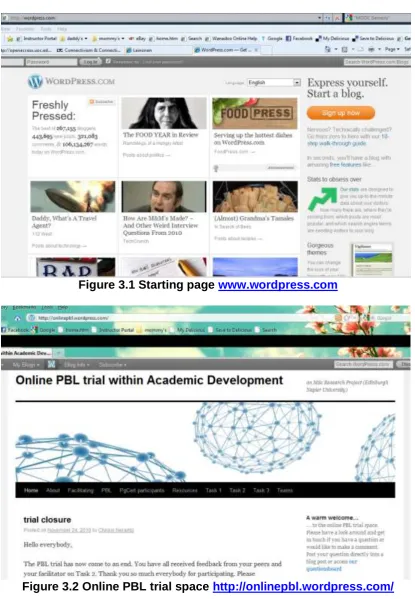
Freely available Web2.0 technologies were used to host the online PBL trial. Blog - Online PBL trial space: A blog was created at www.wordpress.com
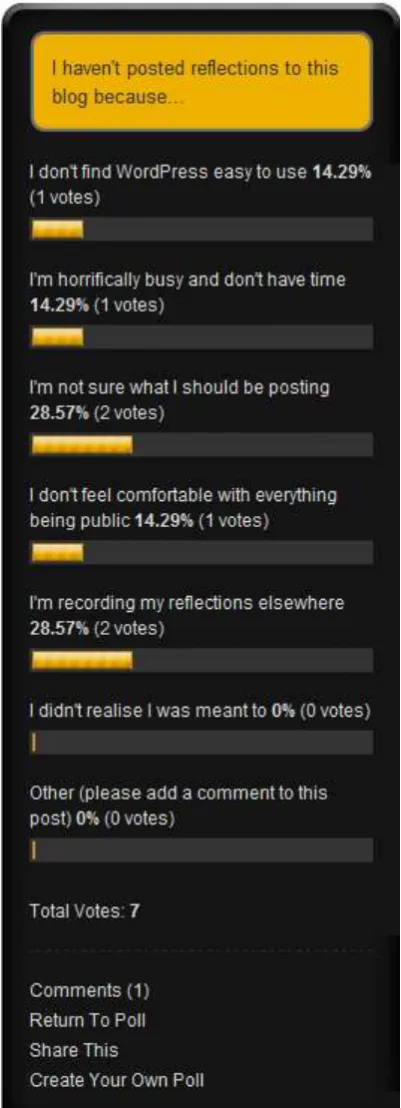
and became the online trial space that enabled participants from different HE institutions to meet online (Schroeder, 2004). It was the space through which PBL facilitators communicated, co-ordinated tasks and provided updates. It was an environment that gave participants a voice and provided the means for two-way active participation (Segesten, 2010). The learning process and reflections on the learning process could be captured in blog posts and shared with all participants. Downes (2004) recognises the potential of blogs by stating ―The process of reading online, engaging a community, and reflecting it online is a process of bringing life into learning.‖ (online)
Figure 3.1 Starting page www.wordpress.com
Figure 3.2 Online PBL trial space http://onlinepbl.wordpress.com/
It was intended to make the online trial space public to enable others to observe the trial as an experiment of a concept under development, which would benefit from input from the wider academic community (Weller, 2007b). Consent was therefore sought and secured from facilitators and participants. Wikis - Collaborative spaces: In addition to the blog, wikis were used for each group as platforms to complete the collaborative PBL task. Research has shown that wikis are very useful flexible tools for online collaborative work (Wheeler & Wheeler, 2009), and provide a platform for individual and collaborative knowledge organisation and construction, transforming learners into co-creators of knowledge (Grant, 2006; Wheeler et al., 2008). Both facilitators choose to create wikis at www.pbworks.com for their groups which were kept private until completion of the main PBL task around assessment and feedback.
Figure 3.4 wiki of a PBL team (A)
Figure 3.5 wiki of a PBL team (B)
Figure 3.6 Skype download page www.skype.com
Figure 3.7 MP3 Skype Recorder
3.3: Data Collection
The main data collection method used was the individual phenomenographic interview. All participants were interviewed at the end of the trial and details of the process and procedure can be found in the next section.
All responses have been anonymised and, for ethical reasons, authorisation has been secured from all participants to use anonymised quotes for this research project and future related articles.
3.3.1: Individual interview
The interviews (see appendix 6), lasting about 1 hour and conducted remotely via Elluminate and Skype, were held shortly after completion of the trial. The approach used was based on the phenomenographic interview to capture reflections, raise awareness and deepen reflection through questions which were ―deep and open-ended‖ (Dortins, 2002, p. 207); directly linked to the experiences of the individual. The interview took the form of a dialogue (Marton, 1994). A few only open questions were prepared for this purpose (see appendix 6). Further questions were formulated during the discussion to facilitate reflection on themes not previously reflected upon or shared and create an ―object of focal awareness‖ (Marton, 1994, p.4). Interviews had a ―loose structure‖ (Jones & Asensio, 2002) and the participants were assisted in reflecting through questioning. Interviews also followed Orgill‘s (no date) suggestion: ―The interview will follow a certain line of questioning until it is exhausted, until the participant has nothing else to say and until the researcher and participant have reached some kind of common understanding about the topics of discussion.‖ (p. 2)
All interviews were transcribed and used during the data analysis stage which enabled the researcher to immerse herself in the data as Orgill (no date) recommends. Extensive data was collected and the final corpus was, as Dortins (2002) describes ―a group of texts, or even one large text, that could be read with or without reference to the original conversation, or to the speakers.‖ (p. 208). The analysis was made based on themes identified by participants during the interviews as a collective with no reference to researchers reflections, thoughts or feelings. Themes were arranged in groups and Microsoft Excel was used at this stage to enable more effective qualitative data filtering, analysis and synthesis (Meyer & Avery, 2009). Reflections between participants were compared, similarities and differences of the ways participants‘ experienced a specific situation were recorded (Orgill, no date) and transcripts were used for interpretation, analysis and not pre-defined categorisation. These formed the categories of description (Marton, 1994) which provide valuable insight and show the different ways in which the online PBL trial was experienced by participants, as well as the main results of this phenomenographical research. On the subject of interviews in a phenomenographical study, Jones & Asensio (2002) mention that ―most of the interviewees have written about their experiences prior to the interview and had previously reflected upon the issues that the interview raised. The accounts we heard were in some senses a performance of previously rehearsed ideas.‖ (p. 276)
Reflections: The value of reflection during the learning process has also been noted by Hung (2009) and Holland (1999) who state that reflection is ―central to learning‖ (p. 1). Participants were encouraged to use the online trial space to reflect on their experiences during the trial by posting blog entries and sharing these with the other participants from the beginning, thereby allowing individual reflections to become part of the collective. This would enable participants to capture and share their thoughts and the researcher to gain an insight into the experience as it was unfolding. Donnelly (2005) suggests that ―blogging encourages students to reflect and reflection is often a key element in the learning process‖ (p. 169). Salmon (2002) used blogging for an online training programme to ―encourage the trainees to stop and reflect in the middle of their action online and to record their thoughts, their progress and any critical incidents. Since all messages were then available to other participants, they could read the messages and respond to each other‖ (p. 205).
Initial survey (see appendix 3): This was completed by all participants, and facilitators at the beginning of the trial in order to gather key information: Their starting point, linked to their practice within HE; whether they were familiar with PBL; whether they had participated in online learning and in particular online PBL before; and if they had used technology for learning and teaching before in their practice. Some of the questions where therefore open-ended. In addition, participants were asked for their consent for making the trial space public. Segesten (2010) noted that making blogs public ―increases the visibility of our programs on the web and has the effect of giving it a more clearly defined positive image, which in turn may result in higher commitment of the students to the program and a sense of pride in their work‖ (online). Weller (2007b) adds that ―a blog is a good means of allowing others to observe some of the less well thought out ideas and ongoing projects of an academic.‖ (online) These two potential advantages, guided the intention for making the online trial space public.
Figure 3.8 Starting page www.surveymonkey.com
Whilst there were limitations to the design and layout of both surveys, care was taken to make them as user-friendly as possible using the available tools. Boxes to add responses to open questions were relatively large to encourage participants to elaborate on their answers. Links to the surveys were forwarded to all participants via email and through the online PBL trial space. This method was used because, according to Brace (2008), it enables participants to be more honest and also speeds-up completion time. All questions were presented on the same page since both the initial and final surveys were relatively short. This is in line with Dillman (2000) who noted that presenting all questions on the same page is more effective for short surveys. ―Don‘t know‖ responses were not included in the surveys as these tend to be problematic in self-completion questionnaires as documented by Brace (2008).
CHAPTER 4
FINDINGS AND DISCUSSIONS
4.1: Introduction
In this chapter the results and outcomes of the online PBL trial are presented. The lessons learned, insights and findings from this small-scale investigation may be more widely relevant.
Interpretations are subjective. Participants have been asked to provide their subjective accounts of their experience, and the researcher reflected upon them. This is natural in a qualitative, interpretivist study were the researcher‘s challenge is to describe a recognisable reality of the experience for all those involved. The trial had a clear impact on participants and facilitators as documented within this chapter and anonymised quotes in italics have been included to illustrate this. Categories of description were identified from data collected through interviews, initial and final surveys and personal reflections. The findings provide a rich insight into the lived experience and the variation of this experience of the individuals who participated in this study.
The participating PBL facilitators were known to the researcher before the trial but not the participating academics studying towards PgCerts at different HE institutions who were sourced through the SEDA mailing list.
In total, ten individuals started the trial. Two facilitators and eight participants of which five have been interviewed remotely, three via email due to technical difficulties and limitations. Two individuals did not complete the trial due to personal and work commitments. Everybody who participated and completed the trial, provided data for analysis and evaluation.
4.2: Reflections
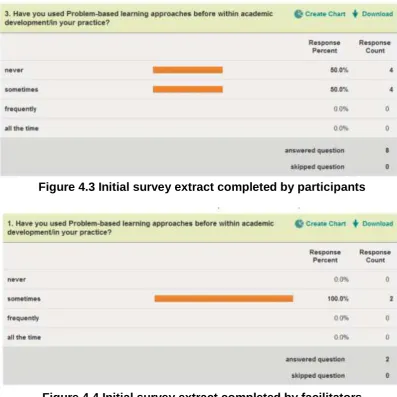
Only three participants and one facilitator took the opportunity to reflect during the trial. It was observed that progressively less reflections were shared and in total eight reflective accounts were published. There is some evidence of conversation through reflections. Generally, however, participants seem to have been confused about what was required and this is evident in their blog entries, most entries echoing the following remark.
How can I reflect when, as yet, I don‟t feel I know what I‟m supposed to be reflecting upon. (anonymous participant)
Some of the blog entries do have reflective elements, mainly of descriptive reflection:
So far I felt like virtually walking in the darkness, going to a wrong direction, hitting a wall that suddenly coming up and when I need help, no one responded right away. (anonymous participant)
Figure 4.1 participant‟s poll “I haven‟t posted reflections to this post because...”
4.3: Initial survey results
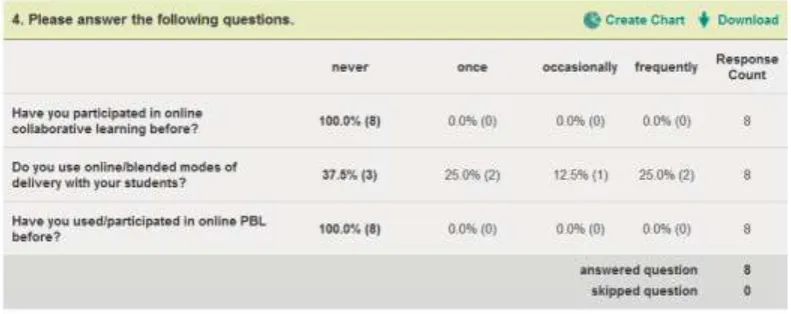
Figure 4.2 Initial survey responses by participants linked to familiarity with PBL
Facilitators had used PBL sometimes in their practice. While the majority of participants had limited experience of learning and teaching online.
[image:38.595.77.475.308.706.2]Figure 4.3 Initial survey extract completed by participants
Figure 4.5 Initial survey responses by participants linked to working online, including online PBL
Figure 4.6 Initial survey extract completed by facilitators linked to working online, including online PBL
[image:39.595.118.513.298.467.2]Figure 4.7 extract of initial survey on Web2.0 technologies completed by participants
Figure 4.8 extract of initial survey on Web2.0 technologies completed by facilitators
4.4: Final survey results
[image:40.595.74.481.380.628.2]Figure 4.9 extract of final survey (working with colleagues from other institutions) completed by participants and facilitators
Participants and facilitators commented on the facilitation aspect. Generally, there was disatisfaction with this aspect of the trial.
[image:41.595.113.508.324.428.2]The chief thing that the trial highlighted for me was the importance of the facilitator to the success of the project. It is a lot more work doing things this way, and the facilitator needs to be pretty „hands on‟ in the absence of face-to-face meetings between group members. (anonymous participant)
Figure 4.10 extract of final survey (support) by participants and facilitators
The survey results show overall that there was an expectation that facilitators would be more engaged in the trial and the PBL task to bring the group together and offer more guidance and support.
The technologies used provided problems to participants and facilitators. Some participants felt confused, frustrated, irritated and were unsure how and based on which criteria the collaborative tools were chosen and how they would be used. One anonymous participants notes ―I think Wordpress is more complicated to use than it needs to be.‖ While another one states ―We need to get at least minimum instruction how to use the wiki.‖
[image:41.595.111.506.612.711.2]Advantages of synchronous communication tools were highlighted and participants stated that synchronous communication speeds up collaborative online work. One participant noted:
Skype was a lifesaver for communicating and offered us a chance to let off steam/voice our frustrations in a way that people may have been reluctant to do on the blog. (anonymous participant)
[image:42.595.76.475.228.331.2]The majority of participants and facilitators stated that they now have a better understanding of online PBL.
Figure 4.12 extract of final survey (online PBL) by participants and facilitators
However, they felt that the time required to complete the tasks was more than initially anticipated (2-3 hours per week).
I think there's also an issue with the amount of time required to fully participate in the trial - it was certainly a fair amount more than 2-3 hours once task 2 began. (anonymous participant)
A more in depth-analysis of the experience was enabled through the individual interviews. The categories of description identified are
Time
Technology Facilitation Communication Group
PBL task
Assessment and feedback PBL
PgCerts Reflection