Edge Detection for Objects in the Upper Triangle Gray
Scale Image by Cholesky Decomposition and Unsharp
Masking (USM)
Hind Rostom Mohamed Shaban Ameer Mohammad Husain
Assistant Professor Assist. LecturerComputer Department Mathematical Department Mathematical and Computer Sciences Faculty Mathematical and Computer Sciences Faculty Kufa University, Iraq Kufa University, Iraq
ABSTRACT
In this paper , we propose an efficient and effective method for Edge detection for objects in the upper triangle Gray Scale Image . The optimal Edge detection discriminative features of gray scale images are obtained by performing Cholesky decomposition , which could be implemented using the edge existing algorithm.
We approach also yields the size of the symmetry region without additional computational effort . Experiments showed that the proposed algorithm could generate a path one pixel wide with continuous edges, and the proposed algorithm had a better edge-detection accuracy than others techniques. Therefore, the proposed edge-detection algorithm is feasible for use in automatic visual inspection systems .
General Terms
Digital Image Processing, Algorithms, Image segmentation .
Keywords
Edge detection ,Cholesky decomposition ,edge operator, objects image.
1.
INTRODUCTION
Image segmentation techniques play an important role in image recognition system. It helps in refining we study of images. One part being edge and line detection techniques highlights the boundaries and the outlines of the image by suppressing the background information. They are used to study adjacent regions by separating them from the boundary [1].
Edges characterise boundaries of image regions and are therefore of great importance for image understanding . Methods for edge detection, like most image processing techniques, have a long signal processing tradition . Text books generally take a very practically oriented approach to edge detection, and many edge detectors have parameters that need to be fine-tuned to an image in order to achieve good detection results [5] .
Edge detection is the most common approach for detecting meaningful discontinuities in intensity values. The edge is a boundary between two regions with relatively distinct gray level properties. Such discontinuities are detected by using first and second order derivatives [1].
Unsharp masking (USM) is an image sharpening technique, often available in digital image processing software.
The "unsharp" of the name derives from the fact that the technique uses a blurred , or "unsharp", positive image to create a mask of the original image.[10] The unsharped mask
is then combined with the negative image, creating an image that is less blurry than the original. The resulting image, although clearer, may be a less accurate representation of the image's subject. In the context of signal processing, an unsharp mask is generally a linear or nonlinear filter that amplifies the high-frequency components of a signal [6].
The paper is organized as follows; Section 2: contain the discussion for many techniques used for age detection and why we chose the proposed method in we research. Section 3: deals with Cholesky decomposition ,section 4: the proposed method, Section 5: gives the overview of algorithm with results and last section 6: ends the paper with conclusion.
2.
RELATED WORK
In the recent years there are many techniques used for edge detection such as [2]:
1. Sobel operator 2. Canny edge detection 3. Prewitt operator 4. Laplician of Gaussian 5. Roberts edge detection 6. Thresholding
Sobel operator is used in image processing techniques particularly in edge detection. The sobel operator is based on convolving the image with a small, separable, and integer valued filter in horizontal and vertical and is therefore relatively inexpensive in terms of computations.
Canny edge detection operator was developed by John F. Canny in 1986 and uses a multistage algorithm to detect a wide range of edges in images.
Prewitt operator edge detection masks are the one of the oldest and best understood methods of detecting edges in images. Basically, there are two masks, one for detecting image derivatives in and one for detecting image derivative in . To find edges, a user convolves an image with both masks, producing two derivative images ( and ). The strength of the edge at given location is then the square root of the sum of the squares of these two derivatives.
Roberts's edge detection method is one of the oldest methods and is used frequently in hardware implementations where simplicity and speed are dominant factors.
3.
CHOLESKY DECOMPOSITION
If a square matrix happens to be symmetric and positive definite, then it has a special, more efficient, triangular decomposition. Symmetric means that for, while positive definite means that for all vectors . While symmetric, positive definite matrices are rather special, they occur quite frequently in some applications, so their special factorization, called Cholesky decomposition, is good to know about. When you can use it, Cholesky decomposition is about a factor of two faster than alternative methods for solving linear equations. Instead of seeking arbitrary lower and upper triangular factors and , Cholesky decomposition constructs a lower triangular matrix whose transpose can itself serve as the upper triangular part by .
(1)
This factorization is sometimes referred to as “taking the square root” of the matrix . The components of are of course related to those of by
(2)
Writing out equation (1) in components, we will obtains equations (3) And (4)
If you apply equations (3) and (4) in the order
, you will see that the ’s that occur on the right-hand side are already determined by the time they are needed . Also, only components with are referenced. (Since is symmetric, these have complete information.) It is convenient, then, to have the factor overwrite the sub diagonal (lower triangular but not including the diagonal) part of , preserving the input upper triangular values of . Only one extra vector of length is needed to store the diagonal part of . The operations count is executions of the inner loop (consisting of one multiply and one subtract), with also N square roots . [5]
4.
THE PROPOSED METHOD
The general approach to Cholesky decomposition for objects in the upper triangle Gray Scale Image consists in first convert gray scale image values to double values with computing a measure for the symmetry of each point, and then selecting objects in upper triangle for image with a high symmetry score.
In this section, we define algorithm to measure edge detection and show how this measure can be utilized for detecting symmetry objects in upper triangle in image.
Edge directedness, computed on the gradient of the symmetry transform. Natural choices for the number of bins in the direction histogram are 8 or 16. The “edge directedness” should be higher for axial symmetries.
Cholesky decomposition is a form of triangular decomposition that is applied to positive definite symmetric or positive definite Hermitian matrices[4].
Algorithm 1 : The Cholesky Decomposition
Goals: Find the matrix square root of symmetric, positive definite matrix
Function
for do
for do
for do
end for
end for
for do
end for
end for
Unsharp masks are probably the most common type of sharpening, and can be performed with nearly any image editing software (such as Photoshop). An Unsharp mask cannot create additional detail, but it can greatly enhance the appearance of detail by increasing small-scale acutance [8] . The Digital Unsharp Mask Algorithm [9] .
Digital Unsharp-mask enhancement requires the following steps:
1- Prepare and clean the original image of defects (hot pixels, streaks, etc.).
2- Create a smoothed version of the original .
3- Scale the intensities of the original image and the smoothed image .
4- Subtract the two to create the contrast-enhanced image.
Object boundaries that are visible in the image usually define edges, i.e. borders of image regions that have a difference in brightness and/or colour . The steps of the proposed main algorithm are given below:
Step 1: start with read gray scale image with condition (it dimensional ) , the pixels in the image are scanned row by row from top left to bottom right and the pixel values are stored in a double values in two dimensional array called Image objects matrix .
Step 2: Starting Cholesky Factorization for Image objects matrix symmetric positive definite matrix ( Factorize such that ').
Step 3: where is a lower triangular matrix whose diagonal entries are not necessarily unity
Step 4: In the output the lower triangular part of is over-written by
Step5: The upper triangular part of is left unchanged and has no significance .
Step 7: Appling Digital Unsharp Mask Algorithm for image this process goes on row and column wise from top left to bottom right end, till the end of image is reached, and the pixel values are set accordingly.
Step 8: The resulting image is displayed and it gives fine edges objects that are better than those achieved by application of other method.
5.
EXPERIMENTAL RESULTS
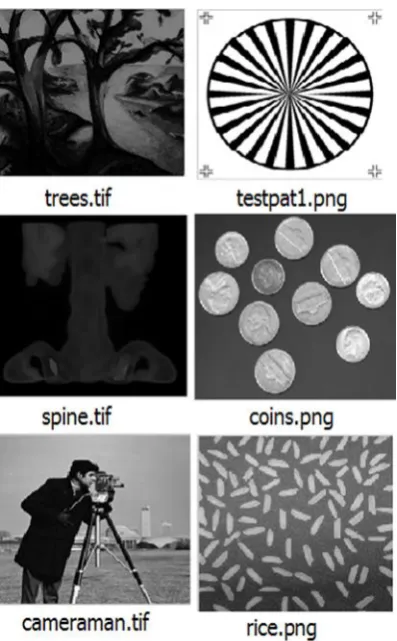
[image:3.595.316.514.71.367.2]In this section, the results are presented which are obtained by applying different edge detectors . The proposed method has been applied using gray scale images size(256*256) , format are(.tif and .png) of an coins.png , rice.png , testpat1.png ;kids.tif , pout.tif ,onion.tif ,cameraman.tif, and spine.tif.
Fig. 1: Sample of data base for gray scale image use in this work .
The results for these images can be seen in Figure 2, Figure 3,Figure 4 and Figure 5 respectively.
We convert image values to double values to used it matrix in Cholesky decomposition algorithm figure 2 showed this process .
Fig. 2:Convert image to double values
Fig.3: Sample values for original values and double(trees.tif image)
The Cholesky decomposition yields two lower triangular matrices. We use one of these two matrices to calculate the Eigen veins by multiplying its diagonal elements.
It should also be pointed out that in cases of full rank the pseudo inverse is easily calculated as or
, for full-column and full-row rank, respectively. As before, since and are symmetric, positive-definite , the Cholesky decomposition should be used in calculating the matrix inverse[7].
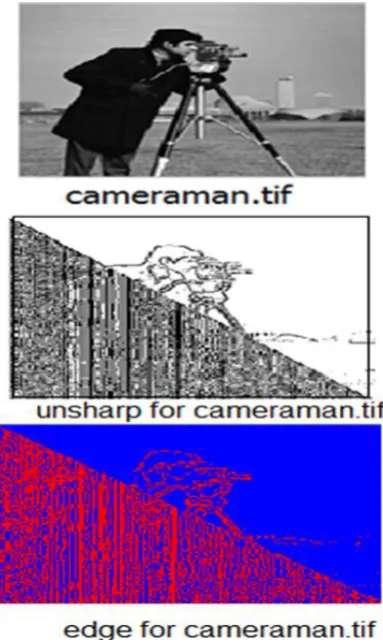
[image:3.595.54.253.224.545.2]out thinner , clearer and cleaner edges than those found out by another methods.
Fig. 4: (a) un sharp mask for images, (b) edge for the upper triangle Gray Scale Image .
6.
THE PROPOSED METHOD
COMPARED AGAINST ITS
COUNTERPARTS
The proposed method compare with another methods is decrease the computation time with generate high quality of edge detection. Experiment results have demonstrated that the proposed scheme for edge detection works satisfactorily for different levels digital images. Another benefit comes from easy implementation of this method.
7.
CONCLUSION
Edge detection being one of the important aspects of image segmentation comes prior to feature extraction and image recognition system for analyzing images. It helps in extracting the basic shape of an image, overlooking the minute unnecessary details.
We presented a method for matrix inversion based on Cholesky decomposition with reduced number of operations by avoiding computation of intermediate results . This method is based on the incomplete Cholesky decomposition and also allows the efficient computation of cluster indicators for out-of-sample points via a reduced set technique.
The proposed approximations can handle large-scale data with a reduced computational complexity and with similar performance compared to the original method without approximations.
8.
REFERENCES
[image:4.595.319.511.71.393.2]Journal of Computer Applications (0975 – 8887), Volume 39– No.15, February 2012.
[2] Beant Kaur, Anil Garg, Amandeep Kaur , 2010 "Mathematical Morphological Edge Detection For Remote Sensing Images.", IJECT, Vol. 1, Issue 1, International Journal of Electronics & Communication Technology.
[3] Huang, Yourui; Wang, Shuang “Multilevel thresholding Methods for image segmentation with otsu based on QPSO”, Image and signal processing, CISP 2008, vol. 3,pp.701-70
[4] Paul Fieguth , 2011 , " Statistical Image Processing an E d Multidimensional Modeling", Springer New York Dordrecht Heidelberg London.
[5] Nils T Siebel, Sven Grunewald, Gerald Sommer " Creating Edge Detectors by Evolutionary Reinforcement Learning " IEEE Congress on Evolutionary Computation (IEEE World Congress on Computational Intelligence) Year: 2008 Pages: 3553-3560
[6] http://en.wikipedia.org/wiki/Unsharp_masking
[7] http://users.cecs.anu.edu.au/~trumpf/UH60Festschrift.pdf .
[8] http://www.cambridgeincolour.com/tutorials/unsharp-mask .htm
[9] http://www.astronomy.ohio-state.edu/~pogge/Ast350/Unsharp/
[10]http://www.scantips.com/simple6.html " A few scanning tips, Sharpening - Unsharp Mask"