Modified Relay based MAC Protocol for Wireless Ad-hoc
Network
Shalini Sharma
PG-Scholar DoEC, SSSIST
Mukesh Tiwari
Associate Professor DoEC, SSSIST
Jaikaran Singh
Associate Professor DoEC, SSSIST
ABSTRACT
The Relay Nodes has become an important radio resource in next-generation wireless communication systems. The optimal number of RNs is one of the crucial issues in configuring a cost-effective RN-based network architecture. In this work, we present a modified relay based MAC protocol to describe the impact of the number of RNs on the Throughput, end-to-end delay, PDR, Overhead of MAC Protocol based on a two-hop relay network.
In addition to the addition of relay paths, the performance of the protocol has been evaluated through simulations. The simulation results show the validity of the proposed MAC protocol.
General Terms
Cooperative communication, Throughput, Reliability, Power Consumption, two-hop relay network,
Keywords
Relay, MAC, Ah-hoc Network, Reliability, Efficiency.
1. Introduction
1.1 Ad-hoc Network
A wireless Ad-hoc network [4] is a decentralized type of network, and it does not rely on a pre-existing infrastructure, such as routers or access points. Each node itself acts as a router to take its decision to route or relay the data packets.
There are many types of ad-hoc network. Wireless Mesh network (WMN) has communications network made up of radio nodes organized in a mesh topology. It has a more planned configuration. Next, mobile ad-hoc network (MANET) .It has a self-configuring infrastructure less network of mobile devices connected by wireless links. Each device in a MANET is free to move independently in any direction, and will therefore change its links to other devices frequently. Another is the wireless sensor network (WSN). It consists of spatially distributed autonomous sensors to monitor physical or environmental conditions, such as temperature, sound, vibration, pressure, motion or pollutants and to cooperatively [6, 9]] pass their data through the network to a main location. And another type is the Vehicular Ad-hoc network (VANET). A variation of Ad-hoc network called VANET is discussed, which support communication among smart vehicles and roadside equipment. A node stores and carries messages and forwards the message to another node whenever two nodes come into communication range.
For communication, nodes [3] use a routing protocol. This routing protocol just tells about the best possible route to be
taken. However, just having an optimal route is not enough. The nodes need to co-operate for the successful communication. In Wireless Ad hoc Network, nodes communicate with far-off destinations using intermediate nodes as relays. All Networking services are provided and are available if the relays are willing to do so. That's why Co-operative communication [1, 10] is important because it harnesses the broadcast nature of wireless channel and enhances throughput capacity and also reduces Retransmission latency. However, the nodes have some limiting constraints like limited battery life, limited storage area and energy [2] constraints. These constraints raise some doubt, to co-operate or not to co-operate with the neighboring nodes. When they co-operate completely, then the nodes expend energy relaying traffic for others, unfortunately decreasing their lifetime. And if they do not co-operate [8], then the share of service, each user should get drops. So, there is a trade -off between individual user’s lifetime and the received service. Taking this into view some strategies should be designed to enforce co-operation among nodes. The problem of co-operation can be seen in various kinds of networks [13, 15]. These networks include mesh networks, Sensor Networks and Vehicular networks.
1.2 Relay Node
A relay node [20] is an intermediate node which is a neighbour or closer to both the source node and the destination node, and the function of the relay node is to implement co-operation between the source and the destination to forward the data.
1.3 MAC Protocols in Ad-hoc network:
In the wireless network, the medium is shared among various users. So, a wise decision is to be taken to efficiently utilize the scarce wireless medium so that delay is reduced and the throughput is enhanced. The responsibility to take such a decision lies with the medium access control (MAC) layer which is a part of data link layer. Due to hidden terminal problems, collisions may occur so MAC layer is responsible for keeping the collisions to its minimum.
MAC protocols are classified as synchronous and asynchronous protocols [17]. The examples of synchronous protocols are TDMA (Time Division Multiple Access).
2
. LITERATURE SURVEY
transmission rates on the basis of history of successful transmissions. Here, after a fixed number of consecutive successful transmissions at a certain rate, the sender uses a higher rate for further transmissions. And when a failure is encountered the sender reverts back to a lower rate. Another strategy RBAR is a receiver initiated channel condition measurement protocol. The receiver checks the channel condition with the control messages RTS sent by the source just before the actual data transfer. The received signal strength information (RSSI) and SNR give an idea about the maximum transmission rate. OAR is an improvement over RBAR where high data rates are concerned. Here multiple packets are transmitted one after the other when the node gets access to the channel.
The thinking on concept of relays started in 2003 with rPCF (Relay Point Co-ordinated Function), if the direct link has a low data rate and there exists a relay node such that links from source to relay and relay to a destination provides better data rate , then transmission can proceed using the relay node. Further same concept has been applied in Distributed Co-ordination Function (DCF) by introducing rDCF (Relay Distributed Co-ordination Function) [20]. A willing list is maintained by each neighboring node (Nr) and an entry (Ni to Nj) is added if the Nr finds that the transmission rate is improved if done via Nr. This willing list is periodically advertised. If Ni gets this willing list from Nr and finds its entry then it adds it to its relay table. Another protocol named EMR (Efficient Multirate Relaying MAC) [26] works as a secondary protocol over primary network layer protocol which forms the main route and the main route is converted into multirate route by using EMR For the relay selection the effective throughput is calculated for various combinations of source relay and destination which is mapped to a priority value. In [28] has described a protocol which also makes use of multihop high rate links, in the network. Once the source gets the invitation triggered by the relay node it adds the relay in its relay list. When a source has data to send to the destination it checks the relay list, and uses it for relaying the data. Another protocol called DAFMAC (Decode and Forward MAC) [8] uses distributed timers for the selection of relays, where each potential relay transmits only after its delay timer expires. If the relay node does not hear ACK after SIFS duration it sends data to the destination. Another timer based relay selection protocol [22] which uses a metric called EADV (expected advance). The node having positive value of EADV starts a timer. The node whose timer expires sends a CTS message, in response to the RTS sent by source. CoopMAC (Co-operative MAC) protocol [25, 26] proposed relay selection, RSSI is also used RM-MAC (Relay multirate MAC) [16]. Here the path via relay node is chosen only if better data rate is achieved .But [13] path via relay node is only kept as a backup in case direct transmission is failed. CODE protocol [21] uses simultaneous transmissions by multiple relays to achieve power gain. This protocol considers both the co-operative transmission using multiple relays along with network coding when the traffic is bidirectional. In RID (Relay with Integrated Data) [9] as well as ARC-MAC (Active Relay Based Co-operative MAC) [15] the high data rate relays which are used to assist transmissions also gain by helping. When the source transmits data to destination via relay, the relay encapsulates its data packet into the source data packet, and this new combined data packet is sent to the destination.
3. Modified Relay-MAC
3.1 Introduction
In a wireless ad-hoc network [22], sometimes performance deprivation is experienced because of channel fading, interference, collision of data packets and existence of malicious nodes. If the co-operative strategy is used in which high data rate stations assist the low data [23, 27] rate stations, then some of the above mentioned problems can be eliminated. A network performance is decided by many factors like throughput, delay, fairness and efficient deployment of the transmission channel. Here, we have adopted a cooperative strategy.
3.2 PROPOSED PROTOCOL: Modified Relay-MAC
MR-MAC (Modified Relay-Medium Access Control) is an extension to the existing 2rcMAC protocol. In that, two relays were used to transmit data between the source and the destination. One relay acts as a helper and the other relay acts as a backup which jumps in to transmit the data if ACK is not received or some failure in the transmission [29] occurs due to interference or collision. But this protocol does not consider the reliability of relays .The relays are high data rate nodes but may fail to transmit data due to interference or some other reasons. In HF-MAC proposed, in order to choose the helper nodes, three parameters have been taken. First is the data rate between the source and relay and the relay and destination. Second is the relay reliability and the third is the energy left in the relay to transmit the source’s data to the destination.
Power must be > Min Power & Reliability > Threshold
7. If only one optimal helper is identified then the source uses it for backup purpose and uses the direct transmission strategy. But if both the direct transmission as well as the backup helper fails then the No. of failures of backup helper is incremented and back off is applied.
1. Begin
2. Sense Channel
3. If No DATA to Send Go to step 2
4. If Channel is busy, go to back-off state
5. If Channel is idle for DIFS duration
6. Send RTS to Destination and after receiving CTS then wait for RF frame
7. If RF frame not received
8. Send DATA to Destination and if not success then select two best relays
9. If two best relays found
10. Send DATA to both relays
11. Else If only one relay found
12. Send DATA to Destination by the one relay.
13. If successfully transfer of data frame
(a) Go to step 2 else
4.1 Standard Parameters, Result & Analysis
4.1 Standard parameter used
1. Topology Type: Random, because of ad-hoc network, nodes are not static, they moves within the network and inside or outside of network also. 2. Total number of nodes: In this work they are fixed
within the limit of 10 to 50. 3. Topology Area: 200mX200m 4. Transmission range: 150 m
5. Model: Random waypoint model is a commonly used synthetic model for mobility, e.g., in Ad-hoc networks. It is a basic model which illustrate the movement pattern of independent nodes by simple terms.
6. Traffic Model: Poisson, 7. Queue length:55
8. Data Frame Size: 512 Bytes 9. Simulation time: 120 s
4.2 RESULT ANALYSIS
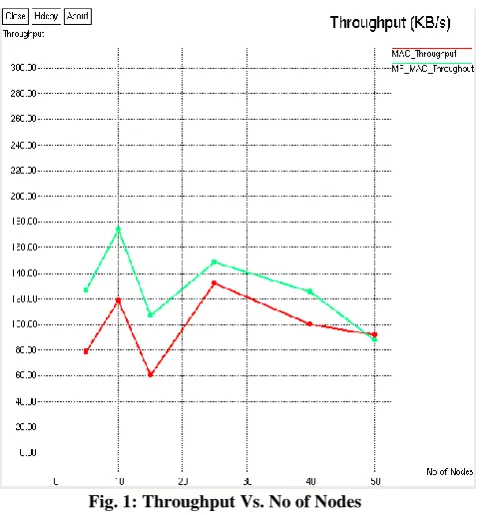
[image:3.595.316.576.71.237.2]4.2.1 THROUGHPUT: It is always better then basic MAC so this can be used in different networks.
Fig. 1: Throughput Vs. No of Nodes 4.2.2 PACKET DELIVERY RATIO
It is always more than basic MAC because of reception of more packet by using modified MAC.
[image:3.595.314.543.288.471.2]Fig. 2: Packet Delivery Ratio Vs. No of Nodes 4.2.3 END TO END DELAY: End-to-end delay is better than basic MAC because of extra relay path selection and adaptation.
Fig. 3: Avg. End-to-end delay Vs. No of Nodes 4.2.4 Routing Overhead
[image:3.595.54.299.327.585.2]5. CONCLUSION AND FUTURE WORK
5.1 CONCLUSION
In this paper, we have proposed a novel cooperative protocol termed as Modified MAC for ad-hoc networks which increses throughput, PDR and at the cost of end-to-end delay and overhead. 02 relay path have been chose for improving the throughput of the ad-hoc networks.
Simulation results have clearly shown that modified MAC achieves an average throughput improvement of at the cost of an average delay decrement of with basic MAC, respectively.
5.2 FUTURE WORK
In the future, this work will be extend to find best relays at higher mobility and congestions. Different applications areas have to be identified to applied the proposed protocol
REFERENCES
[1] Murad Khalid, Yufeng Wang, In ho Ra and Ravi Shankar, “Two Relay Based Co-operative MAC Protocol for Wireless Ad-hoc Network”. IEEE Transactions on Vehicular Technology Vol 60, No. 7 September 2011.
[2] S. Zou, B. Li, H. Wu, Q. Zhang, W. Zhu, and S. Cheng, “ A Relay-Aided Media Access (RAMA) Protocol in Multirate Wireless Networks” IEEE Transactions on Vehicular Technology, vol. 55, pp. 1657
1667, Sept. 2006.
[3] Sayed, S. RID, “Relay with integrated data for multi-rate wireless cooperative networks”. 5th International Conference on Broadband Communications, Networks and Systems, . BROADNETS 2008.
[4] T. M. Cover and A. A. E. Gamal,
“Capacity Theorems for the Relay Channel,” IEEE Transactions on Information Theory vol. 25, no. 5. Sept 1979.
[5] Xin He and Frank Y. Li, “Throughput and Energy Efficiency Comparison of One-hop, Two-hop, Virtual Relay and Cooperative Retransmission Schemes”, IEEE European Wireless Conference 2010.
[6] R. Ahmad, F.-C. Zheng, M. Drieberg and M. Fitch, “Analysis of Enhanced Relay-Enabled Distributed Coordination Function under Transmission Errors,” in Proc IEEE Vehicular Technology Conf. (VTC), Anchorage, Sept. 2009, pp. 1-5.
[7] A. S. Ibrahim, A. K. Sadek, W. Su, and K. J. R. Liu, “Cooperative communications with Relay selection: when to cooperate and whom to cooperate with?”IEEE Transactions on Wireless Communications, vol 7 July 2008.
[8] Chang-Yeong Oh, Tae-Jin Lee “MAC Protocol Using Cooperative Active Relays in Multi-rate Wireless LANs”, IFIP International Conference on Wireless and Optical Communications Networks, 2009.
[9] H. Zheng, Y. Zhu, C. Shen, and X. Wang, “On the effectiveness of Cooperative Diversity in Ad Hoc Networks: A MAC layer study,” in Proc. IEEE ICASSP, 2005, pp. 509 - 512.
[10] H. Zhu and G. Cao, “On improving the performance of IEEE 802.11 with relay-enabled PCF,” Mobile Networking Appl. (MONET), vol. 9, no. 4, pp. 423–434, Aug. 2004.
[11] Li Li, D. Kaleshi, Zhong Fan, “A cooperative relaying enhanced link adaptation algorithm for IEEE 802.11 WLANs” 8th International Symposium on Wireless Communication Systems (ISWCS), 2011.
[12] “Network Simulator NS-2” [Online]. Available: http://www.isi.edu/nsnam/ns.
[13] P. Liu, Z Tao and S. Narayan, “CoopMAC A co-operative MAC for wireless LANs”. IEEE J. Sel. Areas Communication vol. 25 Feb 2007.
[14] Mohamed Elsalih Mahmoud and Xuemin (Sherman) Shen,Fellow, IEEE , “PIS:A Practical Incentive System for Multihop Wireless Networks, “IEEE TRANSACTIONS ON VEHICULAR TECHNOLOGY, VOL.59, NO.8, OCTOBER, 2010. pp. 4012-4025.
[15] Tingting Chen, Fan Wu, and Sheng Zhong, “FITS: A finite-time reputation system for cooperation in wireless ad-hoc networks”. IEEE Transactions on computers. , vol. 60, no. 7, July 2011.
[16] B. Sadeghi, V. Kanodia, A. Sabharwal and E. Knightly, “Opportunistic media access for multirate Ad Hoc networks,” ACM Mobicom 2002, July 2001.
[17] Brett Hagelstein , Mehran Abolhasan, Daniel Franklin and Farzad Safaei, An Efficient Opportunistic Cooperative Diversity Protocol for IEEE 802.11 Networks , IWCMC `10, June 28-July 2, 2010, Caen, France.
[18] Long Cheng, Jiannong Cao, Canfeng Chen, Hongyang Chen, Jian Ma, Joanna Izabela Siebert, “Cooperative Contention-Based Forwarding for Wireless Sensor Networks”. IWCMC ’10, July 2010, Caen, France.
[19] N. Agarwal, D. Channegowda, L. Kannan, M. Tacca, and A. Fumagalli, “IEEE 802.11b cooperative protocols: A performance study,” in Proc. NETWORKING, vol. 4479, LNCS, 2007.
[20] Wenbin Zhang, Xiaozong Yang, Shaochuan Wu, “A new improved MAC scheme: RM-MAC”. 6th International ICST Conference on Communications and Networking in China (CHINACOM), Aug 201.
[21] S. Bansal and M. Baker, “Observation-Based Cooperation Enforcement in Ad Hoc Networks,” technical report, Stanford Univ., July 2003.
[22] S. Buchegger and J.-Y. Le Boudec, “Performance Analysis of the CONFIDANT Protocol (Cooperation of Nodes: Fairness in Dynamic Ad-Hoc Networks),” Proc. MOBIHOC ’02, June 2002.
[23] L. Buttyan and J.-P. Hubaux, “Enforcing Service availability in Mobile Ad-Hoc WANs,” Proc. MOBIHOC ’00, Aug. 2000.
[24] L. Buttyan and J.-P. Hubaux, “Stimulating Cooperationin Self Organizing Mobile Ad Hoc Networks,” ACM/Kluwer Mobile Networks and Applications, vol. 8, no. 5, pp. 579-592, Oct. 2003.
Hoc Networks,” Proc. First Workshop Modeling and Optimization in Mobile, Ad Hoc and Wireless Networks (WiOpt ’03), Mar. 2003.
[26]R. Mahajan, M. Rodrig, D. Wetherall, and J. Zahorjan, “Sustaining Cooperation in Multi-Hop Wireless
Networks,” Proc. Symp.
NetworkedSystemsDesignandImplementation(NSDI’05), May 2005.
[27]P. Michiardi and R. Molva, “CORE: A Collaborative Reputation Mechanism to Enforce Node Cooperation in Mobile Ad Hoc Networks,” Proc. Conf. Comm. and Multimedia Security (CMS ’02),
[28] A. Sendonaris, E. Erkip, and B. Aazhang, “Increasing uplink capacity via user cooperation diversity,”inIEEE Proc. of International Symposium on Information Theory (ISIT),2001, p. 156.
[29] K. Obraczka, K. Viswanath, and G. Tsudik, “Flooding for reliable multicast in multi-hop ad hoc networks,” ACM Wireless Networks, vol. 7, pp. 627–634, Nov. 2001.