Journal of Pain Research 2018:11 2463–2475
Journal of Pain Research
Dovepress
submit your manuscript | www.dovepress.com 2463
R e v i e w
open access to scientific and medical research
Open Access Full Text Article
The impact of prophylactic dexamethasone on
postoperative sore throat: an updated systematic
review and meta-analysis
Yaofei Jiang1–4,* Ruoxi Chen2,* Suming Xu2,* Jiaxi Li2,* Fanqi Yu2 Lingdong Kong2 Yuhan Sun2 Yuan Ye2 Yimin Li2 Mengqi Yu2 Jiaming wu1
1Department of Gastrointestinal Surgery, The First Affiliated Hospital of Jiaxing University, Jiaxing, China; 2Department of General Surgery, The Second Affiliated Hospital, Nanchang University, Nanchang, China; 3Hubei Cancer Clinical Study Centre, 4Hubei Key Laboratory of Tumor Biological Behaviors, Zhongnan Hospital, wuhan, China
*These authors contributed equally to this work
Background/Aims: An updated systematic review and meta-analysis was conducted to
assess the effect of prophylactic dexamethasone for tracheal intubation of general anesthesia on postoperative sore throat (POST).
Methods: Comprehensive literature search of databases for randomized controlled trials (RCTs),
including Embase, PubMed, and Cochrane Library, which evaluate the effect of prophylactic dexamethasone on POST was conducted. RevMan 5.0 and STATA 12.0 software were used to perform meta-analyses.
Results: Fourteen RCTs totaling 1,837 patients were included for analysis. Compared with
pla-cebo, a significant reduction in the incidence of POST (OR 0.44, 95% CI 0.33–0.58, P<0.00001), hoarseness (OR 0.42, 95% CI 0.31–0.58, P<0.00001), and postoperative nausea and vomiting (PONV) (OR 0.06, 95% CI 0.03–0.14, P<0.00001) and a comparable incidence of cough (OR 0.59, 95% CI 0.19–1.89, P=0.38) was described in patients receiving dexamethasone, with or without concomitant drugs. Dexamethasone ≥0.2 mg/kg had a statistically greater impact on reducing the incidence of POST than dexamethasone 0.1–0.2 mg/kg, while dexamethasone ≤0.1 mg/kg did not. Dexamethasone was as effective as other drugs such as ondansetron, magnesium sulfate, ketamine gargle, betamethasone gel, and ketorolac for reducing POST (OR 0.70, 95% CI 0.46–1.07, P=0.10). Dexamethasone plus a different drug was more effective than dexamethasone alone for reducing the incidence of POST at 24 hours (OR 0.40, 95% CI 0.21–0.77, P=0.006). Compared with controls, a statistically higher blood glucose level was the only adverse event during the immediate postoperative period in patients receiving dexamethasone.
Conclusions: Intravenous dexamethasone ≥0.2 mg/kg within 30 minutes before or after induction of general anesthesia should be recommended as grade 1A evidence with safety and efficacy in reducing the incidence of POST, hoarseness, and PONV in patients without pregnancy, diabetes mellitus, or contraindications for corticosteroids.
Keywords: systematic review, meta-analysis, corticosteroids, dexamethasone, postoperative
sore throat
Introduction
Postoperative sore throat (POST) is common after tracheal intubation of general anesthesia. Numerous factors including age, female gender, smoking history, size of the endotracheal tube, cuff pressure, time and manipulations needed to insert the tube, and time of operation and anesthesia may affect the incidence of POST, with discomfort and dissatisfaction.1–3
A previous systematic review and meta-analysis demonstrated that single low-dose corticosteroids can provide pain relief in patients with sore throat, with no increase Correspondence: Jiaming wu
Department of Gastrointestinal Surgery,
The First Affiliated Hospital of Jiaxing
University, 1882 South Road, Jiaxing 314000, Zhejiang, China
Tel +86 13 73 258 4396 email [email protected]
Journal name: Journal of Pain Research Article Designation: Review
Year: 2018 Volume: 11
Running head verso: Jiang et al
Running head recto: Prophylactic dexamethasone on postoperative sore throat DOI: http://dx.doi.org/10.2147/JPR.S172419
Journal of Pain Research downloaded from https://www.dovepress.com/ by 118.70.13.36 on 24-Aug-2020
For personal use only.
Dovepress
Jiang et al
in serious adverse effects.4 Considering the involvement
of inflammation in pathophysiology of POST, the use of steroidal or nonsteroidal anti-inflammation drug may be an effective pharmacological strategy to prevent POST after tracheal intubation. As glucocorticoid, dexamethasone was
supposed to have anti-inflammatory and analgesic impact.5,6
A previous systematic review and meta-analysis has demon-strated a significant reduction in the incidence of POST from intubation at 24 hours in patients treated with intravenous
dexamethasone compared with placebo,7 with similar results
as another one.8 However, the relatively small sample size
included in both the reviews precluded the authors from drawing definitive conclusions, and the optimal timing of dexamethasone administration, and combination effect of dexamethasone with other medicines, remains unclear.
Therefore, we conducted an updated systematic review and meta-analysis of randomized controlled trials (RCTs) to assess the impact of prophylactic dexamethasone on POST for tracheal intubation of general anesthesia.
Methods
Our systematic review and meta-analysis was reported
according to the recommendations of the PRISMA statement.9
Outcome measures
The incidence of POST during the immediate 24-hour post-operative period was defined as primary endpoint, while the incidence of hoarseness, postoperative nausea and vomiting (PONV), cough, and adverse events were defined as second-ary endpoints.
Data collection and analysis
Keywords were searched in Embase, PubMed, and Cochrane Library from their inception to December 12, 2017. RCTs were further identified by Cochrane Highly Sensitive Search
Strategies.10 Keywords and MeSH terms were used in
com-bination as follows: 1) corticosteroid, glucocorticoid, steroid, or dexamethasone; AND 2) sore throat, or sore throats, as shown in Table S1. Additional studies were identified by searching Authors’ names, “related articles” function, and screening the reference lists.
Section criteria
RCTs written in the English language assessing the prophy-lactic impact of dexamethasone vs placebo without other antiemetics, dexamethasone vs placebo plus concomitant administration of a different drug, dexamethasone vs a differ-ent drug, dexamethasone plus a differdiffer-ent drug vs
dexametha-sone, or comparisons using different doses of dexamethasone for POST in patients with tracheal intubation of general anesthesia undergoing surgery except tonsillectomy were included. Exclusion criteria were as follows: 1) non-RCTs; 2) studies including patients undergoing tonsillectomy or laryn-geal surgery; 3) studies without available data; 4) overlapping data; or 5) letters, reviews, case reports, and expert opinions.
Data extraction and management
The information and data we obtained were extracted from included studies by by Yaofei Jiang and Ruoxi Chen, and a third investigator was used to judge any disagreements. For each study, we recorded information and data of study population, interventions, and outcomes.
Assessment of quality of evidence in
included studies
Cochrane risk of bias instrument was used to assess the risk
of bias for RCT quality by two reviewers independently.11
The following six items were examined including sequence generation, allocation concealment, double-blind evalua-tion, completeness of outcome data, selective reporting of outcome, and comparability of baseline characteristics between groups. The bias risk for each item was classi-fied as high, low, or unclear. RCTs with no less than three items defined as high risk of bias were excluded for the meta-analysis. The seven matching criteria used to assess the baseline comparability between groups were as fol-lows: age, gender, weight or BMI, American Society of Anaesthesiologists (ASA), intubation attempts, time of operation, and time of anesthesia. We defined baseline as incomparability if the number of nonmatching criteria was no less than 3.
Statistical analysis
RevMan 5.0 and STATA 12.0 software were used to perform statistical analyses. Dichotomous variables were calculated with ORs and 95% CIs. We used random-effects model to pool data with statistical heterogeneity determined by the inconsistency index (I2≥50%) and the Chi-squared test
(P≤0.10). Subgroup analyses were conducted to determine
the optimal dose and administration time. Sensitivity analy-ses were performed by omitting one study at a time. Begg’s rank correlation test was used to assess the publication bias, determined as positive by Pr>|z|≤0.1.12 The overall quality of
evidence from available RCTs was assessed by the Grading of Recommendations Assessment, Development and
Evalu-ation (GRADE) system.13,14
Journal of Pain Research downloaded from https://www.dovepress.com/ by 118.70.13.36 on 24-Aug-2020
Dovepress Prophylactic dexamethasone on postoperative sore throat
Results
Trial identification
A total of 645 articles were identified by comprehensive search. Fourteen RCTs were finally included for meta-analysis after screening of titles, abstracts, or full text articles (Figure 1).
Characteristics of included studies
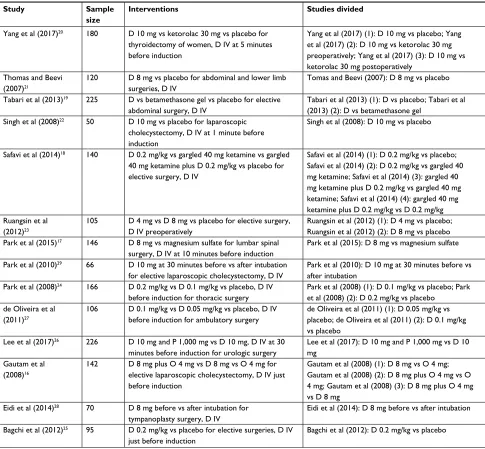
The characteristics of the studies included are shown in Table 1. Fourteen RCTs totaling 1,837 patients undergoing general anesthesia with tracheal intubation were included.
Patients classified as ASA class I or II were included in majority of the RCTs. Exclusion criteria were as follows: pregnancy, diabetes mellitus, obesity, and any contraindica-tion to corticosteroid medicacontraindica-tions. Dexamethasone ranging from 4 to 0.2 mg/kg was administered intravenously in single
or combination except one RCT15 administered locally.
Tim-ing of dexamethasone administration varied from 30 minutes
Figure 1 Flow chart of literature search.
Additional records identified through other sources
(n=20) Records identified through
database searching (n=645)
Identification
Screening
Eligibilit
y
Included
Records after duplicates removed (n=230)
Records excluded (n=213) Records excluded
(n=230)
Full-text articles assessed for eligibility
(n=17)
Full-text articles excluded: No data available for meta-analysis (n=2)
Dexamethasone administered locally (n=1) Studies included in
qualitative synthesis (n=15)
Studies included in qualitative synthesis
(meta-analysis) (n=14)
before tracheal intubation to 30 minutes after tracheal
intu-bation. Controls included placebo, ondansetron,16
magne-sium sulfate,17 ketamine gargle,18 betamethasone gel,19 and
ketorolac20 or a combination of these medications. Regarding
the methodological quality of the RCTs, all showed low overall risks of bias (Table 2).
Treatment effects
Primary endpoints
incidence of POST: dexamethasone vs placebo, with or without concomitant drugs
The incidence of POST comparing dexamethasone vs pla-cebo with or without concomitant drugs was reported in nine trials.15–25 Compared with placebo, a statistical decrease in the
incidence of POST at 24 hours was found in patients treated with dexamethasone, with or without concomitant drugs (OR 0.44, 95% CI 0.33–0.58, P<0.00001; Figure 2). No statistical heterogeneity was found among studies (P=0.06, I2=42%).
Journal of Pain Research downloaded from https://www.dovepress.com/ by 118.70.13.36 on 24-Aug-2020
Dovepress
Jiang et al
incidence of POST: dexamethasone vs a different drug The incidence of POST in patients receiving
dexametha-sone vs a different drug, including ondansetron,16
magne-sium sulfate,17 ketamine gargle,18 betamethasone gel,19 or
ketorolac,20 was described in five RCTs. Compared with
these different drugs, no statistical difference in the inci-dence of POST at 24 hours was found in patients
receiv-ing dexamethasone (OR 0.70, 95% CI 0.46–1.07, P=0.10;
Figure 3). No statistical heterogeneity was found among studies (P=0.49, I2=0%).
Table 1 Characteristics of trials included in the meta-analysis
Study Sample
size
Interventions Studies divided
Yang et al (2017)20 180 D 10 mg vs ketorolac 30 mg vs placebo for thyroidectomy of women, D iv at 5 minutes before induction
Yang et al (2017) (1): D 10 mg vs placebo; Yang et al (2017) (2): D 10 mg vs ketorolac 30 mg preoperatively; Yang et al (2017) (3): D 10 mg vs ketorolac 30 mg postoperatively
Thomas and Beevi (2007)21
120 D 8 mg vs placebo for abdominal and lower limb surgeries, D iv
Tomas and Beevi (2007): D 8 mg vs placebo Tabari et al (2013)19 225 D vs betamethasone gel vs placebo for elective
abdominal surgery, D iv
Tabari et al (2013) (1): D vs placebo; Tabari et al (2013) (2): D vs betamethasone gel
Singh et al (2008)22 50 D 10 mg vs placebo for laparoscopic cholecystectomy, D iv at 1 minute before induction
Singh et al (2008): D 10 mg vs placebo
Safavi et al (2014)18 140 D 0.2 mg/kg vs gargled 40 mg ketamine vs gargled 40 mg ketamine plus D 0.2 mg/kg vs placebo for elective surgery, D iv
Safavi et al (2014) (1): D 0.2 mg/kg vs placebo; Safavi et al (2014) (2): D 0.2 mg/kg vs gargled 40 mg ketamine; Safavi et al (2014) (3): gargled 40 mg ketamine plus D 0.2 mg/kg vs gargled 40 mg ketamine; Safavi et al (2014) (4): gargled 40 mg ketamine plus D 0.2 mg/kg vs D 0.2 mg/kg Ruangsin et al
(2012)23
105 D 4 mg vs D 8 mg vs placebo for elective surgery, D iv preoperatively
Ruangsin et al (2012) (1): D 4 mg vs placebo; Ruangsin et al (2012) (2): D 8 mg vs placebo Park et al (2015)17 146 D 8 mg vs magnesium sulfate for lumbar spinal
surgery, D iv at 10 minutes before induction
Park et al (2015): D 8 mg vs magnesium sulfate Park et al (2010)29 66 D 10 mg at 30 minutes before vs after intubation
for elective laparoscopic cholecystectomy, D iv
Park et al (2010): D 10 mg at 30 minutes before vs after intubation
Park et al (2008)24 166 D 0.2 mg/kg vs D 0.1 mg/kg vs placebo, D iv before induction for thoracic surgery
Park et al (2008) (1): D 0.1 mg/kg vs placebo; Park et al (2008) (2): D 0.2 mg/kg vs placebo
de Oliveira et al (2011)27
106 D 0.1 mg/kg vs D 0.05 mg/kg vs placebo, D iv before induction for ambulatory surgery
de Oliveira et al (2011) (1): D 0.05 mg/kg vs placebo; de Oliveira et al (2011) (2): D 0.1 mg/kg vs placebo
Lee et al (2017)26 226 D 10 mg and P 1,000 mg vs D 10 mg, D iv at 30 minutes before induction for urologic surgery
Lee et al (2017): D 10 mg and P 1,000 mg vs D 10 mg
Gautam et al (2008)16
142 D 8 mg plus O 4 mg vs D 8 mg vs O 4 mg for elective laparoscopic cholecystectomy, D iv just before induction
Gautam et al (2008) (1): D 8 mg vs O 4 mg; Gautam et al (2008) (2): D 8 mg plus O 4 mg vs O 4 mg; Gautam et al (2008) (3): D 8 mg plus O 4 mg vs D 8 mg
eidi et al (2014)28 70 D 8 mg before vs after intubation for tympanoplasty surgery, D iv
eidi et al (2014): D 8 mg before vs after intubation Bagchi et al (2012)25 95 D 0.2 mg/kg vs placebo for elective surgeries, D iv
just before induction
Bagchi et al (2012): D 0.2 mg/kg vs placebo
Abbreviations: D, dexamethasone; iv, intravenous; O, ondansetron; P, paracetamol.
incidence of POST: dexamethasone plus a different drug vs dexamethasone
Data on incidence of POST comparing dexamethasone plus a different drug vs dexamethasone were reported in three
trials.16,18,26 Compared with dexamethasone, a statistical
decrease in the incidence of POST at 24 hours was found in patients treated with dexamethasone plus a different
drug (OR 0.40, 95% CI 0.21–0.77, P=0.006; Figure 4). No
statistical heterogeneity was found among studies (P=0.24,
I2=31%).
Journal of Pain Research downloaded from https://www.dovepress.com/ by 118.70.13.36 on 24-Aug-2020
Dovepress Prophylactic dexamethasone on postoperative sore throat
Secondary endpoints
incidence of hoarseness: dexamethasone vs placebo, with or without concomitant drugs
The incidence of hoarseness was reported in six RCTs.15,17,18,20,24,25,27 Compared with placebo, a significant
reduction in the incidence of hoarseness was found in patients treated with dexamethasone with or without concomitant drugs (OR 0.42, 95% CI 0.31–0.58, P<0.00001; Figure 5). No statistical heterogeneity was found among studies (P=0.16,
I2=32%).
Table 2 Quality of evidence in included studies
Included studies Country Sequence
generation
Allocation concealment
Double blinding
Complete outcome data
No selective reporting
Baseline comparability
Risk of bias
Yang et al (2017)20 Korea Adequate Adequate Yes Yes Yes Yes Low
Thomas and Beevi (2007)21 india Adequate Adequate Yes Yes Yes Yes Low
Tabari et al (2013)19 iran Adequate Adequate Unclear Yes Yes Unclear Low
Singh et al (2008)22 india Adequate Adequate Unclear Yes Yes Yes Low
Safavi et al (2014)18 iran Adequate Adequate Yes Yes Yes Yes Low
Ruangsin et al (2012)23 Thailand Adequate Adequate Unclear Yes Yes Yes Low
Park et al (2015)17 Korea Adequate Adequate Yes Yes Yes Yes Low
Park et al (2010)29 Korea Adequate Adequate Yes Yes Yes Yes Low
Park et al (2008)24 Korea Adequate Adequate Yes Yes Yes Yes Low
de Oliveira et al (2011)27 USA Adequate Adequate Yes Yes Yes Yes Low
Lee et al (2017)26 Korea Adequate Adequate Yes Yes Yes Yes Low
Gautam et al (2008)16 Nepal Adequate Adequate Yes Yes Yes Yes Low
eidi et al (2014)28 iran Adequate Adequate Yes Yes Yes Yes Low
Bagchi et al (2012)25 india Adequate Adequate Unclear Yes Yes Yes Low
Figure 2 incidence of POST at 24 hours grouped by concomitant drugs.
Abbreviations: PONv, postoperative nausea and vomiting; POST, postoperative sore throat; M-H, Mantel-Haenszel.
Bagchi2012
1.9.1 No other drugs administered
1.9.3 Ketamine gargle or ondansetron administered
Study or subgroup ExperimentalEvents Total Events Total WeightControl M–H, fixed, 95% CIOdds ratio M–H, fixed, 95% CIOdds ratio
Park 2008 (1) Park 2008 (2) Ruangsin 2012 (1) Ruangsin 2012 (2) Safavi 2014 (1) Singh 2008 Tabari 2013 (1) Thomas 2007 Yang 2017 (1) Subtotal (95% Cl) Tota I events
Tota I events TotaI (95% CI)
131 2 0
2 47 48 1.2%
7.3% 8.6%
100.0% 35
83
547 2 11
13
219
0.001
Favors dexamethasone Favors placebo0.1 1 10 1000 35
82
543 Heterogeneity: c2=14.91, df=9 (P=0.09); I2=40%
Test for overall effect: Z=5.30 (P < 0.00001)
Heterogeneity: c2=4.46, df=1 (P=0.03); I2=78%
Test for overall effect: Z=2.59 (P=0.010)
Heterogeneity: c2=19.09, df=11 (P=0.06); I2=42%
Test for overall effect: Z=5.84 (P<0.00001) 14
26 15 10 15 8 12 3 11 15
48 55 55 35 35 35 25 75 55 43
21 32 32 17 17 19 9 8 31 20
461 464
129 206
47 56 56 35 35 35 25 75 55 45
9.7% 10.8% 14.9% 7.9% 6.3% 9.5% 3.0% 5.0% 16.1% 8.2% 91.4%
0.51 (0.22–1.19) 0.67 (0.32–1.42) 0.28 (0.13–0.62) 0.42 (0.16–1.14) 0.79 (0.31–2.04) 0.25 (0.09–0.70] 1.64 (0.53–5.09) 0.35 (0.09–1.37) 0.19 (0.08–0.45) 0.67 (0.28–1.58) 0.46 (0.35–0.62)
Gautam 2008 (2) Safavi 2014 (3) Subtotal (95% Cl) TotaI events
Test for subgroup differences: not applicable
1.02 (0.14–7.57) 0.03 (0.00–0.53) 0.17 (0.05–0.65)
0.44 (0.33–0.58)
Journal of Pain Research downloaded from https://www.dovepress.com/ by 118.70.13.36 on 24-Aug-2020
Dovepress
Jiang et al
Figure 3 Comparison of dexamethasone with other drugs. Abbreviation: M-H, Mantel-Haenszel.
Study or subgroup EventsExperimentalTotal Events TotalControl Weight M–H, fixed, 95% CIOdds ratio M–H, fixed, 95% CIOdds ratio Gautam 2008 (1)
Park 2015 Safavi 2014 (2) Tabari 2013 (2) Yang 2017 (2) Yang 2017 (3)
Total (95% Cl) Total events
Heterogeneity: c2=4.41, df=5 (P=0.49); I2=0%
Test for overall effect: Z=1.66 (P=0.10) 3 10 8 3 15 15 47 73 35 75 43 43 316 2 13 11 0 21 25 72 48 73 35 75 47 45 323 3.6% 22.0% 16.6% 0.9% 25.6% 31.2% 100.0% 54 1.57 (0.25–9.84) 0.73 (0.30–1.80) 0.65 (0.22–1.87) 7.29 (0.37–143.61) 0.66 (0.28–1.55) 0.43 (0.18–1.01) 0.70 (0.46–1.07) 0.005 0.1
Favors dexamethasone1 Favors control10 200
Figure 4 Comparison of dexamethasone plus a different drug with dexamethasone. Abbreviation: M-H, Mantel-Haenszel.
Gautam 2008 (3) Lee 2017 Safavi 2014 (4) Total (95% Cl) TotaI events
Heterogeneity: c2=2.89, df=2 (P=0.24); I2=31%
Test for overall effect: Z=2.74 (P=0.006)
0.65 (0.10–4.09) 9.6% 62.5% 27.9% 100.0% 0.002
Favours experimental Favours control0.1 1 10 500 47 113 35 3 21 8 47 113 35 2 12 0 195 32 14 195 0.52 (0.24–1.12) 0.05 (0.00–0.82) 0.40 (0.21–0.77)
Study or subgroup ExperimentalEvents Total Events Total WeightControl M–H, fixed, 95% CIOdds ratio M–H, fixed, 95% CIOdds ratio
Figure 5 incidence of hoarseness. Abbreviation: M-H, Mantel-Haenszel.
3.1.1 No other drugs administered Bagchi2012
Oliveira 2011 (1) Oliveira 2011 (2) Park 2008 (1) Park 2008 (2) Park 2015 Safavi 2014 (1) Yang 2017 (1) Subtotal (95% Cl) Tolal events
Heterogeneity: c2=11.50, df=7 (P=0.12); I2=39%
Test for overall effect: Z=5.38 (P<0.00001)
3.1.2 Ketamine gargle administered Safavi 2014 (3)
Subtotal (95% Cl) Tolal events
Heterogeneity: Not applicable Test for overall effect: Z=0.68 (P=0.50)
Total (95% Cl) Total events
Heterogeneity: c2=11.81, df=8 (P=0.16); I2=32%
Test for overall effect Z=5.40 (P<0.00001) Test for subgroup differences: Not applicable
14 23 18 17 8 15 4 22 121 125 4 4 48 34 36 55 55 73 35 43 379 35 35 414 15 31 31 25 25 19 13 34 193 6 6 199 47 36 36 56 56 73 35 45 384 35 35 419 8.8% 8.0% 12.7% 14.0% 17.3% 12.3% 9.4% 13.3% 95.7% 4.3% 4.3% 100.0% 0.88 (0.37–2.10) 0.34 (0.10–1.10) 0.16 (0.05–0.51) 0.55 (0.25–1.21) 0.21 (0 .08–0.53) 0. 74 (0.34–1.59) 0.22 (0.06–0.76) 0.34 (0.14–0.84) 0.41 (0.30–0.57) 0.62 (0.16–2.44) 0.62 (0.16–2.44) 0.42 (0.31–0.58) 0.01 0.1
Favors experimental1 Favors control10 100 Study or subgroup EventsExperimentalTotal Events Total WeightControl M–H, fixed, 95% CIOdds ratio M–H, fixed, 95% CIOdds ratio
Journal of Pain Research downloaded from https://www.dovepress.com/ by 118.70.13.36 on 24-Aug-2020
Dovepress Prophylactic dexamethasone on postoperative sore throat incidence of PONv: dexamethasone vs placebo, with or
without concomitant drugs
The incidence of PONV was described in five RCTs.16,20–22,27
Compared with placebo, a significant reduction in the inci-dence of PONV was found in patients treated with dexa-methasone with or without concomitant drugs (OR 0.06, 95% CI 0.03–0.14, P< 0.00001; Figure 6). No statistical heterogeneity was found among studies (P=0.19, I2=35%).
incidence of cough: dexamethasone vs placebo, with or without concomitant drugs
The incidence of cough was reported in three RCTs.19,25,27
Compared with placebo, comparable incidence of cough was found in patients treated with dexamethasone with or without concomitant drugs (OR 0.59, 95% CI 0.19–1.89,
P=0.38; Figure 7). Statistical heterogeneity was found among studies (P=0.02, I2=71%).
Figure 6 incidence of PONv.
Abbreviations: PONv, postoperative nausea and vomiting; M-H, Mantel-Haenszel.
5.1.1 No other drugs administered Oliveria 2011 (1)
Oliveria 2011 (2) Singh 2008 Thomas 2007 Yang 2017 (1) Subtotal (95% CI) Total events
Total events
Total events Total (95% CI)
5.1.2 Ondansetron administered Gautam 2008 (2)
Subtotal (95% CI)
20
10 36
25 55 0
0
34
2
2
90
47 47 8
8
48 11.8% 0
43 193
35 19 1
36 25 55 45
197 88.2% 0.04 (0.02–0.11)
0.22 (0.04–1.11) 48
98
11.8%
245 240
36
100.0%
0.001 0.1 10 1000
Favours control Favours experimental1
0.22 (0.04–1.11)
0.06 (0.03–0.14) Not estimated 39.3%
24.8% 2.3% 4
34 35 36 21.8% 0.04 (0.00–0.33) 0.01 (0.00–0.09) 0.06 (0.01–0.25) 0.33 (0.01–8.21) Study or subgroup Experimental Control M–H, fixed, 95% CIOdds ratio
Odds ratio M–H, fixed, 95% CI Events Total Events Total Weight
Heterogeneity: c2=3.38, df=3 (P=0.34); I2=11%
Test for overall effect Z=6.53 (P<0.00001)
Heterogeneity: c2=6.17, df=4 (P=0.19); I2=35%
Test for overall effect Z=6.76 (P<0.00001) Heterogeneity: Notapplicable
Test for overall effect Z=1.83 (P=0.07)
incidence of adverse events: dexamethasone vs placebo with or without concomitant drugs
Data on postoperative blood glucose in patients receiving
dexamethasone were described in one RCT.17 Compared with
magnesium sulfate, statistically higher level of postoperative blood glucose was described in patients treated with dexa-methasone. Compared with controls, comparable incidence of other adverse events such as dysphonia, dysphagia, itching, wound infection, diarrhea, headache, muscle pain, dizziness, drowsiness, urinary retention, and abdominal distension was found in patients treated with dexamethasone.
Subgroup analyses
incidence of POST: dose of dexamethasone
Subgroup analyses according to the dose of dexamethasone ranging from 4 to 0.2 mg/kg indicated that dexamethasone
≥0.2 mg/kg and 0.1–0.2 mg/kg both significantly reduced
Figure 7 incidence of cough. Abbreviation: M-H, Mantel-Haenszel.
Study or subgroup EventsExperimentalControl EventsControlControl Weight M–H, fixed, 95% CIOdds ratio Odds ratio
Favors experimental0.01 0.1 1 Favors control10 100
Test for overall effect: Z=0.88 (P=0.38)
Heterogeneity: t2=0.93, c2=10.20, df=3 (P=0.02); I2=71% Total (95% CI)
Tabari 2013 (1) Oliveira 2011 (2) Oliveira 2011 (1) Bagchi 2012
14 75 9 75 30.4%22.1%
17.5% 30.0% 47 36 34 34 14 48 34
22 36 36
32 10
78 193 91 194 100.0% 0.59 (0.19–1.89)
0.09 (0.02–0.45) 0.62 (0.24–1.58) 0.94 (0.13–7.08)
1.68 (0.38–4.17)
Total events
M–H, fixed, 95% CI
Journal of Pain Research downloaded from https://www.dovepress.com/ by 118.70.13.36 on 24-Aug-2020
Dovepress
Jiang et al
the POST incidence compared with controls (0.1–0.2 mg/kg:
OR 0.60, 95% CI 0.43–0.82; ≥0.2 mg/kg: OR 0.33, 95% CI
0.21–0.50), while dexamethasone ≤0.1 mg/kg did not (OR
0.57, 95% CI 0.31–1.03), as shown in Figure 8. Dexametha-sone ≥0.2 mg/kg had a significantly greater effect on reduc-ing the POST incidence than dexamethasone 0.1–0.2 mg/kg
(0.1–0.2 mg/kg: OR 0.23, 95% CI 0.18–0.31; ≥0.2 mg/kg: OR
0.40, 95% CI 0.28–0.55; P<0.00001), as shown in Figure S1.
incidence of POST: timing of dexamethasone administration
Patients in most of the trials were administered with dexa-methasone that varied from 30 minutes to immediately before
induction of anesthesia. The incidence of POST in patients treated with dexamethasone administered 30 minutes prior to intubation vs 30 minutes after tracheal intubation was
described in two RCTs.28,29 Comparable incidence of POST
at 24 hours was found in patients receiving dexamethasone administered 30 minutes prior to intubation vs 30 minutes after tracheal intubation (OR 0.91, 95% CI 0.44–1.86,
P=0.79; Figure S2). No statistical heterogeneity was found
among studies (P=0.66, I2=0%).
Sensitivity analysis
Sensitivity analyses omitting one study at a time demon-strated a significantly different result of meta-analysis on
Figure 8 POST according to dexamethasone dose.
Abbreviations: POST, postoperative sore throat; M-H, Mantel-Haenszel.
Study or subgroup EventsExperimental Control M–H, fixed, 95% CIOdds ratio M–H, fixed, 95% CIOdds ratio
26
10 5535 3217
49 90 56 35 91 8.5% 6.2% 14.6% 36
Total Events Total Weight 1.11.1 <0.1mg/kg
Park 2008 (1) Ruangsin 2012 (1) Subtotal (95% Cl) Total events
Heterogeneity: c2=0.53, df=1 (P=0.46); I2=0%
Test for overall effect: Z= 1.87 (P=0.06)
0.67 (0.32–1.42) 0.42 (0.16–1.14) 0.57 (0.31–1.03)
1.11.2 0.1-0.2mg!l(g Gautam 2008 (1) Gautam 2008 (2) Park 2015 Ruangsin 2012 (2) Singh 2008 Thomas 2007 Yang 2017 (1) Yang 2017 (2) Yang 2017 (3) Subtotal (95% Cl) Total events
Heterogeneity: c2=12.42, df=8 (P=0.13); I2=36%
Testfor overall effect: Z=3.13 (P=0.002) 3 2 10 15 12 11 15 15 15 98 47 47 73 35 25 55 43 43 43 411 2 2 13 17 9 31 20 21 25 140 48 48 73 35 25 55 45 47 45 421 0.9% 1.0% 5.7% 4.9% 2.4% 12.6% 6.5% 6.6% 8.1% 48.6% 1.57 (0.25–9.84) 1.02 (0.14–7.57) 0.73 (0.30–1.80) 0.79 (0.31–2.04) 1.64 (0.53–5.09) 0.19 (0.08–0.45) 0.67 (0.28–1.58) 0.66 (0.28–1.55) 0.43 (0.18–1.01) 0.60 (0.43–0.82) 1.11.3 >0.2mg/kg Bagchi2012 Park 2008 (2) Safavi 2014 (1) Safavi 2014 (2) Safavi 2014 (3) Subtotal (95% Cl) Total events
Total (95% CI)
Heterogeneity: c2=5.69, df=4 (P=0.22); I2=30%
Test for overall effect: Z = 5.04 (P<0.00001
Total events
Heterogeneity: c2=22.04, df=15 (P=0.11); I2=32%
Test for overall effect: Z=5.86 (P<0.00001) Test for subgroup differences: Not applicable
0.51 (0.22–1.19) 7.6% 11.7% 7.4% 4.3% 5.7% 36.8% 0.002
Favors experimental0.1 1 Favors control10 500 100.0% 47 56 35 35 35 21 32 19 11 11 94 45 179 283 0 8 8 15 14 35 208 709 720 35 35 55 48 208 0.28 (0.13–0.62) 0.25 (0.09–0.70) 0.65 (0.22–1.87) 0.03 [0.00–0.53) 0.33 (0.21–0.50) 0.49 (0.39–0.62)
Journal of Pain Research downloaded from https://www.dovepress.com/ by 118.70.13.36 on 24-Aug-2020
Dovepress Prophylactic dexamethasone on postoperative sore throat
POST incidence comparing dexamethasone with a different drug.
Publication bias
No statistical publication bias was found among studies by Begg’s rank correlation test, except for the data on POST incidence in patients treated with dexamethasone vs pla-cebo, with or without concomitant drugs (Pr>|z|=0.008) (Table S2).
Quality of evidence
As shown in Table 3, quality of GRADE evidence from available RCTs, upgraded by large-effect or dose–response gradient, and downgraded by publication bias (Pr>|z|≤0.1), indirectness (variations in study setting), imprecision (sen-sitivity analysis with a significantly different conclusion), or inconsistency (statistical heterogeneity among studies).
Table 3 GRADe evidence
Patients: undergoing surgery except tonsillectomy with tracheal intubation of general anesthesia
Settings: evidence from Korea, india, iran, Thailand, USA, and Nepal
Intervention: dexamethasone
Comparison: placebo
Outcomes Illustrative comparative
risks* (95% CI)
Relative effect (95% CI)
No of participants (studies)
Quality of the evidence (GRADE)
Comments
Assumed risk Corresponding risk
Control Dexamethasone
Dexamethasone vs placebo (in addition to other antiemetics): POST
400 1,000
per 227 per 1,000 (181–279)
OR 0.44 (0.33–0.58)
1,090
(nine studies) ⊕⊕⊕⊕higha–c Dexamethasone vs a different drug:
POST
223 1,000
per 167 per 1,000 (117–235)
OR 0.70 (0.46–1.07)
639
(five studies) ⊕⊕⊝⊝
lowd,e Dexamethasone plus a different drug vs
dexamethasone: POST
164
1,000
per 73 per 1,000 (40–131)
OR 0.40 (0.21–0.77)
390
(three studies) ⊕⊕⊝⊝ lowf,g Dexamethasone vs placebo, with or
without concomitant drugs: hoarseness 475 1,000
per 275 per 1,000 (219–344)
OR 0.42 (0.31–0.58)
833
(six studies) ⊕⊕⊕⊕ highh Dexamethasone vs placebo, with or
without concomitant drugs: PONv
400 1,000
per 38 per 1,000 (20–85)
OR 0.06 (0.03–0.14)
485
(five studies) ⊕⊕⊕⊕
highi Dexamethasone vs placebo, with or
without concomitant drugs: cough
469 1,000
per 343 per 1,000 (144–625)
OR 0.59 (0.19–1.89)
387
(three studies) ⊕⊕⊝⊝ lowj
*The basis for the assumed risk (eg, the median control group risk across studies) is provided in footnotes. The corresponding risk (and its 95% Ci) is based on the assumed risk in the comparison group and the relative effect of the intervention (and its 95% Ci).
GRADe working Group grades of evidence
High quality: Further research is very unlikely to change our confidence in the estimate of effect.
Moderate quality: Further research is likely to have an important impact on our confidence in the estimate of effect and may change the
estimate.
Low quality: Further research is very likely to have an important impact on our confidence in the estimate of effect and is likely to change the
estimate.
Very low quality: we are very uncertain about the estimate.
Notes: aPr>|z|=0.008. bOR 0.44, 95% Ci 0.33–0.58, P<0.00001. cSubgroup analyses stratified by dose of dexamethasone demonstrated that dexamethasone ≥0.2 mg/kg had a significantly greater effect. dComparing dexamethasone with different drugs. eSensitivity analysis omitting the trial of Tabari et al (2013) demonstrated a significantly
different result with OR 0.64 (0.41–0.98). fComparing different drugs plus dexamethasone with dexamethasone. gSensitivity analysis omitting the trial of Safavi et al (2014) demonstrated a significant result with OR 0.54 (0.27–1.09). hOR 0.42, 95% Ci 0.31–0.58, P<0.00001. iOR 0.06, 95% Ci 0.03–0.14, P<0.00001. jSignificant heterogeneity
between studies (P=0.02, I2=71%).
Abbreviations: PONv, postoperative nausea and vomiting; POST, postoperative sore throat; GRADe, Grading of Recommendations Assessment, Development and evaluation.
Reliability and conclusiveness of
composite outcome result
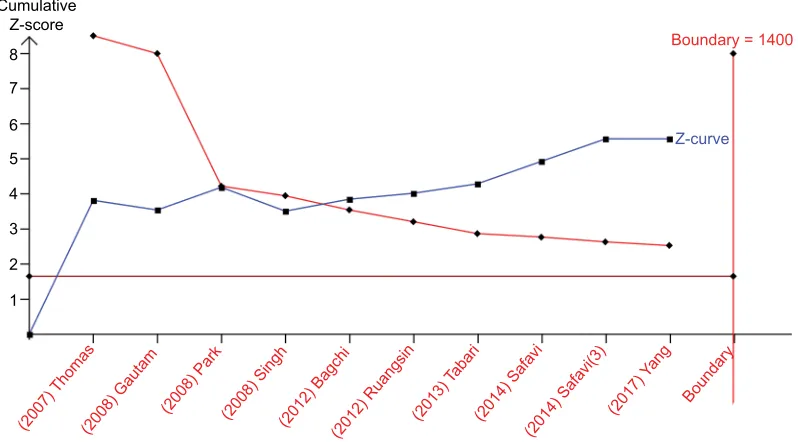
For conclusive and reliable meta-analysis, we calculated the optimal sample size by assuming a 40% control event rate of POST and a 25% relative risk reduction with 80% power
and a two-sided a=0.01. Our calculations with sequential
monitoring boundary crossing indicated that the cumulative evidence is reliable and conclusive (Figure S3).
Discussion
For patients experiencing tracheal intubation of general anes-thesia, POST is a common but unpleasant complication. As glucocorticoid, dexamethasone has anti-inflammatory and analgesic impact. Therefore, prophylactic dexamethasone may be beneficial.
Our study demonstrated the safety and efficacy of prophylactic dexamethasone for patients undergoing
sur-Journal of Pain Research downloaded from https://www.dovepress.com/ by 118.70.13.36 on 24-Aug-2020
Dovepress
Jiang et al
gery requiring tracheal intubation of general anesthesia in reducing the incidence of POST, hoarseness, and PONV compared with placebo, with or without contaminant drugs. It may be explained that dexamethasone is anti-inflammatory and immunosuppressive agent, and it may exert its therapeutic actions through central inhibition of prostaglandin synthesis, by decreasing serotonin turnover in the central nervous system, and by influencing the sys-temic inflammatory response in favor of anti-inflammatory mediators.5,6,30
Besides, our meta-analysis demonstrated comparable efficacy of dexamethasone in reducing POST as other drugs including ondansetron, magnesium sulfate, ketamine gargle, betamethasone gel, and ketorolac in this patient population. Among these latter, ondansetron exerts positive effects on pain relief as a Na channel blocker, a 5-HT3 receptor antago-nist, and μ-opioid agoantago-nist,31 while magnesium sulfate32,33 and
ketamine gargle34 both as N-methyl-d-aspartate (NMDA)
receptor antagonists, betamethasone gel as corticosteroids, and ketorolac as an NSAID with analgesic and anti-inflamma-tory activities by inhibiting cyclooxygenase. Dexamethasone in combination with other drugs is most effective in reducing POST, perhaps due to its synergistic effects of pain relief
through NMDA receptor antagonists.34,35 Although without
other serious adverse events, dexamethasone was associated with increased level of postoperative blood glucose.
To determine the optimal dose of dexamethasone, sub-group analyses stratified by dose indicated more efficacies of
higher doses of dexamethasone (≥0.2 mg/kg) compared with
lower doses (0.1–0.2 mg/kg). In almost all trials included, dexamethasone was administered that varied from 30 minutes before tracheal intubation to 30 minutes after tracheal intuba-tion. One of the concerns of dexamethasone administration is the potential for poor glycemic control. Postoperative glucose level measured at immediate postoperative period was higher in the dexamethasone group, as described by Park et al.17 Considering the results of the evaluated blood
glucose, magnesium sulfate could be a valuable option in the prevention of POST when the use of dexamethasone may not be appropriate for its potential side effects.
Several limitations still exist in this meta-analysis. First, statistical heterogeneity on postoperative cough was found among studies, while publication bias was found on POST. Second, the RCTs in this meta-analysis mostly included healthy patients and excluded patients with pregnancy, diabetes mellitus, or contraindications for corticosteroids. Therefore, the prophylactic impact of dexamethasone on these patients is still unknown.
Conclusion
Our meta-analysis demonstrated safety and efficacy of prophylactic dexamethasone in reducing the incidence of POST, hoarseness, and PONV in patients requiring tracheal intubation of general anesthesia compared with placebo, with or without concomitant drugs. Prophylactic dexamethasone
≥0.2 mg/kg administered intravenously within 30 minutes
before or after induction of general anesthesia should be recommended as grade 1A evidence with safety and efficacy for patients without pregnancy, diabetes mellitus, or contra-indications for corticosteroids.
Disclosure
The authors report no conflicts of interest in this work.
References
1. Lakhe G, Sharma SM. Evaluation of endotracheal tube cuff pressure in laparoscopic cholecystectomy and postoperative sore throat. J Nepal Health Res Counc. 2018;15(3):282–285.
2. Gemechu BM, Gebremedhn EG, Melkie TB. Risk factors for postopera-tive throat pain after general anaesthesia with endotracheal intubation at the University of Gondar Teaching Hospital, Northwest Ethiopia, 2014. Pan Afr Med J. 2017;27:127.
3. Higgins PP, Chung F, Mezei G. Postoperative sore throat after ambula-tory surgery. Br J Anaesth. 2002;88(4):582–584.
4. Sadeghirad B, Siemieniuk RAC, Brignardello-Petersen R, et al. Cortico-steroids for treatment of sore throat: systematic review and meta-analysis of randomised trials. BMJ. 2017;358:j3887.
5. Sapolsky RM, Romero LM, Munck AU. How do glucocorticoids influ-ence stress responses? Integrating permissive, suppressive, stimulatory, and preparative actions. Endocr Rev. 2000;21(1):55–89.
6. Hargreaves KM, Costello A. Glucocorticoids suppress levels of immu-noreactive bradykinin in inflamed tissue as evaluated by microdialysis probes. Clin Pharmacol Ther. 1990;48(2):168–178.
7. Sun L, Guo R, Sun L. Dexamethasone for preventing postoperative sore throat: a meta-analysis of randomized controlled trials. Ir J Med Sci. 2014;183(4):593–600.
8. Zhao X, Cao X, Li Q. Dexamethasone for the prevention of postopera-tive sore throat: a systematic review and meta-analysis. J Clin Anesth. 2015;27(1):45–50.
9. Moher D, Liberati A, Tetzlaff J, Altman DG; PRISMA Group. Preferred reporting items for systematic reviews and meta-analyses: the PRISMA statement. Int J Surg. 2010;8(5):336–341.
10. Carol Lefebvre EM, Glanville J. Chapter 6: searching for studies. In: Higgins JPT, Green S, editors. Cochrane Handbook for Systematic Reviews of Interventions Version 5.1.0 [updated March 2011]. 2011. London: The Cochrane Collaboration; 2011. Available from: www. cochrane-handbook.org. Accessed October 5, 2018.
11. Higgins JPT, Altman DG, Sterne JAC. Chapter 8: assessing risk of bias in included studies. In: Higgins JPT, Green S, editors. Cochrane Handbook for Systematic Reviews of Interventions Version 5.1.0 [updated March 2011]. 2011. London: The Cochrane Collaboration; 2011. Available from: www.cochrane-handbook.org. Accessed October 5, 2018. 12. Begg CB, Mazumdar M. Operating characteristics of a rank correlation
test for publication bias. Biometrics. 1994;50(4):1088–1101. 13. Atkins D, Best D, GRADE Working Group, et al. Grading quality of
evidence and strength of recommendations. BMJ. 2004;328(7454):1490. 14. Guyatt G, Gutterman D, Baumann MH, et al. Grading strength of
recommendations and quality of evidence in clinical guidelines: report from an American College of Chest Physicians Task Force. Chest. 2006;129(1):174–181.
Journal of Pain Research downloaded from https://www.dovepress.com/ by 118.70.13.36 on 24-Aug-2020
Dovepress Prophylactic dexamethasone on postoperative sore throat
15. Lee JH, Kim SB, Lee W, et al. Effects of topical dexamethasone in postoperative sore throat. Kor J Anesthesiol. 2017;70(1):58–63. 16. Gautam B, Shrestha BR, Lama P, Rai S. Antiemetic prophylaxis against
postoperative nausea and vomiting with ondansetron–dexamethasone combination compared to ondansetron or dexamethasone alone for patients undergoing laparoscopic cholecystectomy. Kathmandu Univ Med J. 2008;6(23):319–328.
17. Park JH, Shim JK, Song JW, et al. A randomized, double-blind, non-inferiority trial of magnesium sulphate versus dexamethasone for prevention of postoperative sore throat after lumbar spinal surgery in the prone position. Int J Med Sci. 2015;12(10):797–804.
18. Safavi M, Honarmand A, Fariborzifar A, Attari M. Intravenous dexa-methasone versus ketamine gargle versus intravenous dexadexa-methasone combined with ketamine gargle for evaluation of post-operative sore throat and hoarseness: a randomized, placebo-controlled, double blind clinical trial. Adv Biomed Res. 2014;3:212.
19. Tabari M, Soltani G, Zirak N, Alipour M, Khazaeni K. Comparison of effectiveness of betamethasone gel applied to the tracheal tube and IV dexamethasone on postoperative sore throat: a randomized controlled trial. Iran J Otorhinolaryngol. 2013;25(73):215–220.
20. Yang C, Jung SM, Bae YK, Park SJ. The effect of ketorolac and dexa-methasone on the incidence of sore throat in women after thyroidectomy: a prospective double-blinded randomized trial. Kor J Anesthesiol. 2017;70(1):64–71.
21. Thomas S, Beevi S. Dexamethasone reduces the severity of postopera-tive sore throat. Can J Anaesth. 2007;54(11):897–901.
22. Singh MA, Singh LD, Majaw HW, et al. Prophylactic antiemetic therapy with dexamethasone in patients undergoing laparoscopic cholecystec-tomy. JMS. 2008;22(3):111–116.
23. Ruangsin S, Wanasuwannakul T, Pattaravit N, Asim W. Effectiveness of a preoperative single dose intravenous dexamethasone in reducing the prevalence of postoperative sore throat after endotracheal intubation.
J Med Assoc Thai. 2012;95(5):657–660.
24. Park SH, Han SH, do SH, et al. Prophylactic dexamethasone decreases the incidence of sore throat and hoarseness after tracheal extubation with a double-lumen endobronchial tube. Anesth Analg. 2008;107(6):1814–1818.
25. Bagchi D, Mandal MC, das S, et al. Efficacy of intravenous dexa-methasone to reduce incidence of postoperative sore throat: a pro-spective randomized controlled trial. J Anaesthesiol Clin Pharmacol. 2012;28(4):477–480.
26. Lee J, Park HP, Jeong MH, Kim HC. Combined intraoperative paracetamol and preoperative dexamethasone reduces postoperative sore throat: a prospective randomized study. J Anesth. 2017;31(6):869–877. 27. de Oliveira GS, Ahmad S, Fitzgerald PC, et al. Dose ranging study
on the effect of preoperative dexamethasone on postoperative quality of recovery and opioid consumption after ambulatory gynaecological surgery. Br J Anaesth. 2011;107(3):362–371.
28. Eidi M, Seyed Toutounchi SJ, Kolahduzan K, Sadeghian P, Seyed Toutounchi N. Comparing the effect of dexamethasone before and after tracheal intubation on sore throat after tympanoplasty surgery: a ran-domized controlled trial. Iran J Otorhinolaryngol. 2014;26(75):89–98. 29. Park SY, Kim SH, Lee AR, et al. Prophylactic effect of dexamethasone in reducing postoperative sore throat. Kor J Anesthesiol. 2010;58(1): 15–19.
30. Hong D, Byers MR, Oswald RJ. Dexamethasone treatment reduces sensory neuropeptides and nerve sprouting reactions in injured teeth.
Pain. 1993;55(2):171–181.
31. Zahedi H, Maleki A, Rostami G. Ondansetron pretreatment reduces pain on injection of propofol. Acta Med Iran. 2012;50(4):239–243. 32. Tramer MR, Schneider J, Marti RA, Rifat K. Role of magnesium sulfate
in postoperative analgesia. Anesthesiology. 1996;84(2):340–347. 33. Koinig H, Wallner T, Marhofer P, et al. Magnesium sulfate reduces
intra- and postoperative analgesic requirements. Anesth Analg. 1998;87(1):206–210.
34. Chizh BA. Low dose ketamine: a therapeutic and research tool to explore N-methyl-d-aspartate (NMDA) receptor-mediated plasticity in pain pathways. J Psychopharmacol. 2007;21(3):259–271. 35. Yang YL, Chao PK, Ro LS, Wo YY, Lu KT. Glutamate NMDA receptors
within the amygdala participate in the modulatory effect of glucocorti-coids on extinction of conditioned fear in rats. Neuropsychopharmacol-ogy. 2007;32(5):1042–1051.
Journal of Pain Research downloaded from https://www.dovepress.com/ by 118.70.13.36 on 24-Aug-2020
Dovepress
Jiang et al
Supplementary materials
Figure S1 Incidence of POST stratified according to dexamethasone dose: 0.1–0.2 mg/kg and ≥0.2 mg/kg. Abbreviations: POST, postoperative sore throat; M-H, Mantel-Haenszel.
Gautam 2008 (1) Gautam 2008 (2) Park 2015 Ruangsin 2012 (2) Singh 2008 Thomas 2007 Yang 2017 (1) Yang 2017 (2) Yang 2017 (3)
Bagchi 2012 Park 2008 Safavi 2014 (1) Safavi 2014 (2) Safavi 2014 (3) Total events
1.12.3>0.2mg/kg Subtotal (95% CI)
Subtotal (95% CI)
3
2 4747 22 4848 73 13 73 10
15 35 17 35
25 55 31
9 25 55 11
15 43 20 45
47 21 25 43 43 15
15
45 421 411
140 98
12
1.1% 1.1% 6.7% 5.8% 2.8% 14.7% 7.6% 7.8% 9.4% 56.9%
1.57 (0.25–9.84) 1.02 (0.14–7.57) 0.73 (0.30–1.80) 0.79 (0.31–2.04) 1.64 (0.53–5.09) 0.19 (0.08–0.45) 0.67 (0.28–1.58) 0.66 (0.28–1.55) 0.43 (0.18–1.01)
21 48
14 47 8.9%
13.7% 8.7% 5.0% 6.7% 43.1% 56
35 35 35 11 11 19 32 55 35 35 35
45 94
208 208
0 8 8 15
0.51 (0.22–1.19) 0.28 (0.13–0.62) 0.25 (0.09–0.70) 0.65 (0.22–1.87) 0.03 (0.00–0.53)
100.0% 629
234 35
0 0.48 (0.37–0.62)
0.33 (0.21–0.50) 0.60 (0.43–0.82)
Heterogeneity: c2=12.42, df=8 (P=0.13); I2=36%
Test for overall effect: Z=3.13 (P=0.002)
Total events
Heterogeneity: c2=5.69, df=4 (P=0.22); I2=30%
Test for overall effect: Z=5.04 (P<0.00001)
Total (95% CI) Total events
Heterogeneity: c2=21.38, df=13 (P=0.07); I2=39%
Test for overall effect: Z=5.58 (P<0.00001) Test for subgroup differences: Not applicable
0.002 0.1
Favors experimental1 Favors control10 500 Odds ratio
M–H, fixed, 95% CI Study or subgroup EventsExperimentalTotal Events Total WeightControl M–H, fixed, 95% CIOdds ratio
Figure S2 incidence of POST with regard to timing of dexamethasone administration. Abbreviations: POST, postoperative sore throat; M-H, Mantel-Haenszel.
Study or subgroup EventsExperimentalControl EventsControlControl Weight M–H, fixed, 95% CIOdds ratio Odds ratio
Favors experimental0.01 0.1 1 Favors control10 100
Test for overall effect: Z=0.27 (P=0.79)
Heterogeneity: c2=0.19, df=1 (P=0.66); I2=0% Total (95% CI)
Park 2010
Eidi 2014 13
9
22 67 32
35 15
9
24 35 34
60.0% 40.0%
100.0% 0.91 (0.44–1.86)
1.09 (0.37–3.21) 0.79 (0.30–2.05)
Total events
M–H, fixed, 95% CI
Journal of Pain Research downloaded from https://www.dovepress.com/ by 118.70.13.36 on 24-Aug-2020
Dovepress
Journal of Pain Research
Publish your work in this journal
Submit your manuscript here: https://www.dovepress.com/journal-of-pain-research-journal The Journal of Pain Research is an international, peer reviewed, open access, online journal that welcomes laboratory and clinical findings in the fields of pain research and the prevention and management of pain. Original research, reviews, symposium reports, hypoth-esis formation and commentaries are all considered for publication.
The manuscript management system is completely online and includes a very quick and fair peer-review system, which is all easy to use. Visit http://www.dovepress.com/testimonials.php to read real quotes from published authors.
Dovepress
Prophylactic dexamethasone on postoperative sore throatFigure S3 Trial sequential analysis for POST. Abbreviation: POST, postoperative sore throat.
Cumulative Z-score 8
Z-curve
Boundary = 1400
7
6 5 4 3
2
1
(2007) Thomas
(2008) Gautam (2008) Park (2008) Sing h
(2012) Bagc hi
(2012) Ruangsi n
(2013) Tabari
(2014) Safavi (2014) Safavi(3
)
(2017) Yang
Boundar y
Table S1 Search strategy from its inception to December 2017
1 Randomized controlled trial [pt] 2 Controlled clinical trial [pt]
3 Randomized [tiab]
4 Placebo [tiab]
5 Drug therapy [sh]
6 Randomly [tiab]
7 Trial [tiab]
8 Groups [tiab]
9 #1 or #2 or #3 or #4 or #5 or #6 or #7 or #8 10 Dexamethasone [Mesh]
11 Dexamethasone [tiab] 12 Corticosteroid [tiab] 13 Glucocorticoid [tiab] 14 Steroid [tiab] 15 Steroids [tiab]
16 #10 or ##11 or #12 or #13 or #14 or #15 17 Pharyngitis [Mesh]
18 Sore throat [tiab] 19 Sore throats [tiab]
20 #17 or #18 or #19
21 #9 and #16 and #20
Table S2 Begg’s rank correlation test for publication bias
Variable Pr>|z|
Dexamethasone vs placebo (in addition to other drugs): POST
0.008a Dexamethasone vs placebo (in addition to other drugs): hoarseness
0.754 Dexamethasone vs placebo (in addition to other drugs): PONv
0.734 Dexamethasone vs placebo (in addition to other drugs): cough
0.734 Dexamethasone vs a different drug: POST 0.221 Dexamethasone plus a different drug vs dexamethasone: POST
1.000
Notes: aPublication bias existed as Pr>|z| value was ≤0.1.
Abbreviations: PONv, postoperative nausea and vomiting; POST, postoperative sore throat.
Journal of Pain Research downloaded from https://www.dovepress.com/ by 118.70.13.36 on 24-Aug-2020