A New Approach For Solving Dynamic Shortest
Path Routing Problem In MANET Using Swarm
Intelligence Algorithm
E. Hemalatha Jai Kumari, Dr. A. KannammalAbstract: Advancement of wireless correspondence accelerates wireless network reaction when required. Principle attributes of portable wireless networks is dynamics of topology, which implies that the network topology changes actively, inferable from protecting energy or development of nodes. In this proposal a network model is displayed to settle the Dynamic Shortest Path Routing Problem (DSPRP). Improving and looking at the calculations of a Mobile Ad-hoc Network should be possible productively by recreation. In any case, enormous network reproduction is as yet a difficult activity that expends part of handling the parameters, for example, energy, memory, and time. The network begins with a particular number of bundles to be directed and a particular measure of energy per hub in the proposed network model, and the goal is to serve the parcels in as few activities as could reasonably be expected or to fill in as most extreme bundles as conceivable before the exhausted energy at the hubs. The proposed routing calculations utilized the Network Simulator (NS2) to actualize and play out a resulting test.
Keywords: Routing, Dynamic, Energy, Throughput, Overhead, Jitter.
————————————————————
1. Introduction
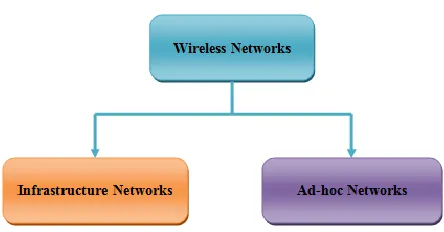
Wireless communication is one of the quickest developing areas in the telecommunications business for couple of years. Wireless communication frameworks, for example, cell, cordless and satellite telephones just as Wireless Local Area Networks (WLAN) have found broad use and have turned into a significant instrument in both expert and individual regular day to day existences for some individuals. In these days, wireless communication advancements which give communication and Internet access are wherever all through the world. Numerous individuals utilize these advances for conferencing, social networking, reading news and email, surfing the World Wide Web, playing, and the preferences. These exercises are not only for searching for diversion in the additional time, however they are most significant for some individuals to build up their work. Smart-phone, tablets, laptops, are outfitted with wireless interface cards which enable the client to convey and control with other individuals or machines. Adaptable associations for clients in particular locations are given by wireless networks. In addition, without a wired association, the network can be expanded to any location or building. Infrastructure network and ad hoc categories as appeared in Figure 1. Wireless networks are categorized into two classifications.
Figure 1: Categories of Wireless Network
A key coordinator for all hubs is a passageway (AP). AP enables you to interface with any hub you need to associate with the network. What's more, AP classifies the connection between the BSS so the route is readied when required. The connection is likewise ordered. Be that as it may, the huge overhead of keeping the routing tables is one disadvantage of utilizing an infrastructure network. The principle goals of the postulation are given beneath:
By accepting a system of remote switches is furnished with a postpone upper bound, a source hub, and a goal hub, point is to locate the least cost circle free route on the topology graph. To configuration system models to settle the
dynamic most limited way calculation utilizing Genetic Algorithm (GA), Particle Swarm Optimization (PSO) and Artificial Bee Colony (ABC) to be specific Dynamic Shortest Path Routing Problem utilizing Genetic Algorithm (GA-DSPRP), Dynamic Shortest Path Routing Problem utilizing Particle Swarm Optimization Algorithm (PSO-DSPRP) and Artificial Bee Colony (ABC-DSPRP) calculation. The target of the DSPRP is to rapidly discover the new ideal postponement compelled least cost acyclic way after each adjustment in topology.
To break down and analyze the proposed system models as far as parcel conveyance proportion, standardized control overhead, normal vitality utilization, normal outstanding vitality, throughput, ___________________________
E. Hemalatha Jai Kumari, Research Scholar, Research and Development Centre Bharathiar University, Coimbatore, Tamilnadu, India.
goodput, jitter, normal start to finish postponement, and relative vitality expended and to locate a superior model.
The reenactment results demonstrate that the proposed GA-DSPRP, ABC-DSPRP calculations delivered better execution in few system execution measurements. Be that as it may, on the general view PSO-DSPRP calculation scored better execution.
2. Proposed Work
2.1 Phase I - Dynamic Shortest Path Routing Algorithm utilizing Genetic Algorithm (DSPRP-GA).
2.1.1 Terms and Definitions
Energy Monitor: It approves the consistent transmission and figures the vitality devoured by the bundle size, parcel time, and transmission capacity to finish the transmission of the information. The rest of the vitality of the hub is likewise determined.
Load and interference estimator: To avert the concealed terminal issue the load is assessed by the estimation of the proceeding with transmission. Impedance is determined in the correspondence locale to guarantee that the terminal issue is kept away from.
Bandwidth (BW) Monitor: It tracks the present transmission and normally evaluates the data transfer capacity by decreasing the transfer speed utilized from the data transfer capacity of the gadget.
Bandwidth Fairness estimator: The data transfer capacity is assessed by monitoring the bundle size and transmission length with transmission interim. Decency of data transfer capacity is estimated dependent on the measure of transmission capacity required and transfer speed availability.
Mobility-Direction based Connectivity estimator: This component characterizes the hub portable heading and analyzes the bearing and point between neighborhood gadgets to recognize the network factor sensibly well.
Chromosome: Singular answer for tackle the directing issue comprises of information transmission way spoke to as 0, 1.
Generation: Mix of current produced chromosomes which is from the directing way in one emphasis.
Population: Gathering of produced arrangement in general emphasis
OffSpring: Recently created chromosome by applying the hybrid and change task
Fitness function: The assessment capacity to approve the nature of the created chromosome arrangement.
2.1.2 Working Mechanism
Expect that the directing procedure occurs in a remote situation with moveable devices. Following steps outlines the working system of Dynamic Shortest Path Routing Algorithm utilizing Genetic Algorithm (DSPRP-GA).
1. Wireless gadgets are conveyed in the system district with the portability to move anyplace in the region.
2. After the hub organization in the field is finished, every hub sends Hello message to the neighboring hubs as an indicator message. Each hub holds a clock named Hello clock to transmit this guide message intermittently.
3. On the gathering of hi message, beneficiary hub makes or updates the neighbor table passage with the expiry time.
4. To evacuate the terminated neighbor table sections, hub executes the neighbor clock which approves the time lapsed of the neighbor and expels the passage from the neighbor table. 5. Source hub starts the information transmission,
and check the routing table section to advance the information bundle.
6. Since no multi-jump information is initially present, source hub sends the route solicitation message to the objective as a system broadcasting message to find the way.
7. This message is communicated over the remote medium and it is gotten by the neighbor hubs. 8. Neighbor hubs approve the route solicitation
message for directing circle and freshness of the control message.
9. Receiver hubs produce the converse route section with the particular solicitation message grouping number to arrive at the source hub.
10. After the fruitful consummation of route demand approval, collector hubs coordinate the goal hub id with the present hub id. If the match isn't discovered, route solicitation message is rebroadcasted over the medium until bundle arrives at the expected goal.
11. The bundle will build up a route answer message with the exact converse way of the solicitation message once it arrives at the objective hub. 12. Reply message is started by the objective hub and
unicasted to the separate transmitted hubs to accomplish the solicitation message of source hub 13. The route table section to the objective hub is made/refreshed while transmitting the answer message.
14. After finishing the development of information transmission route, source hub de-line the parcel from the bundle support and plays out the routing procedure through the built multi-bounce route.
2.2 Phase II - Design of a Dynamic Shortest Path Routing in Manet Using Eabc with Immigrants
2.2.1 Terms and Conditions:
So as to keep up the statbility of routing protocol, couple of components are added.
Onlooker: Reachable path identifier from source to destination using employee.
Roulette wheel: The reachable path made by using onlooker and employee.
Objective function: The Quality estimator of the solution which is right now generated.
Search Space: It is a finished set of solution space which is as area that contains enormous set of solution to be generated.
Dimension: It represents the coordinates of the solution as x and y.
Population: Complete set of solution that is generated to solve the routing issue.
ABC Positions: It is the area of the abc solution got from the area of the node including the speed vector.
Food Source: Actual target to be come to by the present solution set.
Neighbor beacon and neighbor updation: It intermittently broadcast neighbor beacon message (named Hello Message) to declare its presence in the network. Updator removes the expired neighbor entry from the neighbor table.
Routing Loop validator: It validates the control message which is gotten by the node that is broadcasted independent from anyone else.
Packet freshness verifier: It checks the packet sequence number of the message which is already rebroadcasted.
Invalid (Expired) path remover: It removes the expired routing table entry which is never again accessible for correspondence.
Algorithm convergent validator: It validates the at present running algorithm to check with end criteria.
2.2.2 Working Mechanism
Wireless devices are conveyed in the network district with the portability to move anyplace in the area.The working mechanism of Dynamic Shortest Path Routing Algorithm using Enhanced Artificial Bee colony Algorithm (EABC) with Random Immigrants (DSPRP-EABC) is as follows:
1. Node connectivity with neighbor (nbr) set is kept up by hello beacon message.
2. After fulfillment of node arrangement in region, every node executes hi timer to send hello message intermittently
3. Neighbor nodes get hi message and update neighbor table with expiry time. So as to think about expiry time, current clock is considered to choose about nodes strength. In the event that present clock time is more noteworthy than neighbor expirytime, at that point neighbor entry is cleansed from neighbor table.
4. The source node initiates the data transmission and the process of route discovery. Fresh transmission is propelled when entry not found in the routing table. 5. All network nodes complete the sending and getting
route request strategy. The corresponding route request response shall be generated through the normal target and sent to a source by middle person nodes.
6. Once the route has been established, data packet sending is handled by the source and middle of the road node.
7. During the route discovery process, QoS information such as bandwidth prerequisite for finishing data transmission, node energy parameter, bandwidth fairness, connection load of the node, node interference, relative connectivity factor, anticipated transmission probability, successful transmission probability and node portability are joined to the packet header.
8. After storing the path among source and destination, modified ABC algorithm phase is conjured to generate the solution to solve the routing issue. 9. From the accessible path, nodes engaged with the
routing process are listed out
10. For these nodes x,y coordinates are resolved, and thus starting set of solution points are framed. 11. A summation of the node parameter which has an
inclusion in a routing model determines the objective value of the solution.
12. Location of the node is implanted as coordinates of the solution and speed is installed as development vector of the solution.
13. From the underlying population set, transmission path to solve the routing issue is made.
14. Onlooker specialist is generated to distinguish the accessible path from the present coordinates. 15. Employee specialist is summoned to recover the
information about the accessibility of food source in the target area.
16. Roulette wheel is framed to associate every food source which is gone by the employee specialist. 17. Scout specialist is used to arrive at the food source
and to distinguish the new area to make routing path. 18. The same steps are rehashed until convergent purpose of the routing algorithm is come to or last area path is selected from the most extreme objective value of every solution.
19. The decoded path is used for data transmission and subsequently the route reply message is traversed using the decoded path.
2.3 Phase III- Design Of A dynamic Shortest Path Routing Problem Using Modified Particle Swarm Optimization Algorithm
2.3.1 Terms and Definitions
: Request to Send : Clear to Send
Connection probability Estimator: Estimates the proability dependent on the packets transmitted forward way which incorporates the RTS and DATA Message.
Response probability estimator: It assesses the proability dependent on the packets transmitted backward heading including the CTS and ACK message.
ETX Estimator: Expected Transmission assesses the ETX probability by joining the values of connection and response probability which decides the Expected transmission to be done per unit time.
Successful transmission monitor: It checks the number of forward route packet transmitted and responses got concerning the solicitation message and recognizes the ratio between the transmissions.
Retransmission monitor: It checks the number of forward route including the retransmission packet transmitted and bombed responses concerning the solicitation message and recognizes the ratio between the retransmissions
Transmission probability estimator: It joins the model of fruitful transmission and endeavored transmission and gives the genuine transmission performed in the transmission duration
Speed monitor: This monitors the speed of the node and goal position at where node moves.
Particle: Individual answer for take care of the routing issue comprises of data forwarder spoke to as x,y position.
Dimension and velocity: The velocity reflects the movement velocity of a particle in the search territory as a numerical space in the particle arrangement.
Search Space: Movement territory of the particle and it is kept up as area of the node in the topography region.
Objective function: It decides the nature of the generated particle arrangement which is assessed by the attributes of the nodes.
Local best and Global best: LBest focuses the best arrangement in the present iteration approved utilizing the objective function. GBest focuses the best arrangement in by and large iteration.
Iteration: The rehashed process of recognizing the best mix of the particle arrangement that characterizes the new area of the particle as for the new velocity in the search space.
Convergence: A circumstance that which decides the best mix of particle arrangement which is approved by the soundness of the arrangement
2.3.2 Working Mechanism
Accept that the routing process occurs in a remote situation with moveable gadgets. Following are the means to demonstrate the working instrument of Dynamic Shortest
Path Routing Algorithm utilizing Particle Swarm Optimization Algorithm (DSPRP-PSO):
1. Along side the QoS information, Connection-response probability, expected node transmission probability, effectively sent transmission and genuine node transmission probability. Node speed and movement bearing is anticipated and embedded in the packet header to assess the node parameter. 2. The route request message is ventured out from
source to goal as a broadcasting message. Message contains the QoS information about the nodes which plays out the packet sending operation.
3. The underlying way is created with a message of route finding from source to target node. Developed path with node parameters are stored in the path table.
4. The nodes engaged in the packet hand-off method are distinguished as the particle arrangement from the rundown of routes.
5. The particle arrangement is portrayed by the (x,y)coordinates perceived by the node position. 6. The velocity of the particle is recognized by the
speed of the node for the two-dimensional model. 7. The objective function decides the objective value of
the particle evaluated by node parameter values. 8. Choice is performed to pick the best particle
arrangement mix based on the ideal particle value arranged in descending request.
9. New velocity of the particle is determined utilizing two random numbers, two consistent numbers and the area values. Variety between the values is viewed as the local,global best arrangement and current arrangement separately.
10. The velocity is evaluated in the two bearings utilizing the two-dimension model.
11. By joining values of the new velocity and old positions, the new position of the particle is perceived.
12. Objective value for the new position is distinguished and contrasted and the objective value of the old position.
13. The following iteration is done with the new area, if the new position has the best objective value; the old position is utilized for the following iteration.
14. Local best arrangement is distinguished by contrasting the values of all particles in the present arrangement set and pointed as LBestin every iteration.
15. In general best arrangement from all iteration is recognized and set apart as GBest arrangement. 16. These means (8-15) are iterated until concurrent
point is come to. The convergent point is controlled by approving the global best arrangement in back to back arrangement iteration. From the steadiness of the objective value, it compares to the particle that leads to the convergence of the process.
17. The optimal particle areas are decoded in the node once convergence has been perceived and approved for route from the source node to the target.
3. Experimental Results
3.1 Performance Analysis of DSPRP, DSPRP-GA, DSPRP-ABC and DSPRP-PSO
The accompanying correlation graphs would be useful in assessing the presentation of the proposed algorithms
DSPRP-GA, DSPRP-ABC, and DSPRP-PSO with that of DSPRP. The exhibition measurements are utilized for examination, for example, packet delivery ratio, average end-to-end delay, routing Overhead, collisions and throughput of Mobile Ad Hoc Networks.
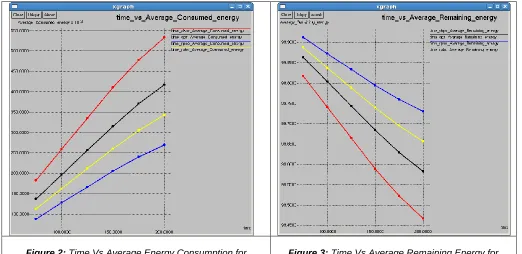
Figure 2: Time Vs Average Energy Consumption for DSPRP, DSPRP-GA, DSPRP-ABC& DSPRP-PSO
Figure 3: Time Vs Average Remaining Energy for DSPRP, DSPRP-GA, DSPRP-ABC& DSPRP-PSO
Figure 4: Time Vs PDR for DSPRP, GA, DSPRP-ABC& DSPRP-PSO
Figure 5: Time Vs Delay for DSPRP, DSPRP-GA, DSPRP-ABC& DSPRP-PSO
The correlation of three proposed algorithms with time and average vitality utilization of each of the three algorithms is delineated in Fig 2. At the point when contrasted and different algorithms DSPRP-PSO devours less vitality on the traversal until it arrives at the most extreme load for the simulation. The correlation of three proposed algorithms
with least contrast. The packet proportion delivered in success by DSPRP-PSO is maximum, 97 percent – 98 percent on average compared to other algorithms shown in Fig 4. Figure 5 demonstrate the normal start to finish delay for the packet to head out from source to target. Contrasted
with different algorithms, DSPRP-PSO requires substantially less time to arrive at the goal's application layer. It incorporates the postponement begun by the strategy for route discovery, the deferral in propagation and the line in data transmission.
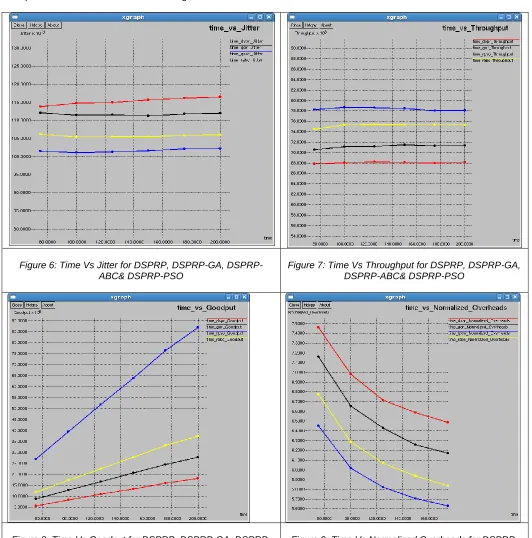
Figure 6: Time Vs Jitter for DSPRP, GA, DSPRP-ABC& DSPRP-PSO
Figure 7: Time Vs Throughput for DSPRP, DSPRP-GA, DSPRP-ABC& DSPRP-PSO
Figure 8: Time Vs Goodput for DSPRP, GA, DSPRP-ABC &DSPRP-PSO
Figure 9: Time Vs Normalized Overheads for DSPRP, DSPRP-GA, DSPRP-ABC& DSPRP-PSO
VoIP transmissions commonly endures delays upto 150ms before the nature of call is unsatisfactory. However, DSPRP-PSO produces the postponement at the pace of 101-102 ms on a normal which demonstrates that the buffering strategies utilized in the algorithm is effective. Fig 6 delineates that the jitter buffer executed on DSPRP-PSO
transmission completed in varying simulation time. For the expansion in reproduction time, less number of control packets were utilized in a solitary information transmission on a normal. At the point when contrasted and different algorithms, control packets utilized in DSPRP-PSO is less.
On the off chance that the network system is crossed for immense number of nodes, the proportion of packet delivered in progress by DSPRP-PSO is greatest, 97%– 98% on a normal when contrasted and different algorithms that is portrayed in Figure 9 .
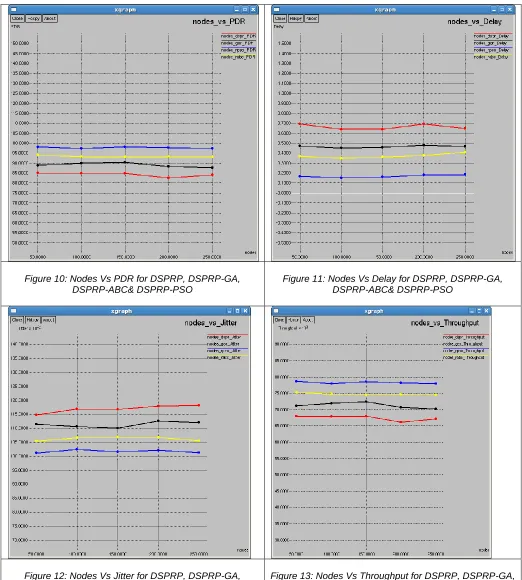
Figure 10: Nodes Vs PDR for DSPRP, DSPRP-GA, DSPRP-ABC& DSPRP-PSO
Figure 11: Nodes Vs Delay for DSPRP, DSPRP-GA, DSPRP-ABC& DSPRP-PSO
Figure 12: Nodes Vs Jitter for DSPRP, DSPRP-GA, DSPRP-ABC& DSPRP-PSO
Figure 10 demonstrate the normal start to finish delay for the packet to head out from source to goal. Contrasted with different algorithms, it sets aside considerably less effort for DSPRP-PSO to accomplish the goal application layer, regardless of whether the system is stretched out with more nodes. At the point when the system is extended DSPRP-PSO produces the postponement at the pace of 101-102 ms on a normal which demonstrates that the buffering procedures utilized in the algorithm is successful. Fig 11 delineates that the jitter buffer executed on DSPRP-PSO decreases the impacts of jitter. It very well may be seen from Figure 12 that DSPRP-PSO acheives high throughput for higher number of hubs in the system extend. From Figure 13 it very well may be noticed that notwithstanding when the system is extended, DSPRP-PSO produces a respectable measure of fruitful bits moved in the transmission finished.
Conclusion
The theory centers around recognizing reasonable strategies for improving the shortest path routing in portable ad-hoc networks. The fixation is to find the least cost loop-free route on the topology graph by expecting that a system of remote routers is furnished with a postpone upper bound, a source hub, and a goal hub. The primary phase of the activity concentrated on the proposal of Genetic Algorithm. The second phase of the activity centers around utilizing Particle Swarm Optimization for shortest path routing.The third phase of the activity concentrated on utilizing Artificial Bee colony algorithm for shortest path routing, the proposed work has been thought about as far as parcel conveyance proportion, normal start to finish delay, routing overhead, crashes, and throughput. The reproduction discoveries demonstrate that in a couple of system execution measurements, the recommended GA-DSPRP, PSO-DSPRP algorithms produced better yield. However, better execution scored on the general point of view of the PSO-DSPRP algorithm.
References:
[1] C K Toh, Ad Hoc Mobile Wireless Networks, Prentice Hall Publishers , 2002.
[2] Robinpreet Kaur & Mritunjay Kumar Rai, A Novel Review on Routing Protocols in MANETs, Undergraduate Academic Research Journal (UARJ), ISSN : 2278 – 1129, Volume-1, Issue-1, 2012.
[3] Ammar Odeh, Eman AbdelFattah and Muneer Alshowkan, Performance Evaluation Of AODV And DSR Routing Protocols In Manet Networks, International Journal of Distributed and Parallel Systems (IJDPS) Vol.3, No.4, July 2012.
[4] Sachin Dnyandeo Ubarhande, Performance Evolution of AODV and DSR Routing Protocols in MANET Using NS2, International Journal of Scientific & Engineering Re search Volume 3, Issue 5, May-2012, ISSN 2229-5518.
[5] G.Vijaya Kumar , Y.Vasudeva Reddyr , Dr.M.Nagendra , Current Research Work on Routing Protocols for MANET: A Literature Survey, International Journal on Computer Science and Engineering Vol. 02, No. 03, 2010, 706-713.
[6] Tarek Sheltami and Hussein Mouftah ―Comparative study of on demand and Cluster Based Routing
protocols in MANETs‖, IEEE conference, pp. 291-295, 2003.
[7] Kamaljit I. Lakhtaria, Analyzing Reactive Routing Protocols in Mobile Ad Hoc Networks, Int. J. Advanced Networking and Applications Volume:03 Issue:06 Pages:1416-1421 (2012) ISSN : 0975-0290.
[8] Johnson. D and Maltz. D. A, ―Dynamic source routing in ad hoc wireless Networks‖ in Mobile Computing (Imielinski and H. Korth, eds.), Kluwere Academic Publishers, 1996
[9] Perkins CE, Royer EM, Chakeres ID (2003) Ad hoc On-Demand Distance Vector (AODV) Routing. IETF Draft, October, 2003,
[10] Elizabeth M. Royer―A Review of Current Routing Protocols for Ad Hoc Mobile Wireless Networks‖ University of California, Santa Barbara Chai-Keong Toh, Georgia Institute of Technology, IEEE Personal Communications, pp. 46-55, April 1999.
[11] Krishna Gorantala , ―Routing Protocols in Mobile Ad-hoc Networks‖, A Master’ thesis in computer science, pp-1-36, 2006.
[12] Perkins CE, Bhagwat P (1994) Highly Dynamic Destination-Sequenced Distance-Vector Routing (DSDV) for Mobile Computers. Proceedings of ACM SIGCOMM 1994:234–244
[13] Cheng C, Riley R, Kumar SPR, Garcia-Luna-Aceves JJ (1989) A Loop Free Extended Bellman-Ford Routing Protocol Without Bouncing Effect. ACM SIGCOMM Computer Communications Review, Volume 19, Issue 4:224–236
[14] Humblet PA (1991) Another Adaptive Distributed Shortest-Path Algorithm. IEEE Transactions on Communications, Volume 39, Issue 6:995–1003 [15] Rajagopalan B, Faiman M (1991) A Responsive