International Journal of COPD
Dovepress
O r I g I n a l r e s e a r C h
open access to scientific and medical research
Open access Full Text article
A bibliometric analysis of the 100 most influential
papers on COPD
Wenchao gu
1Yaping Yuan
1hua Yang
1guangsheng Qi
1Xiaoyan Jin
2Jin Yan
21Department of respiratory Medicine,
People’s hospital of shanghai, Pudong new area, 2Department
of respiratory Medicine, Tongren hospital, shanghai, People’s republic of China
Objective: We aimed to identify the 100 top-cited articles published on chronic obstructive pulmonary disease (COPD) and to analyze their characteristics so as to provide information on the achievement and development in COPD research over the past decades.
Methods and materials: A comprehensive list of citation classics in COPD was generated by searching the Science Citation Index expanded database, using the keywords “COPD” or “chronic obstructive pulmonary disease” or “chronic obstructive pulmonary diseases”. The 100 top-cited research papers were retrieved by reading the abstract or full text if needed. All eligible articles were read for basic information, including country of origin, organizations, article type, journals, research field, and authors.
Results: The 100 top-cited articles on COPD were published between 1966 and 2010. The number of citations ranged from 254 to 2,164, with a mean of 450 citations for each article. These citation classics were from 32 countries, with 38 from the United States. The Imperial College London led the list of classics, with 16 papers. The 100 top-cited articles were distributed in 18 journals, with the American Journal of Respiratory, Critical Care Medicine, and Journal of the American Medical Association topping the list. Among the various fields, both respiratory system (63%) and general internal medicine (63%) were the most common fields of study for the 100 articles.
Conclusion: Our bibliometric analysis provides a historical perspective on the progress of scientific research on COPD. Articles originating from the United States and published in high-impact specialized respiratory journals are most likely to be cited in the field of COPD research.
Keywords: citation analysis, top-cited, chronic obstructive pulmonary disease
Introduction
Chronic obstructive pulmonary disease (COPD) continues to be an important cause
of morbidity, mortality, and health care costs worldwide. As the global population
ages, the burden of COPD will increase in the years to come.
1–3Numerous specialists
and researchers have focused their efforts on COPD in an attempt to gain a better
understanding of how comorbid diseases, different phenotypes, and risk factor affect
the outcome of COPD patients. A great numbers of articles have been published
annually and have given new insights into the mechanism or treatment of COPD.
4–6However, there still exists a lack of knowledge regarding the quality of scientific yield
in relation to this area.
It is generally believed that publications represent the central part of a research
process. In medicine, the number of times a paper is cited by other authors has been
established as a widely used and logical measure of how much academic influence it
has had in its subject area. The reporting of this type of citation analysis is widespread
Correspondence: Xiaoyan JinDepartment of respiratory Medicine, Tongren hospital, no 738, Yuyuan road, shanghai, 200050, People’s republic of China
email [email protected]
Journal name: International Journal of COPD Article Designation: Original Research Year: 2015
Volume: 10
Running head verso: Gu et al
Running head recto: A bibliometric analysis of the 100 most influential papers on COPD DOI: http://dx.doi.org/10.2147/COPD.S74911
International Journal of Chronic Obstructive Pulmonary Disease downloaded from https://www.dovepress.com/ by 118.70.13.36 on 22-Aug-2020
For personal use only.
This article was published in the following Dove Press journal: International Journal of COPD
25 March 2015
Dovepress
gu et al
in the medical literature.
7–16One way to measure the academic
importance of an article is the rate at which the work is quoted
or referenced by other authors.
7,11,16The article referenced by
another peer-reviewed article receives a “citation.” The total
number of citations that an article receives is not necessarily
a measure of its academic quality or even its influence upon
the practice of the author’s or authors’ peers.
17Nevertheless,
it does testify to the readership of the particular article and
the influence of the article in generating changes in
prac-tice, controversy, discussion, or further research. Citation is
viewed as a direct measure of the recognition an article has
received in its field. Citation analysis in specific journals and
specific subject areas has become a popular method to assess
the citation impact of a journal, article, or author.
8,10–13,18–23The Institute for Scientific Information (ISI) has been
collecting citation and other academic impact information
since 1945 and has been available electronically since 1979.
ISI (now a subsidiary of Thomson Corp) calls their newest
journal citation system “Science Citation Index
®(SCI)
Expanded,” and it is one of the databases available under the
banner of Web of Science. Citation data from peer-reviewed
articles are indexed from more than 10,000 high-impact
journals, not only from the sciences and social sciences but
also, from the arts and humanities.
This search used the electronic version of this database
to determine which published articles in medical journals
have been cited most often by other authors, by ranking the
100 top-cited works. By analyzing characteristics of these
articles, we intended to determine what qualities make a
COPD article important to the specialty.
Materials and methods
On June 30, 2014, authors searched Web of Science and
iden-tified the 100 top-cited articles relating to COPD (Table 1)
published in professional journals from 1945 to date. The
articles entitled using the terms “COPD” or “chronic
obstruc-tive pulmonary disease” or “chronic obstrucobstruc-tive pulmonary
diseases” were included in the research.
Each article in the most cited 100 was reviewed, and
the basic information collected included authors, year of
publications, source journal of the article, geographic origin
of the authors, and study field (general internal medicine,
respiratory system, cardiovascular system cardiology,
immu-nology, microbiology, physiology, research experimental
medicine, sports science, or surgery). The full texts were
mainly selected by PubMed or ScienceDirect. In addition,
other methods were also used to search for articles that were
not found in the aforementioned database, for example,
interlibrary lending and requests for help on the PubMed.cn
website (
http://paper.pubmed.cn/
). This website is a Chinese
language–based platform used by scholars to request and
share literatures. Several articles were cited more often than
others because of the difference in time since publication.
Thus, a citation index was also determined for each article
to control this error. The citation index was defined as the
mean number of citation times per year.
Statistical analysis was performed using SPSS 17 (SPSS
Inc., Chicago, IL, USA). Spearman correlation analysis was
used to test the total citation times and number of citation
times per year, with an alpha level of 0.05. Descriptive
statistics were quantified as counts or percentages of
parameters.
As this was a bibliometric analysis, it was not necessary
to obtain Internal Review Board approval.
Results
A total of 22,210 papers were identified in the initial search
for the period from 1960 to present, with 12,098 published
as “article” and 1,436 classified as “review”. Among them,
623 articles were cited more than 100 times. One hundred
selected articles were published from 1966 to 2010, of which
about 55% were published after 2000. The mean number of
citations was 450 (range 254 to 2,164), and seven papers
were cited more than 1,000 times (Table 1). Annual
aver-age number of citations were correlated by total number of
citations (
r
s=
0.659,
P
0.0001).
The most cited paper, published by Rabe et al
24in 2007,
was an executive summary describing the global strategy for
the diagnosis, management, and prevention of COPD.
Inter-estingly, the second most cited paper, by Celli et al
25received
1,659 citations and was also a summary of standards for the
diagnosis and treatment of patients with COPD, published
in 2004. The third article, by Hogg et al
26was a randomized
controlled trial (RCT) – the paper proved that 1) progression
of COPD is associated with the accumulation of inflammatory
mucous exudates in the lumen and infiltration of the wall by
innate and adaptive inflammatory immune cells that form
lymphoid follicles, and 2) these changes are coupled to a
repair or remodeling process that thickens the walls of these
airways. The most recent paper came from 2010 and was
cited 367 times. This paper
27proposed use of the “frequent
exacerbation phenotype” to predict COPD exacerbations,
implicating an important target of exacerbation-prevention
strategies across the spectrum of disease severity. The last
paper on the most cited list was a cohort study, authored by
Marquis et al from 2002 and cited 254 times to date, which
International Journal of Chronic Obstructive Pulmonary Disease downloaded from https://www.dovepress.com/ by 118.70.13.36 on 22-Aug-2020
Dovepress A bibliometric analysis of the 100 most influential papers on COPD
Table 1
The 100 most cited papers in COPD
Rank
First author
No of citations Publication year Citations/ year N ew rank* Rank First author
No of citations Publication year Citations/ year
N
ew
rank*
Rank
First author
No of citations Publication year Citations/ year N ew rank* 1 r abe KF 24 2,164 2007 270.50 1 35 g osselink r 66 407 1996 21.42 62 69 Barnes PJ 99 303 2009 50.50 14 2 Celli B r 25 1,659 2004 150.82 2 36 seemungal T 67 400 2001 28.57 46 70 Jones PW 100 303 1997 16.83 80 3 h ogg JC 26 1,246 2004 113.27 4 37 Ito K 68 394 2005 39.40 25 71 Montuschi P 101 301 2000 20.07 67 4 Celli B r 35 1,177 2004 107.00 5 38 szafranski W 69 394 2003 32.83 35 72 Mahler D a 102 297 1999 18.56 75 5
Calverley PM
a 36 1,146 2007 143.25 3 39 saetta M 70 383 1998 22.53 60 73 n ava s 103 297 1998 17.47 78 6 a nthonisen nr 37 1,129 1987 40.32 23 40 a nthonisen nr 71 383 1986 13.21 93 74 Cazzola M 104 296 2008 42.29 20 7 siafakas n M 38 1,006 1995 50.30 15 41 h ogg JC 72 379 2004 34.45 33 75 Monso e 105 293 1995 14.65 87 8 Brochard l 39 834 1995 41.70 21 42 landbo C 73 379 1999 23.69 58 76 r enzetti a D 106 292 1966 5.96 100 9 Keatings VM 40 791 1996 41.63 22 43 soler-Cataluna JJ 74 373 2005 37.30 28 77 Maltais F 107 289 1996 15.21 83 10
seemungal Tar
41 768 1998 45.18 17 44 Kuwano K 75 372 1993 16.91 79 78 Wilson DO 108 289 1989 11.12 95 11 Burge P s 42 765 2000 51.00 12 45 h urst J r 27 367 2010 73.40 7 79 seneff M g 109 285 1995 14.25 90 12 Tashkin DP 43 669 2008 95.57 6 46 lacasse Y 76 366 1996 19.26 72 80 scanlon PD 110 284 2000 18.93 74 13
Donaldson gC
44 663 2002 51.00 13 47 saint s 77 366 1995 18.30 77 81 Paggiaro P l 111 283 1998 16.65 81 14 Barnes PJ 45 654 2000 43.60 19 48 Barnes PJ 78 359 2008 51.29 11 82 Celli B r 112 282 2008 40.29 24 15 g an WQ 46 597 2004 54.27 10 49 n iewoehner D e 79 358 1999 22.38 61 83 Vestbo J 113 279 1996 14.68 86 16 Barnes PJ 47 556 2003 46.33 16 50 Bernard s 80 358 1998 21.06 64 84 Papi a 114 277 2006 30.78 42 17 Cooper JD 48 555 1995 27.75 50 51 Bourbeau J 81 357 2003 29.75 44 85 saetta M 115 277 2001 19.79 69 18 Calverley P 49 540 2003 45.00 18 52 O’Donnell D e 82 354 2004 32.18 38 86 Difrancia M 116 277 1994 13.19 94 19 Bestall JC 50 518 1999 32.38 36 53 Pitta F 83 347 2005 34.70 32 87 schols a 117 275 1996 14.47 88 20 Buist as 51 510 2007 63.75 8 54 Keatings VM 84 346 1997 19.22 73 88 r ahman I 118 274 2006 30.44 43 21 Pauwels ra 52 501 1999 31.31 39 55 O’Donnell D e 85 344 2001 24.57 56 89 sethi s 119 272 2001 19.43 71 22 schols a 53 484 1998 28.47 48 56 Wiggs B r 86 343 1992 14.91 84 90 Wedzicha J a 120 268 2008 38.29 26 23 r ies al 54 482 1995 24.10 57 57 Pauwels ra 87 342 2004 31.09 41 91
Dekhuijzen Pnr
121 267 1996 14.05 91 24 r epine J e 55 457 1997 25.39 55 58 h albert r J 88 337 2006 37.44 27 92 Donohue JF 122 266 2002 20.46 65 25 Casaburi r 56 456 2002 35.08 30 59 Murphy TF 89 331 1992 14.39 89 93 n ishimura K 123 263 2002 20.23 66 26 Mannino DM 57 440 2007 55.00 9 60 Mc sweeny a J 90 329 1982 9.97 96 94 Menezes a MB 124 262 2005 26.20 52 27 r ahman I 58 432 1996 22.74 59 61 schols a 91 327 1993 14.86 85 95 Patel I s 125 259 2002 19.92 68 28 sethi s 59 431 2002 33.15 34 62 Calverley PM 92 326 2003 27.17 51 96 O’Donnell D e 126 259 1998 15.24 82 29 Plant PK 60 430 2000 28.67 45 63 Bhowmik a 93 321 2000 21.40 63 97 a aron sD 127 258 2007 32.25 37 30 sin DD 61 428 2003 35.67 29 64 lopez a D 94 314 2006 34.89 31 98 W eitzenblum e 128 258 1981 7.59 99 31 seemungal T 62 428 2000 28.53 47 65 a gusti agn 95 309 2003 25.75 54 99 Kanner re 129 257 2001 18.36 76 32 a ltose MD 63 422 2000 28.13 49 66 Traver ga 96 308 1979 8.56 97 100 Marquis K 28 254 2002 19.54 70 33 Vestbo J 64 414 1999 25.88 53 67 lambert r K 97 304 1993 13.82 92 34 Vincken W 65 407 2002 31.31 40 68 Wagner PD 98 304 1977 8.00 98 Note:
*The “new rank” was sorted by the average annual number of citations.
Abbreviation:
COPD, chronic obstructive pulmonary disease.
International Journal of Chronic Obstructive Pulmonary Disease downloaded from https://www.dovepress.com/ by 118.70.13.36 on 22-Aug-2020
Dovepress
gu et al
found that the midthigh muscle cross-sectional area was a
better predictor of mortality than body mass index (BMI) in
COPD patients; these findings suggest that the assessment of
body composition may be useful in clinical practice.
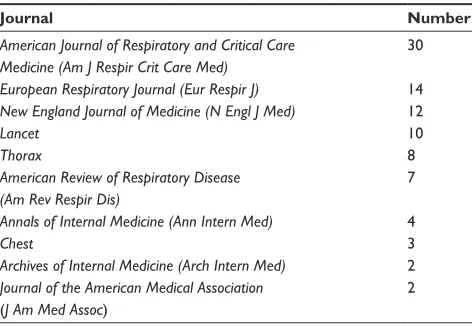
28The 100 top-cited articles were published in 18 journals,
predominantly in American Journal of Respiratory and
Criti-cal Care Medicine (n
=
30), followed by European
Respira-tory Journal (n
=
14) and New England Journal of Medicine
(n
=
12) (Table 2).
The greatest number of top-cited articles were published
in 1996, 2000, and 2002 (n
=
8 each). The least number of
arti-cles was published in the 1960s (n
=
1 [decade]). Articles on
the list were divided into three periods, 1960 to 1989 (n
=
8),
1990 to 1999 (n
=
37), and after 2000 (n
=
55) (Table 3).
The country origins of the articles included: the United
States (n
=
38), England (n
=
34), Canada (n
=
20), Netherlands
(n
=
12), Italy (n
=
10), Belgium (n
=
9), Spain (n
=
8), Denmark
(n
=
7), Australia (n
=
6), and Scotland (n
=
5). The rest of the
countries had less than five publications. Table 4 shows
the distribution of top-cited articles over the countries of
origin. Given some articles were authored with multiple
sources of origin, especially those in the form of international
research collaborations, the total number of countries of
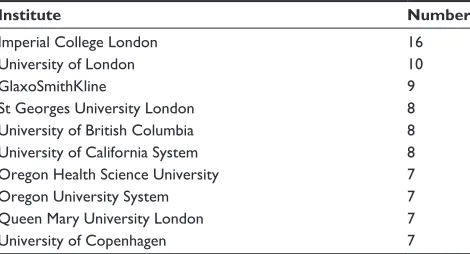
origin exceeded 100. The leading institutions are shown in
Table 5. Imperial College London was found to be the most
productive institution (n
=
16), followed by the University of
London (n
=
10) and GlaxoSmithKline (n
=
9).
Among the 100 top-cited articles in COPD, the
over-whelming majority (n
=
63 each) were studies belonging
to “general internal medicine” and “respiratory system”,
followed by two studies in “cardiovascular system
cardiol-ogy”. Other fields, like “immunology”, “microbiology” and
“physiology” only had one article each (Table 6).
The top-cited papers were written by 749 authors and
ranged from 1 to 70 per article. Three articles had one
author, followed by eight articles with two authors, and eight
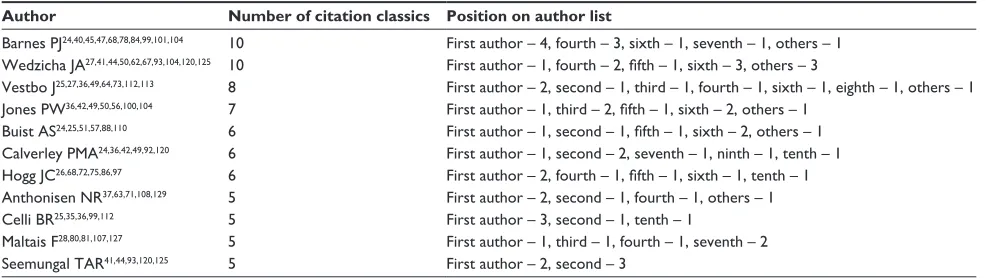
articles with three authors. Table 7 presents a list of the most
productive authors, showing that Barnes and Wedzicha each
authored ten articles, followed by Vestbo (n
=
8), Jones (n
=
7),
Buist (n
=
6), Calverley (n
=
6), Hogg (n
=
6), Anthonisen (n
=
5),
Celli (n
=
5), Maltais (n
=
5), and Seemungal (n
=
5) (Table 7).
Discussion
In medical literature, the number of times other authors
reference an article is one measure of the influence of the
publication, and this type of citation analysis strategy is
widely used as a bibliometric study. The evaluation of
specialty-wide citation analyses has been reported in other
areas of medicine.
7–9,18–21,23However, the establishment of a
citation rank list across a specialty, comprising many journals
specific to an area of medicine, is a more complex process
than citation analysis for one journal, although such analyses
have been reported in some other areas of medicine.
31–34In this review, researchers ranked the top 100 articles by
number of citations, in the specialty of COPD. The top article
had 2,164 citations. Seven papers were cited more than 1,000
times, of which three were summaries of the most well-known
international COPD management guidelines, by different
research institutions or in different periods. However, they all
represented the latest achievements of COPD development
in their period and have played profound influence in COPD
treatment and research development around the world. While
the third-place paper was classic RCT research, the findings
created a new therapy targets for COPD treatment. The fourth
paper also was classic; the authors proved a
multidimen-sional grading system (the BODE [BMI, airflow obstruction,
dyspnea, and exercise] index) assessing the respiratory and
systemic expressions of COPD would better categorize and
predict outcome in COPD patients than the forced expiratory
Table 2 Top-ten sources that contribute most articles to thetop-100 papers
Journal Number
American Journal of Respiratory and Critical Care Medicine (Am J Respir Crit Care Med)
30
European Respiratory Journal (Eur Respir J) 14
New England Journal of Medicine (N Engl J Med) 12
Lancet 10
Thorax 8
American Review of Respiratory Disease (Am Rev Respir Dis)
7
Annals of Internal Medicine (Ann Intern Med) 4
Chest 3
Archives of Internal Medicine (Arch Intern Med) 2
Journal of the American Medical Association
(J Am Med Assoc)
2
Table 3 Decades distribution of the top-100 most cited papers
Year Number Mean number of citations Minimum number of citations Maximum number of citations
-1980s 8 412 258 1,129
1990s 37 413 259 1,006
2000s 55 481 254 2,164
International Journal of Chronic Obstructive Pulmonary Disease downloaded from https://www.dovepress.com/ by 118.70.13.36 on 22-Aug-2020
Dovepress A bibliometric analysis of the 100 most influential papers on COPD
volume in one second (FEV
1). The fifth and sixth papers were
specialized in the exploration of COPD drug therapy, and
both of their groundbreaking discoveries have provided new
directions for COPD treatment. In sum, the main reason for
being so widely referenced is that the findings or conclusions
reported in these papers have produced historical influence
in COPD treatment and research history. However, every
article on the list can be considered a citation “classic” by
the frequently used, but somewhat arbitrary, marker of 100
pieces as the benchmark.
29This review of the most cited articles in COPD may be
worthwhile for several reasons. First, the observations
sug-gest the authors of citation classics in COPD have produced
more highly cited articles than many of their colleagues in
other specialties. Second, this study has successfully
identi-fied several attributes of articles in citation, indicating that
journal and country of origin are very important factors.
Finally, this paper might be considered as the first report on
the most cited papers in COPD.
The study characteristics revealed here echo those found
in similar reviews. The majority of articles originated in the
United States. This result is in line with previous studies
and is in accordance with the reported strong influence of
the United States in research related to health science,
8,12,14indicating that American authors may be at an advantage.
On the contrary, in Asian countries, although the
scien-tific research has achieved rapid development in recent
years, authors did not have a place in the COPD research
field since their contribution in research productivity was
rather disappointing. European countries, like England,
Netherlands, Italy, etc, also showed a higher productivity.
This finding seems to conform to the phenomenon “the better
the economic ranking of a country, the higher the quantity
and quality of its biomedical publications”.
30Financial support from public foundations or commercial
companies has evolved over time in response to changes in
professional codes, laws, and markets. Public funds have given
a great push to the development of medical research and
pub-lic health. Industry-funded science has been widely debated
because of the susceptibility to various kinds of biases.
Nev-ertheless, it has played and will continue to play a critical role
in the research process. Although this research did not analyze
financial support separately, our findings showed that there
was a commercial company ranked among the top-ten prolific
institutions, which contributed a total of nine articles.
Although researchers were expecting a higher number,
only 18% of the papers were review articles, whereas the
majority were original research articles, which might be
attributable to a preference for referencing experimental
evidence rather than review articles or expert opinion.
It has been reported that scientific articles begin to be cited
1 or 2 years after publication and reach a maximum citation
rate 7 to 10 years later after publication.
26–28It has also been
reported that the “older” articles are, the greater the likelihood
that they have attained more citations, purely because their
citable period was longer. However, in our study, the citation
rate gradually rose over the last decade and is indicative of
an increasing consideration for the field of COPD.
Authors have to acknowledge that our study has several
possible methodological limitations. First and foremost, this
Table 4 Countries that contributed more than four papers in the100 most influential papers
Country Number
Usa 38
england 34
Canada 20
netherlands 12
Italy 10
Belgium 9
spain 8
Denmark 7
australia 6
scotland 5
Table 5 The top-ten institutions contributing to the most cited articles in COPD
Institute Number
Imperial College london 16
University of london 10
glaxosmithKline 9
st georges University london 8
University of British Columbia 8
University of California system 8
Oregon health science University 7
Oregon University system 7
Queen Mary University london 7
University of Copenhagen 7
Abbreviation: COPD, chronic obstructive pulmonary disease.
Table 6 Research field of the most cited articles in COPD
Field Number
general internal medicine 63
respiratory system 63
Cardiovascular system cardiology 2
Immunology 1
Microbiology 1
Physiology 1
research experimental medicine 1
sport sciences 1
surgery 1
Abbreviation: COPD, chronic obstructive pulmonary disease.
International Journal of Chronic Obstructive Pulmonary Disease downloaded from https://www.dovepress.com/ by 118.70.13.36 on 22-Aug-2020
Dovepress
gu et al
survey was restricted with the word “COPD” or “chronic
obstructive pulmonary disease” or “chronic obstructive
pul-monary diseases” in their titles. In other words, some
signifi-cant COPD articles published under other titles might not have
been included, and it is possible that these were good-quality
articles with a high number of citations. Second, the journals
have different approaches to accept or reject a submitted
manuscript. Thus, particular journals could have stricter
selec-tion criteria that might have affected the clinical applicability
or quality of their publications. The criteria could be a reason
why most top-cited papers were found in one journal. Also,
there are some intrinsic problems in using this method alone
to evaluate the academic importance of one article, an author’s
or authors’ publications, or the performance of a journal
overall. First, this type of citation analysis does not account
for self-citation, citations in textbooks and lectures, and an
author’s or authors’ potential preference to cite articles in the
journal in which they seek to publish their work.
29Second,
language of publication plays a major role, with an obvious
bias for articles published in English language journals. Third,
there are biases inherent in the age of the database as any
articles published in the 19th or early 20th century would be
excluded, which likely causes some true “classic” articles
to be excluded. Finally, previous study
16would tell us that
in a scientific community, there is a tendency for adherence
to a paradigm. In this context, this would mean that there is
“snowball effect” to citations and that other authors are more
likely to cite it because of previous citations, rather than for
its content or quality. Despite these obvious defects, the data
presented here do provide insight into the achievement and
development of COPD research over the past decades.
Acknowledgment
This study was funded by Outstanding Leaders Training
Program of Pudong Health Bureau of Shanghai (Grant
No PWR12014-04) and Key Discipline Construction
Project of Pudong Health Bureau of Shanghai (Grant No
PWZx2014-12).
Author contributions
Xiaoyan Jin and Wenchao Gu participated in the study design.
Wenchao Gu, Yaping Yuan, Hua Yang, Guangsheng Qi,
Xiaoyan Jin, and Jin Yan performed the data extraction and
analysis. Hua Yang, Yaping Yuan, Guangsheng Qi and Jin
Yan drafted the article. Xiaoyan Jin and Wenchao Gu wrote
the manuscript.
Disclosure
The authors report no conflicts of interest in this work.
References
1. Simoens S. Cost-effectiveness of pharmacotherapy for COPD in ambula-tory care: a review. J Eval Clin Pract. 2013;19(6):1004–1011. 2. Vestbo J, Hurd SS, Agustí AG, et al. Global strategy for the diagnosis,
management, and prevention of chronic obstructive pulmonary disease: GOLD executive summary. Am J Respir Crit Care Med. 2013;187(4):347–365.
3. Han MK, Agusti A, Calverley PM, et al. Chronic obstructive pulmonary disease phenotypes: the future of COPD. Am J Respir Crit Care Med. 2010;182(5):598–604.
4. Repapi E, Sayers I, Wain LV, et al; Wellcome Trust Case Control Consortium; NSHD Respiratory Study Team. Genome-wide associa-tion study identifies five loci associated with lung funcassocia-tion. Nat Genet. 2010;42(1):36–44.
5. Albert RK, Connett J, Bailey WC, et al; COPD Clinical Research Net-work. Azithromycin for prevention of exacerbations of COPD. N Engl
J Med. 2011;365(8):689–698.
6. Agusti A, Calverley PM, Celli B, et al; Evaluation of COPD Lon-gitudinally to Identify Predictive Surrogate Endpoints (ECLIPSE) Investigators. Characterisation of COPD heterogeneity in the ECLIPSE cohort. Respir Res. 2010;11:122.
7. Zhang WJ, Ding W, Jiang H, Zhang YF, Zhang JL. National representa-tion in the plastic and reconstructive surgery literature: a bibliometric analysis of highly cited journals. Ann Plast Surg. 2013;70(2):231–234. 8. Ye S, Xing R, Liu J, Xing F. Bibliometric analysis of Nobelists’ awards
and landmark papers in physiology or medicine during 1983–2012. Ann Med. 2013;45(8):532–538.
Table 7 The authors who contribute more than four articles to the top-100 papers
Author Number of citation classics Position on author list
Barnes PJ24,40,45,47,68,78,84,99,101,104 10 First author – 4, fourth – 3, sixth – 1, seventh – 1, others – 1
Wedzicha Ja27,41,44,50,62,67,93,104,120,125 10 First author – 1, fourth – 2, fifth – 1, sixth – 3, others – 3
Vestbo J25,27,36,49,64,73,112,113 8 First author – 2, second – 1, third – 1, fourth – 1, sixth – 1, eighth – 1, others – 1
Jones PW36,42,49,50,56,100,104 7 First author – 1, third – 2, fifth – 1, sixth – 2, others – 1
Buist as24,25,51,57,88,110 6 First author – 1, second – 1, fifth – 1, sixth – 2, others – 1
Calverley PMa24,36,42,49,92,120 6 First author – 1, second – 2, seventh – 1, ninth – 1, tenth – 1
hogg JC26,68,72,75,86,97 6 First author – 2, fourth – 1, fifth – 1, sixth – 1, tenth – 1
anthonisen nr37,63,71,108,129 5 First author – 2, second – 1, fourth – 1, others – 1
Celli Br25,35,36,99,112 5 First author – 3, second – 1, tenth – 1
Maltais F28,80,81,107,127 5 First author – 1, third – 1, fourth – 1, seventh – 2
seemungal Tar41,44,93,120,125 5 First author – 2, second – 3
International Journal of Chronic Obstructive Pulmonary Disease downloaded from https://www.dovepress.com/ by 118.70.13.36 on 22-Aug-2020
Dovepress A bibliometric analysis of the 100 most influential papers on COPD
9. Wiysonge CS, Uthman OA, Ndumbe PM, Hussey GD. A bibliometric analysis of childhood immunization research productivity in Africa since the onset of the Expanded Program on Immunization in 1974.
BMC Med. 2013;11:66.
10. Whipple EC, Dixon BE, McGowan JJ. Linking health information technology to patient safety and quality outcomes: a bibliometric analysis and review. Inform Health Soc Care. 2013;38(1):1–14. 11. Ugolini D, Neri M, Cesario A, et al. Scientific production in cancer
rehabilitation grows higher: a bibliometric analysis. Support Care
Cancer. 2012;20(8):1629–1638.
12. Ugolini D, Neri M, Casilli C, et al. A bibliometric analysis of scientific production in mesothelioma research. Lung Cancer. 2010;70(2): 129–135.
13. Sun GH. Bibliometric analysis of health services research in otolaryngology journals. Otolaryngol Head Neck Surg. 2012;147(5): 841–847.
14. Ren Y, Wang QJ, Tian L, Wang C, Cui S, Zhang J. Bibliometric analysis on lung cancer in China during the period of 2001–2010. Thoracic
Cancer. 2012;3(4):363–366.
15. Nykiforuk CI, Osler GE, Viehbeck S. The evolution of smoke-free spaces policy literature: a bibliometric analysis. Health Policy. 2010; 97(1):1–7.
16. Mony PK, Srinivasan K. A bibliometric analysis of published non-communicable disease research in India. Indian J Med Res. 2011;134: 232–234.
17. Cheek J, Garnham B, Quan J. What’s in a number? Issues in providing evidence of impact and quality of research(ers). Qual Health Res. 2006; 16(3):423–435.
18. Joyce CW, Kelly JC, Sugrue C. A bibliometric analysis of the 100 most influential papers in burns. Burns. 2014;40(1):30–37.
19. Heinemann MK. Editor’s commentary. Thorac Cardiovasc Surg. 2011;59(2):114.
20. Glanville J, Kendrick T, McNally R, Campbell J, Hobbs FD. Research output on primary care in Australia, Canada, Germany, the Netherlands, the United Kingdom, and the United States: bibliometric analysis. BMJ. 2011;342:d1028.
21. D’Arcangelo D, Giampietri C, Facchiano F, Facchiano A. BAMM: a preliminary bibliometric analysis on melanoma manuscripts. Pigment
Cell Melanoma Res. 2013;26(3):415–417.
22. Cummings G, Biondo PD, Campbell D, et al. Can the global uptake of palliative care innovations be improved? Insights from a bibliometric analysis of the Edmonton Symptom Assessment System. Palliat Med. 2011;25(1):71–82.
23. Cohen JE, Chaiton MO, Planinac LC. Taking stock a bibliometric analysis of the focus of tobacco research from the 1980s to the 2000s.
Am J Prev Med. 2010;39(4):352–356.
24. Rabe KF, Hurd S, Anzueto A, et al; Global Initiative for Chronic Obstruc-tive Lung Disease. Global strategy for the diagnosis, management, and prevention of chronic obstructive pulmonary disease: GOLD executive summary. Am J Respir Crit Care Med. 2007;176(6):532–555. 25. Celli BR, MacNee W; ATS/ERS Task Force. Standards for the
diag-nosis and treatment of patients with COPD: a summary of the ATS/ ERS position paper. Eur Respir J. 2004;23(6):932–946.
26. Hogg JC, Chu F, Utokaparch S, et al. The nature of small-airway obstruction in chronic obstructive pulmonary disease. N Engl J Med. 2004;350(26):2645–2653.
27. Hurst JR, Vestbo J, Anzueto A, et al; Evaluation of COPD Longitudi-nally to Identify Predictive Surrogate Endpoints (ECLIPSE) Investiga-tors. Susceptibility to exacerbation in chronic obstructive pulmonary disease. N Engl J Med. 2010;363(12):1128–1138.
28. Marquis K, Debigaré R, Lacasse Y, et al. Midthigh muscle cross-sectional area is a better predictor of mortality than body mass index in patients with chronic obstructive pulmonary disease. Am J Respir
Crit Care Med. 2002;166(6):809–813.
29. Moed HF. New developments in the use of citation analysis in research evaluation. Arch Immunol Ther Exp (Warsz). 2009;57(1):13–18.
30. Nielsen FE. [Publication outcome of research funding by the Danish Heart Foundation 1988–1990]. Ugeskr Laeger. 1998;160(32):4644–4648. Danish.
31. Marx W, Schier H, Wanitschek M. Citation analysis using online databases: feasibilities and shortcomings. Scientometrics. 2001; 52(1):59–82.
32. Garfield E. 100 citation classics from the Journal of the American Medical Association. JAMA. 1987;257(1):52–59.
33. Hall GM. BJA citation classics 1945–1992. Br J Anaesth. 1998;80(1): 4–6.
34. Seglen PO. Why the impact factor of journals should not be used for evaluating research. BMJ. 1997;314(7079):498–502.
35. Celli BR, Cote CG, Marin JM, et al. The body-mass index, airflow obstruction, dyspnea, and exercise capacity index in chronic obstructive pulmonary disease. N Engl J Med. 2004;350(10):1005–1012. 36. Calverley PMA, Anderson JA, Celli B, et al; TORCH investigators.
Salmeterol and fluticasone propionate and survival in chronic obstructive pulmonary disease. N Engl J Med. 2007;356(8): 775–789.
37. Anthonisen NR, Manfreda J, Warren CP, Hershfield ES, Harding GK, Nelson NA. Antibiotic therapy in exacerbations of chronic obstructive pulmonary disease. Ann Intern Med. 1987;106(2):196–204.
38. Siafakas NM, Vermeire P, Pride NB, et al. Optimal assessment and management of chronic obstructive pulmonary disease (COPD).
Eur Respir J. 1995;8(8):1398–1420.
39. Brochard L, Mancebo J, Wysocki M, et al. Noninvasive ventilation for acute exacerbations of chronic obstructive pulmonary disease. N Engl
J Med. 1995;333(13):817–822.
40. Keatings VM, Collins PD, Scott DM, Barnes PJ. Differences in interleukin-8 and tumor necrosis factor-alpha in induced sputum from patients with chronic obstructive pulmonary disease or asthma. Am J
Respir Crit Care Med. 1996;153(2):530–534.
41. Seemungal TA, Donaldson GC, Paul EA, Bestall JC, Jeffries DJ, Wedzicha JA. Effect of exacerbation on quality of life in patients with chronic obstructive pulmonary disease. Am J Respir Crit Care Med. 1998;157(5 Pt 1):1418–1422.
42. Burge PS, Calverley PM, Jones PW, Spencer S, Anderson JA, Maslen TK. Randomised, double blind, placebo controlled study of fluticasone propionate in patients with moderate to severe chronic obstructive pulmonary disease: the ISOLDE trial. BMJ. 2000;320(7245):1297–1303.
43. Tashkin DP, Celli B, Senn S, et al; UPLIFT Study Investigators. A 4-year trial of tiotropium in chronic obstructive pulmonary disease.
N Engl J Med. 2008;359(15):1543–1554.
44. Donaldson GC, Seemungal TA, Bhowmik A, Wedzicha JA. Relationship between exacerbation frequency and lung function decline in chronic obstructive pulmonary disease. Thorax. 2002;57(10):847–852. 45. Barnes PJ. Chronic obstructive pulmonary disease. N Engl J Med. 2000;
343(4):269–280.
46. Gan WQ, Man SF, Senthilselvan A, Sin DD. Association between chronic obstructive pulmonary disease and systemic inflammation: a systematic review and a meta-analysis. Thorax. 2004;59(7):574–580. 47. Barnes PJ, Shapiro SD, Pauwels RA. Chronic obstructive pulmonary
disease: molecular and cellular mechanisms. Eur Respir J. 2003;22(4): 672–688.
48. Cooper JD, Trulock EP, Triantafillou AN, et al. Bilateral pneumectomy (volume reduction) for chronic obstructive pulmonary disease. J Thorac
Cardiovasc Surg. 1995;109(1):106–116; discussion 116–119.
49. Calverley P, Pauwels R, Vestbo J, et al; TRial of Inhaled STeroids ANd long-acting beta2 agonists study group. Combined salmeterol and fluticasone in the treatment of chronic obstructive pulmonary disease: a randomised controlled trial. Lancet. 2003;361(9356):449–456. 50. Bestall JC, Paul EA, Garrod R, Garnham R, Jones PW, Wedzicha JA.
Usefulness of the Medical Research Council (MRC) dyspnoea scale as a measure of disability in patients with chronic obstructive pulmonary disease. Thorax. 1999;54(7):581–586.
International Journal of Chronic Obstructive Pulmonary Disease downloaded from https://www.dovepress.com/ by 118.70.13.36 on 22-Aug-2020
Dovepress
gu et al
51. Buist AS, McBurnie MA, Vollmer WM, et al; BOLD Collaborative Research Group. International variation in the prevalence of COPD (the BOLD Study): a population-based prevalence study. Lancet. 2007;370(9589):741–750.
52. Pauwels RA, Löfdahl CG, Laitinen LA, et al. Long-term treatment with inhaled budesonide in persons with mild chronic obstructive pulmonary dis-ease who continue smoking. European Respiratory Society Study on Chronic Obstructive Pulmonary Disease. N Engl J Med. 1999;340(25):1948–1953. 53. Schols AM, Slangen J, Volovics L, Wouters EF. Weight loss is a revers-ible factor in the prognosis of chronic obstructive pulmonary disease.
Am J Respir Crit Care Med. 1998;157(6 Pt 1):1791–1797.
54. Ries AL, Kaplan RM, Limberg TM, Prewitt LM. Effects of pulmo-nary rehabilitation on physiologic and psychosocial outcomes in patients with chronic obstructive pulmonary disease. Ann Intern Med. 1995;122(11):823–832.
55. Repine JE, Bast A, Lankhorst I; The Oxidative Stress Study Group. Oxidative stress in chronic obstructive pulmonary disease. Am J Respir
Crit Care Med. 1997;156(2):341–357.
56. Casaburi R, Mahler DA, Jones PW, et al. A long-term evaluation of once-daily inhaled tiotropium in chronic obstructive pulmonary disease.
Eur Respir J. 2002;19(2):217–224.
57. Mannino DM, Buist AS. Global burden of COPD: risk factors, preva-lence, and future trends. Lancet. 2007;370(9589):765–773.
58. Rahman I, Morrison D, Donaldson K, MacNee W. Systemic oxidative stress in asthma, COPD, and smokers. Am J Respir Crit Care Med. 1996;154(4 Pt 1):1055–1060.
59. Sethi S, Evans N, Grant BJ, Murphy TF. New strains of bacteria and exacerbations of chronic obstructive pulmonary disease. N Engl J Med. 2002;347(7):465–471.
60. Plant PK, Owen JL, Elliott MW. Early use of non-invasive ventilation for acute exacerbations of chronic obstructive pulmonary disease on general respiratory wards: a multicentre randomised controlled trial.
Lancet. 2000;355(9219):1931–1935.
61. Sin DD, Man SF. Why are patients with chronic obstructive pulmonary disease at increased risk of cardiovascular diseases? The potential role of systemic inflammation in chronic obstructive pulmonary disease.
Circulation. 2003;107(11):1514–1519.
62. Seemungal TAR, Donaldson GC, Bhowmik A, Jeffries DJ, Wedzicha JA. Time course and recovery of exacerbations in patients with chronic obstructive pulmonary disease. Am J Respir Crit Care Med. 2000;161(5):1608–1613.
63. Altose MD, Redline S, Deitz CD, et al. Effect of inhaled triamcinolone on the decline in pulmonary function in chronic obstructive pulmonary disease. N Engl J Med. 2000;343(26):1902–1909.
64. Vestbo J, Sørensen T, Lange P, Brix A, Torre P, Viskum K. Long-term effect of inhaled budesonide in mild and moderate chronic obstructive pulmonary disease: a randomised controlled trial. Lancet. 1999;353(9167):1819–1823.
65. Vincken W, van Noord JA, Greefhorst AP, et al; Dutch/Belgian Tiotropium Study Group. Improved health outcomes in patients with COPD during 1 yr’s treatment with tiotropium. Eur Respir J. 2002;19(2):209–216. 66. Gosselink R, Troosters T, Decramer M. Peripheral muscle weakness
contributes to exercise limitation in COPD. Am J Respir Crit Care Med. 1996;153(3):976–980.
67. Seemungal T, Harper-Owen R, Bhowmik A, et al. Respiratory viruses, symptoms, and inflammatory markers in acute exacerbations and stable chronic obstructive pulmonary disease. Am J Respir Crit Care Med. 2001;164(9):1618–1623.
68. Ito K, Ito M, Elliott WM, et al. Decreased histone deacetylase activity in chronic obstructive pulmonary disease. N Engl J Med. 2005;352(19): 1967–1976.
69. Szafranski W, Cukier A, Ramirez A, et al. Efficacy and safety of budesonide/formoterol in the management of chronic obstructive pulmonary disease. Eur Respir J. 2003;21(1):74–81.
70. Saetta M, Di Stefano A, Turato G, et al. CD8+ T-lymphocytes in peripheral airways of smokers with chronic obstructive pulmonary disease. Am J Respir Crit Care Med. 1998;157(3 Pt 1):822–826.
71. Anthonisen NR, Wright EC, Hodgkin JE. Prognosis in chronic obstruc-tive pulmonary-disease. Am Rev Respir Dis. 1986;133(1):14–20. 72. Hogg JC. Pathophysiology of airflow limitation in chronic obstructive
pulmonary disease. Lancet. 2004;364(9435):709–721.
73. Landbo C, Prescott E, Lange P, Vestbo J, Almdal TP. Prognostic value of nutritional status in chronic obstructive pulmonary disease. Am J
Respir Crit Care Med. 1999;160(6):1856–1861.
74. Soler-Cataluña JJ, Martinez-García MA, Román Sanchez PR, Salcedo E, Navarro M, Ochando R. Severe acute exacerbations and mortality in patients with chronic obstructive pulmonary disease.
Thorax. 2005;60(11):925–931.
75. Kuwano K, Bosken CH, Paré PD, Bai TR, Wiggs BR, Hogg JC. Small airways dimensions in asthma and in chronic obstructive pulmonary disease. Am Rev Respir Dis. 1993;148(5):1220–1225.
76. Lacasse Y, Wong E, Guyatt GH, King D, Cook DJ, Goldstein RS. Meta-analysis of respiratory rehabilitation in chronic obstructive pulmonary disease. Lancet. 1996;348(9035):1115–1119.
77. Saint S, Bent S, Vittinghoff E, Grady D. Antibiotics in chronic obstructive pulmonary disease exacerbations. A meta-analysis. JAMA. 1995;273(12):957–960.
78. Barnes PJ. Immunology of asthma and chronic obstructive pulmonary disease. Nat Rev Immunol. 2008;8(3):183–192.
79. Niewoehner DE, Erbland ML, Deupree RH, et al. Effect of systemic glucocorticoids on exacerbations of chronic obstructive pulmonary disease. Department of Veterans Affairs Cooperative Study Group. N
Engl J Med. 1999;340(25):1941–1947.
80. Bernard S, LeBlanc P, Whittom F, et al. Peripheral muscle weakness in patients with chronic obstructive pulmonary-disease. Am J Respir
Crit Care Med. 1998;158(2):629–634.
81. Bourbeau J, Julien M, Maltais F, et al; Chronic Obstructive Pulmonary Disease axis of the Respiratory Network Fonds de la Recherche en Santé du Québec. Reduction of hospital utilization in patients with chronic obstructive pulmonary disease: a disease-specific self-management intervention. Arch Intern Med. 2003;163(5):585–591.
82. O’Donnell DE, Flüge T, Gerken F, et al. Effects of tiotropium on lung hyperinflation, dyspnoea and exercise tolerance in COPD. Eur Respir J. 2004;23(6):832–840.
83. Pitta F, Troosters T, Spruit MA, Probst VS, Decramer M, Gosselink R. Characteristics of physical activities in daily life in chronic obstruc-tive pulmonary disease. Am J Respir Crit Care Med. 2005;171(9): 972–977.
84. Keatings VM, Jatakanon A, Worsdell YM, Barnes PJ. Effects of inhaled and oral glucocorticoids on inflammatory indices in asthma and COPD.
Am J Respir Crit Care Med. 1997;155(2):542–548.
85. O’Donnell DE, Revill SM, Webb KA. Dynamic hyperinflation and exercise intolerance in chronic obstructive pulmonary disease. Am J
Respir Crit Care Med. 2001;164(5):770–777.
86. Wiggs BR, Bosken C, Paré PD, James A, Hogg JC. A model of airway narrowing in asthma and in chronic obstructive pulmonary disease. Am
Rev Respir Dis. 1992;145(6):1251–1258.
87. Pauwels RA, Rabe KF. Burden and clinical features of chronic obstruc-tive pulmonary disease (COPD). Lancet. 2004;364(9434):613–620. 88. Halbert RJ, Natoli JL, Gano A, Badamgarav E, Buist AS, Mannino DM.
Global burden of COPD: systematic review and meta-analysis.
Eur Respir J. 2006;28(3):523–532.
89. Murphy TF, Sethi S. Bacterial infection in chronic obstructive pulmonary-disease. Am Rev Respir Dis. 1992;146(4):1067–1083. 90. McSweeny AJ, Grant I, Heaton RK, Adams KM, Timms RM. Life
qual-ity of patients with chronic obstructive pulmonary-disease. Arch Intern Med. 1982;142(3):473–478.
91. Schols AM, Soeters PB, Dingemans AM, Mostert R, Frantzen PJ, Wouters EF. Prevalence and characteristics of nutritional depletion in patients with stable COPD eligible for pulmonary rehabilitation. Am Rev
Respir Dis. 1993;147(5):1151–1156.
92. Calverley PM, Boonsawat W, Cseke Z, Zhong N, Peterson S, Olsson H. Maintenance therapy with budesonide and formoterol in chronic obstruc-tive pulmonary disease. Eur Respir J. 2003;22(6):912–919.
International Journal of Chronic Obstructive Pulmonary Disease downloaded from https://www.dovepress.com/ by 118.70.13.36 on 22-Aug-2020
Dovepress A bibliometric analysis of the 100 most influential papers on COPD
93. Bhowmik A, Seemungal TA, Sapsford RJ, Wedzicha JA. Relation of sputum inflammatory markers to symptoms and lung function changes in COPD exacerbations. Thorax. 2000;55(2):114–120.
94. Lopez AD, Shibuya K, Rao C, et al. Chronic obstructive pulmo-nary disease: current burden and future projections. Eur Respir J. 2006;27(2):397–412.
95. Agusti AGN, Noguera A, Sauleda J, Sala E, Pons J, Busquets X. Systemic effects of chronic obstructive pulmonary disease. Eur Respir J. 2003;21(2):347–360.
96. Traver GA, Cline MG, Burrows B. Predictors of mortality in chronic obstructive pulmonary disease. A 15-year follow-up study. Am Rev
Respir Dis. 1979;119(6):895–902.
97. Lambert RK, Wiggs BR, Kuwano K, Hogg JC, Paré PD. Functional significance of increased airway smooth muscle in asthma and COPD.
J Appl Physiol (1985). 1993;74(6):2771–2781.
98. Wagner PD, Dantzker DR, Dueck R, et al. Ventilation-perfusion inequality in chronic obstructive pulmonary disease. J Clin Invest. 1977; 59(2):203–216.
99. Barnes PJ, Celli BR. Systemic manifestations and comorbidities of COPD. Eur Respir J. 2009;33(5):1165–1185.
100. Jones PW, Bosh TK. Quality of life changes in COPD patients treated with salmeterol. Am J Respir Crit Care Med. 1997;155(4):1283–1289. 101. Montuschi P, Collins JV, Ciabattoni G, et al. Exhaled 8-isoprostane as an in
vivo biomarker of lung oxidative stress in patients with COPD and healthy smokers. Am J Respir Crit Care Med. 2000;162(3 Pt 1):1175–1177. 102. Mahler DA, Donohue JF, Barbee RA, et al. Efficacy of salmeterol
xinafoate in the treatment of COPD. Chest. 1999;115(4):957–965. 103. Nava S, Ambrosino N, Clini E, et al. Noninvasive mechanical
ventila-tion in the weaning of patients with respiratory failure due to chronic obstructive pulmonary disease. A randomized, controlled trial. Ann
Intern Med. 1998;128(9):721–728.
104. Cazzola M, MacNee W, Martinez FJ, et al; American Thoracic Society; European Respiratory Society Task Force on outcomes of COPD. Outcomes for COPD pharmacological trials: from lung function to biomarkers. Eur Respir J. 2008;31(2):416–469.
105. Monsó E, Ruiz J, Rosell A, et al. Bacterial infection in chronic obstruc-tive pulmonary disease. A study of stable and exacerbated outpatients using the protected specimen brush. Am J Respir Crit Care Med. 1995;152(4 Pt 1):1316–1320.
106. Renzetti AD, McClement JH, Litt BD. The Veterans Administration cooperative study of pulmonary function. 3. Mortality in relation to respiratory function in chronic obstructive pulmonary disease. Am J Med. 1966;41(1):115–129.
107. Maltais F, Simard AA, Simard C, Jobin J, Desgagnés P, LeBlanc P. Oxidative capacity of the skeletal muscle and lactic acid kinetics during exercise in normal subjects and in patients with COPD. Am J Respir
Crit Care Med. 1996;153(1):288–293.
108. Wilson DO, Rogers RM, Wright EC, Anthonisen NR. Body weight in chronic obstructive pulmonary disease. The National Institutes of Health Intermittent Positive-Pressure Breathing Trial. Am Rev Respir Dis. 1989;139(6):1435–1438.
109. Seneff MG, Wagner DP, Wagner RP, Zimmerman JE, Knaus WA. Hospital and 1-year survival of patients admitted to intensive care units with acute exacerbation of chronic obstructive pulmonary disease.
JAMA. 1995;274(23):1852–1857.
110. Scanlon PD, Connett JE, Waller LA, et al; Lung Health Study Research Group. Smoking cessation and lung function in mild-to-moderate chronic obstructive pulmonary disease. The Lung Health Study. Am
J Respir Crit Care Med. 2000;161(2 Pt 1):381–390.
111. Paggiaro PL, Dahle R, Bakran I, Frith L, Hollingworth K, Efthimiou J. Multicentre randomised placebo-controlled trial of inhaled fluticasone propionate in patients with chronic obstructive pulmonary disease. International COPD Study Group. Lancet. 1998;351(9105):773–780. 112. Celli BR, Thomas NE, Anderson JA, et al. Effect of pharmacotherapy
on rate of decline of lung function in chronic obstructive pulmonary disease: results from the TORCH study. Am J Respir Crit Care Med. 2008;178(4):332–338.
113. Vestbo J, Prescott E, Lange P. Association of chronic mucus hyperse-cretion with FEV1 decline and chronic obstructive pulmonary disease morbidity. Copenhagen City Heart Study Group. Am J Respir Crit
Care Med. 1996;153(5):1530–1535.
114. Papi A, Bellettato CM, Braccioni F, et al. Infections and airway inflam-mation in chronic obstructive pulmonary disease severe exacerbations.
Am J Respir Crit Care Med. 2006;173(10):1114–1121.
115. Saetta M, Turato G, Maestrelli P, Mapp CE, Fabbri LM. Cellular and structural bases of chronic obstructive pulmonary disease. Am J Respir
Crit Care Med. 2001;163(6):1304–1309.
116. Di Francia M, Barbier D, Mege JL, Orehek J. Tumor necrosis factor-alpha levels and weight loss in chronic obstructive pulmonary disease.
Am J Respir Crit Care Med. 1994;150(5 Pt 1):1453–1455.
117. Schols AM, Buurman WA, Staal van den Brekel AJ, Dentener MA, Wouters EF. Evidence for a relation between metabolic derange-ments and increased levels of inflammatory mediators in a subgroup of patients with chronic obstructive pulmonary disease. Thorax. 1996;51(8):819–824.
118. Rahman I, Adcock IM. Oxidative stress and redox regulation of lung inflammation in COPD. Eur Respir J. 2006;28(1):219–242. 119. Sethi S, Murphy TF. Bacterial infection in chronic obstructive
pulmo-nary disease in 2000: a state-of-the-art review. Clin Microbiol Rev. 2001;14(2):336–363.
120. Wedzicha JA, Calverley PM, Seemungal TA, Hagan G, Ansari Z, Stockley RA; INSPIRE Investigators. The prevention of chronic obstructive pulmonary disease exacerbations by salmeterol/fluticasone propionate or tiotropium bromide. Am J Respir Crit Care Med. 2008; 177(1):19–26.
121. Dekhuijzen PN, Aben KK, Dekker I, et al. Increased exhalation of hydrogen peroxide in patients with stable and unstable chronic obstructive pulmonary disease. Am J Respir Crit Care Med. 1996;154(3 Pt 1):813–816.
122. Donohue JF, van Noord JA, Bateman ED, et al. A 6-month, placebo-controlled study comparing lung function and health status changes in COPD patients treated with tiotropium or salmeterol. Chest. 2002;122(1):47–55.
123. Nishimura K, Izumi T, Tsukino M, Oga T. Dyspnea is a better predictor of 5-year survival than airway obstruction in patients with COPD.
Chest. 2002;121(5):1434–1440.
124. Menezes AM, Perez-Padilla R, Jardim JR, et al; PLATINO Team. Chronic obstructive pulmonary disease in five Latin American cities (the PLATINO study): a prevalence study. Lancet. 2005; 366(9500):1875–1881.
125. Patel IS, Seemungal TA, Wilks M, Lloyd-Owen SJ, Donaldson GC, Wedzicha JA. Relationship between bacterial colonisation and the frequency, character, and severity of COPD exacerbations. Thorax. 2002;57(9):759–764.
126. O’Donnell DE, Lam M, Webb KA. Measurement of symptoms, lung hyperinflation, and endurance during exercise in chronic obstructive pulmonary disease. Am J Respir Crit Care Med. 1998;158(5 Pt 1): 1557–1565.
127. Aaron SD, Vandemheen KL, Fergusson D, et al; Canadian Tho-racic Society/Canadian Respiratory Clinical Research Consortium. Tiotropium in combination with placebo, salmeterol, or fluticasone-salmeterol for treatment of chronic obstructive pulmonary disease: a randomized trial. Ann Intern Med. 2007;146(8):545–555. 128. Weitzenblum E, Hirth C, Ducolone A, Mirhom R, Rasaholinjanahary J,
Ehrhart M. Prognostic value of pulmonary artery pressure in chronic obstructive pulmonary disease. Thorax. 1981;36(10):752–758. 129. Kanner RE, Anthonisen NR, Connett JE; Lung Health Study Research
Group. Lower respiratory illnesses promote FEV(1) decline in current smokers but not ex-smokers with mild chronic obstructive pulmonary disease: results from the lung health study. Am J Respir Crit Care Med. 2001;164(3):358–364.
International Journal of Chronic Obstructive Pulmonary Disease downloaded from https://www.dovepress.com/ by 118.70.13.36 on 22-Aug-2020
International Journal of COPD
Publish your work in this journal
Submit your manuscript here: http://www.dovepress.com/international-journal-of-chronic-obstructive-pulmonary-disease-journal
The International Journal of COPD is an international, peer-reviewed journal of therapeutics and pharmacology focusing on concise rapid reporting of clinical studies and reviews in COPD. Special focus is given to the pathophysiological processes underlying the disease, intervention programs, patient focused education, and self management protocols.
This journal is indexed on PubMed Central, MedLine and CAS. The manuscript management system is completely online and includes a very quick and fair peer-review system, which is all easy to use. Visit http://www.dovepress.com/testimonials.php to read real quotes from published authors.
Dovepress
Dovepress
gu et al
International Journal of Chronic Obstructive Pulmonary Disease downloaded from https://www.dovepress.com/ by 118.70.13.36 on 22-Aug-2020