Soft Computing Approaches for Human
Action Recognition: A Review
Rupesh V. Jagtap, M. A. Potey
Post Graduate Student, Dept. of CE, D. Y. Patil College of Engineering, Akurdi, Pune, Maharastra, India
HOD, Dept. of CE, D. Y. Patil College of Engineering, Akurdi Pune, Maharastra, India
ABSTRACT: Human action recognition aims to recognize human body action from large variations in human posture
and body size. It become ambitious due to different body movement styles. Action recognition in video become more interesting because of its potential application in daily life such as smart home, smart nursing, patient monitoring etc. Many soft computing techniques are used for solving real life problem, as soft computing gives the combination of natural as well as artificial ideas make easy to implement the problem which is define in theory but difficult in actual implementation. Soft computing techniques like neural networks, support vector machine, genetic algorithm, fuzzy logic, and combination of these techniques as per requirement of their properties are used for the solving real life problem. These approaches gives different results respective to their accuracy in different condition and different dataset used for the evaluation. The main aim of this paper is to provide comparative analysis of commonly used techniques in human action recognition.
KEYWORDS: Human action; support vector machine; neural network; genetic algorithm; fuzzy logic; hybrid
classifier; PCA
I. INTRODUCTION
Detection of the human action capture the attention of several computer science communities due to its strength in providing personalized support for many different application and its connection to many different field of study such as medicine, human computer interface or sociology. Human action recognition is a research problem in computer vision that if solve would enhance various application in Human Computer Interface. Action recognition in video sequences makes machines to recognize human using different types of information specially motion information in the videosequences. For classification ofdifferent action perform by the single person or different person performing single action different soft computing techniques are used for effective classification.Detection of human activity robustly emerging as an investigation tool push ahead by the growing need of the people. Action recognition is a method of detecting action that happen in video series [4]. In fact the role model for soft computing is human mind. It refers to a collection of computational techniques in computer science, artificial intelligence, machine learning applied in engineering areas such as aircraft, spacecraft, cooling and heating, communication network, mobile robot, inverters and converters, electric power system, power electronics and motion control etc.
implement by using video monitoring for detect and monitor elderly peopleactivities and generate an alert in emergency situation [5].
II. RELATED WORK
In [7] authors used technique relies on detecting the interest point using SIFT (scale invariant feature transform) from each frame of the videoA fine tuning step is used to limit the number of interesting points according to the amount of details. Then the popular approach bag of video words is applied with a new normalization technique. This normalization technique remarkably improves the results. Finally a multi class linear support vector machine (SVM) is utilized for classification. Experiments were conducted on the KTH and Weizmann datasets. The results demonstrate that given approach outperforms most existing methods, achieving accuracy of 97.89% for KTH and 96.66% for Weizmann.
In [8] authors used a new approach for human activity recognition in a video sequence by exploiting the key poses of the human silhouettes, and constructing a new classification model. The spatiotemporal shape variations of the human silhouettes are represented by dividing the key poses of the silhouettes into a fixed number of grids and cells, which leads to a noise free depiction. The effectiveness of this approach of activity representation and classification model is tested over three public data sets i.e. Weizmann, KTH, and ballet movement. The comparative analysis shows that this method is superior in terms of recognition accuracy to similar state-of-the-art methods.
In [9] authors used multi-category classifications of human actions are usually performed by solving many one versus rest binary SVM classification tasks. However, it leads to the class imbalance problem. Furthermore, because of environmental problems and intrinsic noise of spatiotemporal features, videos of similar actions may suffer from huge intraclass variations, author address these problems by introducing the energy-based least square twin support vector. Scientist investigate the performance of this methods on Weizmann, KTH dataset.
In [2] author used a system framework is presented to recognize multiple kinds of activities from videos by an SVM multi-class classifier with a binary tree architecture. The framework is composed of three functionally cascaded modules:
1. Detecting and locating people by non-parameter background subtraction approach.
2. Extracting several of features such as local ones from the minimum boundingboxes of human blobs in each frames and a newly defined global one, contourcoding of the motion energy image (CCMEI).
3. Recognizing activities of people by SVM multi-class classifier whose structure is determined by a clustering process.
III.SOFT COMPUTING APPROACHES
a. Artificial neural networks:
An Artificial Neural Network (ANN) is made of many highly interconnected processing elements, which are working in together to solve specific problems. ANN can be configured for problems like pattern recognitions or data mining through learning based models. Also ANN has capabilities like adaptive learning, self-organizing and real time operations using special hardware. ANN based layer approach is used todetect fingertips. After obtaining fingertips vectors, it is transformed into fingerjoint angles to an articulated hand model. For each finger separate network weretrained on same feature vectors, having input space 35 dimensional while output dimensional as only 2. Also Hidden Markov Model (HMM) used for gesture recognition using shape feature [4]. Gesture state is determined after stabilizing the image component as open fingers in consecutive frames.
b. Support vector machine:
Support vector machine was initially popular with the NIPS community and now is an active part of the machine learning research around the world. SVM becomes famous when, using pixel maps as input; it gives accuracy comparable to sophisticated neural networks with elaborated features in a handwriting recognition task. It is also being used for many applications, such as hand writing analysis, face analysis and so forth, especially for pattern classification and regression based applications.The foundations of Support Vector Machines (SVM) have been developed by Vapnik and gained popularity due to many promising features such as better empirical performance. The formulation uses the Structural Risk Minimization (SRM) principle, which has been shown to be superior, to traditional Empirical Risk Minimization
(ERM) principle, used by conventional neural networks. SRM minimizes an upper bound on the expected risk, whereas ERM minimizes the error on the training data. It is this difference which equips SVM with a greater ability to generalize, which is the goal in statistical learning. SVMs were developed to solve the classification problem, but recently they have been extended to solve regression problems. The support vector machine [SVM] is a training algorithm. It trains the classifier to predict the class of the new sample. SVM is based on the concept of decision planes that defined decision boundary and point that form the decision boundary between the classes called support vector treat as parameter. SVM is based on the machine learning algorithm invented by vapnik in 1960's[10].
.
Fig 1. Support vector machine[10]
c. Fuzzy logic
Over the past few decades, fuzzy logic has been used in a wide range of problem domains. Although the fuzzy logic is relatively young theory, the areas of applications are very wide: process control, management and decision making,
operations research, economies and, the most important, pattern recognition and classification
.
Dealing with simple black and white answers is no longer satisfactory enough; a degree of membership (suggested by Prof. Zadeh in 1965) became a new way of solvingtheproblems. A fuzzy set is a set whose elementshave degreesofmembership. Anelement of a fuzzy set can be full member (100% membership) or a partial member (between 0% and 100% membership). That is, the membership value assigned to an element is no longer restricted to just two values, but can be 0, 1 or any value in-between. Mathematical function which defines the degree of an element's membership in a fuzzy set is called membership function [15]. The natural description of problems, in linguistic terms, rather than in terms of relationships between precise numerical values is the major advantage of this theory.d. Genetic algorithms:
1. Foreground extraction:
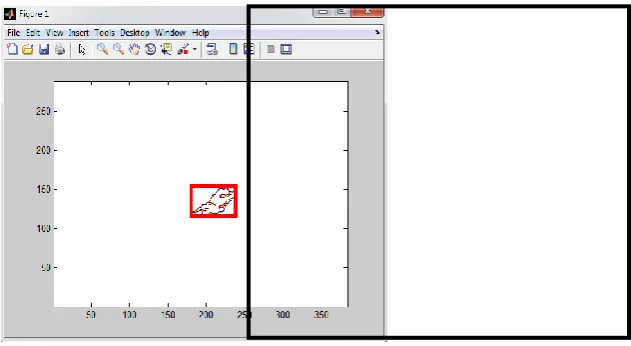
The first step is to provide a video sequence of an activity as an input in the system from the dataset. That video contains a number of continuous frames. After that background subtraction technique is used to separate moving object present inside those frames [2]. But these frames contain some noises which may lead to incorrect background subtraction
.
Fig2.
Shows the background subtraction.Fig 2: Background subtraction [2]
2. Feature extraction
:
A model based approach to extract the features. The extracted foreground that supposed to be a human is segmented into centroid and two leg components for the detection of activity. The features are of two types local and global.The local features are all extracted from minimum bounding box, the extracted local features includes the shape features and motion features extracted from minimum bounding box. Two types of shape feature are extracted from minimum bounding box one is unitary height.
ℎ 𝑡 = 𝐻(𝑡)/𝐻𝑚𝑎𝑥 (1)
Where 𝐻 𝑡 the height of the bounding is box at instantt and 𝐻𝑚𝑎𝑥 is the maximum value of 𝐻(𝑡)among whole activity sequence.
The second is the ratio of height against width.
Fig 3. Minimum bounding box of human body [2].
Another important feature is the global feature which gives the contour coding of the motion energy image as shown in fig 4.
Fig 4. Contour of the moving object in frame [2].
Motion energy image (MEI) and motion history image (MHI) as temporal templates to characterize an action. The MHI is a function of the action duration and dependent on the entire extraction of moving targets in each frames, which is difficult in real scenes.
V. CONCLUSION AND FUTURE WORK
REFERENCES
1. Yanyun Lu, ‘Application of an incremental SVM algorithm for on-line humanrecognition from video surveillance using texture and color features’, Neurocomputing 126 pages 132-140, 2014.
2. HuiminQian, Recognition of human activities using SVM multi-class classifier, Pattern Recognition Letters 31 pages 100-111, 2012.
3. Santosh Kumar Das, Soft Computing Techniques in Various Area ", Department of Computer Science and Engineering, Dr. B. C. Roy Engineering College, Durgapur-713206, W.B. India, pages 59-68, 2013.
4. ShuiwangJi, ‘3D Convolutional Neural Networks for Human Action Recognition’, Arizona State University, Tempe, AZ 85287, USA, 2010. 5. Z.A. Khan, ‘Real Time Human Activity Recognition System based on Radon Transform’, Dept. of Electronics and Radio Engg. Kyung Hee
University,South Korea, IJCA Special Issue on Artificial Intelligence Techniques – NovelApproaches & Practical Applications, 2011. 6. Rudolf Seising, ‘A Very Brief History of Soft Computing European Centre forSoft Computing Edificio de Investigation’, 2013. 7. Mona M. Moussa, ‘An enhanced method for human action recognition ", Journal of Advanced Research (2015) 6, pages 163-169, 2015. 8. D.K. Vishwakarma, ‘Hybrid classifier based human activity recognition using the silhouette and cells, Expert Systems with Applications 42,
6957-6965, 2015.
9. Jalal A.Nasiri, ‘Energy-based model of least squares twin Support Vector Machines for human action recognition’, Signal Processing 104, pages 248-257, 2014.
10. Carlos Serra-Toro, ‘exploring some practical issues of SVM+: Is really privileged information that helps’, Pattern Recognition Letters 42, pages 40-46, 2014.
11. Jayadeva, ‘Twin Support Vector Machines for Pattern Classification’, IEEE transaction on pattern analysis, VOL. 29, NO. 5, MAY 2007. 12. Mathieu Barnachon, SadaBouakaz, BoubakeurBoufama, ErwanGuilLou, ‘Ongoing human action recognition with motion capture’, School of
Computer Science, University of Windsor, Canada N9B 3P4 ACM, Volume 47, pages 238-247, 2014.
13. IliasTheodorakopoulos, ‘Pose-based human action recognition via sparse representation in dissimilarity space ", J. Vis. Commun. Image R. 25, pages 12-23, 2014.
14. Koen Buys, ‘An adaptable system for RGB-D based human body detection and pose estimation’, J. Vis. Commun. Image R. 25, pages 39-52, 2014.
15. Nedeljkovic, ‘Image Classification Based on Fuzzy Logic ", MapSoft Ltd, Zahumska 26 11000 Belgrade, Serbia and Montenegro, vol 34, 2010. 16. AnielloMinutolo, ‘Massimo Esposito, Giuseppe De Pietro Design and validation of a light-weight reasoning system to support remote health monitoring applications’, Engineering Applications of Artificial Intelligence, Volume 41, May 2015, Pages 232-248, ISSN 0952-1976, http://dx.doi.org/10.1016/j.engappai.2015.01.019.
17. Koen Buys, Cedric Cagniart, Anatoly Baksheev, Tinne De Laet, Joris De Schutter, Caroline Pantofaru, ‘An adaptable system for RGB-D based human body detection and pose estimation’, Journal of Visual Communication and ImageRepresentation, Volume 25, Issue 1, January 2014, Pages 39-52, ISSN 1047-3203, http://dx.doi.org/10.1016/j.jvcir.2013.03.011.
18. FerdaOi, Rizwan Chaudhry, GregorijKurillo, Ren Vidal, RuzenaBajcsy, Sequence of the most informative joints (SMIJ): A new representation for human skeletal action recognition, Journal of Visual Communication and Image Representation, Volume 25, Issue 1, January 2014, Pages 24-38, ISSN 1047-3203, http://dx.doi.org/10.1016/j.jvcir.2013.04.007.
19. Akila.K, Chitrakala, A Comparative Analysis of Various Representations ofHuman Action Recognition in a Video, International Journal of Innovative Research in Computer and Communication Engineering, Vol. 2, Issue 1, January2014 ISSN 2320-9801, pages 2829-2837.
20. Jay Prakash Gupta, Pushkar Dixit, Nishant Singh, Vijay BhaskarAemwal, ‘Analysis of Gait Pattern to Recognize the Human Activities, InternationalJournal of Artificial Intelligence and Interactive Multimedia’, Vol. 2, pages 7-16,2014.
21. Peter Varady, ZoltanBenyo, and BalazsBenyo, ‘An Open Architecture Patient Monitoring System Using Standard Technologies’, IEEE transactions On information technology in biomedicine, vol. 6, no. 1, mar 2002.
22. PravinPawar, Val Jones, Bert-Jan, van Beijnum, HermieHermens, ‘A framework for the comparison of mobile patient monitoring systems’, Journal ofBiomedical Informatics, vol. 45 (2012), pages 544556.
23. VikramadityaJakkula,‘ Tutorial on Support Vector Machine’, School of EECS,Washington State University, pages 1-11, 2003. 24. Dell:Naive Bayes Classifier, http://www.statsoft.com/textbook/naive Bayes classifier.
25. Jarod T.Giger, Natalie D. Pope, Bruce Vogt, ‘Remote patient monitoring acceptance trends among older adults residing in a frontier state, Computers in Human Behavior’, vol.44, pages 174-182, 2014.
26. Shih-pi Ku, Arthur Gretton, Jakob Macke, ‘Comparison of pattern recognition methods in classifying high-resolution bold signals obtained at high magnetic field in monkeys’, Magnetic Resonance Imaging, vol. 26, pages 1007-1014, 2008.
27. Jia-Tao Zhang, Ah-Chung Tsoi, Sio-Long Lo, ‘Scale Invariant Feature TransformFlow Trajectory Approach with Applications to Human Action Recognition’,International Joint Conference on Neural Networks, pages 1197-1204, July 11, 2014.
28. Tia Gao, Dan Greenspan, Matt Welsh, ‘Improving patient monitoring and tracking in emergency response’, The Johns Hopkins University Applied Physics Laboratory, 2004.
BIOGRAPHY
Rupesh Vishnupant Jagtap is a Post graduate student in the Computer Engineering Department, D.Y. Patil College of
![Fig 1. Support vector machine[10]](https://thumb-us.123doks.com/thumbv2/123dok_us/1467400.1179788/4.595.174.418.171.357/fig-support-vector-machine.webp)
![Fig 2: Background subtraction [2]](https://thumb-us.123doks.com/thumbv2/123dok_us/1467400.1179788/5.595.150.457.246.467/fig-background-subtraction.webp)