
Hadronic structure of the photon at small
x
in holographic QCD
Akira Watanabe1,2,and Hsiang-nan Li2,
1Department of Physics and Center for High Energy Physics, Chung-Yuan Christian University, Chung-Li
32023, Taiwan, Republic of China
2Institute of Physics, Academia Sinica, Taipei 11529, Taiwan, Republic of China
Abstract. We present our analysis on the photon structure functions at small Bjorken variablexin the framework of the holographic QCD. In the kinematic region, a photon can fluctuate into vector mesons and behaves like a hadron rather than a pointlike particle. Assuming the Pomeron exchange dominance, the dominant hadronic contribution to the structure functions is computed by convoluting the probe and target photon density distri-butions obtained from the wave functions of the U(1) vector field in the five-dimensional AdS space and the Brower-Polchinski-Strassler-Tan Pomeron exchange kernel. Our cal-culations are in agreement with both the experimental data from OPAL collaboration at LEP and those calculated from the parton distribution functions of the photon proposed by Glück, Reya, and Schienbein. The predictions presented here will be tested at future linear colliders, such as the planned International Linear Collider.
1 Introduction
A solid understanding of the nature of a photon has been one of the most longstanding problems in high energy physics for several decades. A photon can fluctuate into quark-antiquark pairs or vector mesons in high energy scattering processes, and this feature provides us with an opportunity to in-vestigate its partonic structure. Experimentally, it can be studied via electron-photon deep inelastic scattering (DIS), and historically the data of photon structure functions measured at LEP have signif-icantly deepened our knowledge of the energetic photon. If the scattering is hard, perturbative QCD approaches are basically applicable because the pointlike component of the photon gives a dominant contribution, and a lot of studies have successfully been done so far, which strongly support the pre-dictive power of them in high energy QCD processes. However, in the small Bjorkenxregion, the situation becomes quite different, because the photon behaves like a hadron rather than a pointlike particle. Whenx < 0.1, we cannot neglect the hadronic contribution, and it becomes dominant at
x < 0.01. Since the photon consists of so many gluons with tiny momenta in this kinematic re-gion, approaches motivated by effective models are practically the only way to investigate its nature. Here we present our analysis on the photon structure functions at smallxin the framework of the holographic QCD, one of the effective models of QCD, based on our recent paper [1].
The AdS/CFT correspondence (more generally, gauge/string correspondence) has broadly gath-ered theoretical interests due to its strong predictive power for physical quantities in strongly coupled
(hadrons)
}
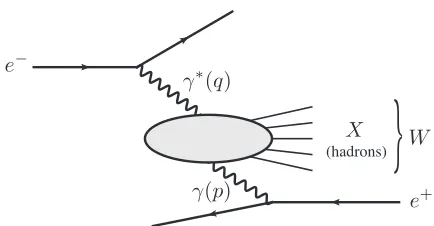
Figure 1.Deeply inelastic electron-photon scattering process.
systems, while the nontrivial correspondence itself has not yet been mathematically proved. In par-ticular, its application to QCD processes is called holographic QCD, and it has been enthusiastically studied for over a decade. As for DIS, after Polchinski and Strassler first performed the string cal-culations and discussed the Callan-Gross relation for the structure functions [2], a lot of elaborated studies have been done so far. Brower, Polchinski, Strassler, and Tan (BPST) focused on the smallx
region, and proposed the Pomeron exchange kernel [3], which gives a contribution of the Pomeron ex-change to the total cross section. Utilizing the BPST kernel, various phenomenological investigations have been done [1, 4–6], and their successes support further applications for high energy scattering processes in the kinematic region, where the Pomeron exchange gives a dominant contribution.
In this study, assuming the Pomeron dominance, we express the quasi-real photon structure func-tions by convoluting the BPST Pomeron exchange kernel and density distribufunc-tions of the probe and target photons in the five-dimensional AdS space. In contrast to the case of the nucleon structure functions, both the probe and target are pointlike particles, whose density distributions are expressed by the wave functions of the 5D U(1) vector field. Also, two of three adjustable parameters of the model have been fixed in previous studies of the nucleon structure functions, and the remaining one is an overall factor which controls the magnitude of the structure functions. Therefore we can test the predictive power of the model involving the BPST kernel through this study.
It will be demonstrated that our predictions for the photon structure functions are in agreement with the experimental data measured by OPAL collaboration at LEP [7], although available data are limited in the smallxregion. We will show that our calculations are also consistent with those cal-culated from the parton distribution functions (PDFs) of the photon proposed by Glück, Reya, and Schienbein [8], and discuss differences between the results of this work and previous studies of the nucleon structure functions. The predictions particularly for the very lowxregion will be tested at future linear colliders, e.g., the planned International Linear Collider.
2 Model setup
The electron-photon DIS is described in Fig. 1, whereq and pare the four-momenta of the probe and target photons, respectively, andWdenotes the invariant mass of the hadronic final stateX. The differential cross section of this scattering process is given by
d2σ eγ→eX
dxdQ2 =
2πα2
xQ4
1+(1−y)2Fγ2x,Q2−y2Fγ L
whereαis the fine structure constant, andy is the inelasticity. The Bjorken scaling variable xis written by
x= Q
2
Q2+W2+P2, (2)
withQ2=−q2andP2=−p2. In this study, we focus on the kinematic region, whereW2Q2P2,
so that the Bjorken variable can be approximated asx≈Q2/W2.
With the BPST Pomeron exchange kernel, the two structure functions,Fγ2(x,Q2) andF
γ
L(x,Q2),
are expressed as [1, 9, 10]
Fγi(x,Q2)=αg
2 0ρ3
/2Q2
32π5/2
dzdzP(13i)(z,Q 2)
P24(z,P2)(zz)Im[χc(W2,z,z)], (3)
wherei=2,L, andg20andρare adjustable parameters which govern the magnitude and the energy de-pendence of the structure functions, respectively.P13andP24are density distributions of the incident
and target particles, respectively, in the five-dimensional AdS space. To specify them, we consider the wave functions of the massless 5D U(1) vector field, which satisfies the Maxwell equation in the background spacetime and couple to leptons at the ultraviolet (UV) boundary [2]. We utilize it for the probe photon density distribution, thenP(13i)(z,Q2) can be expressed as
P(2)13(z,Q 2)=
Q2zK02(Qz)+K21(Qz)
, (4)
P(13L)(z,Q 2)=
Q2zK02(Qz). (5)
The first (second) term on the right-hand side of Eq. (4) represents the longitudinal (transverse) com-ponent of the wave function, andK0(Qz) andK1(Qz) are the modified Bessel functions of the second
kind. In this study, we concentrate on the unpolarized DIS process, soP24(z,P2) takes the same
functional form asP(2)13(z,Q2). As to the four-momentum squared of the target photon, we focus on
the real photon case, butP2cannot be exactly zero in practice. Events withP2∼ O(0.01) GeV2have
been measured [11, 12], so we assume a quasi-real photon withP2=0.01 GeV2as the target particle
here [8].
The imaginary part of the conformal kernel was derived within the conformal field theory, and can be expressed as [3, 10]
Im[χc(W2,z,z)]=e(1−ρ)τe−[(log
2z/z)/ρτ]
/√τ, (6)
whereτis the conformal invariant defined byτ=log(ρzzW2/2). In the considered kinematic region,
wherex≤10−2andQ2≤10 GeV2, nonperturbative hadronic contribution becomes important, so we
also employ the modified kernel, whose imaginary part is given by [3, 4]
Im[χmod(W2,z,z)]≡Im[χc(W2,z,z)]+F(z,z, τ)Im[χc(W2,z,z20/z)], (7)
F(z,z, τ)=1−2√ρπτeη2erfc(η), (8)
η= ⎛ ⎜⎜⎜⎜⎝−logzz
z2 0
+ρτ ⎞
⎟⎟⎟⎟⎠/√ρτ. (9)
The second term on the right-hand side of Eq. (7) mimics the confinement effect in QCD, and sup-presses the structure functions in the smallxregion at fixedQ2. The strength of this effect is controlled
by the additional parameterz0, whose inverse is of order of the QCD scaleΛQCD, and its smaller value
0 0.2 0.4 0.6 0.8
Q2 = 1.9 GeV2 Q2 = 3.7 GeV2
0 0.5 1
Q2 = 8.9 GeV2
10-4 10-3 10-2
Q2 = 10.7 GeV2
0 0.5 1 1.5
10-5 10-4 10-3 10-2
Q2 = 17.8 GeV2 x
x F2
γ (x,Q
2 )/
α
OPAL data conformal kernel
modified kernel (z0 = 4.25 GeV-1) modified kernel (z0 = 6 GeV-1) GRV NLO
GRS NLO
Figure 2.Fγ2(x,Q
2) as a function ofxfor variousQ2. In each panel, experimental data from the OPAL
collab-oration at LEP [7] are denoted with error bars. The solid, dashed, and dotted curves represent our calculations. The dash-dotted and dashed double-dotted curves are from PDF sets, GRV [13] and GRS [8], respectively.
3 Numerical results
To evaluate the structure functions, we take the parameter sets obtained in Ref. [6]. In the previous studies on nucleon structure functions, since the target nucleon is an on-shell particle, the normalizable condition, dzP24(z)=1, is satisfied. However, the target quasi-real photon is a non-normalizable
mode, so we have to newly fix the overall factorg20 with experimental data. We use 9 data points withx ≤0.025 from the OPAL collaboration at LEP [7], and obtaing20 =17.51 and 49.01 for the conformal and modified kernel cases, respectively. When we perform the integration in Eq. (3), we need to avoid collecting unphysical contributions from the region, where the conformal invariantτ takes negative values. To overcome this difficulty, we replacezandzin the definition ofτwith their average values defined by
¯
z≡
dzz2P(i) 13
z,Q2
dzzP(13i)
z,Q2, z¯
≡
dzz2P24
z,P2
dzzP24
z,P2, (10)
respectively.
We display in Fig. 2 our predictions of the photon structure functionF2with the conformal and
those calculated from the well-known PDF sets, GRV [13] and GRS [8], at next-to-leading-order accuracy. Both GRV and GRS results include the charm-quark contribution in the kinematic region, whereW ≥ 2mc. The hadronic contributions in the PDFs by GRV and GRS are parameterized by
using the pion PDFs based on the vector meson dominance and the assumed similarity between the vector meson and the pion. For the modified kernel results, we show two versions with different values ofz0,z0 =4.25 GeV−1and 6 GeV−1, and the former value was obtained in Ref. [6]. One can see in
Fig. 2 that all the curves are in agreement with the OPAL data. In the smallerx<10−3region, thex
dependence of the GRV results is obviously stronger than that of others. The difference between GRV and GRS results was discussed in Ref. [14]. Also in the region,xdependence of the conformal kernel results is weakest forQ2 ≥ 3.7 GeV2. This can be understood via the results ofQ2 dependencies
of the Pomeron intercept with the two kernels, which were shown in Refs. [4–6]. In those results, it is seen that theQ2dependence of the conformal kernel results is obviously weaker than that of the
modified kernel results. At fixedx, the suppression effect by the second term on the right-hand side of Eq. (7) becomes weaker withQ2.
AtQ2 ≥ 8.9 GeV2, the conformal kernel results are more consistent with the experimental data
than those of the modified kernel with z0 = 4.25 GeV−1, although it is known that the modified
kernel can reproduce the nucleon structure functionF2 better compared to the conformal kernel [4–
6]. We find that the modified kernel results can be improved by considering the relationship between the model parameterz0 and the number of active quark flavors f. In the nucleon case, its density
distribution is localized in the infrared (IR) region, and there is almost no component near the UV boundary. Due to this, heavy quark contributions are suppressed, and we get f = 4. On the other hand, the density distribution of the quasi-real photon spreads broadly from the UV to IR region, which leads to the participation of all flavors, and we getf =6. Since the QCD scaleΛQCDdecreases
with f, the parameterz0 ∼1/ΛQCDfor the quasi-real photon DIS should be larger than that for the
nucleon DIS. We choosez0 =6 GeV−1andg20 =21.60, and show the resultingFγ2(x,Q2) in Fig. 2.
The results are perfectly consistent with the data within errors, implying that one of the fundamental QCD features is realized in the present model setup.
Next we display in Fig. 3 (a) the ratioRγ/N = Fγ2(x,Q 2)/[αFN
2(x,Q
2)] to see the details of
def-ferences between our and GRS results. ForFN 2(x,Q
2), we take the results in Ref. [6], which are in
good agreement with the HERA data. Both curves from our predictions are nearly linear and their slopes are small, which means thexdependencies of the nucleon and photon structure functionsF2
are similar. This may imply the universal feature of the BPST Pomeron exchange kernel. Our and GRS results are close to each other atQ2 =10 GeV2, because both results are in agreement with the
data at this scale as shown in Fig. 2. However, atQ2 =1 GeV2, the difference between two curves
is much larger, and this difference can be seen in Fig. 2 also. Particularly aroundx∼10−2, the GRS
results are nearly constant, while ours show the obviousxdependence.
Finally, we investigate the longitudinal-to-transverse ratio of the structure functions defined as
RL/T = FL(x,Q2)/FT(x,Q2), whereFT = F2−FL, in Fig. 3 (b). The photon results are compared
with the nucleon results, which are taken from Ref. [6]. It is seen that the photon results are almost independent ofx, but theQ2dependence is substantial. Similar behaviors are observed for the nucleon
results, which may imply universal features of the BPST Pomeron.
4 Conclusion
In this study, we have investigated the electron-photon DIS, and calculated the structure functions
F2 andFLof the quasi-real photon in the kinematic region with the small Bjorken variablexby the
0.2 0.3 0.4 0.5 0.6 0.7 0.8 0.9 1
10-5 10-4 10-3 10-2
this work (Q2 = 10 GeV2) GRS NLO (Q2 = 10 GeV2) this work (Q2 = 1 GeV2) GRS NLO (Q2 = 1 GeV2)
x
Rγ
/N
0.2 0.3 0.4 0.5 0.6 0.7 0.8 0.9
10-5 10-4 10-3 10-2
nucleon (Q2 = 10 GeV2) nucleon (Q2 = 1 GeV2) photon (Q2 = 10 GeV2) photon (Q2 = 1 GeV2)
x
RL/T
(a) (b)
Figure 3. Ratios (a)Rγ/N = F
γ
2(x,Q 2)/[αFN
2(x,Q
2)] and (b)R
L/T =FL(x,Q2)/FT(x,Q2) as functions ofxfor
Q2=1 and 10 GeV2. The GRS results are calculated from the PDF set [8].
Fiγ(x,Q2) are obtained by employing
the modified kernel withz0 =4.25 GeV−1. The nucleon results are taken from Ref. [6], and common to all the
curves in the panel (a).
Pomeron exchange kernel and the density distributions of the probe and target photons in the five-dimensional AdS space, which can be described with the wave functions of the 5D U(1) vector field. Our predictions are in agreement with the OPAL data, which supports the predictive power of this model. We have also compared our results with those calculated from the well-known PDF sets, GRV and GRS, and found that ours are consistent with those from the latter one. Since the hadronic compo-nent of the GRS PDF set is expressed with the pion PDFs, the consistency may imply the realization of the vector meson dominance in the present model setup. Currently available experimental data at smallxare quite limited, but future linear colliders will enable us to further investigate the nature of a photon in the nonperturbative region.
References
[1] A. Watanabe, H.n. Li, Phys. Lett.B751, 321 (2015). [2] J. Polchinski, M.J. Strassler, JHEP0305, 012 (2003).
[3] R.C. Brower, J. Polchinski, M.J. Strassler, C.I. Tan, JHEP0712, 005 (2007). [4] R.C. Brower, M. Djuric, I. Sarcevic, C.I. Tan, JHEP1011, 051 (2010). [5] A. Watanabe, K. Suzuki, Phys.Rev.D86, 035011 (2012).
[6] A. Watanabe, K. Suzuki, Phys. Rev.D89, 115015 (2014). [7] G. Abbiendi et al., Eur. Phys. J.C18, 15 (2000).
[8] M. Gluck, E. Reya, I. Schienbein, Phys. Rev.D60, 054019 (1999). [9] R.C. Brower, M.J. Strassler, C.I. Tan, JHEP0903, 050 (2009). [10] R.C. Brower, M.J. Strassler, C.I. Tan, JHEP0903, 092 (2009). [11] R. Nisius, Phys. Rept.332, 165 (2000).
[12] M. Krawczyk, A. Zembrzuski, M. Staszel, Phys. Rept.345, 265 (2001). [13] M. Gluck, E. Reya, A. Vogt, Phys. Rev.D46, 1973 (1992).
![Figure 2. Foration at LEP [7] are denoted with error bars. The solid, dashed, and dotted curves represent our calculations.γ2(x, Q2) as a function of x for various Q2](https://thumb-us.123doks.com/thumbv2/123dok_us/8153152.1359770/4.482.73.419.75.366/figure-foration-denoted-dashed-represent-calculations-function-various.webp)
![Figure 3. Ratios (a)the modified kernel with Rγ/N = Fγ2(x, Q2)/[αFN2 (x, Q2)] and (b) RL/T = FL(x, Q2)/FT(x, Q2) as functions of x forQ2 = 1 and 10 GeV2](https://thumb-us.123doks.com/thumbv2/123dok_us/8153152.1359770/6.482.55.432.79.232/figure-ratios-modied-kernel-rg-fg-functions-gev.webp)
