Teachers’ perceptions of changes to teaching practice
and the influence of professional development:
Experienced EFL teachers in South Korea
BY
JEONG HYUN CHO
A thesis
submitted to the Victoria University of Wellington in fulfilment of the requirements for the degree of
Master of Education
Victoria University of Wellington 2014
Abstract
This multiple-case study investigated experienced English-as-a-foreign-language (EFL) teachers’ perceptions of changes to teaching practice as a result of professional development (PD) in South Korea. The study used one-on-one semi-structured interviews as the primary data source to capture teachers’ views on changes to their practice and the impact of their PD experiences.
The study drew upon cultural historical activity theory as a theoretical framework and the literature on PD and teacher change to understand the relationship between PD and teacher change, and the influences on this relationship.
This study found that various aspects of the teachers’ context – the English education
curriculum, teacher culture, the school environment, and education policy – and the complex interrelationship among these factors led these teachers to develop a passive attitude towards PD learning and implementation. So, despite engaging in diverse PD experiences over their career, they rarely considered implementing changes within their teaching practice.
This study revealed these experienced EFL teachers’ overarching concern about their levels of English proficiency. It showed that they were inclined to value newly qualified teachers’ capability over their own long teaching experience. They felt isolated within a stagnant teacher culture where they perceived that there was limited support for professional development from either school or education policy. Finally, they felt caught between the conflicting demands of the English education curriculum and classroom teaching.
These experienced EFL teachers might be encouraged to develop a more positive attitude if their expertise and capacity were acknowledged as valuable. This would require an
investment of time and effort to allow them to prepare for and contribute to PD learning and implementation. Orchestrated efforts from policymakers, school administrators, and teachers could help bring about substantial changes in experienced teachers’ teaching practice and enable them to share their expertise with other educators.
Acknowledgements
This journey could not be successful without great people who have supported me. I wish to thank the teachers who participated in this project and shared their stories.
I wish to thank my supervisors; Anita Mortlock who gave me precious insights to start this journey smoothly, Sue Cherrington who provided the warmest support and helped me plan ahead, and Margaret Gleeson who encouraged me to have a positive spirit to go forward with thoughtful guidance despite the constraints of time and distance. I highly respect your
experience and expertise and appreciate your emotional support.
To my beloved husband, Jeongbin Ok, thank you for being always with me, inspiring me to seek for what I can do best, and believing in me to complete this thesis. I also thank my family in South Korea for cheering me up and encouraging me to keep going.
I am thankful to Kaye Stannard for proofreading my thesis and providing useful suggestions.
Finally, I am grateful for the financial support through a research grant (No. 203949) from the Faculty of Grants and Leave Committee (FGLC) and a Victoria Master’s (by thesis) Scholarship from the University Scholarships Committee (URC).
Table of Contents
Abstract...iii
Acknowledgements...v
Table of Contents...vi
Chapter 1: Introduction 1.1 Introduction...1
1.2 Rationale for the study...2
1.3 Study aims and research questions...3
1.4 My position as researcher...4
1.5 The context of teacher PD in South Korea...4
1.5.1 General PD context...4
1.5.2 PD context for EFL teachers...6
1.6 Structure of this thesis...7
1.7 Summary...8
Chapter 2: Literature review 2.1 Introduction...9
2.2 Professional development...9
2.2.1 A paradigm shift in teacher PD...9
2.2.2 Characteristics of effective PD...10
2.3 Changes in teachers and PD...13
2.4 Contextual factors and PD...15
2.5 Sustainability of teachers’ changes and PD...17
2.6 Experienced teachers’ changes and PD...18
2.7 EFL teachers’ changes and PD...20
2.8 Cultural historical activity theory (CHAT)...21
2.9 Summary...24
Chapter 3: Methodology 3.1 Introduction...27
3.3 Case study...27 3.4 Data collection...28 3.4.1 Participants...28 3.4.2 Interviews...29 3.4.3 Documents...30 3.5 Trustworthiness...31 3.6 Ethical considerations...31 3.7 Data analysis...32 3.8 Summary...33 Chapter 4: Findings 4.1 Introduction...35
4.2 Findings from individual cases...35
4.2.1 Teacher Shin...35
4.2.2 Teacher Kang...40
4.2.3 Teacher Choi...44
4.2.4 Teacher Seo...49
4.2.5 Teacher Han...52
4.3 Findings from across cases...57
4.3.1 Haunted by perfect English...58
4.3.2 Valuing newly qualified teachers...59
4.3.3 Isolated and stagnant teacher culture...61
4.3.4 Tension between PD goals and classroom reality...64
4.3.5 Lack of support from policy and school...65
4.4 Summary...69
Chapter 5: Discussion and Implications 5.1 Introduction...71
5.2 Cultural historical activity theory...71
5.2.1 Haunted by perfect English...71
5.2.2 Valuing newly qualified teachers...74
5.2.3 Isolated and stagnant teacher culture...77
5.2.5 Nurtured passivity...84
5.3 Limitations...87
5.4 Implications...88
5.4.1 Changes at a system level...88
5.4.2 Implications for PD design...88
5.4.3 Implications for policy and school...89
5.4.4 Implications for experienced EFL teachers...91
5.5 Areas for future research...92
5.6 Summary...92
References...94
List of Appendices Appendix A: Semi-structured interview questions...110
Appendix B: Information sheet for teachers...111
Appendix C: Consent form for teachers...113
Appendix D: Research schedule...115
List of Tables Table 1: Participants profile...29
Table 2: List of documents...31
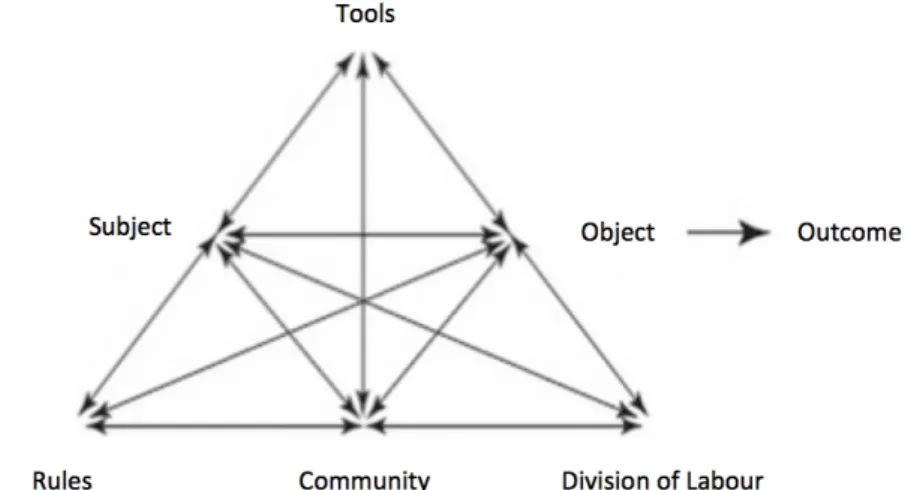
List of Figures Figure 1: The structure of activity system (Engeström, 1987, p. 78)...23
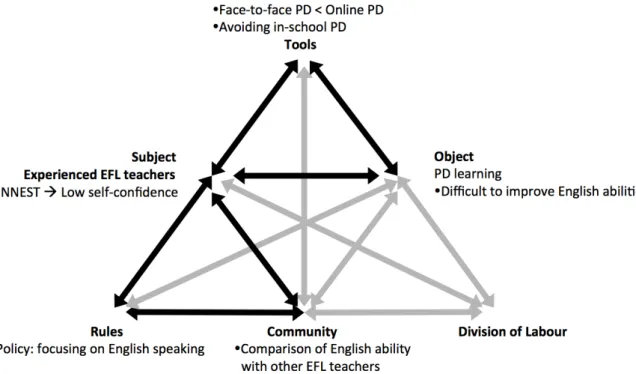
Figure 2: Haunted by perfect English in the activity system of experienced EFL teachers’ PD experience...72
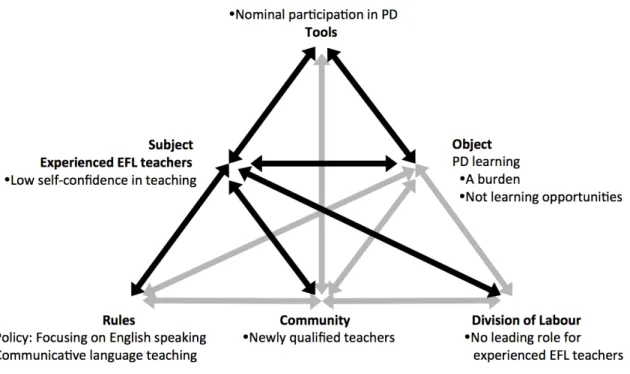
Figure 3: Valuing newly qualified teachers in the activity system of experienced EFL teachers’ PD experience...75
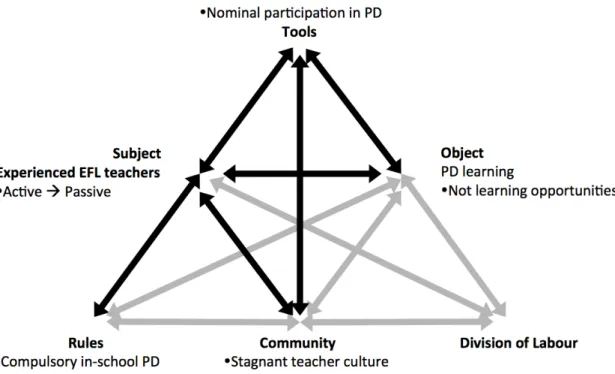
Figure 4: Isolated and stagnant teacher culture in the activity system of experienced EFL teachers PD experience...77
Figure 5: Tension from conflicting goals and lack of support from policy and school in the activity system of experienced EFL teachers’ PD experience...81
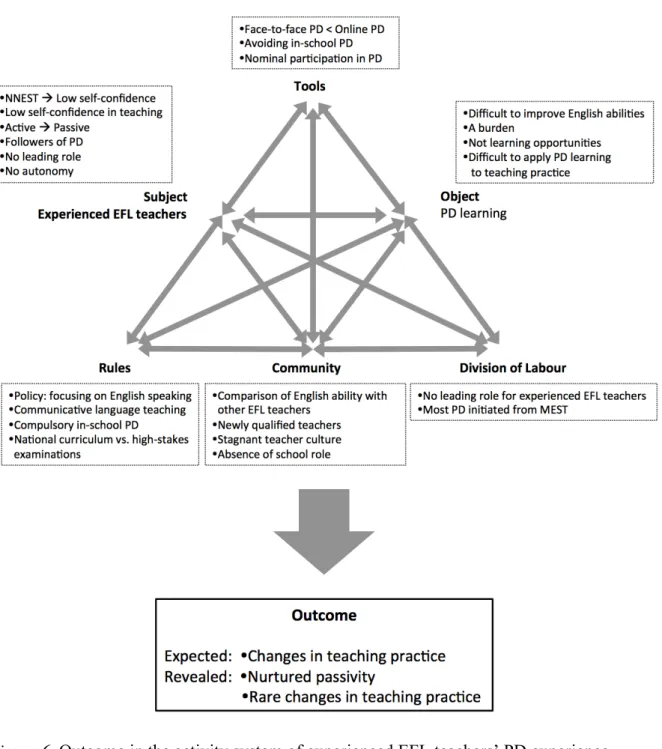
Figure 6: Outcome in the activity system of experienced EFL teachers’ PD experience...85
Chapter 1
Introduction
1.1 Introduction
There is a consensus in the literature that teachers are the most important single factor affecting student learning (Organisation for Economic Co-operation and Development
(OECD), 2005). Based on the importance of the teachers’ role, teacher professional development has been increasingly studied. For language teachers, both language and pedagogy are crucial professional development (PD) areas (Ur, 1990). In addition, for
students who learn a language which is not used much outside of the classroom, teachers’ use of language in the classroom is considered to be a significant way of providing language input (Nunan, 1991). A further reason why PD for English teachers is important in Asian countries is that English is used for professional purposes to gain higher social status in society. This professional driver is an added push for students to learn English for academic purposes (Tarone, 2005). South Korea is one of those countries (Ha & Min, 2008) where ‘English fever’ is quite noticeable (Park, 2009). This heightened educational and societal attention has brought about an increased demand for high quality English teachers. This has placed greater importance on PD for English-as-a-Foreign-Language (EFL) teachers.
Diverse approaches to PD reflect the efforts of the Ministry of Education, Science, and Technology (MEST) in South Korea to improve the quality of in-service teachers and MEST hopes to see an improvement in students’ learning from changes made to teaching approaches (MEST, 2013). While many studies investigate PD effectiveness, studies focussing on teachers’ changes through PD have traditionally not received much attention.
However, a thorough understanding of teacher change is important. It may not be possible to improve teachers’ practice without understanding what changes teachers have made to their practice as a result of PD and what they think about these changes. When teachers undertake PD, they are both learners of the content delivered in the PD programme and teaching practitioners who are considering how to apply their PD learning in their own classroom at the same time (Borko, 2004; Darling-Hammond & Bransford, 2005). According to Timperley, Wilson, Barrar, and Fung (2007), teachers’ changes depend on their black box,
a concept referring to teachers’ mental processes when deciding whether to apply their learning from PD to their teaching practices. The process of teachers’ implementing changes to their practices as a result of their PD learning is not simple.
PD that is considered effective in one location is not guaranteed to be a success in other places without understanding teachers’ contexts (Guskey, 2003). PD activities in countries where English is a foreign language are often based on current trends in English language teaching and affected by western-based English language education theories. The focus of research is mostly on mainstream teachers who teach English to students who have English as their first language, or teachers of English-as-a-Second-Language (ESL), who teach their dominant language to students in English-speaking countries (Karimi, 2011). However, in Asia, most EFL teachers are non-native speakers of English who teach English as a foreign language in non-English-speaking countries. Hence the approach to EFL teacher PD may be different from the approach taken with English mainstream teachers. Even among Asian countries with a similar background of EFL teaching, teachers’ policy, school, and classroom contexts are different from each other.
Therefore, given that teacher change through PD is related both to teachers’ inner processes and to external factors around teachers such as school environment and policy, investigating teacher change can provide crucial evidence to design more effective PD. It would be helpful to learn how teachers’ teaching practice is influenced by PD and to use this information as a foundation for future PD design. However, limited research on teacher change and PD from the viewpoint of EFL teachers has been conducted in South Korea.
1.2 Rationale for the study
While there is prolific research on teacher change and also research on PD (Borko, Jacobs, & Koellner, 2010; Desimone, 2009; Fullan, 2007), when it comes to teachers’ changes in relation to PD, researchers have paid more attention to the effectiveness of PD programmes rather than to understanding teachers’ changes. That is, teacher change in the studies of the effectiveness of PD programmes have been limited to a measure for judging the PD effectiveness rather than a main focus to provide a deeper level of understanding of changes teachers made (Ross & Bruce, 2007; Stein & Wang, 1998). To understand teachers’ changes arising from their involvement in PD, it is necessary to listen to teachers’ own voices – how they think and feel. However, current studies rarely represent teachers’ perspectives. Moreover, research on changes in the practice of EFL teachers in secondary schools is also scarce in South Korea.
Another facet of the effectiveness of PD, its sustainability, has also received minimal attention (Fullan, 2007; Guskey, 2002; Zehetmeier, 2010). Teachers’ changes have been investigated over short periods of time with most studies focussed on changes made immediately after PD such as a comparative research conducted in Canada on teachers’ reported self-efficacy after taking PD (Ross & Bruce, 2007). However, direct changes made as a result of PD can be affected by internal and external factors surrounding teachers. Therefore changes made right after PD may not be sustained in the classroom. Nevertheless, little research has been undertaken on how teachers’ changes have been sustained a few years after PD. In addition, most research dealing with teachers’ changes investigates one particular PD programme (Cheung, 2013; Saraniero & Goldberg, 2011). This overlooks the fact that teachers undertake several types of PD activities over the course of their career. Therefore teachers’ own articulation of the effect of a whole range of PD programmes in their practice is worth examining.
Experienced teachers have not been the focus of much research because in-service teachers in South Korea are regarded as a homogenous group. In the case of Seoul, most PD programmes are open to any teachers who volunteer to participate. The high level of job stability in the teaching profession in South Korea encourages teachers to remain in the profession longer than teachers in other countries (Seoul Metropolitan Government, 2013). Moreover, teachers with long experience are often overlooked as they tend to be regarded as expert teachers. However, as years of experience is just one element of expertise, changes within the experienced teacher group need to be specifically examined. Therefore
understanding experienced South Korean teachers’ professional changes would help to shape PD appropriate to their needs.
1.3 Study aims and research questions
This study investigated experienced South Korean EFL teachers’ perceptions of how their teaching practice has changed over their career, and explored what kind of relationship exists between PD and their perceived changes. This study identifies factors reported to influence these teachers’ changes in practice. The research question and sub-questions are presented below:
How do experienced EFL teachers perceive changes to their teaching practices as a result of PD?
2. What changes do they attribute to PD?
3. What aspects of PD do they report as influencing changes to their practices? 4. What changes do they report sustaining over time?
1.4 My position as researcher
The researcher becomes a tool for the study in qualitative research (Harry, 1996). This means that what researchers think and believe might influence their study. Since it is not possible to exclude my subjectivity (Peshkin, 1988), I, as the researcher of this study fully acknowledge the fact that my experience as an EFL teacher in public schools in South Korea might affect this study and this is also included as a potential limitation in this study.
1.5 The context of teacher PD in South Korea
This study focuses on experienced EFL teachers in South Korea. Therefore it is necessary to understand PD contexts in South Korea in general and for EFL teachers in particular.
There are two levels of certification for public secondary school teachers: certification of secondary school teachers at level 2 and at level 1 (Coolahan, Santiago, Phair, &
Ninomiya, 2004). Secondary teachers start their teaching career with the level 2 certification after graduating from teachers’ college and passing the national teacher examination. After an average of five years of teaching experience, teachers can attend a PD programme to attain the level 1 certification. This higher level of certification contributes to a higher salary tier. However, there is no relationship between achieving the level 1 certification and job security since public school teachers’ positions are guaranteed by law until the age of 62. Although teacher retention in South Korea is relatively high because of this job security, there is no higher PD certification after teachers reach the level 1 certification.
1.5.1 General PD context
From the mid-1990s in-service teacher education in South Korea has been viewed as a way of propagating a changed national curriculum and new educational policies, and as an opportunity for teachers to improve their professionalism (Coolahan et al., 2004). MEST (2013) has supported a variety of PD activities1 to enhance teachers’ professionalism and thus to strengthen schools’ global competitiveness. MEST diverses structure and management of
PD to regional educational authorities such as the Seoul Metropolitan Office of Education (SMOE).
The most common PD activities available to teachers in South Korea are institute-centred. This kind of PD is usually done at venues outside of school such as regional institutes of teacher training under the direct control of the regional offices of education, universities entrusted with teacher training, or authorised private institutes for teacher training. Some face-to-face PD courses operate in schools for the convenience of teachers in schools far from the regional teacher training institutes. Lecture-style workshops and courses are the most popular PD structure and PD programmes incorporate discussion or presentation components from participating teachers. Online PD activities have been designed to free teachers from the constraints of time and place, and to encourage voluntary participation in PD. Online PD courses are usually lecture-style with little interaction required between the instructor and participating teachers or between participating teachers.
The second type is in-school PD. Although in-school PD like study groups can be organised informally, in-school PD activities initiated by regional offices of education. In case of SMOE, open-class and peer observation are two representative in-school PD activities (SMOE, 2009).
Both open-class and peer observation PD activities include classroom observation of other teachers’ teaching practice. The difference is the purpose of each activity; the focus of open-class is on teachers’ learning and improvement as a professional by conducting or observing a teaching demonstration (MEST, 2010). Open-class is described as the
demonstration of teaching practice to other teachers and the purpose is to give teachers an opportunity to present their own teaching practice as an exemplary lesson. Open-class can be conducted at several levels: at an in-school level which is open for teachers in the same school; at district level for teachers in nearby schools; and at the regional office of education level for teachers from nearby schools and for facilitators from the regional office of
education. While all teachers are required to conduct an in-school level open-class once a year, one teacher from each subject in each school is expected to conduct an open-class at the regional office of education level because open-class at the regional office of education level is regarded as an important event by the school. A teacher is chosen after discussion amongst teachers from the same subject area – it can be either a voluntary decision or a decision made after pressure from colleagues.
In contrast, peer observation is a formal classroom observation to assess a teacher’s accountability as a teaching practitioner. This evaluation from colleagues is required as part
of the national teacher evaluation. In addition, informal classroom observations are encouraged by SMOE as a way of peer learning. Regular meetings among teachers in the same grade or in the same subject are also included in this category.
Teachers can accumulate credits by taking PD courses and programmes (normally 1 credit per a 15-hour PD course). These credits are reported as part of the national teacher evaluation and school evaluation, which closely link to the incentive systems of performance-based pay for teachers and school-performance-based merit pay (Ban, 2012; MEST, 2008a). To be ranked in a higher level of incentive systems, teachers are under pressure to take more PD than the required hours set by each regional office of education (Lim, 2013). In the case of SMOE, EFL teachers are recommended to take 60 hours of PD per year, and 30 hours for all other teachers (MEST, 2006). In contrast, participation in in-school PD activities does not accrue PD credits. With regard to content, teachers can take PD courses in their subject area such as
English skill building and English teaching in the case of EFL teachers, or on general professional topics such as student discipline and counselling, or areas of personal interests such as music or art. Recently technology-related courses for teaching have been added based on increased attention to the use of information and communication technology (ICT) as educational tools.
The last type is PD in which teachers participate at their own discretion, such as pursuing a higher degree or participating in conferences. Teachers can also organise an informal study group within or outside of their schools and this kind of PD activity does not accrue PD credits.
As MEST has recently emphasised that PD should be closely linked to teachers’ classroom practice, two PD initatives, teaching consulting and master teacher, have been newly introduced. Individual teachers can request a consultation with a teaching consulting group, organised by the regional office of education. The master teacher initiative is
considered as mentoring, but as a newly adopted initiative, the numbers of qualified master teachers are limited. Both PD activities are intended to help individual teachers by providing advice and working with them to find possible solutions to current issues in the classroom.
1.5.2 PD context for EFL teachers
The demand on the practical use of English as a communication tool has resulted in a paradigm shift in English language teaching methodology, which has affected the goal of English education in South Korea (MEST, 2005). The transition in English language teaching methodology from grammar translation to communicative language teaching (CLT) has led
to a significant focus on practical use of the four English language skills of listening, speaking, reading, and writing, but particularly on speaking skills. This is totally different from the focus on grammar and translation that EFL teachers had previously practised in the classroom. To enhance students’ communicative ability in English, EFL teachers are now expected to meet new teaching competences based on CLT. Beginning in 2000, English speaking and Teaching in English have been included as components of the national teacher examination (MEST, 2008b). PD programmes for in-service EFL teachers also have a new focus on improving teachers’ English communication ability. This change is likely to have had a significant effect on the professional efficacy of teachers who graduated before 2000.
The new policy also encouraged EFL teachers to immerse students in English-only classes. As a result, English language proficiency at a level sufficient to teach and
communicate with students in English became an important quality for EFL teachers. As EFL teachers’ use of English for teaching became more desirable, the TEE (Teaching English in English) certification initiative was introduced in 2009 to encourage teachers to improve their teaching in English (MEST, 2013). There are two types of TEE certification: TEE-A and TEE-M. Teachers who have more than one year of teaching experience can apply for TEE-A certification. To achieve TEE-M certification, EFL teachers with more than ten years of teaching experience should pass several cycles evaluating their use of English in the
classroom. Along with the TEE initiative, the regional offices of education recommend EFL teachers take more than 60 hours of PD every three years to improve English communicative ability and TEE ability (SMOE, 2009). Although the TEE certification is voluntary, this increased pressure on EFL teachers together with rapid changes in English language teaching trends have contributed to lower levels of EFL teacher retention compared to other subjects in South Korea (Gyeonggi-Do Education Information Archives, 2013).
1.6 Structure of this thesis
This thesis is organised into five chapters. Chapter One has introduced an overview of this study. The rationale for the study, research questions, and the context of the study has been explained. Chapter Two reviews the literature around PD and teacher change.
Beginning with the paradigm shift in the PD approach, the effective components of PD are described. The relationship between PD and teacher change in several points is discussed in detail. The chapter also introduces cultural historical activity theory (CHAT) as a theoretical lens of this study. Chapter Three describes the methodology employed in this study. The rationale for a qualitative multiple case study is discussed. Data collection procedures and
how the data were coded and analysed are explained along with trustworthiness and ethical considerations. The results of the study are presented in Chapter Four. Findings from five individual cases - each teacher's changes and PD experiences – are thoroughly illustrated. Findings across the cases are developed into five themes and each theme is described. Chapter Five discusses the findings based on the framework of CHAT. Implications, limitations, and suggestions for future research follow.
1.7 Summary
This chapter presented the topic and the rationale for this study, and outlined the research aims and questions. The context of teacher PD in South Korea was also introduced as background for this study. The next chapter will discuss literature around PD and teacher change with a detailed discussion of sustainability of change, EFL teachers, and experienced teachers.
Chapter 2
Literature review
2.1 Introduction
This chapter introduces previous research around the topic of this study. Firstly changes in conceptions of teacher PD and constructs for effective PD are discussed. The next section presents literature on the scope and sustainability of teacher change. As this study focuses on experienced EFL teachers’ perceptions, changes affecting experienced teachers and EFL teachers, related to PD, are specifically addressed. Lastly, cultural historical activity theory, the theoretical framework for this study, is introduced.
2.2 Professional development
Teacher PD is important because teachers are classroom practitioners who affect student learning (Borko, 2004; Fullan, 2007) and agents who implement and practice changes in educational policy (Laukkanen, 2008). As PD is “systematic efforts to bring about changes in the classroom practices of teachers, in their attitudes and beliefs” (Guskey, 2002, p. 381), the literature about PD is presented first to help understand its effect on teachers’ changes over their careers.
2.2.1 A paradigm shift in teacher PD
Traditionally, the approach to teacher PD tended to be training, which is to equip teachers with the necessary skills to teach students (Richards, 2008; Wallace, 1995). The underlying premise in the training-oriented PD approach was that teachers had deficiencies and they needed some externally defined prescriptions to improve their teaching (Freeman, 2001; Richards & Farrell, 2005). In traditional approaches to PD, teachers undertaking PD usually played a passive role; they needed to be receptive to learning and practicing new skills which educational policymakers determined. Therefore, teacher change, under the concept of training, was expected to follow the model of effective teachers established and suggested by the PD (Cochran-Smith, 2004). In Behaviourist terms, changes to teachers’ behaviour were viewed as a positive response to the PD (Kumaravadivelu, 2006).
While it was regarded as unsuccessful if PD content was not transferred into teachers' teaching practice, social constructivists consider that there is not one way of teaching and individual teachers have different definitions of effective teaching based on their own teaching context, students and culture (Singh & Richards, 2006). They view PD as
professional learning. Researchers advocating this view consider how teachers make sense of and develop their own way of teaching (Cochran-Smith, 2001). It is now believed that
teachers – active practitioners and learners – make decisions in the classroom after filtering what they learned in their PD (Duffy & Roebler, 1986). This is similar to Timperley et al.’s (2007) concept of teachers’ black box, which is “situated between professional learning opportunities and their impact on teaching practice” (p. 7). Teachers reject, accept, or adopt new learning to make their teaching effective for their students. Teachers are now considered to play an active role in initiating changes in their teaching practice.
Moreover, teachers are not tabulae rasae; they are rather “boundedly rational” in that “individuals actively make use of cognitive strategies and previous knowledge to deal with their cognitive limitation” (Shulman & Carey, 1984, p. 509). Teachers combine new learning from PD with what they already know and adjust the results of the new combination to fit their reality. In this sense, teachers are regarded as adult learners. Teachers’ learning is “heavily influenced by an individual’s existing knowledge and beliefs and is situated in particular contexts” (Borko & Putnam, 1996, p. 674). Kwakman (2003) noted that teachers construct their own knowledge and direct their own learning to learn new ways of teaching, just like students. Therefore it is important to understand the process of teacher change after taking PD.
Instead of an outcome-oriented notion that changes are ideal and necessary to create a better teacher, PD is now considered to be a change process with greater focus on what is involved in the process. PD now is regarded more as learning and development and less as training.
2.2.2 Characteristics of effective PD
A general consensus now exists about effective PD components (Borko et al., 2010; Darling-Hammond, Wei, Andree, Richardson, & Orphanos, 2009; Hawley & Valli, 1999). School-based PD, PD that creates collaboration among teachers, ongoing PD, and PD that incorporates reflection and inquiry are included in as effective characteristics. School-based PD could make PD more effective because it is situated in teachers’ own practice (Borko et al., 2010; Coolahan, 2002; Quick, Holtzman, & Chaney, 2009). Gatt (2009) examined
changes in perceptions and knowledge of fourteen teachers in a primary school who had participated in a three-year school-based PD programme to promote Drama. By employing a case study using interview, questionnaires, and informal conversations, Gatt concluded that participating teachers reported positive changes in perceptions, knowledge, and confidence in teaching. These changes were attributed to the conditions created by school-based PD that enabled teachers to experiment with the new PD learning immediately in the classroom where teachers could witness the results in the classroom. The benefit of simultaneous implementation of PD and feedback through school-based PD is one characteristic of effective PD (Desimone, 2009).
Encouraging teachers’ collaboration is another characteristic of effective PD. This is related to active learning such as problem-solving through teachers’ collaboration (Borko et al., 2010; Desimone, 2009; Mundry, 2005). Desimone (2009) emphasised the positive effects of PD that develops collaboration among teachers in the same school. Swafford, Jones, and Thornton (1999) studied the impact of a three-year PD programme on instructional practices of fourth to eighth grade mathematics teachers. The qualitative and quantitative data showed that the design of this PD programme which encouraged the teachers to collaborate and reflect led to improvement in their instructional practice and their enhanced self-confidence and autonomy. Teacher collaboration involves building a sense of community, one of the tenets of effective PD (Darling-Hammond et al., 2009).
Another feature that characterises effective PD is that it is ongoing (Borko et al., 2010; Darling-Hammond et al., 2009; Quick et al., 2009). Johnson, Fargo, and Kahle (2010) examined a three-year programme in which all the science teachers from one middle school participated. The PD programme consisted of a two-week PD session that took place every summer, followed by monthly PD sessions with a facilitator. Unannounced classroom observations of participating teachers over the three year PD programme showed that the teachers improved their teaching practice and their improved teaching was sustained even two years after PD implementation. Implementing the ongoing PD sessions every month for three years, rather than conducting PD in one two-week PD session each summer, contributed to teachers’ improvement during and after implementing the PD. This study highlighted the importance of a sustained PD effort to improve teaching practice.
Effective PD also requires teachers to reflect and inquire into their own practice (Fullan, 2007; Desimone, 2009). In Qualters’ (2009) study of a faculty development programme to promote collaborative dialogue, teachers had opportunities to reflect and inquire into their learning assumptions with other faculty members in a non-judgmental
environment. This led to positive changes in teaching practice of the participating faculty groups. Quick et al. (2009) idenfied what characteristics of effective PD shown in literature were evident in actual practices when examining the impact of a PD programme on literacy instruction and concluded that reflection through coaching contributed to effective PD.
Regarding the structure of PD programmes, many researchers contend that reform
type PD such as study groups may be more effective than traditional type PD such as one-off workshops or seminars, in terms of bringing about teacher change (Porter, Garet, Desimone, & Birman, 2003; Stein, Smith, & Silver, 1999). Aforementioned characteristics of effective PD are shown as components of reform type of PD.
One reform approach to PD which has been spotlighted is that of professional learning communities (PLC). PLCs are “an inclusive and mutually supportive group of people with a collaborative, reflective and growth-oriented approach” (Stoll, 2011, p. 104). Researchers advocating PLCs argue that PLCs have several characteristics that distinguish them from an ordinary group (Hipp & Huffman, 2010; Hord, 2009; Stoll, 2011). Firstly, members of PLCs have a shared vision and values (Hord, 2009). Another prominent characteristic is collaboration. As well as working together as a collaborative team, they inquire into their learning and practices collectively for ongoing improvement (Hipp & Huffman, 2010; Hord, 2009). PLCs encourage members to question the status quo and to be open to new possibilities and new experiences by sharing their own practice. Hung and Yeh’s (2013) study of Taiwanese EFL teachers’ changes through adopting a study group resulted in positive changes in their beliefs and practices by incorporating collective inquiry as a main focus of their study group. Shared leadership is also another PLC trait, with distributed responsibilities to members of PLCs for their learning and achievement of common goals (Hipp & Huffman, 2010; Stoll, 2011). These characteristics of PLC are congruent with ones of effective PD.
In contrast, Shields, Marsh, and Adelman (1998) analysed the National Science Foundation’s State Systemic Initiatives for the purpose of improving math and science education and showed that traditional PD conducted in the form of one-off workshops or seminars was not effective in fostering learning since such PD sessions were unlikely to alter teachers’ beliefs fundamentally. Smith and Gillespie (2007) supported the importance of combining the characteristics of effective PD in PD design by arguing that traditional types of PD may be successful only if they are redesigned to meet the characteristics of effective PD.
Effective PD is likely to have the following characteristics: it is based on teachers’ practice within a school, it helps teachers collaborate, it is ongoing and consistent, and it incorporates teachers’ reflection and inquiry. These characteristics of effective PD can be found in reform types of PD such as PLC rather than traditional types of PD.
2.3 Changes in teachers and PD
The teaching process is very complex. Teachers’ professional choices can be
described as “the integration of action and thought” (Freeman, 1992, p. 1). This suggests that it is not easy to change teachers’ practice (Johnson, 2007) since it requires a transition from the “safe and familiar” to the “new and uncertain” (Gess-Newsome, 2001). PD is an
affordable and easily accessed tool in order to push and prod teachers from their comfort zone to make changes in teaching practice (Borko, Davinroy, Bliem, & Cumbo, 2000). PD can bring about two types of changes in teachers’ practices – changes in cognition such as movement in teachers’ knowledge, skills, attitudes, or beliefs (Cheung, 2013; Karimi, 2011; Luft, 2001) and changes in behaviour such as the use of instructional skills in the classroom (Desimone, Porter, Garet, Yoon, & Birman, 2002; Diaconu, Radigan, Suskavcevic, & Nichol, 2012).
Studies with a particular focus on either cognitive changes or behavioural changes to examine teachers’ changes to their practice have limitations when attempting to address both areas of changes. Cognitive changes were evident in the participants in Cheung’s (2013) study which used a survey to examine the influence of a four-week writing PD course on 28 Singaporean teachers of English. Cheung’s study showed changes in the teachers’ skills of teaching writing, and in their attitudes towards teaching writing. Karimi (2011) surveyed 60 junior high school teachers’ self-efficacy, which were beliefs about their teaching ability. The findings showed that the teachers who undertook a PD programme which incorporated several PD models had higher levels of self-efficacy than the group who did not take the PD programme. However, neither study addressed how the particular PD programme affected the participants’ behaviour. Desimone et al. (2002) studied 207 teachers’ instructional practices as they participated in a PD programme designed to increase their use of specific strategies. Although Desimone et al. observed the participating teachers’ changed instructional practices, the resulting changes in behaviour did not explain whether cognitive changes were engaged in the process.
It cannot be assumed that either cognitive changes or behavioural changes are the only measures of teachers’ uptake of PD because cognitive changes do not imply behavioural
changes and vice versa (Borg, 2003). Timperley et al. (2007) suggested three stages in the learning process for teachers. These stages involve changes in both cognition and behaviour: “cueing and retrieving prior knowledge”, “becoming aware of new information and
integrating this into their current values and beliefs system”, and “creating dissonance with current position” (p. 7). As teachers reach a certain stage of the learning process, they may take one or more positions among six possible positions (Timperley et al., 2007). The six positions in relation to new theory and practice that Timperley et al. suggested are rejecting, continuing a current practice as if it is new, partly accepting, accepting as directed,
implementing, and fully utilising.
First, teachers may reject or ignore the new theory and practice and continue with their existing practice, especially when they perceive a big gap between the new learning and their current teaching practice. In this case, changes in neither cognition nor behaviour may be involved. Kubanyiova (2006) studied both areas of changes in teachers who participated in PD and noted that although the teachers were motivated to be engaged in PD, the teachers’ teaching context, teacher culture and an unsupportive system, hindered changes in cognition and behaviour. On the other hand, this rejection could also be interpreted as a change in teachers’ cognition: teachers may resist new learning and decide to continue their current practices rather than adapt to new practices after considering their teaching contexts. Kennedy (1996) observed that Malaysian EFL teachers reverted to their traditional way of teaching because of their teaching context despite developing a student-centred view of language teaching during overseas PD in UK. Another possible interpretation is that teachers may be in transition towards implementing new knowledge, skills or perceptions into their behaviour in the classroom. That is, behavioural changes may not be realised despite cognitive changes.
Secondly, teachers may continue with their prior practice in the belief that it is a new practice (Timperley et al., 2007). Teachers in this position may be aware of the benefits of their new PD learning but these are not realised in a transformation of their teaching practice. Thirdly, teachers may select parts of the new theory and practice, and adapt elements of their current practice. Teachers’ partial implementation may involve either changes in behaviour only or changes in both cognition and behaviour within their teaching context.
Among the six positions which Timperley et al. (2007) suggested, the latter three positions take account of whether the behavioural changes include changes in
the result of forced external pressure from the school or policy rather than from changes in cognition, or it may be the result of negotiation with teachers about their own teaching context. Almarza’s (1996) study of four student teachers in a postgraduate certificate in
education course showed instances of behavioural changes as their performance was assessed, although the level of their cognitive change differed individually. The fifth position is where teachers actively engage with, own, and apply new theory and practice; and the last position which teachers may take is to demonstrate enhanced regulation of their own and others’ learning. In these situations, teachers engage in thorough implementation of PD learning into their teaching practice. Therefore there should be a dual focus on teachers’ cognition and behaviour to fully understand teacher change in teaching practice, and thus the impact of PD (Borko et al., 2000).
2.4 Contextual factors and PD
There is no one-size-fits-all PD (Garet, Porter, Desimone, Birman, & Yoon, 2001). Even PD designed using principles of effective PD cannot guarantee positive results in teaching practice. PD which has led to successful results in one place may not be effective in another place. Ganser (2000) stresses, “context accounts for much of the success or failure of activities aimed at improving teaching” (p. 9). Although teachers may have a feeling of satisfaction and improvement while engaging in PD, it is contextual factors that may help or hinder the realisation of PD in their teaching.
Diverse factors affect teachers’ PD learning and implementation in their classroom practice (Ingvarson, Meiers, & Beavis, 2005; Lamie, 2004). Contextual factors which appear to affect teachers’ changes include classroom factors, school factors, and educational policy factors (Lamie, 2004; Timperley et al., 2007). Classroom factors are related to students, classroom setting, and resources such as class size and the accessibility of teaching materials (Desimone, 2009; Lamie, 2004; Merilainen & Pietarinen, 2002).
School factors are about school culture, which means interaction and networking among teachers, and about the relationship between teachers and school administrators. A congenial atmosphere and a collaborative teacher culture affect teachers' PD learning and implementation positively. A study of 21 primary mathematics teachers in the United States who participated in the Cognitively Guided Instruction PD programme to improve teachers’ understanding of students’ thinking found that all teachers made changes in their beliefs and incorporated the strategies of eliciting students’ thinking into their teaching (Fennema et al.,
1996). This successful implementation was attributed to a collaborative culture amongst the participating teachers. Conversely, a study by Huberman and Miles (1984) revealed an absence of collaborative teacher culture which demotivated the participating teachers. Huberman and Miles observed:
when considering teachers as a group in the school culture, senior teachers were not only more resistant to change, they were also less likely to believe that it would work. Junior teachers who have attended training courses may also feel it is inappropriate to relate their experiences to senior teachers. (p. 130)
Support from school administrators is usually considered as an important contextual factor in that they can encourage teachers’ active learning, and create a safe environment for teachers to experiment with their learning and incorporate it into their practice. Borko et al. (2010) point out that support from schools contributes to making PD effective. Research on PLCs also emphasises the significance of administrative support and teacher leadership from within the school (Hord, 2008, 2009; Stoll, 2011; Wells & Feun, 2007). Chew and Andrews (2010) studied the implementation of a school improvement programme into schools both in
Singapore and Australia, and revealed the important role of teachers as leaders. Their study showed how school administrators could support teacher leadership by providing resources such as time, space, and opportunities to share decision-making. Maughan, Teeman, and Wilson’s (2012) study is in line with Chew and Andrews’ findings by contending that head teachers’ leadership can help to bring about positive changes.
The policy context is considered to be an external influence on PD provision. The examination-oriented curriculum in Asian countries such as China and Japan is perceived as a hindrance as it restricts teachers’ teaching to exam preparation and allows teachers few chances to experiment using their PD learning in the classroom (Cheah, 1997; Rubdy, 2008). The dominating focus on exams was also seen to be a constraint in Wong’s (2013) study of changes made by Japanese student-teachers after taking a PD programme overseas. Although the participating teachers showed changes to their beliefs, on their return to Japan they could not sustain these changes because of the focus on the public exam. As examination success is a high priority in South Korean education, it is likely to have an effect on teachers’ changes through PD learning. The influence of Education policy affects teachers’ PD learning and implementation of PD.
Top-down imposition of PD policies is perceived as a barrier preventing positive changes in teachers’ practice (Leung, 2001). In a study of Japanese EFL teachers who had participated in PD overseas, Lamie (2004) showed that the imposed policies undermined
teachers’ implementation of new communicative teaching methods. An almost exclusive focus on examinations prevented teachers from making any changes to their practice.
Contextual factors from classroom, school, and educational policy have a significant impact on the process of bringing about changes in teachers’ practice. Therefore
consideration of these contextual factors in South Korea may help understand experienced EFL teachers’ changes through PD in South Korea.
2.5 Sustainability of teachers’ changes and PD
Studies evaluating the effectiveness of PD usually gather data during or right after a PD programme and use these data to conclude that the programme has stimulated change in the participants (Ross & Bruce, 2007; Stein & Wang, 1998). While these studies suggest a direct relationship between PD programmes and teacher change, the long-term effect of PD on teacher change is often not examined. Creating and sustaining change in teaching practice is not easy to accomplish (Pennington, 1995). Although meaningful changes have been made in teaching practice through PD intervention (Ross & Bruce, 2007; Stein & Wang, 1998), there is no guarantee that such changes are sustained over time. Therefore, research on the long-term effect of PD is necessary.
Although PD programmes include the consideration of how to sustain changes, few studies have focussed on the long-term effects of PD (Goldenberg & Gallimore, 1991). Most studies have examined the sustainability of changes within a year after the PD programmes ended (Gatt, 2009; Goldschmidt & Phelps, 2007) and some researchers investigated ongoing changes made to teachers more than a few years after PD participation (Franke, Carpenter, Levi, & Fennema, 2001; Johnson et al., 2010). Research shows the quality of PD (Saraniero & Goldberg, 2011), the responses from students (Gatt, 2009), and contextual factors
(Zehetmeier, 2010) as influential elements in the sustainability of changes.
How a PD programme is designed affects the sustainability of teachers’ changes. Saraniero and Goldberg (2011) used a mixed methods approach to investigate the effect of a two-year PD programme incorporating arts into the reading curriculum in the United States. Two groups of teachers took either a coaching-embedded workshop PD programme or a stand-alone workshop PD programme, and their PD learning was compared during and a year after the PD intervention. They concluded that the teachers’ learning was evident from both PD programmes, but the teachers who participated in the coaching-embedded PD programme retained their learning longer than the teachers who participated in workshop PD alone. This
study supported reform type PD such as coaching as an effective form of PD in terms of creating and sustaining teachers’ changes.
Students’ positive responses appear to impact significantly on teachers’ continuous implementation of PD learning (Guskey, 2002). Guskey’s assertion is supported by Gatt’s (2009) study of fourteen primary teachers in Malta. The teachers’ use of drama from PD one year after the PD ended was attributed to students' positive reaction.
The contextual factors affect not only teachers’ changes to teaching practice but also the sustainability of those changes through teacher leadership (Chew & Andrews, 2010; Maughan et al., 2012) and support from national or district policies (Owston, 2007;
Zehetmeier, 2010). School factors of collaboration (Franke et al., 2001; Sarason, 1996) and building PLCs (Lerman & Zehetmeier, 2008) are particularly crucial to bring about the sustainability of changes. Franke et al. (2001) investigated 22 mathematics teachers four years after a PD programme designed to improve teachers’ understanding of how to use students’ thinking as an instructional strategy. The teachers made changes in belief and practice: they listened to what students thought in the class and perceived that incorporating students’ thinking in their teaching was beneficial to improve their teaching practice. The researchers concluded that the collaborative culture among teachers gave them opportunities to reflect on their teaching and led to the teachers’ sustained changes.
The sustainability of teachers’ changes after PD is affected by PD quality, students’ reaction, and school and policy contexts. As this area has not been studied extensively, by focusing on experienced EFL teachers’ PD experience over their career, my study may reveal more about teachers’ perceptions of long-term changes resulting from PD.
2.6 Experienced teachers’ changes and PD
Research on how teachers change over time suggests that teachers pass through
different stages of development in their teaching career (Burden, 1990; Fessler & Christensen, 1992; Leithwood, 1992; Steffy & Wolfe, 2001; Steffy, Wolfe, Pasch, & Enz, 2000).
Although researchers have described stages of teacher development differently (Huberman, 2001), there is an agreement that teachers have different PD needs at different points in their careers (Killion & Harrison, 2006). One example of this comes from Eros’ (2013) study of second-stage music teachers who had 4 to 10 years of teaching experience. Through focus group interviews, Eros found that the teachers’ PD needs at the time of the interviews were different from the PD needs they had in their early years of teaching such as classroom
management and teaching skills. Based on this finding, Eros concluded that different types of PD would be needed to meet these teachers' different PD needs over their career. Margolis (2008) studied the career path of seven teachers with four to six years of teaching experience in the United States, who were at a similar development stage to the music teachers in Eros’ study. Margolis found that assigning the role of a mentor might help these teachers to share their expertise with other teachers in the profession and yet continue their own learning. Although there is consensus on different PD needs depending on teachers’ career stage, much of the research on teacher change has placed teachers at different stages into a single group (Eros, 2013) and few studies have investigated the experiences of teachers in later stages of their careers (Broad & Evans, 2006). Most attention is given to pre-service or novice teachers. For this reason, my study focussed on experienced teachers who have more than 15 years of teaching experience to understand changes of this particular group of teachers through PD experience over their career.
Another issue in research on changes within the practice of experienced teachers is that teachers in later stages are more likely to have greater teaching experience, so it is commonly accepted that long-serving teachers are expert teachers. Teacher development models divide years of teaching experience into stages and suggest the last stage of
development is one of mature practice (Burden, 1990; Katz, 1972). One of the characteristics of teachers in the mature stage is that they are likely to be autonomous (Glatthorn, 1984). In comparative studies, the term experienced teachers is usually used as the opposite term to
novice teachers (Krull, Oras, & Sisask, 2007; Luft, 2001). Some such studies have found, for example, that the level of experienced teachers’ self-efficacy was higher than that of novice teachers (Tschannen-Moran & Hoy, 2007) and that experienced teachers were more adaptive in implementing new changes than novice teachers (Luft, 2001).
However, some research shows contrasting results. In Lukacs’ (2012) study of the relationship between teachers’ demographic factors and the level of their change agency, a correlational study of 653 teachers showed that these teachers reported a lower level of change agency and lower levels of membership of the teaching community with increased age. Tsui (2003) points out that although the years of teaching experience is commonly used as a characteristic of experienced teachers, not all teachers with long teaching experience reach the level of expert teacher. Similarly, Steffy et al. (2000) contend that teacher development is cyclic rather than linear. In their life-cycle model, teachers experience six stages of teacher development – novice teacher, apprentice teacher, professional teacher, expert teacher, distinguished teacher, and emeritus teacher – depending on their tasks or roles.
Whenever teachers encounter new tasks or new roles, they start from the stage of novice teacher. In this model, years of experience does not necessarily equate to expertise.
2.7 EFL teachers’ changes and PD
Language teachers are different from other subject teachers. For teachers of English, their subject is not only content to teach but also a tool for instruction and communication. Other subject teachers, such as those who teach math or science, use their mother tongue (L1) as a mode of delivery. However, language teachers can choose either their L1 or the language their students learn, which is called the second language (L2). For teachers who teach English as a foreign language, there is a dilemma about which language to use for classroom teaching. In recent years, EFL teachers in Asian countries have faced increasing pressure both from policymakers and EFL education research to use English as the medium for teaching. This is considered to give students more opportunities to be exposed to and communicate in English (Littlewood & Yu, 2011; Yamaguchi, 2002).
This expectation to teach English in English has brought about a change in the focus of EFL teacher PD towards improving the English language competence of teachers. An analysis of PD needs showed that non-native EFL teachers in Japan and South Korea have specific needs for language development (Igawa, 2008). In fact, language proficiency was the top priority for PD according to Hiver’s (2013) study of seven EFL teachers in South Korea. This is an important finding in that language improvement of EFL teachers may be linked to their self-efficacy in teaching. A study conducted in Iran illustrated how increasing teachers’ language proficiency led to higher self-efficacy in teaching (Eslami, 2008). Therefore, PD for EFL teachers frequently includes the development of their English language proficiency.
The majority of EFL teachers in Asian countries are non-native English speaking teachers (NNEST), and these EFL teachers aspire to speak English perfectly. This is what Phillipson (1992) describes as “the native speaker fallacy” (p. 185). He found that this unrealistic expectation persists despite the gradual acceptance of English as a Lingua Franca and the likelihood that the role of native English speaking teachers (NEST) would decrease in the future (Llurda, 2004).
This expectation that teachers will be expert English language users is also related to the roles imposed on teachers generally. González, Montoya, and Sierra’s (2002) study of EFL teachers’ needs as professionals in Colombia suggested three roles of teachers: as workers, as instructors, and as learners. They concluded that a holistic PD approach to these
three roles is needed to balance the almost exclusive focus on the role of instructor. The disproportionate emphasis on teachers as instructors, combined with the Confucian
perspective of teachers as ‘knowers’ in Asian countries, may consciously and unconsciously affect teachers in shaping their professional self-image.
In contrast to the teachers’ own perceptions, some researchers contend that NNESTs have several advantages in teaching students, which native English speaking teachers (NESTs) cannot provide (Braine, 1999; Medgyes, 1994). NNESTs have a better
understanding of their educational context. Speaking their students’ L1 is a huge advantage that allows NNESTs to understand students’ difficulties and make timely interventions to support students to understand complicated linguistic concepts. In addition, it is also noted that EFL teachers’ experience as English language learners themselves can be a strength of NNESTs. However, there is little research on PD approaches that build on these assets of EFL teachers. Serdiukov and Tarnopolsky (1999) proposed an online PD model for NNESTs with a consideration of their distinct PD needs, but their model focussed on how to minimise disadvantages as NNESTs rather than on how to incorporate NNESTs’ advantages into the PD model.
In addition to the “native speaker fallacy” (Phillipson, 1992, p. 185), there is a concern about a dominant “monolithic view of ELT [English language teaching] based on western conceptions of idealised practice” (Hayes, 2009, p. 9). ELT theories developed in western contexts are usually applied elsewhere without modification, and policymakers expect the direct application of these theories to bring similar results to those shown in western countries. However, theories about ELT developed in western countries may conflict with the culture and educational practices in countries where EFL teachers are. ELT theories may not be directly applied in Asian countries as a result of different teacher profiles and contextual factors (Anderson, 1993; Kirkpatrick, 1984). For example, communicative language teaching (CLT) methodologies are required according to the curriculum in South Korea. However, Li (1998) found that few teachers in Korea had incorporated CLT in their teaching practice despite taking PD related to the use of CLT classroom activities, and argued that this phenomenon resulted from the fact that educational theories in South Korea were different from those from western countries. The criterion of success for students is achieving high scores in school examinations and passing the university entrance examination, which emphasises grammar and reading comprehension while CLT methodology focuses on
promoting the use of English through diverse communicative activities. This focus on written exams discouraged teachers to use CLT metnodology in the classrooms. EFL teachers work
in a unique context where teaching is more complex as it is interwoven with language and culture. This complexity extends to PD for EFL teachers.
2.8 Cultural historical activity theory (CHAT)
The PD literature reviewed in this chapter shows that changes in teaching practice are affected by contextual factors, which include personal, organisational, and wider social influences (Timperley et al., 1997). Personal factors are factors exhibited by individual teachers such as personality and prior learning experiences. Organisational factors include school culture, classroom issues, and PD activities in which teachers are engaged. Lastly, wider social factors include those affecting teachers that are situated outside of organisations, such as educational policies or demands from society.
Studies about PD highlight different contextual factors depending on the different circumstances of PD learning in each study. Even the same contextual influences drawn from two different studies may be interpreted differently based on the study’s own context.
Although PD literature deals with contextual factors, the influence of contextual factors are often described in a simplified way such that each contextual factor seems to affect PD experiences independently. Enumerating each influencing factor on PD experiences does not fully reveal what really happens; there is a limitation in explaining interrelationships among contextual factors and effects from these interrelationships.
A useful theoretical framework for understanding diverse relationships around experienced EFL teachers’ PD learning is cultural historical activity theory (CHAT). This framework was developed from social constructivist approaches to learning and thoroughly reflects the notion of learning as a social phenomenon (Douglas, 2011). As inquiry with a consideration of various aspects of the educational setting is one of the strengths of activity theory (Murphy & Rodriguez-Manzanares, 2008), it allows the relationships between
multiple contextual factors influencing PD learning to be examined. Kuutti (1996) defines an activity as:
a form of doing directed to an object, and activities are distinguished from each other
according to their objects. Transforming the object into an outcome motivates the existence of an activity. An object can be a material thing, but it can also be less tangible (such as a plan) or totally intangible (such as a common idea) as long as it can be shared for manipulation and transformation by the participants of the activity. (p. 27)
In this study, experienced EFL teachers’ professional development is an activity in CHAT. It is an activity where teachers themselves, PD, and contextual factors work together. The
extent of PD learning and the application of PD learning in teaching practice can be
explained through this activity. Therefore, CHAT is employed as a theoretical lens to explain the complex relationships between PD and teacher change in this study.
Engeström (2001) analysed first- and second-generation activity theory along with his framework of third-generation activity theory called CHAT. First-generation activity theory was developed based on Vygotsky’s (1978) notion of artifact-mediated action in human activity (Engeström, 2001). What is important in the activity is that the action is mediated by artifacts, or material and psychological tools such as pencils and signs.
Second-generation activity theory, inspired by Leont’ev (1977), focused on collective aspects of an ‘activity system’ that different people with different roles are engaged in. Leont’ev also emphasised the rich social contexts in which the activity system is situated (Worthen, 2008). That is, an individual’s goal-oriented actions should be understood only within the context of collective activity. Leont’ev proposed six essential elements of an activity system: subject, object, community, tools, rules, and division of labour.
Figure 1. The structure of activity system (Engeström, 1987, p. 78).
Figure 1 is a representative activity triangle diagram presented by Engeström (1987), which describes these elements and their interconnections in the activity system. The subject
is the participant in the activity system. The object is the motive or activity itself and the
outcome is the ultimate goal that the subject wants to achieve. In an activity, the subject acts on the object to attain outcomes. Mapping the CHAT activity triangle to the activity system of experienced EFL teachers’ professional development, experienced EFL teachers are the subjects of the activity system. The object is PD learning for building expertise in teaching
EFL in order to bring about a change in practice, which is the desired outcome. The tools
include a wide array of PD courses and programmes.
Three elements affect the subject’s action towards the object. The first element is the
formal and informal rules underlying what and how the subject acts on. Community
represents a place the activity is located in and for. Division of labour means the vertical and horizontal distribution of tasks, power and status (Engeström, 2001). Accordingly,
community in relation to experienced EFL teachers’ professional development corresponds to teachers’ groups, schools where the teacher is working, and PD providers. Rules are school and national educational policies whilst division of labour includes roles and hierarchies existing within schools and MEST. As illustrated in Figure 1, second-generation activity theory is used as an analytical tool for understanding complex human learning situations that can be observed in natural settings (Yamagata-Lynch, 2010).
Engeström (2001) developed third-generation activity theory called CHAT by
pointing out the importance of contradictions arising within and between activity systems and reflecting multiple voices. Peruski (2003) contends that activity theory “views conflict as not so much rooted in the personalities of individuals, … but as rooted in the systems in which individuals are a part of” (p.158). Engeström (1987) divided such contradictions into four categories: contradictions (a) within each element of the system, (b) between elements of one activity system, (c) between the object of an activity system and the object of a culturally more advanced form of the activity, and (d) between the activity system and other activity systems. Among the four categories, contradictions among activity systems are beyond the scope of this study since this study investigates one activity system of experienced EFL teachers. However, by employing a framework of CHAT, “the internal tensions and contradictions” (Engeström, 1999, p. 9) which arise from diverse factors involved in the process of changes in teaching practice can be examined.
Therefore this study has adopted CHAT to explain social, cultural, historical, and political dynamics brought from the interactions of elements and contributions of each element (Sannino, Daniels, & Gutiérrez, 2009), and to understand tensions and conflicts in the activity system of experienced EFL teachers’ PD learning at “micro and macro levels” (Leadbetter, 2005, p. 18).
This chapter has discussed literature around the topic of this study. It began by exploring the paradigm shift in the history of PD and then gave examples of constructs of effective PD. The next sections investigated the link between teacher change and PD, the scope of teacher change through PD, and sustainability of teacher change. After this, changes related to experienced teachers and EFL teachers were discussed and particular attention was given to changes that were likely to take place in the practice of experienced EFL teachers. The final section of this chapter introduced CHAT as the theoretical framework for this study in order to capture the complicated nature of teacher change through investigating teachers’ PD experiences. The next chapter will discuss the research methodology used in this study.
Chapter 3
Methodology
3.1 Introduction
This chapter discusses the methodology employed to investigate how experienced EFL teachers perceive changes in their teaching practice as a result of diverse PD experiences. A rationale for using qualitative methods to address the research questions is presented first. I then discuss the data collection methods and procedures, ethical considerations and issues of trustworthiness. Finally, how data were analysed for this study is outlined.
3.2 Rationale for qualitative research
Qualitative research is an inquiry process into how people understand social or human problems and form meaning from them (Creswell, 2007). This study focused on the changes made to teachers’ practice after PD from their point of view. To look into their perceptions, it is important to “make sense of, or interpret, phenomena in terms of the meanings people bring to them” (Denzin & Lincoln, 2011, p. 3) and a qualitative research approach can enable this.
Qualitative research “is an effort to understand situations in their uniqueness as part of a particular context and the interactions there” (Patton, 2002, p. 49). In addition,
understanding complicated issues in situations, such as experienced EFL teachers’ changes through PD experience over their career in South Korean context, “can only be established by talking directly with people allowing them to tell the stories unencumbered by what we expect to find or what we have read in the literature” (Creswell, 2007, p. 40). As teacher PD completely depends on the context (Freeman, 2002), changes to teachers’ practice should be understood in their own contexts.
3.3 Case study
Case study methodology focuses on “a contemporary phenomenon within a real-life context” to address the question of “how” and “why” (Yin, 2009, p. 18). The distinctive characteristics of embedded contextual conditions are illustrated through cases (Creswell,