984
HYBRID CHAOTIC KEYSTREAM GENERATION (HCKG)
FOR SYMMETRIC IMAGE ENCRYPTION
1ALI H. KASHMAR, 2AHMED K. HASSN, E. S. ISMAIL3
1University of Baghdad, College of Science, Baghdad, Iraq 2University of Baghdad, College of Science, Baghdad, Iraq 3School of Mathematical Sciences, Faculty of Science and Technology
Universiti Kebangsaan Malaysia, 43600 Bangi, Selangor, Malaysia E-mail: 1[email protected],2[email protected]
ABSTRACT
Today, data security is the main objective to protected personal data from unauthorized access users, because of the high-speed development of unsecured networks. The aim of apply symmetric-key algorithms is to produce a good encrypt data in order to safety transmitted information through unsecure networks; such goal is achieve by design efficient keystream generator mechanism. However, there are many properties should be taken in consideration to design a good ciphers including; implement strong and high-speed keystream generation, utilize a complex invertible round functions, as well as time execution and security level. This paper suggested a new technique for design efficient keystream generator mechanism called Hybrid Chaotic Keystream Generator (HCKG) that is suitable for symmetric image encryption. HCKG generator passes through four stages; firstly, choose the chaotic maps, including, Chebyshev, Tent, Gaussian, Henon, and Duffing maps. The secondly stage, exponential function [exp(x)] and the next stage is machine words multiplexer to find the floating-point representation group of random numbers. The final stage, random matrix table as a dynamic substitution box (S-box) depend on random key, shifting, logistic maps for (1D, 2D, 3D), and particle swarm algorithm. Visual Studio was employed as a programming language to implement the algorithms of proposal system. The output of HCKG is testing in several measurements represent including complexity, time execution and avalanche criterion balance; the numerical results show that the keystream generation successfully passed through NIST (statistical package tests for randomness). Finally, image encryption for the corresponding algorithm was done; preliminary results show that HCKG algorithm has good cryptographic strength and resistant against security attacks.
Keywords: Cryptography, Symmetric key, Chaotic Maps, Image encryption, NIST
1. INTRODUCTION
The detailed investigation and analysis of nonlinear dynamical system based on the developing of chaotic functions has been much interesting in a period of past ten years. Chaotic functions become larger for different applications such as information technology, digital communications and cryptography either theory or practice. The fundamental truth of sensitively dependence on its initial condition is the most significant feature of the chaotic system; Prof Lorenz is the first researcher who illustrated this properly. In the course of a search, he discovered that a bit changed the initial conditions in the system of differential equations could completely change the resulting after short period [1], such
particular feature of chaos has been supported by many researchers [2][ 3].
985 thus employing chaotic maps become necessary in the design of a secure cryptosystem. Diffusion and confusion, the two basic structure of symmetric key encryption can be modeled well by chaos theory [6], moreover the coupled between chaos theory and DNA, offered efficient method to encrypt information [7].
The focus of the paper is heavy built upon the theory of chaos. The application of the theory of chaos to cryptography is the main objective of this research.
The eligible chaotic PRNG was create, based on the equations derived from nonlinear dynamical system capable of exhibiting chaos,
(1)
For each use, a different initial condition was assigning, stars the chaotic map with the initial condition of the intended receiver and repeatedly generated points of the orbit. Sensitively depending on its initial values x0, for these values of r, the
orbit will be great numbers which are noise-like, random-like and reproducible. Therefore, cipher system based on chaotic PRNG resistance against security attack [8].
This paper outlines the work of the author’s investigation into the generation of new keystream dependent on hybrid chaotic maps. Many crypto systems dependent chaotic maps have been proposed in the past [9], [10], [11], [12], [13]. However, the effecting of these researches made rather marginal on modern cryptography for many reasons; chaos-based cryptographic algorithms in general employ a dynamical system defined on a set of real numbers so that it is hard for application, implement slow and weak keystream generation and do not provide security.
A new method to generate keystream as a function of the secret key based on Hybrid Chaotic Keystream Generation (HCKG) for symmetrical algorithms will be presented. In the next section, the chaotic map in cryptography was briefly introduced. A central part of the paper describes the construction of new (HCKG). In the following two sections, the paper gives the significant properties of propose algorithm as well as results and discussions. Finally, the paper contributes some conclusions.
2. RELATED WORKS
Shannon in his classic 1949 first mathematical paper on cryptography proposed
chaotic maps as models - mechanisms for symmetric key encryption, before the development of Chaos Theory [14]. Hopf based this remarkable intuition on the use of the Baker’s map in 1934 as a simple deterministic mixing model with statistical regularity [15].
Over the past twenty years, nonlinear chaotic systems have been used in the design of digital data encryption and transmission systems. The similarities between the chaotic maps and the cryptographic systems are the main motivation for the design of chaos based cryptographic algorithms. Hundreds cryptosystems designed based on chaos and nonlinear dynamic systems including, PRNGs, block and stream ciphers, hash functions, public-key ciphers, image encryptions, steganography and watermarking [16]. They emerged as a new promising candidate for cryptography because many chaos fundamental characteristics such as a broadband spectrum, periodicity and high sensitivity to initial conditions are directly connection as well as two basic properties of good ciphers, confusion and diffusion [17].
986 key stream by a 1D chaotic tent map, that is more suitable for image encryption. Finally, [28] discusses and presents an image encryption and decryption approach using Gauss iterated map.
3. THE PROPOSED SYSTEM CONSTRUCTION
[image:3.612.104.296.254.574.2]The structure design of propose algorithm, as illustrated in Figure 1 below, show that, it was modern technique based on different chaotic maps.
Figure 1: shows the structure of the design of propose algorithm
As demonstrated in Figure 1, the HCKG generator passes through four stages; firstly, choose the chaotic maps, including, Chebyshev, Tent, Gaussian, Henon, and Duffing maps. The secondly stage, exponential function [exp(x)] and the next stage is machine words multiplexer to find the floating-point representation group of random numbers. The final stage, random matrix table as a dynamic substitution box (S-box) depend on
random key, shifting, logistic maps for (1D, 2D, 3D), and particle swarm algorithm, as shown in the following steps:
Step 1: Choose the chaotic maps.
-Chebyshev:
Where,
- One Dimensional Logistic map:
Where
- One Dimensional Tent map:
Where,
- One Dimensional Gaussian map:
Where,
- Two Dimensional Henon map:
Where,
- Two Dimensional Duffing map:
Where,
- Two Dimensional Logistic map:
Where:
,
,
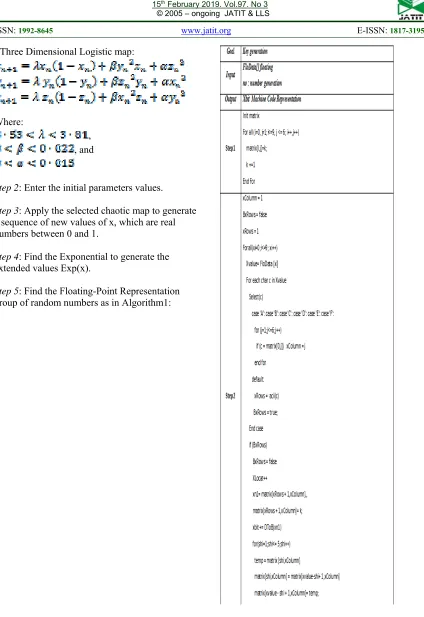
987 - Three Dimensional Logistic map:
Where:
, , and
Step 2: Enter the initial parameters values.
Step 3: Apply the selected chaotic map to generate
a sequence of new values of x, which are real numbers between 0 and 1.
Step 4: Find the Exponential to generate the
extended values Exp(x).
Step 5: Find the Floating-Point Representation
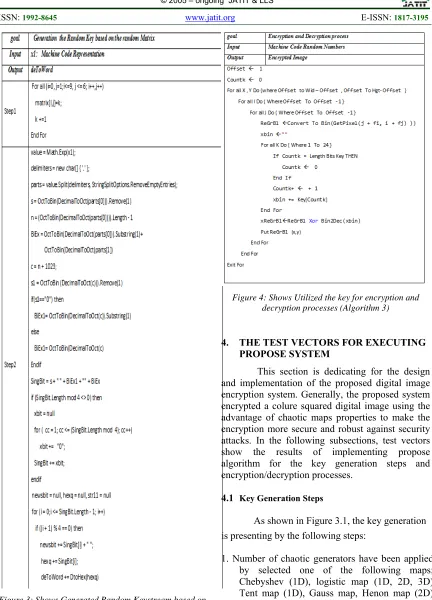
[image:4.612.96.520.48.665.2]group of random numbers as in Algorithm1:
Figure 2: Shows Floating-Point Representation groups of random numbers (Algorithm 1)
Step 6: Find the Random Keystream based on the
988
Figure 3: Shows Generated Random Keystream based on the Random Matrix (Algorithm 2)
Step 7: Utilize the key for the encryption and
decryption processes as in Algorithm3:
Figure 4: Shows Utilized the key for encryption and decryption processes (Algorithm 3)
4. THE TEST VECTORS FOR EXECUTING PROPOSE SYSTEM
This section is dedicating for the design and implementation of the proposed digital image encryption system. Generally, the proposed system encrypted a colure squared digital image using the advantage of chaotic maps properties to make the encryption more secure and robust against security attacks. In the following subsections, test vectors show the results of implementing propose algorithm for the key generation steps and encryption/decryption processes.
4.1 Key Generation Steps
As shown in Figure 3.1, the key generation is presenting by the following steps:
989
Figure 5: Shows the selection chaotic maps step
2. The output of each selected maps is passing through the exponential function [exp(x)] to get wide range of input as shown in Figure 6. 3. Then the result of step 2 is mapping into words to
[image:6.612.98.328.68.225.2]fit the required domain of the used multiplexed (as illustrated in algorithm 1).
Figure 6: Shows the Exp(x) and machine words steps
[image:6.612.91.305.339.458.2]4. The next stage is passing the dictionary words into the multiplexer to produce the secret keystream. The multiplexer stage works to find the random keystream based on the random Matrix Table , as shown in Figure 7 , generation such keystream represented as a main goal of the propose algorithm such that the input machine words to get the random keystream (as demonstrated in algorithm 2).
Figure 7: Shows the Random Matrix Table
4.2 Encryption Process
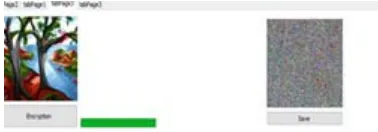
In previous subsection, we show how we generating the output pseudo random key, this keystream is unique for any size image. Suppose we have two stations, the sender is in station 1, and wants to send an image to the receiver in station 2, so he has to encrypt the plain image by using the represented keystream, that used to encrypt the plain image and decrypt the cipher image. The output of stream generator is xor’ed sequentially item to item with plain image to produce the cipher image (as explained in algorithm 3). The plaint image, as shown in Figure 8, which wants to be encrypted, is read from a text file, suppose we have the following image.
Figure 8: Shows the plain image
The cipher image after applied encryption process shown in Figure 9.
[image:6.612.371.473.473.555.2] [image:6.612.323.512.625.691.2]990
4.3 Decryption Process
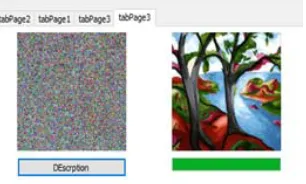
[image:7.612.121.274.197.289.2]For decryption process, as shown in Figure 10, the receiver employs the output of stream generator is xor’ed sequentially item to item with cipher image to produce the plain image.
Figure 10: Shows the plain imageafter decryption
4. SIGNIFICANT PROPERTIES OF CHAOTIC MAPS
Hence, the following discussions address some of the advantages of using chaotic maps in the design of the proposed system in this paper. 1. As chaotic functions, Logistic, Tent, Chebyshev, Henon, Gaussian and Duffing chaotic maps describe extremely good properties for encryption such as confusion and diffusion, that is why these functions are widely used to design various cryptographic schemes.
2. To design efficient and secure cryptosystem the encryption process should be achieve the confidentiality property. However, the schemes of traditional public key cryptography are not desirable to achieve it since the management of encryption key in these schemes produces heavy computational burden. Inspired by the excellent semi-group property, the extended Chebyshev chaotic map over the finite field has been used to develop our design since the discrete logarithm problem and Diffie-Hellman problem are assumed intractable within polynomial time [29]. 3. In spite of the fact that Tent chaotic map
form is simple linear equation, for certain parameter values, this system can display highly complex behavior and even chaotic phenomena.
4. Although the output of the conventional Tent chaotic map is a special case and shows different responses, it has only one control parameter that limits its behaviour and applications. Many Tent maps have been introduces to show the characteristics of each generalization such as fixed points, bifurcation diagrams, and Lyapunov exponents, which can be applied on simple image encryptions. Moreover, statistical and sensitivity analysis are presented to demonstrate the benefits of the generalized maps [30].
5. Subsequently Gaussian chaotic map employs more control parameters that improve the data security and takes lesser time for the encryption and decryption, many image encryption techniques using Gaussian chaotic map as iteration function [31].
6. Since the non-integer dimension of the attractor and associated with chaotic systems, the Hénon attractor is a strange attractor, which can be used to present an image encryption algorithm based on Hénon chaotic map [32] [33].
7. Finally, since the implementation of Duffing chaotic map is easy, suitable to acquire shuffled pixels and reflectivity in nature, it used in image block shuffling [34].
Given the previous advantages, the Chaotic Maps are using to construct mutual authentication with strong anonymity in this paper.
6. POSITIVE PROPERTIES OF PROPOSED ALGORITHM
The positive properties of the newly devised cipher as well as some of the major advantages of the proposed cipher along with a limited degree of analysis are presented in this section.
1. The utilization of random matrix table (10×6) dependent on secret key ensured great difficulties relative to attackers. Because the random matrix table was unrecognizable for the attacker, the number of probabilities faces the attacker would increase.
991 dependency between the output value and the input value of the random matrix table. 3. Unique random matrix table (weak
collision resistant): no two different keys have the same random matrix table elements. In the mathematical steps, the functions make a unique value for each input value. This means that the new random matrix table resistant against differential cryptanalysis, which require that the random matrix table be known. 4. Efficiency: calculating of chaotic map
value, x-value, exp(x), random matrix table and encryption process are easy to used and simple implementation according to comparing results of different algorithms. 5. Strict Avalanche Criterion (SAC): when
change one value of input, the random matrix table value should be change more than half values [14]. In mathematical steps of random matrix table, the previous byte of new block will be changing all the next bytes.
6. Pseudo randomness: in the proposed random matrix table, the keys is difficult to cryptanalysis attacks (randomness) according to:
a) Key values generated from strong PRNG and used only once (as one time pad).
b) random matrix table has the same frequency for each key.
7. As a final point, the size of the key block has a great effect on the algorithm, the key size should be minimal size with maximum period, the block size of the propose algorithm is 128-bits.
7. RESULTS AND DISCUSSIONS
There are four main aspects of results to introduce the efficiency and robust of the propose design. These aspects are fast, complexity, secure and random.
[image:8.612.334.504.563.682.2]1. Fast: the execution time of proposed algorithm is a criterion to check the design efficiency. The execution time computed by calculating the arrange time of multi execution time for the similar algorithms. The execution time based on the complexity of algorithm and size of dataset. Table 1 shows the compression between the execution time for a propose design and some identical algorithm. Comparing the
propose algorithm based on fastens aspect shows without any doubt that, the execution time results for the propose design is faster than identical algorithms.
Table 1: compression between HCKG and some identical algorithms
2. Less Complexity: the less complexity of the propose algorithm come from:
a) Generated x-value, exp(x) and machine words based on secure value.
b) Substitution steps of the propose algorithm are based on chaotic maps. 3. Secure and random: the security result is
one of the important matric that should be providing in the design of any cipher. There are many parameters used to demonstrate the security of the propose system:
a) Construction random matrix table based on secure key. The random matrix table is comparing with security parameters such as balanced output, SAC and hamming distance, the results show that any change in the input will change the output and the ciphertext has fiat frequency distribution as shown in Figure 11 below.
992 b) Generated secure, random and robust
machine words and multiplexer for producing keystream based on strong and efficient chaotic maps.
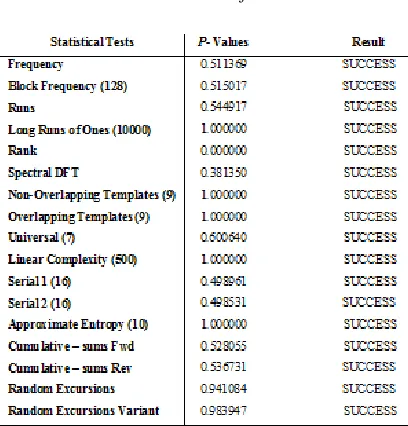
[image:9.612.95.299.259.472.2]c) Furthermore, the generated keystreams successfully pass all NIST statistical tests for randomness, which are usually apply to measure the efficiency of generated keystreams for block ciphers and stream ciphers as shown in Table 2.
Table 2: The Results of NIST Statistical Suite Tests for HCKG
As a results, the propose system was fast, random and resistant against some security attacks such as frequency analysis, known plaintext attack, linear, differential and statistical attacks.
8. CONCLUSION
In this paper, a new approach has been suggested for design efficient keystream mechanism called Hybrid Chaotic Keystream Generator (HCKG), which was suitable for encrypted symmetric images. HCKG mechanism has been applied many kinds of chaotic functions as well as dynamic S- box, which based on the input pseudorandom key, shift operation, triple logistic maps (1D, 2D, 3D), and particle swarm algorithm. Several measurements applied for testing the output of HCKG, including time execution, avalanche criterion balance and complexity; the results show that, the generated keystream has been successfully passed through NIST. Finally, the application of
image encryption for the corresponding algorithm has been done, the result show that HCKG mechanism was absolute efficient with good cryptographic properties as well as resistant against security analysis attacks.
REFERENCES:
[1] Lorenz, Edward N. "Deterministic Nonperiodic Flow",. Journal of the Atmospheric Sciences.
Vol. 20, No. 2, 1963.pp. 130–141.
[2] Lighthill, J., “The recently recognized failure of predictability in Newtonian dynamics”, 1986. Proc. Roy. Soc. London A407, 35-50.
[3] Devaney, R., “A First Course in Chaotic Dynamical Systems”, 1992. Perseus Books. [4] Vinod Patidar and Sud, K. K.,” A Pseudo
Random Bit Generator Based on Chaotic Logistic Map and its Statistical Testing”,
Informatica Journal, Vol. 33, 2009 pp:441–452.
[5] Piyush Kumar Shukla , Ankur Khare , Murtaza Abbas Rizvi , Shalini Stalin and Sanjay Kumar, “Applied Cryptography Using Chaos Function for Fast Digital Logic-Based Systems in Ubiquitous Computing”, Journal Entropy, Vol.
17, 2015, , pp:1387-1410.
[6] Wang, Xingyuan and Zhao, Jianfeng. "An improved key agreement protocol based on chaos". Commun. Nonlinear Sci. Numer.
Simul. Vol. 15, No. 12. 2012: pp:4052–4057.
[7] Babaei, Majid. "A novel text and image encryption method based on chaos theory and DNA computing". Natural Computing. an
International Journal. Vol.12, No. 1. 2013.
pp.101–107.
[8] George Makris , G. and Ioannis Antoniou, L.“ Cryptography with Chaos”, Proceedings, 5th Chaotic Modeling and Simulation International
Conference, 12 – 15 June 2012, Athens Greece,
pp: 309-318.
[9] Jakimoski, G. and Kocarev, L. 2001.” Chaos and cryptography: block encryption ciphers based on chaotic maps, Circuits and Systems I: Fundamental Theory and Applications”, IEEE
Transactions on Vol. 48 (2), No. 309, 2001, pp.
163–169.
[10]Alvarez, G., Li, S. “Some Basic Cryptographic Requirements for Chaos-Based Cryptosystems”.
International Journal of Bifurcation and Chaos,
World Scientific, Vol. 16, 2006. pp 2129-2151.
993 Cryptographic Applications”, IEEE Workshop on Nonlinear Maps and Applications (NOMA),
Toulouse, 2007.
[12] Amigó, J.M. “Chaos-Based Cryptography. In: Intelligent Computing Based on Chaos”,
Springer, ISBN 978-3-540-95971-7, 2009. pp.
291-313, Berlin.
[13] Alvarez, G., Amigó, J.M., Arroyo, D., Li, S. “Lessons Learnt from Cryptoanalysis of Chaos-based Ciphers, in Chaos-Based Cryptography. Theory, Algorithms and Applications”. Studies
in Computational Intelligence, Vol. 354, ISBN
978-3-642-20542- 2, 2011, Berlin, pp. 257-295. [14] Shannon, C., “Communication Theory of
Secrecy Systems”. Bell System Technical
Journal, Vol. 28, Issue 4, 1949, pp 656–715.
[15] Hopf E. “On Causality, Statistics and Probability”, J. Math. and Phys. Vol. 13, No.51,
1934, pp.102-107
[16] Akhavan, A.; Samsudin, A. and Akhshani, A. "A symmetric image encryption scheme based on combination of nonlinear chaotic maps". Journal of the Franklin Institute.
Vol. 348, No. 8, 2011. pp: 1797–1813.
[17] Behnia, S.; Akhshani. A.; Mahmodi, H. and Akhavan, A... "A novel algorithm for image encryption based on mixture of chaotic maps". Chaos, Solitons & Fractals. Vol. 35,
No. 2, 2008. pp:408–419.
[18] Wang, X., L. Teng, and X. Qin,.” A novel colour image encryption algorithm based on chaos”. Signal Processing, Vol.92 No.4, 2012.
pp. 1101-1108.
[19] Matthews, R. “On the derivation of a “chaotic”
encryption algorithm. Cryptologia, Vol. 13,
No.1, 1989, pp. 29-42.
[20] Fridrich, J..”Symmetric ciphers based on two-dimensional chaotic maps”. International
Journal of Bifurcation and chaos, Vol. 8,
No.06, 1998, pp. 1259-1284.
[21] Guan, Z.-H., F. Huang, and W. Guan,. “Chaos-based image encryption algorithm”. Physics
Letters A, Vol. 346, No.1, 2005. pp. 153-157.
[22] Pareek, N.K., Patidar, V. and Sud, K.K. “Image encryption using chaotic logistic map”.
Image and vision computing, Vol. 24, No.9,
2006. pp. 926-934.
[23] Alsafasfeh, Q.H. and A.A. Arfoa,. “Image encryption based on the general approach for multiple chaotic systems”. J. Signal and
Information Processing, Vol. 2, No.3, 2011, pp.
238-244.
[24] Salwa K. Abd-El-Hafiz, Ahmed G. Radwan∗
and Sherif H. AbdEl-Haleem, “Encryption Applications of a Generalized Chaotic Map”,
Appl. Math. Inf. Sci.Vol. 9, No. 6,2015,
pp.3215-3233.
[25] Borislav Stoyanov and Krasimir Kordov. “Image Encryption Using Chebyshev Map and Rotation Equation”, Journal Entropy Vol. 17,
2015, pp.2117-2139.
[26] Şekertekin, Y. and Atan, Ö. , “An image encryption algorithm using Ikeda and Henon chaotic maps” , 24th Telecommunications
Forum (TELFOR). 2016, Belgrade, Serbia.
[27] Chunhu Li, Guangchun Luo, Ke Qin and Chunbao Li., “An image encryption scheme based on chaotic tent map” Nonlinear Dynamics
Journal, Vol. 87, No. 1,2016, pp.127-133.
[28] Sharma, M. C. and Sharma, P.,”Image Encryption based on Random Scrambling and Chaotic Gauss Iterative Map” International
Journal of Computer Applications, Vol. 157 ,
No 3,2017, pp. 18-23.
[29] Tan, Z.. “A chaotic maps-based authenticated key agreement protocol with strong anonymity,” Nonlinear Dynamics, vol. 72, No.
1-2,2013, pp. 311–320.
[30] Radwan, A. G, and Abd-El-Hafiz, S. K, . “Image encryption using generalized tent map “. IEEE 20th International Conference on Electronics, Circuits, and Systems (ICECS). 2013.Abu Dhabi, United Arab Emirates. [31] Robert C. Hilborn,.” Chaos and nonlinear
dynamics: an introduction for scientists and engineers”, 2nd Ed., Oxford, Univ. Press, New York, 2004.
[32] Sahay, A. and Pradhan, C “Multidimensional Comparative Analysis of Image Encryption using Gauss Iterated and Logistic Maps”, IEEE International Conference on Communication
and Signal Processing (ICCSP), 6-8 Apr 2017,
Melmaruvathur, India.
[33] Hilborn, R.C..” Chaos and Nonlinear Dynamics: An introduction for Scientists and Engineers”. UK. Oxford University Press.2000. [34] Srinivasu, P.N. and S. Rao, A.” Multilevel
Image Encryption based on Duffing map and Modified DNA Hybridization for Transfer over an Unsecured Channel”. International Journal
of Computer Applications, Vol. 120, No.4,