Project Management Leadership Progression: A
Conceptual Framework for Abu Dhabi
Yousef AL SHAIBA KHAMIS ABDULLA AL
SHERYANI
School of the Built Environment
University Of Salford, Salford, UK
Submitted in Partial Fulfilment
of the Requirements
Table of Content
Contents
Page(s)
LIST OF TABLES viii
LIST OF FIGURES xvi
ACKNOWLEDGEMENT xvii
ABSTRACT xviii
Chapter I (Research Introduction) 1
1.0 Introduction 1
1.1 Introduction to Abu Dhabi 3
1.2 Changes In Abu Dhabi Vision and Need for this Research 4
1.2.1 Economic Development 5
1.2.2 Social and Human Resources Development 6
1.2.3 Infrastructure Development and Environmental Sustainability 6
1.2.4 Optimisation of Government Operations 7
1.3 The Problem 8
1.4 Aim 8
1.5 Objectives 8
1.6 Research Questions 9
1.7 Contributions of this Research 10
1.8 Need for This Research 10
1.9 Structure of This Thesis 12
Chapter II (Literature Review) 13
2.0 Introduction 13
2.1 Career Path 14
2.2 Career Path of a Project Manager 17
2.4 Competency 21
2.5 Project Management Competency 29
2.6 Success Factors 41
2.7 Success Criteria 43
2.8 Programme Management Competencies 44
2.9 Project Complexity 49
2.10 Summarising the Way Forward 55
Chapter III (Research Methodology) 57
3.0 Introduction 57
3.1 Research Philosophy 57
3.2 Research Approach 60
3.3 Research Phases 62
3.4 Research Activities 66
3.4.1 Research Planning Phase 66
3.4.1.1 Literature Review 66
3.4.1.2 Pilot Study 67
3.4.2 Research Development Phase 68
3.4.2.1 Semi-structured Interview 69
3.4.2.2 Questionnaire Survey 71
3.4.2.3 Experience During Fieldwork 80
3.4.3 Research Validation Phase 81
Chapter IV (Data Analysis 1) 82
4.0 Introduction 82
4.1 Semi-structured Interviews 83
Chapter V (Data Analysis 2) 105
5.0 Introduction 105
5.1 Summary of the Respondent Profile 105
5.2 Project Manager Competencies Vs Project Success 106
5.2.1 Technical Competencies Vs Project Success Criteria 107
5.2.2Behavioural Competencies Vs Project Success Criteria 109
5.2.3 Contextual Competencies Vs Project Success 112
5.3 Project Manager Competence Vs Project Complexity 114
5.3.1 Technical Competencies Vs Project Complexity 114
5.3.2 Behavioural Competencies Vs Project Complexity 116
5.3.3 Contextual Competencies Vs Project Complexity 118
5.4 Programme Manager Competencies 120
5.4.1 Planning the Programme Vs Programme Success Criteria 120
5.4.2 Maintaining Programme Activities Vs Programme Success Criteria 123
5.4.3 Programme Control Vs Programme Success Criteria 123
5.4.4 Forecasting Vs Programme Success Criteria 127
5.4.5 Designing the Programme Vs Programme Success Criteria 129
5.4.6 Planning Day to Day Activities Vs Programme Success Criteria 131
5.4.7 Identification of Risks Vs Programme Success Criteria 133
5.4.8 Managing Change Vs Programme Success Criteria 135
5.4.9 Managing Critical Interfaces Vs Programme Success Criteria 137 5.4.10 Quality Control and Analysis Vs Programme Success Criteria 139
5.4.11 Employee Welfare Vs Programme Success Criteria 141
5.4.12 Employee Counselling Vs Programme Success Criteria 143
5.4.13 Negotiations Within and Outside the Programme Vs Programme Success Criteria 145
5.4.15 Managing Project Managers Vs Programme Success Criteria 148
5.4.16 Time Management Vs Programme Success Criteria 149
5.4.17 Team Building Vs Programme Success Criteria 150
5.4.18 Effective Communication Vs Programme Success Criteria 152 5.4.19 Effective Sequencing of Projects Vs Programme Success Criteria 154
5.4.20 Conducting Meetings Vs Programme Success Criteria 156
5.5 Programme Complexity and Programme Manager Competency 157
5.5.1 Planning the Programme Vs Programme Complexity 158
5.5.2 Maintaining Programme Activities Vs Programme Complexity 160
5.5.3 Programme Control Vs Programme Complexity 162
5.5.4 Forecasting Vs Programme Complexity 164
5.5.5 Designing the Programme Vs Programme Complexity 166
5.5.6 Planning Day to Day Activities Vs Programme Complexity 167
5.5.7 Identification of Risks Vs Programme Complexity 169
5.5.8 Managing Change Vs Programme Complexity 196 171
5.5.9 Managing Critical Interfaces Vs Programme Complexity 173
5.5.10 Quality Control and Assurance Vs Programme Complexity 175
5.5.11 Employee Welfare Vs Programme Complexity 177
5.5.12 Employee Counselling Vs Programme Complexity 179
5.5.13 Negotiations Within and Outside the Programme Vs Programme Complexity 181
5.5.14 Effective Leadership Vs Programme Complexity 183
5.5.15 Managing Project Managers Vs Programme Complexity 184
5.5.16 Time Management Vs Programme Complexity 185
5.5.17 Team Building Vs Programme Complexity 186
5.5.18 Effective Communication Vs Programme Complexity 189
5.5.19 Effective Sequencing of Projects Vs Programme Complexity 191
5.6 Findings 194 5.6.1 Project Manager Competencies Vs Programme Manager Competencies 195
Chapter VI (Programme Management Analysis) 202
6.0 Introduction 202
6.1 Use of DEMATEL Technique 202
6.2 Summary and the Way Forward 213
Chapter VII (Result and Discussion) 215
7.0 Introduction 215
7.1 Summarising the Research Steps 215
7.2 Developing the Framework 218
7.3 Validating the Framework 232
7.4 Discussion 238
7.5 Chapter Summary 240
Chapter VIII (Conclusions and Recommendations) 243
8.0 Introduction 243
8.1 Conclusions 245
8.1.1 The Career Path 245
8.1.2 Add-on responsibility 245
8.1.3 Behavioural Competencies 246
8.1.4 Relationship between success criteria and success factors 246
8.1.5 Technical competency 246
8.1.6 Contextual competency 247
8.1.7 The three variables 247
8.1.9 Cause/Effect group of competencies 248
8.1.10 Assessment of competencies 248
8.1.11 Demonstration of causal competencies 249
8.2 Contributions of This Research 249
8.2.1 Continuity 250
8.2.2 As a profession or as a role 250
8.2.3 A framework 250
8.2.4 Links 250
8.3 Limitations of This Research 250
8.4 Future Areas of Research 251
APPENDIX A 253
APPENDIX B 256
APPENDIX C 259
REFERENCES 277
LIST OF TABLES
TABLES PAGE(S)
Table 4.1: Roles of Managers 88
Table 4.2: Project Competency Complexity Parameters 103
Table 4.3 Complexity Parameters (Cause/Effect Competencies) 104
Table 5.1:Model Summary Technical Competencies Vs Project Success Criteria 107
Table 5.2: Technical Competencies Vs Project Success Criteria (Detail) 108
Table 5.3: Model Summary Behavioural Competencies Vs Project Success Criteria 109
Table 5.4: Behavioural Competencies Vs Project Success Criteria (Detail) 111
Table: 5.5 Model Summary of Contextual Competencies Vs Project Success 112
Table 5.6: Contextual Competencies Vs Project Success (Detail) 113
Table 5.7: Model Summary Technical Competencies Vs Project Complexity 114
Table 5.8: Technical Competencies Vs Project Complexity (Detail) 115
Table 5.9: Model Summary Behavioural Competencies Vs Project Complexity 116
Table 5.10:Behavioural Competencies Vs Project Complexity (Detail) 117
Table 5.11: Model Summary Contextual Competencies Vs Project Complexity 118
Table 5.12: Contextual Competencies Vs Project Complexity (Detail) 119
Table 5.14: Planning the Programme Vs Programme Success Criteria (Detail) 121
Table5.15:Model Summary Maintaining Programme Activities Vs Programme Success
Criteria 123
Table 5.16: Maintaining Programme Activities Vs Programme Success Criteria (Detail) 124
Table 5.17:Model Summary Programme Control Vs Programme Success Criteria 125
Table 5.18: Programme Control Vs Programme Success Criteria (Detail) 126
Table 5.19: Model SummaryForecasting Vs Programme Success Criteria 127
Table 5.20:Forecasting Vs Programme Success Criteria (Detail) 128
Table 5.21: Model Summary Designing the Programme Vs Programme Success Criteria 129
Table 5.22: Designing the Programme Vs Programme Success Criteria (Detail) 130
Table 5.23: Model SummaryPlanning Day to Day Activities Vs Programme Success Criteria
131
Table 5.24: Planning Day to Day Activities Vs Programme Success Criteria (Detail) 132
Table 5.25: Model SummaryIdentification of Risks Vs Programme Success Criteria 133
Table 5.26: Identification of Risks Vs Programme Success Criteria (Detail) 134
Table 5.27: Model SummaryManaging Change Vs Programme Success Criteria 135
Table 5.28: Managing Change Vs Programme Success Criteria (Detail) 136
Table 5.29: Model SummaryManaging Critical Interfaces Vs Programme Success Criteria
Table 5.30: Managing Critical Interfaces Vs Programme Success Criteria (Detail) 138
Table 5.31: Model Summary Quality Control and Analysis Vs Programme Success
Criteria 139
Table 5.32: Quality Control and Analysis Vs Programme Success Criteria (Detail) 140
Table 5.33: Model Summary Employee Welfare Vs Programme Success Criteria 141
Table 5.34: Employee Welfare Vs Programme Success Criteria (Detail) 142
Table 5.35: Model SummaryEmployee Counselling Vs Programme Success Criteria 143
Table 5.36: Employee Counselling Vs Programme Success Criteria (Detail) 144
Table 5.37: Model Summary Negotiations Within and Outside the Programme Vs
Programme Success Criteria 145
Table 5.38: Negotiations Within and Outside the Programme Vs Programme Success Criteria
(Detail) 146
Table 5.39: Model Summary Effective Leadership Vs Programme Success Criteria 147
Table 5.40: Model Summary Managing Project Managers Vs Programme Success Criteria
148
Table 5.41: Model Summary Time Management Vs Programme Success Criteria 149
Table 5.42: Model Summary Team Building Vs Programme Success Criteria 150
Table 5.43: Team Building Vs Programme Success Criteria (Detail) 151
Table 5.45: Effective Communication Vs Programme Success Criteria (Detail) 153
Table 5.46: Model Summary Effective Sequencing of Projects Vs Programme Success
Criteria 154
Table 5.47: Effective Sequencing of Projects Vs Programme Success Criteria (Detail) 155
Table 5.48: Model Summary Conducting Meetings Vs Programme Success Criteria 156
Table 5.49: Conducting Meetings Vs Programme Success Criteria (Detail) 157
Table 5.50: Model Summary Planning the Programme Vs Programme Complexity 158
Table 5.51: Planning the Programme Vs Programme Complexity (Detail) 159
Table 5.52: Model SummaryMaintaining Programme Activities Vs Programme
Complexity 160
Table 5.53: Maintaining Programme Activities Vs Programme Complexity (Detail) 161
Table 5.54: Model Summary Programme Control Vs Programme Complexity 162
Table 5.55: Programme Control Vs Programme Complexity (Detail) 163
Table 5.56: Model Summary Forecasting Vs Programme Complexity 164
Table 5.57: Forecasting Vs Programme Complexity (Detail) 165
Table 5.58: Model Summary Designing the Programme Vs Programme Complexity 166
Table 5.59: Model Summary Planning Day to Day Activities Vs Programme Complexity 167
Table 5.60: Planning Day to Day Activities Vs Programme Complexity (Detail) 168
Table 5.62: Identification of Risks Vs Programme Complexity (Detail) 170
Table 5.63: Model Summary Managing Change Vs Programme Complexity 171
Table 5.64: Managing Change Vs Programme Complexity (Detail) 172
Table 5.65: Model Summary Managing Critical Interfaces Vs Programme Complexity 173
Table 5.66: Managing Critical Interfaces Vs Programme Complexity (Detail) 174
Table 5.67: Model Summary Quality Control and Assurance Vs Programme Complexity 175
Table 5.68: Quality Control and Assurance Vs Programme Complexity (Detail) 176
Table 5.69: Model Summary Employee Welfare Vs Programme Complexity 178
Table 5.70: Employee Welfare Vs Programme Complexity (Detail) 179
Table 5.71: Model Summary Employee Counselling Vs Programme Complexity 179
Table 5.72: Employee Counselling Vs Programme Complexity (Detail) 180
Table 5.73: Model Summary Negotiations Within and Outside the Programme Vs
Programme Complexity 181
Table 5.74: Negotiations Within and Outside the Programme Vs Programme Complexity
(Detail) 182
Table 5.75: Model Summary Effective Leadership Vs Programme Complexity 183
Table 5.76: Model Summary Managing Project Managers Vs Programme Complexity 184
Table 5.77: Model Summary Time Management Vs Programme Complexity 185
Table 5.79: Team Building Vs Programme Complexity (Detail) 188
Table 5.80: Model SummaryEffective Communication Vs Programme Complexity 189
Table 5.81: Effective Communication Vs Programme Complexity (Detail) 190
Table 5.82: Model Summary Effective Sequencing of Projects Vs Programme Complexity
191
Table 5.83: Effective Sequencing of Projects Vs Programme Complexity (Detail) 192
Table 5.84: Model Summary Conducting Meetings Vs Programme Complexity 193
Table 5.85: Conducting Meetings Vs Programme Complexity (Detail) 194
Table 5.86 Programme manager and Project manager competencies (Timely completion) 195
Table 5.87: Programme manager and Project manager competencies (Within budget) 195
Table 5.88: Programme manager and Project manager competencies (As per specification)
196
Table5.89: Programme manager and Project manager competencies (Good risk assessment
and management) 196
Table 5.90: Programme manager and Project manager competencies (Meet Stakeholder’s
Satisfaction) 197
Table 5.91: Programme manager and Project manager competencies (Satisfaction of project
objectives) 197
Table 5.92: Programme manager and Project manager competencies (Benefits to the
Table 5.93: Programme manager and Project manager competencies
(Benefits to community) 198
Table 5.94: Programme manager and Project manager competencies (Project/Programme
implementation process) 199
Table 5.95: Programme manager and Project manager competencies
(Customer satisfaction) 199
Table 5.96: The link between the project complexity and project management
competencies 200
Table 5.97: The link between programme manager competencies and programme
competencies 201
Table 6.1-Decision matrix 1 203
Table 6.2-Decision matrix 2 204
Table 6.3- Average decision matrix Z20x20 205
Table 6.4- Matrix after division with 54 206
Table 6.5- The Identity Matrix 207
Table 6.6- Results of matrix (I-X) 208
Table 6.7- Inverse matrix of (I – X) 209
Table 6.8- Result of matrix T 210
Table 6.10: The Top Cause and Effect Relationships 212
Table 7.1: Technical Competencies and Levels of Attainment 222
Table 7.2: Contextual Competencies and Levels of Attainment 223
Table 7.3: Relating Project Manager and Programmer Manager Competencies 225
Table 7.4: Relationship Between Causal Programme Manager Competencies and Programme
Complexity 227
Table 7.5: Level of Attainment for Programme Manager Competencies 228
Table 7.6: Effect Group of Programme Competencies and Programme
LIST OF FIGURES
CONTENT PAGE(S)
Figure 2.1: Integrated Framework for Competence 25
Figure 2.2: Learning Programme Model 29
Figure 2.3: Project Management Competence Development Framework 32
Figure 2.4: Project Management Framework 39
Figure 2.5: Programme Manager Career Progression 46
Figure 2.6: Three-dimensional model of project management knowledge 54
Figure 3.1– Philosophy of Research – Ontological stance 58
Figure 3.2 – Philosophy of Research – Epistemological stance 60
Figure 3.3: Schematic Representation of this Research 63
Figure 3.4- Research Phases 65
Figure 4.1The typical career path of a project manager 101
Figure 4.2 Transition of a project manager to a programme manager 103
Figure 7.1: Levels of Positions in Abu Dhabi Government 218
Figure 7.2: Proposed Conceptual Progression Framework 231
ACKNOWLEDGEMENTS
Foremost, I would like to offer my deepest gratitude to ALMIGHTY ALLAH, for HIS
blessings and bounties all through my life. I am grateful to my family for their continued
support and blessings. I would like to express my sincere gratitude to my supervisors Prof.
Mohammed Arif for the continuous support in this research. I appreciate his patience,
perspectives and insight in the subject which he shared with me and I cannot imagine a better
mentor and guide for my research. I would take this opportunity to acknowledge my local
ABSTRACT
The government of Abu Dhabi made a decision to change the focus of the government from
executer of the project to manager of projects in 2008. More and more work was
sub-contracted and government departments just project managed the operations. Due to this
change in focus the demand for project managers increased. Most of these project managers
were not specially trained or educated in project management competencies. They primarily
were employees from older operations who were reassigned for project management
purposes. What has been realised now is that it is important to have a look at the
competencies of these employees and make sure they are suitable to be project managers. In
addition to them being suitable for project management positions, it is also important that
there is a specific progression path and well defined expectations to be promoted to the next
level. Therefore, there is a need to clearly identify the career path of a project manager from
the inception of their careers until they retire. The path has to have identifiable objective
points which could be used to decide if the project manager is ready to move to the next
level. A framework is needed that can facilitate the progression of a project manager in their
career paths in the Abu Dhabi government departments; and therefore, is the main aim of
this thesis. In order to accomplish the aim, a mixed methods approach was taken. The Use of
initial interviews established the context for Abu Dhabi. Use of statistical techniques such as
multiple regression and mathematical technique of DEMATEL helped identify the career
path from an entry level project coordinator position to a programme director position
through the end of the career.
itself; 3) At the entry level of a project an individual should have high level of behavioural
competencies; 4) There is a relationship between project success criteria and programme
success factors; Since project success leads to programme success, this relationship could be
used to establish the transition between a project manager and a programme manager’s role.
5) The technical and contextual competencies of a project manager should be used to promote
them during their time as project managers; and 7) Within the programme management there
are some competencies that can be regarded as the cause group of competencies and others
that could be regarded as the effect group of competencies.
There are several major implications of this work. First of all, the framework developed will
act as a good starting point for all the government departments to establish their own project
management progression framework which could be modified with their own discipline
specific information. This research also establishes the importance of behavioural
competencies for project management at the outset of the career itself. The framework also
provides an objective way of assessing when an individual is ready to move to the next level
of responsibilities within the organisation. This framework will further make the promotion
Chapter I
Research Introduction
1.0 Introduction
How do professionals progress in their careers is an important question posed by
researchers in different professions (Judge et. al., 2010; Harris et al., 2014). A career is
defined as “the sequence of a person’s work experience over his/her working life” (Harris
et al., 2014). The way this definition and other similar definitions of career in the
literature are phrased is that there is an implicit assumption that there is a path that an
individual’s career follows (Inkson, 2004). Establishing that there is a path, also leads to
the realisation that in a career path there are a series of moves and evolution of roles,
responsibility, and expectations over time (Cappellen & Janssens, 2005). Since we talk
about a path, then there is also an assumption that there is a direction of movement.
Therefore, there is a progression that an individual experiences as they move ahead in
their careers (Harris et al., 2012).
The increasing projectisation of activities and operations of organisations have led to the
need to look at project management function in more depth (Pant & Baroudi, 2008). The
role and the criticality of the project management function within organisations is widely
acknowledged (Syndow et al., 2004), but despite this acknowledged importance of the
(2010) indicates “an increasing number of organisations develop dynamic work
environments through the use of temporary work forms such as projects and programmes.
Yet the implications for employees working in these transient surroundings have only
recently being brought to the attention of research and practice.” This has led to lots of
randomness in career progression of project managers (Turner et al., 2008). Retaining
employees in project manager roles for organisation has, thus, become a major challenge.
As Pinto and Kharbanda (1997) put it, “few individuals grow up with the dream of one
day becoming a project manager. It is neither a well-defined nor a well-understood career
path within most modern organisations. The role is thrust upon people rather than being
sought.” The lack of definition and understanding of the role and career path leads to
high attrition rate among project managers (Ndhlovu &Weeks, 2013). Having a better
understanding of what project managers do; what kinds of skills and competencies they
should demonstrate; and how their career path should evolve, would be a very important
step for the selection and development of an effective project manager who has the
capability to deliver high quality outcomes within the stipulated budget and schedule
(El-Sabaa, 2001).
Abu Dhabi has gone through a major transformation in the overall vision and this has
resulted in projectisation of operations in the government departments. This has led to a
large number of project managers who are recruited in these government departments.
However, currently these project managers do not have a discipline specific framework
that is used to help decide on their promotion and career progression. This thesis is a step
vision which has led to the need for this research. Following these sections on
background, the aim, and objectives of the research are documented before discussing the
contributions and structure of this thesis.
1.1 Introduction to Abu Dhabi
The name Abu Dhabi means “Father of Deer” and is the largest emirates of the seven
member emirates of the United Arab Emirates. Abu Dhabi lies on a T-shaped island
jutting into the Arabian Gulf from the central western coast. Abu Dhabi houses important
offices of the federal government, and is the capital for the United Arab Emirates
Government and the home for the Abu Dhabi Emiri Family and the President of the
UAE. Today the city is the country's centre of political, industrial activities, and a
major cultural, and commercial centre due to its position as the capital. Abu Dhabi alone
generated 56.7% of the GDP of the United Arab Emirates in 2008.
According to the Abu Dhabi government website (Abu Dhabi Government, 2015), there
are 99 government departments, state enterprises and other government run entities in
Abu Dhabi. All of them employ people in project management and programme
management roles. Therefore, it is important to have a competency framework that can
be used to assess the competency of project managers and identify their training needs
and development opportunities. This research will develop the competency framework
1.2 Changes in Abu Dhabi Vision and Need for this Research
This and the following four sections summarise the key elements of vision 2030
document of the Abu Dhabi government and establishes the need for this research.
Seeking to ensure the continued success of the Emirate’s development, the Government
of Abu Dhabi has set guidelines and priorities for the Emirate’s socio-economic progress
in its Policy Agenda. Taking these guidelines as its parameters, the Abu Dhabi Economic
Vision 2030 has been developed by the government, in consultation with the private
sector, as a 22-year strategy to achieve these aims and to ensure that all stakeholders in
the economy are moving in concert, with a clear view of the long-term goals.
The Abu Dhabi Policy Agenda 2007/2008 defines the priorities for public policy in the
Emirate. These priorities have been set to achieve what the Government of Abu Dhabi
sees as its primary goals: a safe and secure society and a dynamic, open economy. The
government has identified nine pillars that will form the architecture of the Emirate’s
social, political, and economic future:
• A large empowered private sector
• A sustainable knowledge-based economy
• An optimal, transparent regulatory environment
• A continuation of strong and diverse international relationships
• The optimisation of the Emirate’s resources
• Premium education, healthcare and infrastructure assets
• Complete international and domestic security
• A significant and ongoing contribution to the Federation of the UAE
Having established these pillars, the government has committed itself to direct public
policy to strengthen and develop them. This involves focusing on four key priority areas:
• Economic development
• Social and human resources development
• Infrastructure development and environmental sustainability
• Optimisation of government operations.
Next four sub-sections discuss the goal of these areas which the government anticipates
will be implemented in the Abu Dhabi government as part of the new vision.
1.2.1 Economic Development
Economic diversification is common and fundamental to the government’s other stated
priority areas and the policy agenda as a whole. The government wishes to see the
creation of higher-value employment opportunities, especially for nationals, and maxim
participation of women in the workforce. To encourage investment and entrepreneurial
activity, the government plans to contribute to enhancing the business environment
through further legislative reform and by ensuring that all economic policy is formulated
with reference to rigorous data sources and statistical information. Enhancing the
economy and business climate will also help to integrate Abu Dhabi further into the
global economy by attracting foreign, as well as local investment, and by facilitating the
1.2.2 Social and Human Resources Development
According to the Policy Agenda, social and human development represents the
pre-eminent objective and driving motivation behind all policies and initiatives. Ensuring that
high quality education and health services are available to residents is, therefore, of the
highest priority. When it comes to developing the workforce, the government aims to
ensure the availability of a stable supply of high quality labour to staff the economy, and
especially, to encourage full employment among nationals. At the same time, Abu Dhabi
wishes to maintain an ethical and safe management of its labour resources, through the
thorough implementation of federal labour laws and the meeting of commitments made
through the UAE’s signature of international labour arrangements.
1.2.3 Infrastructure Development and Environmental Sustainability
Developing appropriate the infrastructure, while preserving the environment, forms the
third priority area. The government will ensure the development of a professionally
designed and well-managed urban environment in the Emirate’s towns and cities
complete with world-class traffic and transport systems. The simultaneous development
of the regions to keep pace with that of the Capital is also an important policy priority in
order to achieve an Emirate-wide distribution of economic activity and associated
benefits. For its part, the government will also ensure that Abu Dhabi’s security is
maintained and that its towns and cities remain a safe place in which to live and work. In
order to ensure that the urban infrastructure is able to cope with the envisioned growth
urban structure framework plan for the Capital. The initiative will be expanded to cover
all the regions of the Emirate.
1.2.4 Optimisation of Government Operations
Finally, the Policy Agenda sets out guidelines for optimising the government’s own role
in the future of the Emirate, by improving the efficiency and accountability of
government departments. The government has already embarked on an extensive review
of its processes and structures. Many services are being delivered electronically through
e-government initiatives, and departments are being streamlined and non-core services
outsourced to the private sector. These initiatives will be continued and enhanced. At the
same time, the government will review and enhance the legislative framework and the
law-making processes themselves to ensure maximum efficiency. It is this focus that has
led to the need for more people to be trained in project management. With non-core
services being outsourced to the private sector, there will be a need in the Abu Dhabi
government of individuals who are able to manage projects and oversee the process of
these non-core services being delivered by the private sector. Therefore, it is important
that the Abu Dhabi government looks at equipping its employees with appropriate
competency of project management. There is a need to be able to assess the need for
these competencies and then be able to provide the required training. This research will
try to help towards that goal and will contribute towards the implementation of Vision
1.3 The Problem
Because the optimisation of government functions has happened significantly in Abu
Dhabi, there has been a shift to making it a more project management oriented operation.
The function of the government has become a manager of projects. Most of the activities
are sub-contracted to the private sector and monitored through the government
departments’ project managers. Therefore, the role of project management has become
significantly more important. However, what is currently missing is a framework to
assess their progress on their career paths as project managers and an evaluation
framework to decide when they can be promoted. Therefore, this thesis will look at
developing such a framework and facilitation for documenting a career path for project
managers that has more objectivity and incorporates the state of the art knowledge that
exists in this area.
1.4 Aim
To develop a framework for facilitating the progression along the project management
career path in Abu Dhabi government departments.
1.5 Objectives
1. To document the current path followed in the careers of project managers in Abu
2. To document the competencies needed during different roles undertaken by
project managers along their career paths.
3. To document the success metrics and factors that lead to complexity in projects
and programmes resulting in challenges for the project manager during their
careers.
4. To conceptualise a framework for assessing the project manager career path
progression in Abu Dhabi government departments.
5. To validate the frameworks for assessing the project manager career path
progression in Abu Dhabi government departments.
6. To draw conclusions and recommendations.
1.6 Research Questions
1. What are the milestones in the career path of a project manager in Abu Dhabi
government departments?
2. What are the competencies needed by a project manager at different steps of
their careers?
3. What are the factors that lead to challenges faced by project managers at
different stages of their careers?
4. How can an integrated view be developed to help with the assessment of
project manager performance at different milestones of their careers
1.7 Contributions of this Research
1. This research will develop a competency framework for the assessment of project
managers in Abu Dhabi government departments throughout their career path.
2. This research will also present an integrated view of the career lifecycle of the
project manager and establish links with competencies needed at different stages
of their careers as well as highlighting different variables of complexity that pose
challenge to them in their careers.
1.8 Need for This Research
There are three major quotes from HH Sheikh Zayed, the founding father of the United
Arab Emirates, that conveys the emphasis on human resource development of the
country. These are:
"Wealth is not money. Wealth lies in men. This is where true power lies, the power we
value. This is what has convinced us to direct all our resources to building the individual,
and to using the wealth which God has provided us in the service of the nation.”
"No matter how many buildings, foundations, schools and hospitals we build, or how
many bridges we raise, all these are material entities. The real spirit behind the progress
"We must not rely on oil alone as the main source of our national income. We have to
diversify the sources of our revenue and construct economic projects that will ensure a
free, stable and dignified life for the people.”
These quotes clearly indicate the focus of the country for developing the skills of the
people and considering them as the true wealth. Following these thoughts, the Abu Dhabi
government undertook a major restructuring initiative in 2005. The restructuring was
designed to not only create an evolved form of government but also to help build a more
vibrant economy that attracts and promotes private sector investment. As part of the
restructuring there was a major cultural shift that was planned among the government
departments. The emphasis was moved to managing services and product delivery
through project and programme management. The focus of several government
departments was changed to ensuring that projects executed by outside contractors were
delivered as per specifications. This created the need to train more project managers in
different government departments.
In order to ensure that significant number of government employees are trained and are
progressing through the system, it is important that a competence framework be
developed. This competence framework should be able to assess their training needs and
facilitate their promotion and progression of their jobs. This research will be helpful in
1.9 Structure of This Thesis
This thesis has seven more chapters. Chapter 2 presents a review of literature which
includes literature in the areas of project and programme manager competencies. It also
includes a review of literature on project and programme success factors. It is followed
by a discussion of the literature review on project complexity and concludes with a
discussion on career paths. Chapter 3 presents a discussion on research philosophy and
methodology used in this paper. It is followed by chapter 4 which is on data analysis.
This chapter presents a description of expert interviews, and establishes the challenges
faced in Abu Dhabi context and outlines the basic career path of a project manager.
Chapter 5 explains the analysis of data that helps establish relationships between
competencies and success factors, as well as competencies and complexity variables.
Chapter 6 presents the analysis of competency relationships at advanced stages in the
career of a project manager. Chapter 7 explains the final analysis and testing of the
framework to finalise the framework that presents an integrated view of the career path of
a project manager. Chapter 8 presents the final conclusions and recommendations for
Chapter II
Literature Review
2.0 Introduction
With a focus on career paths of project managers, this thesis intends to develop an
assessment framework that could be used to monitor their progress and promote them to
the next level when they are ready. However, as Shehu and Egbu (2008) point out, at
some point in their careers a project manager will take a programme management role.
So the career path of a project manager needs to consider both the project manager and
programme manager roles. Most of the career paths of a project manager and his
progression are determined by their grasp on the competencies. Therefore, it is imperative
that we look at project and programme competencies while conceptualising the
framework. Moreover, this chapter has summarised the research in a range of these areas.
The first area covered as part of literature review is a review on career paths. This is
followed by a section on career paths of project managers. Following this section is a
section that summarises literature in project and programme management. This section is
followed by a section on competency followed by sections on project and programme
management competencies. Each of these sections also has sections on project success
factors and criteria. The chapter ends with a discussion on project and programme
complexity and how that influences project manager selection. The literature presented in
this chapter is used as a basis for formulating the data collection instrument and the data
2.1 Career Path
A career is an evolving sequence of job roles, responsibilities, and activities that an
individual will develop over their career span (El-Sabaa, 2001). Arthur et al. (1989)
define career as “the evolving sequence of a person’s work experience over time.”
Careers generally provide linkages between the inner world of self and the outer world of
society and profession (Bredin & Soderlund, 2013). When we talk of career path as a
single phrase there are two underlying facets, and they are time and direction (Cappellen
& Janssens, 2005). The definition of career as a path explicitly accepts the idea of
evolution over time, a series of career moves (Inkson, 2004).
According to Hoekstra (2011,) development of a career is a combination of internal
career identity formation and growth of external significance. This definition implies that
as ones career proceeds, the individual will begin the process of managing their own
careers, looking for future opportunities for career progression and negotiating
employment conditions. People tend to seek meaning and use of their lives through their
success in their careers (El-Sabaa, 2001). Johns (1996) indicates that there are three
major elements that one needs to understand to actually decipher the full meaning of a
career. The first element is the understanding that a career will involve moving along a
path over a period of time. The second element is that a career will involve interacting
within and outside the organisation, opening new horizons and presenting new
challenges. The third element is that a career provides individuals with an identity. They
Holland (1973) has presented a theory of careers where he has documented six distinct
patterns of career orientation which he labelled: conventional, artistic, realistic, social,
enterprising and investigative. Positions in areas such as accounting, finance, and human
resources which are often well defined could be classified as conventional positions.
These positions involve high level of compliance to professional codes and ethics,
orderliness, and have less flexibility in overall overview of the position. If we consider
this classification, then Meredith and Mantel (2011) contend that project management
positions will be classified as social career positions. They contend that a project manager
will often have to be sociable, tactful, friendly, understanding and helpful. These
individuals will have to lead organisations and teams in order to reach the overall
objectives of the project within stipulated time, cost, and quality.
Brousseau et al. (1996) have proposed four distinct career patterns: spiral, expert, linear
and transitory. According to them, a spiral career happens to be one in which a person
would make a move across occupational areas which might have some level of link but
not so much of a direct link that it could be a move to a sub or super speciality in the
discipline. For example, someone from engineering takes over a role in sustainability
area. The new skill will be drawing upon the experiences in the old areas but also require
some specialised knowledge of other unrelated area to the original discipline, and this
would be something that an individual will develop over time. Under this classification of
career patterns, a linear career would consist of a progressive series of steps forward and
added at every step. This kind of career path requires a level of motivation to exploit
opportunities in order to achieve more power in their roles and within the organisation.
According to Brousseau et al. (1996), an expert career pattern is the one which involves
lifelong commitment to some occupational field or speciality. This is generally pursued
by people who are just passionate about one area and one area only. They endeavour to
grow their knowledge and expertise in the area as they proceed and would like to serve
only that discipline/area throughout their careers. These individuals are driven by a desire
to gain expertise and achieve security and stability in their careers. The last kind of career
pattern is transitory where individuals would be moving from one discipline to a totally
unrelated discipline in their careers. These are individuals who are seeking variety and
independence in their jobs, and so they don’t stick to one area of knowledge.
According to El-Sabaa (2001), a project manager’s career path cannot be classified as a
pure linear career path as they have to transition from one type of project to the other
kind. However, one issue with that argument is that El-Sabaa does not regard project
management as a discipline or function in itself. It is considered a temporary role.
El-Sabaa seems to classify project managers as transitionary in their career paths since they
move from one discipline of project to the other. This is probably not correct given that
project management has evolved as a discipline over the years and despite the area of
technical expertise required in the project, a project manager will need to be capable of
2.2 Career Path of a Project Manager
Documenting the career path is an important step in the selection and development of an
effective project manager who is equipped to cope with any problem and take a project to
a successful completion within all the constraints imposed on the project (Ndhlovu &
Weeks, 2013). Carbone and Gholston (2004) contend that a project manager is often
selected for their position based on technical ability. They further add that in most cases
project managers are then nurtured into project management roles, and the skillset to
manage a project are imparted as an afterthought. An increasing number of organisations
these days develop dynamic work environments through the use of temporary work forms
such as projects and programmes (Holzle, 2010). Yes, research on implication for
employees who work in these transient environment and how to bring some level of
permanency to this transient environment is still not there (Aitken & Crawford, 2007).
One of the most famous studies of recent times entitled “The Accidental Project
Manager” by Darrell et al. (2010) discovered that project managers are selected based on
technical and management competencies and lack the competencies to deliver a
successful project. In order to develop a project management career path that is objective
one needs to develop an appraisal system that is able to identify gaps in knowledge or
skill and to negotiate performance achievements and facilitate their progress along the
career path (Lee-Kelley & Blackman, 2012; Marion et al., 2014). Pinto and Kharbanda
(1997) present it very well by saying that,
“Few individuals grow up with the dream of one day becoming a project manager. It is
neither a well-defined nor a well-understood career path within most modern
In a recent study by Marion et al. (2014), they found that out of a population of 100
project managers in the USA they interviewed, most of them worked their way up
through their technical expertise in areas of specialisation such as IT, operations, etc. The
organisations they worked for were primarily small and medium sized enterprises. They
didn’t start or intend to start their career as a project manager. They accidently ended up
there by undertaking several projects in their areas of specialisation. Even their
organisations did not do much for them in terms of developing their project management
skills. They primarily took an initiative themselves to improve and ended up acquiring
professional qualifications from bodies such as APM and PMI. As many as 78 of these
project managers said that their organisation did not provide any guidance in developing
them as project managers, but rather after their success in managing projects permanently
stationed them in a project management function. This demonstrates a kind of
unorganised and informal attitude towards project management in organisations even
today.
Holzle (2010) have also presented a study on project manager career paths and contend
that the career path progresses as their dexterity along certain competencies increases.
However, most organisations still rely on on-the-job training for project managers. Some
organisations have developed some sort of mentoring model for project managers
utilising the expertise of more senior project managers but not many organisations seem
to have a formal structure to it. What is also lacking in most organisations is an alignment
to all organisational career paths in order to allow for a fair and transparent promotion
However, in some parts of the world you do see a more defined project management role.
This is especially true for large corporations where project management is a key function
in the portfolio of their activities. Bredin and Soderlund (2013) have recently published
an extensive study on the career path followed by a project manager in Sweden. They
have documented the career path for project managers in ten multinational companies. In
Saab there are three levels: basic, senior and master. In Ericsson there are five levels:
project manager, advanced project manager, senior project manager, master project
manager, and principal project manager. For Sandvik there are three levels: project
manager, senior project manager and programme manager. In ABB there are four levels:
associate project manager, project manager, project manager director, and senior project
management director. In TeliaSonera there are four levels: project management
associates, project manager, senior project manager, and senior project director. Skanska
has project managers at level 1, 2, 3 and 4. Posten , Volvo Aero, and Scania are three
companies that do not have any formal levels in their organisation.
Bredin and Soderlund (2013) have further elaborated on some similarities of all the
companies that have a defined career path for project manager. The first major similarity
is that all of them have taken the standard professional body competence frameworks as
the basis of assessment and modified these frameworks to suit their individual needs.
Project Management Institute (PMI) and Association of Project Management (APM) are
two such frameworks that have been adopted by most of these organisations. The second
individual’s competencies and the dexterity along different competencies to promote
them through their careers. The third pattern is that they assess project complexity and
based on the complexity of the project decide what level of project manager expertise is
needed on the project to make staffing decisions. Two of them see a transition of project
manager into a programme manager at a later point in their careers, but they don’t define
programme manager competencies and assume that attaining a high level of project
management competency will automatically lead to success in programme management.
As Shehu and Egbu (2008) point out that at some point a project manager will transition
into the role of a programme manager but that exact boundary of transition is blurry at the
moment, and more needs to be done in that area to establish parameters to assess the
location of the boundary in order to facilitate the transition of individuals from project
management to programme management role. In order to establish that boundary, it is
important that we look at the roles of project and programme managers more closely. The
next section highlights the differences in the two areas and takes this study further.
2.3 Project Management and Programme Management
A project is a temporary initiative, which has start and finished dates and has to achieve
stated objectives usually in terms of delivering an outcome to a given time, cost and
specification. The person responsible to manage the project is referred to as a project
manager. On the other hand, a programme is a group of related projects which together
achieves a common purpose in support of the strategic aims of the business (Meredith &
Schafer, 2009). The definitions of project and programme management often lead one to
to manage a project as well as programme would be similar. However, as Pellegrinelli
(2011) points out that the project and programme management competency frameworks
could have some similarity, but there could be some competencies that could be different
given the larger scopes, remits, and impacts of programmes. Therefore, when considering
competency frameworks, one should consider project and programme manager’s
competency frameworks separately. Therefore, in this research competency frameworks
for programme and project management would be developed separately.
2.4 Competency
The competency approach in human resources management has been around for a very
long time. The early Romans practiced a form of competency profiling in attempts to
detail the attributes of a good Roman soldier (Draganidis & Mentzas, 2006). The
introduction of competency based approaches within the corporate environment was
initiated around 1970 and was championed by McClelland from Harvard (Draganidis &
Mentzas, 2006). Since then, we have seen an increase in their use and adaption in the
industry.
Le Diest and Winterton (2005) distinguish between the words competence and
competency. They define competence as expertise in functional areas whereas
competency as expertise in behavioural areas. However, they contend that in most of the
literature, the terms have been used interchangeably. Therefore, for the purpose of this
research also, these terms will be used interchangeably. Authors worldwide have
Tushman, 1999). Hamel and Prahalad (1994) defined core competence as “the collective
learning in the organisation, especially how to co-ordinate diverse production skills and
integrate multiple streams of technologies.” The virtue of the core competence approach
is that it “recognises the complex interaction of people, skills and technologies that drives
firm performance and addresses the importance of learning and path dependency in its
evolution” (Scarborough, 1998). This is how literature on strategy deals with the issue of
competency. On the other hand, the literature on human resource development is more
concerned with developing highly transferable generic competences that are required for
most jobs or particular occupations or job roles (Le´vy-Leboyer, 1996; Stasz, 1997).
There are several definitions of competency in the literature. Hartle (1996) define
competency as “a characteristic of an individual that has been shown to drive superior job
performance.” Hartle further clarifies that the competencies he is referring to include the
visible ‘competencies’ of ‘knowledge and skills’ and ‘underlying elements of
competencies’, like ‘traits and motives’. According to Stretton (1995,) competence is
intangible; and hence, it cannot be observed directly. Stretton (1995) further adds that
there are three approaches of indirectly observing the competence. The first is the
attribute-based inference of competence. This approach involves the definition of a series
of personal attributes that are believed to underlie competence and testing if those
attributes are present at an appropriate level in the individuals whose competence is to be
recognised. The presence of the chosen attributes provides the evidence from which the
competence is inferred. The second approach is called the performance-based inference
the performance of individuals in the actual workplace, from which underlying
competence can be inferred. The third approach is called the combined inference of
competence which uses a combination of the two approaches.
Ahadzie et al. (2008) identify the requisite competencies one needs to look at task
behaviours and context behaviours. Task behaviours contribute either directly or
indirectly to the technical function; whereas the contextual behaviours support the
organizational, social, and psychological environment in which the technical function
must operate, are common to many jobs or all jobs, are not role-prescribed, and thus, are
normally not (explicitly) part of incumbents formal responsibilities and obligations.
Le Diest and Winterton (2005) present two distinct paradigms in which competence is
viewed. They call the the US paradigm a behavioural paradigm. They use the definition
given by Spencer and Spencer (1993) to define the behavioural paradigm of competence.
According to this definition, competence is
“motives, traits, self-concepts, attitudes or values, content knowledge, or cognitive or
behavioral skills – any individual characteristic that can be measured or counted reliably
and that can be shown to differentiate significantly between superior and average
performers, or between effective and ineffective performers.”
Le Diest and Winterton (2005) present the other paradigm which is the UK centric and
call it the functional approach. The UK has developed long portfolios of National
grounded in functional analysis of occupations in a variety of contexts listed by the
government (Mansfield & Mitchell, 1996). This NVQ model has been adopted by several
European countries as well.
Cheetham and Chivers (1996) developed a competence framework with five dimensions.
These five dimensions are:
1. Cognitive competence – This competence includes the basic concepts, theories,
knowledge, and understanding of the area of competence one is dealing with.
2. Functional competences (skills or know-how) - those things that “a person who
works in a given occupational area should be able to do and be able to
demonstrate.”
3. Personal competency (behavioural competencies, ‘know how to behave’) -
defined as a “relatively enduring characteristic of a person causally related to
effective or superior performance in a job.”
4. Ethical competencies- defined as “the possession of appropriate personal and
professional values and the ability to make sound judgements based upon these in
work-related situations.”
5. Meta-competencies - concerned with the ability to cope with uncertainty, as well
as with learning and reflection.
Competence frameworks are important because they “facilitate the development of
mechanisms that recognise and accredit competence, leading to the authorisation of
competency-based approach to employee development helps ensure that all training
programs are integrated to produce the desired results (Naquin & Holton, 2006). Robust
competencies help you define what was done, what is being done, and what needs to be
[image:44.612.97.489.169.488.2]done (Green, 1999).
Fig 2.1: Integrated Framework for Competence (Crawford, 2005)
Crawford (2005) asserts that competence is a combination of several aspects and presents
an integrated framework which identifies elements of the construct (see figure 2.1). This
model recognises that competence is a complex construct. It assumes that competence
can be inferred from attributes, which include knowledge, skills and experience,
The demonstrable performance or relation of competence to performance on an
endeavour is an interesting addition to this framework of competence. However, this can
open another strand of research in connecting performance to competence. For the
purpose of this research, a more extensive survey will be used that will be circulated
across the government departments in Abu Dhabi. This survey will help identify elements
that are important for Abu Dhabi context. These respondents will choose competencies
that are important based on their past experience on project performance. Hence, the part
about performance based competencies will be incorporated into the model through this
filtering process.
Draganidis and Mentzas, (2006) have also described the concept of competency lifecycle,
which consists of four stages:
Competency mapping: It is the stage that aims to provide the organization with an
overview of all the necessary competencies required to fulfil its goals, set out in the
organizational business plan, and the project requirements. This mapping also establishes
the minimum threshold of proficiency required at each level and the job profiles
associated with each role. The second stage is competency diagnosis. In this stage an
organisational diagnosis is performed about the current state and levels of individual
employee proficiency levels. An analysis of the skill gap is also performed in this stage.
The results of these analyses lead to the development of an overview of where we are and
what we need to do to increase the competency levels of individuals to achieve the final
development stage of this process. The third stage is the competency development stage.
This stage deals with the actual scheduling and execution of activities that are required to
increase the proficiency levels of competencies of employees. This also helps the
organisation set goals on individual and organisational performances and bring the
operational capabilities in line with the strategic direction intended for the organisation.
Often results of this stage are used by individuals to develop and propose their own
personal development plans. The last stage of this lifecycle is the monitoring of
competencies. This stage involves a system of continuous examination of the results
achieved by the competency development stage and documentation of the lessons learnt
for future use and incorporation into the overall plan.
The competence development can happen both at an individual or an organisational level.
Both the individual and the organisation learn and develop their competencies. Argyris
and Scho¨n (1978) distinguish between individual and organisational learning. They
contend that the learning undertaken by an individual may not represent organisational
learning unless members of the organisation act as learning agents for their mother
organisation and share the knowledge and competency acquired during learning. When
an organisation learns, then the total amount of learning is greater than the individual
sums of learning. In order to facilitate organisational learning, Argyris and Schon (1978)
recommend some enablers that can facilitate organisational learning. These enablers are:
– Flat, decentralised organisational structures that facilitate knowledge sharing between
– Information systems that provide fast, public feedback for any issues or questions one
might have or actions one might have undertaken.
– Mechanisms for surfacing and criticising implicit organisational theories of action,
cultivating systematic programs of experimental inquiry. This would facilitate
challenging the status quo and help in moving forward on the path of success and
organisational enhancement.
– Measures of organisational performance and identification of current and future
opportunities of improvements.
– Systems of incentives aimed at promoting organisational learning and knowledge
sharing. This could be facilitated through both formal and informal forums. Some formal
forums could be suggestion systems or company focus groups and brainstorming
sessions.
– Ideologies associated with such measures as total quality, continuous learning,
excellence, openness and boundary crossing. These ideologies further facilitate
organisational learning and efficiency improvement.
Karvi et al. (2003) highlight that competency on or during the project or a programme is
evolutionary and needs a robust knowledge management system within the project
management and programme management offices to identify the needs and deliver
requisite levels of knowledge through training and mentoring. They have proposed a
learning programme model to highlight the dynamism of the process and how it
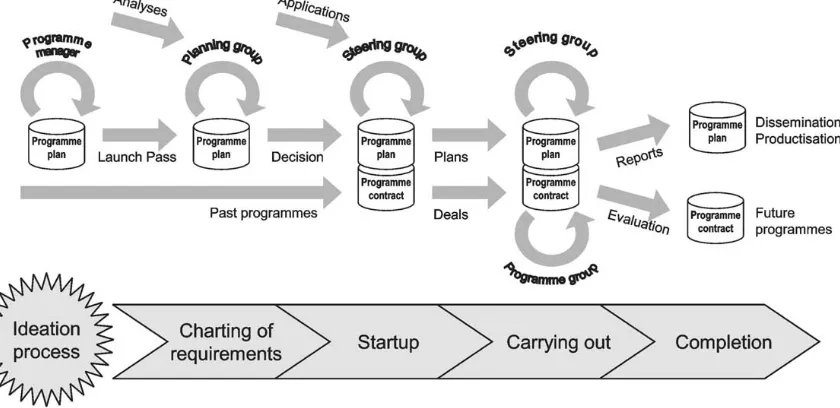
Fig 2.2: Learning Programme Model (Karvi et al, 2003)
The model in figure 2.2 depicts how one starts with an initial charting of requirements,
which in turn is used for the identification of required competencies on a project. It then
proceeds and as the project moves forward new issues are identified and appropriate
competencies added to the project team. This process continues till the end of the project.
The overall, completion of this process happens at the completion of the project.
2.5 Project Management Competency
Pinkowska et al. (2011) classified the softer skills of a project manager into six groups:
human resource management, team management, conflict management, communication
management, self-management and leadership. They have gone further and have defined
the sub-processes within each of these softer skills. This paper has also attempted to
define the sequence of these sub-processes in achieving a high level of competence for a
management students to identify the transferable skills for the project manager and the
ideal mode of teaching. They identify interpersonal skills, time management, critical
thinking, and communicating as some of the key transferable skills. However, they have
done this survey for university students only, and their findings have to be applied to
working professionals before it can be implemented to project manager training. Ujaiko
et al. (2011) have contended that the need for this investigation was driven by the need to
address new developments and challenges within the profession such as a new mindset
(Hartman, 2008), growing complexity in the project conceptualization (Dalcher, 2009),
and the requirement for project managers to be transformed from trained technicians into
reflective practitioners (Crawford et al., 2006). Whereas, Bredin (2008) contended that
the current project management organisations only look at project capability, functional
capability, and strategic capability. What is missing completely is the people capability
dimension. Bredin (2008) developed a prism type framework where they have identified
different surfaces with people capability as a node. This paper presents different people
related issues that need to be covered on each face of the prism to include people
capabilities.
Alam et al. (2008) highlight three different schools of thought that are used worldwide
for assessing the project management competence. The first one is the input approach,
common in the USA, which assumes that individuals require knowledge, skills and
behaviours to be competent at work. The second one is the UK based process approach
which accounts for processes and functions needed by project managers to deliver
which focuses on the actions of project managers to deliver projects. Although there are
subtle differences in the types of competencies identified through the three approaches,
but still the general list of competencies are quite similar in the three countries as
documented later in this section.
Ira and Baroudi (2008) have tried to elicit the types of training in competence and skills
delivered to project managers and their inherent challenges. They have categorised the
competencies into technical and soft competencies. They contend that most of the
training and educational programmes in project management all over the world do a very
good job of imparting technical competencies since they are easy to teach. Whereas, the
soft competencies are difficult to acquire and provide, and there is a gap in what is being
delivered to practitioners worldwide. They cite Carbone and Gholston (2004) who said:
“While certain aspects of the profession might be learned in a classroom setting through
simulation and with case studies, there are other aspects of the job that require a
different type of experience. Particularly hard to train in a classroom are the soft-skill
aspects of the job.”
Walker and Walker (2011) analysed the leadership capabilities for project managers in
Australia. They have clearly established the authentic leadership traits; such as value
driven, authentic, aware, resilient, fair, realistic, and positive and their relationship
towards project success. In another research, Suikki et al. (2006) developed a project