International Journal of Emerging Technology and Advanced Engineering
Website: www.ijetae.com (ISSN 2250-2459, ISO 9001:2008 Certified Journal, Volume 7, Issue 12, December 2017)
215
A Comparative Investigation of Diabetes Prediction Methods
Based on Different Datasets
Manoj Niwariya
1,
Dr. Anil Rajput
21Asst. Professor, Department of Computer ApplicationMakhanlal Chaturvedi National University ofJournalism and
Communication (MCNUJC), Bhopal, M.P, India 2Principal, Govt. P. G. Nodal College, Sehore, M.P, India
Abstract- Each of the studies accessible in this paper are distinct in their data and methodological approach but are linked in their common goal to inform population-based risk prediction for diabetes. Altogether, these studies can inform public health aspects of diabetes & obesity and epidemiological methods. a novel risk tool - The Diabetes Population Risk Tool (DPORT) - used to estimate the occurrence of type 2 diabetes that may be functional at the population stage using publicly available data was created. Four important goals were achieved with this work. First an algorithm to predict the incidence of diabetes with good discrimination and accuracy was developed. Secondly, an important policy advantage was achieved by building the tool so that it can be applied to the current risk factor surveillance data (routinely collected survey data) that is publicly available in Canada. This allows DPORT to be used by a wide audience of health planners to accurately estimate diabetes incidence and quantify the impact of interventions. Thirdly, the vigor of the validation of DPORT demonstrates a framework, which should be applied to the validation of other population-based risk algorithms.
Keywords: Dataset, Diabetes, Diagnoses, Machine
learning, Data mining, Diabetes mellitus, Diabetic
complications.
I. INTRODUCTION
Diabetes Mellitus is a chronic metabolic disease where the affected patients have disturbed glucose regulation, which, if left untreated results in elevated blood glucose levels. The disease categorized into two part ; type 1 diabetes and type 2diabetes. In type 1diabetes, the pancreas never again creates insulin because of an auto-invulnerable devastation of the pancreatic insulin delivering β-cells. Type 2diabetes is a typical diagnosis for a few distinctive basic causes to breaking down glucose control, for example, lessened insulin affectability and delayed or decayed pancreatic insulin reaction. There is a solid hereditary segment to the danger of both type 1 and type 2. The etiology behind the sudden auto-safe assault prompting type 1 is still darkened, however some confirmation point to that viral infections may assume a key part in the activating system. Type 2 diabetes ordinarily develops over various years previously diagnosis, and is unequivocally associated with inactive way of life and overweight, yet the occurrence additionally increments with age.
Diabetes Type 1 and the Glucoregulatory System Diabetes type 1 is, as previously mentioned, a chronic disease where the β- cells of the pancreas have stopped to produce insulin. This is in most cases due to an auto-immune attack, but may in rare cases also be caused by sustained injuries from accidents or pancreatic cancer. In order to understand the disease, a epigrammatic overview of the glucoregulatory system is presente for a more extensive review. The Glucoregulatory System The glucoregulatory system is concerned with glucose metabolism and the insulin/glucose instruments expected to keep up normoglycemia. Fig. 1.1 presents a streamlined diagram of the stream of glucose and insulin between the most vital organs applicable for this system. Below, a short description of these organs and their role in the so-called absorptive state and the post-absorptive state, the two parts that make up the metabolic cycle, is given. A epigrammatic explanation of insulin absorption from insulin injections will also be presented. Emphasis will be put on the digestive system and insulin absorption from injections. The absorptive condition is the time following a meal during which the ingested carbohydrates are digested and absorbed. During this period, excess glucose is absorbed and stored for later use. The post-absorptive state is the time after a feast when the gastro-intestinal tract is empty and energy has to be provided by the body’s own storages.
The Glucoregulatory System: The glucoregulatory system is concerned with glucose metabolism and the insulin/glucose mechanisms needed to maintain normoglycemia. Fig.1.1 presents a rearranged review of the stream of glucose and insulin between the most critical organs significant for this system. Below, a short description of these organs and their role in the so-called absorptive state and the post-absorptive state, the two parts that make up the metabolic cycle, is given. A concise depiction of insulin absorption from insulin injections will also be presented. Emphasis will be put on the digestive system and insulin absorption from injections.
International Journal of Emerging Technology and Advanced Engineering
Website: www.ijetae.com (ISSN 2250-2459, ISO 9001:2008 Certified Journal, Volume 7, Issue 12, December 2017)
[image:2.595.52.279.130.252.2]216
Figure 1.1 Overview of the glucoregulatory system describing therelationship between the flux from the gut into blood system.
During the absorptive stage, glucose is converted and stored as the polysaccharide glycogen, mainly in the liver, but also to some extent directly in the muscle cells. This process is stimulated by insulin. During the post-absorptive stage, the liver glycogen storage is separated to glucose and released into the blood stream, providing energy for the body cells. This process is stimulated by glucagon and inhibited by insulin. Apart from converting glycogen to glucose, new glucose can be formed from protein and fat by gluconeogenesis. The metabolism of consumed alcohol inhibits this process which may result in severe hypoglycemia in IDDM patients.
In the pancreas, two important hormones relevant to the glucoregulatory system are synthesized, namely insulin and glucagon. Insulin release is mainly stimulated by elevated blood glucose concentration. Therefore, substantial amounts are released in the absorptive stage, If the glucose stage is raised due to the absorption from the gut. Glugacon, which has the opposite effect on the hepatic balance, is accordingly released If blood glucose attentiveness falls. These two hormones are thus in a feedback arrangement with the blood glucose concentration—controlling the glucose metabolism. In type 1 patients the insulin feedback is not functional. Another hormone group of importance during the absorbtive stage is the incretine gut hormone group. Incretine is secreted during meal uptake and stimulates pancreatic insulin release and inhibits the glucose flux from the gut into the blood stream. Impaired incretine function is accepted to assume a critical part to the reduced and impaired insulin response of type 2 patients
Insulin-dependent tissue (IDT) is needy on insulin to utilize glucose. This mechanism is discussed in the insulin section below. A significant portion of the insulin-dependent tissue is invented of skeletal muscles. In the absorptive state, skeletal muscle cells not only consume the glucose directly, but also convert some to glycogen, providing an energy storage for later use in a local depot. Insulin independent tissue (IIT), such as the brain and the central nervous system, do not need insulin to utilize glucose.
Insulin: Insulin is the main hormone controlling the glucose metabolism. It is is accepted to assume a critical part three peptide parts; an A-, B- and C-chain. In healthy subjects it is created in the β-cells in the pancreas, whereas IDDM patients depend mostly on injections of artificially produced insulin analogs. Three categories of different types of therapeutic insulins exist; rapid-, intermediate and longacting insulins. The long-acting insulins are used to cover the basal metabolism, i.e., mainly to support the insulin-dependent tissue in the post-absorptive state. The most recent insulin types of this category, detemir and glargine type have almost flat pharmacokinetic profiles. Rapidacting insulins, such as lispro aspart and glulisine are designed to handle the glucose flux following a meal in the absoptive state. Therefore, these insulins have a short pharmacokinetic profile with a distinct peak after about 60 minutes. Intermediate-acting insulin are a mix of both, and are often used to support in cases when some insulin production is still left, i.e., insulin-dependent type 2 patients or the socalled latent auto-immune diabetes (LADA) patients
Insulin is normally injected in the subcutaneous tissue of the torso or legs. Rapid-acting insulin is injected in the abdominal fat layer, whereas long-lasting insulin is usually taken in the upper side of the thigh. From these depots the insulin is transferred to the blood system via the capillaries. The absorption rate depends on a series of factors. One contributing factor is the capillary density. A higher density results in a greater diffusion area between the depots and the capillaries. The abdominal region has the highest capillary density and the thigh the lowest. This explains why rapid-acting insulin is preferably infused in the abdominal fat layer and long-lasting in the thigh the size of the insulin molecules is a dominant rate limiter. Large molecules will have difficulties passing through the capillary pores.
Figure 1.2 Insulin receptor and glucose transporter cycle. Reproduced from.
[image:2.595.325.550.553.665.2]International Journal of Emerging Technology and Advanced Engineering
Website: www.ijetae.com (ISSN 2250-2459, ISO 9001:2008 Certified Journal, Volume 7, Issue 12, December 2017)
217
Therefore, zinc is mixed to the insulin solution in slow-acting insulins, thereby considerably reducing the absorption rate In the rapid-acting insulins, the insulin molecules are mainly monomeric or dimeric. They have been modified so that hexamer formation is completely avoided, and are also called monomeric insulins. Another major factor affecting the absorption rate is the size of the injection dose. A large dose reduces the ratio involving the absorption area and the depot volume, thus reducing the absorption. Various investigations have been undertaken, all indicating a linear relationship between insulin dose and absorption half-time .These ponders have been performed using slow-acting or intermediate-acting insulins. However, studies point toward that the linear relationship is not valid for monomeric insulin. Finally, blood flow and temperature of the injected site have a considerable donation to absorption rate. Raised temperature enhances the disassociation of hexameric insulin and accelerates insulin diffusion, and increased blood flow raises absorption rate. Thus, practice assumes a key part for absorption, since it raises both body temperature and blood flow. After the absorption from the depots, the insulin is circulated in the blood system and finally interacts with a insulin receptor at the cell surface.The insulin receptors are so-called tetramers, consisting of two α- and two β-subunits. The α-subunits are completely extracellular and fill in as a coupling site for the insulin molecule. When the insulin has attached to the α-subunits, a signal process is initiated via the β-subunits, resulting in increased glucose transporter activity. The glucose transporters facilitate glucose cell membrane crossing, thereby reducing blood glucose concentration. The receptor/transporter cycle can be seen in Fig. 1.2. There are dissimilar types of glucose transporters and, so far, five different types have been found. Not all of these types require insulin to become active. Therefore, the glucose utilization is divided into insulin-dependent and insulin-independent utilization. It is a wellknown fact that exercise enhances insulin sensitivity and is therefore one part of common type 2 therapy. However, what actually causes the increased insulin sensitivity is still not well understood. Studies show that the GLUT4 transporter activity is stimulated, resulting in increased insulin-dependent glucose utilization.
II. PROTOCOL AND DATA CHARACTERISTICS
The clinical piece of the DIAdvisor project consisted of three clinical studies; the data acquisition (DAQ) trial (2009), the DIAdvisor I (2010) and DIAdvisor II (2011-2012) trials. The purpose of the first trial was to collect data so as to encourage model and algorithmic development of the individual modules of the DIAdvisor system. The two following trials were set up for testing and validating the entire system in clinical settings.
The study introduced in this theory are based on retrospective analysis of the data collected in the DAQ and DIAdvisor I trials
Equipment
During the trials, the patients were equipped with sensor gadgets so as to collect vital signs of potential interest in metabolic modeling.
Glucose Sensors
[image:3.595.320.539.428.535.2]Blood glucose is for the most part measured manually by the individual patient using a personal glucose meter. A small blood sample is analysed in a test strip by the meter using enzymatically catalyzed-based electro-chemical or photometric methods. Today, there exist more than 27 different personal glucose meters from 18 different manufacturers. The accuracy requirements of these is generally quite demanding, e.g., meters set apart with the European CE mark should comply with the DIN EN ISO 15197 standard, specifying that the measurements may not differ more than 15 mg/dl for glucose concentration underneath 75 mg/dl and less than 20 % for glucose concentration above 75 mg/dl, when evaluated against a laboratory equipment such as a Yellow Springs Instrument Analyzer. Other norms and regulations have similar requirements
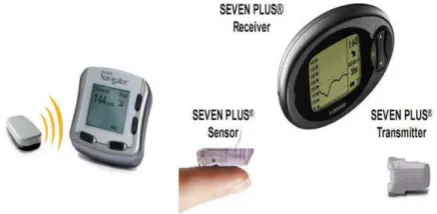
Figure 1.4 CGM systems used in the DIAdvisor project; the Abbott Freestyle CGM system, (left), and the Dexcom7 Plus CGM system
(right)
Vital Signs Sensors
During the DAQ trial the patients wore the Clinical LifeShirt from VivoMetrics, which is specially designed for clinical trials. This non-invasive monitoring system constantly gathers, records and investigations a few fundamental signs. To quantify respiratory capacity, sensors are woven into the shirt around the wearer's chest and guts. A solitary channel ECG measures heart rate, a three-hub accelerometer records stance and action level, and a thermometer measures the skin temperature.
Experimental Protocols and Conditions
International Journal of Emerging Technology and Advanced Engineering
Website: www.ijetae.com (ISSN 2250-2459, ISO 9001:2008 Certified Journal, Volume 7, Issue 12, December 2017)
218
The amount of carbohydrates included in each meal was about 40 (45 in DAQ), 70 and 70 grams, respectively. Additional snacks, in some cases related to counter-act hypoglycemia, were also digested. No specific intervention on the usual diabetes treatment was undertaken during the studies, since a truthful picture of normal blood glucose fluctuation and insulin-glucose interaction was pursued. Meal and insulin administration were noted in a logbook, glucose was monitored by the Continuous Glucose Measurement system and by frequent blood glucose measurements in the DAQ trial (37 measurements daily according to the protocol). The outcome, however, was that 39, 37 and 7 measurements (Montpellier, Padova and Prague) were made on average every day. In the DIAdvisor B and C trials, even more reference measurements were collected, making the average 43 measurements a dayGraphical Data Evaluation Tool
The trial data was continuously uploaded into an Oracle database on a common FTP-server, from which the model developers could download data as they became available. In order to facilitate data overview and management, a standalone Graphical User Interface (GUI), it was developed in Matlab code [MathWorks, 2012]. Using this GUI, different data channels and time periods could be selected for any individual patient in order to evaluate the data for completeness and correctness, before extracting and exporting them into a single Matlab data file. The evaluation described in section 3.1 was performed using this tool.
Glucose Data Characteristics
Before digging into modeling and prediction of glucose dynamics, some interesting features of the glucose data are worthwhile to explore a little more indepth.
Data collocation
Data collected during the DAQ trial Visit 2, described further were considered to the purposes of model identification. The carbohydrate content ucarb of the meals reported in the patient diary was utilized as contribution to the model. Given the every now and again drawn blood tests, it was chosen to utilize the real (interjected and consistently resampled) insulin examines for identification and validation purposes. The physiological insulin kinetics model was used at a later stage, to test the blood glucose response to 1 [IU] of fast acting insulin. It was decided to use blood glucose measurements from YSI [Yellow Spring Instruments, 2013] measurements instead of the CGM time-series because of the poor quality of the FreeStyle NavigatorTM (see Table 3.4 for accuracy evaluation and Section 3.8 for comments). Last, Montpellier patients were selected for bigger quantity of data collected with respect to the other sites participating.
Data analysis and pre-processing
Information investigation was performed in the accompanying request
The autospectra (control spectra) of data sources and yield demonstrating the recurrence substance of the signs explored are reported for the representative patients CHU102. The soundness range between the data sources and thecontrolled.
Problem formulation
Given the inputs:
Interpolated add up to plasma insulin fixation from drawn blood tests ui [µU/mL];
Plasma glucose rate of appearance after starch intestinal assimilation ˆuˆ [mg/kg/min];
and the output:
interpolated blood glucose yBG [mg/dL] from drawn blood samples
the goal was to locate an individual-particular and physiological applicable model of the glucose-insulin connection for each of the subjects in the chose populace. Least prerequisites on the model were.
stability; white residuals;
qualitative right blood glucose reactions to 1 [IU] quick acting insulin;
10 [g] starches;
Additional requirement on the model were:
FIT ≥ 50% on 60-minutes-ahead model-based prediction on validation data;
VAF ≥ 50% on 60-minutes-ahead model-based prediction on validation data.
III. LITERATURE REVIEW
International Journal of Emerging Technology and Advanced Engineering
Website: www.ijetae.com (ISSN 2250-2459, ISO 9001:2008 Certified Journal, Volume 7, Issue 12, December 2017)
219
As this disease is prominent among the tropical countries like India, an intense research is being carried out to deliver a machine learning model that could learn from previous patient records in order to deliver smart diagnosis. This research work aims to improve the accuracy of existing diagnostic methods for the prediction of Type 2 Diabetes with machine learning algorithms. The proposed algorithm selects the essential features from the Pima Indians Diabetes Dataset with Goldberg's Genetic algorithm in the pre-processing stage and a Multi Objective Evolutionary Fuzzy Classifier is applied on the dataset. This algorithm works on the principle of maximum classifier rate and minimum rules. As a result of feature selection with GA the number of features is reduced to 4 from 8 and the classifier rate is improved to 83.0435 % with NSGA II in training rate of 70% and 30% testing.L. Yousefi, L. Saachi, R. Bellazzi, L. Chiovato and A. Tucker, [2] Comorbidities, for example, hypertension and lipid metabolism are frequently related in ailments, for example, diabetes, and the early forecast of these is of extraordinary esteem when endeavoring to manage movement. This is the begin of a task to display different comorbidities in diabetes utilizing dynamic Bayesian systems with inactive factors keeping in mind the end goal to stratify understanding partners. In this paper, authors exhibit some underlying outcomes on a dataset where the class irregularity issue represents an issue because of the uncommon event of various individual comorbidities on a visit-by-visit premise. This is managed utilizing a bootstrap procedure that has been particularly intended for longitudinal information where the event of the positive class happens far not as much as the negative.
P. Zhao and I. Yoo, [3] Hospital readmissions within 30 days after discharge are costly and it has been a prior for researchers to identify patients at risk of early readmission. Most of the reported hospital readmission prediction models have been built with historical data and thus can outdate over time. In this work, a self-adaptive Thirty day diabetic hospital readmission prediction model has been developed. A diabetic inpatient encounter data stream was used to train the self-adaptive models based on incremental learning algorithms. The result indicated that the model can automatically adapt to the newly arrived data. The best model achieved an average AUC of 0.655 ± 0.078, which is consistent with static models built with the same dataset.
J. Henriques et al., [4] The principle objective of this work is the advancement of models, based on computational insight techniques, specifically neural networks, to anticipate the greatest oxygen consumption esteem.
While the most extreme oxygen consumption is an immediate sign of the cardiorespiratory fitness, several studies have also affirmed it also as an effective indicator of risk for adverse outcomes, such as hypertension, obesity, and diabetes. In this way, the existence of simpler and precise models, establishing a contrasting option to standard cardiopulmonary exercise tests, with the possibility to be utilized in the stratification of the general population in daily clinical practice, would be of major importance. In the present study, diverse models were actualized and looked at: 1) the conventional Wasserman/Hansen condition; 2) straight regression and; 3) non-linear neural networks. Their performance was evaluated based on the “FRIEND - Fitness Registry and the Importance of Exercise: The National Data Base” [1] being, in the present study, a subset of 12262 individuals utilized. The precision of the models was performed through the calculation of sensitivity and specificity values. The results show the superiority of neural networks in the forecast of most extreme oxygen consumption.
A. Negi and V. Jaiswal, [5] Diabetes is a chronicle disease which increases with time and cause various other complications if not treated in early stage, it is also a reason of early death in diabetes patients due to other complication. There are so many people’s all over the world who are suffering from diabetes and still undiagnosed. Many researchers have developed computational methods for diabetes diagnosis but those systems are not widely applicable and reliable because these methods are tested and trained on single dataset.. Considering the global nature of diabetes there is need of a method which is tested trained and validated on all type of datasets or on all the available dataset. No such method have been still developed which is tested, trained and validated on different dataset. In the present study a method is developed using combined datasets using machine learning technique. This system is more reliable because of trained, tested and validated on combine dataset.
International Journal of Emerging Technology and Advanced Engineering
Website: www.ijetae.com (ISSN 2250-2459, ISO 9001:2008 Certified Journal, Volume 7, Issue 12, December 2017)
220
The successful medicinal services conveyance and arranging strongly depend on data (e.g. sensed data, diagnosis, and administration data); the higher nature of the data, the better will be the patient assistance. The applications are also especially exposed to a relevant domain (i.e., patient's mobility, correspondence technologies, execution, data heterogeneity, and so forth.) that has an important impact on information management and application achievement.This risk score helps the physicians in recommending appropriate care for the patients.
[image:6.595.61.538.237.719.2]B. R. Prasad and S. Agarwal, [7] Databases in clinical scenario have tremendous measure of data in regards to patients and clinical history associated. Here, data mining plays key part in searching for patterns inside tremendous clinical data that could give useful basis of learning to productive and powerful decision-production.
Table of Literature Review
SR. NO. TITLE AUTHORS YEAR APPROACH
1
"Genetic algorithm based feature
selection and MOE Fuzzy
classification algorithm on Pima
Indians Diabetes dataset,"
R. Vaishali, R. Sasikala,
S. Ramasubbareddy, S.
Remya and S. Nalluri,
2017
Indians Diabetes Dataset with
Goldberg's Genetic algorithm in
the pre-processing stage and a
Multi Objective Evolutionary
Fuzzy Classifier
2
"Predicting Comorbidities Using
Resampling and Dynamic Bayesian
Networks with Latent Variables,"
L. Yousefi, L. Saachi, R.
Bellazzi, L. Chiovato
and A. Tucker,
2017
The different individual
comorbidities on a visit-by-visit
basis a bootstrap technique
3
"A self-adaptive 30-day diabetic
readmission prediction model
based on incremental learning,"
P. Zhao and I. Yoo, 2017
A diabetic inpatient encounter data
stream was used to train the
self-adaptive models based on
incremental learning algorithms
4
"A non-exercise based V02max
prediction using FRIEND dataset
with a neural network,"
J. Henriques 2017
A computational insight
techniques, specifically neural
networks
5
"A first attempt to develop a
diabetes prediction method based
on different global datasets,"
A. Negi and V. Jaiswal, 2016 A combined datasets using
machine learning technique
6
"Predicting the risk of readmission
of diabetic patients using
MapReduce,"
M. Gowsalya, K.
Krushitha and C.
Valliyammai,
2014
A novel solution using Hadoop
Mapreduce to break down
extensive datasets and concentrate
useful insights
7 "Modeling risk prediction of
diabetes — A preventive measure,"
B. R. Prasad and S.
Agarwal, 2014
A systematic data burrowing
approach for selecting best
indicators of diabetes
8 "Diabetic Prognosis through Data
Mining Methods and Techniques," S. S. and P. P. T., 2014
The two critical Data Mining
techniques v.i.z., FP-Growth and
International Journal of Emerging Technology and Advanced Engineering
Website: www.ijetae.com (ISSN 2250-2459, ISO 9001:2008 Certified Journal, Volume 7, Issue 12, December 2017)
221
Classification mechanism is broadly used apparatus of data mining utilized in social insurance applications to encourage disease diagnosis and expectation. Usually medical dataset are high dimension in nature containing numerous insignificant attributes or features and result poor classification with inaccuracies. Highlight selection is a strategy used for preprocessing the high-dimensional data to lessen data dimension and to expel repetitive and unimportant features. This paper provides a systematic data burrowing approach for selecting best indicators of diabetes among many attributes present in the database and gives a legitimate model to track the diabetes before its onset. It selects the most suitable classifier display for the given dataset through voting mechanism to accomplish best exactness and killing any biased result.S. S. and P. P. T., [8] Data mining now-a-days plays an essential part in forecast of diseases in medicinal services industry. Data mining is the process of selecting, investigating, and demonstrating a lot of data to discover obscure patterns or relationships useful to the data analyst. Medical data mining has risen flawless with potential for investigating concealed patterns from the data sets of medical domain. These patterns can be used for fast and better clinical decision making for preventive and suggestive medicine. However crude medical data are accessible broadly distributed, heterogeneous in nature and voluminous for common processing. Data mining and Statistics can on the whole work better towards discovering shrouded patterns and structures in data. In this paper, two critical Data Mining techniques v.i.z., FP-Growth and Apriori have been used for application to diabetes dataset and association rules are being delivered by both of these algorithms.
IV. PROBLEM STATEMENT
In diabetic real world data, the problem is especially important, since the two main inputs affecting the dynamics, meal and insulin intake, have opposing impact and similar dynamics, and generally act simultaneously. The aspect is further problematic since safety concerns impose constraints on the possibility to excite the system sufficiently (which of course doesn’t apply to simulated data). Thus, from an identification viewpoint, the impact from inputs may be entangled with one another, and it may be impossible to separate the impact of each input without considering constraints to the identification routine, incorporating prior information of the expected qualitative response. In [Percival et al., 2010], this was resolved by applying an experimental protocol, where a small meal and the corresponding bolus dose were separated by a few hours. However, such an approach yields only short data sets and may be infeasible, e.g., if re-estimation recurrently is required due to, e.g., shifting dynamics. The cause to this is unknown.
No difference was found flanked by the different clinical sites, but large interpersonal differences. Further in-depth analysis should be undertaken to investigate whether any stratifications are possible based on basic patient characteristics, as those collected in the study.
Body weight and diabetes risk: Raised weight is a main cause of T2DM. A meta-analysis taking a gander at risk factors for T2DM following GDM announced that there was substantial and consistent confirmation to support that anthropometric measures of obesity were positively identified with T2DM risk (Baptiste-Roberts et al., 2009). Further, generally small weight pick up (roughly 0.7-1.2 kg/m² every decade) was associated with the two crease increased risk of creating T2DM contrasted with those who stayed a stable weight in the Nurses Health Study (Colditz, Willett, Rotnitzky, and Manson, 1995).
Special considerations for ladies with a current history of gestational diabetes: Despite the benefits of the lifestyle modifications listed over, couple of ladies are taking part in these behaviors following their GDM-influenced pregnancies. In fact, Swan and colleagues reported that 43% of the participants in their study were not engaged in any diabetes prevention behaviours, including weight management (Swan, Kilmartin, & Liaw, 2007). The research to-date suggests that suboptimal engagement in diabetes anticipation behaviors might be the result of counterproductive wellbeing beliefs, including low self adequacy and erroneous risk discernment.
There are several ways in which an algorithm intended for population health application differs from an algorithm intended for clinical use. For a populace calculation the information variables must be representative of the whole populace (in a perfect world populace based), important for wellbeing approach decisions makers, accessible to a wide gathering of people, and consistently gathered so that estimates can be refreshed much of the time Often algorithms used in clinical settings maximized discrimination at the expense of accuracy, meaning that the algorithms do well at rank ordering subjects but not as well at accurately predicting actual risk. In contrast, algorithms used in populations may favor accuracy over discrimination, because population health decision makers rely more heavily on estimates of absolute risk and numbers of disease cases versus rankordering of individuals
V. CONCLUSION AND FUTURE SCOPE
International Journal of Emerging Technology and Advanced Engineering
Website: www.ijetae.com (ISSN 2250-2459, ISO 9001:2008 Certified Journal, Volume 7, Issue 12, December 2017)
222
Further, future work will be carried out to extend the study on a larger population. By doing so, it will become apparent whether or not it is possible to classify subjects based on their clinical characteristics so to build appropriate nominal models, suitable as instruments for therapy, for each of the category. Last, control design based on the presented model will be pursued.REFERENCE
[1] R. Vaishali, R. Sasikala, S. Ramasubbareddy, S. Remya and S. Nalluri, "Genetic algorithm based feature selection and MOE Fuzzy classification algorithm on Pima Indians Diabetes dataset," 2017 International Conference of the IEEE on Computing Networking and Informatics (ICCNI), Lagos, 2017, pp. 1-5.
[2] L. Yousefi, L. Saachi, R. Bellazzi, L. Chiovato and A. Tucker, "Predicting Comorbidities Using Resampling and Dynamic Bayesian Networks with Latent Variables," 2017 IEEE 30th International Symposium on Computer-Based Medical Systems (CBMS), Thessaloniki, 2017, pp. 205-206.
[3] P. Zhao and I. Yoo, "A self-adaptive 30-day diabetic readmission prediction model based on incremental learning," 2017 IEEE International Conference on Bioinformatics and Biomedicine (BIBM), Kansas City, MO, USA, 2017, pp. 895-898.
[4] J. Henriques et al., "A non-exercise based V02max prediction using FRIEND dataset with a neural network," 2017 39th Annual International Conference of the IEEE Engineering in Medicine and Biology Society (EMBC), Seogwipo, 2017, pp. 4203-4206. [5] A. Negi and V. Jaiswal, "A first attempt to develop a diabetes
prediction method based on different global datasets," 2016 Fourth International Conference of the IEEE on Parallel, Distributed and Grid Computing (PDGC), Waknaghat, 2016, pp. 237-241.
[6] M. Gowsalya, K. Krushitha and C. Valliyammai, "Predicting the risk of readmission of diabetic patients using MapReduce," 2014 Sixth International Conference of the IEEE on Advanced Computing (ICoAC), Chennai, 2014, pp. 297-301.
[7] B. R. Prasad and S. Agarwal, "Modeling risk prediction of diabetes — A preventive measure," 2014 9th International Conference of the IEEE on Industrial and Information Systems (ICIIS), Gwalior, 2014, pp. 1-6.
[8] S. S. and P. P. T., "Diabetic Prognosis through Data Mining Methods and Techniques," 2014 International Conferencev of the IEEE on Intelligent Computing Applications, Coimbatore, 2014, pp. 162-166.
[9] J.Yensen and S. Naylor, "The Complementary Iceberg Tips of Diabetes and Precision Medicine," J. Precision Med, vol. 3,pp. 21-39, 2016.
[10] E.G. Krug, "Trends in diabetes: sounding the alarm," The Lancet, vol. 387, pp. 1485-1486, 2016.
[11] R.Priya and P. Aruna, "Diagnosis of diabetic retinopathy using machine learning techniques," Journal on Soft computing, vol. 3, pp. 563-575, 2013.
[12] S.F. B. Jaafar and D. M. Ali, "Diabetes mellitus forecast using artificial neural network (ANN)," in 2005 Asian Conference on Sensors and the International Conference on New Techniques in Pharmaceutical and Biomedical Research, 2005, pp. 135-139. [13] D.Mellitus, "Diagnosis and classification of diabetes mellitus,"
Diabetes care, vol. 28, p. S37, 2005.
[14] B.Soria, E. Roche, G. Bema, T. Leon-Quinto, J. A. Reig, and F. Martin, "Insulin-secreting cells derived from embryonic stem cells normalize glycemia in streptozotocin-induced diabetic mice," Diabetes, vol. 49, pp. 157-162, 2000.