University of East London
Professional Doctorate in Applied Educational and Child Psychology
Exploring perceptions of school through negative
school experience – what can Educational
Psychologists learn?
An interpretative phenomenological study with
young mothers of pre-school children.
Marie Osborn
A thesis submitted in partial fulfilment of the requirements of the University of East London for the degree of Professional Doctorate in Applied Educational and Child Psychology
i
University of East London School of Psychology
Professional Doctorate in Applied Educational and Child Psychology
Declaration
This work has not previously been accepted for any degree and is not being concurrently submitted for any degree.
The research is being submitted in partial fulfilment of the requirements of the Doctorate in Applied Educational and Child Psychology.
This thesis is the result of my own work and investigation, except where otherwise stated*. Other sources are acknowledged by explicit references in the text. A full reference list is appended.
I hereby give permission for my dissertation, if accepted, to be available for photocopying and inter-library loans, and for the title and summary to be made available to outside organisations.
Name: Marie Osborn
Signature:
Date:
ii
Abstract
A body of research has focused on exploring educational attainment and links between outcomes from one generation to the next, with a complex array of factors revealed. One influential factor linked to outcomes is the aspirations that parents have about school for their children. Research to date however has provided only limited insight into the ways parents, or mothers in particular view school for their child, based on their own experiences. This study aimed to understand more about what a negative school experience meant to a group , mothers of children 3 years and under. It also sought to elicit their views about their children’s schooling. Through a process of interpretative phenomenological analysis of the semi-structured interviews, this study identified factors that served to help and support them around their school days, and what could potentially help them gain more confidence in their children’s education.
iii
Table of Contents
Declaration ... i
Abstract ... ii
Table of Contents ... iii
List of Tables ... viii
List of Figures ... ix
List of abbreviations ... x
Acknowledgements ... xi
Dedication... xii
A note to the reader on voice of the author and terminology ... xiii
Chapter One: Introduction ... 1
1:1 Chapter overview ... 1
1:2 Focus of the research – origins and development ... 1
1:3 Introduction to epistemological underpinnings ... 4
1:4 Aims and rationale ... 5
1:4:1 Why does the parental role matter? ... 6
1:4:2 Could parental experiences and expectations interact with those of their children? ... 8
1:4:3 Why consider young parents as participants? ... 8
1:4:4 Why focus on negative school experience? ... 10
1:4:5 How could this study make a difference? ... 10
1:4:6 What questions does the research seek to address? ... 11
1:5 Distinctive contribution to research and Educational Psychology ... 12
1:5:1 Distinctive contribution ... 12
1:5:2 Relevance to Educational Psychology ... 13
1:6 Reflexive thinking ... 14
1:7 Summary of chapter and overview of the thesis ... 17
Chapter Two: Literature Review ... 18
2: 1 Overview and rationale ... 18
2:1:2 Process of literature search ... 18
iv
2:2 Critique of literature ... 23
2:2:1 Parental impact on educational outcomes ... 24
2:2:2 Exploring parental involvement further: the implicit factors... 26
2:2:3 Intergenerational factors around educational outcomes ... 32
2:2:4 Parents reflecting on their school days ... 38
2:2:5 Critique of methods used... 42
2:3 Parental perceptions of school: the theoretical relevance to psychology ... 43
2:3:1 Introduction and context ... 43
2:3:2 Family systems, an ecological perspective ... 46
2:3:3 Attachment and school factors ... 48
2:4 Summary of Chapter ... 50
Chapter Three: Methodology ... 51
3:1 Overview of methodology and research questions ... 51
3:2 Ontology, epistemology and design ... 52
3:2:1 The choice of Interpretative Phenomenological Analysis (IPA) ... 53
3:2:2 Designing the research ... 58
3:3 Context and location of study ... 60
3:4 Ethical Considerations... 61
3: 5 Participants ... 63
3:6 Data collection and reflexivity ... 66
3:6:1 Understanding the power relationships in research interviews ... 69
3:7 Data Analysis ... 72
3:8 Assuring quality within this study ... 75
3:9 Summary of methodology ... 78
Chapter Four: Findings ... 79
4:1 Introduction to findings ... 79
4:1:1 Consideration of the participant’s use of language ... 80
4:2 Overview of the participants ... 80
4:3 Presentation of super-ordinate themes and subthemes ... 82
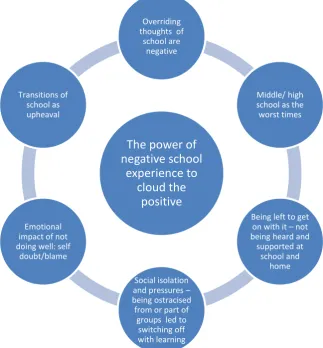
4:4 Super-ordinate theme one: The power of negative school experience to cloud the positive ... 85
v
4:4:2 Sub-theme: High and Middle school identified as the worst
times ... 89
4:4:3 Sub-theme: Being left to get on with it – not being heard / supported at school and home ... 91
4:4:4 Sub-theme: Social isolation and pressures – being ostracised from or part of groups led to switching off with learning ... 94
4:4:6 Sub-theme: Transitions of school as upheaval ... 98
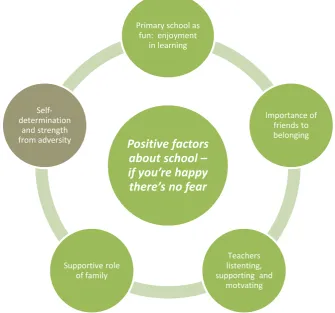
4:5 Super-ordinate theme two: Positive factors about school – if you’re happy there’s no fear ... 101
4:5:1 Sub-theme: Primary School as fun: enjoyment in learning ... 103
4:5:2 Sub-theme: The importance of friends to belonging. ... 105
4:5:3 Sub-theme: Teachers listening, supporting and motivating... 107
4:5:4 Sub-theme: Supportive role of family ... 109
4:5:5 Sub-theme: Self-determination and strength from adversity ... 111
4:6 Super-ordinate theme three: Psychological impact and consequences of bullying experiences ... 114
4:6:1 Sub-theme: Impact on mental health: Power of bullying to destroy confidence ... 115
4:6:2 Sub-theme: Sense of justice/injustice and a need for control... 117
4:6:3 Sub-theme: Inescapable cycle of bullying ... 119
4:7 Super-ordinate theme four: Conflicting emotions on child going to school ... 121
4:7:1 Sub-theme: Desire for a different experience to own ... 122
4:7:2 Sub-theme: Worry and fear of school ... 124
4:7:3 Sub-theme: Optimism about school ... 126
4:8 Super-ordinate theme five: Giving thought to the future - how to be confident about school ... 128
4:8:1 Sub-theme: Need to gain trust and be confident about child’s school 129 4:8:2 Sub-theme: Need for communication with child, school and others ... 130
4:8:3 Sub-theme: Desire to control their child’s experience ... 132
4:8:4 Sub-theme: Responsibility of adolescence and adulthood – the dichotomy of taking control ... 134
4:9 Summary of Chapter four ... 136
Chapter Five: Discussion and concluding comments ... 137
5:1 Overview of Chapter ... 137
vi
5:2:1 What do parents say about their school experience? ... 139
5:2:2 What common themes or ideas emerge about the participants’ current constructs of school? ... 142
5:2:3 What concerns do participants have about their child’s schooling? . 144 5:2:4 What ‘best hopes’ are expressed by participants for their children’s school experience? ... 145
5:2:5 What do participants identify from their own experience of school that may be relevant and important to share with their child's school? ... 146
5:3 Consideration of findings in relation to previous research/ literature ... 147
5:3:1 Findings in relation to parental involvement literature ... 148
5:3:2 Links to research into parental recollections/memories of school and intergenerational transmission ... 149
5:3:3 Consideration of theoretical underpinnings ... 154
5:4 Reflections upon the participant’s view of school for their child157 5:5 Limitations and critique of this study ... 160
5:6 Implications for theory and practice ... 164
5:7 Suggestions for future research ... 166
5:8 Reflexivity – researcher’s position in relation to this study ... 167
5:9 Application to Educational Psychology ... 168
5:10 Summary of Chapter ... 171
5:11 Concluding remarks ... 172
References... 175
Appendix 1a: Ethics application form ... 184
Appendix 1b: Ethics committee approval ... 191
Appendix 1c: Interview risk assessment for UEL ... 192
Appendix 2a: Information leaflet given to parents ... 193
Appendix 2b: Consent form ... 194
Appendix 2c: Screening tool ... 195
Appendix 3: Interview schedule ... 197
Appendix 4a: Immediate reflections post interviews ... 198
Appendix 4b: Scanned extracts from reflective journals ... 204
Appendix 5a: Sample of initial noting/emergent themes interview 2 ... 206
vii
Appendix 6 a-f: Photographs of clustering emergent themes, within & across cases...211 Appendix 7: Tables of 1st attempt super-ordinate themes /sub-themes across then within participants (figures 1 to 8) ... 214 Appendix 8: Example of clustering of sub-themes/emergent themes (Interview one – Jo)...222 Appendix 9a: Example of quotes linked to sub-themes/emergent themes ...226 Appendix 9b: Examples of participant voice linked to the research question constructs . ... 233 Appendix 10: Visual representation of findings: the five super-ordinate themes and related sub-themes ... 235 Appendix 11a: Tables illustrating synthesis of research papers ... 236 Appendix 11b: Tables illustrating synthesis of research papers (parental recollections & intergenerational transmission) ... 239 Appendix 12: Diagram of academic socialisation model by Taylor et al. (2004) ... 242 Appendix 13: Theoretical underpinnings to school belonging and happiness – a creative mind-map by the author ... 243 Appendix 14: Graphic representation of what the participants said about their school experiences (main research question). ... 244 Appendix 15: part two of information pack for participants: visual
representation of findings; school for child ... 245 Appendix 16: CD-ROM with verbatim transcripts from research
viii
List of Tables
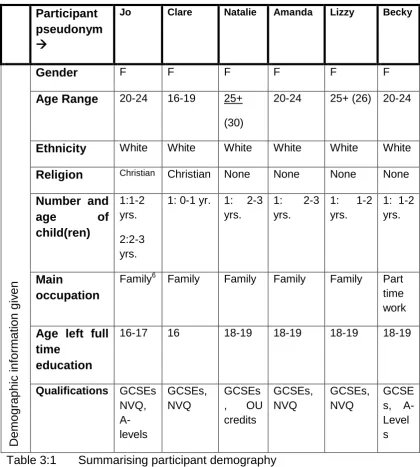
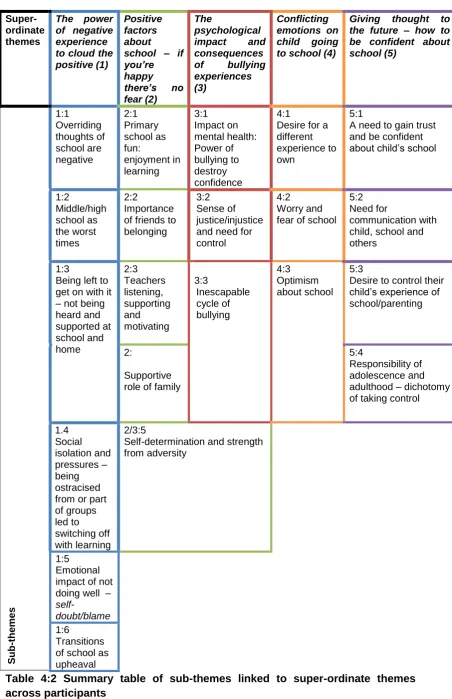
Table 2:1 List of inclusion and exclusion criteria in literature search……20 Table 3:1 Summarising participant demography……….66 Table 4:1 Table outline of participant demographics………..81 Table 4:2 Summary table of sub-themes linked to super-ordinate…... 83
themes across participants
ix
List of Figures
Figure 2:1 Epstein’s Typologies of parental involvement……….22
Figure 3:1 Research questions………...52
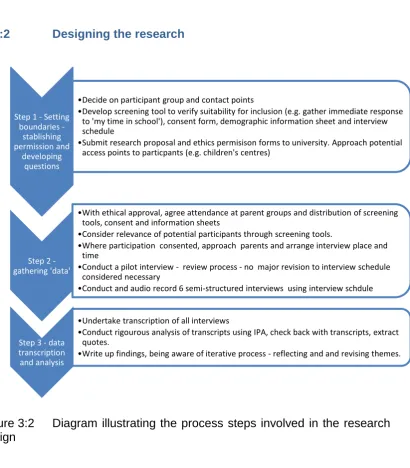
Figure 3:2 Diagram illustrating the process steps involved in the………...58 Research design
Figure 3:3 Process diagram illustrating the key stages in data analysis...73 Figure 4:1 Diagram representing the five super-ordinate themes..………82 Figure 4:2 Diagram representing super-ordinate theme one with………..85
clustered sub-themes
Figure 4:3 Diagram representing super-ordinate theme two with……….102 Related sub-themes
Figure 4:4 Diagram illustrating super-ordinate theme three and its…….114 related sub-themes
Figure 4:5 Diagram representing super-ordinate theme four with………121 clustered sub-themes
x
List of abbreviations
BPS British Psychological Society EP Educational Psychologist DfE Department for Education
EBSCO Elton B. Stephens CO (company) HCPC Health and Care Professions Council IPA Interpretative Phenomenological Analysis NELS National Education Longitudinal Study NCDS National Child Development Study OFSTED Office for Standards in Education SEN Special Educational Needs SES Socio-Economic Status US United States (of America)
xi
Acknowledgements
Firstly I would like to thank the seven mothers (one during the pilot interview) who gave up their time to participate in this study and who were so open and honest in their insights about school.
I would like to sincerely thank my supervisor, Dr. Sharon Cahill whose patience, support and encouragement has helped me to meet deadlines and keep moving forward, even when it seemed an impossible task. The other course students, course director, Professor Irvine Gersch and tutors have also provided on-going support and advice.
In addition I would like to thank my current and past employer who without their financial support; this doctorate would not even have started. My manager, Elaine has also given me unstinting encouragement with the doctorate and practical support with managing the ‘day job’, making the writing of the thesis a realistic possibility.
xii
Dedication
I am dedicating this thesis to my influences in the past; my late grandparents, Joyce and Reg. They never lived to see me complete my studies, but were so proud of all their grandchildren, they valued their education and accomplishments and for Reg, who always referred to me during my studies as ‘the professor’!
xiii
A note to the reader on voice of the author and terminology
This thesis is a qualitative and interpretative study on the phenomenon of negative school experience. The methodology used and findings are therefore focused on the particular interpretations and processes undertaken by the author. In order to retain this sense of the particular, this thesis will use the first person, passive voice in chapters three and four. Throughout the rest of the thesis, an academic voice in the third person will be used.
Many readers will be aware that educational and other terminology, and indeed the spelling of certain key terms, varies between English-speaking nations. For the purpose of this study, US or other non-UK terminology and spellings have been retained only where directly quoting non-UK authors; in the main text, UK terminology or spelling has been used throughout. Below is a table illustrating comparisons of ages/year group for the UK and US.
UK Year Ages School Key Stage
Nursery 3-4 Early
Years / Foundatio n Reception 4–5 Infant or Primary
Year One 5–6 Key
Stage 1
Year Two 6–7
Year Three 7–8
Junior or Primary
Key Stage 2
Year Four 8–9
Year Five 9–10
Year Six 10–11
Year Seven 11–12
Secondary
Key Stage 3 Year Eight 12–13
Year Nine 13–14
Year Ten 14–15 Key
Stage 4 Year Eleven 15–16
Year Twelve 16–17 Secondary or Sixth form college Key Stage 5 Year Thirteen 17–18
Drawn from Wikipedia article, 3/9/13
Ages U.S. Grade Child Care
3–4 Preschool 4–5 Pre-kindergarten
Elementary school
5–6 Kindergarten 6–7 First grade 7–8 Second grade 8–9 Third grade 9–10 Fourth grade 10–11 Fifth grade
Middle school
11–12 Sixth grade 12–13 Seventh grade 13–14 Eighth grade
High school
14–15 Ninth grade, freshman 15–16 Tenth grade, sophomore
1
Chapter One: Introduction
1:1 Chapter overview
This study aimed to understand negative school experiences from the perspective of parents, with a particular focus on mothers. It is set within the broader context of research into parental involvement and engagement in the life of their children, in particular with regard to school. The majority of contemporary research from within psychology and education suggests that the role parents play is central to the emotional, social and moral development of their child (Ainsworth, 1989; Kennedy, Landor, & Todd, 2010). Research has also explored the longer-term implications for parental involvement and educational outcomes (X. Fan & Chen, 2001; Messersmith & Schulenberg, 2008). This study is also set within the context of parental support for the child’s school-related activity and their role in supporting their development in a more holistic context (Barnett & Taylor, 2009; Ford, McDougall, & Evans, 2009). It is also recognised in some research that experience can be repeated from one generation to the next (Kaplan, Liu, & Kaplan, 2004; Pears, Kim, Capaldi, Kerr, & Fisher, 2013). This chapter will outline the fundamental principles that guided the researcher towards an interest in this area of research, an introduction to the epistemological position adopted, the focus and intentions of this study, and the distinctive contribution it aimed to make.
1:2 Focus of the research – origins and development
2
fundamental principles underlying the role of an applied psychologist must surely be to promote the best possible outcomes for children and their families, through a journey which they take together. For an EP, in particular, the role is broader: to support children and families within the context of their education, working with schools and related agencies to achieve this goal. Recognising the way research influences the development of psychology and at the same time, the ways in which research interacts with a broader socio-political context, is also important. By understanding further how we develop our ideas and thinking as human beings in this social, cultural and political environment, we can then hope to support ways of making positive change happen.
Within contemporary society, schooling and education have been established as fundamental human rights (United Nations General Assembly [UNGA] 1989). For many children the outcomes are enhanced significantly through the experience that school offers them. Charities world-wide (www.sos-schools.org ; www.schoolfund.org) campaign for the rights of all children to gain access to school and an education, safe in the (well–established) knowledge that through this institution change can happen; be that moving themselves and future generations out of poverty or developing a social responsibility and conscience. School may have many broad aims, and research has been undertaken to understand the implications of success in school (Salmela-Aro & Trautwein, 2013). Over recent decades, researchers have also attempted to understand further the complex interaction of factors that are at play when young people do not achieve success in school (Flouri & Buchanan, 2004; Kaplan et al., 2004). In particular, and with greater relevance to the area which this researcher seeks to understand better, some studies have examined the interaction of intergenerational factors as they relate to school experience (Kaplan et al., 2004; Miller, Dilworth-Bart, & Hane, 2011; Räty, 2007).
3
school or training’ this year to 17 and to 18 from 2015 (Education and skills Act 2008). Schools have adapted over the years to meet changes in needs of their population; for example, the increased age of children, the inclusion of children with complex or Special Educational Needs (SEN) within mainstream schools, and the political agenda. In recent years that political agenda has included publication of a paper ‘Every child matters’ (Department for Education and Skills [DfES] 2003) whereby schools and local authority support services were encouraged to work more closely together, and to recognise and support the needs of all children. This was based in part on the principles of Maslow’s (1943) hierarchy of needs, and the need to ensure children were properly protected and safeguarded. These principles were embraced by many schools and authorities, and some schools continued to emphasise these underlying principles beyond the change of Government in 2010. Schools also have a significant focus on targets and progression for children, reviewed against the increasingly rigorous inspection frameworks enforced by OFSTED, (Office for standards in Education [OFSTED], 2013). New approaches to supporting vulnerable children with SEN ('Suppport and Asipration', Department for Education [DfE], 2012) have also been part of the current Government’s move to support parents in making decisions about their children’s education. Alongside this have been moves to encourage schools to gain greater independence from local authority influence, such as through the development of academies and free schools.
4
describe and make sense of their own thinking around school, and to consider how their constructs may have formed by reflecting on their own past school experiences.
1:3 Introduction to epistemological underpinnings
This section will briefly outline the choice of an interpretative phenomenological analysis (IPA) approach within this study; this will be expanded further in chapter three.
An intense curiosity to know more about humans, their relationships and interactions within the world, and the way they use language to convey this individuality, are at the heart of this researcher’s approach to psychology. The researcher very much adopts a constructionist view and is therefore approaching this study from within a qualitative research paradigm as opposed to a pure post-positivist and empirical paradigm that considers there are answers to hypotheses raised within science that can be proved or disproved. The ontological perspective adopted therefore accepts that multiple realities and views of the world are possible and are out there to be explored and understood. Interpretative phenomenological analysis was then chosen as the specific research methodology as it suited best the desire to really understand the experience of parents at critical points in their lives; firstly becoming parents, and secondly considering their children going to school. Smith, Flowers and Larkin (2009) explain the choice of this approach, suggesting it offers the following key features:
Focus on personal meaning and sense-making in a particular context, for people who share a particular experience (p. 45).
5
study aims to better understand what the experience of school means to a group of parents who have a commonality of experience based on their (often negative) experiences in school. It is also intended that this study focus on younger parents who have relatively recently left school themselves; and this will provide a further aspect to the homogeneity of this group.
Alternative, more quantitative forms of study were rejected; in part because there already exists a foundation of evidence on which to consider the links between parents’ views and achievement and those of their children (see for example Messersmith & Schulenberg, 2008; Räty, 2007, 2011). More particularly, as has been illustrated, the theories guiding the researcher’s world view and paradigms would conflict to some extent with this approach. The literature review in chapter two will however consider in depth existing quantitative research findings that have considered the correlation between parent and child outcomes and the intergenerational transmission of experience. It was also considered that a qualitative study would add more depth to the knowledge base that exists by following up the kinds of questions left unanswered within these studies, going beyond a priori categories to understand the experience of school. Other qualitative methodologies were also rejected (as will be discussed in chapter three) as they did not provide sufficient flexibility to understand experiences and to approach the findings in a new way.
1:4 Aims and rationale
To gain an insight into young mothers’ experiences of school, in particular where they are negative.
6
The above statements were constructed to explain the over-arching focus of this study. This section will now illustrate the aims and rationale for this study in more depth through answers to some key questions that will serve also as sub-headings.
1:4:1 Why does the parental role matter?
The researcher considers that the significant body of evidence gathered over a number of decades supports theories on the importance of nurture, attachment and interaction between a parent and child (see for example meta-analysis by Madigan, Atkinson, Laurin & Benoit, 2013). The researcher’s knowledge of developmental psychology was obtained through both undergraduate learning from the early 1990s, and postgraduate study since 2003. This academic background, together with consideration of the latest neuro-developmental work, on the whole reinforces that the parental role does matter1. Whilst it is clearly not the sole influence on child development (e.g. peers, siblings and school also matter), it is critical, particularly when considering the life of the child before school. Two research studies have also been found that considered the ways in which parents prepare their children for school (Brooker, 2003; Taylor, Clayton, & Rowley, 2004).
Brooker (2003) used an ethnographic method to study a small group of parents from the UK and Bangladesh to explore their cultural belief systems with regard to preparing their child for school. Whilst this found interesting cultural differences with regard to play and structures in the day at home, there was less evidence of links in attainment between one generation and the next. Brooker (op. cit.) considered that differences in attainment were more to do with the ways parents prepared their children for school life with those homes having a greater structure conflicting to a lesser extent with the structures and formality in school. Taylor et al. (2004) described this
7
preparation as ‘academic socialisation’. This interaction between the parent and young child is understood (through their theoretical model) to affect the child’s ability to “settle” and do well in school. They judge a range of factors, such as the home learning environment created by parents, key to understanding how children are ready and able to settle in school. Academic socialisation they theorise, includes a focus on a number of factors. These include language, interaction and learning-related play; alongside the awareness that these practices could also be influenced by parental experience of, and constructs about, school. Their conclusion serves to illustrate the potential link between this study and their own:
Parents, through their individual experiences, social and cultural characteristics, and behaviors, set the stage for their children’s early academic experiences. In our model, intergenerational influences are represented by the way in which parents’ own school experiences and cognitions about school shape their parenting behaviors.(Taylor et al., p.174)
8
1:4:2 Could parental experiences and expectations interact with those of their children?
This study, in aiming to understand more about the perception parents have of school, is based on the premise that this also matters to their children. As indicated in the last section, most of the research found seems to support this argument as the researchers consider that the aspirations and expectations parents hold about school are important to the educational outcomes for their children. Some research also found that the interactions and communication between a parent and child before school entry can also support the ways they settle into school (Barnett & Taylor, 2009). It is not therefore a large leap to suggest that the view a parent has of school for their child may to some extent be clouded by their own experience and recollections of school and that they may in some way, even subconsciously, share these attitudes with their child. Degner & Dalege (2013) conducted a meta-analysis of 131 studies meeting their criteria of exploration of parent-child attitude and found some statistical evidence (based on a correlation coefficient) that attitudes can be shared and repeated across the generations. This finding adds further weight to the research that will be considered in more depth in chapter two concerning intergenerational patterns (Barnett & Taylor, 2009; Kaplan et al., 2004; Pears et al., 2013) and parental recollections or memories of school (Miller et al., 2011; Räty, 2007, 2011). These studies provide evidence, in many cases through longitudinal data, for an interaction between parental experience and educational outcomes for their children, and also for the effect of parental perceptions on their children’s schooling.
1:4:3 Why consider young parents as participants?
9
next phase of life, since there can be a greater recall of details and memories as they engage in a process of reminiscence at this time. By approaching participants who were likely to have left school within the previous ten years it was also hoped that a recency effect may add to their ability to bring their school experiences or recollections to mind. In addition, having a young child starting school within the next few years was felt likely to engage participants more fruitfully in considering the next steps for their child and connect their thinking with what was important and relevant to them about their own schooling. It was also felt more likely that the experience and context of the school they describe could potentially be similar for their own children; in some cases the children may even be attending the same schools as they did. The degree of likely common experience between mothers and children for this cohort was likely to be further strengthened by the National Curriculum introduced in state schools in England in 1988, which although undergoing revision, remains a significant shift from the early teaching experiences of adults now beyond 30 years of age.
10
sense of, and reflecting more on, school as they consider their own child growing up and starting school.
1:4:4 Why focus on negative school experience?
As already discussed in this chapter, the focus of this study was not simply about mothers’ experience of school, but was to be narrowed to those mothers who recall negative school experience. As a number of the earlier research reviews revealed (Kaplan et al., 2004; Messersmith & Schulenberg; 2008), there may be strong links from one generation to the next in relation to their view and feelings about school, and the outcomes their children might achieve. Understanding in greater detail what the participants consider negative about their own experience may help to inform and illustrate not only exploration of the psychological constructs they now hold, but also serve to guide consideration of whatever future support may be helpful to mediate these negative constructs for future generations.
1:4:5 How could this study make a difference?
11
Research that has begun to address the issues arising from the apparent repetition of negative experience of school through the generations (such as Kaplan et al, 2004) has provided some statistical evidence to confirm that this occurs and that additional support and interventions are needed. This research does not however use the voice of the parents to suggest changes. There is therefore a greater need in research to engage parents in a process of change and to understand the role that extremes of negative or positive experiences can have upon participants’ lives. This research is intended to add, in a small but significant way, to research that may contribute to a longer process of trying to alter cycles of intergenerational experience, giving children a positive start in school through the increased confidence and hopefulness of their parents and their teachers, and to encourage greater support and engagement with all parents by educational professionals.
1:4:6 What questions does the research seek to address?
Through the process of conducting a detailed literature search and critique and by giving due consideration and reflection to both professional and personal experience a number of key questions became apparent to the researcher. These formed the central question which this study proposed to explore, which was:-.
What do parents say about their school experience?
In addition, the research sought to address the following subsidiary and more specific questions:-
1. What concerns do the participants have about their child’s schooling? 2. What common themes or ideas emerge about the participants’ current constructs of school?
12
4. What do participants identify from their own experience of school that may be relevant and important to share with their child's school?
These questions framed the methodology undertaken and hence the kind of approach taken within semi-structured interviews with those mothers who were participants in this study.
1:5 Distinctive contribution to research and Educational
Psychology
This section will reflect upon the gaps in contemporary research and the ways in which this study will further the work of EPs.
1:5:1 Distinctive contribution
As has already been considered, it is proposed that this qualitative study will offer an original contribution to research by complementing earlier quantitative studies exploring parental recollections of school and by giving greater depth to knowledge about parental perceptions of school. In addition it will add variety to the qualitative approaches used, since to date only a single published example (Miller et al., 2011) has been found that focuses on this area. However, it should be noted that since Miller et al.’s (op. cit.) research focused on a community of mothers from the US, it has limited applicability to the UK context.
13
questions that ask them to consider ways in which knowledge of their experiences could be shared with others to promote change for their own or other children, has the potential to give them a voice and influence for future generations, even in a small way.
1:5:2 Relevance to Educational Psychology
A significant proportion of EP time is spent with schools and other professional and community settings such as children’s centres, trying to understand the reasons behind difficulties children may present. This involvement can include consultation, where information is gathered and triangulated from a variety of sources such as home and school, to understand better the nature of a child’s difficulties and strengths. It is important, too, to make sense of the context; the experiences and environment within which children live, socialise and learn. The main objective of this research is to contribute evidence that will inform approaches to support parents, schools and other agencies, such as EP services. It is hoped that the study may provide ways of understanding the possible interactions between negative experience of school and the feelings and hopes that parents hold for their children in school. The longer-term potential impact is that by understanding more about what made school difficult for the participants in this study, this research may support change for the future: to make school a more positive and rewarding experience for all; and to raise children’s enjoyment of and achievement within school education.
14
school, based not only on the child’s time at a nursery or pre-school but also on their parents’ perceptions and experiences of school.
In addition, and in a broader context with regard to the role of EPs, the findings may inform schools’ understanding of the importance of how adults can recall and perceive school from their own childhood experiences. It may lead them to review the ways in which they want their school to be remembered by its pupils or students. The EP could therefore become involved in supporting schools to consider systemic and creative ways of thinking about these issues and how they conceive a shared vision for not only their school, but for the ways in which they hope to engage parents in the process of educating their children.
1:6 Reflexive thinking
This section will explore briefly the ways in which the researcher’s world-view and experience interact with the subject to be discussed. The researcher made use of a reflective journal (Dyment & O'Connell, 2011) throughout the process of the research. This journal was used from the first stages of developing ideas about the study’s focus and aims to the later stages of analysis when reflections were made on the complex interaction between the phenomenological analyst and the participants’ stories as represented in the transcripts. By maintaining reflexivity at the start of this study and across the course of this research and within the thesis, an open position as researcher or ‘psychologist as interpreter’ was maintained (Holliday, 2002). This study retained a grounded sense of the researcher’s responsibility for the findings but also acknowledged the degree of subjectivity that this approach had within the final analysis and interpretation.
15
the researcher would meet with children and families where there was concern for the way the child was developing within a school or pre-school setting. By trying to understand the complex interaction of factors and systems that surround a child and in light of Bronfenbrenner’s work (Bronfenbrenner, 1986), a developmental history was often taken from the parents, school and increasingly incorporating the child’s view of the systems around them. As part of this process and in order to understand genetic and inherited patterns of difficulty and achievement, questions are asked about the parents’ educational history and experience. Through this process in the earliest stages after qualification, the researcher became aware that children (in particular adolescents) who were disengaging with school and becoming disaffected sometimes had parents who had experienced great difficulty in school themselves. Sometimes this realisation was not immediate to the parent themselves, but by exploring a variety of questions about others beyond the parents (e.g. their siblings, or the grandparents of the child), this element of de-personalisation sometimes allowed them to become freer in the experiences they recalled. The researcher is not advocating that parental factors are the sole influence and way of understanding how a child presents in school. However, understanding these factors, can help the EP and others that support the child and family develop greater empathy for them and an ability to address further support; rather than focusing primarily on within child or apparent medicalised factors.
16
achieve their potential differed. Compulsory education beyond the age of 15 had only relatively recently been introduced, and in some areas of the country there remained a segregated two-tier secondary system where the pass or failure of a test at age 11, in many cases determined the course of secondary education. For those who failed, opportunities to study beyond school were often much more limited. The researcher’s parents left school in the 1960s aged 16 and 17 respectively due to pregnancy and the need to help support the family by entering work.
Though as a young child, very few of these circumstances were made known to the researcher, the culture and focus on receiving a good education was apparent. Though moving between a number of schools could be disruptive, and at times a significant challenge to happiness and a sense of stability and belonging in a school, this was only really an issue later on in adolescence. Again, the researcher is sure that being encouraged to be confident and sociable from an early age, and being the youngest child in the family, helped in the process of settling after each transition. Being the youngest child also provided older siblings who were role models as they had aspired to keep learning beyond school leaving age. Additional protective factors include the family being willing to offer support and fund an alternative school if it was needed at one difficult point, and this may also have contributed to eventual successful outcomes in school and entry to advanced education beyond the age of 18.
17
about to go to school is like for those who have had difficult and negative experiences themselves, was driven by this background, by curiosity, but also as a qualified psychologist, by the drive to contribute an original piece of research that could in part support the development of an approach for improving outcomes for such parents.
1:7 Summary of chapter and overview of the thesis
This chapter has provided an overview of this study, from the way in which the idea was conceived to the qualitative methodology to be used. It has addressed the underpinnings of the researcher’s world-view from both a personal and professional perspective, ultimately driven from a curiosity to understand more about human thinking and interaction with the world and the value of school.
18
Chapter Two: Literature Review
2: 1 Overview and rationale
As introduced in chapter one, this research set out to increase understanding about the meaning of school to a group of mothers who identified with negative school experiences. The research aimed to understand this through exploring the perceptions they have of school for their children, and understanding in more detail what made their school experience difficult or negative. However, much of the research literature in this area focuses on parents’ actual involvement or participation in schooling for their child, and the interaction between this and children’s academic outcomes. Examples from literature in this area will be explored first. Evidence from these studies suggested ways in which experiences reoccur from one generation to the next, with a large number of studies associated with ‘intergenerational transmission’. Though this term is much less used in the UK, at its heart seems to be the notion that experiences and aspirations can often be repeated within families. This chapter will explore a number of studies that focus specifically on intergenerational transmission related to school memories and academic outcomes. In trying to understand more about what theories lay behind this, and how it links to the focus of this research, it is important to place these theories within a wider context. The theoretical underpinnings of this study are illustrated and linked with contemporary research internationally and, wherever possible, in the UK.
2:1:2 Process of literature search
19
The original literature search was conducted in 2010 with further reviews completed in 2012 and 2013. In order to prioritise the most relevant studies to review, a number of inclusion and exclusion criteria were then considered. This is illustrated below in Table 2:1.
This initial search included papers with specific terms within their title: ‘parent*’2 or ‘mother/father’ AND ‘involvement’. This initial search produced
over 800 papers, so additional limiters were imposed. Using the term ‘meta-analysis’ produced five papers of which two were relevant. This line of enquiry narrowed the literature search particularly to the link between parental involvement and the attainment of their children. When additional search term limiters were imposed (but not limited to UK only) of ‘parent*’ AND ‘involvement’ and ‘achievement’ 41 papers were found of which three were considered relevant. Using further terms ‘educational’ AND ‘attainment’ AND ‘parent*’ within the abstract produced 50 papers of which five were chosen as most relevant to this study, with two being UK specific studies, one of which led to further research by the same author.
From this initial enquiry emerged questions about the parental influence on outcomes and attitudes to school for their children. A tentative enquiry using the same search databases and criteria in Table 2:1 was then used with the following search terms ‘parent*’ AND ‘influence’ AND ‘school’. This produced 30 results of which two were of particular interest and relevance, and again led to further related studies to which the same authors had contributed. Inputting a term related to the way experiences may be repeated from parent to child was then tried, applying the US term ‘intergenerational’ AND ‘school’. This search revealed 11 papers, of which three were considered relevant to the literature review for this study.
These papers led to a final research enquiry exploring the ways in which parents recalled school and could potentially transfer this knowledge to their children. Hence using search terms ‘parent*’ AND ‘recollection’ AND ‘school’
20
[image:34.595.107.515.328.688.2]produced one result, which was a paper previously identified, when the ‘parent’ term was removed however, seven papers were then found, of which one was a repetition, and one a highly relevant paper having a qualitative research approach. An additional search using the same terms was also conducted through the ‘Google Scholar’ search engine. Although this was mainly confirmatory of the existing research already found, it also identified relevant government papers from the past 13 years on the subject of parental involvement, of which one key paper has been included within the review as it served as a meta-analysis. An overview of the papers found within each key search, and which have been critiqued, is included in the appendices (Appendix 11a and 11b).
Table 2:1 Inclusion and exclusion criteria for literature search
Criteria Inclusion Exclusion
Recency of publication
Published after 2000 Before 2000, unless seminal
Type of publication Peer reviewed journal or book; UK
government paper
Dissertations,
newspaper/ magazine articles or reviews Research focus -
participants
Included parents Focus on children or teachers only
Research focus – topic/theme
Education/ educational psychology related
Health, gender, ethnicity or school subject
specific focus in title Participants Not limited by specific
ethnicity or gender group
Title states specific to particular gender or ethnic group
Search terms Terms appeared in the title
21 2:1:3 Definition of terms used
The use of the word ‘parent’ in the context of this literature search relates to the role of birth parent or key care-giving parent from immediately after birth, if not the birth parent. In the majority of studies found this was the natural or birth mother, though a number also specifically addressed a less-researched area of the role of the father.
Understanding ‘parental involvement’ has for some time been a key focus of schools and educational researchers (see for example the meta-analysis by X. Fan & Chen, 2001 and Desforges & Abouchaar, 2003). Though the ways in which this term is used can vary slightly from one study to another, the broader meaning relates to ways in which parents help or support their children, both as an interaction between parenting styles and approaches, and also with regard to their children’s learning. This may range from supporting and encouraging attendance, to helping their children with homework, to coming into school to meet with teachers or even to volunteering within the school. X. Fan and Chen (2001) included a typology of parental involvement types that was taken from earlier research by Epstein (Epstein & Dauber, 1991) and used to frame their meta-analysis; this is summarised below in Figure 2:1.
22
Type 1, ‘Basic obligations of parents’, covering the provision of ‘positive home conditions’ that support children’s learning; establishing a positive learning environment at home;
Type 2, ‘Basic obligations of schools’, covering a range of ‘communications from school-to-home’ parent-school communications about school programs and student progress;
Type 3, ‘Parent involvement at school’ in the classroom and attending events;
Type 4, ‘Parent involvement in learning activities’ at home, including parent, child, and teacher-initiated projects, and parent and school communications regarding learning activities at home; and
Type 5, ‘Parent involvement in governance and advocacy’.
Epstein subsequently extended her typology to cover another type of partnership:
Type 6, ‘Collaborating with the community’, covering resources and services that strengthen home–school links”. (Summarised from Epstein & Dauber, 1991; p.290-291)
Figure 2:1 Typologies of parental involvement in school
A number of terms that will be explored in this review of literature are perhaps more familiar in the US lexicon, but nonetheless are increasingly relevant to studies in the UK. Though the term ‘Intergenerational transmission’ is used frequently in papers form the US and other nations (less so in the UK) it is less frequently defined by the paper’s authors. One author, however, Chi (2013), has explained this as “the transfer of individual
abilities, traits, behaviors, and outcomes from parents to their children”
23
A further construct relevant to the research undertaken here encompasses the way parents talk to their children about, and prepare them for, schooling. The term ‘academic socialisation’ in many research papers relates to the process of encouraging students in college or university towards a more academic approach to learning. In another paper, more relevant to this study (involving parents), the authors use the term in a wider sense (Taylor et al., 2004). Their definition is also cited within other articles, as it proposes a model of academic socialisation:
Academic socialization encompasses the variety of parental beliefs and behaviors that influence children’s school-related development. Parents are considered to be the primary agents of child socialization. The process by which parents shape a child’s behaviors, attitudes, and social skills so that the child will be able to function as a member of society is broadly encompassed by the term socialization. (Taylor et al., 2004, p.163)
These definitions, and the model they proposed, are relevant to be considered further in this literature review because of the way in which the authors recognise the complex interaction of factors related to parents that can potentially influence a child at school. Taylor et al.’s (2004) study also identifies the gaps in the research which this study, it is hoped, will in part address.
2:2 Critique of literature
24
2:2:1 Parental impact on educational outcomes
As was revealed from the initial literature search using on-line databases from EBSCO (since 2000, see criteria 2:1:2), it was apparent that hundreds
of research papers have explored the concept of parental involvement, and
also what constitutes involvement, and what benefits it can have for children.
By narrowing the search initially for a meta-analysis of the available studies
on parental involvement and academic achievement for their children, a
relevant paper from the US was found providing an overview of the literature
to that time.
X. Fan & Chen (2001) carried out a meta-analysis to identify consistency,
commonalities and links between educational achievement and outcomes for participants’ children. These were chosen as they met their criteria for providing empirical, quantitative data on the links between parental involvement and educational achievements; an element they considered lacking in earlier studies that had a more qualitative research paradigm. Their criticisms of a number of studies were the lack of consistency of definition for ‘parental involvement’. This desire to obtain some consistency for their meta-analysis reduced an initial field of about 2000 studies to only 25. They used five elements from the earlier typologies of parental involvement suggested by Epstein & Dauber (1991; illustrated in Figure 2:1) to explore different factors whilst accounting for Socio-Economic Status (SES) and ethnicity. X. Fan & Chen then carried out analysis exploring whether different dimensions of parental involvement were independently related within and across the studies.
25
effect size3 across each study and found a medium sized effect (in relation to parental involvement measures and academic achievement, when a Grade Point Average score was used). X. Fan & Chen consider that, whilst not strongly significant, this was sufficient ‘in social science’ terms to be considered an important finding. Their conclusions overall were that the meta-analysis suggested parental support in aspects of home learning did not have as great an effect on educational achievement (measured by the US Grade Point Average) as factors that related to educational aspirations or expectations. This conclusion tallied with X. Fan’s(2001) individual longitudinal research later that year, and with subsequent studies (e.g. W. Fan & Williams, 2010) to be considered below.
Conducting the wider literature search beyond the EBSCO database also revealed a number of Government papers that serve to highlight parental involvement in their children’s education within the UK context. Whilst these did not meet the inclusion criteria of being included within a peer reviewed journal, they serve to provide a context to the socio-political environment, so are worthy of brief mention. Desforges and Abouchaar (2003) were commissioned to study “The Impact of Parental Involvement, Parental Support and Family Education on Pupil Achievement and Adjustment - A Literature Review”. This paper provided a detailed review of the research to that time, within the context of a number of questions, such as ‘why is parental involvement important’; ‘do parents want to get more involved’, and ‘does parental involvement vary among different groups of parents’. It also explored the question of ‘the impact of parental attitudes and aspirations’. As well as providing an overview of the research up to that time, including some of the authors cited within this section, the paper also draws some conclusions about the aspects of parental involvement that were considered more significant or influential. These included explicit parental behaviours, such as helping in school and with homework, but also implicit aspects of parenting style and values, such as educational aspirations. The paper
3
26
explores some intervention programmes considered in research but concluded that there was not a sufficiently robust evidence base to support these. However, the authors also considered that there was a need for some research-led intervention to support parental involvement further in some groups, such as those from lower socio-economic groups, where children’s attainment and parental involvement is often lower than the national average.
The research to be considered next provides further evidence of the conclusions drawn within these meta-analyses related to the more implicit
aspects of parental involvement, such as aspiration.
2:2:2 Exploring parental involvement further: the implicit factors
One researcher, X. Fan (2001), conducted a follow up study (to X. Fan & Chen, 2001) that explored whether any specific aspects of parental
involvement determined educational achievement through the secondary
school years. This later research was focused on understanding the ways
parent involvement may influence the academic rate of progress for their
children. The research therefore used data gathered from the National
Education Longitudinal Studies (NELS) in the US, starting from 1988 with
repeated measures and test scores from 1990 and 1992. The author
considered this data set had stronger validity as the larger sample size
allowed interrogation of different aspects of parental involvement, and from
the perspective of student and parent reports. Controlling for lost data sets
reduced an original sample of 24,000 students and parents to about 10,000.
Using pre-existing factors for parental involvement (similar to those
mentioned within Figure 2:1), the author matched questions asked in the
original survey from 1988 on school and education issues. A number of initial
27
factors such as SES and ethnicity, were undertaken. A latent growth model
(a statistical technique) was then applied to analysis of the data sets. This
approach explored factors that could potentially influence the academic
growth for a student. The results of the analysis and growth modelling found,
unsurprisingly, that socio-economic status accounted strongly for reports of educational aspirations, relating to how far the child said their parent expected them to go in school/education compared with what their parent had predicted from their earlier questionnaires. The most significant finding from the analysis was that ‘educational aspirations’ had an even stronger correlation with educational achievement than SES. Some dimensions of parental participation (contacting school about grades, behaviour and performance) and supervision (three questions: family rules regarding grades, homework, and chores) even had a small degree of negative interaction with educational outcomes. This may relate to those parents who became more involved in supervision of their children or meetings in school because of negative patterns of behaviour. However, the data set available limited the range of measures available to explore different aspects of educational aspirations to one question about how far through school a parent or child predicted they would go.
28
In a more recent paper, W. Fan & Williams (2010) have addressed some of these limitations by using multiple dimensions of parent involvement to understand factors around student self-efficacy and motivation. The authors considered this had potential influence over student achievement in their high school level tests, yet had been given limited research focus. W. Fan & Williams’ approach considers social cognitive theory to understand in more depth the environmental and social factors that surround a young person such as the influence of parenting style on their intrinsic motivation to learn and do well. W. Fan & Williams also used a longitudinal data set from a 2002 Educational Longitudinal Study (ELS) which had data from about 15,000 students and parents in their 10th grade at school (that is, close to adulthood and more independence) but drawn only from the first time point in 2002.
The parental involvement measures were similar to those used by X. Fan (2001) and influenced by Epstein & Dauber’s (1991) typologies (Figure 2:1). In addition the ELS data set had used several student rating scales for self-efficacy, motivation and student engagement. Their findings suggest that parent-school-child communication could positively interact with student motivation where it was not related to behavioural concerns. The authors also conclude that a number of parenting-related factors with regard to control and boundaries, such as rules for TV and expectation for grade scores, relate to student engagement with and intrinsic motivation in English and maths. Parental aspirations also strongly related to academic engagement and self-efficacy. Again, limitations of this study centre on the use of single report measures for parental aspirations, whereas most other measures had several items with which to give greater internal consistency. Again, this type of analysis is limited to the questions posed by the researcher in their examination of the data and the responses given originally, as no further interrogation is then possible with the participants.
29
years, from the US and China to consider possible cultural differences in parenting practice and involvement. Their aims in the study were to better understand factors that influenced what they term ‘parent-orientated’ motivation in learning, linked to their parents’ involvement and attitudes towards supporting them in school. They considered that where students were keen to gain approval and recognition of their achievement by their parents, this increased their motivation towards success. The students, who either attended school on the suburbs of Chicago or Beijing, completed questionnaires at four time points from entry to a school in 7th grade to the end of the following school year (8th grade). The questionnaires examined student perceptions and constructs about ‘parent involvement’ (broadly similar to those identified in previous research W. Fan & Williams, 2010; X. Fan & Chen, 2001); ‘parent oriented motivation to school’ using a ‘social approval and responsibility scale’ (Dowson & McInerney, 2004), and ‘controlled and autonomous regulation to school’ using an ‘academic self-regulation questionnaire’ developed by Ryan and Connell (1989). What the authors identified in their findings was the complex nature of the desire for approval from parents that focused on both positive (e.g. seeking rewards) and more negative (desire to avoid punishment) factors. They also consider that parents’ active involvement in helping and supporting their child (for example with homework) also sends a more implicit message to the child that education and school are valued, but this was stronger where parents gave more autonomy and control to their child with regard to their learning. Overall students’ academic achievement was enhanced across the two years of the study where students perceived greatest parent-orientated motivation. This study contributed another angle to understanding the positive impact and complexity of parental-involvement factors. It was limited however by using data gathered only from the perspective of the child, without correlating with the parents’ or school views on the impact on learning.
A smaller number of papers reviewed related specifically to research
conducted in the UK. Flouri & Buchanan (2004) conducted a similar analysis
UK-30
specific National Child Development Study [NCDS] conducted from 1958
onwards (see www.cis.ioe.ac.uk). The NCDS comprised data from 17,000 children born in one week in March 1958 in England, Scotland and Wales,
with longitudinal data from follow-up studies of this cohort, most recently in
2008. This study provided data about birth experiences, mortality and early
developmental outcomes for children in the first instance. The longitudinal
follow-ups conducted took place when the individuals were aged 7, 16, 23,
33 and most recently in relation to Flouri & Buchanan’s (op. cit.) study, at
aged 42, although further data is now being gathered for members at age 50.
School exam data were also gathered, and future follow-up data are intended to follow this cohort’s whole life span. This data allowed subsequent
researchers to understand other aspects of development and interactions
between factors such as parental involvement and later academic scores and
motivation towards school. Flouri & Buchanan (2004) focused on factors
around parental involvement and educational outcomes. Whilst the data
numbers diminished over time and may not have been fully representative of
all socio-economic groups4, Flouri and Buchanan’s (op. cit.) paper concluded
that parental reports of school related involvement with their child aged 7, correlated positively with later educational achievement. The father’s
involvement was also the most significant predictive factor of educational
attainment in late adolescence. The paper recognises many of the limitations
of their approach, especially the retrospective nature of the information.
Additionally, the research is based upon a limited set of parent-only reports of
their involvement and, like the US studies, does not provide a means of
triangulating information nor finding any rich qualitative observations from
parents, children or teachers at that time.
A later study by Flouri (2006) 5 again used data from a follow-up of a national
study. The researchers explored the data sets from the British Birth Cohort Study [BCS 70]. They analysed data from follow-up studies conducted after
4
An example is given that there was a 10% drop off in follow up data from adulthood from those identified as being in financial hardship in their childhood.
31
26 years and compared data on mother and father's interest in education, internal locus of control, and self-esteem factors at age 10, with educational outcomes. They concluded that father’s reported interest in their child’s schooling (determined by one ‘teacher rating’ of a child aged 10) significantly predicted educational outcomes for their daughters, but also predicted outcomes for their sons but only where this correlated to a rise in the mother’s interest in schooling. Socio-economic status and mother’s educational attainment continued to be a strong predictor of educational outcomes for all children, but the study provided further evidence of the complexity of factors surrounding parental involvement and educational outcomes. Limitations recognised within the article suggest that the measures for ‘parental interest’ were somewhat subjective as it was based upon a one question indicator completed by class teachers for children at age 10. The study is of interest, but may well have been influenced by social and societal expectations and context at the time of the original study (1970s).
Studies using longitudinal data illustrate a number of advantages and
limitations. The studies from the US and UK (X. Fan, 2001; W. Fan &
Williams, 2010; Flouri & Buchannan, 2004 and Flouri, 2006) used the data
sets from longitudinal studies originally established for different purposes
(e.g. the Birth Cohort Study, [BCS 70], explored aspects around impact of
birth factors). They do, however, provide a rich source of follow-up data,
including the academic outcomes for the child at different time points, earlier
ratings or reports from parents and teachers, and in some cases
self-reports from children themselves. They also have a strong validity for
analysis as they are based on large numbers of participants. The data
gathered are all quantitative; it is based on completing scaling or rating
questions. Each researcher has verified the reliability and validity of their data to their research questions by excluding certain known ‘risk factors’ with regard to a child’s outcomes in school, e.g. socio-economic status or mot