Review Article
CODEN(USA) : JCPRC5
ISSN : 0975-7384
126
Oral Controlled Release Drug Delivery System: A Promising Approach for
the Treatment of Ulcerative Colitis
Ankita Sharma, Ankush Kumar Sharma, Saurabh Sharma and Neeraj Mishra
*Department of Pharmaceutics, I.S.F. College of Pharmacy, Moga, Punjab, India _____________________________________________________________________________
ABSTRACT
Ulcerative colitis is an idiopathic, chronic and relapsing intestinal inflammatory disorder of digestive tract which is represented by bloody diarrhoea, tenesmus, anaemia, bowel distension. In Western Europe and in the USA, ulcerative colitis has a proportion of approximately 6 to 8 cases per 100,000 peoples and an approximated prevalence of around 70 to 150 per 100,000 peoples. Proper local targeting is the major challenge in the treatment of ulcerative colitis. To minimize these challenges oral controlled drug delivery system seem to be a promising approach for colon targeting. The main motive of this article is to explore the role of oral controlled drug delivery systems in ulcerative colitis for appropriate targeting of drug entities to the colon. The increased demand of these dosage forms is because of the alertness to toxicity and ineffectiveness of oral conventional approach in the form of capsules and tablets. Generally, conventional formulations create fluctuation in drug concentration in the tissues and bloodstream with ensuing undesirable toxicity and poor efficacy. These limitations of conventional treatment such as fluctuation in drug concentration, the inappropriate drug at the target site and repetitive dosing could be overcome by the oral controlled drug delivery system. The present article contains brief review on the pathophysiology of ulcerative colitis and several formulation approaches used for colon targeting by using the oral controlled drug delivery system.
Keywords: Oral controlled release drug delivery; Formulation approaches; Colon targeting
_____________________________________________________________________________
INTRODUCTION Inflammatory Bowel Disease
Inflammatory bowel diseases (IBD), is an idiopathic, chronic and relapsing intestinal inflammatory disorder of gastrointestinal tract, which mainly comprises ulcerative colitis and Crohn's disease [1,2]. Small intestine and large intestine or colon is the major parts involved in inflammatory bowel diseases, which are marked by the chronic inflammation in distinct mucosal or transmural region [3]. Proper local targeting is the major challenge in the treatment of ulcerative colitis. For better localization, a well-designed drug delivery system is favourable to improve therapeutic efficacy [4,5]. A major threat in developing therapeutically efficacious products for IBD is the focus of disease on the delivery system of the drug [6]. Targeted drug delivery into the colon is highly preferable for local treatment of different inflammatory bowel diseases such as ulcerative colitis, Crohn’s disease, amebiosis, and colonic cancer [7]. Oral controlled release drug delivery is only a system that serves as continuous oral delivery of drugs at predictable and uniform kinetics for a predetermined time throughout the manner of GI transit and also the system that target the delivery of a drug to a distinct area within the digestive tract for either a local or systemic action [8].
127
At present, the etiology of the disease is not fully cleared but it has been considered that several factors such as genetic, Gut/environmental, psychosomatic, autoimmune, epidemiological are mainly involved in the evolution of disease [9]. Gut/environmental factors hold immune/epithelial interactions, bacterial infections, and epithelial blockade actions. Epidemiological survey consists of dietary routine, smoking habits, intake of drugs, hormonal condition, diversity due to different climates, and variations due to social circumstances. The inflammatory aspects can be evaluated through several cell signalling pathways, inflammatory mediators such as tumour necrosis factor α (TNF- α), Interleukin-1, Interleukin-6, Interleukin-12, Interleukin-4, Interleukin-10 and Interleukin-11, Eicosanoids profiles etc. [10] The serious form of ulcerative colitis turns to colon cancer. Chronic inflammation developed by the generation of reactive oxygen species turns to induce dysplasia, which further leads into CAC, i.e. colitis-associated colorectal cancer, which is the serious form of ulcerative colitis [11]. Thus, there are huge chances of colon cancer in patients which are suffering from ulcerative colitis [12]. This possibility is increasing each year. Urban and western industrialized areas are mainly affected by these disorders as compared to rural areas [13]. An inflammatory bowel disease (IBD) is a common term for a group of chronic inflammatory diseases of unknown etiology involving the digestive tract characterized by abdominal pain and Diarrhoea [2]. UC is restricted to the colon, characterized by prolonged inflammation, constantly involving the rectum and is classified according to its proximal limit. Further, variant CD, inflammation in UC is confined to the mucosal surface [14]. Meanwhile, UC and CD share a lot of inflammatory similarities, such as epithelial barrier dysfunction, genetic susceptivity etc. IBD may results in significant morbidity and mortality, with negotiable and life expectancy [2]. UC is a case in which inflammatory response and morphologic changes remain restricted to the colon. The rectum is involved in 95% of patients, with changeful degrees of proximal extension [15]. It involves only the deepest lining or mucosa, manifesting as continuous regions of inflammation, ulceration, oedema and haemorrhage onward the length of the colon. The most consistent aspect of UC is the existence of blood and mucus fused with stool, accompanied by lower abdominal pain which is most excessive during the passage of bowel movements [16]. There are several conventional and unconventional remedies used for the treatment of ulcerative colitis hold aminosalicylates, glucocorticoids, immunomodulators, etc. These need to be administered periodically to patients, which lowers patient compliance and can originate systemic side-effects. Thus, oral drug delivery is found to be an auspicious approach for controlled and targeted drug delivery, which reduces dosage frequency and enhance patient compliance.
Sign and Symptoms of Ulcerative Colitis
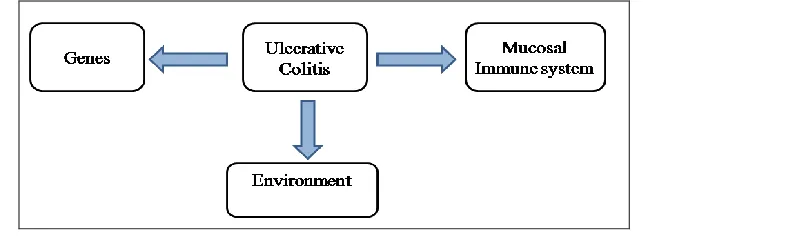
The major first symptoms of ulcerative colitis include abdominal pain, tenesmus, anorexia, bloody or mucous diarrhoea as compared to Crohn’s disease, which does not display bloody diarrhoea [17]. The serious cases of ulcerative colitis include various symptoms such as weight reduction, tachycardia, fever, anaemia and bowel distension [18]. It is generally related with full remission of symptoms in the interim. Both male and female sexes are equally affected [19]. In Western Europe and in the USA, ulcerative colitis has a proportion of approximately 6 to 8 cases per 100,000 peoples and an approximated prevalence of around 70 to 150 per 100,000 peoples. The peak incident of ulcerative colitis is mainly in the ages of 15 to 35 [20]. Inflammatory bowel disease can influence at an individual of any age and can permanent throughout their whole life as it does not have any continuous treatment [21]. In Ulcerative colitis, sites of inflammation broaden to the more proximal areas of the colon over time. Generally, the rectum is also involved. While in CD, site of inflammation is commonly distal ileum [22]. Figure 1 represents a schematic flow chart which specifies ulcerative colitis.
Epidemiology and Risk Factors
128
Figure 1: Schematic flow chart for ulcerative colitis
Pathogenesis of Ulcerative Colitis
Ulcerative colitis is a case in which the inflammatory return and morphologic diversity remain restricted to the colon. The rectum is included in 95% of peoples which are suffering from ulcerative colitis, with alterable degrees of proximal expansion. Inflammation is confined primarily to the mucosa and comprises of continuous involvement of inconstant severity with ulceration, edema, and haemorrhage onward the length of the colon. Acute and chronic inflammation of the mucosa is the major histologic conclusions by polymorphonuclear leukocytes and mononuclear cells, crypt abscesses, intorsion of the mucosal glands, and goblet cell reduction [15]. Figure 2 represents the factors responsible for ulcerative colitis.
Figure 2: Factors responsible for ulcerative colitis
Factors Responsible for Ulcerative Colitis
[image:3.612.144.538.412.534.2]129
Thus, it is of no amazement that cytokines have been the major therapeutic targets in recent advances for the management of ulcerative colitis [25]. Ulcerative colitis has multifarious aetiology that may result in either primary immunological malfunction or an improper pathological immunological feedback to an environment. e.g. commensal intestinal microorganisms. The primary cause is the dysfunction of the immune system which further leads to enormous immune responses to normal microflora. Secondly, epithelial cell deformities and diversity in the composition of gut microflora promote an anomalous mucosal immune response [26]. Thirdly, defective gene expression i.e. mutation of a gene named CARD15/ NOD2, placed on Chr 16 and another gene named OCTN 1 and 2 on Chr 5, in the case of Crohn’s disease [27].
[image:4.612.131.538.328.568.2]Two decades back, a classification of immune return has been recommended, which was established on the cytokine profile that was significant in different situations. The actual scheme consists of the T helper 1 (Th1) vs. T helper 2 (Th2) paradigm along former being controlled by the manufacturing of interleukin-12 (IL-12)/IFN-γ and another by the excretion of IL-4, IL-5, and IL-13. A considerable shift in this archetype appeared following the examination of a third effector population, which is described by high IL-17A excretion, thus its classification as the Th17 response [28]. In addition, it has become identified that not only specialized CD4+ lymphocytes play an effector character but also a managerial one, expressing suppressive function, governing effector pathways, and dampening inflammatory feedback [29]. These regulatory cells also consist of various subgroups but generally act via the excretion of IL-10 and TGF-β1. The purpose of this approach in mucosal immunology resulted in the evaluation of ulcerative colitis as a Th2-mediated situation. However, for certain years this was usually linked to the lack of enhanced IFN-γ expression comparatively to the rise of IL-4, the Th2-defining cytokine [30]. In fact, the recent is not monitored at the mucosal level in ulcerative colitis. However, there is increased IL-5, thus the term “atypical Th2-status” that was coined to ulcerative colitis. Figure 3 represents Interactions of T-helper cells and cytokines in normal mucosa and in inflamed mucosa of IBD patients.
Figure 3: Interactions of T-helper cells and cytokines in normal mucosa and in inflamed mucosa of IBD patients
130
Table 1: List of drugs used for the treatment of ulcerative coliis
Drugs Brand name Marketed formulation Site of release Standard dose References
Budesonide Cortiment Multi-matrix prolonged release
tablet Terminal ileum, colon 9 mg daily [36]
Beclometazone
dipropionate Clipper Sustain release tablet Terminal ileum, colon 5 mg daily [37]
Prednisolone Deltasone Delayed release tablet Duodenum, jejunum, ileum, colon 20-40 mg daily [38]
Dexamethazone Dexazone Delayed release tablet Colon 0.25-6 mg daily [37]
Hydrocotisone Colifoam 10% foam Colon One dose once or twice daily [39]
Sulphasalazine Azulfidine Gastro-resistant tablet Jejunum, ileum, colon 1 g -2 g four times daily [40]
Mesalamine Asacol Coated tablet Terminal ileum, colon 2.4–4.8 g daily [41]
Balsalazide Colazide Capsule Jejunum, ileum, colon 2.25 g three times daily [42]
Olsalazine Dipentum Modified-release tablet Colon 1 g daily in divided doses [43]
Azathioprine Imuran Film-coated tablet Terminal ileum, colon 50 mg daily [44]
Methotrexate Rheumatrex The solution given i.v. Jejunum, ileum, colon 25 mg/ml daily [10]
Infliximab Remicade Powder for intravenous injection Terminal ileum, colon 100 mg [45]
Adalimubab Humira Prefilled glass syringe Colon 20 mg/0.4 ml and [45]
Ciprofloxacin Cipro Extended release tablet Terminal ileum, colon 500 mg twice daily [10]
Role of Oral Controlled Drug Delivery System in Colon Targeting
131
upper part of the digestive tract. Therefore, the approaches used for the development of site-specific drug delivery to the colon are meant at sustaining the release of drug till the formulation reaches to the colon, with a number of schemes representing great success as compared to others.
Oral Controlled Release Drug Delivery System
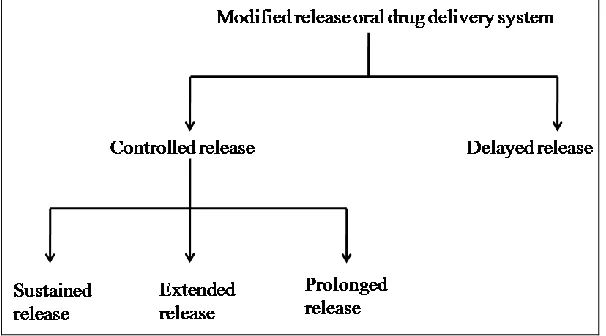
[image:6.612.156.459.411.579.2]Oral drug administration is the most suitable and beneficial approaches as the oral route contribute greater active surface area as compared to all drug delivery system for delivery of various drugs. The drug release pattern of the oral controlled release delivery system controls the level of plasma drug concentration within the therapeutic level, through a definite rate and time, resulting in constant therapeutic activity [53]. The significance of these dosage forms because of attention to toxicity and inefficiency of drugs when delivered through oral conventional technique in the mode of tablets and capsules. In comparison, the conventional oral drug delivery has several drawbacks such as, greater tendency of fluctuations in plasma drug concentration, elevation in the dosage frequency, less time for drug efficacy at the specific site of action, limited drug at the site of action and limited oral bioavailability of some drugs because of the interaction with food, number of side effects due to high dosage of drug. Controlled release oral drug delivery is a scheme that serves endless oral delivery of drugs at predetermined and reproducible kinetics for a predictable period all over the system of digestive tract transit and also the approach that targets the drug to a specific area within the digestive tract for either a systemic or local activity [8]. Research on oral controlled release drug delivery with either further advancement in the delivery pattern or innovation in the formulation of the drug is ongoing work for several formulation scientists [54]. The most important specifications for the novelty of a drug delivery system are, first, is controlled release drug delivery, and second is the passage of the active entity to the specific site for its activity. Formulation scientists have been used various approaches to attain this challenging innovation in oral drug delivery, either by encapsulating drug into a carrier system or by controlling the release of drug in the blood to achieve the designed target [55,56]. Oral controlled release drug delivery systems can play important role in controlled release of drugs. Therefore, the controlled oral drug delivery system is the most commonly used approach for controlling the release of drugs which are given orally [57]. Several complementary terms such as prolonged release, sustained release, extended release, modified release are used to evaluate controlled release drug delivery systems that are designed to sustain the rate of release of drugs over an elongated period of time [58]. Innovation in the drug dosage form is essential for attaining a useful controlled oral release drug delivery system. Figure 4 represents modified release oral drug delivery system.
Figure 4: Modified release oral drug delivery system
Advantages of Oral Controlled Release Drug Delivery Systems
Oral controlled release drug delivery system offer many advantages, such as:
Approximately constant drug level at the specific site of action
Protection of peak-trough fluctuations
Reduction in dose of drug
Decreased dosage frequency
Reduced side effects
Improved patient compliances
Taste masking
132
Colon targeting
Sustained pH-independent release pattern
Pulsatile release pattern
[image:7.612.122.491.126.390.2] Enhancement in bioavailability of some drugs due to spatial control [59,60] Figure 5 represents approaches of oral controlled release drug delivery system
Figure 5: Approaches of oral controlled release drug delivery system
1.Dissolution Controlled Drug Release System
Drugs having a limited rate of dissolution will acquire sustaining properties, as the rate of dissolution obstructs the drug release from the system. Thus it looks possible to establish the sustained-released formulation by reducing the rate of dissolution of drugs which are hydrophilic in nature [61]. Delayed release oral product operating dissolution as the rate-limiting step is a major aspect which involved in this system. To attain this type of system, the particles of drug can be coated with a material of deviating thickness or by encapsulating them in a matrix made up of the polymer. A drug entity with a limited dissolution rate is inherently extended and for those drugs with greater water solubility, one can reduce dissolution through convenient salt or derivative development [62]. For the formation of enteric coated dosage forms, these approaches are most widely employed.
For the protection of stomach from the side effects of drugs entities such as Aspirin, a coating that liquefies in the natural or basic medium is used. This suppresses the release of drugs from the drug formulation till it reaches the greater pH of the intestine. In many cases, enteric coated dosage forms are not exactly sustaining in nature, but serve as a significant function in supervising the release of the drug to a target site. The same scheme can be employed for materials that are degraded by the severe conditions found in the gastric area [63]. Dissolution is defined as solid material dissolved in a given solvent.
It is a rate limiting step when liquid is dispersing from the solid substance. Various theories explain dissolution such as:
1. Surface renewal theory 2. Diffusion layer theory 3. Limited solvation theory
133
[image:8.612.254.358.201.303.2]Figure 6: Dissolution control of drug release depends on dissolution rate ans thickness of the membrane coating
Figure 7: Dissolution control of drug release depends on polymer core erosion
a) Matrix dissolution controlled drug release system
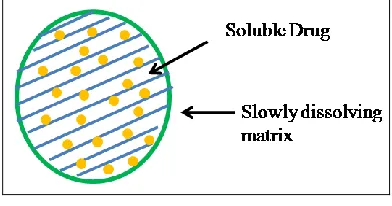
[image:8.612.208.404.465.568.2]The drug is equally distributed all over the polymer matrix. Drug particles are released as the polymer matrix dissolves. The release rate of drug reduces as the size of the matrix decreases. The release of the drug is nonzero-order. Both spherical matrix systems and micro matrix Systems Small are prepared by microencapsulation technique. Macromatrix Systems Tablets comprises of an outer core, and inner coat, and a film coat [64]. Matrix dissolution controlled drug release system is also called as monolithic dissolution controlled system. In this system, dissolution is controlled by various aspects such as varying porosity of tablet, reducing its wet ability and dissolving at a slower rate. This system follows first-order drug release pattern. The dissolution rate of the polymer can also be determined the release of drug particles. In this system, another scheme is to compress the drug entity with a slow dissolving carrier. In this approach release rate of the drug is controlled by the rate of penetration of the dissolution medium into the matrix, porosity, existence of hydrophobic excipients and the wetting capacity of the system and surface of the particle [65]. Figure 8 represents matrix dissolution controlled drug release system.
Figure 8: Matrix dissolution controlled drug release system
b) Encapsulation/coating dissolution controlled drug release system
134
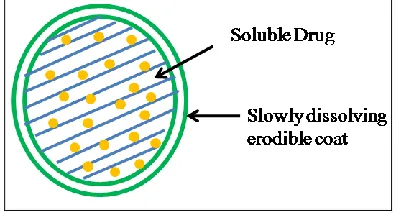
[image:9.612.207.407.100.208.2]where the absorption of various drug entities occurs is consistently more uniform as compared to non-disintegrating delayed-release tablet formulations [67]. Figure 9 represents the reservoir dissolution controlled drug release system.
Figure 9: Reservoir dissolution controlled drug release system
2. Diffusion Controlled Drug Release System
On contact with aqueous liquids in the digestive tract, water diffuses into the internal side of the drug entity. Due to this process drug dissolution occurs and the solution which contains drug diffuse across the released coating to the outer side [68]. It is a significant process for absorption in which energy requirement is not necessary. In this system drug particles diffuse from an area of higher concentration to lower concentration till equilibrium is acquired with a magnitude which is directly proportional to the concentration gradient across the membrane. In this system rate of drug release is determined from its diffusion rate through a water-insoluble polymer [69].
a) Matrix diffusion system
The matrix system is described as a well-mixed composite which contains gelling agent with one or more drugs i.e. water soluble polymers. Matrix systems are generally used for extending the rate of release of the drug. This is a release system which extends and controls the rate of release of the drug that is dispersed or dissolved in the matrix. A solid drug entity is dispersed or dissolved in an insoluble matrix and the rate of release of the drug only depends on the rate of drug diffusion, not on the rate of solid material dissolution [70]. In this system, the drug is dispersed or dissolved as solid material within a penetrable matrix made up of a non-aqueous polymer. The drug particles which are present at the surface of the release moiety will be dissolved first and immediately drug will release. After this drug molecule at a successively rising gap from the exterior of the release moiety will be dissolved and then release by diffusion mechanism in the pores to the outer side of the release moiety. Therefore, the diffusion gap of dissolve drug entity will rise as the release process is going on [71]. Figure 10 represents diffusion type matrix system.
Figure 10: Diffusion type of matrix system
b) Reservoir diffusion system
[image:9.612.162.456.440.566.2]135
Figure 11: Diffusion type reservoir system
3. Dissolution and Diffusion Controlled Drug Release System
The major factor of this release system is that the drug core is enfolded with a fractionally soluble membrane. Firstly drug is enfolded in a fractionally soluble membrane and pores are formed due to the dissolution of regions of the membrane. It permits passage of aqueous fluid into core and drug is diffused or dissolved outside of the system. Polyvinylpyrrolidone (PVP) and ethyl cellulose mixture dissolves in water and produced pores of insoluble ethyl cellulose [73].
4. Ion Exchange Resin Drug Complexes
In this type of system, the resins used are non-aqueous cross-linked polymers bringing functional groups and comprises of a salt-forming group at distinct positions on the polymeric chain [74]. The utilized resins are generally polymers with unified ionic entities which have an ability to produce exchangeable counter-ions between the solid and the liquid phase. After administration of the resin drug complex, the release of drug occurs in the existence of a large amount of the polyelectrolyte’s counter ions in the gut medium. The drug particles are shuffled, diffused out and finally transferred into digestive fluids [75]. The capability of the resin to interchange ions is evaluated by the ionizable group. Thus, ion exchange resins are classified on the basis of ionisable group. There are various types of ion exchange resins like weak acid cation exchange resins, strong acid cation exchange resins, weak base anion exchange resins and strong base anion exchange resins [76]. These all types of ion− exchange resins can be utilized to bind drugs. Ion exchange resins are mainly utilized in the oral controlled drug delivery system. But this system can also be utilized for several ways of drug administration like nasal, topical and transdermal drug delivery systems [77]. Various studies have reported the application of ion exchange resin for delivery of drugs in clinical medicine like carboxylic and sulfonated resins with a backbone containing polystyrenes [78]. Cross-linked polymers polymethacrylate and polystyrene are considered the most accepted resins utilized in pharmaceutical industry. Another reported study described that the rate of drug release can be controlled by modifying the coating of polymer in the ion exchange complex system with non-aqueous polymers such as waxes or ethyl cellulose [79].
5. pH-dependent Formulation
Maximum drugs entities are either weak bases or weak acids. The release of drug from the controlled system is pH dependent. Despite, buffers like the salt of citric acid, amino acid phthalic acid, tartaric acid or phosphoric acid can be added to the system to help to manage a constant pH for the development of pH-dependent system [80]. A buffered system is produced by mixing an acidic or basic drug with the buffering agent for the maintenance of pH, granulating with convenient pharmaceutical excipients and coating with digestive fluids passable film producing a polymer. When digestive fluid passes through the membrane, then agents which are used for the maintenance of pH arrange the fluid inside to useful constant pH to achieve a constant rate of drug release [79].
6. Osmotic Drug Delivery System
136
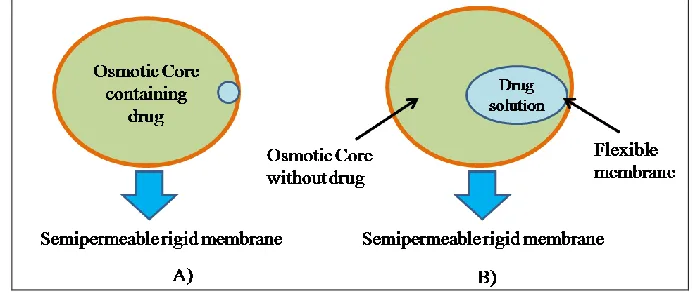
the dosage form [82]. This osmotic drug delivery system is mainly divided into two parts which are enclosed in the double layered core. The upper layer consists of an active drug moiety and the downward layer consists of an osmotically active polymeric material. The rigid semi-permeable membrane is used for the coating of the double layered core. The drug moiety is compacted in the core and which will be released by the cavity present on the semi-permeable membrane of the osmotic pump [83,84]. Therefore osmotic drug delivery system is a significant approach for achieving controlled release of drugs. The osmotic drug delivery systems are mainly classified into two types of osmotic systems i.e. type-A and type-B.
[image:11.612.131.480.199.351.2]In the type-A osmotic system, the core contains both, the electrolytes and drug entities. The electrolytes supply osmotic pressure and manage the drug release. In the type-B osmotic system, the solution of drug entity is present in a semi-permeable membrane encircled by the electrolytes [85]. Figure 12 represents type-A and type-B osmotic pump.
Figure 12: Type-A and Type-B osmotic systems
7. Altered Density Formulation
Various approaches have been prepared to sustain the residence time drug formulation in the digestive tract. The first approach is the bioadhesion approach which is based on the adherence of polymeric material to the epithelial surface of the digestive tract. Another approach is to modify the formulation’s density by utilizing either low or high-density pellets.
(1) High-density approach
In this system density of pellets always exceed that of normal content of stomach and thus it should be at least 1.4 g/cm3. In developing such kind of formulations, drugs can be coated on the bulky core or mixed with bulky inert materials such as barium titanium dioxide, zinc oxide and barium sulphate, iron powder. The membrane which controls the rate of diffusion can be used to cover the weighted tablets.
(2) Low-density approach
In this system apparent density is less than that of gastric liquids can be utilized as a carrier of the drug for controlled release of the drug. Pop rice, popcorn and even poly styrol are all the candidates used as a carrier. The covering of these empty shells is undercoated by using sugar or a polymeric compound such as cellulose acetate phthalate and meth acrylic polymer. Then undercoated shell is coated with a drug mixture with polymers such as hydroxypropyl cellulose and ethyl cellulose. The final product floats on gastric medium for a delayed period, while slowly releasing drug [86,87].
CONCLUSION
137
metabolizing capability of the colon enzymes is also being analyzed as a scheme to site-specific drug delivery in the colonic region. To ensure equilibrium between target-specificity, price, effectiveness and patient compliance, it arrives that a combination of conventional and novel approaches is the key to the development of oral controlled drug delivery systems. Moreover, oral controlled release drug delivery system has cheap price as compared to oral conventional drug delivery system which makes it more economical option for patients.
REFERENCES
[1] F Talaei; F Atyabi; M Azhdarzadeh; R Dinarvand; A Saadatzadeh. Eur J Pharm Sci. 2013, 49, 712-722. [2] Y Yan. Pathogenesis of inflammatory bowel diseases. INTECH Open Access Publisher. 2012.
[3] DR Friend. Adv Drug Deliv Rev. 2005, 57, 247-265.
[4] EM Collnot; H Ali; CM Lehr. J Control Release. 2012, 161, 235-246. [5] M Rashid; V Kaur; SS Hallan; S Sharma; N Mishra. Saudi Pharm J. 2014. [6] RA Keraliya; VH Shah. Int Res J Pharm Sci. 2014, 5, 4-9.
[7] AK Philip; B Philip. Oman Med J. 2010, 25, 79-87.
[8] AA Rao; VN Rao; AS Devi; K Anil; VV Naik; A Rajesh. Int J Pharm Chem Res. 2015, 1, 6-15. [9] NA Molodecky; GG Kaplan. Gastroenterol Hepatol. 2010, 6, 339-346.
[10] M Rashid; V Kaur; SS Hallan; S Sharma; N Mishra. Saudi Pharm J. 2016, 24, 458-472. [11] G Rogler. Cancer Lett. 2014, 345, 235-241.
[12] U Navaneethan; R Jegadeesan; NG Gutierrez; PG Venkatesh; JP Hammel; B Shen; RP Kiran. J Crohn's Colitis.
2013, 7, e684-e691.
[13] BS Thippeswamy; S Mahendran; MI Biradar; P Raj; K Srivastava; S Badami; VP Veerapur. Eur J Pharmacol.
2011, 654, 100-105.
[14] KA Head; JS Jurenka. Altern Med Rev. 2003, 8, 247-283.
[15] BA Hendrickson; R Gokhale. JH Cho. Clin Microbiol Rev. 2002, 15, 79-94.
[16] P Rutgeerts; WJ Sandborn; BG Feagan; W Reinisch; A Olson; J Johanns; S Travers; D Rachmilewitz; SB Hanauer; GR Lichtenstein. New Engl J Med. 2005, 353, 2462-2476.
[17] JK Lee; DH Tang; L Mollon; EP Armstrong. Best Pract Res Cl Ga. 2013, 27, 949-960. [18] J Meier; A Sturm. World J Gastroenterol. 2011, 17, 3204-3212.
[19] S Ardizzone. Ulcerative colitis. Orphanet encyclopedia, 2003. [20] J Burisch. Dan Med J. 2014, 61, B4778-B4778.
[21] J Cosnes; C Gower Rousseau; P Seksik; A Cortot. Gastroenterol. 2011, 140, 1785-1794. [22] VA Botoman; GF Bonner; DA Botoman. Am Fam Physician. 1998, 57, 57-68.
[23] SB Hanauer. Inflamm Bowel Dis. 2006, 12, S3-S9. [24] F Shanahan. Lancet. 1993, 342, 407-411.
[25] S Danese; S Rutella; S Vetrano. Gut. 2013, 62, 1098-1099. [26] W Strober; I Fuss; P Mannon. J Clin Invest. 2007, 117, 514-521. [27] S Ardizzone; GB Porro. J Intern Med. 2002, 252, 475-496. [28] K Maloy; M Kullberg. Mucosal Immunol. 2008, 1, 339-349. [29] EK Boden; SB Snapper. Curr Opin Gastroen. 2008, 24, 733-741.
[30] IJ Fuss; M Neurath; M Boirivant; JS Klein; C De La Motte; SA Strong; C Fiocchi; W Strober. J Immunol. 1996, 157, 1261-1270.
[31] KO Arseneau; H Tamagawa; TT Pizarro; F Cominelli. Curr Gastroenterol Rep. 2007, 9, 508-512. [32] G Bamias; MR Nyce; A Sarah; F Cominelli. Ann Intern Med. 2005, 143, 895-904.
[33] G Bamias; M Mishina; M Nyce; WG Ross; G Kollias; J Rivera-Nieves; TT Pizarro; F Cominelli. P Natl Acad Sci Usa. 2006, 103, 8441-8446.
[34] A Andoh; Y Yagi; M Shioya; A Nishida; T Tsujikawa; Y Fujiyama. World J Gastroenterol. 2008, 14, 5154-5161.
[35] G Bamias; G Kaltsa; SD Ladas. Discov Med. 2011, 11, 459-467. [36] V Criscuoli; E Sinagra; M Cottone. Gastroenterol. 2013, 144, e23.
[37] G Van Assche; F Manguso; M Zibellini; JLC Nuño; A Goldis; E Tkachenko; G Varoli; D Kleczkowski; V Annese; F D'heygere. Am J Gastroenterol. 2015, 110, 708-715.
[38] T Gabbani; N Manetti; S Bagnoli; V Annese. Expert Opin Orphan Drugs. 2015, 3, 87-96.
[39] S Bar-Meir; HH Fidder; M Faszczyk; GB Porro; GC Sturniolo; O Mickisch; R Müller; R Greinwald; Y Chowers; V Groβ, Dis Colon Rectum. 2003, 46, 929-936.
138
[41] M Ham; AC Moss. Expert Rev Clin Pharmacol. 2012, 5, 113-123.
[42] WT Elliott, J Chan. Balsalazide Disodium Capsules (Colazal—Salix Pharmaceuticals), AHC Media, 2000. [43] MV Singer; H Schmausser; G Schönfeld. Hepato-gastroenterology. 2005, 53, 317-321.
[44] A Hawthorne; R Logan; C Hawkey; P Foster; A Axon; E Swarbrick; B Scott; J Lennard-Jones. BMJ. 1992, 305, 20-22.
[45] G Järnerot; E Hertervig; I Friis-Liby; L Blomquist; P Karlén; C Grännö; M Vilien; M Ström; Å Danielsson; H Verbaan, PM Hellström; A Magnuson; B Curman. Gastroenterology. 2005, 128, 1805-1811.
[46] L Liu; ML Fishman; J Kost; KB Hicks. Biomaterials. 2003, 24, 3333-3343. [47] A Basit; J Bloor. Pharm Technol. 2003, 185-190.
[48] G Cheng; F An; MJ Zou; J Sun; XH Hao; YX He. World J Gastroentero. 2004, 10, 1769.
[49] Y Krishnaiah, S Satyanarayan, N Jain. Advances in Controlled and Novel Drug Delivery. CBS Publishers and Distributors, New Delhi, India, 2001, 89-119.
[50] A Bhattacharjee. Int J Life Sci Pharm Res. 2012, 1, 31-39.
[51] S Amidon; JE Brown; VS Dave. AAPS PharmSciTech. 2015, 16, 731-741. [52] M Chourasia; S Jain. J Pharm Pharm Sci. 2003, 6, 33-66.
[53] K Moodley; V Pillay; YE Choonara; LC du Toit; VM Ndesendo; P Kumar; S Cooppan; P Bawa. Int J Mol Sci.
2011, 13, 18-43.
[54] RA Keraliya; C Patel; P Patel; V Keraliya; TG Soni; RC Patel; M Patel. ISRN Pharm. 2012, 2012. [55] A Pandita; P Sharma. ISRN Pharm. 2013, 2013.
[56] P Khirwadkar; D Sisodiya; K Dashora. Int J Biomed Adv Res. 2012, 3, 149-161. [57] M Arafat. Int J Pharm Pharm Sci. 2015, 7, 16-21.
[58] D Bhowmik; K Kumar; A Dutta; S Paswan. Crit Rev Pharm Sci. 2012, 1, 20-33. [59] D Bhowmik; H Gopinath; BP Kumar; S Duraivel; KS Kumar. Pharm Innov. 2012, 1. [60] JA Fix. Pharm Res. 1996, 13, 1760-1764.
[61] S Gupta; RP Singh; R Sharma; R Kalyanwat; P Lokwani. Int J Compr Pharm. 2011, 2, 1-8. [62] NK Jain. Controlled and novel drug delivery. CBS Publishers and Distributors, India, 1997.
[63] RK Mamidala; V Ramana; G Sandeep; M Lingam; R Gannu; MR Yamsani. Int J Pharm Sci Nanotech. 2009, 2, 583-594.
[64] D Wise. Handbook of Pharmaceutical Controlled Release Technology, CRC Press, USA 2000, 1, 435-440. [65] HW Hui. In: Controlled Drug Delivery: Fundamentals and Applications, 2nd edition, CRC Press, USA, 1987,
373-432.
[66] S Ummadi; B Shravani; NR Rao; MS Reddy; B Sanjeev. System. 2013, 7.
[67] JR Robinson; VH Lee. Controlled drug delivery: fundamentals and applications. CRC Press, USA, 1987. [68] N Dey; S Majumdar; M Rao. Trop J Pharm Res. 2008, 7, 1067-1075.
[69] K Patel. Rensselaer Polytechnic Institute, 2008.
[70] R Kar; S Mohapatra; B Barik. Asian J Pharm Clin Res. 2009, 2, 5461.
[71] ME Aulton, KM Taylor. Aulton's pharmaceutics: the design and manufacture of medicines. Elsevier Health Sciences, Nertherland, 2013.
[72] T Salsa; F Veiga; M Pina. Drug Dev Ind Pharm. 1997, 23, 929-938.
[73] M Gibaldi. Biopharmaceutics and clinical pharmacokinetics. 4th edition, Lea and Febiger, Philadelphia, 1977. [74] A Bilandi; A Mishra. Int Res J Pharm. 2013, 4, 65-74.
[75] V Sharma; H Chopra. Int J Pharm Pharm Sci. 2010, 2, 4.
[76] S Vijay; V Sharma; L Singh. Int J Pharm Sci Rev Res. 2011, 61, 10-13.
[77] J Mahore; K Wadher; M Umekar; P Bhoyar. Int J Pharm Sci Rev Res. 2010, 1, 8-13. [78] S Pande; M Kshirsagar; A Chandewar. Int J Adv Pharm Sci. 2011, 2.
[79] JR Robinson, GM Jantzen. In: Modern Pharmaceutics, Fourth Edition, CRC Press, USA, 2002.
[80] L Allen, HC Ansel. Ansel's pharmaceutical dosage forms and drug delivery systems, Lippincott Williams and Wilkins, Philadelphia, 2013.
[81] B Mishra; C Sankar; C Dilip; V Pravitha; AST Arun Raj. Der Pharmacia Letter. 2010, 2, 21-27. [82] CA Babu; MP Rao; JV Ratna. Asian J Pharm Res Health Care. 2010, 2, 114-126.
[83] S Herrlich; S Spieth; S Messner; R Zengerle. Adv Drug Deliv Rev. 2012, 64, 1617-1627. [84] D Prabakaran; P Singh; P Kanaujia; SP Vyas. Int J Pharm. 2003, 259, 173-179.
[85] K Imran; A Priyanka; R Deepti; F Fiza. Indo Am J Pharm Res. 2013, 3, 3147-3157. [86] M Srikanth; S Sunil; N Rao; M Uhumwangho; KR Murthy. J Scic Res. 2010, 2, 597. [87] S Kamboj; G Gupta; J Oberoy. Pharmainfo. 2009, 7.