R E S E A R C H A R T I C L E
Open Access
Severity of back pain may influence
choice and order of practitioner
consultations across conventional,
allied and complementary health care:
a cross-sectional study of 1851 mid-age
Australian women
David Sibbritt
1*, Romy Lauche
1, Tobias Sundberg
2, Wenbo Peng
1, Craig Moore
1, Alex Broom
3, Emma Kirby
3and Jon Adams
1Abstract
Background:Back pain is a common, disabling and costly disorder for which patients often consult with a wide range of health practitioners. Unfortunately, no research to date has directly examined the association between the severity of back pain and back pain sufferers’choice of whom and in what order to consult different health practitioners. Methods:This is a sub-study of the large nationally representative Australian Longitudinal Study on Women’s Health (ALSWH). The mid-age cohort women (born 1946-51,n= 13,715) of the ALSWH were recruited from the Australian national Medicare database in 1996. These women have been surveyed six time, with survey 6 being conducted in 2010 (n= 10,011). Mid-age women (n= 1851) who in 2010 had sought help from a health care practitioner for their back pain were mailed a self-report questionnaire targeting their previous 12 months of health services utilisation, health status and their levels of back pain intensity.
Results:A total of 1620 women were deemed eligible and 1310 (80.9 %) returned completed questionnaires.
Mid-age women with back pain visited various conventional, allied health and CAM practitioners for care: 75.6 % consulted a CAM practitioner; 58.4 % consulted a medical doctor; and 54.2 % consulted an allied health practitioner. Women with the most severe back pain sought conventional care from a general practitioner, and those who consulted a general practitioner first had more severe back pain than those who consulted another practitioner first. Following the general practitioner visit, the women with more severe back pain were more likely to be referred to a conventional specialist, and those with less severe back pain were more likely to be referred to a physiotherapist. Conclusions:Our findings suggest that women with more severe back pain are likely to visit a conventional practitioner first, whereas women with less severe back pain are likely to explore a range of treatment options including CAM practitioners. The improvement of back pain over time following the various possible sequencing of consultations with different types of health practitioners is a topic with implications for ensuring safe and effective back pain care and worthy of further detailed investigation.
Keywords:Back pain, Health service utilisation, Complementary medicine, Women
* Correspondence:[email protected]
1Faculty of Health, University of Technology Sydney, PO Box 123, Ultimo,
NSW 2007, Australia
Full list of author information is available at the end of the article
Background
Back pain (BP) is pain that targets the posterior aspect of the body in the area of the lumbar spine and pelvis [1]. The global age-standardised point prevalence of BP has been estimated to 9 % and appears to have remained stable over recent decades [2]. BP is a burden not only for the individual sufferer [3] but also for their families, has major cost impacts for health care systems [4] and leads to even greater indirect cost burden through loss of job productivity and inefficiencies [5, 6]. Back pain
se-verity shows substantial influence in individuals’ choice
of health care consultations and treatments. A previous randomized controlled trial found only patients with mod-erate or severe baseline pain intensity was associated with the reductions in mean back pain intensity via taking tapentadol [7]. A longitudinal analysis reported the finding that changes in pain severity predicted subsequent depres-sion severity in primary care [8]. Further, a clinical practice guideline strongly recommended all health care practi-tioners to assess the severity of baseline pain when diag-nosing and treating back pain as the diverse medications used have different benefits for patients with varied sever-ity of back pain [9].
BP has long been reported as a highly prevalent com-plaint in Australian primary care [10] and a multitude of health care provider options exist for back pain - the use of which in many cases attract out-of-pocket spending by consumers in Australia [5]. BP care options include a range of conventional medicine providers (e.g. specialists), allied health providers (e.g. physiotherapists, pharmacists) and complementary and alternative medicine (CAM) pro-viders (e.g. massage therapists, chiropractors, osteopaths) [11]. In Australia, primary health care is typically a per-son's first point of contact with the health system and is most often provided outside the hospital system. A person does not need a referral for this level of care, which in-cludes services provided by general practitioners, allied health professionals and CAM practitioners. Primary health care is part of a larger system involving other services and sectors, and so can be considered as the gateway to the wider health system. Through assessment and referral, individuals are directed from one primary care service to another, and from primary services onto secondary specialist health care (which is facilitated by the GP) or onto other health services, and back again. Second-ary health care is medical care provided by a specialist or facility upon referral by a primary care physician. It includes services provided by hospitals and specialist medical practices [12].
While population-based research in Australia has re-ported that significant numbers of back pain sufferers choose not to seek care [11, 13, 14], those that do seek care are more likely to be females and with more severe pain and disability [14]; visiting both conventional and
CAM practitioners [15], in particular general practitioners and chiropractors [14] as well as massage therapists [13]. It is common for people in mid-age to experience back pain [16]. In addition, mid-age women are more likely to utilise a range of health care practitioners for the treat-ment of chronic illness, including back pain [15]. Further-more, recent research also shows a very small percentage of BP sufferers seek exclusive help from CAM and over 50 % seek help from only conventional providers [13]. It is interesting to note the varied characteristics of patients with back pain who sought help in general practice and chiropractic practice. Patients with back pain treated by general practitioners were younger, more likely to be a smoker, and experienced greater pain than those treated by chiropractors [17–19], and the back pain sufferers’ self-referral to chiropractors was likely associated with acute back pain, while self-referral to general practitioners was likely associated with chronic back pain [18].
To date, there are variable levels of evidence showing improved patient outcomes for low back pain available via a range of different treatment approaches and
pro-viders [20–22]. How to provide care in a way that reflects
best clinical practice across a range of individual circum-stances and variables is reflected in this wide range of clin-ical approaches [23, 24]. Recent work examining women's practitioner choices for BP care suggests that choice of treatment is largely unrelated to the relative evidence-base of those treatments, being instead influenced by the
patient’s experience and familiarity of care, wider social
network recommendations and the geographical prox-imity of seemingly qualified practitioners [25]. Indeed, it has also been suggested that the range of BP manage-ment options available to sufferers may lead to increased but not necessarily more effective BP health care use con-stituting a challenge to providing cost-efficient care and health services for BP [26].
Despite these complexities around the wide range of BP care options available, no research to date has exam-ined the association between the severity of BP or general
health and BP sufferers’choice of whom and in what order
to consult different health practitioners. In response, this paper reports the first such examination amongst a na-tionally representative sample of mid-age women with BP.
Methods
Sample
This research was conducted as part of the Australian
Longitudinal Study on Women’s Health (ALSWH), which
was designed to investigate multiple factors affecting the health and well-being of women in Australia over a
20-year period. Women in three age groups (“young”
covers all Australian citizens and permanent residents’ name and address details [27]. The age groups for the main cohorts were selected so that participation would commence, at least for most women in the cohorts, be-fore the occurrence of major life events, such as first pregnancy, establishment of a long-term relationship, menopause, retirement, or death of a partner [27]. The
focus of this study is women from the “mid-age”
co-hort. The baseline survey (n= 14,779) was conducted in
1996 and the respondents have been shown to be broadly representative of the national population of women in the target age group [28]. Socio-demographic characteristics, health services, health behaviours and risk factors, physical health, emotional health, and time use were collected from the survey questionnaires. For this cross-sectional sub-study, 1851 women who had indicated in survey 6 (conducted in 2010) that they had sought help from a health care practitioner for their back pain were mailed an invitation to participate and a questionnaire. Of these women, 1620 were deemed eligible, and 1310 (80.9 %) returned completed sub-study questionnaires. At the time
of this survey, the women were aged 59–64 years.
Health service utilisation - outcome measures
The women were asked if they had consulted with a range of commonly consulted medical doctors, a range of allied health practitioners and a range of CAM practi-tioners for their back pain in the previous 12 months. The list of medical doctors included: general practitioner (GP), orthopaedic specialist, neurologist, rheumatologist, or other medical practitioner. The list of allied health practitioners included: physiotherapist, occupational ther-apist, nurse, pharmacist, or other allied health practitioner. The list of CAM practitioners included: massage ther-apist, chiropractor, herbalist/naturopath, meditation/yoga therapist, acupuncturist, osteopath, reflexologist, traditional Chinese medicine therapist, aromatherapist, craniosacral therapist, reiki therapist, or other CAM practitioner. In addition to asking which health care practitioners the women consulted for their back pain, the women were also asked in which order they consulted each health care practitioner for their back pain.
Health status
The women were asked to indicate how frequently (‘never’,
‘rarely’,‘intermittently’,‘regularly’, and ‘continuously’) they experienced the back pain in the previous 12 months, which was categorised as continuous back pain or not continuous back pain. The women were also asked about
their typical level of back pain intensity and their worst
level of back pain intensity over the previous 12 months
on a scale from 0 to 10, with 0 representing‘no pain’and
10 representing ‘worst possible pain’. It has previously
been shown that it is valid to use a 12 month recall period
using such a scale [29, 30]. The Short-Form 36 (SF-36) Quality of Life questionnaire was used to produce a measure of health status and quality of life, with higher scores representing better health. Results of the SF-36 were transformed into eight mental and physical health subscales [31]; all subscales were considered for analyses.
Statistical analyses
Descriptive statistics were used to assess the frequency and percentages of all the included medical doctors, allied health practitioners, and alternative health practitioners. Comparisons were made between women consulting a GP first, women consulting chiropractor first, women consulting physiotherapist first, women consulting mas-sage therapist first, and women consulting other therapist first regarding the characteristics of their back pain (back pain frequency, typical back pain intensity, worst back pain intensity) and their quality of life (all eight domains of SF-36). Comparisons between two categorical vari-ables were made using the chi-square test. Compari-sons between continuous and categorical variables were made using analysis of variance (ANOVA). To correct for multiple comparisons, a modified Bonferroni test was used [32]. At most, there was minimal missing data for any variable (the maximum was 2 % missing for SF36
General Health) and as such, data were analysedas is. All
analyses were conducted using the statistical software
Stata, version 11.P-values less than 0.05 were considered
statistically significant.
Results
The main questionnaire item used in the analyses was the order in which the women consulted each health care practitioner for their back pain. There were 116 women who were excluded from the analyses due to inconsistencies in their response to this question (e.g. they ticked more than one health care practitioner as being the first practitioner they consulted), leaving a total sample size of 1194.
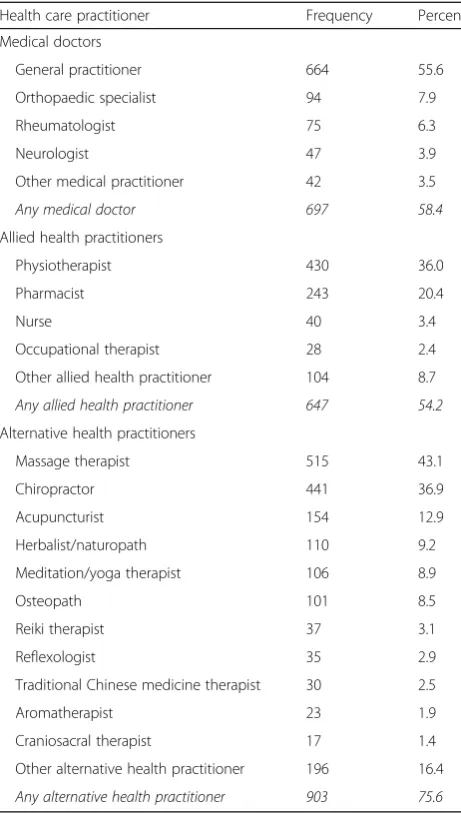
The frequency of consultations with a medical doctor, allied health practitioner and/or CAM practitioner in the previous 12 months for back pain is presented in Table 1. On average, the women consulted 3.0 (95 % CI: 2.8, 3.1) health care practitioners over a 12 month period, for their back pain. In total, 697 (58.4 %) women consulted a medical doctor for their back pain. General
practitioners (n= 664, 55.6 %) were the most commonly
consulted medical doctors, followed by orthopaedic
spe-cialists (n= 94, 7.9 %) and rheumatologists (n= 75, 6.3 %).
In total, 647 (54.2 %) women consulted an allied health
practitioner for their back pain. Physiotherapists (n= 430,
36.0 %) were the most commonly consulted allied health
practitioner, followed by pharmacists (n= 243, 20.4 %)
consulted a CAM practitioner for their back pain.
Mas-sage therapists (n= 515, 43.1 %) were the most commonly
consulted CAM practitioner, followed by chiropractors
(n= 441, 36.9 %) and acupuncturists (n= 154, 12.0 %).
For approximately half of the women (n= 594; 49.7 %)
a GP was the first practitioner consulted for their back pain. A chiropractor was the first practitioner consulted
for back pain by 20.1 % (n= 240) of the women. This is
in contrast to the higher percentage of women consult-ing an allied health practitioner (54.2 %) or a massage therapist (43.1 %) more generally for back pain in the previous 12 months, while a physiotherapist and a mas-sage therapist were the first practitioners consulted by
7.2 % (n= 86) and 4.6 % (n= 55) of the women
respect-ively. Of the remaining women, 7.9 % (n= 119) consulted
an‘other’practitioner first for their back pain and 10.5 % did not consult a practitioner for their back pain (Table 2).
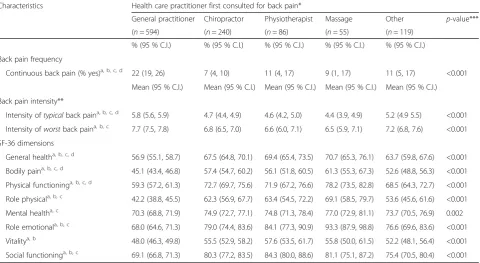
Table 2 shows comparisons made between the women based on the health care practitioner consulted first (i.e. GP consulted first, chiropractor consulted first, physio-therapist consulted first, massage physio-therapist consulted first, and‘other’health care practitioner consulted first) across a number of measures including frequency of back pain, intensity of back pain, as well as SF-36 quality of life di-mensions, respectively. In terms of back pain frequency, 22 % of the women who consulted a GP first experienced back pain continuously beforehand, compared to only
7–11 % of women who consulted any of the other
prac-titioners first (p< 0.001). Similarly, women who
con-sulted a GP first experienced more intensetypical and
worst back pain than women who consulted any of the
other practitioners first (both p< 0.001). Women who
consulted a GP first also had significantly lower levels of general health, bodily pain, physical functioning, role physical, role emotional, vitality, social functioning (SF-36) than women who consulted any of the other
practi-tioners first (all p< 0.001) and lower levels of mental
health (SF-36) than those women who consulted any
other practitioner first (p= 0.002).
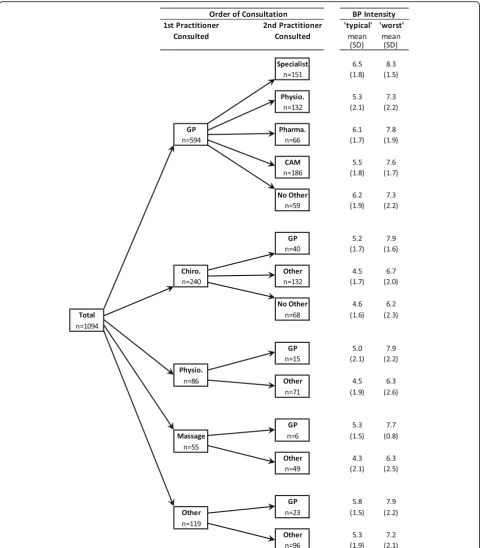
Figure 1 presents a partitioning of the sample based on the order of consultation with any health care practi-tioner by women for their BP, with associated mean BP intensity scores. For the first practitioner consulted, the sample was partitioned into the 4 most commonly
con-sulted practitioner groups as well as an ‘other’category
(referring to the wide range of health care practitioners excluding GPs, chiropractors, physiotherapists, massage therapists). For the second practitioner consulted, the commonly consulted practitioner groups included GPs, specialists (e.g. orthopaedic specialists, neurologists, and rheumatologists), physiotherapists, pharmacists, CAM
practitioners,‘other’ (referring to any other health care
practitioners), and‘no other’(referring to the solo
con-sultation with the first practitioner group). In the parti-tioning of the GP group, it can be seen that for those women who next consulted a specialist (after
consult-ing a GP first) their ‘typical’ and ‘worst’ BP intensity
levels were higher than the women who next consulted
a physiotherapist (p< 0.05), pharmacist, CAM
practi-tioner (p< 0.05) or ‘no other’ practitioner. Conversely, for those women who next consulted a physiotherapist (after consulting a GP first) their‘typical’and‘worst’BP intensity levels were lower than women who next con-sulted a specialist (p< 0.05), pharmacist, CAM practitioner, or ‘no other’ practitioner (p< 0.05). In the partitioning of the chiropractic group, it can be seen that for those women who next consulted a GP (after consulting a chiropractor first) their ‘typical’ and ‘worst’ BP intensity levels were
higher than the women who next consulted a‘other’
[image:4.595.57.288.109.516.2]prac-titioner or ‘no other’ practitioner, which was statistically significant for the ‘worst’ BP intensity levels (p< 0.05). In Table 1Frequency of consultations with doctors, allied health
practitioners and/or alternative practitioners for back pain
Health care practitioner Frequency Percent
Medical doctors
General practitioner 664 55.6
Orthopaedic specialist 94 7.9
Rheumatologist 75 6.3
Neurologist 47 3.9
Other medical practitioner 42 3.5
Any medical doctor 697 58.4
Allied health practitioners
Physiotherapist 430 36.0
Pharmacist 243 20.4
Nurse 40 3.4
Occupational therapist 28 2.4
Other allied health practitioner 104 8.7
Any allied health practitioner 647 54.2
Alternative health practitioners
Massage therapist 515 43.1
Chiropractor 441 36.9
Acupuncturist 154 12.9
Herbalist/naturopath 110 9.2
Meditation/yoga therapist 106 8.9
Osteopath 101 8.5
Reiki therapist 37 3.1
Reflexologist 35 2.9
Traditional Chinese medicine therapist 30 2.5
Aromatherapist 23 1.9
Craniosacral therapist 17 1.4
Other alternative health practitioner 196 16.4
the partitioning of the physiotherapist, massage therapist
and‘other’groups, there was a common pattern in that
for those women who next consulted a GP (after con-sulting either a physiotherapist, massage therapist or ‘other’ practitioner first) their ‘typical’ and ‘worst’ BP intensity levels were higher than the women who
con-sulted an ‘other’ practitioner, although none of these
differences were statistically significant. It is interesting to note that all participants who first consulted a
physio-therapist, massage therapist or ‘other’saw an additional
provider afterwards.
Discussion
This study of a large, nationally-representative sample
of Australian women aged 59–64 years with BP
pro-vides the first examination of the severity of BP and its
association to BP sufferers’choice of whom and in which
order to consult a range of conventional, allied health and CAM providers. The study presents 3 key findings related
to: whom BP sufferers’seek help from; the sequencing of
practitioner use from whom these BP sufferers seek help; and the association between severity of BP and
BP sufferers’ choice of which practitioner from whom
to seek help.
First, the study shows that mid-age female BP sufferers consult with a wide range of conventional, allied health and CAM practitioners in response to their BP. In line with previous research examining health care utilisation for BP [11, 13, 15, 33], our analyses illustrate that a sub-stantial percentage of women with BP do not exclusively consult a conventional, allied or CAM provider for their BP but instead utilise the services of different practitioner types sequentially over their patient journey. This finding suggests these women may be adopting a pragmatic ap-proach to pain management free from an allegiance or preconception related to any specific provider or approach to treatment [25].
[image:5.595.59.540.111.374.2]Our analyses also provide the first focused examination of the sequencing of practitioner use amongst BP sufferers as associated with BP severity. Interestingly, the study shows women with the most severe BP (either initially or ultimately) are significantly more likely to seek care from a GP than from any other practitioner group. While our analyses do not accommodate the opportunity to investi-gate and explain this finding, there are at least three prom-inent possibilities. This finding may be due to women possibly having a pre-established long-term relationship with their GP and that as such they seek consultation with Table 2Comparisons between the health care practitioner first consulted for back pain by women across measures of back pain frequency, back pain intensity and SF-36 dimensions of quality of life
Characteristics Health care practitioner first consulted for back pain*
General practitioner Chiropractor Physiotherapist Massage Other p-value***
(n= 594) (n= 240) (n= 86) (n= 55) (n= 119)
% (95 % C.I.) % (95 % C.I.) % (95 % C.I.) % (95 % C.I.) % (95 % C.I.)
Back pain frequency
Continuous back pain (% yes)a, b, c, d 22 (19, 26) 7 (4, 10) 11 (4, 17) 9 (1, 17) 11 (5, 17) <0.001 Mean (95 % C.I.) Mean (95 % C.I.) Mean (95 % C.I.) Mean (95 % C.I.) Mean (95 % C.I.)
Back pain intensity**
Intensity oftypicalback paina, b, c, d 5.8 (5.6, 5.9) 4.7 (4.4, 4.9) 4.6 (4.2, 5.0) 4.4 (3.9, 4.9) 5.2 (4.9 5.5) <0.001 Intensity ofworstback paina, b, c 7.7 (7.5, 7.8) 6.8 (6.5, 7.0) 6.6 (6.0, 7.1) 6.5 (5.9, 7.1) 7.2 (6.8, 7.6) <0.001 SF-36 dimensions
General healtha, b, c, d 56.9 (55.1, 58.7) 67.5 (64.8, 70.1) 69.4 (65.4, 73.5) 70.7 (65.3, 76.1) 63.7 (59.8, 67.6) <0.001 Bodily paina, b, c, d 45.1 (43.4, 46.8) 57.4 (54.7, 60.2) 56.1 (51.8, 60.5) 61.3 (55.3, 67.3) 52.6 (48.8, 56.3) <0.001
Physical functioninga, b, c, d 59.3 (57.2, 61.3) 72.7 (69.7, 75.6) 71.9 (67.2, 76.6) 78.2 (73.5, 82.8) 68.5 (64.3, 72.7) <0.001
Role physicala, b, c 42.2 (38.8, 45.5) 62.3 (56.9, 67.7) 63.4 (54.5, 72.2) 69.1 (58.5, 79.7) 53.6 (45.6, 61.6) <0.001
Mental healtha, c 70.3 (68.8, 71.9) 74.9 (72.7, 77.1) 74.8 (71.3, 78.4) 77.0 (72.9, 81.1) 73.7 (70.5, 76.9) 0.002
Role emotionala, b, c 68.0 (64.6, 71.3) 79.0 (74.4, 83.6) 84.1 (77.3, 90.9) 93.3 (87.9, 98.8) 76.6 (69.6, 83.6) <0.001
Vitalitya, b 48.0 (46.3, 49.8) 55.5 (52.9, 58.2) 57.6 (53.5, 61.7) 55.8 (50.0, 61.5) 52.2 (48.1, 56.4) <0.001
Social functioninga, b, c 69.1 (66.8, 71.3) 80.3 (77.2, 83.5) 84.3 (80.0, 88.6) 81.1 (75.1, 87.2) 75.4 (70.5, 80.4) <0.001
*Note that 100 women did not consult any health care practitioner for their back pain within the previous 12 months
**Back Pain Intensity, as measured on a scale from 0 to 10, with 0 representing‘no pain’and 10 representing‘worst possible pain’
***p-value was determined by chi-square test or analysis of variance (ANOVA), where appropriate
a
Statistically significant difference between GP and chiropractor, Bonferroni adjustment (α= 0.05)
b
Statistically significant difference between GP and physiotherapist, Bonferroni adjustment (α= 0.05)
c
Statistically significant difference between GP and massage therapist, Bonferroni adjustment (α= 0.05)
d
their GP as a first port-of-call and gatekeeper/advisor to other services (for BP as for other conditions) [34].
On the other hand, this finding may be due to women’s
own perceptions of the severity of their BP. It may be
these women feel more comfortable consulting a GP when they perceive their BP to be (unusually) severe and where they perceive the need for a more trusted authority and/or a provider who has greater access to
[image:6.595.58.547.87.636.2]more advanced diagnostic investigations (eg. MRI, CT, blood tests) [35]. A third possibility is that some women in more severe pain may be aware of the‘faster relief’that is more likely available through prescriptive medicine [36] or that the conventional medical approach may re-quire less personal time and effort compared to the more active-care model typically provided through a physiotherapy or a chiropractic. Another possible ex-planation for this finding may be related to back pain
sufferers’ self-payment. The out-of-pocket expense of
the GP consultations is lower than that of the CAM practitioner consultations and that of the allied health practitioner consultations amongst women with back pain [3]. Ultimately, further research is needed to fully examine and help understand the detailed decision-making of women with BP regarding the association be-tween the severity of their BP and their choice of who to initially consult.
Focusing upon just those women who consult with a GP first for their BP, our study also identified those women with more severe BP as more likely to then subse-quently consult with a specialist. While, in contrast, those women who consult with a GP first but who report less severe BP were more likely to next consult with a physio-therapist or CAM practitioner. The choice who to consult subsequent to GP consultation may be influenced by sev-eral factors. On the one hand, GPs might be more likely to refer more severely affected patients to a specialist as this might indicate a more serious cause of BP, especially when the patient also presents with concurrent red-flag findings that may require more advanced clinical investigation [37]. GPs may also believe physical therapy to be less effective for some BP categories, such as acute and sub-acute low back pain, where clinical evidence is still poorly validated compared to chronic low back pain [38, 39]. On the other hand, patients who consult their GP may also have a strong preference towards subsequent therapies; and those more severely affected might demand to see a specialist rather than any other health care provider. It is also unclear how much influence the lower levels of phys-ical function and mental health found more often in women who first present to GPs may have on the selec-tion of follow-up care. That women may be presenting to GPs with these additional health factors may further influ-ence routine GP clinical decision-making and referral pat-terns, especially for those who do not otherwise present with red-flag findings that would otherwise lead to a spe-cialist referral [40]. Since our analyses cannot provide information about whether the second practitioner was consulted due to referral or choice, these assumptions remain speculative and require further detailed empir-ical investigation.
Regarding those women with BP who consulted a prac-titioner other than a GP first, our results indicate that
approximately 1 in 5 later consult a GP and that these particular women report more severe BP than those not consulting their GP as either first or second choice of pro-vider. It would appear that while women with BP may ini-tially consult from a wide range of provider types, those women with more severe BP will eventually return to or initiate GP care. Our study does not accommodate direct examination of the reasons for this specific consultation pattern, but it appears that in these cases the consultation with an allied or CAM practitioner may have failed to de-liver satisfactory pain relief. For example, this outcome may more likely occur for those types of low back pain that are currently less proven to be responsive to physical therapies (acute and sub-acute verses chronic low back pain) or where lower back pain is further complicated by potentially more serious medical red-flag clinical findings (spinal stenosis, disc prolapse, spinal instability) [41, 42]. What does require further investigation is whether the return to or initiation of GP care at this later stage in the patient journey is primarily led by the patient (with or without the knowledge and/or support of the practitioner currently being consulted) or the current health care practitioner, and to examine the extent to which others (family/friends and informal carers/support people) may
influence this aspect of the women’s decision-making.
One limitation of our study is that BP and health care utilisation are self-reported, potentially introducing a re-call bias. Additionally, BP status was defined in our study by the self-reporting of a single question. This lack of con-firmatory diagnosis could potentially bias the findings. However, existing research has evidenced the validity, and comparability to medical record assessments, of a questionnaire-based measure of comorbidity [43] and fur-ther, these limitations are offset by the opportunity to ana-lyse data from a large nationally-representative sample of mid-age women with BP. Another limitation to this study is the fact that pain level is only one variable that may in-fluence patient and provider decision-making. There are other factors that may also influence decision-making about care either in association with pain levels or separ-ate. For example, patient decision-making may be further influenced by the increasing comparative costs associated with some care options, especially toward treatment avail-able outside of government funded medical care. Provider decision-making may be further influenced by patterns of referral associated with their knowledge or awareness of the evidence to support some treatment options or concerns about adverse treatment reactions or patient findings outside of pain levels that may require further investigation.
Conclusions
first, whereas women with less severe back pain are more likely to explore a range of provider options including CAM practitioners. Both the detailed reasons for such provider use as well as the improvement of back pain over time following the various possible sequencing of consul-tations with different types of health practitioners is a topic with implications for ensuring safe and effective back pain care and worthy of further detailed investigation.
Abbreviations
ALSWH:Australian Longitudinal Study on Women’s Health; ANOVA: Analysis of variance; BP: Back pain; CAM: Complementary and alternative medicine; GP: General practitioner; MH: Mental health; PF: Physical function
Acknowledgments
The research on which this paper is based was conducted as part of the Australian Longitudinal Study on Women’s Health. We are grateful to the women who provided the survey data.
Funding
The research on which this paper is based was conducted as part of the Australian Longitudinal Study on Women’s Health. We are grateful to the Australian Government Department of Health and Ageing (DOHA) and the Australian Research Council (DP110104636) for funding.
Availability of data and materials
The dataset supporting the findings of this article is freely available in the Australian Longitudinal Study on Women’s Health (ALSWH) website http://www.alswh.org.au/how-to-access-the-data/alswh-data. There is no restriction to its use by non-academics.
Authors’contributions
DS, AB and SA conceived, designed, and conducted the study and participated in manuscript writing. DS conducted analysis of the data. RC, WP, TS and EK conducted interpretation, drafted and revised the manuscript. All authors read and approved the manuscript.
Competing interests
The authors declare that they have no competing interests.
Consent for publication
Not applicable.
Ethics approval and consent to participate
Ethical approval was gained from the Human Ethics Committee at the University of Queensland and the University of Newcastle, Australia, and written informed consent was provided by all participants.
Author details
1Faculty of Health, University of Technology Sydney, PO Box 123, Ultimo,
NSW 2007, Australia.2Research Group for Studies of Integrative Health Care, Karolinska Institutet, Solnavägen 1, 171 77 Solna, Sweden.3Faculty of Arts
and Social Sciences, University of New South Wales, Sydney, NSW 2052, Australia.
Received: 19 May 2016 Accepted: 10 September 2016
References
1. Chou R. Low back pain (chronic). BMJ Clin Evid. 2010;2010:1116. 2. March L, Smith EUR, Hoy DG, Cross MJ, Sanchez-Riera L, Blyth F, et al.
Burden of disability due to musculoskeletal (MSK) disorders. Best Pract Res Clin Rheumatol. 2014;28:353–66.
3. Kirby ER, Broom AF, Sibbritt DW, Refshauge KM, Adams J. Health care utilisation and out-of-pocket expenditure associated with back pain: a nationally representative survey of Australian women. PLoS One. 2013;8:e83559.
4. Ma VY, Chan L, Carruthers KJ. Incidence, prevalence, costs, and impact on disability of common conditions requiring rehabilitation in the United
States: stroke, spinal cord injury, traumatic brain injury, multiple sclerosis, osteoarthritis, rheumatoid arthritis, limb loss, and back pain. Arch Phys Med Rehabil. 2014;95:986–95.
5. Dagenais S, Caro J, Haldeman S. A systematic review of low back pain cost of illness studies in the United States and internationally. Spine J. 2008;8:8–20. 6. Ivanova JI, Birnbaum HG, Schiller M, Kantor E, Johnstone BM, Swindle RW.
Real-world practice patterns, health-care utilization, and costs in patients with low back pain: the long road to guideline-concordant care. Spine J. 2011;11:622–32.
7. Buynak R, Shapiro DY, Okamoto A, Hove IV, Rauschkolb C, Steup A, et al. Efficacy and safety of tapentadol extended release for the management of chronic low back pain: results of a prospective, randomized, double-blind, placebo- and active-controlled Phase III study. Expert Opin Pharmacother. 2010;11:1787–804.
8. Kroenke K, Wu J, Bair MJ, Krebs EE, Damush TM, Tu W. Reciprocal relationship between pain and depression: a 12-month longitudinal analysis in primary care. J Pain. 2011;12:964–73.
9. Chou R, Qaseem A, Snow V, Casey D, Cross Jr JT, Shekelle P, et al. Diagnosis and treatment of low back pain: a joint clinical practice guideline from the American College of Physicians and the American Pain Society. Ann Intern Med. 2007;147:478–91.
10. Sibbritt DW, Adams J. Back pain amongst 8,910 young Australian women: a longitudinal analysis of the use of conventional providers, complementary and alternative medicine (CAM) practitioners and self-prescribed CAM. Clin Rheumatol. 2010;29:25–32.
11. Murthy V, Sibbritt D, Adams J, Broom A, Kirby E, Refshauge KM. Consultations with complementary and alternative medicine practitioners amongst wider care options for back pain: a study of a nationally representative sample of 1,310 Australian women aged 60–65 years. Clin Rheumatol. 2014;33:253–62.
12. Australian Institute of Health and Welfare, Australia's health 2014, Australia’s health series no. 14. Cat. no. AUS 178, Canberra, 2014.
13. Broom AF, Kirby ER, Sibbritt DW, Adams J, Refshauge KM. Use of
complementary and alternative medicine by mid-age women with back pain: a national cross-sectional survey. BMC Complement Altern Med. 2012;12:98. 14. Walker BF, Muller R, Grant WD. Low back pain in Australian adults.
Health provider utilization and care seeking. J Manipulative Physiol Ther. 2004;27:327–35.
15. Broom AF, Kirby ER, Sibbritt DW, Adams J, Refshauge KM. Back pain amongst mid-age Australian women: a longitudinal analysis of provider use and self-prescribed treatments. Complement Ther Med. 2012;20:275–82. 16. Hoy D, March L, Brooks P, Woolf A, Blyth F, Vos T, et al. Measuring the global
burden of low back pain. Best Pract Res Clin Rheumatol. 2010;24:155–65. 17. Nyiendo J, Haas M, Goldberg B, Sexton G. Patient characteristics and
physicians’practice activities for patients with chronic low back pain: a practice-based study of primary care and chiropractic physicians. J Manipulative Physiol Ther. 2001;24:92–100.
18. Sharma R, Haas M, Stano M. Patient attitudes, insurance, and other determinants of self-referral to medical and chiropractic physicians. Am J Public Health. 2003;93:2111–7.
19. Hestbaek L, Munck A, Hartvigsen L, Jarbøl DE, Søndergaard J, Kongsted A. Low back pain in primary care: a description of 1250 patients with low back pain in danish general and chiropractic practice. Int J Family Med. 2014. doi:10.1155/2014/106102.
20. Moffett JK, Mannion AF. What is the value of physical therapies for back pain? Best Pract Res Clin Rheumatol. 2005;19:623–38.
21. van Middelkoop M, Rubinstein SM, Kuijpers T, Verhagen AP, Ostelo R, Koes BW, et al. A systematic review on the effectiveness of physical and rehabilitation interventions for chronic non-specific low back pain. Eur Spine J. 2011;20:19–39. 22. Cramer H, Lauche R, Haller H, Dobos G. A systematic review and
meta-analysis of yoga for low back pain. Clin J Pain. 2013;29:450–60. 23. Mafi JN, McCarthy EP, Davis RB, Landon BE. Worsening trends in the
management and treatment of back pain. JAMA Intern Med. 2013;173:1573–81. 24. Parkinson L, Sibbritt D, Bolton P, van Rotterdam J, Villadsen I. Well-being
outcomes of chiropractic intervention for lower back pain: a systematic review. Clin Rheumatol. 2013;32:167–80.
25. Kirby ER, Broom AF, Adams J, Sibbritt DW, Refshauge KM. A qualitative study of influences on older women’s practitioner choices for back pain care. BMC Health Serv Res. 2014;14:131.
Available from: http://www.sciencedirect.com/science/article/pii/ B9780323072939001495. doi:10.1016/B978-0-323-07293-9.00140-9. 27. Brown WJ, Bryson L, Byles JE, Dobson AJ, Lee C, Mishra G, et al. Women's
Health Australia: recruitment for a national longitudinal cohort study. Women Health. 1998;28:23–40.
28. Brown WJ, Dobson AJ, Bryson L, Byles JE. Women's Health Australia: on the progress of the main cohort studies. J Womens Health Gend Based Med. 1999;8:681–8.
29. Duncan JA, Bond JS, Mason T, Ludlow A, Cridland P, O’Kane S, et al. Visual analogue scale scoring and ranking: a suitable and sensitive method for assessing scar quality? Plast Reconstr Surg. 2006;118:909–18.
30. Zanoli G, Strömqvist B, Jönsson B. Visual analog scales for interpretation of back and leg pain intensity in patients operated for degenerative lumbar spine disorders. Spine. 2001;26:2375–80.
31. Ware JE, Snow KK, Kosinski M, Barbara GW. SF-36 Health Survey Manual and Interpretation Guide. Boston: New England Medical Center, The Health Institute; 1993.
32. Keppel G. Design and analysis: A researcher’s handbook. 3rd ed. New Jersey: Englewood Cliffs; 1991.
33. Kirby ER, Broom AF, Sibbritt DW, Adams J, Refshauge KM. A national cross-sectional survey of back pain care amongst Australian women aged 60–65. Eur J Integr Med. 2013;5:36–43.
34. Kearley KE, Freeman GK, Heath A. An exploration of the value of the personal doctor-patient relationship in general practice. Br J Gen Pract. 2001;51:712–8.
35. Skelton AM, Murphy EA, Murphy RJ, O'Dowd TC. Patients’views of low back pain and its management in general practice. Br J Gen Pract. 1996;46:153–6. 36. van Tulder MW, Scholten RJPM, Koes BW, Deyo RA. Nonsteroidal
anti-inflammatory drugs for low back pain: a systematic review within the framework of the Cochrane collaboration back review group. Spine. 2000;25:2501–13.
37. Kovacs FM, Fernández C, Cordero A, Muriel A, González-Luján L, Gil del Real MT, et al. Non-specific low back pain in primary care in the Spanish National Health Service: a prospective study on clinical outcomes and determinants of management. BMC Health Serv Res. 2006;6:57.
38. Assendelft WJ, Morton SC, Yu EI, Suttorp MJ, Shekelle PG. Spinal manipulative therapy for low back pain: a meta-analysis of effectiveness relative to other therapies. Ann Intern Med. 2003;138:871–81. 39. Lynton G, Muller R. Chronic spinal pain: a randomized clinical trial
comparing medication, acupuncture, and spinal manipulation. Spine. 2003;28:1490–502.
40. Hartvigsen J, Fredericksen H, Christensen K. Physical and mental function and incident low back pain in seniors: a population-based two-year prospective study of 1387 Danish Twins aged 70 to 100 years. Spine. 2006;31:1628–32.
41. Richards MC, Ford JJ, Slater SL, Hahne AJ, Surkitt LD, Davidson M, et al. The effectiveness of physiotherapy functional restoration for post-acute low back pain: a systematic review. Man Ther. 2013;18:4–25.
42. Rubinstein SM, Terwee CB, Assendelft WJ. Spinal manipulative therapy for acute low-back pain. Cochrane Database Syst Rev. 2012;9:CD008880. 43. Katz JN, Chang LC, Sangha O, Fossel AH, Bates DW. Can comorbidity be
measured by questionnaire rather than medical record review? Med Care. 1996;34:73–84.
• We accept pre-submission inquiries
• Our selector tool helps you to find the most relevant journal
• We provide round the clock customer support
• Convenient online submission
• Thorough peer review
• Inclusion in PubMed and all major indexing services
• Maximum visibility for your research
Submit your manuscript at www.biomedcentral.com/submit