Abstract—This paper discusses the status of used oil derived biodiesel production in South African. It highlights the positives and shortcomings of the technology used and identifies the potential for improvement. All known South African used oil biodiesel producers were targeted. The response rate was 40% out of 200 producers. Technology used was benchmarked with established advanced biodiesel producing countries such as Germany, Brazil and the USA. Production rate, yield, product quality were the key performance indicators assessed. Results show that biodiesel production in South Africa is still in its infancy and production rates are low ranging from 100litres/day to a maximum 8000litres/day. Most plants are locally manufactured. Imports from India, China and Australia make up the remainder. Batch reactors are favoured over continuous reactors because of low acquisition cost, simple design and ease of operation. They allow for phase to phase quality control. This has resulted in low volume production militating against economies of scale. Yields, at up to 94% are acceptable and competitive. The products are contaminated with methanol and free fatty acids. The standards set for biodiesel quality were found to be restrictive and prohibitive but prospects for sustainable production are excellent.
Index Terms—Used oil-derived biodiesel, biodiesel production technology in South Africa, biodiesel technology benchmarking
I. INTRODUCTION
HE concept of using vegetable oil as engine fuel dates back to the late 19th century when Rudolf Diesel developed the first known diesel engine, which ran on peanut oil [1]. However because of its high viscosity, peanut oil had the challenge of blockages in the fuel injection line especially at low temperatures. With the coming of the cheaper less viscous petroleum diesel product in the early twentieth century, peanut oil became even less favoured as a vehicle fuel [2].
Use of vegetable oils in engines seemed to be long forgotten until the 1970’s when the world experienced fuel shortages [1]. This spurred interest in the diversification of fuel sources hence the development of biodiesel as an
Manuscript received March 23, 2013; revised April 16, 2013. This work was supported in part by South African National Research Foundation and by the University of Johannesburg University Research Committee.
Charles Mbohwa is with the Department of Quality and Operations Management at the University of Johannesburg, APB Campus, P. O. Box 524, Auckland Park 2006, Johannesburg, South Africa. (Corresponding author) phone: +27 11 5591202; fax: +27 11 559 1347; e-mail: [email protected]).
Alexander Mudiwakure is with the Department of Quality and Operations Management at the University of Johannesburg, APB Campus, P. O. Box 524, Auckland Park 2006, Johannesburg, South Africa.
alternative to petroleum diesel. Biodiesel can be defined as fatty acid methyl esters (FAME) derived from the trans-esterification of triglycerides (vegetable oils or animal fats) with methanol [3, 4, 5]. This can be used to power a diesel engine in place of petroleum diesel, hence the name ‘biodiesel’. Trans esterification eliminates the viscous glycerol component of vegetable oil hence biodiesel depicts similar viscosity properties with conventional petroleum diesel.
In the 1990’s as the effects of global warming began to get political acknowledgement, the environmental benefits of biodiesel over petroleum diesel became part of the equation. Analysis and assessment by several experts has shown that the use of biodiesel in place of petroleum diesel leads to a significant reduction in greenhouse gas emissions [7, 8, 9]. It also leads to reduction in the emission of substances that pose public health risks: particulate matter and SOx. [10]
Biodiesel production has since then developed into a mature industry across the globe with the major contributors being Germany, the United States of America and Brazil.
Table 1 shows the annual productions of the world’s leading
biodiesel producers.
The annual production figures for South Africa at 400 thousand litres per annum show that the South African biodiesel industry is still in its infancy [11]. The government’s contribution to the biodiesel industry is the Biofuels Industrial Strategy. [21]. The strategy outlines government policy, regulations and incentives regarding biofuels in South Africa. Areas covered include water limitations, food security (availability and affordability), land prices and land restitution, environmental concerns, biofuels quality, technology choices and crop selection/ choices. The crops identified for biodiesel were sunflower, canola and soybeans. The exclusion of maize and jatropha was based on food security concerns. The targeted land to plant crops for biofuels production was underutilised land as opposed to replacing land used for food production with biofuels crops. It is estimated about 14% of arable land, mainly in the former homelands, is underutilised. To meet the 2% interim market penetration target, only 10% of this underutilised land are required leaving the program for further expansion. In this way, the program can ensure increased agricultural production, increased food supply and job creation.
This paper seeks to review the different technology that has been employed to produce biodiesel since the product was introduced to South Africa in the late 1990’s. [12] It reviews the technological advancements made in the biodiesel production industry in South Africa.
The Status of Used Vegetable Oil (UVO)
Biodiesel Production in South Africa
Charles Mbohwa and Alexander Mudiwakure
Table 1: World’s leading biodiesel producers
Country Annual Biodiesel
production (billion liters)
Country Annual Biodiesel
production (billion liters)
1 Germany 2.2 7 Italy 0.3
2 United States 2.0 9 Colombia 0.2
3 France 1.6 9 United Kingdom 0.2
4 Brazil 1.2 11 China 0.1
5 Argentina 1.2 11 Canada 0.1
6 Thailand 0.4 11 Sweden 0.1
7 Spain 0.3 11 Poland 0.1
The following factors were used as key performance indicators (KPI): Production rate; Yield and Quality. KPI values for the latest technology in the leading biodiesel producing countries were used as benchmarks. The findings are meant to assist producers of biodiesel in South Africa and potential investors. It will highlight the shortcomings and positives in the various technologies being employed to produce biodiesel and areas for potential improvement hence making biodiesel production more sustainable for different feedstock like animal fat, jatropha, canola, soybeans, algae, sunflower, castor beans and a variety of other oilseeds. In this paper, the review of biodiesel technology in South Africa is confined to used vegetable oil to biodiesel conversion. This is because this is the process currently used in South Africa.
II.LITERATUREREVIEW
Technology can be most broadly defined as the entities, both material and immaterial, created by the application of mental and physical effort in order to achieve some value. Tools and machines can be used to solve real-world problems. [13] The definition of biodiesel is confined to; a methyl ester produced from vegetable oil by means of trans-esterification. [14] The production rate is defined as the number of units of output that are produced during a given period. [8] Yield is a measure of the conversion efficiency of a biodiesel plant. It is defined as the amount of output biodiesel from a plant expressed as a percentage of the input feed oil. [10] Quality is defined as the degree to which a product meets or exceeds the expectations of the customer [11].
Table 2 shows different international standards used to determine the quality of biodiesel. The key properties for biodiesel quality and their significance are explained in brief after the table. Iodine number is the standard natural oil assay to measure the degree of unsaturation in vegetable oils and fats. The Cetane number measures the fuel ignition characteristics of the biodiesel. Like the octane number used for petroleum diesel, the higher the cetane value, the better the fuel performance. This parameter may also be used to measure the aromatic content in the fuel. Specific gravity (density) is the density of the biodiesel normalised to that of water. Flash point is the temperature above which the vapour air mixture above the fuel ignites. Cloud point is the temperature at which the first wax crystals appears and the pour point is the temperature at which the fuel can no longer be pumped.
Oils contain triglycerides, free fatty acids, and other contaminants depending on the degree of pre-treatment they have received prior to delivery [13]. Since biodiesel is a mono-alkyl fatty acid ester, a primary alcohol such as ethanol or methanol is used to form the ester is the other major feedstock. Most processes for making biodiesel use a catalyst to initiate the esterification reaction. The catalyst is required because the alcohol is sparingly soluble in the oil phase. The catalyst promotes an increase in solubility to allow the reaction to proceed at a reasonable rate. The most common catalysts used are strong mineral bases such as sodium hydroxide and potassium hydroxide. After the reaction, the base catalyst must be neutralized with a strong mineral acid. Typical proportions for the chemicals used to make biodiesel are:
• Fat or oil (e.g. 100 litres of used vegetable oil)
• Primary alcohol (e.g. 10 litres methanol). Methanol is the more preferred alcohol in South Africa since it a by-product of the coal to liquids process and is therefore abundant and affordable in South Africa.
• Catalyst – mineral base (e.g. 0.3 kg sodium hydroxide) • Neutralizer - Mineral acid (e.g. 0.25 kg sulfuric acid) [14]
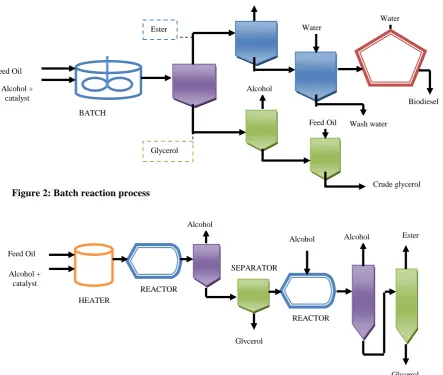
The trans-esterification reaction is done with a significant excess of alcohol to improve conversion and help suppress soap formation. The base catalyst is prepared into this alcohol solution first. The chemical equation for biodiesel production is in Figure 1. Several types of biodiesel processing plants have been developed since the early 1990’s ranging from: batch reactors; continuous stirred tank reactors; continuous plug flow reactors; high free fatty acid systems- fixed bed base catalysed reactor systems; non-catalysed systems- biox process; to non-non-catalysed systems supercritical processes [16]. However, only batch and continuous reactors are the mature technologies that have practical application in industry, while the remainder still need further development. For this reason only batch and continuous reactors are described in detail in this paper.
Table 2: International Quality Standards for biodiesel and South African Methods [12] Specification or property Units Europe (EN
14214)
USA (ASTM 6751-08)
South Africa (SANS 1935)
South African test method
Density @ 15oC kg/m3 0.86-0.90 Report 0.86-0.90 ISO 3675
Viscosity @ 40oC mm2/s 3.5-5.0 1.9-6.0 3.5-5.0 ISO 3104
Distillation T90 oC n/a 360 n/a -
Flashpoint oC 120 min 130/93 min 120 min ISO 3679
Sulphur mg/kg 10.0 max 15 max 10 max ISO 20846
10% Carbon residue %mass 0.30 max n/a 0.3 max ASTM D1160
100% Carbon residue %mass n/a 0.050 max n/a -
Sulphated Ash %mass 0.02 max 0.020 max 0.02 max ISO 3987
Water and sediment mg/kg 500 max 500 max 500 max ISO 12937
Total contamination mg/kg 24 max n/a 24 max EN 12662
Cu strip corrosion 3h@50oC Class 1 max No. 3 max Class 1 max ISO 2160
Oxidation stability h@110oC 6 min 3.0 min 6 min EN 14112
Cetane number - 51.0 min 47 min 51 min ISO 5165
Linolenic acid %mass 12.0 max n/a 12 max EN 14103
Acid value mgKOH/g 0.50 max 0.50 max 0.50 max EN 14104
Methanol %mass 0.20 max 0.2 max 0.20 max EN 14110
Ester content %mass 96.5 min n/a 96.5 min EN 14103
Triglyceride %mass 0.20 max n/a 0.2 max EN 14105
Total glycerol %mass 0.25 max 0.24 max 0.25 max EN 14105
Iodine number gI2/100g 120 max n/a 140 max EN 14111
Phosphorus mg/kg 10.0 max 10 max 10 max EN 14107
Cloud point oC Report on request Report Report on request -
The alcohol is removed from both the glycerol and ester stream using an evaporator or a flash unit. The esters are neutralized, washed gently using warm slightly acid water to remove residual methanol and salts, and then dried. The finished biodiesel is then transferred to storage. The glycerol stream is neutralized and washed with soft water. The glycerol is then sent to the glycerol refining section.
Continuous reactors typically use intense mixing, either from pumps or motionless mixers, to initiate the esterification reaction. Instead of allowing time for the reaction in an agitated tank, the reactor is tubular [19]. The reaction mixture moves through this type of reactor in a continuous plug which is horizontal high pressure vessel, with little mixing in the axial direction. The result is a continuous system that requires rather short residence times, as low as 10 minutes, for near completion of the reaction. The plug flow reactors can be staged, as shown in Figure 3, to allow decanting of glycerol. Often this type of reactor is operated at an elevated temperature and pressure to increase reaction rate.
The reaction mixture moves through this type of reactor in a continuous plug which is horizontal high pressure vessel, with little mixing in the axial direction. The result is a continuous system that requires rather short residence times, as low as 10 minutes, for near completion of the reaction. The plug flow reactors can be staged, as shown in Figure 3, to allow decanting of glycerol. Often this type of reactor is operated at an elevated temperature and pressure to increase reaction rate.
III. MATERIALS AND METHODS
A cross sectional study design was adopted. A status study was adopted because it is useful in obtaining an overall picture of how things stand at the time of study [17]. The
reference period for the study is from a retrospective prospective. Retrospective prospective studies focus on past trends in a phenomenon and study it into the future. The data collected was both quantitative and qualitative.
A total of 200 companies and organisations were identified as biodiesel producers and/or manufacturers in South Africa [18]. This figure was therefore adopted as the population for this study. Each company was targeted with a structured questionnaire and the response rate was 40%.
Figure 1: Biodiesel Trans-esterification reaction
Figure 2: Batch reaction process
Fig 3: Continuous reaction system
In the early stages of the research, the internet was the preferred tool for data collection because of its relative ease of access, cost effectiveness and a wide range of primary data available. It was used to find contact details for the various stakeholders in the biodiesel production industry ranging from biodiesel producers and equipment manufacturers to government departments and non-profit making organisations. It was also used for secondary data collection. This is mainly because very little has been published in books and journal papers with regards biodiesel technology and production in South Africa. Because some of
the information had not been peer reviewed and published, a comprehensive validation process was used for such data. Secondary data were also in journals and published books.
Structured questionnaires were developed based on initial data and were emailed to the stakeholders in the biodiesel industry. Two types of questionnaires were developed. The first comprised mainly of open ended questions about the general state of biodiesel production technology in South Africa and was targeted at government departments and non-profit making organisations involved in biodiesel production. The second questionnaire was more of a
Feed Oil Alcohol +
catalyst
Wash water Water
Feed Oil Alcohol
BATCH REACTOR
Crude glycerol Biodiesel Water
DRYER Ester
Glycerol
Feed Oil
REACTOR 2 SEPARATOR
Glycerol Alcohol
REACTOR 1 HEATER
Alcohol + catalyst
Alcohol Alcohol Ester
[image:4.595.45.489.249.624.2]about a biodiesel plant. This questionnaire was targeted at the biodiesel producers and equipment manufacturers. More contact details were obtained as the research proceeded through networking and collaboration.
During the company visits, the researchers interviewed the company staff to enhance appreciation of the technology within the plant and to obtain explanations of the various operational dynamics that were not within the company records. Technical personnel, both at floor and management level were the main targets for the interviews. Interviews were also used to clarify and expound on some points within the questionnaire.
Production and maintenance records were obtained where possible at each company that the researchers visited. Unfortunately, because of the informal nature of most of the biodiesel producers in South Africa, very few kept any form of technical record. Most of the technical data was thus collected using the questionnaires and the interviews. To ensure the validity and reliability of the data obtained for the research, the following techniques were used:
Negative data analysis [20]: Researchers actively looked for data that contradicted existing data and then continually revised the information until all data had been accounted for to improve reliability. Feedback from others: the researchers sought the
opinion of colleagues and other experts in the field to determine whether they agreed or disagreed with the findings, interpretations and conclusions. Respondent validation: the researchers took their
conclusions back to the participants in the study and asked them if they agreed with the conclusion drawn to improve validity and reliability.
IV. BIODIESEL PRODUCTION IN SOUTH AFRICA The South African biodiesel industry is mostly small scale using waste vegetable oil collected from food outlets as feedstock [21]. Construction is however under way of 2 huge biodiesel plants in the Eastern Cape, one using raw soybean
address the feedstock challenge for these two plants 500 thousand hectares (ha) has been targeted for farming of oilseed in the Eastern Cape, 250 thousand ha for soybean and 250 thousand ha for canola. The majority of farming contracts for these crops have been awarded to small scale farmers in the Eastern Cape as opposed to large scale farmers in an effort to bridge the gap between the first and second economies of South Africa. These two biodiesel plants are expected to increase the total annual production for South Africa to about 100 million litres. This can meet 1.25% of the country’s diesel requirements against the 2% target set by the Department of Minerals and Energy [23].
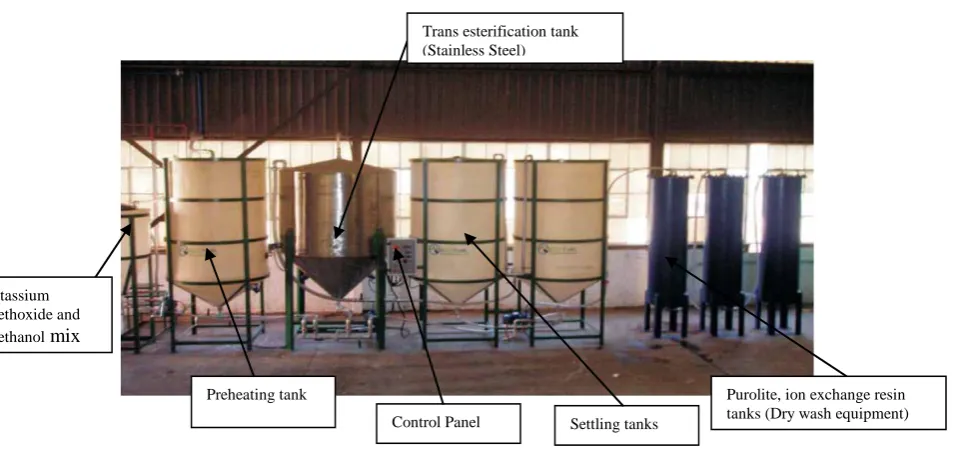
All biodiesel plants in South Africa, except for three, are batch type processors. Batch processes are preferred because they are inexpensive and easy to design, assemble and maintain. The operation of the batch reactor is very simple and thus there is very little need for technical training. Safety awareness is however critical when running a biodiesel plant of any kind because of the corrosive and poisonous nature of the chemicals involved [24]. Figure 4 shows a typical South African batch-type biodiesel plant. From the image one can see the distinct picture of resin columns (far right). Resin columns are an imported design from Asia, used as part of a dry wash system. Dry wash systems present a distinction between typical European and typical South African biodiesel plants because in Europe, biodiesel is water washed. The advantage of dry wash systems is that they save water, which is a scarce resource in South [25]. The challenge with dry wash systems is that the system is quite slow and therefore inappropriate for large scale production. The quality of biodiesel produced is lower than that of water washed systems.
[image:5.595.23.500.540.765.2]Batch reactors are good for small scale production.
Figure 4: The EECO 8000SS Batch Reactor
Potassium Methoxide and Methanol mix
Preheating tank
Control Panel Settling tanks
Purolite, ion exchange resin tanks (Dry wash equipment) Trans esterification tank
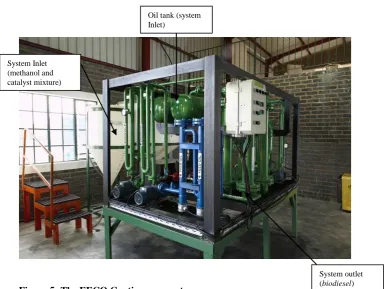
Figure 5: The EECO Continuous reactor
Continuous reactors are more appropriate for large scale production because they have quick processing time. They are however quite expensive to acquire, have a complex assembly and used vegetable oil in South Africa is not enough to meet the higher capacity. There are three producers using continuous reactors in South Africa and the figure will rise to 4 once the Eastern Cape commercial plants commence operations. Figure 5 shows one of the continuous biodiesel plants in South Africa. The factors that affect biodiesel production rate are discussed next.
Feedstock preparation time: This involves filtration,
titration, degumming, de-acidification and dehydration of the used vegetable oil. Filtration removes solid particles from the used vegetable oil before the pre-treatment processes. The duration of the filtration process depending on technology employed and required quality ranges between 1 and 2 hours. More advanced technology can reduce the time for filtration to less than 20 minutes. After filtration a sample of the feed oil is titrated to determine the percentage of free fatty acids within the system. This takes at most 20 minutes including the set-up time of the apparatus. Used vegetable oil (UVO) usually contains a high level of phosphotides (gums) which could cause deactivation of the exhaust catalyst [26]. The oil thus has to go through phosphotide removal process referred to as degumming. Oils with a high free fatty acid (FFA) content >5% have to undergo de-acidification. Excessive FFA in the oil is reduced to less than 1 mg NaOH/g equivalent. If left within the solution, free fatty acids will deplete the catalyst and hinder the glycerol and biodiesel separation process. The degumming and de-acidification process can be done concurrently using a strong alkali catalyst such as NaOH. Both the swollen phosphotides and the soaps formed during the degumming and de-acidification process can be precipitated. In the case
of high free fatty acids levels as in the case with UVO a pre-esterification process with methanol or ethanol may be required. The final pre-treatment step is dehydration to remove all traces of water within the oil [27]. This is done by either low pressure distillation or by passing a stream of nitrogen through the oil.
Rate of trans esterification reaction: One of the key
bottleneck operations in the biodiesel production process is the trans esterification reaction, largely limited by the phobic nature of the oil/methanol mix. This means the reaction not only has to be catalysed to initiate reaction, but vigorous mixing also has to be employed to achieve a homogeneous solution. Reaction time varies between 5 min and 2 hours depending on the technology [28].
Mixing method for the reactants: Related to the above
constraint is the mixing method employed during the trans esterification reaction. Mixing methods range from traditional mixing using pumping units, all the way to vortexing, ultrasound irradiation, and the use of a common solvent. The mixing method will determine the rate of trans esterification [29].
Biodiesel/glycerine separation time: The biodiesel
production time is largely determined by the phase separation period of the biodiesel and the glycerine. At a purely elementary production level, separation is achieved through settling for a period of up to 8 hours, the longer the settling time the better the quality of the product [30]. However to accelerate the phase separation, the following methods are in common use; cooling the reaction mixture, adding water, extra glycerol or hexane to the mixture and the extraction of esters by centrifugation.
Biodiesel purification time: Once the glycerol and the
ester have been separated, each phase needs to be purified.
System Inlet (methanol and catalyst mixture)
System outlet (biodiesel) Oil tank (system
distillation. Removal of glycerine and partial glycerides from the ester phase is achieved by water and acid solution washing. However this method has been largely negated due to ester losses through hydrolysis.
The following were the factors that were found to affect the yield: Feedstock quality: The percentage of solid impurities and free fatty acids or the quality of feedstock determines the amount of feedstock that is lost during the pre-treatment phase of the biodiesel production process. Feedstock containing a high percentage of solid impurities within the feedstock will result in a large amount of material loss during the filtration phase. Feedstock containing a lot of moisture will result in huge material losses during dehydration and material containing a lot of free fatty acids will result in material loss during de-acidification [31].
Completeness of trans esterification reaction: Yields
are largely influenced by the completeness of the trans esterification reaction. An incomplete reaction will not only affect the final product through high methanol and triglyceride content in the product, but it also results in reductions in the amount of biodiesel generated for a given amount of feedstock- low conversion efficiency/ yield. The converse is true for a trans esterification reaction with high completeness levels.
Effectiveness of separation process: There is need to
ensure that less biodiesel is lost with the glycerine. Effective separation is thus one of the priority areas in the optimisation of the biodiesel production process. It also ensures that less biodiesel is lost during the purification phase along with the glycerine and the methanol [32].
Effectiveness of purification: There is need to ensure
that very little biodiesel, glycerine and methanol is left in the resin, especially when using a water wash system. For dry wash, the challenge is mainly that of biodiesel remaining as a residue within the resin.
The following were the factors that were found to affect the quality of the biodiesel produced: Biodiesel quality Biodiesel producers in South Africa find it difficult to meet quality specifications. This is largely because used vegetable oil which contains several contaminants [33]. These include solid particles generated from the cooking process, phosphotides, moisture and free fatty acids (FFA). It is difficult and costly to obtain the appropriate technology to fully purify the feedstock before it is fed into the reaction chamber resulting in compromised quality.
Effectiveness of feedstock pre-treatment process: The
effectiveness of the biodiesel plant in purifying the feedstock during the pre-treatment phase will ultimately determine the quality of the end product, because residual impurities like free fatty acids and excess moisture will negatively impact on the reaction process [34].
Completeness of trans esterification reaction:
Incomplete trans esterification results in high methanol and triglyceride residues within the product. Biodiesel producers in South Africa utilise elementary phase separation process without the aid of a centrifuge resulting in longer process setting times of almost 10 hours hence leading to a largely unsustainable rate of production.
glycerine, soaps and methanol find their way into the biodiesel chamber. Modern ways of phase separation include the reverse trans esterification process, ester extraction using a centrifuge, and methanol recovery by vacuum distillation. However the most widely practiced process is settling which does not result in complete phase separation and thus results in several glycerol and methanol impurities within the biodiesel product [35].
Effectiveness of purification process: Water wash
processes result in the hydrolysis of the ester which is a reversal of the trans esterification process and has a negative effect on the acid value of the product. There is also the challenge of high methanol content in the product for systems not fitted with low pressure distillation columns. With the dry wash systems the main challenge is that the absorption properties of the Purolite resin alter with use and hence become less efficient in capturing the glycerol component [36].
V. RESULTS AND DISCUSSION
Table 3 shows the weighted averages for rate of production for biodiesel plants in South Africa, the USA, Germany and Brazil.
Table 3: Average biodiesel plant production rates by Country
South Africa
USA Germany Brazil Litres/day 1,000 95,000 80,000 78,000 The production rates for South African biodiesel plants falls a far cry from production levels in the established biodiesel producing countries in the world. This can be attributed to the fact that, the biodiesel manufacturing industry is still in the pilot study phase due to a lack of investment and a generally hostile policy towards the industry from government which imposes a fuel tax on all production levels above 1000 litres per day. For this reason it is only a handful of biodiesel enthusiasts, operating at a micro scale, and using micro scale batch processing equipment. Total annual production is estimated to be around 400 thousand litres [6]. It is possibly more considering that some players in the business conceal information about production levels in an effort to evade the fuel tax. The spread of biodiesel producers is as expected, confined to South Africa’s biggest metropolitan regions Gauteng, Cape Town and Durban with the majority being in Gauteng.
global technology company Lurgi AG to further study the viability of the biodiesel project. The proposed plant would require 600 thousand tonnes of soybeans a year which meant that part of the feedstock would have to be imported while soybean farming in South Africa would work to meet the demand. Sasol has since suspended plans to build the plant siting viability concerns of first generation biofuels and uncertainties over the government position on the food versus fuel debate. Another significant plan was the Rainbow Nation Renewable Fuels (RNRF) which is owned by NatBioGroup of Australia. The plan was at that time to build a R1.5 billion dollar biodiesel plant in the Coega Industrial Development Zone in the Eastern Cape. The facility would produce 288 million litres of biodiesel, consuming 1 million tonnes of soybeans a year making it the largest plant in Africa [7]. The plant would also produce 800 thousand tonnes of soy meal making South Africa a net exporter of soy meal of which the current the current state is net importation. True to their word, RNRF have commenced construction of the biodiesel plant and it is expected commence operations in December 2010. The most recent significant announcement is by First In Spec, which plans to build 3 used oil biodiesel plants. The plants will be located in Richards Bay and will commence operations in March 2011. The total annual production is 50 million litres for which are targeting the mining industry. The expected construction cost is R1.5 billion and the plant will create up to 100 direct jobs and 5000 indirect jobs.
Despite the numerous plans, very little is materialising in terms of real investment in the biodiesel manufacturing business. In an article published in the Renewable and Sustainable Energy Reviews Journal, Amigun and Von Blottnitz attribute food security concerns as the reason behind the reluctance by government to fully support biodiesel manufacture [1]. They say that the biodiesel industry will always face resistance while South Africa is still a net importer of oil. For this reason, investors are shying away from the business and those that decide to fight on are too small to have a voice and it then becomes a vicious cycle of unfavourable policy formulation towards biodiesel and an inherent lack of investment and vice versa.
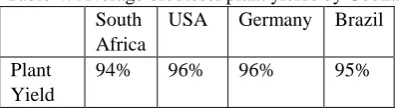
[image:8.595.54.254.616.671.2]Table 4 shows the weighted averages for plant yield of biodiesel plants in South Africa, the USA, Germany and Brazil.
Table 4: Average biodiesel plant yields by Country South
Africa
USA Germany Brazil Plant
Yield
94% 96% 96% 95%
Plant yields in South Africa are affected by poor feedstock quality. A lot of material is lost during the feedstock preparation stage. Main contaminants include excessive free fatty acids, excess moisture and solid particles. Filtration is by conventional sieves and filter paper and the yield is comparable to that of Brazil.
Yields for biodiesel in South Africa are affected by incomplete trans esterification. This is due to the high free
fatty acid and moisture content which depletes the catalyst and forms soaps within the solution. Several producers use two stage reaction system, which involves tapping out the glycerol and feeding additional catalyst in the second phase, improving yields but increasing production cost and reducing plant production rates.
Most systems in South Africa are not fitted with centrifuge resulting in slow separation but more clearly defined separation giving better yields relative to established producers. The purification phase uses Purolite resin, which slows down the process but gives higher yields due to less loss of material through hydrolysis of the esters to form soaps.
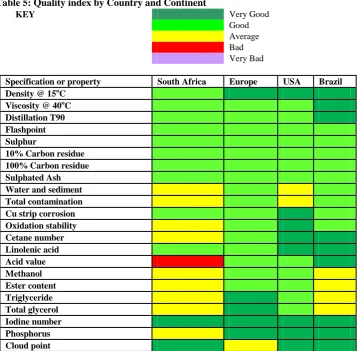
Table 5 shows the quality compliance index for biodiesel plants in South Africa, the USA, Germany and Brazil. Incomplete trans esterification reactions have been found to be one of the main causes of low biodiesel quality due to the high presence of free fatty acids in the feedstock. This leaves triglycerides, di-glycerides and mono-glycerides in the reactions mixture. Each of these compounds still contains a glycerol molecule that has not been released which is referred to as bound glycerol. The SANS specification requires that the total glycerol be less than 0.24% of the final biodiesel product. Most biodiesel plants were found to have a glycerol component in the excess of 0.6% which is very high. Only one plant was found in Cape Town which meets the spec regarding total glycerol. Another challenge posed by incomplete reactions is the free glycerol component. This has mainly been a challenge for South African producers due to the presence of suspended droplets and small amounts dissolved in the biodiesel because the purification process is dry wash. In water wash systems this is much less of a problem as most of the free glycerol is washed away with the water.
Other pertinent challenges for biodiesel producers have been found to be residual alcohol and catalyst, post production factors such as water and sediment and storage stability. On average biodiesel in South African plants contains 2-3% methanol after separation. Now because the plants are not fitted with methanol recovery units but the methanol is assumed to be absorbed by the purolite, the residual alcohol level in the biodiesel is very high. Tests have shown that on average, up to 1.5% methanol is present in the South African biodiesel product and this can lower the flashpoint of the biodiesel from 170oC to less than 40oC. This in more ways does not affect the performance of the fuel but make the biodiesel more volatile hence creating a safety hazard. Biodiesel is in general hydrophobic but can contain as much as 1500ppm of dissolved water while diesel contains on average only contains 50ppm of water.
KEY Very Good
Good
Average
Bad
Very Bad
Specification or property South Africa Europe USA Brazil
Density @ 15oC
Viscosity @ 40oC
Distillation T90
Flashpoint
Sulphur
10% Carbon residue
100% Carbon residue
Sulphated Ash
Water and sediment
Total contamination
Cu strip corrosion
Oxidation stability
Cetane number
Linolenic acid
Acid value
Methanol
Ester content
Triglyceride
Total glycerol
Iodine number
Phosphorus
Cloud point
In section 5 the main hindrances to good production rates were identified as slow feedstock preparation, slow rate of reaction, slow separation processes and slow purification. Technological improvements can be made by procurement of faster and effective equipment in these regards but the discussion is firstly on the real starting point which is to use the highest quality feedstock to reduce preparation times and allow for more efficient reaction and purification. The only feedstock being used to produce biodiesel is used vegetable oil collected from restaurants and one of the ways to ensure that the quality is good is to draft service level agreements with suppliers which requires them to have on site filtration systems so that remove the solids from the oil prior to shipment to the plant. This may however prove to be a challenge to implement since used oil supplies are erratic and therefore the willing supplier is king. But all factors considered the whole challenge of addressing supply chain issues for feedstock in the biodiesel industry is purely logistical and with more coordination with food outlets in South Africa, the biodiesel industry can harness up to 50 million litres of biodiesel annually. To make up for the shortfall, there is a requirement for construction of soybean and canola based biodiesel plants.
Referring back to the technological improvements that may be made by biodiesel plants to improve yields and production rates in South Africa, the following have yielded results for several plants in Europe and the USA. The first can be the use of supercritical methanol at high temperatures and pressures in a continuous process. In supercritical state, the oil and the methanol are in a single phase, and reaction
occurs spontaneously and rapidly. The process can tolerate moisture in the feedstock and the free fatty acids are converted to methyl esters instead of soap which not only helps in reducing the separation times but also boost yields. Because this process in non – catalysed, the catalyst removal step is eliminated resulting in an even faster process. Although high temperatures and pressures will be required, the energy and production costs will be largely similar to those of current systems.
The second technology that may be employed to improve the yields and production is the ultra and high shear in line batch reactors which allow the production of biodiesel continuously and in batch mode which reduces production time and increases production volume. The reaction takes place in the high energy shear zone of the high shear mixer reducing the droplet size of the immiscible liquids (oil and methanol). Hence, with a smaller droplet size the surface area is increased and the catalyst can react faster.
[image:9.595.61.419.54.405.2]Another possibility for improving the production rate of biodiesel is the use of commercial microwave ovens to provide the heat needed in the trans esterification process. The microwaves provide intense localised heating that may be higher than the recorded temperature of the reaction vessel. A continuous flow process producing 6 litres/ min at a 99% conversion rate has been developed and shown to consume only ¼ of the electricity required in a batch process. This technology is however still lab scale, but holds great potential to be an efficient and cost competitive method for commercial scale biodiesel production.
At the average prices of +/- US $65/ barrel for petroleum diesel, biodiesel quality is its only competitive advantage of strength when measured against petroleum diesel as biodiesel has zero aromatic content, higher Cetane numbers, zero sulphur content and lower flash point. If however the quality standards are allowed to slip biodiesel has the challenge of exhibiting cold weather problems and storage instability which can lead to engine problems. The customer would not demand a product that costs more and is of even les quality and so if the South African biodiesel industry is to develop, the quality of biodiesel has to improve. Improving biodiesel quality will boil down to an improved feedstock quality and introduction of the technologies mentioned in section 6.1.
REFERENCES [1] Diesel Veg Ltd: "Rudolf diesel”
http://www.dieselveg.com/rudolf_diesel.htm last accessed 30/09/2012
[2] Jenkins, B.M., 1996: A comment on the optimal sizing of a biomass utilization facility under constant and variable cost scaling, Biomass and Bioenergy, 13, 1&2, 1-9
[3] Mittelbach, M., Remschmidt, C., 2005, Biodiesel - the Comprehensive Handbook, 2nd Edition, Martin Mittelbach, 332 pages
[4] Nitske, W.R., Wilson, C.M., 1965: Rudolf Diesel: Pioneer of the Age of Power, University of Oklahoma Press, 318 pages
[5] Prankl, H., 2002: High Biodiesel quality required by European Standards. European Journal of Lipid Science and Technology 104, page 371-375
[6] Turton, R, Bailie, R.C, Shaeiwitz, J.A, Whiting, W.B, 2003: Analysis, Synthesis and Design of Chemical Processes, 2nd edition, Prentice Hall PTR
[7] Stavins, R., A. Wagner, G. Wagner Interpreting Sustainability in Economic Terms: Dynamic Efficiency Plus Intergenerational Equity, Economic Letters, 79:339-343
[8] Wikipedia, the Free encyclopaedia “Heating Value” http://en.wikipedia.org/wiki/Biomass last accessed 03/08/2012 [9] Department of Minerals and Energy South Africa (DME, 2007).
Biofuels Industrial Strategy. http://www.dme.gov.za/pdfs/energy/renewable/biofuels_indus_strat.p df(2).pdf last accessed 07/02/2013
[10] Briggs, M. S. and Pearson, J. (2005). “Biodiesel Processing Handout for New Hampshire Science Teachers Association Workshop,” UNH Biodiesel Group http://www.unh.edu/p2/biodiesel last accessed 13/02/2012
[11] Hasna, A. M. (2007). "Dimensions of sustainability". Journal of Engineering for Sustainable Development: Energy, Environment, and Health 2 (1): 47–57.
[12] Kitani, Osamu, "Volume V: Energy and Biomass Engineering, CIGR Handbook of Agricultural Engineering", American Society of Agricultural, 1999.
[13] Royer, DL; RA Berner and DJ Beerling (2001). "Phanerozoic atmospheric CO2 change: evaluating geochemical and paleobiological approaches". Earth-Science Reviews 54: 349–392 [14] Amigun. B, Sigamoney. R, H. von Blottnitz (2006):
“Commercialization of biofuel industry in Africa: A review” Renewable and Sustainable Energy Reviews (Elsevier) 12 690- 711
[15] Australian environment ministry, (2007) http://www.environment.gov.au/settlements/transport/comparison/pu bs/2ch3.pdf last accessed 08/02/2013
[16] Biofuels Journal (2009). “South African firm First In Spec to build three waste grease biodiesel plants” http://www.biofuelsjournal.com/articles/South_African_Firm_First_I n_Spec_to_Build_Three_Waste_Grease_Biodiesel_Plants-81354.html last accessed 02/09/2012
[17] Bunkyakiat, Kunchana; et al. (2006). "Continuous Production of Biodiesel via Trans-esterification from Vegetable Oils in Supercritical Methanol". Energy and Fuels (American Chemical Society) 20: 812–817
[18] Denzin Norman K, Lincoln.Y (1994) “Handbook of qualitative research” Sage Publications, California pp. 428
[19] Department of Environment and Tourism South Africa (DEAT, 2006) “Climate change” http://soer.deat.gov.za/themes.aspx?m=172 last accessed 06/08/2012
[20] DEAT (2004). National Climate Response Strategy http://unfccc.int/files/meetings/seminar/application/pdf/sem_sup3_so uth_africa.pdf last accessed 04/03/2013
[21] DME (2003). White Paper on Renewable Energy http://www.dme.gov.za/pdfs/energy/renewable/white_paper_renewabl e_energy.pdf last accessed 09/06/2012
[22] Ecoinvent (2007) ‘Overview and Methodology’ http://www.ecoinvent.org/fileadmin/documents/en/01_OverviewAnd Methodology.pdf last accessed 03/08/2012
[23] EPA Victoria (2008) “What is Life Cycle Management” http://www.epa.vic.gov.au/lifecycle/whatis.asp last accessed 03/03/2013
[24] Evans, G. "Liquid Transport Biofuels - Technology Status Report", National Non-Food Crops Centre.
[25] Gray David E (2004). “Doing research in the Real World” Sage publications, California pp. 188-183, 214,238
[26] IPCC. (2007) Climate change 2007: the physical science basis (summary for policy makers), http://www.ipcc.ch/publications_and_data/publications_ipcc_fourth_ assessment_report_wg1_report_the_physical_science_basis.htm last accessed 05/08/2012
[27] Keppel G (1982) “Design and analysis, A researcher’s handbook 2nd Edition” Prentice Hall, New Jersey pp. 123
[28] Knothe .G & Van Gerpen (2004). “The Biodiesel Handbook” Prentice hall, New Jersey 12-15
[29] Leadbetter, Nicholas E, et al. (2007). “Continuous-Flow Preparation of Biodiesel Using Microwave Heating”. Energy & Fuels 21: 1777-1781. American Chemical Society.
[30] NatBiogroup (2007) http://www.natbiogroup.com/docs/announcements/rnrf%20key%20fa cts.pdf last accessed 02/03/2013
[31] National Biodiesel Board "Biodiesel 101 - Biodiesel Definitions" http://www.biodiesel.org/resources/definitions/default.shtm. Last accessed 13/03/2013
[32] Robertson, Andrew. (2003) "Biodiesel Heating Oil: Sustainable Heating for the future". Institute of Plumbing and Heating Engineering.
http://www.iphe.org.uk/publications/tech_literature.html. last accessed 03/01/2013
[33] Royer, DL; RA Berner and DJ Beerling (2001). "Phanerozoic atmospheric CO2 change: evaluating geochemical and paleobiological approaches". Earth-Science Reviews 54: 349–392 [34] SABA (2009).”Biodiesel South Africa”
http://www.saba.za.org/site/news/articles/refit_consultation.html last accessed 07/01/2013
[35] Sasol, 2006 “Joint Media Release-Sasol, CEF and Siyanda Biodiesel” http://www.sasol.com/sasol_internet/frontend/navigation.jsp?articleId =16200002&navid=4&rootid=4 last accessed 08/03/2013
[36] UCN (2006). The future of sustainability: Re-thinking Environment and Development in the Twenty-first Century. Report of the IUCN Renowned Thinkers Meeting, 29-3 January, 2006. http://cmsdata.iucn.org/downloads/iucn_future_of_sustanability.pdf last accessed 04/09/2012
![Table 2: International Quality Standards for biodiesel and South African Methods [12] Specification or property Units Europe (EN USA (ASTM South Africa](https://thumb-us.123doks.com/thumbv2/123dok_us/475024.545810/3.595.58.544.74.355/international-quality-standards-biodiesel-african-methods-specification-property.webp)