University of Warwick institutional repository: http://go.warwick.ac.uk/wrap
This paper is made available online in accordance with
publisher policies. Please scroll down to view the document
itself. Please refer to the repository record for this item and our
policy information available from the repository home page for
further information.
To see the final version of this paper please visit the publisher’s website.
Access to the published version may require a subscription.
Author(s): Stavros Petrou, Jane Morrell and Helen Spiby
Article Title: Assessing the empirical validity of alternative
multi-attribute utility measures in the maternity context
Year of publication: 2009
Link to published article:
http://www.hqlo.com/content/7/1/40
Publisher statement: © 2009 Petrou et al; licensee BioMed Central Ltd.
This is an Open Access article distributed under the terms of the
Creative Commons Attribution License
Open Access
Research
Assessing the empirical validity of alternative multi-attribute utility
measures in the maternity context
Stavros Petrou*
1,2, Jane Morrell
3and Helen Spiby
4Address: 1National Perinatal Epidemiology Unit, Department of Public Health, University of Oxford (Old Road Campus), Oxford, UK, 2Health
Economics Research Centre, Department of Public Health, University of Oxford (Old Road Campus), Oxford, UK, 3Centre for Health and Social
Care Research, School of Human and Health Sciences, University of Huddersfield, Huddersfield, UK and 4Mother and Infant Research Unit,
Department of Health Sciences, University of York, York, UK
Email: Stavros Petrou* - [email protected]; Jane Morrell - [email protected]; Helen Spiby - [email protected] * Corresponding author
Abstract
Background: Multi-attribute utility measures are preference-based health-related quality of life measures that have been developed to inform economic evaluations of health care interventions. The objective of this study was to compare the empirical validity of two multi-attribute utility measures (EQ-5D and SF-6D) based on hypothetical preferences in a large maternity population in England.
Methods: Women who participated in a randomised controlled trial of additional postnatal support provided by trained community support workers represented the study population for this investigation. The women were asked to complete the EQ-5D descriptive system (which defines health-related quality of life in terms of five dimensions: mobility, self care, usual activities, pain/discomfort and anxiety/depression) and the SF-36 (which defines health-related quality of life, using 36 items, across eight dimensions: physical functioning, role limitations (physical), social functioning, bodily pain, general health, mental health, vitality and role limitations (emotional)) at six months postpartum. Their responses were converted into utility scores using the York A1 tariff set and the SF-6D utility algorithm, respectively. One-way analysis of variance was used to test the hypothetically-constructed preference rule that each set of utility scores differs significantly by self-reported health status (categorised as excellent, very good, good, fair or poor). The degree to which EQ-5D and SF-6D utility scores reflected alternative dichotomous configurations of self-reported health status and the Edinburgh Postnatal Depression Scale score was tested using the relative efficiency statistic and receiver operating characteristic (ROC) curves.
Results: The mean utility score for the EQ-5D was 0.861 (95% CI: 0.844, 0.877), whilst the mean utility score for the SF-6D was 0.809 (95% CI: 0.796, 0.822), representing a mean difference in utility score of 0.052 (95% CI: 0.040, 0.064; p
< 0.001). Both measures demonstrated statistically significant differences between subjects who described their health status as excellent, very good, good, fair or poor (p < 0.001), as well as monotonically decreasing utility scores (test for linear trend: p < 0.001). The SF-6D was between 29.1% and 423.6% more efficient than the EQ-5D at detecting differences in self-reported health status, and between 129.8% and 161.7% more efficient at detecting differences in the Edinburgh Postnatal Depression Scale score. In addition, the SF-6D generated higher area under the curve (AUC) scores generated by the ROC curves than the EQ-5D, indicating greater discriminatory power, although in all but one analysis the differences in AUC scores between the measures were not statistically significant.
Conclusion: This study provides evidence that the SF-6D is an empirically valid and efficient alternative multi-attribute utility measure to the EQ-5D, and is capable of discriminating between external indicators of maternal health.
Published: 6 May 2009
Health and Quality of Life Outcomes 2009, 7:40 doi:10.1186/1477-7525-7-40
Received: 17 February 2009 Accepted: 6 May 2009
This article is available from: http://www.hqlo.com/content/7/1/40
© 2009 Petrou et al; licensee BioMed Central Ltd.
Background
Economic evaluations of health care interventions are increasingly being conducted throughout the industrial-ised world to inform the efficient allocation of finite health care resources [1]. In many jurisdictions, cost-util-ity analysis represents the preferred technique of eco-nomic evaluation [2]. The technique allows health interventions, within and across health care programmes, to be compared in terms of their costs and the health improvements they procure, thereby permitting finite health care resources to be allocated on a utilitarian 'cost per unit of health improvement' basis [3]. Potential meas-ures for estimating health improvements within a cost-utility framework include the quality-adjusted life year (QALY) [4], the healthy years equivalent (HYE) [5] and the saved young life equivalent (SAVE) [6]. The QALY syn-thesises information on the length of life and the health-related quality of life into a single measure of health out-come, and is the most widely used of the various meas-ures.
[image:3.612.59.556.347.711.2]Alternative approaches to deriving the health-related quality of life component of the QALY for the purposes of economic evaluation include scaling techniques, such as the standard gamble, time trade-off and person trade-off approaches, and multi-attribute utility measures, which are essentially health status classification systems with pre-existing utility scores (or preference weights) that can be attached to each permutation of responses [7]. In prac-tice, multi-attribute utility measures have acted as the pri-mary source of data for QALY estimation in cost-utility analyses [8,9]. The available multi-attribute utility meas-ures include the Quality of Well-Being Scale [10], Rosser-Kind Classification of Illness States [11], Health Utilities Index (HUI) [12], EQ-5D [13], 16D [14], 17D [15], Assessment of Quality of Life instrument (AQoL) [16] and SF-6D [17]. The EQ-5D and the HUI are currently the most widely used of the multi-attribute utility measures. However, the recent development of the SF-6D, which is derived from the Short Form 36 (SF-36) health survey [18], one of the most widely used generic measures of
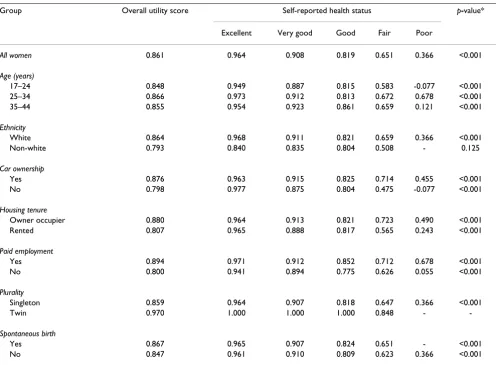
Table 2: Relationship between mean EQ-5D utility scores and self-reported health status (n = 493)
Group Overall utility score Self-reported health status p-value*
Excellent Very good Good Fair Poor
All women 0.861 0.964 0.908 0.819 0.651 0.366 <0.001
Age (years)
17–24 0.848 0.949 0.887 0.815 0.583 -0.077 <0.001
25–34 0.866 0.973 0.912 0.813 0.672 0.678 <0.001
35–44 0.855 0.954 0.923 0.861 0.659 0.121 <0.001
Ethnicity
White 0.864 0.968 0.911 0.821 0.659 0.366 <0.001
Non-white 0.793 0.840 0.835 0.804 0.508 - 0.125
Car ownership
Yes 0.876 0.963 0.915 0.825 0.714 0.455 <0.001
No 0.798 0.977 0.875 0.804 0.475 -0.077 <0.001
Housing tenure
Owner occupier 0.880 0.964 0.913 0.821 0.723 0.490 <0.001
Rented 0.807 0.965 0.888 0.817 0.565 0.243 <0.001
Paid employment
Yes 0.894 0.971 0.912 0.852 0.712 0.678 <0.001
No 0.800 0.941 0.894 0.775 0.626 0.055 <0.001
Plurality
Singleton 0.859 0.964 0.907 0.818 0.647 0.366 <0.001
Twin 0.970 1.000 1.000 1.000 0.848 -
-Spontaneous birth
Yes 0.867 0.965 0.907 0.824 0.651 - <0.001
No 0.847 0.961 0.910 0.809 0.623 0.366 <0.001
* ANOVA.
health-related quality of life in health services research, has the potential to considerably increase the derivation of QALY estimates using existing and future data sets [17].
The selection of a multi-attribute utility measure for appli-cation within an economic evaluation framework should be informed by its psychometric properties in each clini-cal context, including its practiclini-cality, reliability and valid-ity [19]. A crucial requirement for health economists is that there is evidence for the measure's empirical validity, that is, that the measure generates utility scores (essen-tially the health-related quality of life component of the QALY) that reflect people's preferences. Brazier and Deverill [4] propose a hierarchy of evidence for establish-ing the empirical validity of multi-attribute utility meas-ures: revealed preference data (i.e. preferences revealed from actual decisions), stated preference data (i.e. expressed preferences using techniques such as contingent valuation [7]), and hypothetical preferences (i.e. prefer-ences that are hypothesised or constructed by researchers) [19]. Most commonly, establishing the empirical validity of multi-attribute utility measures has involved examin-ing whether the utility scores generated by the measures reproduce hypothesised differences between groups of individuals or patients [19]. To our knowledge, no study to date has assessed the empirical validity of multi-attribute utility measures in the maternity context. The objective of this study was to compare the empirical valid-ity of EQ-5D versus SF-6D utilvalid-ity scores based on hypo-thetical preferences in a large maternity population in England. In so doing, we aim to provide evidence on the relative merits of two prominent multi-attribute utility measures for those involved in analysing and interpreting economic evaluations in the maternity context.
Methods
Study population
Women who participated in a randomised controlled trial of additional postnatal support provided by trained com-munity support workers represented the study population
for this investigation [20,21]. The trial recruited 623 Eng-lish-speaking women from a university teaching hospital in Sheffield, northern England, over the period October 1996 to November 1997. Women were eligible for the trial if they were aged 17 years or over and had given birth to a live baby. The population living in the catchment areas of the teaching hospital broadly reflected the age and ethnic profile for the general population of England and Wales, but had a slightly lower fertility rate compared with the general population and a higher proportion liv-ing in underprivileged areas (highest category of Jarman scores) [20]. Women recruited into the trial were more likely to be older, of white ethnic origin, to have used tran-scutaneous nerve stimulation during labour and to have had a caesarean section than the 1046 women who declined participation [20]. Individual women were ran-domly allocated to a control group that was offered usual postnatal care at home by community midwives (n = 312) or an intervention group that was also offered a maximum of 10 visits from specifically trained community postnatal support workers for up to three hours per day in the first 28 postnatal days (n = 311). There were no significant dif-ferences between the allocation groups in terms of a range of general health and psychosocial outcome measures at six weeks and six months postpartum [20]. Therefore, out-comes for individual women allocated to either of the two groups were pooled for the purposes of our empirical investigation. Further details about the randomised con-trolled trial, its methodology, outcome measures and response rates are reported elsewhere [20].
Indicators of health status
Two key outcome measures completed by the women in postal questionnaires at six months postpartum acted as the external indicators of health status in this current investiga-tion. The first was general health status, which was catego-rised as excellent, very good, good, fair or poor. Self-reported health status has been shown to have high internal consist-ency, construct validity and reliability, as well as representing a good predictor of morbidity and mortality [22,23]. The second was the Edinburgh Postnatal Depression Scale (EPDS), a validated and widely used non-diagnostic instru-ment for indicating a woman's risk of postnatal depression, a distressing mental disorder more prolonged than the blues (which tend to occur in the first week after delivery) but less severe than puerperal psychosis [24].
Multi-attribute utility measures
As part of the postal questionnaire completed at six months postpartum, women completed the United King-dom versions of the EQ-5D [13] and SF-36 [18] instru-ments (Additional file 1).
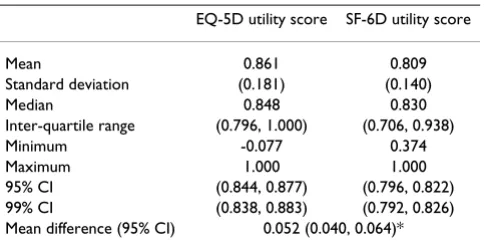
[image:4.612.56.298.592.714.2]The EQ-5D was developed by the 'EuroQol Group', a multi-disciplinary group of researchers from seven centres Table 1: Descriptive statistics of EQ-5D and SF-6D utility scores
(n = 493)
EQ-5D utility score SF-6D utility score
Mean 0.861 0.809
Standard deviation (0.181) (0.140)
Median 0.848 0.830
Inter-quartile range (0.796, 1.000) (0.706, 0.938)
Minimum -0.077 0.374
Maximum 1.000 1.000
95% CI (0.844, 0.877) (0.796, 0.822) 99% CI (0.838, 0.883) (0.792, 0.826) Mean difference (95% CI) 0.052 (0.040, 0.064)*
across five countries, which was formed to generate a car-dinal preference-based index of health for comparative purposes [25]. The EQ-5D consists of two principal meas-urement components. The first is a descriptive system which defines health-related quality of life in terms of five dimensions: 'mobility', 'self care', 'usual activities', 'pain/ discomfort' and 'anxiety/depression' [13,25]. Responses in each dimension are divided into three ordinal levels, coded: (1) no problems; (2) some or moderate problems; and (3) severe or extreme problems. The second measure-ment component of the EQ-5D consists of a 20 cm verti-cal visual analogue sverti-cale ranging from 100 (best imaginable health state) to 0 (worst imaginable health state), which provides an indication of the subject's own assessment of their health status on the day of the survey [13,25]. The women in the present study were asked to complete the EQ-5D descriptive system and not the visual analogue scale. The potential responses to the descriptive system can theoretically generate 243 (35) different health
states. For the purposes of our investigation, we applied
the York A1 tariff to each set of responses to the descrip-tive system in order to generate an EQ-5D utility score for each woman [26]. The York A1 tariff set had been derived from a survey of the UK population (n = 3337), which used the time trade-off valuation method to estimate pref-erence weights for a subset of 45 EQ-5D health states, with the remainder of the EQ-5D health states subsequently valued through the estimation of a multivariate model [26,27]. Utility scores in the York A1 tariff set range from no problems on any of the five dimensions in the EQ-5D descriptive system (value = 1.0) to severe or extreme impairment on all five dimensions (value = -0.594) [27]. The York A1 tariff set represents the recommended general population-based value set for the purposes of economic evaluation in England and Wales [2].
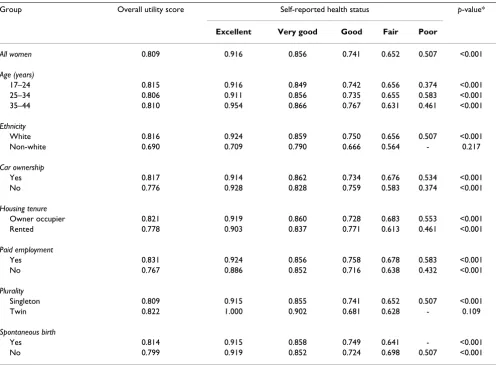
[image:5.612.59.555.99.464.2]The SF-36 health survey was developed from the RAND Corporation's Health Insurance Experiment in the United States [28]. The SF-36 measures health-related quality of life, using 36 items, across eight dimensions: physical Table 3: Relationship between mean SF-6D utility scores and self-reported health status (n = 493)
Group Overall utility score Self-reported health status p-value*
Excellent Very good Good Fair Poor
All women 0.809 0.916 0.856 0.741 0.652 0.507 <0.001
Age (years)
17–24 0.815 0.916 0.849 0.742 0.656 0.374 <0.001
25–34 0.806 0.911 0.856 0.735 0.655 0.583 <0.001
35–44 0.810 0.954 0.866 0.767 0.631 0.461 <0.001
Ethnicity
White 0.816 0.924 0.859 0.750 0.656 0.507 <0.001
Non-white 0.690 0.709 0.790 0.666 0.564 - 0.217
Car ownership
Yes 0.817 0.914 0.862 0.734 0.676 0.534 <0.001
No 0.776 0.928 0.828 0.759 0.583 0.374 <0.001
Housing tenure
Owner occupier 0.821 0.919 0.860 0.728 0.683 0.553 <0.001
Rented 0.778 0.903 0.837 0.771 0.613 0.461 <0.001
Paid employment
Yes 0.831 0.924 0.856 0.758 0.678 0.583 <0.001
No 0.767 0.886 0.852 0.716 0.638 0.432 <0.001
Plurality
Singleton 0.809 0.915 0.855 0.741 0.652 0.507 <0.001
Twin 0.822 1.000 0.902 0.681 0.628 - 0.109
Spontaneous birth
Yes 0.814 0.915 0.858 0.749 0.641 - <0.001
No 0.799 0.919 0.852 0.724 0.698 0.507 <0.001
* ANOVA.
functioning, role limitations (physical), social function-ing, bodily pain, general health, mental health, vitality and role limitations (emotional). For each of the eight dimensions, responses to the survey items are trans-formed onto a 0 to 100 scale, with higher scores indicating higher levels of health-related quality of life. In addition, the SF-36 produces one physical component summary score and one mental component summary score. Although there is extensive evidence demonstrating the ability of the SF-36 dimension and summary scores to describe health differences between patient groups and changes in health over time [29], the scores themselves do not reflect population preferences required for the pur-poses of QALY estimation. A number of algorithms for deriving health state utility scores from SF-36 responses have been published to date [17,30-33]. For the purposes of this investigation, we applied the SF-6D utility algo-rithm to each woman's responses to the SF-36 health sur-vey in order to generate a SF-6D utility score for each woman [17]. The SF-6D algorithm reduces the eight dimensions of the SF-36 to six by combining role limita-tions due to physical and emotional problems and omit-ting general health perceptions. The combination of levels across the physical functioning, role limitations, social
functioning, bodily pain, mental health and vitality dimensions generates 18,000 (6 x 4 x 5 x 6 x 5 x 5) unique health states. A study using a fractional factorial design identified 249 health states from this universe of health states, which were valued by a representative sample of 611 members of the UK general population using the standard gamble valuation method [17]. The utility algo-rithm applied in the present study is based on the econo-metric model developed by Brazier et al. [17] to predict health state valuations for all 18,000 SF-6D health states. The algorithm generates utility scores for health states ranging from no problems on any of the six dimensions in the SF-6D descriptive system (value = 1.0) to the most impaired level on all six dimensions (value = 0.296) [17].
Statistical methods
All analyses were based upon responses for women who fully completed all external indicators of health status and multi-attribute utility measures at six months postpartum; no replacement or imputation was performed on missing response items. The economic, socio-demographic and clinical characteristics of women who did and did not complete all items for the relevant health measures were compared using the χ2 test.
[image:6.612.118.500.92.405.2]Scatter plot of paired EQ-5D and SF-6D utility scores Figure 1
Scatter plot of paired EQ-5D and SF-6D utility scores.
EQ-5D
1.000 0.800
0.600 0.400
0.200 0.000
-0.200 -0.400
SF-6D
1.000
0.800
0.600
0.400
0.200
Descriptive statistics (mean, standard deviation [SD], median, inter-quartile range, minimum, maximum, 95% and 99% confidence intervals [CIs]) for the EQ-5D and SF-6D utility scores were computed. The within-individ-ual difference in mean utility score was tested using the paired t-test. The distribution of data points within each SF-6D dimension was calculated in cases where the EQ-5D utility score equalled 1.0 and the SF-6D utility score was less than 1.0. Similarly, the distribution of data points within each EQ-5D dimension was calculated in cases where the SF-6D utility score equalled 1.0 and the EQ-5D utility score was less than 1.0.
The empirical validity of the EQ-5D and SF-6D utility scores was examined in a number of ways. One-way anal-ysis of variance was used to test the hypothetically-con-structed preference rule that utility scores should differ significantly between self-reported health status groups and should decrease monotonically with deteriorating self-reported health status [34]. Further, this preference rule was tested for a number of economic, socio-demo-graphic and clinical sub-groups of the study population as
previous research had indicated an association between each of these factors and self-reported health status [27].
[image:7.612.56.553.376.665.2]The ability of the EQ-5D and SF-6D instruments to detect differences in external indicators of health status was tested using the relative efficiency (RE) statistic. Self-reported health status and the EPDS score represented the external indicators of health status in our study. The rela-tive efficiency statistic has been widely applied in the broader health-related quality of life literature [35-40]. It is defined as the ratio of the square of the t-statistic of the comparator instrument (assumed to be the SF-6D utility score for the purposes of this study) over the square of the t-statistic of the reference instrument (assumed to be the EQ-5D utility score for the purposes of this study) [35]. A relative efficiency score of 1.0 indicates that the SF-6D has the same efficiency as the EQ-5D at detecting differences in external indicators of health status. A value higher than 1.0 indicates that the SF-6D is more efficient than the EQ-5D at detecting differences in external indicators of health status, whilst a score lower than 1.0 indicates that the SF-6D is less efficient than the EQ-5D.
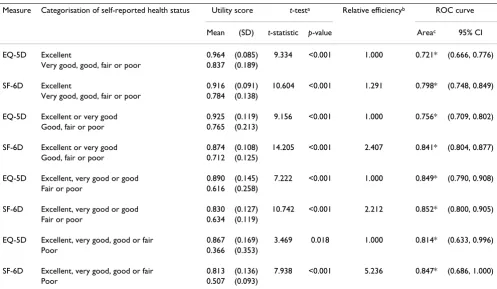
Table 4: Efficiency of multi-attribute utility measures to detect differences in self-reported health status; all women (n = 493)
Measure Categorisation of self-reported health status Utility score t-testa Relative efficiencyb ROC curve
Mean (SD) t-statistic p-value Areac 95% CI
EQ-5D Excellent 0.964 (0.085) 9.334 <0.001 1.000 0.721* (0.666, 0.776) Very good, good, fair or poor 0.837 (0.189)
SF-6D Excellent 0.916 (0.091) 10.604 <0.001 1.291 0.798* (0.748, 0.849) Very good, good, fair or poor 0.784 (0.138)
EQ-5D Excellent or very good 0.925 (0.119) 9.156 <0.001 1.000 0.756* (0.709, 0.802) Good, fair or poor 0.765 (0.213)
SF-6D Excellent or very good 0.874 (0.108) 14.205 <0.001 2.407 0.841* (0.804, 0.877) Good, fair or poor 0.712 (0.125)
EQ-5D Excellent, very good or good 0.890 (0.145) 7.222 <0.001 1.000 0.849* (0.790, 0.908) Fair or poor 0.616 (0.258)
SF-6D Excellent, very good or good 0.830 (0.127) 10.742 <0.001 2.212 0.852* (0.800, 0.905) Fair or poor 0.634 (0.119)
EQ-5D Excellent, very good, good or fair 0.867 (0.169) 3.469 0.018 1.000 0.814* (0.633, 0.996)
Poor 0.366 (0.353)
SF-6D Excellent, very good, good or fair 0.813 (0.136) 7.938 <0.001 5.236 0.847* (0.686, 1.000)
Poor 0.507 (0.093)
SD denotes standard deviation. ROC denotes receiver operating characteristic. CI denotes confidence interval.
a Not assuming equality of variance as Levene test showed statistically significant differences in variances between self-reported health status groups. b Relative efficiency statistic is referenced to 1.0 for the EQ-5D measure. A value higher than 1.0 indicates that the SF-6D is more efficient than the
EQ-5D in detecting differences between women in terms of their self-reported health status.
c Area under receiver operating characteristic (ROC) curves; * p < 0.05 indicates that area under the ROC curve was statistically significantly
In order to calculate the relative efficiency statistic, self-reported health status had to be converted into a dichoto-mous variable by dividing the study population into two groups. The cut-off point used to create this dichotomous variable is necessarily arbitrary and may lead to different conclusions depending on which cut-off is chosen [41]. Therefore, self-reported health status was dichotomised in alternative ways: (i) excellent versus very good, good, fair or poor, (ii) excellent or very good versus good, fair or poor, (iii) excellent, very good or good versus fair or poor, and (iv) excellent, very good, good or fair versus poor, and the relative efficiency statistic was recalculated. Similarly, two alternative cut-off points were applied to the EPDS score: (i) < 13 versus ≥ 13, and (ii) < 10 versus ≥ 10, on the basis that a score of 13 or more is considered to indicate a significant 'case' of postnatal depression, whilst scores of 10 to 12 indicate a borderline 'case' [24]. In addition, because of concerns that the SF-6D utility algorithm might over predict the value of the poorest health states [17], which is reflected by the different lower bounds of the EQ-5D and SF-6D utility scales, all relative efficiency statistics were recalculated for a more restricted sample of
women for whom both EQ-5D and SF-6D utility scores were between 0.296 (the lower bound of the SF-6D utility scale) and 1.0.
Finally, the discriminatory properties of the EQ-5D and SF-6D instruments in a maternity context were compared using receiver operating characteristic (ROC) curves [42]. The ROC curve procedure provides a useful method of evaluating the performance of multi-attribute utility measures against external indicators of health status. For the purposes of our analysis, dichotomous variables of self-reported health status and the EPDS score were adopted as the external indicators. The multi-attribute utility measure that generates the largest area under the ROC curve is regarded as the most sensitive at detecting differences in the external indicator. A measure with per-fect discrimination would generate an area under the curve (AUC) score of 1.0, whilst a measure with no dis-criminatory power would generate an AUC score of 0.5.
[image:8.612.58.553.383.676.2]All p-values were considered statistically significant if they were less than 0.05. All analyses were performed with a
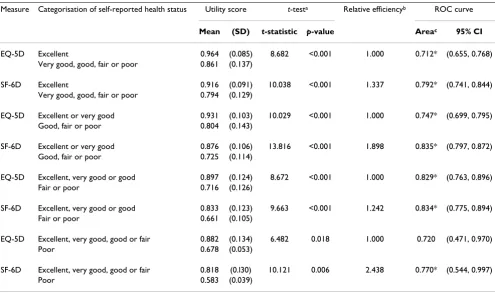
Table 5: Efficiency of multi-attribute utility measures to detect differences in self-reported health status; women for whom both utility scores were between 0.296 and 1.0 (n = 481)
Measure Categorisation of self-reported health status Utility score t-testa Relative efficiencyb ROC curve
Mean (SD) t-statistic p-value Areac 95% CI
EQ-5D Excellent 0.964 (0.085) 8.682 <0.001 1.000 0.712* (0.655, 0.768) Very good, good, fair or poor 0.861 (0.137)
SF-6D Excellent 0.916 (0.091) 10.038 <0.001 1.337 0.792* (0.741, 0.844) Very good, good, fair or poor 0.794 (0.129)
EQ-5D Excellent or very good 0.931 (0.103) 10.029 <0.001 1.000 0.747* (0.699, 0.795) Good, fair or poor 0.804 (0.143)
SF-6D Excellent or very good 0.876 (0.106) 13.816 <0.001 1.898 0.835* (0.797, 0.872) Good, fair or poor 0.725 (0.114)
EQ-5D Excellent, very good or good 0.897 (0.124) 8.672 <0.001 1.000 0.829* (0.763, 0.896) Fair or poor 0.716 (0.126)
SF-6D Excellent, very good or good 0.833 (0.123) 9.663 <0.001 1.242 0.834* (0.775, 0.894) Fair or poor 0.661 (0.105)
EQ-5D Excellent, very good, good or fair 0.882 (0.134) 6.482 0.018 1.000 0.720 (0.471, 0.970)
Poor 0.678 (0.053)
SF-6D Excellent, very good, good or fair 0.818 (0.l30) 10.121 0.006 2.438 0.770* (0.544, 0.997)
Poor 0.583 (0.039)
SD denotes standard deviation. ROC denotes receiver operating characteristic. CI denotes confidence interval.
a Not assuming equality of variance as Levene test showed statistically significant differences in variances between self-reported health status groups. b Relative efficiency statistic is referenced to 1.0 for the EQ-5D measure. A value higher than 1.0 indicates that the SF-6D is more efficient than the
EQ-5D in detecting differences between women in terms of their self-reported health status.
c Area under receiver operating characteristic (ROC) curves; * p < 0.05 indicates that area under the ROC curve was statistically significantly
microcomputer using Statistical Package for the Social Sci-ences (SPSS) (version 15; SPSS Inc, Chicago, Illinois, USA) software.
Results
Of the 623 women who participated in the randomised controlled trial of additional postnatal support (20), 493 (79.1%) completed all relevant health measures for the purposes of our investigation. An examination of the characteristics of the women who did not fully complete these measures revealed that they were more likely to be less than 25 years of age, of non-white ethnic origin, unemployed, living in rented accommodation and with-out a car (p < 0.01). A full breakdown of the economic, socio-demographic and clinical characteristics of the study population is available from the authors upon request.
Descriptive statistics of the EQ-5D and SF-6D utility scores are presented in Table 1. The mean utility score for the
EQ-5D was 0.861 (95% CI: 0.844, 0.877), whilst the mean utility score for the SF-6D was 0.809 (95% CI: 0.796, 0.822), representing a mean difference in utility score of 0.052 (95% CI: 0.040, 0.064; p < 0.001) that exceeded the utility score difference of 0.03 cited as a min-imum clinically important difference for evaluative pur-poses [43,44].
[image:9.612.58.553.342.663.2]A total of 177 women (35.9% of analysed sample) had an EQ-5D utility score of 1.0 and a SF-6D utility score of less than 1.0. Notably, amongst women who did not identify problems in any of the EQ-5D dimensions, 54 (10.9% of analysed sample), 22 (4.5%), 27 (5.5%), 54 (10.9%), 144 (29.2%) and 168 (34.1%) identified problems (levels 2– 6) on the physical functioning, role limitations, social functioning, bodily pain, mental health and vitality dimensions of the SF-6D, respectively. In contrast, only 1 woman (0.2% of analysed sample), who identified mod-erate pain or discomfort on the EQ-5D descriptive system,
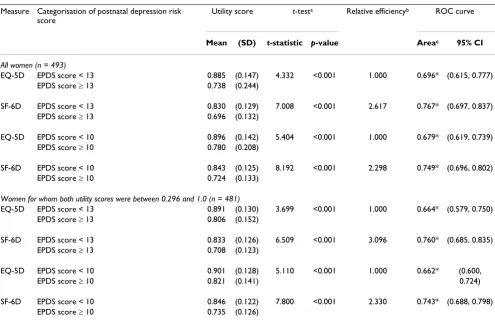
Table 6: Efficiency of multi-attribute utility measures to detect differences in postnatal depression
Measure Categorisation of postnatal depression risk score
Utility score t-testa Relative efficiencyb ROC curve
Mean (SD) t-statistic p-value Areac 95% CI
All women (n = 493)
EQ-5D EPDS score < 13 0.885 (0.147) 4.332 <0.001 1.000 0.696* (0.615, 0.777) EPDS score ≥ 13 0.738 (0.244)
SF-6D EPDS score < 13 0.830 (0.129) 7.008 <0.001 2.617 0.767* (0.697, 0.837) EPDS score ≥ 13 0.696 (0.132)
EQ-5D EPDS score < 10 0.896 (0.142) 5.404 <0.001 1.000 0.679* (0.619, 0.739) EPDS score ≥ 10 0.780 (0.208)
SF-6D EPDS score < 10 0.843 (0.125) 8.192 <0.001 2.298 0.749* (0.696, 0.802) EPDS score ≥ 10 0.724 (0.133)
Women for whom both utility scores were between 0.296 and 1.0 (n = 481)
EQ-5D EPDS score < 13 0.891 (0.130) 3.699 <0.001 1.000 0.664* (0.579, 0.750) EPDS score ≥ 13 0.806 (0.152)
SF-6D EPDS score < 13 0.833 (0.126) 6.509 <0.001 3.096 0.760* (0.685, 0.835) EPDS score ≥ 13 0.708 (0.123)
EQ-5D EPDS score < 10 0.901 (0.128) 5.110 <0.001 1.000 0.662* (0.600,
EPDS score ≥ 10 0.821 (0.141) 0.724)
SF-6D EPDS score < 10 0.846 (0.122) 7.800 <0.001 2.330 0.743* (0.688, 0.798) EPDS score ≥ 10 0.735 (0.126)
EPDS denotes Edinburgh Postnatal Depression Scale. SD denotes standard deviation. ROC denotes receiver operating characteristic. CI denotes confidence interval.
a Not assuming equality of variance as Levene test showed statistically significant differences in variances between self-reported health status groups. b Relative efficiency statistic is referenced to 1.0 for the EQ-5D measure. A value higher than 1.0 indicates that the SF-6D is more efficient than the
EQ-5D in detecting differences between women in terms of their self-reported health status.
c Area under receiver operating characteristic (ROC) curves; * p < 0.05 indicates that area under the ROC curve was statistically significantly
had a SF-6D utility score of 1.0 and an EQ-5D utility score of less than 1.0.
Tables 2 and 3, respectively, present mean EQ-5D and SF-6D multi-attribute utility scores for the study population as a whole and for each of the self-reported health status sub-groups. For the study population as a whole, mean EQ-5D and SF-6D multi-attribute utility scores were higher for women of white ethnic origin, women with a car, women living in owner-occupied accommodation, women in paid employment and women who had deliv-ered spontaneously. Both multi-attribute utility measures demonstrated statistically significant differences between women who described their health status as excellent, very good, good, fair or poor (p < 0.001). In addition, both multi-attribute utility measures generated utility scores, which decreased monotonically with deteriorating self-reported health status (test for linear trend: p < 0.001). The mean EQ-5D utility score was greater than the mean SF-6D utility score for women who described their health status as excellent (0.964 versus 0.916), very good (0.908
versus 0.856) or good (0.819 versus 0.741), but lower for
women who described their health status as fair (0.651
versus 0.652) or poor (0.366 versus 0.507). This reflected,
in part, the distribution of data points illustrated in Figure 1 with the EQ-5D yielding utility scores as low as -0.077, whilst the minimum utility score generated by the SF-6D was much higher up the utility scale (0.374). When the data were analysed within each of the economic, socio-demographic and clinical sub-groups, both multi-attribute utility measures demonstrated statistically signif-icant differences between women who described their health status as excellent, very good, good, fair or poor (p < 0.001), as well as monotonically decreasing utility scores (test for linear trend: p < 0.001). The only sub-groups for which this was not the case were women of non-white ethnic origin and women who had delivered twins, although this might be explained by the relatively small numbers for these sub-groups (n = 27 and n = 5, respectively).
The relative efficiency statistic was used to test how effi-cient the EQ-5D and SF-6D instruments were in detecting differences in external indicators of health status in this context. When the self-reported health status variable was dichotomised in alternative configurations, the SF-6D was found to be between 29.1% (relative efficiency statistic of 1.291 versus 1.0) and 423.6% more efficient than the EQ-5D at detecting differences in self-reported health status (Table 4). Restricting the analyses to women for whom both the EQ-5D and SF-6D utility scores were between 0.296 (the lower bound of the SF-6D utility scale) and 1.0 reduced the study population by 12. Despite the compres-sion of the utility scale, the SF-6D remained between 24.2% and 143.8% more efficient at detecting differences
in self-reported health status in this restricted sample (Table 5). When women were categorised in terms of their risk of postnatal depression, the SF-6D was found to be between 129.8% and 161.7% more efficient than the EQ-5D at detecting differences between alternative EPDS pro-files in the complete sample and between 133.0% and 209.6% more efficient in the restricted sample (Table 6).
Finally, the AUC scores generated by the ROC curves pro-vided a further indication of the performance of the two multi-attribute utility measures against external indicators of health status. Both the EQ-5D and SF-6D were able to discriminate between dichotomous configurations of self-reported health status (Tables 4, 5) and dichotomous con-figurations of risk of postnatal depression (Table 6), (p < 0.05). The only exception was the failure of the EQ-5D to discriminate between women who reported excellent, very good, good or fair health and women who reported poor health in the restricted sample (Table 5). In all anal-yses, the SF-6D generated higher AUC scores than the EQ-5D, indicating greater discriminatory power (Tables 4, 5, 6). However, the corresponding CIs surrounding the AUC scores were only mutually exclusive at the 5% significance level when self-reported health status was dichotomised as excellent or very good versus good, fair or poor (Tables 4, 5).
Discussion
it draws upon evidence from a rich data set, namely a ran-domised controlled trial of additional postnatal support provided by trained community support workers [20].
The main focus of the study centred on the empirical validity of the utility scores generated by the EQ-5D and SF-6D. Given the absence of a manifest gold standard for measuring cardinal preferences for health outcomes, ana-lysts testing the empirical validity of multi-attribute utility measures are required to test whether the utility scores they generate reflect hypothetically-constructed prefer-ences, stated preferences or revealed preferences [34]. The statistical analysis plan adopted by this study focussed on whether the EQ-5D and SF-6D utility scores reflect the hypothetically-constructed preferences of participants in the community postnatal support worker trial. Our prior hypothesis that both the EQ-5D and SF-6D utility scores would differ significantly between self-reported health status groups was met for the study population as a whole, as well as for all but two economic, socio-demographic and clinical sub-groups studied (women of non-white ethnic origin and women who had delivered twins). Our prior hypothesis that both the EQ-5D and SF-6D utility scores would decrease monotonically with deteriorating self-reported health status was also met for the study pop-ulation as a whole and for all but two of the sub-groups studied. Further, we showed that both measures discrimi-nated between alternative dichotomous configurations of self-reported health status and the EPDS score.
The analytical strategy that we adopted also tested the
degree to which EQ-5D and SF-6D utility scores reflect
external indicators of maternal health. The relative effi-ciency statistic suggested that the SF-6D was between 29.1% and 423.6% more efficient than the EQ-5D at detecting differences in self-reported health status, and between 129.8% and 161.7% more efficient at detecting differences in the EPDS score. Moreover, the SF-6D remained more efficient at detecting differences in exter-nal indicators of materexter-nal health after sensitivity aexter-nalyses accounted for differences in the standard errors surround-ing the two sets of utility scores at the lower end of the utility scale. In addition, the SF-6D generated higher AUC scores than the EQ-5D, indicating greater discriminatory power, although in all but one analysis the differences in AUC scores between the measures were not statistically significant (as indicated by the overlapping 95% CIs).
There are several possible reasons why the SF-6D might be more efficient at detecting external indicators of maternal health than the EQ-5D. First, although both measures are rooted in the World Health Organisation definition of health, which covers physical, mental and social well-being, the SF-6D may tap into broader aspects of health-related quality of life, such as role and social functioning.
Second, the SF-6D has a greater number of response items to each of its dimensions, resulting in a larger descriptive system (18,000 health states versus 243 EQ-5D health states) and, consequently, a possibly greater degree of sen-sitivity to maternal health indicators. Third, the wording of the SF-6D response items, which includes positive as well as negative aspects of health, might independently result in a greater degree of sensitivity to maternal health indicators. Fourth, the longer time frame covered by the SF-6D, which frames its questions in terms of health 'over the past 4 weeks', as opposed to the time frame covered by the EQ-5D descriptive system, which frames its questions in terms of health 'today', might independently increase its sensitivity to the external indicators of maternal health adopted by this study. Ultimately, a full understanding of the reasons for the greater efficiency of the SF-6D at detect-ing external indicators of maternal health is beyond the scope of this paper. Separate studies are required to test the hypotheses set out above.
health outcomes using population-based preferences of the type we have used for the broader comparative pur-poses of economic evaluation [2]. A fourth caveat to the study is that concerns about the empirical validity of EQ-5D and SF-6D utility scores should be counter-balanced by a rounded assessment of all psychometric properties of the measures in the maternity context. Although empirical validity is considered to provide the acid test for validity, other forms of validity, such as content validity, face valid-ity, construct validity and valuation validity also require consideration by analysts. Moreover, other psychometric properties, such as practicality and reliability, are also of relevance.
Conclusion
In conclusion, this study provides evidence that the SF-6D is an empirically valid and efficient alternative multi-attribute utility measure to the EQ-5D, and is capable of discriminating between external indicators of maternal health. Further research, which examines the psychometric properties of the EQ-5D, SF-6D and other multi-attribute utility measures in the maternity context, would strengthen the limited evidence base currently available to analysts conducting and interpreting economic evaluations.
Competing interests
The authors declare that they have no competing interests.
Authors' contributions
SP designed this empirical investigation and took the pri-mary role in analysing the data and drafting the paper. JM and HS were the principal clinical investigators for the original postnatal support workers trial and contributed to iterative drafts of the paper.
Additional material
Acknowledgements
We would like to thank all women who participated in the postnatal support worker trial. Dr. Petrou is supported by a UK Medical Research Council Sen-ior Non-Clinical Research Fellowship. The Health Economics Research Cen-tre, University of Oxford, is funded by the National Co-ordinating Centre for Research Capacity Development, England. The views contained in this paper are held by the authors and not necessarily the funding bodies.
References
1. Drummond MF, Sculpher MJ, Torrance GW, O'Brien BJ, Stoddart GL: Methods for the Economic Evaluation of Health Care Programmes 3rd edi-tion. Oxford, UK: Oxford University Press; 2005.
2. National Institute for Health and Clinical Excellence (NICE): Guide to the Methods of Technology Appraisal London, UK: NICE; 2008. 3. Maynard A, Bloor K: Our Certain Fate: Rationing in Health Care London,
UK: Office of Health Economics; 1998.
4. Torrance GW, Feeny D: Utilities and quality-adjusted life years.
Int J Technol Assess Health Care 1989, 5:559-575.
5. Mehrez A, Gafni A: Quality-adjusted life years, utility theory, and healthy-years equivalents. Med Decis Making 1989,
9:142-149.
6. Nord E: An alternative to QALYs: the saved young life equiv-alent (SAVE). BMJ 1992, 305:875-877.
7. Petrou S, Henderson J: Preference-based approaches to meas-uring the benefits of perinatal care. Birth 2003, 30(4):217-226. 8. Glick HA, Doshi JA, Sonnad SS, Polsky D: Economic Evaluation in
Clini-cal Trials Oxford, UK: Oxford University Press; 2007.
9. Briggs A, Claxton K, Sculpher M: Decision Modelling for Health Eco-nomic Evaluation Oxford, UK: Oxford University Press; 2006. 10. Kaplan RM, Bush JW, Berry CC: Health status: types of validity
and the index of well-being. Health Serv Res. 1976,
11(4):478-507.
11. Rosser RM, Kind P: A scale of valuations of states of illness: is there a social consensus? Int J Epidemiol 1978, 7:347-358. 12. Torrance GW, Furlong W, Feeny D, Boyle M: Multi-attribute
pref-erence functions: Health Utilities Index. PharmacoEcon 1995,
7:503-520.
13. Brooks R: EQ-5D, the current state of play. Health Pol 1996,
37:53-72.
14. Apajasalo M, Sintonen C, Holmberg C, Sinkkonen J: Quality of life in early adolescence: a sixteen-dimensional health-related measure (16D). Qual Life Res 1996, 5:205-211.
15. Apajasalo M, Rautonen J, Holmberg C, Sinkkonen J: Quality of life in pre-adolescence: a seventeen-dimensional health-related measure (17D). Qual Life Res 1996, 5:532-538.
16. Hawthorne G, Richardson J, Atherton Day N: A comparison of the Assessment of Quality of Life (AQoL) with four other generic utility instruments. Ann Med 2001, 33:358-370. 17. Brazier J, Roberts J, Deverill M: The estimation of a
preference-based measure of health from the SF-36. J Health Econ 2002,
21(2):271-292.
18. Ware JE, Snow KK, Kolinski M, Gandeck B: SF-36 Health Survey Man-ual and Interpretation Guide Boston, US: The Health Institute, New England Medical Centre; 1993.
19. Brazier J, Deverill M: A checklist for judging preference-based measures of health related quality of life: learning from psy-chometrics. Health Econ 1999, 8:41-51.
20. Morrell CJ, Spiby H, Stewart P, Walters S, Morgan A: Costs and benefits of community postnatal support workers: a ran-domised controlled trial. Health Technol Assess 2000, 4(6):1-100. 21. Morrell CJ, Spiby H, Stewart P, Walters S, Morgan A: Costs and effectiveness of community postnatal support workers: ran-domised controlled trial. BMJ 2000, 321:593-598.
22. Lundberg O, Manderbacka K: Assessing the reliability of a meas-ure of self-related health. Scand J Soc Med 1996, 24(3):218-224. 23. Idler EL, Benyamini Y: Self-related health and mortality: a
review of twenty-seven community studies. J Health Soc Behav 1997, 38(1):21-37.
24. Cox JL, Holden JM, Sagovsky R: Detection of postnatal depres-sion: Development of the 10-item Edinburgh Postnatal Depression Scale. Br J Psychiatry 1987, 150:782-786.
25. EuroQol Group: EuroQol – a new facility for the measurement of health-related quality of life. Health Pol 1990, 16:199-208. 26. Dolan P: Modelling valuations for EuroQol health states. Med
Care 1997, 35(11):1095-1108.
27. Dolan P, Gudex C, Kind P, Williams A: The time trade-off method: results from a general population survey. Health Econ 1996, 5:141-154.
28. Ware JE, Sherbourne D: The MOS 36-item short form health survey (SF-36). 1. Conceptual framework and item selection.
Med Care 1992, 30:473-483.
29. Garratt AM, Ruta DA, Abdalla MI, Buckingham JK, Russell IT: The SF-36 health survey questionnaire: an outcome measure suitable for routine use within the NHS? BMJ 1993,
306:1440-1444.
30. Fryback DG, Lawrence WF, Martin PA, Klein R, Klein BE: Predicting quality of well-being scores from the SF-36: results from the Beaver Dam Health Outcomes Study. Med Decis Making 1997,
17:1-9.
Additional file 1
Appendices A and B.
Click here for file
Publish with BioMed Central and every scientist can read your work free of charge "BioMed Central will be the most significant development for disseminating the results of biomedical researc h in our lifetime."
Sir Paul Nurse, Cancer Research UK
Your research papers will be:
available free of charge to the entire biomedical community
peer reviewed and published immediately upon acceptance
cited in PubMed and archived on PubMed Central
yours — you keep the copyright
Submit your manuscript here:
http://www.biomedcentral.com/info/publishing_adv.asp
BioMedcentral 31. Brazier J, Usherwood T, Harper R, Thomas K: Deriving a
prefer-ence-based single index from the UK SF-36 Health Survey. J Clin Epidemiol 1998, 51:1115-1128.
32. Lundberg L, Johannesson M, Isacson DG, Borgquist L: The relation-ship between health-state utilities and the SF-12 in a general population. Med Decis Making 1999, 19:128-140.
33. Shmueli A: Subjective health status and health values in the general population. Med Decis Making 1999, 19:122-127. 34. Brazier J, Deverill M, Green C, Harper R, Booth A: A review of the
use of health status measures in economic evaluation. Health Technol Assess. 1999, 3(9):1-164.
35. Fayers P, Machin D: Quality of life: assessment, analysis and interpretation Chichester, UK: Wiley; 2000.
36. Liang MH, Larson MG, Cullen KE, Schwartz JA: Comparative measurement efficiency and sensitivity of five health status instruments for arthritis research. Arthritis Rheum 1985,
28:542-547.
37. Mangione CM, Goldman L, Orav J, Marcantonio ER, Pedan A, Ludwig LE, et al.: Health-related quality of life after elective surgery. J Gen Intern Med 1997, 12(11):686-697.
38. Rockwood K, Joyce B, Stolee P: Use of goal attainment scaling in measuring clinically important change in cognitive rehabili-tation patients. J Clin Epidemiol 1997, 50(5):581-588.
39. Wright JG, Young NL: A comparison of different indices of responsiveness. J Clin Epidemiol 1997, 50(3):239-246.
40. Gordon JE, Powell C, Rockwood K: Goal attainment scaling as a measure of clinically important change in nursing-home patients. Age Ageing 1999, 28:275-281.
41. van Doorslaer E, Wagstaff A, Bleichrodt H, Calonge S, Gerdtham UG, Gerfin M, et al.: Income-related inequalities in health: some international comparisons. J Health Econ 1997, 16:93-112. 42. Stucki G, Liang MH, Fossel AH, Katz JN: Relative responsiveness
of condition-specific and generic health status measures in degenerative lumbar spinal stenosis. J Clin Epidemiol 1995,
48:1369-1378.
43. Drummond MF: Introducing economic and quality of life meas-urements into clinical studies. Ann Med 2001, 33:344-349. 44. O'Brien BJ, Spath M, Blackhouse G, Severens JL, Dorian P, Brazier J:
A view from the bridge: agreement between the SF-6D util-ity algorithm and the Health Utilities Index. Health Econ 2003,
12(11):975-981.
45. National Institute for Health and Clinical Excellence (NICE): Antenatal Care: Routine Care for the Healthy Pregnant Woman NICE Clinical Guideline 62. London, UK: National Collaborating Centre for Women's and Children's Health; 2008.
46. National Institute for Health and Clinical Excellence (NICE): Antenatal and Postnatal Mental Health. Clinical Management and Service Guidance NICE Clinical Guideline 45; 2007. reissued April 2007.
47. Department of Health (DH): National Service Framework for Children, Young People and Maternity Services London, UK: DH Publications; 2004.
48. Bick D, MacArthur C: The extent, severity and effect of health problems after childbirth. Br J Midwifery 1995, 3:27-31. 49. Macarthur C, Winter H, Bick D, Knowles H, Lilford R, Henderson C,
et al.: Effects of redesigned community postnatal care on womens' health 4 months after birth: a cluster randomised controlled trial. Lancet 2002, 359(9304):378-385.
50. Morrell CJ, Slade P, Warner R, Paley G, Dixon S, Walters SJ, et al.:
Clinical effectiveness of health visitor training in psychologi-cally informed approaches for depression in postnatal women: pragmatic cluster randomised trial in primary care.
BMJ 2009, 338:a3045. doi: 10.1136/bmj.a3045.
51. Murray L, Carothers AD: The validation of the Edinburgh Post-natal Depression Scale on a community sample. Br J Psychiatry 1990, 157:288-290.
52. Longworth L, Bryan S: An empirical consideration of EQ-5D and SF-6D in liver transplant patients. Health Econ 2003,
12(12):1061-1067.