Munich Personal RePEc Archive
An Optimum Currency Crisis
Pasimeni, Paolo
European Commission, Directorate General for Employment, Social
Affairs and Inclusion
24 November 2013
Online at
https://mpra.ub.uni-muenchen.de/53506/
1
An Optimum Currency Crisis
Paolo Pasimeni
European Commission 1
Directorate General for Employment, Social Affairs and Inclusion
Abstract
This paper presents an ex-post assessment of the current situation of the Economic and Monetary Union (EMU) in light of the conditions prescribed by the theory of Optimum Currency Areas (OCA).
The analysis shows that those conditions were satisfied at very different degrees. Factors mobility has clearly increased since the inception of the Eurozone, with an important difference between free movement of capital, which can be considered as fully accomplished, and labour mobility, which has improved, but to a lower degree. Prices and wages flexibility was initially lower compared to other regions, like the US, but has improved over time. The similarity of business cycles among different economies joining the euro was a condition not respected at the beginning, which probably led to sustained imbalances within the Eurozone. Finally, fiscal union was the main missing element of the initial construction of the Eurozone, and still is. The common budget is so exiguous that its effectiveness as shock absorption mechanism is negligible.
The analysis then shows how some of the concerns raised on the eve of the euro did actually materialize, even if not immediately. First, in its first decade the Eurozone did not experience major turbulences, because growing financial integration was compensating the need for fiscal transfers, through the private insurance channel. Second, once the long-feared shock hit, the mechanism proved weak and non-resilient. The inherent weaknesses of the EMU became evident. Third, as it had been foreseen, the cost of the adjustment after the shock fell mainly on labour, with much higher and longer unemployment in the Eurozone than both non-Eurozone EU and the US. Fourth, as the theory suggested, the lack of common mechanisms of adjustment dramatically increased socio-economic divergences within the EMU.
Keywords: EMU; Optimum Currency Areas; Socio-economic Divergences; Fiscal Union; Political Union.
JEL codes: B22; E61; F15; F33.
1 The opinions expressed in this paper are the author's alone and do not reflect those of the European Commission.
2
1. Introduction
The decision to establish a common currency in Europe had long been debated (Meade, 1957; Scitovsky, 1957; Mundell, 1961; McKinnon, 1963), before it was actually taken and implemented. At the summit of The Hague in December 1969 it was decided that the Community should evolve by stages into an Economic and Monetary Union (EMU). The objective of a full EMU was explicitly stated in the Maastricht Treaty in 1992. In 1999 the euro was introduced as the official currency of 11 Member States (MS) replacing national currencies2.
This new institutional setting represented a peculiar monetary union, more integrated than past agreements of fixed exchange rates, but still far from complete economic and political unions3.
Monetary policies of the participating Member States (MS) became the responsibility of the European Central Bank (ECB). Fiscal policies remained responsibility of national authorities, even though subject to restrictive common rules on public finances known as the Stability and Growth Pact. This created an unprecedented divorce between the main monetary and fiscal authorities (Goodhart, 1998).
The reasons for such an ambitious experiment were mainly political, but several economic advantages were also expected: a reduction in transaction costs, promoting trade (Rose, 2000), and the elimination of the exchange rate risks, favouring financial integration. At the same time, participating countries lost a great deal of flexibility, renouncing to national monetary policies and to a mechanism for adjustment to shocks (Krugman, 2012).
The theory of Optimum Currency Areas (OCA), as developed by Mundell (1961), McKinnon (1963), Kenen (1969), Fleming (1971), proposes a set of necessary conditions for monetary unions and provides an analytical framework to assess risks and opportunities a region might be confronted with. This approach has been widely discussed in the literature (Robson, 1987; Bayoumi, 1994; Bayoumi and Eichengreen, 1997; Goodhart, 1998; Alesina et al, 2002; McKinnon, 2004; Krugman, 2012; O’Rourke and Taylor, 2013), and it has been used to assess ex-ante the feasibility of the EMU (Mundell, 1961; McKinnon, 1963; Kenen, 1969; Eichengreen, 1991; Eichengreen, 1993a; Obstfeld, 1997, Alesina et al, 2002).
The standard theory of OCA was later on defined “exogenous”, in contrast to an “endogenous” approach (Frankel and Rose, 1998), which admitted the possibility that OCA properties, even if not fulfilled ex-ante, could be gradually satisfied during the existence of the monetary union.
Its applicability to the specific case of the EMU has been rather controversial. The report “One Market, One Money” (EC, 1990), for instance, discarded the theory, explaining that:
there is no ready-to-use theory for assessing the costs and benefits of EMU. Despite its early insights, the 'theory of optimum currency areas' provides a too narrow and
2 A 12th country, Greece, joined one year later.
3 “Whenever states as in the USA or Australia, provinces as in Canada, cantons, lander, etc., have joined together in a
3
somewhat outdated framework of analysis. Recent developments in both micro- and macroeconomics have not yet led to a unified theory of monetary unions (p.31).
Critics of the OCA theory highlighted that it lacks a formalized model allowing a measurement of the “OCA test” for potential currency unions (Robson, 1987), that it has little or no predictive capacity (Goodhart, 1998), and that analyses investigating OCA properties are by necessity backward-looking (Mongelli, 2008).
In this work, however, we apply the theory of OCA to study ex-post the developments of the EMU, following the main conditions for a suitable monetary union prescribed by the theory:
• factors mobility (capital and labour) across the area;
• price and wage flexibility;
• similarity of business cycles among participating countries;
• common fiscal capacity as a mechanism of shock absorption and risk-sharing.
The paper analyzes each one of these criteria, in order to assess to what extent they were satisfied before or during the EMU. The actual development of the EMU is then put in perspective, comparing the lessons drawn from the theory with the current status.
Sections 2 to 5 review the main conditions for OCAs and the extent to which the Eurozone complies with each of them, section 6 describes the lessons for the EMU learnt from the theory, section 7 shows the actual developments of the EMU during the crisis, section 8 presents a simulation of a common fiscal capacity and section 9 concludes.
2. Factors mobility
Factors mobility was proposed as a key criterion to define an OCA since the seminal work by Robert Mundell (1961), who defined an OCA “in terms of internal factor mobility and external factor immobility”. We can analyze in detail the degree of mobility of capital and labour in the EMU.
2.1. Free circulation of capital
4
Today, Article 63 TFEU prohibits all restrictions on the movement of capital and payments between MS, as well as between MS and third countries. Even though some exceptions clauses were foreseen, since 1999 the safeguard clause to remedy crises in the balance of payments is only applicable to those member states which are not part of the Eurozone4.
The criterion of capital mobility can therefore be considered as fully satisfied by the EMU. Moreover, this growing financial integration is key to understand the development of the Eurozone (Obstfeld, 2013).
2.2. Labour mobility
Labour mobility in the Eurozone has not reached the same extent as capital mobility, due to cultural and language barriers, and regulatory constraints. The measurement of labour mobility has often been a complex topic addressed by many authors (Harris and Todaro, 1970; Diamond, 1981; Pissarides, 1990; Layard et al, 1991, Mortensen and Pissarides, 1994; Molloy et al, 2011). Many have also tried to study the specific case of intra-EMU labour mobility (Eichengreen, 1991; Vandenbrande et al, 2006; Bonin et al, 2008; Fenge and von Weizsaecker, 2009; OECD, 2012; Kahanec 2012 and 2013; EPC, 2013), which is of specific relevance for our purposes.
A first, rough estimate can be based on the number of foreign-born residents in each country. The Eurostat Labour Force Survey provides these data for each EU MS since 2009. The number of foreign-born residents in each Eurozone country is increasing in both absolute terms (from 35,650,225 in 2009 to 38,315,569 in 2012) and in relation to the total population of the Eurozone (from 10.98% in 2009 to 11.53% in 2012).
The comparison with the US can give an idea of the degree of labour mobility in Europe and of its importance as a mechanism for adjustment: Blanchard et al. (1992) explain how in response to an adverse shock in demand, relative nominal wages might decline, but in general they do not decline enough to prevent increases in unemployment. In the US, what they trigger is mostly labour out-migration, rather than job in-migration or job creation.
Similarly, Krugman (1993a) shows that in the US relative higher unemployment of some states is often reduced not so much by employment creation, but by reducing their labour force via outwards migration. The case of Massachusetts, experiencing a hard recession at the end of the 80s after a big boom, is explanatory: it lost a relevant part of its workforce, which never came back. This was the main driver of unemployment reduction.
Another way of measuring the differences in labour mobility between the US and the Eurozone is by plotting the unemployment rates at two distinct points in time, in order to see whether differences among regions or states persist or not.
5
Figure 1: Unemployment in 1999 and 2012. Eurozone NUTS2 Regions and US States
Source: Eurostat and US Bureau of Labor Statistics.
We can observe that between 1999 and 2012 the differences in unemployment rates changed quite significantly among US states, the two series have in fact a low correlation (ρ=.382). If we analyze the same differences among Eurozone NUTS2 regions, between 1999 and 2012, we observe that they tend to be quite similar, definitely more than in the US (correlation ρ=.727). While in the US labour mobility plays a role in reducing and rebalancing unemployment rates across states, in the Eurozone differences in unemployment rates are more persistent. Labour mobility, then, seems a weaker mechanism of adjustment in the Eurozone, compared with the US. The figure suggests that unemployment in the Eurozone is a localized problem, with permanent differences among regions, and labour mobility has a limited impact in mitigating the problem.
Molloy et al. (2011), however, have estimated the share of the population in 2005 who actually moved residence in the previous year in EU MS in comparison with the US: they found similar mobility rates between the US and some EU MS.
Recent analyses (EC, 2013; EPC, 2013; Dao et al, 2014) show that geographical mobility of workers as an immediate response to shocks in the EU is significantly increasing over time. The willingness of Europeans to move to another MS for work doubled in the last three years; actual moves from deficit to surplus countries doubled and tripled in some Eurozone countries, during the last two years.
6
To sum up, labour mobility has traditionally been one of the “missing conditions” for the EMU as an OCA (Mundell, 1961; Eichengreen, 1993b). This situation, however, is definitely changing, with an increased flow of workers from high-unemployment countries to the others. Which part of this increase can be considered as a natural development of the monetary union, in an “endogenous OCA approach”, and which instead depends on “push” factors created by the hardest crisis since the Great Depression, it is hard to say.
The effect of this higher labour mobility, however, is for the moment too limited to offset the huge rise in unemployment. A recent analysis by the ECB (2012) argues that the problem of unemployment in the Eurozone is mainly due to structural imbalances between labour demand and labour supply, rather than by a lack of geographical mobility, suggesting a relatively smaller potential role for labour mobility in alleviating the mismatch.
3. Prices and wages flexibility
Price and wage flexibility is another key condition and an important mechanism for adjustment, alternative to the exchange rate (Friedman, 1953). The relevance of price rigidity relates to the extent it transforms nominal shock into real effects, and for this reason wage flexibility can be an important adjustment mechanism.
Friedman (1953) studied price and wage rigidities in comparison with the exchange rate, as alternative methods for adjustment. He highlighted the flexibility of the exchange rate versus the inflexibility of internal prices and explained that “if internal prices were as flexible as exchange rates, it would make little economic difference whether adjustments were brought about by changes in exchange rates or equivalent changes in internal prices. But this condition is clearly not fulfilled”. Prices are more flexible upward that downward, but not all in an equal manner (Stiglitz, 1999). The inflexibility of prices, or different degrees of flexibility, implies a distortion of adjustments in response to changes in external conditions. The adjustment takes the form primarily of price changes in some sectors, and of output changes in others.
Price and wage flexibility in the Eurozone has been a controversial topic, due to the intrinsic difficulties of its measurement. Dhyne et al. (2006) estimated an average monthly frequency of price change in the Eurozone of about 15% and median price duration of 10.6 months. Bils and Klenow (2004) in a comparable analysis carried out for the US found an average monthly frequency of around 25% and weighted median price duration of 4.6 months. According to these estimates, prices in the Eurozone seem stickier than in the US.
In a comparative study between Europe and the US, Verhelst and Van den Poel (2010) analyzed the levels of price rigidity in the two areas, based on frequency of change. The use of monthly data to study price stickiness showed similar levels of price rigidity in the two areas, but when higher base frequencies were examined regular prices were found to be more flexible in the US than in Europe.
7
argue that the distinction between intrinsic and extrinsic rigidity is the relevant one for policy purposes5.
In their analysis of price rigidity in the Eurozone, they find crucial differences for food and for service prices. While retail prices of food change quite often, mainly because producer prices are very volatile, they actually exhibit substantial intrinsic rigidity. On the other hand, the low frequency of price changes for services is due to the fact that the cost of providing services is quite stable. The level of intrinsic rigidity for services is actually moderate, similar to the level for manufactured products, for which prices change much more often.
It seems plausible to argue that the level of price rigidity in the Eurozone, in spite of being still higher than in the US, is actually decreasing, approaching US levels. Alesina et al. (2008) found that that the adoption of the Euro has been associated with an acceleration of the pace of structural reforms in the product market, increasing price flexibility.
Wages are, in general, more rigid than prices, but it seems that in the Eurozone they are following the same dynamics. The decline in real wage rigidity in Europe has been showed by Goette et al. (2007).
In a comparative approach, Baddeley et al. (2002) studied regional wages in EU regions and US states, finding that wages do not seem to be more rigid in Europe than in the US. They observed a “significant variation across regions in the degree of wage rigidity” within both the EU and the US, and conclude that “it would be incorrect – or certainly misleading – to attribute the regional unemployment problem in the EU wholly to wage inflexibility”.
A similar conclusion is reached by Ebbinghaus and Kittel (2005) who focus on wage coordination. Their analysis shows that the variety of bargaining patterns across European countries during the period 1971 to 1998 “contradicts a simple US-Europe juxtaposition”. They find that contrary to the expectations, the labour market actors in most European countries are responsive to the performance of their bargaining system; they tend to adapt their system if wages seem to overshoot. Hence, they conclude, “the rigidity of Europe thesis does not hold in a more detailed cross-national and long-term analysis of institutional changes in wage bargaining”. Alesina et al. (2008) argued on this point that the adoption of the euro does not seem to have accelerated labour market reforms in the “primary labour market”; however, the run up to the Euro adoption seems to have been accompanied by wage moderation.
Konya and Krause (2011) precise that, according to their analysis, wages for already employed workers are more rigid in the Eurozone than in the US, but the rigidity of wages for newly hired workers is small in both areas. This suggests that labour markets are becoming as flexible in the Eurozone as they are in the US, as far as new hires’ wage rigidity is concerned.
8
For this criterion, as well, we could conclude that, in an “endogenous” approach to the theory of OCA, much progress has been achieved in satisfying it.
4. Business cycles
The similarity in business cycles has a particular relevance in monetary unions due to the fact that different countries become subject to a single, one-size-fits-all monetary policy (Frankel and Rose, 1998). If countries forming a monetary union have similar cycles, the single monetary policy can therefore be suitable for all of them. Different cycles between countries, on the contrary, lead to more asymmetric macroeconomic shocks, which can be amplified by the same monetary policy (De Grauwe, 2013).
Some of the MS joining the Eurozone had similar business cycles, but others were rather diverging. Greece, Ireland and Spain, in particular, had higher than average growth rates, inflation, and domestic demand. On the other side, countries like Germany or Italy had, at the inception of the EMU, very low growth rates, low inflation and stagnating domestic demand.
Critical choices of monetary policy were to be made by the ECB, and the decisive reduction in its key interest rate (-2,75% points between 2001 and 2004) was as beneficial to avoid recessions in the stagnating economies, as dangerous for fuelling asset bubbles in the fast-growing ones.
In the absence of an automatic rebalancing trough flexible exchange rate, it was argued that even the minimum structural divergences in business cycles are likely to amplify divergences in the balance of payment (Friedman, 1953; Kaldor, 1971) and these differences are likely to persist (Fleming 1971). As a proof of this, Berger and Nitsch (2010) have demonstrated that trade imbalances among Eurozone countries have widened markedly after the introduction of the common currency. This increase has a high degree of persistence, which appears to lengthen the impact of shocks on external accounts.
9
Figure 2: Dispersion (sd) of Current Account balance (CA), GDP growth rates (G), Inflation (P), and Domestic Demand growth rate (D) in the Eurozone (1980-2012)
Source: Own calculations on the basis of AMECO, IMF and WB data.
The condition of similarity of business cycles among countries forming a monetary union was not fully satisfied at the time the euro was introduced. However, this condition was subordinated to political decisions leading to a broader monetary union among more countries than those with similar business cycles (Eichengreen and Frieden, 1993). Since the inception of the EMU, however, the degree of internal divergences of business cycles has gradually decreased.
5. Fiscal capacity
The fourth criterion for an OCA is a supranational (federal) mechanism of fiscal transfers acting as an automatic stabilizer to mitigate asymmetric shocks (Kenen, 1969). This acts as a risk-sharing mechanism and implies a de-facto redistribution of funds between different parts of the union. By definition, being a mechanism for absorption of unforeseen asymmetric shocks, the direction, duration and extent of the redistribution cannot be pre-established or determined by law.
no-10
bail-out clause in the Treaties: any risk arising from potential asymmetric shocks, would have remained national.
The debate about fiscal federalism is quite a rich one (Kenen, 1969; Kaldor, 1971; Oates, 1972; Mundell, 1973; Eichengreen et al, 1990; Eichengreen, 1991; Feldstein, 1992; Hallet et al, 1999; Buti and Franco, 2005; Sorens, 2008; Bordo et al. 2011), and has often used the US as a benchmark.
The stabilizing role of the federal budget in the US has long been discussed in the literature (Eichengreen, 1991). Sachs and Sala-i-Martin (1991) estimated that in the US:
a one dollar reduction in a region's per capita income triggered a decrease in federal taxes in the neighbourhood of 34 cents and an increase in federal transfers of about 6 cents. The final reduction in disposable per capita income was, therefore, of only 60 cents. This means that in the US between one third and one half of the shock experienced by a state is absorbed by the Federal Government. As a matter of comparison, they calculated that in the EU a one dollar shock to regional GDP will reduce tax payments to the common budget only by half a cent. This fiscal insurance scheme provided by the federal government is a key reason why the system of fixed exchange rates within the US has survived without major problems.
Bayoumi and Masson (1995) similarly found that:
in the US, redistributive flows from all federal sources amount to around 22 cents in the dollar, while stabilization flows are somewhat larger at around 30 cents in the dollar. In Canada, the redistribution flows are around double those in the US (39 cents in the dollar) but the stabilization flows are smaller (17 cents in the dollar). Taxes and transfers both play important roles in these flows. In the EC, there is no ‘fiscal federalism’; the EC budget is small and redistribution is limited.
While the US has a bigger federal budget, as a share of GDP, than the state level (24% vs 10%), the opposite happens in the Eurozone, where member states’ budgets account for a much bigger share (50%) than the common (federal) budget (1%). The comparable “federal” budget operating in the EU as a transfer mechanism between countries and regions is represented by the Structural and Cohesion Funds, which account for about 0.4% of EU’s GDP. Solow (2005) even argued that the less the Eurozone represents an optimum currency area, the more it would need active fiscal policies for stabilisation.
The fiscal capacity condition is clearly the least satisfied in the case of the EMU (Eichengreen et al, 1990; Feldstein, 1992), it is considered as its “major design failure” (De Grauwe, 2013), and the comparison with the US gives a first idea of the gap still to be filled.
11
The absence of exchange rate risks promoted financial integration among Eurozone economies, increasing financial flows from countries with balance of payments in surplus and excess of savings (‘centre’) towards deficit countries with growing levels of private indebtedness (‘periphery’).
6. Lessons from the theory
The histories of past, successful, experiences of monetary unifications tell us that political union may represent an important prerequisite for an effective economic and monetary union (Kaldor, 1971; Feldstein, 1992; Goodhart, 1998; O’Rourke and Taylor, 2013). The EMU followed an opposite approach, based on the conviction that the monetary union could act as “a leaven for the development of political union, which in the long run it cannot do without” (Werner report, 1970).
Others thought that it was “a dangerous error to believe that monetary and economic union can precede a political union” because “the objective of a full monetary and economic union is unattainable without a political union; and the latter pre-supposes fiscal integration and not just fiscal harmonisation” (Kaldor, 1971). This idea was later on retaken by Feldstein (1992)6 and
Friedman (1997) in their critics to the EMU project. Kaldor (1971) explicitly criticized the Werner plan for not envisaging that the main responsibility for public expenditure and taxation should be transferred from the national Governments to the Community.
The subsequent “Marjolin Report” (EC, 1975) denounced that “there was no analysis, even approximative, of the conditions to be fulfilled” to create an EMU. It fully recognized the need for a central authority “with a relevant important budget” 7, and for a “centralized fiscal and
social security systems ensuring a certain degree of redistribution”. It stressed the necessity of closer political and financial integration and went even further proposing a “Community Unemployment Benefit Fund”.
Another report committed by the European Commission (the “MacDougall Report”, EC, 1977) analysed the stabilising role of public finances in Europe, finding that inequalities between countries in the Community were not higher than regional inequalities within countries, and that the redistributive function of the national budget at regional level reflected corresponding positions of the regions in their balance of payments on current account. The report found that within countries:
between one half to two-thirds of a short-term loss of primary income in a region due to a fall in its external sales may be automatically offset through lower payments of taxes and insurance contributions to the centre, and higher receipts of unemployment and
6 He suggested that advocating for a monetary union but rejecting any movement towards a federalist political
structure for Europe was “a formula for economic costs without any of the supposed political benefits”.
7 The Report even quoted examples of what was meant by “relevant”: the proportion of the “Bund” in Federal
12
other benefits. If only because the Community budget is so relatively very small there is no such mechanism in operation on any significant scale as between member countries, and this is an important reason why in present circumstances8 monetary union is impracticable (p.12).
After the creation of the European Monetary System (EMS) and the European Currency Unit (ECU), the “Delors Report” vigorously re-launched the process, avoiding the call for full political and fiscal integration, but stressing the need for “coordination of fiscal policies” (EC, 1989). The original architecture of the EMU assumed that a mandate to the ECB to pursue price stability and safeguards against excessive government deficits would suffice to ensure macroeconomic stability (Obstfeld, 2013).
Some authors specifically warned against the creation of a unified currency without a federal insurance scheme cushioning the impact of regional shocks, which “could very well lead the project to an eventual failure” (Sachs and Sala-i-Martin, 1991). The lack of such adjustment mechanisms was considered as potential sources of risks (Eichengreen, 1991), whose major impacts would have fallen on labour, increasing the level of unemployment over time (Feldstein 1991, and 1997).
The building criteria of the EMU didn't take full account of unemployment as a key indicator and “an all-out threat to monetary stability” (Dornbusch, 1996). It was decided instead to rely on a “vastly overdone insistence on fiscal criteria” (Dornbusch, 1997), which appeared even harmful to some scholars (Buiter, Corsetti, and Roubini, 1993).
As the former President of the EC has recently reminded, however, in the EMU:
it was the economic axis that was missing. I therefore proposed a pact for the co-ordination of economic policies to run alongside the monetary Stability Pact. This was not accepted. Instead, it was deemed sufficient to merely add the word ‘Growth’ to the name of the Stability Pact. In reality, this was purely and simply a budgetary stability pact: no economic co-ordination; no instruments to stimulate, co-operate or regulate. (…) Everything continued without any serious disruption until the international financial crisis erupted. At that point, the inherent flaws of EMU were revealed (Delors, 2013).
Exchange rates were then irrevocably fixed in 1999, eliminating the currency exchange risk. The increase in trade between countries generated a higher degree of sectoral specialisation within each country, which increased the likelihood for future external shocks to have asymmetric consequences (Kenen, 1969; Eichengreen, 1992; Krugman, 1993b). But in the absence of a quick adjustment mechanism, like flexible exchange rates, the asymmetric effects can be amplified, instead of absorbed, by a single monetary policy (Kaldor, 1971; De Grauwe, 2013).
Meade (1957) argued that monetary rigidity in Europe might come at the expenses of employment, highlighting the risks of pressures on labour and of compromising the European social model. The underlying idea was that once countries lose their monetary policy, in the
13
absence of effective automatic stabilizers, the only possible adjustment mechanism to asymmetric macroeconomic shocks becomes internal devaluation. On the effectiveness of internal devaluations, Friedman (1997) feared that:
if one country is affected by negative shocks that call for lower wages relative to other countries, that can be achieved by a change in one price, the exchange rate, rather than by requiring changes in thousands of thousands of separate wage rates, or the emigration of labour.
This kind of adjustment happens to be much slower, more painful, and less effective (Feldstein, 1992). Economic historians often use the parallelism with the gold standard to illustrate the current crisis of the Eurozone. That experience suggests that an asymmetric adjustment based on internal devaluation in debtor countries, with no corresponding inflation in the core, is economically and politically unsustainable (O’Rourke and Taylor, 2013). But while in that case the limited right to vote substantially allowed policy-makers to ignore the interests of the workers who suffered most (Eichengreen, 1992; O’Rourke and Taylor, 2013), in modern democracies the universal suffrage does not.
7. The EMU in the crisis
At the time of its inception the EMU satisfied to different extents some of the conditions of the OCA theory. Others, labour mobility in particular, improved over time, especially after the crisis hit the Eurozone. The only field in which no progress has been made is the common fiscal capacity.
During its first decade the EMU seemed to invalid the importance of the OCA criteria. The Eurozone did not experience major turbulences in that period, even if not respecting those conditions, in particular a sizeable common budget (Mongelli, 2008;EC, 2008).
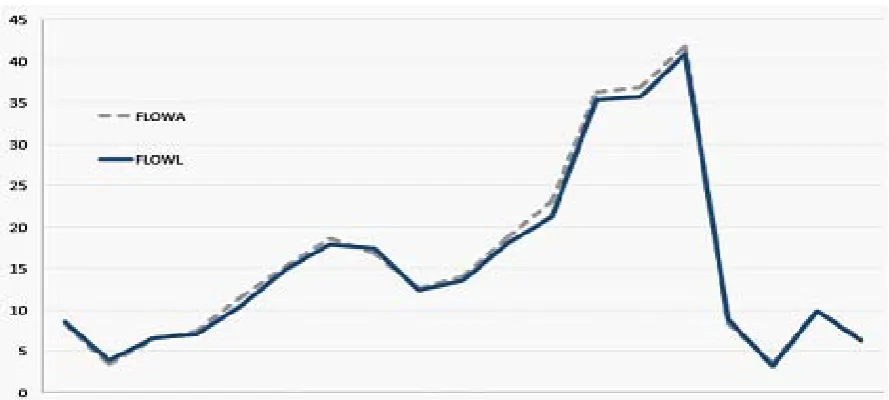
The apparent contradiction with the condition prescribed by the theory is explained by what Mundell (1973) called ‘the private insurance channel’. Growing financial integration among EMU countries generated a spectacular increase in capital flows within the Eurozone, which acted as a
14
Figure 3: Capital Flows in the Euro Area in % of GDP (1993-2011)
Source: Lane, P. R. (2013).Euro Area: Capital Flows in percent of GDP. IMF BOP database.
Unfortunately the financial crisis provoked the long-feared external shock, which challenged the solidity of the architecture of the EMU. The ‘private insurance channel’ instead of acting as a stabiliser suddenly contracted. Its resilience and the sustainability of a monetary union based on it proved weak. The explosion of the government debt ratios after 2008 was the result of a balance sheet recession triggered by the desire of the private sector to reduce its excessive debt (De Grauwe and Ji, 2013).
In the absence of a monetary union, adjustment to shocks would happen via flexible exchange rates. In a complete monetary union, factors mobility and a relevant central budget act as automatic stabilisers. In the EMU none of these mechanisms was available to counteract the crisis.
The adjustment required within the Eurozone (mainly in the balances of payment) had then to occur through prices and wages flexibility. As expected (Friedman, 1953) a deflationary policy aimed at reducing wage levels was applied in the deficit countries of the Eurozone. Deflationary policies, however, may be economically ineffective and politically unsustainable in modern economies (O’Rourke and Taylor, 2013), and end up increasing the real value of debts, putting pressure on indebted households, businesses, and financial institutions (Fisher 1933).
This revitalized old worries that macroeconomic shocks in Europe might have “larger and longer lasting effects on relative unemployment (and) the adjustment to relative shocks in the European common currency area may turn out to be a painful and protracted process”, Blanchard et al. (1992).
15
Figure 4: Unemployment rates in Eurozone, non-Eurozone EU, and the US
Source: Eurostat and US Bureau of Labor Statistics.
From 2007 to 2009 unemployment rose dramatically in the three areas, but while in the US it started decreasing since 2010, and in non-Eurozone EU countries it stabilized since then, in the Eurozone it rose abruptly in the last three years. This trend can be interpreted as a symptom of a new crisis, very much specific to the EMU.
16
Figure 5: Federal vs State level budgets in the Eurozone and the US
Source: Eurostat and US Office of Management and Budget.
While the difference in the size of the common (federal) budgets is well-known, it is more interesting to observe the dynamics of the aggregates. Since the shock caused by the financial crisis in 2008, the reaction in the two areas has been different: in the US the big increase in government spending has taken place at the federal level, while in the Eurozone it has occurred at MS level.
This dynamic has reinforced the divergences within the EMU, instead of reducing them. The different sizes and behaviours of the common (federal) budgets in the US and in the Eurozone seem to explain the different degrees of internal divergences within the two areas.
In the US, as a consequence of the recent crisis, the state of Florida experienced a strong burst of a housing bubble pretty much similar to the one Spain had. But while Spain had to undergo very painful and not-so-effective internal devaluation, with huge fall in output and record-high unemployment, Florida could benefit from net fiscal transfers from the federal budget of about 5% of the state GDP (Krugman, 2012). Unemployment in Florida went down, even below the national average, driven by massive out-migration, but this did not undermine its tax base as it will do in Spain, thanks to the federal insurance scheme.
17
reducing the tax bases of the outgoing countries, and initiating a vicious circle which in the end makes it more difficult to pay back debts (O’Rourke and Taylor, 2013).
The state of Nevada experienced a boom and burst cycle similar to the one Ireland had. Both banking sectors found themselves heavily in trouble and close to bankrupt, but in the US it was the federal government intervening. It has been estimated that the federal intervention amounted to a transfer of more than 10% of Nevada GDP (Gros, 2012). Ireland, instead, had to borne the full weight of the intervention. This triggered a sovereign debt crisis, with consequent austerity policies and record-high unemployment.
It is interesting to look also at the case of Latvia. The Baltic republic was not yet a member of the Eurozone, but had a peg with the euro, which maintained even when it was hardly hit by the crisis. The price for maintaining the peg was a massive internal devaluation, which contracted national GDP by almost 25%. Unemployment rose dramatically, and a massive out-migration took place. This seems to mirror similar experiences of US states, but what was missing in the case of Latvia was the net fiscal transfer from a federal budget to compensate. Besides, in spite of the adjustment via labour mobility and structural reforms, the Latvian economy is still far from recovering its pre-crisis levels of GDP and employment.
In the absence of compensating mechanisms, the impoverishment of some parts of the Eurozone will increase in parallel to the increase in well-educated and qualified out-migration. Moreover, while in the process of adjusting b-o-p imbalances deflationary policies have been implemented in deficit countries, expansionary policies have been missing in surplus countries (Lin and Treichel, 2012; De Grauwe, 2013).
As a consequence of this asymmetric adjustment to an asymmetric shock, and in the absence of a built-in fiscal stabilizer, imbalances in the unemployment rates within the Eurozone have literally exploded. The following figure shows a measure of dispersion of unemployment rates among Eurozone NUTS2 regions, compared with non-Eurozone9 ones and US states.
9 All NUTS2 regions from Belgium, Germany, Ireland, Spain, France, Italy, Luxembourg, Netherlands, Austria,
18
Figure 6: Dispersion of Unemployment rates in EZ and non-EZ NUTS2 Regions and US States
Source: Own calculations on the basis of Eurostat and US Bureau of Labor Statistics data.
Apart from the absolute value of these dispersions, predictably lower in a complete federal system like the US, it is interesting to observe the tendencies over the last years. US states have experienced a limited increase in the divergences in unemployment rates, as a consequence of the shock caused by the financial crisis. These differences are comparably much lower than in Europe and are decreasing, signalling a process of common adjustment within the federation, led by labour mobility and fiscal transfers. The fiscal federalist system absorbs a substantial fraction of interregional shocks.
EU countries with flexible exchange rates (non-Eurozone) have more similar levels of unemployment in their regions than before. This is probably given to the fact that the weight of the adjustment to the shock was absorbed by the exchange rates, before falling on the employment.
19
8. A simulation of a common budget
The common fiscal capacity is the main missing element for the Eurozone to qualify as an optimum currency area. This had been the main concern of that part of the academic world which was more sceptical about the creation of the EMU.
The MacDougall Report conducted in 1977 an analysis of the role of public finances in the European integration, with a particular focus on the stabilisation effects of a common budget. The report studied the extent to which inter-regional income differences within countries were reduced by central or federal public finances in eight case studies (Germany, UK, France, Italy, USA, Australia, Canada and Switzerland), finding that around 40% of the differences were reduced by internal fiscal transfers, through the common national budget.
[image:20.595.110.488.319.676.2]The report also measured the public finance outflow/inflow of each region in parallel with the relative current account position of each region:
Table 1: Public finance balance and balance of payments from the MacDougall Report
Source: MacDougall Report, 1977, page 33.
20
95% of their current account surplus. This had an overall stabilisation effect, by reducing per capita income differences, of 40%.
Given that levels of disparities in income per capita across the Eurozone are not higher than those registered within countries, a similar order of magnitude might be estimated for a common fiscal capacity at EMU level to have a similar stabilisation effect of 40%.
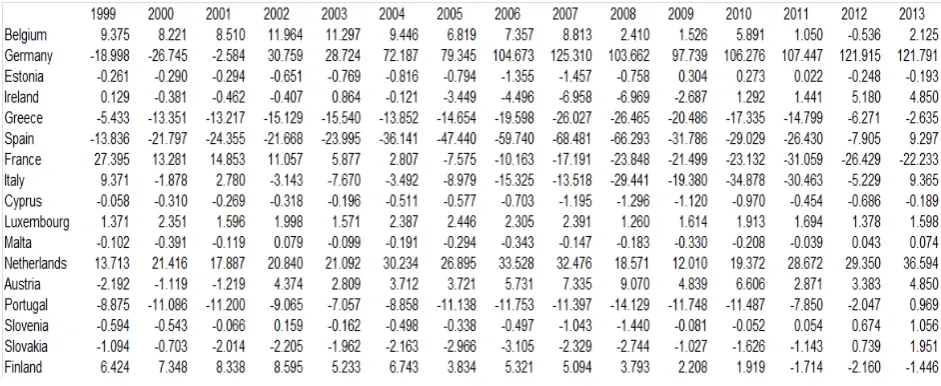
[image:21.595.70.543.230.411.2]In this case, we can consider the current account position in percentage of GDP of each Eurozone member state since 1999:
Table 2: Current account balance in percentage of GDP – 1999-2013
Source: Ameco.
By applying the lowest of the two ratios suggested by the MacDougall Report (70%) to the current account surplus (or deficit) of each country, we could estimate the needed contribution to (or by) a hypothetical common budget for every country, each year:
Table 3: Simulation of net contribution paid (+) or received (-) by each country (billions of euros)
[image:21.595.70.541.514.707.2]21
[image:22.595.73.532.156.441.2]It is evident that the biggest share of the contribution in this simulation would fall of the biggest economy, having also accumulated the highest current account surplus (Germany). The picture becomes even clearer if we consider only the crisis period 2008-2013:
Figure 7: Simulation of the net contribution paid (+) or received (-) by each country (billions of euros) before the crisis (1999-2007) and after (2008-2013)
Source: own calculations based on Ameco data.
The lack of a sizeable common budget was the main design failure of the EMU. The link to the current account position of each member of the Eurozone could have probably avoided the development of the macroeconomic imbalances at the origin of its specific crisis. The deterioration of the situation has created more difficult political conditions for this solution to be implemented.
9. Conclusion
This paper joins the vast literature on the EMU as a sub-optimal currency area, proposing an ex-post assessment in light of the predictions of the theory of OCA. Four conclusions can be drawn from this analysis.
22
second one, instead, was missing, and still is, but found compensation in the private insurance mechanism, generated by the growing financial integration among EMU members.
Second, if the theory of OCA proved too pessimistic for the first decade of the EMU, once the long-feared external shock came, in the form of a worldwide financial crisis, those old fears suddenly materialized. The reason is twofold. On the one side, the theory focused on the lack of adjustment mechanisms to asymmetric shocks, which did not happen until 2007, but occurred then with the deepest crisis since the Great Depression. The EMU found itself deprived of any common mechanism for shock absorption, and the response could only be generated at national level. This, in turn, exacerbated divergences within the Eurozone. On the other side, the private insurance mechanism contracted abruptly and proved weak and non-resilient as a response mechanism to asymmetric shocks. The main design failure of the EMU became then dramatically evident.
Third, as a consequence of this inherent flaw in the EMU's architecture, and as it had been foreseen, the cost of the adjustment after the shock fell mainly on labour, with much higher and longer term unemployment in the Eurozone, than in both non-Eurozone EU and the US. This might be gradually mitigated in the future by an increasing labour mobility within the Eurozone, from deficit to surplus countries. The lack of a common fiscal capacity, however, implies that no mechanism will be in place to compensate those countries for the loss of their most skilled workforce and for the erosion of their tax bases. The impoverishment of these countries will increase in parallel to the increase in labour mobility.
Fourth, the analysis shows that as a consequence of a series of asymmetric responses to an asymmetric shock, with austerity policies in deficit countries not accompanied by expansionary policies in surplus countries, social and economic divergences in the Eurozone are literally exploding. A simulation for a common budget linked to the current account position of each member state shows that its cost would be increasingly concentrated on one country: Germany. This may represent a challenge for the political sustainability of the European project.
The EMU seems locked into a vicious circle, which had been foreseen long ago: “monetary unity imposed under unfavourable conditions will prove a barrier to the achievement of political unity”, Milton Friedman foresaw. But now political unity is precisely the necessary condition to save monetary unity.
References
Alesina, A., Ardagna, S., and Galasso, V. (2008). The euro and structural reforms (No. w14479).
National Bureau of Economic Research.
Alesina, A, Barro, RJ, and Tenreyro, S. (2003). Optimal currency areas. In NBER Macroeconomics
Annual 2002, Volume 17 (pp. 301-356). MIT Press.
23
Bayoumi, T. (1994). A formal model of optimum currency areas. IMF Staff papers, 41(4), 537-554. Bayoumi, T, and Eichengreen, B. (1997). Ever closer to heaven? An optimum-currency-area index for European countries. European Economic Review, 41(3), 761-770.
Bayoumi, T., and Masson, PR (1995). Fiscal flows in the United States and Canada: lessons for monetary union in Europe. European Economic Review, 39(2), 253-274.
Berger, H, and Nitsch, V. (2010). The euro’s effect on trade imbalances. IMF Working Papers, 1-30. Bils, M and PJ Klenow (2004) Some Evidence on the Importance of Sticky Prices. Journal of
Political Economy. Vol. 112, No. 5 (October 2004), pp. 947-985
Blanchard, OJ, Katz, LF, Hall, RE, and Eichengreen, B. (1992). Regional evolutions. Brookings papers on economic activity, (1), 1-75.
Bonin, H., W. Eichhorst, C. Florman, MO. Hansen, L. Skiöld, J. Stuhler, K.Tatsiramos, H. Thomasen and KF Zimmermann (2008). “Geographic Mobility in the EU: Optimising its Economic and Social Benefits”, IZA Research Report 19, Institute for the Study of Labour, Bonn. Bordo, MD., Markiewicz, A, and Jonung, L. (2011). A fiscal union for the euro: Some lessons from history (No. w17380). National Bureau of Economic Research.
Buiter, WH., Corsetti, G. and Roubini, N. (1993) ‘Excessive Deficits: Sense and Nonsense in the Treaty of Maastricht’. Economic Policy, No. 1.
Buti, M and D Franco, (2005). Fiscal policy in economic and monetary union. Theory, evidence and
institutions, Edward Elgar Publishing Ltd, Cheltenham.
Dao, M, Furceri, D, Loungani, P. (2014) Regional Labor Market Adjustments in the United States and Europe. IMF Working Paper No. 14/26.
De Grauwe, P. (2006). On monetary and political union. In CESifo forum (Vol. 4, No. 2006, pp. 1-10). Ifo Institute for Economic Research at the University of Munich.
De Grauwe (2013) Design Failures in the Eurozone: Can they be fixed? LSE ‘Europe in Question’ Discussion Paper Series.
De Grauwe, P., and Ji, Y. (2013). How much fiscal discipline in a monetary union. Journal of
Macroeconomics. ISSN 0164-0704, http://dx.doi.org/10.1016/j.jmacro.2013.08.016.
Delors, J. (2013). Economic Governance in the European Union: Past, Present and Future. JCMS: Journal of Common Market Studies, 51(2), 169-178.
Dhyne, E, LJ. Alvarez, H Le Bihan, G Veronese, D Dias, J Hoffmann, N Jonker, P Lunnemann, F Rumler, and J Vilmunen. (2006). "Price Changes in the Euro Area and the US: Some Facts from Individual Consumer Price Data." Journal of Economic Perspectives, 20(2): 171-192.
24
Diamond, P (1981). “Mobility Costs, Frictional Unemployment, and Efficiency.” Journal of Political
Economy, 89(4): 798–812.
Dornbusch, R. (1996). Debt and monetary policy: the policy issues (No. w5573). National Bureau of Economic Research.
Dornbusch, R. (1997). Fiscal aspects of monetary integration. American Economic Review, 87(2), 221-223.
Ebbinghaus and Kittel (2005). European Rigidity Versus American Flexibility? The Institutional Adaptability of Collective Bargaining. Work and Occupations. 32: 163-195.
ECB (2012). “Euro area labour markets and the crisis”, ECB, Occasional Paper series, Nº 138 / October 2012.
Eichengreen, B. (1991). Is Europe an optimum currency area? (No. w3579). National Bureau of Economic Research.
Eichengreen, B. (1992). Should the Maastricht Treaty be saved?. Princeton: International Finance Section, Department of Economics, Princeton University.
Eichengreen, B. (1993a). European monetary unification. Journal of Economic Literature, 31(3), 1321-1357.
Eichengreen, B. (1993b). Labor markets and European monetary unification. Policy issues in the operation of currency unions, 130-162.
Eichengreen, B., and Frieden, J. (1993). The political economy of European monetary unification: An analytical introduction. Economics and Politics, 5(2), 85-104.
Eichengreen, B., Obstfeld, M., and Spaventa, L. (1990). One money for Europe? Lessons from the US currency union. Economic Policy, 118-187.
EPC (2013) Making progress towards the completion of the single European labour market, May 2013, Issue Paper 75.
European Commission (1975). Report of the Study Group "Economic and Monetary Union 1980" and
Annex I. (Marjolin Report).
European Commission (1977) Report of the Study Group on the Role of Public Finance in European
Integration (MacDougall Report).
European Commission (1989). Report on economic and monetary union in the European Community. (Delors Plan or Report) Committee for the Study of EMU.
25
European Commission (2013). Employment and Social Situation in the EU – Quarterly Review, June. DG Employment, Social Affairs and Inclusion.
Feldstein, M. (1991). Does one market require one money?. Policy Implications of Trade and Currency Zones. Federal Reserve Bank of Kansas City.
Feldstein, M. (1992). “The Case Against the Euro,” The Economist, 1992.
Feldstein, M. (1997). "The Political Economy of the European Economic and Monetary Union: Political Sources of an Economic Liability." Journal of Economic Perspectives, 11(4): 23-42.
Fenge, Robert and Jakob vonWeizsaecker. (2009). Public pension systems and distortions of intra-EU mobility: the Lodge Test. Journal of Pension Economics and Finance, 9 (2): 262-279.
Fisher, I. (1933) The Debt Deflation Theory of Great Depression. Econometrica, 1(4), 337-357. Fleming, JM. (1971) On Exchange Rate Unification. The Economic Journal, 81, 467-488.
Frankel, JA, and Rose, AK. (1998). The endogenity of the optimum currency area criteria. The
Economic Journal, 108(449), 1009-1025.
Friedman, Milton (1953) "The Case for Flexible Exchange Rates", published in Friedman's Essays in Positive Economics, University of Chicago Press, 157-203.
Friedman, Milton (1997). ”The Euro: Monetary Unity To Political Disunity?" Project Syndicate, Aug. 28, 1997.
Goette, LF, Sunde, U and Bauer, TK, (2007) Wage Rigidity: Measurement, Causes and Consequences. Economic Journal, Vol. 117, Issue 524, pp. F499-F507.
Goodhart, C (1988). The two concepts of money: implications for the analysis of optimal currency areas. European Journal of Political Economy, vol.14, 407-432.
Gros, D (2012). Bankng Union. Ireland versus Nevada. CEPS Commentaries.
Hallet, AH, M Hutchison and Hougaard, Jensen, (1999). Fiscal aspects of European monetary
integration, Cambridge University Press.
Harris, JR., and Todaro, MP. (1970). Migration, unemployment and development: a two-sector analysis. American Economic Review, 60(1), 126-142.
Kahanec, M. (2012). Labor mobility in an enlarged European Union (No. 6485). Discussion Paper series, Forschungsinstitut zur Zukunft der Arbeit.
Kahanec, M. (2013). Skilled labor flows: lessons from the European Union. Social Protection and labor discussion paper no. SP, 1301.
26
Kenen, Peter (1969), “The Theory of Optimum Currency Areas: An Eclectic View,” in R.Mundell and A. Swoboda, eds., Monetary Problems in the International Economy, University of Chicago Press.
Konya, I and Krause, MU. (2012) Wage Rigidity and Search Frictions in Europe and the US
http://www.eea-esem.com/files/papers/eea-esem/2012/2467/KonyaKrause2011_ECBDec13.pdf
Krugman, P. (1993a) Lessons of Massachusetts for EMU, in Torres, F., and Giavazzi, F. (1993).
Adjustment and growth in the European Monetary Union. Cambridge University Press.
Krugman, P. (1993b). Inequality and the political economy of eurosclerosis (No. 867). CEPR Discussion Papers.
Krugman, P. (2012). Revenge of the Optimum Currency Area. In NBER Macroeconomics Annual 2012, Volume 27. University of Chicago Press.
Lane, P.R. (2013). Capital Flows in the Euro Area (No. 497). European Economy – Economic Papers. DG Economic and Financial Affairs, European Commission.
Layard, R., Nickell, S. and Jackman, R. (1991). Unemployment. Macroeconomic Performance and the Labor
Market. Oxford: Oxford University Press.
Lin, JY, and Treichel, V. (2012). The crisis in the Euro zone: did the euro contribute to the evolution of the crisis?. World Bank Policy Research Working Paper, (6127).
McKinnon, Ronald (1963), “Optimum Currency Areas” American Economic Review, 53, September, 717-724.
Meade, JE. (1957). The balance-of-payments problems of a European free-trade area. The
Economic Journal, 67(267), 379-396.
Molloy, R; Smith, CL; Wozniak, A (2011). Internal migration in the United States, Discussion paper series. Forschungsinstitut zur Zukunft der Arbeit, No. 5903.
Mongelli, FP. (2008). European economic and monetary integration and the optimum currency area theory (No. 302). DG Economic and Monetary Affairs, European Commission.
Mortensen, DT, and Pissarides, CA. (1994). Job creation and job destruction in the theory of unemployment. Review of economic studies, 61(3), 397-415.
Mundell, R. (1961). A theory of optimum currency areas. American Economic Review, 51(4), 657-665.
Mundell, R. (1973) ‘Uncommon Arguments for Common Currencies’. In Johnson, H.G. and Swoboda, AK. (eds).
27
Obstfeld, Maurice (2013). Finance at center stage: some lessons of the euro crisis. EUROPEAN
ECONOMY Economic Papers. 493.
Obstfeld, M., Alesina, A., and Cooper, RN. (1997). Europe's gamble. Brookings Papers on Economic Activity, 1997(2), 241-317.
OECD (2012) Economic Survey of the European Union, 2012. OECD, Paris.
O'Rourke, K.H., and Taylor, A.M. (2013). Cross of Euros. Journal of Economic Perspectives, 27(3), 167-92.
Pissarides, Christopher A. (1990). Equilibrium Unemployment Theory. Cambridge, MA: Blackwell. Robson, P. (1987). The Economics of International Integration, London, Allen and Unwin.
Rose, AK. (2000), One money, one market: the effect of common currencies on trade. Economic Policy, 15: 7–46
Sala-i-Martin, X., and Sachs, J. (1991). Fiscal federalism and optimum currency areas: evidence for Europe from the United States (No. w3855). NBER.
Scitovsky, T. (1957). "The theory of the balance of payments and the problem of a common European currency", Kyklos, voI. lO, no. 1, pp. 18-44.
Solow, Robert (2005). Rethinking fiscal policy. Oxford Review of Economic Policy, 21(4), 509-514.
Sorens, Jason, (2008). “Fiscal federalism: A return to theory and measurement”, working paper, Department of political science, University of Buffalo, SUNY.
Stiglitz, JE. (1999). "Toward a General Theory of Wage and Price Rigidities and Economic Fluctuations." American Economic Review, 89(2): 75-80.
Vandenbrande T, Coppin L, Van Der Hallen P. (2006). Mobility in Europe. European Foundation for the Improvement of Living and Working Conditions.
Verhelst, B., and Van den Poel, D. (2010). Price rigidity in Europe and the US: A comparative analysis using scanner data (No. 10/684). Ghent University, Faculty of Economics and Business Administration.
Werner, Pierre. (1970). Report to the Council and the Commission on the realisation by stages of Economic
and Monetary Union in the Community - "Werner Report" - [8 October 1970]. Bulletin of the European