R E S E A R C H
Open Access
The effect for Japanese workers of a
self-help computerized cognitive behaviour
therapy program with a supplement soft
drink
Kentaro Shirotsuki
1*, Yuji Nonaka
2, Keiichi Abe
2, So-ichiro Adachi
3, Shohei Adachi
3, Tomifusa Kuboki
4and Mutsuhiro Nakao
5Abstract
Background:Computerized cognitive behaviour therapy (CCBT) programs can provide a useful self-help approach to the treatment of psychological problems. Previous studies have shown that CCBT has moderate effects on depression, insomnia, and anxiety. The present study investigated whether a supplement drink that includes L-carnosine enhances the effect of CCBT on psychological well-being.
Methods:Eighty-seven participants were randomly allocated to a control group, CCBT, or CCBT with supplement drink. The CCBT and CCBT with supplement drink groups received six weekly self-help CCBT program instalments, which consisted of psycho-education about stress management and coping, behaviour activation, and cognitive restructuring. The CCBT group consumed a bottle of the supplement soft drink every morning through the 6 weeks. This program was delivered by an e-learning system on demand and also included a self-help guidebook. Seventy-two participants completed the program or were assess at the end of the study.
Results:ANOVA revealed that there were significant interactions (times × groups) for POMS tension-anxiety and fatigue. The CCBT group showed significantly improved tension-anxiety scores, whereas the CCBT with drink group showed significant improvements on fatigue.
Conclusion:The self-help CCBT program reduced the subjective experience of tension-anxiety in this group of workers. The addition of a supplement drink enhanced the effect of CCBT on fatigue, providing one possible approach to enhancement of such programs.
Trial registration:This study was registered on September 2, 2016 at UMIN. The registration number is UMIN000023903.
Keywords:Self-help, Computerized cognitive behaviour therapy, Workplace, L-carnosine
Background
Computerized cognitive behaviour therapy (CCBT) pro-grams involve the effective delivery of evidence-based treatments over the Internet, using computers, tablets, or smartphones. CCBT is a self-help treatment. Self-help cognitive behaviour therapy (CBT) can provide a useful approach for the treatment of psychological problems.
Previous studies show that self-help CBT programs have moderate effects on depressive symptoms and anxiety disorders [1, 2]. Additionally, self-help treatment such as CCBT can also address barriers to care such as limited availability of clinicians trained in evidence-based inter-ventions [3]. Additionally, CCBT is effective for those patients who are reluctant to attend treatment in clinical settings due to stigma [4]. Self-help CBT programs have been used to address depression and anxiety [5–7] as well as insomnia [8]. Meta-analyses suggest that self-* Correspondence:[email protected]
1Faculty of Human Sciences, Musashino University, 3-3-3, Ariake, Koto-ku,
Tokyo 135-8181, Japan
Full list of author information is available at the end of the article
help CBT can be effective in the treatment of low to moderate severity of psychological difficulties [9, 10].
The WHO reports that the prevalence of mental disor-ders in the countries surveyed exceeds 10% [11]. System-atic reviews indicate that work-related psychological distress is related to mental disorders, including both depression and anxiety disorders [12, 13]. In addition, it is often argued that management of psychological distress is important for optimum work performance, regardless of clinical significance [14, 15]. Several recent studies examined the effects of web-based CBT pro-grams among employees in Japan. Kimura et al. exam-ined the effect of a brief CBT-based training program on work performance [16]. This combination of a group CBT session with web-based CBT homework signifi-cantly improved subjective work performance. Another study examined the effects of a brief CBT-based training program in terms of alleviating psychological distress among employees and facilitating self-evaluation of stress management skills. This program combined group CBT education with web-based CBT homework, and led to a moderate alleviation of symptoms for employees with clinically significant psychological distress [17]. These reports suggested that Self-help CBT does appear to be a moderately effective intervention for a range of common mental health difficulties in the workplace.
Additionally, previous studies have assessed the effect of eating supplement foodstuffs on health condition. Carnosine (β-alanyl-L-histidine) and related compounds, including homocarnosine and anserine together with N-acetylated forms, are common dipeptides found in mammals, birds, and fish [18–22]. Carnosine, which is present in meats such as chicken or beef, is readily absorbed intact into the jejunum, despite being a dipep-tide [23]. It is metabolized by the enzyme carnosinase [24] and excreted via the kidneys [23]. Yamano et al. re-ported that daily intake of chicken extract that includes large amounts of imidazole dipeptides (carnosine and anserine) promotes recovery from mental fatigue, and these researchers concluded that the extract could be a candidate for use as an anti-fatigue food [25]. Smizu et al. showed that fatigue visual analogue scale (VAS) scores were significantly lower two to 8 weeks after administration of a drink containing imidazole dipeptides (400 mg) compared with placebo [26], making such a beverage another potential anti-fatigue food. Chengappa et al. examined the hypothesis that L-carnosine, an antioxidant and anti-glycation agent, would improve executive dysfunction, a cognitive domain associated with glutamate in patients with schizophrenia [27]. They suggested that L-carnosine merits further consideration as an adjunctive treat-ment to improve executive dysfunction in a patient population with psychiatric problems.
Based on these findings, low-intensity and easy-to-implement self-help CBT may yield improved mental health outcomes. It is possible that supplementation with L-carnosine may reinforce the effect of self-help CBT on work-place stress. The present preliminary investigation examined whether a supplement drink that included L-carnosine would enhance the effects of self-help CBT in the workplace. It was hypothesized that CCBT would improve anxiety, depression and fatigue and the use of supplement drink would enhances the effect of CCBT, especially on fatigue.
Method
Participants
Healthy volunteers were recruited from employees working at beverage, alcoholic beverage, and food manu-facturing/sales companies in Tokyo, Japan. Participants included the employees of the group companies that cre-ated the supplement drink. Members directly belonging to the division related to this research did not participate in this study.
All participants were office workers and had full-time job work. Informed consent sessions were held in September 2014. The program took place from October to November of 2014.
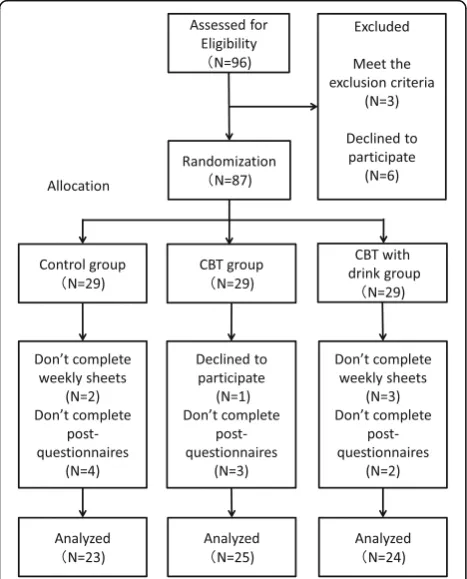
Of the 87 participants, 80 completed the relevant pro-gram and all of the pre- and post- sets of questionnaires. We also excluded two participants who did not complete the weekly tasks and failed to submit weekly homework sheets. Additionally, the days of six participants were ex-cluded because they did not complete the post-questionnaires (Fig. 1). At the end of the study, we ana-lysed the data of 72 completers (control group: n= 23,
CBT group: n = 25, CBT with supplement drink
group: n = 24). The completion rate was 82.75%. The age and gender composition of the groups was as fol-lows: “control group; mean age = 38.35, SD = 8.83; 17 male and 6 female”, “CBT group; mean age = 35.44, SD = 10.29; 18 male, 7 female”, “CBT with
supplement group; mean age = 37.88, SD = 9.15; 14 male, 10 female”.
Protocol
All participants completed the questionnaires before and after the 6 week program. The CBT and CBT with drink group participants attended a course on mental health on two occasions (30 min each) before and after the pro-gram. Due to the nature of the intervention, participants were aware of their allocation status.
In preparation for the possible occurrence of an ad-verse event, a system was developed for giving treatment and doing follow-up until the event recovered or lightened. No adverse events were reported during or after the study.
Control group
The control group recorded their mood state every day on a weekly monitoring sheet. They submitted their monitoring sheets to the study secretariat weekly.
Self-help CBT program
The CBT and CBT with supplement drink groups received six weekly instalments of a self-help CBT program, consisting of psycho-education about stress management, stress coping, behaviour activation, and cognitive restructuring. This program was completely devoid of therapy contact or support and was delivered using an on demand e-learning system and a self-help guidebook titled “Stress ni makenai hon (in Japanese)” [28]. Participants watched weekly e-learning movie segments (5–10 min long) and read the corresponding sections of the guidebook. Weekly key words were provided during the movies and participants filled out the words (e. g., autumn) on a task sheet. They recorded their daily moods and weekly tasks on a monitoring sheet. Sheets were submitted weekly to the research sec-retariat. The contents of the CBT program are shown in
Table 1. T2T3
Supplement drink
The CBT with supplement drink group consumed one bottle of the supplement soft drink (100 ml) every morn-ing throughout the 6 weeks. The drink contained 200 mg
Fig. 1Participation flow chart. This flow chart shows the transition of
participants. Ninety-six people signed up to participate. Before the start of the program an informed consent session was held, the purpose and procedures of the study were explained, and 96 participants provided their written informed consent. After the informed consent session, three people were excluded due to exclusion criteria and six people declined to participate. The remaining 87 employees were randomly allocated to a control group (n= 29), self-help CBT group (n= 29), or self-help CBT with supplement drink group (n= 29). Of the 87, 80 completed the relevant program and the pre- and post- sets of questionnaires. We also excluded two participants who did not complete weekly tasks and failed to submit weekly homework sheets. Additionally, six participants were excluded because they did not complete the post-questionnaires. At the end of the study, we analysed the data of 72 completers (control group:n= 23, CBT group:
n= 25, CBT with supplement drink group:n= 24)
Table 1Contents of present self-help CBT program
No. 1 Understanding oneself
No. 2 Social support
No. 3 Coping with stress
No. 4 Behavioral activation:“To Do”lists
No. 5 Creating one’s own cognitive model
of L-carnosine. The safety of L-carnosine intake has been reported by Simizu et al. [26]. The study reported that in-take of a drink containing imidazole dipeptides at both 200 mg/day (low dose) and 400 mg/day(high dose) for 8 weeks improved fatigue from daily activities. Additionally, there were no adverse events reported in the study. Other studies also verified the safety [29, 30]. Based on these re-ports of safety and effect, 200 mg of L-carnosine was used in this study. One bottle of the drink also contains 0.2 g protein, 18 g carbohydrate, and 40 mg sodium, but no fat. This drink did not include any other substance that might improve mood or fatigue. Consumption of the drink was recorded on the task sheet. The CBT self-help program was the same as that administered to the CBT group, as described above. The details of the content of the beverage were not explained before the start of the program. This drink was not a commercial item but was created for this research.
Measures
Profile of Mood Scale (POMS) [31]
The Japanese version of POMS was administered before and after the program. In the present study, the Tension-Anxiety (TA), Depression (D), and Fatigue (F) subscales of the POMS were used. The Japanese version of the POMS has sound reliability and validity [31].
According to the original study, a score greater than or equal to 34 is used to delimit depression and 20 for mild depression for men, with corresponding scores of 28 and 18 for anxiety. Another study showed that the POMS has the reliability and validity necessary to measure the mood state of older adults [32]. Another study reported the average scores and standard deviation for the general population (POMS-TA: 12.0 ± 6.3; POMS-D: 11.4 ± 9.6; POMS-F: 9.3 ± 6.2, [33].
Somatosensory Amplification Scale (SSAS) [34]
The SSAS includes 10 items that ask the respondent to endorse a range of uncomfortable bodily sensations on an ordinal scale from 1 to 5. Nakao et al. reported high reliability and validity for the SSAS. The SSAS has item-to-scale correlations of 0.27 to 0.84 (p< 0.05), with ad-equate internal consistency (Cronbach alpha = 0.79) [34]. In addition, SSAS scores are positively correlated with the total number of somatic symptoms, degree of perceived psychosocial stress, and POMS tension-anxiety, depression, fatigue, and confusion scale scores. SSAS scores were higher in a psychosomatic group than in their comparison group [34]. The SSAS is a clinically useful tool for the evaluation of Japanese psychosomatic patients in terms of how patients experience and report symptoms as well as their functioning in various medical conditions.
Medical Symptom Checklist (MSCL) [35]
The MSCL assesses the frequency, degree of discomfort, and the degree of interference with daily activities. Following previous studies, we selected the following 16 common medical symptoms: Headache, eye symptoms, dizziness, diarrhea, nausea, constipation, abdominal pain, muscle soreness, shortness of breath, limb pain, arthralgia, insomnia, back pain, fatigue, palpitation, and tinnitus. The calculated total number of symptoms was
used as an index of MSCL (maximum = 16,
minimum = 0).
General Self Efficacy Scale (GSES) [36]
The GSES assesses the individual’s general self-efficacy across a variety of settings in everyday life. The GSES consists of 16 items, each scored either 0 (NO) or 1 (YES). The GSES has been shown to have good internal consistency and has reasonably high reliability and validity.
Statistical analysis
First, we conducted ANOVA to reveal group differences for all measures. Second, we calculated effect size (Cohen’s d) to assess the degree of change in signifi-cantly reduced POMS factor scores. Third, we con-ducted ANCOVA (group × time) and ANOVA for the change values of the factors when there was a significant difference in baseline values for all measures.
Results
The results of ANOVA showed that there was no signifi-cant difference in age among the three groups (F(2, 69) = 0.66,p= 51). Additionally, Kruskal-Wallis test also revealed that there was no significant difference in terms of sex ratio (p= .48).
ANOVA was used to examine group differences for all measures (Table 2 and 3). Comparison between baseline scores showed that there was a significant difference be-tween groups for the POMS-F (F(2, 71) = 7.99,p< .01). On POMS-D, there was no significant main effect (F(2, 71) = 1.57,p= .21), but there was a tendency toward a main effect for the POMS-TA (F(2, 71) = 2.80,p= .06).
classification, the change in the POMS-TA score for the CBT group was a small effect (d= 0.37) and the change in the POMS-F score for the CBT with drink group was a medium effect (d= 0.60).
In the present study, there was a significant difference in pre-assessment POMS-TA and POMS-F. Therefore, we conducted ANCOVA (group × time) using the POMS-TA and POMS-F pre-treatment scores as co-variates. The results showed a significant interaction tendency for POMS-TA and POMS-F (F(3, 66) = 2.53,
p= .06;F(3, 66) = 2.46,p= .07 respectively).
Additionally, examination of the change values of these factors by ANOVA revealed group differences in POMS-TA and POMS-F because there were significant differences at baseline for two of the psychological values, tension-anxiety and fatigue. There were signifi-cant main effects for the POMS TA and POMS F scores (F(2, 69) = 3.04,p= .05;F(2, 69) = 5.01,p= .01, respect-ively). Post hoc tests revealed that the CBT group had significantly improved the POMS-TA score (p < .05) whereas the CBT with drink group significantly im-proved the POMS-F score (p< .01).
There were no significant interactions for the other measures (i.e., POMS-D: F(2, 69) = .72, p = .48, SSAS:
F(2, 69) = .36, p = .69, Medical Symptom Check List;
F(2, 69) = .65,p= .52, and GSES:F(2, 69) = .41,p= .66).
Discussion
The purpose of the present study was to examine the ef-fects of a self-help CCBT program for healthy Japanese
workers and to assess whether a supplement drink that contains L-carnosine would enhance the effect of help CBT. The present results indicated that the self-help CBT program improves feelings of tension and anxiety. Additionally, there is the possibility that the self-help CBT coupled with the supplement drink im-proved fatigue, which suggests that L-carnosine works to reinforce the effect of self-help CBT.
The effect size for the POMS-TA score of the CBT group was d = .32, and the effect size for the POMS-F score in the CBT with drink group was d = .52. One meta-analysis reported that the effect size of guided CCBT wasd c = .38 [38]. Comparing these effect sizes, the present results are roughly consistent with prior results. Our self-help CBT consisted of e-learning and textbook study, without therapist support, focused on stress management, behavioral activation, and cognitive restructuring. The completion rate was 82.75%, a relatively high rate that suggests that the intervention was well-tolerated and user-friendly.
Following previous studies [24, 25], the present results indicate that foods and drinks containing L-carnosine may be effective for recovery from mental fatigue. For example, chicken extract contains large amounts of imidazole dipeptides (carnosine and anserine), which are natural antioxidants in meat. Chicken extract is used as a traditional remedy, with various aims [39]. In Asian countries, it is widely taken for attenuation of fatigue, recovery from stress, and increased mental efficiency [40].
Table 2The data of pre-assessment of each value
Control group (N= 23) CBT group (N= 25) CBT with drink group (N= 24)
Mean SD Mean SD Mean SD F-values
POMS-TA 10.09 5.23 14.84 8.76 13.83 7.23 2.81†
POMS-D 7.09 8.49 11.96 12.32 12.04 11.55 1.57
POMS-F 5.35a 4.09 9.84b 7.00 12.54c 7.01 7.99** a < b*, a < c**
SSAS 26.26 6.74 27.00 7.22 29.46 5.29 1.59
MSCL 1.78 2.04 1.92 2.27 3.17 2.35 2.79†
GSES 9.87 3.44 7.84 4.45 8.67 4.21 1.50
**p<.01, *p<.05,†p<.10
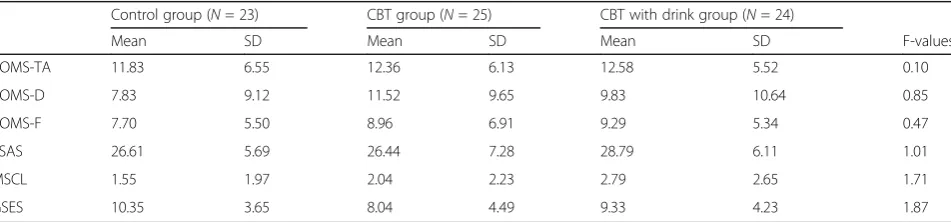
Table 3The data of post-assessment of each value
Control group (N= 23) CBT group (N= 25) CBT with drink group (N= 24)
Mean SD Mean SD Mean SD F-values
POMS-TA 11.83 6.55 12.36 6.13 12.58 5.52 0.10
POMS-D 7.83 9.12 11.52 9.65 9.83 10.64 0.85
POMS-F 7.70 5.50 8.96 6.91 9.29 5.34 0.47
SSAS 26.61 5.69 26.44 7.28 28.79 6.11 1.01
MSCL 1.55 1.97 2.04 2.23 2.79 2.65 1.71
It should be noted that there was no significant change in other psychological measures as a function of treatment (SSAS, Medical Check List, and GSES). This could be due to the fact that the present program did not specifically target psychosomatic responses or self-efficacy. The use of relaxation or deep breathing techniques might have a more robust effect on such targets. In addition, such a short program may have precluded much change in terms of participant perceptions of self-efficacy.
The CBT with drink group did not show significant improvement in their POMS-TA score. The baseline score for this subscale was relatively lower than that for the CBT with drink group, although this difference was not statistically significant. There was no difference between the groups in the POMS-TA post-score. This means that the baseline data difference may have influ-enced these results. Futures studies using blocked randomization may help clarify this possibility.
Limitations
The present study has some limitations. First, there were significant differences at pre-assessment for some scales. The present study used a simple randomization design, which failed to result in equivalent group scores at pre-treatment. Future studies adopting block randomization may clarify the effects of the present self-help CBT program and L-carnosine. In addition, the present study did not set a group that took only a supplement soft drink. In future studies, it will be necessary to compare the effect of the supplement drink with the combined use of the supple-ment drink and CCBT. This improvesupple-ment will clarify if the significant improvement in fatigue in our CBT with drink group was a psychological or biological affect. For example, comparison of a CBT with a supplement drink group with a CBT with placebo-drink group will be required.
Second, participants were relatively healthy employees. Future study should examine the effects of our program on patients with mental disorders. In terms of partici-pants, the total sample size was 72, which is relatively low, and the power is .75. In future studies, it will be ne-cessary to have a more adequate sample size, which would reinforce the present findings in terms of sample power and the significance of interaction. Also, no therap-ist guidance or support was provided. Potential augmenta-tion effects of limited therapist support on our program should be examined. Furthermore, in the present study, all participants had a full-time job, however, we did not rec-ord the details of working hours and position. In future studies, assessment and consideration of these factors will be useful for clarifing the relation between the working environment and the effect of CCBT.
Third, participants in present study may have impli-citly reported desirable results because they belonged to group companies of the one that created the supplement drink. It is difficult to completely eliminate bias by the participants. In future research, it will be important to consider this point.
Conclusions
The present study investigated if a supplement drink that includes L-carnosine enhances the effect of CCBT on psychological well-being. The self-help CCBT pro-gram reduced the subjective experience of tension-anxiety by the workers. The addition of a supplement drink was shown to have enhanced the effect of CCBT on fatigue, providing one possible approach to the enhancement of such programs.
Abbreviations
ANOVA:Analysis of variance; CBT: Cognitive behavioral therapy;
CCBT: Computerized Cognitive behavioral therapy; D: Depression; F: Fatigue; GSES: General Self Efficacy Scale; MCS: Mental component summary; POMS: Profile of mood states; SD: Standard deviation; SSAS: Japanese version of Somatosensory Amplification Scale (SSAS); V: Vigor
Fig. 2POMS-TA score change. POMS, Profile of mood states; TA,
Tension-anxiety. The graph shows significant interaction between group and time of assessment for POMS TA (F(2, 69) = 3.04,p= .05). Post hoc tests using the Bonferroni method revealed that the CBT group significantly improved on POMS-TA (p< .05)
Fig. 3POMS-F scores change. POMS, Profile of mood states; F,
Acknowledgements
This study was supported by the Institutional Review Board of Suntory Ltd. The corresponding author had full access to all the data in the study and had final responsibility for the decision to submit it for publication.
Funding
This study was funded by Suntory Global Innovation Center Limited. (Self-funding).
Availability of data and materials
Data sharing not applicable to this article as no datasets were generated or analyzed during the current study.
Declarations
This study was mainly conducted by Suntory Global Innovation Center Limited.
Authors’contributions
KS, YN, KA, Shohei Adachi, and MN designed the study protocol. KS and M.N. analyzed the data and drafted the manuscript. KS consulted with Drs. So-ichiro Adachi, Tomihusa Kuboki, and Mutsuhiro Nakao. KS, Shohei Adachi, and MN developed the CCBT program. YN and KA created the supplement drink. YN, KA, Shohei Adachi, and MN assisted with data collection. MN oversaw the study. All authors read and approved the final manuscript.
Ethics approval and consent to participate
This study was approved by the Institutional Review Board of Suntory Ltd. (ID: MMI-14-01). An informed consent session in which the purpose and procedures of the study were explained was held before the start of the program, and the participants provided written informed consent.
Consent for publication Not applicable.
Competing interests
YN and KA were employees of Suntory Global Innovation Center Limited during the study period.
Publisher’s Note
Springer Nature remains neutral with regard to jurisdictional claims in published maps and institutional affiliations.
Author details
1
Faculty of Human Sciences, Musashino University, 3-3-3, Ariake, Koto-ku, Tokyo 135-8181, Japan.2Innovation Development Department, Suntory
Global Innovation Center Limited, Osaka, Japan.3Medical corporation
So-bun-kai, Clinic Adachi, Gifu, Japan.4Professor Emeritus, The University of
Tokyo, Tokyo, Japan.5Department of Psychosomatic Medicine, Teikyo University Hospital, Tokyo, Japan.
Received: 16 September 2016 Accepted: 28 July 2017
References
1. Ludman EJ, Simon GE, Tutty S, Von Korff M. A randomized trial of telephone psychotherapy and pharmacotherapy for depression: Continuation and durability of effects. J Consult Clin Psychol. 2007;75:257–66.
2. Mackinnon A, Griffiths KM, Christensen H. Comparative randomised trial of online cognitive-behavioural therapy and an information website for depression: 12-month outcomes. See comment in PubMed Commons below. Br J Psychiatry. 2008;192:130–4.
3. Weissman MM, Verdeli H, Gameroff MJ, Bledsoe SE, Betts K, Mufson L, et al. National Survey of Psychotherapy Training in Psychiatry, Psychology, and Social Work. Arch Gen Psychiatry. 2006;63:925–34.
4. Corrigan P. How Stigma Interferes With Mental Health Care. Am Psychol. 2004;59:614–25. doi:10.1037/0003-066X.59.7.614.
5. van Boeijen CA, van Balkom AJ, van Oppen P, Blankenstein N, Cherpanath A, van Dyck R. Efficacy of self-help manuals for anxiety disorders in primary care: A systematic review. Fam Pract. 2005;22:192–6.
6. Cuijpers P. Bibliotherapy in unipolar depression: A meta-analysis. J Behav Ther Exp Psychiatry. 1997;28:139–47.
7. Gellatly J, Bower P, Hennessy S, Richards D, Gilbody S, Lovell K. What makes self-help interventions effective in the management of depressive symptoms? Meta-analysis and meta-regression. Psychol Med. 2007;37:1217–28. 8. van Straten A, Cuijpers P. Self-help therapy for insomnia: A meta-analysis.
Sleep Med Rev. 2009;13:61–71.
9. Bonde JP. Psychosocial factors at work and risk of depression: a systematic review of the epidemiological evidence. Occup Environ Med. 2008;65:438–45. doi:10.1136/oem.2007.038430.
10. Stansfeld S, Candy B. Psychosocial work environment and mental health–a meta-analytic review. Scand J Work Environ Health. 2006;32:443–62. 11. Demyttenaere K, Bruffaerts R, Posada-Villa J, Gasquet I, Kovess V, Lepine JP,
WHO World Mental Health Survey Consortium, et al. Prevalence, severity, and unmet need for treatment of mental disorders in the World Health Organization World Mental Health Surveys. JAMA. 2004;291:2581–90. 12. Couell G, Morris PH. The clinical effectiveness of CBT-based guided self-help
interviews for anxiety and depressive disorders: A systematic review. Psychol Med. 2011;41:2239–52.
13. Van't Hof E, Cuijpers P, Stein DJ. Self-help and internet-guided interventions in depression and anxiety disorders: A systematic review of meta-analyses. CNS Spectrums. 2009;14:34–40.
14. Westerhof GJ, Keyes CLM. Mental illness and mental health: the two continua model across the lifespan. J Adult Dev. 2010;17:110–9. doi:10.1007/s10804-009-9082-y.
15. Uegaki K, de Bruijne MC, van der Beek AJ, van Mechelen W, van Tulder MW. Economic evaluations of occupational health interventions from a company's perspective: a systematic review of methods to estimate the cost of health-related productivity loss. J Occup Rehabil. 2011;21:90–9. doi:10.1007/s10926-010-9258-0.
16. Kimura R, Mori M, Tajima M, Somemura H, Sasaki N, Yamamoto M, et al. Effect of a brief training program based on cognitive behavioral therapy in improving work performance: A randomized controlled trial. J Occup Health. 2015;57:169–78.
17. Mori M, Tajima M, Kimura R, Sasaki N, Somemura H, Ito Y, et al. A Web-Based Training Program Using Cognitive Behavioral Therapy to Alleviate Psychological Distress Among Employees: Randomized Controlled Pilot Trial. JMIR Res Protoc. 2014;3:e70. doi:10.2196/resprot.3629.
18. Abe H. Role of histidine-related compounds as intracellular proton buffering constituents in vertebrate muscle. Biochemistry (Mosc). 2000;65:757–65. 19. Bonfanti L, Peretto P, de Marchis S, Fasolo A. Carnosine-related dipeptides in
the mammalian brain. Prog Neurobiol. 1999;59:333–53.
20. de Marchis S, Modena C, Peretto P, Migheli A, Margolis FL, Fasalo A. Carnosine-related dipeptides in neurons and glia. Biochem Mosc. 2000;65:824–33.
21. Lamas I, Anadon R, Diaz-Requeira S. Carnosine-like immunoreactivity in neurons of the brain of an advanced teleost, the gray mullet (Chelon labrosus, Risso). Brain Res. 2007;1149:87–100.
22. Tsubone S, Yashikawa N, Okada S, Abe U. Purification and characterization of a novel imidazole dipeptide synthetase from the muscle of the Japanese eel Anguilla japonica. Comp Biochem Physiol B: Biochem Mol Biol. 2007;146:560–7.
23. Gardner MLG, Illingworth KM, Kelleher J, Wood D. Intestinal absorption of the intact peptide carnosine in man, and comparison with intestinal permeability to lactulose. J Physiol. 1991;439:411–22.
24. Quinn PJ, Boldyrev AA, Formazuyk VE. Carnosine: Its properties, functions and potential therapeutic applications. Mol Asp Med. 1992;13:379–444. 25. Yamano E, Tanaka M, Ishii A, Tsuruoka N, Abe K, Watanabe Y. Effects of
chicken essence on recovery from mental fatigue in healthy males. Med Sci Monit. 2013;19:540–7. doi:10.12659/MSM.883971.
26. Shimizu K, Fukuda M, Yamamoto H. Effect of Repeated Intake of Imidazole Dipeptides-containing Drink on Healthy People with Feeling of Fatigue from Daily Activities―The Results of 207 Volunteers Enrolled in the 1st Recruitment―. Jpn Pharmacol Ther. 2009;37:255–63.
27. Chengappa KN, Turkin SR, DeSanti S, Bowie CR, Brar JS, Schlicht PJ, et al. A preliminary, randomized, double-blind, placebo-controlled trial of L-carnosine to improve cognition in schizophrenia. Schizophr Res. 2012;142:145–52.
28. Adachi S, Adachi S, Nakao M, Shirotsuki S. Stress ni makenai hon (in Japanese). Tokyo: Book Beyond; 2015.
30. Aoyagi S, Sugino T, Kajimoto Y, Nishitani M. Safety of excess administration of CBEX-Dr-containing drink of healthy people. Jpn Pharmacol Ther. 2008; 36:225–35.
31. Yokoyama K, Araki S, Kawakami N, Kakeshita T. Production of the Japanese edition of profile of mood states (POMS): assessment of reliability and validity. Nippon Koshu Eisei Zasshi. 1990;37:913–8. (in Japanese) 32. Gibson SJ. The measurement of mood states in older adults. Psychol Sci.
1997;52:167–74.
33. Yokoyama K, Araki S, Okajima F, Nomura S, Okuyama I. Examination of the Japanese edition of profile of mood states (POMS) and short versions. Jpn J Public Health. 1993;40:1055. [in Japanese]
34. Nakao M, Kumano H, Kuboki T, Barsky AJ. Reliability and validity of the Japanese version of Somatosensory Amplification Scale: clinical application to psychosomatic illness. Jpn J Psychosom Med. 2001;41:539–47. [in Japanese]
35. Nakao M, Fricchione G, Myers P, Zuttermeister PC, Baim M, Mandle CL, Medich C, Wells-Federman CL, Arcari PM, Ennis M, Barsky AJ, Benson HA. Anxiety is a good indicator for somatic symptom reduction through behavioral medicine intervention in a mind/body medicine clinic. Psychother Psychosom. 2001;70:50–7.
36. Sakano Y, Tohjoh M. The General Self-Efficacy Scale (GSES): scale development and validation. Jpn J Behav Ther. 1986;12:73–82. 37. Cohen J. Statistical power analysis for the behavioral sciences. revised ed.
New York: Academic Press; 1988.
38. Richards D, Richardson T. Computer-based psychological treatments for depression: A systematic review and meta-analysis. Clin Psychol Rev. 2012; 32:329–42.
39. Rennard BO, Ertl RF, Gossman GL, Robbins RA, Rennard SI. Chicken soup inhibits neurtophil chemotaxisin vitro. Chest. 2000;118:1150–7. 40. Nagai H, Harada M, Nakagawa M, Tanaka T, Gunadi B, Setiabudi ML, et al.
Effects of chicken extract on the recovery from fatigue caused by mental workload. Appl Hum Sci. 1996;15:281–6.
• We accept pre-submission inquiries
• Our selector tool helps you to find the most relevant journal
• We provide round the clock customer support
• Convenient online submission
• Thorough peer review
• Inclusion in PubMed and all major indexing services
• Maximum visibility for your research
Submit your manuscript at www.biomedcentral.com/submit