R E S E A R C H
Open Access
Improving metabolic parameters of antipsychotic
child treatment (IMPACT) study: rationale, design,
and methods
Gloria M Reeves
2*, Courtney Keeton
1, Christoph U Correll
4, Jacqueline L Johnson
3, Robert M Hamer
3,
Linmarie Sikich
3, Lindsey Hazzard
3, Cheryl Alderman
3, Abigail Scheer
3, Micah Mabe
3, Sandeep Kapoor
4,
Eva Sheridan
4, Irmgard Borner
4, Kristin Bussell
2, Sara Pirmohamed
2, Terrence C Bethea
3, Raja Chekuri
4,
Rhoda Gottfried
1, Shauna P Reinblatt
1, Erin Santana
1and Mark A Riddle
1Abstract
Background:Youth with serious mental illness may experience improved psychiatric stability with second generation antipsychotic (SGA) medication treatment, but unfortunately may also experience unhealthy weight gain adverse events. Research on weight loss strategies for youth who require ongoing antipsychotic treatment is quite limited. The purpose of this paper is to present the design, methods, and rationale of the Improving Metabolic Parameters in Antipsychotic Child Treatment (IMPACT) study, a federally funded, randomized trial comparing two pharmacologic strategies against a control condition to manage SGA-related weight gain. Methods:The design and methodology considerations of the IMPACT trial are described and embedded in a description of health risks associated with antipsychotic-related weight gain and the limitations of currently available research.
Results:The IMPACT study is a 4-site, six month, randomized, open-label, clinical trial of overweight/obese youth ages 8–19 years with pediatric schizophrenia-spectrum and bipolar-spectrum disorders, psychotic or non-psychotic major depressive disorder, or irritability associated with autistic disorder. Youth who have experienced clinically significant weight gain during antipsychotic treatment in the past 3 years are randomized to either (1) switch antipsychotic plus healthy lifestyle education (HLE); (2) add metformin plus HLE; or (3) HLE with no medication change. The primary aim is to compare weight change (body mass index z-scores) for each pharmacologic
intervention with the control condition. Key secondary assessments include percentage body fat, insulin resistance, lipid profile, psychiatric symptom stability (monitored independently by the pharmacotherapist and a blinded evaluator), and all-cause and specific cause discontinuation. This study is ongoing, and the targeted sample size is 132 youth. Conclusion:Antipsychotic-related weight gain is an important public health issue for youth requiring ongoing antipsychotic treatment to maintain psychiatric stability. The IMPACT study provides a model for pediatric research on adverse event management using state-of-the art methods. The results of this study will provide needed data on risks and benefits of two pharmacologic interventions that are already being used in pediatric clinical settings but that have not yet been compared directly in randomized trials.
Trial registration:Clinical Trials.gov NCT00806234
* Correspondence:[email protected] 2
Division of Child and Adolescent Psychiatry, School of Medicine, University of Maryland, 701 W Pratt Street, Baltimore, MD 21201, USA
Full list of author information is available at the end of the article
Introduction
In recent years, there has been growing concern about potential harm caused by second-generation anti-psychotic (SGA) treatment of children and adolescents. SGA metabolic adverse effects include weight gain, dyslipidemia, increased blood pressure, and hypergly-cemia/new onset diabetes [1-4]. Children and adoles-cents, especially those who are antipsychotic-naïve, are at greater risk for unhealthy weight gain adverse events than adults [3,5,6], and they often gain over 7% baseline weight within the first few months of treatment [1,7,8]. Providers may utilize pharmacologic (e.g. switch to a dif-ferent SGA) and/or non-pharmacologic (e.g. diet/nutri-tion counseling) strategies to reduce adverse metabolic effects, but these interventions have not been systemat-ically studied in pediatric patients [9]. Alternatively, pre-scribers may consider use of first-generation or“typical” antipsychotic medications. Some typical antipsychotic medications are associated with lower risk of obesity re-lated adverse events compared to several SGA’s [3]. However, these older medications are associated with a higher risk of acute extrapyramidal adverse events and in-voluntary abnormal movements [6]. Of particular concern is the increased risk of tardive dyskinesia, a potentially ir-reversible movement disorder that typically manifests after long-term treatment.
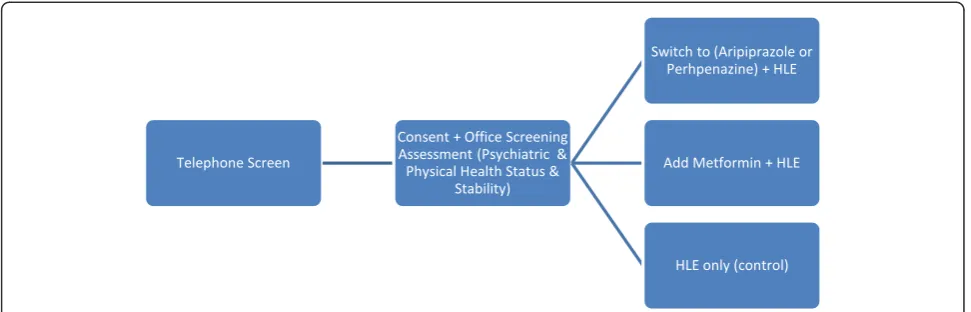
This article reports on the rationale, design, and methods of a federally funded, multi-site clinical trial fo-cused on management of metabolic adverse effects among youth who require ongoing antipsychotic medi-cation treatment to maintain psychiatric stability. The Improving Metabolic Parameters in Antipsychotic Child Treatment (IMPACT) study is an open-label, 6-month trial, in which overweight and obese youth with SGA-induced weight gain are randomized to treatment with either (1) switch antipsychotic medication to one that is lower risk for metabolic side effects + healthy lifestyle education (HLE); (2) add metformin + HLE; or (3) HLE alone (control condition). This study began enrollment in 2008 and is being conducted at Johns Hopkins Univer-sity, University of Maryland, University of North Carolina, and The Zucker Hillside Hospital.
Rationale for study
SGA medications are often used to treat chronic and serious mental illness in adults and youth. Current FDA approved pediatric indications include irritability associ-ated with autism, acute psychosis in schizophrenia, and mixed and manic episodes in bipolar disorder [10]. SGAs may cause significant adverse effects, but ongoing treatment may be required to achieve or maintain psy-chiatric stability. Three general strategies to manage SGA-induced weight gain include (1) switch antipsychotic medication to another antipsychotic with lower metabolic
risk [11]; (2) add a pharmacologic weight loss agent [12]; and/or (3) add a non-pharmacologic weight loss interven-tion [13]. While these strategies are currently utilized in clinical settings, there is very limited pediatric data to guide clinicians on the risks and benefits of these strat-egies [9]. Randomized studies testing an antipsychotic switch strategy have only been conducted in adults, show-ing some reductions in weight and metabolic parameters [11,14]. Non-pharmacologic weight loss interventions for adult antipsychotic-related weight gain have had some limited success, yet no such studies exist in pediatric pa-tients [9,13]. Further, no pediatric RCT’s have compared strategies to manage antipsychotic induced weight gain. In contrast, two adult studies have been conducted that dir-ectly compared different weight loss strategies in anti-psychotic treated patients. Wu et al. [15] compared metformin, healthy lifestyle, and the combination of met-formin plus healthy lifestyle, and Stroup et al. [16] com-pared healthy lifestyle intervention versus healthy lifestyle plus switch to a lower cardiometabolic risk antipsychotic. To date, no three-arm study of weight loss options for antipsychotic treated patients who experienced relevant weight gain exists, and no study has directly compared addition of a weight loss medication with a switch to a lower risk antipsychotic and healthy lifestyle instructions.
Unhealthy weight gain caused by pediatric SGA treat-ment is a major public health concern because child-hood obesity is a risk factor for cardiovascular disease and type 2 diabetes. The prospective Harvard Growth Study reported that being overweight in adolescence is a more powerful predictor of morbidity from coronary heart disease than being overweight as an adult [17]. A large population cohort epidemiologic study reported that the risk for any adult coronary heart disease was positively associated with body mass index (BMI) at age 7–13 for boys and 11–13 for girls, and the risk increased across the entire BMI distribution [18]. Obesity is also the most important risk factor for development of pediatric type 2 diabetes [19]. Sinha et al. [20] reported a high prevalence of glucose intolerance (25% of children; 21% of adolescents) and 4% with silent type 2 diabetes among a sample of obese youth. Although youth treated with SGAs seldom develop diabetes because of their large insulin reserve, they often develop insulin resist-ance and dyslipidemia, which markedly enhresist-ance the risk for long-term morbidity and mortality. Unfortunately, childhood obesity often persists into adulthood [21-23]. For example, in the Bogalusa Heart study, 77% of obese children were obese as young adults [24].
treatment for youth prescribed SGAs, namely those with early onset schizophrenia spectrum, pediatric bipolar disorder, severe mood dysregulation, psychotic or non-psychotic major depressive disorder, or irritability associ-ated with autistic disorder.
Rationale for intervention arms
Switch antipsychotic medication
Several expert consensus statements [3,25,26] recom-mend switching of the antipsychotic to a lower meta-bolic risk agent as an option to manage antipsychotic induced weight gain. This option has the advantage of removing the offending agent and providing ongoing treatment at therapeutic doses (as opposed to the strat-egy of lowering the dose). However, there is a potential risk for psychiatric de-stabilization, even with a careful cross-over titration. A 2010 Cochrane review of four randomized controlled trials (RCTs) of antipsychotic switch versus continued treatment in adults concluded that switching to a lower risk agent may be an effective strategy to manage metabolic side effects, resulting in weight loss and improved fasting blood glucose [11]. Of note, there was no difference in adverse events (includ-ing or exclud(includ-ing metabolic adverse events) in the switch versus continuation antipsychotic groups in these pre-liminary studies.
Selection of an appropriate switch agent for the IMPACT trial was challenging because of rapid changes in available SGAs. Initially, aripiprazole was selected as the switch agent, based on promising data from both adult and pediatric psychiatry studies that this agent had a lower risk of adverse metabolic events [27,28]. This information lead to significant increases in off-label prescribing, even before pediatric data from controlled efficacy and safety studies were available. Aripiprazole quickly became a first line prescribed antipsychotic medication. Unfortunately, evidence emerged that, at least among antipsychotic naïve patients, aripiprazole can also be associated with signifi-cant weight gain. For example, in a non-randomized in-ception cohort study, antipsychotic-naïve youth prescribed aripiprazole experienced a mean weight gain of 4.4 kg at 12 weeks, which was less than the weight gain of 8.4 kg on olanzapine, 6.1 kg on quetiapine and 5.3 kg on risperi-done, but significantly greater than the 0.19 kg weight gain experienced by non-antipsychotic treated youth [1]. Thus, we required an appropriate alternative switch medication for youth who had either inadequate prior response to aripiprazole and/or weight gain on this medication.
Molindone was selected as an alternative switch agent. This choice was based largely on the results of a double blind RCT for youth with schizophrenia or schizoaffective disorder in which weight gain at 8 weeks was greatest for olanzapine (6.1 kg), followed by risperidone (3.6 kg), and molindone (0.3 kg) [29]. Shortly after being added to
the IMPACT study switch arm, however, molindone was removed from the market by the manufacturer for non-safety reasons. Only one participant received this medi-cation, and the parent elected to discontinue treatment since the child could not stay on the medication after the study was completed.
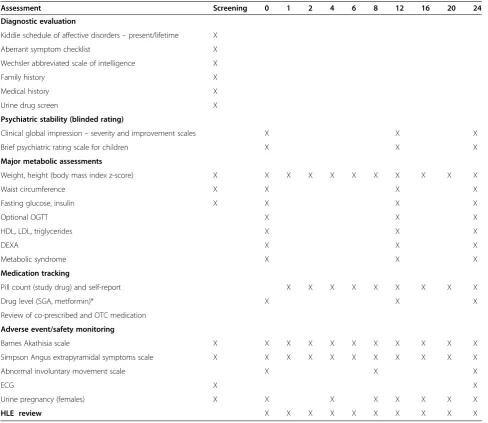
Perphenazine was selected to replace molindone as the second antipsychotic switch medication. There are no modern, placebo-controlled, randomized trials of per-phenazine in youth. The one published study [30] has too many methodological problems to be interpretable. Perphenazine was selected based on the CATIE study, an adult schizophrenia trial that compared perphenzine to olanzapine, quetiapine, and risperidone treatment [31]. Perphenazine had a better profile in terms of drug-induced weight gain and metabolic changes compared to the SGA’s, but had a higher discontinuation rate for extrapyramidal side effects. To address the potential risk of EPS, we provided prophylactic treatment with benz-tropine for youth prescribed > 8 mg perphenazine. EPS symptoms were monitored at each visit (refer to Table 1 for assessment schedule). For all participants, the protocol allows for treatment of emergent EPS with benztropine or trihexyphenidyl and treatment of akathisia with propran-olol, lorazepam, or clonazepam.
Ziprasidone is associated with lower metabolic adverse effects, but it was not chosen as a switch agent because it has a relatively greater risk for QTc prolongation com-pared to other antipsychotic medication options [3]. Ziprasidone treatment would require greater cost and time for ECG monitoring to address potential increased risk of arrhythmias. A recent study indicates that this risk is likely not clinically relevant [32], however, ECG monitoring continues to be done as part of standard of care for ziprasidone treatment.
Antipsychotic switch to a lower risk agent, either aripiprazole or perphenazine, represents a single weight loss strategy in IMPACT. The analysis will not distin-guish between aripiprazole and perphenazine or examine any differences between them, except descriptively, be-cause the selection of the switch medication is non-random, and based on prior treatment history.
Add metformin
expenditure [34]. Sibutramine was not selected for the IMPACT study because of potential for adverse CNS ef-fects, and it subsequently was withdrawn from the US market in 2010 because of increased risk of heart attack and stroke in adults [35]. Orlistat is an enteric lipase in-hibitor [36]. It was not selected because of concerns that adherence may be hindered by adverse effects, including fecal incontinence [37], as well as by the complexity of the medication regimen, i.e., it is recommended to ad-minister a multi-vitamin at least 2 hours apart from orlistat and to use this medication up to three times a day with meals [38].
Topiramate and metformin have been studied specific-ally for antipsychotic-induced weight gain in adults. Topiramate is an antiepileptic agent that has FDA pediatric approval down to age 2 for seizure treatment [39]. It is also used for off-label treatment of mood
disorders, with the frequently reported side effect of de-creased appetite/weight loss. A review by Ellinger et al. [40] reported topiramate was superior to placebo in three adult RCT’s for either weight loss or BMI outcome (in this study the topiramate goup had stabilization of BMI rather than significant reduction in BMI compared to BMI increase in placebo group). However, concerns about topirimate use include potential drug interaction (25% decrease in risperidone concentrations), trouble-some neurologic adverse events (paresthesias reported more commonly in the topiramate treated groups in two of the trials), and the 2008 FDA warning about increased risk of suicidal behavior or ideation among patients tak-ing antiepileptic medications [40].
Metformin was selected as the weight loss agent for the IMPACT study. Metformin decreases hepatic gluco-neogenesis and improves insulin sensitivity in the liver
Table 1 Schedule of major study assessments
Assessment Screening 0 1 2 4 6 8 12 16 20 24
Diagnostic evaluation
Kiddie schedule of affective disorders–present/lifetime X
Aberrant symptom checklist X
Wechsler abbreviated scale of intelligence X
Family history X
Medical history X
Urine drug screen X
Psychiatric stability (blinded rating)
Clinical global impression–severity and improvement scales X X X
Brief psychiatric rating scale for children X X X
Major metabolic assessments
Weight, height (body mass index z-score) X X X X X X X X X X X
Waist circumference X X X X
Fasting glucose, insulin X X X X
Optional OGTT X X X
HDL, LDL, triglycerides X X X
DEXA X X X
Metabolic syndrome X X X
Medication tracking
Pill count (study drug) and self-report X X X X X X X X X
Drug level (SGA, metformin)* X X X
Review of co-prescribed and OTC medication
Adverse event/safety monitoring
Barnes Akathisia scale X X X X X X X X X X X
Simpson Angus extrapyramidal symptoms scale X X X X X X X X X X X
Abnormal involuntary movement scale X X X
ECG X X
Urine pregnancy (females) X X X X X X X X
and muscle [41]. Metformin is FDA approved for the treatment of type 2 diabetes in youth≥10 years old [42]. The potential side effect of hypoglycemia secondary to metformin is rare because metformin does not stimulate insulin production, and there have been no published pediatric cases of lactic acidosis or increase in serum lac-tic acid associated with therapeulac-tic doses [43]. A recent review [44] reported on 13 published trials, including 2 pediatric and 6 adult RCTs, of metformin to manage or prevent antipsychotic induced weight gain, which the authors summarized as being associated with modest weight loss demonstrated in mostly short term trials. Another systematic review and meta-analysis on the ef-fect of metfomin treatment on antipsychotic-induced weight gain [45] reported weight change compared with placebo as −4.8% in adults and −4.1% in children, al-though this analysis only included two pediatric studies. One study was a 12-week RCT in which youth treated with risperidone were augmented with metformin or placebo, and both groups showed significant changes in weight and BMI, however the study included only 32 youth [46]. The other pediatric study was a 16-week RCT examining metformin co-treatment for 10–17 year old youth (n = 38) prescribed olanzapine, risperidone, or quetiapine [47]. There were significant differences in weight change between the metformin and placebo treated groups, but the metformin group did not experi-ence significant weight loss; i.e., the placebo treated group continued to gain weight while the metformin group maintained a stable weight.
Control condition
All participants receive healthy lifestyle education. Be-cause of the clear health risks of pediatric overweight and obesity, it would be unethical to withhold non-pharmacologic interventions for six months during the course of the study. When the IMPACT study was ini-tially proposed, grant reviewers raised concern about funding an intensive psychosocial intervention (e.g. diet and activity interventions at a weight management cen-ter) because there was no substantial evidence base that this type of intervention would be effective for mentally ill youth receiving antipsychotic medication. Another concern was the potential high burden of frequent and long study visits for patients receiving lifestyle interven-tion plus pharmacologic interveninterven-tion, and the possible increased parent–child conflict with a highly restrictive dietary or physical activity intervention.
The basic healthy lifestyle education employed in IMPACT follows stage 1 of the American Medical As-sociation pediatric weight loss guidelines (http://www. ama-assn.org//ama1/pub/upload/mm/433/ped_obesity_ recs.pdf ). This educational program can be administered by a prescriber or non-clinician and can be easily
implemented in a mental health outpatient setting, even with time constraints. The duration of the lifestyle educa-tion is consistent with guidelines from the 2009 Schizo-phrenia Patient Outcomes Research Team report [48] that indicates such an intervention should occur for at least 3 months. To our knowledge, the AMA pediatric weight loss guidelines have not been studied in a pediatric weight loss trial for youth with mental illness. Stage 1 and stage 2 guidelines are provided by the AMA.
Stage 1 guidelines focus on education about healthy diet (e.g. eat breakfast daily) and activity habits and can be implemented by a non-clinician. HLE is advanced to Stage 2 guidelines if he/she gains 7% of baseline weight. Stage 2 guidelines address the following:
1. Eating habits: Increased structure of daily meals and snacks.
2. Food consumption: Develop a balanced diet with low amounts of energy dense foods,
3. Physical activity: Supervised active play 60 minutes per day, limit sedentary activity involving electronic devices, such as television or computer to <1 hour per day
4. Monitoring of food consumption and activity by parent or child and provider.
Specific aims and design
IMPACT is a 6-month, multi-site study involving an ini-tial screening phase to assess eligibility followed by 24 weeks of randomly assigned open-label treatment and monitoring (Figure 1). This study was approved by the Institutional Review Boards at the four sites.
Specific aims and hypotheses
The primary aimis to determine if each of the pharma-cologic interventions (switch antipsychotic; add metfor-min) results in greater weight loss, as measured by BMI z-score change over 6 months, compared to the control condition (healthy lifestyle education). As part of sec-ondary analyses, weight loss will also be examined as 6-month change in BMI percentile, absolute body weight, percent body weight, and total body fat assessed with Dual-Energy X-Ray Absorptiometry (DEXA). We hy-pothesize that mean change in BMI z-score and body fat mass, as a percent of baseline body fat mass, will be re-duced over six months in each of the treatment groups compared to the control group.
parameters will improve in each of the treatment groups compared to the control group.
The second secondary aim is to establish whether the proportion of subjects discontinuing treatment is lower in each pharmacologic group compared to the control group. Exploratory analyses will examine the proportion of subjects in each group who discontinue assigned treatment (HLE, or HLE plus metformin or switch anti-psychotic) because of 1) psychiatric symptoms and 2) weight or metabolic reasons. We hypothesize that fewer participants will discontinue treatment in each of the treatment groups compared to the control group since we anticipate that lifestyle education may not be inten-sive enough to promote weight loss while the child con-tinues on antipsychotic treatment. We recognize that antipsychotic switch assignment has a risk of de-stabilizing psychiatric symptoms, however our protocol allows for a gradual cross-over titration and flexible dos-ing to minimize adverse events durdos-ing the medication switch.
The most importantexploratory analyseswill compare the two pharmacologic intervention groups with respect to each of the primary and secondary aims. We hypothesize that the metformin group will have greater reduction in insulin resistance compared to the switch antipsychotic group, but that the switch antipsychotic group will have greater reduction in triglycerides than the metformin group.
We hypothesize that the metformin group will have a greater reduction in insulin resistance compared to the switch antipsychotic group because metformin is a dia-betes medication that is specifically used to improve in-sulin sensitivity. This medication is not known, however, to have specific effects on lipid profile. Thus, we antici-pate that removing the offending agent (i.e. the anti-psychotic causing the weight gain) in the switch arm will be more effective in reducing abnormal triglycerides than metformin.
Study design
Participant sample
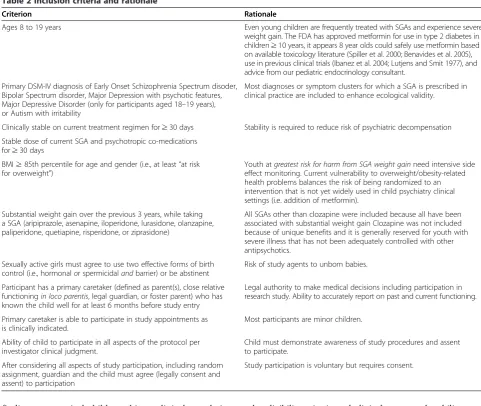
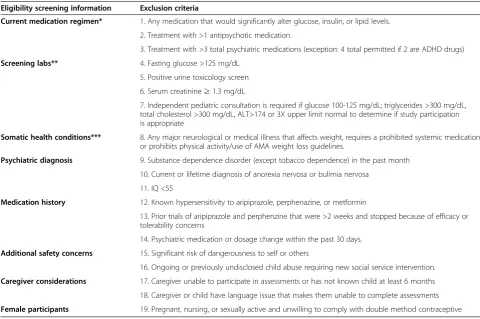
Eligibility criteria identify youth aged 8–19 years who have benefited enough from antipsychotic treatment to justify ongoing treatment (i.e., achieved psychiatric stability–for definition, see Table 2), but who are also atgreatest risk for harm from SGA related weight gain. Only youth who: 1) meet CDC criteria for being“overweight”(i.e., 85th- < 95th BMI percentile) or “obese” (i.e., >/=95thBMI percentile), and 2) have been identified by both their caregiver and clinician as having experienced “substantial weight gain” during SGA treatment in the past 3 years, are eligible. These pediatric patients have a compelling need for more intensive side effect monitoring. Also, their current vul-nerability to obesity-related health problems balances the risk of being randomized to an intervention that is not yet widely used in child psychiatric clinical settings (i.e., addition of metformin). Full inclusion and exclusion cri-teria are presented in Tables 2 and 3.
We have operationalized “substantial weight gain” to be approximately equivalent to at least 10% of baseline weight. We allow some flexibility in this determination because of challenges in obtaining precise and accurate clinical weight records (e.g. challenges weighing a child who may have developmental delay and hyperactivity be-havioral problems; child may have been weighed on dif-ferent scales using difdif-ferent procedures over the course of antipsychotic treatment, etc.). When a child’s weight is measured at the screening visit and over the course of the study, we have systematic, study-wide procedures (e.g. same type of scale used; height measured three times to calculate sex- and age-adjusted BMI percen-tiles; removal of shoes and added layers of clothing like a jacket are removed prior to measurement) to improve the accuracy of weight and ability to compare weights across sites.
Of note, two conditions are permitted as part of the eligibility criteria to maintain generalizability of the
findings to a typical child psychiatry clinical population. First, we allow for ongoing stable treatment with either a stimulant medication and/or valproate/valproic acid. Both of these medications are known to effect weight, but we did not exclude them because they are commonly pre-scribed to youth receiving antipsychotic medication. We monitor adherence to stimulants and valproate/valproic acid for youth receiving these medications at each study visit along with adherence of antipsychotic medication and study medication. We also restrict the total number of psychiatric medications permitted (3 medications total, including antipsychotic medication or 4 medications total, if 2 are prescribed for ADHD). Secondly, in addition to in-cluding diagnoses that either have a pediatric or adult ap-proved indication, we include youth receiving off-label antipsychotic treatment for chronic mood dysregulation. Chronic mood dysregulation is operationalized using the Leibenluft [50] criteria for Severe Mood Dysregulation (SMD). Each case is reviewed by the PI steering commit-tee to provide final approval for randomization based on
the eligibility criteria and clinical status and stability over the screening period.
Randomization
Eligible participants are randomly assigned to one of the three treatment conditions using a central, computer-generated randomization schedule developed and ad-ministered by the Data Center (DC). Randomizations is stratified for current SGA (risperidone, aripiprazole (the two largest expected groups) or “other antipsychotic”) and diagnosis (1. Early Onset Schizophrenia Spectrum or 2. Bipolar Disorder, Severe Mood Dysregulation, psychotic or non-psychotic depression, or irritability as-sociated with autism). We decided to stratify randomiza-tion between the two major diagnostic groups, in order to account for potential differences in sensitivity to weight gain and in co-medications. In addition, we stratified by the two baseline SGAs that we expected to produce the largest groups, risperidone, aripiprazole and
“other antipsychotic”, as the weight gain potential and
Table 2 Inclusion criteria and rationale
Criterion Rationale
Ages 8 to 19 years Even young children are frequently treated with SGAs and experience severe weight gain. The FDA has approved metformin for use in type 2 diabetes in children≥10 years, it appears 8 year olds could safely use metformin based on available toxicology literature (Spiller et al. 2000; Benavides et al. 2005), use in previous clinical trials (Ibanez et al. 2004; Lutjens and Smit 1977), and advice from our pediatric endocrinology consultant.
Primary DSM-IV diagnosis of Early Onset Schizophrenia Spectrum disoder, Bipolar Spectrum disorder, Major Depression with psychotic features, Major Depressive Disorder (only for participants aged 18–19 years), or Autism with irritability
Most diagnoses or symptom clusters for which a SGA is prescribed in clinical practice are included to enhance ecological validity.
Clinically stable on current treatment regimen for≥30 days Stability is required to reduce risk of psychiatric decompensation
Stable dose of current SGA and psychotropic co-medications for≥30 days
BMI≥85th percentile for age and gender (i.e., at least“at risk for overweight”)
Youth atgreatest risk for harm from SGA weight gainneed intensive side effect monitoring. Current vulnerability to overweight/obesity-related health problems balances the risk of being randomized to an intervention that is not yet widely used in child psychiatry clinical settings (i.e. addition of metformin).
Substantial weight gain over the previous 3 years, while taking a SGA (aripiprazole, asenapine, iloperidone, lurasidone, olanzapine, paliperidone, quetiapine, risperidone, or ziprasidone)
All SGAs other than clozapine were included because all have been associated with substantial weight gain Clozapine was not included because of unique benefits and it is generally reserved for youth with severe illness that has not been adequately controlled with other antipsychotics.
Sexually active girls must agree to use two effective formsof birth control (i.e., hormonalor spermicidalandbarrier) or be abstinent
Risk of study agents to unborn babies.
Participant has a primary caretaker (defined as parent(s), close relative functioningin loco parentis, legal guardian, or foster parent) who has known the child well for at least 6 months before study entry
Legal authority to make medical decisions including participation in research study. Ability to accurately report on past and current functioning.
Primary caretaker is able to participate in study appointments as is clinically indicated.
Most participants are minor children.
Ability of child to participate in all aspects of the protocol per investigator clinical judgment.
Child must demonstrate awareness of study procedures and assent to participate.
After considering all aspects of study participation, including random assignment, guardian and the child must agree (legally consent and assent) to participation
metabolic liability of these antipsychotic groups differs, leading to potentially different magnitudes of change in response to the randomized treatment.
Treatments
Healthy lifestyle education (all subjects)
All participants in the study receive the healthy lifestyle education following the stage 1 of the 2007 American Medical Association guidelines for treatment of pediatric obesity, which provides guidance on healthy eating habits and activities. Participants advance to stage 2 if they gain >7% of their baseline body weight during the conduct of the study to minimize human subject con-cerns. Stage 2 increases supervision of activity and food intake and also reduces sedentary activity associated with television/computer viewing time.
Switch antipsychotic
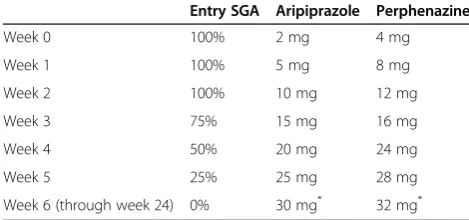
Youth randomized to this condition have a switch in their antipsychotic treatment to an antipsychotic medica-tion, with a lower metabolic risk profile, i.e., aripiprazole or perphenazine. Antipsychotic switch occurs in a gradual
plateau cross over design [51] with flexible dosing (Table 4 and Table 5). The first line switch agent is aripiprazole, the second switch agent is perphenazine. Youth receive aripiprazole if they have never been treated with this agent or if they had a prior inadequate trial without inefficacy or intolerability; otherwise, they are treated with perphena-zine. Participants who take perphenazine are prescribed benztropine, 0.5 mg twice a day if they are titrated to a dose >8 mg. This dose of benztropine may be adjusted (in-creased or discontinued) after it is initiated based on pre-scriber clinical judgment.
Metformin treatment
Metformin is administered using a flexible dosing titra-tion schedule over 4–6 weeks (see Table 6 for general guidelines on dosing schedule and target dose based on two weight groups). The dose is maintained or lowered based on side effects. Youth who experience significant side effects are offered the extended release formulation of metformin, which has a lower incidence of gastro-intestinal side effects. Families are provided with infor-mational handouts describing potential drug interactions
Table 3 Exclusion criteria
Eligibility screening information Exclusion criteria
Current medication regimen* 1. Any medication that would significantly alter glucose, insulin, or lipid levels.
2. Treatment with >1 antipsychotic medication.
3. Treatment with >3 total psychiatric medications (exception: 4 total permitted if 2 are ADHD drugs)
Screening labs** 4. Fasting glucose >125 mg/dL
5. Positive urine toxicology screen
6. Serum creatinine≥1.3 mg/dL
7. Independent pediatric consultation is required if glucose 100-125 mg/dL; triglycerides >300 mg/dL, total cholesterol >300 mg/dL, ALT>174 or 3X upper limit normal to determine if study participation is appropriate
Somatic health conditions*** 8. Any major neurological or medical illness that affects weight, requires a prohibited systemic medication, or prohibits physical activity/use of AMA weight loss guidelines.
Psychiatric diagnosis 9. Substance dependence disorder (except tobacco dependence) in the past month
10. Current or lifetime diagnosis of anorexia nervosa or bulimia nervosa
11. IQ <55
Medication history 12. Known hypersensitivity to aripiprazole, perphenazine, or metformin
13. Prior trials of aripiprazole and perphenzine that were >2 weeks and stopped because of efficacy or tolerability concerns
14. Psychiatric medication or dosage change within the past 30 days.
Additional safety concerns 15. Significant risk of dangerousness to self or others
16. Ongoing or previously undisclosed child abuse requiring new social service intervention.
Caregiver considerations 17. Caregiver unable to participate in assessments or has not known child at least 6 months
18. Caregiver or child have language issue that makes them unable to complete assessments
Female participants 19. Pregnant, nursing, or sexually active and unwilling to comply with double method contraceptive
*Antipsychotic medication, stimulant medication, and divalproex sodium are permitted. Prohibited medications include, but are not limited to: insulin, systemic steroids, topiramate, sibutramine, orlistat, metformin, amantadine, vitamin E (other than in standard multivitamins), statins, and anti-hypertensive medication. Exception: orlistat and amantadine are permitted if taken for >1 year without weight loss.
**Laboratory tests are repeated for confirmation if they are abnormal.
and the risks of hypoglycemia and hyperglycemia. Met-formin dosing reaches steady state target levels before key outcomes are assessed at Week 12.
Control condition
Participants randomized to the control condition receive healthy lifestyle education only, and no changes are made to their medication.
Measures and assessment of outcomes
Assessment time points are indicated in Table 6. There are 10 in-person visits, at 0, 1, 2, 4, 6, 8 and 12, 16, 20 and 24 weeks. In addition, there are telephone contacts during the first 11 weeks when no regular in-person visit is scheduled, i.e., at weeks 3, 5, 7, 9, 10 and 11. The major metabolic assessments occur at baseline, 12 weeks, and 24 weeks.
The primary outcome measure is the BMI z-score change (from baseline to week 24), which requires meas-urement of height and weight. BMI z-scores adjust for age- and gender-appropriate developmental changes. Further, BMI z-scores are continuous measures, in con-trast to BMI percentiles, which are capped at the upper and lower end.
DEXA scan is used to measure change in total fat mass. This measurement was selected instead of percent
body fat for two reasons: 1) smaller changes in total body fat mass can be detected than in percent body fat, thus the precision is greater, and 2) weight loss is clinic-ally significant even if it equclinic-ally affects fat and fat-free tissues.
All metabolic laboratory values obtained at the main visits (baseline, week 12, week 24) are obtained after an overnight fast of at least 8 hours. Glucose, insulin, tri-glycerides, total cholesterol, high-density lipoprotein (HDL)- cholesterol, and low-density lipoprotein (LDL)-cholesterol are analyzed centrally at the Mid-Atlantic Nutrition and Obesity Research Center at the University of Maryland School of Medicine. An oral glucose toler-ance test (OGTT), the more definitive test of insulin sensitivity, was not required for all patients based on our experience that some youth would have difficulty tolerat-ing this lengthy procedure but it was offered as an op-tional test. Thus, all participants will have insulin sensitivity measured by a fasting blood draw, and a sub-group will also have insulin sensitivity measured by an OGTT. We will analyze the sub-group of participants who completed both measurements separately to (1) as-sess correlation between the fasting blood draw and OGTT insulin sensitivity measurements; and (2) to com-pare OGTT derived insulin sensitivity results for the three study arms.
Medication adherence
For all patients, parent/patient self-report adherence data are collected regarding all psychotropic medica-tions, including antipsychotics, stimulants, and depakote at each medication visit. In addition, for all patients, antipsychotic blood levels are collected at week 12 and 24. Finally, for participants receiving study medication (i.e., switch antipsychotic or metformin, information is also collected by pill count at all medication appointments and by drug levels of metformin at week 12 and 24.
Statistical methods and analytic plan
The primary aim is to compare the relative efficacy of two medication strategies (S = switch to lower risk agent, M = metformin augmentation) versus a control condi-tion (C = control, current SGA) in reducing BMI z-score. Analyses will be performed on a modified intent-to-treat population of patients with a baseline and at least one follow-up visit, using a mixed model approach to re-peated measures (MMRM). Change in BMI z-score as well as in secondary body composition parameters (i.e., change in BMI percentile, weight and percent weight compared to baseline, fat mass, waist circumference) will be modeled as a function of treatment group, time point, and treatment-by-time point interaction, with current SGA and diagnosis as blocking factors. The original IMPACT data analysis plan treated the individual
Table 4 Recommended dose equivalency for switch condition
Entry SGA Switch to aripiprazole Switch to perphenazine
Aripiprazole – Dose X 1.33
Asenapine Dose X 1.5 Dose X 2
Iloperidone Dose X 1.25 Dose X 1.75
Lurasidone Dose X 0.25 Dose X 0.35
Olanzapine Dose X 1.5 Dose X 2
Paliperidone Dose X 2.5 Dose X 3.33
Quetiapine Dose X 0.1 Dose X 0.13
Risperidone Dose X 4 Dose X 5
Ziprasidone Dose X 0.125 Dose X 0.17
Table 5 Recommended open-label switch titration dosing Entry SGA Aripiprazole Perphenazine
Week 0 100% 2 mg 4 mg
Week 1 100% 5 mg 8 mg
Week 2 100% 10 mg 12 mg
Week 3 75% 15 mg 16 mg
Week 4 50% 20 mg 24 mg
Week 5 25% 25 mg 28 mg
Week 6 (through week 24) 0% 30 mg* 32 mg*
*
treatment contrasts of (a) switch to lower risk agent versus control condition and (b) metformin versus control con-dition as co-primary hypotheses, using a 0.025 (=0.05/2) significance level via Bonferroni correction for each test. We also used 90% power, which produced an estimate of 240 patients required. This initial analysis plan was reviewed and revised after the first year of recruitment because of concerns that this approach may be overly conservative and the sample size may be difficult to achieve given the challenges of recruiting for this study (e.g. difficulty recruiting individuals with serious mental illness who meet the clinical stability criteria). The deci-sion was made, prior to any data analysis, to re-structure the hypothesis testing to a two stage procedure, which reduced the sample size requirements. We will first test for a treatment group main effect in the three treatment group model. If this test is significant, we will then per-form two follow-up tests comparing each of the treat-ment groups to control. The test of treattreat-ment main effect as well as the two follow-up tests will be conducted at significance level 0.05, instead of 0.025. This testing procedure does not inflate the overall experiment-wise error rate, since if we reject the group null hypothesis, we know at least one of the group means differs from at least one of the others. The sample size (132 total, 44 per group) was chosen to allow at least 80% power for the follow-up pairwise treatment group comparisons on change in BMI z-scores. This final sample size does not adjust for attrition. With respect to change in BMI z-scores, we hypothesized values of: μC= +0.25, μM=−0.15,μS=−0.10 based on published [47] and pilot data. We assumed a standard deviation of 0.58. With re-spect to change in total fat mass as a percent of baseline fat mass, we hypothesized values of: μS = +1.0%, μM =
−6.0%, andμC= +18%. . We assumed a standard deviation of 20%.
The secondary aim is to compare the two medication strategies to the control condition on changes in metabolic measures, including glucose, insulin, insulin resistance (measured as Quantitative Insulin Sensitivity Check Index; QUICKI and Homeostasis Model of Insulin Resistance;
HOMA-IR [52,53]), triglycerides, total cholesterol, LDL-cholesterol, non-HDL LDL-cholesterol, HDL-LDL-cholesterol, glu-cose and metabolic syndrome. In addition, in subjects undergoing the optional 2-hour OGTT, changes in whole body insulin sensitivity index (ISI), which utilizes insulin and glucose levels obtained at 30-minute intervals the OGTT, will be assessed. ISI will be calculated with the Matsuda & DeFronzo [54] formula: ISI = 10,000 divided by the square root of (fasting plasma insulin X fasting plasma glucose X mean plasma glucose X mean plasma insulin).
Hypotheses are that insulin sensitivity will be increased in each of the treatment groups individually compared to the control group, and that lipid and glucose and in-sulin levels will be reduced. These hypotheses will be tested using the same MMRM analyses as the hypoth-eses for the primary aim using changes in insulin resist-ance, percent reduction in the lipid and glucose metabolism parameters, and the same two stage testing procedure to compare treatment groups. With regard to metabolic syndrome, we will compare the proportion of subjects with metabolic syndrome at week 24 in the treatment groups using logistic regression, with group as a fixed predictor, SGA, and diagnosis as blocking factors. Finally, our third aim is to compare each of the treat-ment conditions individually with the control group with respect to proportion of subjects discontinuing treat-ment. This will use a logistic regression, with group as a fixed predictor, and SGA and diagnosis as blocking fac-tors. We hypothesize that fewer subjects will discontinue treatment in the metformin group or in the lower risk agent group than in control group. We plan to also examine the proportion of subjects in each group who discontinue treatment because of 1) psychiatric symp-toms and 2) weight or metabolic reasons, and to exam-ine time to discontinuation.
Design weaknesses and limitations
A limitation of the IMPACT study is that it is an open label trial. Double blinding of all treatments was not done because of the additional costs to purchase current
Table 6 Recommended open-label metformin (plus multivitamin) AM/PM titration dosing
<50 kg 50-70 kg >70 kg
am / pm am / pm am / pm
Week 0 0 mg / 250 mg 0 mg / 250 mg 0 mg / 500 mg
Week 1 250 mg / 250 mg 250 mg / 250 mg 500 mg / 500 mg
Week 2 250 mg / 500 mg 250 mg / 500 mg 500 mg / 1000 mg
Week 3 250 mg / 500 mg 500 mg / 500 mg 500 mg / 1000 mg
Week 4 500 mg / 500 mg 500 mg / 1000 mg 1000 mg / 1000 mg
Week 5 500 mg / 500 mg 500 mg / 1000 mg 1000 mg / 1000 mg
SGA; costs to over-encapsulate eight different medica-tions (six antipsychotics, metformin, and placebo); the complexity related to changing dose of three different blinded medications simultaneously; the subsequent like-lihood of errors and non-compliance; and the burden to participants associated with taking more and larger cap-sules each day. We did not feel that double blinding was necessary because the likelihood that our primary out-come measure, BMI z-score change, would be affected by bias is extremely low. Only BPRS-C and CGI ratings are likely to be influenced by open treatment. To pro-vide adequate protection against bias, single-blind, inde-pendent evaluation of psychiatric symptomatology were included for these measures.
Another weakness of the study is that the healthy life-style intervention used for the control condition offered only basic educational support. It is possible that a more intensive intervention, including a supervised exercise component and/or more intensive diet monitoring, may be more effective in promoting weight loss than pharma-cologic interventions. However, we sought to test inter-ventions that could be easily administered in a mental health setting and would not require additional nutri-tional or other specialist expertise.
Finally, another limitation is that the oral glucose toler-ance test was offered as an optional assessment. All partic-ipants had measurement of insulin sensitivity (using fasting glucose and insulin), but the more sensitive meas-ure of insulin sensitivity (OGTT) was not required because of the concerns about burden of testing on participant. The study included youth as young as age 8, and the two hour OGTT required children to fast until the metabolic blood work was completed. The measurements selected (QUICKI and HOMA-IR) to measure insulin sensitivity in all participants were done based on consultation with our study-wide and site endocrinology experts.
Safety & ethical considerations
Important safety and ethical concerns addressed in the study design focus on safeguards to ensure that (1) the risk to benefit ratio for the individual patient is appropri-ate to continue antipsychotic treatment for six months; (2) stopping criteria are established for youth who ex-perience psychiatric de-stabilization; and (3) increased lifestyle interventions are permitted for those who con-tinue to gain weight.
To insure that an individual patient is appropriate for continued antipsychotic treatment, each case must be approved by a PI steering committee prior to enroll-ment. The diagnostic evaluation, clinical laboratory stud-ies, and the patient’s current functioning are reviewed.
For patients who continue to gain weight during the trial, additional healthy lifestyle intervention is provided. For youth who gain >5% baseline weight, an additional
session is scheduled to review stage 1 AMA guidelines. For youth who gain >7% baseline weight, the stage 2 AMA guidelines are implemented by the pharmaco-therapist. This more intensive intervention includes greater parental supervision of child diet and activity and goal setting for weight loss.
Investigators consult with a pediatric endocrinologist, and participants will be referred to a pediatrician if they cross any of the following thresholds and maintain them over two weeks:
Substantial weight gain (i.e.,≥10% increase in baseline weight);
diabetes mellitus (fasting glucose > 125 mg/dL on two occasions or GTT 120 min glucose≥200 mg/dL);
dyslipidemia with triglyceride or cholesterol levels > 450 mg/dL.
Children must be withdrawn from the study and be re-ferred for individualized care in the community in any of 3 situations: 1) participant or guardian request, 2) judg-ment of the independent pediatrician or consulting pediatric endocrinologist that metabolic problems re-quire treatment beyond that which the child is currently receiving in the study, or 3) significant worsening of psy-chiatric symptoms unless the PT and/or family request review by the study wide PI steering committee. Signifi-cant worsening of psychiatric symptoms is operationalized as IE rating of CGI-I of 6 – “much worse” or 7 – “very much worse”on two successive occasions over a period of at least two weeks.
There are no defined stopping criteria for weight gain or the development of metabolic problems. We decided to use the clinical consultation from an independent pediatric expert, rather than setting a predetermined stopping threshold because there are several consider-ations that need to be assessed to determine if a patient should seek alternative care. For example, families may not have access to alternative weight loss programs that can accommodate the child’s mental health needs (e.g. youth with developmental delay or aggressive behavior problems). Secondly, it may not be feasible (e.g. added ap-pointment burden, travel time) for families to attend a weight loss program that is not integrated with the child’s mental health care. Finally, multiple clinical factors (e.g. family history, duration of metabolic abnormalities) should be evaluated to consider the child’s unique risk for diabetes and heart disease. Thus, we allowed for the deci-sion about study discontinuation to be made clinically, ra-ther than by a single strict metabolic stopping criterion.
Conclusion
IMPACT addresses a significant gap in current research by focusing on interventions to manage clinically rele-vant adverse effects. Adverse effect concerns are an im-portant priority for research because of their short-term impact on treatment adherence and long term impact on a child’s development and risk for future health prob-lems. SGA induced weight gain is a also major public health concern because SGA prescribing to youth is expected to increase with growing uses of these medica-tions in pediatric treatment.
In addition to the focus on side effect concerns, there are several noteworthy aspects of the IMPACT study de-sign. First, the study duration of six months is signifi-cantly longer than typical acute treatment studies. This longer time frame allows for more comprehensive as-sessment of psychiatric stability and is a more appropri-ate follow-up period for weight loss interventions, which often report that acute weight loss reverses over time. Secondly, the eligibility criteria include youth who are often excluded from traditional clinical trials, improving the generalizability of study results to real world prac-tice. For example, youth with mild mental retardation, bipolar illness, co-occurring mental illness, and/or com-monly co-prescribed pharmacologic agents have not been excluded. Thirdly, the state of the art metabolic as-sessment techniques, including body composition analysis and insulin sensitivity testing, allows for comprehensive and developmentally appropriate assessment of early car-diovascular disease and type 2 diabetes risk. With FDA ap-provals for pediatric antipsychotic treatment down to age 5–6 years old for some SGA medications, there is a grow-ing need to identify metabolic changes that can be detected in young children (e.g. insulin sensitivity changes that proceed over diabetes).
One important challenge of the IMPACT study design has been the rapid changes in available medicines and prescribing trends. As described, increasing use of aripiprazole and discontinuation of molindone prompted design changes to the in-progress study. Moreover, three new antipsychotic medications have been made available in the US market since the IMPACT study has been ini-tiated, namely asenapine, lurasidone, and iloperidone. Off label medication treatments in child psychiatry are common, and changes in clinical practice and standard of care sometimes precede pediatric studies to establish evidence base for treatments. It is unclear at this point if any of these new agents will have a more favorable risk to benefit ratio for the switch strategy than either aripiprazole or perphenazine. This rapidly changing psy-chopharmacology landscape raises important issues for study in terms of clinical treatment (e.g. factors that lead to rapid adoption of medication in pediatric treatment prior to established pediatric evidence base) as well as considerations for funding agencies in terms of the
timeline and flexibility in conducting research so that the questions developed when the study is proposed re-main relevant to real world prescribing practices when the results are available.
It is important to note that discontinuing antipsychotic treatment altogether is an option that may be considered clinically for youth with SGA associated weight gain based on patient/parent preference, severity of adverse events, and current psychiatric stability/symptom profile. Since most youth prescribed antipsychotic medication are being treated for non-psychotic conditions, it is ap-propriate to exhaust first line medication and psycho-social treatments before even initiating SGA medication and to monitor for changes in the risk to benefit ratio of SGA medication over the course of treatment. In our sample, most referred youth had a history of significant safety concerns (e.g. severe aggression, self-harm), high-level service utilization (e.g. inpatient, emergency room services), and recurrent episodes of mental illness prior to SGA treatment. Thus, the risk to benefit ratio of treatment options needs to take into consideration both metabolic and psychiatric health concerns.
In summary, results from the IMPACT study are expected to provide important and currently lacking in-formation that can help guide clinical decision making aimed at improving both psychiatric and physical health of youth with severe mental disorders.
Competing interests
The authors declare that they have no competing interests.
Authors’contributions
MR, CC, LS, and GR are the PI’s of the study, RH and JJ are the biostatistician experts, and CK is the lead study coordinator. All authors participated in study-wide steering committee conference calls to develop the outline of the paper and discuss feedback on manuscript drafts. GR and CK developed the initial draft, with sections developed by MR and CC on the study background/rationale; RH and JJ on the data analysis plan; and LS on design challenges. RH, JJ and AS from the study-wide data center provided significant input on sections that addressed DSMB/safety monitoring protocols. All remaining authors conducted research assessments of participants in their role as pharmacotherapists, independent evaluators, and research assistants/study coordinators (including healthy lifestyle education teaching). All authors have also participated in weekly to bi-weekly steering committee calls to discuss ongoing study design issues. All authors have read and approved the manuscript for publication.
Disclosures
Allergan, Alkermex, Alpharma, AstraZeneca, Cenerex, Corcept, Eli Lilly, Endo, Epix, J&J, NeuroPharmaBoost, Novartis, PureTech ventures, Pfizer, Roche, Sanofi-aventis, Schwartz, Solvey, Takeda, Wyeth, and NeurogensX, Inc. Dr. Hamer and/or his spouse own stock in Bristol-Myers Squibb, Amgen, Lilly, genetech, Proctor and Gamble, and Sepracor.
Acknowledgement
The IMPACT study is funded by NIMH R01 MH080270-01A2.
Author details
1Department of Psychiatry and Behavioral Sciences, Division of Child and
Adolescent Psychiatry, School of Medicine, Johns Hopkins University, Bloomberg Children’s Tower 12th Floor, 1800 Orleans Street, Baltimore, MD 21287, USA.2Division of Child and Adolescent Psychiatry, School of
Medicine, University of Maryland, 701 W Pratt Street, Baltimore, MD 21201, USA.3Department of Psychiatry, University of North Carolina, 101 Manning
Drive CB #7167, Chapel Hill, NC 27599, USA.4Division of Psychiatric Research,
North Shore–Long Island Jewish Health System, Zucker Hillside Hospital, 75-59 263rd St, Glen Oaks, NY 11004, USA.
Received: 23 April 2013 Accepted: 17 July 2013 Published: 15 August 2013
References
1. Correll CU, Manu P, Olshanskiy V, Napolitano B, Kane JM, Malhotra AK:
Cardiometabolic risk of second generation antipsychotics during first-time use in children and adolescents.JAMA2009,302:1763–1771. 2. Panagiotopoulos C, Ronsley R, Elbe D, Davidson J, Smith DH:First do no
harm: promoting an evidence-based approach to atypical antipsychotic use in children and adolescents.J Can Acad Child Adolesc Psychiatry2010,
19:124–137.
3. De Hert M, Detraux J, van Winkel R, Yu W, Correll CU:Metabolic and cardiovascular adverse effects associated with antipsychotic drugs. Nat Rev Endocrinol2011,8:114–126.
4. Kuehn BM:Questionable antipsychotic prescribing remains common, despite serious risks.JAMA2010,303:1582–1584.
5. Correll CU, Lencz T, Malhotra AK:Antipsychotic drugs and obesity. Trends Mol Med2011,17:97–107.
6. Kumra S, Oberstar JV, Sikich L, Findling RL, McClellan JM, Vinogradov S, Schulz SC:Efficacy and tolerability of second-generation antipsychotics in children and adolescents with schizophrenia.SchizophrBull2008,
34:60–71.
7. Sikich L, Hamer RM, Bashford RA, Scheitman BB, Lieberman JA:A pilot study of risperidone, olanzapine, and haloperidol in psychotic youth: a double-blind, randomized, 8-week trial.Neuropsychopharmacology2004,
29:133–145.
8. Maayan L, Correll CU:Weight gain and metabolic risks associated with antipsychotic medications in children and adolescents.J Child Adolesc Psychopharmacol2011,21:517–535.
9. Maayan L, Correll CU:Management of antipsychotic-related weight gain. Expert Rev Neurother2010,10:1175–1200.
10. Correll CU, Kratochvil CJ, March JS:Developments in pediatric psychopharmacology: focus on stimulants, antidepressants and antipsychotics.J Clin Psychiatry2011,72:655–670.
11. Mukundan A, Faulkner G, Cohn T, Remington G:Antipsychotic switching for people with schizophrenia who have neuroleptic-induced weight or metabolic problems.Cochrane Database Syst Rev2010,12:CD006629. 12. Maayan L, Vakhrusheva J, Correll CU:Effectiveness of medications used to
attenuate antipsychotic-related weight gain and metabolic abnormalities: a systematic review and meta-analysis. Neuropsychopharmacology2010,35:1520–1530.
13. Caemmerer J, Correll CU, Maayan L:Acute and maintenance effects of non-pharmacologic interventions for antipsychotic associated weight gain and metabolic abnormalities: a meta-analytic comparison of randomized controlled trials.Schizophr Res2012,140:159–168. 14. Newcomer JW, Campos JA, Marcus RN, Breder C, Berman RM, Kerselaers W,
L'italien GJ, Nys M, Carson WH, McQuade RD:A multicenter, randomized, double-blind study of the effects of aripiprazole in overweight subjects with schizophrenia or schizoaffective disorder switched from olanzapine. J Clin Psychiatry2008,69:1046–1056.
15. Wu RR, Zhao JP, Guo XF, He YQ, Fang MS, Guo WB, Chen JD, Li LH:
Metformin addition attenuates olanzapine-induced weight gain in drug-naive first-episode schizophrenia patients: a double-blind, placebo-controlled study.Am J Psychiatry2008,165:352–358.
16. Stroup TS, McEvoy JP, Ring KD, Hamer RH, LaVange LM, Swartz MS, Rosenheck RA, Perkins DO, Nussbaum AM, Lieberman JA, Schizophrenia trials network:A randomized trial examining the effectiveness of switching from olanzapine, quetiapine, or risperidone to aripiprazole to reduce metabolic risk: comparison of antipsychotics for metabolic problems (CAMP).Am J Psychiatry2011,168:947–956.
17. Must A, Jacques PF, Dallal GE, Bajema CJ, Dietz WH:Long-term morbidity and mortality of overweight adolescents–a follow-up of the Harvard growth study of 1922 to 1935.N Engl J Med1992,327:1350–1355. 18. Baker JL, Olsen LW, Sørensen TI:Childhood body-mass index and the risk of
coronary heart disease in adulthood.N Engl J Med2007,357:2329–2337. 19. Hannon TS, Rao G, Arslanian SA:Childhood obesity and type 2 diabetes
mellitus.Pediatrics2005,116:473–480.
20. Sinha R, Fisch G, Teague B, Tamborlane WV, Banyas B, Allen K, Savoye M, Rieger V, Taksali S, Barbetta G, Sherwin RS, Caprio S:Prevalence of impaired glucose tolerance among children and adolescents with marked obesity. N Engl J Med2002,346:802–810.
21. Serdula MK, Ivery D, Coates RJ, Freedman DS, Williamson DF, Byers T:Do obese children become obese adults? a review of the literature.Prev Med
1993,22:167–177.
22. Power C, Lake JK, Cole TJ:Body mass index and height from childhood to adulthood in the 1958 British born cohort.Am J Clin Nutr1997,
66:1094–1101.
23. Guo SS, Chumlea WC:Tracking of body mass index in children in relation to overweight in adulthood.Am J Clin Nutr1999,70:145S–148S. 24. Freedman DS, Khan LK, Dietz WH, Srinivasan SR, Berenson GS:Relationship
of childhood obesity to coronary heart disease risk factors in adulthood: the Bogalusa heart study.Pediatrics2001,108:712–718.
25. ADA/APA:Consensus development conference on antipsychotic drugs and obesity and diabetes.Diabetes Care2004,27:596–6001.
26. Correll CU, Carlson HE:Endocrine and metabolic adverse effects of psychotropic medications in children and adolescents.J Am Acad Child Adolesc Psychiatry2006,45:771–791.
27. Correll CU:Antipsychotic use in children and adolescents: minimizing adverse effects to maximize outcomes.J Am Acad Child Adolesc Psychiatry
2008,47:9–20.
28. Allison DB, Loebel AD, Lombardo I, Romano SJ, Siu CO:Understanding the relationship between baseline BMI and subsequent weight change in antipsychotic trials: effect modification or regression to the mean? Psychiatry Res2009,170:172–176.
29. Sikich L, Frazier JA, McClellan J, Findling RL, Vitiello B, Ritz L, Ambler D, Puglia M, Maloney AE, Michael E, De Jong S, Slifka K, Noyes N, Hlastala S, Pierson L, McNamara NK, Delporto-Bedoya D, Anderson R, Hamer RM, Lieberman JA:Double-blind comparison of first- and second-generation antipsychotics in early-onset schizophrenia and schizo-affective disorder: findings from the treatment of early-onset schizophrenia spectrum disorders (TEOSS) study.Am J Psychiatry2008,165:1420–1431. 30. Molling PA, Lockner AW, Sauls RJ, Eisenberg L:Committed delinquent
boys: the impact of perphenazine and of placebo.Arch Gen Psychiatry
1962,7:70–76.
31. Lieberman JA, Stroup TS, McEvoy JP, Swartz MS, Rosenheck RA, Perkins DO, Keefe RS, Davis SM, Davis CE, Lebowitz BD, Severe J, Hsiao JK, Clinical antipsychotic trials of intervention effectiveness (CATIE) investigators:
Effectiveness of antipsychotic drugs in patients with chronic schizophrenia.N Engl J Med2005,353(12):1209–1223.
32. Strom BL, Eng SM, Faich G, Reynolds RF, D'Agostino RB, Ruskin J, Kane JM:
Comparative mortality associated with ziprasidone and olanzapine in real-world use among 18,154 patients with schizophrenia: the ziprasidone observational study of cardiac outcomes (ZODIAC). Am J Psychiatry2011,168:193–201.
33. Whitlock EP, O'Connor EA, Williams SB, Beil TL, Lutz KW:Effectiveness of weight management interventions in children: a targeted systematic review for the USPSTF.Pediatrics2010,125:e396–e418.
34. Van Mil EG, Westerterp KR, Kester AD, Delemarre-Van De Waal HA, Gerver WJ, Saris WH:The effect of sibutramine on energy expenditure and body composition in obese adolscents.J Clin Endocrinol Metab2007,
35. Qureshi ZP, Seoane-Vazquez E, Rodriguez-Monguio R, Stevenson KB, Szeinbach SL:Market withdrawal of new molecular entitites approved in the United States from 1980 to 2009.Pharmacoepidemiol Drug Saf2011,
20:772–777.
36. Guerciolini R:Mode of action of orlistat.Int J Obes Relat Metab Disord1997,
21S:12–23.
37. Padwal RS, Majumdar SR:Drug treatments for obesity: orlistat, sibutramine, and rimonabant.Lancet2007,369:71–77.
38. Rogovik AL, Chanoine JP, Goldman RD:Pharmacotherapy and weight-loss supplements for treatment of paediatric obesity.Drugs2010,70:335–346. 39. Ferraro D, Di Trapani G:Topiramate in the prevention of pediatric
migraine: literature review.J Headache Pain2008,9:147–150.
40. Ellinger LK, Ipema HJ, Stachnik JM:Efficacy of metformin and topiramate in prevention and treatment of second-generation antipsychotic-induced weight gain.Ann Pharmacother2010,44:668–679. 41. Kim E, Liu NC, Yu IC, Lin HY, Lee YF, Sparks JD, Chen LM, Chang C:
Metformin inhibits nuclear receptor TR4-mediated hepatic stearoyl-CoA desaturase 1 gene expression with altered insulin sensitivity.Diabetes
2011,60:1493–1503.
42. Wald AB, Uli NK:Pharmacotherapy in pediatric obesity: current agents and future directions.Rev Endocr Metab Disord2009,10:205–214. 43. Brufani C, Fintini D, Nobili V, Patera PI, Cappa M, Brufani M:Use of metformin in pediatric age.Pediatr Diabetes2011,12:580–586. 44. Lee YJ, Jeong JH:A systematic review of metformin to limit weight-gain
with atypical antipsychotics.J Clin Pharm Ther2011,36:537–545. 45. Björkhem-Bergman L, Asplund AB, Lindh JD:Metformin for weight
reduction in non-diabetic patients on antipsychotic drugs: a systematic review and meta-analysis.J Psychopharmacol2011,25:299–305. 46. Arman S, Sadramely MR, Nadi M, Koleini N:A randomized, double-blind,
placebo-controlled trial of metformin treatment for weight gain associated with initiation of risperidone in children and adolescents. Saudi Med J2008,29:1130–1134.
47. Klein DJ, Cottingham EM, Sorter M, Barton BA, Morrison JA:A randomized, double-blind, placebo-controlled trial of metformin treatment of weight gain associated with initiation of atypical antipsychotic therapy in children and adolescents.Am J Psychiatry2006,163:2072–2079. 48. Dixon LB, Dickerson F, Bellack AS, Bennett M, Dickinson D, Goldberg RW,
Lehman A, Tenhula WN, Calmes C, Pasillas RM, Peer J, Kreyenbuhl J, Schizophrenia Patient Outcomes Research Team (PORT):The 2009 schizophrenia PORT psychosocial treatment recommendations and summary statements.Schizophr Bull2010,36:48–70.
49. Cook S, Weitzman M, Auinger P, Nguyen M, Dietz WH:Prevalence of a metabolic syndrome phenotype in adolescents: findings from the third national health and nutrition examination survey, 1988–1994. Arch Pediatr Adolesc Med2003,157:821–827.
50. Leibenluft E, Charney DS, Towbin KE, Bhangoo RK, Pine DS:Defining clinical phenotypes of juvenile mania.Am J Psychiatry2003,160:430–437. 51. Correll CU:From receptor pharmacology to improved outcomes:
individualizing the selection, dosing, and switching of antipsychotics. Eur Psychiatry2010,25(2):S12–S21.
52. Katz A, Nambi SS, Mather K, Baron AD, Follmann DA, Sullivan G, Quon MJ:
Quantitative insulin sensitivity check index: a simple, accurate method for assessing insulin sensitivity in humans.J Clin Endocrinol Metab2000,
85:2402–2410.
53. Matthews DR, Hosker JP, Rudenski AS, Naylor BA, Treacher DF, Turner RC:
Homeostasis model assessment: insulin resistance and beta-cell function from fasting plasma glucose and insulin concentrations in man. Diabetologia1985,28:412–419.
54. Matsuda M, DeFronzo RA:Insulin sensitivity indices obtained from oral glucose tolerance testing: comparison with the euglycemic insulin clamp.Diabetes Care1999,22:1462–1470.
doi:10.1186/1753-2000-7-31
Cite this article as:Reeveset al.:Improving metabolic parameters of antipsychotic child treatment (IMPACT) study: rationale, design, and methods.Child and Adolescent Psychiatry and Mental Health20137:31.
Submit your next manuscript to BioMed Central and take full advantage of:
• Convenient online submission
• Thorough peer review
• No space constraints or color figure charges
• Immediate publication on acceptance
• Inclusion in PubMed, CAS, Scopus and Google Scholar
• Research which is freely available for redistribution