Journal website: http://www.jfqhc.com
Microbial Exopolysaccharides: A Review of Their Function and
Application in Food Sciences
N. Mollakhalili Meybodi
1,2, M.A. Mohammadifar
3*1. Students Research Office, Department of Food Science and Technology, National Nutrition and Food Technology Research Institute, Faculty of Nutrition Sciences and Technology, Shahid Beheshti University of Medical Sciences, Tehran, Iran
2. Research Center for Molecular Identification of Food Hazards, Shahid Sadoughi University of Medical Sciences, Yazd, Iran 3.Department of Food Science and Technology, National Nutrition and Food Technology Research Institute, Faculty of Nutrition
Sciences and Technology, Shahid Beheshti University of Medical Sciences, Tehran, Iran
Abstract
Extracellular polymeric substances are defined as high molecular weight compounds secreted by the microorganisms in the surrounding area. Since these extracellular substances are mainly polysaccharide, they are named exopolysaccharide. Microbial exopolysaccharides composed of sugar residue have growing interest as a new class of microbial products which can be used in food, pharmaceutical, and biomedical industries. Microbial derived exopolysaccharides are considered as either good substitute of other synthetic or natural polymers or novel biopolymers which are used in food for thickening, suspending and gelling function. However, microbial derived compounds have a versatile reputation and the numbers of published articles in this area are increas-ing, only three exopolysaccharides xanthan, gellan and dextran have been survived the industrial competition. Considering the extensive function of microbial exopoly-saccharides and the importance of physical properties and chemical structure in func-tionality determination, the function and application of microbial exopolysaccharides are discussed with the emphasis on physical properties and chemical structure in this review.
Introduction
Water-soluble polymers as ingredients which dissolve, disperse or swell in water are mainly used as thickening, gelling, and suspending agents (Kadajji and Betageri, 2011; Mohammadifar et al., 2006; Mollakhalili Meybodi et al., 2014; Williams, 2008). These substances are indus-trially applicable in food, pharmaceutical and biomedical industries to act as gelling and/or flocculating agent which modify the rheology properties and enhance the emulsion stability. These substances can be classified in three separate groups namely synthetic, semisynthetic
*
Corresponding author E-mail: [email protected]
and natural. The natural water-soluble polymers include microbial, plant and animal derived materials (Finch, 2013). Regarding the increasing costs of collection, unstable prices of plant and algal gums and the increased requirement for natural polymers in different applications has encouraged the manufacturers to look at industrially produced gums like modified starches and also the microbial derived polysaccharides (Mano et al., 2007). Microbial polysaccharides are long-chain, natural and/or semisynthetic polymers with different molecular weight and structure. They are manufactured via sugar fermentation by some microorganisms like Xanthomonas campestris, Spingomonas paucimobilis and Leuconostoc Article type
Review article
Keywords
Food Microbiology Polysaccharides Food Technology
Received: 25 Jun 2015 Revised: 4 Sep 2015 Accepted: 12 Oct 2015
113 Journal website: http://www.jfqhc.com mesentroides (Mende et al., 2016; Sutherland and
Ellwood, 1979). They can be categorized in three differ-ent groups, including exocellular, cell wall, and intercel-lular ones. However, the cell wall (structural) and intercellular polysaccharidesare fundamental parts of the cell wall anddifficult to be apart from cell biomass.The exocellular ones named exopolysaccharides, are easily isolated and released into the cell culture medium. Exopolysaccharides can be used as substitute of other synthetic or natural water-soluble polymers or as original
polymers in thickening, suspending and gelling applica-tions in food, pharmaceutical and other industries (Ogaji, 2012). These abilities are mainly based on their chemical structure and their tendency to interact with other molecules via hydrogen bonding, ionic effect, etc. Considering these main facts, the main aim of this review article is to study the function and application of microbial exopolysaccharides in food sciences with the emphasis on their various physical as well as chemical characteristic.
Table 1: The origin and physical properties of main microbial exopolysaccharides Microbial
exopolysaccharides
Properties
Origin Backbone structure Molecular
weight (g/mol)
Nature of polymer
Solubility
Dextran Lactic acid bacteria α 1-6 glucan 1×10⁶ neutral aqueous/
nonaqueous soluble
Xanthan Xanthomonas campestris β1-4 glucan 6×10⁶ acidic water-soluble
Pullulan Aureobasidium pullulans α1-6 glucan 5-900×103 neutral water-soluble
Gellan Pseudomonas elodea Heteropolysaccharide 5×10⁶ acidic water-soluble
Curdlan Alcaligenes faecais β1-3 D-glucose 500- 240000 neutral water-soluble Scleroglucan Sclerotinum rolfsii β1-3 glucan 500 000 neutral water-soluble
Levan Zymomonas mobilis β 2-6 D-fructose ˂108 neutral water-soluble
Xylinan (Acetan) Acetobacter xylinum 1, 2 D mannose 2.5×10⁶ neutral water-soluble
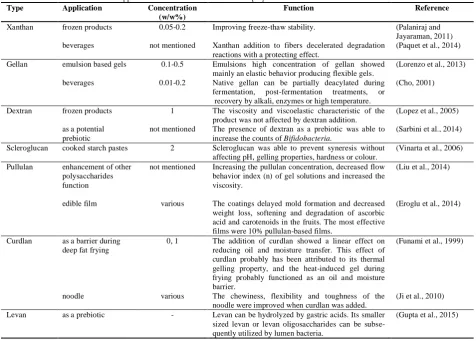
Table 2: The main food industrial application and function of microbial exopolysaccharide
Type Application Concentration
(w/w%)
Function Reference
Xanthan frozen products 0.05-0.2 Improving freeze-thaw stability. (Palaniraj and Jayaraman, 2011) beverages not mentioned Xanthan addition to fibers decelerated degradation
reactions with a protecting effect.
(Paquet et al., 2014)
Gellan emulsion based gels 0.1-0.5 Emulsions high concentration of gellan showed mainly an elastic behavior producing flexible gels.
(Lorenzo et al., 2013)
beverages 0.01-0.2 Native gellan can be partially deacylated during fermentation, post-fermentation treatments, or recovery by alkali, enzymes or high temperature.
(Cho, 2001)
Dextran frozen products 1 The viscosity and viscoelastic characteristic of the product was not affected by dextran addition.
(Lopez et al., 2005)
as a potential prebiotic
not mentioned The presence of dextran as a prebiotic was able to increase the counts of Bifidobacteria.
(Sarbini et al., 2014)
Scleroglucan cooked starch pastes 2 Scleroglucan was able to prevent syneresis without affecting pH, gelling properties, hardness or colour.
(Vinarta et al., 2006)
Pullulan enhancement of other polysaccharides function
not mentioned Increasing the pullulan concentration, decreased flow behavior index (n) of gel solutions and increased the viscosity.
(Liu et al., 2014)
edible film various The coatings delayed mold formation and decreased weight loss, softening and degradation of ascorbic acid and carotenoids in the fruits. The most effective films were 10% pullulan-based films.
(Eroglu et al., 2014)
Curdlan as a barrier during deep fat frying
0, 1 The addition of curdlan showed a linear effect on reducing oil and moisture transfer. This effect of curdlan probably has been attributed to its thermal gelling property, and the heat-induced gel during frying probably functioned as an oil and moisture barrier.
(Funami et al., 1999)
noodle various The chewiness, flexibility and toughness of the noodle were improved when curdlan was added.
(Ji et al., 2010)
Levan as a prebiotic - Levan can be hydrolyzed by gastric acids. Its smaller sized levan or levan oligosaccharides can be subse-quently utilized by lumen bacteria.
(Gupta et al., 2015)
Journal website: http://www.jfqhc.com
114
Physical properties and chemical structure
The application of microbial exopolysaccharides in industries like food and pharmaceutical are mainly determined by their distinctive physical properties (Kumar et al., 2007). Generally, microbial polysaccha-rides are ionic or non-ionic linear molecules which have regularly attached side chains with different length and complexity in some structure. Usually, the Microbial exopolysaccharides can be categorized in two important groups considering their construction units, namely: homopolysaccharides and heteropolysaccharides (Donot et al., 2012). While the homopolysaccharides comprise of only one monosaccharide, the heteropolysaccharides are mainly composed of three to seven dissimilar mono-saccharides. The monosaccharides creating the exopoly-saccharides may be pentoses, hexoses, amino sugars, or uronic acids (Kumar and Mody, 2009). The possibility of different linkages in polysaccharides and also the varia-tion of monomer arrangements have resulted in a wide range of shapes and structure. The observed unique phys-ical properties of high molecular weight microbial gum can be attributed to their complex entanglement. Micro-bial polysaccharides are mainly composed of D-glucose, D-galactose and D-mannose; L-fucose and L-rhamnose; and N-acetyl hexosamines, N-acetyl-D-glucosamine and N-acetyl-D-galactosamine. Some oxidized derivatives of monosaccharides like D-glucuronic and D-galacturonic acids could also be carried by some microbial exopoly-saccharides (Poli et al., 2010). The acyl groups either as ester-linked acetate or ketal-linked pyruvate may be present in some microbial exopolysaccharides which consequently influence the structures of these polymers and then their physical properties. It should be noted that ester-linked O-acetyl group as a typical organic substitu-ent in microbial polysaccharides structure do not change their overall charge, but the ketal-pyruvate can contribute to charge of these polymers (Sutherland, 1990). Consid-ering the microbial polysaccharides structure, it is now possible to attribute the physical properties of microbial exopolysaccharides to their chemical structures.
Physical properties of polysaccharides are mainly determined by their monosaccharide composition, glycosidic linkage, molecular weight, etc. (Kothari et al., 2015). The origin of microbial exopolysaccharides and their main physical properties which determine their application in food science are summarized in Table 1.
Function and application in foods
Carbohydrates and microbial exopolysaccharides are used in food industry to improve the rheological proper-ties and create specific characteristics; including cryoprotection, sweetening, hygroscopicity,
crystalliza-tion inhibicrystalliza-tion, flavor encapsulacrystalliza-tion, and coating ability (Rosalam and England, 2006). The functions of microbial exopolysaccharides in different application are summa-rized in Table 2. Although, microbial derived compounds have a versatile reputation and the numbers of published articles in this area are increasing, only three exopoly-saccharides xanthan, gellan and dextran have been survived the industrial competition. Regarding the importance of these three ones, they will be discussed in detail in below.
Xanthan gum
Xanthan gum has been approved as a food grade com-ponent about thirty years ago by the USA food and drug administration (FDA). It is an anionic exopolysaccharide which secreted by Xanthomonas campestris. Xanthan gum is considered as a heteropolysaccharide which its main chain consists of β (1-4) linked D-glucose with a side chain in the C3 position of each glucose residue (Kumar and Mody, 2009). The side chains are mainly consist of two mannose units with a glucuronic acid resi-due (Kumar et al., 2007). Regarding the anionic nature of xanthan gum, its microstructure in a solution is extremely affected by the ionic strength. In other words, increasing the ionic strength of solution is able to create an ordered conformation with higher stability and transition temperature due to its charge screening effect (Chen and Sheppard, 1980; Wever et al., 2011).
Xanthan gums have specific characteristic such as high viscosity at low concentration, high solubility in water (cold and hot) along with the stability in acidic condition and defrosting which make them good substances to be used in food industry (Imeson, 2012; Kadajji and Betageri, 2011). In other words, the main applications of xanthan gums are being used as thickener, emulsifier and stabilizer.
Due to the ability of xanthan gum to produce very stable emulsion, it is usable to produce oil-based and non-oil-based sauces and ketchups (Koocheki et al., 2009). Since the xanthan gum is stable in the presence of acids, alkalis and salts and also able to tolerate the temperature fluctuation, it has been revealed that the products containing xanthan gum have a long shelf life. These factors along with the textural properties, the ability to release flavor during a long time and thawing stability of xanthan gum make its derived products very successful ones (Bylaite et al., 2005). Xanthan gums are also applicable in dairy based products due to their ability to act as a stabilizer. In fact, their specific functionality in some dairy products is their protecting effect against heat shock and controlling the formation and production of ice crystals (Hemar et al., 2001; Miller-Livney and Hartel, 1997).
115 Journal website: http://www.jfqhc.com Gellan
Gellan gum is an extracellular polysaccharides produced by Pseudomonas elodea (Prajapati et al., 2013). It is a high molecular weight and anionic heteropoly-saccharide with repeating tetraheteropoly-saccharides units which composed of β-D-glucose, L-rhamnose, D-glucuronic acid and L-glyceric ester (Bajaj et al., 2006). The biopol-ymer gellan gum, as a gelling and thickening agent, is considered to be applied in food industry when other polymers are not ideal (Imeson, 2012). The gels pro-duced by gellan gums differ in characteristic depending on their acylation degree (Lorenzo et al., 2013). In other words, the gels are brittle, firm and thermally irreversible in the presence of low-acyl gellan gum while they are flexible, elastic and thermo reversible when high-acyl gellans are used. The texture of gels produced by gellan gums differ from a delicate pourable gel to a viscose and spreadable paste. It is concluded that the appearance of gels are mainly determined by the ionic strength of solution as well as the polymer concentration. It is worthy to be indicated that raising the ionic strength will lead higher gel turbidity mainly due to increased intermo-lecular aggregation and the strongest gels are produced in acidic condition (Jampen et al., 2000; Nickerson et al., 2003; Yamamoto and Cunha, 2007).
Gellan gums are also applicable to fortify beverages as a suspending agent for protein, minerals, vitamins, etc. They are used in formulation of some food products such as confectionary products, jams, jellies, fabricated foods and dairy products such as ice cream, milk shake and yogurt (Bajaj et al., 2007; Bayarri et al., 2002; Saha and Bhattacharya, 2010). Since gellan gums have been derived from non-animal origin, they are applicable in preparation of foods intended for vegetarians and those having religious dietary restrictions.
Dextran
Dextran is a long-chain, high molecular weight hetero-polysaccharides which is listed as safe additive for food application (Kothari et al., 2015). However, dextran secreted by lactic acid bacteria is mainly applicable in food and pharmaceutical industry, and also in cosmetic, paper, petroleum, and textile industries (Kaplan, 1998). Regarding the fact that dextran produced by lactic acid bacteria are heterogeneous in construction, their chemical and physicochemical characteristics must be considered in several different application. Suitable dextran for food application can be produced by different microorganisms like Saccharomyces cerevisiae, Lactobacillus plantarum, and L. sanfrancisco without any limitation (Bhavani and Nisha, 2010).
Dextran can be used in bakery products to improve the rheological properties. In fact, dextran is formed in situ
by sourdough which enhanced the airiness, loaf volume and softness of bread. It also improves the breads mouth feeling and texture (Katina et al., 2009). Dextran used in sourdough should be high in molecular weight and low in branched linkages. In situ production of dextran in sourdough is reported to be more effective than external addition (Tingirikari et al., 2014).
The only available treatment for celiac diseases, patients with inability to ingest prolamin containing cereals like wheat, rye, barley, is complete avoidance of gluten intake (Mollakhalili Meybodi et al., 2015). Since the gluten is an important protein-building structure for the appearance and crumb structure of bakery products, the interest for sourdough-enriched gluten free bakery product is highly increased. In fact, the in situ production of dextran by sourdough plays the main role in preserv-ing the structure in gluten free bakery products (Lacaze et al., 2007; Moroni et al., 2009).
Dextran is also applicable in dairy industry, confection-ary and also frozen foods regarding their cryoprotective, creaminess and viscosity enhancement effects (Bhavani and Nisha, 2010). They are also odorless, tasteless, and nontoxic. Recently, dextran and also dextran-derived oligosaccharides have being paid growing attention due to their reported prebiotic effects. On the other hand, it has been stated that dextran enrichment may enhance the portion of some Bifidobacterium species in an in vitro
model of the fermentation in the human colon (Sarbini et al., 2013).
Conclusion
Polysaccharides are used in food industry for their unique properties as thickening agent, stabilizers and emulsifiers. Since the food products are becoming more complex and diverse, the necessity for new and useful additives is increasing. Recently, different polysaccha-rides have been developed to be used as modifier of food viscosity and texture.
Microbial exopolysaccharides as non-fat substitutes are usually applied at low concentration and also create beneficial health effects for the consumers. Although, different microbial exopolysaccharides have the potential to be used in food industry, only xanthan, and in lower amount dextran and gellan are industrially produced and dominate the markets.
Conflicts of interest
None declared.
Journal website: http://www.jfqhc.com
116
Acknowledgements
We would like to acknowledge our colleagues in Department of Food Science and Technology, National Nutrition and Food Technology Research Institute, Tehran, Iran for their kindly scientific help.
References
Bajaj I.B., Saudagar P.S., Singhal R.S., Pandey A. (2006). Statistical approach to optimization of fermentative production of gellan gum from Sphingomonas paucimobilis ATCC 31461.
Journal of Bioscience and Bioengineering. 102: 150-156.
Bajaj I.B., Survase S.A., Saudagar P.S., Singhal R.S. (2007). Gellan gum: fermentative production, downstream processing and applications. Food Technology and Biotechnology. 45: 341-354.
Bayarri S., Costell E., Duran L. (2002). Influence of low sucrose concentrations on the compression resistance of gellan gum gels. Food Hydrocolloids. 16: 593-597.
Bhavani A.L., Nisha J. (2010). Dextran: the polysaccharide with versatile uses. International Journal of Pharmacy and
Biological Sciences. 1: 569-573.
Bylaite E., Adler-Nissen J., Meyer A.S. (2005). Effect of xanthan on flavor release from thickened viscous food model systems.
Journal of Agricultural and Food Chemistry. 53: 3577-
3583.
Chen C.S.H., Sheppard E. (1980). Conformation and shear stability of xanthan gum in solution. Polymer Engineering and Science.
20:512-516.
Cho S.S. (2001). Handbook of dietary fiber. CRC Press. pp: 717-720.
Donot F., Fontana A., Baccou J., Schorr-Galindo S. (2012). Microbial exopolysaccharides: main examples of synthesis, excretion, genetics and extraction. Carbohydrate Polymers. 87: 951-962.
Eroglu E., Torun M., Dincer C., Topuz A. (2014). Influence of pullulan-based edible coating on some quality properties of strawberry during cold storage. Packaging Technology and
Science. 27: 831-838.
Finch C.A. (2013). Chemistry and technology of water-soluble polymers. Springer Science and Business Media. pp:131-186. Funami T., Funami M., Tawada T., Nakao Y. (1999). Decreasing oil
uptake of doughnuts during deep-fat frying using curdlan.
Journal of Food Science. 64: 883-888.
Gupta S.K., Pal A.K., Sahu N.P., Jha A.K., Kumar S. (2015). Effects of dietary microbial levan on growth performance, RNA/DNA ratio and some physio-biochemical responses of
Labeo rohita (Hamilton) juveniles. Aquaculture Nutrition. 21:
892-903.
Hemar Y., Tamehana M., Munro P., Singh H. (2001). Viscosity, microstructure and phase behavior of aqueous mixtures of commercial milk protein products and xanthan gum. Food
Hydrocolloids. 15: 565-574.
Imeson A.P. (2012). Thickening and gelling agents for food. 2nd
edition. Springer Science and Business Media. pp: 132-156. Jampen S., Britt I.J., Tung M.A. (2000). Gellan polymer solution
properties: dilute and concentrated regimes. Food Research
International. 33: 579-586.
Ji W.K., Lan W.Z., Dong X.Q., Zhao S.Z., Lv W.G. (2010). Application in noodle of the curdlan. China Food Additives. 1: 38-43.
Kadajji V.G., Betageri G.V. (2011). Water soluble polymers for pharmaceutical applications. Polymers. 3: 1972-2009. Kaplan D.L. (1998). Biopolymers from renewable resources.
Springer, New York.
Katina K., Maina N.H., Juvonen R., Flander L., Johansson L., Virkki L., Tenkanen M., Laitila A. (2009). In situ production and analysis of Weissella confusa dextran in wheat sourdough.
Food Microbiology. 26: 734-743.
Koocheki A., Ghandi A., Razavi S., Mortazavi S.A., Vasiljevic T. (2009). The rheological properties of ketchup as a function of different hydrocolloids and temperature. International Journal
of Food Science and Technology. 44: 596-602.
Kothari D., Das D., Patel S., Goyal A. (2015). Dextran and food application. In: Ramawat K.G., Meérillon J.M. (Editors). Polysaccharides. Springer International Publishing, Switzerland.
Kumar A.S., Mody K. (2009). Microbial production of biopolymers and polymer precursors: applications and perspectives. Caister Academic Press, Norfolk, UK. pp: 229-254.
Kumar A.S., Mody K., Jha B. (2007). Bacterial exopoly-saccharides–a perception. Journal of Basic Microbiology. 47: 103-117.
Lacaze G., Wick M., Cappelle S. (2007). Emerging fermentation technologies: development of novel sourdoughs. Food
Microbiology. 24: 155-160.
Liu G.J., Sheng L., Tong Q.Y. (2014). Effects of pullulan on gelation and rheological properties of κ-carrageenan. Science
and Technology of Food Industry. 4: 142-148.
Lopez E.C., Champion D., Blond G., Le Meste M. (2005). Influence of dextran, pullulan and gum arabic on the physical properties of frozen sucrose solutions. Carbohydrate Polymers. 59: 83-91.
Lorenzo G., Zaritzky N., Califano A. (2013). Rheological analysis of emulsion-filled gels based on high acyl gellan gum. Food
Hydrocolloids. 30: 672-680.
Mano J., Silva G., Azevedo H.S., Malafaya P., Sousa R., Silva S., Boesel L., Oliveira J.M., Santos T., Marques A. (2007). Natural origin biodegradable systems in tissue engineering and regenerative medicine: present status and some moving trends.
Journal of the Royal Society Interface. 4: 999-1030.
Mende S., Rohm H., Jaros D. (2016). Influence of exopolysaccharides on the structure, texture, stability and sensory properties of yoghurt and related products.
International Dairy Journal. 52: 57-71.
Miller-Livney T., Hartel R.W. (1997). Ice recrystallization in ice cream: interactions between sweeteners and stabilizers.
Journal of Dairy Science. 80: 447-456.
Mohammadifar M.A., Musavi S.M., Kiumarsi A., Williams P.A. (2006). Solution properties of targacanthin (water-soluble part of gum tragacanth exudate from Astragalus gossypinus).
International Journal of Biological Macromolecules. 38:
31-39.
Mollakhalili Meybodi N., Mohammadifar M.A., Abdolmaleki K. (2014). Effect of dispersed phase volume fraction on physical stability of oil-in-water emulsion in the presence of gum tragacanth. Journal of Food Quality and Hazards Conrol. 1: 102-107.
Mollakhalili Meybodi N., Mohammadifar M.A., Feizollahi E. (2015). Gluten-free bread quality: a review of the improving factors. Journal of Food Quality and Hazards Conrol. 2: 81-85.
Moroni A.V., Dal Bello F., Arendt E.K. (2009). Sourdough in gluten-free bread-making: an ancient technology to solve a novel issue? Food Microbiology. 26: 676-684.
Nickerson M., Paulson A., Speers R. (2003). Rheological properties of gellan solutions: effect of calcium ions and temperature on pre-gel formation. Food Hydrocolloids. 17: 577-583. Ogaji I.J. (2012). Advances in natural polymers as pharmaceutical
excipients. Pharmaceutica Analytica Acta. 3: 146.
Palaniraj A., Jayaraman V. (2011). Production, recovery and applications of xanthan gum by Xanthomonas campestris.
Journal of Food Engineering. 106: 1-12.
Paquet E., Hussain R., Bazinet L., Makhlouf J., Lemieux S., Turgeon S.L. (2014). Effect of processing treatments and storage conditions on stability of fruit juice based beverages enriched with dietary fibers alone and in mixture with xanthan gum. LWT-Food Science and Technology. 55: 131-138. Poli A., Anzelmo G., Nicolaus B. (2010). Bacterial
exopolysaccharides from extreme marine habitats: production, characterization and biological activities. Marine Drugs. 8: 1779-1802.
Journal website: http://www.jfqhc.com
117
Prajapati V.D., Jani G.K., Zala B.S., Khutliwala T.A. (2013). An insight into the emerging exopolysaccharide gellan gum as a novel polymer. Carbohydrate Polymers. 93: 670-678. Rosalam S., England R. (2006). Review of xanthan gum production
from unmodified starches by Xanthomonas comprestris sp.
Enzyme and Microbial Technology. 39: 197-207.
Saha D., Bhattacharya S. (2010). Hydrocolloids as thickening and gelling agents in food: a critical review. Journal of Food
Science and Technology. 47: 587-597.
Sarbini S.R., Kolida S., Deaville E.R., Gibson G.R., Rastall R.A. (2014). Potential of novel dextran oligosaccharides as prebiotics for obesity management through in vitro
experimentation. British Journal of Nutrition. 112: 1303-1314. Sarbini S.R., Kolida S., Naeye T., Einerhand A.W., Gibson G.R., Rastall R.A. (2013). The prebiotic effect of α-1, 2 branched, low molecular weight dextran in the batch and continuous faecal fermentation system. Journal of Functional Foods. 5: 1938-1946.
Sutherland I.W. (1990). Biotechnology of microbial exopoly-saccharides. Cambridge University Press. pp: 102-141.
Sutherland I.W., Ellwood D. (1979). Microbial exopolysaccharide-industrial polymers of current and future potential. Cambridge University Press. pp: 36-89.
Tingirikari J.M.R., Kothari D., Shukla R., Goyal A. (2014). Structural and biocompatibility properties of dextran from
Weissella cibaria JAG8 as food additive. International
Journal of Food Sciences and Nutritio. 65: 686-691.
Vinarta S., Molina O., Figueroa L., Farina J. (2006). A further insight into the practical applications of exopolysaccharides from Sclerotium rolfsii. Food Hydrocolloids. 20: 619- 629.
Wever D., Picchioni F., Broekhuis A. (2011). Polymers for enhanced oil recovery: a paradigm for structure–property relationship in aqueous solution. Progress in Polymer Science.
36: 1558-1628.
Williams P.A. (2008). Handbook of industrial water soluble polymers. John Wiley and Sons, USA. pp: 48-89.
Yamamoto F., Cunha R. (2007). Acid gelation of gellan: effect of final pH and heat treatment conditions. Carbohydrate
Polymers. 68: 517-527.