World Maritime University
The Maritime Commons: Digital Repository of the World
Maritime University
World Maritime University Dissertations Dissertations
2000
The problem of recruitment and retention of
qualified maritime educators in maritime
academies in the developing countries : the case of
Philippine Merchant Marine Academy
Joel Yoto Abutal World Maritime University
Follow this and additional works at:http://commons.wmu.se/all_dissertations Part of theWork, Economy and Organizations Commons
This Dissertation is brought to you courtesy of Maritime Commons. Open Access items may be downloaded for non-commercial, fair use academic Recommended Citation
Abutal, Joel Yoto, "The problem of recruitment and retention of qualified maritime educators in maritime academies in the developing countries : the case of Philippine Merchant Marine Academy" (2000).World Maritime University Dissertations. 324.
WORLD MARITIME UNIVERSITY
Malmö, Sweden
THE PROBLEM OF RECRUITMENT AND
RETENTION OF QUALIFIED MARITIME
EDUCATORS IN MARITIME ACADEMIES
IN THE DEVELOPING COUNTRIES:
The case of Philippine Merchant Marine Academy
By
JOEL YOTO ABUTAL
Philippines
A dissertation submitted to the World Maritime University in partial fulfilment of the requirements for the award of the degree of
MASTER OF SCIENCE
in
MARITIME ADMINISTRATION AND ENVIRONMENTAL PROTECTION
Declaration
I certify that the material in this dissertation is my own work, all of which is not, has been clearly identify, and that no material is included for which a degree has been previously conferred to me.
The contents of this dissertation reflect my own personal views, and are not necessarily endorsed by the University.
Chief Officer Joel Yoto Abutal August 21, 2000
Supervised by:
Gunther Zade
Vice-rector, World Maritime University
Assessor:
Chief Engineer Rajendra Prasad Lecturer, World Maritime University
Co.assessor:
Captain Kjell Grahn
Acknowledgement
This work would not have been possible without the generous help of many people over the past 5 months and to each and everyone of them I owe a great deal.
To Norway – IMO Technical Committee and former acting PMMA President, Commander Ronaldo Abella for giving me this great opportunity to pursue Master of Science study at the World Maritime University.
My supervisor at WMU Vice Rector Gunther Zade offered help at every turn, and his confidence in both me and this work made it all worthwhile.
Certain wonderful people encouraged me from the very beginning, when this was just the germ of an idea:
I would like to thank the WMU students who participated in the survey for their support and ideas. For sharing both their experience and knowledge I want to express my particular gratitude to Mr. Angelo Tagle, WMU class 1991; Chief Officers Arsenio Padilla and Renato Sangalang, PMMA class 1985 and 1986 and Mr. Anastacio Anteza WMU class '98, Director of Shipboard Training, PMMA.
Special thanks goes to Captain Jaime Quinones, Captain Juanito Salvatierra, Captain Dever Besana and Chief Officer Edgar Martinez of Mitsui O.S.K. Lines, who provided me with much needed inspiration.
For helping me locate research materials, I would like to express my gratitude to Ltsg. Rowena Ornillo, Head Human Resource Department, PMMA; Ms. Susan Eklow, Assistant Librarian, and Ms. Cecilia Denne of the WMU library.
Olanda, Dean of Graduate School, PMMA were enthusiastic and pointed me the right direction.
Abstract
Title of Dissertation: The problem of recruitment and retention of qualified maritime educators in the maritime academies of developing countries. The case of Philippine Merchant Marine Academy
Degree: Master of Science
The dissertation is a study of the various problems of recruitment and retention of maritime educators in the Philippine Merchant Marine Academy, comparing the results gathered by traditional methods of survey with the conditions of maritime educators in selected countries.
An in depth study is taken to present the representative MET institution, its interface with other corporate organisations, and the historical developments behind them. The PMMA maritime educators’ nature of work, income and benefits derived, the manner in which commitment of maritime educators to the organisation can be best used to assess job satisfaction as a retentive factor.
The social conditions of teaching staff of other maritime academies, their equivalent/counterpart in non-MET sectors are also investigated. Different conditions and practices developed by selected number of maritime countries are explored with a view on comparing the living/employment conditions of maritime educators to determine the impact of discrepancy of such to their fluctuation in MET institutions.
maritime educators to the MET institution with the end view of knowing the desired recommendation to solve the problem. Several groups of selected students, professors and practitioners in the maritime related fields were subjected to a survey of comparing their respective perceptions of the different conditions that a maritime educators were experiencing. The results were collated and evaluated for the basis of problem determination and valuable recommendation.
The concluding chapters summarized and discussed the problems identified with the recruitment, retention and fluctuation of the maritime educators. A number of recommendations are made concerning the necessary steps and further studies that may be taken to alleviate the conditions of the maritime educators in the developing countries.
Key words: Recruitment; Retention; Fluctuation; Commitment; Maritime Educators
Phrases: ….interface with other corporate organizations….
….commitment of maritime educator to the organization….
….social conditions of teaching staff of other maritime academies…
….impact of discrepancy of such to their fluctuation….
Table of Contents
Declaration ii
Acknowledgements iii
Abstract v
Table of Contents vii
1 Introduction 1
1.1Definition of terms 4
2 PMMA: the Philippines’ only government maritime academy
2.1 History 5
2.2 The PMMA presidents and the highlights of their incumbency 7
2.3 Mission Statement 8
2.4 The PMMA Board of Trustees 9
2.5 The PMMA Charter Analysis 10
2.6 The PMMA Alumni Association 12
2.7 The PMMA-Shipping company interface 14
2.7.1 The shipping company cadet-stipend allowance program 16
3 The present PMMA staff profile
3.1 Main staff categories of PMMA and their inter-relationships 18
3.1.1 Academic staff 18
3.1.2 College of Marine Transportation 19
3.1.3 College of Marine Engineering 19
3.1.4 College of Arts and Sciences 20
3.1.5 Department of Midshipmen’s Affairs 20
3.1.8 The Graduate School 23
3.2 Teaching staff categories 24
3.2.1 Full time staff 26
3.2.1.1 Qualifications
a) Seafarers 27
b) Non- seafarers 28
3.2.1.2 Duration of service 28
3.3.1.3 Recruitment and appointment procedures 29
3.2.2 Part time staff 29
3.3 Analysis of the present PMMA faculty profile 30
4 The maritime educators’ work, income and social conditions
4.1 Tasks and responsibilities 32
4.2 Sources of income 33
4.2.1 Salary 33
4.2.2 Supplementary sources of income 34
4.2.2.1 The PMMA employees co-operative association 34
4.3 The maritime educators employment condition 35
4.3.1 Hours of work 35
4.3.2 Housing and accommodation 36
4.3.3 Health and medical benefits 37
4.3.4 Insurance and retirement benefits 38
4.3.5 Miscellaneous benefits 38
4.3.6 Official leaves and vacations 38
4.4 Analysis of the PMMA employment conditions 39
5 Recruitment, retention and fluctuation
5.1 Maritime education as career 41
5.2.2 Career development 43
5.2.3 Personal calling 45
5.2 What makes a maritime educator stay in the MET institution? 47
5.3 What makes a maritime educator leave MET institution? 49
5.3.1 Financial pressures 49
5.3.2 Heavy workloads 51
5.3.3 Organisational pressure 53
5.3.4 Career development and promotion 54
6 Comparative data
6. 1 The social conditions of teaching staff of other academies 56
6.1.1 In the Philippines 56
6.1.2 Selected Asian countries 60
6.1.3 Selected European countries 62
6.2 The social conditions of the equivalent/counterpart employment
opportunities in the shore based non -MET sector. 63
6.2.1 In the Philippines 63
6.2.2 Selected Asian countries 66
6.2.3 Selected European countries 67
6.3 The social conditions of equivalent/counterpart in shipboard
employment opportunities in the Philippines 69
6.3.1 Comparing wages: maritime education vs. seafaring 70
6.3.2 Seafarers social and employment conditions. 71
7 The Challenges of STCW ’95
7.1The aims and objectives of STCW 73
7.2The challenge to shipping companies 74
7.3The challenge to administrations 76
7.4The challenge to the seafarers 79
8 Conclusions and recommendations
8.1 Summary
8.2 Conclusion: The difficulties in recruitment and retention 82
8.3 Recommendation: the call to action 84
8.3.1 Revision of PMMA Charter 84
8.3.2 Revision of PMMA Board of Trustees Composition 85
8.3.3 The PMMA endowment fund
8.3.4 The role simulator training as a source of income 86
8.2.4.1 The present simulator training at PMMA 87
8.2.4.2 How can PMMA achieved this? 88
8.2.4.3 The PMMA upgrading project 89
8.2.5 Research and consultancy services 90
8.2.6 The PMMA Alumni Association professorial chair
programme 91
8.2.7 Shipping Company professorial chair programme 91
8.2.8 Teaching staff’s Co-operative participation 93
8.2.9 Ship/shore rotation program 94
References 97
Appendices 101
Appendix 1 The Philippine Merchant Marine Academy sites.
Appendix 2 The Philippine Merchant Marine Academy Alumni
Association’s Objectives
Appendix 3 The PMMAAAI Financial Statement of Account for the year 2000
Appendix 4 PMMA-Pentagon and Michael Mar Shipping
Appendix 5 PMMA Organisational Chart
Appendix 6 Summary of the PMMA faculty profile
Appendix 7 Department of Budget and Management, Republic of the
Philippines’ approved salary grade for the PMMA teaching staff
Appendix 8 PMMA qualifications for hiring
Appendix 9 The PMMA Teaching staff duration of service
Appendix 10 Procedural flow of hiring and appointment of PMMA teaching staff
Appendix 11 The PMMA Bonuses and allowances
Appendix 12 The PMMA Faculty medical and insurance benefits
Appendix 13 The PMMA faculty vacation and leaves privileges
Appendix 14A Questionnaire on the recruitment, retention and fluctuation of maritime educators in various countries
Appendix 14B Questionnaire on maritime educators at MET institution
List of Tables
2.6.1 PMMA midshipmen distribution to shipping companies. 16
4.4.1 PMMA maritime faculty basic salary 31
5.3 Retentive factors of maritime educators in the maritime academies. 44 6.1.1 Comparative salaries between faculty of PMMA and private maritime
academies in the Philippines 53
6.1.2 Comparative salaries between faculty for graduate education in the
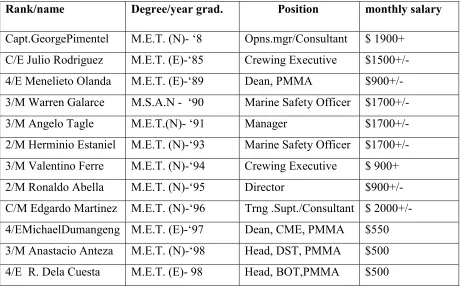
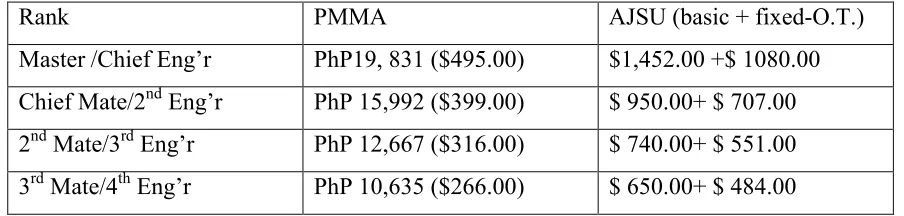
Philippines. 54-55 6.2.1 PMMA, WMU Alumni and their corresponding monthly salary 61 6.3.1 Comparative monthly basic salary between PMMA maritime faculty
List of Figures
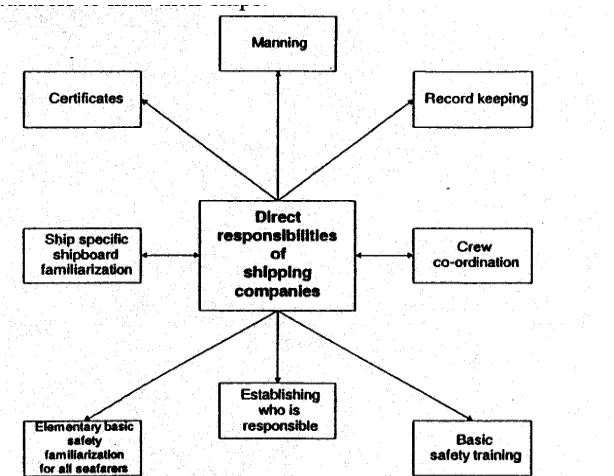
Figure 1 Shipping companies responsibilities 71
List of Abbreviations
ALAM Akademi Laut Malaysia or Maritime Academy of Malaysia AJSU Associated Japanese Seamen’s Union
AMOSUP Associated Marine Officers and Seamen’s Union of the Philippines Asso. Prof Associate Professor
Asst. Prof. Assistant Professor
Capt. Captain
Ch. Eng’r. Chief Engineer Ch. Off. Chief Officer
CME College of Marine Engineering CMT College of Marine Transportation CAS College of Arts and Sciences CHED Commission on Higher Education DOLE Department of Labor and Employment DNST Department of Naval Science and Tactics DMA Department of Midshipmen Affairs DST Department of Shipboard Training HRD Human Resource Development
IDESS International Development and Environmental Shipping School ILO International Labor Organisation
IMO International Maritime Organisation KFW Kreditanstalt Fur Weideraufbau Lcdr Lieutenant Commander
Ltjg. Lieutenant Junior Grade Ltsg. Lieutenant Senior Grade MARINA Maritime Industry Authority
NMA National Maritime Academy, Singapore
NYK Nippon Yusen Kaisha
PN Philippine Navy
POEA Philippine Overseas Employment Administration PRC Professional Regulation Commission
Prof. Professor
2nd Eng’r Second Marine Engineer
SEC Securities and Exchange Commission
CHAPTER 1
1.1Introduction
The purpose of this monograph is to 1) Describe and analyse the underlying reasons of motivation problems that jeopardize the maritime teaching profession and 2) To suggest an approach to administrative reform that addresses the motivation problems of maritime educators particularly in their recruitment and retention in the maritime academies in the developing countries by considering the Philippine Merchant Marine Academy as representative MET institution.
The choice of PMMA as the representative institution does not come from a mere chance but by the avid desire of the author to address the notion of “quality educators as the means of determining the competence of mariners” by uplifting the living standard of maritime educators.
As an Alumnus and former student of PMMA, he had been a fallen victim of the unpleasant learning experience caused by the negative effect of administrative practices. Many chances to gain academic knowledge were often disrupted by the fluctuation of maritime educators. As a faculty member, the realisation of how and why maritime educators moved out from PMMA has come to light. They who choose to stay on board has created a pilgrim that journeys on the narrow strait .The track they have traversed in both smooth and stormy seas is the main object of this dissertation.
Philippines’ only state maritime academy, PMMA is the showcase of government commitment to the improvement of the maritime manpower. Graduates were accorded exemption from taking Professional Regulation Commission (PRC) board examination in recognition of its excellent program until the passing of Republic Act (R.A.) No. 8544. This privilege has been revoke in view of its declining state because of the advent of modern technology.
Because of the huge amount required in purchasing the much needed technologies for MET, PMMA, a state run institution has the capability to acquire expensive simulators and training facilities through government sponsored loans. This step is pushed through with the Pole Vaulting Summit convened at the end of President Fidel V. Ramos’ Administration to maintain the country’s lead in maritime power in the world.
With the full implementation of the STCW comes closer, “perhaps the biggest challenge facing a Maritime Academy in the next few years is not so much whether they have quality standard system in place or if they have an approved radar and ARPA simulator for training but whether they have sufficient and experienced maritime educators to make necessary changes in order to give the Convention full and complete effect”. (PMMA, January 1999).
Chapter 2 discusses the evolution of the representative maritime academy, PMMA from its creation in 1820 up to the present situation. It further identifies the mandate, personalities and organisations that spawn the operation of the PMMA. The author goes further on the critical analysis of the PMMA Charter; its strengths and weaknesses.
Chapter 4 pertains to the nature of work, income and employment condition in PMMA.
Chapter 5 describes the results of the survey on various reasons of seafarers and non-seafarers motivation in joining, staying and leaving the maritime academies in the developing countries. Seafarer maritime educators are intentionally given emphasis due to their consequential attraction to outside MET employment opportunities.
Chapter 6 compares the different employment and social status of seafarer maritime educators in the selected countries of Asia and Europe giving specific interest on the graduates of WMU in outside maritime academy in the Philippines. The social status of the seafarers in the land based non-MET sector in different selected countries is also discussed. Furthermore, it discusses the employment condition of the Filipino seafarers in international shipping.
Chapter 7 delves on the multi-sectoral challenges of the revised STCW to address the problem of competent maritime educators.
In Chapter 8, the author summarizes the findings of the study in the conclusion and offers nine point recommendations that should stem from the PMMA Administration to the various sectors working with therepresentative institution.
1.2 Definition of terms
Certain terms are defined, according to the use of this study, for better understanding they are the following.
1. Academy- the Philippine Merchant Marine Academy.
2. Faculty or teaching staff - a group of employees of the maritime academy appointed to a faculty rank who are directly engaged in teaching, research or extension services.
3. Faculty rank-the classification of faculty into Professor, Associate Professor,
4. Fluctuation- the turn over rate of the faculty over the period of year(s). Calculated by determining the number of employees recruited over the number of employees moved out (resigned, retired or dismissed) of the Academy.
5. Maritime educators- same as teaching staff, used interchangeably with faculty staff unless specified as seafarers or non-seafarers.
6. Merit System- means a professional system in which comparative merit or
achievement governs the selection, utilisation, training, retention, promotion and discipline of the faculty and academic staff in the Academy.
7. Promotion-the advancement to a higher faculty rank or sub-rank. It is usually
accompanied by an increase in salary.
8. Recruitment – the process of searching and attracting potential applicants through announcements, assessment and other related procedures to select the most competent and qualified applicant for appointment to an appropriate position in the faculty and academic staff.
9. Retention- the ability of the maritime academy to maintain the employment of
CHAPTER 2
PMMA: THE PHILIPPINES’ STATE MARITIME ACADEMY
2.1 History
The Philippine Merchant Marine Academy, the only state maritime academy, was envisioned and founded by the Spaniards on April 5, 1820 by virtue of a Spanish Royal Decree to cater for their manpower needs in the Spanish galleon trade. Spanish seafarers became the first mentors of the school, which carried its name as the Escuela Nautica de Manila. Considered one of the oldest schools situated inside at the Calle Cabildo, Intramuros, also known as the walled city of Manila. However the school building, after having been struck by an earthquake in 1863 was forced to move into several times to different nearby locations. The devastating damage did not stop the operation of the school, which the Spaniards proved to be a wealthy source of competent seafarers.
growing population of the students. Under the American provisions, the name was changed anew into the Philippine Nautical School (PNS) and resumed classes on June 30,1900. PNS was classified as an insular school headed by the U.S. Navy commanders until it was closed in 1907 for lack of support.
Six years later (1913) the school was re opened due to the urgent need for the trained merchant marine officers along with the recommendation of Don Ramon Fernandez, the President of the Shipowners Association. PNS was established as a unit of the Philippine School of Arts and Trade with nautical courses of 2-year residency and 2 years apprenticeship at sea. When the war broke out, PNS was transferred from the Department of Education to the Department of National Defence.
During the Japanese occupation, the Japanese Imperial forces during World War II operated the school. The school expanded, marine engineering and training of ordinary seamen were added to the courses. When the Republic of the Philippines was liberated in 1945, the Nautical School was converted into a 2-year residential college. During this period, PNS was placed as a Vocational School of the Bureau of Public Schools. Lack of facilities, lack of legislative support from the Government and residency requirements resulted to the ravage of the maritime education standard of the school.
during their 1st, 2nd and 4th year schooling and undergo a one- (1) apprenticeship shipboard training on their 3rd year.
In February 2, 1998 PMMA was transferred to its new site in San Narciso, Zambales (See appendix 1) under the Bases Conversion Program of the government. The new PMMA complex is located in the 60-hectare land beside the South China Sea about 180 miles (285 kms.) north of the capital city, Manila.
2.2 The PMMA Presidents and the highlights of their incumbency
The inclusion of the topic is given consideration by the author, as it shall be later known how the appointments of the PMMA presidents affected the recruitment, fluctuation and retention of the maritime educators.
A. Philippine President Diosdado Macapagal appointed Captain Rogelio Morales as the PMMA Superintendent (President) in 1962. Captain Roberto Moreno III as the Executive Officer and Kings Pointer, Cdr. Emilio Prieto as the Dean of Academics were assigned to the posts. Quality education and training patterned after the United States Merchant Marine Academy (USMMA) curriculum were stressed.
C. The untimely death of Commodore Moreno III, comes the appointment of Navy Commodore Gil S. Fernandez in 1989. Commodore Fernandez, a USMMA graduate revised the curriculum wherein 2nd year was placed as the shipboard training instead of the 3rd year. Curriculum was again revised following the American standard. The Office of Academic dean was abolished and the three Colleges was created. Political instability and discontentment by the Corps of Midshipmen and PMMA Alumni Association resulted in the untimely retirement of Commodore Fernandez.
D. In 1994, another retired navy officer, Commodore Leonardo G. Bugayong, a USMMA graduate, became the President and in his term a 60 hectare land in San Narciso, Zambales was provided by the Philippine President Fidel V. Ramos as a new site for the Academy due to the bases conversion development project of the government. The supposedly 6-year term of the appointed President was cut short by the midshipmen’s strike anew.
E. At present, Captain Virginio Aris, PMMA Class ’67 handles the Presidency. Unlike the previous presidents, the current president was unanimously voted by the PMMA Search Committee endorsed to the Philippine President through the PMMA Board of Trustees. Bringing back the confidence of the shipping companies to its graduates prompted him to shift back the shipboard training of the midshipmen from Second year to Third year of schooling. The gargantuan tasks of rebuilding the PMMA in view of the Philippines’ vying for the inclusion in the IMO “white list” and the philosophy of continuos improvement to the quality standard system is the main thrust of his term.
2.3 PMMA mission statement
the expanding domestic and international trade, capable of serving as naval and military auxiliaries in times of national emergency and to conduct graduate school skills and techniques on higher level of shipping management and maritime education.
The objectives of PMMA include:
1. To confer the degree of Bachelor of science in Marine transportation or Bachelor of Science in Marine engineering to deserving PMMA midshipmen;
2. To train PMMA midshipmen as licensed officers of the Philippine Merchant Marine, i.e. deck or engine;
3. To prepare and recommend graduates of the PMMA as commissioned officers of the Philippine Navy;
4. To train and upgrade merchant marine officers in shipboard or shore-based positions as shipping executives and technical consultant;
5. To offer graduate studies in maritime education and shipping business;
6. To train student apprentices in various shipboard or shore facilities rank and file billets through the offering of practical classes; and
7. To conduct research and development projects affecting the education and training of PMMA midshipmen and graduate students in the pursuit of new information and knowledge of value to the maritime industry.
(Source: PMMA Annual Report 1997-98).
2.4 PMMA Board of Trustees
state universities and colleges in the Philippines”. Under R.A. No 8292, the current PMMA Board of Trustees is composed of the following personalities:
1. Chairman of the Commission on Higher Education (CHED) –Chairman 2. President of PMMA- Vice-chairman
Members:
3. Chairman of Congressional Committee on Education and Culture
4. Regional Director of the National Economic Development Authority (NEDA)
5. Flag Officer in Command, Philippine Navy 6. President of the PMMA Faculty Association 7. Midshipman Representative
8. President of PMMA Alumni Association
9. Two prominent citizens who have distinguished themselves in their fields of profession, chosen from among the five qualified persons residing in the city where the Academy is located.
Although R.A. No. 8292 replaced the composition of Board of Trustees, R.A. No.3680 nevertheless maintains its mission and PMMA continues to function as mandated.
2.5 PMMA Charter Analysis
Philippine Navy. However, with the enactment of various laws, R.A. No. 3680 showed that it is vulnerable to changes and can not stand alone to uphold the interest of its mandate.
Considered as the premier maritime institution in the Philippines, it has taken cudgels in establishing the graduate degree program in Master of Arts in Shipping Business Management and Master of Arts in Maritime Education major in Marine Transportation or Marine Engineering. The creation of graduate study started from proposal submitted as early as 1992 but since the conferment of the masters degree was not included in the PMMA Charter, it took two (2) years before the PMMA obtained the approval from the Office of the Philippine President through the PMMA Board of Trustees.
The automatic conferment of Third Mate and Fourth Marine Engineer licenses were cancelled because of the general effect in R.A.8544, otherwise known as “the requirement for all graduates of maritime schools to take 3rd Mates and 4th Marine Engineers’ licensure examinations”; the privilege long enjoyed by the PMMA Graduates for over three (3) decades. Based on the previous opinion by the Department of Justice (See i.e. DOJ Opinion No. 76, s.1974). PMMA graduates are considered licensed under the clear and precise provisions of Section 12 Republic Act 3680. However, the opinion requested by Commodore Bugayong from the Department of Justice reiterated that the PMMA graduates are not exempted from taking the licensure examinations mandated under R.A. 8544. The majority however, believed that the imposition of the requirements to cover PMMA Graduates were partly due to the shipping companies loss of confidence with PMMA Administration.
changes in the qualifications and manner of the appointment of the PMMA President was seen by many as having contributed to the significant decline of the quality of graduates from PMMA
In contrast, when the PMMA President became an Alumnus in June 1999, strong support from the shipping executives (who happened to be composed mostly by PMMA Alumni) resulted in an increase on PMMA/Shipping Companies’ Memorandum of Agreements and donations to rehabilitate the Academy. During the incumbency of two previous presidents, opinions taken from the Department of Justice (DOJ) of the Philippines have always been negative.
In March 2000, barely nine months after Captain Aris took office as PMMA President, through his persistence and strong lobbying of the PMMA Alumni Association DOJ’s opinion showed positive response. Incoming graduates got fresh hopes of having exemption for taking the first licensure examination. The shipping companies renewed their confidence to the PMMA Administration as manifested by the sharp increase of number of Memorandum of Understanding’s from 24 to 34 shipping companies last 1999. PMMA Corps of Professors showed upward movements as well for the 2nd Semester of school year 1999-2000. 72 members as compared to 59 comprise the Corps of Professors in August 1997 with the same number of classes. (PMMA Annual Reports 1997 and 1999).
2.6 The Philippine Merchant Marine Academy Alumni Association
the latest Alumni muster, of the 119 of shipping companies in the Philippines not less than 100 of them have PMMA graduates serving as crewing managers, training managers, president or owner of the company. In the military and civil-military service, considered as the home of a very few Alumni, at present there are at least three (3) Commodores and several Captains and Commanders taking active part in the uniformed Government service.
It is therefore safe to say that action initiated by PMMAAAI will create a great impact in the existence of the PMMA. As manifested in the Alumni supported walk out staged by the PMMA midshipmen in protest of the arbitrary change of the schools’ curriculum. (Donato, 2000). Indeed, the Alumni association can contribute to the failure and success of PMMA when it proven that through its efforts they can mount a strong lobby to replace the PMMA President. (PMMAriners, 2000).
It is also noteworthy to consider the letter made by the PMMAAAI Secretary General Engineer M. QC Amaro III saying,
“You may have heard on a radio or seen in the newspapers about misinformed press people being used by PMMA detractors saying that the Academy has gone down the drain, or maybe…not to that extent. But even without that, we all know that we have forgotten to support the Academy for the last twelve years. Putting it back to its original lustre would require tremendous effort that even the best among the best managers cannot cope up in too short a time. But despite all these, never to forget that there is much good and right when we work together…” (PMMAriners, 2000).
recruitment and retention of qualified educators to bring back “ it’s long lost glory” (Quinones, 2000).
The remarks of the PMMAAAI secretary General Amaro in respect of his expectations “to revive the ailing PMMA… by providing a way for the entire PMMAAAI to continue support the Academy” (PMMAriners, 2000), is a positive indication that Administration must take advantage. As indicated in the annual statement of financial status of PMMAAAI (Appendix 3) there is an absence of support directly given for the benefit of the human resource development of the PMMA faculty. An objective failure that has never been corrected since its creation.
2.7 The PMMA- Shipping Company interface
The PMMA-Shipping Company interface starts from the need of the shipping company to hire manpower for their ships. PMMA as a maritime education and training institution enters into contracts or agreements with the shipping companies for eventual supply of qualified merchant marine officers. These contracts or agreements are all geared towards the mission of the Academy, which is basically the supply of merchant marine officers and naval officers of assured quality.
training on board during their shipboard training phase and likewise, of employment after graduation.
Shipowners and shipping principals through their local manning agents are the beneficial clients of the well-disciplined and trained PMMA graduates. Majority of the foreign shipping principals prefers PMMA graduates/midshipmen because the Academy “produces the quality of seamen that meets the principals standards” (see appendix 4, i.e. Pentagon Shipping, Michael Marine, and NYK-Fil Shipping Management MOA’s,)
At present there are thirty-four (34) shipping/manning companies hiring PMMA midshipmen for one (1) year sea phase training. Eighteen (18) of the companies are providing monthly stipend allowances to the chosen midshipmen on as early as first year while others provide cash gifts to exemplary cadets. The stipend or cash allowance is given to entice cadets’ join their ships and strive hard in their studies. The stipend allowance range from $50 to $100 a month. Some of the companies are giving up to $125 on the midshipmen’s 3rd and 4th year at the Academy. While other more generous companies are paying for the uniform and graduation ring that cost about $300 to $500 respectively.
2.7.1 The shipping company cadet stipend allowance program
A large number of shipping companies are willing to spend money in order to maintain the supply of qualified manpower of their ships. The PMMA Class of 2002 for instance, whose one- year sea phase training period was undertaken by various PMMA-Shipping Company Memorandum of Agreements were distributed as follows:
Shipping Company Deck Engine
1. Acomarit (Phils.) 8 2
2. Avantgarde 1
3. C.F Sharp O.S. G. 4 3
4. Colex Maritime 1
5. Fil-Star 3
6. Grace Marine 1
7.GreatSouthern 5 3
8. KGJS maritime 3
9. “K” Line 2
10.Maersk-Fil Crewing 27 21
11. Magsaysay Shipping 2 1
12. Navix (Phils.) 5 5
13. North Sea Marine 3 3
14. NYK-Fil 15 16
15. PTC-Alcoa 2
16. PTC-BHP 9
17. Trans-Global 4 4
18. United Pres. Lines 7 3
Total 102 61
As mentioned earlier, there are 34 shipping/manning companies who wants to hire PMMA midshipmen to handle the one–year sea phase training and eventually become part of their officers. The PMMA at present produces less than what the demand is required by the shipping companies. Memorandum of Agreements with the shipping companies are on the first come first serve basis to ensure that all cadets are given shipboard assignments.
CHAPTER 3
THE PRESENT PMMA STAFF PROFILE
3.1 Main staff categories of PMMA and their inter-relationships
The main staff of PMMA is group of employees at the Academy who may be a seafarer (Alumnus or non-alumnus) or non-seafarer appointed and directly engaged to teaching, research and extension services. PMMA’s academic curriculum is mainly undertaken by three (3) Colleges namely the College of Marine Transportation, College of Marine Engineering and College of Arts and Sciences. Each division has its own dean, assistant dean and faculty staff appointed by the Board of Trustees on the recommendation of the PMMA President. (See appendix 5).
3.1.1 Academic staff
The faculty staffs of the following departments undertake the objectives of the PMMA:
1. College of Marine Transportation (CMT) 2. College of Marine Engineering (CME) 3. College of Arts and Sciences (CAS) 4. Department of Midshipmen (DM) 5. Department of Shipboard Training (DST)
6. Department of Naval Science and Tactics (DNST) 7. Graduate School
3.1.2 College of Marine Transportation
The College of Marine transportation headed by the Dean who is assisted by other personnel such as the assistant dean and faculty staff. Together they aspire to provide quality education and training in the nautical sciences to prepare and gear the midshipmen not only to become effective and efficient merchant marine officers but in the future also to become shipping executives, port manager, marine surveyors, etc, in the maritime or other related field.
At present there are thirteen (13) full time faculty staff of the CMT and two (2) part time lecturers. Six (6) of the staff are holders of management level certificates including the Dean and one (1) part time lecturer. The staff is composed of fourteen (14) seafarers and one (1) non-seafarer.
3.1.3 College of Marine Engineering
CME has a total of eighteen (18) faculty members. Ten (10) are seafarers and eight (8) are non-seafarers. Four (4) of the seafarer staff are holders of management competency certificates and six (6) are holders of the operational competency certificates but three of which are holders of Master’s degree from the World Maritime University at Malmoe, Sweden. WMU graduates teaching in the CME are all heads of various departments such as Board of Admission and Graduate School. One of the eight (8) non-seafarers is a holder of Doctorate degree and the rest are undergoing Master's degree studies and are holders of various Bachelors’ degrees in the fields of naval architecture, mechanical engineering and electrical engineering.
3.1.4 College of Arts and Sciences
The College of Arts and Sciences faculty staff members are composed of non-seafarers who teach general subjects to support the major courses to midshipmen, whether it be Marine Transportation or Marine Engineering. These subjects include arts and science categories like, mathematics, physics, geography, maritime English and others as per required by the CHED for all maritime schools.
For the school year 1999-2000, there are seventeen (17) CAS staff handling CAS subjects, six (6) are holders of management level degrees, and the remaining eleven (11) are Bachelor degree holders. From among the 17 educators, six (6) have attained a full-time status (regular) and the remaining are engaged as part-time (non-regular) educators or under the probationary status. The current composition of CAS is appropriate to the distribution of subjects and the number of students handled per class.
3.1.5 Department of Midshipmen Affairs
Commandant and Tactical Officers. The Commandant has the direct command and supervision over the Corps of Midshipmen with the assistance of the DM staff whose responsibility is the optimized management of the Corps’ affairs, proper regulation of discipline and morale of the Midshipmen. The mission of this department is to train and transform cadet corps into well disciplined, physically and mentally qualified merchant marine officers for the merchant marine trade and as reserve officers in the Armed Forces of the Philippines.
The DMA Staff is composed of PMMA alumni and may augment the shortage of the teaching staff of the College of Marine Transportation or Marine Engineering. Specifically, a tactical officer with BSMT degree may be called to teach nautical science subjects in the College of Marine Transportation and on the other hand, tactical officer with BSME degree may teach in the College of Marine Engineering.
For the first semester of school year 1999-2000, the Department of Midshipmen Affairs is composed of 10 holders of certificates of competency in which 2 are of management certificate level and of full time positions and the rest are holders of operational level certificate. Of the 8 Instructors, 6 are temporary and 2 are permanent, teaching in the College of Marine transportation for the SY 1999-2000.
3.1.6 Department of Naval Science and Tactics
The composition of the DNST is based on the request submitted by the PMMA President, approved by the PMMA Board Of Trustees to the Flag Officer in Command, Philippine Navy. Assigned naval personnel receive their monthly compensation from the Philippine Navy while the PMMA awards miscellaneous benefits/gifts equivalent to the ones received by the PMMA personnel.
3.1.7 Department of Shipboard Training
The Department of Shipboard Training (DST) handles the sea phase training of the midshipmen as one of the basic requirements for graduation. The DST is headed by the Shipboard Training Director, assistant Director and an Instructor, all of whom are PMMA graduates. The primary function of the DST is to process the number of midshipmen eligible for one (1) year sea-phase training from the College of Marine Transportation and College of Marine Engineering. The DST facilitates cadets through correspondence course during their sea duty and familiarisation of the actual operation of the ship and its various machinery and equipment. Formulation of the shipboard training plans approved by the PMMA President and arrangement of the midshipmen assignment with the shipping companies to foreign vessels in the responsibility of the DST.
3.1.8 Graduate School
The PMMA Graduate School was established to answer the need to upgrade maritime education in meeting the needs of the Philippine maritime industry and professionalize further shipping business practices in the country. There are two (2) Master degree courses offered by the PMMA Graduate School. The first course is Master of Arts in Maritime Education (MAME) where faculty members are doctoral and master degree holders in the field of education. Among the faculty members in the Graduate School are two (2) graduates of the World Maritime University and there are several expected to graduate WMU to lead the effort of the maritime education program.
The second course offered by the PMMA Graduates School is Master in Shipping Business Management (MSBM). Formal educational training in the field of shipping business management is conducted by qualified faculty staff who have undergone the same training program and aims to advance the professionalisation of the shipping business practice and operation in the Philippines a more competitive.
The Academic program of PMMA Graduate School for the school year 1999-2000 has a total of eight (8) faculty members who are all management competency level. The Dean and another Professor are employed, as full staff while the rest is part time lecturers. The Graduate School faculty is composed of individuals from different legal backgrounds. Two (2) have seafaring experience, five (5) are non-seafarers and one (1) WMU graduate of the Philippine Coast Guard.
3.2 Teaching staff categories
Civil Service Commission (CSC) and Commission on Higher Education (CHED). The PMMA adheres to a Merit System established for the principle governing the faculty staff to ensure fairness, justice and excellence in their teaching profession. The Merit System is the personnel management system in which comparative merit or achievement governs the selection, utilisation, training, retention, promotion and discipline of the faculty staff of the Academy. (CSC-Memorandum Circular No. 2-5 and P.D. No. 807, section 5-2).
Unlike other state universities and colleges in the Philippines, the PMMA teaching staff may obtain both academic ranks and military ranks which are provided in the CSC guidelines for all State colleges and universities and the PMMA Charter R.A. No. 3680 respectively.
The teaching staff of the PMMA is composed of the following academic rank categories.
1. Professors……….… with sub rank I-VI 2. Associate Professors……… with sub rank I-V 3. Assistant Professors………. with sub rank I-IV 4. Instructors………. with sub rank I-III
5. Commissioned Corps of Professors by the Philippine President.
The faculty staffs under the categories 1–4 are composed of either full-time (permanent) or part-time (temporary) maritime educators who attain the rank based on the CSC and CHED standards.
Instructors ……….. Ensign
Assistant Professors…… Lieutenant junior grade to Lieutenant Senior Grade
Associate Professors…… Lt. Commander to Commander Professors……….. Captain
President/ Master………… Commodore
PMMA maritime faculties are also designated with academic ranks according to the professional license they possess:
Master/Chief Engineer …… Professor
Chief Mate/2nd Engineer …… Associate Professor 2nd Mate/3rd Engineer …… Assistant Professor 3rd Mate/4th Engineer …… Instructor
The salaries of the teaching staff are based on the salary grade of the Civil Service Commission, which is also the same with the counterpart staff. (See Appendix 7).
3.2.1 Full time faculty staff
Full time faculty staff is composed of seafarers or non- seafarers’ maritime educators who are regular (permanent status) and part-time (casual, temporary or under probationary status).
3.2.1.1Qualifications
a) Seafarers
criteria specifies the qualifications both for the Dean and faculty members of the Philippine maritime academies. ( See appendix 8).
b) Non-Seafarers and seafarers
The qualification standards mentioned for faculty and academic staff are those provided for under the Civil Service Commission Memorandum Circular No. 5, 1987 (CSC MC-5, 1987) adopted by the PMMA. However these qualification standards are also applicable to seafarers that have attained the mentioned professional degrees aside from the seafarers certificate of competency/license. Since the lowest rank for maritime faculty at PMMA is Instructor, this case is specifically applied to seafarers after the rank of Instructors.
3.2.1.2 Duration of service
The tenure of office of Dean is three (3) years unless otherwise specified by the PMMA Board of Trustees on the recommendation of the PMMA President. Re-appointment of the Dean depends on the discretion of the PMMA Board of Trustees. Members in the management and operational level certificate holders of the faculty must complete and pass the probationary period of four (4) consecutive semesters. When the faculty staff has rendered a very satisfactory performance rating in the 1st year of the probationary period, he/she will be appointed as full time. In this status, he can file an application for the leave of absence for only one (1) year to upgrade his maritime career in ship embarkation or schooling to accumulate points for promotion. (See Appendix 9).
3.2.1.3 Recruitment and appointment procedures
departments/colleges with the Human Resources Management Officer as the chairperson.
The PMMA policies, rules and procedures in recruitment and appointment of faculty and staff are as follows.
1. Recruitment is limited to those who possess at least a master’s degree or its equivalent.
2. Entry to faculty staff positions is at the lowest sub rank of the appropriate faculty rank.
3. Entry of those from private educational institutions with faculty rank is allowed only at the lowest sub rank of the appropriate faculty rank.
4. Transferees from other State’s universities and Colleges maybe admitted on probation at their present faculty rank in the absence of the qualified insiders. (See appendix 10).
3.2.2 Part-time teaching staff
Part time faculty members such as visiting faculty, exchange faculty and lecturers either seafarer or non-seafarer renders service to PMMA on the basis of maximum allowable units. The College Dean request their expertise for a particular course on the semester of the school year depending on their full time appointment to other government agencies and other schools. The duration of service of the part time faculty staff is on the basis determined by the duration necessary to handle the specific course offering such as number of hours, days or weeks or semester. Recruitment of part-time teaching staff follows the procedural hiring and appointments for all faculty staff discussed in the above.
3.3Analysis of the present PMMA faculty profile
Transportation and ten (10) in the College of marine Engineering. There are six (6) management level certificate holders in CMT and four (4) in CME. The rest of the faculties for both Colleges are a holder of certificates in operational level.
The compositions of teaching staff are not on full dedication to teaching at the respective Colleges. Some staffs are assigned to other departments and are required to teach in relation to their fields of expertise to cover the insufficient number of staff in the two Colleges. They mostly come from Department of Midshipmen Affairs, Office of the President, and Department of Shipboard Training where they are engaged as Tactical Officers, Security officer, or as department staff.
The present qualifications of PMMA faculty profile are not enough to handle the various subject offerings and there exist a scenario of the fast turn over of faculty. Most especially to the seafarer teaching staff educators in which 10 are those in the management level and the other 14 are in operational level, that in one way or another embark a ship to upgrade their certificates as merchant marine officers. Statistics from the years 1998 to 2000 indicates that the fluctuation or turn over rate is at an average of 29% per year. However, even with this significant turn over rate the employment of new maritime faculty remains on a significant level of 30%. (See e.g. Olanda, 2000 and PMMA HRD Report 2000)
The creation of the College of Arts and Sciences is a peculiar management style of the past. Since the Academy produces only two baccalaureate namely Marine Transportation and Marine Engineering, by experience the appointment of another dean created a diversion on the mandated goals. Because of abolition of the office of Academic Dean, there seems a lack of administrative control especially in the College of Arts and Sciences.
midshipmen. And with these challenges, PMMA as well as the other maritime institutions should consider this question on the situation of maritime education and training.
CHAPTER 4
THE PMMA FACULTY WORK, INCOME, AND SOCIAL STATUS
4.1 The maritime educators tasks and responsibilities
Teaching, research, extension work and authorised graduate studies consist the workload of the faculty staff. These are categorised as follows:
a. Teaching load
The PMMA required teaching (whether done in lecture or in laboratory) load is 15 units per semester for each full time faculty member. Regular members of the faculty is not allowed to teach less than 6 units per semester except the Dean or equivalent heads or chairman of units.
b. Credit for research work
The maximum load credit for research work, creative writing or any other forms of productive scholarship or community service is 6 units per semester.
c. Consultation hours
Full-time faculty members are required to devote at least 10 hours a week of consultation with students, part time faculty members and those on a regular basis allow proportionate amount of time for the same purpose.
d. Thesis/dissertation advising
are entitled to honoraria in accordance with the rules and regulations of the Academy.
e. Additional responsibilities
It is also expected for a faculty member to actively participate at meetings and other co-curricular activities. In his absence, he is to submit a report on the reasons of his failure to attend. Faculty members are to submit written reports to the dean with regards to the absenteeism, poor performance, academic irregularities and other untoward incidents observed in the Academy.
4.2.0 Sources of income
4.2.1 Salary
Full time and part time faculty members receive their compensation on the basis of their ranks and equivalent salary grade systematic schedule of the Civil Service Commission and the Department of Budget and Management. (See Appendix 7). Any alteration or amendments to the salary of the teaching staff or disbursement of funds by PMMA must be approved the PMMA Board of Trustees and by the PMMA Auditor through the recommendation of the PMMA President.
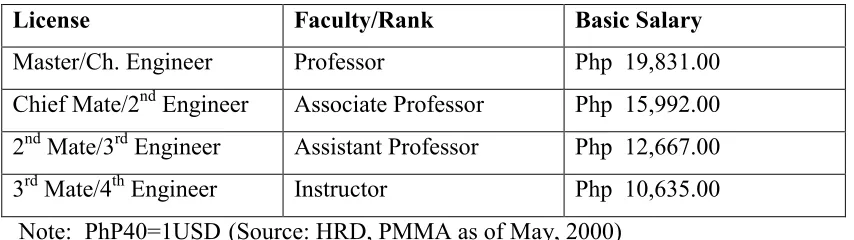
Table 4.2.1. The basic salaries of the PMMA maritime faculty.
License Faculty/Rank Basic Salary
Master/Ch. Engineer Professor Php 19,831.00
Chief Mate/2nd Engineer Associate Professor Php 15,992.00 2nd Mate/3rd Engineer Assistant Professor Php 12,667.00 3rd Mate/4th Engineer Instructor Php 10,635.00 Note: PhP40=1USD (Source: HRD, PMMA as of May, 2000)
The above mentioned salaries are subject to taxes and other deductions.
the finances of the Faculty Staff. These include excess of 15 teaching hours per week pay, mid-year and year-end bonus, proportional vacation pay and others. (See Appendix 11). On the other hand, the deans and selected department heads are entitled to honoraria, which at present amounts to Php 4,000 a month.
4.2.2 Supplementary source of income
4.2.2.1 The PMMA Employees Co-operative Association
In addition to the PMMA monthly wages, the PMMA Employees Association was able to set up an additional source of income through the Co-operative movement. The PMMA Employees Co-operative Association (PMMAEC) was established when PMMA transferred to Zambales in 1998. There was an active participation of the entire PMMA employees at the beginning of its creation. There are at least 140 out of 159 total employees of PMMA who joined the movement including the PMMA President. Faculty members are also represented. Thirty (30) out of forty-three (43) PMMA Faculty Association members contributed to funds capital. Membership was opened to all PMMA employees regardless of position and employment status, i.e. full time or part time to generate the much-needed capital. Popular voting by the entire PMMA working populace elected officers.
Two years after the establishment, the PMMAEC distributed dividends of Php280 per share. Each share costs Php 500 allowing limitless stocks to any members. At present PMMAEC’s essence of co-operative movement is in imminent danger of losing its character. Based on the recent personal survey/interview conducted by the author the following factors were noted:
1. member’s interest wanes
2. member’s ability to take initiatives disappears.
capital for the share. Despite PMMAEC started in times of economic depression and unemployment, members are government employees with relatively low incomes. There also an urgent need for proper finance in the shares which come after that period, when supporting members have taken away their initial assistance. Without sufficient capital, new co-operatives like PMMAEC are often obliged to resort to less capital-intensive activities
4.3 The maritime educators’ employment condition
4.3.1 Hours of work
Full-time faculty members render at least 2 hours a day or 10 hours a week consultation with midshipmen. The maximum teaching load is 15 hours a week. A faculty member may be given a maximum teaching load of 30 hours a week provided no more than two preparations of subjects per semester. An extra compensation to an hourly basis in excess of 15 hours of teaching in a week will be given appropriately. Full time faculty members are to report 6 hours a day and 5 days a week. Those that are at the same time tasked to perform as Tactical Officers for the regimental system of training will be given compensation allowed up to a maximum of 50% of the faculty’s basic annual salary.
4.3.2 Housing and accommodation
Based on the PMMA Relocation Plan, the Academy will provide and accommodate housing to midshipmen, academic and non-academic personnel and guests reserved to a portion of the campus sites and buildings as government provision and funding pursue the purpose. Socialised form of housing will be given to personnel who are affected by the transfer of the institution in 1998.
As of April 2000, there are seven- (7) director houses and nineteen (19) single detached units. The intention was to provide each unit for employee who resides in Manila and displaced by the transfer. The Academy has a total of 135 con- academic personnel and 70 faculty staff who need to be billeted in the housing. In as much as the units are short to the number of personnel, it has been required that a house billet consists of 4 single persons. There are 2 rooms in a house and 2 individual people is assigned per room, however 1 room is given to a personnel under certain conditions. As soon as the mass housing construction is completed, the 1 faculty member to a 1-house billeting will be implemented. The 1-house billeting at present cannot accommodate the whole PMMA personnel, in most cases faculty members and a number of employees rent apartments outside the PMMA premises to accommodate their families.
4.3.3 Medical and insurance benefits
Philippine Health Program, Employees Compensation Package, Government Security and Insurance System and PAG-IBIG Fund. (See Appendix 12).
4.3.4 Vacations and leaves
Aside from the loans, full time PMMA faculty members also have vacations and leave privileges. Vacations and leaves privileges is intended to provide eligible faculty members time for their families or pursue career advancements while retaining their permanent status in the PMMA. This may be paid or unpaid. These include the following: (See appendix 13 for definitions).
1. Sabbatical leave 2. Cumulative leave
3. Paternity and maternity leaves 4. Leave of absence without pay 5. Vacation service credit 6. Terminal leave
4.4 Analysis of the PMMA faculty employment conditions
PMMA teaching staff as a government employee in reality is receiving numerous benefits. As discussed in this chapter, it starts from the time of engagement to Academy until they retire. It also covers both the employee and his/her dependants. It is therefore safe to admit that in terms of security of living, PMMA working environment compares well with other job opportunities for maritime educators whose living standards have not been influenced by the benefit of higher shipboard salary.
The satisfaction of one’s physiological, social and intellectual needs have significant impact of attraction to teaching job (Dalmacio, 1997).
In terms of social needs satisfaction, PMMA faculty are not less afforded the opportunity for recreation and entertainment due to incomplete facilities of the present site. Free time to travel during out of lecture hours is not provided. This practice has repeatedly been assailed as counter productive to faculty members pursuing research and career advancement which do not affect the classes.
It was revealed that intellectual need satisfaction has a positive significant relationship with teachers’ organisational commitment. There is a necessity that enjoyment of academic freedom be guaranteed to the PMMA faculty. Although faculty members of associate professor level can participate in the Academic council meetings, they are not encouraged to take part in the formulation and implementation of social policies.
CHAPTER 5
RECRUITMENT, RETENTION AND FLUCTUATION
5.1 Maritime education as career
As discussed in Chapter 3, maritime educators come from different backgrounds. Like any other profession, as the title implies the specialisation is derived from the expertise of people who has maritime background. What calls them into the profession and what makes them leave is the main object in this chapter.
Although the subjects zeroes in are set of issues that are unique to maritime educators, is inarguable that the endemic conditions of all educators in the developing countries are in general common. As what Vanfossen (1979) puts it, “ their jobs are relatively secure, but dead end. Their incomes are sufficient, but minimal”. Although on the question of whether the income of the teachers are sufficient, the survey made on the number of maritime educators suggests that teachers did expect to be as financially precarious as it should be.
5.2 What attracts a seafarer to the teaching profession?
5.2.1 Family and peers
The author’s belief that family and peers are the main reason why seafarers turned to become maritime educators was confirmed by the survey on "what factors attract seafarers in the maritime academies" conducted among the seafarers in various MET institutions (See e.g. table 5.3 and appendix 14 ). Among the selected Asian countries, China and India showed the highest approval with 90 and 80 percent respectively. Even in European selected countries where the length of shipboard employment contract ranges from 3 - 6 months compared to 10 – 12 months in the Asian counterparts, majority admitted that family and peers made them switched to shore based jobs. The Philippines with the most number of maritime academies in the selected countries shows only 68% positive. Nevertheless, family and peers attachment is considered the highest influential over other factors like career development, easily accessible and rigorous requirements to teach as attributes.
The close relationship between friends and relatives plays a big role as well. As most seafarers regard life at sea as long lost years with shore acquaintances, they tend to become companion seekers when they are on vacation. It is not unusual to see seafarers pay a visit to their alma mater and find friends or classmates who are working in the maritime academy, is overwhelmed by a sudden feeling of “esprit d' corps” and enjoyment, started working as a maritime educator without having thought of it before.
The convincing prowess that these people show a positive effect is becoming apparent when a seafarer starts to make complains about how short has his stay with his family and friends during the last vacation. This gives them excuses on how bad their company is for threatening them not to employ again should they fail to board the company ship early. This is followed by irritability and unending dissatisfaction on shipboard conditions. The resulting performance on board gradually declines, motivation is becoming less and less and the feeling of homesickness starts to rule his life. The reason according to Gleitman (1981) stems from the relation between set and motivation. “If a person has set his mind to happen and finds it appropriate, increased motivation to achieve the set will not be a hindrance”. Indeed, family problem made it become the most popular alibi of seafarers coming home before the contract ends because sets are much harder to break than contain.
5.2.2 Career development
implementation of the new STCW to the maritime academies to improve their institutions. This attraction is concentrated mainly in the developing countries and seems related to the increasing chances of the maritime faculty for advance study outside of the country.
Ambitious seafarers regard the recent development in the academic field as a step to the advancement of career at shore and financially stable life with the family. The knowledge of success of WMU graduates and the desire to become professionally respected colleague in the faculty and shipping industry has been the major fascination of seafarers joining government maritime academies. (Zade, 1998). Most of the WMU graduates are holding managerial or assigned to a higher position both in the maritime academies and various maritime related employment opportunities.
In response to this attraction, most maritime academies have established a career development plan for its teaching staff in advance. In Asia, Singapore Maritime Polytechnic has a policy of sending two (2) of its faculty members to foreign courses each year. In addition various upgrading seminars and courses conducted by prominent shipping personalities are offered to the teaching staff and considered in the merit system of promotion and compensation. In China, almost each of the three (3) maritime universities and colleges is sending candidates to study different courses at WMU every year. The Shipping Corporation of India’s Training Institute at Mumbai maintains its presence in the MET courses yearly.
shore based job opportunities that also offer better salary and a chance to stay with the family.
Teaching staffs in European countries are considered greatest assets of the institutions. Most of the staff are holders of unlimited certificates of competency and are experienced ship officers. This may be seen as to having a relation to the shifted source of manpower for ships’officers to the developing countries. Teaching is one alternative employment opportunity where seafarers with substantial experience at sea and unlimited certificates of competency are desirable. On the other hand, training institution like the Danish Maritime Institute (DMI) at Denmark has continuously attracting ship officers because of the career development and opportunities it adopts. DMI instructors are given in-house training both for the operation and management ships and company. The Institute allows seafarers to work in the shipping company and teach at the DMI for a certain period developing them in dual ways. This concept seems to have a close relation to the unwanted closure of maritime academy in Fanoe, Denmark which is discussed in Chapter 6 .
While at Spain, teaching staffs usually continue their job until retirement or being assigned to other important work. Spanish maritime industry are mainly giving priority to the maritime professors in the assignment of important post in the Administration or in the industry. This practice may have a bearing in the continued attraction of lecturers in the Spanish maritime academies.
5.2.3 Personal calling
people. This does not mean that it is essential to be lively extrovert, but experience states that it makes life as an educator much more comfortable if you find easy to make friends in the faculty room as well as with students and others.
Personal calling can be traced on person’s history. People who make up their minds early on that they want to teach. Somehow people like their parents and teachers have inspired their young minds the joy of imparting knowledge to other people. Other are brought about by an urge that “probably most young people have at one time or another thought it of it seriously, and perhaps they themselves are doing well at school or even they were unhappy at school and felt that they could prevent that happening to others” (Taylor, 1988). It is from this vantage point of view of many young adults that teaching is an honourable and easily accessible route to desirable social security, relatively prestigious and inviting career.
Since maritime academies employ both seafarers and non-seafarers in honing the potentials of the students, for non-seafarers, the fulfilment of their call to teach possess little hindrance to pursue than their seafarer counterparts. More often placement in most MET institutions in developing countries do not require compulsory teaching experience for admission because of insufficient number of new recruits. The accessibility and less rigorous employment requirements for seafarers and non-seafarers in MET institutions possess no immediate difficulty in most developing countries. Most of the maritime academies in developed countries on the other hand, have stringent requirements for the professors teaching in the academies. This can be attributed to a high social standing given to the academy professors besides the numerous sources of competing professionals.
shipboard expertise, in most cases, seafarers had changed their focus even before they started to venture life at sea. The desire to teach is often thwarted by various factors that lead to setting aside the calling. These factors include among others the sudden changed of personal and family lifestyle as brought about by financial gains of their shipboard salaries.
On the other hand, those who have managed to heed their calling did not come through until they reached the later age or pushed through without outside interventions. These interventions come from different sometimes-unwelcoming ways such as health reasons, job displacements or family problems. Their incapacity to work on board due to partial disability problems may in some cases lead them to work instead in the maritime academies. In the case of developed countries, teaching profession may have been become one alternative job when the market labour shifted to the developing countries. In the above scenario, it is therefore rather difficult to quantify the veracity of teaching profession as a calling for many seafarers who turned to become maritime educators. But as a whole, those who are surveyed admit that teaching is the most fulfilling job they ever have.
5.3 What makes a maritime educator stay in the maritime academy?
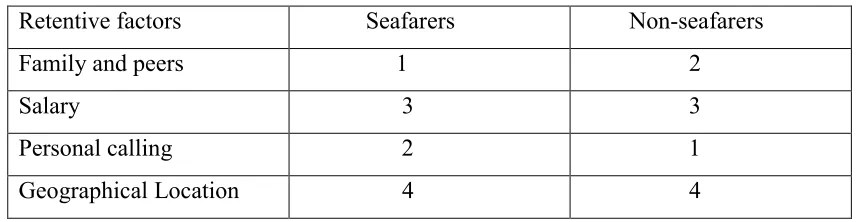
Table 5.3.Retentive factors of maritime educators in maritime academies Retentive factors Seafarers Non-seafarers Family and peers 1 2
Salary 3 3
Personal calling 2 1 Geographical Location 4 4
The responses of the seafarers are characterised by greater specificities than those of the non-seafarers. Family and peers is the prime factor of seafarers retention to the MET institutions while non-seafarers rank it number 2. Although the main attraction is focused in the family and peers, all suggestions given to improve qualifications, job satisfaction and employment conditions of maritime educators are unanimously at raising the salary. This may show that at the recruitment process, applicants already perceived that the salary of the educators is not an enticing factor to join MET but rather the easier way to stay with the family. Both groups however, deem it essential to focus on social benefits and salary increases to keep them stay. The reason would be because the satisfaction of financial needs of the maritime educators would sustain the higher priorities i.e. being with family and peers and heeding to their personal calls.