The adoption of learning management systems (LMS) among faculty members at Kansas State University and King Saud University
by Tariq Alshalan
B.S., King Saud University, 2008 M.S., Western Illinois University, 2014
AN ABSTRACT OF A DISSERTATION
submitted in partial fulfillment of the requirements for the degree
DOCTOR OF PHILOSOPHY Department of Curriculum and Instruction
College of Education
KANSAS STATE UNIVERSITY Manhattan, Kansas
Abstract
The purpose of this quantitative study was to investigate three areas related to LMS adoption at universities: first, the relationships between faculty personal characteristics (age, gender, academic ranking, and years of teaching experiences) and their adoption of learning management systems (LMS); second, organizational support related to LMS adoption; and third, concern of time and fear of technology as inhibiting factors of using an LMS.
The research compares faculty members at Kansas State University, Manhattan,
Kansas, and faculty members at King Saud University in Saudi Arabia. This study is related to the educational technology field in the higher education environment. Many universities in Saudi Arabia are in the early stage of adopting and using e-learning tools such as LMSs. There is a need to illustrate the best practice processes of adopting new technology in higher education contexts. This study should help instructors and university leaders determine the significant factors of successful adoption of educational technology tools.
Rogers’ (2003) diffusion of innovation theory was used to provide insights and guide the study as well as design the research questions. His work mentioned that about 49% to 87% of innovation adoption can be predicted according to five perceived attributes: (1) relative advantage, (2) compatibility, (3) complexity, (4) trialability, (5) observability.
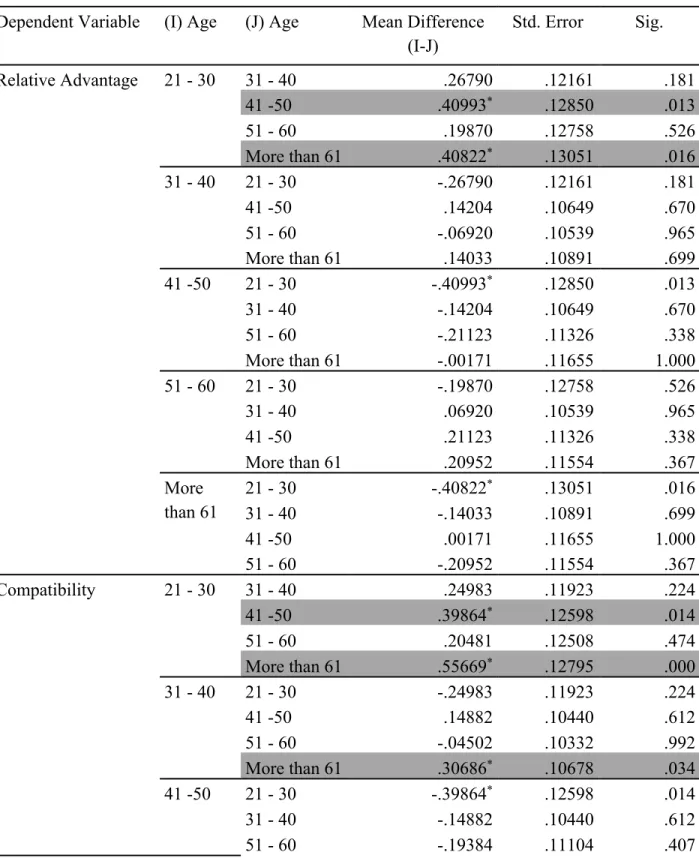
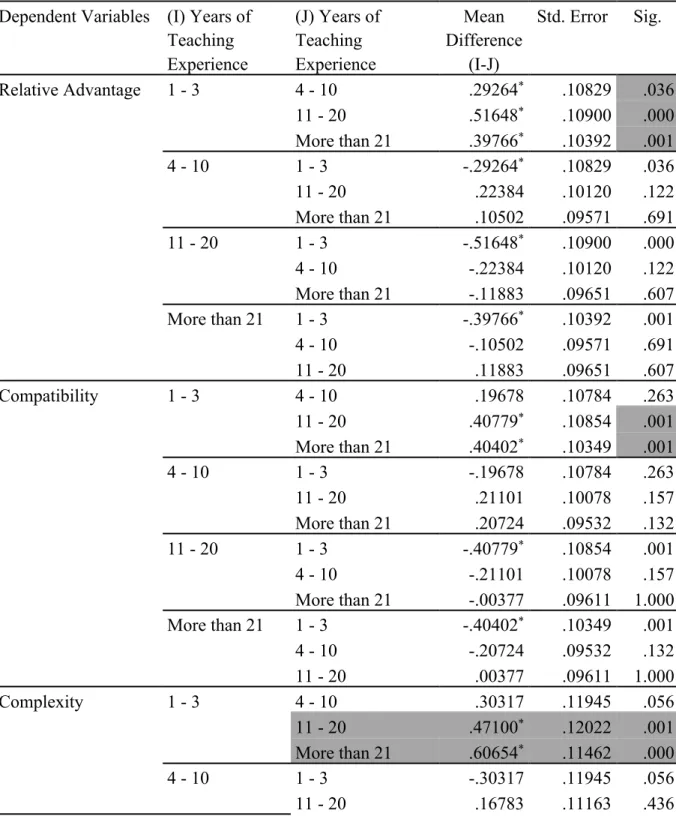
These data were obtained from 403 faculty members at Kansas State University. The data analysis showed that faculty members’ personal characteristics influenced their LMS adoption. A MANOVA Pillai’s Trace test results showed a statistical difference between faculty
characteristics (age, p = .017 gender, p = .009 years of teaching experiences p = .042 and academic rank p = .000) and Rogers’ five attributes of innovation at Kansas State University.
Conversely, at King Saud University the data were obtained from 104 faculty members. The data analysis showed no influence between faculty members’ personal characteristics and Rogers’ five attributes of innovation.
An ANOVA test was conducted and there was a statistical difference among faculty
members at Kansas State University in all four independent variables (age, p = .004 gender, p = .000, years of teaching experience p = .012 and academic ranking, p = .008) and their perception of the organizational support related to their adoption of the LMS. On the other hand, there was no a statistical difference among faculty members at King Saud University in all four
independent variables (age, gender, academic ranking, and years of teaching experience) and their perception of the organizational support related to their adoption of the LMS.
The MANOVA Pillai’s trace test result showed a statistical difference between faculty academic rank and fear of change of technology p = .021 and no statistical significance for time concern at Kansas State University. However, there was no a statistical difference for faculty members at King Saud University concerning all independent variables (age, gender, academic ranking, and years of teaching experience) with fear of change of technology and no statistical significance for time concern, as well.
The study concluded with a recommendation for Kansas State University and King Saud University regarding learning management system adoption. In addition, important
considerations for professional development and training among faculty members were also recommended. Finally, a recommendation for future research in the field of educational technology was proposed.
The adoption of learning management systems (LMS) among faculty members at Kansas State University and King Saud University
by Tariq Alshalan
B.S., King Saud University, 2008 M.S., Western Illinois University, 2014
A DISSERTATION
submitted in partial fulfillment of the requirements for the degree
DOCTOR OF PHILOSOPHY Department of Curriculum and Instruction
College of Education
KANSAS STATE UNIVERSITY Manhattan, Kansas
2019
Approved by: Major Professor Dr. J. Spencer Clark
Copyright
©Tariq Alshalan 2019.
Abstract
The purpose of this quantitative study was to investigate three areas related to LMS adoption at universities: first, the relationships between faculty personal characteristics (age, gender, academic ranking, and years of teaching experiences) and their adoption of learning management systems (LMS); second, organizational support related to LMS adoption; and third, concern of time and fear of technology as inhibiting factors of using an LMS.
The research compares faculty members at Kansas State University, Manhattan,
Kansas, and faculty members at King Saud University in Saudi Arabia. This study is related to the educational technology field in the higher education environment. Many universities in Saudi Arabia are in the early stage of adopting and using e-learning tools such as LMSs. There is a need to illustrate the best practice processes of adopting new technology in higher education contexts. This study should help instructors and university leaders determine the significant factors of successful adoption of educational technology tools.
Rogers’ (2003) diffusion of innovation theory was used to provide insights and guide the study as well as design the research questions. His work mentioned that about 49% to 87% of innovation adoption can be predicted according to five perceived attributes: (1) relative advantage, (2) compatibility, (3) complexity, (4) trialability, (5) observability.
These data were obtained from 403 faculty members at Kansas State University. The data analysis showed that faculty members’ personal characteristics influenced their LMS adoption. A MANOVA Pillai’s Trace test results showed a statistical difference between faculty
characteristics (age, p = .017 gender, p = .009 years of teaching experiences p = .042 and academic rank p = .000) and Rogers’ five attributes of innovation at Kansas State University.
Conversely, at King Saud University the data were obtained from 104 faculty members. The data analysis showed no influence between faculty members’ personal characteristics and Rogers’ five attributes of innovation.
An ANOVA test was conducted and there was a statistical difference among faculty
members at Kansas State University in all four independent variables (age, p = .004 gender, p = .000, years of teaching experience p = .012 and academic ranking, p = .008) and their perception of the organizational support related to their adoption of the LMS. On the other hand, there was no a statistical difference among faculty members at King Saud University in all four
independent variables (age, gender, academic ranking, and years of teaching experience) and their perception of the organizational support related to their adoption of the LMS.
The MANOVA Pillai’s trace test result showed a statistical difference between faculty academic rank and fear of change of technology p = .021 and no statistical significance for time concern at Kansas State University. However, there was no a statistical difference for faculty members at King Saud University concerning all independent variables (age, gender, academic ranking, and years of teaching experience) with fear of change of technology and no statistical significance for time concern, as well.
The study concluded with a recommendation for Kansas State University and King Saud University regarding learning management system adoption. In addition, important
considerations for professional development and training among faculty members were also recommended. Finally, a recommendation for future research in the field of educational technology was proposed.
Table of Contents
List of Figures ... xi
List of Tables ... xii
Acknowledgements ... xiv
Dedication ... xv
Chapter 1 - Introduction ... 1
Chapter Overview ... 1
Higher Education Changes over Time ... 1
Internet and Higher Education ... 2
The History of Learning Management System ... 4
Learning Management Systems ... 6
Kansas State University ... 6
Kansas State University and LMS ... 7
King Saud University ... 11
Blackboard at King Saud University ... 12
Diffusion of Innovation Theory ... 14
Attributes of Innovation ... 15
Statement of the Problem ... 17
Research Questions ... 17
Significance of the Study ... 20
Limitations of the Study ... 20
Definitions ... 21
Chapter 2 - Literature Review ... 23
The Use of Learning Management Systems in Higher Education ... 23
Online Learning ... 24
LMS and Blended Learning ... 24
Face-to-Face Learning ... 26
Negative Factors Affecting the Integration of LMS ... 26
Time Concern ... 27
Fear of Change and Technology ... 30
Positive Factors of Adopting LMS ... 33
Social Media vs LMS ... 35
Mobile learning ... 37
Personal Characteristics of Faculty Members ... 37
Organizational Support ... 42
Organizational Support and Learning Management System ... 44
Theoretical Framework ... 49
Diffusion of Innovation Theory ... 50
Innovation ... 51
Communication Channels ... 51
Time ... 52
Attributes of Innovations and Rate of Adoption ... 52
Complexity ... 54
Trialability ... 55
Observability ... 55
Social System ... 56
Innovation Decision Process ... 56
Knowledge ... 57 Persuasion ... 57 Decision ... 58 Implementation ... 59 Confirmation ... 59 Summary ... 60 Chapter 3 - Methodology ... 62 Chapter Overview ... 62 Research Questions ... 62 Research Design ... 64 Research setting ... 65 Participants ... 66
Data Collection Methods ... 68
Survey preparation ... 69
Reliability ... 70
Pilot Test of Survey Instrument ... 71
Data Analysis ... 72 Independent Variables ... 73 Dependent Variables ... 73 Descriptive Statistics ... 74 Inferential Statistics ... 74 Ethical Considerations ... 74 Chapter 4 - Findings ... 76 Chapter Overview ... 76 Descriptive Statistics ... 76
Characteristics of the Participants ... 76
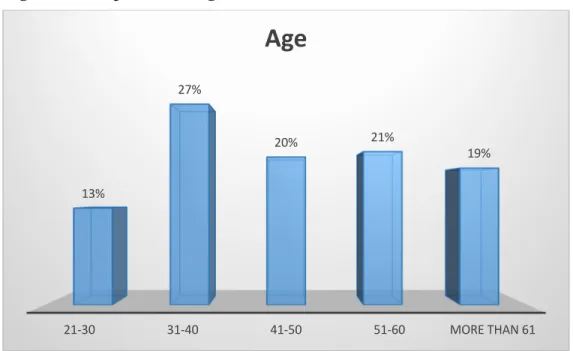
Age ... 77
Gender ... 77
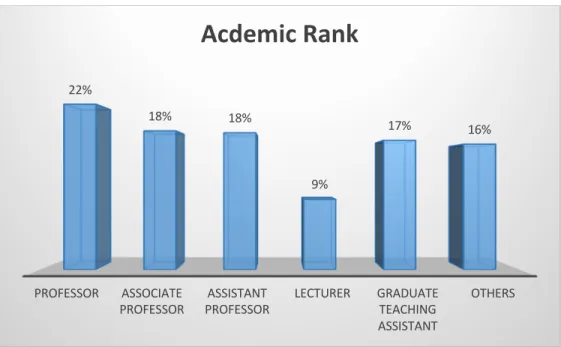
Academic Rank ... 78
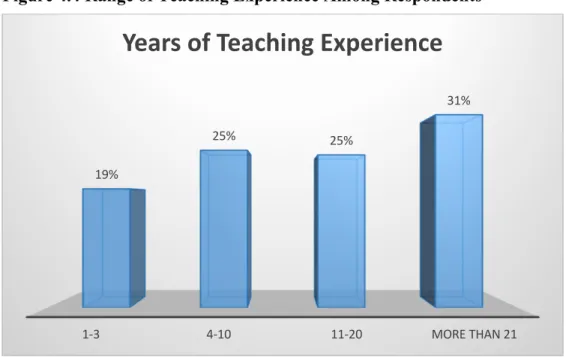
Years of teaching experience ... 79
Characteristics of King Saud University Participants ... 80
Age ... 80
Gender ... 81
Academic Rank ... 81
Years of Teaching Experiences ... 81
Inferential Statistics ... 82
Research Questions ... 82
Research Question One ... 82
Test of Null Hypothesis ... 83
Research Question Two ... 103
Research Question Three ... 114
Test of Null Hypothesis ... 114
Chapter 5 - Conclusions and Discussion, and Recommendations ... 120
Chapter Overview ... 120
Rogers Five Attributes of Innovation ... 121
Relative advantage ... 121 Relative advantages ... 123 Compatibility ... 124 Compatibility ... 124 Complexity ... 125 Complexity ... 126 Trialability ... 127 Observability ... 129 Organizational Support ... 131 Time Concern ... 135
Fear of Change in New Technology ... 137
Conclusions and Discussion ... 139
Recommendations for Kansas State University ... 152
Recommendations for King Saud University ... 157
Recommendations for Future Research ... 162
References ... 165
Appendix A - KSU IRB Approval ... 183
Appendix B - King Saud University Approval ... 184
List of Figures
Figure 1.1 Canvas Page (Canvas.com, 2018) ... 10
Figure 1.2 Student Page (K-State, 2018) ... 10
Figure 1.3 Blackboard Page (KSUBlackboard LMS, 2018) ... 11
Figure 1.4 Instructor page for Blackboard (Lms.Ksu.edu.sa, 2018) ... 12
Figure 4.1 Respondents’ Age ... 77
Figure 4.2 The Gender of Respondents ... 78
Figure 4.3 Range of Teaching Experience Among Respondents ... 80
Figure 4.4 The Mean of Organizational Support by Respondent’s Age ... 105
Figure 4.5 The Mean of Organizational Support by Respondent’s Gender ... 107
Figure 4.6 The Mean of Organizational Support by Respondent’s Years of Teaching Experience ... 109
List of Tables
Table 1.1 The Percentage of Faculty Member Use of Blackboard LMS ... 13
Table 1.2 The Percentage of Student Use of Blackboard LMS ... 13
Table 3.1 Kansas State University Participants ... 66
Table 3.2 King Saud University Faculty members. ... 68
Table 3.3 Research questions with survey items ... 72
Table 4.1 Respondents’ Age ... 77
Table 4.2 The Gender of Respondents ... 78
Table 4.3 Faculty Members’ Academic Rank ... 78
Table 4.4 Range of Teaching Experience Among Respondents ... 79
Table 4.5 Respondents’ Age ... 80
Table 4.6 Respondents’ Gender ... 81
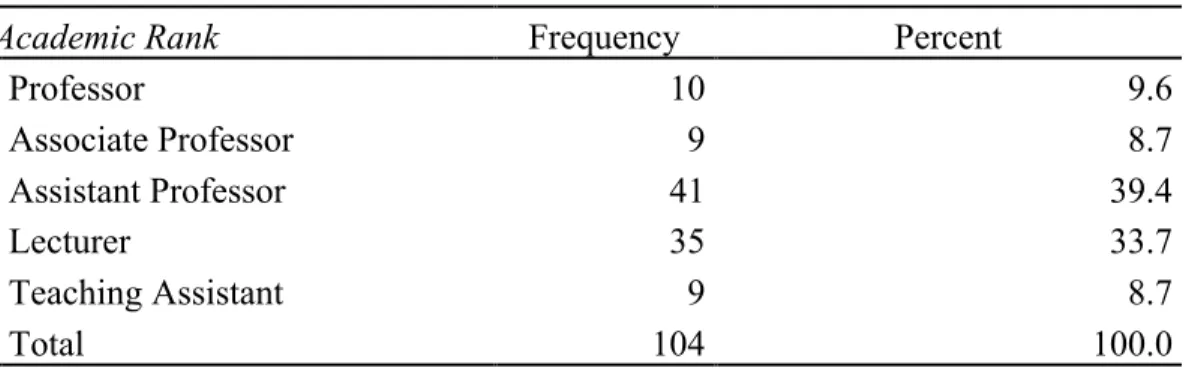
Table 4.7 Faculty Members’ Academic Rank ... 81
Table 4.8 Range of Teaching Experience Among Respondents. ... 82
Table 4.9 Pillai’s Trace Test Result of MANOVA on Rogers’s Five Attributes of Innovation for Kansas State University ... 83
Table 4.10 Pillai’s Trace Test result of MANOVA on Rogers’s five attributes of innovation .... 83
Table 4.11 ANOVA Significance Values of five Attributes of Innovation by Age ... 86
Table 4.12 Tukey Post Hoc Test for Age with Attributes of Innovation ... 87
Table 4.13 ANOVA Significance Values of five Attributes of Innovation by Gender. ... 90
Table 4.14 Tukey Post Hoc Test for Gender with Attributes of Innovation ... 91
Table 4.15 ANOVA Significance Values of five Attributes of Innovation by Years of Teaching Experiences ... 93
Table 4.16 Tukey Post Hoc Test for Years of Teaching Experience with Attributes of Innovation ... 94
Table 4.17 ANOVA Significance Values of five Attributes of Innovation by Academic Ranking ... 97
Table 4.18 Tukey Post Hoc Test for Years of Teaching Experience with Attributes of Innovation ... 98
Table 4.19 ANOVA Test for Participants Age with Organizational Support ... 104
Table 4.20 Tukey Post Hoc Test for Participants Age and Organizational Support ... 104
Table 4.21 ANOVA Test for Participants Gender and Organizational Support ... 106
Table 4.22 Tukey Post Hoc Test for Participants Gender with Organizational Support ... 107
Table 4.23 ANOVA Test of Organizational Support and Years of Teaching Experience ... 107
Table 4.24 Tukey Post Hoc Test for Participants Years of Teaching Experience with Organizational Support ... 108
Table 4.25 ANOVA Significance Values of Organizational Support by Academic Rank ... 109
Table 4.26 Tukey Post Hoc Test for Participants Academic Rank with Organizational Support ... 110
Table 4.27 ANOVA Significance Values of Organizational Support by Age. ... 112
Table 4.28 ANOVA Significance Values of Organizational Support by Gender. ... 112
Table 4.29 ANOVA Significance Values of Organizational Support by Years Of Teaching Experiences. ... 113
Table 4.31 Pillai’s Trace Test result of MANOVA on Time concern and Fear of Change of
Technology ... 114
Table 4.32 ANOVA Significance Values of Fear of Change by Academic Rank ... 116
Table 4.33 Tukey Post Hoc Test for Faculty Academic Rank with Fear of Change ... 116
Table 4.34 Pillai’s Trace Test result of MANOVA on Time concern and Fear of Change of Technology ... 118
Table 5.1 Descriptive Statistics of Relative advantages for KSU Participants ... 121
Table 5.2 Descriptive Statistics of Relative advantages for King Saud University Participants 122 Table 5.3 Descriptive Statistics of Compatibility for KSU Participants ... 124
Table 5.4 Descriptive Statistics of Compatibility for King Saud University Participants ... 125
Table 5.5 Descriptive Statistics of Complexity for KSU Participants ... 126
Table 5.6 Descriptive Statistics of Complexity for King Saud University Participants ... 127
Table 5.7 Descriptive Statistics of Trialability for KSU Participants ... 128
Table 5.8 Descriptive Statistics of Trialability for King Saud University Participants ... 129
Table 5.9 Descriptive Statistics of Observability for KSU Participants ... 130
Table 5.10 Descriptive Statistics of Observability for King Saud University Participants ... 130
Table 5.11 Descriptive Statistics of Organizational Support for KSU Participants ... 131
Table 5.12 Descriptive Statistics of Organizational Support for King Saud University Participants ... 133
Table 5.13 Descriptive Statistics of Time Concern for KSU Participants ... 135
Table 5.14 Descriptive Statistics of Time Concern for King Saud University Participants ... 136
Table 5.15 Descriptive Statistics of Fear of Change for KSU Participants ... 137
Acknowledgements
Gratitude is expressed to Almighty God for his blessings and for giving me strength and courage to finish the work in this dissertation. All thanks are due to Allah. None of this would have been possible without God's blessing grace and mercy.
I acknowledge, with deep gratitude and appreciation, the inspiration, encouragement, valuable time, and the continuous guidance given to me by my Major Professor, Dr. J. Spencer Clark. I simply cannot begin to imagine how things would have proceeded without his help. He made me confident in my abilities and gave me determination to work towards my goal.
Also, I was fortunate to have had a solid committee of faculty members who understood my desire to research and study in the field of learning management systems for teaching and learning: Dr. Kay Taylor, Dr. Be Stoney, and Dr. Mickey Loisinski. Thank you all for your feedback and ideas that made my dissertation better. Also, I am glad to have had Dr. Rebecca Gould, the director of the Information Technology Assistance Center, on my final committee. Your feedback as one of the first users of Canvas LMS at Kansas State University added significant information to my dissertation. Also, I would like to thank Dr. James Teagarden for agreeing to be on my final dissertation committee.
Finally, I am also thankful to Dr. Todd Goodson for the support and time that you offered me. When I had problems, you always opened your door to me. Thank you also to Dr. Deepak Subramony, who helped me through my dissertation journey in the field of Educational Technology.
Dedication
My love and gratitude go to my parents, my father Mohammed Alshalan and my
mother Daleal Alsallom, for laying the foundation for success in my life. I really appreciate their efforts, and I hope that my achievements will make them proud of me. I am also thankful to my brothers and sisters for all of their support.
I am grateful to my wife and soulmate, Ghaida, for completing my life by sharing it with me, and to my sons, Ziad and Mohammed, for making me smile during my dissertation journey.
Chapter 1 - Introduction
Chapter Overview
This chapter presents an overview of the research study, beginning with a change in the higher education setting and the way learners are receiving information. The impact of the internet in our life and higher education especially. Next, the history of learning management systems and the definition is provided. Additionally, overview of diffusion of innovation theory, the statement of the problem, purpose, and research questions are addressed. In addition, the significance of the study and delimitations are presented as well as the definition of terms.
The goal of the study was to investigate the relationship between faculty personal
characteristics (age, gender, years of teaching experiences, academic ranking) and their adoption of learning management systems (LMS) at Kansas State University, and compare that with faculty members at King Saud University in Saudi Arabia.
Higher Education Changes over Time
E-learning environments have become an important learning option because of the increase of accessibility in the digital age to information and knowledge. This has required instructors to update their pedagogies to meet the demands of new teaching and learning trends. Additionally, the role of teachers expands since the emergence of the internet in the field of education (Chang, 2008). Moreover, higher education is constantly changing, new demands in the higher education system include “reshaping, redesigning, and re-visioning traditional
teaching and learning relationships" (Georgina & Olson, 2008 p.3) and these changes are related to the faculty members’ adoption of new technology.
system was designed to teach” (Prensky, 2001, p. 1). One significant area of change is in learning materials, especially as universities turn more to the use of technology. A study by Shayo, Mwase, and Kissaka, (2017) mentioned that higher education institutions have
transformed the teaching and learning process from a behaviorist paradigm to a communicative paradigm by using Information and Communication Technologies (ICT) tools. The advantages of ICT in higher education include an increase in learning motivation, learning satisfaction and instructional effectiveness (Mwase, & Kissaka, 2017). Similarly, a study by Asiri, Mahmud, Bakar, and Ayub (2012) stated that the fast growth of ICT and usage of e-learning tools like learning management systems (LMS) have become essentials for learning and teaching
processes. Universities adopted LMS for different advantages, such as improving the quality of learning and allowing learners to be active. In addition, instructors and students do not face time and space limitations because communication can occur outside the classroom by using LMS platforms. Nowadays, learners have more options that allow them access to their classes and learning materials from anywhere and anytime. According to Hong-Ren and Hui-Ling (2010), “People are using wireless technology more often because information retrieval can occur anytime or anyplace” (p. 70). To adapt to this change in culture, higher education institutions have been changing the way they deliver information, integrating technology throughout
teaching and learning by using learning management systems (LMS). These systems change the way students are learning and receiving knowledge (Coates, James, & Baldwin, 2005), and have an ongoing role in higher education’s facilitation of courses.
Internet and Higher Education
The internet has become a powerful learning environment for higher education. The new life style of learners requires educators to develop appropriate teaching methods, such as
internet-based education (Ozkan, 2010). According to Ehlers and Schneckenberg (2010), “The number of internet users was approximately 500 million worldwide in 2003 and doubled by 2005. This opportunity to network and access information is a significant change in the way people approach, use, and share information” (p.140). In 2019, the number of the internet users in the world was more than 4 billion (Internet World Stats 2019).
In addition, online learning has opened more learning opportunities for higher education students. However, universities’ leaders should move to a new level of learning and teaching that meets the learners’ demands. In order to achieve that, leaders need to understand the technology changes and have a desire to adjust university policies to adopt new learning approaches such as blended learning or online learning (Garrison, & Kanuka, 2004). Moreover, the improvement of ICT is one of the important reasons to use online tools for education purpose. There are some issues with traditional face-to-face classroom such as limited time for interaction between students and instructors. As well as providing faster feedback to the learners when they are outside classroom, using eLearning tools would help faculty members to solve these issues by allowing learners to have chance to received feedback after class time (Vernadakis et al., 2012).
Additionally, the development in mobile technology has increased the use of the internet. A study by Uzun (2014), which focused on utilizing technology for intercultural communication in virtual environments, observed that though many students may not have personal computers, it was rare to find a student without a mobile device. A lot of companies provide features for smartphones that encourage individuals to use the internet on these devices. In addition, many websites provide mobile views that make searching and other tasks easier for those using mobile devices.
A survey on higher education students done by the Education Center for Applied Research in 2012 found that 67% of surveyed students believe their smartphone devices are essential to success in their academic life. Moreover, learners are pushing the adoption of computing devices to include computers, tablets, and smartphones in the higher education environment. The increased use of these devices on university campuses give instructors the opportunity to deliver more information and knowledge to students (Gikas & Grant, 2013).
Policy makers in higher education need to recognize the changes in communication trends. For instance, using an LMS for learning and communication allows students to check their class materials from their smartphones. In addition, an LMS helps users stay organized. Instructors and students both can manage activities and grades through an LMS. It also provides useful and efficient communication features such as automatic notifications of due dates and tools that facilitate discussion and group projects (Rubin et al., 2010).
The History of Learning Management System
Later sections of this paper will examine K-State’s use of its chosen LMS (Canvas); first, however, a general overview of LMS history will be provided. The first learning management system was launched by the University of Illinois in 1960, and it was called Programmed Logic for Automated Teaching Operations (PLATO). The system included different features that improved online communication for learners and faculty. In 2006, the Plato LMS was discontinued (Kumar, Gankotiya, & Dutta, 2011).
At the end of 1990, many companies became interested in providing learning software for higher education institutions. Learning management systems were created by Blackboard, Angel, WebCT, and other companies. These were the most common systems used by universities and were customizable (Malm & Defranco, 2012). According to Coates, James, and Baldwin (2005),
the “LMS grew from a range of multimedia and internet developments in the 1990s” (p. 20). There were many terms used to describe the early versions of learning management systems such as computer assisted instruction (CAI), computer assisted learning (CAL), and integrated
learning system (ILS) (Watson & Sunnie, 2007). The improvement and development process is ongoing in the field of LMS in order to provide users with better experiences. As stated by Çeliköz and Erdoğan (2017), “Learning Management Systems, which are used in the field of education and considered as one of the effective learning tools (LMS), have a great importance especially in higher education and in the last decade, they have been used by almost all
educational institutions” (p. 243). In the last decade, the adoption of LMSs in higher education has been an important component of information technology that has improved the teaching and learning field (Coates, James, & Baldwin, 2005).
Higher education institutions adopted LMS software to make the teaching process more effective. One way that LMS use can help facilitate the teaching and learning process is the ease of communication it provides. Communication and interaction between students, an instructor, and other learners is made much easier with the use of an LMS. Built-in email systems, chat rooms, and other discussion tools create efficient and seamless communication (Lonn & Teasley, 2009).
An additional benefit of an LMS is the great opportunity it provides for instructors to deliver learning in innovative ways and account especially for students’ varying learning needs and preferences. It also enables and facilitates a learning community wherein instructor and students learn from each other and the learning is more student-directed than instructor-directed. The view of education as top-down (instructor to student) is outdated, and an LMS provides tools that allow instructors to adapt to this change. According to Coaldrake & Stedman (1999), “Many
academics will have to confront the reality that the task of the academic teacher, traditionally encapsulated in the designation of ‘lecturer’, is shifting from the transmission of information towards the management and facilitation of student learning” (p. 7).
Learning Management Systems
Many studies provide definitions for LMSs. According to Alias and Zainuddin (2005), an LMS can be defined as “a software application or web-based technology used to plan,
implement, and assess a specific learning process” (p. 28). Another definition by Sallum (2008) describes an LMS as a solution that allows instructors and administrators to deliver content and resources to all learners and staff. Sanga (2016) notes that “Internet-based learning management systems (LMSs) such as Blackboard, Moodle, WebCT, Canvas, Scholar, and Desire2Learn are some of the popular internet technologies that support distance, face-to-face, and hybrid/blended teaching-learning processes” (p. 11). Since most systems are web-based, learning materials are available 24/7, which facilitates learning (Black, et al., 2007). Users have access to all of a course’s lessons as well as many other online resources and activities (Çeliköz, & Erdoğan, 2017).
In addition, an LMS helps users stay organized. Instructors and students both can manage activities and grades through an LMS. It also provides useful and efficient communication features such as automatic notification of due dates and tools that facilitate discussion and group projects (Rubin, et al., 2010). Most, if not all, educational institutions, especially at the university level, now use LMSs to provide students with a space for online learning.
Kansas State University
Kansas State University is the first public university in Kansas; it opened in 1863 as the state's land-grant college. KSU’s main campus is in Manhattan, Kansas, in the United States.
According to the About K-State page, K-State had an enrollment of 19,472 undergraduates and 4,307 graduate students in 2016-2017. It is known for research and its campus life and is a place of diversity; in addition, it is a welcoming community for international students. K-State offers a variety of academic majors including graduate certificates, master's degree programs, doctoral degree programs, and 250 undergraduate majors. In addition, K-State has more than 1,437 full time faculty members, many of whom are nationally recognized for their research (About K-State, 2017).
The United States higher education system encompasses about 4,500 college universities with more than 20 million students and 1.4 million faculty members. This has encouraged many students from different countries to study at universities in the United States (Bok, 2015). As reported by Lonn and Teasley (2009), more than 90% of American universities and institutions have adopted LMSs for student and faculty use. The impact of an LMS on students and faculty members’ interaction outside the classroom is one of the most powerful features that an LMS offers to users such as allowing instructors to communicate with students. Additionally, students describe their experience with an LMS as an effective learning tool to save their time (Lonn , Teasley, 2009).
Kansas State University and LMS
Kansas State University has experience with several types of LMSs. The system before Canvas was Axio, and the current system is Canvas. Moreover, the College of Education used Blackboard LMS in 1998; the College of Education began the transition to K-State Online Axio system in 2004. The university has more than 25 years’ experience with different LMSs (D. Devenney, personal communication, October 31, 2019). The Axio learning management system was used by K-State Online at Kansas State University for 16 years. While K-State continuously
improved the LMS, there were features and expectations requested from the university users that made it no longer feasible to continue to upgrade Axio. K-State users were looking for a new system that had better features and improve their experiences. The system became increasingly difficult to work with, so K-State started looking for a new LMS that would meet the university needs. (K-State Today, 2014)
Goins (2017), from the information technology help desk, described the steps K-State took to select the new LMS. In Fall 2013, K-State began the process of choosing a new learning system for the university. The K-State Online Advising Committee, including faculty and students, tested different systems, including Blackboard and Canvas. According to the positive feedback from the users, the university continued the experimental use through the spring and into the summer of 2014. During the pilot sessions, informal training was offered along with monthly newsletters to instructors. As stated by S. Finkeldei (2017), K-State Online coordinator, Canvas was selected as the learning management system for Kansas State University based on three reasons;
1. Canvas pricing model was affordable for K-State.
2. Canvas features and functionality were well matched to the specific system it was replacing at K-State.
3. The specific flexibility Canvas provides with the Learning Tools Interoperability (LTI) tool framework, its robust API and third party toolsets, and ability to customize key items in other ways made it the best product to be successful for the integrations with existing K-State systems. (S. Finkeldei, personal communication, October 6, 2017)
The official announcement about using Canvas as the LMS for K-State was on July 10, 2014. Canvas was chosen to make teaching and learning easier for K-State users. Canvas allowed instructors to plug in third-party collaboration tools like Kahn Academy, Google Docs, Mediasite, YouTube, and Twitter, along with other social media and learning tools. Additionally, it offers integration with textbook publishers that allows the instructor to use the chapter test banks. Instructors can import directly into Canvas by creating quiz files.
Moving to a new system requires preparation and training. For this reason, the Canvas Communication, Training, and Implementation team developed a multi-faceted transition plan designed to build the loyalty of the campus community. During the fall of 2014, the system was made available to all instructors as the first part of a three-phase transition from an LMS that the university had trusted for more than 16 years.
Training was provided to prepare instructors who were interested in upgrading their current courses from Axio Classic to Canvas for the Spring 2015 semester. The training program included 90-minute face-to-face sessions. First, faculty had a 20-minute orientation, and then selected unique features offered by Canvas were highlighted. Furthermore, technology trainers gave instructors access to an actual Canvas course as a student. The course was designed to be used in conjunction with the face-to-face training, as well as a permanent resource for Canvas related questions. Participants were encouraged to navigate the Canvas interface, explore the tools available, participate in discussions, complete activities, and practice quizzes. They were even given a homework assignment that required them to create their own Canvas course with content (D. Goins, personal communication, September 13, 2017).
Training and support for faculty are fundamental components to success with using LMS in higher education. The users must master technical skills that help them to use the new learning
tool in appropriate, effective ways (Raphael & Mtebe, 2016). In addition, universities must take into consideration the adaption of new software and hardware before using them in the learning process. For example, instructors need technical support while they are implementing course materials in the LMS (Taylor & Newton, 2013).
Figure 1.1 Canvas Page (Canvas.com, 2018)
King Saud University
King Saud University is a public university in Riyadh, Saudi Arabia, founded in 1957 as the first university in Saudi Arabia. College of Art was the first discipline in the 1957. Currently, the university has students’ enrolment over 62,000 studying in 19 colleges that cover different education field such as, natural sciences, humanities, health. In addition, the university Faculty member are more than 7,000 between male and female in different positions from Professor, Associate Professor, Assistant Professor, Lecturer and Teaching Assistant. (Ministry of Education, 2016)
The increased student enrollment pushed the university to offer a new way to improve the communication process between instructors and students. Deanship of E-Learning and Distance Learning was established in 2007 one of their important goals is to train faculty and students to use e-learning system at King Saud University beside managing e-learning systems. The university uses Blackboard as learning management system to delivery online materials (Omar, 2016).
Figure 1.4 Instructor page for Blackboard (Lms.Ksu.edu.sa, 2018)
Blackboard at King Saud University
Many studies try to investigate the distance learning improvement at Saudi universities. A study by Alturki, Aldraiweesh and Kinshuck (2016) attempted to evaluate the usability and accessibility of Blackboard LMS at King Saud University. The study sample was 400 faculty members, including males and females. Prior knowledge and experience with an LMS played an important role to determine the effectiveness of the LMS platform. Moreover, faculty members at King Saud University faced difficulty when utilizing and exploring the features of the LMS platform because of the lack of experience with this system. Similarly, Bousbahi and Alrazgan (2015) investigated the Information Technology Department’s faculty resistance to adopting an LMS at King Saud University with 20 participants and a 40% adoption rate. The study focused on the female faculty members; the findings were interesting because most of the respondents were not using most of the Blackboard features, which stemmed from a lack of training and time to explore the LMS. In addition, poor internet connection was one of the common problems they
faced while using the LMS. Another study by El Zawaidy (2014) conducted at three universities in Saudi Arabia, which were King Saud University, King Khaled University and Taif University. The main goal of the study was to find out the challenges and difficulties that prevent faculty members from using the Blackboard learning management system effectively. The study found that faculty members who faced problems with the LMS shared common issues. First of all, the users faced a lack of training and experience when using Blackboard systems. Secondly, the lack of knowledge related to new technology was another reason for their limited use of the LMS. Thirdly, poor internet connection was another barrier among faculty members at these three Saudi universities. The percentage of faculty and students using the learning management system in 2015 according to the Deanship of e-Transaction and Communication at King Saud University is illustrated in the tables below.
Table 1.1 The Percentage of Faculty Member Use of Blackboard LMS
Faculty members Use of Blackboard LMS Number and Percent
Female faculty members
Male faculty members
Female users of the system
Male users of the system
Total faculty members
Percentage of female faculty members' use of the system
Percentage of male faculty members' use of the system
1314
2387
692
1174
3701
52.66%
49.18%
Table 1.2 The Percentage of Student Use of Blackboard LMS
Female Students
Male Students
Female users of the system
Male users of the system
Total students number
Percentage of female students' use of the system
Percentage of male students' use of the system
22612
32556
12799
17917
55068
56.60%
55.20%
Diffusion of Innovation Theory
Diffusion of innovation theory was used to provide insights and guide the study as well as design the research questions because “Rogers’ diffusion of innovations theory is the most appropriate for investigating the adoption of technology in higher education" (Sahin, 2006, p. 1). According to Sahin and Thompson (2006), “In fact, much diffusion research involves
technological innovations, so Rogers (2003) usually used the word ‘technology’ and ‘innovation’ as synonyms.” As a researcher in the field of educational technology, I want to investigate the adoption of learning management systems (LMS) within higher education contexts among faculty members at Kansas State University and the relationship of faculty personal
characteristics (age, gender, academic ranking and years of teaching experience) with LMS usage and compare that with faculty members at King Saud University in Saudi Arabia.
Diffusion of innovation theory by Rogers (2003) defines diffusion as “the process in which an innovation is communicated thorough certain channels over time among the members of a social system” (p. 5). Rogers provided this description of an innovation: “An innovation is an idea, practice, or project that is perceived as new by an individual or other unit of adoption”
(Rogers, 2003, p. 12). Therefore, diffusion of innovation is an appropriate theory for
understanding the adoption of technology. It explains why some people adopt new ideas and changes more readily than others.
Attributes of Innovation
Rogers mentions that most diffusion researchers focus on people and less on the research regarding innovation. Furthermore, Rogers (2003) extends that “researchers in the past tended to regard all innovations as equivalent units from the viewpoint of their analysis. This
oversimplification is dangerously incorrect” (p. 220). The rate of innovation is an important aspect of predicting how people deal with new innovation. Rogers defines rate of innovation as “the relative speed with which innovation is adopted by members of social system” (p. 221). About 49% to 87% of innovation adoption can be predicted according to five perceived attributes: (1) relative advantage, (2) compatibility, (3) complexity, (4) trialability, (5) observability.
Relative advantage is “the degree to which an innovation is perceived as being better than the idea it supersedes” (Rogers, 2003, p. 229). Cost-effectiveness is an example of a benefit.
Individuals can determine which advantage is the most important for them. In addition, the nature of innovation is related to particular advantages. Roger emphasized that “relative advantage is often an important part of message content about an innovation” (p. 233). Many diffusion researchers indicate that relative advantage is one of the useful ways to predict the rate of adopting an innovation.
Compatibility is defined as "the degree to which an innovation is perceived as consistent with the existing values, past experiences, and needs of potential adopters” (Rogers, 2003, p. 240). Furthermore, the new idea or innovation should meet the needs of the potential adopter to be
considered compatible. A new idea or innovation might not be accepted because of it inconsistent with cultural values of the audiences. For instance, an innovation that is not
appropriate for the socio-cultural values and beliefs of the potential adopter is more likely to be rejected. In addition, Rogers indicates “Potential adopters may not recognize that they have a need for an innovation until they become aware of the new idea or its consequences” (p. 246).
According to Rogers (2003), complexity is “the degree to which an innovation is perceived as relatively difficult to understand and use” (p. 257). It is very important that an innovation be clear and less complex in order for it to be adopted and expanded. Innovations are various in their degree of complexity – some of them are difficult, while others are clear. Rogers mentions that the first home computer in the United States was difficult to adopt for individuals who did not have computer skills. As a result, the home computer took a long time to become popular in the United States.
Trialability is defined as “the degree to which an innovation may be experimented with on a limited basis” (Rogers, 2003, p. 258). Some innovations are more likely to be adopted because they allow individuals to try part of the innovation. Personal experience helps users to learn how the innovation works at the same time it is a useful way to give a meaning of an innovation.
Observability, according to Rogers (2003), is defined as “the degree to which the results of an innovation are visible to others” (p. 258). Observability depends on the nature of the
innovation; some innovations may not be easy to observe. For example, technology software is observable but in a different way than hardware components, which can be recognized visually. Individuals tend to adopt more innovations that are easily observed (p. 259).
Statement of the Problem
The goal of the study is investigate the relationships between faculty personal characteristics (age, gender, academic ranking, and years of teaching experiences) and their adoption of the learning management system (LMS) at Kansas State University and compares that with faculty members at King Saud University in Saudi Arabia. Using KSU experience with its LMS is a great way to consider the process of adapting e-learning tools in universities.
According to Eneh (2010), “If the innovation can be demonstrated as an effective, efficient, and easily applied solution to those focused needs, it is more likely to be adopted and integrated into the programme” (p. 1817)
Many universities in Saudi Arabia are in the early stage of adopting and using e-learning tools such as LMSs. It is important to take into consideration the faculty personal characteristics as factors that might reduce the benefits of eLearning tool. Moreover, organizational support from a university is a fundamental component to meet faculty members needs to ensure effective use of technology in the learning process. Finally, time concern and fear of change of new technology can be barriers to use LMS for some faculty members. This study should help Saudi instructors and university leaders determine the significant factors of successful adoption of a LMS.
Research Questions
The study investigated the relationships between faculty demographics (age, gender, academic ranking, and years of teaching experiences) and their adoption of the learning
management system (LMS) at Kansas State University and compares that with faculty members at King Saud University in Saudi Arabia. There are three research questions:
Research Question #1: What is the relationship between faculty personal characteristics (age, gender, academic ranking, and years of teaching experience) and Rogers’s five attributes of innovation (relative advantage, compatibility, complexity, trialability, observability)? Null Hypotheses:
Ho 1.1. There are no statistically significant differences in faculty response regarding the five attributes of innovation (relative advantage, compatibility, complexity, trialability,
observability) by faculty age.
Ho 1.2. There are no statistically significant differences in faculty response of the five attributes of innovation (relative advantage, compatibility, complexity, trialability, and observability) by faculty gender.
Ho 1.3. There are no statistically significant differences in faculty response of the five attributes of innovation (relative advantage, compatibility, complexity, trialability, and observability) by faculty academic ranking.
Ho 1.4. There are no statistically significant differences in faculty response regarding the five attributes of innovation (relative advantage, compatibility, complexity, trialability, and observability) by faculty years of teaching experience.
Research Question #2: What is the relationship between faculty personal characteristics (age, gender, academic ranking, and years of teaching experience) and their perception of the organizational support related to the adoption of the learning management system? Null Hypotheses:
Ho 2.1. There are no statistically significant differences in faculty response regarding the organizational support related to the adoption of an LMS by faculty age.
Ho 2.2. There are no statistically significant differences in faculty response regarding the organizational support related to the adoption of an LMS by faculty gender.
Ho 2.3. There are no statistically significant differences in faculty response regarding the organizational support related to the adoption of an LMS by faculty academic ranking.
Ho 2.4. There are no statistically significant differences in faculty response regarding the organizational support related to the adoption of an LMS by faculty years of teaching experience. Research Question #3: What is the relationship between faculty personal characteristics (age, gender, academic ranking, and years of teaching experience) and time concern, fear of change of new technology related to the adoption of the learning management system use?
Null Hypotheses:
Ho 3.1. There are no statistically significant differences in faculty response regarding the (time concern, fear of change of new technology) related to the adoption of an LMS by faculty age.
Ho 3.2. There are no statistically significant differences in faculty response regarding the (time concern, fear of change of new technology) related to the adoption of an LMS by faculty gender.
Ho 3.3. There are no statistically significant differences in faculty response regarding the (time concern, fear of change of new technology) related to the adoption of an LMS by faculty academic ranking.
Ho 3.4. There are no statistically significant differences in faculty response regarding the (time concern, fear of change of new technology) related to the adoption of an LMS by faculty years of teaching experience.
Significance of the Study
Universities are investing a lot of money and time to adopt new technology in the higher education systems in order to create a better learning experience for instructors and students. Moreover, higher institutions provide training programs to make the adoption process easier for users. An LMS is one of the technology innovations that interest many universities around the world because of the advantages of the LMS and the increase in enrolled students that has required education leaders to find a new way to deliver learning materials.
It is crucial to study the faculty personal characteristics because it provides valuable information about attributes and barriers to accepting new technology. On the other hand, it draws education leaders to the crucial elements that should be considered when integrating innovations in the higher education system.
Limitations of the Study
The study was collected by using a cross-sectional survey to provide a general understanding of the relationships between faculty personal characteristics (age, gender, academic ranking, and years of teaching experiences) and their adoption of the learning
management system (LMS) among Kansas State University faculty members. The results of the study could not be generalized to all United States Universities because each university has different factors. This limitation was the same for King Saud University as well.
However, the study was helpful to see the impact of related factors that all universities share. Moreover, the researcher had experience with Canvas learning management system at Kansas State University that gave better understanding of the advantages and disadvantages of this particular LMS.
Definitions
Adoption: “The decision to make full use of an innovation as the best course of action available” (Rogers, 2003, p. 21).
Blended Learning: It represents an opportunity to integrate the innovative and
technological advances offered by online learning with the interaction and participation offered in the best traditional learning. (Thorne, 2003, p.5).
Innovation: “An innovation is an idea, practice, or project that is perceived as new by an individual or other unit of adoption” (Rogers, 2003, p. 12).
Learning Management System: “Internet-based learning management systems (LMSs) such as Blackboard, Moodle, WebCT, Canvas, Scholar, and Desire2Learn are some of the popular internet technologies that support distance, face-to-face, and hybrid/blended teaching-learning processes” (Sanga, 2016, p. 11).
Educational Technology: “Educational technology is the study and ethical practice of facilitating learning and improving performance by creating, using and managing appropriate technological processes and resources” (Januszewski & Molenda, 2013, p.1).
Relative advantage: “the degree to which an innovation is perceived as being better than the idea it supersedes” (Rogers, 2003, p. 229).
Compatibility: “the degree to which an innovation is perceived as consistent with the existing values, past experiences, and needs of potential adopters” (Rogers, 2003, p. 240).
Complexity: “the degree to which an innovation is perceived as relatively difficult to understand and use” (Rogers, 2003, p. 257).
Trialability: “the degree to which an innovation may be experimented with on a limited basis” (Rogers, 2003, p. 258).
Observability: “the degree to which the results of an innovation are visible to others” (Rogers, 2003, p. 258).
Canvas: The learning management system that faculty and students use at Kansas State University.
Blackboard: The learning management system that faculty and students use at King Saud University.
Chapter 2 - Literature Review
This literature review is organized into six sections. Section one describes the
Learning Management System (LMS) with different learning approaches. Section two reviews the negative factors affecting the integration of LMS. Section three reviews the positive factors of LMS adoption. Section four explain personal characteristics of faculty members (age, gender, years of teaching experiences). Section five reviews the effect of organizational support in adopting new technology. Section six reviews the theoretical framework Rogers’ Diffusion of Innovation (DOI) Theory.
The Use of Learning Management Systems in Higher Education
Three types of learning approaches in higher education use learning management systems (LMS). These learning situations are where teachers and students share information in order to make the teaching and learning process more effective. Providing a general idea of each learning setting is helpful to understand the role of LMS in each approach. According to Allen and
Seaman, (2010), the first setting is online learning. In this setting, the courses are online, and the learning materials delivery is all handled through the LMS as there is no face -to-face meeting in the classroom. The second option is the blended or hybrid classes. In this setting, students and teachers can use the LMS features for communication such as online discussions and submitting their assignments, and they meet face-to-face. The third learning environment is a traditional face-to-face course where instructors use the LMS as web-facilitated (Allen & Seaman, 2010). Woods, Baker, and Hopper (2004) investigated the faculty members’ use of Blackboard LMSs to supplement face-to-face education. The participants in the study included 862 faculty members from 38 universities in the United States. The major use of the LMS was for course documents
and instructional delivery. For example, instructors commonly published their syllabi, and 81% of the faculty members used the LMS to send emails to their classes or individual student.
Online Learning
Many studies try to define online learning or distance education. According to Moore and Kearsley (2005), “Distance education is planned learning that normally occurs in a different place from teaching, requiring special course design and instruction techniques, communication through various technologies, and special organization and adytrative arrangements” (p. 2). Distance learning opens new ways for the people who are interested in continuing their educational journey but cannot attend regular classes. The effective use of an e-learning
approach may be related to the availability of the LMS, which is also known as Virtual Learning Environments (VLE) or learning platforms. A LMS help faculty members to deliver their
learning materials to the learners. The system allows users to track participation and progress through data systems and assessments. It also facilitates the instructional process and distribution of learning materials in distance education environments (Paulsen, 2003).
LMS and Blended Learning
In the last few years, the blended learning approach has become popular in higher education settings. According to Wu, Tennyson, and Hsia (2010), “Recently there has been an increasing movement toward blending e-learning and face-to-face activities with students participating in collaborative learning and interaction with their instructors and classmates” (p. 156). Blended learning has the advantage of combining the best of face-to-face with the best of online learning. LMS as the online learning platform can be used to meet learners’ needs such as flexibility of time and location to access learning materials. According to Makarem (2015), “Many researchers have recommended using a combination of online and face-to-face education
to cater to different student needs and benefit from the advantages of both formats” (p. 156). However, it is crucial to understand that using online tools in face-to-face classes does not mean switching the entire course to online. Blended courses provide an opportunity for faculty
members to discover the advantages of two learning environments that can work together to produce better teaching and learning experiences for teachers and students. Welker and
Berardino (2005) focused on blended learning and understanding the middle ground between the traditional classroom and fully online instruction. They defined blended learning as “any
combined use of electronic learning tools that supplement but do not replace face-to-face learning” (p. 33).
Adopting the LMS platform is important for academic institutions that wish to include blended learning as a teaching method. Blended learning can be a solution for those faculty who would like to explore an online learning environment. Having interaction between instructor and students through the LMS as well as in the face-to-face setting helps faculty to feel safer than moving directly to online learning because faculty do not have the chance to meet students or vice versa (Black et al., 2007).
Daniels (2009) showed that using an LMS for educational purposes has many advantages such as increasing independent learning. The teacher's role becomes that of a facilitator that puts learners in the center of the learning. The LMS can be a way accomplish the advantages of a traditional learning approach with independent learning outside the classroom. Additionally, LMS makes the learning process ongoing and does not require place or time for learning to occur.
Face-to-Face Learning
Traditional face-to-face courses were defined by Potter (2015) as “characterized by student and faculty interaction via lectures, discussion and exams on campus at scheduled times of day” (p. 3). There are certainly advantages to face-to-face learning. For example, faculty members in this traditional setting are required to have office hours that allow for face-to-face meetings with students. This can be a useful feature in a small college but it will be difficult to have office meetings in the large university because of the larger student enrollment, but even with the difficulties of handling a large number of students, adopting new technology in the face-to-face environment has merit. Black et al. (2007) suggested that universities should adopt LMS gradually into the higher education system. When faculty start by using LMS in a face-to-face environment, it gives the instructor confidence and a secure feeling toward using the system instead of beginning by trying the LMS in a complete online setting.
Negative Factors Affecting the Integration of LMS
Many studies investigated faculty members’ experience using learning management systems and e-learning technologies. It is important to be aware of the challenges that limit the expansion of new learning innovations. A study by Brill and Galloway (2007) focused on
college-level instructors’ use of and attitudes towards classroom-based teaching technologies and barriers for technology use in the classroom. The study found two major factors influence faculty to use technology. The first factor was the classroom environment including lights, sets, and other materials, and the second factor was the limited access to equipment. These two barriers related to many eLearning tools. For example, poor internet access would prevent users from utilizing LMS. Hew, Khe and Brush (2007) focused on barriers of integrating technology into a K-12 setting. After reviewing many studies from 1995 to 2006, they found most barriers of
technology integration fell under six major themes: (1) resources, (2) knowledge and skills, (3) institution, (4) attitudes and beliefs, (5) assessment, and (6) subject culture. Resources as barriers can include different meanings such as lack of equipment, time, or technical support. Chizmar and Williams (2001) conducted a study at Illinois State University to investigate the barriers of adopting technology in teaching and learning. Problems facing faculty members when
integrating technology included the gap between using technology and the pedagogical goals. Technical support was one of the demands that faculty wanted while using new learning tools. The most important issue to consider was that faculty members did not have time to learn how to use new technologies. After reviewing many studies that focused on the barriers to adopting LMS as innovation technology, this researcher decided to focus on two factors: (1) time concern and (2) fear of change toward technology. These two factors can have a major impact on the adoption decision of the LMS among faculty members.
Time Concern
Lack of time is one of the biggest barriers for adopting technology among faculty members. A study by West et al. (2007) mentioned that faculty members face challenges when integrating Blackboard to their teaching methods. One of the most important challenges is the cost of time and energy as users invest time and effort to adopt new learning tools. Support and feedback from peers and technical support team are fundamental to engage users to utilize the new learning system. Teaching Assistants (TAs) can be a resource to help faculty members adopt the LMS and organize learning materials. As a researcher in the adoption process of LMS among faculty members at Kansas State University, it is important for me to be aware that a lack of time might inhibit instructors from adopting new technologies such as LMS.
Three types of users, which are faculty, students and staff, use LMS at universities. The impact of time among faculty members was greater when compared to students and staff. Walker (2014) investigated the attributes and barriers that influence the adoption and diffusion of a LMS at Texas A&M University. Three types of LMS platforms were covered: Blackboard Learn, Moodle, and Sakai. The data were obtained from 210 faculty members, 123 staff members, and 350 students using a cross-sectional survey. The study focused on six barriers of adoption LMS: (1) cost concerns, (2) fear of change, (3) migration process, (4) system support concerns, (5) system complexity and usability, and (6) time concerns. The findings indicated a significant difference in the time concern: F (3, 498) = 3.77, p < .05. The study emphasized that “Time is valuable and can be a barrier to adoption. Users do not want to spend hours, days, or weeks to learn how to reuse a new LMS” (Walker, 2014, p. 47). The study found that faculty members have a higher time concern than students and staff about using LMS, and that can be a barrier to utilize LMS or may limit the users' experience of this system. For instance, faculty may use few features instead of exploring more useful features.
The concern about time was one of three challenges that Wachira and Keengwe (2011) found in their study. They focused on barriers to integrating technology in mathematics classrooms. The study findings indicated that teachers faced several challenges such as lack of hardware and software. Another demand was the need for technical support to solve technical issues. Lack of time is another barrier that teachers faced when integrating technology.
Instructors need enough time to learn how to use technology and to explore the innovation. yet teachers believe they are too busy to do anything extra. Additionally, teachers faced lack of knowledge to use technology in the classroom because they needed pedagogical knowledge to use technology appropriately to meet the learning objectives (Wachira & Keengwe, 2011). For
this reason, it is essential to make connections between technology such as LMS and the courses. For example, if the course requires massive reading and discussion, LMS features allow faculty to upload reading materials and open a discussion online.
To understand the impact of time on adopting decision toward online learning and new technology, Cavanaugh (2005) found that faculty members are afraid to try online learning because of the workload and time requirement in online courses. Comparing traditional face-to-face courses to online courses the study found that online sections take twice the amount of time for grading online discussion and finishing class activities. Similarly, a study by Lazarus (2003) focused on the time needed to teach online courses. The largest amount of time commitment faculty members spend was for grading online discussion. Other factors that affected the amount of time for each class included class subject, course level, and students’ level (undergraduate or graduate).
Sahin (2005) conducted a qualitative case study in an attempt to understand faculty adoption of technology. Sahin interviewed Mary, who mentioned that “Time is always a need for everybody. Probably time and in that opportunity is to think about the way technology can be used most effectively to expand the curriculum and not just do what we’re already doing” (p.82). Similarly, Karagiorgi (2005) indicated that trying innovations requires time; teachers are
reluctant to spend their time needed for classes on exploring new technology.
Al-Senaidi, Lin, and Poirot (2009) focused on the barriers to adopting information and communication technologies (ICT) in Omani higher education. The participants of the study were 100 faculty members from different departments in the College of Applied Sciences in Oman. Five factors were considered to be barriers: the lack of equipment, poor institutional support, negative belief about benefit of technology, lack of confidence, and lack of time. The
researchers found lack of time and lack of technical support from the institution were the most important barriers facing faculty members. Other studies two studies in Saudi Arabia found no relationship between time and technology use. Moukali (2012) conducted a study on the factors that influence faculty attitudes toward adoption of technology. The study participants were 303 faculty members at Jazan University, Saudi Arabia. The study found that workload related to adopting technology did not influence the adoption of technology such as an LMS. However, the study found that a lack of training was the main factor that negatively affected faculty adoption of technology. Alhawiti (2011) investigated faculty perceptions of attributes and barriers impacting diffusion of online education at two Saudi universities. The study found no a statistically significant difference between time concern and technology adoption.
This current research intends to draw the attention of education leaders to the factors that might prevent faculty members from using technology such as LMS. This research is concerned with how ignoring the impact of time could lead to unsuccessful adoptions of technology.
Fear of Change and Technology
Change in education settings and delivering learning materials through the use of new technology, such as LMS, can be difficult for faculty. There are two perspectives on the impact of users fear and concern related to technology use. A study by Al-Sarrani (2010) found that there was no statistical significance between faculty teaching experience and using blended learning, which required an LMS system to deliver information and knowledge. On the other hand, Ferdousi (2009) investigated the factors that affect instructors’ intention to use an e-learning system in two-year colleges. A survey was collected from 124 faculty members in different academic departments at Spartanburg Community College in South Carolina. The study focused on four effects: (1) resistance to change, (2) perceived value of e-learning systems, (3)
computer self-efficacy, and (4) attitude toward e-learning systems on intention to use e-learning systems. The findings showed that all four independent variables have a significant impact on intention to use e-learning systems, but the greatest impact was resistance to change. Resistance to change had strongest effect (Estimate = 1.461, p < .001) on IU after that attitude toward e-learning systems had (Estimate = 1.395, p < .001), perceived value (Estimate = 1.376, p < .01), and computer self-efficacy (Estimate = 1.247, p < .01).
Resistance to change plays an important role in accepting or rejecting new technology. According to Giangreco (2002), “Resistance to change is a form of organizational dissent to a change process (or practices) that the individual considers unpleasant or disagreeable or inconvenient on the basis of personal and/or group evaluations” (p. 14). Certainly, there are reasons that push individuals to resist change. Hultman (2003) suggested eight causes that make people resist change:
1. It starts when individuals believe that a changing process is handled improperly. It is important at this time to provide people with information about the benefit of the change. For example, the university can provide faculty members with information and training to discover the advantages of the LMS.
2. Some people believe there is no need for change. This happens when individuals do not see the benefit or reasons to change because they are not in charge of the organization and they are not aware of