ScholarWorks
Walden Dissertations and Doctoral Studies Walden Dissertations and Doctoral StudiesCollection
2015
Predicting Success in First-Year Associate Degree
Nursing Students
Laura J. Hope Walden University
Follow this and additional works at:https://scholarworks.waldenu.edu/dissertations Part of theEducational Administration and Supervision Commons
This Dissertation is brought to you for free and open access by the Walden Dissertations and Doctoral Studies Collection at ScholarWorks. It has been accepted for inclusion in Walden Dissertations and Doctoral Studies by an authorized administrator of ScholarWorks. For more information, please [email protected].
Walden University
COLLEGE OF EDUCATION
This is to certify that the doctoral study by
Laura J. Hope
has been found to be complete and satisfactory in all respects, and that any and all revisions required by
the review committee have been made.
Review Committee
Dr. Kathleen McKee, Committee Chairperson, Education Faculty Dr. Robert Hogan, Committee Member, Education Faculty Dr. Robert McClure, University Reviewer, Education Faculty
Chief Academic Officer Eric Riedel, Ph.D.
Walden University 2015
Predicting Success in First-Year Associate Degree Nursing Students by
Laura J. Hope
MSN, Medical University of South Carolina, 2002 BSN, Medical University of South Carolina, 1992 ADN, Florence-Darlington Technical College, 1988
PN, Florence-Darlington Technical College, 1986
Doctoral Study Submitted in Partial Fulfillment of the Requirements for the Degree of
Doctor of Education
Walden University December 2015
An associate degree of nursing program in the southeastern region of the United States has had significant increases in student attrition over the past few years. Admission requirements did not include an entrance exam, such as the Test of Essential Academic Skills (TEAS), which may be useful in decreasing the deficiencies associated with poor student progression. Guided by the Knowles’ theory of adult learning and Bandura’s social learning theory, the purpose of this correlation study was to explore the
relationship between the TEAS scores and the cumulative grade point average (GPA) of first-year students to determine if success at the completion of students’ first year in the nursing program can be predicted from the overall TEAS score and its subsections of reading, math, science, and English. Archival data for 130 nursing students enrolled from 2012 to 2013 were analyzed using stepwise multiple regression. According to the study results, there was a significant correlation of the total TEAS score and student GPA after the first year of nursing school. The first semester GPA was positively related to the TEAS English score and the TEAS science score; however, there was no significant correlation found for TEAS math and reading scores with students’ GPA. A 3-day workshop and a student mentoring program were developed to address academic deficiencies of at-risk nursing students, particularly in English and science. Positive social change can occur through improved retention, which will lead to a higher number of nursing graduates eligible to take and pass the National Certification Licensure Exam for Registered Nurses, provide job security for graduates, and improve the present critical shortage of nurses in the United States.
Predicting Success in First-Year Associate Degree Nursing Students by
Laura J. Hope
MSN, Medical University of South Carolina, 2002 BSN, Medical University of South Carolina, 1992 ADN, Florence-Darlington Technical College, 1988
PN, Florence-Darlington Technical College, 1986
Doctoral Study Submitted in Partial Fulfillment of the Requirements for the Degree of
Doctor of Education
Walden University December 2015
I would like to thank Dr. Kathleen McKee, Dr. Robert Hogan, and Dr. Robert McClure for their guidance and inspiration while I was preparing this doctoral study. Your expertise, advice, and dedication encouraged me to remain focused in my endeavors to reach my goal. In the midst of my journey, God enabled Dr. McKee to become my beacon of hope as I navigated through my scholarly voyage. I am grateful for your willingness to read every document I created and the feedback provided. Thanks to your guidance I am constantly reminded that lifelong learning is really gratifying. It was an honor and pleasure to collaborate with each one of you.
Lastly, I want to thank my family and friends for all the love and support shown to me as I worked to achieve my lifelong dream of becoming a scholarly practitioner.
i
Table of Contents
List of Tables ... v
Section 1: The Problem ... 1
Introduction ... 1
Definition of the Problem ... 2
Rationale and Purpose... 3
Evidence of the Problem at the Local Level ... 3
Evidence of the Problem from the Professional Literature ... 7
Definitions... 12
Significance... 13
Research Questions ... 15
Review of the Literature ... 16
Theoretical/Conceptual Framework ... 17
Review of Pertinent Literature ... 20
Implications... 28
Summary ... 29
Section 2: The Methodology ... 30
Introduction ... 30
Research Design and Approach ... 30
Setting and Sample ... 31
Setting ... 31
ii
Instrumentation and Materials ... 32
The TEAS ... 32
Student GPA ... 35
Data Collection and Analysis... 35
Data Collection ... 36
Data Analysis ... 37
Summary of Findings ... 37
Answering the Research Questions ... 39
Outcomes Summary ... 42
Assumptions, Limitations, Scope, and Delimitations ... 44
Assumptions ... 44
Limitations ... 44
Scope and Delimitations ... 45
Measures to Protect Human Subjects ... 45
Conclusion ... 45
Section 3: The Project ... 47
Introduction ... 47
Project Description... 47
Goals and Rationales... 49
Project Goal ... 49
Project Rationale ... 50
iii Organizing Framework ... 51 Implementation ... 61 Preworkshop Phase ... 62 Needs Assessment ... 63 Program Content ... 64 Potential Barriers ... 69
Proposal for Implementation and Timetable... 71
Responsibilities ... 72
Plan for Evaluation ... 72
Informal Evaluation ... 73
Formative Evaluation ... 73
Reflective Evaluation ... 73
Summative Evaluation ... 74
Overall Project Study Goals... 74
Project Implications ... 74
Social Change ... 75
Conclusion ... 76
Section 4: Reflections and Conclusions ... 77
Introduction ... 77
Project Strengths ... 77
Project Limitations and Recommendations ... 79
iv
Recommendations ... 80
Scholarship ... 82
Project Development and Evaluation ... 83
Program development ... 83
Evaluation ... 83
Leadership and Change ... 83
Analysis of Self as Scholar ... 85
Analysis of Self as Project Developer ... 87
Reflection ... 88
The Project’s Potential Impact on Social Change... 89
Implications, Applications, and Directions for Future Research ... 91
Conclusion ... 92
References ... 94
Appendix A: Project ... 118
Appendix B: Electronic Mail to Participants ... 139
Appendix C: Letter to Nursing Administration ... 140
Appendix D: ATI Permission Letter ... 141
Appendix E: Scatterplots for TEAS Scores with First-Semester and First-Year GPA (N = 130) ... 143
v List of Tables
Table 1. 2010-2013 Average of Student Attrition for ADN Program per Class ... 4
Table 2. ADN Program Requirements for the Application Process ... 5
Table 3. ADN Students: First-Year Nursing Courses ... 6
Table 4. Local Area Educational Background and Unemployment ... 9
Table 5. Level of Measurement for TEAS... 33
Table 6. TEAS Academic Preparedness Categories ... 34
Table 7. Descriptive Statistics for Selected Variables (N = 130) ... 39
Table 8. Pearson Correlation for TEAS Scores (N = 130) ... 40
Table 9. Stepwise Regression Model Predicting First-Year GPA Based on TEAS Scores (N = 130) ... 41
Table 10. Stepwise Regression Model Predicting First-Semester GPA Based on TEAS Scores (N = 130) ... 42
Section 1: The Problem
Introduction
Many nursing programs are experiencing problems with student attrition during the first year of nursing school. In this study, student attrition is referred to as the number of students who fail to matriculate to the next semester in a nursing program. Some students enter programs of study without the preparation needed to be successful (Bonis, Taft, & Wender, 2007; Davenport, 2007; Flanagan & McCausland, 2007). High student attrition reduces the number of nurses available to take the National Certification Licensure Exam for Registered Nurses (NCLEX-RN) and leads to a reduction in the number of nurses available to enter the job market (NCSBN, 2010).
Students who fail to attain their nursing degree may experience financial burdens, high levels of stress, and feelings of failure that may impact family dynamics. One
possible solution to the problem of student attrition could be revising the nursing program admission criteria to include an entrance exam.. The Test of Essential Academic Skills (TEAS) is an entrance exam created to determine students’ academic level. The purpose of this type of test is to assist in the identification of at-risk students early in the nursing program (TEAS, 2011). Early detection of student weaknesses can lead to enhancement of first-year student outcomes, improvement in student retention throughout the nursing program, and an increase in the number of student graduates who are eligible to sit for the NCLEX-RN (Buchanan & Aiken, 2008; Clark, & Allison-Jones, 2011; Ellenbecker, 2010; Fox & Abrahamson, 2009; Hancock, 2008).
It is important that educators are aware of each student’s potential for successful academic performance. Assessing a student’s prior knowledge through a validated competency exam can assist the educator to facilitate learning by formulating lesson plans that focus on the specific needs of the individual. According to Caputi (2015), when educators tailor the learning environment to the needs of the learner, outcomes are
improved and course failures are decreased.
Definition of the Problem
In an Associate Degree in Nursing (ADN) program at a local college in the Southeastern region of the United States, there is high first-year student attrition. The ADN program was designed to be completed in five semesters if students progressed successfully from one semester to another. Applicants were selected twice a year based on the completion of prerequisite courses and their college grade point average (GPA). The minimal prerequisite GPA requirement was 2.0 or better in math, English,
psychology, and biology. Once all of the student information was compiled, an administrative committee met and selected the candidates.
The nursing program admission criteria did not include an entrance exam to measure student competency. An improvement plan needed to be developed to decrease the deficiencies associated with student progression and NCLEX-RN pass rates.
Graduating from an accreditied nursing program and passing the NCLEX-RN was
essential for student nurses to become licensed and function as a registered nurse (RN). If students are unable to pass the NCLEX-RN, the nursing program could be at risk for loss of accreditation by the National Council State Board of Nursing (NCSBN). According to
Higgins (2005), there is a relationship between high attrition rates and decreased passing rates on the NCLEX-RN exam. Administration and faculty investigated various strategies to assist in decreasing the attrition rate. Adopting the TEAS as part of the requirement for entrance into the nursing program may be a way to minimize attrition in the local nursing program.
The TEAS is a standardized nursing entrance exam created and administered by the Assessment Technology Institute (ATI) and used to determine the ability of potential nursing students (ATI, 2012). The TEAS has been adopted and is being used as a tool for student mentoring and remediation, but the administrative team was considering the use of this tool as part of the admission criteria. Benner, Sutphen, Leonard, and Day (2010) noted that it is important to find a process for selection of nursing program applicants who have the greatest probability of success.
The results of the findings generated by the TEAS can provide an analysis of each student applying to the nursing program. This information can again be used to suppport learning of admitted students by allowing the educator an opportunity to develop
individualized plans to promote student success. Sharing the results of the TEAS with the student may enhance his or her learning by providing an indepth overview of what the student may need to master in order to be successful in the nursing program.
Rationale and Purpose Evidence of the Problem at the Local Level
Approximately 128 nursing applicants are accepted into the ADN program of this college each year. The attrition rate during the spring, summer, and fall of the first year
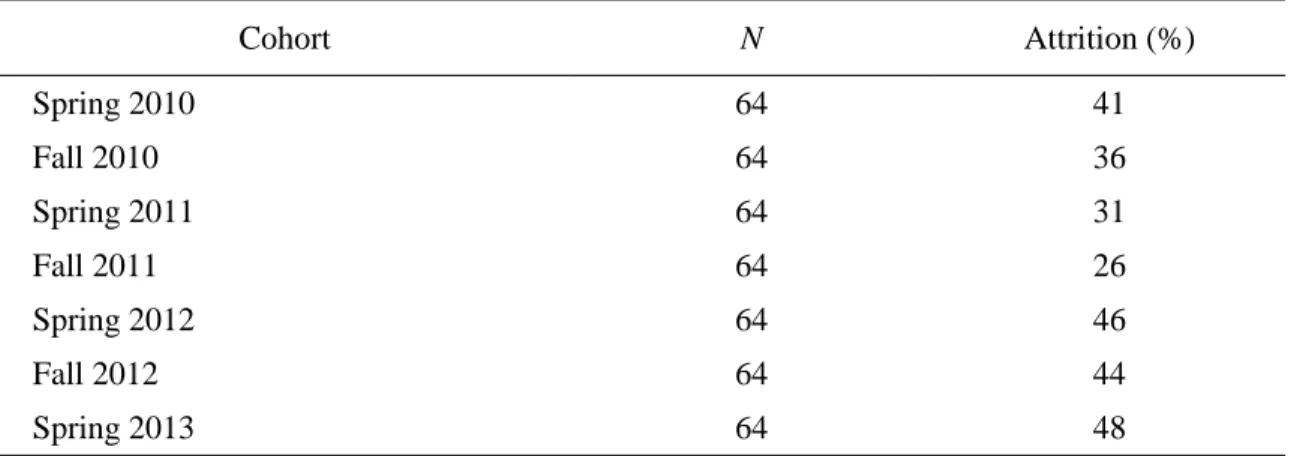
ranged between 20%-30% (Institutional Data, 2012). The vice president of nursing reported that there was a disparity between the number of students who enter the nursing program and the number of students who successfully completed the first year (personal communication, 2013). The cause of the significant number of students who left the program has not been determined and the amount of program data are limited; however, it appears that students were unprepared for the rigor of an accredited nursing program. Table 1 illustrates the attrition rate of the local ADN program.
Table 1
2010-2013 Average of Student Attrition for ADN Program per Class
Cohort N Attrition (%) Spring 2010 64 41 Fall 2010 64 36 Spring 2011 64 31 Fall 2011 64 26 Spring 2012 64 46 Fall 2012 64 44 Spring 2013 64 48
Note. N = the number of students accepted into the ADN Program.
Nursing programs often benchmark students’ GPA for acceptance into the program. The department chair of the local school reported that many nursing programs' GPA requirement can range from 2.0 to 3.0, with a benchmark noted to be at 2.5
(personal communication, 2013) Nursing programs may also require an entrance exam specific to the academic discipline. The Accreditation Commission for Education in Nursing (ACEN) is the regulatory body for nursing and has not established any definitive
policies regarding the use of entrance exams as a part of the admission criteria in a nursing program. As a result, admission requirements vary from one nursing program to the next.
Applicants are typically assessed based on student GPA, high school diploma or equivalent, completion of prerequisite courses, and a letter of reference (Brar et al., 2010). Table 2 provides information regarding the courses that potential applicants needed to take prior to submitting an application. The potential student was required to pass each course with a C or greater prior to submitting their application as a potential candidate for entry into the ADN program.
Table 2
ADN Program Requirements for the Application Process
All courses will require a GPA of 2.0 “C” or greater
English 101
Biology 210
Psychology 201
Math 110
Note. Institutional Data, 2012.
Meeting the minimum GPA for program acceptance does not imply that a student was academically prepared for a nursing program. Students who apply to the ADN program often have academic deficiencies reflected in poor writing and computational skills that result in having to take courses multiple times in order to pass. If a student has not mastered basic skills prior to admission into the nursing program, the rigorous nursing curriculum can quickly become overwhelming. Table 3 outlines the courses required each semester during the first year in the local nursing program.
Table 3
ADN Students: First-Year Nursing Courses
ADN Students: First-Year Nursing Courses Semester 1
NUR 160: Introduction to Nursing (4 credits)
NUR 163: Nursing Across Lifespan I (2 credits)
NUR 170: Nursing Applications (1 credit)
Semester 2
NUR 165: Nursing Concepts & Clinical Practice I (6 credits)
NUR 263: Nursing Across Lifespan II (4 credits)
PHM 115: Drug Calculation I (2 credits)
Biology 211: Anatomy & Physiology II (4 credits)
Semester 3
NUR 265: Nursing Concepts and Clinical Practice II (6 Credits)
Biology 225: Microbiology (4 Credits)
Note. Successful attempt requires a “C” or greater in each class.
It is important to admit nursing students who have the highest chances of being successful and to assist those students who are not at their optimal educational level (Rush et al., 2012; Spector & Echternacht, 2010). Identifying at-risk students before they experience failure is a strategy used in many academic programs (Bondmass, Moonie, & Kowalski, 2008; Rush et al., 2012). Some researchers believe that established entrance requirements set the standards for admission and identify those students who may need additional academic preparation before immersion in a rigorous clinical curriculum (Bondmass et al., 2008; Rush et al., 2012). The admission process in nursing is an important aspect that provides information needed to make informed decisions about
applicants entering the nursing program (Bondmass et al., 2008). Danaher, Bower, and Somasundaram (2008) reported that establishing nursing entrance requirements based on evidence may be the best way to reduce student attrition.
Predicting success for students in any academic program is a challenge, but it is particularly important for students enrolled in nursing. The program is arduous and rigorous. Students may want to be a nurse, but may not be prepared for the commitment of study time to master the nursing curriculum. Poor academic performance is
debilitating for the student, and may lead to early recidivism, failure, or dropping out of the program. Even if the nursing student manages to barely pass the courses, the student is required to pass the NCLEX-RN to achieve licensure for nursing practice. ACEN monitors annual outcome data for each accredited nursing program. These data include acceptance rates, attrition rates, graduation rates, and first time pass rates on the NCLEX-RN. Nursing rograms that do not meet the minimal standards will lose their
accreditation, and graduating students from a non-accredited program may not sit for the NCLEX-RN.
Evidence of the Problem from the Professional Literature
The attrition rate for the ADN program at the local college continues to rise. This problem leads to serious consequences for the students, the nursing program, and the school. According to Seago, Wong, Keane, and Grumbach (2008), student attrition rates in nursing programs are high all over the United States. Higgins (2005) reported that there is a relationship between high attrition rates and decreased passing rates on the NCLEX-RN in many nursing programs. One contributing factor to attrition is that
students often fail to comprehend what it takes to be successful and that contributes to the student dropout rate. These students often drop out or fail out of school and assume marginal jobs that do not meet their basic needs (Monahan et al., 2011). Some students have to take a second or third job, resulting in their inability to return to school (Monahan et al., 2011). Some colleges and universities are being evaluated by the state and federal governments because of the money students owe for incomplete programs of study and excessive time to graduate (Brar et al., 2010; Loftin et al., 2013; Pederson, 2012).
Ceratin areas of the United States have been adversely affected by high attrition rates in academic programs. According to the National Center for Education Statistics (2011), the southeastern region of the United States has a high rate of illiteracy,
unemployment, high school dropout, and chronic illnesses (Andreias et al., 2010; Everett, 2011; Lee, 2012; Raag et al., 2011). Attrition impacts communities, health care dollars, educational institutions, and the state budget (United States Department of Labor, 2011). Students who drop out or who have failed out of school most often end up with minimum wage jobs due to attainment of a lower educational level. Additionally, the local area has an illiteracy rate that ranges between 18% to 45%, and a high school graduation rate of 72% (National Center for Education Statistics, 2011; State Department of Education, 2011). The low literacy, coupled with a low graduation rate, limits the population that nursing programs can use to fill their admission slots (Shulruf, Wang, Zhao, & Baker, 2011). This leads to the necessity for many nursing programs to accept students students who are underprepared or from outside of the local community. These options are not
desirable for they may exaccerbate the high attrition rate or provide students who do not remain in the community once graduated.
The unemployment rate for the local county is 8.3%, and for the state, it is 8.1% (State Department of Education, 2011). Table 4 provides statistical data regarding education in the local area and the unemployment rate. High unemployment rates often lead to concerns with basic needs, medical needs, and economics.
Table 4
Local Area Educational Background and Unemployment
Student information Percentage
High school or higher 85.5
Bachelor's degree or higher 29.2
Graduate or professional degree 11.8
Unemployment 10.6 Note. Local City Data, 2013.
Empirical data in the literature on admission requirements for nursing programs are lacking (Nicolson, Rourke, & Kanuka, 2010; Scott & Brinson, 2011). Many nursing programs do not have any way of determining a student’s educational preparation (Newton, Harris, Pittilgio, & Moore, 2007). According to Kenny (2010), accrediting agencies do not set standards for admission to a nursing program; instead, criteria are established for each nursing program based on the needs of the local area (Kenny, 2010; Newton et al., 2007). Some schools use entrance exams and some do not (Kenny, 2010; Pryjmachuk, Easton, & Littlewood, 2009). Entrance exams can provide empirical data on student performance in English, math, reading, and science (Kenny, 2010; Pryjmachuk et al., 2009). This information, along with GPA, can provide a profile of the students’
academic portfolio (Kenny, 2010; Pryjmachuk et al., 2009) along with the possibility to assist in the development of strategies that can improve student success throughout the curriculum (McGann & Thompson, 2008). Early recognition of academic problems is important to student success and effective problem resolution (Aylward et al., 2011; Douglass, 2012; Fraher et al., 2010; McGann & Thompson, 2008; Newton, 2008; Walker et al., 2011). Identifying the academic problem, developing individualized student
achievement plans, and providing immediate assistance to a struggling student is the recipe for a successful outcome for students who may not be adequately prepared for nursing school (McGann & Thompson, 2008).
There are multiple entrance exams available for use in admissions criteria for nursing school (Loftin, Newman, Gilden, Bond, & Dumas, 2013), including the TEAS, but limited data are available concerning best practice. According to Kenny (2010), admission standards lack the empirical evidence regarding the most appropriate methods for selecting applicants to nursing programs. Further research is needed to evaluate the problems that nursing programs have with attrition. There is a gap in service regarding ways to promote successful outcomes for students. Additional research will benefit students and nursing programs by helping nursing educators and administrators to develop strategies to assist underachieving students. Because the admission process should involve the selection of candidates with the greatest probability of success (Brookfield, 2009; Murray, Merriman, & Adamson, 2008; Newton, Smith, & Moore, 2007; Trice & Foster, 2008), those with scores not meeting the benchmark need to be informed so that other career options can be explored. Also, an educational plan can be
implemented based on entrance test scores that will improve the student’s chances of success. It is projected that this strategy of an entrance exam and continual mentoring will improve attrition and graduation rates, as well as the number of nurses entering the job market (Aylward et al., 2011; Newton, 2008; Walker et al., 2011).
The purpose of this quantitative study was to determine if the TEAS entrance exam can be used to predict academic success for ADN nursing students at a local school in the southeastern region of the United States. I investigated if there was a relationship between the total score on the TEAS test and student cumulative GPA at the completion of the first year in a nursing program. In addition, scores on the TEAS subsections of reading, math, science, and English were examined to determine their predictive value for student success. The TEAS was correlated with student GPA to determine the value of the tool as a part of the admission criteria for applicants. Adopting an entrance test as a part of the local program preadmission requirement may prove to be a logical step in improving student attrition. According to Bolan and Grainger (2008), the high demand for nurses, problems with attrition rates, and high tuition costs present a challenge to educational institutions to develop an admission process that will enroll applicants with the greatest probability of success. An entrance exam, such as the TEAS, is a viable option to screen new nursing applicants (ATI, 2012). The nursing program will receive data that will assist with student advising and candidate selection (ATI, 2012); the study results will also lead to a detailed plan that will outline opportunities for student
Definitions
Assessment Technologies Institute, LLC (ATI): A company that developed the TEAS test and other resources to evaluate student progress. The company’s primary focus is to work with nursing programs to achieve the best outcome for the student and the nursing program. One of the objectives of this company is to collaborate with nursing programs to provide resource tools to assist with assessment and remediation of nursing students and prepare them for the NCLEX-RN. ATI also offers online practice
assessments, academic skills, and resources to accommodate the entry-level students, review modules, DVDs, and questions to assist the student in any level of the nursing program (ATI, 2012). Also provided are services and educational products in
medical/surgical nursing, gerontology, mental health, newborn/women’s health, pharmacology, and community nursing based on evidence-based practice.
Attrition: The number of students who fail to return to school for a nursing program or are disqualified from completing a nursing program are divided by the number of students who completed the nursing program by a specified period of time (NCSBN, 2013). Each program formulates its own definition of attrition based on regulating guidelines. As a result, the meaning may vary between nursing programs.
National Council Licensure Exam for Registered Nurses (NCLEX-RN): The NCLEX-RN is an exam administered by the state to measure minimum competency in skills, knowledge, and attitudes that are important to meet the physical needs and safety of the public as a registered nurse (Bonis et al., 2007). This is the ultimate goal for all
graduating student nurses to pass the national board exam and become RNs (Bonis et al., 2007).
National Council of State Boards of Nursing (NCSBN):The NCSBN is the
organization representing 50 U.S. states and is responsible for ensuring that the candidate for licensure is evaluated to ensure relevant requirements are met to be called a licensed nurse (NCSBN, 2010). The organization’s primary objective is to ensure the health, safety, and welfare of the public (NCSBN, 2010).
Retention: The number of students who remain in the program at the end of each semester or completion of the nursing program (NCSBN, 2013). The formula generally used is the number of students completing the program on time divided by the number of students scheduled to complete the program. There is a close relationship between attrition and retention. Some nursing programs may use them interchangeably.
Test of Essential Aptitude Study (TEAS): An aptitude test used by various nursing programs as part of the admission criteria (Newton & Moore, 2010). The test is in place to screen student applicants’ level of educational preparation. The test is used to assess incoming students’ ability to complete nursing courses. The test is divided into four sections: reading, math, science, and English; it is made up of 170 questions; it takes 3.5 hours to complete and can be completed via computer or paper pencil testing (TEAS Test Breakdown, 2011).
Significance
It is important to reduce student attrition in the ADN program so that students graduate, pass the NCLEX-RN, and enter clinical practice. According to the United
States Government (2011), the Affordable Care Act will provide health care to an
additional 32 million people in the United States. Currently, there is a significant nursing shortage across the United States that affects the health of communities (Huntington, Covington, Center, Covington, & Manchikanti, 2011). Based on reports from the American Association of Colleges of Nursing (AACN), the shortage is projected to be greater than 260,000 by 2020 for the RN population alone (AACN, 2009). Without nurses to care for individuals with medical needs, the health of individuals in the United States could be at risk (Huntington et al., 2011).
The local area is in need of nurses to provide care to individuals within the community. According to the United States Department of Labor (2011), the RN educates, administers health care, and provides holistic medical care to individuals, groups, health care facilities, and schools of higher education and adult learning. Within the scope of practice set by the NCSBN, the nurse provides holistic care to individuals of various ages and socioeconomic status (Mason, 2012). A decrease in students completing the nursing program leads to fewer community nurses, resulting in a negative impact on the health care of families, communities, and the United States at large (Duvall & Andrews, 2010; Mason, 2012).
Mason’s (2012) study provided information that may assist the local nursing program with making decisions regarding their admission policies. The study
benchmarked the first year in the nursing program (first semester, second semester, and third semester) for 2010-2013 cohorts. Because the attrition rate for nursing students is at its highest during the first year of nursing (Carolan & Kruger, 2011), it is more beneficial
to identify the problems during the first year of nursing school rather than when the students graduate and fail to pass the NCLEX-RN. Students who do not master the NCLEX-RN on the first attempt can jeopardize the nursing program’s standing with ACEN. A nursing program accreditation is a requirement for graduates to be eligible to take the NCLEX-RN (ACEN, 2013).
The present study was used to evaluate the TEAS as a predictor of academic success as measured by GPA. The relationship of the two variables was assessed to determine if the TEAS should be a part of the admission criteria at the local college. High attrition rates in nursing programs generally occur in the first year of college (Andrew, McGuinness, Reid, & Corcoran, 2009; Carolan & Kruger, 2011; MacKusick & Minick, 2010; O’Brien et al., 2012; Urwin et al., 2010; Whyte, Madigan, & Drinkwater, 2011). The findings of this study may offer some solutions to educators and health care administrators on ways to improve GPA and attrition (Moseley & Mead, 2008).
Research Questions
The research questions that guided this study were used to investigate the relationship between TEAS scores and the cumulative GPA of first-year students to determine if success at the completion of students’ first year in the nursing program can be predicted from the overall TEAS and its subsections of reading, math, science, and English. The TEAS was being used to identify those students in need of remediation or student mentoring, but may also be implemented as an entrance exam for admission into the nursing program. To accomplish the purpose of this study, two questions and two alternate and null hypotheses were posed.
RQ1: Is there a positive correlation between nursing students’ cumulative GPA and the TEAS test scores?
Ho1: There is no significant positive correlation in the TEAS test and student GPA after the first year of nursing school.
Ha1: There is a significant positive correlation in the TEAS test and student GPA after the first year of nursing school.
RQ2: Can the TEAS total score or subsection scores for reading, math, science, or English predict student success as measured by GPA?
Ho2: The TEAS total score or subsection scores for reading, math, science, or English are not predictive of student success as measured by GPA.
Ha2: The TEAS total score and subsection scores for reading, math, science, and English are significant predictors of student success as measured by first semester GPA. Evaluating these questions assisted in determining if the score on the TEAS test or subtests could be used as a predictor of nursing students’ academic success during the first year of nursing school. The study provided information on the value of using an entrance exam to achieve positive student outcomes.
Review of the Literature
The literature review consists of five sections and is primarily based on scholarly articles that are less than 5 years old. The articles are peer reviewed and supportive of evidence-based practice. The search included Medline, CINAHL, ERIC, and Google Scholar databases. The primary areas of focus were the nursing curriculum, faculty role, student role, and student attrition. All of the following keywords were included in the
literature search: Entrance exams, nursing programs, first-year NCLEX scores,
community colleges’ attrition rates, student attrition rate, success factors, recruitment, correlation, nursing shortage, and nursing faculty.
Theoretical/Conceptual Framework
The theoretical framework for this study was based on two theorists. The first was Knowles’ theory of adult learning, and the second was Bandura’s (1986) social learning theory (SLT). Knowles and Bandura integrated teaching modalities that impact student-learning outcomes by enhancement of transfer of knowledge. These theorists support the learning styles of adult learners who have had more life experience than younger students who have recently graduated from high school, but who still may not have developed self-directed learning skills (Bednash, 2008; Evans & Stevenson, 2010; Hinshaw, 2001; Myers et al., 2011; Yuen, 2012).
Knowles’ adult learning theoryis based on the belief that adults are self-directed learners who use past experiences to gain future knowledge (Clapper, 2010). Knowles (1984) believed that adults learn differently from children, and the more proactive the learner is, the richer the learning experience. Myers et al. (2011) claimed that by capturing how individuals learn, interventions can be developed that will generate the best learning outcomes. Educators can enhance the student-learning process by using strategies that empower the students to identify their own learning style (Myers et al., 2011; Slavin, 2006).
Knowles (1984) developed a conceptual basis for adult education and learning based on andragogy, the study of adult learners. It is important for researchers to have an
understanding of adult learners. An educator who has a foundation rich in adult learning principles increases the probability of success regarding educational objectives (Clapper, 2010; Myers et al., 2011). The educator’s knowledge of learning needs may assist adult learners in developing their plans based on a collaborative effort between the student and educator (Myers et al., 2011). In the self-directed learning theory, Knowles (1984) encourages educators to empower adult learners to be in charge of their own learning needs. There are six assumptions associated with adult learners that present a unique approach to learning:
1. Adults prefer to use previous experiences in life to direct their learning needs. 2. Adults gain knowledge throughout their lives and use that to build new
experiences.
3. Adults can interact with others to prompt an eagerness to learn new concepts. 4. Adults prefer to solve problems rather than be told about subjects to learn. 5. Adults are motivated by their own internal drive rather than external
motivators.
6. Adults want to know what factors are important in the learning process (Knowles, 1984).
It is important for students to be active participants in the learning process (Clapper, 2010; Myers et al., 2011). Participation assists in strengthening the learning process and promotes critical thinking skills (Clapper, 2010; Myers et al., 2011). Some educators direct the learning environment to be passive (Clapper, 2010). A passive learning environment is one in which the teacher provides the information that must be
learned to the student. This approach most often leads to a passive learner (Clapper, 2010; Myers et al., 2011). Knowles (1984) believed that passive learners are less likely to be successful because they lack the stimulation that occurs when actively participating in the learning process. In a passive learning environment, students find it difficult to be attentive in class and may rely on memorization to be successful on tests. This approach often leads to a passive learner with poor development of critical thinking skills and who may have difficulty mastering concepts.
The second theorist who provided a foundation for this study is Bandura (1986). Proponents of SLT propose that human behavior is a continuous interaction between cognitive, behavioral, and environmental influences (Bandura, 1986). Most individuals learn through observational learning (modeling), and the information is stored and then guides the action of the individual (Bandura, 1986). According to Bandura (1976), learning depends on the learner and the model, and not all observed behaviors are successful. Factors that contribute to successful outcomes are as follows:
1. Attention: Multiple factors may increase or decrease the observational experience. These factors include distinctiveness, affective valence, complexity, prevalence, and functional value, characteristics (e.g., sensory capacities, perceptual set, arousal level, and past reinforcement).
2. Retention: Remembering priority actions includes symbolic coding, cognitive organization, mental images, and symbolic and motor rehearsal.
3. Reproduction: Reproduction of images includes self-observation and physical capabilities.
4. Motivation: Possessing a good rationale to imitate leads to motivation. This includes the motives (imagined incentives) and seeing/recalling the reinforced model (Bandura, 1976, p. 398).
The local nursing program uses Bandura’s SLT, but it is particularly evident in the acute care setting in the nursing students’ clinical rotation. Students are scheduled multiple assignments during their clinical rotation. Observation is an important facet of student foundational knowledge and is a requirement when students are paired with a nurse during clinical rotations in specialty areas. Using Bandura’s SLT as a component of the organizational framework enhances learning during the first year of nursing school and facilitates future learning opportunities. Nursing programs consider student success to be a primary goal of learning (Kaakinen & Arwood, 2009; Moseley & Mead, 2008). The learning process is multilayered and should be cultivated by colleges from the students’ first year until transitioning into the workforce (Clapper, 2010).
Review of Pertinent Literature
The next section is divided into three parts and includes topics related to variables that may affect student attrition. In the first section, I focus on academia and attrition. I then highlight the faculty role in facilitating learning and improving student attriton. The final section provides an overview of factors that may influence the academic success of the college student.
Academia and attrition. Science and math are prerequisites to a nursing program (Newton, 2008; Scott, Keehner Engelke, & Swanson, 2008). Mosley and Mead (2008) sought to predict who will drop out of nursing courses and who will be successful. The
researchers found that those students who performed below level in science experienced a greater difficulty being successful in nursing courses. The findings for math courses were inconclusive for nursing courses.
It is difficult to determine what makes a student successful in nursing. Bridging the gap between entering the program and successful completion is a task that takes much work as shown in Moseley and Mead’s (2008) study. According to Fox and Abrahamson (2009), the process for student selection plays a role in student outcome and whether or not they will enroll and complete the program successfully. Entrance exams are in place to assist nursing program leaders to make objective decisions regarding students entering a program of study (Moseley & Mead, 2008). According to Mosley and Mead’s findings, there is a positive correlation of success between student performance in science and the first year of nursing school. This relationship has been cited in various literary findings, and some researchers feel that science is the cornerstone of success in program
completion (Scott et al., 2008).
Research is important in establishing a benchmark for patterns of success
(Hassmiller, 2010; Heroff, 2009). It is important for nursing curricula to demonstrate an in-depth understanding of standards of care outlined by the NCSBN (2010). A major aspect of quality care is having standards in place that promote positive outcomes
(Huntington, 2011; Naylor & Kurtzman, 2010). Newton (2008) examined the importance of prerequisite classes to student success in the nursing program. According to Newton (2008), success in math classes are a strong predictor of academic success in a nursing curriculum. The researcher recommended that students be proficient in dosage
calculation prior to entering the nursing curriculum (Newton, 2008). This article supports the need for students to be proficient in math prior to entering a nursing curriculum.
Trice and Foster (2008) examined the interview process as a component of the admission criteria. The purpose of this study was to identify students with a higher probability of being successful in academics. Some researchers and nursing leaders believe that student interviews will assist with student selection and should be a part of the admission criteria (Dante et al., 2011; Rosenberg, Perraud, & Willis, 2007).
According to Trice and Foster (2008), including the interview process as part of the entrance requirement helps increase diversity and increase communication between student and faculty.
Davenport (2007) researched companies dedicated to promoting academic success in nursing. One company discussed is the Assessment Technology Institute (ATI) that focuses on a holistic approach to learning and identifies aspects of learning needed to assist in preparing a nursing student for success in nursing school. Opportunities for improvements encompass the student, faculty, curriculum, and the community (Dapremont, 2011; Davenport, 2007). According to Davenport (2007), ATI assists in curriculum improvement, faculty professional development and student comprehension, analysis, and development of a critical thinking process to reduce attrition. While Newton et al. (2009) supported this view, others held different views. For example, Harding (2012) and Lyons (2008) called for the investigation of teaching techniques, including ATI-based ones, towards enhancing safe and effective care delivery and improving student success rates on the NCLEX-RN exam. The ADN program associated with this
study has begun to use ATI as a resource for their program. The program can be used to identify at-risk students and to develop individualized plans to improve attrition.
Eaton and Bean (1995) completed research on the effect of coping behavior on student dropout, social integration and academia. The research was done to evaluate claims presented in a theoretical model that incorporated academic approach, social approach, and social avoidance. The researchers used a questionnaire that referenced Bean’s (1985) research on attrition rate. The research was held at a major Midwestern university. The questionnaires were distributed to 534 individuals. Of the questionnaires received, 49% of them were used in the study. Eaton and Bean’s (1995) findings
supported the hypothesis that there is a positive relationship between student behavior, academia, and social integration.
Faculty role in student attrition. Faculty support is important to student success and is most often a key to recruitment and attrition (Light et al., 2009; Myers et al., 2011; Paulson, 2011). Some students view faculty as parental figures and are most often guided by their feedback (Dapremont, 2011). Students often report feelings of discouragement when faculty support and encouragement are limited, especially African American nursing students (Dapremont, 2011). Most individuals would venture to say that positive and caring behaviors are motivating factors for all students regardless of race or
nationality. This article supports the beliefs of the local nursing program that positive student faculty interactions can increase retention of students through collaboration and mutual respect of each other.
The role of the faculty is vital to student success (Baker, 2010; Shelton, 2012; Uyehara et al., 2007). Light, Calkins, Luna, and Drane (2009) used a mixed method approach to research the need for professional development programs for faculty. The objective of professional development courses is to inspire educators to incorporate current trends to teaching and learning while improving teaching strategies for a diverse population. A descriptive model of learning and teaching was used to illustrate the learning relationship between the educator and the learner. The researchers reported positive results when educators were given the opportunity to develop their own repertoire of knowledge. These results can be used to improve student learning and development while improving the attrition rate of students.
Baker (2010) conducted a study on a random sample of nursing programs and their strategies to improve attrition. Participants were surveyed via an online platform and were asked to respond to a questionnaire on the employment and efficacies of attrition strategies assembled from the literature. Of the various methods analyzed by Baker (2010), faculty availability was the most significant. Faculty in undergraduate nursing programs noted that it was important to provide timely feedback on examinations and assessments as well as on clinical performances. The least employed methods were peer student mentoring and organized study groups. The faculty confirmed the use of many of the methods, but rated their use as efficacious only when used for retaining minority-nursing students. Baker’s (2010) findings revealed that the highest rated methods were those involving direct interaction between faculty and nursing students.
Poorman, Mastorovich, and Webb (2008) found that faculty who demonstrate caring behavior to students, especially at-risk students, facilitate learning and promote positive student outcomes. In this study, the researchers interviewed thirty nursing faculty members. The researchers asked the educators to discuss a time when
assistance was provided to a student who was struggling. The educators were asked to do some self-reflecting and describe what the experience meant to them. They were then asked if they felt that student progress was improved or hindered. At completion of the study, the researchers found that educators had a unique opportunity to assist the learning process by creating a collaborative relationship between the educator and the student. The researchers also found that the collaborative relationship assists in decreasing the gap between student’s expectations and faculty expectations regarding the learning process (Poorman et al., 2008).
The type of students entering colleges has changed over the years. One of the demographics in nursing school that has changed in the last 20 years is the return to school of the older adult student. This type of student often brings life experiences that can change the dynamics of the classroom setting (Sifford & McDaniel, 2007). Most nursing programs often see two different demographics; the adult learners and students entering directly from high school (Kenny et al., 2011). Each of these demographic groups brings challenges to nursing program administrators (Kenny et al., 2011). Adult learners are faced with more challenges while pursuing their goal of higher education than are faced by the more traditional nursing program graduate (Kenny et al., 2011). Researchers are divided on the impact of age on academic performance and progression.
Donaldson et al. (2010), Salamonson, Andrew, and Everett (2009), and Vandenhouten (2008), all argued that age significantly influences nursing students’ ability to learn and progress. Students who find it difficult to progress may become discouraged and drop out of school. It is important to the student that faculty members demonstrate caring
behaviors. For some students, this behavior encourages the student to work harder in school to obtain their objectives. Other researchers such as Ali and Naylor (2009), Dante et al. (2011), Salamonson et al. (2008), and Burger (2003) all maintained that age has no significant impact on nursing students’ ability to learn and it does not impact progression. As a result, it does not affect student attrition.
A challenge for some nursing students is balancing school, work, and family life (Monahan et al., 2011). Faculty members find it difficult to lecture due to students’ detachment from the topic being discussed and students fluctuating in and out of the class to use the phone. According to Jinkens (2009), many adult learners depend on
employment to meet basic needs for food, shelter, clothing, and safety. Management of time between work and school is an element that students find difficult to master (Monahan et al., 2011; Salamonson et al., 2009). Jinkens (2009) observed that
employment often takes precedence due to the need to survive. As a result, these students fall behind on their studies and find it difficult to catch up (Salamonson et al., 2009). Key concepts become missing; the student becomes discouraged and often drops out of school due to poor grades or poor attendance in the classroom (Ward-Smith et al., 2012).
Student attrition.It is important for student nurses to remain in school (Pitt et al., 2012). A decrease in the number of students within the first year of college leads to
fewer candidates for nursing degrees (Mosley & Mead, 2008). Heroff (2009) wrote a research article on the relationship between student lack of success and the impact on communities and the workforce. The researcher reported that students who do not pass the NCLEX-RN decrease the number of RNs in the workforce and could potentially compromise accreditation for a nursing program (Heroff, 2009). This information reinforces the need to accept candidates with the best plan for success (Rosenberg et al., 2007). Nursing student candidates will need to prepare themselves for the challenges incurred in a program such as a 2-year nursing program (Uyehara et al., 2007). Students need to create a plan that leaves enough time to learn the information required for a successful outcome in coursework and the clinical setting (Kolb & Kolb, 2009).
Murray et al. (2008) studied the use of the Health Education System, Inc. (HESI) exam as a way of predicting academic success of first-year nursing students entering a nursing curriculum. The researchers used 68 participants from an associate-degree nursing program and 69 students from a baccalaureate program. The HESI test identified academic weaknesses and provided a focused remediation plan to increase student success. Based on the findings by Murray et al. (2008), using the HESI as an entrance exam is a good way to determine a student educational baseline level. In other words, the findings of their study indicated that the HESI is a good predictor of success in students entering a nursing program. The researchers reported that the results showed a significant positive correlation with grades (Murray et al., 2008).
McGann and Thompson (2008) completed a mixed method research study on factors related to students at risk for failure. The researchers used low SAT scores and a
GPA of C in science as the indicator of students at-risk. Some common threads emerged during the interviews. Some of these themes were limited time, heavy course loads, sleep deprivation, test-taking anxiety, and procrastination (McGann & Thompson, 2008). An individual plan for improvement was developed and provided to each student. The plan included student mentoring, coping strategies, time management, and test taking
strategies. The students were mentored throughout the program and assistance was given in areas of weaknesses. The results were positive and demonstrated that structured support can positively affect outcomes. The researchers found that the pass rate on the NCLEX-RN increased from 87.76% to 94.81% after initiating a remediation plan.
Implications
Research on the effectiveness of entrance exams as a tool for nursing student attrition is limited. The findings of this study provided information that could encourage other researchers to pursue similar topics. This correlation study provided quantitative data about the relationship between the TEAS test and student GPA during the first year of school. The findings may also provide information that will assist in improving student academic success. Poor student attrition in nursing programs often occurs within the first year of school (Andrew et al., 2008; Andrew et al., 2009; Carolan & Kruger, 2011; Diary et al., 2003; MacKusick & Minick, 2010; O’Brien et al., 2012; Urwin et al., 2010; Whyte et al., 2011). The purpose of this study was to evaluate the relationship between the TEAS test, subsections, and student cumulative GPA at the completion of the first year in a nursing program and to identify if the TEAS entrance exam can be used to predict academic success. The findings could assist in developing ways to reduce student
attrition. The data demonstrated the relationship between the TEAS results and student GPA. If the prediction is positive, the information could be used to promote social change by revising the entrance criteria in the nursing program to include the TEAS test as part of the candidate selection process for students entering the nursing program. If the
outcome is not positive, the findings can be used to develop a student mentoring program for at-risk students entering the nursing program.
Summary
This study examined if the TEAS could be used as a predictor of student success in an ADN program located in the southeastern region of the United States. The TEAS scores were correlated with student GPA and a linear regression was used to determine the predictive value for using the TEAS as an entrance exam for the nursing program. It is important to have a comprehensive understanding of all the facets that affect student outcome during the first year and at program completion. Identifying at-risk students is the first step in creating plans to enhance student-learning outcomes, reduce attrition, and improve the retention rate during the first year of college (Walker et al., 2011).
Section 1 included a description of the study, the goals for the study, and a review of the literature. Section 2 focuses on the methodology for the study. The design and approach used for the study were justified. The sampling method, the sample size, data collection, and instrument are discussed. The section includes (a) data analysis; (b) assumptions, scope, and delimitations; and (c) measures to be taken for the protection of participants’ rights. Section 2 also contains the results of the study, as well as
Section 2: The Methodology
Introduction
Limited and inconsistent research is available regarding predictors of student success in nursing programs. Research is a component of evidence-based practice and is an element for promoting change. This study was used to explore the use of the TEAS as a tool in predicting academic and nonacademic success with ADN students during the first year of school. In this study, I examined the degree of association between the TEAS results and students' GPAs to determine if a relationship exists. A quantitative
correlational design and linear regression were used to facilitate this approach. Section 2 includes a description of the research design and approach. This section also includes the setting and sample, instrumentation and materials, data collection and analysis, the findings, assumptions, limitations, scope, and delimitations of the project study.
Research Design and Approach
In this quantitative study, I used a predictive correlation design with retrospective data, which are data from past records, to identify relationships and predictors for
academic success in an ADN program. The use of retrospective data can be used in nursing and is relevant to nursing research (Haber & Wood, 2010). A correlation design was favored because it allowed an examination of the relation or pattern between variables (Creswell, 2012). I explored the relationship between variables, not cause and effect relationships. This was not an experimental study, and there were no dependent or independent variables in this study. Rather, the design included a predictor variable and a criterion variable. In this study, the TEAS served as the predictor variable and the GPA at
the end of the first year was the criterion variable. A predictive correlation research design can detail the relationship among variables without the investigator taking any active step to intervene; a prediction study may be used to explore whether a measure taken at one time may predict later results (Lodico et al., 2010). This type of design decreased the chance of bias and improved the validity of the study. In addition to
examining the relationships that exist between two or more variables, a correlation design enables a researcher to determine the characteristics of an existing relationship and to generate pertinent hypotheses (Creswell, 2012; Klepstad & Kaasa, 2012). This approach involves a methodical collection of statistical data in numerical form that can be analyzed and evaluated (Östlund, Kidd, Wengström, & Rowa-Dewar, 2011).
A qualitative approach was considered, but ruled out because this approach would not yield the data needed to address the research questions. The study provided
quantifiable data to assist the local program with solving the problem of the high attrition rate. According to Östlund et al. (2011), nonexperimental research studies, such as correlation research, are used in quantitative studies to gather objective information. For these stated reasons, it was more logical to use a quantitative approach in this study.
Setting and Sample Setting
The setting was a public technical college located in the Southeastern region of the United States. The college has a diverse population of students with approximately 56% minorities and 44% Caucasian students (Institutional Data, 2012). Enrollment is between 5,000 to 6,000 students in the spring and fall with a variation during the summer
(Institutional Data, 2012). The nursing program admission criteria do not include
ethnicity, economical background, or special affiliations. The technical college has three nursing programs of study. The first program is the ADN program. This program
graduates nursing students twice a year during the spring and summer semesters. The second program is the practical nursing (PN) program. This yearlong program graduates nursing students once in August of each year. The third program is a licensed practical nurse (LPN) transitional program. This program accepts LPNs once a year in the fall. Once the transitional class is successfully completed, the students matriculate to the fourth semester and then fifth semester. Students graduate after successful completion of all semesters. This study was limited to the ADN program.
Sampling and Sample Size
The initial target population was 448 ADN students who were accepted into the program during the years of 2010 to 2013. But, because the TEAS scores were not available for the years of 2010 and 2011, the sample size was changed to 130 students. Approval for the retrieval of the preexisting data was obtained from the vice president of the nursing program. The use of a power analysis was not necessary because the study included a sample of archived data for all of the nursing students accepted into the program during the established period.
Instrumentation and Materials The TEAS
The TEAS was the tool used in this study and was considered the predictor variable. The TEAS is an entrance exam developed by the Assessment and Technology
Institute (ATI) and is used by many nursing programs to measure student academic proficiency (ATI, 2009). The TEAS is a four-option, multiple choice test that consists of 170 questions and comprises interval data (ATI, 2009). The test was developed for nursing programs to measure students' basic skill in English, math, science, and reading. Student scores are established based on the national average and are benchmarked by each nursing program at a proficient level, advanced level, or exemplary level. The benchmark for this local program is a proficient level. Table 5 provides information related to the level of measurement for the TEAS.
Table 5
Level of Measurement for TEAS
Content area Number of scored questions Percentage of test
Reading Paragraph Comprehension (19) Passage Comprehension (23) 42 28 Mathematics Numbers/Operations (19) Algebra (4) Data Interpretation (3) Measurement (4) 30 20 Science
Human Body Science (11)
Life Science(15) Earth/Physical Science (14) Scientific Reasoning (8) 48 32 English/Language Grammar/Word Meanings (15) Spelling/Punctuation (9) Structure (6) 30 20 Note. ATI, 2009.
Student retention is a topic of discussion for many nursing programs. Making decisions regarding applicant selection is a component of improving the retention rate. The first year in the nursing program was selected because of the poor retention rate for students during that time. It is important to select tools that will provide information needed to make vital decisions about who to accept in the nursing program. The TEAS is a measurement tool designed by ATI to assist in applicant selection. Comprehending the TEAS results assisted in helping the admissions committees make enrollment decisions. Table 6 provides information related to academic preparation and measurement of the TEAS.
Table 6
TEAS Academic Preparedness Categories
TEAS V Academic preparedness categories
1. Exemplary - (90.7%-100%) Indicate a very high level of overall academic preparedness
necessary to support learning of nursing-related content.
2. Advanced - (78.0%-90.0%) Indicate a high level of overall academic preparedness
necessary to support learning of nursing-related content.
3. Proficient - (58.7%-77.3%) Indicate a moderate level of overall academic preparedness
necessary to support learning of nursing-related content.
4. Basic - (41.3%-58.0%) Indicate a low level of overall academic preparedness necessary
to support learning of nursing-related content.
5. Developmental - (<41.3%) Indicate a very low level of overall academic preparedness
necessary to support learning of nursing-related content.
TEAS validation and reliability. For the validity of the content of the TEAS, a review and evaluation of each of the test items was completed by nursing experts in both education and clinical practice. Faculty are responsible for the suitability and relevance of the content of each test item. According to ATI (2004), the selection of nursing schools was completed for field test to examine the validation of the content, and each of the test items was revised as needed based on the analyses. ATI provided reliability data
assessment for each item on the TEAS (ATI, 2008). The reliability of each assessment was calculated using Cronbach’s alpha reliability coefficient (ATI, 2004). Cronbach’s alpha reliability coefficient’s value ranges between 0 and 1, and values below 0.5 are considered unacceptable reliability (Green & Salkind, 2011). The TEAS assessment ranked on Cronbach’s alpha reliability coefficients above 0.526, the leadership assessment’s lowest alpha value (ATI, 2008).
Student GPA
The student GPA represents the criterion variable. I predicted that this variable would be impacted by the total TEAS score, as well as the four TEAS sub scores of reading, math, science, and English. Student GPAs were gathered from the end of the first year in the nursing program. Student GPA is classified as ratio data.
Data Collection and Analysis
The data collection and analysis process were vital components to the research process. It is important to provide information that is accurate and clear. This study used post hoc data collected by the local nursing program in this study; post hoc data are
information that have been collected by researcher(s) and have passed through layers of analysis (Shek & Sun, 2010).
Data Collection
Approval for data collection was obtained from the vice president of nursing programs and the Institutional Review Board (IRB) at Walden University prior to the beginning of the data collection process (IRB Number 08-15-14-0075168). Data
collection came from archived information of students admitted from years 2012 to 2013. The data collection included the numeric total score of the TEAS results, as well as the scores for each of the four TEAS subsections of reading, math, science, English, and student GPA at the end of the first year in the nursing program.
The TEAS and student GPA had specific collection points. The TEAS collection point was after students were accepted into the nursing program, prior to the beginning of nursing classes. The TEAS scores were comprised of interval data. The information was reflected in either a table or a graph.
The collection point for student GPA was at the end of the first year in the nursing program. The program GPA was used to determine student progression. If a student failed to progress, the student was not allowed to advance. If the student retains academic standing, the student can request to be readmitted into the nursing program the next time the course is offered. The collected information was stored on a spreadsheet and coded to maintain anonymity. All identifying information was deleted. Confidentiality was
and IRB. All results are stored in a computerized system, which is password protected. To maintain confidentiality, the password was not shared.
Data Analysis
Descriptive and inferential statistics were used to analyze the data. According to Creswell (2012), using descriptive statistics is a simple way to manage quantifiable data. Stepwise multiple regression was used to determine if the total TEAS score or the scores on any of the four TEAS subtests can predict student success as measured by student GPA at the end of the first year. According to Creswell (2012), multiple regression examines the strength and direction between the criterion and predictor variables and can be used with ratio or continuous data. Significance of the results was accepted at p ≤ 0.05.
Summary of Findings
The purpose of this quantitative correlation study was to evaluate student success in an associate degree-nursing program located in the southeastern region of the United States. Descriptive statistics were used to evaluate the student’s first-semester GPA and first-year GPA. The process described the data being evaluated but did not make a definitive conclusion about the results. Descriptive statistics does not draw conclusions about the hypothesis, but enables the presentation of the data in a more expressive way, thereby allowing for simpler understanding of the data (Green & Salkind, 2011).
The focus was to evaluate two variables to determine if academic success can be predicted during the first year in a nursing program. The number of students from the Spring 2013 cohort (50.8%) and the Fall 2012 cohort (49.2%) were similar.
The variables were the TEAS results prior to entering the nursing program, subsections of the TEAS, and student GPA after the first year in the nursing program. The TEAS results and subsections were correlated with student GPA to determine if a relationship exists. Archival data from 130 students were used for the sample size. In an effort to evaluate the research questions, archived program data were collected and examined. The TEAS scores were obtained from the local program online site of ATI and student GPA from the local program electronic record system. Both systems were secure and password protected. Data were collected on two cohorts of students who attended the nursing program during the Spring 2013 (66 students) and Fall 2012 (64 students).
Table 7 displays the two GPA scores as well as the five TEAS scores. Student GPA scores were M = 2.83 and M = 2.63 for the first semester and first year,
respectively. The TEAS Composite score was M = 67.44 and the highest of the four TEAS subscale scores was for TEAS Math. The composite score represents the average of all the combined scores in the subsets.