Positive Behavioral Support in Middle School: The Impact of Inconsistent Implementation on School Culture
by
Regina M. Walker
A dissertation submitted in partial fulfillment of the requirements for the degree of
Doctor of Education (Curriculum and Practice) at the University of Michigan-Dearborn
2018
Doctoral Committee:
Associate Professor Martha A. Adler, Chair Lecturer II John Burl Artis
Dedication
To Bill, Amanda and Mary. You provided me with unconditional love and
encouragement when I felt that I was not going to make it through this program. You checked on my writing daily to track my progress and to keep my spirits high. You recognized the
“albatross” of this project and made me persevere until I finished. You never questioned why I was doing this, even when I asked myself that very same thing.
Thank you to Rachel for your incredible expertise and for providing me with a model to follow. Thank you also, to Erin, Roger, Ann and Mom for your support, love and patience.
To the students and educators at the middle school studied in this dissertation, who graciously gave me their time to provide information for my research and discuss their thoughts and suggestions for implementing PBS, thank you. I could not have done this project without your help. You were so eager to give me your input and always available for me when I had to seek you out for more questioning or clarification.
To my soul mates and great friends in the very elite Cohort 2, who are now my lifelong friends: Diana Baran, Anna Melody Macri, and Lina Jawad. You, the very trifecta of strength, stood by my side every step of the way during our long journey and made “traveling” fun. We had to make it through the endless classes before we started the writing, and I could not have headed to UM after a long day teaching algebra without knowing you were waiting for my arrival.
Acknowledgements
To Dr. Martha Adler, my committee chair and “Advisor Extraordinaire.” You were there for me from the start of this program, planning my classes and lessening my anxiety. You were relentless in your standards for excellence (“Send Dr. Adler 30 pages, and you will get 60 in return, filled with suggestions, comments and corrections!”). You humbled us all with your boundless energy and enthusiasm, and guided us through our classes as well as helping us
navigate our research. You set high expectations and goals for us, and you were always available to meet to ensure that we were able to achieve those goals. A thank you is not enough.
To Dr. John Artis, my first professor in the doctoral program. You were my favorite throughout my course of study; your classes are still in my daily thoughts, while I teach and while I think. You imparted a wealth of knowledge that far surpassed the subject matter. In your Labor and Management class you orchestrated an administrator/teacher contract negotiation and told us to take no prisoners. I am still doing damage control with my friends from that
experience! Thank you for agreeing to be on my committee.
To Dr. Rachel Wannarka for impacting us all in the field of special education. Thank you for agreeing to be on my committee even though you changed career paths and left the
University of Michigan. I am most appreciative to you for providing the question for my Qualifying Exam, because it forced me to think of discipline in the eyes of special education, which greatly added to my depth of knowledge in the field of behavioral management.
Success consists of going from failure to failure without loss of enthusiasm. – Winston Churchill
Table of Contents
Dedication ... i
Acknowledgements ... ii
List of Tables ... vii
List of Figures ... viii
Abstract ... 1
Chapter 1: Introduction ... 2
Statement of Problem ... 2
Discipline issues in U.S. schools ... 2
Discipline issues specific to Fitzpatrick Middle School ... 3
Purpose and Significance of the Study ... 4
Research Questions ... 9
Conclusion ... 10
Chapter 2: Literature Review ... 11
Discipline, Learning, and Achievement ... 11
General education students ... 11
Students with behavioral issues and emotional/behavior disorders ... 14
Language and Cultural Disparities in Discipline ... 18
Punitive Discipline, Zero Tolerance, and Exclusion ... 19
Teacher-student relationships ... 25
Positive Behavior Support System ... 28
Environmental considerations within PBS ... 32
Teacher-student communication within PBS... 33
Effective Implementation of PBS: Case Studies ... 34
Challenges and the Social Validity of PBS... 40
Discussion ... 42
Conclusion ... 42
Chapter 3: Research Methodology... 45
Research Design... 46
Site and Participants ... 46
Data Collection ... 48
Procedures ... 50
Interview protocol: Students ... 50
Teacher/support staff survey ... 51
Interview protocol: Teachers ... 51
Data Analysis ... 52
Survey data... 53
Interview data... 53
Potential Ethical Issues ... 54
Positionality ... 55
Conclusion ... 56
PBS Protocol at Fitzpatrick Middle School ... 58
Student and Teacher Profiles ... 66
Student profiles ... 66 Teacher profiles ... 67 Findings... 73 Student perspectives... 73 Teacher perspectives ... 89 Summary ... 105 Conclusion ... 105
Chapter 5: Interpretations and Recommendations ... 107
Breakdown in PBS Implementation... 109
Student participation and engagement ... 109
PBS and the need for consistency ... 110
PBS and Educator Factors ... 114
Educators’ responsibilities and involvement ... 114
Perceived barriers to educator involvement ... 117
PBS and the Fitzpatrick School Climate ... 119
School discipline and social curriculum ... 119
Effective implementation of PBS to improve school climate ... 121
Conclusion and Recommendations ... 124
Limitations ... 126
Recommendation for Future Research ... 127
References ... 129
Appendix A: Positive Behavioral Support Student Interview ... 138
Appendix B: PBIS Self-Assessment Survey (Teacher/Staff) ... 140
Appendix C: Positive Behavioral Support Teacher/Support Staff Interview ... 143
Appendix D: Teacher/Support Staff Informed Consent ... 145
Appendix E: Positive Behavioral Support Classroom Climate Student Assent Form... 147
List of Tables
Table 2.1: Summary of Positive Interventions for a Healthy Classroom Setting ... 27
Table 4.1: Teacher Profile Summary ... 68
Table 4.2: Teacher Self-Assessment Survey ... 70
Table 4.3: Areas Cited as Most Frequently Leading to Problem Student Behavior ... 72
Table 4.4: Data relaying reasons given by individual students for signatures ... 74
Table 4.5: Students’ indicators for behaviors disruptive to their learning ... 80
Table 4.6: Students’ indicators for a classroom environment optimal for learning ... 89
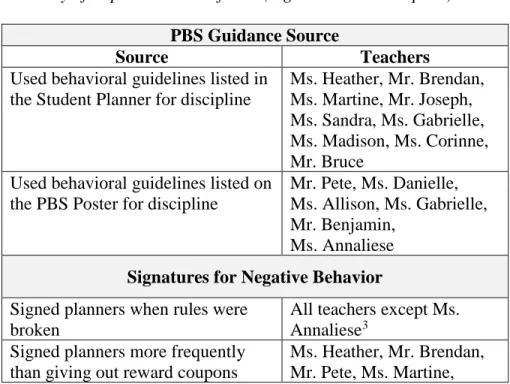
Table 4.7: Summary of Implementation of PBS (Signatures and Coupons) ... 92
List of Figures
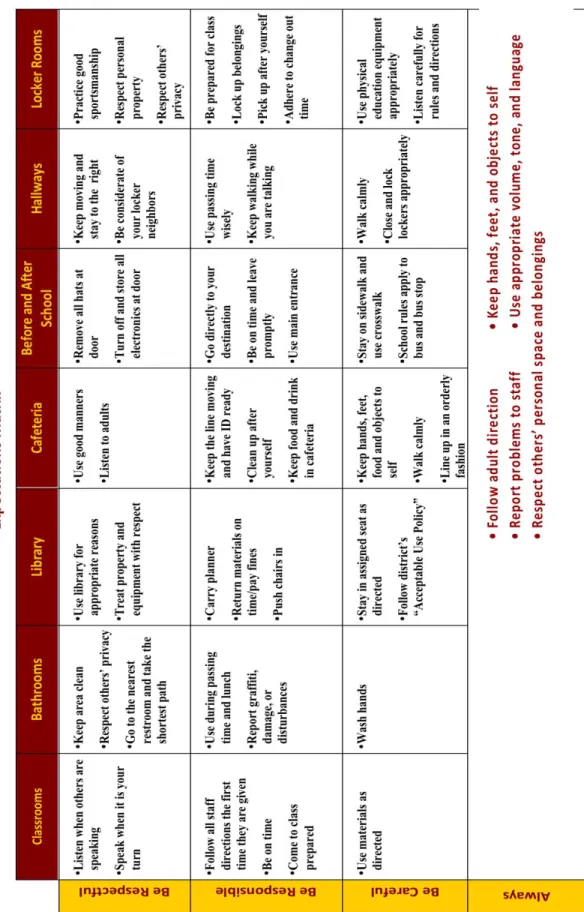
Figure 2.1: Continuum of School wide Instructional & Positive Behavior ... 14 Figure 4.1: PBS Expectations Matrix ... 59 Figure 4.2: First Quarter Signature Page in Student Planner ... 62
Abstract
As researchers in the field of education search for ways to use evidence-based practices to improve achievement and school climate, teachers and administrators must seek out
interventions that will support this objective. The literature reveals that when schools use zero tolerance disciplinary procedures, student achievement is negatively impacted. Teachers and school staff members may utilize organized practices such as Positive Behavioral Support (PBS) to equalize the cultural differences in the classroom and offer a model and an organized plan for success. The PBS program is a preventative approach to discipline and has had much success because of the ability to track measurable data, follow evidence-based practices, and offer a multi-tiered approach to problem behavior. Schools offer first tier universal support wherein the protocol of the PBS behavioral model is taught to all students. Students with recurring problems are offered a secondary tier approach, with various interventions such as “check in and check out” with a teacher who will monitor a student’s behavior more closely. The success of this program is contingent on full staff buy in, fidelity, and implementation with integrity. This study explores classroom culture, achievement, and attitudes toward learning and behavior for
teachers, staff and 8th graders at a Midwestern suburban middle school. The findings indicate that inconsistent implementation of the PBS guidelines negatively impacted classroom culture, and ultimately the school climate. Students did not know how to anticipate or interpret
expectations from teachers and staff and continued to violate the behavioral rules and receive infractions.
Keywords: Positive Behavioral Support, student perception, school climate,
organizational climate, integrity of implementation, student attitude, classroom culture, middle school
Chapter 1: Introduction
Consider the impact of classroom management on school culture, students’ relationships with their teachers and peers, classroom engagement, and academic achievement. What are the conditions and protocols required to create the optimal environment for student comfort and learning? The criteria for fair and effective discipline are subjective by nature. Are suspension, expulsion, and police presence in schools necessary to maintain safe schools and maintain effective classroom management and a peaceful school climate?
Statement of Problem
Discipline techniques vary greatly in U.S. school districts. Some districts employ the demerit system, assigning demerits for each transgression that might occur in a school day, some even as specific as requisite demerits for increments of time for tardy students (for example, one demerit per minute late for class). Other districts mandate that the administrators handle all behavioral issues, and students are assigned detentions, suspensions or expulsions. This can be related to zero tolerance for weapons, drugs or bullying, or simply for a student arriving late to class or not having homework completed. Schools defend their choice of discipline to include what may work for their population or demographic.
Discipline issues in U.S. schools. Schools are confronted with the challenge of changing socioeconomic, racial, and ethnic demographics which often can result in behavioral issues, academic struggles, and having to do more with fewer resources (Sugai et al., 2000). The choices for disciplinary action in schools are limited to demerits for detentions, in-school suspensions, out-of-school suspensions and expulsions. Students who are separated from the classroom for
disciplinary reasons are missing critical instruction and class discussions. A student who misses several days of school might return to class feeling overwhelmed from having missed valuable curriculum and lessons, and not want to put forth the effort to catch up. Having a structured and well-implemented behavioral program in place is instrumental in helping students to understand the school culture and providing a system to follow that allows students to concentrate on their own educational goals. This is essential guidance that helps students prepare for high school and college. Munro (2008) stated that “when alignment is tight and the culture is strong, new
students and staff members pick up on an organization’s true vision and values almost immediately” (p. 216).
Discipline issues specific to Fitzpatrick Middle School. I was asked to chair a committee to revisit and reorganize the Positive Behavioral Support Matrix at “Fitzpatrick” Middle School comprised of 600 students in the Midwest. This school began implementation of PBS in 2008 and there had been no updates to the Behavioral Matrix or additional staff
development since the inception of the program. This was particularly impactful because the school has had many new teachers and none of the recently hired staff had received training or instruction to implement PBS with fidelity. Teachers who had the initial staff development at the beginning of the program also recognized that they needed workshops or PBS professionals from the county to refresh their knowledge of the guidelines. They indicated that they were not
comfortable with situations that would warrant a reward coupon, or what they should do when students continued to disobey the rules, despite having disciplinary procedures implemented. Teachers noted that students were very disruptive in the hallways, in bathrooms, and exiting the school. Students continued to come to class late and unprepared, and staff questioned what
further actions should be taken to stop the behaviors, and requested more education in this regard.
Purpose and Significance of the Study
According to Noguera (2003), “Disciplinary practices in schools often bear a striking similarity to the strategies used to punish in adults in society” (p. 342). When adults are punished for breaking the law, an exclusionary practice is implemented, which corresponds to the nature and severity of the crime. Traditionally, this practice has defined the methods of discipline incurred when a student would break a rule or create a troublesome situation. Disciplinary practices varied from separating the student from the rest of the class by sending them to the back of the room or into the hallway, with a requisite reprimand or lecture. For more serious offenses, students would be sent to the office to talk with an administrator, and perhaps assigned to an “in school suspension” where they would be isolated from fellow classmates for the school day. For more egregious offenses—such as fighting, brandishing a weapon, or threatening another student or adult—the student could be either suspended from school for an assigned period of time, or in a severe case, expelled. For schools that employed the “zero tolerance policy,” the police would be summoned and would intervene in much the same way as they would for an adult when the law was broken. Zero tolerance is predicated on the theory of the “broken window” policy, wherein schools “must react to even minor disruptions in the social order with relatively strong force in order to ‘send a message’ that certain behaviors will not be tolerated” (Skiba, 2014, p. 28). The outcome of exclusion is that students are removed from the classroom, and therefore do not get instruction on the curriculum for that period of time. The irony of this is that it is often the students who are behind academically who are disrupting class
and breaking the rules (Noguera, 2003), and they are ultimately missing more instruction and getting further behind, which is irrational and fundamentally destructive for the students.
Noguera (1995) explained why schools would benefit from structured and well-defined discipline. He stated that the overwhelming prevalence of crime statistics in schools could compel administrators and parents to overreact and look for the most extreme and impactful methods to combat the violence. This often includes zero tolerance policies, police presence, and metal detectors. This in turn perpetuates a culture of fear, rather than heading in a more
constructive direction. In light of these statements, it is important to note that the strategies that attempt to severely curtail negative behavior (e.g. zero tolerance) are counterintuitive for achievement in that students who have committed infractions are separated from the classroom and miss valuable instruction. Skiba (2014) noted that schools with lower suspension rates have higher achievement rates due to students remaining in the classroom and not missing valuable instruction and curriculum. This is a precarious dilemma for administrators, because they have to weigh the value of keeping their students safe, versus keeping their students in their potentially unsafe school. Skiba (2014) also indicated that “suspension, expulsion and the increased use of law enforcement in school settings are themselves risk factors for a range of negative academic and life outcomes” (p. 29). However, proponents of zero tolerance argue that measures must be taken immediately, or the social order will not be balanced and the offenders will dig their heels in and perpetuate the behavior. Again, this is a quandary, because the goal of schools is to educate students, not separate them from the classroom via suspensions and expulsions. In order to effectively foster student achievement, there must be a compromise in discipline, where students remain in the classroom but learn appropriate behavior and guidelines for good
improve school climate by introducing best practices, the suspension numbers decreased, and academic achievement increased (Gonzalez, 2015).
Students who experience suspensions and expulsions in middle school may ultimately suffer long-term consequences (Losen & Skiba, 2010). A study conducted at Johns Hopkins University tracked young persons from high poverty areas who had difficulty in school as early as grades seven and eight and subsequently ended up in juvenile correctional facilities (Balfanz, Spiridakis, Neild, & Legters, 2003). In the mid-Atlantic region where this study took place, more than thirty students, which can be translated to the equivalent of a classroom of students, were sent to juvenile correctional facilities each year and primarily for non-violent offenses. The year prior to incarceration, these students struggled with school, failed classes, and often missed many school days. The curriculum required for graduation is often never made up and the dropout level was high. The burden on society resulting from the missed opportunities for children and
adolescents to learn appropriate behavior, obtain a full education, and earn diplomas reflects the importance of this dissertation research.
Given the problems with schools utilizing punitive measures for discipline and the subsequent consequences, one should consider the potential benefits of a program that would offer a more positive approach to classroom management and school culture. In its 2010 report “School wide Positive Behavioral Interventions & Supports,” the Michigan Department of Education defined Positive Behavioral Interventions and Supports as:
A proactive, team-based framework for creating and sustaining safe and effective schools. Emphasis is placed on prevention of problem behavior, development of pro-social skills, and the use of data-based problem solving for addressing existing behavior
concerns. School wide PBIS increases the capacity of schools to educate all students utilizing research-based school wide, classroom, and individualized interventions. (p. vii) This program enables school personnel (teachers and support staff) to teach students appropriate behavior through a structured framework, practice of these new skills, and a system that
generously rewards students for acceptable behavior. This program has the potential to reduce time away from the classroom, thereby increasing achievement. It is somewhat easy to facilitate, and offers schools the flexibility to target certain behavior problems prevalent in the school (RESA, 2014).
Bohanon et al. (2006) indicated that the original School Wide Positive Behavioral
Support system (SPBS), which was developed in 1991, included information that supports using the following steps:
1. State and post the expectations.
2. Create definitive structures to reinforce these expected behaviors, and reinforce and repeat them.
3. Create a school wide structure to teach expectations.
4. Clarify which behaviors are to be managed by staff, and which issues the administrators should address.
5. Provide appropriate staff development to enable staff to work together to address persistent, minor behaviors.
6. Offer upper level tiered support for the more serious infractions.
These steps are essentially those currently utilized in school systems that have some positive behavioral support program in place. Implementation of the PBS system has been shown to be
most effective at elementary and middle school levels because children are learning how to behave in a school setting (Bohanon et al., 2006).
I explored how the Positive Behavioral Support (PBS)1 program was being implemented at Fitzpatrick Middle School as this research will both help me determine what changes need to be made to make the extant program more successful and contribute to broader knowledge of successful PBS program implementation. In particular, I wished to retrospectively review the 8th grade class data from 6th grade to the present in order to see if office detention referrals had decreased and to determine which transgressions generated the most referrals. With this data, I analyzed which facets of the PBS Matrix needed to be changed and how the staff should be educated to successfully implement the program. Further, the goal of research was to improve academic and behavioral outcomes within the student population. The school’s PBS team had also discovered problems with PBS, which I hypothesized to be attributed to insufficient training and the subsequent lack of “buy-in” by the stakeholders. I wanted to ascertain if students are given daily reinforcement of the appropriate behavioral guidelines, there would be more time for teaching and subsequent greater achievement.
My dissertation study also adds to the literature on classroom culture and achievement using PBS through the process of extensive interviewing with children to capture their
perceptions of PBS practices, such as having a teacher focus on the prevention of behavioral problems by education and positive reinforcement, rather than chronic correction of behavior violations using punishment. It is noteworthy that this study considered the buy-in and
perceptions of both staff and students for success in order to promote the success of the program
and benefit the school environment when it comes to implementing PBS. The current literature elucidates the different disciplinary practices, ranging from zero tolerance—a policy introduced in the late 1980s during the Reagan administration to provide a deterrent for other potentially disruptive or insubordinate students (Skiba, 2014)—to the theory of rewarding students for appropriate behavior. This latter philosophy is the hallmark of the Positive Behavioral Program. Nevertheless, the literature that has been published on PBS has primarily addressed two facets: (a) a district or school that has no organized disciplinary program exploring how PBS would benefit the school, or (b) the inception of the program to a school and the various methods employed to introduce the program to the teachers, students, and staff. Most schools that are studied are either elementary or high schools, so this investigation of a middle school will be distinctive in that regard. This research demonstrates how a suburban middle school has utilized the practices of the PBS program, but has experienced a breakdown in implementation, revealing how this has negatively impacted students and teachers as well as how it has affected classroom and school culture.
Research Questions
This dissertation study was guided by the following research questions:
1. How is the Positive Behavioral Support (PBS) program represented in the classrooms at Fitzpatrick Middle School? How are support staff and teachers implementing PBS? What is being communicated to students regarding the social curriculum and
classroom expectations?
2. What are the teachers’ attitudes and perspective toward classroom culture in this suburban Midwest school?
3. What do the teachers understand regarding the implementation of PBS within the classroom setting?
Conclusion
Schools have many factors to consider when they are mapping out their disciplinary procedures and classroom management guidelines. Research indicates that students who are separated from the classroom and miss critical instruction do not fare well when returning to school. This study illustrates the different components that make up the Positive Behavioral System program at Fitzpatrick Middle School and demonstrates how proper implementation can positively impact the classroom culture and ultimately achievement.
Chapter 2 elucidates the literature on discipline for general education students, as well as students with special education services. There is also discussion on the ways in which language and cultural barriers can impact discipline and the effectiveness of zero tolerance with
subsequent separation from school. The history of the PBS system is outlined and the benefits of using this method of discipline versus the more punitive systems that many school districts currently employ. Chapter 3 illustrates the methods used in this project; student and staff
interviews are the primary source of data. Chapter 4 reflects the findings and analysis of the data from the surveys and interviews. Finally, Chapter 5 relates findings to the literature, and
Chapter 2: Literature Review
In order to examine the literature around the value of school wide Positive Behavioral Support (PBS) programs and the ways in which they impact classroom culture and academic achievement, one must first explore the need for discipline in schools and how punitive
discipline impacts student achievement. There is also a need to understand how schools struggle with behavioral issues and the manner in which they implement PBS to teach the students the social curriculum, parameters for good behavior, and guidelines to change the culture in the school. A literature search was conducted using Google Scholar, as well as the ERIC, ProQuest, OmniFile, and JSTOR databases. Initial parameters limited searches to journals published from 2000 to the present, which also provided additional journal articles through their references. Discipline, Learning, and Achievement
Having a structured school environment and consistent disciplinary policies can promote an environment of stability and order for students, perhaps making it more conducive to learning. Classroom management techniques vary, but having school wide support in place can impact students for greater achievement. The research shows that when a framework of tools is
presented to educators, more time can be spent on educating students in the curriculum. This is effective for general education students as well as those students who receive special education services.
General education students. Structured school disciplinary rules and consistent classroom management yield optimal results for a positive educational environment. Larrivee (2005) stated that “classroom management is a critical ingredient in the three-way mix of
effective teaching strategies, which includes meaningful content, powerful teaching strategies, and an organizational structure to support productive learning” (p. vi). Gregory, Skiba, and Noguera (2010) indicated that the “intent of school disciplinary interventions is to preserve order and safety by removing students who break school rules and disrupt the school learning
environment” (p. 59). By punishing offenders, schools are ostensibly setting an example to other students and encouraging them to follow the rules. Emmer and Stough (2001) reported that most classroom management research “has been concerned with identifying how teachers bring about student engagement and limit disruption” (p. 104). Considering what factors comprise classroom management Sugai and Horner (2002) suggested the following:
• allocate the maximum time possible for instruction;
• incorporate appropriate physical arrangement of the classroom to maximize engagement and resultant academic achievement; and
• create proactive classroom management parameters and rules.
Sugai and Horner’s suggestions encapsulate an inherent and logical fact about discipline and achievement: a student must be engaged in a learning task to have learning occur. If disruptions are occurring in the classroom, students are distracted from the task and the disruptions interfere with learning.
Larger studies, such as the one conducted by Good and Grouws (1977), showed a correlation between teacher expectations for good behavior and student achievement. When teachers communicated behavioral expectations, maintained order in their classrooms, and designed effective learning tasks, students demonstrated positive outcomes in their learning (Good & Grouws, 1977). This is common sense, in that teachers who are spending less time on disciplinary issues and correcting inappropriate behavior are presumably spending more time on
the instruction of non-distracted, engaged students. Farmer, Reinke, and Brooks (2014) offered a framework to assist teachers with this issue. Behavioral and social interactional perspectives are suggested to offer educators a triad of tools to simultaneously manage general education students and students with behavioral issues within one classroom setting.
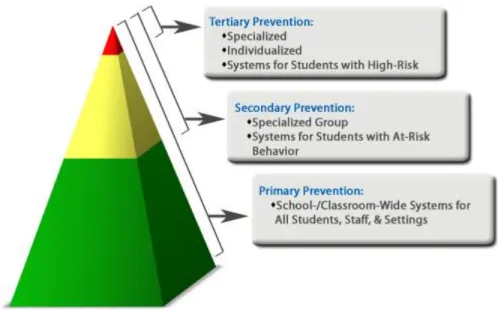
School wide Positive Behavioral Support (SWPBS) utilizes evidence-based practices for behavioral reinforcement. Horner, Sugai, and Anderson (2010) explained how the three tiers of interventions enable teachers and administrators to continually monitor students to have a continuum of rewards and consequences. For instance, Tier 1—which is the Primary or
Universal Prevention—is school wide (see Figure 2.1). The entire staff participates by teaching the children behavioral expectations and the subsequent rewards for these behaviors. PBS encourages early identification of students who do not comply with the expectations and immediate interventions and programs are put into place. Students who are resistant to the universal interventions are recommended for Tier 2—or Secondary Prevention—which includes individualized programs to closely monitor behavioral progress. Students have one-on-one direct instruction, increased structure, and continual monitoring of the students’ progress. These
children are often put on a behavior plan, which is tailored specifically for that student and enables the teacher to have clearly defined guidelines of what to expect regarding the behavior of the student. The children with the most problematic behavior are advanced to the final tier, Tertiary Prevention. Within this segment, behavioral perspective is monitored closely, with more intense individualized instruction and with the guidance of a behavior support team to ensure greater success (Horner et al., 2010). The second and third tier supports are advantageous for students who are emotionally impaired or those students receiving special education services
because they greatly benefit academic and behaviorally from the one-on-one interventions and direct instruction.
Figure 2.1. Continuum of School Wide Instructional & Positive Behavior (Source: http://www.sjusd.org/student-services/pbis/what-is-pbis/)
Students with behavioral issues and emotional/behavior disorders. There is general consensus that mainstreaming students who receive special education services, as well as those students who receive assistance for emotional impairments (EI) is advantageous. Note also that when teachers offer additional support and modifications to the curriculum, the result is equal or better outcomes for academic achievement (Rea, McLaughlin, & Walther-Thomas, 2002). Hieneman, Dunlap, and Kincaid (2005) stated, “Classroom-based SWPBS may be essential to integrating students with behavioral disorders. Structured, supportive contexts created by classroom-based SWPBS may, in some ways, resemble special education programs in that the environment and teacher responses are engineered to facilitate appropriate behavior” (p. 785). However, behavioral challenges can arise and addressing these behavioral concerns within a diverse classroom of children with varying needs can be difficult. Schools with zero tolerance or
other punitive disciplinary programs have been shown to be relatively ineffective and do not offer a positive classroom culture for students with behavioral concerns (Skiba & Peterson, 2000).
Mainstreaming children with emotional/behavior disorders (EBD) requires a program that can be somewhat individualized. School wide PBS is successful because it can be effectively implemented within the classroom and still provide opportunities to address individual problems with behavior. Note that PBS is effective when mainstreaming students with behavioral
disorders, “SWPBS is well suited to helping students with behavioral disorders adapt their behavior to general education classrooms so that emotional and intellectual growth can occur” (Hieneman et al., 2005, p. 780). For optimal success, this individual behavioral plan requires preparation on the part of the special education team at the school, with input from the social worker, special education teacher, and general education teachers.
Sugai et al. (2000) suggested several factors that should be included in the interventions for students with EBD and which could be successfully implemented within the parameters of the PBS program. In addition to the aforementioned behavioral perspectives that address modifications of the physical environment and arranging cues for positive behavior
reinforcement, additional suggestions included giving individualized attention to teaching pro-social communication skills and self- management awareness as well as teaching students increased tolerance for unpleasant situations (Hieneman et al., 2005). These interventions must be implemented class-wide, rather than school wide, and would fall into the category of
Secondary Preventions within the PBS program. Other methods to help students with EBD adapt to the general classroom setting include offering the students assistance with completing
Individual Educational Plan (IEP)—in order to reduce frustration and help curtail poor behavior. If classroom modifications do not work, it would be necessary to seek a more individualized plan of action.
Horner and Sugai (2009) highlighted two factors that contribute to a successful PBS program. The first is the implementation of screening to identify which students might need additional support and the second is the establishment of continuity for those students. When the school is aware that students with EBD are to be mainstreamed within the general classroom setting, it is important for the teacher to have additional support available for potential behavior problems. Assuming that the students have had a special education referral or an IEP created, the school social worker or psychologist could set up behavior plans for students within the confines of PBS, such as one of the Secondary Prevention models of best practice. There are several excellent interventions available within this Tier 2 model.
One of these interventions is check-in/check-out (CICO), wherein a teacher or support staff member meets with the student before school or before class to “check in” and talk about behavior expectations for each class. At the end of the day, often during homeroom time or advisory period, time is taken to reflect about behavior and discuss other choices that could have been made, and subsequently “check out.” Parents are involved in this process and are usually required to sign their child’s planner or notebook. Another intervention that works well for students with behavioral problems is check and connect: “The core components of check and connect include relationship building, routine monitoring, individual intervention, long-term commitment, persistent support, problem solving, and affiliation with school and learning” (Horner et al., 2010, p. 9). What makes check and connect so effective is that when school personnel identify students with at-risk behavior problems, such as EBD, they can link peers
(classmates) up with the students for additional support. This has been documented to improve social and academic outcomes and to reduce the frequency of students dropping out of school (Horner et al., 2010).
As Skiba and Peterson (2003) noted, “The experiences of students at risk for behavior problems leave them with social perceptions that are a poor fit with the standard expectations of most school environments” (p. 68). The behavior of these students appears irrational to teachers or administrators, but “to the student whose experience has yielded a different set of social expectations, these behaviors may seem perfectly sensible, and in fact the only alternative” (Skiba & Peterson, 2003, p. 68). These children need explicit instruction in the social curriculum via the PBS program in order to have social and academic success, and this often needs to start at the elementary school level. An example of this is First Step to Success (FSS), which is an evidence-based program that is highly successful at reducing problem behavior with resistant students when implemented with fidelity (Walker et al., 2009). A student who has been
identified as a behavioral risk has an individual FSS coach who provides individualized training in appropriate behavior. Coaches generally include school psychologists, counselors, behavioral specialists, and resource room teachers who work closely with the classroom teacher and parents: “The coach’s focus is to support teachers and parents with developing skills to teach at-risk students positive replacement behaviors and to provide reinforcement appropriately and
consistently (Woodbridge et al., 2014, p. 96). If the student’s behavior improves, the coach pulls back and allows the teacher to “take over” the implementation of the prompts and cues for instruction of the social curriculum with continuing support from the coach.
Farmer et al. (2014) indicated that there is a great need to create individualized plans to help students with high incidence disabilities who do not respond to the universal supports (Tier
1) in PBS. The authors stated that interventions are needed “to teach, evoke and reinforce desired replacement behaviors of the target students as well as contextual interventions that focus on students who engage her or him in problematic behavior patterns” (p. 158). They also expressed concern that these interventions will be short-lived unless the intervention targets the exact skill deficit in the problem student. This means that many factors should be taken into account, such as the social ecology, physical environment, supportive peers within the classroom, and having the teacher offer continual reassurance and reminders. Horner and Sugai (2009) stated that schools need to use “progress monitoring to assess a) the fidelity with which support is provided and b) the impact of support on student academic and social outcomes” (p. 2). If the
interventions for the behavioral issues of these children are not effective, they need to be
modified and adjusted for the individual student with EBD. This is part of Tier 3 of PBS and it is an integral part of resistant students’ behavioral education.
Language and Cultural Disparities in Discipline
School disciplinary practices result in thousands of students being suspended or expelled and, thus, precluding them from receiving appropriate instruction (Wallace, Goodkind, Wallace, & Bachman, 2008). Wallace et al. (2008) noted that African American students are more likely to be on the receiving end of this harsh discipline (usually zero tolerance) that ultimately results in suspension or expulsion and subsequent missed curriculum. Wallace et al. (2008) also
examined variables other than race that might be vectors related to disproportionate punishment. Townsend (2000) speculated that cultural disparities due to experiential differences could result in a cultural clash between middle class teachers and impoverished students. Students in low socioeconomic situations who come to school hungry or exhausted from their home environment are not able to concentrate in school and they frequently act out(Heijnen-Maathuis, 2008).
Teachers can mistakenly identify this behavior as insubordination and assign punitive consequences where they are not warranted.
Cultural disparities may also cause non-verbal communication cues or body language to be misinterpreted as threatening or disrespectful—as may verbiage common in some cultures but not others (Wallace et al., 2008). The language of discipline in a low socioeconomic household may not include a gentle admonishment or warning look, but rather, a physical consequence (Wallace et al., 2008).Typical communication between teenaged students’ “verbal sparring” can be characterized as threatening by a teacher (Weinstein, Tomlinson-Clarke, & Curran, 2004). Therefore, this disparity in cultural communication can lead to unjustifiable punishment. Unnecessary disciplinary interventions can occur when “teachers and students come from different cultural backgrounds—a situation that is becoming increasingly prevalent” (Weinstein et al., 2004, p. 25). Culture plays a significant role in these perceptions, so it is important that all expectations are carefully explained and that rules are well defined and fair. Teacher education programs, pre-service instruction, and staff development classes would do well to address this situation, especially for new or inexperienced teachers.
Punitive Discipline, Zero Tolerance, and Exclusion
Traditionally, schools have addressed behavioral problems with increased punitive measures. A survey on crime and safety in schools showed that 48% of public schools utilized punitive consequences against students; 74% of these actions were suspensions that lasted five days or more, 5% were expulsions, and 20% were transfers to specialized schools (Dinkes, Catladi, Lin-Kelly, & Snyder, 2007). This translates into many days of missed academic
instruction which has an “adverse impact on suspended students’ achievement” (Arcia, 2006, p. 359). Research has shown that the utilization of policies other than zero tolerance, separation,
and suspensions are more effective in dealing with behavior infractions (Aber, Brown, & Jones, 2003).
In the U.S., problems regarding school safety and violence are superseding concerns about academic achievement such that the public seeks reform for school discipline policy in public education (Noguera, 1995). To regulate and counteract violence, schools have resorted to including metal detectors, locker searches, police presence, security guards, and zero tolerance within their policies. Zero tolerance is an approach that will ensure that a student is removed from the school for a violation of a pre-determined rule—such as the possession of a firearm or other weapon—and will be either suspended, expelled, or transferred to another school. These policies persist in many schools that espouse zero tolerance and are negatively impacting achievement (Arcia, 2006). In their quest to appear tough on policy, schools have often treated the offending students as criminals (Noguera, 1995), and have enlisted the help of law
enforcement officers to enforce violations, rather than school officials. Suspensions and expulsions have been “denounced as ineffective and counterproductive” (Arcia, 2006, p. 359), yet the practice of zero tolerance continues to be widespread.
Zero tolerance is the most inflexible and punitive of all of the school discipline policies and has grown to become the disciplinary approach of choice in many schools (Skiba &
Peterson, 2003). Since the passage of the “Gun Free Schools Act” and in response to the 1994 Safe Schools Act, schools have extended this zero tolerance to include fighting in school, problems with chronic tardy arrival to class, and incomplete homework assignments (Kupchik, 2009). Many schools toughen their policies to placate parents and teachers, even while knowing that the policy is not effective in preventing future infractions. Schools continue with this harsh approach for a range of indiscretions rather than for just serious offenses. For example, Reyes
(2006) noted that in Texas the majority of students suspended (96%) or expelled (85%) utilizing zero tolerance rules received these punishments imprudently, rather than for a mandatory
offense. This rampant use of zero tolerance policy for discretionary reasons, rather than to ensure school safety, can negatively affect student achievement, students’ academic performance, as well as long-term social and economic stability (Wallace et al., 2008).
Skiba and Knesting (2001) indicated that the purpose of zero tolerance is to implement severe consequences to deter students from violent and inappropriate behavior, remove offenders immediately from school, and set an example for others by using extreme measures of
punishment. Regarding the organizational structure and instructional goals that a school would consider when creating a disciplinary policy, Skiba and Peterson (2003) suggested the following:
• guaranteed safety for students and staff in a school and preventing incidents of violence;
• creating a positive culture within the classroom and the school for optimal achievement;
• teaching students requisite skills for behavior, otherwise known as the “social curriculum”; and
• having instructional goals reiterated regularly to prevent future occurrences of misbehavior and violence.
It is important to understand that police presence and zero tolerance will not help fulfill these goals, because there is no focus on social skills and good behavior. There is only reactionary behavior toward “the bad” rather than acknowledging and rewarding “the good.” Programs providing successful alternatives to “zero tolerance” need to focus on rewards rather than punishment in a positive school climate with clearly defined rules and goals. A well-trained,
compassionate, and engaged school staff and administration must initiate these practices in order to foster the behavioral and academic skills necessary for optimal achievement and a successful school culture. These skills should be reinforced at home, to ensure that school and community share the same positive mindset. The goal is to create a culture of success, both socially and academically. PBS is an optimal approach with positive disciplinary effects that provides an alternative to disciplinary programming with negative educational effects.
There are many issues to consider regarding school disciplinary practices, but the primary one is that it must be effective. Schools must do all that they can to ensure safety for students and staff. A climate of fear and police presence is not the answer to curtailing violence and poor behavior in schools. We must educate students to develop appropriate social skills and teach children lifelong habits of good manners and proper behavior. While it is true that a school will gain immediate relief from problem behavior by relying on suspension or expulsion, it is
important to address the counterproductive nature of these practices that result in the exclusion of these children from the classroom and the loss of instruction. In addition, students who do not like going to school may consider this separation as a reward and a positive reinforcement for misbehavior. Furthermore, there is no opportunity for these children to learn appropriate and expected behaviors (Skiba & Peterson, 2003). Researchers have shown how proactive behavior instruction reduces missed instruction and results in less challenging behavior in the classroom (Bohanon et al., 2006).
Positive Discipline: Classroom Management Overview
Emmer and Stough (2001) indicated that there are two key concepts that emerged from their research. The first is that effective classroom management is more successful when it is in a preventative mode, rather than a reactionary mode. The second is that teachers create an optimal
classroom environment when they effectively communicating their expectations and appropriate behavioral norms to their students. In other words, if teachers take the time to instruct students on what is expected behaviorally in their classroom, establish clear rules and guidelines, and curtail behavioral issues before they become big issues at the onset of the school year, they will have a more successful classroom climate and increased student cooperation throughout the year. As noted by Emmer and Stough (2001), “Effective teachers maintained their management
system by monitoring and providing prompt feedback . . . and by consistently applying classroom procedures and consequences” (p. 105). When assessing the relationship between delivering guidelines to students and reinforcing those guidelines daily it is important to consider students’ perceptions of classroom culture and achievement. In addition to teaching students appropriate expectations and parameters for good behavior, researchers suggested that arranging the classroom in a manner conducive to good behavior and carefully elucidating consequences are effective measures to ensure optimal conduct (Emmer, Evertson, & Worsham, 2003).
What unfolds from the research are some key practices to support the guidelines of classroom management, much of which corroborates with what Sugai and Horner (2002)
elucidated. One practice is to maximize structure, which refers to the way in which the classroom space is defined. Researchers suggest that the class should be arranged to minimize crowding and reduce the incidence of distractions as much as possible (Ahrentzen & Evans, 1984; Weinstein, 1977). Another strategy is to display, teach, monitor, and reinforce expectations for discipline. An example of this is the mantra for the Positive Behavioral Support Program
(Michigan Department of Education, 2010), recited daily in schools: be safe, be responsible, and be respectful. Guidelines are posted around the school, and reviewed regularly in class (Sharpe, Brown, & Crider, 1995). Teachers subsequently provide feedback for appropriate behavior and
they correct disruptive behavior. The combination of these strategies, posting and reviewing rules with active engagement is a very successful classroom management strategy (Greenwood, Hops, Delquadri, & Guild, 1974). A third practice is to keep students engaged during classroom instruction via passive behavior (listening to a lesson) or active behavior (asking or answering a question or commenting on the lesson). The rationale behind this academic incentive is that when children are actively engaged, they are not being disruptive or acting up (Greenwood, Horton, & Utley, 2002). Teachers can use varied strategies for engagement, such as direct questioning, guided notes, or peer tutoring (wherein students are paired up and “teach” their partner what they have learned, which allows the teacher to circulate freely about the classroom).
It is also important to acknowledge appropriate behavior in a structured and organized manner (Alberto & Troutman, 2006). Examples of this strategy include praising desired behavior of individuals or groups of students who are following behavioral expectations or reinforcing these behaviors using rewards—such as “points,” “marbles in a jar,” “tickets,” or some other incentive, such as a homework pass. This can be a school wide initiative, such as the Positive Behavior Support Program, an individual teacher initiating these incentives, or perhaps a team of grade-level teachers. Equally, one must acknowledge inappropriate behavior in a structured and organized way (Alberto & Troutman, 2006). Strategies to address inappropriate behavior can include briefly informing the student of what was observed and what is expected in concrete terms, setting appropriate goals for behavior with the student and providing a reward or incentive if that goal is met in a specified time period, or using planned ignoring—simply ignoring the inappropriate attention-seeking behavior while praising others’ appropriate behavior. If incentives have been given to students for appropriate behavior, they can be returned for poor behavior and students given the opportunity to earn them back.
Teacher-student relationships. Although the aforementioned researchers (Alberto & Troutman, 2006; Ahrentzen & Evans, 1984; Weinstein, 1977) indicated that a choice-learning environment usually goes hand-in-hand with a well-supervised classroom, the opposite is not necessarily true (McCaslin & Good, 1998). Students in a well-supervised classroom are not always assured of having an optimal learning environment. Some forms of discipline might put students at odds with their learning (McCaslin & Good, 1998). More than likely, this is because there is no evidence of solid student-teacher relationships, even when the classroom appears to be running in an orderly fashion. In a meta-analysis of over 100 studies, Marzano, Marzano, and Pickering (2003) revealed that those teachers who had nurtured high-quality relationships with their students had one-third fewer discipline problems, rule transgressions, and other issues over a one-year period than did those who did not.
For teachers to be effective in their classroom management techniques, it is important for the students not to feel as if they are being intimidated. Twemlow and Fonagy (2005) explained that when a teacher “uses his or her power to punish, manipulate, or disparage a student beyond what would be a reasonable disciplinary procedure” (p. 2387) it negatively affects the teacher-student relationship. Since teacher behavior is critical in determining classroom dynamics, it is important that the students feel they have a quality relationship with the teacher. Mayer (2002) spelled out several factors relating to teacher-student relationships that may contribute to a punitive classroom culture, rather than a productive classroom environment. For instance, teachers who excessively rely on punitive measures of control or have ambiguous classroom policies could perhaps initiate a poor classroom environment. Another consideration is that when students lack integral social skills that would otherwise enable them to have academic success— such as paying attention, good manners, and complying with requests—this may result in such
students not being appropriately involved in classroom discussions or active learning. Mayer (2002) also stressed the importance of teachers understanding how to reconcile and respond to student differences. From Mayer’s research, one can infer that teachers who engage students, cultivate positive relationships, and do not rely heavily on punitive measures for their classroom management policies will have a more beneficial setting in their classroom.
Osher, Bear, Sprague, and Doyle (2010) stated that the emphasis should be on “cooperation, engagement, and motivation, and on students learning to be part of a dynamic system, rather than on compliance, control, and coercion” (p. 49). School programs that encourage these factors, such as PBS, support a school wide system wherein teachers communicate classroom expectations, school guidelines and rules, and reward students for following them (Horner, Sugai, Todd, & Lewis-Palmer, 2005). Schools that promote
cooperation, engagement, and motivation reported fewer behavioral problems and enjoyed a better school culture. Teachers who welcome and foster positive relationships with students had less problem behavior within their classrooms and fewer transgressions of rules. The key strategies discussed in this section are summarized in Table 2.1.
Table 2.1
Summary of Positive Interventions for a Healthy Classroom Setting
Classroom Management Technique Author(s)
Allocate maximum time possible for instruction Sugai & Horner, 2002 Incorporate appropriate physical arrangement of the classroom,
arrange to minimize crowding and reduce the incidence of distractions
Emmer et al., 2003 Sugai & Horner, 2002 Ahrentzen & Evans, 1984 Weinstein, 1977
Create proactive classroom management parameters and rules by effectively communicating expectations
Osher et al., 2010 Sugai & Horner, 2002 Emmer & Stough, 2001 Good & Grouws, 1977 Preventive mode, rather than reactive, carefully elucidating
consequences
Sprague & Golly, 2004 Emmer et al., 2003 Emmer & Stough, 2001 Teachers do not use their position of power to bully students Twemlow & Fonagy, 2005 Keep students engaged during instruction either actively or
passively Greenwood et al., 2002
Acknowledge appropriate behavior in a structured and organized method
Bohanon et al., 2009
McKevitt & Braaksma, 2007 Alberto & Troutman, 2006 Lassen et al., 2006
Horner et al., 2005 Luiselli et al., 2005 Acknowledge inappropriate behavior in a structured and
organized method Alberto & Troutman, 2006
Display, teach, monitor and reinforce expectations for discipline Michigan Dept. of Education, 2010 Bohanon et al., 2009 Horner et al., 2005 Sharpe et al., 1995 Greenwood et al., 1974 Develop high-quality relationships with students Marzano et al., 2003
Positive Behavior Support System
Positive behavior support system (PBS) is a school wide program that attends to
behavioral issues at all levels. It is designed to be a preventive rather than reactionary program to address school climate, discipline, and to promote achievement (Sprague & Golly, 2004). The guidelines for PBS include, (a) data for accurate decision making, (b) measurable outcomes supported by data, (c) best practices with accompanying evidence that these outcomes are achievable and (d) systems that efficiently and effectively support implementation of these practices (Michigan Department of Education, Office of Special Education. 2015). Schools can establish clear expectations for student behavior and achievement, while still “providing firm but fair discipline” (Osher et al., 2010, p. 50). McKevitt and Braaksma (2007) remarked that PBS is predicated on the hypothesis that traditional school disciplinary actions—such as removal from a classroom, expulsion, and exclusionary suspensions—are ineffective. Schools can also teach the social curriculum, meaning that they can instruct students how to behave in a socially
appropriate manner. Schools that successfully follow PBS have a shared set of expectations and practice similar implementation so that children know what is expected of them and have parameters for good behavior (McKevitt & Braaksma, 2007). McKevitt and Braaksma (2007) summarize the main highlights of the PBS program:
• communicating concise classroom and school rules and expectations; Take cultural considerations into account when disciplining
students
Sugai et al., 2011 Payne, 2003 Set measurable behavior goals and collect and analyze data Sugai et al., 2000 Monitoring and providing prompt feedback Emmer & Stough, 2001 Consistently apply classroom procedures and consequences Emmer & Stough, 2001
• regular instruction to students regarding appropriate behavior in a social situation, with adults and teachers;
• monitoring compliance of the rules;
• providing much positive reinforcement for predetermined appropriate behavior and adhering to school and classroom rules; and
• doling out negative consequences in a consistent manner when guidelines are not followed.
PBS is based on the hypothesis that when faculty and staff members actively teach expectations for behavior, it will positively affect school climate. Osher et al. (2010) stated, “The primary aim of PBS is to decrease problem behavior in schools and classrooms and to develop integrated systems of support for students and adults at the school wide, classroom and individual student levels” (p. 50). Researchers have shown correlation between a healthy school climate and a reduced use of drugs, less aggressive behavior, a decrease in school violence, and increased academic achievement (Caldarella, Shatzer, Gray, Young, & Young, 2011).
One of the benefits of the PBS program is that it promotes a healthy school climate. A study in Denver Public Schools showed that when a concerted effort was made to improve school climate by introducing best practices, the suspension levels decreased and academic achievement increased (Gonzalez, 2015). For many reasons, school climate must be a priority in all schools. The manner in which teachers approach problems can greatly affect classroom climate, so it is beneficial to have a well-defined plan in place where teachers and students are aware of expectations and practice them daily. PBS is used as a tool to improve school climate through the education of students in the social curriculum and the positive reinforcement that the children receive from demonstrating appropriate behavior.
PBS has been shown to reduce the number of students who are excluded from school due to suspensions and expulsions and to lower the dropout rate. Many of the students from more punitive settings do not return to school and may ultimately settle in the juvenile detention system (Bohanon, Flannery, Malloy, & Fenning, 2009). Bohanon et al. (2009) indicated that the PBS program involves clarifying teacher expectations and conveying these expectations to the students, as well as positively reinforcing behavior of those students who meet said expectations, thereby preventing the negative behavior from being the expected norm in the school. The program is comprised of an organized and consistently implemented structure of interventions with the goal of teaching behavior as social curriculum. Schools must implement the framework with fidelity for the best outcomes. However, this is difficult because the perception of behavior is subjective and some teachers and administrators may regard certain behavior as unacceptable, while others do not. These “hidden rules” need to be elucidated to students so that cultural considerations can be taken into account (Payne, 2003).
Sugai, O’Keefe, and Fallon (2011) indicated that the primary level of intervention should include the communication of school expectations and behaviors into language that all students can understand. Students from low socioeconomic backgrounds may not have had behavioral guidelines taught to them because “the notion that discipline should be instructive and change behavior is not part of the culture” (Payne, 2003, p. 100) so educators need to be mindful of this when they are teaching these students the social curriculum. The school behavioral program should be part of the curriculum and reinforced often. For example, guidelines can be dispersed around the school in hallways, bathrooms, and classrooms to remind students and staff of the parameters of accepted behavior. As with all outcomes, behavioral goals should be measurable. Sugai et al. (2000) showed that data must be collected and analyzed with precision and that
students who do not respond to the primary levels of intervention must be advanced to the secondary and tertiary prevention levels. Sugai et al. (2000) also indicated that, although implementation details vary, there are factors that are common to all age groups and behaviors. Two significant factors are curriculum redesign (teaching new skills) and modification of behavior for both the students and the teachers. Curriculum redesign is particularly important in the upper levels of intervention, where students must learn the expectations on a more
personalized and individual level with support from social workers, family, counselors, school psychologists, teachers, and administrators. Specific monitoring plans must be put into place— such as “check-in/check-out,” where a mentor can support the resistant student into a closely monitored environment.
Turnbull et al. (2002) indicated that “a key focus of PBS is building responsive
environments that ‘stack the deck’ in favor of appropriate student behavior and preferred quality of life outcomes” (p. 378). When the universal supports are in place—such as educating all students regarding the behavior that is expected of them, reinforcing these guidelines on a
regular basis, and rewarding adherence to these rules—the outcome of positive classroom culture will be achieved. Turnbull et al. (2002) also clarified the importance of understanding the
difference between school wide supports versus universal supports: school wide means that the entire school is actively involved in the PBS program, whereas universal supports means that all students are involved in learning behavior and the social curriculum, which represents the first phase of PBS. When students are not responsive to the universal supports, they are designated to advance to the secondary and then tertiary parts of the program and provided with more intensive and focused tools—such as “check-in/check-out” or mentoring—thereby keeping all of the
children within the framework of the program even though some experience more rigor in the scope.
Environmental considerations within PBS. It is implicit that the environment is a factor that can influence children’s behaviors. School climate reflects this, and often it has been noted that a poor school climate caused by ineffective administration, lack of purpose, and low expectations for achievement can foster delinquency and antisocial behavior (McEvoy &
Welker, 2000). When the school has no agency with the student population, this reflects upon the students’ self-image and the resulting behavioral transgressions will result in an increased
number of school discipline referrals. Increased absenteeism, poor academic achievement, and subsequent delinquency will potentially result in suspension and expulsion. Ultimately, the students may drop out of school (McEvoy & Welker, 2000).
The formula for success in reducing the propensity for negative behaviors lies in
balancing the supports embedded in the physical environment with the individualized treatment of the student. Farmer et al. (2014) indicated that the interventions that target the antisocial behaviors of students with EBD should prioritize monitoring the classroom ecology and general school setting while also conducting an individualized analysis of the skills deficit. Teachers can implement well-defined physical spaces via seating arrangements and work areas to benefit the students, as well as “monitoring systems that will reduce conditions that will trigger problem behaviors” (Reinke & Herman, 2002, p. 556). PBS incorporates many of these factors, including the general atmosphere in the school, cultivating classroom culture, and rewarding positive behavior which can reduce the proclivity of triggers for negative behavior.
Theoretically, linking behavior and physical environment is a premise for PBS because students who do not respond to the primary level of implementation in the program receive more
individualized interventions and support, bridging behavior and the physical setting. The goal for these students receiving secondary and tertiary level support is to promote better behavior and increased academic achievement. Focusing on positive behavior may result in increased academic achievement and focusing on improving academic achievement may improve social behavior (Luiselli, Putnam, Handler, & Feinberg, 2005). Improving a student’s behavior and academic achievement is a daunting task, but it is one that PBS shows potential in achieving. A positive school climate can affirm strong interpersonal relationships and give students the tools and opportunities to reduce antisocial behavior and potentially increase academic achievement (McEvoy & Welker, 2000).
Teacher-student communication within PBS. The capacity for students and teachers to trust each other is critical to maintaining mutually respectful relationships (Brown, 2003). When teachers develop appropriate means of communicating with their students, it helps to create a safe and comfortable learning environment—which in turn affords less cause for punitive consequences. Managing children is difficult and complex; there is not one correct way to go about it. However, students respond to teachers who make an effort to understand their culture and treat them in an appropriately authoritative and respectful manner. Establishing and maintaining clear expectations for learning and behavior are essential for good classroom supervision. PBS was created in hopes of increasing student engagement, reinforcing positive performance and behavior, and teaching social life skills (Lassen, Steele, & Sailor, 2006; Luiselli et al., 2005). Rather than correcting behavior with punitive measures, PBS focuses on proactive preventative tactics to educate children in the social curriculum. McCaslin and Good (1998) shared that it is of the utmost importance to teach children how to exercise self-discipline with their behavior and that this will supersede the need for teachers to act as authority figures, as well
as the emphasis on external control. This differentiates discipline (correction) from classroom management (prevention).
Researchers have acknowledged the ways in which praise and teacher communication affect students’ behaviors and noted that students need to observe that their appropriate behaviors are noticed and acknowledged (McKevitt & Braaksma, 2007). For this reason, the primary level of PBS includes some tangible reward system. PBS tickets can be written for good behavior and be turned in by the student for a treat or other reward, and placed in a drawing at the end of the week for a gift card. For best results for this positive reinforcement, students should have input toward the choice of rewards. Students enjoy and appreciate being recognized and this can promote student and teacher behavioral changes. Students must demonstrate suitable behavior and follow the PBS guidelines—which should be aligned to the school disciplinary policies (McKevitt & Braaksma, 2007)—and teachers must be attentive to good behavior rather than focusing on daily transgressions.
Effective Implementation of PBS: Case Studies
Horner et al. (2010) noted that when PBS was implemented in middle schools with fidelity, it resulted in an increase of positive outcomes—such as a more favorable school climate, improved academic achievement, and a reduction of office detention referrals (ODRs). Flannery and Sugai (2009) stated the following regarding successful implementation:
Implementation of effective PBS practices requires formal and active supports. Simply asking staff to adopt a new practice is ineffective, and active system supports, like
coaching, active administrator support, team-based implementation and decision making, are important considerations for implementation fidelity and sustained use. (p. 19)