Karin B. Jensen, PhD
Irving Kirsch, PhD
Moa Pontén, MS
Annelie Rosén, PhD
Kathy Yang, MS
Randy L. Gollub, MD,
PhD
Vincent des Portes, MD,
PhD
Ted J. Kaptchuk, MD
Aurore Curie, MD, PhD
Correspondence to Dr. Jensen: [email protected]
Supplemental data at Neurology.org
Certainty of genuine treatment increases
drug responses among intellectually
disabled patients
ABSTRACT
Objective:
To determine the placebo component of treatment responses in patients with
intellec-tual disability (ID).
Methods:
A statistical meta-analysis comparing bias-corrected effect sizes (Hedges
g
) of drug
responses in open-label vs placebo-controlled clinical trials was performed, as these trial types
represent different certainty of receiving genuine treatment (100% vs 50%). Studies in fragile X,
Down, Prader-Willi, and Williams syndrome published before June 2015 were considered.
Results:
Seventeen open-label trials (n
5
261, 65% male; mean age 23.6 years; mean trial
duration 38 weeks) and 22 placebo-controlled trials (n
5
721, 62% male; mean age 17.1 years;
mean trial duration 35 weeks) were included. The overall effect size from pre to post treatment in
open-label studies was
g
5
0.602 (
p
5
0.001). The effect of trial type was statistically significant
(
p
5
0.001), and revealed higher effect sizes in studies with 100% likelihood of getting active
drug, compared to both the drug and placebo arm of placebo-controlled trials. We thus provide
evidence for genuine placebo effects, not explainable by natural history or regression toward the
mean, among patients with ID.
Conclusions:
Our data suggest that clinical trials in patients with severe cognitive deficits are
influenced by the certainty of receiving genuine medication, and open-label design should thus
not be used to evaluate the effect of pharmacologic treatments in ID, as the results will be biased
by an enhanced placebo component.
Neurology®2017;88:1912–1918GLOSSARY
DSM-V5Diagnostic and Statistical Manual of Mental Disorders, 5th edition;ID5intellectual disability.
In any pharmacologic treatment, contextual and cognitive factors contribute to the therapeutic
response, such as patients
’
treatment expectations and knowledge about the treatment.
1These
factors, referred to as nonspecific treatment mechanisms, are active ingredients in placebo
responses.
2To date, little is known about the contribution of nonspecific treatment effects in
trials for patients with severe cognitive deficits.
Intellectual disability (ID) is defined by impaired intellectual functions, such as reasoning,
abstract thinking, and learning from experience. ID is confirmed by intelligence testing (IQ
,70), combined with assessments of mental abilities and adaptive functioning and evidence
that the observed limitations were manifested during the developmental period (DSM-V).
3A recent meta-analysis showed that patients with genetically determined ID display
signifi-cant improvements in the placebo arm in randomized controlled trials, both on subjective
and objective outcomes.
4Yet few studies included a no-treatment control group, and the
placebo response (improvement in the placebo arm) could thus not be separated from a true
placebo effect, which controls for natural history, being in a trial, and regression to the mean. In
From the Department of Clinical Neuroscience (K.B.J., M.P., A.R.), Karolinska Institute, Sweden; Program in Placebo Studies (I.K., T.J.K.), BIDMC, Harvard Medical School; Department of Psychiatry (K.Y., R.L.G.), Massachusetts General Hospital, Boston; Institut des Sciences Cognitives (V.d.P., A.C.), Bron; Université Claude Bernard Lyon 1 (V.d.P., A.C.); Centre de Référence Déficiences Intellectuelles de Causes Rares (V.d.P., A.C.), Hôpital Femmes Mères Enfants, Hospices Civils de Lyon; and EPICIME-CIC1407/INSERM (A.C.), Bron, France.
Go to Neurology.org for full disclosures. Funding information and disclosures deemed relevant by the authors, if any, are provided at the end of the article. The Article Processing Charge was funded by Karolinska Institutet.
order to determine the placebo effect, which
rests on treatment expectations,
2studies in
other patient populations have developed
a method where drug responses in
placebo-controlled trials are compared with those in
open-label trials, as they represent 50% vs
100% certainty of receiving active drug.
5–7We assessed the placebo component in ID
clinical trials by performing a meta-analysis
comparing drug responses in open-label vs
placebo-controlled
trials.
Studies
were
restricted to genetically determined ID, and
the statistical analyses were matched for drug
type, so that placebo-controlled and
open-label trials compared the same drugs.
METHODS Data.We followed the Preferred Reporting Items for Systematic Reviews and Meta-Analyses guidelines for re-porting meta-analysis results, and data were obtained from MEDLINE/PubMed and PsycINFO, based on searches for all randomized, placebo-controlled (or open-label), pharmacologic clinical trials in patients with genetically determined ID due to fragile X, Down, Prader-Willi, or Williams syndrome, published before June 2015.
Study selection.The inclusion criteria for this meta-analysis were open-label (or randomized placebo-controlled) trials in pa-tients with fragile X, Down, Prader-Willi, or Williams syndrome, of any age, from any country, reported in the English language. In
line with our previous ID meta-analysis,4studies were excluded if
(1) outcomes did not evaluate cognitive–developmental functions or (2) the treatment targeted a peripheral comorbidity rather than core symptoms of ID. Consolidated Standards of Reporting Trials guidelines were employed to ensure adequate quality of the studies included in this meta-analysis (figure 1).
Data extraction and quality assessment.Exclusion criteria were (1) studies that failed to report an inference test or enough information to compute an effect size, (2) studies with fewer than 5 patients, (3) studies that did not provide separate reports for drug/placebo (applicable for placebo-controlled trials), (4) not a randomized trial (applicable for placebo-controlled trials), (5) only treatment results from healthy controls reported. Data extraction was performed independently by 2 reviewers. Dis-crepancies were adjusted in reviewer meetings and confirmed with a third reviewer.
We checked for overlap in participants between studies from the same authors. Based on the patient description including mean age, age range, and date of inclusion, it was possible to rule out the overlap in participants between studies by Erickson, Heller, and Kishnani. More precisely, the mean age and age range did not overlap, especially considering that in all these studies from the same authors, the most recent ones were performed in younger children. In the studies by Berry-Kravis, the majority of patients were not included in both studies. There was some doubt in less than 15% of the patients. It was not possible to rule out some overlap in participants in the studies by Torrioli and Prasher.
Statistical analysis.Treatment response was defined as the dif-ference in outcome measures from pre to post treatment within each treatment arm. Calculation of effect size was performed by means of bias-corrected standardized mean differences
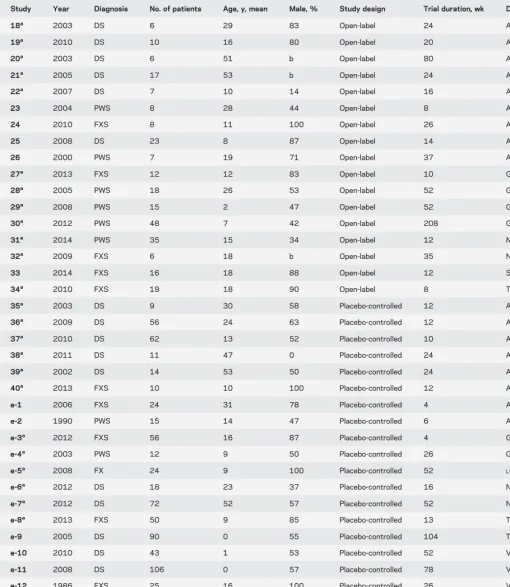
Table 1 Open-label and placebo-controlled studies
Study Year Diagnosis No. of patients Age, y, mean Male, % Study design Trial duration, wk Drug
18a 2003 DS 6 29 83 Open-label 24 AChEi
19a 2010 DS 10 16 80 Open-label 20 AChEi
20a 2003 DS 6 51 b Open-label 80 AChEi
21a 2005 DS 17 53 b Open-label 24 AChEi
22a 2007 DS 7 10 14 Open-label 16 AChEi
23 2004 PWS 8 28 44 Open-label 8 Antiepileptic
24 2010 FXS 8 11 100 Open-label 26 Antiepileptic
25 2008 DS 23 8 87 Open-label 14 Antipsychotic
26 2000 PWS 7 19 71 Open-label 37 Antipsychotic
27a 2013 FXS 12 12 83 Open-label 10 GABA agonist
28a 2005 PWS 18 26 53 Open-label 52 GH
29a 2008 PWS 15 2 47 Open-label 52 GH
30a 2012 PWS 48 7 42 Open-label 208 GH
31a 2014 PWS 35 15 34 Open-label 12
N-acetylcysteine
32a 2009 FXS 6 18 b Open-label 35 NMDA antagonist
33 2014 FXS 16 18 88 Open-label 12 Statin
34a 2010 FXS 19 18 90 Open-label 8 Tetracycline
35a 2003 DS 9 30 58 Placebo-controlled 12 AChEi
36a 2009 DS 56 24 63 Placebo-controlled 12 AChEi
37a 2010 DS 62 13 52 Placebo-controlled 10 AChEi
38a 2011 DS 11 47 0 Placebo-controlled 24 AChEi
39a 2002 DS 14 53 50 Placebo-controlled 24 AChEi
40a 2013 FXS 10 10 100 Placebo-controlled 12 AChEi
e-1 2006 FXS 24 31 78 Placebo-controlled 4 Ampakine
e-2 1990 PWS 15 14 47 Placebo-controlled 6 Anorexic
e-3a 2012 FXS 56 16 87 Placebo-controlled 4 GABA agonist
e-4a 2003 PWS 12 9 50 Placebo-controlled 26 GH
e-5a 2008 FX 24 9 100 Placebo-controlled 52
L-acetylcarnitine
e-6a 2012 DS 18 23 37 Placebo-controlled 16 NMDA antagonist
e-7a 2012 DS 72 52 57 Placebo-controlled 52 NMDA antagonist
e-8a 2013 FXS 50 9 85 Placebo-controlled 13 Tetracycline
e-9 2005 DS 90 0 55 Placebo-controlled 104 Thyroxine
e-10 2010 DS 43 1 53 Placebo-controlled 52 Vitaminsc
e-11 2008 DS 106 0 57 Placebo-controlled 78 Vitaminsc
e-12 1986 FXS 25 16 100 Placebo-controlled 26 Vitaminsc
e-13 1983 DS 10 11 50 Placebo-controlled 35 Vitaminsc
e-14 1980 DS 69 0 56 Placebo-controlled 156 Vitaminsc
e-15 1984 DS 28 11 71 Placebo-controlled 35 Vitaminsc
e-16 1983 DS 24 12 66 Placebo-controlled 17 Vitaminsc
Abbreviations: AChEi5acetylcholinesterase inhibitor; DS5Down syndrome; FXS5fragile X syndrome; GABA5g-aminobutyric acid; GH5growth hormone; PWS5Prader-Willi syndrome.
N-acetylcysteine/L-acetylcarnitine were combined into one category called LAC/NAC. References e-1–e-16 are available at Neurology.org.
aStudies that were included in the matched comparison between drug effects in open-label (k512) vs placebo-controlled (k512) studies (drug types
represented in both open-label and placebo-controlled studies).
bNo information given.
(Hedges g) using Comprehensive Meta-Analysis version 3.0 (meta-analysis.com). In order to adjust for heterogeneity in the included data, all analyses were performed using random-effects instead of fixed-effects models. In studies with multiple outcome measures, a combined within-study outcome was computed as a synthetic effect size (with a variance that takes account of the correlation among the different outcomes). This approach cor-rects for the problem of more weight being assigned to studies with more outcomes.8For a complete list of all outcomes, listed
per study, see table e-1 at Neurology.org.
An overall meta-analysis was performed to assess the effect size of pre-post treatment within the open-label trials (for a correspond-ing meta-analysis of the placebo-controlled studies, see our previous report4). In order to compare the effect size of open-label and
placebo-controlled trials, studies were matched on drug category. The only criteria for matching studies was that a drug category must be represented in both open-label and placebo-controlled trials in order to be included. Hence, the principle was to include all studies from each eligible drug category, and we did not exclude any studies based on other criteria. A wide range of treatments were represented (including vitamins,g-aminobutyric acid agonists, and statins); for a full list, see table e-2. Six different drug categories were repre-sented both in open-label and placebo-controlled studies and were thus used for the comparison between open-label and controlled studies. Twelve open-label studies and 12 placebo-controlled studies were included in the matched comparison (even if there was no requirement to end up with the same number of studies) (table 1). The overall effect was assessed using a univariate analysis of variance, using trial duration (weeks) as covariate, and Sidak correction for multiple comparisons was applied to the pair-wise comparisons.
RESULTS Overall meta-analysis: open-label.
Seventeen
open-label
trials
met
the
inclusion
criteria,
comprising a total of 261 patients. The mean
dura-tion of studies was 38 weeks (SD 48, range 8
–
208
weeks). Sixty-five percent of the participants were
male, and the mean age was 23.6 years (SD 17.5,
range 2
–
53) (table 1). Three of the 17 open-label
trials, representing 29 (11.1%) participants, did not
report participant sex distribution. We initially
identified 13 open-label studies with Williams
syndrome but none of them was eligible: fewer than 5
patients in the trial (12 cases) and not evaluating
cognitive developmental functions (1 case).
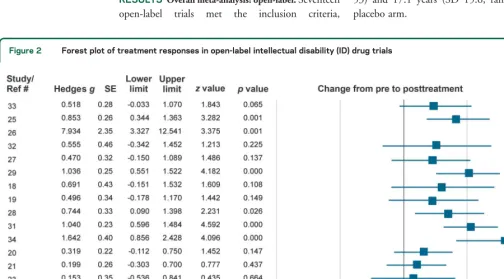
The pre-post analysis of outcomes in the
open-label trials showed a significant treatment response
(
g
5
0.602, SE
5
0.116,
p
,
0.001; figure 2). In
line with our previous reports of ID placebo responses
and trial duration,
4we found no significant
correla-tion between study effect size and length of
open-label clinical trials (
r
5
0.066,
p
5
0.802), indicating
that long and short trials had comparable treatment
results.
Overall meta-analysis: Placebo-controlled.
Twenty-two
placebo-controlled studies met the inclusion criteria,
comprising 828 patients in the drug arm and 721 in
the placebo arm. The mean duration of studies was
35 weeks (SD 37, range 4
–
156 weeks). Sixty-two
percent of the participants were male, and the mean
age in the drug arm was 17.8 years (SD 16, range 0
–
53) and 17.1 years (SD 15.6, range 0
–
55) in the
placebo arm.
Figure 2 Forest plot of treatment responses in open-label intellectual disability (ID) drug trials
As previously reported by our group,
4a pre-post
analysis of outcomes in placebo-controlled trials (
k
5
22) showed significant treatment responses, both in
the drug arm (
g
5
0.678, SE
5
0.171,
p
,
0.001)
and the placebo arm (
g
5
0.468, SE
5
0.150,
p
,
0.005).
4Open-label vs placebo-controlled trials.
The effect of
trial type on treatment outcomes was determined by
comparing effect sizes between drug-matched
open-label (
k
5
12) and placebo-controlled (
k
5
12) trials
(table 1), comprising a total of 199 patients
(open-label) and 394 patients (placebo-controlled). The
effect of trial type was statistically significant (
F
2,325
5.7,
p
5
0.008,
h
25
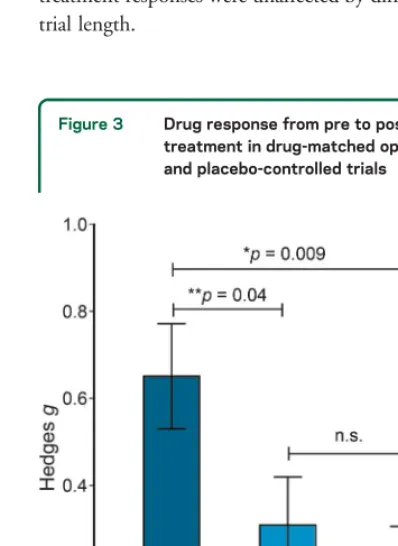
0.263), and revealed higher
effect sizes in studies with 100% likelihood of getting
active drug (open-label, mean
g
5
0.65, SD
5
0.41)
compared to the drug arm (
p
5
0.043) (mean
g
5
0.31, SD
5
0.38) and placebo arm (
p
5
0.009)
(mean
g
5
0.21, SD
5
0.34) in placebo-controlled
studies (figure 3). The study effect sizes were not
affected by trial duration in any of the 3 groups:
open-label drug (
r
5
0.34,
p
5
0.287), placebo-controlled
drug (
r
5
0.15,
p
5
0.645), or placebo-controlled
placebo (
r
5
0.243,
p
5
0.447), indicating that ID
treatment responses were unaffected by differences in
trial length.
DISCUSSION
Our comparison between drug effects
in open-label and placebo-controlled studies validate
that treatment expectations play a role in treatment of
ID, in spite of severe cognitive deficits. In open-label
studies, patients (as well as their doctors and families)
are assured that the allocated treatment contains an
active drug, and thus the contribution of positive
treatment expectations is likely to be high. In
placebo-controlled trials, however, there is generally
a 50% chance of receiving an active drug. The
cer-tainty of getting active medication in
placebo-controlled trials is thus lower, and may provide less
positive expectations of improvement. The effect of
certainty in drug trials is previously reported among
individuals with intact cognitive functions,
5–7,9and
evidence suggests that certainty of receiving the real
drug maximizes patients
’
treatment expectations,
leading to higher treatment responses.
10Here we
demonstrate, for the first time, that patients with
severe cognitive deficits are susceptible to the different
treatment contexts of open-label and
placebo-controlled drug trials, similar to the effects seen in
non-ID patients.
6,7Open-label drug trials in ID
pa-tients are therefore biased by the certainty of receiving
genuine medication, and should not be used to study
pharmacologic effects in ID, as the results will be
misleading. Novel therapies for ID that target the
underlying pathophysiology are currently being
developed, for example for Down syndrome and
fragile X syndrome.
11New promising results can lead
to a general increase of treatment expectancy among
patients
’
families, which may enhance the bias (as
seen in secretin trials for children with autism
12,13) if
treatments are not tested in properly blinded
placebo-controlled designs. Even if open-label drug trials will
not be able to separate the pharmacologic effect from
the placebo component of a given treatment,
open-label trials may be used for the purpose of assessing
side effects. Nonetheless, research in non-ID patients
shows that side effects are also shaped by expectations
though so-called nocebo effects,
14and it is important
to recognize the possibility that information about
side effects (written/oral) may affect the occurrence of
adverse effects also in ID patients.
In response to the prevalent notion that ID
pa-tients are less susceptible to treatment expectancies,
we previously performed a meta-analysis where we
were able to demonstrate that patients with
geneti-cally determined ID display placebo responses in
placebo-controlled clinical trials.
4Yet our previous
meta-analysis did not compare placebo responses to
a no-treatment control, and we could therefore not
decidedly link the pre to post improvements to
pla-cebo mechanisms (even if natural remission of
genet-ically determined ID would be unlikely). In the
present analysis, we employed a balanced design that
Figure 3 Drug response from pre to posttreatment in drug-matched open-label and placebo-controlled trials
There was a significant difference between study effect sizes between drug-matched open-label (k512), placebo-controlled drug (k512), and placebo-controlled placebo (k512) treat-ment groups. The overall effect was assessed using a univariate analysis of variance and Sidak correction for multiple compar-isons was applied to the pairwise comparcompar-isons.*Significant at
allowed for interpretation of the role of treatment
expectations between open-label and
placebo-controlled drug trials. Patients with ID thereby
demonstrated genuine placebo effects, which are
not explained by spontaneous remission or regression
to the mean.
There are several possible mechanisms involved in
shaping treatment expectations and placebo effects,
including implicit and explicit learning.
15In addition
to verbal information about the benefits of a drug
(requiring cognitive learning abilities), treatment cues
may be implicitly embedded in the patient
–
clinician
interaction and clinical environment.
16In patients
with ID, it is likely that the implicit social influence of
placebo by proxy
17plays a role, which describes the
indirect influence of treatment expectations among
clinicians and close relatives, and has been mentioned
apropos of placebo effects in young children. In brief,
placebo by proxy refers to an alteration in the
patient
’
s psychosocial context that may promote
placebo effects in a way that is not strictly a learning
phenomenon, yet it may have the same profound
influence on patients
’
response, for example through
caregiver
’
s altered behavior towards the patient. Even
if we studied the effects of active drugs (and not
placebos) in this study, the placebo by proxy
phe-nomenon is highly relevant for understanding the
placebo component of genuine treatment outcomes.
Here, the effect may be described as an expectancy by
proxy effect on clinical outcomes, reflecting the
ex-pectations of surrounding parents, caretakers, and
clinicians.
Limitations to our study include the inability to
control for the possibility that treatment responses
rated subjectively by parents, teachers, or caregivers
were biased by raters
’
knowledge of trial type, despite
no or little effect on patients
’
actual behavior. We
have previously been able to reject the notion that
subjectively rated outcomes have larger placebo
ef-fects compared to objectively measured outcomes in
ID patients,
4and predict that the same is true in the
present study. In our previous study, we found that
the relatively small number of studies (
k
5
22) led to
differences in effect size if outliers were removed. We
also demonstrated significant differences in treatment
responses based on which drug was used in the trial,
both in the drug arm and the placebo arm.
4In order
to address drug heterogeneity in the present study, we
used a drug-matched approach when analyzing the
effect of trial type. Yet this reduced the sample size
and led to apparent differences in effect size for the
overall vs subgroup data. Another limitation is the
restriction to include studies that measure treatment
effects on core ID symptoms. In the future, it would
be valuable to assess the placebo component of
treat-ment for somatic symptoms in patients with ID.
AUTHOR CONTRIBUTIONS
Conceived and designed the study: A.C., I.K., T.J.K., K.B.J. Performed the data collection: A.C., K.Y., M.P., K.B.J. Analyzed the data: A.C., K.Y., M.P., K.B.J. Contributed reagents/materials/analysis tools: A.C., I.K., T.J.K., K.B.J. Wrote the paper: A.C., K.Y., M.P., A.R., I.K., R.L.G., V.d.P., T.J.K., K.B.J. Interpreted the data: A.C., A.R., I.K., V.d.P., T.J.K., K.B.J.
STUDY FUNDING
T.J.K. is supported by NCCIH/NIH grant 2K24 AT004095.
DISCLOSURE
The authors report no disclosures relevant to the manuscript. Go to Neurology.org for full disclosures.
Received June 19, 2016. Accepted in final form February 28, 2017.
REFERENCES
1. Colloca L, Lopiano L, Lanotte M, Benedetti F. Overt versus covert treatment for pain, anxiety, and Parkinson’s disease. Lancet Neurol 2004;3:679–684.
2. Finniss D, Kaptchuk T, Miller F, Benedetti F. Placebo effects: biological, clinical and ethical advances. Lancet 2010;375:686–695.
3. American Psychiatric Association. Intellectual Disability, 5th ed. Washington, DC: American Psychiatric Associa-tion; 2013.
4. Curie A, Yang K, Kirsch I, et al. Placebo responses in genetically determined intellectual disability: a meta-analysis. PLoS One 2015;10:e0133316.
5. Papakostas GI, Fava M. Does the probability of receiving placebo influence clinical trial outcome? A meta-regression of double-blind, randomized clinical trials in MDD. Eur Neuropsychopharmacol 2009;19:34–40.
6. Rochon PA, Binns MA, Litner JA, et al. Are randomized control trial outcomes influenced by the inclusion of a pla-cebo group? A systematic review of nonsteroidal antiin-flammatory drug trials for arthritis treatment. J Clin Epidemiol 1999;52:113–122.
7. Rutherford BR, Pott E, Tandler JM, Wall MM, Roose SP, Lieberman JA. Placebo response in antipsychotic clini-cal trials: a meta-analysis. JAMA Psychiatry 2014;71: 1409–1421.
8. Borenstein M, Hedges LV, Higgins JPT, Rothstein HR. Introduction to Meta-Analysis. Hoboken: John Wiley & Sons; 2009.
9. Kaptchuk TJ. The double-blind, randomized, placebo-controlled trial: gold standard or golden calf? J Clin Epidemiol 2001;54:541–549.
10. Lidstone S, Schulzer M, Dinelle K, et al. Effects of expec-tation on placebo-induced dopamine release in Parkinson disease. Arch Gen Psychiatry 2010;67:857–865. 11. Picker JD, Walsh CA. New innovations: therapeutic
opportunities for intellectual disabilities. Ann Neurol 2013;74:382–390.
12. Sandler AD, Bodfish JW. Placebo effects in autism: lessons from secretin. J Dev Behav Pediatr 2000;21:347–350. 13. Williams K, Wray JA, Wheeler DM. Intravenous secretin
for autism spectrum disorders (ASD). Cochrane Database Syst Rev 2012:CD003495.
14. Colloca L, Finniss D. Nocebo effects, patient-clinician communication, and therapeutic outcomes. JAMA 2012; 307:567–568.
16. Jensen KB, Kaptchuk TJ, Kirsch I, et al. Nonconscious activation of placebo and nocebo pain responses. Proc Natl Acad Sci USA 2012;109:15959–15964.
17. Grelotti DJ, Kaptchuk TJ. Placebo by proxy. BMJ 2011; 343:d4345.
18. Heller JH, Spiridigliozzi GA, Sullivan JA, Doraiswamy PM, Krishnan RR, Kishnani PS. Donepezil for the treatment of language deficits in adults with Down syndrome: a pre-liminary 24-week open trial. Am J Med Genet A 2003; 116A:111–116.
19. Heller JH, Spiridigliozzi GA, Crissman BG, McKillop JA, Yamamoto H, Kishnani PS. Safety and efficacy of rivastigmine in adolescents with Down syndrome: long-term follow-up. J Child Adolesc Psychopharmacol 2010; 20:517–520.
20. Prasher VP, Adams C, Holder R; Down Syndrome Research Group. Long term safety and efficacy of done-pezil in the treatment of dementia in Alzheimer’s disease in adults with Down syndrome: open label study. Int J Geriatr Psychiatry 2003;18:549–551.
21. Prasher VP, Fung N, Adams C. Rivastigmine in the treatment of dementia in Alzheimer’s disease in adults with Down syndrome. Int J Geriatr Psychiatry 2005;20: 496–497.
22. Spiridigliozzi GA, Heller JH, Crissman BG, et al. Preliminary study of the safety and efficacy of donepezil hydrochloride in children with Down syndrome: a clinical report series. Am J Med Genet A 2007;143A:1408–1413.
23. Shapira NA, Lessig MC, Lewis MH, Goodman WK, Driscoll DJ. Effects of topiramate in adults with Prader-Willi syndrome. Am J Ment Retard 2004;109:301–309. 24. Torrioli M, Vernacotola S, Setini C, et al. Treatment
with valproic acid ameliorates ADHD symptoms in frag-ile X syndrome boys. Am J Med Genet A 2010;152A: 1420–1427.
25. Capone GT, Goyal P, Grados M, Smith B, Kammann H. Risperidone use in children with Down syndrome, severe intellectual disability, and comorbid autistic spectrum dis-orders: a naturalistic study. J Dev Behav Pediatr 2008;29: 106–116.
26. Durst R, Rubin-Jabotinsky K, Raskin S, Katz G, Zislin J. Risperidone in treating behavioural disturbances of Prader-Willi syndrome. Acta Psychiatr Scand 2000;102:461–465. 27. Erickson CA, Wink LK, Ray B, et al. Impact of acampro-sate on behavior and brain-derived neurotrophic factor: an open-label study in youth with fragile X syndrome. Psychopharmacology 2013;228:75–84.
28. Hoybye C, Thoren M, Bohm B. Cognitive, emotional, physical and social effects of growth hormone treatment
in adults with Prader-Willi syndrome. J Intellect Disabil Res 2005;49:245–252.
29. Festen DA, Wevers M, Lindgren AC, et al. Mental and motor development before and during growth hormone treatment in infants and toddlers with Prader-Willi syndrome. Clin Endocrinol 2008;68:919–925. 30. Siemensma EP, Tummers-de Lind van Wijngaarden RF,
Festen DA, et al. Beneficial effects of growth hormone treatment on cognition in children with Prader-Willi syndrome: a randomized controlled trial and longitudinal study. J Clin Endocrinol Metab 2012;97:2307–2314. 31. Miller JL, Angulo M. An open-label pilot study of
N-acetylcysteine for skin-picking in Prader-Willi syndrome. Am J Med Genet A 2014;164A:421–424.
32. Erickson CA, Mullett JE, McDougle CJ. Open-label memantine in fragile X syndrome. J Autism Dev Disord 2009;39:1629–1635.
33. Çaku A, Pellerin D, Bouvier P, Riou E, Corbin F. Effect of lovastatin on behavior in children and adults with fragile X syndrome: an open-label study. Am J Med Genet A 2014; 164A:2834–2842.
34. Paribello C, Tao L, Folino A, et al. Open-label add-on treatment trial of minocycline in fragile X syndrome. BMC Neurol 2010;10:91.
35. Johnson N, Fahey C, Chicoine B, Chong G, Gitelman D. Effects of donepezil on cognitive functioning in Down syndrome. Am J Ment Retard 2003;108:367–372. 36. Kishnani PS, Sommer BR, Handen BL, et al. The efficacy,
safety, and tolerability of donepezil for the treatment of young adults with Down syndrome. Am J Med Genet A 2009;149A:1641–1654.
37. Kishnani PS, Heller JH, Spiridigliozzi GA, et al. Donepezil for treatment of cognitive dysfunction in children with Down syndrome aged 10–17. Am J Med Genet A 2010; 152A:3028–3035.
38. Kondoh T, Kanno A, Itoh H, et al. Donepezil significantly improves abilities in daily lives of female Down syndrome patients with severe cognitive impairment: a 24-week randomized, double-blind, placebo-controlled trial. Int J Psychiatry Med 2011;41:71–89.
39. Prasher VP, Huxley A, Haque MS; Down Syndrome Ageing Study Group. A 24-week, double-blind, placebo-controlled trial of donepezil in patients with Down syndrome and Alzheimer’s disease: pilot study. Int J Geriatr Psychiatry 2002;17:270–278.