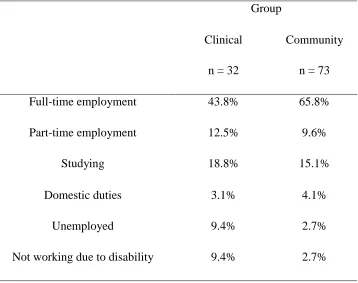
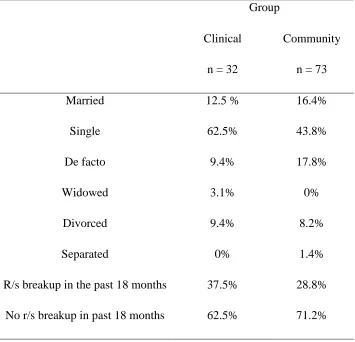
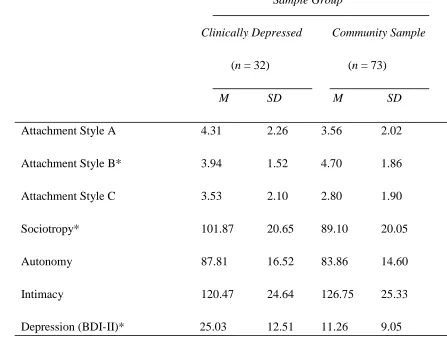
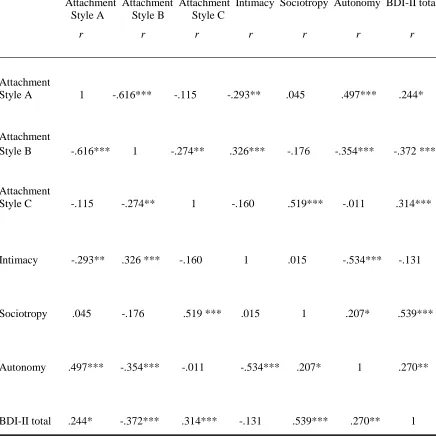
RUNNING HEAD: EXPLORING DEPRESSION: ATTACHMENT, INTIMACY AND PERSONALITY TRAITS
Exploring Depression: Attachment, Intimacy and Personality Traits
Theresa Marasco
Bachelor of Psychology (Hons)
School of Social Sciences and Psychology, Victoria University
Submitted in partial fulfilment of the requirements of Doctor of Psychology (Clinical) degree
EXPLORING DEPRESSION: ATTACHMENT, INTIMACY AND PERSONALITY TRAITS
ii Abstract
Depression is among the most common mental disorders in young
Australians. Through evolving theory two depression subtypes, sociotropic (anaclitic) and autonomy (introjective), have emerged. Attachment and intimacy have also been implicated as important to mental health in young adults, and vulnerability to depression has been linked to intimacy,
sociotropy, autonomy and attachment. Therefore the aim of the current study was to examine depression in relation to attachment, intimacy, autonomy and sociotropy in young adulthood, in a clinical and community sample. In this context the study also aimed to explore ‘experience of intimacy’ in young adults (given Erikson’s psychosocial model implicating its importance), and its relation to attachment and depression. Further, based on theory of Holmes about the way autonomy and intimacy relate, the study aimed to examine this relationship. There has been limited research
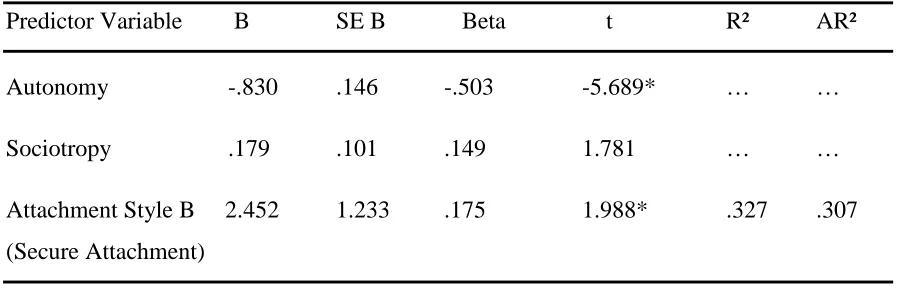
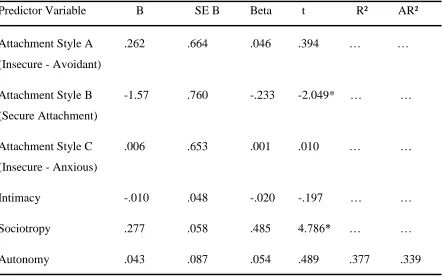
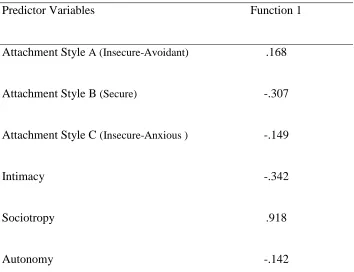
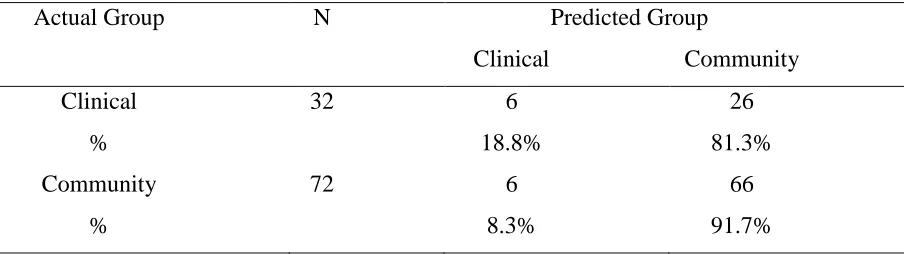
exploring all these variables together in the context of depression. A total of 105 participants were recruited for the current study, with 32 members in the clinical sample and 73 in the community sample. Methods of data analysis were multiple regression, correlational analysis and discriminant function analysis. Results found autonomy, sociotropy, and security of attachment together predicted intimacy, with 30% of the variance accounted for by the model; sociotropy and depression did not predict intimacy; intimacy and autonomy did not share a positive relationship; secure attachment and sociotropy were significant predictors of depression; and attachment, intimacy, sociotropy and autonomy did discriminate between a clinically depressed and community sample, with secure
attachment and sociotropy contributing the most to discriminating between the two groups.
EXPLORING DEPRESSION: ATTACHMENT, INTIMACY AND PERSONALITY TRAITS
iii
significant findings in support of theory. Consideration of the study’s
limitations pointed to the need to distinguish between problematic autonomy and healthy autonomy. Theoretical and practical implications were
EXPLORING DEPRESSION: ATTACHMENT, INTIMACY AND PERSONALITY TRAITS
iv
Doctor of Psychology Declaration
“I, Theresa Marasco, declare that the Doctor of Psychology (Clinical) thesis entitled ‘Exploring Depression: Attachment, Intimacy and Personality Traits’ is no more than 40,000 words in length including quotes and exclusive of tables, figures,
appendices, bibliography, references and footnotes. This thesis contains no material that has been submitted previously, in whole or in part, for the award of any other academic degree or diploma. Except where otherwise indicated, this thesis is my own work”.
EXPLORING DEPRESSION: ATTACHMENT, INTIMACY AND PERSONALITY TRAITS
v
Acknowledgements
I would firstly like to thank my research supervisor, Anne Graham, for the ongoing support and guidance for this thesis. Your knowledge and commitment have been greatly appreciated throughout the duration of this process.
Importantly, I also thank my parents and my sister Vanessa for all the unconditional support and for always being there for me. Mum, Dad and Vanessa - I would not have made it without you and I truly appreciate everything you have done to assist me in completing my studies. I am lucky to have such an amazing family. I love you very much.
Thank you to my closest friends Belinda Spencer, Dee Perera and Emma Morton for your patience, support and understanding throughout the years. You have all helped me along in some way and have made a positive difference in my life. I am thankful to have you as friends.
To my boyfriend Dany - thank you for all of your help, support and motivation throughout the years of my studies, I appreciate your patience.
EXPLORING DEPRESSION: ATTACHMENT, INTIMACY AND PERSONALITY TRAITS
vi
Table of Contents
Abstract ... ii
Doctor of Psychology Declaration ... iv
Acknowledgements ... v
Table of Contents ... vi
Appendices ... ix
Chapter 1: Introduction and Overview ... 1
1.1 Background ... 1
1.2 Defining depression ... 2
1.3 Prevalence and factors posing vulnerability ... 2
1.4 Aims and Scope ... 3
1.5 Structure and Overview of thesis... 3
Chapter 2: Theoretical Perspectives ... 5
2.1 Introduction ... 5
2.2 Attachment... 5
2.3 Intimacy and Erikson’s stages of psychosocial development ... 9
2.3.1 Erikson’s theory ... 9
2.3.2 Intimacy and Autonomy and Security of Attachment ... 11
2.4 Depression Theories ... 12
2.4.1 Early psychoanalytic theory ... 12
2.4.2 Anaclitic and Introjective depression ... 15
2.4.3 Parallels with Beck’s theory of depression... 19
Chapter 3: Previous Research Findings ... 23
3.1 Introduction ... 23
3.2 Attachment and depression ... 23
3.3 The role of intimacy ... 25
EXPLORING DEPRESSION: ATTACHMENT, INTIMACY AND PERSONALITY TRAITS
vii
3.3.2 Support for Erikson’s psychosocial stage of ‘intimacy vs. isolation’ ... 27
3.4 Exploring the theory: Autonomy (introjective) and sociotropy (anaclitic) depression ‘subtypes’ ... 28
3.5 Sociotropy, autonomy, attachment and depression ... 33
3.6 Summary of the research relating to theoretical underpinnings ... 35
3.7 Clarifying the aims of the current study ... 37
3.8 Significance of the study ... 37
3.9 Research Questions and Hypotheses ... 39
Chapter 4: Method ... 42
4.1 Introduction ... 42
4.2. Research Design ... 42
4.3 Sample ... 43
4.3.1 Overall sample ... 43
4.3.2 Clinical Sample... 43
4.3.3 Community Sample ... 43
4.4 Power analysis ... 44
4.5 Measures and Instruments ... 44
4.5.1 Background information ... 45
4.5.2 Attachment... 45
4.5.2.1 Adult Attachment Questionnaire ... 45
4.5.2.2 Classification of attachment styles ... 45
4.5.2.3 Revised Hazan & Shaver Three Category Measure ... 46
4.5.3 Intimacy ... 47
4.5.4 Autonomy and Sociotropy ... 48
4.5.5 Depression ... 50
4.6 Procedure ... 50
4.6.1 Clinical Sample... 50
4.6.2 Community Sample ... 51
4.7 Method of data analysis ... 52
EXPLORING DEPRESSION: ATTACHMENT, INTIMACY AND PERSONALITY TRAITS
viii
5.1 Data diagnostics ... 53
5.2 Sample characteristics ... 53
5.2.1 Demographic Information ... 53
5.2.2 Mental health: Reported diagnoses and treatment ... 56
5.3 Descriptive Statistics ... 58
5.4 Data Analysis and Testing of Hypotheses ... 61
5.5 Predictors of intimacy ... 61
5.5.1 Autonomy, sociotropy, and security of attachment as predictors of intimacy ... 61
5.5.2 Intimacy and Autonomy ... 62
5.5.3 Sociotropy and depression as predictors of intimacy ... 63
5.6 Exploring Depression ... 63
5.6.1 Predictors of Depression ... 63
5.6.2 Discriminating between community and clinical groups ... 64
Chapter 6: Discussion ... 67
6.1 Introduction ... 67
6.2 Predictors of Intimacy ... 67
6.2.1 Autonomy, Sociotropy and a Secure Attachment ... 67
6.2.2 Sociotropy and Depression as predictors of Intimacy ... 70
6.3 Intimacy and Autonomy ... 72
6.4 Exploring depression ... 74
6.5 Strengths and Limitations ... 83
6.6 Implications ... 86
6.6.1 Implications for theory and research ... 86
6.6.2 Implications for practice ... 87
6.7 Conclusion ... 88
EXPLORING DEPRESSION: ATTACHMENT, INTIMACY AND PERSONALITY TRAITS
ix Appendices
Appendix A - Ethics Approval 100
Appendix B - Background Questionnaire 101
Appendix C - The Revised Hazan & Shaver (1987) 103
Appendix D - The Miller Social Intimacy Scale 104
Appendix E - The Personal Style Inventory-II 105
Appendix F - The Beck Depression Inventory (BDI-II) 108
Appendix G - Consent Form 110
Appendix H - Information to Participants (Clinical Sample) 111 Appendix I - Information to Participants (Community Sample) 113 Appendix J - Flyer for Community Health
organisations /counselling services (to recruit clinical sample) 115
Appendix K - Power Analysis Multiple Regression 116
EXPLORING DEPRESSION: ATTACHMENT, INTIMACY AND PERSONALITY TRAITS 1
Chapter 1
Introduction and Overview
1.1 Background
Depression is prevalent worldwide and is among the leading causes of disability that contribute to the global burden of disease (Churchill, 2010). Depression impacts upon the lives of individuals, and can pose a significant risk of suicide, with over 10 million suicide attempts occurring per year worldwide (Churchill, 2010). In Australia alone, according to the Australian Bureau of Statistics between 2001 and 2010 a total of 22,526 suicide deaths were registered. Over the 10 year period suicide accounted for between 1.6% and 1.9% of all deaths in Australia annually. The figures show alarge proportion of these suicide deaths were people aged between 15 and 34 years of age. In light of the link between suicide and depression, these high suicide rates underscore the importance of theory and research exploring depression, vulnerability and risk factors.
Theories, from both psychoanalytic and cognitive orientations and subsequent research studies, have implicated attachment, intimacy and personality traits of sociotropy and autonomy as potential factors posing vulnerability to depression. Further research will inform and contribute to the body of knowledge that already exists, in order to clarify potential factors posing vulnerability to depression and the relationship between such risk factors. By extending the research beyond its current point we can contribute to the knowledge regarding these potential risk factors, which can enhance and build upon the current treatment. Understanding more about depression vulnerability can pave the way for tailored intervention and preventative strategies in the hope of reducing its high prevalence. The current study will draw together earlier psychoanalytic theories that have evolved to the emerging, in more recent theory, of two depressive sub types (sociotropy and
autonomy), along with exploring the role of attachment and intimacy. The more information that is ascertained about the depressive subtypes of “sociotropy” and
EXPLORING DEPRESSION: ATTACHMENT, INTIMACY AND PERSONALITY TRAITS 2
the complex vulnerability factors for depression. This thesis attempts to use theoretical underpinnings to illuminate and contribute to the existing body of research.
1.2 Defining depression
Depression can be detrimental to the well-being of an individual, and impairs functioning in daily living in areas including social, academic, and occupational, and increases risk of suicide. The diagnostic criteria for clinical depression in relation to a Major Depressive Episode, include features existing across a same two-week period which comprises an experience of a sad or depressed mood for most of the day nearly every day, and/or a lack of interest in once pleasurable activities (APA, 2000). Further features may involve changes in weight and sleep, agitation, loss of energy, feelings of worthlessness, inability to sustain concentration and thoughts of suicide. Such symptoms impact and impair an individual’s ability to function in important areas of their life (i.e. occupational, social, and academic).
1.3 Prevalence and factors posing vulnerability
Depression is a high prevalence disorder. The National Survey of Mental Health and Well-being of Adults (2007) found approximately one in five Australians (over 16 years of age) suffered with a mental illness over a twelve month period. The statistics reported a prevalence of 6.2% for any mood disorder with 4.1% suffering a depressive episode. Other mood disorders included dysthymia with 1.3% prevalence and bipolar disorder with 1.8%. The prevalence of mental disorders was higher among individuals who were divorced or separated as opposed to those who were married. Statistics indicated that adults in younger age groups experienced higher rates of mood disorders, with depression included.
EXPLORING DEPRESSION: ATTACHMENT, INTIMACY AND PERSONALITY TRAITS 3
Disorder is approximately 10 to 15 per cent for women and 5 to 12 per cent for men (APA, 2000).
Theories have explored depression in relation to different subtypes, relating to sociotropy and autonomy personality traits. In addition, attachment styles and intimacy have been implicated as factors potentially posing vulnerability to depression. In relation to ‘intimacy’, its importance has been highlighted through the work of Erikson (1968), as a capacity that needs to be accomplished during the young adulthood phase of development. These factors have been indicated as having an association with depression. However, more research is required to address gaps in research, to clarify the relationships between the variables and their associations to depression, particularly within an Australian sample. 1.4 Aims and Scope
The aim of the current study is to examine depression in relation to security of attachment, intimacy, autonomy and sociotropy in young adulthood. The study aims to explore ‘experience of intimacy’ in young adults in relation to attachment, and whether this predicts depression. Further, based on theory of Holmes (1997), more research is needed about the way autonomy and intimacy relate, and therefore the study aims to examine this relationship further.
1.5 Structure and Overview of thesis
Chapter 2 of this thesis explores and discusses the relevant theoretical underpinnings for each of the variables in the current study. This will explore and discuss attachment,
intimacy and evolving theories of depression, particularly in the context of depressive sub-types conceptualised as sociotropic (anaclitic) and autonomy (introjective) depression. Chapter 3 then critically reviews the existing research literature on attachment, intimacy, sociotropy and autonomy in the context of depression vulnerability, examining studies that have focused on the identified variables in relation to depression. In addition, this chapter will include studies relating to intimacy and Erikson’s psychosocial stage of intimacy vs. isolation, and the chapter will conclude with the research questions and hypotheses
EXPLORING DEPRESSION: ATTACHMENT, INTIMACY AND PERSONALITY TRAITS 4
EXPLORING DEPRESSION: ATTACHMENT, INTIMACY AND PERSONALITY TRAITS 5
Chapter 2
Theoretical Perspectives
2.1 Introduction
This chapter outlines and discusses theoretical underpinnings of attachment, intimacy and personality dimensions of sociotropy and autonomy relative to depression. Early psychoanalytic theories on depression from an object relations perspective including those from Freud (1917) and Klein (1935) are explored. The way in which these earlier psychoanalytic theories have evolved through Blatt (1974), and Beck’s (1983) cognitive model are outlined with reference to theory on depressive subtypes. In addition, this chapter discusses how such theories link with attachment and the personality dimensions of
sociotropy and autonomy. This chapter also explores intimacy in the context of Erik Erikson’s psychosocial stages of development and the parallels drawn to Bowlby’s attachment theory are discussed. This chapter aims to explore the complex theoretical underpinnings and highlight the way in which theories are linked.
2.2 Attachment
Attachment theory as developed by Bowlby stipulates that early experiences with parents/caregivers affect an individual’s functioning in future relationships (Bowlby, 1980). These early and repeated interactions with caregivers become internal working models of attachment, which serve to guide social behaviour and expectations in future relationships, across an individual’s lifespan (Mikulincer, 1998). These early experiences influence an individual’s capacity to develop intimate relationships with other individuals (Mayseless & Scharf, 2007).
Bowlby’s theory maintained that healthy development is central to an individual’s capacity to engage in the world, and extend beyond significant attachment figures (Bowlby, 1973; 1980; 1982). This process of development commences at infancy and continues through to adulthood. This healthy development also involves having a capacity for
EXPLORING DEPRESSION: ATTACHMENT, INTIMACY AND PERSONALITY TRAITS 6
base is built within the first few years of life and develops within the routine of interactions between the child and their attachment figure (Bowlby, 1980; 1982). The secure base forms during these interactions where the attachment figure has been responsive and aware of the child’s communicative behaviour and acts as available to both psychological and physical needs. In addition, the secure base involves the caregiver accepting such interaction within the caregiver role, in particular in dealing with inconveniences that are imposed by the child. In this scenario, a secure child-caregiver interaction would evolve in a way that is both secure and harmonious. Therefore, the child with the secure base will use the attachment figure for a safe haven, as a means to regulate emotions in the situation of an emergency or disruption (Bowlby, 1980; 1982). Through Bowlby’s observations and work, he estimated that during the approximate ages of 9 to 24 months exploration, proximity seeking, and the phenomenon of the secure base can be observed when caregiver and child are together (Ainsworth, Blehar, Walters, & Wall, 1978; Bowlby, 1980).
EXPLORING DEPRESSION: ATTACHMENT, INTIMACY AND PERSONALITY TRAITS 7
Bowlby’s theory highlights that not only during infancy, but also throughout all developmental ages, exist critical issues with attachment that impact an individual’s
confidence regarding their secure base; whether what is needed from the secure base will be available to them and able to extend support if required (Bowlby, 1988). There are
instances where important early experiences of a child do not allow for an opportunity to develop a secure base. This then would mean that the relationship between child and
caregiver will give rise to different working models for the relationship, which may involve things such as unpredictability with rejection or unpredictable contact or support. This then would have an impact on the internal model of self (i.e. I am not worthy of being loved or supported), and may have an impact on the internal model for the extended world (i.e. the world is dangerous or threatening) (Bowlby, 1980; 1988). In addition, Ainsworth (1978) contributed significantly to attachment theory, through her work with children and her study findings that children will form a secure attachment to their parents / caregivers, or will develop strategies consequently to cope with the absence of security, strategies that involve avoidant or anxious attachment (Ainsworth et al., 1978).
Bowlby’s secure base theory and the concept of internal working models, both of the self and the wider world, have been adapted theoretically to other domains of
relationship attachment, including insecure attachment styles of ambivalence / anxiety and avoidance in adult relationships (Ainsworth, et al., 1978; Bowlby, 1980; 1988; Hazan & Shaver, 1987). In particular, Bowlby and Ainsworth’s theories regarding attachment have been applied to measures of adult attachment styles, through questionnaires constructed based on work of Hazan and Shaver (1987). Expanding on these earlier theories of attachment, Hazan and Shaver (1987) outlined three main attachment classifications in adult attachment patterns that are similar to classifications identified in infancy, which are secure type, avoidant type and anxious / ambivalent type (Hazan & Shaver, 1987;
EXPLORING DEPRESSION: ATTACHMENT, INTIMACY AND PERSONALITY TRAITS 8
an anxious / ambivalent attachment type report intermediate levels of comfort with
dependency and closeness to others and high levels of anxiety over abandonment (Hazan & Shaver, 1987; Mayseless & Scharf, 2007).
Understanding attachment and the associated complexities, beginning with
Bowlby’s theory on the secure base and internal representations helps aid the understanding of an individual’s behaviour throughout the lifespan (Bowlby, 1980; 1988). When
considering an understanding of behaviours throughout the lifespan, another influential theorist was Erik Erikson. Erikson (1968) had also developed a lifespan framework that explored psychosocial stages of development that paralleled work of Bowlby’s model of attachment.
Erik Erikson followed on from Freud’s ideas about psychosexual stages of development and conceptualised psychosocial stages of development (Erikson, 1968). Erikson’s extension from Freud’s psychosexual stages requires each psychosocial crisis being resolved in order to successfully move through each stage (Erikson, 1968). Erikson’s earlier psychosocial stages of development relate to caregiver-child interactions, and parallel those developed by Bowlby’s attachment model. As such, with the development of children, the caregivers play a central role as their child’s social world begins to extend (Pittman, Keiley, Kerpelman, & Vaughn, 2011).
The parallels between Bowlby’s attachment model and Erik Erikson’s psychosocial stages of development are pertinent to the transition to adulthood and the secure base representations are noted as an individual develops through the psychosocial stage of intimacy vs. isolation (Pittman et al., 2011). During this phase the existence or lack of, a secure base is evident. The links between Bowlby and Erikson’s model have been discussed recently by Pittman et al (2011), with discussion focusing on the phenomenon of the secure base that evolves during adult relationships. Earlier experiences with childhood attachment can influence and impact, later formed, intimate adult relationships.
EXPLORING DEPRESSION: ATTACHMENT, INTIMACY AND PERSONALITY TRAITS 9
needed. In contrast to this, for those individuals who have an insecure attachment style, their model of self may rely heavily on their partner to ease distress, or they could be distrustful or dismissing within their relationship and may not openly seek support in the relationship (Pittman et al., 2011).
This suggests that whatever the secure base representations brought by each individual to the partnership, it will have a significant impact on the way in which each spouse will respond and engage. These internal working models are important in
facilitating understanding of how intimacy might be expressed in intimate relationships, and additionally may have an impact on resolution of Erikson’s psychosocial stage of intimacy vs. isolation (Pittman et al., 2011).
2.3 Intimacy and Erikson’s stages of psychosocial development
2.3.1 Erikson’s theory
According to Erikson’s theory, ‘intimacy’ involves the ability to share with others and to be giving toward others through our own centeredness (Erikson, 1968). Erikson defined intimacy as “the capacity to commit oneself to concrete affiliations and
partnerships and to develop the ethical strength to abide by such commitments, even though they may call for significant sacrifices and compromises” (Erikson, 1963, p. 263). Intimate relationships encompass trust, expression of concern for one another and self-disclosure (Collins & Sroufe, 1999). Intimacy has been outlined as an important factor in development during young adulthood (Erikson, 1968). During young adulthood, psychological maturity can be highlighted by an individual’s ability to form intimate relationships (Erikson, 1968).
The place of intimacy in Erikson’s theory can be understood through his sixth psychosocial stage of development. Freud’s developmental theory, addressing
psychosexual crises over the lifespan, focused heavily on childhood and adolescence. Erikson extended this to consider development across the whole lifespan (Erikson, 1963; 1968; 1982). Erik Erikson built upon developmental stages through his theory on
EXPLORING DEPRESSION: ATTACHMENT, INTIMACY AND PERSONALITY TRAITS 10
conflicts throughout the lifespan. Given biological maturity and social demands, whether or not conflict during each psychosocial stage has resolved, an individual will consequently be pushed through to the next stage. If conflict during a stage or stages is unsuccessfully resolved, it may impact the way the following stages evolve (Erikson, 1968; Erikson, 1982).
The first stage of trust versus mistrust involves infants learning to trust their caregiver to meet their needs (Erikson, 1968). If the caregiver rejects the infant or is inconsistent in responding to the infant, the latter is at risk of developing mistrust towards others. A healthy balance related to the conflict during this stage is required in order for development to progress. The second stage is autonomy versus shame and doubt, where children begin to do things to become autonomous. If parents are punitive in these instances (e.g. toileting accidents), it may result in the child doubting their own competencies as they develop. The third stage, initiative versus guilt, is when children begin making plans, for instance in fantasy play (e.g. making castles out of sand), which starts to bring a sense of purpose and pride in completing tasks. During this stage, children are required to consider others during the process. The next stage of conflict is industry versus inferiority where children are required to master vital skills, both socially and academically, to avoid feelings of inferiority. The psychosocial stage during adolescence is identity versus role confusion and this is where individuals seek to define their identity and their place within society (Erikson, 1968).
EXPLORING DEPRESSION: ATTACHMENT, INTIMACY AND PERSONALITY TRAITS 11
this conflict feel isolated and possibly become more vulnerable to depression during this life stage.
In middle age, the conflict is generativity versus stagnation, where adults seek to produce something that will live on after them, perhaps as parents or through employment. Not achieving this poses the risk of self-centeredness or stagnation. Elderly adults are confronted with integrity versus despair. As the elderly come towards the end of the lifespan they must come to perceive their life as having been meaningful, in order to be able to face death with few regrets and worries (Erikson, 1968).
Erikson’s theory stipulates that one of the major tasks of young adulthood is to establish and maintain intimate relationships, and sustain commitment to love as identified by ‘intimacy vs. isolation’ (Erikson, 1968). If this is not achieved, young adults may experience isolation and associated implications of this, highlighting the importance of experiencing intimacy in young adulthood.
2.3.2 Intimacy and Autonomy and Security of Attachment
Holmes (1997) argued that autonomy and intimacy are related reciprocally, and a secure attachment provides the basis for both intimacy and autonomy (Holmes, 1997; 2001). A secure base assists an individual to be autonomous; to make choices
independently, to be able to tolerate ‘aloneness’ and understand that a loved one is not lost and intimacy is available when needed. Therefore intimacy is obtainable if the loved one is able to separate. Meaning that an individual has the understanding that ‘separation’ does not mean the loved one is forever lost and can still remain close to another and be
autonomous (Holmes, 1997; 2001). This indicates that a ‘closeness’ and commitment can be established as members in the relationship pose no threat to autonomy. Therefore being separate in a sense both inside and outside the relationship does not comprise feelings of fear of loss over abandonment (Holmes, 1997; 2001). When considering Erikson’s psychosocial developmental stages, it seems that these two theories are somewhat
EXPLORING DEPRESSION: ATTACHMENT, INTIMACY AND PERSONALITY TRAITS 12
Holmes theorising similarly, that being autonomous is having a secure sense of self and applicable to a capacity for intimacy in a healthy relationship.
Despite this theory by Holmes highlighting a reciprocal relationship, there is minimal research exploring this notion of a balance between autonomy and intimacy in relation to security of attachment (Holmes, 1997; 2001). The existing research about these factors will be discussed in the next chapter, following the discussion and exploration of theoretical underpinnings on depression.
2.4 Depression Theories
2.4.1 Early psychoanalytic theory
As early as the 1900s, object relations perspectives formed within psychoanalysis, identifying the importance of earlier life experiences during childhood for the formation of personality. Through this evolving theory the metapsychological dimensions of depression emerged, with depression an inherent feature within psychoanalytic theory, and Freud and Klein contributing significantly to this theory (Freud, 1917; Klein, 1935). These
psychoanalytic theories indicate that depression occurs throughout the developmental stages, from infantile and adolescent development as the maturation process evolves with the mind driving through the demands of continuous tension and reality (Freud, 1917). The basic assumption within psychoanalytic theory of depression is that, within development throughout the maturational process there will be psychological states of conflict, in which depression is a normal and healthy response. It is when this response differs from the normal response that implies that certain conflicts and defenses have emerged, which compromise successful developmental undertakings. This pattern of functioning may begin to emerge as maladaptive and can develop as pathological. Through this, distinctions can be made between normal and pathological depression, or otherwise, currently termed and known as clinical depression. This process is quite complex and can be understood
EXPLORING DEPRESSION: ATTACHMENT, INTIMACY AND PERSONALITY TRAITS 13
Freud’s paper discussing Mourning and Melancholia stipulated that for infant’s development to evolve satisfactorily, the infant must identify that ‘the object’ is not ‘the self’ and that ‘the self’ exists independently of the object (Freud, 1917). It is also important for the infant to identify that all goodness does not only reside within the self, but can exist independently and externally. This then brings to it a realisation that not everything
“within” is good. Such things may involve phantasies (Klein, 1935) (to use Melanie Klein’s term), impulses, desires, thoughts and feelings that may cause trouble “without” (Freud, 1917). This process involves a replacement of external reality for internal reality and involves a secondary splitting of the ego, in which all goodness remains within, being the ‘self’, and all the badness is projected “without”, being the “object”. This then evokes a natural sadness within the ego that Freud termed as “mourning” and mourning is an important step in the evolving of narcissism into object love. Through this process, the infant is faced with the internal conflict involving the realisation that the object is
independent, which may also come with terrifying realisations or risks (such as death of the object, etc). The second internal conflict is ambivalence; this involves the interchange of hate and love towards the same object (Freud, 1917), and this ambivalence can interfere with the normal process of mourning, where the lost object becomes idealised and is then included as part the “self”, or “ego”, to use Freud’s word (Holmes, 2002).
The depression, or to use Freud’s terms, the mourning and melancholia comes with the problem of the object loss, either real in the case of mourning, or ideational in the case of melancholia (Freud, 1917). This can be understood as an attachment process and conceptualised as a natural “over attachment” to the object. This process can be
EXPLORING DEPRESSION: ATTACHMENT, INTIMACY AND PERSONALITY TRAITS 14
internalised, (i.e. “everything that I love is me”) and the “bad object” externalised (i.e. “everything that I hate is not me”) (Holmes, 2002).
The internal dynamics involve “splitting”, which means when a negative occurrence evolves within the internal good object, it then splits and is projected onto the “bad object” (external / other) (Holmes, 2002). This process also involves the projection of bad objects onto the good object. Through this, mental growth evolves, with a move towards maturity, although the struggle will determine the outcome of an individual’s internal object
relations. During the struggle, if the individual has a healthy development or been through successful therapy, they will feel the object as secure in their inner world, even if lost in the outer world (Holmes, 2002).
The narcissistic aspect to depression has been implicated by both Klein and Freud, in different contexts (Holmes, 2002). Klein suggested a positive narcissism can take on a destructive quality, which is understood through object relations theory. Klein discussed this as occurring through the individual search for the ideal object whereby envy then occurs as a result of the idealized qualities attributed to the object. This means that distortions occur with projective identification and the external object (i.e. attachment figure / caregiver) is unable to be borrowed for reassurance (Holmes, 2002; Klein, 1935). This can impact on the internal world (within the individual) and would involve a decreased interest in the external world, as the inner attachment model becomes distorted (Klein, 1935).
Freud theorised narcissism as a mechanism of depression which involves
narcissistic identification with the lost object. Within Freud’s melancholia theory, the ego is treated as if it were the object that abandoned it and melancholia is subsequently
EXPLORING DEPRESSION: ATTACHMENT, INTIMACY AND PERSONALITY TRAITS 15
considered a narcissistic depression, as the person will seek an infantile state of ideal satisfaction (Freud, 1917).
2.4.2 Anaclitic and Introjective depression
With the evolution of psychoanalytic theory regarding early defenses and differing maturity, two different types of depression have come to be understood as “anaclitic” depression (neurotic) and “introjective” depression (narcissistic). During the early 1970s, Sidney Blatt, a psychoanalytic researcher described these two types of depression (Blatt, 1974; Blatt, Shahar & Zuroff, 2001; Hjertaas, 2010). It was Blatt who termed these as ‘anaclitic’ and ‘introjective’. Blatt and his colleagues proposed both a theoretical and empirical model of personality psychopathology and personality development (Blatt, et al., 2001). Personality develops along firstly a relatedness (anaclitic) line that involves
developing the capacity for establishing mature interpersonal relationships that are mutual and satisfying, and secondly, develops along a self-definitional (introjective) line, which involves developing a realistic, integrated and positive self-identity. Both of these developmental lines continuously develop in a reciprocal transaction. A mature and
integrated sense of self is reliant upon establishing satisfying relationships, and at the same time, being able to develop satisfying interpersonal relationships is dependent upon having developed a mature sense of self. These developmental personality processes usually develop interactively, mutually and are reciprocally balanced within normal development. Psychopathology within the development of personality can be understood as an
overemphasis and amplification of one of the developmental aspects and a defensive avoidance of the other aspect (Blatt, et al., 2001).
Blatt and his colleagues therefore conceptualised this theory of the two depression sub-types anaclitic (dependent) depression and introjective (self critical) depression and developed clinical evidence for such theory (Blatt et al., 2001; Hjertaas, 2010). Blatt
EXPLORING DEPRESSION: ATTACHMENT, INTIMACY AND PERSONALITY TRAITS 16
placed on interpersonal relatedness (Blatt, et al., 2001). Anaclitic psychopathologies relate to a preoccupation with interpersonal relations, with more of a dependent style and a focus on issues of intimacy, trust and care and during times of stress and conflict the main defense is avoidance (such as denial and withdrawal) (Blatt, et al., 2001). This
psychopathology runs along a spectrum from less disturbed to more disturbed, and may include psychological disorders such as borderline personality and anaclitic depression (Blatt, et al., 2001).
Therefore anaclitic depression is concerned with dependency, as individuals who experience anaclitic depression usually have endured some sort of loss or difficulty in their earlier attachment relationship experiences (Blatt, 1974; Blatt, et al., 2001). This individual would be described as self-sacrificing for others or in particular for a ‘significant other’, and tend to be a more submissive counterpart in his or her relationships, although relationships, perhaps at the surface, would appear stable and secure. The dependency involves the individual’s emotional needs being met through a sense of belonging and being finely in tune with the feelings of others. This sensitivity and dependency poses a risk of psychopathology if the underlying need for dependency is not met. These individuals want to be looked after, supported and comforted by others. This is related to earlier relationship experiences that led to feelings of being abandoned and deprived (Holloway, 2006), for instance, perceived risk to the beloved relationship would incur extreme anxiety and actual loss of the relationship would be endured as catastrophic (Blatt, 1974; Blatt, et al., 2001).
The primitive object representation involves significant others existing to gratify needs and requiring them to be constantly present physically, as opposed to autonomous individuals who are able to draw on mental presence when the object is physically absent (Holloway, 2006). Therefore, the early attachment style would most likely involve an insecure anxious / ambivalent type. This type of dependency may leave the individual experiencing ongoing feelings of emptiness, and confusion around who they are and where they fit in the world (Blatt, 1974; Blatt, et al., 2001; Hjertaas, 2010). Given this, the
EXPLORING DEPRESSION: ATTACHMENT, INTIMACY AND PERSONALITY TRAITS 17
losses. The core issue manifested leading to this type of depression involves a lack of feeling connected with others and a lack of a true sense of feeling as though they belong (Blatt, 1974; Blatt, et al., 2001).
In contrast, the introjective psychopathologies relate to issues around maintaining a sound sense of self, concerns about autonomy, control and with further psychopathology more complex internal issues regarding self worth (Blatt, 1974; Blatt, et al 2001). In this case, defenses to cope with stress and conflict would be counteractive, such as projection, reaction formation, intellectualisation and over-compensation. These individuals are more focused on establishing and maintaining a viable self-identity rather than achieving
interpersonal warmth, feelings of trust and affection. Therefore, it is likely that their earlier attachment style is insecure, avoidant type (Blatt, et al., 2001; Holloway, 2006).
Central to their difficulties include feelings of anger and aggression, which are directed toward others or the self (Blatt, 1974; Blatt et al., 2001). Introjective
psychopathologies run along a spectrum from less disturbed to more disturbed, including psychological disorders such as obsessive-compulsive personality disorder, over-ideational borderline personality disorder and introjective depression. Therefore introjective
depression relates to underlying anxieties about self-worth, guilt and failure, as due to a punitive superego the difficulties experienced relate to establishing and maintaining a viable sense of self (Blatt, 1974; Blatt et al., 2001; Hjertaas, 2010).
EXPLORING DEPRESSION: ATTACHMENT, INTIMACY AND PERSONALITY TRAITS 18
difficult to obtain, introjective depression is experienced. This is due to the internalisation, feelings of worthlessness, inferiority and feelings of inadequacy. This strict self code of conduct and unforgiving position towards any mistakes or shortcomings may leave one experiencing self-loathing, shame and feelings of guilt. This is often due to a perception that one’s autonomy and sense of control is gone and depression is then consequently experienced (Blatt, 1974; Blatt et al., 2001).
The marked difference between individuals with introjective and anaclitic
difficulties has been helpful in defining these depression subtypes (Blatt, 1974; Blatt et al., 2001). It has been highlighted that these two sub-types have evolved from earlier theories of Freud’s depression mechanisms and Klein’s theory of the two subtypes being the depressive position and paranoid-schizoid depression. Psychoanalytic theorists, in particular Melanie Klein, contributed to the understanding of personality aspects, both adaptive and maladaptive with the schizoid and paranoid personality theory. More recently, Sidney Blatt and his colleagues have developed a large body of research exploring clinical depression (Blatt, 1974; Blatt, et al., 2001).
Through Blatt’s work, he has drawn important attention to particular interpersonal personality traits that impact therapeutic treatment (Blatt, et al., 2001). Through this, his work led to identifying the two distinctive personality dimensions that impact prognosis and treatment of depression. Anaclitic and introjective depression are seen in the
Psychodynamic Diagnostic Manual under depressive personality disorders, with the
EXPLORING DEPRESSION: ATTACHMENT, INTIMACY AND PERSONALITY TRAITS 19
2.4.3 Parallels with Beck’s theory of depression
Following on from Blatt, the cognitive behavioural model of Aaron Beck also conceptualised two types of depression, similarly to Blatt’s model of anaclitic and
introjective types (Hjertaas, 2010). Depression vulnerability in Beck’s cognitive model is related to two types of traits being sociotropy and autonomy. The sociotropic (dependency) depression vulnerability occurs when an individual has an intense need for personal
attachments and connection and depression occurs from interpersonal loss or rejection, which has been explored from a cognitive therapy framework by Beck (1983). Further, Beck (1983) described “sociotropic” personality as needing positive interpersonal interactions with others and presenting with behaviour aimed at seeking approval and nurturance from others. Beck’s theory on sociotropic personality is similar to that of Blatt’s psychoanalytic model regarding anaclitic psychopathologies that are also based on
interpersonal relations, with more of a dependent style. Similarly to Blatt, Beck (1983) hypothesised this type of depression as being due to interpersonal loss or rejection, further explaining that it may include the individual feeling lonely, crying or feeling unlikeable (Beck, 1983).
EXPLORING DEPRESSION: ATTACHMENT, INTIMACY AND PERSONALITY TRAITS 20
Psychoanalytic (Blatt, 1974) and cognitive theories (Beck, 1983) have both illustrated the distinction between ‘sociotropic / anaclitic’ and ‘autonomy / introjective’ personality traits, and the different presentation and depressive experiences associated with these traits (Beck, 1983; Blatt, 1974; Blatt, et al., 2001). Psychoanalytic theorists
conceptualise the experience of anaclitic depression as involving disruptions of satisfying interpersonal relationships (such as object loss) and introjective depression as involving disruptions of a positive crucial sense of self. In attachment terms both would be viewed as insecurely attached with anaclitic individuals being anxiously attached and introjective being compulsively self-reliant. Congruent with psychoanalytic perspectives, cognitive behavioural theorist, Aaron Beck (1983), outlined the two subtypes as a socially dependent and an autonomous depressive type as previously discussed.
Such consistency among these different theoretical orientations supports and
strengthens theory regarding the manifestation of depression (Beck, 1983; Blatt, 1974; Blatt et al., 2001; Hjertaas, 2010). To build upon such theory, Beck and colleagues developed measures to assess both sociotropy (dependency) and autonomy (self-criticism) which have been used in research exploring the therapeutic process (Beck, 1983; Clark, Steer, Haslam, Beck, & Brown, 1997). Research review of such studies found that clients’ personality traits influenced the therapeutic process and therapy outcomes. Similarly from a psychoanalytic perspective anaclitic and introjective clients experience the world
differently. Clients present to therapy with different problems, different needs and respond differently depending on the type of therapeutic intervention. The identification of the organisation of the client’s personality will improve the therapist’s understanding of the clients responses throughout the therapeutic process (Blatt, et al., 2001).
Both cognitive behavioural and psychoanalytic approaches offer recommendations for the treatment of both sociotropic / anaclitic and autonomous / introjective depressive sub-types (Clark et al., 1997; Hjertaas, 2010; Holloway, 2006). Firstly, in line with a
EXPLORING DEPRESSION: ATTACHMENT, INTIMACY AND PERSONALITY TRAITS 21
sense of autonomy (Clark et al., 1997). Through therapy, the individual is encouraged to develop and engage in achievable successes, and build upon personal strengths in order to establish a sense of competency. The therapeutic approach would be nurturing with caution of dependency issues arising in the therapy. Therapy would aim to focus on the individual’s relationships, in particular around feelings of abandonment and rejection (Clark et al., 1997; Holloway, 2006). These individuals are likely to respond well to supportive therapy.
For individuals that have autonomous / introjective depression a more direct focused approach to therapy is preferred to work on cognitive restructuring (Holloway, 2006). This would involve addressing core beliefs about ‘not being good enough’ and feelings of inferiority that drive the individual to self defeating over-striving (Hjertaas, 2010). The aim of therapy would be to help reduce perfectionist driving and extreme self-ideals. In addition, therapy would aim to aid the individual to explore interpersonal difficulties and other approaches to cooperating with people. Those experiencing autonomous / introjective depression are vulnerable to over-emphasising judgment and critical attitudes that significant others might have towards them. It is likely that their attachment style is insecure, avoidant type. Being highly autonomous might prevent these individuals from seeking help.
Psychoanalytic longer term therapy has been suggested as more suitable when working with individuals with introjective / autonomous depression, as individuals may become self-critical when little improvement is made, which may be the case in briefer therapy (Holloway, 2006). Individuals who experience introjective depression are driven to achieve in order to compensate for underlying feelings of being inadequate. From a
psychoanalytic perspective, these individuals often have introjected a superego that is harsh and critical due to parenting (Holloway, 2006). Therefore treatment from a psychoanalytic framework would focus on modifying superego introjects with more adaptive
EXPLORING DEPRESSION: ATTACHMENT, INTIMACY AND PERSONALITY TRAITS 22
The therapeutic goal would be to aid development of the maturation of personality and improve the capacity to regulate emotions.
EXPLORING DEPRESSION: ATTACHMENT, INTIMACY AND PERSONALITY TRAITS 23
Chapter 3
Previous Research Findings
3.1 Introduction
Vulnerability to depression has been indicated to be associated to intimacy (Pielage, (Luteijn & Arrindell, 2005; Williams, Connolly & Segal, 2001), sociotropy (Beck, 1983; Blatt, 1974; Murphy & Bates, 1997), autonomy (Beck, 1983; Blatt, 1974; Murphy & Bates, 1997) and attachment (Murphy & Bates, 1997; Pielage, et al., 2005). These highlighted links to depression will be discussed and examined, and the way in which attachment, intimacy, sociotropy and autonomy are connected in this context of depression will be clarified.
3.2 Attachment and depression
Attachment has been explored for many years, as previously discussed through early theories of Bowlby and Ainsworth. Over the years, research studies have found evidence that supports the link of attachment to depression. Previous research findings support the importance of earlier theories and such findings indicate that secure attachment is associated to better mental health and insecure attachment styles pose vulnerability to depression (Bifulco, Moran, Ball, & Bernazzani, 2002; Conradi & Jonge, 2009; Herbert, McCormack & Callahan, 2010; Pielage, et al., 2005; Scharfe, 2007; Scott & Cordova, 2002; Surcinelli, Rossi, Montebarocci, & Baldaro, 2010; Takeuchi, Miyaoka, Tomoda, Suzuki, Liu & Kitamura, 2010), with insecure / avoidant attachment styles contributing to the prediction of the severity of depression (McBride, Atkinson, Quilty & Bagby, 2006). A review of research highlighting the importance of adult attachment patterns to adult mental health is the starting point for this chapter, as this area continues to be a point of interest for researchers, particularly in light of the theoretical underpinnings.
EXPLORING DEPRESSION: ATTACHMENT, INTIMACY AND PERSONALITY TRAITS 24
of self is linked with an anticipated rejection from others. In turn, individuals are likely to act in a way that will lead them to becoming rejected by others, which then maintains their negative self-view (Mikulincer, 1995). This study highlights the possible detrimental implications for mental health as an outcome of ongoing poor adult attachment patterns.
Attachment theory and earlier depression theories continue to be a point of interest, and a recent study conducted by Herbert, McCormack and Callahan (2010) explored such theories and investigated a perspective shared by object relations theories of depression. They explored depression as being associated with an ongoing poor attachment pattern developed throughout childhood and continuing throughout adulthood. The study explored the relationship between attachment, both peer and parental, and symptoms of depression among young adults from Northern Ireland. The results of this study highlighted and supported that attachment throughout the lifespan does in fact impact depressive symptoms throughout adult life. Furthermore, the study found that perceived poor quality of early attachment experiences, in addition to peer attachment styles, predict the experience of depressive symptoms (Herbert et al., 2010).
These recent findings demonstrate consistencies with earlier research conducted by Mikulincer (1995) who found that individuals with an anxious-ambivalent (preoccupied) attachment style reported fewer positive traits and more negative traits as self-described, than did individuals with a secure or avoidant attachment style. In light of this, one recent study suggested that ‘avoidant attachment’ acts as an avoidant buffer against
‘symptomatology’ (Conde, Figueiredo & Bifulco, 2011). However, this finding has not been consistently found in other studies, as the majority of research studies report that those with an avoidant attachment style tend to experience more depressive symptoms (Rogina & Cordova, 2002).
EXPLORING DEPRESSION: ATTACHMENT, INTIMACY AND PERSONALITY TRAITS 25
(insecure avoidant, insecure anxious / ambivalent and secure type) as outlined by Hazan and Shaver (1987), who suggested the impact on relationships has been evidenced depending on the attachment style. However, this is not straightforward and involves multiple complexities of interconnecting factors.
Following the work of Hazan and Shaver (1987), subsequent research has continued to explore adult attachment and found a vulnerability to depression relating to adult
attachment styles. Research conducted by Scharfe (2007) found a strong association
between depression and adult attachment. These results are similar to those found in a study conducted by Bifulco, Moran, Ball & Bernazzani (2002) whose findings implicated that insecure attachment related significantly with clinical depression. However, a distinction could not be made between the insecure attachment types in terms of their relationship with clinical depression (Bifulco, et al., 2002). Finally, and in further support, previous studies have found a direct relationship between insecure / anxious attachment styles and the experience of depressive symptoms (Wei, Shaffer, Young & Zakalik, 2005).
In summary, there is a substantial amount of research supporting earlier theories of attachment and its impact on adult mental health, with insecure attachment styles having a clear link to depression (Bifulco, et al., 2002; Mikulincer, 1995; Rogina & Cordova, 2002; Wei, et al., 2005). Research findings have supported that earlier attachment experiences impact depression vulnerability, and impact adult relationships (Pielage, et al., 2005; Hazan & Shaver, 1987). Given this clear identified link with early attachment patterns and their impact on adult relationships, studies have somewhat neglected to examine and explore the concept of intimacy within this important context.
3.3 The role of intimacy
3.3.1 Intimacy and previous research
EXPLORING DEPRESSION: ATTACHMENT, INTIMACY AND PERSONALITY TRAITS 26
and representations throughout an individual’s life impact the capacity to form intimate relationships with others (Mayseless & Scharf, 2007). The research that has been undertaken has tended to explore intimacy within adolescent samples. For example previous research conducted by Mayseless and Scharf (2007) explored autonomy and intimacy using an adolescent sample. The study found that those with avoidant attachment styles displayed lower levels of capacity for intimacy in both friendship and romantic relationships. Adolescents with a secure attachment showed a higher capacity for intimacy and experienced closer friendships. In addition, and most importantly, this research found autonomous adolescents displayed higher mature intimacy as was evidenced in their capacity for intimacy in both friendships and romantic relationships (Mayseless & Scharf, 2007). These findings support Holmes’ theory that intimacy and autonomy are both
important in relationships in a reciprocal nature, which relates to secure attachment. Despite the findings of this study further investigation of this area has been limited.
It is crucial to examine intimacy given that intimacy has been highlighted as important to mental well being and in its absence can pose vulnerability to depression (Williams, et al., 2001). Although limited research had been conducted, past research has implicated intimacy and found that security of attachment related positively to intimacy and negatively to psychological distress (Pielage, et al., 2005). Insecure attachment has been associated with high psychological distress and negatively with intimacy (Pielage, et al., 2005). Further, it has been indicated that an ambivalent attachment style is negatively associated with the experience of intimacy (Bray, 2002; McCarthy & Maughan, 2010) and that mature intimacy relates to individuality, the ability to be ‘separate’ within a
EXPLORING DEPRESSION: ATTACHMENT, INTIMACY AND PERSONALITY TRAITS 27
3.3.2 Support for Erikson’s psychosocial stage of ‘intimacy vs. isolation’
Despite Erikson’s theory highlighting the importance of achieving ‘intimacy’ during young adulthood, much of the research exploring ‘intimacy’ and its link to depression has been explored predominately with adolescent samples. For example, research conducted by Williams, Connolly and Segal (2001) explored intimacy and its link to cognitive
vulnerability to depression in adolescents, and found that adolescent girls who experienced low intimacy in romantic relationships displayed cognitive reactivity in a negative mood. Negative mood is associated to the onset of a depressive episode and may be a potential risk factor for depression at a later stage in life (Williams, et al., 2001). Despite
highlighting the potential risk for developing depression later on in life, research has largely neglected to explore this area further within adult samples, with only few studies doing so.
In particular, few studies have explored Erikson’s psychosocial stages of
development, and more specifically that relating to young adulthood and intimacy. In light of this, recent research conducted by Mackinnon, Nosko, Pratt, & Norris (2011) sought to examine Erikson’s (1963) psychosocial development model in young adults, by testing hypotheses regarding a positive relationship between intimacy and generativity. Results found that both romantic and friendship intimacy contributed to generativity concern as predicted, and this was irrespective of current relationship status, gender, depressive symptoms, optimism and subjective well-being. This supports Erikson’s framework of close interpersonal relationships being paramount during the young adulthood stage. Findings also support Erikson’s model, with a positive relationship being found between romantic and friendship intimacy and generativity concern. This suggests that the more successful experiences with intimate personal relationships may facilitate conflict resolution during the stage ‘intimacy vs. isolation’ and facilitate progression to the next stage of ‘generativity’ (Mackinnon, Nosko, Pratt, & Norris, 2011). This study supports the relevance of examining intimacy during young adulthood, in line with Erikson’s model.
EXPLORING DEPRESSION: ATTACHMENT, INTIMACY AND PERSONALITY TRAITS 28
depression. This research was conducted by Pielage, Luteijn and Arrindell (2005) who examined the role of intimacy, adult attachment and psychological distress in both a
community and clinical sample. Results indicated the clinical sample to be more insecurely attached in contrast to the community sample. The clinical sample reported less intimacy in their existing relationships, experienced more loneliness and depression in contrast to the securely attached community sample, who reported higher levels of intimacy (Pielage, et al., 2005). The findings of this study support the link that intimacy has with attachment and depression, and highlights its relevance in young adulthood, consistent with Erikson’s theory. Despite this study, few studies have explored the role of intimacy in young adulthood, its link with attachment, and relationship to depression.
So far, the link between depression and attachment has clearly emerged through much evidence found throughout the research. Despite limited studies, intimacy has been implicated as sharing a reciprocal relationship with autonomy and being linked with attachment and depression during young adulthood. However, this has been under-researched, with the majority of studies using adolescent samples (Mayseless & Scharf, 2007), despite a few studies and Erikson’s theory highlighting the importance of ‘intimacy’ during adulthood. Unlike the limited study of intimacy, there has been much research exploring theories relating to depression and the exploration of depressive subtypes. 3.4 Exploring the theory: Autonomy (introjective) and sociotropy (anaclitic) depression ‘subtypes’
EXPLORING DEPRESSION: ATTACHMENT, INTIMACY AND PERSONALITY TRAITS 29
in the concept of ‘anaclitic’ depression, as discussed in the previous chapter (Blatt, 1974). In contrast, from a psychoanalytic framework the “self critical” personality forms when the individual has struggled to form an adequate self representation in relationships and
maintains ‘self worth’ through achievement, abilities and individuality (Blatt, 1974). In this case depression is termed “Introjective / autonomous depression” and has been
hypothesised to present when the self critical person does not meet their own internal standards or the standards of others. The individual may then experience feelings of guilt, worthlessness or inferiority (Blatt, 1974). Similarly Beck (1983) hypothesised ‘autonomous depression’ as occurring from achievement losses and constituting feelings of defeat, self-blame and feeling like a failure (Beck, 1983).
The main assumptions of Blatt and Beck’s models are that there are cognitive representations which underlie dependent (sociotropic) and self-critical (autonomous) individuals which impact the way they interpret life events. For instance, individuals who are dependent (sociotropic) may interpret interpersonal losses as posing a devastating impact on well-being and personal self-worth, whereas individuals who are self-critical (autonomous) may interpret failure to achieve recognition or goals as posing similar devastating consequences (Beck, 1983; Blatt, 1974).
EXPLORING DEPRESSION: ATTACHMENT, INTIMACY AND PERSONALITY TRAITS 30
In contrast to the previous research findings discussed, research by Husky, Mazure, Maciejewski, and Swendsen (2007) used the sociotropy-autonomy scale and found that sociotropy did not demonstrate a direct effect, in general, on depressed mood, but did however following an incident of an adverse social event, as hypothesised. This study included measures to assess achievement (failures) and or adverse social events in order to explore the autonomous and sociotropy depressive subtype theory. Although the results were significant for sociotropy, the study found no support for autonomy as posing vulnerability for depression, even after an occurrence of an adverse event related to achievement, which was not consistent with the hypothesis, nor was it with the theory (Husky, et al., 2007).
Similarly, Frewen and Dozois (2006) explored Beck’s theory, using similar measures to Husky, et al.,(2007), and found that negative life events can be classified into social and achievement focused themes. However it was found, that both failure-related and negative-social events had an impact on achievement domains and self-worth perception in the social domain. These results suggested that achievement and social self-worth are highly correlated. In addition the study used the Personal Style Inventory to measure sociotropy and autonomy, and did not find clear distinctive differences in the way
sociotropic and autonomous individuals interpret life events (social / failure related). This finding differs from those of previous studies (Bagby, et al., 2001; Clark, Steer, Haslam, Beck & Brown, 1997; Klien, et al., 1988; Murphy & Bates, 1997; Sato, 2003; Viglione, et al., 1995; Zuroff & Mongrain, 1987).
In contrast, and in support of theory, research conducted by Zuroff and Mongrain (1987) explored Blatt’s anaclitic and introjective depression, again utilising similar measures to assess achievement failures / social adverse events. It was found that the anaclitic depression state was consistent with such theory. The results indicated that for participants who reported experiencing more anaclitic depression, this was in response to rejection, as opposed to personal failure. In addition, in line with Blatt’s theory, participants who were ‘self critical’ reported experiencing more introjective depression state, in
EXPLORING DEPRESSION: ATTACHMENT, INTIMACY AND PERSONALITY TRAITS 31
to ‘rejection’ could be understood as the response to loss interpreted as a self-criticism and self-blame (Zuroff & Mongrain, 1987).
In regards to Beck, he himself had also conducted research with a colleague
exploring his theory in the context of testing possible discrete subtypes of major depression. Haslam and Beck (1994) tested five proposed subtypes of major depression including Beck’s sociotropic and autonomous types. However their findings did not provide evidence for these subtypes as clusters that represent a discrete subtype of major depression.
Following from this in 1997, Beck continued research in this area with fellow researchers. Research conducted by Clark, Steer, Haslam, Beck and Brown (1997) used a psychiatric outpatient sample, and found that personality types of sociotropy and autonomy did not differ specifically on DSM-III-R mood and anxiety disorders, which is consistent with the previous study. However when examining subscales within personality types they found that the dependent sociotropic type (subscale) was in line with Beck’s 1983 theory, as outpatients with this cluster had significantly higher scores on concerns about attachment / separation and disapproval. These two components were important in identifying
psychiatric outpatients with a sociotropic personality. Autonomy was represented by individualistic achievement and independence. Overall it was found that psychiatric outpatients that exhibited sociotropic dependency had greater psychopathology and
symptom severity. In addition, one autonomous cluster, being ‘independence’, was similar to sociotropic dependence in extent of symptom disturbance and maladjustment (Clark, et al., 1997).
EXPLORING DEPRESSION: ATTACHMENT, INTIMACY AND PERSONALITY TRAITS 32
sociotropy is a strong vulnerability factor to depression (Sohlberg, Axelsson, Czartoryski, Stahlberg & Strombom, 2006), in particular certain subscales measuring sociotropy as outlined in previous research by Beck and colleagues (Clark, et al., 1997).
Sato (2003) found a relationship between autonomy (mainly relating to problems in relationships) and depression. This was outlined as stemming from a fear of being
controlled or influenced by others. The relationship difficulties were related to avoidance for the sake of maintaining or preserving a sense of control (Sato, 2003). This implication of ‘avoidance’ as a way of relating in the context of autonomy and depression may suggest a link to an attachment pattern. However much of the research has not included attachment in the studies of sociotropy, autonomy and depression.
The relevance of attachment to depression subtypes is also indicated by the psychoanalytic formulation which suggests a “dependent” personality may form when an individual failed to develop mature representations of the ‘self’ (Blatt, 1974). This then leads to the individual pursuing interpersonal relations in order to obtain self worth (Blatt, 1974). This formation of the self poses potential difficulties when the dependent individual perceives themselves at risk of, or experiences, rejection or interpersonal abandonment. This then leads to the experience of the depressive subtype of “anaclitic / sociotropic depression” and is comprised of feelings such as fear of abandonment, desire for protection and love and feelings of helplessness (Blatt, 1974).
EXPLORING DEPRESSION: ATTACHMENT, INTIMACY AND PERSONALITY TRAITS 33
credible measures. Although there is much research exploring sociotropy and autonomy in relation to the theory of depression, given discrepancies within some of the research findings, further research is still required. In particular it would be worthwhile to examine the relationship of these variables to attachment, given that Blatt’s theory indicates these personality types form based on the failure to develop mature representations of ‘self’. 3.5 Sociotropy, autonomy, attachment and depression
Vulnerability to depression and its relation to adult attachment, sociotropy and autonomy have been examined to a limited extent by previous research (Murphy & Bates, 1997).
Firstly, sociotropy in relation to attachment and depression has been explored by some studies, although studies have been limited in number. Research conducted by Zuroff and Fitzpatrick (1995) found dependency and sociotropy were associated with an anxious attachment style. Further, a study conducted by Bottonari, Roberts, Kelly, Kashdan and Ciesla (2007) found that insecure attachment in patients suffering depression became a predictor of threat associated with ‘sociotropy’ and dependency in future life stresses. These studies however neglected to explore autonomy in this context, an issue which has, however, been addressed in a few other studies.
Secondly, autonomy in relation to attachment and depression has been
under-researched, with only few studies conducted. Murphy and Bates (1997) explored autonomy, depression and attachment and found significant findings regarding insecure attachment styles of avoidant-fearful and anxious-preoccupied. To clarify, fearful attachment relates to avoiding (avoidant) of close relationships due to fear of rejection and preoccupied
EXPLORING DEPRESSION: ATTACHMENT, INTIMACY AND PERSONALITY TRAITS 34
styles, depressive symptoms and personality aspects using an undergraduate sample of participants. Results indicated that preoccupied (anxious-insecure) and fearful (avoidant-insecure) attachment styles, shared a negative model of self and related highly to depressive items on the Beck Depression Inventory. Preoccupied (anxious-insecure) attachment was also associated with sociotropy as was fearful (avoidant-insecure) attachment with autonomy. This indicated that sociotropy mediated the relationship between the
preoccupied attachment style and depression, and autonomy as mediating the relationship between a fearful attachment style and depression. This study provided support for personality dimensions as mediating the relationship between attachment styles and depression, and supported previous studies with finding a link between attachment styles, negative model of self (internal representation) and depression (Permuy, et al., 2009).
Moreover, a more recent study conducted by Bekker and Croon (2010) found that clinical participants experienced a higher level of depressive symptoms and displayed more avoidant and anxious attachment styles in comparison to the non-clinical groups. Results also found that low autonomy and an insecure attachment style were associated with depression. It should also be noted that when attachment style was controlled for, autonomy-connectedness alone did not have an association with depression (Bekker & Croon, 2010). This study did not examine the role of sociotropy. Given this, there is a need for further research to include sociotropy, autonomy, attachment and depression.
Research conducted by Reis and Grenyer (2002) from the University of Wollongong, NSW, Australia examined the distinction between possible differential patterns of attachment for the two depression subtypes of anaclitic and introjective. This study had hypothesised that a secure attachment would relate negatively with depression, while insecure attachment would be a predictor of the anaclitic and introjective depression subtypes, with perfectionism serving as a mediator of the relationship. Participants were introductory psychology students studying at the University of Wollongong, with ages ranging from 17 to 48 years and 89.8 per cent were Australian. To assess attachment, participants completed the Relationships Scale Questionnaire and Relationship