Optimizing antibiotic selection in treating COPD
exacerbations
Attiya Siddiqi Sanjay Sethi
Division of Pulmonary, Critical Care and Sleep Medicine, Department of Medicine, Veterans Affairs Western New York Health Care System and University of Buffalo, State University of New York, Buffalo, New York, USA
Correspondence: Sanjay Sethi VA WNY Health Care System, Medical Research 151, 3495 Bailey Avenue, Buffalo NY 14215, USA
Tel +1 716 862 7875 Fax +1 716 862 6526 Email [email protected]
Abstract: Our understanding of the etiology, pathogenesis and consequences of acute exacerbations of chronic obstructive pulmonary disease (COPD) has increased substantially in the last decade. Several new lines of evidence demonstrate that bacterial isolation from sputum during acute exacerbation in many instances refl ects a cause-effect relationship. Placebo-controlled antibiotic trials in exacerbations of COPD demonstrate signifi cant clinical benefi ts of antibiotic treatment in moderate and severe episodes. However, in the multitude of antibiotic comparison trials, the choice of antibiotics does not appear to affect the clinical outcome, which can be explained by several methodological limitations of these trials. Recently, comparison trials with nontraditional end-points have shown differences among antibiotics in the treatment of exacerba-tions of COPD. Observational studies that have examined clinical outcome of exacerbaexacerba-tions have repeatedly demonstrated certain clinical characteristics to be associated with treatment failure or early relapse. Optimal antibiotic selection for exacerbations has therefore incorporated quantifying the risk for a poor outcome of the exacerbation and choosing antibiotics differently for low risk and high risk patients, reserving the broader spectrum drugs for the high risk patients. Though improved outcomes in exacerbations with antibiotic choice based on such risk stratifi cation has not yet been demonstrated in prospective controlled trials, this approach takes into account concerns of disease heterogeneity, antibiotic resistance and judicious antibiotic use in exacerbations.
Keywords: COPD, exacerbation, bronchitis, antibiotics
Introduction
Chronic obstructive pulmonary disease (COPD) is the fourth leading cause of death in the United States and the 6th leading cause worldwide. It is estimated that by 2020, it would become the 3rd leading cause of death in the US and worldwide. Affecting 24 million people in the US, up to half of them undiagnosed, it accounts for 13.76 million offi ce visits, 1.5 million emergency room visits and 726,000 hospitalizations annually, at an estimated direct cost of $18 billion (NHLBI 2003).
COPD is a chronic disease and is mostly managed on an outpatient basis. Part of the natural history of this disease is intermittent acute episodes of increased respira-tory symptoms and worse pulmonary function that may be accompanied by fever and other constitutional symptoms, which are characterized as acute exacerbations. These exacerbations are a major driver for offi ce visits, hospitalizations and therefore cost of care in COPD. In advanced disease, they are also the most frequent cause of death in this disease (Burrows and Earle 1969; Calverley et al 2007). The frequency of exacerbations varies widely between patients, but is generally correlated with the severity and duration of underlying COPD.
recur during this recover period (Spencer and Jones 2003). Contrary to previous studies, recent data has shown that the frequency of exacerbations is associated with accelerated long term decline in lung function as measured by the forced expiratory volume in 1 second (FEV1). This has been shown in mild disease, in the Lung Health Study, where every lower respiratory tract illness was associated with an additional loss of 7 ml of FEV1 (Kanner et al 2001). Patients with moderate to severe COPD who experience more frequent exacerbations also experience a decline in FEV1 of 40 ml/yr in contrast to a decline of 32 ml/year among patients with infrequent exacerbations (Donaldson et al 2002).
It is now clear that exacerbations are a major contributor to the morbidity, costs and mortality associated with COPD. Substantial progress has also been made in understanding their etiology and pathogenesis. In contrast, clinical studies of adequate design and quality that can help us determine the optimal management approach to exacerbations are still relatively few. Among the therapeutic options for the treatment of acute exacerbations are antibiotics. Though widely used for the treatment of exacerbations, their use is still debated and whether antibiotic choice is important is controversial (Hirschmann 2000; Murphy et al 2000). The optimal approach to antibiotic treatment of exacerba-tions relies upon an accurate diagnosis, including judicious application of diagnostic tests. This needs to be followed by determining the severity of an exacerbation, the probability that it is bacterial and whether antibiotics are indicated. Once the decision is made that antibiotics are indeed indicated, then a risk stratifi cation approach allows us to choose an appropriate antibiotic.
Diagnosis of acute exacerbation
Accurate diagnosis relies on clear defi nitions that are uni-versally agreed upon and include objective measurements. Unfortunately, this is not the situation with acute exacerba-tions of COPD, with an imprecise and variable defi nition and the absence of objective measures (Rodriguez-Roisin 2000). There are two widely used defi nitions of exacerba-tion. The Anthonisen defi nition is based on the presence of one or more of three cardinal symptoms, including an increase or new onset of dyspnea, sputum production and sputum purulence (Anthonisen et al 1987). In case only one cardinal symptom is present, then one or more supporting symptoms or signs are required to make the diagnosis, includ-ing an upper respiratory tract infection in the past fi ve days, wheezing, cough, fever without an obvious source or a 20% increase in the respiratory rate or heart rate above baseline.
Though simple and clinically useful, this defi nition is narrow in its scope and several important symptoms of exacerbation such as chest congestion, chest tightness, fatigue and sleep disturbance are not included.
A wider defi nition from a consensus panel defi nes an exacerbation as an acute sustained worsening of the patients’ condition from stable state, beyond day to day variability and which requires additional treatment (Rodriguez-Roisin 2000). This defi nition though more inclusive, is not specifi c with regards to the nature and duration of symptoms. Also missing in both defi nitions is the clinical exclusion of entities that could present in a similar manner, such as pneumonia, congestive heart failure, upper respiratory infection, noncompliance with medications etc. Older research in this fi eld did not exclude these entities from the defi nition, confounding both the research fi ndings and clinical approach to exacerbations. These clinical entities have distinct etiology, pathogenesis and treatment, and therefore should be in the differential diagnosis of an exacerbation rather than be included under the defi nition.
In our clinical studies, we suspect an exacerbation when a patient with COPD reports a minor increase (or new onset) of two or a major increase (or new onset) of one of the following respiratory symptoms: dyspnea, cough, sputum production, sputum tenacity, or sputum purulence (Sethi et al 2002). The increase in symptoms should be of at least 24 hours duration and should be of greater intensity than their normal day to day variability. Other defi nitions have required symptoms to be of at least 48 hrs and even 72 hrs in duration. Furthermore, as described above, clinical evaluation should exclude other clinical entities that could present in a similar manner.
The severity of an exacerbation is a complicated concept, because it is constituted by at least two factors, the severity of the underlying COPD and the acute change induced by the exacerbation itself. Therefore, a patient who has got very severe underlying COPD may have signifi cant clinical con-sequences from a relatively small change from his baseline state, while a patient with mild COPD may be able to tolerate a much larger change in his symptoms and lung function.
is dependent on differences among countries and health care systems as to the threshold for admission, patient and physi-cian preferences etc. Another suggested measure of severity of exacerbations is the intensity of treatment recommended, with treatment with bronchodilators only indicating mild exacerbations, while treatment with antibiotics and steroids in addition to bronchodilators regarded as indicating moderate or severe exacerbations. Again, this approach is beset with problems of preferences and practice approach.
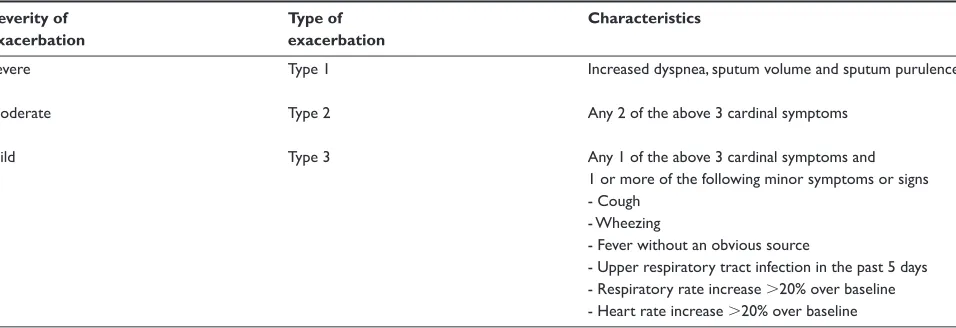
One widely used determination of severity is known as the Anthonisen classifi cation (Anthonisen et al 1987). This clas-sifi cation relies on the number of cardinal symptoms and the presence of some supporting symptoms as shown in Table 1. Interestingly, this classifi cation was not designed to be a clas-sifi cation of severity of exacerbations, but has become so over time. This determination of severity is relatively simple and does correlate with benefi t with antibiotics, with such benefi t seen only in Type 1 and 2 exacerbations. However, there are limitations to the Anthonisen severity classifi cation. It has not been validated against objective measures of severity. The association with benefi t with antibiotics has not been reproduced in other studies. Another limitation is the lack of gradation of severity within each symptom, such that an exacerbation with mild dyspnea and mild increase in sputum would be regarded as the same severity in this classifi cation as one with a marked increase in both symptoms.
It is evident that we need a better defi nition and objective measures of severity of exacerbations. Biomarkers represent such an objective measure and potentially could either defi ne an exacerbation, determine its etiology or determine its severity. In a recent study by Hurst et al of 36 plasma biomarkers in 90 patients with exacerbations, none of them alone or in combination were adequate to defi ne an
exacerbation (Hurst et al 2006). In another study of multiple serum biomarkers in 20 hospitalized patients with exacerbation, reduction in interleukin-6 (IL-6) and interleukin-8 (IL-8) correlated with decrease in dyspnea during recovery from exacerbation, while decreases in IL-6 and tumor necrosis factor (TNFα) were proportional to recovery in FEV1 (Pinto-Plata et al 2007). Sputum free neutrophil elastase activity has been shown to correlate with clinical severity of an exacerbation as assessed by a clinical score based on symptoms and signs (Sethi et al 2000). Development of patient reported outcomes and biomarkers should provide us with a better defi nition and objective measures of severity of exacerbations in the future.
Pathogenesis of exacerbations
The emerging concept that an increase in airway infl amma-tion from the baseline level characteristic of COPD is cen-tral to the pathogenesis of acute exacerbations is supported by several recent studies (White et al 2003; Sethi 2004a). Measurement of airway infl ammation in induced or expec-torated sputum, bronchoalveolar lavage or bronchial biopsy has revealed that increased airway infl ammation is indeed present in acute exacerbation and resolves with treatment. Both neutrophilic and eosinophilic infl ammation has been described, with the former associated with a bacterial etiology and the latter with viral infection. Any stimulus that acutely increases airway infl ammation could lead to increased bron-chial tone, edema in the bronbron-chial wall and mucus production. In an already diseased lung, these processes could worsen ventilation-perfusion mismatch and expiratory fl ow limita-tion. Corresponding clinical manifestations are dyspnea, cough, increased sputum production, tenacity and purulence along with worsening gas exchange, which are the cardinal manifestations of an exacerbation.
Table 1 Anthonisen classifi cation of COPD exacerbations based on cardinal symptoms. Based on data from Anthonisen and collea-gues (1987)
Severity of Type of Characteristics
exacerbation exacerbation
Severe Type 1 Increased dyspnea, sputum volume and sputum purulence
Moderate Type 2 Any 2 of the above 3 cardinal symptoms
Mild Type 3 Any 1 of the above 3 cardinal symptoms and
1 or more of the following minor symptoms or signs
- Cough
- Wheezing
- Fever without an obvious source
Increases in plasma fi brinogen, interleukin 6 (IL-6) and c-reactive protein (CRP), consistent with a heightened state of systemic infl ammation have been described during exacerba-tions (Dev et al 1998; Wedzicha et al 2000). These and other mediators likely cause the systemic manifestations of exacer-bations, including fatigue and in some instances fever.
A variety of noninfectious and infectious stimuli can induce an acute increase in airway infl ammation in COPD, thereby causing the manifestations of exacerbation. Epide-miological studies have demonstrated increased respiratory symptoms and respiratory mortality among patients with COPD during periods of increased air pollution (Sunyer et al 1993; Garcia-Aymerich et al 2000; Sunyer et al 2000). Indeed, environmental pollutants, both particulate matter, such as PM-10, and nonparticulate gases, such as ozone, nitrogen dioxide, sulfur dioxide, are capable of inducing infl ammation in vitro and in vivo (Devalia et al 1994; Ohtoshi et al 1998; Rudell et al 1999). Infectious agents, including bacteria, viruses and atypical pathogens are implicated as causes of up to 80% of acute exacerbations, and are discussed in greater detail below (Sethi 2000).
Microbial pathogens in COPD
exacerbations
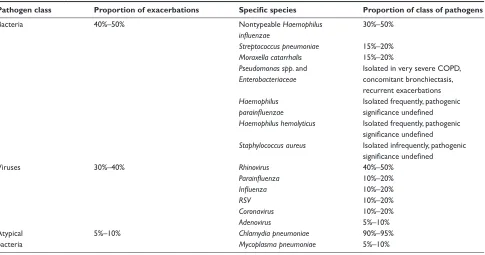
The list of potential pathogens in COPD exacerbations includes typical respiratory bacterial pathogens, respiratory viruses
and atypical bacteria (Table 2). Among the typical bacteria, nontypeable Haemophilus infl uenzae (NTHI) is the most com-mon and its role in COPD is the best understood (Eldika and Sethi 2006). Among the viruses, Rhinovirus and Respiratory Syncytial Virus (RSV) has received considerable attention in recent years (Seemungal et al 2001; Falsey et al 2005).
Certain shared characteristics of these pathogens pro-vide clues to their predilection for causing infections in COPD. NTHI, Streptococcus pneumoniae, and Moraxella catarrhalis are the predominant bacterial causes of two other common respiratory mucosal infections, acute otitis media in children and acute sinusitis in children and adults. These mucosal infections have been related to anatomical abnor-malities with impaired drainage of secretions, antecedent viral infections and defects in innate and adaptive immunity. All these predisposing factors likely exist in COPD. These three pathogens are all exclusively human pathogens that are transmitted among individuals. In healthy hosts, their presence is confi ned to the upper airway and does not cause any clinical manifestations. It is likely that acquisition of these pathogens in a patient with COPD, because of com-promised lung defense, allows establishment of infection in the lower respiratory tract, with or without overt clinical manifestations.
Respiratory viruses implicated in COPD are able to cause acute tracheo-bronchial infections in healthy hosts, clinically
Table 2 Microbial pathogens in exacerbations of COPD
Pathogen class Proportion of exacerbations Specifi c species Proportion of class of pathogens
Bacteria 40%–50% Nontypeable Haemophilus 30%–50%
infl uenzae
Streptococcus pneumoniae 15%–20%
Moraxella catarrhalis 15%–20%
Pseudomonas spp. and Isolated in very severe COPD,
Enterobacteriaceae concomitant bronchiectasis,
recurrent exacerbations
Haemophilus Isolated frequently, pathogenic
parainfl uenzae signifi cance undefi ned
Haemophilus hemolyticus Isolated frequently, pathogenic
signifi cance undefi ned
Staphylococcus aureus Isolated infrequently, pathogenic
signifi cance undefi ned
Viruses 30%–40% Rhinovirus 40%–50%
Parainfl uenza 10%–20%
Infl uenza 10%–20%
RSV 10%–20%
Coronavirus 10%–20%
Adenovirus 5%–10%
Atypical 5%–10% Chlamydia pneumoniae 90%–95%
referred to as acute bronchitis. In the setting of COPD, with diminished respiratory reserve, this acute bronchitis has more profound manifestations and serious clinical consequences.
Pathogenesis of infectious
exacerbations
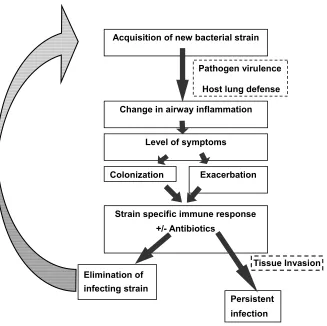
Our understanding of acute exacerbation pathogenesis, espe-cially in relation to bacterial infection, has seen signifi cant progress over the last few years. Both host and pathogen fac-tors are involved in development of acute bacterial exacerba-tions (Figure 1). Acquisition of strains of bacterial pathogens that are new to the host from the environment appears to be the primary event that puts the patient with COPD at risk for an exacerbation (Sethi et al 2002). Variations among strains of a species in the surface antigenic structure, as is seen with NTHI, S pneumoniae and M catarrhalis allow these newly acquired strains to escape the pre-existing host immune response that had developed following prior expo-sure to other strains of the same species of bacteria. These strains can therefore proliferate in the lower airways and
induce acute infl ammation in the airways. The virulence of the strain and as yet unidentifi ed host factors may deter-mine if the acute infl ammatory response to the pathogen reaches the threshold to cause symptoms that present as an exacerbation (Chin et al 2005). In many instances, the adap-tive immune response results in development of mucosal and systemic antibodies to the pathogen (Sethi et al 2004; Murphy et al 2005). This immune response, in combination with appropriate antibiotics, is able to eliminate or control proliferation of the infecting bacteria. However, because of antigenic variability among strains of these bacterial species, the antibodies that develop to the infecting strain are usually strain-specifi c, and do not provide protection to the host from other antigenically distinct strains of the same species. This allows the process of recurrent bacterial infection and exacerbations in these patients.
The pathogenesis of acute viral exacerbations is less well understood. However, it appears to be similar to bacterial infections. A common cause of exacerbations, the rhinovirus, demonstrates considerable antigenic variation among its
Figure 1 Proposed model of bacterial exacerbation pathogenesis in COPD. Copyright © 2006. Reproduced with permission from Veeramachaneni SB, Sethi S. 2006. Pathogenesis of bacterial exacerbations of COPD. J Chronic Obstructive Pul Dis, 3:109–15.
Acquisition of new bacterial strain
Pathogen virulence
Host lung defense
Change in airway inflammation
Level of symptoms
Exacerbation Colonization
Strain specific immune response +/- Antibiotics
Elimination of infecting strain
Persistent infection
more than 100 serotypes, allowing for recurrent infections. The infl uenza virus demonstrates drift in the antigenic make-up of its major surface proteins, thereby leading to recurrent infections. In vitro, viruses can damage airway epithelium, stimulate muscarinic receptors, and induce eosinophilic infl ux by stimulating the secretion of RANTES (Johnston et al 1998). These pro-infl ammatory actions could poten-tially induce the pathophysiological manifestations that characterize acute exacerbation when a viral agent infects the lower airway of a patient with COPD. The pathogenesis of exacerbations with atypical bacterial infection is poorly understood.
Goals of treatment of exacerbations
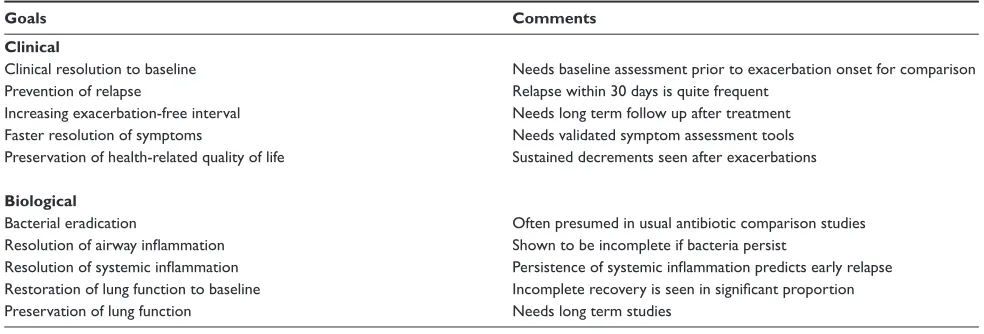
Traditionally, the aims of treatment of an exacerbation are the recovery to baseline clinical status and the prevention of complications. Though these goals are undoubtedly important, several new observations question the adequacy of these goals. These include our new understanding of the importance of exacerbations in the course of COPD, the role of infection in exacerbations, the high rates of relapse with an adequate initial clinical response, and the role played by chronic infection in the pathogenesis of COPD. To draw an analogy, confi ning our goal in the treatment of COPD exacerbations to short term resolution of symptoms would be the equivalent of treating acute myocardial infarction with the only aim being resolution of chest pain. Several other important goals of treatment, both clinical and biologi-cal, should be considered (Table 3). For instance, clinical success in the treatment of exacerbations has been defi ned as resolution of symptoms to baseline or improvement of symptoms to a degree that no further treatment is required in the opinion of the treating physician. If symptoms do indeed correlate with exaggerated airway and systemic
infl ammation, then acceptance of clinical improvement rather than clinical resolution has important implications. Clinical improvement may refl ect inadequate treatment, permitting the infl ammatory process that underlies the exacerbation to persist for prolonged periods of time (White et al 2003). Therefore, clinical resolution of symptoms to baseline may actually represent the optimal outcome.
Other important clinical goals of treatment include delay-ing the next exacerbation, prevention of early relapse and more rapid resolution of symptoms (Anzueto et al 1999; Miravitlles et al 2001; Aaron et al 2003). Lengthening the inter-exacerbation interval and prevention of early relapse are being increasingly recognized as important clinical goals of treatment, because they ultimately translate to a decrease in the frequency of exacerbations, which is now a major focus of COPD treatment. Though most patients and physicians would accept faster recovery to baseline as a desirable goal of treatment, acceptance of this goal has been hampered by lack of well validated instruments to reliably measure the rate of resolution of exacerbations.
Nonclinical goals of treatment are either still in their infancy or, in the case of bacteriologic eradication, only used in clinical studies to satisfy regulatory requirements for approval of new antibiotics. If exacerbations are infl am-matory events, it would be logical to have resolution of infl ammation to baseline as an important goal of treatment. Similarly, exacerbations are in many instances induced by infection, therefore eradication of the offending infectious pathogen should be a goal of treatment. Practical application of these biological goals of treatment of exacerbations awaits the development of simple, rapid and reliable measurements of infl ammation and infection.
Most exacerbations require a multi-pronged approach that utilizes several therapeutic modalities simultaneously,
Table 3 Proposed goals of treatment of COPD exacerbation
Goals Comments Clinical
Clinical resolution to baseline Needs baseline assessment prior to exacerbation onset for comparison Prevention of relapse Relapse within 30 days is quite frequent
Increasing exacerbation-free interval Needs long term follow up after treatment Faster resolution of symptoms Needs validated symptom assessment tools Preservation of health-related quality of life Sustained decrements seen after exacerbations
Biological
Bacterial eradication Often presumed in usual antibiotic comparison studies Resolution of airway infl ammation Shown to be incomplete if bacteria persist
either to relieve symptoms, to treat the underlying cause or provide support till recovery occurs (Sethi 2002; GOLD 2007). These therapies include bronchodilators, corticoste-roids, antimicrobials, mucolytics, and expectorants and, in the more severe cases, oxygen supplementation and mechanical ventilation for acute respiratory failure. The subsequent dis-cussion will focus on the role of antibiotics in the treatment of acute exacerbation.
Antibiotics in the treatment
of exacerbations
The role and choice of antibiotics in the treatment of exac-erbations has been a matter of controversy. Recommenda-tions for antibiotic use among published guidelines are often inconsistent, and at times vague (Bach et al 2001; Balter et al 2003; Celli and MacNee 2004; GOLD 2007). The paucity of well-designed, large randomized controlled trials in this fi eld upon which to base solid recommendations has undoubtedly contributed to the state of affairs (Sethi 2004b). Recently, a few well designed placebo controlled and antibiotic com-parison trials have been reported. In addition, epidemiologic studies have consistently identifi ed certain ‘risk factors’, the presence of which in a patient with an acute exacerbation is predictive for failure of treatment or early relapse. There is increasing realization that with the heterogeneity of COPD and of exacerbations, using the same antibiotic in all episodes may not provide optimal outcome. It is likely that a propor-tion of treatment failures in exacerbapropor-tions are related to ineffective antibiotic treatment. Therefore, patients ‘at risk’ for poor outcome are the logical candidates for aggressive initial antibiotic treatment, with the expectation that such an approach would improve overall outcomes of exacerbation. This ‘risk stratifi cation’ approach has also been advocated for other community-acquired infections such as pneumonia and acute sinusitis (Mandell et al 2003; Sinus and Allergy Health 2004). Though improved outcomes with risk stratifi cation has not yet been demonstrated in prospective controlled tri-als, such an approach takes into account concerns of disease heterogeneity, antibiotic resistance and judicious antibiotic use in exacerbations.
Placebo-controlled antibiotic trials
In contrast to the magnitude of the problem of exacerbations of COPD, resulting in signifi cant antibiotic consumption, there are only a handful of placebo-controlled trials in this disease. Two meta-analyses of placebo-controlled trials in exacerbations have been published. In the fi rst such analysis published in 1995, only nine trials met quality criteria and
a small but signifi cant benefi cial effect of antibiotics over placebo in acute exacerbation was demonstrated (Saint et al 1995). In the second analysis, 11 trials were included, and a much larger benefi cial effect on mortality and prevention of clinical failure was demonstrated, especially in moderate to severe exacerbations (Ram et al 2006). The numbers needed to treat in severe exacerbations in hospitalized patients to prevent one death was only three patients and the number needed to treat for the prevention of one clinical failure was six patients. Diarrhea was the most frequently related adverse effect, with one episode per seven patients treated. Antibiotic treatment was benefi cial in resolving sputum purulence; however benefi ts on lung function and gas exchange were not observed.
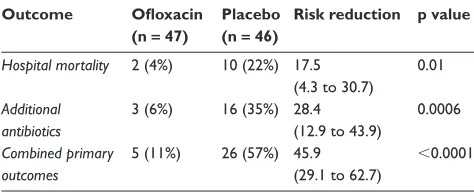
The different results between the two meta-analyses can be explained in large part by the addition in the later analy-sis of a study performed in Tunisia that was published in 2003. In this study, 93 patients with exacerbations of severe underlying COPD requiring ventilator support in an inten-sive care unit were randomly assigned to receive ofl oxacin or placebo in a double blind manner (Nouira et al 2001). No systemic corticosteroids were administered. Potential respira-tory bacterial pathogens were isolated in tracheo-bronchial aspirates in 61% of patients. Ofl oxacin resulted in a dramatic benefi t when compared to placebo, reducing mortality and the need for additional antibiotics by 17.5-fold and 28.4-fold, respectively (Table 4).
Another interesting study, though not included in either meta-analysis, was published in Italian by Allegra and col-leagues (1991) with an additional analysis later published in English. In this trial, amoxicillin/clavunate was compared with placebo in 414 exacerbations in 369 patients with varying severity of underlying COPD (Allegra et al 2001). A unique feature of this study was the measurement of pri-mary outcome at 5 days, instead of the traditional 2–3 weeks. Clinical success (including resolution and improvement)
Table 4 Results of a recent placebo controlled trial in exacerba-tions of COPD requiring intensive care unit admission. Based on data from Nouira and colleagues (2001)
Outcome Ofl oxacin Placebo Risk reduction p value (n = 47) (n = 46)
Hospital mortality 2 (4%) 10 (22%) 17.5 0.01
(4.3 to 30.7)
Additional 3 (6%) 16 (35%) 28.4 0.0006
antibiotics (12.9 to 43.9)
Combined primary 5 (11%) 26 (57%) 45.9 ⬍0.0001
was signifi cantly better with the antibiotic, seen in 86.4% of patients, compared with 50.6% in the placebo arm. Greater benefi t with antibiotics as compared to placebo was seen with increasing severity of underlying COPD.
Results of the meta-analyses and this study, along with those of the previous classic large placebo-controlled trial conducted by Anthonisen and colleagues show that antibi-otics are benefi cial in the treatment of moderate to severe exacerbations (Anthonisen et al 1987; Allegra et al 2001; Nouira et al 2001; Ram et al 2006). Furthermore, the benefi t with antibiotics is more marked early in the course of the exacerbation, suggesting that antibiotics hasten resolution of symptoms (Allegra et al 2001; Miravitlles et al 2001). However, there are still important unresolved questions regarding the role of antibiotics in exacerbations. The benefi t of antibiotics in mild exacerbations is unproven and warrants a placebo controlled trial. Whether antibiotics are of benefi t in the treatment of exacerbations when a short course of sys-temic corticosteroids are co-administered has still not been studied in a large well designed trial. One would suspect that there would be additive benefi ts when both treatments are used over either treatment alone (Wood-Baker et al 2005; Ram et al 2006).
Antibiotic comparison trials
Though one can be quite confi dent that antibiotics are use-ful in moderate to severe exacerbations of COPD, there is considerable discussion as to antibiotic choice, especially for initial empiric therapy (Bach et al 2001; Balter et al 2003; Celli and MacNee 2004; Sethi and Murphy 2004; GOLD 2007). As most exacerbations nowadays are treated without obtaining sputum bacteriology, this initial empiric
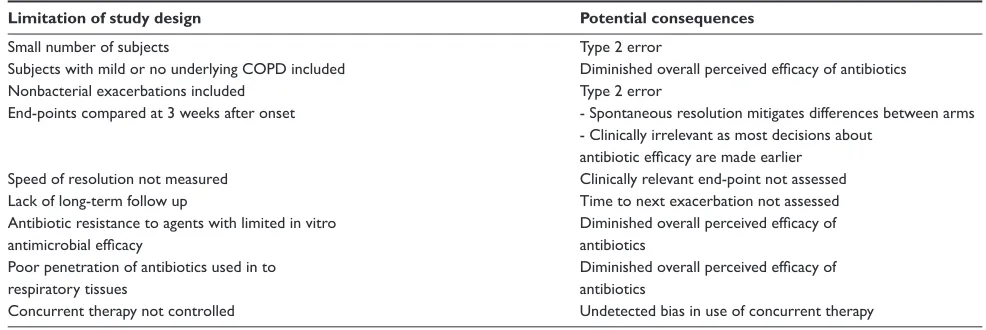
choice often becomes the only choice made for antibiotic use in exacerbations. Results of antibiotic comparison trials should guide the recommendations for appropriate empiric antibiotics in exacerbations. However, though a large number of such trials have been conducted, in the vast majority, anti-biotic choice does not appear to affect the clinical outcome. Differences in bacteriological eradication rates are seen, with an apparent dissociation between clinical and bacterio-logical outcomes (Obaji and Sethi 2001). This is contrary to expectations that antibiotics with better in vitro and in vivo antimicrobial effi cacy and better pharmacodynamic and pharmacokinetic characteristics should show superiority in clinical outcomes. This paradox is likely related to several short-comings in design of these trials (Table 5) (Sethi 2004b). Many of these defi ciencies are explained by the fact that these trials are performed for regulatory approval of the drugs, therefore are designed for demonstrating noninferior-ity rather than differences between the two antibiotics.
Two recent antibiotic comparison trials were designed to show differences among antibiotics and measured some unconventional but clinically relevant end-points. The GLOBE (Gemifl oxacin and Long term Outcome of Bronchitis Exacerbations) trial was a prospective, double blind, randomized trial that compared a fl uoroquinolone, gemifl oxacin, with a macrolide, clarithromycin (Wilson et al 2002). End of therapy and long-term outcome assessments were made at the conventional 10–14 day and 28 day time intervals. In these assessments, in line with most antibiotic comparison trials, there was no statistically significant difference in the two arms in the clinical outcome, with clinical success rates of 85.4% and 84.6% for gemifl oxacin and clarithromycin respectively. Bacteriological success,
Table 5 Limitations of published placebo-controlled antibiotic trials in acute exacerbations of COPD. Copyright © 2004. Reproduced with permission from Sethi S. 2004a. Bacteria in exacerbations of chronic obstructive pulmonary disease. Phenomenon or
epiphenomenon? Proc Am Thorac Soc, 1:109–14
Limitation of study design Potential consequences
Small number of subjects Type 2 error
Subjects with mild or no underlying COPD included Diminished overall perceived effi cacy of antibiotics
Nonbacterial exacerbations included Type 2 error
End-points compared at 3 weeks after onset - Spontaneous resolution mitigates differences between arms - Clinically irrelevant as most decisions about
antibiotic effi cacy are made earlier Speed of resolution not measured Clinically relevant end-point not assessed
Lack of long-term follow up Time to next exacerbation not assessed
Antibiotic resistance to agents with limited in vitro Diminished overall perceived effi cacy of
antimicrobial effi cacy antibiotics
Poor penetration of antibiotics used in to Diminished overall perceived effi cacy of
respiratory tissues antibiotics
measured as eradication and presumed eradication, was signifi cantly higher with gemifl oxacin (86.7%) compared to clarithromycin (73.1%).
Patients who had a successful clinical outcome at 28 days were then offered enrollment in a follow up period for a total of 26 weeks of observation. In this time period, the primary outcomes were the rate of repeat exacerbations, hospitalizations for respiratory disease and health-related quality of life measures. Gemifl oxacin was associated with a signifi cantly lower rate of repeat exacerbations, with 71% of the gemifl oxacin-treated patients remaining exacerbation free at 26 weeks in comparison to 58.5% in the clarithromycin arm. The relative risk reduction for recurrence of exacerba-tion was 30%. The rate of hospitalizaexacerba-tion for respiratory tract illness in the 26 weeks was also lower in the gemifl oxacin-treated patients than in the clarithromycin oxacin-treated patients (2.3% vs. 6.3%, p = 0.059) (Wilson et al 2002). Patients who had a recurrent exacerbation in the 26 week period had a lesser improvement in their health-related quality of life when compared to those who remained free of recurrence (Spencer and Jones 2003). This trial clearly demonstrates the limitation of the conventional medium-term clinical outcomes to demonstrate differences among antibiotics in exacerbations. If the 26 week follow up period had not been instituted, signifi cant differences in clinically relevant out-comes of recurrence of exacerbations and respiratory related hospitalization would have been missed.
Another recent landmark antibiotic comparison trial is the MOSAIC trial. This trial is a large study in which patients were randomized to a fl uoroquinolone, moxifl oxacin or to standard therapy (which could be one of the following: amoxicillin, cefuroxime or clarithromycin) (Wilson et al 2004). This trial had several unique design features which relate to observations made in this study. A relatively large number of patients were enrolled. In addition, patients were enrolled when stable to establish a baseline as a comparison to reliably distinguish between clinical improvement and resolution following treatment. A substantial proportion of the patients enrolled had one or more risk factors that would predispose to a poor outcome as discussed below. Patients were followed up to 9 months after randomization to provide an estimate of recurrence of exacerbation.
Interestingly, in line with usual antibiotic comparison trials, moxifloxacin and standard therapy were equiva-lent (88% vs 83%) when clinical success (resolution and improvement) was compared at 7–10 days after the end of therapy. However, moxifl oxacin therapy was associated with a superior clinical cure rate (defi ned as resolution of
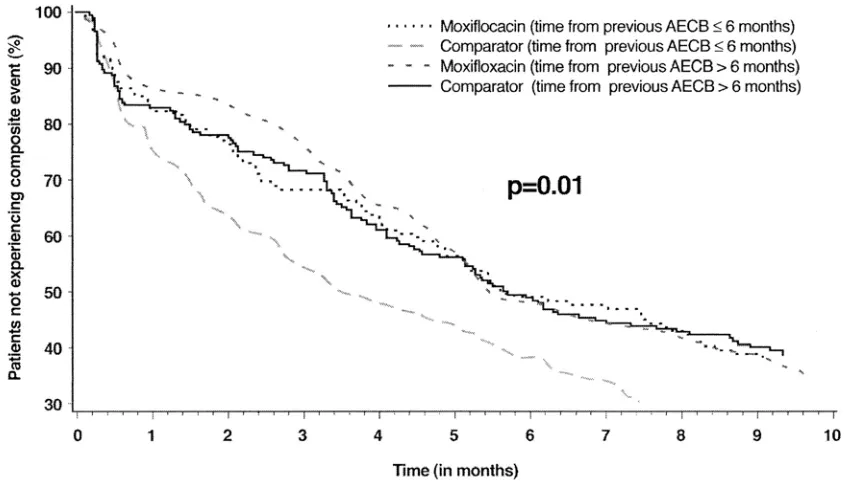
symptoms to baseline, rather than simply improvement) than standard therapy (71% vs 63%), as well as with superior bacteriologic response (91.5% vs 81%). In addition, when other a priori unconventional end-points were examined, moxifl oxacin was associated with fewer requirements for additional antibiotic therapy (8% vs 14%) and an extended time to the next exacerbation (131 versus 104 days) (Wilson et al 2004). A composite end-point of clinical failure, require-ment of additional antibiotics and recurrence of exacerbation demonstrated a clear difference between the two arms in the study, with moxifl oxacin being superior to standard therapy for up to 5 months of follow up (Figure 2). Again, if the conventional outcome of clinical success would have been measured solely in this study, all the other signifi cant differ-ences in the two arms would have not been discovered.
Results of the GLOBE and MOSAIC trials demonstrate that in vitro microbiologic superiority of the fl uoroquinolones does translate to greater in vivo effectiveness in treating patients with acute exacerbation. Differences among antibiotics are often not perceptible with the standard regulatory end-point of clinical success at 7–14 days after the end of therapy. However, differences among antibiotics are perceptible when clinically relevant end-points such as speed of resolution, clinical cure, need for additional antimicrobials and time to next exacerbation are considered (Wilson et al 2002, 2004).
Risk stratifi
cation of patients
Based on the MOSAIC and GLOBE studies results, it would be tempting to prescribe fl uoroquinolones for all moderate to severe exacerbations. However, it is clear that such a strategy, though likely to be successful in the short-term, would foster antimicrobial resistance to these valuable antibiotics in the long term. Therefore, it would be judicious to make an effort to identify those patients that are most likely to benefi t from these antibiotics.
exacerbation are likely to be signifi cant, with clinical failures, hospitalizations and early recurrences likely.
Among the risk factors for poor outcome identifi ed in various studies are increasing age, severity of underlying airway obstruction, presence of co-morbid illnesses (especially cardiac disease), a history of recurrent exacerbations, use of home oxygen, use of chronic steroids, hypercapnia and acute bronchodilator use (Ball et al 1995; Adams et al 2000; Dewan et al 2000; Miravitlles et al 2001; Groenewegen et al 2003; Wilson et al 2006). Some of these risk factors are likely to be highly correlated to each other, such as home oxygen use, hypercapnia and chronic steroid use likely refl ect increasing severity of underlying COPD. Acute bronchodilator use could be related to the severity of underlying COPD or refl ect the wheezy phenotype of exacerbation that may be less responsive to antibiotic treatment. Many of the risk factors discussed above are continuous in severity, however, certain thresholds have been defi ned in studies that are clinically useful and predictive of poor outcome. These include an age of more than 65 yrs, FEV
1 less than 50%, and more than 3 exacerbations in the previous 12 months.
In addition to the risk factors described above, experience in other respiratory infections tells us that recent antibiotic use, within the past 3 months, places the patient in a high risk group for harboring antibiotic resistant pathogens and there-fore having a poor outcome. This has been best described
for S pneumoniae among patients with community acquired pneumococcal pneumonia and recently also described for this pathogen among patients with COPD ( Vanderkooi et al 2005; Sethi et al 2006). Whether such selection for antibiotic resistant strains occurs among NTHI and M catarrhalis after antibiotic exposure is not known.
Risk stratifi
cation approach
to antibiotic therapy in acute
exacerbation
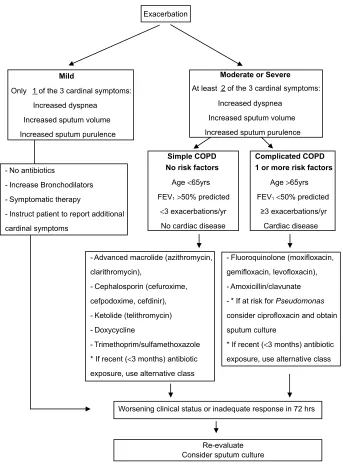
A risk stratifi cation approach has been advocated by several experts for the initial empiric antibiotic treatment of acute exacerbation based on the risk factors discussed above and the in vitro and in vivo effi cacy of antibiotics. Our current treatment algorithm which is very similar to what others have advocated is shown (Figure 3) (Balter et al 2003; Sethi and Murphy 2004; GOLD 2007). The initial step in the algorithm is the determination of the severity of the exacerbation. Based on the discussion above, we use the Anthonisen criteria of single cardinal symptom exacerbations defi ned as mild, while the presence of 2 or all 3 of the cardinal symptoms defi nes moderate and severe exacerbations.
from the ‘complicated’ patients. Uncomplicated patients do not have any of the risk factors for poor outcome. Complicated patients have one or more of the following risk factors for poor outcome: Age ⬎65yrs, FEV1⬍50%, co-morbid cardiac disease, 3 or more exacerbations in the previous 12 months (Balter et al 2003; Sethi and Murphy 2004; GOLD 2007). Antibiotic choices for patients with uncomplicated COPD include an advanced macrolide (azithromycin, clarithromycin), a ketolide (telithromycin), a cephalosporin (cefuroxime, cefpodoxime or cefdinir), doxycycline or trimethoprim/sulfamethoxazole. Amoxicillin is not an appropriate choice with the considerable incidence of β-lactamase production among NTHI and
M catarrhalis, two of the major pathogens of exacerbation. In complicated patients, antibiotic choices include a respiratory fl uoroquinolone (moxifl oxacin, gemifl oxacin, levofl oxacin) or amoxicillin/clavulanate.
In choosing an antibiotic, other considerations are also important. In all such patients, exposure to antibiotics within the past 3 months should be elucidated. Exposure to antibiotic is not confi ned to those prescribed for respiratory infections, but includes antibiotics prescribed for any indication. The antibiotic chosen should be from a different class of agents from the one prescribed within the past 3 months. For exam-ple, exposure to a macrolide in the past three months should Figure 3 Algorithm for antibiotic treatment of acute exacerbations of COPD.
Exacerbation
Simple COPD No risk factors
Age65yrs
FEV150% predicted
3 exacerbations/yr No cardiac disease Mild
Only 1 of the 3 cardinal symptoms: Increased dyspnea
Increased sputum volume
Increased sputum purulence
Moderate or Severe At least
Increased dyspnea
Increased sputum volume
Increased sputum purulence
Complicated COPD 1 or more risk factors
Age65yrs
FEV150% predicted
≥3 exacerbations/yr Cardiac disease
- Advanced macrolide (azithromycin, clarithromycin),
- Cephalosporin (cefuroxime,
cefpodoxime, cefdinir),
- Ketolide (telithromycin) - Doxycycline
- Trimethoprim/sulfamethoxazole
* If recent (3 months) antibiotic
exposure, use alternative class
Worsening clinical status or inadequate response in 72 hrs
Re-evaluate Consider sputum culture - No antibiotics
- Increase Bronchodilators
- Symptomatic therapy
- Instruct patient to report additional
cardinal symptoms
- Fluoroquinolone (moxifloxacin, gemifloxacin, levofloxacin),
- Amoxicillin/clavunate
- * If at risk for Pseudomonas
consider ciprofloxacin and obtain sputum culture
* If recent (3 months) antibiotic
lead to use of a cephalosporin in an uncomplicated patient. Similarly, prior use of a fl uoroquinolone in a complicated patient should lead to use of amoxicillin/clavulanate.
There is a sub-group of the complicated patients who are at risk for infection by Pseudomonas aeruginosa and Enterobacteriaceae or have a documented infection by these pathogens (Soler et al 1998). These patients have usually very severe underlying COPD (FEV1⬍35%), have developed bronchiectasis, are hospitalized (often requiring intensive care), or have been recently hospitalized or have received multiple courses of antibiotics. In such patients, empiric treat-ment with ciprofl oxacin is appropriate. However, emerged resistance among P aeruginosa to the fl uoroquinolones may compromise their effi cacy. Therefore, in this sub-group of patients, a sputum (or tracheobronchial aspirate if intubated) culture should be obtained to allow adjustment of antibiotics based on the in vitro susceptibility of pathogens isolated. However, combination or parenteral antibiotic therapy for P aeruginosa in this setting has never been systematically examined and is of unproven benefi t.
Patients should be re-assessed at 48–72 hrs, in which time frame clinical improvement should be apparent. In patients who fail initial empiric antimicrobial therapy, it would be appropriate to re-examine the patient to confi rm the diagnosis, consider sputum studies to ascertain for resistant or diffi cult to treat pathogens and treat with an alternative agent with better in vitro microbiological effi cacy.
Alternative approaches to antibiotic
therapy in acute exacerbation
Purulence of sputum, ie, the amount of yellow and green pigmentation in sputum is related to the presence of myeloperoxidase, a product of neutrophil degranulation. As neutrophil degranulation is associated with bacterial infection, purulent sputum at exacerbation has been shown to be a marker of bacterial infection, defi ned by quantitative cultures of sputum as well as bronchoscopic protected specimen brush specimens (Stockley et al 2000; Soler et al 2007). Presence of sputum purulence has been advocated as the sole determinant for antibiotic treatment of exacerbations. However, its accuracy and reproducibility as an indicator of bacterial infection is limited, and is likely to be even more so in clinical practice than in research studies (Stockley et al 2000; Soler et al 2007). Sputum purulence is incorporated in the Anthonisen criteria, and should be used in conjunction with other symptoms and other measures of risk stratifi cation in antibiotic treatment of exacerbations (Figure 3).
Biomarkers of bacterial infection represent another approach to antibiotic use in exacerbations of COPD. The best studied biomarker of bacterial infection is serum pro-calcitonin level. In a recent study in patients hospitalized for exacerbations, antibiotic treatment was only prescribed if the procalcitonin level was above a certain threshold. The investigators showed no difference in outcomes in spite of reduction in antibiotic use from 72% to 40% with procalci-tonin guidance (Stolz et al 2007). Though the fi ndings of this study are very interesting, this approach needs to be validated in multi-center trials with varied populations (Martinez and Curtis 2007). Furthermore, it needs to tested in outpatients with exacerbations, where the majority of exacerbations are treated, patients are not as closely supervised and other supportive care is less rigorous. Only a minority of patients received a fl uoroquinolones in this study, which should have been the antibiotics of choice in these complicated patients, as per the risk stratifi cation discussed above. Therefore, a reasonable speculation is that withholding antibiotics that may not be effective in the fi rst place is likely not to have much of an impact. In this study, short term goals as well as biologic goals of bacterial eradication and infl ammation reduction as discussed above were also not recorded.
Other important considerations in antibiotic prescribing are safety and tolerability of the agent, drug interactions and fi nally cost of treatment. Cost of the antibiotic however should not be interpreted in isolation. As shown elegantly by Miravittles and colleagues (2002) exacerbations for which initial empiric treatment fails are ten times as costly as clinical successes (Miravitlles et al 2002). In fact, the overall cost of care could be reduced by half with only a 33% reduction in clinical failure rates. Clinical failure rates are likely to be reduced when antibi-otic choice is appropriate and logical, as discussed above.
References
Aaron SD, Vandemheen KL, et al. 2003. Outpatient oral prednisone after emergency treatment of chronic obstructive pulmonary disease. N Engl J Med, 348:2618–25.
Adams SG, Melo J, et al. 2000. Antibiotics are associated with lower relapse rates in outpatients with acute exacerbations of COPD. Chest, 117:1345–52.
Allegra L, Blasi F, et al. 2001. Antibiotic treatment and baseline severity of disease in acute exacerbations of chronic bronchitis: a re-evaluation of previously published data of a placebo-controlled randomized study. Pulm Pharmacol Ther, 14:149–55.
Anthonisen NR, Manfreda J, et al. 1987. Antibiotic therapy in exacerbations of chronic obstructive pulmonary disease. Ann Intern Med, 106:196–204. Anzueto A, Rizzo JA, et al. 1999. The infection-free interval: its use in
evaluating antimicrobial treatment of acute exacerbation of chronic bronchitis. Clin Infect Dis, 28:1344–5.
Ball P, Harris JM, et al. 1995. Acute infective exacerbations of chronic bronchitis. QJMed, 88:61–8.
Balter MS, La Forge J, et al. 2003. Canadian guidelines for the manage-ment of acute exacerbations of chronic bronchitis. Can Respir J, 10(Suppl B):3B–32B.
Bhushan R, Kirkham C, et al. 1997. Antigenic characterization and analysis of the human immune response to outer membrane protein E of Bran-hamella catarrhalis. Infect Immun, 65:2668–75.
Burrows B, Earle RH. 1969. Course and prognosis of chronic obstructive lung disease. A prospective study of 200 patients. N Engl J Med, 280:397–404.
Calverley PM, Anderson JA, et al. 2007. Salmeterol and fl uticasone pro-pionate and survival in chronic obstructive pulmonary disease. N Engl J Med, 356:775–89.
Celli BR, MacNee W. 2004. Standards for the diagnosis and treatment of patients with COPD: a summary of the ATS/ERS position paper. Eur Respir J, 23:932–46.
Chin CL, Manzel LJ, et al. 2005. Haemophilus infl uenzae from patients with chronic obstructive pulmonary disease exacerbation induce more infl ammation than colonizers. Am J Respir Crit Care Med, 172:85–91.
Dev D, Wallace E, et al. 1998. Value of C-reactive protein measurements in exacerbations of chronic obstructive pulmonary disease. Respir Med, 92:664–7.
Devalia JL, Rusznak C, et al. 1994. Effect of nitrogen dioxide and sulphur dioxide on airway response of mild asthmatic patients to allergen inhalation. Lancet, 344:1668–71.
Dewan NA, Rafi que S, et al. 2000. Acute exacerbation of COPD: factors associated with poor treatment outcome. Chest, 117:662–71. Donaldson GC, Seemungal TA, et al. 2002. Relationship between
exac-erbation frequency and lung function decline in chronic obstructive pulmonary disease. Thorax, 57:847–52.
Eldika N, Sethi S. 2006. Role of nontypeable Haemophilus infl uenzae in exacerbations and progression of chronic obstructive pulmonary disease. Curr Opin Pulm Med, 12:118–24.
Falsey AR, Hennessey PA, et al. 2005. Respiratory syncytial virus infection in elderly and high–risk adults. N Engl J Med, 352:1749–59. Garcia-Aymerich J, Tobias A, et al. 2000. Air pollution and mortality in a
cohort of patients with chronic obstructive pulmonary disease: a time series analysis. J Epidemiol Community Health, 54:73–4.
[GOLD] Global Initiative for Obstructive Lung Disease. 2007. Global Initiative for Obstructive Lung Disease [online]. Accessed on July 12, 2007. URL: http://www.goldcopd.com.
Groenewegen KH, Schols AM, et al. 2003. Mortality and mortality-related factors after hospitalization for acute exacerbation of COPD. Chest, 124:459–67.
Heckerling PS. 1986. The need for chest roentgenograms in adults with acute respiratory illness. Arch Intern Med, 146:1321–4.
Hiltke TJ, Sethi S, et al. 2002. Sequence stability of the gene encoding outer membrane protein P2 of nontypeable Haemophilus infl uenzae in the human respiratory tract. J Infect Dis, 185:627–31.
Hirschmann JV. 2000. Do bacteria cause exacerbations of COPD? Chest, 118:193–203.
Hurst JR, Donaldson GC, et al. 2006. Use of plasma biomarkers at exac-erbation of chronic obstructive pulmonary disease. Am J Respir Crit Care Med, 174:867–74.
Johnston SL, Papi A, et al. 1998. Low grade rhinovirus infection induces a prolonged release of IL-8 in pulmonary epithelium. J Immunol, 160:6172–81.
Kanner R, Anthonisen NR, et al. 2001. Lower respiratory illnesses promote FEV(1) decline in current smokers but not ex-smokers with mild chronic obstructive pulmonary disease: results from the lung health study. Am J Respir Crit Care Med, 164:358–64.
Kjaergard LL, Larsen FO, et al. 1996. Basophil-bound IgE and serum IgE directed against Haemophilus infl uenzae and Streptococcus pneumoniae in patients with chronic bronchitis during acute exacerbations. APMIS, 104:61–7.
Mandell LA, Bartlett JG, et al. 2003. Update of practice guidelines for the management of community-acquired pneumonia in immunocompetent adults. Clin Infect Dis, 37:1405–33.
Martinez FJ, Curtis JL. 2007. Procalcitonin-guided antibiotic therapy in COPD exacerbations: closer but not quite there. Chest, 131:1–2. Miravitlles M, Murio C, et al. 2001. Factors associated with relapse after
ambulatory treatment of acute exacerbations of chronic bronchitis. DAFNE Study Group. Eur Respir J, 17:928–33.
Miravitlles M, Murio C, et al. 2002. Pharmacoeconomic evaluation of acute exacerbations of chronic bronchitis and COPD. Chest, 121:1449–55.
Miravitlles M, Ros F, et al. 2001. The effi cacy of moxifl oxacin in acute exacerbations of chronic bronchitis: a Spanish physician and patient experience. Int J Clin Pract, 55:437–41.
Murphy TF, Brauer AL, et al. 2005. Moraxella catarrhalis in chronic obstruc-tive pulmonary disease: burden of disease and immune response. Am J Respir Crit Care Med, 172:195–9.
Murphy TF, Sethi S, et al. 2000. The role of bacteria in exacerbations of COPD. A constructive view. Chest, 118:204–9.
NHLBI. 2003. Chronic Obstructive Pulmonary Disease Data Fact Sheet, NIH Publication 03–5229.
Nouira S, Marghli S, et al. 2001. Once daily oral ofl oxacin in chronic obstruc-tive pulmonary disease exacerbation requiring mechanical ventilation: a randomised placebo-controlled trial. Lancet, 358:2020–5.
Obaji A, Sethi S. 2001. Acute exacerbations of chronic bronchitis. What role for the new fl uoroquinolones? Drugs Aging, 18:1–11.
Ohtoshi T, Takizawa H, et al. 1998. Diesel exhaust particles stimulate human airway epithelial cells to produce cytokines relevant to airway infl ammation in vitro. J Allergy Clin Immunol, 101(6 Pt 1):778–85.
Pinto-Plata VM, Livnat G, et al. 2007. Systemic cytokines, clinical and physiological changes in patients hospitalized for exacerbation of COPD. Chest, 131:37–43.
Ram FS, Rodriguez-Roisin R, et al. 2006. Antibiotics for exacerbations of chronic obstructive pulmonary disease. Cochrane Database Syst Rev, 2:CD004403.
Rodriguez-Roisin R. 2000. Toward a consensus defi nition for COPD exac-erbations. Chest, 117(5 Suppl 2):398S–401S.
Rudell B, Blomberg A, et al. 1999. Bronchoalveolar infl ammation after exposure to diesel exhaust: comparison between unfi ltered and particle trap fi ltered exhaust. Occup Environ Med, 56:527–34.
Saint S, Bent S, et al. 1995. Antibiotics in chronic obstructive pulmonary disease exacerbations. A meta-analysis. JAMA, 273:957–96. Seemungal T, Harper-Owen R, et al. 2001. Respiratory viruses,
symp-toms, and infl ammatory markers in acute exacerbations and stable chronic obstructive pulmonary disease. Am J Respir Crit Care Med, 164:1618–23.
Seemungal TAR, Donaldson GC, et al. 1998. Effect of exacerbation on quality of life in patients with chronic obstructive pulmonary disease. Am J Respir Crit Care Med, 157:1418–22.
Sethi S. 2000. Infectious etiology of acute exacerbations of chronic bron-chitis. Chest, 117:380S–385S.
Sethi S. 2002. Acute exacerbations of COPD: A “multipronged” approach. J Respir Dis, 23:217–55.
Sethi S. 2004a. Bacteria in exacerbations of chronic obstructive pulmo-nary disease. Phenomenon or epiphenomenon? Proc Am Thorac Soc, 1:109–14.
Sethi S. 2004b. New developments in the pathogenesis of acute exacerbations of chronic obstructive pulmonary disease. Curr Opin Infect Dis, 17:113–19.
Sethi S, Evans N, et al. 2002. Acquisition of a new bacterial strain and occurrence of exacerbations of chronic obstructive pulmonary disease. N Engl J Med, 347:465–71.
Sethi S, Murphy TF, et al. 2006. Antibiotic exposure in COPD and the development of penicillin and erythromycin resistance in Streptococcus pneumoniae. ICAAC, San Francisco CA, September 2006.
Sethi S, Muscarella K, et al. 2000. Airway infl ammation and etiology of acute exacerbations of chronic bronchitis. Chest, 118:1557–65. Sethi S, Wrona C, et al. 2004. Strain specifi c immune response to
Hae-mophilus infl uenzae in chronic obstructive pulmonary disease. Am J Respir Crit Care Med, 169:448–53.
Sinus and Allergy Health P. 2004. Antimicrobial treatment guidelines for acute bacterial rhinosinusitis 2004. Otolaryngol Head Neck Surg, 130:1–45.
Soler N, Agusti C, et al. 2007. Bronchoscopic validation of the signifi cance of sputum purulence in severe exacerbations of chronic obstructive pulmonary disease. Thorax, 62:29–35.
Soler N, Torres A, et al. 1998. Bronchial microbial patterns in severe exac-erbations of chronic obstructive pulmonary disease (COPD) requiring mechanical ventilation. Am J Respir Crit Care Med, 157:1498–505. Spencer S, Calverley PMA, et al. 2001. Health status deterioration in
patients with chronic obstructive pulmonary disease. Am J Respir Crit Care Med, 163:122–8.
Spencer S, Jones PW. 2003. Time course of recovery of health status following an infective exacerbation of chronic bronchitis. Thorax, 58:589–93.
Stockley RA, O’Brien C, et al. 2000. Relationship of sputum color to nature and outpatient managment of acute exacerbations of COPD. Chest, 117:1638–45.
Stolz D, Christ-Crain M, et al. 2007. Antibiotic treatment of exacerbations of COPD: a randomized, controlled trial comparing procalcitonin-guidance with standard therapy. Chest, 131:9–19.
Sunyer J, Saez M, et al. 1993. Air pollution and emergency room admis-sions for chronic obstructive pulmonary disease: a 5-year study. Am J Epidemiol, 137:701–5.
Sunyer J, Schwartz J, et al. 2000. Patients with chronic obstructive pulmo-nary disease are at increased risk of death associated with urban particle air pollution: a case-crossover analysis. Am J Epidemiol, 151:50–6. Vanderkooi OG, Low DE, et al. 2005. Predicting antimicrobial resistance in
invasive pneumococcal infections. Clin Infect Dis, 40:1288–97. Veeramachaneni SB, Sethi S. 2006. Pathogenesis of bacterial exacerbations
of COPD. J Chronic Obstructive Pul Dis, 3:109–15.
Wedzicha JA, Seemungal TA, et al. 2000. Acute exacerbations of chronic obstructive pulmonary disease are accompanied by elevations of plasma fi brinogen and serum IL-6 levels. Thromb Haemost, 84:210–15. White AJ, Gompertz S, et al. 2003. Resolution of bronchial infl ammation
is related to bacterial eradication following treatment of exacerbations of chronic bronchitis. Thorax, 58:680–5.
White AJ, Gompertz S, et al. 2003. Chronic obstructive pulmonary disease. 6: The aetiology of exacerbations of chronic obstructive pulmonary disease. Thorax, 58:73–80.
Wilson R, Allegra L, et al. 2004. Short-term and long-term outcomes of moxifl oxacin compared to standard antibiotic treatment in acute exac-erbations of chronic bronchitis. Chest, 125:953–64.
Wilson R, Jones P, et al. 2006. Antibiotic treatment and factors infl uenc-ing short and long term outcomes of acute exacerbations of chronic bronchitis. Thorax, 61:337–42.
Wilson R, Schentag JJ, et al. 2002. A comparison of gemifl oxacin and clar-ithromycin in acute exacerbations of chronic bronchitis and long-term clinical outcomes. Clin Ther, 24:639–52.