ISSN 2348 – 7968
A Patch Match Algorithm for Image Completion using Fr
Based Image in painting
M.Athishtalakshmi, R.Parimala, S.Pushpalatha, Guide: N.senthamaraiSelvi
IFET College of Engineering, Final year CSE IFET College of Engineering, Associate professor/CSE
Abstract:
Image completion involves filling of
missing parts inan image. In this paper we
address some problemsin image filling
through novel statistics of similar patches.
We perceived that if we match similar
patches in the image and obtain their offsets,
the statistics of these offsets are sparely
distributed. We further observe that a few
dominant offsets provide consistent
information for completing the image. These
novel statistics can be incorporated into both
Patch Match and FR based image inpainting
algorithm for image completion.
Experimental resultsindicate that our method
yields better results in various challenging
cases and is faster than existing state of the
image inpainting methods.
KeywordsFrame rate-, image completion, imageinpainting, Patchmatching
1 INTRODUCTION
Image completion involves the issue of filling missing parts in images. This is a non-trivial task in computer vision/graphics: on one hand the completed images are expected to be
Visually plausible. On the other hand the algorithm should be efficient, because in practice an image completion tool is often applied with user interactions.
Our method is based on a kind of natural image statistics. Natural image statistics are essential for many computer vision problems. Gradient based statistics have been applied denoising, deconvolution, and diffusion based painting. Patch domain statistics have shown very successful in denoising and super-resolution.
We categorize the image completion process into two methods: Patch match and FR based image in painting algorithm. Matching based methods explicitly match the patches in the unknown region with the patches in the region. The method optimizes a global cost function called coherence measure. It generalized for image retargeting or reshuffling in image.
ISSN 2348 – 7968 tool. This
combination
is implemented as theContent Aware Fill in Adobe Photoshop in terms of both visual quality and speed.
Although avoiding matching patches, the patch match algorithm is still computationally expensive. The complexity is linear in the number of labels and in the number of unknown pixels. Priority adopts label pruning and adopts hierarchical solvers. But they may still take tens of seconds to process small images.
In this patch matching method, optimizes the measured coherence, but allowsmatching only the patches to those patches shifted by the dominant offsets. In FR based method, a stack of shifted images is created corresponding to apixels in imageand combined them via graph cuts to fill the missing region. In experiments, both produce high quality results in various cases that are challenging for many state of the art methods. We except the statistics of patch offsets, as a natural image statistics and can find for applications in thefuture.
2 APPROACHES
We first introduce a way of computing the statistics of patch offsets. Based on this, we develop both patch match and FR based image in painting algorithms for image completion.
2.1 Computing the Statistics of Patch Offsets
To compute the statistics, we first match similar patches in the known region and obtain their offsets. For each patch P in the known region, we find another known patch that is the most similar with P and compute their relative positions. Formally, the offsets are the solution to can be approximately obtained by nearest-neighbor field algorithms like the Patch Match. Because we will compute the statistics the approximation in these algorithms almost does not impact the dominant offsets. In this paper we adopt due to its fast speed.
2.2 Image completion using statistics of
Patch Offsets
As discussedin the introduction, both patch match and FR based image in painting algorithm can be viewed. The algorithm will copy content from the location and paste it into the position.Next we show how the statistics of patch offsets can be applied them.
2.3 Patch match algorithm using
statistics of patch offsets
ISSN 2348 – 7968 product of univariate framelets. The Inpainting
Algorithm explains that let P’ be the diagonal matrix with diagonal entries 1 for the indices in Λ and 0. The framelet inpainting algorithm start point is the identities
f = PΛf + (I - PΛ)f
Substituting the known data PΛg = PΛf , we obtain
f = PΛg + (I - PΛ)A*Af .
Thus, the most straightforward way for framelet inpainting is to iterate as
fn+1 = PΛg + (I – PΛ)A*Afn.
It motivates us to incorporate a thresholding operator T¸ to obtain the framelet inpainting algorithm:
fn+1 = PΛg + (I - PΛ)A*T¸(Afn).
The thresholding plays a important role of perturbing the framelet coefficients with image inpainting.An iteration can be applied to fill the background color in image.
3 ANALYSES
In is section, we analyze the statistics of patch match and FR image completion.
3.1 Sparsity of the Offsets Statistics
One of our key observations is that the offsets statistics are sparse. We verify this observation in the MSRA Salient Object Database which contains images with manually labeled salient objects. We omit these objects and compute the offsets statistics in the background. When the background has
differentstructures or less salient objects. We use patches and test. For each image, to sort the image with the particular region. We can see the offsets are sparsely distributed, when about 80 percent of the offsetsare in 7 percent of all possible bins. We observe the changes in image with different t values. This means the sparsity is insensitive to t in a wide spectrum.
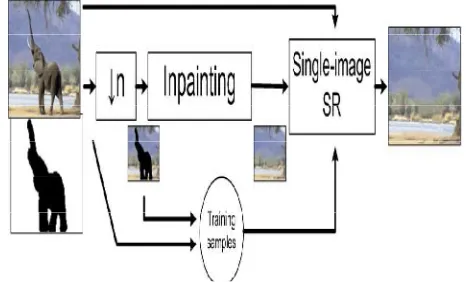
Figure 1.1: Select the particular image and removed from image using algorithm.
3.2 Patch offsets statistics for image
completion
We can determinethe offsets and filled the image completion. In this basis the situations on linear structures and textures.
Linear structure:
ISSN 2348 – 7968 image. As a dot is denoted the dominant offsets
in the histogram. Textures:
Textures can yield prominent patterns in the offset statistics. As its describing how the textures are repeated in image. We can complete the texture by shifting the image using these offsets. The regular textures can be larger than some predefined patch sizes, competing such textures is a challenging task for other techniques.
3.3 Offsets Selection and Patch match
algorithm
In the patch match algorithm can be determinethat the nearest neighbor in image. The main difference is that Shift-map allows all possible offsets. As a result, our solution space is a very small subset of the one of Shift-map. Theoretically, Shift-map can achieve a smaller energy than our method (this is observed in experiments).However, we find that the results of Shift-map may have unexpected bias and their visual quality can be unsatisfactory even if their energy is much lower than ours. We investigate that unexpected phenomenon through the graph-cuts label maps,we find that with a huge number of offsets, the Shift-map method can decrease the energy by inserting a great number of insignificant labels into the seam. These labels correspond to a few isolated pixels that occasionally connect the content on both sides of the seam. When the offset candidates are in a
great number, these occasional pixels are not rare.
3.4 Patch Sizes for the Offsets Statistics
Most exemplar-based methods involve the issue of setting suitable patch sizes. Our graph-based energy does not rely on patch representations the patch sizes only impact the computation of the offsets statistics. As analyzed above, the dominant offsets in the statistics are mainly determined by how the patterns are repeated in the known regions. Such disconnectedness is insensitive to the patch sizes and statistics. We can see that our method can produce visually reasonable results in a very side spectrum of patch sizes. This experiment shows that our method is very robust to patch sizes. 4.IMPLEMENTATION
4.1 Computing the Statistics
ISSN 2348 – 7968 paper this region is the entire image because the
holes are large).The threshold is set as w and h are the width and height of this region.
4.2 Patch match algorithm
Patch match is a fast algorithm for computing dense approximate nearest neighbor correspondences between patches of two image regions. Computing correspondences between image regions is a core issue in many computer vision problems. We adopt the patch match algorithm for image completion. We first select the removed region and to find the pixels for that region in image. (Figure1.1) we calculate the pixels in image by using the code and it’s automatically fix the values when a user to click that region. When a user marks the removed region image.The unwanted region is removed from the image. The code can be applied that any particular color in the region. After, we will apply the framelet inpainting algorithm in region of image.
4.3 Framelet based image inpainting
algorithm
In our FR based image inpainting algorithm is used for image completion.Its equivalent to an alternate direction minimization procedure.We use the diagonal matrix is used to split the marked region into diagonal of two parts. We use an iterative tight frame algorithm for image inpainting.Tight frames in finite dimensional space derived from framelets and their matrix forms are also given. The framelets for two
variables can be constructed by tensor product of univariate framelets. The soft-thresholding instead of the hard-thresholding normally used in nonlinear approximation scheme. It can remove the noise from filling missing region in image. Thresholding is used to remove the noise in image completion. When an iteration process can be applied to filling missing region in image. (Figure1.1)We can automatically fill the color in region. This algorithm is sensitive to the initialization. We can use the algorithm to get the better results.
5 Comparisons with Photoshop
We have tested a re-implementation of this method using the public code and our own re-implementation. We find that it is non-trivial to tune the parameters,the results are sensitive. The comparisons are made with the tool- ContentAware Fill in Adobe Photoshop. Our approach has shown compelling quality and speed.
Comparisons with Other Methods
Our method recovers the texture edges with time efficiency and accuracy when compared to other image inpainting methods. 6 CONCLUSIONS
ISSN 2348 – 7968
combinations have been studied in Generalized Patch Match, Transforming Image Completion, and Image Melding. These transforms are necessary in case when shifting is not sufficient, e.g., completing circles or reflection- symmetric objects).Since these transformations further increase the dimensionality of the search space, it could be useful to investigate the statistics and limit the search (some successful attempts have been shown in a recent work inspired by our method). Image Melding further improves Wexler et al. method by voting in the gradient domain. It is possible to combine this method with our matching-based solution.
7 REFERENCES
[1] M. Bertalmio, G. Sapiro, V. Caselles, and C. Ballester, “Image inpainting,” in Proc. 27th Annu. Conf. Comput. Graph. Interact. Techn.
[2] C. Ballester, M. Bertalmio, V. Caselles, G. Sapiro, and J. Verdera, “Filling-in by joint interpolation of vector fields and gray levels,” IEEE Trans. Image Process.
[3] A. Levin, A. Zomet, and Y. Weiss, “Learning how to inpaint from global image statistics,” in Proc. 9th IEEE Int. Conf. Comput. Vis.
[4] M. Bertalmio, L. Vese, G. Sapiro, and S. Osher, “Simultaneous structure and texture image inpainting,” in Proc. IEEE Comput. Vis. Pattern Recog.
[5] S. Roth and M. J. Black, “Fields of experts:
A framework for learning image priors,” in Proc. IEEE Comput. Vis. Pattern Recog.
[6] A. A. Efros and T. K. Leung, “Texture synthesis by non-parametric sampling,” in Proc. IEEE Int. Conf. Comput.
[7] A. Criminisi, P. Perez, and K. Toyama, “Object removal by exemplar-based inpainting,” in Proc. IEEE Comput. Vis. Pattern Recog.
[8] I. Drori, D. Cohen-Or, and H. Yeshurun, “Fragment-based image completion,” in Proc. Annu. Conf. Comput. Graph. Interact. Techn.
[9] J. Jia and C.-K. Tang, “Image repairing: Robust image synthesis by adaptive ND tensor voting,” in Proc. IEEE Comput. Vis. Pattern Recog.
[10] J. Jia and C.-K. Tang, “Inference of segmented color and texture description by tensor voting,” IEEE Trans. Pattern Anal. Mach. Intell.