Calhoun: The NPS Institutional Archive
Theses and Dissertations Thesis Collection
2010-12
Foreign assistance dependency breaking the cycle
through advanced education
Cazier, Paul S.
Monterey, California. Naval Postgraduate School
NAVAL
POSTGRADUATE
SCHOOL
MONTEREY, CALIFORNIA
THESIS
Approved for public release; distribution is unlimited FOREIGN ASSISTANCE DEPENDENCY: BREAKING THE
CYCLE THROUGH ADVANCED EDUCATON
by Paul S. Cazier December 2010
Thesis Advisor: Robert Looney
REPORT DOCUMENTATION PAGE Form Approved OMB No. 0704-0188 Public reporting burden for this collection of information is estimated to average 1 hour per response, including the time for reviewing instruction, searching existing data sources, gathering and maintaining the data needed, and completing and reviewing the collection of information. Send comments regarding this burden estimate or any other aspect of this collection of information, including suggestions for reducing this burden, to Washington headquarters Services, Directorate for Information Operations and Reports, 1215 Jefferson Davis Highway, Suite 1204, Arlington, VA 22202-4302, and to the Office of Management and Budget, Paperwork Reduction Project (0704-0188) Washington DC 20503.
1. AGENCY USE ONLY (Leave blank) 2. REPORT DATE
December 2010 3. REPORT TYPE AND DATES COVEREDMaster’s Thesis
4. TITLE AND SUBTITLE Foreign Assistance Dependency: Breaking the Cycle
Through Advanced Education
6. AUTHOR(S) Paul S. Cazier
5. FUNDING NUMBERS
7. PERFORMING ORGANIZATION NAME(S) AND ADDRESS(ES)
Naval Postgraduate School Monterey, CA 93943-5000
8. PERFORMING ORGANIZATION REPORT NUMBER
9. SPONSORING /MONITORING AGENCY NAME(S) AND ADDRESS(ES)
N/A
10. SPONSORING/MONITORING AGENCY REPORT NUMBER
11. SUPPLEMENTARY NOTES The views expressed in this thesis are those of the author and do not reflect the official policy
or position of the Department of Defense or the U.S. Government. IRB Protocol number _______N.A._________.
12a. DISTRIBUTION / AVAILABILITY STATEMENT
Approved for public release; distribution is unlimited 12b. DISTRIBUTION CODE
13. ABSTRACT (maximum 200 words)
This thesis addresses the importance of foreign assistance to U.S. national security. The history of U.S. foreign assistance suggests that a lack of consistent objectives is one of the primary challenges facing effective U.S. aid operations. Strategic aid planners can increase operational effectiveness by focusing on the following four planning considerations: (1) maintaining focus on recipient objectives, (2) stable funding, (3) making programs self-sustaining, and (4) minimizing dependency on U.S. appropriations or NGO donations. This thesis evaluates these factors in the context of three higher education foreign assistance programs.
The Ford Foundation’s International Fellowship Program offers an example of an international nonreligious NGO. The USAID-Higher Education for Development Training, Internships, Exchanges and Scholarships partnership in Mexico provides an example of a bilateral foreign assistance program. The Church of Jesus Christ of Latter-day Saints Perpetual Education Fund offers an illustration of the humanitarian operations of an international religious organization.
15. NUMBER OF PAGES
147
14. SUBJECT TERMS
Foreign Assistance, Foreign Aid, Higher Education, Sustainable Development, USAID, Higher Education for Development, Ford Foundation, International Fellowship Program, Church of Jesus
Christ of Latter-day Saints, Perpetual Education Fund 16. PRICE CODE
17. SECURITY CLASSIFICATION OF REPORT Unclassified 18. SECURITY CLASSIFICATION OF THIS PAGE Unclassified 19. SECURITY CLASSIFICATION OF ABSTRACT Unclassified 20. LIMITATION OF ABSTRACT UU
NSN 7540-01-280-5500 Standard Form 298 (Rev. 2-89) Prescribed by ANSI Std. 239-18
Approved for public release; distribution is unlimited
FOREIGN ASSISTANCE DEPENDENCY: BREAKING THE CYCLE THROUGH ADVANCED EDUCATION
Paul S. Cazier
Major, United States Air Force B.S., Brigham Young University, 1995
Submitted in partial fulfillment of the requirements for the degree of
MASTER OF ARTS IN SECURITY STUDIES (DEFENSE DECISION-MAKING AND PLANNING)
from the
NAVAL POSTGRADUATE SCHOOL December 2010
Author: Paul S. Cazier
Approved by: Robert Looney
Thesis Advisor
Francois Melese Second Reader
Harold Trinkunas, PhD
ABSTRACT
This thesis addresses the importance of foreign assistance to U.S. national security. The history of U.S. foreign assistance suggests that a lack of consistent objectives is one of the primary challenges facing effective U.S. aid operations. Strategic aid planners can increase operational effectiveness by focusing on the following four planning considerations: (1) maintaining focus on recipient objectives, (2) stable funding, (3) making programs self-sustaining, and (4) minimizing dependency on U.S. appropriations or NGO donations. This thesis evaluates these factors in the context of three higher education foreign assistance programs.
The Ford Foundation’s International Fellowship Program offers an example of an international nonreligious NGO. The USAID-Higher Education for Development Training, Internships, Exchanges and Scholarships partnership in Mexico provides an example of a bilateral foreign assistance program. The Church of Jesus Christ of Latter-day Saints Perpetual Education Fund offers an illustration of the humanitarian operations of an international religious organization.
TABLE OF CONTENTS
I. INTRODUCTION...1
A. LITERATURE REVIEW ...2
1. Arguments for Foreign Assistance ...2
2. Arguments Against Foreign Assistance ...3
3. Argument for a Moderate Approach ...5
4. The Private Sector: Micro-Finance and Higher Education...6
B. HYPOTHESES AND METHODS ...9
II. HISTORY: FOREIGN ASSISTANCE AND NATIONAL SECURITY ...11
A. INTRODUCTION...11
B. U.S. FOREIGN ASSISTANCE BEFORE WWII ...12
C. TRUMAN-THE INITIAL VISION AND CONSTRUCT ...13
1. Desired End State and Initial Structure ...16
D. PRESIDENT EISENHOWER AND “MASSIVE RETALIATION”...21
E. PRESIDENTS KENNEDY AND JOHNSON: DEVELOPMENT DECADE...23
F. PRESIDENT NIXON: NEW DIRECTIONS TOWARD BASIC HUMAN NEEDS...26
G. PRESIDENT CARTER: SHIFTING THE STRATEGY ...27
H. PRESIDENT REAGAN: THE SUPREMACY OF SECURITY...28
I. PRESIDENT BUSH: THE END OF THE COLD WAR ...30
J. PRESIDENT CLINTON: GLOBALIZED SECURITY ENVIRONMENT...31
K. PRESIDENT BUSH: A RETURN TO SECURITY ...32
L. PRESIDENT OBAMA: REFORM STILL REQUIRED...33
M. CONCLUSION ...34
III. COMPARING FOREIGN HIGHER EDUCATION ASSISTANCE PROGRAMS ...37 A. RECIPIENT OBJECTIVES ...37 B. STABLE FUNDING ...38 C. SELF-SUSTAINING PROGRAMS ...39 D. MINIMIZE DEPENDENCY ...40 E. MICRO-FINANCING...42 F. HIGHER EDUCATION...43 G. CONCLUSION ...44
IV. FORD FOUNDATION: NONRELIGIOUS PRIVATE ASSISTANCE...45
A. BACKGROUND AND PURPOSE...45
1. Problem...46
2. Solution ...50
3. Organizational Structure and Flexibility...50
4. Targeting Disadvantaged Groups and Individuals...52
1. Recipient Objectives ...58
2. Stable Funding ...58
3. Self-Sustaining Development ...59
4. Minimize Dependency ...60
C. U.S. POLICY IMPLICATIONS...61
V. USAID-HED: BILATERAL GOVERNMENT ASSISTANCE ...63
A. HISTORY AND BACKGROUND ...63
B. ORGANIZATIONAL STRUCTURE ...66
1. USAID ...66
2. Higher Education Development (HED) ...67
3. Contract Laws ...68
4. Overarching Objectives...68
5. Desired Outcomes ...69
C. THE PARTNERSHIP ...69
D. TRAINING, INTERNSHIPS, EXCHANGES AND SCHOLARSHIPS PROGRAM IN MEXICO ...71
1. The Problem ...71
2. The Solution...71
a. Donor and Recipient Objectives ...72
b. Institutional Capacity...72
c. Building Human Capacity ...73
E. EVALUATING PLANNING CONSIDERATIONS...74
1. Recipient Objectives ...74
2. Stable Funding ...75
3. Self-Sustainable Development...76
4. Minimize Dependency ...78
F. U.S. POLICY IMPLICATIONS...79
VI. LDS PEF: PRIVATE RELIGIOUS ASSISTANCE ...81
A. HISTORY AND BACKGROUND ...81
1. Westward Trek–The Perpetual Emigration Fund...81
2. LDS Community Building...83
B. ENABLERS OF THE PERPETUAL EDUCATION FUND ...85
1. Volunteers...85
2. Church Organization...86
a. Church Headquarters–General and Area Authorities ...86
b. Local Structure-Stakes and Wards...88
3. Access to Resources...89
4. LDS Welfare Services ...89
5. LDS Employment Services...90
6. LDS Education Services ...91
C. PERPETUAL EDUCATION FUND...93
1. Problem of Development in 2001...93
2. Solution: The Perpetual Education Fund ...95
3. PEF: Organization ...96
5. Challenges...97
6. Funding and Financing ...98
7. The Operations...100
a. Step One: Dream...100
b. Step Two: Plan and Qualify...100
c. Step Three: Apply...101
d. Step Four: Commit ...101
e. Step Five: Study, Graduate, Improve Work and Repay...102
D. RESULTS AND OUTCOMES ...103
E. EVALUATING PLANNING CONSIDERATIONS...104
1. Recipient Objectives ...104
2. Stable Funding ...104
3. Self-Sustainable Development...104
4. Minimize Dependency ...105
F. U.S. POLICY IMPLICATIONS...105
VII. CONCLUSION ...109 A. RECIPIENT OBJECTIVES ...110 B. STABLE FUNDING ...110 1. Low Costs...110 2. Cost-Sharing...111 C. SELF-SUSTENANCE ...111 D. MINIMIZE DEPENDENCY ...112 E. CLOSING STATEMENT ...112 LIST OF REFERENCES ...113
LIST OF FIGURES
Figure 1. Ford Foundation International Fellows Program Summary ...62
Figure 2. USAID-HED: TIES Summary...80
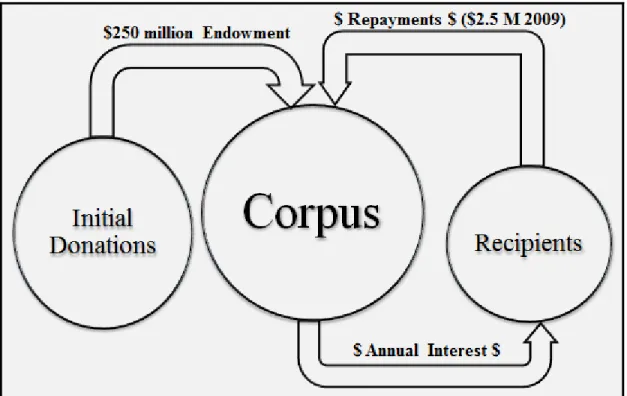
Figure 3. Corpus Funding and Financing...99
LIST OF ACRONYMS AND ABBREVIATIONS
ACE American Council on Education
ALO Association Liaison Office for University Cooperation in Development
CEEC Committee of European Economic Cooperation
ECA Economic Cooperation Administration
EGAT Economic Growth, Agriculture and Trade
ERP European Recovery Program
GDP Gross Domestic Product
HED Higher Education for Development
HEW Higher Education and Workforce Team
IIE Institute of International Education
IFP International Fellowship Program
IP International Partners
JOBS Job Opportunity for Business Startup LDS Church of Jesus Christ of Latter-day Saints
MCA Millennium Challenge Account
MDG Millennium Development Goals
MSA Mutual Security Agency
NAFTA North American Free Trade Agreement
ODA Oversees Developmental Assistance
RFA Request for Application
TCA Technical Cooperation Administration
ACKNOWLEDGMENTS
I am grateful for the opportunity to write this—I have had enjoyable time learning and gaining new perspectives on foreign assistance. I owe thanks to the Department of Defense and the U.S. Air Force for making higher education a priority. Specifically, within the Air Force, I want to thank past supervisors, friends and associates who provided me with this opportunity.
I am thankful to the Naval Postgraduate School and the National Security Affairs department for access to knowledge and differing views. Professor Robert Looney planted an interest in economics and expanded my understanding of foreign assistance and encouraged me in my efforts. Additionally, all my professors have combined to make this a truly satisfactory experience.
My friend, Africano Mande, from Southern Sudan opened my eyes on development issues from the recipient perspective. We are the same age, but have had two completely different life experiences. We hope to tell that story another time but he has become a dear friend and I can only hope for a future opportunity to assist his community. I know there are thousands, if not millions of people willing to help, however, managing good intentions with economic realities to achieve meaningful results is a different story—may God bless South Sudan.
I am thankful to Anne Evans-Cazier who took time to edit and provide valuable inputs and encouragement. Additionally, Professor Francois Melese, and Liz Minnick provided critical inputs.
I am the proud father of eight children. I believe that role provides me with unique views and perspectives. I, like other parents, want to leave the best future I can for my children. I spent too much time on this project and I look forward to time focused on Calvert, Jocelyn, Edwin, Matthew, Jackson, Hyrum, Lydia and Joshua. Of course, my goals do not happen without their support and especially my wife, Jenny’s support. Like millions of others who attempt to thank those closest to them, I find words inadequate.
Finally, I want to honor my father. After my mother passed away in 2004, he set a goal to return to school for a doctorate degree. I thought it a little ambitious for what I considered an “old” man, but he pursued his desires. At age 63, he has achieved his goal. For me, my father is the symbol of higher education. Despite having personal challenges as a young man, he looked for opportunity and found it through college; he later expanded his personal capacity with a master’s degree and now his PhD. I know my eight children adore him, as do I—thanks, Dad.
I. INTRODUCTION
This thesis addresses the importance of foreign assistance to U.S. national security. The history of U.S. foreign assistance suggests that a lack of consistent objectives is one of the primary challenges facing effective U.S. aid operations. Strategic aid planners can increase operational effectiveness by focusing on the following four planning considerations: (1) maintaining focus on recipient objectives, (2) stable funding, (3) making programs self-sustaining, and (4) minimizing dependency on U.S. appropriations or NGO donations. This paper evaluates these factors in the context of three higher education foreign assistance programs.
The attacks on 11 September 2001 thrust economic development into the forefront of national security politics. Development advocates recommended large increases to foreign aid budgets under the premise that such “soft power” would strengthen America’s security relationships in the developing world while reducing poverty.1 Since 2002, U.S. National Security Strategies have highlighted foreign assistance as a policy tool to advance economic and security objectives in developing countries. Following military engagements in Iraq, some called on the United States to shift from “exporting fear” to “inspiring optimism and hope” through a modern development agenda.2 In May 2010, the President made it clear that the United States is
“increasing . . . foreign assistance, [and] expanding . . . investments in . . . development institutions.”3
1 Lael Brainard, “A Unified Framework for U.S. Foreign Assistance,” in Security by Other Means : Foreign Assistance, Global Poverty, and American Leadership, ed. Lael Brainard (Washington, D.C.: Brookings Institution Press, 2007), 5.
2 Joseph S. Nye Jr., “The Future of Soft Power in US Foreign Policy,” in Soft Power and U.S. Foreign Policy; Theoretical, Historical and Contemporary Perspectives, ed. Inderjeet Parmar and Michael Cox (Abingdon, OH: Routledge Press, 2010), 9.
3 White House, “National Security Strategy of the United States of America,” (Washington, D.C.: White House, 2010), 33.
In November 2010, Republicans won control of the U.S. House of Representatives largely on an agenda to curb federal spending. The next likely House Foreign Affairs committee chairperson, Congresswoman Ros-Lehtinen, has called President Obama’s foreign assistance budget “ambitious in its magnitude.”4
The debate over aid effectiveness will continue to play a significant role in the discussions of national security objectives. Although the debate is not new, the United States has committed itself to be more effective in the use of foreign assistance funding to “chang[e] the conversation on how best to deliver smart U.S. foreign assistance.”5
A. LITERATURE REVIEW
The debate over foreign aid is complex and at times confusing. There is an overwhelming amount of data and even more opinions on what it is, and how, where, when or even if it should be used.
A survey by Perkins et al. narrows the debate into three general perspectives on foreign development aid. The first group argues that aid positively impacts developing countries; the second argues the opposite and charges that it does little good and can create significant unintended consequences; the third is a more moderate argument claiming that it can work in the right environment.6
1. Arguments for Foreign Assistance
Jeffery Sachs is one of the top cheerleaders for foreign developmental assistance and has led international efforts to implement the UN Millennium Development Goals (MDG). Those following this agenda desire a stronger aid commitment and focus on the
4 Charley Keyes, Laurie Ure, and Pam Benson, “Shift to GOP control in House Signals Shift in Foreign Policy Matters,” CNN Politics.com, November 3, 2010,
http://www.cnn.com/2010/POLITICS/11/03/gop. house.shift/index.html?hpt=T2 (accessed 11/4/2010). 5 Millennium Challenge Corporation, “MCC: About MCC,”
http://www.mcc.gov/mcc/about/index.shtml (accessed 6/11/2010).
6 Dwight H. Perkins, Steven Radelet, and David L. Lindauer, eds., Economics of Development, 6th ed. (New York: W.W. Norton & Company, 2006), 538–54.
fact that the United States provides aid amounting to 0.2 percent of its Gross National Income (GNI) toward Overseas Developmental Aid (ODA).7 Since this is well short of the 1970 commitment they argue that OECD countries still owe more than $4 trillion to ODA.8
As evidence of aid effectiveness, they point to the Green revolution, the elimination of small pox, successful vaccination programs and other successful initiatives.9 For them the fight against poverty and underdevelopment is a war that needs to be won through an immediate “big push” of foreign assistance.10 Others argue that foreign assistance can play a crucial role in the democratization process by helping to strengthen government institutions.11
2. Arguments Against Foreign Assistance
On the opposing side, economists like William Easterly question the effectiveness of foreign aid. They highlight constant calls for “emergency” aid from popular media stars and point out that similar calls go back to the 1940s and that such efforts have not historically met expectations. This group attacks the “big push” model as ineffective in providing an economy with the cross-sector investment necessary to raise incomes and savings. Bauer argues that foreign donors improperly allocate resources to projects that
7 Data is within ‘Tables and Charts’ link found at Organization for Economic Cooperation and Development, “Development Aid Rose in 2009 and Most Donors Will Meet 2010 Aid Targets,” http://www.oecd.org/document/11/0,3343,en_2649_34487_44981579_1_1_1_1,00.html (accessed 6/11/2010).
8 Anup Shah, “Official Global Foreign Aid Shortfall: $4 Trillion”
http://www.globalissues.org/article/593/official-global-foreign-aid-shortfall-over-4-trillion (accessed 6/10/2010).
9 Al Huebner, “Ending World Poverty is Achievable,” The Humanist 66, no. 1 (2006): 44; Douglas A. Hicks, “The End of Poverty: Economic Possibilities for Our Time,” Cross Currents 56, no. 1 (2006): 139; Jeffrey Sachs, The End of Poverty: Economic Possibilities for our Time (New York: Penguin Press, 2005).
10 Paul Collier, “African Growth: Why a ‘Big Push’?” Journal of African Economies 15, no. S2 (2006): 188.
11 Aníbal Pérez-Lińán Finkel Steven E and A. Seligson Mitchell, “The Effects of U.S. Foreign Assistance on Democracy Building, 1990–2003,” World Politics 59, no. April (2007): 405; Ted Dagne, “Africa: US Foreign Assistance Issues,” RL33591 (July 28, 2006) (Washington, D.C.: Congressional Research Service, 2006), 8; Curt Tarnoff and Marian L. Lawson, “Foreign Aid: An Introduction to U.S. Programs and Policy,” RL40213 (April 9, 2009) (Washington, D.C.: Congressional Research Service, 2009), 6.
undermine individual incentives.12 Well-meaning donors ask “what can ‘we’ do?” The policy outcomes of such a question lead to supply-driven answers reflected in condescending attitudes and ineffective aid delivery that are not always in alignment with demand-driven requirements in recipient countries. Aid opponents also highlight that although nearly $3 trillion has been spent on foreign assistance many of the same issues remain.13
Those arguing against aid claim that aid not only does not work, but it creates dependency, which de-incentivizes recipients from actively participating in entrepreneurial initiatives required in a free market. Moyo argues that aid in Africa has suppressed its potential by increasing corruption, preventing the development of an entrepreneurially minded middle class, provoking civil war, reducing savings and investment, creating inflation, and suppressing export industries.14
Another claim from this corner is that foreign assistance serves to create competition for funds between countries and discourages coordination among aid agencies. Countries with the greatest need are often left on the outside. Those prepared to spend or borrow the largest amounts of aid often “win” because aid institutions are incentivized by how much they are able to spend.15 Further, conditions aimed at improving accountability are often ineffective because recipient governments have the option to deal with “politically neutral” donors like China.16
12 William Easterly, “Can the West Save Africa?” Journal of Economic Literature 47, no. 2 (2009): 373; Andrei Shleifer, “Peter Bauer and the Failure of Foreign Aid,” Cato Journal 29, no. 3 (2009): 379.
13 Shah, “Official Global Foreign Aid Shortfall: $4 Trillion.”
14 Dambisa Moyo, Dead Aid: Why Aid is Not Working and How There is a Better Way for Africa, 1st ed. (New York, New York: Farrar, Straus and Giroux, 2009), 48–68.
15 Shleifer, “Peter Bauer and the Failure of Foreign Aid,” 379.
16 Ravi Kanbur, “Aid, Conditionality and Debt in Africa,” in Foreign Aid and Development: Lessons Learnt and Directions for the Future, ed. Finn Tarp (London: Routledge, 2000), 414–15; Fareed Zakaria,
Djankov argues that governments relying on high levels of aid are similar to those with the “curse of natural resources” or “Dutch disease.” Government control of a valuable resource is often used to preserve power. When foreign assistance revenues are received, there is no accountability to citizens who in turn do not insist on representation because they do not feel they own the government—the population becomes increasingly dependent upon the government.17
Agencies that rely on donor taxpayers have been compared to “rainmakers” who take credit for successes, but place blame on others when goals are not met. Aid organizations have been criticized for using inexperienced or unethical employees whose primary objective is to spend allocated resources instead of serving true community needs. Misapplied efforts, such as food aid sent to countries with a stable and functioning agricultural sector, can destroy private entrepreneurial incentives to grow and sell selected crops. Perceived colonial arrogance and racism are other charges that have been thrown at agencies. 18
3. Argument for a Moderate Approach
Although the literature is often contentious, both sides have good intentions and typically appeal to case studies to illustrate the strength of their perspective. Although Collier joins Sachs in his desires for a “big push,” he acknowledges that aid has limitations that need to be addressed internally. Easterly acknowledges the success of many of the health initiatives (smallpox, measles), but then discounts those given the
17 Jose G. Montalvo Djankov Simeon and Reynal-Querol Marta, “Does Foreign Aid Help,” Cato Journal 26, no. 1 (2006): 2, 7 and 11; Dirk J. Vandewalle, The Distributive State (Ithaca, New York: Cornell University Press, 1998), 219.
18 Graham Hancock, Lords of Poverty : the Power, Prestige, and Corruption of the International Aid Business, 1st ed. (New York: Atlantic Monthly Press, 1989), 11–22.
failure of efforts to resolve the problem of AIDS.19 At the same time, most aid organization’s annual reports paint a rosy picture that would lead one to believe that there are very few challenges in aid delivery.20
Sundberg and Gelb question the past use of aid, but stress that “more and better aid is now going to finance development programs.”21 Theoretically, this aid would focus on building democratic institutional capacity. Burnside and Dollar evaluated 56 countries and came to the conclusion that aid is “generally ineffective”; they then evaluated the same countries according to policy typology and found that countries promoting budgetary discipline, inflation control and open trade generally experienced economic growth.22 Despite criticism of these findings, this research has provided the model for aid allocation for many agencies, including the World Bank and the Millennium Challenge Account (MCA).
4. The Private Sector: Micro-Finance and Higher Education
All sides agree the private sector is a vital component for economic development. Most successful economic environments have a solid balance of institutional capacity and private sector production. The primary disagreement between the two sides is how to empower private sector capacity.
“Development from below” initiatives, such as micro-credit, appear to be an attractive option for stimulating private sector entrepreneurial activity, especially in post-conflict areas with large informal economies. Both Sachs and Easterly highlight the success of Yunus Grameen Bank in Bangladesh. While Sachs sells it as a success of aid,
19 William Easterly, The White Man’s Burden: Why the West’s Efforts to Aid the Rest Have Done So Much Ill and So Little Good (New York: Penguin Group, 2006), 241.
20 M. G. Quibria, “Rethinking Development Effectiveness: Facts, issues and policies,” World Economics 6, no. 1 (2005): 103.
21 Mark Sundberg and Alan Gelb, “Making Aid Work,” Finance & Development 43, no. 4 (2006): 14. 22 Quibria, “Rethinking Development Effectiveness: Facts, issues and policies,” 103–04; Craig Burnside and David Dollar, “Aid, Policies, and Growth: Reply,” The American Economic Review 94, no. 3 (2004): 781.
Easterly sees it as entrepreneurial creativity meeting a need for affordable credit.23 In the end, both sides recognize the need for entrepreneurs in development.
Higher education is another form of foreign assistance that can improve the private sector and any move toward free markets. The majority of the literature on foreign educational assistance focuses on primary education. As an example, MDG number two aims to increase primary education in developing nations. As a result, many nations report significant improvements, thereby increasing demand for higher levels of education.24
Higher education is widely viewed as a means to add value to human capital and tends to increase productivity. Earnings tend to rise according to the level of education received, thereby enhancing the private sector.25 Some studies claim that more than 30 percent of U.S. per capita income between 1930 and 1960 resulted from investments in higher education.26 During the last decade, Chinese and Indian investments in university and technical training are said to be largely responsible for the vast development gains they have recently experienced.27
23 Easterly, The White Man’s Burden: Why the West’s Efforts to Aid the Rest Have Done So Much Ill and So Little Good, 58–59; Sachs, The End of Poverty: Economic Possibilities for our Time, 10–14.
24 International Bank for Reconstruction and Development, “Financing Higher Education in Africa,” (Washington, D.C.: The World Bank, 2010), 16; United Nations, “UN Millennium Development Goals,” http://www.un.org/millenniumgoals/education.shtml (accessed 6/11/2010).
25 Perkins, Radelet, and Lindauer, eds., Economics of Development, 285.
26 John Aubrey Douglass, “The Race for Human Capital,” in Globalization’s Muse: Universities and Higher Education Systems in a Changing World, ed. John Aubrey Douglass, C. Judson King, and Irwin Feller (Berkeley: Public Policy Press/Center for Studies in Higher Education: Institute of Governmental Studies, 2009), 46.
Although it is widely assumed that higher education is an important component in improving human capital, developing countries face some challenges. Assessing opportunity costs, providing adequate access to education and avoiding the “brain drain” are among the primary concerns facing developing countries.28 Additionally, building educational capacity without strong demand for employment can result in high levels of disenfranchised youth and associated security concerns.29 There is evidence that as economies shrink, in some environments, highly educated young people can pose terrorism challenges.30 To conclude, however, that countries should avoid higher education due to the risk of unemployment would be unwise. The challenge is to simultaneously improve governance and build institutions that promote entrepreneurship and investment. In the absence of education and institution building programs, poverty poses a broader challenge.31 Despite these concerns, as demand for higher education increases so will demand for scholarships, grants and student loans.
Given the mixed results and continued debate on aid effectiveness, the most likely outcome is a continued lack of consistent objectives, policies, and resources to foreign assistance programs. There is an abundance of research on foreign assistance that offer a diversity of opinions on key variables related to the impact of education on economic development and conflict. Focusing on education, strategic aid planners may benefit from a closer examination of three higher education foreign assistance programs that offer scholarships, grants or loans as a means to assist target populations. By developing an understanding of the variables that affect program consistency, strategic aid planners may be able to recommend principles and approaches that minimize fluctuations in program execution.
28 Devesh Kapur and Megan Crowley, Beyond the ABCs: Higher Education and Developing Countries (Center for Global Development, 2008), 44–52.
29 Luonde Cholwe, “Exploring Youth Unemployment in a Re-structured African Economy: The Case of Zambai’s University Graduates” (Master’s thesis, Dalhousie University (Canada), 2008), abstract.
30 Henrik Urdal, “A Clash of Generations? Youth Bulges and Political Violence,” International Studies Quarterly 50, no. 3 (2006): 608.
B. HYPOTHESES AND METHODS
This thesis addresses the importance of foreign assistance to U.S. national security. A lack of consistent objectives is one of the primary challenges facing effective U.S. aid operations. Strategic assistance planners can increase operational effectiveness by focusing on the following four planning considerations: (1) maintaining focus on recipient objectives, (2) stable funding, (3) making programs self-sustaining, and (4) minimizing dependency on U.S. appropriations or NGO donations. This paper evaluates these factors in the context of three higher education foreign assistance programs.
This will be a qualitative comparative case study looking at the sustainability of three foreign assistance higher education programs. The following assumptions are important for this research:
Free markets are important to global stability and security.
Entrepreneurs/private sector jobs play a central role in free market development and serve as the primary source of tax revenues to support a democracy.
Higher education aimed at private sector improvement is an investment in free markets and global stability.
Dependency is not a desired condition. It occurs when recipient nations rely exclusively on donor countries to support programs. If a donor nation loses funding capacity, the recipient nation loses the ability to provide lost service and the donor nation loses any political influence.
Each of the three cases examined provides scholarships, loans or grants to individuals or institutions in developing countries. A variety of institutional perspectives have been selected. The Ford Foundation’s International Fellowship Program32 is a
socially oriented nonreligious NGO, the Church of Jesus Christ of Latter-day Saints Perpetual Education Fund is a religious institution and USAIDs Higher Education for
32 “Ford Foundation International Fellowship Program Home Page,” International Fellowship Fund, http://www.fordifp.org/ (accessed 12/2/2010).
Development Training, Internships, Exchanges and Scholarships initiative is a U.S. government institution. These were chosen as programs with sufficient history and data for evaluation. Additionally, they represent international development institutions with different purposes, perspectives and operational structures.
The qualitative analysis will consist of three general parts. First, it will be necessary to evaluate the overarching purpose and associated organizational structure of each institution. Second, the four planning considerations required to maintain program
consistency for recipients will be examined. These include evaluating whether the program is focused on recipient objectives, has stable funding, is self-sustaining through private sector involvement, and eventually moves away from possible dependency on U.S. appropriations or external donations. Third, each case will be examined in light of broader U.S. policy implications. This will reveal possible areas to “expand our investment in effective multilateral institutions” and ways to “leverage the engagement of others to share the burden.”33
II. HISTORY:
FOREIGN
ASSISTANCE AND NATIONAL
SECURITY
A. INTRODUCTION
The concept of foreign economic assistance is relatively simple. It is essentially a resource transfer from a donor nation to a recipient nation. How did such a simple concept become such a widely debated and politically loaded topic? How did the United States come to interpret foreign assistance as a tool to “provide for the common defense . . . to ourselves and our posterity?”34
The primary challenge facing foreign assistance is the lack of consistent objectives, conflicting policies, and the subsequent inefficient allocation of resources. This chapter provides historical examples of how American foreign aid policy has attempted to align security, economic, and humanitarian objectives.35 Aid programs are often marketed in humanitarian terms, while political support is won on security and economic terms. This sets the stage for conflicting definitions of success.
Success is defined by one’s perspective. The U.S. generally views success through its security or economic interests while recipients define it through a humanitarian lens. Aligning U.S. objectives and recipient economic development goals is based on the assumption that development aid leads to prosperity and provides a foundation for strong economic relationships and alliances. Relationships and alliances imply trust-based partnerships. In this sense, the humanitarian objective is the common objective required to build trust, and therefore should remain the primary focus for both donor and recipient.
If the lack of consistent objectives, policies and resources is the biggest obstacle
34 U. S. Constitution, “Preamble.”
35 Each of these terms at its core has a security purpose. The humanitarian objective implies actions designed to serve the recipients immediate needs. The security implication is that these actions serve to build stronger relationships of trust. It would be a tool that adds to U.S. soft power, although Nye would argue that it is not soft power because it seeks to provide incentives for a specific behavior. Inderjeet Parmar and Michael Cox, “Introduction,” in Soft Power and U.S. Foreign Policy; Theoretical, Historical and Contemporary Perspectives, ed. Inderjeet Parmar and Michael Cox (Abingdon, OH: Routledge Press, 2010), 1.
facing foreign assistance success, then it is important to examine (1) why U.S. foreign assistance was created (2) the desired end state (3) how programs were structured and (4) which organizations could best execute the policy.
Constitutional accountability becomes the foundation for structure. The Constitution serves as a contract between American citizens and the elected officials who create foreign policy. This is the driving factor in tying foreign assistance to security or domestic objectives. Since recipients do not have a direct voice in the accountability process, the system relies on the mood and circumstances of Americans. This “principal-agent” problem complicates foreign assistance because taxpayers are not the direct beneficiaries of the appropriation.36
Foreign aid has been a multi-billion dollar tool for U.S. foreign policy since 1948. During that time there have been twelve different Presidents, thirty-two Congresses, four major wars, a bipolar Cold War followed by multipolar globalization, natural disasters, debt and humanitarian crises on top of numerous other issues competing for attention and resources.
B. U.S. FOREIGN ASSISTANCE BEFORE WWII
Other than what appears to have been a one-time appropriation to assist Venezuelan earthquake victims in 1812, the United States did most of its early foreign charity work through private organizations. Occasionally, naval vessels were used to deliver aid or to provide relief in emergency situations, but no long-term commitments were made.37
World War I changed the aid landscape as the magnitude of human disaster prompted several American agencies to become involved in aid delivery. Herbert Hoover was propelled into the political arena after he “splendidly” managed an agency
36 Steven Radelet, “A Primer on Foreign Aid-Working Paper 92,” Center for Global Development, http://www.cgdev.org/content/publications/detail/8846 (accessed 9/17/2010), 12.
37 Encyclopedia of the New American Nation, “Early History of American Foreign Relief– Humanitarian Intervention and Relief,” http://www.americanforeignrelations.com/E-N/Humanitarian-Intervention-and-Relief-Early-history-of-american-foreign-relief.html (accessed 9/17/2010).
that provided $1 billion in relief for war victims. He later helped convince Congress to appropriate $100 million to feed and clothe 200 million Europeans.38
After WWI anti-communist ideologies in the United States grew as the Bolsheviks took over Russian leadership. Initially, Hoover allowed political ideologies to influence where aid would be delivered. For example, as the presidentially appointed Food Administrator, he withheld food from Hungarian communist revolutionaries to encourage them to avoid Bolshevism. Later however, when Russia faced certain famine, he put aside political ideology for humanitarian concern and convinced Congress to provide aid-- Russia later credited Hoover with saving millions of Russian lives.39
In its earliest stages, American foreign aid preserved this strong humanitarian flavor. The post WWI American Relief Association was created to coordinate a specific humanitarian mission with a definable exit strategy. Although the timetable missed its mark, Hoover began to phase out American efforts and transition capacity to host nations.40 By World War II, Americans had developed a strong humanitarian reputation for the private support many people gave to various causes throughout the world.41
C. TRUMAN-THE INITIAL VISION AND CONSTRUCT
Following World War II, the Truman administration was in search of a new foreign policy. The dynamics of international politics had changed--new security and economic strategies were required in the midst of another humanitarian disaster. Damage from World War II, the communist threat, and nuclear weapons changed the security environment.
38 Spencer Tucker and Priscilla Mary Roberts, World War I : A Student Encyclopedia (Santa Barbara, Calif.: ABC-CLIO, 2006), 886.
39 Encyclopedia of the New American Nation, “Armistice and Rehabilitation–Humanitarian Intervention and Relief “ http://www.americanforeignrelations.com/E-N/Humanitarian-Intervention-and-Relief-Armistice-and-rehabilitation.html (accessed 9/18/2010).
40 Matthew Lloyd Adams, “Herbert Hoover and the Organization of the American Relief Effort in Poland (1919–1923),” European Journal of American Studies 2, no. 2 (2009), http://ejas.revues.org/7627 (accessed 9/17/2010).
41 Encyclopedia of the New American Nation, “The Interwar Period–Humanitarian Intervention and Relief,” http://www.americanforeignrelations.com/E-N/Humanitarian-Intervention-and-Relief-The-interwar-period.html (accessed 9/17/2010).
Europe was destroyed during WWII. Britain and France had survived, but they were struggling to provide basic necessities to their populations. Imperial governance was coming to an end, and the United States took its place as the world leader of democracy and capitalism.
American leaders who visited Europe in the immediate months following the end of the war witnessed unparalleled devastation. Millions had died, and throughout Europe, starvation and hopelessness plagued those who had survived. Many of these leaders personally remembered Europe’s struggles after World War I and the vows that it would never happen again. The aftermath of WWII made it clear that those convictions had failed.
The immediate end to the war in Europe saw a surge in hope and reconstruction efforts. In 1946, President Hoover was called upon to lead a short-term Famine Emergency Commission aimed at thwarting the post-war starvation threatening Europe and Asia.42 Throughout that year extensive structural damage and a harsh winter inhibited European agricultural capacity. It became clear that the available effort and capital was far short of survival needs.43
In terms of the security environment, nuclear weapons changed everything. Nuclear power changed the risks associated with warfare and caused U.S. leaders to pursue policies they may have avoided otherwise. While the United States began as the lone nuclear power, it was widely assumed that the Soviet Union and others would acquire nuclear capability—the only question was when. The war against Germany had forced an unlikely East-West alliance between the United States, France, Great Britain and the Soviet Union, but following the war differences were quickly exposed as they sought ways to collectively govern Germany and rebuild Europe.
While the fear of communism began in 1917 during the Russian revolution, many Americans hoped that past differences could be resolved. Unfortunately, philosophical
42 Robert J. Donovan, The Second Victory: The Marshall Plan and the Postwar Revival of Europe
(Lanham, MD: Madison Books, 1987), 18–19.
43 Hans A. Schmitt, The Path to European Union: From the Marshall Plan to the Common Market
disagreements prevented a unified plan over German and Central European governance. The Soviet Union seemed to have no intention of giving up military gains in Poland and Eastern Europe.44 Following the Potsdam and Moscow conferences, Truman and Army Chief of Staff Marshall felt that Stalin desired a weak German economy to enable the spread of communism.45
As distrust grew, U.S. fears of communist expansion became stronger. Bloody conflicts in China, Greece, Iran and other places confirmed these feelings and nobody knew where the communist expansion might end. In the eyes of the United States, such expansion threatened national security. When Britain notified the United States in February 1947 that it no longer could support Greece or Turkey in efforts to fight off communists, the United States felt a sense of urgency to act. By March, President Truman declared that it was the obligation of the United States “to support free peoples who are resisting attempted subjugation by armed minorities or outside pressures.”46 Dean Acheson provided additional insight on U.S. policy by highlighting that the United States would focus its relief efforts on “areas where it would be most effective in building world political and economic stability, in promoting human freedom and democratic institutions” through the United Nations.47
Finally, while speaking at Harvard University, Secretary Marshall addressed the humanitarian problem without overtly highlighting national security concerns. Recognizing America’s isolationist past and believing in Acheson’s multilateral approach he sold the plan as a friend assisting an able neighbor during difficult times. The world seemed to be falling apart and the United States was the only country with the capacity to assist in a meaningful manner. It was the job of United States executive leadership to
44 David McCullough, Truman (New York: Simon & Schuster, 1992), 426.
45 Schmitt, The Path to European Union: From the Marshall Plan to the Common Market, 20. 46 Joseph Marion Jones, The Fifteen Weeks (New York: Harbinger, 1955), 3–12.
take a stand and ask the American people to help. He concluded with “the whole world’s future hangs on a proper judgment, hangs on a realization by the American people of what can best be done, of what must be done.”48
While the speech did not directly address the communist threat, the underlying security motive was present and an important part of the legislative debate. Opposition to the bill ranged from right-leaning isolationist concerns to left-leaning imperialist concerns. In the end, the February 1948 communist overthrow of Czechoslovakia made passage of the European Recovery Program (ERP) unstoppable.49
1. Desired End State and Initial Structure
The Marshall Plan established the pattern of marketing foreign assistance toward humanitarian objectives while aligning them with security objectives. This is not to imply that humanitarian concerns were superficial. The United States truly saw a humanitarian crisis and deduced that such a crisis could leave Europe vulnerable to an ideological shift, which could harm the American way of life. In the end, it was the security motive that provided the momentum for action, but the program was structured to address the humanitarian objective of reconstruction.
The ERP was designed as a short-term attempt to stimulate production, invite private investment and unify Western European economies.50 At its core was the Economic Cooperation Administration (ECA), which was led by an Administrator with a similar role as one of the President’s Cabinet Secretaries. The Committee of European Economic Cooperation (CEEC) was established to give recipient countries a voice through the U.S. Special Representative Abroad. The Public Advisory Board provided private sector experts, while a Joint Congressional Committee was established to provide regular oversight and Congressional interaction.51
48 Jones, The Fifteen Weeks, 36.
49 Donovan, The Second Victory: The Marshall Plan and the Postwar Revival of Europe, 47–50. 50 Michael J. Hogan, The Marshall Plan: America, Britain and the Reconstruction of Western Europe, 1947–1952 (New York: Cambridge University Press, 1987), 93.
51 George C. Marshall Foundation, “The Economic Cooperation Authority,” http://www.marshallfoundation.org/library/ doc_eca.html (accessed 9/19/2010).
Secretary Marshall claimed that the ECA was to focus on operational issues while the State Department would handle foreign policy. The challenge was defining those lines.52 Republicans won efforts to appoint someone from the private sector as Administrator. This, along with direct accountability to the President, alleviated concerns that the ECA would be an extension of the State Department and would shift away from its humanitarian objectives.53
Paul Hoffman, during his nomination hearings for administrator’ said he saw his job as staying focused on increasing European production, which would serve humanitarian and economic needs.54 While the administration and Congress attempted to combine goodwill with national security and domestic interests, there were challenges.
The ECA was tasked to balance Europe’s production without hurting American business interests. Shipping and agricultural special interests won some special protection, but overall the legislation enabled the ECA to meet its objective of European production.
Perhaps due to its unique mission and the level of Congressional oversight, the ECA did an admirable job of serving European and American interests. For example, when the United States was facing recession in 1949, President Truman directed federal agencies to buy goods and services in high unemployment areas as much as possible. The ECA responded by pointing countries to these markets as possible sources for cheaper prices and better service, but avoided pressure toward poor business deals. Essentially, the ECA served as European advocates by looking for the best deals possible but emphasized American products when they seemed to be bargains. Due in part to such efforts, the ERP has been credited with aiding the United States during its 1949 economic downturn.55
The CEEC was created to provide Western Europe coordinated inputs into the
52 Hogan, The Marshall Plan: America, Britain and the Reconstruction of Western Europe, 1947– 1952, 105.
53 Donovan, The Second Victory: The Marshall Plan and the Postwar Revival of Europe, 48. 54 Immanuel Wexler, The Marshall Plan Revisited (Westport, CT: Greenwood Press, 1983), 57. 55 Ibid., 76–77.
foreign aid process. It also played into the security strategy by nudging Europe toward greater collective cooperation and away from the nationalism of the past.56 ERP administrators sent an early message when they rejected the first round of economic proposals because they sought to meet individual needs. As participating countries began to increase their levels of cooperation, the program moved toward its security goals.57 The CEEC eventually became the OECD, and over time, became one of the first European institutions that helped build the foundation for the future European Union.
The ERP was destined to confront situations where security trumped the humanitarian objective. One such instance came when Congress passed legislation to encourage Western Europe to adopt export controls against Eastern Europe. This was designed to prevent Europe from providing goods to the Soviet Union or its communist allies.58 By establishing economic conditions for continued assistance, the United States drew its European allies further within its scope of influence.
Some claim that the ERP did not cause Europe’s economic recovery. While this may be true, its most important success was its psychological impact. Recovery accelerated as Europeans saw their countries being infused with capital and the humanitarian injections provided from the Marshall Plan. Although people had been working toward reconstruction, the plan provided basic necessities, hope and a positive impression of the United States.59
The Marshall Plan has been overwhelmingly popular. Although some criticize it today, it played a vital role in European postwar recovery and especially provided hope when it was needed. Economic recovery and the fact that many of the recipient countries evolved on to become donor nations, are two accomplishments associated with its efforts. Perhaps one of the greatest weaknesses of the Marshall Plan was its perceived success.
56 Hogan, The Marshall Plan: America, Britain and the Reconstruction of Western Europe, 1947−1952, 61.
57 Vince Crawley, “Marshall Plan Placed Europe on Path Toward Unity,”
http://www.america.gov/st/develop-english/2007/May/20070522162259MVyelwarC0.7400019.html (accessed 9/19/2010).
58 Wexler, The Marshall Plan Revisited, 78.
The program was designed to assist Europe in its short-term recovery then phase out. While the program in Europe did end, it has been a rallying point to justify billions of dollars spent on foreign assistance throughout the world. Other programs have not been as well received and, in some cases, are credited with causing more harm than good to developing nations.60
From an economic perspective, the Marshall Plan was credited with increasing trade relationships with European countries and also established an income stream for many industries, especially agriculture and shipping. While that income increased local employment and production, it also stymied true competition and the subsequent lower costs created from true free market competition. By providing domestic incentives, special interest groups were formed to lobby government to protect these benefits. Over time, the affected industries became dependent on the government as a source of income.
In a security sense, the plan did help shift Europe toward collective security. While it served to reassure European allies, it also increased the competition with the Soviet Union and set the precedence for using aid in national security efforts.61
President Truman revealed the “Point Four” program during his 1949 inaugural speech. This further expanded aid’s role as an influence strategy as it shifted development efforts toward nonEuropean countries and sought to encourage democracy in countries vulnerable to Soviet influence. Although not part of the Marshall Plan, President Truman sought to establish an affordable yet “bold” international assistance program. Many leaders in developing countries, however, interpreted it as a Marshall Plan on an international scale despite Truman’s caution that it would be accomplished with very minimal resources.62
60 Moyo, Dead Aid: Why Aid is Not Working and How There is a Better Way for Africa.
61 Point Four added to the competition resulting from deterrence. The U.S. and U.S.S.R. often used signaling as the chosen form of communication. Each action was interpreted by the other adding to the competitive nature of deterrence. The U.S. sought to reassure and incentivize allies through various forms of foreign assistance but it also caused some countries to look for ways to take advantage of the potential rewards. Janice Gross Stein, “Deterrence and Reassurance,” in Behavior, Society, and Nuclear War, ed. Philip E. Tetlock et al. (New York: Oxford University Press, 1991).
62 Sergei Y. Shenin, The United States and the Third World: The Origins of Postwar Relations and the Point Four Program (Huntington, New York: Nova Science Publishers, Inc., 2000), 20–22.
Point Four was set in motion through the 1950 Act for International Development and Foreign Economic Assistance Act. In these bills the Technical Cooperation Administration (TCA) was created under the Department of State to "provide scientific and technical assistance and encourage political stability along with economic and social success.”63
The TCA aimed to accomplish its humanitarian mission with a “people to people” training approach as opposed to a large inflow of American capital. The premise of this approach was that the “power of education and the promise of technology” were the keys to true economic development.64 In light of the immediate national security challenges and a shift toward deterrence, the State Department pushed for a greater capital influx. Although Truman pushed back, the momentum toward a broader deterrent strategy and the Korean War was too great.65
The Mutual Security Act of 1951 broadened and transferred the ECA into the newly created Mutual Security Agency (MSA). This was the first attempt to fit longer term development objectives under the larger deterrent strategy. By placing the ECA under the auspices of the MSA, many long-term development objectives would compete with short-term security efforts. For example, most technical assistance initiatives were approved by the ECA, but initiatives in strategically important areas, required higher levels of approval.66
NGOs were valuable to the Point Four concept. As the government examined ways to build this new program they looked to NGOs for expertise and resources.
63 “Records of U.S. Foreign Assistance Agencies, 1948–1961,” National Archives and Records Administration, http://www.archives.gov/research/guide-fed-records/groups/469.html#469.4 (accessed 9/20/2010).
64 Shenin, The United States and the Third World: The Origins of Postwar Relations and the Point Four Program, 75.
65 Ibid., 82.
66 Vernon W. Ruttan, United States Development Assistance Policy: The Domestic Politics of Foreign Economic Aid (Baltimore, MD: John Hopkins University Press, 1996), 63.
Religious organizations, private foundations and universities were well equipped with money, knowledge, experience, people and desire.67
Religious organizations were vital, but they also proved to be a tremendous challenge. In 1950, religious funding toward technical assistance programs was more than double government funding. Religious groups supported the Point Four concept, but they did not want the government to dictate their activities. At the same time, the government wanted to avoid the appearance of state sanctioned proselytization. The best compromise seemed to be government grants for organizations to do their work.
Religious groups viewed the merger of foreign assistance under the MSA as a shift away from the original humanitarian intentions. As Cold War realities pushed foreign assistance closer to more obvious security roles, several religious groups shifted their support and called for a return to original policies.68
D. PRESIDENT EISENHOWER AND “MASSIVE RETALIATION”
General Eisenhower’s military performance during WWII won him the opportunity to serve as Commander in Chief. While maintaining the overall policy of containment, his preferred deterrence strategy was “massive retaliation.” The premise of this strategy was that containing communism wherever there was a threat was expensive and it put the United States in a continually defensive state of mind. Instead, Eisenhower claimed his administration would not hesitate to use nuclear weapons in the event that vital American or allied interests were attacked. This led to increased competition with the Soviet Union, an expensive arms race, and a growing fear that nuclear war was imminent.69
In his inaugural address, Eisenhower argued that economic development was a matter of security—“the impoverishment of any single people in the world means danger
67 Shenin, The United States and the Third World: The Origins of Postwar Relations and the Point Four Program, 153.
68 Shenin, The United States and the Third World: The Origins of Postwar Relations and the Point Four Program, 164–69.
69 Lawrence Freedman, The Evolution of Nuclear Strategy, vol. 3rd (New York: Palgrave Macmillan, 2003), 72.
to the well-being of all other peoples.”70 As a Republican, he believed that poverty should be confronted through a strong private sector. As a consequence, the foreign assistance budget dropped from $7.6 billion in 1953 to $3.5 billion in 1955. After the Soviets promised economic assistance to India in 1955, U.S. policymakers pressed for an increase in publicly provided aid. By 1956, Congress reported that “foreign aid appears to be the most useful nonmilitary device available to the United States for influencing other nations.” 71
As debate continued over how foreign assistance could best accomplish its role in national security, President Eisenhower created the Foreign Operations Administration to further consolidate aid programs. In 1955, the State Department captured many foreign assistance programs with the creation the International Cooperation Administration (ICA). While the steps were important for bringing aid under a larger security umbrella, they did little to encourage humanitarian efforts.
This restructuring led to disagreements over the direction of aid. Not only did humanitarian objectives compete with security objectives, but economic self-interest grew as a motive for foreign development. For example, the United States shipping lobby successfully pressured the ICA to ship all aid via American ships. These subsidies provided short-term advantages, but by 1961, politicians were looking to wean the industry off its aid addiction.72
The 1950s illustrate how U.S. security objectives can take precedence over humanitarian objectives. As the Cold War became more intense and competitive, the ability to patiently await humanitarian outcomes became unrealistic in the midst of more
70 Multieducator Inc., “First Inaugural Address of President Eisenhower,” Multieducator Inc., http://www.historycentral.com/Documents/Eisenhower.html (accessed 9/19/2010).
71 Ruttan, United States Development Assistance Policy: The Domestic Politics of Foreign Economic Aid, 70–76.
immediately pressing security concerns. Instead of focusing on the development needs of the time, foreign aid became a tool to win allies and influence.
Incentives can serve as a means to solve problems or create additional ones. Countries or interest groups have marketed problems in the context of available incentives. For example, as the United States shifted its focus toward security objectives, many poorer countries have advertised their problems in security terms. Domestic interest groups have marketed strong employment as critical to national security while NGOs that might have lost access to funds in a security focused environment have decried the lack of focus on humanitarian needs. Whatever the truth was, the money available through foreign aid serves as a magnet for interest groups and generates further debate on the subject.
By 1960, foreign aid was a centerpiece of the U.S. containment strategy. As Kennedy came into power, the nation was already debating significant and meaningful changes in foreign assistance.
E. PRESIDENTS KENNEDY AND JOHNSON: DEVELOPMENT DECADE
“Flexible response” expressed John F. Kennedy’s overall foreign policy strategy. This strategy was designed to reduce tensions created by nuclear deterrence. Early security challenges with the Berlin and Cuban Missile crises tested Kennedy’s resolve to avoid nuclear war more than any other President. Perhaps due to the growing tensions, emphasis was placed on alternate means of security like foreign assistance. In this environment “foreign aid . . . and the military assistance program [became] the most critical elements” in U.S. national security.73 Rostow’s development views influenced Kennedy’s policy by assuming that many underdeveloped countries could become strong trading partners and serve as strategic allies in defeating communism.74
Kennedy recalibrated foreign assistance toward the original humanitarian
73 Encyclopedia of the New American Nation, “The Peak of Prestige: Foreign Aid under Kennedy,” http://www.americanforeignrelations.com/E-N/Foreign-Aid-The-peak-of-prestige-foreign-aid-under-kennedy.html (accessed 9/17/2010).
74 Ruttan, United States Development Assistance Policy: The Domestic Politics of Foreign Economic Aid, 69–70.
objectives espoused by Truman. The 1961 Foreign Assistance Act consolidated many of the existing development programs under the newly established Agency for International Development (USAID). This sub-cabinet level department focused exclusively on development issues rather than the more pressing security objectives.75
Despite good intentions, the security environment during the Cold War continued to demand attention. Relationships take time to solidify, so while the United States made appropriate diplomatic gestures, there were underlying currents, which challenged the alignment of humanitarian and security objectives. Rakove argues that four challenges prevented successful alignment. 76
First, imperialism was fresh in the minds of many developing countries. Aid was perceived as a tool to maintain imperial control. Second, many borders had been created by the colonial powers. International institutions worked with western-defined boundaries while largely ignoring local rivalries. Third, foreign aid funding attracted special interest groups, which put intense political pressure on Congress on conflicting interests. Fourth, the Vietnam War captured the world’s attention.
Vietnam became the most pressing security concern in the late 1960s. As the United States realized it was in a fight beyond its expectations, public distrust led the Johnson administration to focus on ways to end the war and detracted from efforts to maintain long-term development goals. The conflict absorbed increasingly significant amounts of economic assistance. The Economic Support Fund, which was designed to strengthen strategic allies through political and economic assistance, spent nearly 90 percent of its appropriations on Vietnam by the late 1960s.77
Three other security challenges brought pressure on the foreign assistance agenda. First, Kennedy’s program to assist Latin America ran into problems after the United States invaded Cuba. Countries that had been enthusiastic supporters of the United States
75 Ruttan, United States Development Assistance Policy: The Domestic Politics of Foreign Economic Aid, 69.
76 Robert Benjamin Rakove, “A Genuine Departure: Kennedy, Johnson, and the Nonaligned World” (PhD dissertation, University of Virginia, 2009), abstract.
77 Ruttan, United States Development Assistance Policy: The Domestic Politics of Foreign Economic Aid, 254.
suddenly became distrustful of ulterior motives. This mistrust played a role in Argentina, Brazil and Peru shifting away from U.S. backed constitutional reform agendas.78 Second, the Iranian Shaw took advantage of foreign aid politics by playing up the communist threat in order to win American economic and military assistance. Although he was able to maintain power throughout the 1960s, it created an environment of distrust, which ultimately came back to haunt him and the United States in the late 1970s.79 Third, the United States provided both India and Pakistan with aid, which was later used to support their war against each other.
As a result, foreign assistance was viewed with increased scrutiny. By 1969 the United States development budget decreased from 0.57 percent of GNP in 1962 to 0.33 percent.80
NGOs began to be more politically active as money flowed into development programs. Although their role in early debates was minimal, seeds were planted for NGO lobbyists.81 These organizations typically advocated for aid disbursement through multi-lateral organizations such as the United Nations and displayed growing concern as aid took on a greater security role.
As Marshall Plan recipients became more prosperous, they were expected to carry a portion of international aid responsibilities. By 1960, the Development Assistance Group was formed by CEEC nations to move the aid agenda forward.82 During this time, these members of the “donors club” were recognized as an elite group and were expected to provide 1 percent of their gross national income to foreign assistance. In some ways, this expectation served to further divide the world. Perceived success focused on quantitative rather than qualitative impact and it led to increasingly blurred definitions of
78 Ruttan, United States Development Assistance Policy: The Domestic Politics of Foreign Economic Aid, 443–44.
79 April R. Summitt, “For a White Revolution: John F. Kennedy and the Shah of Iran,” The Middle East Journal 58, no. 4 (2004): 560–75.
80 John White, The Politics of Foreign Aid (New York: St. Martin’s Press Inc., 1974), 224.
81 Ruttan, United States Development Assistance Policy: The Domestic Politics of Foreign Economic Aid, 70.