assistants in an early literacy intervention programme.
PhD thesis, University of Nottingham.
Access from the University of Nottingham repository:
http://eprints.nottingham.ac.uk/29377/1/thesis%20with%20corrections%203.6.15%20copy %20with%20Harvard%20changes.pdf
Copyright and reuse:
The Nottingham ePrints service makes this work by researchers of the University of Nottingham available open access under the following conditions.
· Copyright and all moral rights to the version of the paper presented here belong to the individual author(s) and/or other copyright owners.
· To the extent reasonable and practicable the material made available in Nottingham ePrints has been checked for eligibility before being made available.
· Copies of full items can be used for personal research or study, educational, or not-for-profit purposes without prior permission or charge provided that the authors, title and full bibliographic details are credited, a hyperlink and/or URL is given for the original metadata page and the content is not changed in any way.
· Quotations or similar reproductions must be sufficiently acknowledged. Please see our full end user licence at:
http://eprints.nottingham.ac.uk/end_user_agreement.pdf A note on versions:
The version presented here may differ from the published version or from the version of record. If you wish to cite this item you are advised to consult the publisher’s version. Please see the repository url above for details on accessing the published version and note that access may require a subscription.
Exploring the role of teaching assistants in an early literacy intervention programme
Gill Johnson, BA, PGCE, MA, MA (Ed Res)
Thesis submitted to the University of Nottingham for the degree of Doctor of Philosophy
Acknowledgements
A postgraduate friend commented that working on a PhD was an ‘uncomfortable state of being’ challenging the doctoral researcher - as it does - in every dimension and over a long period of time. I would add to this observation, the analogy of running a marathon – a race which requires stamina, commitment and the support of others. There are many to thank who have directly or indirectly enabled me to complete this study.
Firstly, I want to thank all those who facilitated or participated in this study – there were many who gave generously of their time. My particular thanks to the teaching assistants who always demonstrated such commitment to the children they
supported. I hope that I have given appropriate voice to your frustrations and successes. I hope too, that your voice will be more clearly heard in the future. I need to thank colleagues who have offered support and encouragement along the way, in particular: Lesley Brewer, Philip Hood, Di Smith, Jane Tapp, Lucy Cooker and Anne Emerson. My thanks also to Earl Kehoe, for popping his head round my door on a regular basis with such cheerfulness and kindness.
My supervisors, Edward Sellman and Colin Harrison have been nothing except affirming and supportive in so many ways – a huge thank you to you both. Colin has seen me through from the beginning and was willing to see me through to the end of this research (despite ‘retiring’ along the way); thank you for matching such high intellectual capability with emotional intelligence – you knew what was needed to keep me on the correct route.
There are friends who have cheered me on from the side lines who are eager, like me, to renew more frequent contact again – thank you Ali, Amanda, Alison (also my cousin) and Kim - for willing me on and understanding when there was a noticeable silence in communication.
My parents, without any pressure imposed, taught me to respect the value of education from an early age; I have never lost that respect. Education transformed their lives and I have been transformed (or mutated) through different courses of study over a number of years: thank you, mum and dad for always supporting my endeavours and celebrating my achievements. I must mention here too, my sister Linda and my brother-in-law Tim: your encouragement across ‘the big pond’ has been so much appreciated. Closer to home, I have also greatly valued the support
of other family members: my mother and father-in-law, Jean and Ron and my sister and brother-in-law, Helen and John.
It may seem strange to thank a dog – but thank him I must. Monty has said nothing of course, but proved to be a most valued ‘study buddy’. He has kept me
‘grounded’, reminding me that basic needs do not go away and life is enriched by attending to them. Dark moments at the computer were eased by a glance at a silver grey bundle in the corner of the study, rising and falling with each sleepy breath.
The most immediate and perhaps loudest cheers of support have come from my precious daughters - Madeleine and Lydia – and my wonderful husband, Paul. You have championed me at every stage and helped me to retain my sense of humour. Thank you Paul for keeping me fed and watered (I may have withered without you!) and for your unfailing, yet understated care. You have known intuitively how to support me and I cannot thank you enough.
Abstract
This study reports research into the role and deployment of teaching assistants who were implementing a literacy intervention - the Fischer Family Trust Wave 3
(FFTW3). A conceptual framework was devised to inform and support the creation, progression and interpretation of the research, drawing upon a postmodern
perspective and principles associated with pragmatism and phronesis or practical wisdom. A multiple-case study approach was adopted, using interviews and observations, focusing on six teaching assistants across two local authorities, with the aim of exploring the teaching assistants' implementation of the FFTW3
programme. Analysis was informed by a grounded theory approach where a
constant comparison of data was used to create themes. The findings are presented as case reports for each teaching assistant, followed by a cross-case analysis. Findings revealed that the FFTW3 programme provided unique opportunities for sustainable intervention practices which, it is argued, have implications beyond the boundaries of this research. Furthermore, there was considerable evidence that despite supportive structures for the implementation of the programme, barriers to effective deployment persisted in most contexts. The findings raise questions in relation to policy agendas which have not sufficiently clarified the ways in which teaching assistants should be deployed or supported. The implications from this study have relevance for both school systems and educational policy.
Table of contents
Acknowledgements ... ii
Abstract ... iv
Table of contents ... v
List of tables ... xi
List of figures ... xii
List of abbreviations ... xiii
Chapter 1: Introduction - the need to research the role of the teaching assistant .. 1
Background ... 1
The need for this study ... 2
Personal positioning ... 4
Conceptual Framework ... 5
Postmodernism ... 6
Pragmatism ... 6
Phronesis ... 11
Framing literacy research ... 13
Scaffolding and literacy ... 14
Approach to literature searching in this study ... 16
Approach to the use of abbreviations and acronyms in this study ... 17
The structure of this thesis ... 17
Chapter 2: The challenge of teaching children to read ... 19
Historical Background ... 20
Current context: points of consensus ... 23
Systematic development of phonological skills ... 23
Comprehension ... 25
Current context: points of contention ... 25
The Simple View of Reading (SVR) ... 25
Fluency ... 29
Current context: at-risk readers and literacy development ... 31
Reading Recovery ... 34
Current context: literacy and UK government policy ... 36
Literacy support in UK schools ... 36
Reading Recovery and ECaR ... 37
Fischer Family Trust Wave 3. ... 38
Literacy support and an integrated approach ... 40
Chapter 3: The role of the teaching assistant ... 42
Background ... 42
Teaching Assistants and education policy ... 43
Teaching Assistants and literacy support ... 53
Issues arising: training, communication and ambiguity of role ... 55
How the issues informed this study ... 56
Chapter 4: Methodology and Research Methods ... 59
The pilot study ... 59
Overview ... 59
Findings ... 60
Research questions and aims ... 60
Research Methodology ... 62
Case Study ... 62
Grounded Theory an overview ... 72
Approach to data analysis in this study ... 76
The use of terminology ... 77
Grounded theory and this case study ... 78
Case Study and building theory ... 79
Research Design and Methods ... 79
Interviews ... 79
Observations ... 81
Ethical considerations ... 84
Chapter 5: Case reports from six teaching assistants ... 88
Case reports ... 90
Anna (Farnsworth, Fry Primary) ... 91
Background ... 91
Role in school ... 91
Continuing Professional Development (CPD) ... 92
Communication within school ... 92
Early response to the FFTW3 (phase 2 interview) ... 93
Later response to the FFTW3 programme (phase 3 interview) ... 94
Emily (Farnsworth, Fox Primary) ... 97
Background ... 97
Initial training ... 97
Role in school ... 98
CPD ... 98
Communication within school ... 98
Early response to the FFTW3 (phase 2 interview) ... 99
Later response to the FFTW3 (phase 3 interview) ... 100
Carolyn (Farnsworth, Fell Primary) ... 102
Background ... 102
Initial training ... 103
Role in school ... 103
CPD ... 105
Communication within school ... 106
Early response to the FFTW3 (phase 2 interview) ... 106
Later response to the FFTW3 (phase 3 interview) ... 108
Theresa (Farnsworth, Foster Primary) ... 110
Background ... 110
Initial training ... 110
Role in school ... 111
CPD ... 113
Communication within school ... 113
Early response to the FFTW3 (phase 2 interview) ... 114
Later response to the FFTW3 (phase 3 interview) ... 116
Lynn (Dalton, Dillingham Primary)... 118
Background ... 118
Initial training ... 118
Role in school ... 119
Communication within school ... 120
Response to the FFTW3 ... 122
Liz (Dalton, Duckworth Primary) ... 123
Background ... 123
Initial training ... 123
Role in school ... 124
CPD ... 124
Communication within school ... 125
Response to the FFTW3 ... 125
Case Reports key points ... 127
Chapter 6: Cross Case Analysis - key themes and their implications for improving
and sustaining good practice ... 129
The process of analysis and the prominence of themes. ... 129
Initial training in Farnsworth and Dalton ... 133
Part One: fragmentation and integration ... 133
Farnsworth phase 1: training ... 133
Continuing Professional Development (CPD) ... 133
Staff meetings ... 134
Farnsworth phase 1: communication ... 134
Communication with class teachers ... 134
Communication with SLT ... 135
Communication over FFTW3 training ... 135
Farnsworth Phase 1: Role ... 136
Farnsworth Phase 2: Training ... 137
Farnsworth Phase 2: Communication ... 138
Farnsworth Phase 2: Role ... 138
Farnsworth Phase 3: Training ... 139
Farnsworth Phase 3: Communication ... 140
Farnsworth Phase 3: Role ... 140
Dalton: Training ... 142
Dalton: Communication ... 143
Dalton: Role ... 143
Part Two: The transformative potential of the FFTW3 programme in Farnsworth and Dalton. ... 144
Agency ... 145 Affiliation ... 152 Sustainability ... 154 Enhanced sustainability ... 154 Barriers to Sustainability ... 158 Summary... 162
Chapter 7: Confused agendas, fragile structures and the possibility of sustained
support ... 163
Agency ... 164
Affiliation ... 167
Sustainability ... 169
Sustainability within school ... 170
Sustainability beyond school: a sustainable structure... 174
Propositions ... 182
Research-focused propositions ... 182
Policy-focused Propositions ... 183
School-Focused Propositions ... 183
Chapter 8: Conclusion ... 185
The research questions ... 185
Key findings ... 185
Implications of the findings ... 189
Limitations of this study ... 190
Recommendations for further research ... 190
Final reflections ... 191
References ... 192
Appendix 1: research questions and appropriate methods ... 203
Appendix 2: TA interview schedule, Farnsworth, phase 1 ... 204
Appendix 3: TA interview schedule, Farnsworth, phase 2. ... 207
Appendix 4: TA interview schedule, Dalton, May 2011 ... 208
Appendix 5: class teacher interview schedule ... 211
Appendix 7: overview of transcriptions in Farnsworth ... 214
Appendix 8: overview of transcriptions in Dalton ... 215
Appendix 9: transcription table ... 216
Appendix 10: observation schedules reading and writing... 217
Appendix 11: ethics statement ... 219
Appendix 12: letter requesting consent for child observation ... 221
Appendix 13: participant information sheet ... 222
Appendix 14: participant consent form ... 223
List of tables
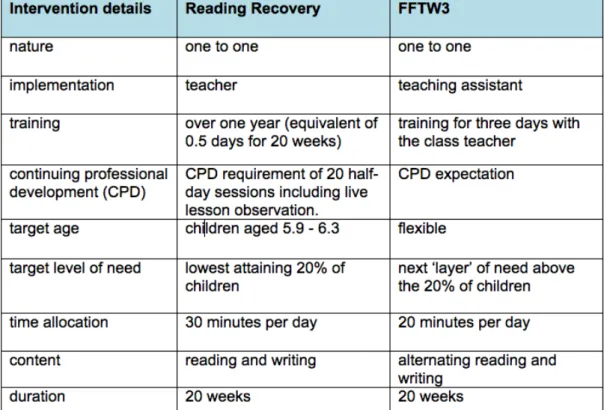
Table 2.1: comparison between Reading Recovery and FFTW3 interventions ... 39
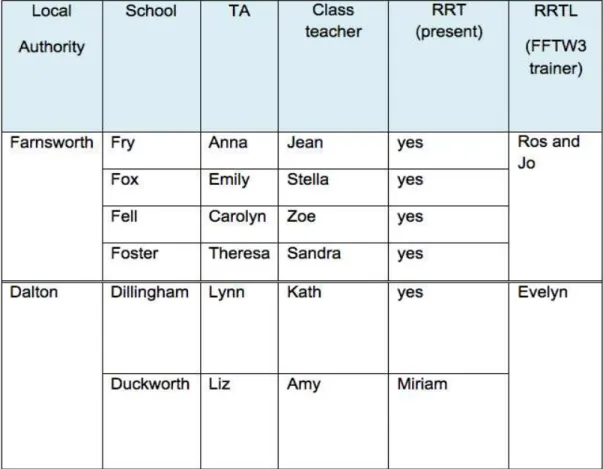
Table 5.1: table of characters in case studies ... 90
Table 6.1: indicators of integration and fragmentation ... 132
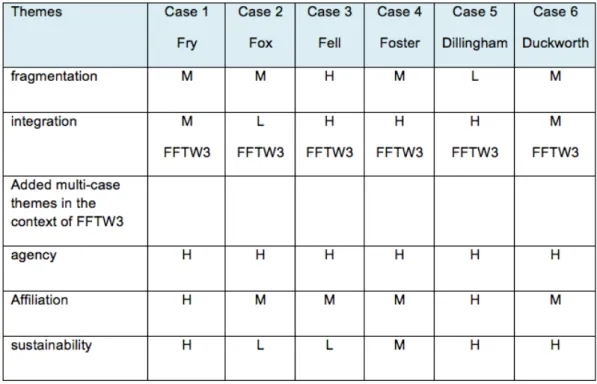
Table 6.2: prominence of themes (high/medium/low) after Stake (2006:49) ... 144
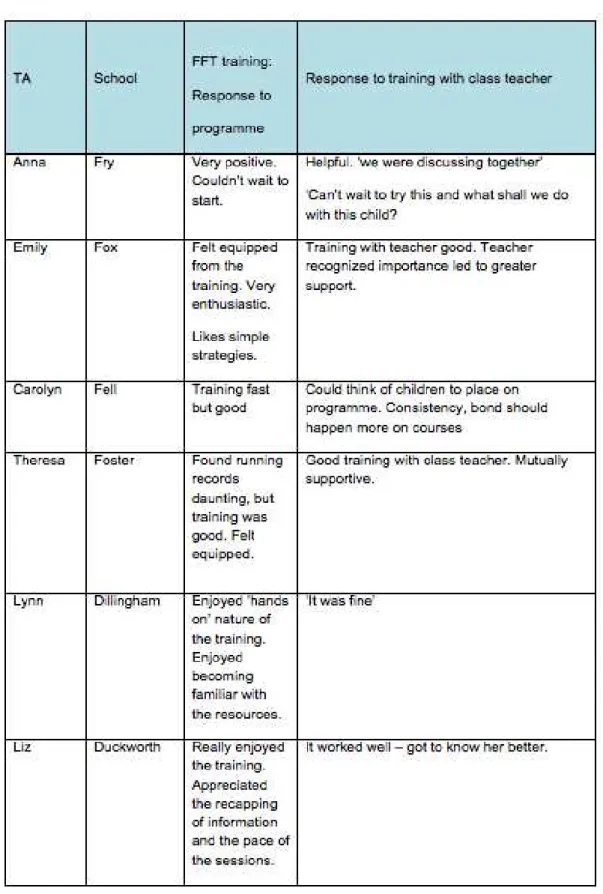
Table 6.3: TAs' response to training ... 146
List of figures
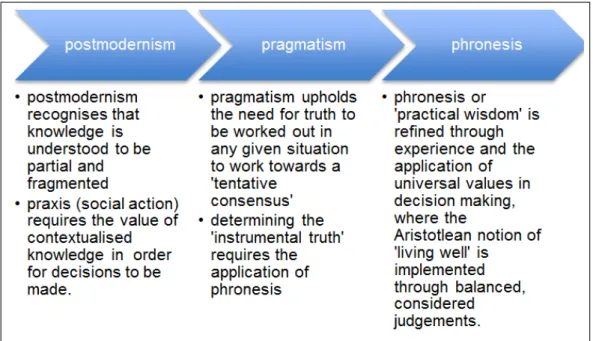
Figure 1.1: the relationship between postmodernism, pragmatism and phronesis as
described in the conceptual framework ... 13
Figure 2.1: Reading Recovery lesson structure ... 35
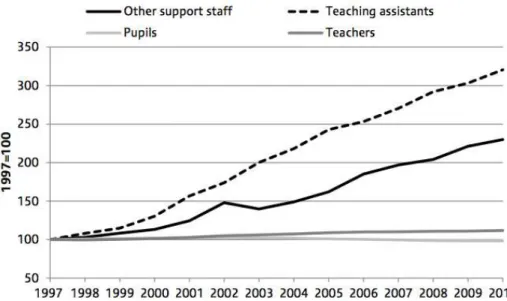
Figure 3.1: changes in the school workforce and pupil numbers over time between 1997 and 2010 ... 45
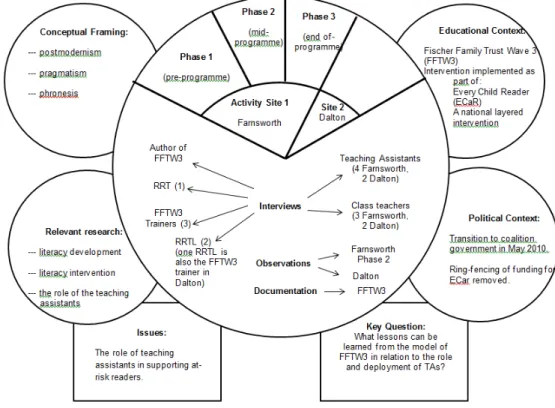
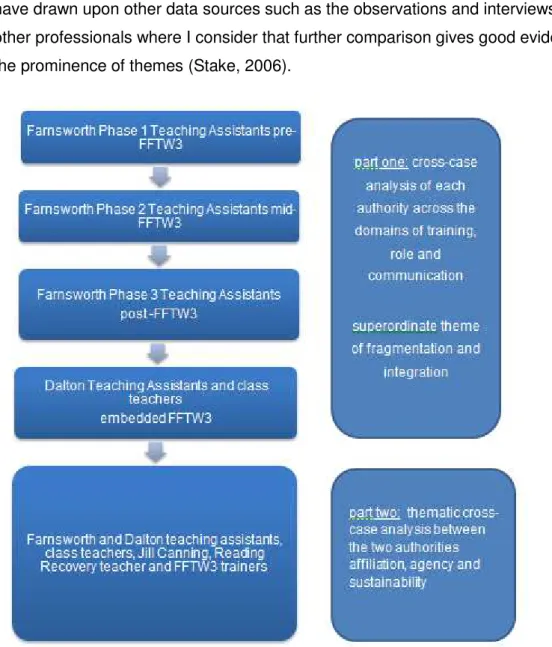
Figure 4.1: an overview of the multi-case study after Stake (2006) ... 71
Figure 5.1: showing the process of analysis in multiple case studies ... 89
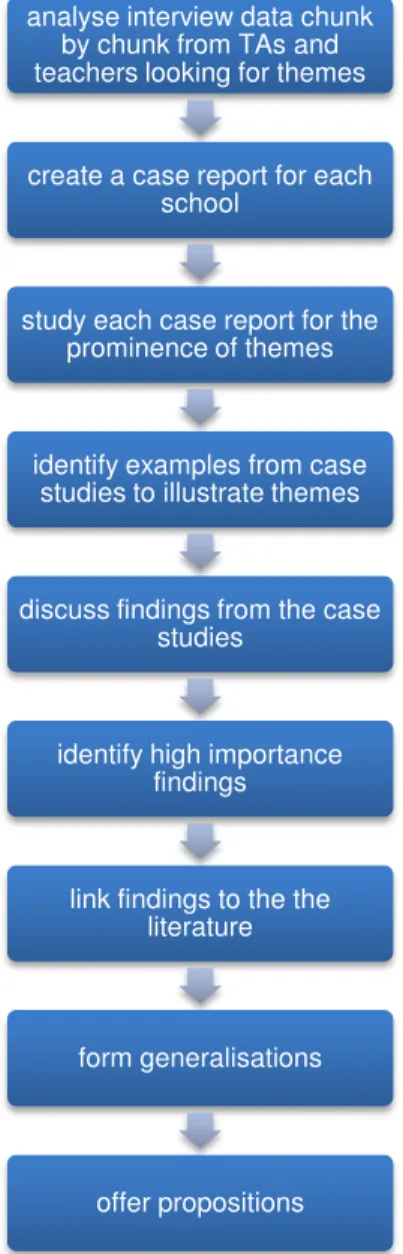
Figure 6.1: the progressive comparison of data ... 130
List of abbreviations
Departments of Education are shown in chronological order ALS Additional Literacy Support
BRP Better Reading Partnership
DES Department of Education and Science (1964 -1992) DfE Department for Education (1992 - 1995)
DfEE Department for Education and Employment (1995 - 2001) DfES Department for Education and Skills (2001 - 2007)
DCSF Department for Children, Schools and Families (2007 - 2010) DfE Department for Education (2010 –)
ELS Early Literacy Support FFTW3 Fischer Family Trust Wave 3 HLTA Higher level teaching assistant INSET In-Service Educational Training LA Local Authority
LSA Learning Support Assistant RR Reading Recovery
RRT Reading Recovery Teacher
RRTL Reading Recovery Teacher Leader SEN Special Educational Needs
SENCO Special Educational Needs Co-coordinator TA Teaching Assistant
Chapter 1: Introduction - the need to research the role of the
teaching assistant
In this introductory chapter I will explain the background and context to this study. I then outline my stance as a researcher and the conceptual framework that follows from this positioning is presented. In the light of this framework, I go on to discuss the approach to the literature search and the rationale for the structure of this thesis.
Background
This study arose from a desire to better understand the nature of support for children with literacy difficulties. This led me to focus particularly on the unique role that teaching assistants (TAs) play in offering such support - an interest derived from my previous professional experience as a special educational needs’
coordinator (SENCO) in an English primary school where I both worked alongside and coordinated the roles of several teaching assistants. I became interested in the processes by which interventions are put in place and how they are implemented by TAs.
The word ‘support’ is defined by the Oxford Dictionary of English (2003) in a number of ways, all of which have some bearing on how literacy support may be conceived:
Bear all or part of the weight…give assistance to…give approval, comfort or encouragement to…be actively interested in and concerned for…
Metaphors that come to mind are those of paths (guidance along), structures (enabling and ensuring stability) hands (companionship) and voice (inspiring confidence). The sense of being ‘alongside’ is inescapable and is at the heart of what I consider that literacy support should involve.
Questions arose at a time when a national project - Every Child a Reader– was being implemented within England which sought to address the needs of a large group of underachieving children in literacy through a series of layered early interventions. Reading Recovery represented the prime intervention and within this project, a number of additional interventions existed. Apart from Reading Recovery, which is implemented by qualified and specifically trained teachers, the additional interventions were implemented by teaching assistants. One such programme –
Fischer Family Trust Wave 3 (FFTWW3) – represented a unique model of intervention practice (Canning, 2007).
Teaching assistants play a crucial role in supporting class teachers in English primary schools; their role is widely valued and, since 1997, has progressively expanded (Department for Education and Skills, 1997, Department for Education and Employment, 1998b). They work closely with classroom teachers and directed by them, support a range of children often in a highly flexible manner. Class teachers have generally appreciated such flexibility; however, as I shall argue in Chapter 3, questions remain unanswered concerning the precise nature of the teaching assistant’s role and deployment.
The primary focus of this study will be an examination of the role and deployment context of six teaching assistants across two local authorities who were participating in the Fischer Family Trust Wave 3 programme. By examining this model of
intervention practice, I shall attempt to establish a fuller understanding of the TA context.
In a pilot study conducted in the summer of 2009, I examined attitudes to literacy support from three different perspectives: the teaching assistant, the teacher and the child. From this research, I alighted on the issues raised by teaching assistants in relation to their role and deployment (discussed at the beginning of Chapter 4). At the same time the opportunity arose to be involved in a national evaluation of the ECaR project. Reading Recovery, as the principal intervention, was the focus of this evaluation but the initiative also involved a range of additional layered interventions one of which was FFTW3, as previously noted. Through my involvement in the evaluation, I became interested in exploring the role of the teaching assistant in the context of the FFTW3 programme.
The need for this study
Questions surrounding the role of the teaching assistant (TA) have flickered in the research literature since the 1990s (Clayton, 1993, Farrell et al., 1999, Giangreco et al., 2001b). In the last decade, however, the issues have been fully ignited through radical changes in their role and deployment. Such changes were a consequence of two key policy agendas in education by the then, Labour government. The first was the determination to create a more inclusive environment in mainstream schools for children with Special Educational Needs and Disabilities (SEND) (Department for Education and Skills, 1997) and the second was to address the growing concern
around teachers’ workload and, by extension, their retention within the teaching profession (Department for Education and Employment, 1998b) . The changes culminated in the Workforce Agreement in 2003 and appeared to offer a new role and status for teaching assistants. However, it became apparent through research studies that these changes were not propelling TAs towards a trajectory that included a refined role and status within the educational workforce (Alborz et al., 2009, Hutchings et al., 2009, Cajkler et al., 2007).
Establishing a well-defined role for teaching assistants is highly important. A clearly established role determines decisions about initial training, deployment within the school community and continuing professional development. If children and teachers are to be well supported, teaching assistants need to understand what is required of them and how those requirements may be met.
The ECaR project provided a unique opportunity to examine the role and
deployment of the teaching assistant within the context of the Fischer Family Trust Wave 3 intervention at a time when support for the programme was at its height, in terms of government funding for Reading Recovery and its associated interventions. Although the FFTW3 programme was little known, it appeared to offer promising opportunities for further understanding TA practice because of its emphasis on the role of the TA, within the context of a programme which aimed to consider the needs of the teaching assistant as well as those of the children who were the recipients of support.
The preliminary questions that led to this study revolved around the nature of the teaching assistants’ role in relation to literacy development. As the study
progressively focused on a closer consideration of the FFTW3 programme, this first research question was refined with two associated research questions. The first question was:
Are there lessons that can be learned from the FFTW3 programme as a model of training and implementation for future consideration in terms of the role and deployment of teaching assistants?
The two associated questions were:
To what extent do teaching assistants feel equipped to support literacy in primary schools? and
Does the model of FFTW3 facilitate a more integrated approach to literacy support – bearing in mind that the teacher and the teaching assistant are required to attend the initial training together?
Before I outline the structure of this thesis, it is important to frame the study in terms of personal positioning relating to the research process, my ontological and
epistemological beliefs and my understanding of the nature of literacy development.
Personal positioning
The notion of neutrality as a researcher is one that is no longer generally accepted within the research community. All researchers, whatever the paradigm of research adopted, have a personal history, prior knowledge and presuppositions that they bring to the research process (Seale, 1999, Caelli et al., 2008). Stating positionality is about attempting to maintain a degree of transparency and clarity; making explicit what is likely to be implicit in the motivations, intentions and actions of the
researcher. It provides a basis upon which others may make better-informed judgements about the quality of the research.
Traditional notions of validity and reliability are problematic within educational research and this study is no exception. Nevertheless, I sought to consider matters of integrity by synthesising guidance from writers whose criteria for judging the relative quality of research do not presuppose an objective truth, yet assert the importance of rigour and trustworthiness (Lincoln and Guba, 1985, Wellington, 2000, Yardley, 2000, Spencer et al., 2003).
The general guiding principle applied to this research is clarity: clarity of purpose to attempt to ensure integrity; clarity of thinking to foster reflexivity and clarity of presentation serving the need for transparency. If clarity of purpose is lost, then relevance and usefulness beyond the research community is diminished. If thought becomes clouded, then the ability to act in good faith is obscured and if clarity of presentation is compromised, so too is the authenticity of the study.
How have these aspects of clarity been observed in this study? Firstly, I have sought to present the purposes of this research in ways that demonstrate their value and relevance. Secondly, in terms of clarity of thinking, the importance of reflectivity has been upheld throughout (Cohen et al., 2007). Reflexivity, representing a more structured form of such reflection has been an integral part of this research process, although like Wellington (2000:43) I consider that this should not be overly
records and, I trust, from sufficiently rich data in order that judgements about
authenticity, including educational importance - educative authenticity - according to Lincoln and Guba (1985) can be readily made.
I came to this research as an educational practitioner motivated by particular interests in literacy development. My ontological and epistemological beliefs, many of which were implicitly held, needed to be explicitly laid out, examined and
reviewed.
Conceptual Framework
In terms of constructing a conceptual framing for this research, I started by
attempting to strip my thinking bare to fundamental ontological and epistemological tenets. There was a need to give explicit voice to implicit principles and beliefs. I found myself alighting upon words and concepts which appeared meaningful:
constructing, meaning-making, integrating, plurality, consensus. Such words became the starting point for creating a conceptual framework. I reflected upon my role as an educational practitioner. I considered my commitment to the primacy of meaning-making in literacy in an integrated way, in a range of different contexts; I reflected upon the way in which I have responded to numerous statutory
requirements, policy initiatives and professional dilemmas over many years; I re-visited a question which I have continually asked myself: how can I make this work in a way that is true to my values and the responsibilities I have to the children I teach? Such reflections, combined with a progressively selective literature review, led to the following framework which represents the way in which I have framed the thinking, development and implementation of this research study.
The conceptual framework constructed has three strands: an acceptance of postmodernism as a term which describes the current, fragmented state of affairs (Harrison and Salinger, 1998), a commitment to pragmatism as a means of bringing coherence and practical focus to multiple perspectives, and a concern that the means by which this should be brought about is based on the Aristotelian notion of
phronesis which roughly translates as ‘practical wisdom’ (Wivestad, 2008, Kvale and Brinkmann, 2009). This framework underpins the ontological and
epistemological foundations of this study. It has informed my choice of questions, the methodology and research methods selected and the approach to analysis. Importantly, it frames and informs my discussion and conclusions in the light of the themes which emerged.
My thinking is best expressed in metaphor as a malleable structure in which fragments of truth and knowledge are held together in tension. This structure is characterised by the three elements identified: postmodernism, pragmatism and
phronesis. These elements will be discussed in the section that follows. I do not presume to provide an overview of each philosophical strand, as this would be beyond the constraints of this research. I therefore confine my discussion, for the purposes of this study, to a consideration of key concepts that have impacted upon my thinking and approach to research and it is, therefore, necessarily selective.
Postmodernism
The first element of the framework is associated with postmodernism - a term widely acknowledged to be difficult to define and representing a ‘diffuse cultural movement’ (Sim, 2013:xii). It represents a reaction to modernity and in particular universalising theories. Jean-Francoise Lyotard, the French philosopher is widely recognised as one of the leading figures associated with the movement and his seminal text The Postmodern Condition (Lyotard, 1984) represents the fullest expression of the nature of the movement.
Postmodernism posits that knowledge is ‘partial, fragmentary, contradictory. Our identities are diffuse, shifting and unstable.’(Potter, 2000:162). Lyotard argues that it is appropriate to be sceptical about what he terms the ‘grand narrative’ recognising instead the value of the ‘little narrative’ or ‘petit recit’ where incompleteness is accepted(Lyotard, 1992, Tormey, 2004). Of course one of the problems in
dispensing with grand theories or narratives is averting a descent into apathy borne of relativism, where there may appear to be no guiding framework by which to think or act. Scepticism is a hall mark of a postmodern disposition and Lyotard (1984) argues for a ‘case by case’ basis of decision-making arising from the ‘petit recit’ and influenced by a pragmatism derived from Aristotelian philosophy.
Pragmatism
The second element is associated with pragmatism and ‘the primacy of practice’ (Kvale and Brinkmann, 2009:51). The imperative to make philosophical thinking relevant and pertinent to every field including education has always been the driving force in pragmatism and was what drew me to explore the literature in more detail. Pragmatism may bedefined as an orientation which seeks to move from
philosophical abstractions to practical principles that do not rely on notions of absolute truth (Malachowski, 2013).
Pragmatism, as a philosophical movement was founded by Charles Pierce (1839-1914)in America in 1878. The Metaphysical Club, where philosophical discussions took place, met in Cambridge, Massachusetts with William Jamesbeing one of the group. Twenty years later, James popularised Pierce’s thinking, and the term ‘pragmatism’ (derived from the Greek word meaning ‘action’) became widely used. James claimed that the pragmatic method was nothing new, citing Socrates, Aristotle, Locke, Berkeley and Hume. In his series of lectures delivered between 1906 and 1907, James made explicit the problem that many have with philosophical thinking and indeed the interface between research, policy and practice. He states:
The world of concrete personal experiences to which the street belongs is multitudinous beyond imagination, tangled, muddy, painful and
perplexed. The world to which your philosophy professor introduces you is simple, clean and noble. The contradictions of real life are absent
from it.’ (James, 1995/1907:8)
Whilst there are contemporary debates in relation to pragmatism, I shall confine myself here to a presentation of pragmatic principles as I understand them, drawing predominantly on the thinking of William James, but also John Dewey – a prominent American philosopher who also embraced pragmatism. I shall, however, make brief mention of Richard Rorty (1980), a contemporary pragmatic philosopher who
through his postmodern perspective offers, I suggest, worthwhile insights into the nature of truth and knowledge and the value of consensus.
I shall consider each of the following pragmatic principles in turn: modus vivendi,
instrumental view of truth, connectedness and practical difference– before making some general points about their relevance in educational research and more specifically to this study.
Modus Vivendi
James argued that pragmatism lacked prestige because its driving force was that of
modus vivendi: that is, ‘allowing conflicting parties to co-exist peacefully’(Soanes and Stevenson, 2003) .He suggested that we might adopt a means of operating in the theoretical and practical realm that has an authentic connection. This modus vivendi is possible, James (1995:8) argues, through a ‘spirit of adaptation and accommodation’ that is both pluralistic - respecting multiple perspectives - yet monistic - in determining on a single resolution, solution or path to pursue. Dewey (1916/1966) suggests that this allows for an inclusive way of operating which avoids ‘false dualisms’.
Instrumental Truth
Pragmatists reject the notion of absolute truth; a pragmatic approach is an instrumental view of truth whereby we should always return to a key question: ‘Grant an idea or belief to be true, it [pragmatism] says,’ ‘what concrete difference will its being true make in anyone’s actual life?’’ (James, 1995:77). James refers to a metaphor posited by Italian journalist and writer Papini (1881-1956) illuminating the pluralistic yet monistic way in which pragmatism may guide us:
It [pragmatism] lies in the midst of our theories like a corridor in a hotel. Innumerable chambers open out of it. In one you may find a man writing an aesthetic volume; in the next someone on his knees praying for faith
and strength; in a third a chemist investigating a body’s properties. In a
fourth a system of idealistic metaphysics is being excogitated; in a fifth the impossibility of metaphysics is being shown. But they all own the corridor, and all must pass through it if they want a practicable way of getting into or out of their respective rooms.
Papini (cited in James, 1995) The corridors of life, experience and society are inhabited by us all; beliefs, investigations and research must find a means of accessing such corridors in meaningful, useful and relevant ways. In this way, a pragmatist will welcome the views of, say, theists equally with those of atheists if the truth of their ideas demonstrates a power to work. Indeed, James suggests that there is no ultimate truth. His instrumental view of truth is that it should have the power to work, and in this sense ‘truth is made’ (ibid: 84). The questions that naturally arise from this point are: How do we determine what works? What principles should be implemented in the decision-making process? And, how is dissonance resolved through pragmatic precepts?
This instrumental view of truth, the notion that truth is ‘made’ rather than aspired to, raises questions about how knowledge is to be cultivated. How can the eclectic approach of pragmatism allow for a systematic approach to knowledge creation? Connectedness
The pragmatic understanding of knowledge creation is grounded in everyday experience. Knowledge is seen to be cumulative: an organic and infinite process. Both Dewey (1938/1997) and James (1995) use organic metaphors to describe views on truth and knowledge building. Dewey describes growth that engenders
further growth, recognising that growth of knowledge and truth should encompass positive human universal values. James (ibid: 93) uses the metaphor of grafting to describe how truth is modified: ‘Truth grafts itself on previous truth, modifying it in the process’.
Dewey was aware that a more organic approach to knowledge (and he uses the metaphor of horticultural growth extensively) begs the question: how do you ensure good growth? A decision, plan or policy might be practically useful but morally bankrupt – what then? James was also aware of the difficulties that an eclectic and inclusive approach to knowledge and belief might bring. He suggests that the fear could be that pragmatism is like ‘a set of stars hurled into heaven without even a centre of gravity to pull against.’ (James, 1995:101) Such eclecticism might be without strength and without focus.
Dewey (1938/1997) argues that good growth takes place as a result of
connectedness. He speaks of a connection to experiences and knowledge of the past and what he calls an: ‘experiential continuum’ (ibid: 28) where the positive development of knowledge and ideas is a continuous and constructive process. He also asserts the importance of a connection to deep thinking and reflection or sound judgement and he discusses ‘social intelligence’ (ibid: 72) which I interpret as the implementation of humanistic universal values, such as justice, empathy and honesty. This links to the notion of phronesis which I discuss below. Dewey asserts that a sense of connectedness should lead to ‘a more comprehensive and coherent plan of activity’ (ibid: 64). Such growth suggests a view of truth that is more ‘plastic’ and malleable.
Practical Difference
The primacy of practice is a central tenet in pragmatism. Experience informs knowledge, truth is made through action, and theory must negotiate the single corridor of society. Pragmatism, for me, is a philosophical approach which focuses on the practical and the practicable; the key question from a pragmatic perspective is:
What difference would it practically make to anyone if this notion rather than that notion were true? (James, 1995:18)
There is no place for ‘truth’ or theories which have not been worked out, and indeed refined, in society at large with an overriding commitment to ‘meliorism’,that is: ‘the
belief that the world can be made better by human effort’(Soanes and Stevenson, 2003). In this sense, pragmatism is unapologetically optimistic.
Pragmatic principles, as I have presented them, have provided a valuable way of framing my approach to this study. Educational research generally, and literacy research specifically, is characterised by complexity and it is challenging at times, to establish what might emerge from research which might be of any practical use. Determining to embrace ‘the rich thicket of reality’ - as James (1995:27) describes it - yet seeking clarity and parsimonyprovides an exigency towards relevance and practical application of research.
In acknowledging pluralism, Richard Rorty (1980) highlights the need for ‘tentative consensus’, which I suggest is an authentic aim in educational policy and practice. Pragmatism is a reminder to honestly acknowledge and value the experiential continuum where knowledge might be seen to grow in a cumulative and organic manner.
Dewey identified a problem in the 1930’s, which is not unfamiliar today in the interface between education research and policy:
The crucial educational problem is that of procuring the postponement of immediate action upon desire until observation and judgement have intervened (Dewey, 1938/1997:69)
A disjuncture between time scales can mean that proper evaluation and ‘judgement’ is compromised and policy becomes unhelpfully disconnected from the research field. I consider that pragmatism as a philosophical approach offers educational research important guiding principles which have the potential to sharpen the focus of researchers, policy makers and practitioners. Undoubtedly my background as an educational practitioner has impacted upon such appeal. I have implicitly embraced pragmatic principles through much of my professional life, however my research has given me the opportunity to reflect more systematically on a tradition which, as James (1995) points out, lacks ‘prestige’ because of its rejection of absolutism. Pragmatism enables pluralistic perspectives to co-exist and yet requires pragmatic outcomes; it provides a bridge between complexity and clarity, multi-layered research and the possibility of informing policy. As James (1995:21) suggests ‘Pragmatism unstiffens all our theories, limbers them upand sets each one at work’.
Rorty’s (1980) concern, echoing James and Dewey before him, is to ensure that philosophy should not be remote. He distinguishes between two types of
philosophers, ‘systematic’ and ‘edifying’. Systematic philosophers are those who are within the mainstream of Western philosophical tradition and who adhere to the traditional goals of seeking ultimate truth and knowledge. Edifying philosophers are those whose greater concern is to maintain dialogue; they are suitably sceptical of grand truths and like Lyotard, they reject grand theories. Consequently, as Rorty notes, they are sometimes, unsurprisingly, accused of relativism. He cites Wittgenstein, Heidegger and Dewey as the three most important ‘edifying’
philosophers of the twentieth century because of their attempts to make philosophy ‘foundational’ (ibid: 5). According to Rorty (1980:377), they each brought something significantly new to philosophical debate. In his discussion of edifying philosophy he suggests that:
by finding a way of reducing all possible descriptions to one – is to attempt escape from humanity...the point of edifying philosophy is to keep the conversation going rather than to find objective truth.
Rorty (1980:372) considers that participating in conversations which are worthwhile requires ‘practical wisdom’ and this leads me to discuss the third element of this conceptual framework.
Phronesis
The third quality to be considered is phronesis or ‘practical wisdom’. The term
derives from the ancient Greek philosopher, Aristotle, who expounded the notion of three intellectual virtues episteme (theoretical knowledge), techne (technical
knowledge) and phronesis (prudence or practical wisdom). The first two terms have found their way into contemporary vocabulary, but as Flyvbjerg points out, there is no contemporary term for phronesis (Flyvbjerg, 2001).This is surprising, considering that Aristotle considered phronesis to be the most important of the three virtues (Flyvbjerg et al., 2012) and upon which episteme and techne depend.
Phronesis is concerned with praxis in relation to values and for this reason it is variable and context-dependent.It is about judgement and experience based on the power of example eluding theoretical formulas.
...our moral reality is a practical reality, where truthfulness is more important than absolute truth, and where phronesis or practical wisdom
– the skill of clear perception and judgement – becomes more important than theoretical understanding and the ability to use abstract
procedures.
For Rorty (1980) this was a necessary requirement for ongoing openness in dialogue. I would argue that this concept represents the means by which tentative consensus might be reached; both the foundation to the structure and the means by which it is held together. The quality, for me, is summed up in the call of Jager-Adams (1994:4) (in the field of literacy) for ‘relentlessly enlightened balance’.
I hold to the hope that educational research should be edifying in the way that Rorty suggests philosophy should strive to be; namely that it offers the opportunity for ‘conversation’ that is continuous, grounded in wisdom and with a determination to seek practical application. Flyvbjerg (2001) argues that the social sciences have an important role in bringing matters of practical wisdom to the foreground and to this extent, I would describe myself, after Flyvbjerg, as a phronetic social science researcher.
This conceptual framework enables me to acknowledge the problematic nature of truth and knowledge from a postmodern perspective. It also allows me to draw upon pragmatic notions that are grounded in consequences and effects of actions and decisions (Pring, 2000) rather than preoccupations with possibilities of objective truth and ultimate knowledge. Such considerations have informed the research design for this study since the value of case study as an example of a ‘little narrative’ is upheld within such a framing; equally the imperative to draw practical application, grounded in sound judgement has provided a continued focus for the research. I attempt to establish the links between my ontological and
epistemological framework and the methodological approaches adopted inChapter 4.
The three aspects of the conceptual framework are characterised by contingency and contextuality. The relationship between postmodernism, pragmatism and phronesis is shown in figure 1.1, which indicates the way in which I perceive the epistemological compatibility between the three elements. The framework was created to support the approach to the research process and inform my thinking in terms of analysis and discussion. It does not represent a refined relationship but rather an heuristic framework allowing me to navigate through the challenges of
relativism towards assertions and propositions where pragmatic principles are applied with practical wisdom.
Figure 1.1: the relationship between postmodernism, pragmatism and phronesis as described in the conceptual framework
Framing literacy research
Literacy, like education, is an applied field and therefore requires, I would suggest, multiple perspectives and interdisciplinary research. The field straddles
psycholinguistics, the cognitive-psychological, socio-cultural and socio-political disciplines (Hall, 2003). Exploring the field of literacy can present many challenges since every discipline potentially offers interest and relevance to practitioners. Striving to embrace valuable insights from diverse disciplinary discourses is important, I would argue, if research is to better inform policy and practice. Fortunately there are many scholars in the field who serve as reassuring ‘companions’ in this striving for an inter-disciplinary overview. Beach (1994)
suggests that there are four stances in approaching literacy: textual, social, cultural and disciplinary. He argues that different disciplinary perspectives serve to
illuminate different aspects of the reading or literacy process and that adopting only one stance gives insufficient understanding of literacy development. Pearson and Stephens (1994:35) make a similar point which is worth stating in full:
Reading is no longer solely thought of as simply something one does or teaches, but rather is understood as a complex, orchestrated,
constructive process through which individuals make meaning. Reading so defined is acknowledged as linguistic, cognitive, social and political.
This is not intended as a mandate for ill-considered eclecticism, rather an
acknowledgement that there are compelling reasons both pedagogical and moral to strive for integration (Adams, 1990, Pring, 2000, Shanahan, 2000, Hall, 2003, Harrison, 2004, Snow and Juel, 2005). The alternative is that we risk forcing ‘oversimplifications and orthodoxies into a system that is trying to present itself as research based’ (Snow and Juel, 2005:508). As I note in Chapter 2, scholarly discourse can sometimes be shrouded in emotive rhetoric (Chall, 1967).
Scaffolding and literacy
Essentially the current partisanship in the field, which I elaborate in the following chapter, appears to centre on the extent to which literacy should be ‘technicised’, echoing a broader educational theme identified by Jeffrey (1999:59) in which he comments that, ‘a technical appearance implies a rational and non-subjective approach that appears to simplify the process of teaching and learning, and make it more amenable to control.’
Conceiving of reading as either an artistic or a technical skill is, I would argue, a false dichotomy. Instead I prefer to conceptualise literacy teaching and learning using the notion of scaffolding, a term first used by Wood et al. (1976) in relation to tutoring, drawing upon Vygotsky’s concept of the ‘zone of proximal development’ whereby the complex process of teaching and learning is carefully constructed and supported as a mediated activity (Daniels, 2001). I therefore see the teaching of literacy as a complex interaction of the artistic and the technical; a scaffolded process which ultimately relies on creating connections and making meaning, avoiding what Hunsberger (2007:421) describes as ‘isolated parcels of instruction’. Explaining my stance in relation to literacy from the outset is important in two ways. Firstly, it explains my interest in a model of intervention which itself seeks to scaffold literacy learning – based as it is on the model of Reading Recovery (Hobsbaum et al., 1996). Secondly, the metaphor applies equally to teaching assistants who require, in common with all professional practitioners, a structure of training and support.
In this study I make use of the terms ‘at-risk’ and ‘struggling’ reader. My intention is to recognise that a child may have individual needs in relation to achieving their potential as a reader, and to use terminology that is recognised and used by
teachers and other professionals who are supporting children in reaching that potential. The use of such terms, however, is not without contention and within a postmodern framing, problematising such terms is necessary. The issue of terminology is borne of the human need to label and categorise; however, by labelling difference in education, a dual system can be created which arguably pathologises individuals who are not considered ‘normal’ in the trajectory of their learning or development. It also implies a delimited potential which is neither flexible nor variable (Pearson, 2009, Lauchlan and Boyle, 2007).
The particular difficulty in challenging the hegemony around labelling in special educational needs (also a contentious term) is that the very abandoning of a label may challenge the attention to social justice and equity – notions which require a sense of the ‘normal’ and thus, necessarily the ‘other’. Fraser (1997) describes this dilemma in terms of recognition and redistribution. Essentially, the dilemma revolves around the argument that in order for a group to be treated with equity it needs to be recognised, and in order to identify a particular group, it necessarily requires a label. For this reason at a policy level (and therefore translating into pragmatic
professional practice) a traditional discourse has dominated, where the binary of ‘special’ and ‘normal’ has been upheld in order that funding can be allocated in relation to different needs.
Fitch (2002) argues that affirmative or transformative practices represent two ways of responding to the dilemma of recognition and redistribution outlined by Fraser. He considers that affirming actions which do not fundamentally challenge the
underlying social framework do nothing to ameliorate injustice. Furthermore, he maintains that such an approach results in ‘identifying disadvantaged groups as permanently deficient and dependent, thus requiring the allocation of more and more resources.’ (Fitch, 2002:471) The transformative approach advocated by Fitch requires a paradigmatic shift in perceptions of what constitutes ‘normal’ where binaries such as ‘normal’ and ‘abnormal’, and ‘able’ and ‘disabled’ are challenged. The need for this type of shift is also recognised by Gabel and Peters (2004) as a necessary requirement of a change in perceptions and attitudes towards those with a special need or disability. A new paradigm for framing attitudes and responses to special educational needs and disability is necessary, particularly if the postmodern complexities of special needs are recognised beyond the current medical and social models.
In this study, I touch upon questions related to the conceptualisation of children with special educational needs and how they relate to the role of the teaching assistant; however, offering an alternative paradigm would go beyond the aims of this study. For this reason, the terms ‘at-risk’ and ‘struggling’ are used for pragmatic reasons reflecting the professional use in both policy and practice. In schools and
classrooms the terms are recognised and used as signifiers of individual needs relating to literacy, and whilst I recognise the shortcomings and limitations of such labels, they are used in preference to terms such as ‘treatment-resistors’ (which implies active resistance) (Torgesen, 2000) or ‘less-able’ readers (which implies a fixed ability in relation to literacy).
In whatever way children are labelled or perceived, there are some who will require additional support in order to learn to read and write. The role of teaching assistants in being involved in such support, whether individual or group needs to be critically examined and reviewed, and this study attempts to do this by reflecting upon their role with a particular intervention which was explicitly devised for their involvement.
Approach to literature searching in this study
Three main literature reviews are presented in this study. The first represents a necessarily selective review of the field of literacy and literacy support (Chapter 2), the second examines the role of teaching assistants (Chapter 3) and the third explores the methodology both of case study and grounded theory (Chapter 4). Careful consideration needed to be given to the approach to literature searching (Bryman, 2008). Search skills demand increasingly high levels of criticality in such a data-rich era. I considered it necessary to develop a systematic strategy to literature searching and selection which would make the task rigorous and comprehensive, yet manageable. I developed several approaches which were refined over the course of this research:
accepting guidance and recommendations from supervisors as a starting point –especially in seeking ‘access’ to a discourse;
referring to seminal texts and handbooks as judged by scholars in the field; studying reviews of the literature by prominent scholars in the field;
using progressively targeted search terms to identify relevant peer reviewed journal articles;
scrutinising the reference lists in the literature and targeting those which were dominant in the discourse;
In the field of literacy, a considerable body of literature exists which can be potentially overwhelming. I prioritised reviews by scholars who I established had been engaged in specific aspects of literacy discourse over many years. The more immersed in the discourse I became, the greater my awareness of prominent authors whose work warranted attention. For this purpose I kept a notebook throughout the course of my research where I recorded references that I wished to follow up; I then pursued these references electronically through the university library system.
Narrowing my searches systematically involved using key search terms, often as an advanced search. Refining searches involves considerable skill and there were times when search terms were not sufficiently precise or accurate. There were also difficulties relating to terminology. For example, in the United States, the term ‘teaching assistants’ refers to individuals who support in higher education
institutions rather than in a school context. I needed to ensure that I searched either ‘teaching assistants UK’or the American term ‘paraprofessional’ to ensure accurate results. Accessing archived government documents proved to be problematic on occasion. This resulted in searching through different channels including the library of the University of Nottingham and the search engines Google and Google Scholar. References cited in this study were stored on Endnote from the outset and any notes taken from books or articles were accompanied by page references to ensure the accuracy of citations.
Approach to the use of abbreviations and acronyms in this study
For transparency and ease of access I provide a list of the abbreviations and acronyms that appear in this study on page xiii. I follow the convention of providing the full name followed by the acronym or abbreviation in brackets on first reference in each chapter, but in the interests of style I have often interchanged the use of abbreviation or acronym and full name to improve the readability of the text.The structure of this thesis
Chapter 2 examines literacy in both an historical and contemporary context. I consider in broad terms, both the points of contention and consensus within the research discourse and how this has impacted upon policy and practice in England. I then go on to focus on the nature of literacy support and how it is offered in English primary schools. This seemed a logical order to address the literature in order to provide the full context for a subsequent consideration of the role and deployment of the teaching assistant in Chapter 3. The chapter begins by exploring the ways in
which the TA role has changed, particularly in terms of involvement in literacy support since the inception of the national curriculum in 1998.
In Chapter 4 the research questions and aims of the study are considered and I discuss the methodology and research methods adopted. I seek to establish the value of case study by setting it within a broader discussion surrounding the relative challenges and merits of qualitative research as I understand them. Some of the issues associated with grounded theory approaches are identified – both processes and terminology. Towards the end of the chapter I examine ethical considerations and how they relate to this study.
The analysis is presented over three chapters. Chapter 5 aims to provide an insight into the working lives of six teaching assistants and I offer descriptive case reports for each individual with a consideration of the domains of role, communication and training. The context and significance of implementing the Fischer Family Trust Wave 3 intervention is established in relation to such domains. Subsequent to this, I progress into a cross-case analysis in Chapter 6 using a constant comparison of data (Strauss and Corbin, 1998, Charmaz, 2000). In this chapter I establish the prominence of key themes (Stake, 2006). Chapter 7 represents the third layer of analysis in which I locate my discussion within the wider literature and with
reference to the conceptual framework. I offer a number of propositions relating to possible future research, policy and practice which may be applicable beyond the constraints of this study.
In Chapter 8 I revisit the research questions and reflect upon the key findings from the study. I consider the implications of the research and acknowledge the
Chapter 2: The challenge of teaching children to read
At the beginning of this chapter, the historical context of reading development in the UK is explored. I then attempt to offer an overview of where consensus exists and contention persists in the reading research field. Following such a discussion, I am better placed to review the literature relating to children who are struggling to learn to read. The nature of literacy support is considered in the context of English education policy before examining Reading Recovery and the Fischer Family Trust Wave 3 (FFTW3) interventions. The value of an integrated approach to literacy support is posited, before leading into a chapter where I review the significant role of teaching assistants in supporting at-risk readers.
Complexity characterises the field of reading research and straddles many disciplines as outlined in Chapter 1(Hall, 2003, Pearson and Stephens, 1994). Brooks (2002), in his evaluative report on phonological intervention, describes the reading research field as a ‘jungle’; an analogy which, I suspect, resonates with many researchers and scholars. Cognitive-psychological literature, the discipline which focuses on the process of learning to read, often appears to be uncomfortably detached from the realities of classroom practice. As a teaching practitioner, it has been a challenge to engage with literature where, at times, I have felt myself to be an interloper. Holding children and teachers at the centre of my focus in the research process has served to continually modulate my practice. It has, and continues to be my intention that in all aspects of research undertaken, I ask the following meta-questions: What does this mean for the child? What impact might this have on teachers and teaching assistants? What impact might this have on the teaching and learning environment? What are the implications for the school? And, what does this mean for the parent or carer?
Literacy serves as a key that unlocks a world of literature, books, communication and information in a whole range of disciplines. It is an essential skill in a
technologically advanced democracy (Stainthorp and Hughes, 1999); indeed, it is woven into everything that we do (Pearson and Stephens, 1994). Poor literacy skills reduce children’s life chances and perpetuate disadvantage. Reading can be conceptualised as a technical skill which may be acquired and then utilised; equally it may be perceived beyond the utilitarian agenda as a means of nurturing the heart and mind, cultivating the imagination and enabling a full engagement in life, both individually and collectively (Harrison, 2004).
The socio-cultural conceptions of literacy in recent decades have highlighted that literacy is not a neutral concept. Literacy can be, by turn, ‘liberating or dominating’ (Hall, 2003:179). Literacy skills can enable freedom and choices, but can also constrain and repress. The arguments and theoretical constructs for an acknowledgement of, and respect for diverse cultural practices are compelling (Maybin, 1994, Street and Lefstein, 2007). Notions of ‘literacy events’ and ‘literacy practices’ have challenged a narrow and hegemonic approach to literacy as a unitary skill to be acquired (Brandt and Clinton, 2002). At the same time Hannon (2000) recognises that pluralist conceptions of literacy present particular challenges for educational practitioners working in a school context:
Working at the home-school literacy boundary is both rewarding and uncomfortable since it means having a critical awareness of two worlds of literacy, both of which have value but neither of which can be
accepted wholly or uncritically.’ (35)
Hall (2003:194) suggests that a critical approach to literacy will enable teachers to demonstrate ‘an enlightened or principled eclecticism’. They will be better placed to value different conceptions of literacy. Such critical awareness will enable
practitioners to acknowledge the tensions and incongruence which may exist between the literacies represented by home and school.
Historical Background
Making sense of the historical debates around the teaching of reading is not for the fainthearted. A vast literature exists across an array of disciplines, each requiring a particular range of methodologies and each with different tensions. This historical overview will be necessarily limited but it is hoped that it will be helpful in giving an understanding of the current context. I have drawn on the reviews of eminent scholars who have documented the shifts and changes in the field and who have helped me to better understand them – notably, Harrison (Harrison, 2000) and Pearson and Stephens (1994).This review encompasses the past fifty years. In the mid-1960’s reading acquisition was regarded as a relatively straightforward process where the ability to read was dependent upon decoding and language comprehension; an approach to reading described as the simple view and one which has become prominent and, currently, predominant again in recent years – something I shall discuss in more detail later in this chapter. In the mid- to late 1960’s, understanding the reading process became an interdisciplinary quest. The
work of the linguist Chomsky (1965), for example, claiming that humans are born with a ‘language acquisition device’ impacted on the study of language
comprehension and acquisition influencing such scholars in the field of
psycholinguistics as Kenneth Goodman and Frank Smith. Their contribution to the field of literacy development is recognised as being highly significant.
Goodman and Smith led the field in posing questions that conceptualised reading as a ‘natural’ act as an extension of Chomsky’s thesis. Goodman (1982, 1968) argued that in the reading process three cueing systems are in use - syntactic, semantic and grapho-phonemic - all facilitating the reader’s desire to derive meaning from the text. He conceptualised reading mistakes as ‘miscues’ rather than errors and
privileged the process of meaning-making over skill-based learning and in particular – a preoccupation with phonics. Goodman’s concern (which has re-emerged in recent years) was that decoding might be seen as an end in itself and absorb a disproportionate amount of time in the teaching of reading compared with
considerations of comprehension. In similar vein, Frank Smith (1995) argued that the process of reading required an emphasis on learning rather than teaching and saw little value in the teaching of phonics.
Highlighting the complexity of the reading process and its holistic dimension became known as a ‘top-down’ model of reading and in common parlance as a ‘whole language’ approach. As Pearson and Stephens (1994) note,
psycholinguistics - predominantly through the work of Goodman and Smith - offered a theory of reading which was constructive in nature and a means of determining reading development through the use of miscue analysis. Furthermore, their research served the reading research community well in raising fundamental
questions about the pedagogy surrounding reading development. Unfortunately, the working through of such questions contributed to an already vociferous debate within the field proving to be divisive, destructive and unhelpfully fuelled by political allegiance to a preferred pedagogy. The reverberations of this debate are still in existence today as I hope to make clear.
The nature of the earlier debate was examined in the seminal review by Jeanne Chall - Learning to Read: The Great Debate. Published in 1967, it represented a comprehensive appraisal of approaches to the teaching of reading and research within the field. Many of Chall’s recommendations, comments and reflections on the review have surprisingly (or many might say - unsurprisingly) contemporary
towards a ‘code-emphasis’ form of instruction, as it appeared to produce better outcomes for all children and particularly struggling readers. Chall (1967) was keen to emphasise, however, that the dichotomy between ‘meaning’ and ‘phonics’ is merely one of emphasis and that reading for meaning is the central goal of all
reading instruction. Her recommendations to the research community though specific to a historical period are nevertheless pertinent today.
Another review of equal significance was that by Marilyn Jager-Adams (1990). In the introduction written by David Pearson, the study was described as the most complete review since that of Chall. Adams (1990:3), in common with Chall, argued for the importance of the teaching of phonics and phonology but was equally keen to highlight the complexity in the reading process:
Skillful reading is not a unitary skill. It is a whole complex system of skills and knowledge.
Adams was only too aware of the political partisanship surrounding reading
instruction and called for balance, decrying the unhelpful polarisation of views which only serve to ‘paralyse’ the field of research (Adams, 1990:25).
Research into eye movements during reading, offered compelling evidence that readers fixate each letter when reading, however briefly (Rayner, 1998). Such research combined with an accumulation of research over more than two decades on phonological processing underlined the importance of ‘bottom-up’ processing in learning to read and had an impact on the reading research community of significant proportions. The minimal sampling of text as posited by Goodman (1982) appeared to be untenable in the face of such emerging research.
Since the work of Goodman and Smith, two decades of research have been
conducted. At the time of Jeanne Chall’s (1967) review in the 1960’s, she noted that over 1,000 reading research studies were completed each year. According to Harrison (2000) in his comprehensive review of reading research in the UK,
approximately 1,600 books and 4,000 journal articles were published between 1960 and 1998. Mindful of such statistics, my review can merely paint a picture with broad brush strokes. Time and space do not permit the nuances of the various discourses to be fully represented here, but an attempt is made to offer an overview of the current context - both contention and consensus.
Current context: points of consensus
As Hall (2003:2) points out: ‘there is no ‘one’ right approach, philosophy or method of developing reading that is likely to be accepted by everyone’; nevertheless establishing points of consensus (however tentative) are essential if the field of literacy is to make an impact on policy-makers and practitioners. I focus on phonological development: an aspect of lower-level comprehension (Pressley, 2000) where consensus represents a significant move forward in the reading research field.
Systematic development of phonological skills
Writing systems have developed from speech, however imperfectly, and may represent ideas, meanings, syllables - or in the case of English - small units of sounds called phonemes. Phonemes are an abstraction in that they suggest a regularity and consistency about sounds which are not always reflected in speech and this compounds the challenge in learning to read. Furthermore, in English the orthography is confused by the fact that although there are twenty six letters in the English alphabet there are approximately forty four sounds or phonemes. This makes the alphabetic system less than transparent, and as a result, places significant cognitive demands on the reader (Adams, 1990).
Current research has converged in confirming that the systematic development of phonological awareness (the awareness of sounds in speech and how they relate to the printed word) is important in determining future success in learning to read (Ehri et al., 2001, Torgerson et al., 2006); furthermore, its importance extends to all readers and particularly those at-risk. This convergence of research, has shifted the hitherto rather polarised debate in relation to ‘top-down’ approaches (associated with whole language and the psycho-linguistic stance) and ‘bottom up’ models (focusing on word recognition from the cognitive-psychological position), to one that recognises the interactive nature of the reading process where bottom up processes are supported by top-down practices (Rumelhart, 1994).
Cognitive-psychological literature provides a consensus that phonological awareness needs to be activated if reading skills are to develop (Perfetti, 1999, Adams, 1990). Stage theories of development differ slightly, but if Ehri’s (1999) is considered, for example, he suggests that there are four phases in the development of sight word reading: pre-alphabetic, partial alphabetic, full alphabetic and