Available online on 15.11.2018 at http://jddtonline.info
Journal of Drug Delivery and Therapeutics
Open Access to Pharmaceutical and Medical Research© 2011-18, publisher and licensee JDDT, This is an Open Access article which permits unrestricted non-commercial use, provided the original work is properly cited
Open Access
Research Article
Formulation and development of fast dissolving oral film of a poorly
soluble drug, frusemide with improved drug loading using mixed solvency
concept and its evaluation
Garima Carpenter*, R. K. Maheshwari
Department of Pharmacy, Shri G.S. Institute of Technology and Science, Park Road, Indore-452003, Madhya Pradesh, India
ABSTRACT
The aim of the present research work is to explore the application of mixed solvency concept to formulate and develop a fast dissolving oral film of furosemide with improved drug loading. In the present study, poorly soluble drug, furosemide was tried to be solubilized by employing the combination of physiologically compatible water-soluble additives (solubilizers) to formulate its fast dissolving formulations. For the development of fast dissolving oral film, firstly, different film forming polymers were tested for their film properties. The second fast dissolving layer was also formed and optimized. Solubility studies were conducted to select water-soluble additives for formulation of fast dissolving drug layer. Keeping the total concentration less than 40 % w/v of mixed blends, different aqueous blends were prepared employing solubilizers from among sodium benzoate, sodium acetate, sodium citrate, urea, niacinamide, glycerin, propylene glycol, polyethylene glycol 200, polyethylene glycol 400, polyethylene glycol 600, and PVP K 30. Maximum solubility of furosemide was found in blends- F5 (10% sodium caprylate +2.5%sodium benzoate+ 2.5% niacinamide) and in blend F7 (10% sodium caprylate +2.5%sodium benzoate +2.5% sodium citrate + 2.5% niacinamide). Prepared films were evaluated for drug content, thickness, folding endurance, tensile strength and hydration ratio.
Keywords: Furosemide, fast dissolving oral film, mixed solvency concept.
Article Info:Received 01 Oct, 2018; Review Completed 31 Oct 2018; Accepted 03 Nov 2018; Available online 15 Nov 2018
Cite this article as:
Carpenter G, Maheshwari RK, Formulation and development of fast dissolving oral film of a poorly soluble drug, frusemide with improved drug loading using mixed solvency concept and its evaluation, Journal of Drug Delivery and Therapeutics. 2018; 8(6):132-141 DOI: http://dx.doi.org/10.22270/jddt.v8i6.2034
*Address for Correspondence:
Garima Carpenter, Department of Pharmacy, Shri G.S. Institute of Technology and Science, Park Road, Indore-452003, Madhya Pradesh, India
INTRODUCTION
Oral drug delivery is the most widely acceptable drug delivery system as it provides numerous advantages when compared to other drug delivery systems. But due to some limitations like lesser bioavailability of drug, longer onset time and dysphagia patients, manufacturers bend towards parenteral and liquid orals. Whereas liquid orals having the problem associated with accurate dosing and also painful for parenteral drug administration, which creates patient incompliance. There are three important factors for any drug product viz bioavailability, quicker action (if required) and patient compliance. So, each company wants to formulate the products which fulfils these three factors according to the patient’s need to increase their market profile [1]. To provide maximum concentration at the site of
action of drug and achieve therapeutic level and to maintain it is main aim of any drug delivery system.
Fast dissolving oral film (FDF)
This novel drug delivery system was introduced as a substitute for conventional oral dosage forms for patients who cannot swallow medicines easily, bed-prone patients, geriatric patients and pediatric patients. Orally disintegrating tablets are present in the market which gives disintegrating time of one to two minutes. Mouth dissolving films were then introduced which significantly marked an upgradation in the oral disintegrating drug delivery system. The various avenues explored for rapid drug releasing product, mouth dissolving film method is gaining much attention. [2]
(Ph.Eur.) monograph on oro mucosal preparations was updated in its 7.4 edition, including ‘mucoadhesive preparation’ and ‘fast dissolving film’. Mouth dissolving films are described in the monograph as rapidly dispersing single or multilayer sheets of suitable material. [3]
Mouth dissolving films contain active molecules which are dissolved or dispersed in the film, the film is placed on a tongue of patient where it gets disintegrated and dissolves to release the drug for absorption. The problem of drug administration of certain groups of patients like
paediatrics, geriatric, bedridden, nauseous or
noncompliant patients, and scientists developed new dosage alternatives from oral route to keep these patients’ group in mind and mouth-dissolving film is one of the alternative dosage forms of oral route.
Drug release mechanism of FDF
The mouth dissolving oral film is a very thin film placed on tongue, gets instantly wetted by saliva, disintegrates and dissolves rapidly to release drug. This released drug gets absorbed directly in to the systemic circulation by oral mucosa. Oral mucosal drug delivery is a potential site for drug administration. It provides rapid onset of action, enhanced bioavailability of drug and by passes pre-systemic elimination within GI tract. Oral mucosa is highly permeable and rich in blood supply, so the drug is directly absorbed into the blood circulation.
General composition of FDF 4
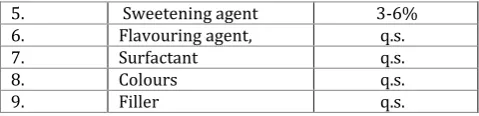
Table 1: The fast dissolving film consists of general ingredients in the following quantities
S.No. Ingredients list Quantity (w/w)
1. Drug 1-25%
2. Water soluble polymer 40-50%
3. Plasticizer 0-20%
4. Saliva stimulating agent 2-6%
5. Sweetening agent 3-6%
6. Flavouring agent, q.s.
7. Surfactant q.s.
8. Colours q.s.
9. Filler q.s.
Method of preparation of FDF 5
There are five methods for the preparation of FDF: -
Solvent casting
Semisolid casting
Hot melt extrusion
Solid dispersion extrusion
Rolling method
Solvent casting method: - In suitable solvent, water-soluble polymers are dissolved and in another suitable solvent, the drug along with other excipients is dissolved, then both solutions are mixed well and casted into the petri plate and kept for drying.
Mixed Solvency Concept
Maheshwari [6] proposed the concept of mixed-solvency
concept and proved that all substances whether liquids, solids or gases may enhance the solubility of poorly-soluble drugs. He has carried out solubility studies on poorly-water soluble drug, salicylic acid (as model drug). Solubility studies were carried in the solutions containing hydrotropic agents (urea and sodium citrate), cosolvents (glycerin, propylene glycol, PEG 300 and PEG 400) and water-soluble solids (PEG 4000 and PEG 6000) individually as well as in 10 randomly prepared blends keeping total concentration constant i.e. 40%. Results showed that seven out of ten blends produced synergistic effect on solubility enhancement.
Several studies [7-29] have been conducted on various poorly
soluble drugs using mixed solvency concept.
MATERIALS AND METHOD Materials
Furosemide drug was obtained as a giftsample from IPCA Laboratories, Pithumpur. Other chemicals used were of analytical grade. Demineralized water was used in the study.
Method
Preparation of aqueous solutions of solubilizers
For the preparation of different blends of solubilizers (% w/v), sodium caprylate, niacinamide, sodium citrate, caffeine, PVP k 30, propylene glycol, PEG 200, PEG 400, PEG 600, glycerin etc. were weighed/ measured and taken in a volumetric flask and about 50 ml of DM water was added in this flask and was shaken to achieve complete dissolution of Polymer dissolved in solvent + Drug and all other excipient dissolved in suitable solvent to form solution
solutions are mixed well (rapid stirring)
Homogenous solution is then spread (on flat surface) & keep for Drying
solubilizers. Then, volume was made up to 100 ml by DM water. Total solute concentration was varied up to 40% w/v concentration and the % solubility of drug (furosemide) was calculated.
Solubility studies:
Solubility studies in different aqueous systems of solubilizers were carried out by equilibrium solubility method.
According to this method, 5 ml of respective medium was taken in a vial and excess amount of drug furosemide was
added in above vial, kept it closed by rubber cap with aluminium seal, and was placed on a mechanical shaker at room temperature for 12 hours, and solution was allowed to equilibrate for 24 hours undisturbed. Then, the solution was filtered through filter paper. The filtrate was appropriately diluted with the respective aqueous medium and the absorbance of the solution was measured at 333 nm on a double beam UV/Visible spectrophotometer (Shimadzu 1700) against respective reagent blanks. The percent solubility was calculated using calibration curves.
Solubility of furosemide in different medium
Table 2: Drug solubility in different medium
S. No. Solvent Solubility of furosemide (mg/ml) Solubility (% w/v)
1 D.M. water 0.0792 0.0079
2 0.1 N HCl 0.0570 0.0057
3 Buffer (pH 6.8) 1.6500 0.1650
4 A. 15% Propylene glycol 5.5470 0.5547
5 B. 15% Glycerin 14.6600 1.4660
Table 3: Solubility of drug in aqueous solutions containing solid solubilizers
S.No. Blend Aqueous blend of
solubilizers Ratio of solubilizer concentration (% w/v) Solubility of furosemide (mg/ml) Solubility (% w/v)
1 C Sodium caprylate 20% 85.00 8.500
2 D Sodium benzoate 20% 62.70 6.270
Table 4: Solubility of drug in aqueous solutions containing combinations of solubilizers
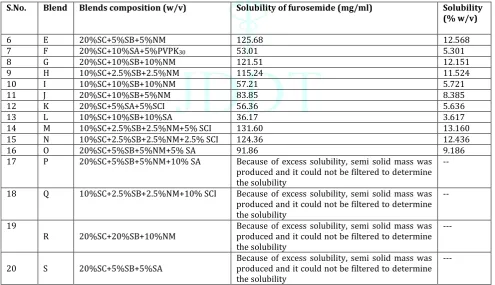
S.No. Blend Blends composition (w/v) Solubility of furosemide (mg/ml) Solubility
(% w/v)
6 E 20%SC+5%SB+5%NM 125.68 12.568
7 F 20%SC+10%SA+5%PVPK30 53.01 5.301
8 G 20%SC+10%SB+10%NM 121.51 12.151
9 H 10%SC+2.5%SB+2.5%NM 115.24 11.524
10 I 10%SC+10%SB+10%NM 57.21 5.721
11 J 20%SC+10%SB+5%NM 83.85 8.385
12 K 20%SC+5%SA+5%SCI 56.36 5.636
13 L 10%SC+10%SB+10%SA 36.17 3.617
14 M 10%SC+2.5%SB+2.5%NM+5% SCI 131.60 13.160
15 N 10%SC+2.5%SB+2.5%NM+2.5% SCI 124.36 12.436
16 O 20%SC+5%SB+5%NM+5% SA 91.86 9.186
17 P 20%SC+5%SB+5%NM+10% SA Because of excess solubility, semi solid mass was
produced and it could not be filtered to determine the solubility
--
18 Q 10%SC+2.5%SB+2.5%NM+10% SCI Because of excess solubility, semi solid mass was
produced and it could not be filtered to determine the solubility
--
19
R 20%SC+20%SB+10%NM Because of excess solubility, semi solid mass was produced and it could not be filtered to determine the solubility
---
20 S 20%SC+5%SB+5%SA Because of excess solubility, semi solid mass was produced and it could not be filtered to determine the solubility
---
Here- SC-Sodium caprylate, NM-Niacinamide, SB-Sodium benzoate, SCI-sodium citrate, SA-Sodium acetate
Selection of polymers
For selection of water-soluble film forming polymers, films of different polymers were prepared and their film properties were evaluated. As the important function of
Procedure:
For preparation of polymer films, 8.5 ml of blend containing 15% v/v glycerin (as plasticizer) was taken in a vial. Polymer (1.5 gm) was added and made up to 10 ml with blend, preparation was stirred properly and placed undisturbed for 5-6 hrs. The film of resulting polymer solution was casted in petri plate and was dried at 40ºC in hot air oven for 24 hours and then wrapped in aluminium foil and stored. The prepared films were evaluated for their film properties.
Evaluation of casted polymeric film a) Disintegration time
Disintegration was tested by taking 25 ml of phosphate buffer (pH 6.8) in a Petri dish and a film was placed in it.
Swirling of the buffer was done manually in every 10 seconds. Time required to completely break and disperse the film was noted as the disintegration time.
b) Folding endurance
Folding endurance was determined by repeatedly folding the film at the same position until it breaks. The number of times the films can be folded without breaking is termed as the folding endurance value.
c) Thickness
The thickness of film was determined by the use of micrometre (Digimatic micrometre, Mitutoyo, Tokyo, Japan) at five locations (centre and four corners) and mean thickness was calculated.
Table 5: Evaluation of film properties
S.no. Polymer used Appearance of film Disintegration time (sec) Thickness (mm)
1. HPMC E-5 Transparent, smooth, thin, non-tacky,
easily removed from Petri plate 45 0.09
2. HPMC E-50 Transparent, smooth, thick, non-tacky,
easily removed from Petri plate 100 0.23
3. PVP K30 Semi-transparent, smooth, sticky and tacky --- ---
4. Gelatine Gummy film, transparent, sticky and tacky --- ---
5. Starch Whitish translucent, thick, brittle film 115 0.34
6. CMC Whitish translucent, thick, sticky --- ---
Optimization of concentration of polymer
Five batches of different selected polymer (HPMC E-5) concentrations were prepared, casted and their film properties were studied.
Table 6: Properties of different concentrations of HPMC E-5
S.No. Selection factor 10% w/v
HPMC E-5 12.5% w/v HPMC E-5 15% w/v HPMC E-5 17.5% w/v HPMC E-5 20% w/v HPMC E-5
1. Viscosity of
polymeric preparation
Less viscous Less viscous Viscous Viscous Viscous
2 Pourability Easily pourable Easily pourable Pourable Pourable Difficult to pour
3. Appearance of film
and folding parameter
Transparent but easily break on folding
Transparent, little folding capacity
Transparent, with high folding capacity
Transparent with high folding capacity
Transparent but easily breakable
4. Uniformity of film Uniform Uniform Uniform Uniform Non-uniform
5. Thickness Thin 0.10 mm Thin 0.12mm Thin 0.09mm Thin 0.11 mm Thick 0.14 mm
Selection of plasticizer
The effect of glycerine, propylene glycol, polyethylene glycol as plasticizer was studied. Five batches of HPMC E-5 films were prepared with respective plasticizers used in concentration of 15% v/v and properties of casted films were evaluated.
Table 7: Effect of different plasticizers in polymeric casted film S.No. Polymer
(15%w/v) Plasticizer (15%v/v) Appearance of film Thickness (mm) Folding endurance Disintegration time (sec)
1. HPMC E-5 PG Thin, smooth, transparent,
uniform 0.08 114 56
2. HPMC E-5 Glycerine Transparent, thickness is greater
than first film, less smooth compared to first batch
0.07 157 40
3. HPMC E-5 PEG 200 Smooth, transparent, thickness is
greater than first film 0.11 126 44
4. HPMC E-5 PEG 400 Non-uniform, thickness is greater,
transparent 0.13 149 57
5. HPMC E-5 PEG 600 Thickness is greater than first
three batches, transparent 0.17 145 67
Optimization of plasticizer concentration
Five batches of HPMC E-5 with different concentration range 5%-25% of selected plasticizer (Glycerine) were prepared and their film properties were studied.
Table 8: Effect of different concentrations of selected plasticizers in properties of polymeric film S.No. Polymer
(15%w/v) Glycerine Concentration (v/v)
Appearance of film Thickness
(mm) Folding endurance Disintegration time (sec)
1. HPMC E-5 5% Hard and brittle 0.12 23 43
2. HPMC E-5 10% Hard, uniform, transparent 0.10 61 49
3. HPMC E-5 15% Soft, smooth, uniform, transparent 0.07 177 39
4. HPMC E-5 20% Soft, sticky, transparent 0.15 145 44
5. HPMC E-5 25% Soft, very sticky 0.17 133 50
HPMC- hydroxypropyl methyl cellulose. Selection of super disintegrants
Solutions of four different polymeric formulations of HPMC E-5 (15% w/v) were prepared with (15% v/v) glycerin and in each of this solution respective super disintegrant (0.3%w/v) was added and films were casted in Petri plates, after proper drying at 40°C for 24 hours then films were wrapped in aluminium foil with sealing plastic bags, stored and their film properties were studied.
Table 9: Effect of super disintegrant on the properties of polymeric film S.No. Polymer
(15%w/v) Plasticizer concentration (15% v/v)
Super disintegrant Thickness
(mm) Disintegration time (sec)
1. HPMC E-5 Glycerine Croscarmellose sodium (ac-di-sol) 0.14 45
2. HPMC E-5 Glycerine Crosspovidone 0.06 37
3. HPMC E-5 Glycerine Microcrystalline cellulose (avicel) 0.15 64
4. HPMC E-5 Glycerine Sodium starch glycolate 0.17 53
Optimization of super disintegrant concentration
Solutions of four different polymeric formulations of HPMC E-5 (15% w/v) were prepared with (15% v/v) glycerine and in each of this solution cross povidone in different concentration range 0.3%-0.6% w/v were added in preparation and films were casted in Petri plate, after proper drying at 40°C for 24 hours then film were wrapped in aluminium foil with sealing plastic bags, stored and their film properties were studied.
Table 10: Effect of different concentrations of cross povidone on the properties of polymeric films
S.No. Polymer
(15%w/v) Plasticizer conc. (15% v/v) Crosspovidone (% w/v) Thickness (mm) Folding endurance Disintegration time (sec)
1. HPMC E-5 Glycerine 0.3% 0.09 166 37
2. HPMC E-5 Glycerine 0.4% 0.06 173 29
3. HPMC E-5 Glycerine 0.5% 0.12 164 34
4. HPMC E-5 Glycerine 0.6% 0.11 170 38
Formulation of FDF of furosemide
According to the preliminary studies and studies of selection of excipients, for the preparation and optimization of fast dissolving film layer, 8 batches were designed and fast dissolving films of different 8 formulae (table 31) were prepared (on the basis of less individual concentration of solubilizers and greater solubility enhancement of drug.)
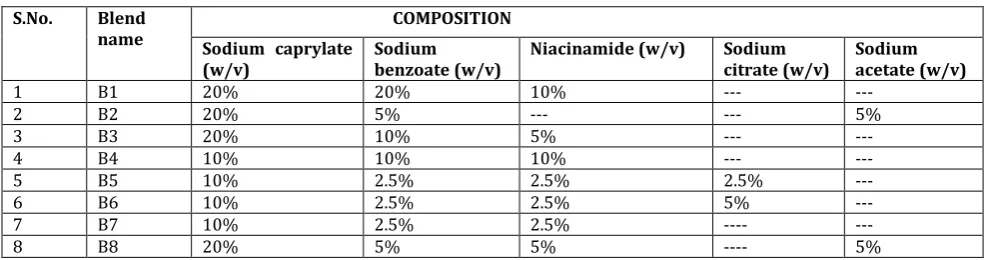
Table 11: Composition of blends used for formulation development
S.No. Blend
name COMPOSITION Sodium caprylate
(w/v) Sodium benzoate (w/v) Niacinamide (w/v) Sodium citrate (w/v) Sodium acetate (w/v)
1 B1 20% 20% 10% --- ---
2 B2 20% 5% --- --- 5%
3 B3 20% 10% 5% --- ---
4 B4 10% 10% 10% --- ---
5 B5 10% 2.5% 2.5% 2.5% ---
6 B6 10% 2.5% 2.5% 5% ---
7 B7 10% 2.5% 2.5% ---- ---
Table 12: Composition of formulation of fast dissolving films
S.No. Batch
code Drug furosemide (mg) Blends Polymer HPMC E-5 (%w/v) Plasticizer (% v/v) Super disintegrants (% w/v)
1. F1 500 B1 15% 15% 0.4%
2. F2 500 B2 15% 15% 0.4%
3. F3 500 B3 15% 15% 0.4%
4. F4 500 B4 15% 15% 0.4%
5. F5 500 B5 15% 15% 0.4%
6. F6 500 B6 15% 15% 0.4%
7. F7 500 B7 15% 15% 0.4%
8. F8 500 B8 15% 15% 0.4%
Method of preparation of FDF of furosemide
500 mg furosemide was accurately weighed and dissolved in 8.5ml of respective solubilizer blend containing 15% v/v glycerine (as plasticizer). fourty mg crospovidone (as super disintegrant) and 1.5 gm of HPMC E-5 (as film forming polymer) were added and made up to 10 ml with blend. Preparation was properly mixed in blend and placed undisturbed for 5-6 hour. Then calculated volume of polymeric preparation were uniformly spread in Petri plate and dried in oven at temperature 40°C for 24 hrs. After proper drying, films were cut into desired calculated dimension i.e. 2.0×2.0 cm² in which 20 mg of furosemide was present. At last it was wrapped in an aluminium foil with sealing plastic bag and stored for further evaluations of film.
Dose calculation of drug: -
Outer diameter of Petri plate = 5.5 cm Inner diameter of Petri plate = 5.2 cm Inner radius of Petri plate = 5.2/2 cm = 2.6 cm Inner area of Petri plate = area of circle= πr² = 3.14× (2.6) ² = 21.2264 cm²
10 ml of polymeric preparation contains 500mg of drug. Therefore 2 ml of polymeric preparation contains 100 mg of drug.
This 2 ml polymeric preparation was spread over 21.2264 cm² area of Petri plate.
Therefore, 100 mg of drug is present in 21.2264 cm² area of Petri plate.
So, 20 mg present in…. = (21.2264 cm2 / 100 mg) ×20 mg
= 4.24528 cm2 area
Area of circle = area of square = a² (a= length of side of square)
4.24528 cm² = a²
a = √4.24528 cm² a = 2.06 cm
By this calculation 20 mg dose of drug present in 2.0×2.0 cm² area of film.
Evaluation studies of fabricated FDF a) In vitro dissolution rate study
Films containing 20 mg of furosemide were used in the in vitro dissolution study. Dissolution studies were conducted in USP II apparatus (paddle type) at 50 rpm, using 900 ml of 0.1 N HCl and 300 ml of simulated saliva fluid (2.38 gm Na2HPO4, 0.19 gm KH2PO4, and 8.00 gm NaCl per litre of
distilled water adjusted with phosphoric acid to pH 6.8) as dissolution media. The temperature was maintained at 37±0.5˚ C. Ten ml samples were withdrawn at regular intervals and analyzed spectrophotometrically (Shimadzu A-160) at 333 nm after appropriate dilution with 0.1 N HCl and simulated saliva fluid respectively. Absorbances were noted against respective reagent blanks (placebo). An equal amount of fresh dissolution media was replaced immediately after each withdrawal of sample.
b) % Drug content determination
It was determined by taking one film theoretically equivalent to 20mg of drug and transferred in 1000 ml volumetric flask and approximately 400 ml of DM water was added to it. Flask was shaken for 15 minutes and volume was made up to the mark with DM water. The
resulting solution was filtered and analyzed
spectrophotometrically at 333 nm and drug content was determined.
% drug content= (practical value/ theoretical value) × 100
c) Surface pH
Film was taken and placed in a Petri plate containing 5 ml of water. After wetting of the film, the surface pH of the film was checked by using pH electrode.
d) Thickness
The thickness of film was determined by the use of micrometre (Digimatic micrometre, Mitutoyo, Tokyo, Japan) at five locations (centre and four corners) and mean thickness was calculated.
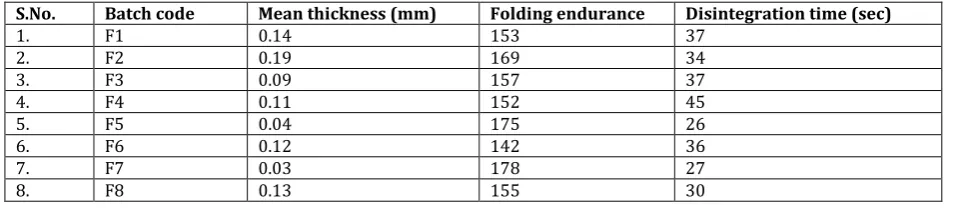
Table 13: Evaluation of formulated film batches
S.No. Batch code Mean thickness (mm) Folding endurance Disintegration time (sec)
1. F1 0.14 153 37
2. F2 0.19 169 34
3. F3 0.09 157 37
4. F4 0.11 152 45
5. F5 0.04 175 26
6. F6 0.12 142 36
7. F7 0.03 178 27
In vitro dissolution rate study-Films containing 20 mg of furosemide were used in the in vitro dissolution study. Dissolution studies were conducted in USP II apparatus (paddle type) at 50 rpm, using 900 ml of 0.1 N HCl and 300 ml of simulated saliva fluid (2.38 gm Na2HPO4, 0.19 gm
KH2PO4, and 8.00 gm NaCl per litre of distilled water
adjusted with phosphoric acid to pH 6.8) as dissolution media. The temperature was maintained at 37±0.5˚ C. Ten
ml samples were withdrawn at regular intervals and analysed spectrophotometrically (Simadzu A-160) at 333 nm after appropriate dilution with 0.1 N HCl and simulated saliva fluid respectively. Absorbance was noted against respective reagent blanks (placebo). An equal amount of fresh dissolution media was replaced immediately after each withdrawal of sample.
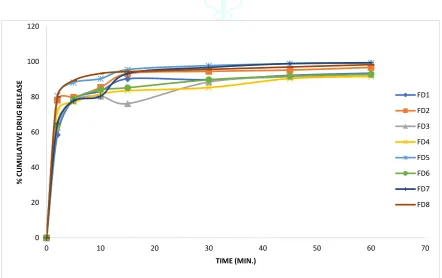
Figure 1: Graphical representation of % cumulative drug release v/s time plot in phosphate buffer of pH 6.8
Figure 2: Graphical representation of % cumulative drug release v/s time plot in 0.1 N HCl 0
20 40 60 80 100 120
0 10 20 30 40 50 60 70
%
C
U
M
U
LA
TIV
E
D
R
U
G
R
EL
EA
SE
TIME (MIN)
FD1
FD2
FD3
FD4
FD5
FD6
FD7
FD8
0 20 40 60 80 100 120
0 10 20 30 40 50 60 70
%
C
U
M
U
LA
TIV
E
D
R
U
G
R
EL
EA
SE
TIME (MIN.)
FD1
FD2
FD3
FD4
FD5
FD6
FD7
Figure 3: In-vitro dissolution profile of optimized batch FD5
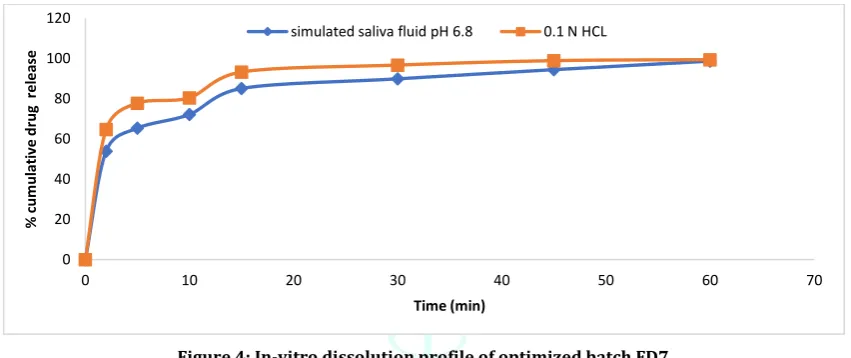
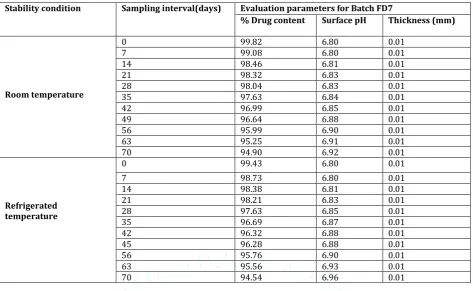
Figure 4: In-vitro dissolution profile of optimized batch FD7 Stability study of optimized batch FD5 and FD7
Stability study of optimized film formulation was carried out for two months at room temperature and refrigerated temperature.
Table 14: Stability studies of final optimized batch FD5
Stability condition Sampling interval (days) Evaluation parameters for Batch FD5
% Drug content Surface pH Thickness (mm)
Room temperature
0 99.78 6.80 0.01
7 99.43 6.80 0.01
14 98.73 6.82 0.01
21 98.38 6.83 0.01
28 98.04 6.85 0.01
35 97.69 6.87 0.01
42 97.34 6.88 0.01
49 96.64 6.88 0.01
56 96.30 6.90 0.01
63 95.95 6.91 0.01
70 95.56 6.93 0.01
Refrigerated temperature
0 99.64 6.80 0.01
7 98.32 6.80 0.01
14 98.38 6.80 0.01
21 97.69 6.81 0.01
28 97.34 6.82 0.01
35 96.99 6.85 0.01
42 96.64 6.88 0.01
45 95.95 6.89 0.01
56 95.56 6.89 0.01
63 94.90 6.90 0.01
70 94.56 6.91 0.01
0 20 40 60 80 100 120
0 10 20 30 40 50 60 70
%
cum
ul
at
iv
e
dr
ug
r
e
le
ase
Time (min)
simulated saliva fluid pH 6.8 0.1 N HCL
0 20 40 60 80 100 120
0 10 20 30 40 50 60 70
%
cum
ul
at
iv
e
dr
ug
re
le
ase
Time (min)
Table 15: Stability studies of final optimized batch FD7
Stability condition Sampling interval(days) Evaluation parameters for Batch FD7
% Drug content Surface pH Thickness (mm)
Room temperature
0 99.82 6.80 0.01
7 99.08 6.80 0.01
14 98.46 6.81 0.01
21 98.32 6.83 0.01
28 98.04 6.83 0.01
35 97.63 6.84 0.01
42 96.99 6.85 0.01
49 96.64 6.88 0.01
56 95.99 6.90 0.01
63 95.25 6.91 0.01
70 94.90 6.92 0.01
Refrigerated temperature
0 99.43 6.80 0.01
7 98.73 6.80 0.01
14 98.38 6.81 0.01
21 98.21 6.83 0.01
28 97.63 6.85 0.01
35 96.69 6.87 0.01
42 96.32 6.88 0.01
45 96.28 6.88 0.01
56 95.76 6.90 0.01
63 95.56 6.93 0.01
70 94.54 6.96 0.01
RESULTS AND DISCUSSION
For the selection of solubilizers for increasing the solubility of drug (furosemide), solubility studies were conducted at room temperature in various solutions containing individual solubilizer or in combination of solubilizers blend. The solubility of furosemide was increased up to 11.52 % (w/v) in solubilizer in Blend F5 (10% sodium caprylate +2.5%sodium benzoate+ 2.5% niacinamide) and in Blend F7 (10% sodium caprylate +2.5%sodium benzoate +2.5% sodium citrate + 2.5% niacinamide) up to 12.43 % (w/v) that was maximum among all the blends. In order to minimize the probable toxic effects of individual solubilizer at high concentration, the blends of solubilizers were tried to give the expected solubility. The blends of solubilizers of total strength 15% and 17.5% w/v were used in selected final blends to get sufficiently expected solubilities. The maximum synergistic effect was observed in the blend containing sodium caprylate, sodium benzoate, niacinamide, sodium acetate, sodium citrate. For the development of fast dissolving film, different film forming polymers, plasticizers, super disintegrants were tested. According to the mechanical properties and disintegration time of film, they were selected and optimized. HPMC E-5 15% w/v was taken as optimized
concentration of polymer. On the basis of film properties, 15% v/v concentration of glycerine (as plasticizer) was optimized and selected. Crosspovidone in concentration of 0.4% w/v was optimized because of desired thickness and desired disintegration time (< 30 sec).
From selected and optimized ingredients, eight batches of fast dissolving film containing 20 mg dose of drug per 4 cm² were developed and evaluated for thickness, folding endurance, disintegration time and in-vitro dissolution profile. Amongst all the batches, FD5 and FD7 batch of prepared fast dissolving films showed better in vitro dissolution profile, disintegration time and were selected for stability studies. They were found quiet stable for 2 months.
CONCLUSION
From all the above studies, it was concluded that the approach of mixed solvency is novel, safe, cost-effective and user friendly. It also eliminates the problem of toxicity associated with high concentration of single solubilizers. So, it may be employed in dosage form development of drugs where fast onset of action is desired. It may also enhance the bioavailability associated with poor dissolution of drug.
REFERENCES
1. Rao Raghavendra N. G, Khatoon N, Reddy B. M; Overview on fast dissolving oral films; International Journal of Chemistry and Pharmaceutical Sciences; 2013; 1(1):63-75.
2. Bala R, Pawar P, Khanna S, Arora S; Orally dissolving strips: a new approach to oral drug delivery system; International Journal Pharm Investigation; 2013; 3(2):67-76.
3. Preis M, Woertz C, Kleinebudde P, Breitkreutz J; Oromucosal film preparation: classification and characterization methods; Expert opinion on drug delivery; 2013; 10(9):1303-17. 4. Thakur N, Bansal M, Sharma N, Yadav G, Khare P; Overview
on “a novel approach of fast dissolving films and their patents”; Advances in Biological Research; 2013; 7(2):50-58.
5. Gupta M. M, Patel M. G, Kedawat M; Enhancement of dissolution rate of rapidly dissolving oral film of meclizine hydrochloride by complexation of meclizine hydrochloride with β-cyclodextrin; Journal of Applied Pharmaceutical Science; 2011; 1(9):150-153.
6. Maheshwari R. K; "Mixed-solvency" – a novel concept for solubilization of poorly water-soluble drugs; Journal of Technology and Engineering Sciences; 2009; 1(1):39-44. 7. Maheshwari R. K; Potentiation of solvent character by
mixed-solvency concept: a novel concept of solubilization; Journal of Pharmacy Research; 2010; 3(2):411-413.
mixed-solvency approach; The Indian Pharmacist; 2009; 8(87):81-84.
9. Maheshwari R. K.; "Mixed solvency approach" boon for solubilization of poorly water-soluble drugs; Asian Journal of Pharmaceutics; 2010; 1:60-3.
10. Jain R, Maheshwari R. K, George P; Formulation development and evaluation of controlled release tablets of lamotrigine using mixed solvency concept; Bulletin of Pharmaceutical Research; 2015; 5(1):14-9.
11. Patel S. K. and Maheshwari R. K; Formulation development and evaluation of SEDDS of poorly soluble drug made by novel application of mixed-solvency concept; International Journal of Pharmaceutical Research; 2012; 4:51-56.
12. Shilpkar R. and Maheshwari R. K; Formulation development and evaluation of injection of poorly soluble drug using mixed solvency concept; International Journal of Pharma and Bio Sciences; 2012; 3:179-189.
13. Agarwal S. and Maheshwari, R. K; Formulation development and evaluation of in situ nasal gel of poorly water-soluble drug using mixed solvency concept; Asian Journal of Pharmaceutics; 2011; 5(3):131-140.
14. Karwande V. K. and Maheshwari R. K; Application of novel concept of mixed-solvency in the design and development of floating microspheres of furosemide; International Journal of Pharmacy and Pharmaceutical Sciences; 2013; 5:167-175. 15. Chandna C. and Maheshwari R. K; Mixed solvency concept in
reducing surfactant concentration of self-emulsifying drug delivery system of candesartan cilexetil using d-optimal mixture design; Asian Journal of Phamaceutics; 2013; 7:83-91.
16. Soni L. K, Solanki S. S, Maheshwari R. K; Studies on mixed solvency concept in formulation development of oral solution (syrup) of poorly water soluble drugs; Journal of Harmonized Research in Pharmacy; 2015; 4(4):305-315.
17. Soni L. K, Solanki S. S, Maheshwari R. K; Solubilization of poorly water-soluble drug using mixed solvency approach for aqueous injection; British Journal of Pharmaceutical Research; 2014; 4(5):549-568.
18. Jain D. K, Patel V. K, Bajaj S, Jain N, Maheshwari R. K; Novel approach for spectrophotometric estimation of solid dosage forms of tinidazole using solids (eutectic liquid of phenol and niacinamide) as solubilizing agent (mixed solvency concept); World Journal of Pharmacy and Pharmaceutical Sciences; 2015; 4(04):763-769.
19. Maheshwari Yash, Mishra D. K, Mahajan S. C, Maheshwari Prachi, Maheshwari R. K, Jain V; Novel pharmaceutical application of mixed solvency in the formulation development of syrups (liquid oral solutions) of poorly water-soluble drugs; International Journal of Pharmacy; 2013; 3(4):753-758.
20. Tomar A, Sharma K, Chauhan N. S, Mittal A; Formulation and evaluation of fast dissolving oral film of dicyclomine as
potential route of buccal delivery; International Journal of Drug Development & Research; 2012; 4(2):408-417. 21. Maheshwari R. K, Putiwala M, Padiyar A; Novel approach for
spectrophotometric estimation of naproxen in tablet dosage form using solids(eutectic liquid of phenol and niacinamide) as solubilizing agent (mixed solvency concept); Asian Journal of Pharmaceutical Research; 2015; 5(1):25-28.
22. Maheshwari R. K, George P, Fouzdar A, Singh S; “Solid as solvent” - novel approach for spectrophotometric analytical technique for nalidixic acid tablets using solids (eutectic liquid of phenol and metformin hydrochloride) as solubilizing agents (Mixed Solvency Concept), International Journal of Pharmaceutical Chemistry and Analysis; 2015; 2(1):42-45. 23. Maheshwari R. K, Jain P, Parkhe D; Solid as solvent- novel
technique for spectrophotometric estimation of naproxen tablets using solids (eutectic liquid of phenol and metformin hydrochloride) as solubilizing agents (mixed solvency concept), European Journal of Biomedical and Pharmaceutical Sciences; 2015; 2(4):1011-1018.
24. Solanki S. S, Soni L. K, Maheshwari R. K; Solid as solvent-novel spectrophotometric analytical technique for frusemide tablets using solids (eutectic liquid of phenol and niacinamide) as solubilizing agents (mixed solvency concept); International Journal of Advances in Pharmaceutical Research; 2015; 6(5):147-150.
25. Jain R. Maheshwari R. K, George P; Formulation development and evaluation of controlled release tablets of lamotrigine using mixed solvency concept; Bulletin of Pharmaceutical Research; 2015; 5(1):14-9.
26. Agrawal Shweta and Maheshwari, R. K; Formulation development of in-situ nasal drug delivery system of poorly water-soluble drug (indomethacin) using mixed solvency concept and their evaluation; Bulletin of Pharmaceutical and Medical Sciences; 2014; 2(1):2128-2138.
27. Maheshwari R. K, Prasad S, Pandey P, Wanare G; Novel spectrophotometric analysis of piroxicam tablets using ibuprofen sodium as hydrotropic solubilizing agents; International Journal of Pharmaceutical Sciences and Drug Research; 2010; 2(3):210-212.
28. Singh Ashish and Maheshwari R. K; Solid as solvent- novel spectrophotometric analytical technique for quantitative estimation of piroxicam tablets using solids (eutectic liquid of phenol and lignocaine hydrochloride) as solubilizing agents (mixed solvency concept); World Journal of Pharmaceutical Research; 2016; 5(2):1560-1567.