IJEDR1804044
International Journal of Engineering Development and Research (
www.ijedr.org
)
243
Comparative Study on Image Retrieval using Color,
Texture and Color-Texture, Based on Semantic
Properties
1Ramya Nagaraju Gowda, 2Vinodha H N 1Assistant Professor, 2Assistant Professor 1Computer Science and Engineering, 1East West Instituteof Technoogy, Bangalore, India
_____________________________________________________________________________________________________
Abstract - CBIR is the study of browsing digital images from large database collection. This is a growing research area having many applications in the fields of image processing, pattern recognition, medical fields etc. In most image retrieval systems image is represented as a set of low level features. In this image retrieval paper comparative study is performed on color, texture and color-texture using various internal semantic properties using different methods. In this work texture features are extracted using Gray Level Co-occurrence Matrix (GLCM) for texture feature extraction. The images are retrieved according to user satisfaction and thereby reduce the semantic gap between low level features and high level features. Again Color features are extracted using RGB, DCT and HSV methods and compared.
Finally In this paper texture features and color features are combined to check the precision and recall rates for all methods.
Keywords - CBIR, TEXTURE-GLCM, COLOR-HSV, DCT, PRECISION, RECALL
_____________________________________________________________________________________________________
I. INTRODUCTION
The term "content-based image retrieval" seems to have originated in 1992 when it was used by T. Kato to describe experiments into automatic retrieval of images from a database, based on the colors and shapes present. Since then, the term has been used to describe the process of retrieving desired images from a large collection on the basis of syntactical image features. The techniques, tools, and algorithms that are used originate from fields such as statistics, pattern recognition, signal processing, and computer vision [1].
Content-based image retrieval (CBIR), also known as query by image content (QBIC) and content-based visual information retrieval (CBVIR) is the application of computer vision to the image retrieval problem, that is, the problem of searching for digital images in large databases. Retrieving images from the large database is a difficult task. In the image retrieval system it analyses the contents of the image from the database image and extracts each of the feature [2].
Image retrieval can be divided into different types based on the interpretation from the user for example if user gives the text as input then it is called as “text based image retrieval” and if the user gives the image as input then it is called “image based image retrieval”.
The text-based technique first annotates the images with text, and uses text-based database management systems to perform image retrieval. The content based retrieval images are indexed by their own visual content, such as color, texture or shape. Image retrieval has become more and more important with the advance of computer technology [3].
Image retrieval systems were introduced to address the problems associated with text-based image retrieval. Content based image retrieval is a set of techniques for retrieving semantically-relevant images from an image database based on automatically-derived image features. The main goal of image retrieval is efficiency during image indexing and retrieval, thereby reducing the need for human intervention in the indexing process. The computer must be able to retrieve images from a database without any human assumption on specific domain [4].
As the images grow complex and diverse, retrieving the right images becomes a difficult challenge. Image retrieval system is used to find out similar image to query image. There are different methods to search image from large database[5].
- Based on Text (Query by Text): Here user gives a keyword or textual description for searching an image. - Based on Draw (Query by Sketch): Here user provides drawing or sketch of an image.
- Based on Example image (Query by Example): Here user gives similar image to the query image.
II METHODOLOGY
IJEDR1804044
International Journal of Engineering Development and Research (
www.ijedr.org
)
244
Fig.1 Architecture of image retrieval systemALGORITHM:
1. Select the method you want to retrieve.
2. Select the query image from the image dataset which you want to compare. 3. Extract the features based on the selected method.
4. Extracts the features for Corel database.
5. Compares the extracted features with the database images.
6. Calculates the distance between the query image vector and database image vector using Euclidian distance measure. 7. Sort the distance according to the shortest distance measure.
8. Finally retrieve the most similar images using the Euclidian distance. 9. Perform the above steps using different methods.
10. Finally analyse the retrieved images. 11. Compare the results of different methods.
12. Calculate the recall and precision rates for different dataset.
In this work texture features and color features are extracted using the following methods
A. Texture Feature Extraction
The different texture features extracted using GLCM are:
Variance: It refers to the difference or variation in intensity among neighbouring pixels. A high value of variance indicates large variation in intensity, and a texture with low variance has small variation. Contrast (f-con) is given as follows: Contrast= ∑ ∑𝑛 (𝑖 − µ)2𝑝
𝑗=0 𝑛 𝑖=0
(
𝑑, 𝛩₎(i,j)
User
Database
Query image
Database images
Feature extraction
Feature extraction
Feature vector for query and databaseimages
Similarity comparison Color
Color-Texture Texture
IJEDR1804044
International Journal of Engineering Development and Research (
www.ijedr.org
)
245
Correlation: It measures the uniformity of grey scale distribution among different pixels. A texture on high correlation has uniform distribution, whereas texture on low correlation has non-uniform distribution. Correlation is given as follows:
𝐶𝑜𝑟𝑟𝑒𝑙𝑎𝑡𝑖𝑜𝑛 = ∑ ∑𝑛 𝑖𝑗𝑝
𝑗=0 𝑛 𝑖=0
(
𝑑, 𝛩₎(i,j)-µxµy
Inertia: It is just the opposite of inverse difference moment. Inertia and the inverse difference moment are measures for the distribution of grey-scales in the image.
Inertia= ∑ (𝑖 − 𝑗)𝟐𝐜(𝐢, 𝐣)n 𝑖,𝑗
Cluster shade: It indicates the skewness of the matrix, or it gives the measure of lack of symmetry. When cluster shade and cluster prominence are high, the image is not symmetric and vice versa.
Cluster shade: ∑ 𝑖, 𝑗((𝐢 − µ𝐢) + (𝐣 − µ𝐣))𝟑𝐜(𝐢, 𝐣)n i,j
B. Color feature extraction
The HSV stands for the Hue, Saturation, and Value. The HSV color model describes colors in terms of their shades and brightness (Luminance). This model offers a more intuitive representation of relationship between colors. Hue represents the dominant wavelength in light. It is the term for the pure spectrum colors. Hue is expressed from 0º to 360º.
The formula for converting RGB to HSV is given by: Initially, the R, G, B values are divided by 255 to change the range from 0….255 to 0…1.
𝑅′= 𝑅 255
𝐺′= 𝐺
255
𝐵′= 𝐵
255 Cmax = max (𝑅′, 𝐺′, 𝐵′)
Cmin = min (𝑅′, 𝐺′, 𝐵′)
Δ = Cmax - Cmin
H= 600 𝑋 (
𝐺′− 𝐵′
𝛥 𝑚𝑜𝑑6) , Cmax = 𝑅
′
600 𝑋 ( 𝐵′−𝑅′
𝛥 + 2) , Cmax = 𝐺′ 600 𝑋 ( 𝑅′−𝐺′
𝛥 + 4) , Cmax = 𝐵
′
S = {0, Δ = 0 Δ
𝐶𝑚𝑎𝑥 , Δ< > 0
V= Cmax
B. Feature Matrix Formation: The feature matrix is created from the features extracted from the image and the values represent variance, correlation, cluster shade and inertia.
II. DATASETANDEXPERIMENTALRESULTS
I. Corel Dataset
In the proposed approach Corel dataset has been used. In this Corel database different classes of images used. Corel database contains 80 categories, each category contains 100 images total it contains 8000 images in the database. In this paper we are working on the 10 categories of corel dataset each containing 100 images of which total is 1000 images.
In my work I have calculated recall and precision rates to compare the results. Recall and precision can be calculated by using the following formula.
II. Results
RECALL is the ratio of the number of relevant records retrieved to the total number of relevant records in the database. It is usually expressed as a percentage.
𝑅𝐸𝐶𝐴𝐿𝐿 = 𝐴
(𝐴+𝐵)× 100
A=No. of relevant records retrieved B=No of relevant records not retrieved
IJEDR1804044
International Journal of Engineering Development and Research (
www.ijedr.org
)
246
𝑃𝑅𝐸𝐶𝐼𝑆𝐼𝑂𝑁 = 𝐴
(𝐴+𝐶)× 100
A=No of relevant records retrieved B=No of irrelevant records retrieved
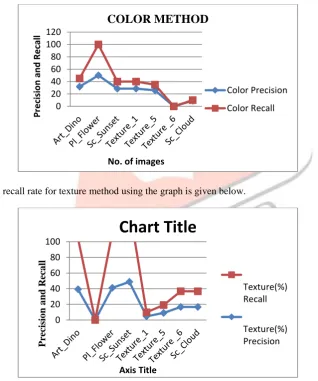
Table 1 comparison of precision and recall rate for three methods
Class Color(%) Texture(%) Texture-Color(%) Precision Recall Precision Recall Precision Recall
Art_Dino 31.9 45 39.3 65 35.4 55
Pl_Flower 50 100 41.17 70 50 100
Sc_Sunset 28.54 40 48.71 95 50 100
Texture_1 28.57 40 4.76 5 16.66 20
Texture_5 25.92 35 9.09 10 20 25
Texture _6 0 0 16.66 20 37.5 60
Sc_Cloud 9.09 10 16.66 20 32.54 50
Comparison results using the graph is shown below 1. Recall and precision rate for the color method.
2. Precision and recall rate for texture method using the graph is given below.
3. Precision and recall rate for color-texture method using the graph is given below.
0 20 40 60 80 100 120
Pr
e
ci
si
o
n
an
d
R
e
cal
l
No. of images
COLOR METHOD
Color Precision Color Recall
0 20 40 60 80 100
P
re
cisi
o
n
a
nd
Rec
a
ll
Axis Title
Chart Title
Texture(%) Recall
IJEDR1804044
International Journal of Engineering Development and Research (
www.ijedr.org
)
247
III. CONCLUSION
The need of effective retrieving images from the large database is very important,So in the proposed approach as I have combined the color and texture features by using the GLCM and HSV, WAVELET TRANSFORM that made me to effectively increase the performance of the retrieval system. From the above results I conclude that precision and recall rate has been increased compared to the previous results.
IV. FUTURE WORKS
This system can be further improved by integrating the texture, color and shape features so that recall and precision rate can be increased. Some images in may contain texture, color and shape. Thus by integrating the multiple features we can increase the performance of the system.
REFERENCES
[1] S. Janarthanam1, V. Thiagarasu2 and K. Somasundram3, Image Processing (NCIMP 2010)
[2] Jisha.K.P ,Thusnavis Bella Mary. I b, Dr.A.Vasuki , 2013 International Conference on Signal Processing, Image Processing and Pattern Recognition [ICSIPRl, 978-1-4673-4862-1/13/$31.00 ©2013 IEEE
[3] Najlae Idrissi, Jos´e Martinez, Driss Aboutajdine, JOURNAL OF MULTIMEDIA, VOL. 4, NO. 5, OCTOBER 2009 [4] Dr. H.B.KEKRE, MR.DHIRENDRA MISHRA, MS. STUTI NARULA, MS. VIDHI SHAH, Dr. H.B.Kekre et al. / International Journal of Engineering Science and Technology (IJEST).
[5] Shankar M. Patil, Shankar M. Patil / International Journal of Computer Science & Engineering Technology (IJCSET) [6] (2002) The IEEE website. [Online]. Available: http://www.ieee.org/
[7] M. Shell. (2002) IEEEtran homepage on CTAN. [Online]. Available: http://www.ctan.org/tex-archive/macros/latex/contrib/supported/IEEEtran/
[8] Amanbir Sandhu Aarti Kochhar presented the paper “Content Based Image Retrieval using Texture, Color and Shape for Image Analysis International Journal of Computers & ISSN: 2277-3061 Volume 3, No. 1, and AUG, 2012.
0 20 40 60 80 100 120 140 160
Texture-Color(%) Recall