Pharmacogenomics and Personalized Medicine 2017:10 69–78
Pharmacogenomics and Personalized Medicine
Dove
press
submit your manuscript | www.dovepress.com 69
R E V I E W open access to scientific and medical research
Open Access Full Text Article
MTHFR polymorphisms in childhood
acute lymphoblastic leukemia: influence on
methotrexate therapy
Maitane Umerez1
Ángela Gutierrez-Camino1
Carmen Muñoz-Maldonado1
Idoia Martin-Guerrero1
Africa Garcia-Orad1,2
1Department of Genetics, Physical Anthropology and Animal Physiology, Faculty of Medicine and Nursery, University of the Basque Country, UPV/EHU, Leioa, 2BioCruces Health Research Institute, Barakaldo, Spain
Abstract: Methotrexate (MTX) is an important component in the therapy used to treat childhood acute lymphoblastic leukemia (ALL). Methylenetetrahydrofolate reductase (MTHFR) is a key enzyme for MTX pharmacokinetics. Two single-nucleotide polymorphisms in MTHFR gene, C677T and A1298C, affecting MTHFR activity, have been widely studied as potential markers of MTX toxicity and/or outcome in pediatric ALL. In this review, we show that the majority of published reports do not find association or present opposite effect. Therefore, MTHFR C677T and A1298C polymorphisms do not seem to be good markers of MTX-related toxicity and/or outcome in pediatric ALL. The efforts should be focused on other genes, such as transporter genes or microRNA-related genes.
Keywords: MTHFR, methotrexate, toxicity, outcome, C677T, A1298C
Introduction
Acute lymphoblastic leukemia (ALL) is the most common type of cancer in children, representing ~30% of all childhood malignancies.1,2 Survival rates have increased dramatically over the last years because of chemotherapy progress, with expected cure rates higher than 80%.3 Methotrexate (MTX) is an important drug used in the treatment protocols for ALL. However, MTX can cause toxicity, leading to a dose reduction or treatment interruption, which could compromise the survival.
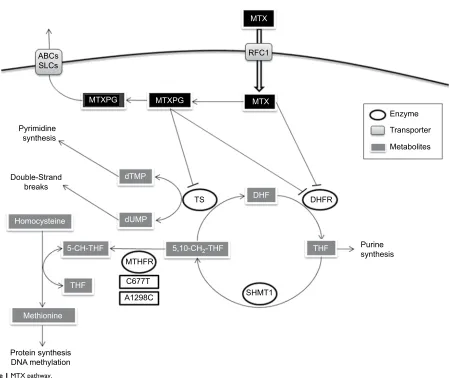
MTX is a folate analog that enters the cell via active transport mediated by the reduced folate carrier (RFC1).4 Then, MTX inhibits dihydrofolate reductase, arrest-ing the folic acid cycle and affectarrest-ing other important enzymes such as methylene-tetrahydrofolate reductase (MTHFR), an enzyme that interferes with nucleic acid synthesis and favors cell death.5 Thus, MTHFR is a key enzyme for intracellular folate homeostasis and metabolism, because it catalyzes the irreversible conversion of 5,10-methylenetetrahydrofolate, required for purine and thymidine synthesis, to 5-methyltetrahydrofolate, required for protein synthesis and nucleic acid methylation. Subsequently, changes in the activity of MTHFR provoking an impaired conversion of 5,10-methylenetetrahydrofolate to 5-methyltetrahydrofolate could modify folate pools and in turn alter the response of malignant and nonmalignant cells to MTX and influence its toxicity6 (Figure 1).
In this context, two of the MTHFR polymorphisms most widely studied in relation to the toxicity of MTX are C677T (causing Ala222Val) and A1298C (causing Glu429Ala). Both polymorphisms have been associated with reduced enzyme activity. In the case of C677T, 677CT and 677TT individuals exhibit 60% and 30% of the normal MTHFR Correspondence: Africa Garcia-Orad
Department of Genetics, Physical Anthropology and Animal Physiology, Faculty of Medicine and Nursery, University of the Basque Country, UPV/EHU, Barrio Sarriena s/n, 48940 Leioa, Spain
Tel +34 94 601 2909
Email [email protected]
Journal name: Pharmacogenomics and Personalized Medicine Article Designation: REVIEW
Year: 2017 Volume: 10
Running head verso: Umerez et al
Running head recto: MTHFR SNPs in the MTX therapy of pediatric ALL DOI: http://dx.doi.org/10.2147/PGPM.S107047
Pharmacogenomics and Personalized Medicine downloaded from https://www.dovepress.com/ by 118.70.13.36 on 26-Aug-2020
For personal use only.
This article was published in the following Dove Press journal: Pharmacogenomics and Personalized Medicine
27 March 2017
Dovepress Umerez et al
activity, respectively.7,8 In the case of A1298C, 1298CC individuals show 60% of the normal activity.9 Therefore, the patients carrying the variant alleles might have a higher intolerance to MTX or an increased risk of progression.8
MTX intolerance can manifest through adverse reactions of several organ systems such as hematological (anemia, thrombocytopenia, leukopenia, neutropenia), gastrointestinal (mucositis), hepatobiliary, urogenital, or central nervous system.10 Also, MTX plasma levels are used as an objective MTX-related toxicity marker.11 In some patients, the toxic effects are so serious that the dose must be cut down or the treatment paused, which besides the problems related to toxicity, can also have a negative impact on survival.12
As we have mentioned herein, variants that alter MTHFR activity may increase the availability of 5,10-methylenetet-rahydrofolate and decrease 5-methyltet5,10-methylenetet-rahydrofolate. The reduction of this last would lead to DNA hypomethylation, which could invoke carcinogenesis through three different
mechanisms: chromosomal instability, reactivation of ele-ments, and loss of imprinting.13 The loss of methylation might favor mitotic recombination, leading to loss of heterozygosity as well as promoting karyotypically detectable rearrange-ments. Intragenomic parasitic DNA and other previously silent transposons may then be transcribed and even “jump” to other parts of the genome, leading to disruption of normal genes. Hypomethylation can likewise affect imprinted genes, which have been shown to contribute to carcinogenesis. Finally, genomic DNA hypomethylation can also increase through all the tumorigenic steps,14 from the benign pro-liferations to the invasive cancers.13 Therefore, decreased MTHFR activity due to 677T or 1298C alleles could induce hypomethylation, and all these modifications can lead to an increase in carcinogenesis.
To date, several groups have investigated the potential role of MTHFR polymorphisms in relation to the toxic-ity of MTX, as well as outcome in pediatric ALL, but the
Figure 1 MTX pathway.
Note: MTX and its metabolites are indicated.
Abbreviations: ABCs, ABC family transporters; DHF, dihydrofolate; DHFR, dihydrofolate reductase; MTHFR, methylenetetrahydrofolate reductase; MTX, methotrexate;
MTXPG, methotrexate polyglutamated forms; RFC1, reduced folate carrier; SHMT1, serine hydromethyl transferase; SLCs, SLC family transporters; THF, tetrahydrofolate; TS, thymidilate synthase; 5-CH-THF, 5-methyltetrahydrofolate; 5,10-CH2-THF, 5,10-methylenetetrahydrofolate.
ABCs SLCs
MTXPG
Pyrimidine synthesis
Double-Strand
breaks dTMP
TS DHF
SHMT1
THF
DHFR
Enzyme Transporter Metabolites
Purine synthesis
5,10-CH2-THF
dUMP
MTHFR
5-CH-THF
THF C677T
A1298C
Methionine
Protein synthesis DNA methylation
Homocysteine
MTXPG
MTX
RFC1
MTX
Pharmacogenomics and Personalized Medicine downloaded from https://www.dovepress.com/ by 118.70.13.36 on 26-Aug-2020
Dovepress MTHFR SNPs in the MTX therapy of pediatric ALL
conclusions remain controversial. Some studies do not find association, whereas others present opposite effect. In con-sequence, we consider that it would be interesting to clarify these discrepancies.
Toxicity and
MTHFR
C677T and
A1298C polymorphisms
In 2013, our group performed an exhaustive search to identify studies that examined the association between the C677T and A1298C polymorphisms of MTHFR and MTX toxicity in pediatric ALL patients. We used the keywords and subject terms “MTHFR and acute leukemia”, and “MTHFR and polymorphism(s) and toxicity” to search PubMed (www. ncbi.nlm.nih.gov/pubmed) for articles published through November 2011. We also carried out a meta-analysis with those articles supplying enough information on toxicity by genotype. The study was performed in a population composed only of pediatric ALL patients for short-term toxic effects including (MTX plasma levels, mucositis, hepatic toxicity, neutropenia, thrombocytopenia, anemia, and leucopenia).
The meta-analysis included 24 studies for C677T and 16 studies for A1298C. For C677T, none of the analysis revealed a statistically significant association with toxicity. In the case of A1298C, only a slight protective effect of 1298CC genotype for leukopenia was observed.15 Therefore, we concluded that there was no evidence to support the use of either the MTHFR C677T or the A1298C single-nucleotide polymorphisms (SNPs) as MTX toxicity markers in pediatric ALL patients, and consequently the MTX dose should not be adjusted based on these variants.
At the same time, Yang et al16 performed another meta-analysis studying the effect of C677T and A1298C MTHFR polymorphisms on MTX-induced myelosuppression, oral mucositis, liver, hematological, gastrointestinal, and neu-rological toxicities. They only found a slight association between C677T and gastrointestinal toxicity in pediatric ALL. None of the polymorphisms was associated to any of the other studied toxicities, so again in this study, neither C667T nor A1298C were proved to be good toxicity markers for MTX dose reduction.
In spite of all this evidence, new studies are being pub-lished every year analyzing the involvement of MTHFR C677T and A1298C polymorphisms in MTX toxicity in pediatric ALL treatment. Herein, we have performed an exhaustive search to identify new studies that explore the association between the C677T and A1298C polymorphisms of MTHFR and MTX-induced toxicity from November 2011 to November 2016, following the same strategy as before.15
Keywords “MTHFR” and “acute lymphoblastic leukemia” for PubMed database were used.
The search provided 186 records, 114 of them were directly discarded because they were published before 2011. From the remaining 72 papers, after abstract screening, 50 were excluded for not analyzing C677T and A1298C polymorphisms in pediatric ALL. For the other 22, full lecture was performed. Seven out of 22 articles were dis-carded, 4 because they were not focused on the analysis of C677T and A1298C polymorphism and MTX-induced toxicities,17–20 and other 3 because they analyzed the effect of the C677T/A1298C haplotype in MTX-related toxicity and each genotype could not be evaluated separately.21–23 We finally reviewed 15 articles that analyzed the MTHFR poly-morphisms in relation to MTX-induced toxicities in pediatric ALL patients. Of the 15 reviewed papers, 2 were discarded for analyzing only outcome, and 13 studies that analyzed the association with MTX induced toxicities remained. The search and study selection process are shown in Figure 2.
C677T polymorphism analysis
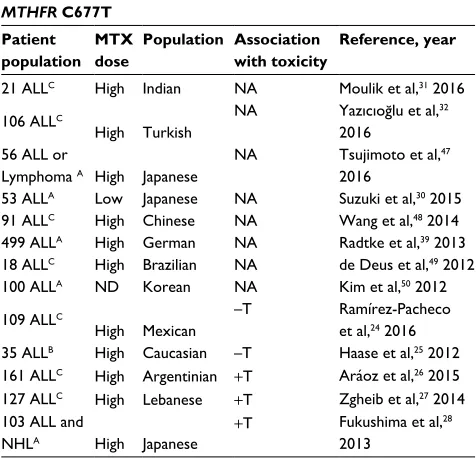
The 13 selected articles analyzed the C677T polymorphism in relation to MTX-induced toxicities. From them, only 5 found significant associations with toxicity, but with contradictory results: 2 studies related the T variant allele to a decrease in toxicity risk,24,25 whereas the other 3 associated it to increased risk (Table 1).26–28
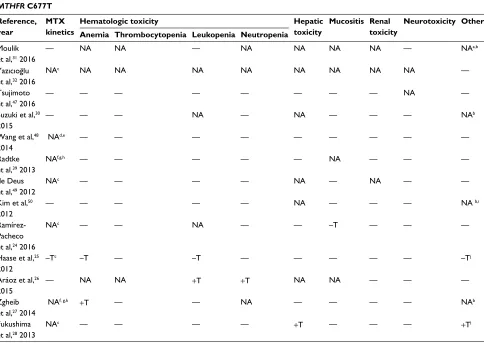
When we analyzed those studies in depth, we again found discordant results (Table 2). The association study between MTX pharmacokinetics and C677T polymorphism showed that 7 out of 8 studies did not find significant association. Haase et al25 was the only study in which MTX levels were significantly increased in patients with the MTHFR C677T wild type compared to CT/TT genotype variant carriers. However, the number of patients included in this study was very low (n=35). In our previous meta-analysis, only one study found association, but the result was just the opposite.29 Until now, taking into account our previous meta-analysis and the studies included in this review, a total of 13 studies have been performed about MTX pharmacokinetics, 11 with no association, and 2 with association but with opposite results. Therefore, C677T could not be considered as a good marker for MTX pharmacokinetics.
With regard to hematological toxicity, when anemia was analyzed, only 2 out of 5 studies found association. Haase et al25 showed that the variant of C677T was associated with a decreased toxicity, whereas Zgheib et al27 found the opposite effect. The other 3 studies found no association with anemia
Pharmacogenomics and Personalized Medicine downloaded from https://www.dovepress.com/ by 118.70.13.36 on 26-Aug-2020
Dovepress Umerez et al
(Table 2). Contradictory results were also seen for leukopenia, for which Haase et al25 showed that the C677T T variant allele was associated with a decreased toxicity, whereas Aráoz et al26 found that this allele increased the risk of severe leukopenia, but only in carriers who received 2 g/ m2 of MTX. However, Aráoz et al26 also observed that the 677T allele did not seem to modulate the presence of severe adverse events in patients who received 5 g/m2 of MTX. The analysis of leukopenia in the other 3 studies showed no association with toxicity (Table 2). Neutropenia was analyzed in 4 studies. Only the study of Aráoz et al26 found risk 677T allele associated to neutropenia in patients who received low doses of MTX (2 g/m2). None of the other 3 studies found association. Again, these results are in line with the results of our previous meta-analysis in which we proposed that C677T polymorphism does not seem to be a good marker for hematological toxicity.
Hepatotoxicity was analyzed in 7 studies, and only the study of Fukushima et al28 found significant association for 677CT/TT carriers. This study was conducted in a cohort of 103 Japanese patients, that mixed ALL (n=82) and non- Hodgkin lymphoma (NHL) (N=21) patients. In contrast, another study carried out in another Japanese population found no significant association.30 The other 5 studies per-formed in other populations found no significant association
Figure 2 Flow diagram of study selection.
Abbreviation: MTX, methotrexate.
7 records excluded
No association study Full text records assessed for eligibility N=22
Full text articles included N=15
50 records excluded:
32 focused on susceptibility 4 carried out with adult patients
5 review / meta-analysis, no new data presented 2 case study
2 not in English 4 not MTX toxicity data 1 letter
Records published after 2011 N=72
13 toxicity studies
5 toxicity
8 toxicity and outcome
8 outcome studies
2 outcome
6 toxicity and outcome
7 records excluded
2 toxicity and outcome studies published before 2013 5 toxicity studies
2 records excluded
2 outcome studies
Table 1 List of 13 studies that analyzed association between the
MTHFR C677T polymorphism and MTX toxicity in pediatric ALL, grouped according to the level of association between the SNP and MTX toxicity
MTHFR C677T
Patient population
MTX dose
Population Association with toxicity
Reference, year
21 ALLC High Indian NA Moulik et al,31 2016
106 ALLC
High Turkish
NA Yazıcıoğlu et al,32
2016 56 ALL or
Lymphoma A High Japanese
NA Tsujimoto et al,47 2016
53 ALLA Low Japanese NA Suzuki et al,30 2015 91 ALLC High Chinese NA Wang et al,48 2014 499 ALLA High German NA Radtke et al,39 2013 18 ALLC High Brazilian NA de Deus et al,49 2012
100 ALLA ND Korean NA Kim et al,50 2012
109 ALLC
High Mexican
–T Ramírez-Pacheco
et al,24 2016 35 ALLB High Caucasian –T Haase et al,25 2012 161 ALLC High Argentinian +T Aráoz et al,26 2015 127 ALLC High Lebanese +T Zgheib et al,27 2014 103 ALL and
NHLA High Japanese
+T Fukushima et al,28 2013
Notes: Type of sample: A, normal; B, tumor; C, unknown. High MTX dose =1.5–5
g m–2; Low MTX dose =25 mg m–2.
Abbreviations: MTHFR, methylenetetrahydrofolate reductase; SNP, single-nucleotide
polymorphism; MTX, methotrexate; ALL, acute lymphoblastic leukemia; NHL, non-Hodgkin Lymphoma; ND, no data; NA, no association between SNP and toxicity; +T,
Pharmacogenomics and Personalized Medicine downloaded from https://www.dovepress.com/ by 118.70.13.36 on 26-Aug-2020
Dovepress MTHFR SNPs in the MTX therapy of pediatric ALL
either. Once more, these results are in line with the results found by our group in the previous review, in which 13 studies out of 16 were not significant.
Mucositis was analyzed in 5 studies, and only Ramírez-Pacheco et al24 concluded that CC genotype was associated with a higher risk of developing mucositis in a cohort of 109 children with ALL. The rest of the 4 studies found no association, in line with our meta-analysis results in which 8 out of 10 studies were not significant.
Finally, for thrombocytopenia and renal toxicity with 3 studies and neurotoxicity with 2 studies, none of them found significant association. Once more, these results were in agreement with the previous ones.
In conclusion, after analyzing thoroughly a total of 37 articles and 4,583 patients (24 studies with 3,104 patients from the previous meta-analysis and 13 studies with 1,479 patients from our actual review) and considering that the
majority of studies were not significant, the significant results were often contradictory or with low statistical power, we can conclude that C677T is not a good MTX toxicity marker in pediatric ALL.
A1298C polymorphism analysis
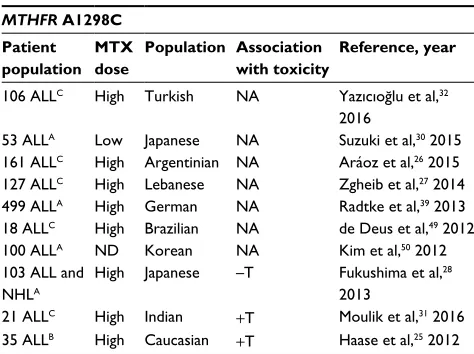
Of the 13 articles reviewed, 10 analyzed the association of A1298C polymorphism with MTX-induced toxicity (Table 3). From them, only 3 studies found significant asso-ciation. Moulik et al31 and Haase et al25 showed the C variant allele favoring an increase in toxicity, whereas Fukushima et al28 showed a protective role for the C variant allele. When the different toxicities were considered, almost all the results found no significant associations (Table 4).
Regarding anemia, 3 of 5 studies found no significant results, whereas both Moulik et al31 and Haase et al25 found association with an increase in toxicity for patients carrying
Table 2 Types of toxicities analyzed and the findings in each study of the association between the MTHFR C677T polymorphism and
MTX toxicity
MTHFR C677T
Reference, year
MTX kinetics
Hematologic toxicity Hepatic toxicity
Mucositis Renal toxicity
Neurotoxicity Other Anemia Thrombocytopenia Leukopenia Neutropenia
Moulik et al,31 2016
— NA NA — NA NA NA NA — NAa,b
Yazıcıoğlu et al,32 2016
NAc NA NA NA NA NA NA NA NA —
Tsujimoto et al,47 2016
— — — — — — — — NA —
Suzuki et al,30 2015
— — — NA — NA — — — NAb
Wang et al,48 2014
NAd,e — — — — — — — — —
Radtke et al,39 2013
NAf,g,h — — — — — NA — — —
de Deus et al,49 2012
NAc — — — — NA — NA — —
Kim et al,50 2012
— — — — — NA — — — NA b,i
Ramírez-Pacheco et al,24 2016
NAc — — NA — — –T — — —
Haase et al,25 2012
–Tc –T — –T — — — — — –Tj
Aráoz et al,26 2015
— NA NA +T +T NA NA — — —
Zgheib et al,27 2014
NAf, g,k +T — — NA — — — — NAb
Fukushima et al,28 2013
NAc — — — — +T — — — +Tl
Notes: Identifiers: afebrile neutropenia; bMTX dose reduction; cMTX levels; ddose corrected MTX level; epercent of MTX >40 mmol/L; fMTX clearance; gMTX AUC; hpeak
MTX plasma level; isepsis; jrate of cycles with infection; ktime to reach MTX level <0,1 mmol/L; lMTX administration delay; –, not evaluated.
Abbreviations: MTHFR, methylenetetrahydrofolate reductase; SNP, single-nucleotide polymorphism; MTX, methotrexate; NA, no association between SNP and toxicity;
+T, SNP is associated with increased toxicity; –T, SNP is associated with decreased toxicity.
Pharmacogenomics and Personalized Medicine downloaded from https://www.dovepress.com/ by 118.70.13.36 on 26-Aug-2020
Dovepress Umerez et al
the CC genotype. These studies included a low number of patients (n=21 and n=35, respectively), whereas the studies that did not result in significance were performed in cohorts of 106,32 161,26 and 12727 patients. Since our previous review found no association in 5 of the 6 studies that analyzed ane-mia and the one that showed association was performed in a population of 37 patients,33 we can conclude that A1298C variant is not a good marker for anemia.
Hepatotoxicity was analyzed in 7 studies, only Fukushima et al28 showed significant results in their cohort of children, which as previously mentioned, mixed 82 ALL patients and 21 NHL patients. In this study, 1298CC genotype patients presented a lower hepatic toxicity risk comparing to the 1298AA genotype patients. The other 6 studies did not find association between the polymorphism and hepatic toxicity. These results agree with our previous meta-analysis where 8 out of 10 studies neither found significant association. Moreover, the 2 studies that showed association in the previ-ous meta-analysis found the opposite effect for the variant C allele that increased hepatic toxicity.33,34
For MTX pharmacokinetics and A1298C since November 2011, 6 new studies have been performed, but significant results have not been detected in any of them. These results in combination with the results from our previous meta-analysis, where only one study conducted in a population of 37 patients obtained significant results,33 give us a total confirmation of no association between the A1298C polymorphism and MTX
None of the other analyzed toxicities (leukopenia, neutro-penia, and mucositis with 4 studies; thrombocytopenia and renal toxicity with 3 studies; and neurotoxicity with 1 study) showed statistically significant results (Table 4).
The results from 26 articles and 3,546 patients (16 studies with 2,323 patients from the previous meta-analysis and 10 studies with 1,223 patients from our actual review) makes us reject the MTHFR A1298C polymorphism as a MTX toxicity marker.
To sum up, in these 13 new studies analyzing C677T and A1298C and MTX-induced toxicities, we have confirmed our previous results. Most of the studies concluded that there was no association between MTHFR polymorphisms and MTX toxicity, and in those few studies with positive associations, opposite effects were often observed. Therefore, we consider that MTHFR C677T and A1298C polymorphisms are not good toxicity markers in pediatric ALL, and we think that no further studies are needed in this line.
Outcome and
MTHFR
C677T and
A1298C polymorphisms
In 2014, He et al35 published the results of a meta-analysis that studied the relationship between the MTHFR C677T and A1298C polymorphisms and ALL relapse risk. They conducted a literature search of PubMed (www.ncbi.nlm.nih.gov/pubmed) and Web of Knowledge (http://isiknowledge.com/) using the following keywords and subject terms: “acute lymphoblastic leukemia and relapse and polymorphism (variant)” and “methy-lenetetrahydrofolate reductase (MTHFR) and acute lympho-blastic leukemia and relapse”, last updated on September 2013. The association between the two SNPs and ALL relapse was evaluated in childhood ALL patients. In He et al’s35 work, the meta-analysis for childhood ALL was performed with 6 studies for C677T (n=1,553) and with 3 studies for A1298C (n=711). Significant association was only found for C677T. According to their results, the relapse risk in pediatric ALL was higher for the 677TT genotype than for the CT/CC genotypes.
Simultaneously, Ojha and Gurney36 published a sys-tematic review on the association between MTHFR C677T and overall survival in pediatric ALL (n=909). The search included literature through March 2013, and the review was based on 6 studies, 3 of them already included on He et al’ s,35 meta-analysis. As expected, they reached a similar conclusion, individuals with MTHFR 677T variant showed a higher relative risk of pediatric ALL mortality, with greater statistical support for the genotype MTHFR 677TT.
Herein, we performed a new review of the literature published after the mentioned two reviews, from September 2013 to November 2016, to assess the relationship between
Table 3 List of 10 studies that analyzed association between the
MTHFR A1298C polymorphism and MTX toxicity in pediatric ALL, grouped according to the level of association between the SNP and MTX toxicity
MTHFR A1298C
Patient population
MTX dose
Population Association with toxicity
Reference, year
106 ALLC High Turkish NA Yazıcıoğlu et al,32 2016
53 ALLA Low Japanese NA Suzuki et al,30 2015 161 ALLC High Argentinian NA Aráoz et al,26 2015 127 ALLC High Lebanese NA Zgheib et al,27 2014 499 ALLA High German NA Radtke et al,39 2013 18 ALLC High Brazilian NA de Deus et al,49 2012
100 ALLA ND Korean NA Kim et al,50 2012
103 ALL and NHLA
High Japanese –T Fukushima et al,28 2013
21 ALLC High Indian +T Moulik et al,31 2016 35 ALLB High Caucasian +T Haase et al,25 2012
Notes: Type of sample: A, normal; B, tumor; C unknown. High MTX dose =1.5–5 g
m–2; Low MTX dose =25 mg m–2.
Abbreviations: MTHFR, methylenetetrahydrofolate reductase; SNP, single-nucleotide
polymorphism; MTX, methotrexate; ALL, acute lymphoblastic leukemia; NHL, non-Hodgkin Lymphoma; ND, no data; NA, no association between SNP and toxicity; +T, SNP is associated with increased toxicity; –T, SNP is associated with decreased toxicity.
Pharmacogenomics and Personalized Medicine downloaded from https://www.dovepress.com/ by 118.70.13.36 on 26-Aug-2020
Dovepress MTHFR SNPs in the MTX therapy of pediatric ALL
Table 4
Types of toxicities analyzed and the findings in each study of the associations between the
MTHFR
A1298C polymorphism and MTX toxicity
MTHFR
A1298C
Reference, year
MTX kinetics
Hematologic toxicity
Hepatic toxicity
Mucositis
Renal toxicity
Neurotoxicity Other Anemia Thrombocytopenia Leukopenia Neutropenia Yazıcıo ğ
lu et al,
32 2016
NA a NA NA NA NA NA NA NA NA
Suzuki et al,
30 2015
NA NA NA b
Aráoz et al,
26 2015
NA NA NA NA NA NA
Zgheib et al 2014
27 NA c, d,e NA NA NA b
Radtke et al,
39 2013
NA c, d,f NA
de Deus et al,
49 2012
NA a NA NA
Kim et al,
50 2012
NA NA b,g
Fukushima et al,
28 2013
NA a – T NA h
Moulik et al,
31 2016
+ T NA NA NA NA NA NA i,b
Haase et al,
25 2012
NA a + T NA NA j Notes: Identifiers:
aMTX levels; bMTX dose
reduction;
cMTX clearance; dMTX AUC; etime to reach MTX level
<
0,1 mmol/L;
fpeak MTX plasma level; gsepsis; hMTX administration delay; ifebrile
neutropenia;
jrate of cycles with
infection. –, not evaluated. Abbreviations: MTHFR, methylenetetrahydrofolate reductase;
SNP, single-nucleotide polymorphism; MTX, methotrexate; NA, no association
between the SNP and toxicity;
+
T, SNP is associated
with
increased toxicity; –T, SNP is associated
with decreased toxicity.
childhood ALL outcome and MTHFR C677T and A1298C polymorphisms. Keywords “MTHFR” and “acute lympho-blastic leukemia” for PubMed database were used.
The study selection process, previously described for toxicity studies, was the same for outcome in the first steps. Out of the 15 articles selected for complete lecture, 7 were discarded, 2 for being published before 2013 and 5 for not studying outcome. Finally, we analyzed 8 articles that studied the MTHFR polymorphisms in relation to pediatric ALL patients outcome (Figure 2).
C677T polymorphism analysis
From 2013, eight studies that included 1,353 pediatric ALL patients have analyzed the association between the C677T polymorphism and outcome (relapse, death, or secondary malignancy). None of the new eight studies showed sig-nificant association between outcome and C677T variant (Table 5). These results differ from the previously mentioned reviews that found association between increased relapse/ mortality risk and 677TT genotype. Nevertheless, in the He et al’s,35 meta-analysis, the significant result is based only in two studies (D’Angelo et al37 and Tantawy et al38) from the 6 studies included. Taking all these results in consideration, we cannot affirm that MTHFR C677T polymorphism is a good outcome marker for pediatric ALL.
A1298C polymorphism analysis
In the case of A1298C, six new studies that included 1,104 pediatric ALL patients analyzed the association with outcome (relapse, death, or secondary malignancy). From them, 2 studies showed significant results but with opposite effect. Fukushima et al28 demonstrated that individuals with AC-CC genotypes presented increased Event Free Survival (EFS) (versus AA genotype), whereas Radtke et al’s39 study found that individuals with AC or CC genotypes showed decreased EFS (versus AA genotype) (Table 6). The other 4 studies showed no association between A1298C and outcome, which is in line with the previously published meta-analysis of He et al35 and other 3 studies. All these results together suggest that MTHFR A1298C polymorphism is not a good predictor for outcome in childhood ALL.
In conclusion, our review indicates that MTHFR C677T and A1298C polymorphisms cannot be considered as out-come markers for childhood ALL.
Conclusion
Numerous studies have been performed analyzing the rela-tionship between the C677T and A1298C polymorphisms of MTHFR and MTX toxicity and/or outcome in pediatric
Pharmacogenomics and Personalized Medicine downloaded from https://www.dovepress.com/ by 118.70.13.36 on 26-Aug-2020
Dovepress Umerez et al
ALL. The majority of these studies does not find association or present opposite effect. As a result, MTHFR C677T and A1298C polymorphisms cannot be considered as toxicity or outcome markers for childhood ALL. Therefore, the efforts should be focused on other genes. For instance, interesting and robust results have been obtained in regards to transporter genes and MTX toxicity. In fact, Treviño et al40 performed a genome-wide association study in patients with ALL and found rs4149081 and rs11045879 in SLCO1B1 strongly associated for the first time with MTX clearance, and this association was widely confirmed by subsequent studies.11,39,41 As a result, other works have focused their interest on the analysis of polymorphism in MTX transporters, finding several SNPs in genes such as SLC19A1, ABCC4, or ABCC2 also associated with MTX levels and other toxicities.42–44
Additionally, miRNA-related SNPs interfering with miRNA levels or function may lead to drug resistance/ sensitivity. Since miRNA expression can be exogenously controlled by blocking the expression of upregulated miRNAs
or by restoring the expression of downregulated miRNAs, this field seems very promising in pharmacogenetics. Indeed, our group has detected 3 SNPs in miR-5189, miR-595, and miR-453 that might affect SLC46A1, SLC19A1, SLCO1A2, and ABCC4 MTX transport genes regulation and could affect MTX levels in patients with pediatric B-ALL.45,46
Disclosure
The authors report no conflicts of interest in this work.
References
1. Koppen I, Hermans F, Kaspers G. Folate related gene polymorphisms and susceptibility to develop childhood acute lymphoblastic leukaemia.
Br J Haematol. 2009;148:3–14.
2. Johnston WT, Lightfoot TJ, Simpson J, Roman E. Childhood cancer survival : a report from the United Kingdom Childhood Cancer Study.
Cancer Epidemiol. 2010;34(6):659–666.
3. Pui C, Robison L, Look A. Acute lymphoblastic leukaemia. Lancet. 2008;371:1030–1043.
4. Gorlick R, Goker E, Trippett R, Waltham M, Banerjee D, Bertino J. Intrinsic and acquired resistance to methotrexate in acute leukemia. N
Engl J Med. 1996;335:1041–1048.
Table 5 List of 8 studies that analyzed association between the MTHFR C677T polymorphism and outcome
MTHFR C677T
Patient population MTX dose Population Association with outcome
Analyzed event Reference, year
140 ALLA High Argentinian NA EFSa Leonardi et al,51 2016
109 ALLC High Mexican NA Relapse Ramírez-Pacheco et al,24 2016
106 ALLC High Turkish NA EFSb Yazıcıoğlu et al,32 2016
202 ALLC High Argentinian NA EFSc Aráoz et al,26 2015
94 ALLC/141 ALLC High Caucasian/Vietnamese NA EFSa Hoang et al,52 2015
103 ALL and NHLA High Japanese NA EFSb Fukushima et al,28 2013
499 ALLA High German NA EFSc Radtke et al,39 2013
53 ALLA Low Japanese NA Relapse Suzuki et al,30 2015
Notes: Type of sample: A, normal; C, unknown. High MTX dose =1.5–5 g m–2; Low MTX dose =25 mg m–2. Identifiers: aevent defined as relapse; bevent defined as relapse/
death; cevent defined as relapse/death/secondary malignancies.
Abbreviations: MTHFR, methylenetetrahydrofolate reductase; SNP, single-nucleotide polymorphism; MTX, methotrexate; ALL, acute lymphoblastic leukemia; NHL,
non-Hodgkin Lymphoma; NA, no association between the SNP and outcome; EFS, event free survival.
Table 6 List of 6 studies that analyzed association between the MTHFR A1298C polymorphism and outcome
MTHFR A1298C
Patient population MTX dose Population Association with outcome
Analyzed event Reference, year
106 ALLC High Turkish NA EFSa Yazıcıoğlu et al,32 2016
202 ALLC High Argentinian NA EFSb Aráoz et al,26 2015
94 ALLC/141 ALLC High Caucasian/
Vietnamese
NA EFSc Hoang et al,52 2015
53 ALLA Low Japanese NA Relapse Suzuki et al,30 2015
499 ALLA High German –AS EFSc Radtke et al,39 2013
103 ALL and NHLA High Japanese +AS EFSb Fukushima et al,28 2013
Notes: Type of sample: A, normal; C, unknown. High MTX dose =1.5–5 g m–2; Low MTX dose =25 mg m–2. Identifiers: aevent defined as relapse/death; bevent defined as
relapse/death/secondary malignancies; cevent defined as relapse.
Abbreviations: MTHFR, methylenetetrahydrofolate reductase; SNP, single-nucleotide polymorphism; MTX, methotrexate; ALL, acute lymphoblastic leukemia; NHL,
non-Hodgkin Lymphoma; NA, no association between the SNP and outcome; +AS, SNP is associated to increased outcome; –AS, SNP is associated with decreased outcome; EFS, event free survival.
Pharmacogenomics and Personalized Medicine downloaded from https://www.dovepress.com/ by 118.70.13.36 on 26-Aug-2020
Dovepress MTHFR SNPs in the MTX therapy of pediatric ALL
5. Krajinovic M, Moghrabi A. Pharmacogenetics of methotrexate.
Phar-macogenomics. 2004;5(7):819–834.
6. De Mattia E, Toffoli G. C677T and A1298C MTHFR polymorphisms, a challenge for antifolate and fluoropyrimidine-based therapy person-alisation. Eur J Cancer. 2009;45(8):1333–1351.
7. Cheok M, Evans W. Acute lymphoblastic leukaemia: a model for the pharmacogenomics of cancer therapy. Nat Rev Cancer. 2006;6(2): 117–130.
8. Frosst P, Blom H, Milos R, et al. A candidate genetic risk factor for vascular disease: a common mutation in methylenetetrahydrofolate reductase. Nat Genet. 1995;10(1):111–113.
9. Weisberg I, Jacques P, Selhub J, et al. The 1298A/C polymorphism in methylenetetrahydrofolate reductase (MTHFR): in vitro expression and association with homocysteine. Atherosclerosis. 2001;156(2):409–415. 10. Niedzielska E, Węcławek-Tompol J, Matkowska-Kocjan A, Chybicka A. The influence of genetic RFC1, MS and MTHFR polymorphisms on the risk of acute lymphoblastic leukemia relapse in children and the adverse effects of methotrexate. Adv Clin Exp Med. 2013;22(4):579–584. Avail-able from: http://www.ncbi.nlm.nih.gov/pubmed/23986219. 11. Lopez-Lopez E, Martin-Guerrero I, Ballesteros J, et al.
Polymor-phisms of the SLCO1B1 gene predict methotrexate-related toxicity in childhood acute lymphoblastic leukemia. Pediatr Blood Cancer. 2011;57(4):612–619.
12. Lopez-Lopez E, Gutierrez-Camino A, Bilbao-Aldaiturriaga N, Pombar-Gomez M, Martin-Guerrero I, Garcia-Orad A. Pharmacogenetics of childhood acute lymphoblastic leukemia. Pharmacogenomics. 2014;15(10):1383–1398.
13. Esteller M. Aberrant DNA methylation as a cancer-inducing mechanism.
Annu Rev Pharmacol Toxicol. 2005;45:629–656.
14. Abe M, Ohira M, Kaneda A, et al. CpG island methylator phenotype is a strong determinant of poor prognosis in neuroblastomas. Cancer Res. 2005;65(3):828–834.
15. Lopez-Lopez E, Martin-Guerrero I, Ballesteros J, Garcia-Orad A. A systematic review and meta-analysis of MTHFR polymorphisms in methotrexate toxicity prediction in pediatric acute lymphoblastic leukemia. Pharmacogenomics J. 2013;13(6):498–506.
16. Yang L, Hu X, Xu L. Impact of methylenetetrahydrofolate reductase (MTHFR) polymorphisms on methotrexate-induced toxicities in acute lymphoblastic leukemia: a meta-analysis. Tumor Biol. 2012;677: 1445–1454.
17. Yanagimachi M, Goto H, Kaneko T, et al. Influence of pre-hydration and pharmacogenetics on plasma methotrexate concentration and renal dysfunction following high-dose methotrexate therapy. Int J Hematol. 2013;98(6):702–707.
18. Torun YA, Patiroglu T, Ozdemir MA, Ozkul Y, Ekici A, Karakukcu M. Inherited prothrombotic risk factors in Turkish children with acute lymphoblastic leukemia: significance of concomitant genetic mutation.
Clin Appl Thromb Hemost. 2012;18(2):218–221.
19. Sivaslioglu S, Gursel T, Kocak U, Kaya Z. The risk factors for throm-bosis in children with acute lymphoblastic leukemia. Clin Appl Thromb
Hemost. 2014;20(6):651–653.
20. Abdelaziz DH, Elhosseiny NM, Khaleel SA, Sabry NA, Attia AS, El-Sayed MH. Association between combined presence of Hepatitis C Virus and polymorphisms in different genes with toxicities of methotrexate and 6-mercaptopurine in children with acute lymphoblastic leukemia.
Pediatr Blood Cancer. 2016;63(9):1539–1545.
21. Tanaka Y, Manabe A, Nakadate H, et al. Methylenetetrahydrofolate reductase gene haplotypes affect toxicity during maintenance therapy for childhood acute lymphoblastic leukemia in Japanese patients. Leuk
Lymphoma. 2014;55(5):1126–1131.
22. Kaluzna E, Strauss E, Zajac-Spychala O, et al. Functional variants of gene encoding folate metabolizing enzyme and methotrexate-related toxicity in children with acute lymphoblastic leukemia. Eur J Pharma-col. 2015;769:93–99.
23. Karas Kuzelicki N, Milek M, Jazbec J, Mlinaric-Rascan I. 5,10-Methy-lenetetrahydrofolate reductase (MTHFR) low activity genotypes reduce the risk of relapse-related acute lymphoblastic leukemia (ALL). Leuk Res. 2009;33(10):1344–1348.
24. Ramírez-Pacheco A, Moreno-Guerrero S, Alamillo I, Medina-Sanson A, Lopez B, Moreno-Galvan M. Mexican childhood acute lymphoblastic leukemia: a pilot study of the MDR1 and MTHFR gene polymorphisms and their associations. Genet Test Mol biomrkers. 2016;20(10):597–602. 25. Haase R, Elsner K, Stiefel M, Mauz-Korholz C, Kramm C, Korholz D. High dose methotrexate treatment in childhood ALL : pilot study on the impact of the MTHFR 677C > T and 1298A > C polymorphisms on MTX-related toxicity. Klin Pädiatrie. 2012;224(3):156–159. 26. Aráoz H, Aloi K, Foncuberta M, et al. Pharmacogenetic studies in
chil-dren with acute lymphoblastic leukemia in Argentina Pharmacogenetic studies in children with acute lymphoblastic leukemia in Argentina.
Leuk Lymphoma. 2015;56(5):1370–1378.
27. Zgheib N, Akra-Ismail M, Aridi C, et al. Genetic polymorphisms in candidate genes predict increased toxicity with methotrexate therapy in Lebanese children with acute lymphoblastic leukemia. Pharmacogenet
Genomics. 2014;24(8):387–396.
28. Fukushima H, Fukushima T, Sakai A, et al. Polymorphisms of MTHFR associated with higher relapse/death ratio and delayed weekly MTX administration in pediatric lymphoid malignancies. Leuk Res Treatment. 2013;2013:1–9.
29. Imanishi H, Okamura N, Yagi M, et al. Genetic polymorphisms associ-ated with adverse events and elimination of methotrexate in childhood acute lymphoblastic leukemia and malignant lymphoma. J Hum Genet. 2007;52(2):166–171.
30. Suzuki R, Fukushima H, Noguchi E, et al. Influence of SLCO1B1 polymorphism on maintenance therapy for childhood leukemia. Pediatr Int. 2015;57(4):572–577.
31. Moulik N, Kumar A, Agrawal S, Mahdi A, Kumar A. Effect of folate status and methylenetetrahydrofolate reductase genotypes on the complications and outcome of high dose methotrexate chemotherapy in north Indian children with acute lymphoblastic leukemia. Indian J
Med Paediatr Oncol. 2016;37(2):85–89.
32. Yazicioğlu B, Kaya Z, Ergun S, et al. Influence of folate-related gene polymorphisms on high-dose methotrexate-related toxicity and prog-nosis in Turkish children with Acute Lymphoblastic Leukemia. Turkish
J Hematol. 2016:2–19.
33. Kantar M, Kosova B, Cetingul N, et al. Methylenetetrahydrofolate reductase C677T and A1298C gene polymorphisms and therapy-related toxicity in children treated for acute lymphoblastic leukemia and non-Hodgkin lymphoma. Leuk Lymphoma. 2009;50(6):912–917. 34. Karathanasis NV, Stiakaki E, Goulielmos GN, Kalmanti M. The role of
the methylenetetrahydrofolate reductase 677 and 1298 polymorphisms in Cretan children with acute lymphoblastic leukemia. Genet Test Mol
Biomarkers. 2011;15(1–2):5–10.
35. He H, Chen S, You H, et al. Association between methylenetetrahydro-folate reductase polymorphisms and the relapse of acute lymphoblastic leukemia: a meta-analysis. Pharmacogenomics J. 2014;14(5):432–438. 36. Ojha RP, Gurney JG. Methylenetetrahydrofolate reductase C677T and overall survival in pediatric acute lymphoblastic leukemia: a systematic review. Leuk Lymphoma. 2014;55(1):67–73.
37. D´Angelo V, Ramaglia M, Iannotta A, et al. Methotrexate toxic-ity and efficacy during the consolidation phase in paediatric acute lymphoblastic leukaemia and MTHFR polymorphisms as pharma-cogenetic determinants. Cancer Chemother Pharmacol. 2011;68(5): 1339–1346.
38. Tantawy A, El-Bostany E, Adly A, et al. Methylene tetrahydrofolate reductase gene polymorphism in Egyptian children with acute lym-phoblastic leukemia. Blood Coagul Fibrinolysis. 2010;21(1):28–34. 39. Radtke S, Zolk O, Renner B, et al. Germline genetic variations in
methotrexate candidate genes are associated with pharmacokinetics, toxicity, and outcome in childhood acute lymphoblastic leukemia.
Blood J. 2013;121(26):5145–5154.
40. Treviño L, Shimasaki N, Yang W, et al. Germline genetic variation in an organic anion transporter polypeptide associated with methotrex-ate pharmacokinetics and clinical effects. J Clin Oncol. 2009;27(35): 5972–5978.
41. Ramsey LB, Panetta JC, Smith C, et al. Genome-wide study of metho-trexate clearance replicates SLCO1B1. Blood. 2013;121(6):898–904.
Pharmacogenomics and Personalized Medicine downloaded from https://www.dovepress.com/ by 118.70.13.36 on 26-Aug-2020
Dovepress
Pharmacogenomics and Personalized Medicine
Publish your work in this journal
Submit your manuscript here: https://www.dovepress.com/pharmacogenomics-and-personalized-medicine-journal
Pharmacogenomics and Personalized Medicine is an international, peer-reviewed, open access journal characterizing the influence of genotype on pharmacology leading to the development of personalized treatment programs and individualized drug selection for improved safety, efficacy and sustainability. This journal is indexed on the American Chemical
Society’s Chemical Abstracts Service (CAS). The manuscript manage-ment system is completely online and includes a very quick and fair peer-review system, which is all easy to use. Visit http://www.dovepress. com/testimonials.php to read real quotes from published authors.
Dove
press
Umerez et al
42. Lopez-Lopez E, Ballesteros J, Pinan MA, et al. Polymorphisms in the methotrexate transport pathway: a new tool for MTX plasma level prediction in pediatric acute lymphoblastic leukemia. Pharmacogenet
Genomics. 2013;23(2):53–61.
43. den Hoed MA, Lopez-Lopez E, te Winkel ML, et al. Genetic and metabolic determinants of methotrexate-induced mucositis in pediat-ric acute lymphoblastic leukemia. Pharmacogenomics J. 2015;15(3): 248–254.
44. Gutierrez-Camino A, Lopez-Lopez E, Garcia-Orad A. SLC19A1 hot spot for MTX plasma concentration. Med Oncol. 2014;31(10):204. 45. Iparraguirre L, Gutierrez-Camino A, Umerez M, et al.
MiR-pharma-cogenetics of methotrexate in childhood B-cell acute lymphoblastic leukemia. Pharmacogenet Genomics. 2016;26(11):517–525. 46. Lopez-Lopez E, Gutierrez-Camino A, Pinan MA, et al.
Pharmacogenet-ics of microRNAs and microRNAs biogenesis machinery in pediatric acute lymphoblastic leukemia. PLoS One. 2014;9(3):e91261. 47. Tsujimoto S, Tanaka F, Yanagimachi M, et al. Influence of ADORA2A
gene polymorphism on leukoencephalopathy risk in MTX-treated pedi-atric patients affected by hematological malignancies. Pediatr Blood
Cancer. 2016;63:1983–1989.
48. Wang S, Sun L, Zeng W, Wu W, Zhang G. Influence of genetic polymor-phisms of FPGS, GGH, and MTHFR on serum methotrexate levels in Chinese children with acute lymphoblastic leukemia. Cancer Chemother
Pharmacol. 2014;74:283–289.
49. de Deus D, de Lima E, Seabra Silva R, Leite E, Cartaxo Muniz M. Influence of methylenetetrahydrofolate reductase C677T, A1298C, and G80A polymorphisms on the survival of pediatric patients with acute lymphoblastic leukemia. Leuk Res Treatment. 2012;2012:1–6. 50. Kim H, Kang H, Kim H, et al. Pharmacogenetic analysis of
pedi-atric patients with acute lymphoblastic leukemia: a possible asso-ciation between survival rate and ITPA polymorphism. PLoS One. 2012;7(9):1–10.
51. Leonardi D, Abbate M, Riccheri M, et al. Improving risk stratification of patients with childhood acute lymphoblastic leukemia: glutathione-S-transferases polymorphisms are associated with increased risk of relapse. Oncotarget. 2016;5:1–8.
52. Hoang P, Ambroise J, Dekairelle A, et al. Comparative pharmacogenetic analysis of risk polymorphisms in Caucasian and Vietnamese children with acute lymphoblastic leukemia: prediction of therapeutic outcome?
Br J Clin Pharmacol. 2015;79(3):429–440.
Pharmacogenomics and Personalized Medicine downloaded from https://www.dovepress.com/ by 118.70.13.36 on 26-Aug-2020