Analysis and Quantification (where possible)
of Tangible and Intangible Benefits of Risk
Based Quality Auditing Approach
Shobhendu Prabhakar#
#
Project Quality Manager, TechnipFMC, Houston, TX, USA
Abstract — Risk Based Quality Auditing approach has numerous benefits over traditional judgement and experience based quality auditing approach. Purpose of this research paper is to explain, analyse, and quantify (where possible) the tangible and intangible benefits of risk based quality auditing approach over traditional judgement and experience based quality auditing approach for companies in oil and gas sector. Since oil prices have been at their lowest for few years now, it becomes even more prudent to utilize Risk Based Quality Auditing approach to keep cost of oil and gas projects and departments execution at a new normal (optimized) level.
Keywords — Quality auditing, Risk rating, Quality audit program, Systematic approach to quality auditing, Risk based quality auditing, tangible benefits, and intangible benefits.
I. INTRODUCTION
This research paper is an extension of Risk Based Auditing – A Value Added Approach published in IJETT, Volume 46, Number1, April 2017 by the author. Earlier research paper focused on outlining a Value Added and Systematic Risk Based Approach to Quality Audits by determining criticality ranking and identifying risks. This research paper explains, analyses and quantifies (where possible), the tangible and intangible benefits of Risk Based Quality Auditing Approach over the traditional judgement and experience based quality auditing approach for conducting quality audits on projects and departments for companies in oil and gas sector.
II. RISK BASED QUALITY AUDITING – TANGIBLE BENEFITS
The premise of Risk Based Quality Auditing approach is to focus on auditing risks and associated areas that matter most to the company at the projects, departments, processes and systems levels. This approach is both horizontal and vertical across the organization because the approach covers risks from inception to completion of projects, intra and inter processes and systems risks, intra and inter department and/or functional risks. In this section, author explains, analyses and quantifies (where possible) the tangible benefits of adopting and implementing Risk Based Quality Auditing
approach as opposed to using traditional experience and judgement based Quality Auditing approach for companies in the oil and gas sector.
A. Risk Identification and Mitigation
Since basis of determining audits in Risk Based Quality Auditing are criticality and risk, this approach equips oil and gas projects‘, departments‘ and systems‘ teams with a meaningful outlook on potential risk areas. There are few tools by which risk prone areas can be identified. These tools include
risk workshops;
lessons learned from the past;
analysis of supplier performance data;
critical look at customer feedback and complaints; and
careful review of project specific contract requirements.
B. Determination of audit frequency
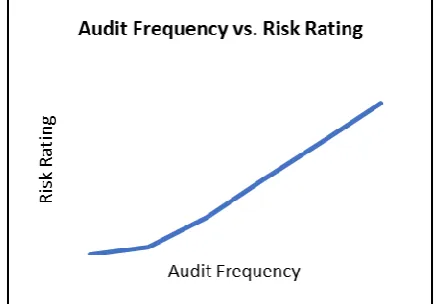
Risk ratings of projects, departments, and systems areas help quality professionals to set frequency of the quality audits. Higher the risk rating of the area, higher the audit frequency and vice versa. Correlation of risk ratings with audit frequency is illustrated in Fig. 1 below.
C. Exhaustive, effective and non-duplicated audit program
Risk Based Quality Auditing identifies audits based on criticality and risks involved. Thus, this approach takes out duplication from the auditing process. How? Let us take an example of welding and non-destructive examination (NDE) processes. Typically, companies in oil and gas sector (operators, contractors and their subcontractors) pay a great attention to these processes since Welding and NDE are the core to the success of fabrication work. In doing so, typically there is a possibility of conducting three quality audits i.e.
a) operator performing audit on sub-contractor Welding and NDE processes;
b) contractor performing audit on sub-contractor Welding and NDE processes; and
c) sub-contractor performing audit on its own Welding and NDE processes.
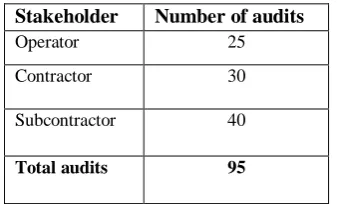
However, if all parties agree that sub-contractor Welding and NDE processes are critical risk areas for fabrication work, based on the agreed risks, all parties can agree to conduct ONLY ONE quality audit (thus removing duplicate audits) and achieve effective and efficient results than those of separate quality audits. This was just one example. To put things in perspective, on a typical large oil and gas project, let us assume quality audits conducted by different stakeholders under traditional judgement and experience based quality auditing approach are as follows per table 1.
Stakeholder Number of audits
Operator 25
Contractor 30
Subcontractor 40
Total audits 95
Table 1: Typical audits under judgement and experience based quality auditing approach.
With the Risk Based Quality Auditing approach, the number of audits conducted by different stakeholders will be optimized. This optimization may have different scenarios e.g.
Stakeholder Number of audits
Reduction in number of audits (from table 1)
Operator 20 5
Contractor 25 5
Subcontractor 35 5
Total audits 80 15
Table 2: Scenario - 1, with Risk Based Quality Auditing approach reduction in number of audits from table -1
Another scenario can be:
Stakeholder Number of audits
Reduction in number of audits (from table 1)
Operator 15 10
Contractor 20 10
Subcontractor 30 10
Total audits 65 30
Table 3: Scenario - 2, with Risk Based Quality Auditing approach reduction in number of audits from table -1
Though reduction in number of audits will be dependent on common risks involved for different stakeholders and extent of duplication in stakeholders‘ audit program, it is evident that total number of cumulative audits and separately by each party will be reduced. This reduction in number of audits will remove the duplicate audits as well as provide more value to all stakeholders out of their quality auditing program. Similar analysis is valid for reduction in number of quality audits at the intra and inter departments, systems and processes levels. Since all stakeholders are looking at the risks together, the exercise equips stakeholders to view an exhaustive picture of risks involved and develop an exhaustive and effective audit program for projects, departments and systems.
D. Cost Savings
areas of risks. Further, the mitigation and preventive actions that come out of the risk based audits equip project and department management teams with significant cost savings. Case in point can be - if risk workshop identifies that the most significant risk for the project execution is fabrication work at a subcontractor where the project structures (e.g. Pipeline End Manifold) will be fabricated. This useful risk data point will trigger a risk based audit on the structures fabricator as opposed to any other judgement and experience based audit. The audit will not only dig into why these risks exist but it will also trigger ‗must do action plans‘ by company and its subcontractor teams. These ‗must do action plans‘ will subsequently result in significant cost savings to both company and its subcontractor.
To give a perspective on cost savings with risk based auditing approach, author performed calculations for scenarios 1 and 2 (as illustrated in tables 2 and 3 of this research paper) based on following assumptions.
Man-days to perform ONE audit = 3 Auditor cost / day = USD 600.00 Auditee cost / day = USD 600.00 Total number of projects = 10
Note: For simplicity of calculations, travel costs are not included. However, in real life, these costs are incurred.
Audit costs without risk based auditing approach:
Auditor cost / audit = 3*600 = USD 1800.00 Auditee cost / audit = 3*600 = USD 1800.00 Number of audits = 95
Total audits cost / project = 95*(1800.00+1800.00) = USD 342,000
Total audits cost (all projects) = 10*342,000 = USD 3,420,000
Audit costs with risk based auditing approach (scenario – 1):
Auditor cost / audit = 3*600 = USD 1800.00 Auditee cost / audit = 3*600 = USD 1800.00 Number of audits = 80
Total audits cost / project = 80*(1800.00+1800.00) = USD 288,000
Total audits cost (all projects) = 10*288,000 = USD 2,880,000
∆ Audit cost savings (scenario – 1 risk based auditing approach) = USD 544,000.00
Audit costs with risk based auditing approach (scenario – 2):
Auditor cost / audit = 3*600 = USD 1800.00 Auditee cost / audit = 3*600 = USD 1800.00 Number of audits = 65
Total audits cost / project = 65*(1800.00+1800.00) = USD 234,000
Total audits cost (all projects) = 10*234,000
= USD 2,340,000
∆ Audit cost savings (scenario – 2 risk based auditing approach) = USD 1,080,000.00
Fig. 2: Audit Costs and associated savings by using Risk Based Auditing Approach Though abovementioned calculations are based on assumptions specified above, it is a useful exercise to carry out based on a company‘s data points by its quality management personnel to show cost savings by using risk based quality auditing approach.
E. Schedule benefits
As per EY 2014 report [6], 73% of the sampled oil and gas mega projects reported schedule delays. Research study [7] lists following as top two (2) factors causing schedule delay for oil and gas projects.
i. Delay in start of purchasing long-lead items ii. Delay in material and equipment delivery
Let us analyse now how can Risk Based Auditing help mitigate above mentioned risks.
i. Risk Based Quality Audit will verify whether the project team has identified long-lead items or not. Long-lead items are typically the equipment or material that need longer time to be fabricated and delivered. Audit will also consider risks involved in procuring, fabrication and delivery processes. Audit will verify whether the mitigation actions are in place for risks associated with procurement, fabrication and delivery processes. Audit will also check which activity is on critical path and whether necessary actions are implemented to address the critical path issue. ii. Delay in material and equipment delivery can
corrective and preventive actions should be taken to mitigate risks related to the process. Similarly, audit will also verify whether the already in place actions to mitigate material and equipment delivery risks are effective or not.
Depending on how high the schedule risk is based on risk ratings, Risk Based Quality audit should be diligently performed on other processes and systems to ensure schedule risks are mitigated effectively benefitting relevant stakeholders.
F. Cost of Poor Quality Reduction
Cost of poor quality is typically defined as additional cost incurred by the company of not doing things right the first time. If appropriate mitigation and prevention action plans are not in place for identified risks, probability of not doing things right the first time is high. Risk Based Quality Auditing approach provides assurance to the project and department teams that mitigation and prevention action plans are in place and whether these plans are effective or not. Feedback from auditors provides company management with risk areas that need more effective mitigation and prevention actions.
III.RISK BASED QUALITY AUDITING –
INTANGIBLE BENEFITS
Along with tangible benefits such as risk identification and mitigation, determination of audit frequency, cost savings, schedule benefits, cost of poor quality reduction and exhaustive, effective and non-duplicated audit program, there are following intangible benefits to companies in oil and gas sector from Risk Based Quality Auditing program.
A. Confidence in audit program
Because the risk based auditing is systematic and value added, it provides more confidence in auditing program to the project and department management teams. This confidence comes from identification of audits based on criticality and risk determination framework.
B. Assurance on verification of risk mitigation and preventive actions
In the risk based audits, auditors are supposed to check and verify risk mitigation and prevention actions. Checking and verification by auditors is another intangible benefit that project and department management receive from risk based auditing program. Auditors also suggest necessary actions and follow up on the suggested actions through closure, which subsequently results in assuring management teams that risks are mitigated effectively.
C. Systematic and value added quality auditing framework for Quality Professionals
There may be times when Quality Professionals are questioned by project and department management teams on rationale behind auditing a certain area? Since the Risk Based Quality Auditing takes into consideration the criticality and risks involved in the entirety of the process itself and audit identification is dependent on risk ratings, this approach helps Quality Professionals by providing sound logic and back up data on the identification of the audits and answering the rationale behind auditing a certain area.
D. Increased Customer Satisfaction
As described in bullet point A above (confidence in audit program), risk based audits provide project and department management with more confidence in company‘s quality audit program. It can be argued that this increased level of confidence in quality audit program subsequently results in increased internal and external customer satisfaction. Internal customers are typically from different departments and projects within the company and external customers are company‘s clients which award business to the company.
E. Selling point for companies
Risk based auditing can help companies in oil and gas sector especially Engineering, Procurement, Construction and Installation (EPCI) contractors, fabricators, equipment suppliers and sub-contractors to earn more business from operators. Company‘s Quality Assurance organizations should explain tangible and intangible benefits of Risk Based Quality Auditing approach to the Business development and Tendering organizations so that they can utilize this approach in their sales pitch and tenders.
IV.CONCLUSIONS
framework for Quality Professionals, increased customer satisfaction and selling point for companies.
Disclaimer: This paper does not represent any TechnipFMC position, and it is in no way related to TechnipFMC.
REFERENCES (SIZE 10&BOLD)
[1] Tim Sandle, ―Risk-Based Approach to Internal Quality Auditing‖, Institute of Validation Technology, Feb 2016, http://www.ivtnetwork.com/article/risk-based-approach-internal-quality-auditing
[2] Stanislav Karapetrovic, Walter Willborn, "Quality assurance and effectiveness of audit systems", International Journal of Quality & Reliability Management, 2000, Vol. 17 Issue: 6, pp.679-703.
[3] S. Prabhakar, Risk Based Quality Auditing – A Value Added Approach, International Journal of Engineering Trends and Technology, Vol. 46, No. 1, April 2017 [4] ISO 9001:2015, Quality Management System
Requirements.
[5] S. Prabhakar, Risk Management and its positive impacts on efficiencies and saving jobs in Oil and Gas Industry, International Journal of Advanced Research Trends in Engineering and Technology, Vol. 4, Issue 5, May 2017 [6] Spotlight on Oil and gas mega projects, EY, 2014 report,
http://www.ey.com/Publication/vwLUAssets/EY-spotlight- on-oil-and-gas-megaprojects/$FILE/EY-spotlight-on-oil-and-gas-megaprojects.pdf
[7] Investigating the causes of delay within Oil and Gas projects in the U.A.E., 2008, http://www.arcom.ac.uk/-
docs/proceedings/ar2008-819-827_Salama_El%20Hamid_and_Keogh.pdf